

The DOI matches its Crossref record; 71 of the 71 references it cites were found in a registry or an index.
Blood-brain barrier-associated pericytes internalize and clear aggregated amyloid-β42 by LRP1-dependent apolipoprotein E isoform-specific mechanism
Open accessAbstract
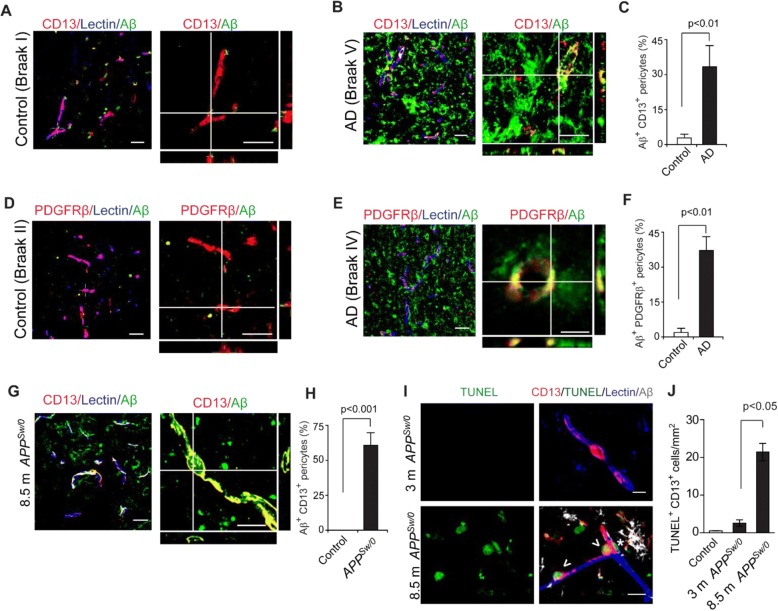
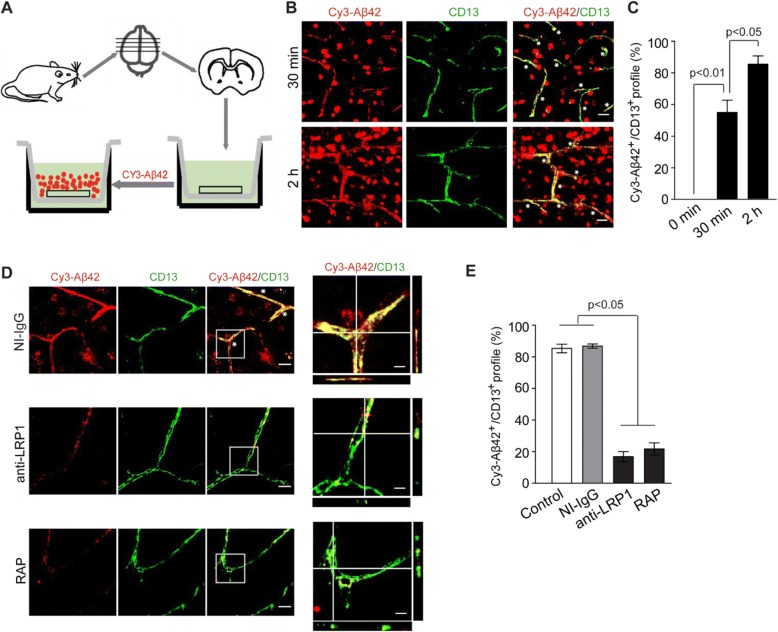
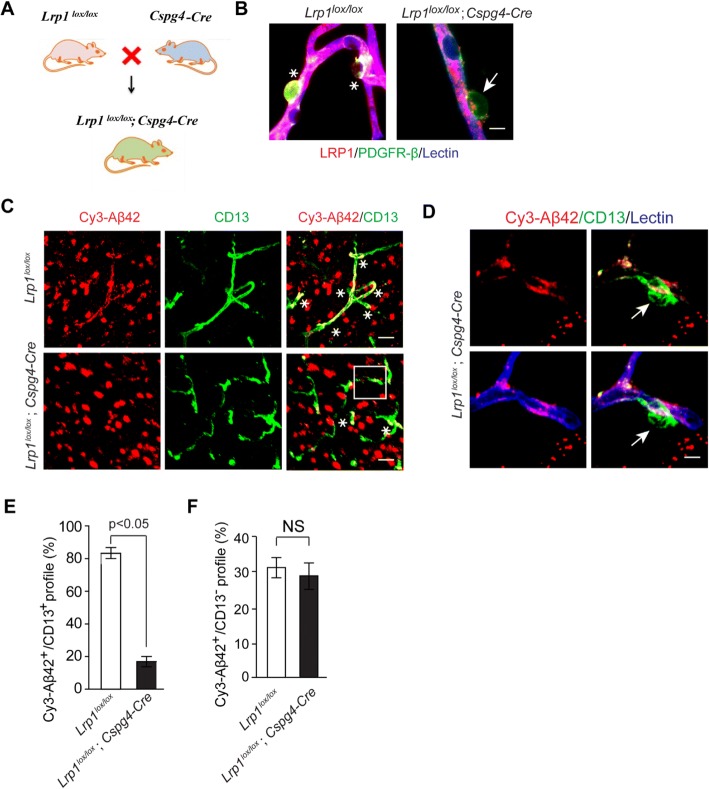
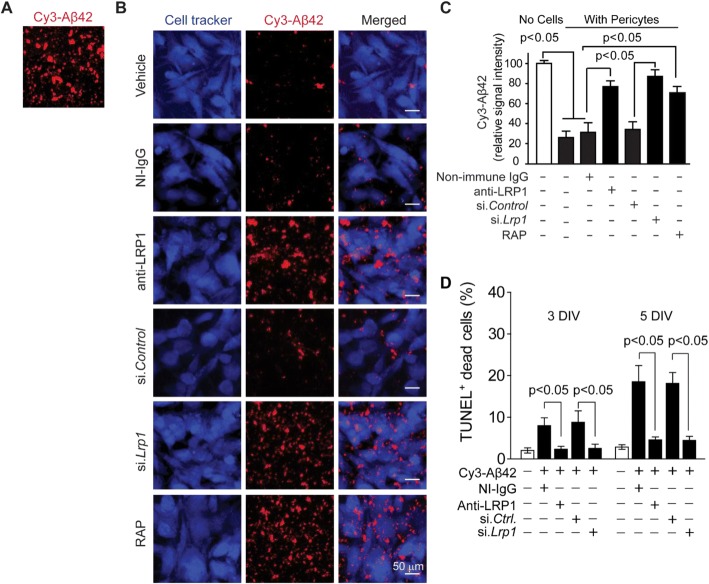
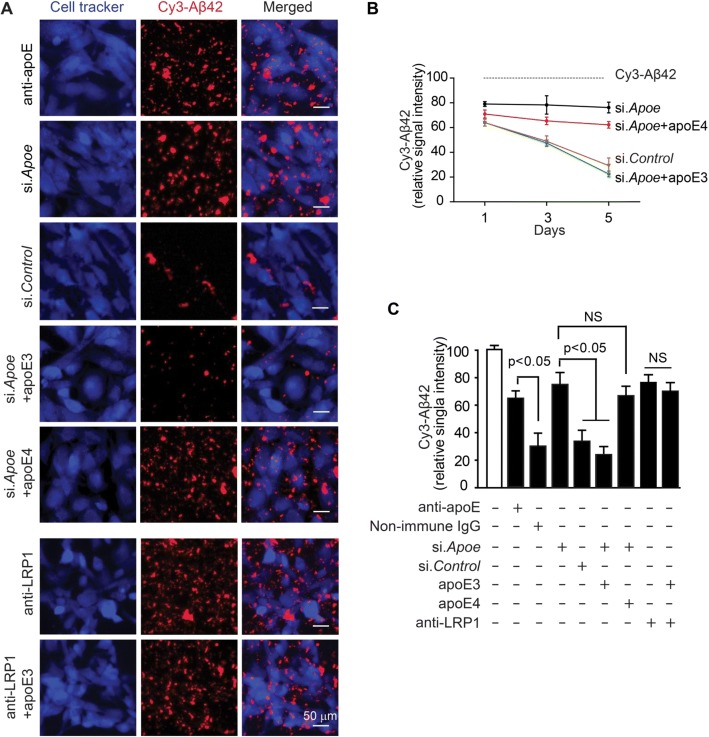
Abstract Background Clearance at the blood-brain barrier (BBB) plays an important role in removal of Alzheimer’s amyloid-β (Aβ) toxin from brain both in humans and animal models. Apolipoprotein E (apoE), the major genetic risk factor for AD, disrupts Aβ clearance at the BBB. The cellular and molecular mechanisms, however, still remain unclear, particularly whether the BBB-associated brain capillary pericytes can contribute to removal of aggregated Aβ from brain capillaries, and whether removal of Aβ aggregates by pericytes requires apoE, and if so, is Aβ clearance on pericytes apoE isoform-specific. Methods We performed immunostaining for Aβ and pericyte biomarkers on brain capillaries (< 6 μm in diameter) on tissue sections derived from AD patients and age-matched controls, and APPSwe/0 mice and littermate controls. Human Cy3-Aβ42 uptake by pericytes was studied on freshly isolated brain slices from control mice, pericyte LRP1-deficient mice (Lrplox/lox;Cspg4-Cre) and littermate controls. Clearance of aggregated Aβ42 by mouse pericytes was studied on multi-spot glass slides under different experimental conditions including pharmacologic and/or genetic inhibition of the low density lipoprotein receptor related protein 1 (LRP1), an apoE receptor, and/or silencing mouse endogenous Apoe in the presence and absence of human astrocyte-derived lipidated apoE3 or apoE4. Student’s t-test and one-way ANOVA followed by Bonferroni's post-hoc test were used for statistical analysis. Results First, we found that 35% and 60% of brain capillary pericytes accumulate Aβ in AD patients and 8.5-month-old APPSw/0 mice, respectively, compared to negligible uptake in controls. Cy3-Aβ42 species were abundantly taken up by pericytes on cultured mouse brain slices via LRP1, as shown by both pharmacologic and genetic inhibition of LRP1 in pericytes. Mouse pericytes vigorously cleared aggregated Cy3-Aβ42 from multi-spot glass slides via LRP1, which was inhibited by pharmacologic and/or genetic knockdown of mouse endogenous apoE. Human astrocyte-derived lipidated apoE3, but not apoE4, normalized Aβ42 clearance by mouse pericytes with silenced mouse apoE. Conclusions Our data suggest that BBB-associated pericytes clear Aβ aggregates via an LRP1/apoE isoform-specific mechanism. These data support the role of LRP1/apoE interactions on pericytes as a potential therapeutic target for controlling Aβ clearance in AD.
Overview
The claims and statistics of this paper haven’t been checked yet.
Run the check — free, no account needed. It reads the open-access text and checks the sources it cites.
Integrity signals
Registry
Cites
Statistics
Figures
Verification
Claims the paper makes
The claims and statistics of this paper haven’t been checked yet.
Run the check — free, no account needed. It reads the open-access text and checks the sources it cites.
Claims other papers make about this one
Each is checked against this paper’s own text: does it say what the citing paper says it does?
The source backs part of the claim, not all of it — or backs it for a different population, condition or comparison.
In the citing paper
“ApoE assists in Aβ clearance in an isoform-dependent manner wherein apoE2 > apoE3 > apoE4 [29, 30, 59].”
From Apolipoprotein E4, inhibitory network dysfunction, and Alzheimer’s disease (2019) · cites this paper as [59]
Experimental — accuracy not yet measuredIn the citing paper
“LRP1, expressed by the blood-brain barrier, is known to mediate transport of Aβ out of the brain (61)”
From LRPAP1 is released from activated microglia and inhibits microglial phagocytosis and amyloid beta aggregation (2023) · cites this paper as [61]
Self-check
Percentages, sums and reported differences re-computed from the paper’s own numbers.
The self-check needs the paper’s full text.
Citations
Cites
2 retracted
RETRACTED ARTICLE: Pericyte loss influences Alzheimer-like neurodegeneration in mice
Sagare, A. P., Bell, R. D., Zhao, Z., Ma, Q., Winkler, E. A., Ramanathan, A., & Zlokovic, B. V. (2013) · Nature Communications · doi:10.1038/ncomms3932 · Cited by 589
Self-citationRetractedMontagne, A., Nikolakopoulou, A. M., Zhao, Z., Sagare, A. P., Si, G., Lazic, D., Barnes, S. R., Daianu, M., Ramanathan, A., Go, A., et al. (2018) · Nature Medicine · doi:10.1038/nm.4482 · Cited by 344
Self-citationRetractedThe Amyloid Hypothesis of Alzheimer’s Disease: Progress and Problems on the Road to Therapeutics
Hardy, J., & Selkoe, D. J. (2002) · Science · doi:10.1126/science.1072994 · Cited by 13,864
NIA‐AA Research Framework: Toward a biological definition of Alzheimer's disease
Jack, C. R., Bennett, D. A., Blennow, K., Carrillo, M. C., Dunn, B., Haeberlein, S. B., Holtzman, D. M., Jagust, W., Jessen, F., Karlawish, J., et al. (2018) · Alzheimer's & Dementia · doi:10.1016/j.jalz.2018.02.018 · Cited by 10,537
Self-citationAmyloid oligomers exacerbate tau pathology in a mouse model of tauopathy
Selenica, M.-L. B., Brownlow, M., Jimenez, J. P., Lee, D. C., Pena, G., Dickey, C. A., Gordon, M. N., & Morgan, D. (2013) · Neurodegenerative Diseases · doi:10.1159/000337230 · Cited by 10,359
The amyloid hypothesis of Alzheimer's disease at 25 years
Selkoe, D. J., & Hardy, J. (2016) · EMBO Molecular Medicine · doi:10.15252/emmm.201606210 · Cited by 6,164
Correlative Memory Deficits, Aβ Elevation, and Amyloid Plaques in Transgenic Mice
Hsiao, K., Chapman, P., Nilsen, S., Eckman, C., Harigaya, Y., Younkin, S., Yang, F., & Cole, G. (1996) · Science · doi:10.1126/science.274.5284.99 · Cited by 4,210
Apolipoprotein E and Alzheimer disease: risk, mechanisms and therapy
Liu, C.-C., Kanekiyo, T., Xu, H., & Bu, G. (2013) · Nature Reviews Neurology · doi:10.1038/nrneurol.2012.263 · Cited by 3,459
Blood–brain barrier breakdown in Alzheimer disease and other neurodegenerative disorders
Sweeney, M. D., Sagare, A. P., & Zlokovic, B. V. (2018) · Nature Reviews Neurology · doi:10.1038/nrneurol.2017.188 · Cited by 3,076
Self-citationNeurovascular pathways to neurodegeneration in Alzheimer’s disease and other disorders
Zlokovic, B. V. (2011) · Nature Reviews Neuroscience · doi:10.1038/nrn3114 · Cited by 2,969
Self-citationPericytes regulate the blood–brain barrier
Armulik, A., Genové, G., Mäe, M., Nisancioglu, M. H., Wallgard, E., Niaudet, C., He, L., Norlin, J., Lindblom, P., Strittmatter, K., et al. (2010) · Nature · doi:10.1038/nature09522 · Cited by 2,843
Decreased Clearance of CNS β-Amyloid in Alzheimer’s Disease
Mawuenyega, K. G., Sigurdson, W., Ovod, V., Munsell, L., Kasten, T., Morris, J. C., Yarasheski, K. E., & Bateman, R. J. (2010) · Science · doi:10.1126/science.1197623 · Cited by 2,078
Clearance systems in the brain—implications for Alzheimer disease
Tarasoff-Conway, J. M., Carare, R. O., Osorio, R. S., Glodzik, L., Butler, T., Fieremans, E., Axel, L., Rusinek, H., Nicholson, C., Zlokovic, B. V., et al. (2015) · Nature Reviews Neurology · doi:10.1038/nrneurol.2015.119 · Cited by 1,678
Self-citationEstablishment and Dysfunction of the Blood-Brain Barrier
Zhao, Z., Nelson, A. R., Betsholtz, C., & Zlokovic, B. V. (2015) · Cell · doi:10.1016/j.cell.2015.10.067 · Cited by 1,670
Self-citationBell, R. D., Winkler, E. A., Sagare, A. P., Singh, I., LaRue, B., Deane, R., & Zlokovic, B. V. (2010) · Neuron · doi:10.1016/j.neuron.2010.09.043 · Cited by 1,448
Self-citationFunctional aspects of meningeal lymphatics in ageing and Alzheimer’s disease
Da Mesquita, S., Louveau, A., Vaccari, A., Smirnov, I., Cornelison, R. C., Kingsmore, K. M., Contarino, C., Onengut-Gumuscu, S., Farber, E., Raper, D., et al. (2018) · Nature · doi:10.1038/s41586-018-0368-8 · Cited by 1,445
Shibata, M., Yamada, S., Kumar, S. R., Calero, M., Bading, J., Frangione, B., Holtzman, D. M., Miller, C. A., Strickland, D. K., Ghiso, J., et al. (2000) · Journal of Clinical Investigation · doi:10.1172/jci10498 · Cited by 1,413
Self-citationApolipoprotein E controls cerebrovascular integrity via cyclophilin A
Bell, R. D., Winkler, E. A., Singh, I., Sagare, A. P., Deane, R., Wu, Z., Holtzman, D. M., Betsholtz, C., Armulik, A., Sallstrom, J., et al. (2012) · Nature · doi:10.1038/nature11087 · Cited by 1,293
Self-citationA three-dimensional human neural cell culture model of Alzheimer’s disease
Choi, S. H., Kim, Y. H., Hebisch, M., Sliwinski, C., Lee, S., D’Avanzo, C., Chen, H., Hooli, B., Asselin, C., Muffat, J., et al. (2014) · Nature · doi:10.1038/nature13800 · Cited by 1,195
Pericytes of the neurovascular unit: key functions and signaling pathways
Sweeney, M. D., Ayyadurai, S., & Zlokovic, B. V. (2016) · Nature Neuroscience · doi:10.1038/nn.4288 · Cited by 1,125
Cerebral microvascular pathology in aging and Alzheimer's disease
Farkas, E., & Luiten, P. G. M. (2001) · Progress in Neurobiology · doi:10.1016/s0301-0082(00)00068-x · Cited by 1,102
Adult mouse astrocytes degrade amyloid-β in vitro and in situ
Wyss-Coray, T., Loike, J. D., Brionne, T. C., Lu, E., Anankov, R., Yan, F., Silverstein, S. C., & Husemann, J. (2003) · Nature Medicine · doi:10.1038/nm838 · Cited by 909
Apolipoprotein E in Alzheimer’s disease and other neurological disorders
Verghese, P. B., Castellano, J. M., & Holtzman, D. M. (2011) · The Lancet Neurology · doi:10.1016/s1474-4422(10)70325-2 · Cited by 857
Self-citationLRP/Amyloid β-Peptide Interaction Mediates Differential Brain Efflux of Aβ Isoforms
Deane, R., Wu, Z., Sagare, A., Davis, J., Du Yan, S., Hamm, K., Xu, F., Parisi, M., LaRue, B., Hu, H. W., et al. (2004) · Neuron · doi:10.1016/j.neuron.2004.07.017 · Cited by 828
Self-citationApolipoprotein E and Apolipoprotein E Receptors: Normal Biology and Roles in Alzheimer Disease
Holtzman, D. M., Herz, J., & Bu, G. (2012) · Cold Spring Harbor Perspectives in Medicine · doi:10.1101/cshperspect.a006312 · Cited by 782
Self-citationapoE isoform–specific disruption of amyloid β peptide clearance from mouse brain
Deane, R., Sagare, A., Hamm, K., Parisi, M., Lane, S., Finn, M. B., Holtzman, D. M., & Zlokovic, B. V. (2008) · Journal of Clinical Investigation · doi:10.1172/jci36663 · Cited by 771
Self-citationNG2 cells generate both oligodendrocytes and gray matter astrocytes
Zhu, X., Bergles, D. E., & Nishiyama, A. (2007) · Development · doi:10.1242/dev.004895 · Cited by 699
Alzheimer’s disease: A matter of blood–brain barrier dysfunction?
Montagne, A., Zhao, Z., & Zlokovic, B. V. (2017) · Journal of Experimental Medicine · doi:10.1084/jem.20171406 · Cited by 672
Self-citationBell, R. D., Sagare, A. P., Friedman, A. E., Bedi, G. S., Holtzman, D. M., Deane, R., & Zlokovic, B. V. (2007) · Journal of Cerebral Blood Flow & Metabolism · doi:10.1038/sj.jcbfm.9600419 · Cited by 670
Self-citationHalliday, M. R., Rege, S. V., Ma, Q., Zhao, Z., Miller, C. A., Winkler, E. A., & Zlokovic, B. V. (2016) · Journal of Cerebral Blood Flow & Metabolism · doi:10.1038/jcbfm.2015.44 · Cited by 649
Self-citationApoE and Aβ in Alzheimer’s Disease: Accidental Encounters or Partners?
Kanekiyo, T., Xu, H., & Bu, G. (2014) · Neuron · doi:10.1016/j.neuron.2014.01.045 · Cited by 608
Vascular contributions to cognitive impairment and dementia including Alzheimer's disease
Snyder, H. M., Corriveau, R. A., Craft, S., Faber, J. E., Greenberg, S. M., Knopman, D., Lamb, B. T., Montine, T. J., Nedergaard, M., Schaffer, C. B., et al. (2015) · Alzheimer's & Dementia · doi:10.1016/j.jalz.2014.10.008 · Cited by 603
Self-citationLRP: Role in Vascular Wall Integrity and Protection from Atherosclerosis
Boucher, P., Gotthardt, M., Li, W., Anderson, R. G. W., & Herz, J. (2003) · Science · doi:10.1126/science.1082095 · Cited by 581
Self-citationApolipoprotein E promotes astrocyte colocalization and degradation of deposited amyloid-β peptides
Koistinaho, M., Lin, S., Wu, X., Esterman, M., Koger, D., Hanson, J., Higgs, R., Liu, F., Malkani, S., Bales, K. R., et al. (2004) · Nature Medicine · doi:10.1038/nm1058 · Cited by 571
Sengillo, J. D., Winkler, E. A., Walker, C. T., Sullivan, J. S., Johnson, M., & Zlokovic, B. V. (2013) · Brain Pathology · doi:10.1111/bpa.12004 · Cited by 553
Self-citationPericyte degeneration leads to neurovascular uncoupling and limits oxygen supply to brain
Kisler, K., Nelson, A. R., Rege, S. V., Ramanathan, A., Wang, Y., Ahuja, A., Lazic, D., Tsai, P. S., Zhao, Z., Zhou, Y., et al. (2017) · Nature Neuroscience · doi:10.1038/nn.4489 · Cited by 497
Self-citationHerz, J., Goldstein, J. L., Strickland, D. K., Ho, Y. K., & Brown, M. S. (1991) · Journal of Biological Chemistry · doi:10.1016/s0021-9258(18)54845-6 · Cited by 482
Self-citationEndothelial LRP1 transports amyloid-β1–42 across the blood-brain barrier
Storck, S. E., Meister, S., Nahrath, J., Meißner, J. N., Schubert, N., Di Spiezio, A., Baches, S., Vandenbroucke, R. E., Bouter, Y., Prikulis, I., et al. (2015) · Journal of Clinical Investigation · doi:10.1172/jci81108 · Cited by 477
Rohlmann, A., Gotthardt, M., Hammer, R. E., & Herz, J. (1998) · Journal of Clinical Investigation · doi:10.1172/jci1240 · Cited by 455
Self-citationCentral role for PICALM in amyloid-β blood-brain barrier transcytosis and clearance
Zhao, Z., Sagare, A. P., Ma, Q., Halliday, M. R., Kong, P., Kisler, K., Winkler, E. A., Ramanathan, A., Kanekiyo, T., Bu, G., et al. (2015) · Nature Neuroscience · doi:10.1038/nn.4025 · Cited by 410
Self-citationVascular, glial, and lymphatic immune gateways of the central nervous system
Engelhardt, B., Carare, R. O., Bechmann, I., Flügel, A., Laman, J. D., & Weller, R. O. (2016) · Acta Neuropathologica · doi:10.1007/s00401-016-1606-5 · Cited by 362
Bakker, E. N. T. P., Bacskai, B. J., Arbel-Ornath, M., Aldea, R., Bedussi, B., Morris, A. W. J., Weller, R. O., & Carare, R. O. (2016) · Cellular and Molecular Neurobiology · doi:10.1007/s10571-015-0273-8 · Cited by 353
Fryer, J. D., Simmons, K., Parsadanian, M., Bales, K. R., Paul, S. M., Sullivan, P. M., & Holtzman, D. M. (2005) · The Journal of Neuroscience · doi:10.1523/jneurosci.5170-04.2005 · Cited by 278
Self-citationCerebrovascular Effects of Apolipoprotein E: Implications for Alzheimer Disease
Zlokovic, B. V. (2013) · JAMA Neurology · doi:10.1001/jamaneurol.2013.2152 · Cited by 263
SRF and myocardin regulate LRP-mediated amyloid-β clearance in brain vascular cells
Bell, R. D., Deane, R., Chow, N., Long, X., Sagare, A., Singh, I., Streb, J. W., Guo, H., Rubio, A., Van Nostrand, W., et al. (2009) · Nature Cell Biology · doi:10.1038/ncb1819 · Cited by 261
Self-citationAmyloid‐β efflux from the central nervous system into the plasma
Roberts, K. F., Elbert, D. L., Kasten, T. P., Patterson, B. W., Sigurdson, W. C., Connors, R. E., Ovod, V., Munsell, L. Y., Mawuenyega, K. G., Miller‐Thomas, M. M., et al. (2014) · Annals of Neurology · doi:10.1002/ana.24270 · Cited by 254
LRP1 in Brain Vascular Smooth Muscle Cells Mediates Local Clearance of Alzheimer's Amyloid-β
Kanekiyo, T., Liu, C.-C., Shinohara, M., Li, J., & Bu, G. (2012) · The Journal of Neuroscience · doi:10.1523/jneurosci.3987-12.2012 · Cited by 211
Miners, J. S., Schulz, I., & Love, S. (2018) · Journal of Cerebral Blood Flow & Metabolism · doi:10.1177/0271678x17690761 · Cited by 208
Apolipoprotein E metabolism and functions in brain and its role in Alzheimer's disease
Liao, F., Yoon, H., & Kim, J. (2017) · Current Opinion in Lipidology · doi:10.1097/mol.0000000000000383 · Cited by 191
Hultman, K., Strickland, S., & Norris, E. H. (2013) · Journal of Cerebral Blood Flow & Metabolism · doi:10.1038/jcbfm.2013.76 · Cited by 183
The vascular factor in Alzheimer's disease: A study in Golgi technique and electron microscopy
Baloyannis, S. J., & Baloyannis, I. S. (2012) · Journal of the Neurological Sciences · doi:10.1016/j.jns.2012.07.010 · Cited by 150
Wilhelmus, M. M. M., Otte-Höller, I., van Triel, J. J. J., Veerhuis, R., Maat-Schieman, M. L. C., Bu, G., de Waal, R. M. W., & Verbeek, M. M. (2007) · The American Journal of Pathology · doi:10.2353/ajpath.2007.070050 · Cited by 138
Innate immunity receptor CD36 promotes cerebral amyloid angiopathy
Park, L., Zhou, J., Zhou, P., Pistick, R., Jamal, S. E., Younkin, L. H., Pierce, J. P., Arreguin, A. J., Anrather, J., Younkin, S. G., et al. (2013) · Proceedings of the National Academy of Sciences · doi:10.1073/pnas.1300021110 · Cited by 132
APOE associations with severe CAA-associated vasculopathic changes: collaborative meta-analysis
Rannikmäe, K., Kalaria, R. N., Greenberg, S. M., Chui, H. C., Schmitt, F. A., Samarasekera, N., Salman, R. A., & Sudlow, C. L. M. (2013) · Journal of Neurology Neurosurgery & Psychiatry · doi:10.1136/jnnp-2013-306485 · Cited by 131
Morikawa, M., Fryer, J. D., Sullivan, P. M., Christopher, E. A., Wahrle, S. E., DeMattos, R. B., O'Dell, M. A., Fagan, A. M., Lashuel, H. A., Walz, T., et al. (2005) · Neurobiology of Disease · doi:10.1016/j.nbd.2004.11.005 · Cited by 126
Self-citationImpact of sex and APOE4 on cerebral amyloid angiopathy in Alzheimer’s disease
Shinohara, M., Murray, M. E., Frank, R. D., Shinohara, M., DeTure, M., Yamazaki, Y., Tachibana, M., Atagi, Y., Davis, M. D., Liu, C.-C., et al. (2016) · Acta Neuropathologica · doi:10.1007/s00401-016-1580-y · Cited by 123
The growing clinical spectrum of cerebral amyloid angiopathy
Wermer, M. J. H., & Greenberg, S. M. (2017) · Current Opinion in Neurology · doi:10.1097/wco.0000000000000510 · Cited by 117
A simple method for isolation and characterization of mouse brain microvascular endothelial cells
Wu, Z., Hofman, F. M., & Zloković, B. V. (2003) · Journal of Neuroscience Methods · doi:10.1016/s0165-0270(03)00206-1 · Cited by 115
Self-citationThe APOE4 allele shows opposite sex bias in microbleeds and Alzheimer’s Disease of humans and mice
Cacciottolo, M., Christensen, A., Moser, A., Liu, J., Pike, C., Smith, C., LaDu, M., Sullivan, P., Morgan, T., Dolzhenko, E., et al. (2015) · Neurobiology of Aging · doi:10.1016/j.neurobiolaging.2015.10.010 · Cited by 93
Tachibana, M., Yamazaki, Y., Liu, C., Bu, G., & Kanekiyo, T. (2017) · Experimental Neurology · doi:10.1016/j.expneurol.2017.10.023 · Cited by 92
Hecht, M., Krämer, L. M., Arnim, C., Otto, M., & Thal, D. (2018) · Acta Neuropathologica · doi:10.1007/s00401-018-1834-y · Cited by 92
Mechanism of Neuronal versus Endothelial Cell Uptake of Alzheimer's Disease Amyloid β Protein
Kandimalla, K. K., Scott, O. G., Fulzele, S., Davidson, M. W., & Poduslo, J. F. (2009) · PLoS ONE · doi:10.1371/journal.pone.0004627 · Cited by 88
Prevalence of cortical superficial siderosis in a memory clinic population
Zonneveld, H. I., Goos, J. D. C., Wattjes, M. P., Prins, N. D., Scheltens, P., van der Flier, W. M., Kuijer, J. P. A., Muller, M., & Barkhof, F. (2014) · Neurology · doi:10.1212/wnl.0000000000000150 · Cited by 78
Webster, C. I., Burrell, M. R., Olsson, L., Fowler, S. A., Digby, S., Sandercock, A. M., Snijder, A., Tebbe, J., Haupts, U. M., Grudzinska, J., et al. (2014) · PLoS ONE · doi:10.1371/journal.pone.0104001 · Cited by 73
Apolipoprotein E protects cultured pericytes and astrocytes from D-Aβ1–40-mediated cell death
Bruinsma, I. B., Wilhelmus, M. M. M., Kox, M., Veerhuis, R., de Waal, R. M. W., & Verbeek, M. M. (2009) · Brain Research · doi:10.1016/j.brainres.2009.12.039 · Cited by 59
Verbeek, M. M., Nostrand, W. E. V., Otte‐Höller, I., Wesseling, P., & de Waal, R. M. W. (2000) · Annals of the New York Academy of Sciences · doi:10.1111/j.1749-6632.2000.tb06368.x · Cited by 57
Apolipoprotein E Genotype Regulates Amyloid-β Cytotoxicity
Wilhelmus, M. M. M., Otte‐Höller, I., Davis, J., Nostrand, W. E. V., de Waal, R. M. W., & Verbeek, M. M. (2005) · Journal of Neuroscience · doi:10.1523/jneurosci.4213-04.2005 · Cited by 56
Esiri, M. M., Joachim, C., Sloan, C., Christie, S., Agacinski, G., Bridges, L. R., Wilcock, G. K., & Smith, A. D. (2014) · Alzheimer Disease & Associated Disorders · doi:10.1097/wad.0b013e31829b72f1 · Cited by 42
A lymphatic waste-disposal system implicated in Alzheimer’s disease
Sweeney, M. D., & Zloković, B. V. (2018) · Nature · doi:10.1038/d41586-018-05763-0 · Cited by 35
Self-citationAβ-Degrading Proteases: Therapeutic Potential in Alzheimer Disease
Leissring, M. A. (2016) · CNS Drugs · doi:10.1007/s40263-016-0364-1 · Cited by 26
Cluster: barriers of the central nervous system
Engelhardt, B. (2018) · Acta Neuropathologica · doi:10.1007/s00401-018-1816-0 · Cited by 9
Cited by
Sorted by citations
Apolipoprotein E and Alzheimer disease: pathobiology and targeting strategies
Yamazaki, Y., Zhao, N., Caulfield, T. R., Liu, C.-C., & Bu, G. (2019) · Nature Reviews Neurology · doi:10.1038/s41582-019-0228-7 · Cited by 1,425
APOE and Alzheimer’s disease: Advances in genetics, pathophysiology, and therapeutic approaches
Serrano-Pozo, A., Das, S., & Hyman, B. T. (2021) · The Lancet Neurology · doi:10.1016/s1474-4422(20)30412-9 · Cited by 1,037
ApoE in Alzheimer’s disease: pathophysiology and therapeutic strategies
Raulin, A.-C., Doss, S. V., Trottier, Z. A., Ikezu, T. C., Bu, G., & Liu, C.-C. (2022) · Molecular Neurodegeneration · doi:10.1186/s13024-022-00574-4 · Cited by 756
Pericytes and Neurovascular Function in the Healthy and Diseased Brain
Brown, L. S., Foster, C. G., Courtney, J.-M., King, N. E., Howells, D. W., & Sutherland, B. A. (2019) · Frontiers in Cellular Neuroscience · doi:10.3389/fncel.2019.00282 · Cited by 406
Pericyte loss leads to circulatory failure and pleiotrophin depletion causing neuron loss
Nikolakopoulou, A. M., Montagne, A., Kisler, K., Dai, Z., Wang, Y., Huuskonen, M. T., Sagare, A. P., Lazić, D., Sweeney, M. D., Kong, P., et al. (2019) · Nature Neuroscience · doi:10.1038/s41593-019-0434-z · Cited by 386
Self-citation
Metadata
- Authors
- Ma, Q., Zhao, Z., Sagare, A. P., Wu, Y., Wang, M., Owens, N. C., Verghese, P. B., Herz, J., Holtzman, D. M., & Zlokovic, B. V.
- Affiliations
- University of Southern California (US)
- C2N Diagnostics (United States) (US)
- The University of Texas Southwestern Medical Center (US)
- Washington University in St. Louis (US)
- Venue
- Molecular Neurodegeneration
- Published
- 2018-10-19
- Volume
- 13
- Issue
- 1
- Pages
- 57-57
- ISSN
- 1750-1326 (ISSN-L)
- PMC
- PMC6194676
- OpenAlex
- W2897433925
- Cited by
- 281
- References
- 71
- Citations by year
- 2026: 24 · 2025: 54 · 2024: 40 · 2023: 41 · 2022: 35 · 2021: 30 · 2020: 36 · 2019: 21
- FWCI
- 14.91
- Type
- journal article
- Language
- en
- Update notices
- Open access
- gold
- doi.org
- Locations
- Molecular Neurodegeneration (publishedVersion, cc-by)
- Europe PMC (PubMed Central) (publishedVersion, other-oa)
- PubMed Central (publishedVersion, cc-by)
- PubMed (publishedVersion)
- Digital Commons@Becker (Washington University School of Medicine) (submittedVersion, cc-by)
- The Scholars Repository - LLU (Loma Linda University) (submittedVersion)
- DOAJ (DOAJ: Directory of Open Access Journals) (submittedVersion, cc-by-sa)
- Funders
- National Institutes of Health (R01NS034467, R01AG023084, R01AG039452)
- Topics
- Life Sciences › Neuroscience › Cellular and Molecular Neuroscience › Alzheimer's disease research and treatments
- Life Sciences › Neuroscience › Neurology › Barrier Structure and Function Studies
- Health Sciences › Medicine › Clinical Neurology › Cerebrospinal fluid and hydrocephalus
- Keywords
- blood-brain barrier, amyloid-beta 42, LRP1, apolipoprotein E isoforms, APOE3, APOE ε4, Alzheimer's disease, amyloid-beta clearance, receptor-mediated uptake, pericyte dysfunction, APP overexpression
- MeSH terms
- Animals, Apolipoproteins E, Biological Transport, Blood-Brain Barrier, Brain, Humans, Mice, Transgenic, Peptide Fragments, Receptors, LDL, Amyloid beta-Peptides, Pericytes, Tumor Suppressor Proteins, Low Density Lipoprotein Receptor-Related Protein-1
About these checks
Registry, retraction, Cites and statistics results are computed, not judged, with one exception: a printed reference that no index lists is read once by a model before it counts as a citation error. Claims are extracted by a model and kept only when their quote appears verbatim in the text; each cited source is then checked, with a model’s help, for whether it says what the claim relies on. Those verdicts can be wrong — read the claim’s quote and the cited source before relying on one.
Statistics and arithmetic are recomputed, not judged.
Confidence bands are shown only for fields calibrated on our annotated test set. None is calibrated yet, so no band is shown.
What counts as a claim ›How we measure confidence ›How we check this ›
Are you an author, or do you see a problem with this page? Request a review
