

Autophagy protein NRBF2 has reduced expression in Alzheimer’s brains and modulates memory and amyloid-beta homeostasis in mice
Open accessThe DOI matches its Crossref record; 53 of the 53 references it cites were found in a registry or an index.
Abstract
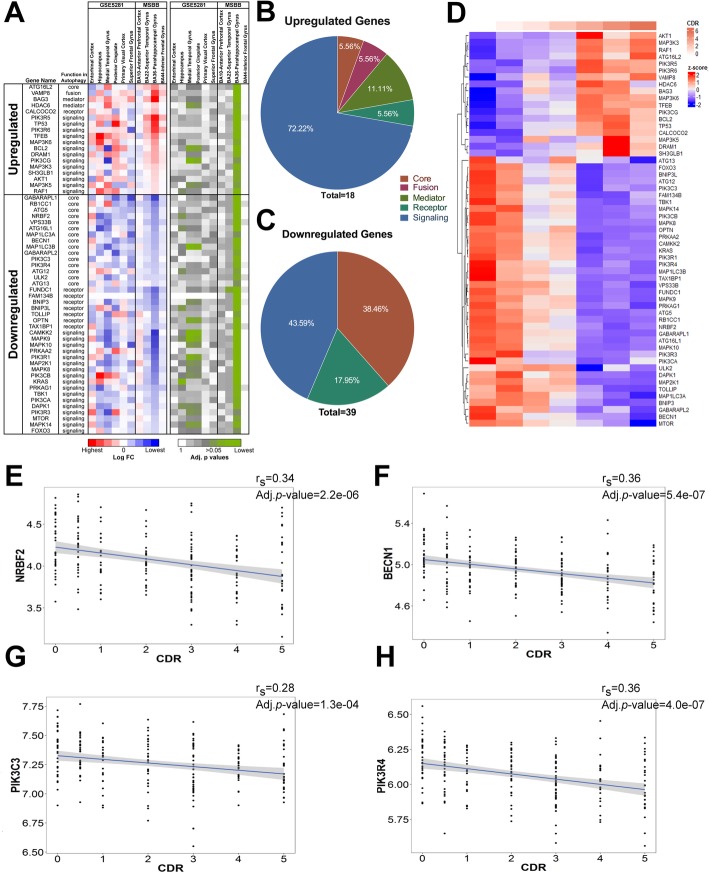
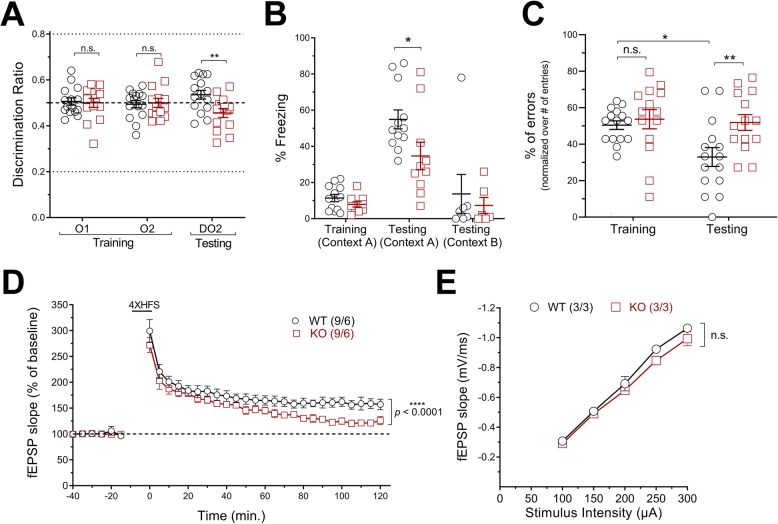
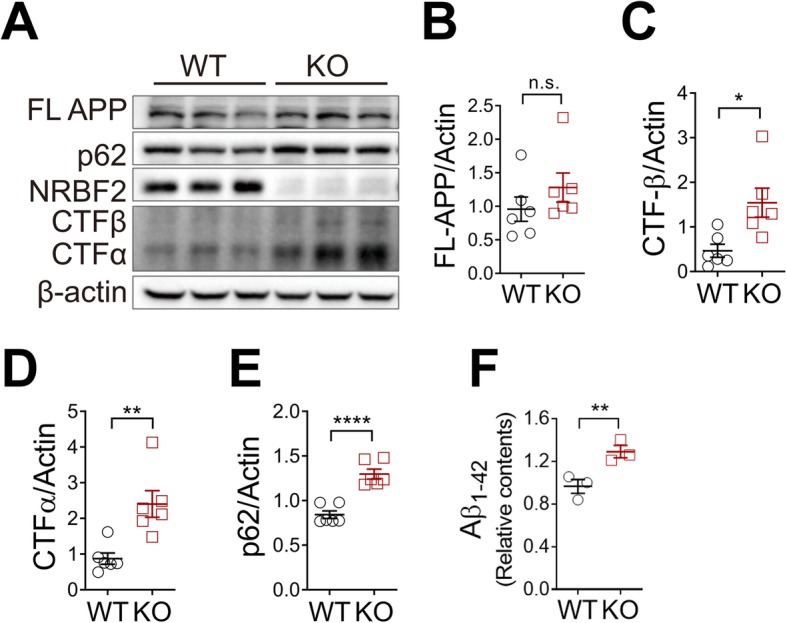
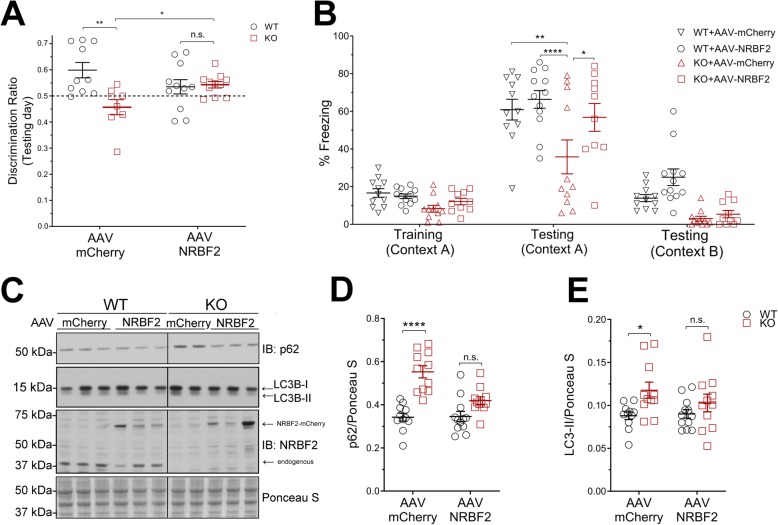
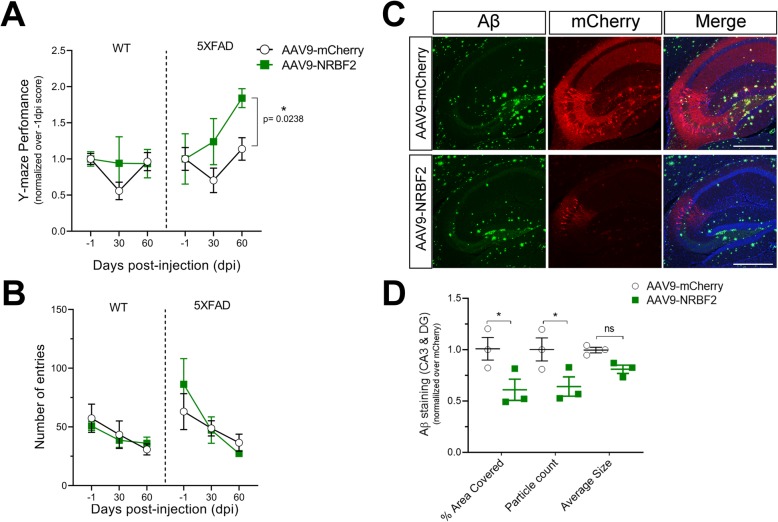
Background: Dysfunctional autophagy is implicated in Alzheimer’s Disease (AD) pathogenesis. The alterations in the expression of many autophagy related genes (ATGs) have been reported in AD brains; however, the disparity of the changes confounds the role of autophagy in AD. Methods: To further understand the autophagy alteration in AD brains, we analyzed transcriptomic (RNAseq) datasets of several brain regions (BA10, BA22, BA36 and BA44 in 223 patients compared to 59 healthy controls) and measured the expression of 130 ATGs. We used autophagy-deficient mouse models to assess the impact of the identified ATGs depletion on memory, autophagic activity and amyloid-β (Aβ) production. Results: We observed significant downregulation of multiple components of two autophagy kinase complexes BECN1-PIK3C3 and ULK1/2-FIP200 specifically in the parahippocampal gyrus (BA36). Most importantly, we demonstrated that deletion of NRBF2, a component of the BECN1-PIK3C3 complex, which also associates with ULK1/2-FIP200 complex, impairs memory in mice, alters long-term potentiation (LTP), reduces autophagy in mouse hippocampus, and promotes Aβ accumulation. Furthermore, AAV-mediated NRBF2 overexpression in the hippocampus not only rescues the impaired autophagy and memory deficits in NRBF2-depleted mice, but also reduces β-amyloid levels and improves memory in an AD mouse model. Conclusions: Our data not only implicates NRBF2 deficiency as a risk factor for cognitive impairment associated with AD, but also support the idea of NRBF2 as a potential therapeutic target for AD.
Overview
The claims and statistics of this paper haven’t been checked yet.
Free: it reads the open-access text and checks the first 5 claims that cite a source we can check. Create a free account to check every claim.
Integrity signals
Registry
Cites
Statistics
Figures
Verification
Claims the paper makes
The claims and statistics of this paper haven’t been checked yet.
Free: it reads the open-access text and checks the first 5 claims that cite a source we can check. Create a free account to check every claim.
Claims other papers make about this one
Each is checked against this paper’s own text: does it say what the citing paper says it does?
The check wasn’t confident either way, so it gives no verdict — never disputed.
In the citing paper
“We and others have shown that activating the ALP leads to a robust effect in attenuating tau and NFT pathology in tauopathy mouse models (16–18).”
From Autophagy deficiency modulates microglial lipid homeostasis and aggravates tau pathology and spreading (2021) · cites this paper as [18]
Experimental — accuracy not yet measuredIn the citing paper
“As an example, NRBF2 (nuclear receptor‐binding factor 2; a component of the PtdIns3K complex I) interacts with APP and favors its lysosomal disposal, as demonstrated by the fact that NRBF2 depletion leads to excessive levels of intracellular APP in cells (Yang et al, 2017b) and Aβ accumulation in AD mouse models (Lachance et al, 2019), whereas overexpression of NRBF2 reduces Aβ levels and improves mouse memory (Lachance et al, 2019).”
From Autophagy in major human diseases (2021) · cites this paper as Lachance et al, 2019
Self-check
Percentages, sums and reported differences re-computed from the paper’s own numbers.
The self-check needs the paper’s full text.
Citations
Cites
limma powers differential expression analyses for RNA-sequencing and microarray studies
Ritchie, M. E., Phipson, B., Wu, D., Hu, Y., Law, C. W., Shi, W., & Smyth, G. K. (2015) · Nucleic Acids Research · doi:10.1093/nar/gkv007 · Cited by 40,458 · cited 1×
“Differential gene analysis was performed using Bioconductor R Limma Package [21] with Benjamini-Hochberg correction for multiple testing.”
MethodRepertoires of Autophagy in the Pathogenesis of Ocular Diseases
Li, Y.-J., Jiang, Q., Cao, G.-F., Yao, J., & Yan, B. (2015) · Cellular Physiology and Biochemistry · doi:10.1159/000373980 · Cited by 16,304
AMPK and mTOR regulate autophagy through direct phosphorylation of Ulk1
Kim, J., Kundu, M., Viollet, B., & Guan, K.-L. (2011) · Nature Cell Biology · doi:10.1038/ncb2152 · Cited by 7,227 · cited 1×
“Given that AMPK signaling modulates autophagy [38], memory and LTP processes [14, 39, 40], we decided to examine the phosphorylation of AMPK-Thr172 as well as the phosphorylation of Raptor-Ser792 — an AMPK substrate [41] — to understand further the molecular changes occurring in NRBF2-KO hippocampus that could relate…”
BackgroundAMPK Phosphorylation of Raptor Mediates a Metabolic Checkpoint
Gwinn, D. M., Shackelford, D. B., Egan, D. F., Mihaylova, M. M., Mery, A., Vasquez, D. S., Turk, B. E., & Shaw, R. J. (2008) · Molecular Cell · doi:10.1016/j.molcel.2008.03.003 · Cited by 3,849 · cited 1×
“Given that AMPK signaling modulates autophagy [38], memory and LTP processes [14, 39, 40], we decided to examine the phosphorylation of AMPK-Thr172 as well as the phosphorylation of Raptor-Ser792 — an AMPK substrate [41] — to understand further the molecular changes occurring in NRBF2-KO hippocampus that could relate…”
BackgroundAntimicrobial Autophagy: A Conserved Innate Immune Response in Drosophila
Moy, R. H., & Cherry, S. (2013) · Journal of Innate Immunity · doi:10.1159/000350326 · Cited by 3,539
Oakley, H., Cole, S. L., Logan, S., Maus, E., Shao, P., Craft, J., Guillozet-Bongaarts, A., Ohno, M., Disterhoft, J., Van Eldik, L., et al. (2006) · The Journal of Neuroscience · doi:10.1523/jneurosci.1202-06.2006 · Cited by 3,530 · cited 2×
“Aβ42 level was quantify from hippocampal extracts.”
BackgroundDecreased Clearance of CNS β-Amyloid in Alzheimer’s Disease
Mawuenyega, K. G., Sigurdson, W., Ovod, V., Munsell, L., Kasten, T., Morris, J. C., Yarasheski, K. E., & Bateman, R. J. (2010) · Science · doi:10.1126/science.1197623 · Cited by 2,078
Masters, C. L., Bateman, R., Blennow, K., Rowe, C. C., Sperling, R. A., & Cummings, J. L. (2015) · Nature Reviews Disease Primers · doi:10.1038/nrdp.2015.56 · Cited by 1,853
Extensive Involvement of Autophagy in Alzheimer Disease: An Immuno-Electron Microscopy Study
Nixon, R. A., Wegiel, J., Kumar, A., Yu, W. H., Peterhoff, C., Cataldo, A., & Cuervo, A. M. (2005) · Journal of Neuropathology & Experimental Neurology · doi:10.1093/jnen/64.2.113 · Cited by 1,588 · cited 1×
“Early ultrastructural analysis of AD brains showed accumulation of autophagic vacuoles (AVs) in dystrophic neurites [9] and examination of autophagy pathway showed upregulation of mTOR activity, a negative regulator of autophagy signaling [10], and reduced expression of Beclin 1, a core component of class III PI3-kina…”
BackgroundNetwork organization of the human autophagy system
Behrends, C., Sowa, M. E., Gygi, S. P., & Harper, J. W. (2010) · Nature · doi:10.1038/nature09204 · Cited by 1,554 · cited 1×
“A list of 130 core ATGs was manually curated based on literature reviews [17, 18] and public database (www.”
Method
Cited by
Autophagy in major human diseases
Klionsky, D. J., Petroni, G., Amaravadi, R. K., Baehrecke, E. H., Ballabio, A., Boya, P., Bravo‐San Pedro, J. M., Cadwell, K., Cecconi, F., Choi, A. M. K., et al. (2021) · The EMBO Journal · doi:10.15252/embj.2021108863 · Cited by 1,585
Self-citationThe different autophagy degradation pathways and neurodegeneration
Fleming, A., Bourdenx, M., Fujimaki, M., Karabiyik, C., Krause, G. J., Lopez, A., Martín-Segura, A., Puri, C., Scrivo, A., Skidmore, J., et al. (2022) · Neuron · doi:10.1016/j.neuron.2022.01.017 · Cited by 480
Autophagy in Alzheimer’s disease pathogenesis: Therapeutic potential and future perspectives
Zhang, Z., Yang, X., Song, Y.-Q., & Tu, J. (2021) · Ageing Research Reviews · doi:10.1016/j.arr.2021.101464 · Cited by 369
Neuronal cell death mechanisms in Alzheimer’s disease: An insight
Goel, P., Chakrabarti, S., Goel, K., Bhutani, K., Chopra, T., & Bali, S. (2022) · Frontiers in Molecular Neuroscience · doi:10.3389/fnmol.2022.937133 · Cited by 234
“Furthermore, overexpression of NRBF2 in the hippocampus rescued impaired autophagy and memory deficits and also reduced β-amyloid levels and improved memory in an AD mouse model (Lachance et al., 2019).”
BackgroundDewanjee, S., Chakraborty, P., Bhattacharya, H., Chacko, L., Singh, B., Chaudhary, A., Javvaji, K., Pradhan, S. R., Vallamkondu, J., Dey, A., et al. (2022) · Free Radical Biology and Medicine · doi:10.1016/j.freeradbiomed.2022.09.032 · Cited by 229
Zhang, W., Xu, C., Sun, J., Shen, H.-M., Wang, J., & Yang, C. (2022) · Acta Pharmaceutica Sinica B · doi:10.1016/j.apsb.2022.01.008 · Cited by 205
Autophagy enables microglia to engage amyloid plaques and prevents microglial senescence
Choi, I., Wang, M., Yoo, S., Xu, P., Seegobin, S. P., Li, X., Han, X., Wang, Q., Peng, J., Zhang, B., et al. (2023) · Nature Cell Biology · doi:10.1038/s41556-023-01158-0 · Cited by 202
Self-citationXu, Y., Propson, N. E., Du, S., Xiong, W., & Zheng, H. (2021) · Proceedings of the National Academy of Sciences · doi:10.1073/pnas.2023418118 · Cited by 171
Alzheimer’s Disease: Exploring the Landscape of Cognitive Decline
Tenchov, R., Sasso, J. M., & Zhou, Q. A. (2024) · ACS Chemical Neuroscience · doi:10.1021/acschemneuro.4c00339 · Cited by 170
Yang, C., Su, C.-F., Iyaswamy, A., Krishnamoorthi, S. K., Zhu, Z., Yang, S., Tong, B. C., Liu, J., Sreenivasmurthy, S. G., Guan, X., et al. (2022) · Acta Pharmaceutica Sinica B · doi:10.1016/j.apsb.2022.01.017 · Cited by 125
Natural Compounds and Autophagy: Allies Against Neurodegeneration
Stacchiotti, A., & Corsetti, G. (2020) · Frontiers in Cell and Developmental Biology · doi:10.3389/fcell.2020.555409 · Cited by 111
“In a recent proteomic study Lachance et al. (2019) reported in post-mortem brain reduced gene expression for autophagy kinase complex in the para-hippocampal area and hippocampus.”
BackgroundTargeting autophagy in Alzheimer’s disease: Animal models and mechanisms
Zhang, X.-W., 澳门大学中华医药研究院中药质量研究国家重点实验室, 澳. 凼. 9., State Key Laboratory of Quality Research in Chinese Medicine, I. O. C. M. S., Zhu, X.-X., Tang, D.-S., Lu, J.-H., 佛山大学广东省动物分子设计与精准育种重点实验室, 广., & Guangdong Provincial Key Laboratory of Animal Molecular Design and Precise Breeding, G. E. T. C. O. G. P. (2023) · Zoological Research · doi:10.24272/j.issn.2095-8137.2023.294 · Cited by 77
Self-citationAshrafizadeh, M., Zarrabi, A., Orouei, S., Hushmandi, K., Hakimi, A., Zabolian, A., Daneshi, S., Samarghandian, S., Baradaran, B., & Najafi, M. (2020) · European Journal of Pharmacology · doi:10.1016/j.ejphar.2020.173660 · Cited by 77
TFEB in Alzheimer's disease: From molecular mechanisms to therapeutic implications
Gu, Z., Cao, H., Zuo, C., Huang, Y., Miao, J., Song, Y., Yang, Y., Zhu, L., & Wang, F. (2022) · Neurobiology of Disease · doi:10.1016/j.nbd.2022.105855 · Cited by 71
Cai, C.-Z., Yang, C., Zhuang, X., Yuan, N.-N., Wu, M.-Y., Tan, J., Song, J., Cheung, K., Su, H., Wang, Y., et al. (2020) · Autophagy · doi:10.1080/15548627.2020.1760623 · Cited by 60
“Furthermore, we recently reported that NRBF2 expression was reduced in parahippocampal gyrus and hippocampus in late-onset AD postmortem brains and nrbf2-/- mice displayed spatial memory deficits with long-term potentiation impairment (LTP) [38].”
BackgroundSelf-citationPharmacological modulation of autophagy for Alzheimer's disease therapy: Opportunities and obstacles
Deng, Z., Dong, Y., Zhou, X., Lu, J.-H., & Yue, Z. (2022) · Acta Pharmaceutica Sinica B · doi:10.1016/j.apsb.2021.12.009 · Cited by 58
Self-citationZeng, H., Chen, H., Li, M., Zhuang, J., Peng, Y., Zhou, H., Xu, C., Yu, Q., Fu, X., Cao, S., et al. (2021) · Journal of Neuroinflammation · doi:10.1186/s12974-021-02270-4 · Cited by 57
“In addition, NRBF2 may be a potential therapeutic target for cognitive impairment [13].”
BackgroundYang, J., Zhang, W., Zhang, S., Iyaswamy, A., Sun, J., Wang, J., & Yang, C. (2023) · Aging and Disease · doi:10.14336/ad.2022.0927 · Cited by 51
Regulatory Mechanisms and Therapeutic Implications of Lysosomal Dysfunction in Alzheimer's Disease
Kim, Y., Ha, T.-Y., Lee, M. S., & Chang, K.-A. (2025) · International Journal of Biological Sciences · doi:10.7150/ijbs.103028 · Cited by 54
Fernandes, T., Domingues, M. R., Moreira, P. I., & Pereira, C. (2023) · Biology · doi:10.3390/biology12030414 · Cited by 51
“However, the NRBF2 overexpression in mouse hippocampus rescues the impaired autophagy and memory deficits of NRBF2-KO mice, but also decreases Aβ levels and improves memory in 5×FAD mice [180].”
BackgroundThe pleiotropic roles of autophagy in Alzheimer’s disease: From pathophysiology to therapy
Festa, B. P., Barbosa, A. D., Rob, M., & Rubinsztein, D. C. (2021) · Current Opinion in Pharmacology · doi:10.1016/j.coph.2021.07.011 · Cited by 41
Organization of the autophagy pathway in neurons
Sidibe, D. K., Vogel, M. C., & Maday, S. (2022) · Current Opinion in Neurobiology · doi:10.1016/j.conb.2022.102554 · Cited by 44
Gebril, H. M., Aryasomayajula, A., de Lima, M. R. N., Uhrich, K. E., & Moghe, P. V. (2024) · Translational Neurodegeneration · doi:10.1186/s40035-023-00393-7 · Cited by 40
“In AD patients and animal models, impaired autophagosome biogenesis has been reported [111–113].”
BackgroundAutophagy Balances Neuroinflammation in Alzheimer’s Disease
Cheng, X., Wei, Y. Q., Qian, Z., & Han, L. (2022) · Cellular and Molecular Neurobiology · doi:10.1007/s10571-022-01269-6 · Cited by 41
Autophagy and Alzheimer’s Disease: Mechanisms and Impact Beyond the Brain
Hein, Z. M., Vishnumukkala, T., Karikalan, B., Alkatiri, A., Hussan, F., Jagadeesan, S., Kamaruzzaman, M. A., Ramli, M. D. C., Nassir, C. M. N. C. M., & Gopalakrishna, P. K. (2025) · Cells · doi:10.3390/cells14120911 · Cited by 42
“For instance, a genome-wide transcriptomic analysis revealed that many positive regulators of autophagy are transcriptionally upregulated in AD, potentially as a compensatory response [101].”
Zhou, X., Lee, Y.-K., Li, X., Kim, H., Sánchez-Priego, C., Han, X., Tan, H., Zhou, S., Fu, Y., Purtell, K., et al. (2024) · Nature Communications · doi:10.1038/s41467-024-47440-z · Cited by 40
“Our fi ndings thus provide additional insight into the mechanism whereby neuronal autophagy control synaptic activity underlying learning and memory 71 .”
BackgroundSelf-citationLin, X., Wen, X., Wei, Z., Guo, K., Shi, F., Huang, T., Wang, W., & Zheng, J. (2021) · Neuroreport · doi:10.1097/wnr.0000000000001599 · Cited by 40
Interplays of AMPK and TOR in Autophagy Regulation in Yeast
Alao, J. P., Legon, L., Dabrowska, A. F., Tricolici, A.-M., Kumar, J., & Rallis, C. (2023) · Cells · doi:10.3390/cells12040519 · Cited by 37
“Compromised autophagy has been shown to be a contributing factor in Alzheimer’s disease (AD), as evidenced by accumulation of immature autophagosomes [14] and decreased expression of autophagy genes in AD brains [15].”
BackgroundTMEM59 interacts with TREM2 and modulates TREM2-dependent microglial activities
Liu, Z., Ning, J., Zheng, X., Meng, J., Han, L., Zheng, H., Zhong, L., Chen, X., Zhang, X., Luo, H., et al. (2020) · Cell Death and Disease · doi:10.1038/s41419-020-02874-3 · Cited by 37
Self-citationRAB39B Deficiency Impairs Learning and Memory Partially Through Compromising Autophagy
Niu, M., Zheng, N., Wang, Z., Gao, Y., Luo, X., Chen, Z., Fu, X., Wang, Y., Wang, T., Liu, M., et al. (2020) · Frontiers in Cell and Developmental Biology · doi:10.3389/fcell.2020.598622 · Cited by 37
“Autophagy dysregulation may result in neurodevelopmental as well as neurodegenerative diseases (Lee et al., 2013; Frake et al., 2015; Beltran et al., 2019; Lachance et al., 2019).”
BackgroundSelf-citationCai, C.-Z., Zhuang, X., Zhu, Q., Wu, M.-Y., Su, H., Wang, X., Iyaswamy, A., Yue, Z., Wang, Q., Zhang, B., et al. (2022) · Theranostics · doi:10.7150/thno.64148 · Cited by 35
“Many studies have been performed to test whether enhancement of autophagy by genetic or pharmacological approaches can lead to improvement of AD phenotypes in AD models [10-12].”
BackgroundSelf-citationPreserved autophagy in cognitively intact non‐demented individuals with Alzheimer's neuropathology
Tumurbaatar, B., Fracassi, A., Scaduto, P., Guptarak, J., Woltjer, R., Jupiter, D., & Taglialatela, G. (2023) · Alzheimer's & Dementia · doi:10.1002/alz.13074 · Cited by 32
“Initially, immature autophago-some accumulation and dystrophic neurites were observed in the brains of AD patients via electron microscopy 16 , and examination of the autophagy pathway showed upregulation of the activity of the autophagynegativeregulatormTor 17 andreducedexpressionofBeclin 1 18 , NRBF2 19 , and Atg16…”
BackgroundDas, S., Murumulla, L., Ghosh, P., & Challa, S. (2025) · BioMetals · doi:10.1007/s10534-025-00665-x · Cited by 32
“Knockout of Nuclear Receptor Binding Factor 2 (NRBF2), a crucial component of autophagy kinase complexes, in aged mice results in impaired autophagy, increased Aβ accumulation in the hippocampus, and disruptions in long-term potentiation (LTP), leading to memory deficits (Lachance et al. 2019).”
Fu, Y., Zhang, J., Qin, R., Ren, Y., Zhou, T., Han, B., & Liu, B. (2025) · Pharmacological Reviews · doi:10.1016/j.pharmr.2025.100053 · Cited by 35
Zhang, M., Zhou, Y., Jiang, Y., Lu, Z., Xiao, X., Ning, J., Sun, H., Zhang, X., Luo, H., Can, D., et al. (2021) · Frontiers in Cell and Developmental Biology · doi:10.3389/fcell.2021.669798 · Cited by 33
“25_GRCm38.p5) using Bowtie2 (version 2.2.5) (Langmead and Salzberg, 2012).”
MethodInfluentialSelf-citationAutophagy system as a potential therapeutic target for neurodegenerative diseases
Cui, M., Yoshimori, T., & Nakamura, S. (2022) · Neurochemistry International · doi:10.1016/j.neuint.2022.105308 · Cited by 29
Zhao, N., 东南大学医学院神经内科, 江. 南. 2., Xiu, C., Chen, Q.-G., Liu, X.-T., Geng, F., Zhu, M., Yan, F., Zhang, Z., Ren, Q., et al. (2024) · 动物学研究 · doi:10.24272/j.issn.2095-8137.2024.085 · Cited by 28
The MicroRNA-Based Strategies to Combat Cancer Chemoresistance via Regulating Autophagy
Lei, Y., Chen, L., Liu, J., Zhong, Y., & Deng, L. (2022) · Frontiers in Oncology · doi:10.3389/fonc.2022.841625 · Cited by 29
“Dysregulation of autophagy is involved in various pathological events such as cardiovascular disease (15), neurological disease (16), endocrine disorder (17), and especially cancers (18).”
BackgroundAshrafizadeh, M., Zarrabi, A., Najafi, M., Samarghandian, S., Mohammadinejad, R., & Ahn, K. S. (2020) · Phytotherapy Research · doi:10.1002/ptr.6732 · Cited by 29
Ohashi, Y. (2021) · Autophagy · doi:10.1080/15548627.2021.1872240 · Cited by 25
“of Aβ and amyloid beta precursor protein C-terminal fragments (APP-CTFs) in cell models and mice models for AD [39,42,90].”
BackgroundZhang, X., Liu, J., Zhong, S., Zhang, Z., Zhou, Q., Yang, J., Chang, X., & Wang, H. (2024) · Environment & Health · doi:10.1021/envhealth.4c00176 · Cited by 21
Yang, Y., Shi, G., Ge, Y., Huang, S., Cui, N., Tan, L., Liu, R., & Yang, X. (2024) · Journal of Neuroinflammation · doi:10.1186/s12974-024-03314-1 · Cited by 19
“Furthermore, autophagy, a catabolic process that sequesters the cytoplasm, plays a neuroprotective role in AD [31].”
Meng, J., Han, L., Zheng, N., Xu, H., Liu, Z., Zhang, X., Luo, H., Can, D., Sun, H., Xu, H., et al. (2020) · Frontiers in Cell and Developmental Biology · doi:10.3389/fcell.2020.596030 · Cited by 22
“For Y maze test (Miedel et al., 2017; Lachance et al., 2019), each test mouse was placed in the center of a “Y” shaped chamber [30 cm (L) × 6 cm (W) × 15 cm (H)] and allowed to enter into each arm freely for 5 min.”
MethodSelf-citationThe cGAS-STING-autophagy pathway: Novel perspectives in neurotoxicity induced by manganese exposure
Zhang, X., Liu, J., & Wang, H. (2022) · Environmental Pollution · doi:10.1016/j.envpol.2022.120412 · Cited by 19
Fernandes, S. M., Mayer, J., Nilsson, P., & Shimozawa, M. (2025) · Frontiers in Cell and Developmental Biology · doi:10.3389/fcell.2024.1520949 · Cited by 20
Șerban, M., Toader, C., & Covache-Busuioc, R.-A. (2025) · International Journal of Molecular Sciences · doi:10.3390/ijms26168072 · Cited by 18
Wang, Z., Feng, W., Li, X., Yun, X., Wu, S., Du, L., & Wang, H. (2026) · Ageing Research Reviews · doi:10.1016/j.arr.2026.103035 · Cited by 19
Longobardi, A., Catania, M., Geviti, A., Salvi, E., Vecchi, E. R., Bellini, S., Saraceno, C., Nicsanu, R., Squitti, R., Binetti, G. G., et al. (2024) · International Journal of Molecular Sciences · doi:10.3390/ijms25021125 · Cited by 16
“Alterations in ULK1 were observed in AD brain specimens, which correlates with clinical dementia progression [25].”
BackgroundRepurposing Sigma-1 Receptor-Targeting Drugs for Therapeutic Advances in Neurodegenerative Disorders
Eskandari, K., Bélanger, S.-M., Lachance, V., & Kourrich, S. (2025) · Pharmaceuticals · doi:10.3390/ph18050700 · Cited by 17
Self-citationNuclear receptor binding factor 2 (NRBF2) is required for learning and memory
Ouyang, X., Ahmad, I., Johnson, M. S., Redmann, M., Craver, J., Wani, W. Y., Benavides, G. A., Chacko, B. K., Li, P., Young, M. E., et al. (2020) · Laboratory Investigation · doi:10.1038/s41374-020-0433-4 · Cited by 15
MicroRNAs regulating autophagy: opportunities in treating neurodegenerative diseases
Mohseni, M., Behzad, G., Farhadi, A., Behroozi, J., Mohseni, H., & Valipour, B. (2024) · Frontiers in Neuroscience · doi:10.3389/fnins.2024.1397106 · Cited by 14
Navakkode, S., & Kennedy, B. K. (2025) · Aging Cell · doi:10.1111/acel.70235 · Cited by 11
Thakur, A., Rana, M., Vanjani, S., Liou, K.-C., Taliyan, R., Nepali, K., & Yang, C. (2026) · Medicinal Research Reviews · doi:10.1002/med.70047 · Cited by 12
The ER protein CANX (calnexin)-mediated autophagy protects against alzheimer disease
Shen, H., Xie, Y., Wang, Y., Xie, Y., Wang, Y., Su, Z., Zhao, L., Yao, S., Cao, X., Liang, J., et al. (2025) · Autophagy · doi:10.1080/15548627.2024.2447206 · Cited by 12
“Apart from core autophagy proteins, BECN1 and NRBF2, two regulative components of the PIK3C3/VPS34 complex have also been proven to be critical for regulating Aβ aggregation and cognitive function in mice [27,43,50].”
InfluentialUnraveling the mysterious veil of ULK1: From non-canonical functions to therapeutic applications
Zhu, L., Li, Z., Wang, H., Cheng, Z., & Zhang, L. (2025) · International Journal of Biological Macromolecules · doi:10.1016/j.ijbiomac.2025.145177 · Cited by 10
Alterations of ATG4A and LC3B in neurons derived from Alzheimer's disease patients
Shirotani, K., Watanabe, K., Hatta, D., Kutoku, Y., Ohsawa, Y., Sunada, Y., Kondo, T., Inoue, H., & Iwata, N. (2023) · Genes to Cells · doi:10.1111/gtc.13010 · Cited by 8
“Although clinical trials for disease-modifying drugs have been conducted for more than two decades, no effective drugs are available (Haass & Selkoe, 2022; Long & Holtzman, 2019).”
BackgroundA perspective on autophagy and transcription factor EB in Alcohol-Associated Alzheimer’s disease
Zhang, C., Chen, H., Rodriguez, Y., Ma, X., Swerdlow, R. H., Zhang, J., & Ding, W. (2023) · Biochemical Pharmacology · doi:10.1016/j.bcp.2023.115576 · Cited by 8
Girolimetti, G., Calcagnile, M., & Bucci, C. (2025) · International Journal of Molecular Sciences · doi:10.3390/ijms26209858 · Cited by 7
“However, as AD progresses, autophagic flux becomes impaired [143], and the downregulation of several autophagy-related proteins was found in AD brains [144,145].”
Targeting macroautophagy to combat neurodegenerative disease: strategies and considerations
Duncan, G. M., & Yamamoto, A. (2025) · Autophagy Reports · doi:10.1080/27694127.2025.2571940 · Cited by 6
“In postmortem AD brain, changes in the balance between Complex I and II has been reported, with NRBF2 levels diminished and RUBCN levels increased [43] .”
The many connections of UFMylation with Alzheimer’s disease: a comprehensive review
Yan, T., Clarkson, B. D. S., Lou, Z., Springer, W., & Fiesel, F. C. (2025) · Molecular Neurodegeneration · doi:10.1186/s13024-025-00855-8 · Cited by 5
“Dysregulation of autophagy in AD is evident in both animal models and human patients [14, 146, 151–155].”
The Central Role of Neuronal Cell Death in Alzheimer’s Disease Pathobiology
Kwak, S., Kim, J. K., Lee, Y., Baek, H. S., Kwon, Y. J., Park, M.-N., Hong, J., Lee, S.-B., Kim, H. W., & Kim, S. H. (2026) · Biomedicines · doi:10.3390/biomedicines14050953 · Cited by 6
“Reduced Beclin-1 enhances A β accumulation and accelerates neurodegeneration in models, while the deficiency of cofactors such as NRBF2 disrupts flux, impairs memory, and increases the A β burden [13,14].”
Pandey, N., Chandra, O., Mishra, S. V., & Kumar, V. (2021) · Frontiers in Genetics · doi:10.3389/fgene.2021.738194 · Cited by 5
“The autophagy associated gene NRBF2 is known to have a reduction of expression in the human brain with Alzheimer’s disease (the seventh cause of death worldwide) (Lachance et al., 2019).”
BackgroundPhysiological Roles of Hippo Signaling Pathway and Autophagy in Dementia
Christoper, A., Herman, H., Abdulah, R., Zulhendri, F., Sanjaya, A., & Lesmana, R. (2023) · Current Aging Science · doi:10.2174/1874609816666230206144212 · Cited by 5
The mechanism of disease progression by aging and age-related gut dysbiosis in multiple sclerosis
Yadav, S. K., Chen, C., Dhib-Jalbut, S. S., & Ito, K. (2025) · Neurobiology of Disease · doi:10.1016/j.nbd.2025.106956 · Cited by 4
“The accumulation of damaged cellular components due to reduced autophagic activity is associated with age-related neurodegenerative diseases such as Alzheimer ’ s disease and Parkinson ’ s disease (Filippone et al., 2022; Lachance et al., 2019; Pitcairn et al., 2023).”
Zhang, J., Zhang, T., Wang, Y., Yao, L., & Yao, J. (2023) · Journal of Alzheimer s Disease · doi:10.3233/jad-221039 · Cited by 3
Cho, J., Bae, S., Jeon, J., Transfeld, J. L., Lee, C., Nott, A., Gao, F., & Seo, J. (2025) · iScience · doi:10.1016/j.isci.2025.112446 · Cited by 3
“28,29 Imbalances of metal ions, such as copper and zinc in AD, can also cause overproduction of ROS.”
Duckhorn, J. C., Kim, D. K., & Huang, Y. A. (2025) · Neural Regeneration Research · doi:10.4103/nrr.nrr-d-25-00243 · Cited by 2
“Autophagy proteins ATG5, ATG16L, Rubicon, FIP200, BECN1, and NRBF2 levels have been shown to be reduced in AD brains (Pickford et al., 2008; Rohn et al., 2011; Lucin et al., 2013; Lachance et al., 2019; Heckmann et al., 2020).”
Li, N., Li, X., Qiu, X., Pan, X., Wu, S., Chen, J., Liu, R., Lu, J., Yue, Z., & Zhao, Y. (2025) · Autophagy · doi:10.1080/15548627.2025.2580438 · Cited by 2
“NRBF2 is also linked to Alzheimer disease (AD) as it mediates autophagic degradation of amyloid beta precursor protein (APP) and its protein level is reduced in brains of 5xFAD transgenic AD mice [16,17].”
Self-citationNanotechnology-based targeted delivery strategies for the treatment of Alzheimer's disease
Yuan, X., Tang, Q., & Wang, T. (2026) · Nanoscale Advances · doi:10.1039/d5na00993f · Cited by 2
Paidi, R. K., Gorai, S., Mondal, S., & Pahan, K. (2026) · Journal of Neurochemistry · doi:10.1111/jnc.70432 · Cited by 2
Mou, L., Li, K., Xu, C., Xu, I., Yang, Y., & Pu, Z. (2023) · Journal of Gastroenterology and Hepatology · doi:10.1111/jgh.16172 · Cited by 2
Autophagy in DG engrams mediates Rac1-dependent forgetting via TLR2/4 signals in microgliaPreprint
Wang, Z., Chen, R., Lin, Q., Jiang, Y., Le, Q., Liu, X., Ma, L., & Wang, F. (2021) · bioRxiv (Cold Spring Harbor Laboratory) · doi:10.1101/2021.08.26.457763 · Cited by 2
“Other researches demonstrated that autophagy kinase complexes such as BECN1-PIK3C3 were reduced in hippocampus of AD mouse model (Lachance et al., 2019).”
BackgroundEmerging roles of NRBF2/PI3KC3 axis in maintaining homeostasis of brain and guts
Li, M., Cai, C.-Z., Yang, C., Yue, Z., Chen, Y., Bian, Z.-X., Li, M., & Lu, J. (2021) · Neural Regeneration Research · doi:10.4103/1673-5374.317973 · Cited by 1
“In fact, we recently reported that NRBF2 expression was reduced in parahippocampal gyrus and hippocampus in late-onset AD postmortem brains (Lachance et al., 2019).”
BackgroundSelf-citationAutophagy Mechanisms for Brain Recovery. Keep It Clean, Keep It Alive
Nobili, A., Barbera, L. L., Mastrantonio, R., Palazzo, C., Molinari, M., D’Amelio, M., & Viscomi, M. T. (2023) · Contemporary clinical neuroscience · doi:10.1007/978-3-031-24930-3_2 · Cited by 1
Wu, S., Zhuang, H., Zhou, X., & Li, K. (2025) · Frontiers in Behavioral Neuroscience · doi:10.3389/fnbeh.2025.1529522 · Cited by 1
Role and relation of cell death in Alzheimer’s disease
Hoang, D. A., Le, D. A., Do, T. M. H., & Than, V. T. (2025) · Progress in molecular biology and translational science · doi:10.1016/bs.pmbts.2025.06.024 · Cited by 2
Milán, J. A. S., Mulet, M., Molet, I., Lisa-Molina, J., Font-Alberich, M., Lorca, C., Gea‐Sánchez, M., Bellon, F., Batalla, I., Meana, J. J., et al. (2026) · Acta Neuropathologica Communications · doi:10.1186/s40478-026-02223-z · Cited by 1
“In a similar context, prior research has established that bEV are integral to both signaling and proteostasis in brains affected by neurodegenerative conditions [1, 23, 33].”
Transcriptomic and proteomic insights into progressive myoclonus epilepsy type 1
Malyutina, A., Lund, C., Tegelberg, S., Hakala, P., Nyman, T. A., Lehesjoki, A.-E., & Joensuu, T. H. (2026) · Disease Models & Mechanisms · doi:10.1242/dmm.052681 · Cited by 1
“Among the autophagy-associated genes, Nrbf2 , a nuclear receptor-binding factor involved in the regulation of autophagy, memory and long-term potentiation in mice (Lu et al., 2014; Lachance et al., 2019), was consistently downregulated in the cerebellum from 1 month onwards (Fig.”
Roles of autophagy in brain homeostasis and disease
Kim, H., Wickstead, E. S., Zhou, X., Choi, I., & Yue, Z. (2026) · Nature Neuroscience · doi:10.1038/s41593-026-02426-6 · Cited by 1
Self-citationAlzheimer’s Disease: Link to Biomolecular Mechanisms and Clinical Pathologies
Gezen‐Ak, D., & Dursun, E. (2024) · doi:10.69860/nobel.9786053359166.4
Nutraceuticals for Brain Longevity and Autophagy Activation
Adhikary, K., Abubakar, M., Ganguly, K., Sarkar, R., Ambawatiya, A., Mohanty, P., & Kumar, N. (2025) · Nutritional neurosciences · doi:10.1007/978-981-95-2790-8_14
Wang, E., Chen, M., Wang, Y., Wang, S., Song, Z.-H., Yang, K., Li, J.-T., Zhuang, X., Wang, W., Wu, M.-Y., et al. (2025) · bioRxiv (Cold Spring Harbor Laboratory) · doi:10.1101/2025.10.31.685958
“While global Nrbf2 deletion has been shown to impair memory by disrupting synaptic plasticity in mice, the specific contribution of astrocytes to these processes remained undefined 11 .”
Self-citationZeng, H., Chen, H., Li, M., Zhuang, J., Peng, Y., Zhou, H., Xu, C., Yu, Q., Fu, X., Cao, S., et al. (2021) · Figshare · doi:10.6084/m9.figshare.16633526
Zeng, H., Chen, H., Li, M., Zhuang, J., Peng, Y., Zhou, H., Xu, C., Yu, Q., Fu, X., Cao, S., et al. (2021) · Figshare · doi:10.6084/m9.figshare.16633544
Zeng, H., Chen, H., Li, M., Zhuang, J., Peng, Y., Zhou, H., Xu, C., Yu, Q., Fu, X., Cao, S., et al. (2021) · Figshare · doi:10.6084/m9.figshare.16633541
Zeng, H., Chen, H., Li, M., Zhuang, J., Peng, Y., Zhou, H., Xu, C., Yu, Q., Fu, X., Cao, S., et al. (2021) · Figshare · doi:10.6084/m9.figshare.16633538
Zeng, H., Chen, H., Li, M., Zhuang, J., Peng, Y., Zhou, H., Xu, C., Yu, Q., Fu, X., Cao, S., et al. (2021) · Figshare · doi:10.6084/m9.figshare.16633535
Zeng, H., Chen, H., Li, M., Zhuang, J., Peng, Y., Zhou, H., Xu, C., Yu, Q., Fu, X., Cao, S., et al. (2021) · Figshare · doi:10.6084/m9.figshare.16633523
Zeng, H., Chen, H., Li, M., Zhuang, J., Peng, Y., Zhou, H., Xu, C., Yu, Q., Fu, X., Cao, S., et al. (2021) · Figshare · doi:10.6084/m9.figshare.16633529
Zeng, H., Chen, H., Li, M., Zhuang, J., Peng, Y., Zhou, H., Xu, C., Yu, Q., Fu, X., Cao, S., et al. (2021) · Figshare · doi:10.6084/m9.figshare.16633532
Armeli, F. (2023) · IRIS Research product catalog (Sapienza University of Rome)
Sex- and brain region-specific gene expression in Alzheimer's disease
Wan, Z., Feng, X., Chou, J., Zhou, X., Ma, T., & Zhang, T. (2026) · Journal of Alzheimer s Disease · doi:10.1177/13872877251413797
The influence of the liposomal form of curcumin and microRNA on the course of Alzheimer’s disease
Kot, Y. G., Kot, K., Андріяш, Г. С., Tigunova, O., Blume, Y. B., & Shulga, S. (2025) · Regulatory Mechanisms in Biosystems · doi:10.15421/0225187
Du génome humain au modèle murin : compréhension des ciliopathies
Delvallée, C. (2020) · theses.fr (ABES) · doi:10.70675/09e80c82z8902z406cz811az98cd7652a079 · Cited by 1
Wang, K., Jiang, B., Huang, X., Zhang, Y., Qi, H., Xu, S., Sun, L., & Liu, Y. (2026) · Frontiers in Pharmacology · doi:10.3389/fphar.2026.1776868 · Cited by 1
Self-citationAbdel‐Aal, R. A., Abdelnabi, S., Badary, D. M., & Hussein, A. M. R. (2026) · European Journal of Pharmacology · doi:10.1016/j.ejphar.2026.179087
Endolysosomal pathway and autophagy dysregulation in Alzheimer’s disease
Singh, A., Gulati, I., Darshna, D., & Tiwari, S. S. (2026) · International review of neurobiology · doi:10.1016/bs.irn.2026.08.002
Xing-ran, L., Zhang, M., Chen, D.-D., Chang, J.-R., & Kou, X. (2026) · Metabolic Brain Disease · doi:10.1007/s11011-026-01982-x
“This aligns with previous reports of reduced autophagy in aged and AD brains (Lachance et al. 2019).”
Metadata
- Authors
- Lachance, V., Wang, Q., Sweet, E., Choi, I., Cai, C.-Z., Zhuang, X.-X., Zhang, Y., Jiang, J. L., Blitzer, R. D., Bozdagi-Gunal, O., Zhang, B., Lu, J.-H., & Yue, Z.
- Affiliations
- Icahn School of Medicine at Mount Sinai (US)
- West Chester University (US)
- University of Macau (MO)
- Rutgers New Jersey Medical School (US)
- Corresponding author
- Yue, Zhenyu
- ORCID
- Venue
- Molecular Neurodegeneration
- Published
- 2019-11-27
- Volume
- 14
- Issue
- 1
- Pages
- 43-43
- ISSN
- 1750-1326 (ISSN-L)
- PMC
- PMC6882183
- OpenAlex
- W2990412002
- Cited by
- 96
- References
- 53
- Citations by year
- 2026: 12 · 2025: 21 · 2024: 9 · 2023: 12 · 2022: 13 · 2021: 20 · 2020: 9
- FWCI
- 7.20
- Type
- journal article
- Language
- en
- Open access
- gold
- doi.org
- Licence
- cc-by
- creativecommons.org/licenses/by/4.0/ (tdm)
- creativecommons.org/licenses/by/4.0/ (vor)
- Locations
- Molecular Neurodegeneration (publishedVersion, cc-by)
- PubMed Central (publishedVersion, cc-by)
- PubMed (publishedVersion)
- DOAJ (DOAJ: Directory of Open Access Journals) (submittedVersion)
- Funders
- National Institute of Neurological Disorders and Stroke (R01-NS060123)
- National Institute of Mental Health (R01-MH103455)
- National Institutes of Health (2U01AG046170-06)
- Canadian Institutes of Health Research (MFE-146812)
- Topics
- Life Sciences › Neuroscience › Cellular and Molecular Neuroscience › Alzheimer's disease research and treatments
- Life Sciences › Biochemistry, Genetics and Molecular Biology › Cell Biology › Autophagy in Disease and Therapy
- Life Sciences › Neuroscience › Neurology › Neuroinflammation and Neurodegeneration Mechanisms
- Keywords
- Alzheimer's disease, autophagy, memory impairment, long-term potentiation, hippocampus, parahippocampal gyrus, autophagy-related genes, AAV gene overexpression, therapeutic target
- MeSH terms
- Autophagy-Related Proteins, Alzheimer Disease, Animals, Autophagy, Brain, Disease Models, Animal, Memory, Memory Disorders, Mice, Transgenic, Neurons, Trans-Activators, Amyloid beta-Peptides, Amyloid beta-Protein Precursor, Mice, Cognitive Dysfunction
About these checks
Registry, retraction, Cites and statistics results are computed, not judged, with one exception: a printed reference that no index lists is read once by a model before it counts as a citation error. Claims are extracted by a model and kept only when their quote appears verbatim in the text; each cited source is then checked, with a model’s help, for whether it says what the claim relies on. Those verdicts can be wrong — read the claim’s quote and the cited source before relying on one.
Statistics and arithmetic are recomputed, not judged.
Confidence bands are shown only for fields calibrated on our annotated test set. None is calibrated yet, so no band is shown.
What counts as a claim ›How we measure confidence ›How we check this ›
Are you an author, or do you see a problem with this page? Request a review
Data sources
Bibliographic data: Semantic Scholar, OpenAlex, Crossref.
Contains information from the Semantic Scholar Academic Graph Datasets, made available under the ODC Attribution License (ODC-BY 1.0).
Semantic Scholar’s data is described in: Kinney, R., et al. (2023). The Semantic Scholar Open Data Platform. arXiv:2301.10140.
