

Autophagy protein NRBF2 has reduced expression in Alzheimer’s brains and modulates memory and amyloid-beta homeostasis in mice
Open accessThe DOI matches its Crossref record; 53 of the 53 references it cites were found in a registry or an index.
Abstract
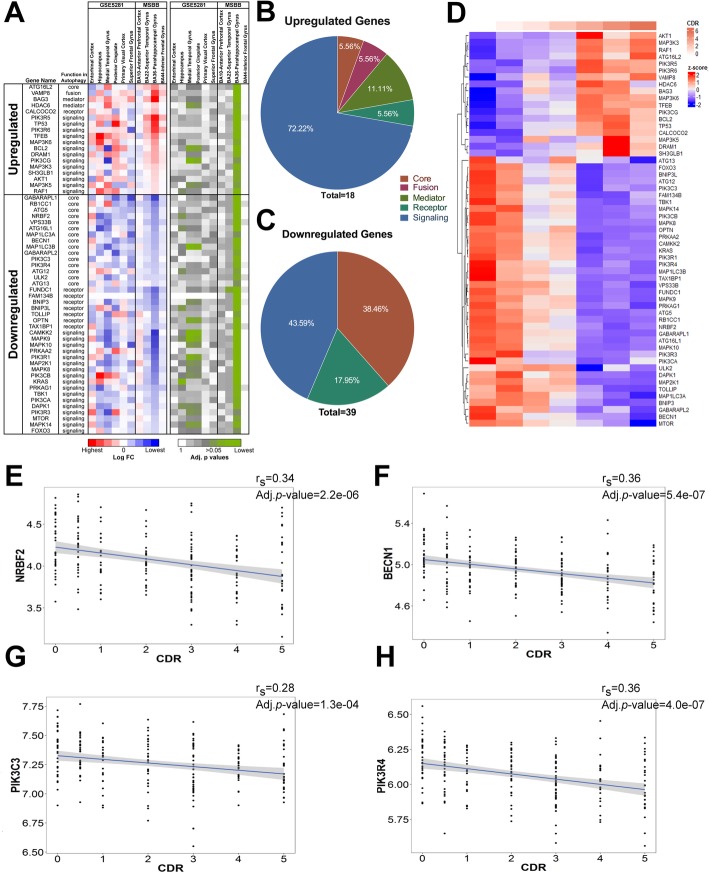
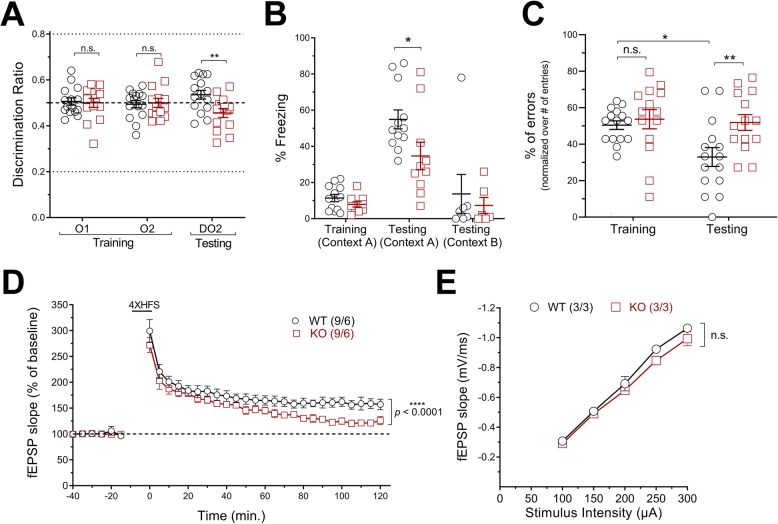
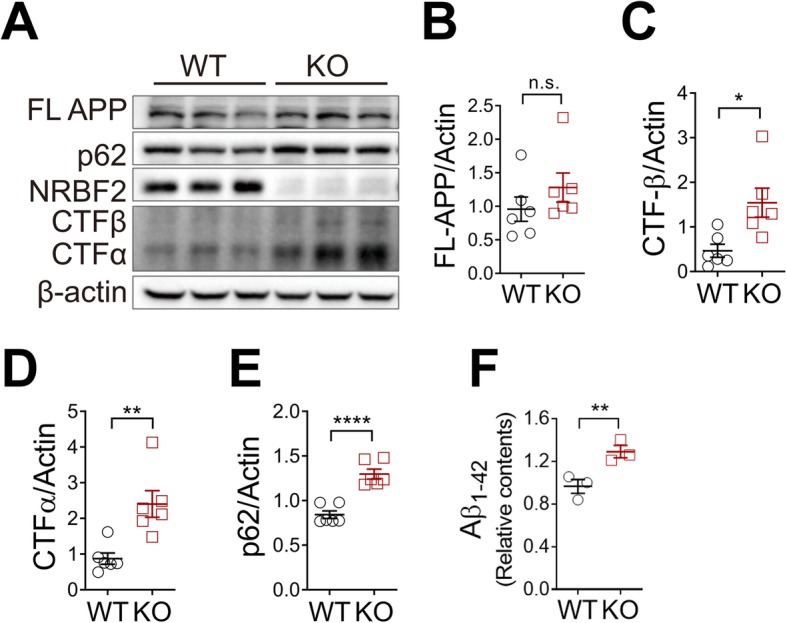
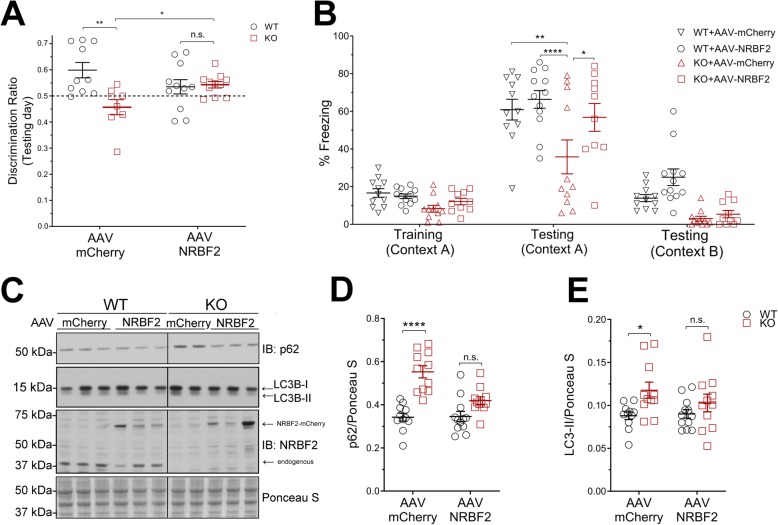
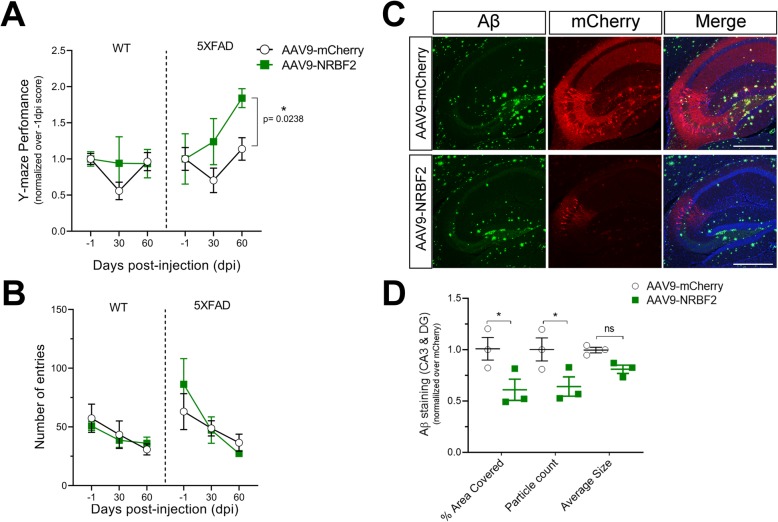
Background: Dysfunctional autophagy is implicated in Alzheimer’s Disease (AD) pathogenesis. The alterations in the expression of many autophagy related genes (ATGs) have been reported in AD brains; however, the disparity of the changes confounds the role of autophagy in AD. Methods: To further understand the autophagy alteration in AD brains, we analyzed transcriptomic (RNAseq) datasets of several brain regions (BA10, BA22, BA36 and BA44 in 223 patients compared to 59 healthy controls) and measured the expression of 130 ATGs. We used autophagy-deficient mouse models to assess the impact of the identified ATGs depletion on memory, autophagic activity and amyloid-β (Aβ) production. Results: We observed significant downregulation of multiple components of two autophagy kinase complexes BECN1-PIK3C3 and ULK1/2-FIP200 specifically in the parahippocampal gyrus (BA36). Most importantly, we demonstrated that deletion of NRBF2, a component of the BECN1-PIK3C3 complex, which also associates with ULK1/2-FIP200 complex, impairs memory in mice, alters long-term potentiation (LTP), reduces autophagy in mouse hippocampus, and promotes Aβ accumulation. Furthermore, AAV-mediated NRBF2 overexpression in the hippocampus not only rescues the impaired autophagy and memory deficits in NRBF2-depleted mice, but also reduces β-amyloid levels and improves memory in an AD mouse model. Conclusions: Our data not only implicates NRBF2 deficiency as a risk factor for cognitive impairment associated with AD, but also support the idea of NRBF2 as a potential therapeutic target for AD.
Overview
The claims and statistics of this paper haven’t been checked yet.
Free: it reads the open-access text and checks the first 5 claims that cite a source we can check. Create a free account to check every claim.
Integrity signals
Registry
Cites
Statistics
Figures
Verification
Claims the paper makes
The claims and statistics of this paper haven’t been checked yet.
Free: it reads the open-access text and checks the first 5 claims that cite a source we can check. Create a free account to check every claim.
Claims other papers make about this one
Each is checked against this paper’s own text: does it say what the citing paper says it does?
The check wasn’t confident either way, so it gives no verdict — never disputed.
In the citing paper
“We and others have shown that activating the ALP leads to a robust effect in attenuating tau and NFT pathology in tauopathy mouse models (16–18).”
From Autophagy deficiency modulates microglial lipid homeostasis and aggravates tau pathology and spreading (2021) · cites this paper as [18]
Experimental — accuracy not yet measuredIn the citing paper
“As an example, NRBF2 (nuclear receptor‐binding factor 2; a component of the PtdIns3K complex I) interacts with APP and favors its lysosomal disposal, as demonstrated by the fact that NRBF2 depletion leads to excessive levels of intracellular APP in cells (Yang et al, 2017b) and Aβ accumulation in AD mouse models (Lachance et al, 2019), whereas overexpression of NRBF2 reduces Aβ levels and improves mouse memory (Lachance et al, 2019).”
From Autophagy in major human diseases (2021) · cites this paper as Lachance et al, 2019
Self-check
Percentages, sums and reported differences re-computed from the paper’s own numbers.
The self-check needs the paper’s full text.
Citations
Cites
limma powers differential expression analyses for RNA-sequencing and microarray studies
Ritchie, M. E., Phipson, B., Wu, D., Hu, Y., Law, C. W., Shi, W., & Smyth, G. K. (2015) · Nucleic Acids Research · doi:10.1093/nar/gkv007 · Cited by 40,458 · cited 1×
“Differential gene analysis was performed using Bioconductor R Limma Package [21] with Benjamini-Hochberg correction for multiple testing.”
MethodRepertoires of Autophagy in the Pathogenesis of Ocular Diseases
Li, Y.-J., Jiang, Q., Cao, G.-F., Yao, J., & Yan, B. (2015) · Cellular Physiology and Biochemistry · doi:10.1159/000373980 · Cited by 16,304
AMPK and mTOR regulate autophagy through direct phosphorylation of Ulk1
Kim, J., Kundu, M., Viollet, B., & Guan, K.-L. (2011) · Nature Cell Biology · doi:10.1038/ncb2152 · Cited by 7,227 · cited 1×
“Given that AMPK signaling modulates autophagy [38], memory and LTP processes [14, 39, 40], we decided to examine the phosphorylation of AMPK-Thr172 as well as the phosphorylation of Raptor-Ser792 — an AMPK substrate [41] — to understand further the molecular changes occurring in NRBF2-KO hippocampus that could relate…”
BackgroundAMPK Phosphorylation of Raptor Mediates a Metabolic Checkpoint
Gwinn, D. M., Shackelford, D. B., Egan, D. F., Mihaylova, M. M., Mery, A., Vasquez, D. S., Turk, B. E., & Shaw, R. J. (2008) · Molecular Cell · doi:10.1016/j.molcel.2008.03.003 · Cited by 3,849 · cited 1×
“Given that AMPK signaling modulates autophagy [38], memory and LTP processes [14, 39, 40], we decided to examine the phosphorylation of AMPK-Thr172 as well as the phosphorylation of Raptor-Ser792 — an AMPK substrate [41] — to understand further the molecular changes occurring in NRBF2-KO hippocampus that could relate…”
BackgroundAntimicrobial Autophagy: A Conserved Innate Immune Response in Drosophila
Moy, R. H., & Cherry, S. (2013) · Journal of Innate Immunity · doi:10.1159/000350326 · Cited by 3,539
Oakley, H., Cole, S. L., Logan, S., Maus, E., Shao, P., Craft, J., Guillozet-Bongaarts, A., Ohno, M., Disterhoft, J., Van Eldik, L., et al. (2006) · The Journal of Neuroscience · doi:10.1523/jneurosci.1202-06.2006 · Cited by 3,530 · cited 2×
“Aβ42 level was quantify from hippocampal extracts.”
BackgroundDecreased Clearance of CNS β-Amyloid in Alzheimer’s Disease
Mawuenyega, K. G., Sigurdson, W., Ovod, V., Munsell, L., Kasten, T., Morris, J. C., Yarasheski, K. E., & Bateman, R. J. (2010) · Science · doi:10.1126/science.1197623 · Cited by 2,078
Masters, C. L., Bateman, R., Blennow, K., Rowe, C. C., Sperling, R. A., & Cummings, J. L. (2015) · Nature Reviews Disease Primers · doi:10.1038/nrdp.2015.56 · Cited by 1,853
Extensive Involvement of Autophagy in Alzheimer Disease: An Immuno-Electron Microscopy Study
Nixon, R. A., Wegiel, J., Kumar, A., Yu, W. H., Peterhoff, C., Cataldo, A., & Cuervo, A. M. (2005) · Journal of Neuropathology & Experimental Neurology · doi:10.1093/jnen/64.2.113 · Cited by 1,588 · cited 1×
“Early ultrastructural analysis of AD brains showed accumulation of autophagic vacuoles (AVs) in dystrophic neurites [9] and examination of autophagy pathway showed upregulation of mTOR activity, a negative regulator of autophagy signaling [10], and reduced expression of Beclin 1, a core component of class III PI3-kina…”
BackgroundNetwork organization of the human autophagy system
Behrends, C., Sowa, M. E., Gygi, S. P., & Harper, J. W. (2010) · Nature · doi:10.1038/nature09204 · Cited by 1,554 · cited 1×
“A list of 130 core ATGs was manually curated based on literature reviews [17, 18] and public database (www.”
MethodRegulation of 4E-BP1 phosphorylation: a novel two-step mechanism
Gingras, A.-C., Gygi, S. P., Raught, B., Polakiewicz, R. D., Abraham, R. T., Hoekstra, M. F., Aebersold, R., & Sonenberg, N. (1999) · Genes & Development · doi:10.1101/gad.13.11.1422 · Cited by 1,343 · cited 1×
“Ser2481, [42] and phosphorylation of 4E-BP1-Thr37/46 [43], a known mTOR substrate, while both are crucial for LTP and memory consolidation [44– 46].”
BackgroundThe autophagosome: origins unknown, biogenesis complex
Lamb, C. A., Yoshimori, T., & Tooze, S. A. (2013) · Nature Reviews Molecular Cell Biology · doi:10.1038/nrm3696 · Cited by 1,314 · cited 1×
“A list of 130 core ATGs was manually curated based on literature reviews [17, 18] and public database (www.”
MethodAutophagy and Neurodegeneration: Pathogenic Mechanisms and Therapeutic Opportunities
Menzies, F. M., Fleming, A., Caricasole, A., Bento, C. F., Andrews, S. P., Ashkenazi, A., Füllgrabe, J., Jackson, A., Jimenez Sanchez, M., Karabiyik, C., et al. (2017) · Neuron · doi:10.1016/j.neuron.2017.01.022 · Cited by 1,134
Monitoring and Measuring Autophagy
Yoshii, S. R., & Mizushima, N. (2017) · International Journal of Molecular Sciences · doi:10.3390/ijms18091865 · Cited by 1,107 · cited 1×
“Upon NRBF2 deletion, autophagy markers, p62 and LC3-II, accumulated most significantly in the hippocampus (Additional file 2: Figure S3A-D, F) [35].”
BackgroundSpatial memory, recognition memory, and the hippocampus
Broadbent, N. J., Squire, L. R., & Clark, R. E. (2004) · Proceedings of the National Academy of Sciences · doi:10.1073/pnas.0406344101 · Cited by 985 · cited 1×
“Second, we performed an object-location task (OLT) to specifically assess spatial memory, known to rely on proper dorsal hippocampus function [37].”
MethodA systemic view of Alzheimer disease — insights from amyloid-β metabolism beyond the brain
Wang, J., Gu, B. J., Masters, C. L., & Wang, Y.-J. (2017) · Nature Reviews Neurology · doi:10.1038/nrneurol.2017.111 · Cited by 808
Webster, S. J., Bachstetter, A. D., Nelson, P. T., Schmitt, F. A., & Van Eldik, L. J. (2014) · Frontiers in Genetics · doi:10.3389/fgene.2014.00088 · Cited by 755 · cited 1×
“Interestingly, these cognitive domains are known to be impaired in different AD mouse models and are recognized to model the preclinical behavioral changes observed in AD [49].”
BackgroundHippocampal synaptic plasticity, spatial memory and anxiety
Bannerman, D. M., Sprengel, R., Sanderson, D. J., McHugh, S. B., Rawlins, J. N. P., Monyer, H., & Seeburg, P. H. (2014) · Nature Reviews Neuroscience · doi:10.1038/nrn3677 · Cited by 688 · cited 1×
“Using open field (OF), light-dark (LD) box and elevated-plus maze (EPM) tasks, we observed that anxiety-related behavior was unchanged in young NRBF2-KO animals (Additional file 2: Figure S4A-C), suggesting that ventral hippocampal functions are unaffected in these mice [36].”
BackgroundLipinski, M. M., Zheng, B., Lu, T., Yan, Z., Py, B. F., Ng, A., Xavier, R. J., Li, C., Yankner, B. A., Scherzer, C. R., et al. (2010) · Proceedings of the National Academy of Sciences · doi:10.1073/pnas.1009485107 · Cited by 680 · cited 2×
“We performed differentially expressed gene (DEG) analysis and examined the fold change of ~ 130 ATGs in multiple brain areas by analyzing transcriptomic datasets collected from late-onset AD (LOAD) postmortem brains (Mount Sinai Brain Bank, MSBB) [20] and laser-capture microdissected (LCM) neuron-enriched extracts fro…”
BackgroundResultGrune, T., Jung, T., Merker, K., & Davies, K. J. A. (2004) · The International Journal of Biochemistry & Cell Biology · doi:10.1016/j.biocel.2004.04.020 · Cited by 655
Bozdagi, O., Sakurai, T., Papapetrou, D., Wang, X., Dickstein, D. L., Takahashi, N., Kajiwara, Y., Yang, M., Katz, A. M., Scattoni, M. L., et al. (2010) · Molecular Autism · doi:10.1186/2040-2392-1-15 · Cited by 584 · cited 1×
“Slices were maintained for 1–2 h prior to establishment of a baseline of field excitatory postsynaptic potentials (fEPSPs) recorded from stratum radiatum in area CA1, evoked by stimulation of the Schaffer collateral-commissural afferents (100 μs pulses every 30 s) with bipolar tungsten electrodes placed into area CA3…”
MethodWang, M., Beckmann, N. D., Roussos, P., Wang, E., Zhou, X., Wang, Q., Ming, C., Neff, R., Ma, W., Fullard, J. F., et al. (2018) · Scientific Data · doi:10.1038/sdata.2018.185 · Cited by 502 · cited 1×
“We performed differentially expressed gene (DEG) analysis and examined the fold change of ~ 130 ATGs in multiple brain areas by analyzing transcriptomic datasets collected from late-onset AD (LOAD) postmortem brains (Mount Sinai Brain Bank, MSBB) [20] and laser-capture microdissected (LCM) neuron-enriched extracts fro…”
ResultSelf-citationAutophagy and Alzheimer’s Disease: From Molecular Mechanisms to Therapeutic Implications
Uddin, M. S., Stachowiak, A., Mamun, A. A., Tzvetkov, N. T., Takeda, S., Atanasov, A. G., Bergantin, L. B., Abdel-Daim, M. M., & Stankiewicz, A. M. (2018) · Frontiers in Aging Neuroscience · doi:10.3389/fnagi.2018.00004 · Cited by 395
Chen, Y., Zhou, K., Wang, R., Liu, Y., Kwak, Y.-D., Ma, T., Thompson, R. C., Zhao, Y., Smith, L., Gasparini, L., et al. (2009) · Proceedings of the National Academy of Sciences · doi:10.1073/pnas.0807991106 · Cited by 390
Quantifying Western blots: Pitfalls of densitometry
Gassmann, M., Grenacher, B., Rohde, B., & Vogel, J. (2009) · ELECTROPHORESIS · doi:10.1002/elps.200800720 · Cited by 365
Bordi, M., Berg, M. J., Mohan, P. S., Peterhoff, C. M., Alldred, M. J., Che, S., Ginsberg, S. D., & Nixon, R. A. (2016) · Autophagy · doi:10.1080/15548627.2016.1239003 · Cited by 353 · cited 2×
“However, the same study suggests an impediment of autophagy flux despite the enhanced autophagy biogenesis [16].”
BackgroundResultMairet-Coello, G., Courchet, J., Pieraut, S., Courchet, V., Maximov, A., & Polleux, F. (2013) · Neuron · doi:10.1016/j.neuron.2013.02.003 · Cited by 351 · cited 2×
“Given that AMPK signaling modulates autophagy [38], memory and LTP processes [14, 39, 40], we decided to examine the phosphorylation of AMPK-Thr172 as well as the phosphorylation of Raptor-Ser792 — an AMPK substrate [41] — to understand further the molecular changes occurring in NRBF2-KO hippocampus that could relate…”
BackgroundLiang, W. S., Dunckley, T., Beach, T. G., Grover, A., Mastroeni, D., Walker, D. G., Caselli, R. J., Kukull, W. A., McKeel, D., Morris, J. C., et al. (2007) · Physiological Genomics · doi:10.1152/physiolgenomics.00208.2006 · Cited by 342 · cited 1×
“We performed differentially expressed gene (DEG) analysis and examined the fold change of ~ 130 ATGs in multiple brain areas by analyzing transcriptomic datasets collected from late-onset AD (LOAD) postmortem brains (Mount Sinai Brain Bank, MSBB) [20] and laser-capture microdissected (LCM) neuron-enriched extracts fro…”
ResultPeterson, R. T., Beal, P. A., Comb, M. J., & Schreiber, S. L. (2000) · Journal of Biological Chemistry · doi:10.1074/jbc.275.10.7416 · Cited by 339 · cited 1×
“Ser2481, [42] and phosphorylation of 4E-BP1-Thr37/46 [43], a known mTOR substrate, while both are crucial for LTP and memory consolidation [44– 46].”
BackgroundLi, X., Alafuzoff, I., Soininen, H., Winblad, B., & Pei, J. (2005) · The FEBS Journal · doi:10.1111/j.1742-4658.2005.04833.x · Cited by 324 · cited 2×
“Early ultrastructural analysis of AD brains showed accumulation of autophagic vacuoles (AVs) in dystrophic neurites [9] and examination of autophagy pathway showed upregulation of mTOR activity, a negative regulator of autophagy signaling [10], and reduced expression of Beclin 1, a core component of class III PI3-kina…”
BackgroundBanko, J. L., Poulin, F., Hou, L., DeMaria, C. T., Sonenberg, N., & Klann, E. (2005) · The Journal of Neuroscience · doi:10.1523/jneurosci.2423-05.2005 · Cited by 290
Pickford, F., Masliah, E., Britschgi, M., Lucin, K., Narasimhan, R., Jaeger, P. A., Small, S., Spencer, B., Rockenstein, E., Levine, B., et al. (2008) · Journal of Clinical Investigation · doi:10.1172/jci33585 · Cited by 268 · cited 3×
“We performed differentially expressed gene (DEG) analysis and examined the fold change of ~ 130 ATGs in multiple brain areas by analyzing transcriptomic datasets collected from late-onset AD (LOAD) postmortem brains (Mount Sinai Brain Bank, MSBB) [20] and laser-capture microdissected (LCM) neuron-enriched extracts fro…”
BackgroundResultMa, T., Hoeffer, C. A., Capetillo-Zarate, E., Yu, F., Wong, H., Lin, M. T., Tampellini, D., Klann, E., Blitzer, R. D., & Gouras, G. K. (2010) · PLoS ONE · doi:10.1371/journal.pone.0012845 · Cited by 262
Self-citationStoica, L., Zhu, P. J., Huang, W., Zhou, H., Kozma, S. C., & Costa-Mattioli, M. (2011) · Proceedings of the National Academy of Sciences · doi:10.1073/pnas.1014715108 · Cited by 232
Ma, T., Chen, Y., Vingtdeux, V., Zhao, H., Viollet, B., Marambaud, P., & Klann, E. (2014) · The Journal of Neuroscience · doi:10.1523/jneurosci.1694-14.2014 · Cited by 191 · cited 1×
“Indeed, dysregulation of Beclin 1-PIK3C3 and ULK1 have already been reported in AD brains [10, 11, 13, 14, 48].”
BackgroundMiedel, C. J., Patton, J. M., Miedel, A. N., Miedel, E. S., & Levenson, J. M. (2017) · Journal of Visualized Experiments · doi:10.3791/55523 · Cited by 191 · cited 1×
“Spontaneous Alternation Task (SAT) [25]”
Metabolic Regulation of Neuronal Plasticity by the Energy Sensor AMPK
Potter, W. B., O'Riordan, K. J., Barnett, D., Osting, S. M. K., Wagoner, M., Burger, C., & Roopra, A. (2010) · PLoS ONE · doi:10.1371/journal.pone.0008996 · Cited by 189 · cited 1×
“Given that AMPK signaling modulates autophagy [38], memory and LTP processes [14, 39, 40], we decided to examine the phosphorylation of AMPK-Thr172 as well as the phosphorylation of Raptor-Ser792 — an AMPK substrate [41] — to understand further the molecular changes occurring in NRBF2-KO hippocampus that could relate…”
BackgroundVellai, T. (2009) · Cell Death & Differentiation · doi:10.1038/cdd.2008.126 · Cited by 172
The Noncanonical Role of ULK/ATG1 in ER-to-Golgi Trafficking Is Essential for Cellular Homeostasis
Joo, J. H., Wang, B., Frankel, E., Ge, L., Xu, L., Iyengar, R., Li-Harms, X., Wright, C., Shaw, T. I., Lindsten, T., et al. (2016) · Molecular Cell · doi:10.1016/j.molcel.2016.04.020 · Cited by 158 · cited 1×
“In fact, BECN1-PIK3C3 and ULK1/2 complexes have been shown to promote endocytosis and ERto-Golgi trafficking respectively [50, 51].”
BackgroundLu, J., He, L., Behrends, C., Araki, M., Araki, K., Jun Wang, Q., Catanzaro, J. M., Friedman, S. L., Zong, W.-X., Fiel, M. I., et al. (2014) · Nature Communications · doi:10.1038/ncomms4920 · Cited by 148 · cited 3×
“reduces BECN1-PIK3C3-lipid kinase activity in the brain [22] and further demonstrated that ULK1-FIP200 complex stability is also compromised (Additional file 2: Figure S2AD).”
BackgroundMethodResultSelf-citationProtein Homeostasis, Aging and Alzheimer’s Disease
Morawe, T., Hiebel, C., Kern, A., & Behl, C. (2012) · Molecular Neurobiology · doi:10.1007/s12035-012-8246-0 · Cited by 107
Homma, K., Suzuki, K., & Sugawara, H. (2011) · Nucleic Acids Research · doi:10.1093/nar/gkq995 · Cited by 105
MTORC1-mediated NRBF2 phosphorylation functions as a switch for the class III PtdIns3K and autophagy
Ma, X., Zhang, S., He, L., Rong, Y., Brier, L. W., Sun, Q., Liu, R., Fan, W., Chen, S., Yue, Z., et al. (2017) · Autophagy · doi:10.1080/15548627.2016.1269988 · Cited by 92
Self-citationYoung, L. N., Cho, K., Lawrence, R., Zoncu, R., & Hurley, J. H. (2016) · Proceedings of the National Academy of Sciences · doi:10.1073/pnas.1603650113 · Cited by 89
Benefit of Oleuropein Aglycone for Alzheimer’s Disease by Promoting Autophagy
Cordero, J. G., García-Escudero, R., Avila, J., Gargini, R., & García-Escudero, V. (2018) · Oxidative Medicine and Cellular Longevity · doi:10.1155/2018/5010741 · Cited by 89 · cited 1×
“Indeed, dysregulation of Beclin 1-PIK3C3 and ULK1 have already been reported in AD brains [10, 11, 13, 14, 48].”
BackgroundNRBF2 regulates macroautophagy as a component of Vps34 Complex I
Cao, Y., Wang, Y., Abi Saab, W. F., Yang, F., Pessin, J. E., & Backer, J. M. (2014) · Biochemical Journal · doi:10.1042/bj20140515 · Cited by 84
NRBF2 is involved in the autophagic degradation process of APP-CTFs in Alzheimer disease models
Yang, C., Cai, C.-Z., Song, J.-X., Tan, J.-Q., Durairajan, S. S. K., Iyaswamy, A., Wu, M.-Y., Chen, L.-L., Yue, Z., Li, M., et al. (2017) · Autophagy · doi:10.1080/15548627.2017.1379633 · Cited by 83
Self-citationZhong, Y., Morris, D. H., Jin, L., Patel, M. S., Karunakaran, S. K., Fu, Y.-J., Matuszak, E. A., Weiss, H. L., Chait, B. T., & Wang, Q. J. (2014) · Journal of Biological Chemistry · doi:10.1074/jbc.m114.561134 · Cited by 78
Self-citationCharacterization of Atg38 and NRBF2, a fifth subunit of the autophagic Vps34/PIK3C3 complex
Ohashi, Y., Soler, N., García Ortegón, M., Zhang, L., Kirsten, M. L., Perisic, O., Masson, G. R., Burke, J. E., Jakobi, A. J., Apostolakis, A. A., et al. (2016) · Autophagy · doi:10.1080/15548627.2016.1226736 · Cited by 69
Notch1 hallmarks fibrillary depositions in sporadic Alzheimer’s disease
Brai, E., Alina Raio, N., & Alberi, L. (2016) · Acta Neuropathologica Communications · doi:10.1186/s40478-016-0327-2 · Cited by 65 · cited 1×
“The protocol used is based on the following reference [23].”
MethodBavley, C. C., Rice, R. C., Fischer, D. K., Fakira, A. K., Byrne, M., Kosovsky, M., Rizzo, B. K., Prete, D. D., Alaedini, A., Morón, J. A., et al. (2018) · Journal of Neuroscience · doi:10.1523/jneurosci.0599-17.2018 · Cited by 39 · cited 1×
“Given that AMPK signaling modulates autophagy [38], memory and LTP processes [14, 39, 40], we decided to examine the phosphorylation of AMPK-Thr172 as well as the phosphorylation of Raptor-Ser792 — an AMPK substrate [41] — to understand further the molecular changes occurring in NRBF2-KO hippocampus that could relate…”
BackgroundBechtel, W., Helmstädter, M., Balica, J., Hartleben, B., Schell, C., & Huber, T. B. (2013) · Autophagy · doi:10.4161/auto.24634 · Cited by 31 · cited 1×
“In fact, BECN1-PIK3C3 and ULK1/2 complexes have been shown to promote endocytosis and ERto-Golgi trafficking respectively [50, 51].”
BackgroundLongitudinal assessment of neuronal 3D genomes in mouse prefrontal cortex
Mitchell, A., Javidfar, B., Bicks, L. K., Neve, R. L., Garbett, K. A., Lander, S. S., Mirnics, K., Morishita, H., Wood, M. A., Jiang, Y., et al. (2016) · Nature Communications · doi:10.1038/ncomms12743 · Cited by 15
Cited by
Autophagy in major human diseases
Klionsky, D. J., Petroni, G., Amaravadi, R. K., Baehrecke, E. H., Ballabio, A., Boya, P., Bravo‐San Pedro, J. M., Cadwell, K., Cecconi, F., Choi, A. M. K., et al. (2021) · The EMBO Journal · doi:10.15252/embj.2021108863 · Cited by 1,585
Self-citationThe different autophagy degradation pathways and neurodegeneration
Fleming, A., Bourdenx, M., Fujimaki, M., Karabiyik, C., Krause, G. J., Lopez, A., Martín-Segura, A., Puri, C., Scrivo, A., Skidmore, J., et al. (2022) · Neuron · doi:10.1016/j.neuron.2022.01.017 · Cited by 480
Autophagy in Alzheimer’s disease pathogenesis: Therapeutic potential and future perspectives
Zhang, Z., Yang, X., Song, Y.-Q., & Tu, J. (2021) · Ageing Research Reviews · doi:10.1016/j.arr.2021.101464 · Cited by 369
Neuronal cell death mechanisms in Alzheimer’s disease: An insight
Goel, P., Chakrabarti, S., Goel, K., Bhutani, K., Chopra, T., & Bali, S. (2022) · Frontiers in Molecular Neuroscience · doi:10.3389/fnmol.2022.937133 · Cited by 234
“Furthermore, overexpression of NRBF2 in the hippocampus rescued impaired autophagy and memory deficits and also reduced β-amyloid levels and improved memory in an AD mouse model (Lachance et al., 2019).”
BackgroundDewanjee, S., Chakraborty, P., Bhattacharya, H., Chacko, L., Singh, B., Chaudhary, A., Javvaji, K., Pradhan, S. R., Vallamkondu, J., Dey, A., et al. (2022) · Free Radical Biology and Medicine · doi:10.1016/j.freeradbiomed.2022.09.032 · Cited by 229
Metadata
- Authors
- Lachance, V., Wang, Q., Sweet, E., Choi, I., Cai, C.-Z., Zhuang, X.-X., Zhang, Y., Jiang, J. L., Blitzer, R. D., Bozdagi-Gunal, O., Zhang, B., Lu, J.-H., & Yue, Z.
- Affiliations
- Icahn School of Medicine at Mount Sinai (US)
- West Chester University (US)
- University of Macau (MO)
- Rutgers New Jersey Medical School (US)
- Corresponding author
- Yue, Zhenyu
- ORCID
- Venue
- Molecular Neurodegeneration
- Published
- 2019-11-27
- Volume
- 14
- Issue
- 1
- Pages
- 43-43
- ISSN
- 1750-1326 (ISSN-L)
- PMC
- PMC6882183
- OpenAlex
- W2990412002
- Cited by
- 96
- References
- 53
- Citations by year
- 2026: 12 · 2025: 21 · 2024: 9 · 2023: 12 · 2022: 13 · 2021: 20 · 2020: 9
- FWCI
- 7.20
- Type
- journal article
- Language
- en
- Open access
- gold
- doi.org
- Licence
- cc-by
- creativecommons.org/licenses/by/4.0/ (tdm)
- creativecommons.org/licenses/by/4.0/ (vor)
- Locations
- Molecular Neurodegeneration (publishedVersion, cc-by)
- PubMed Central (publishedVersion, cc-by)
- PubMed (publishedVersion)
- DOAJ (DOAJ: Directory of Open Access Journals) (submittedVersion)
- Funders
- National Institute of Neurological Disorders and Stroke (R01-NS060123)
- National Institute of Mental Health (R01-MH103455)
- National Institutes of Health (2U01AG046170-06)
- Canadian Institutes of Health Research (MFE-146812)
- Topics
- Life Sciences › Neuroscience › Cellular and Molecular Neuroscience › Alzheimer's disease research and treatments
- Life Sciences › Biochemistry, Genetics and Molecular Biology › Cell Biology › Autophagy in Disease and Therapy
- Life Sciences › Neuroscience › Neurology › Neuroinflammation and Neurodegeneration Mechanisms
- Keywords
- Alzheimer's disease, autophagy, memory impairment, long-term potentiation, hippocampus, parahippocampal gyrus, autophagy-related genes, AAV gene overexpression, therapeutic target
- MeSH terms
- Autophagy-Related Proteins, Alzheimer Disease, Animals, Autophagy, Brain, Disease Models, Animal, Memory, Memory Disorders, Mice, Transgenic, Neurons, Trans-Activators, Amyloid beta-Peptides, Amyloid beta-Protein Precursor, Mice, Cognitive Dysfunction
About these checks
Registry, retraction, Cites and statistics results are computed, not judged, with one exception: a printed reference that no index lists is read once by a model before it counts as a citation error. Claims are extracted by a model and kept only when their quote appears verbatim in the text; each cited source is then checked, with a model’s help, for whether it says what the claim relies on. Those verdicts can be wrong — read the claim’s quote and the cited source before relying on one.
Statistics and arithmetic are recomputed, not judged.
Confidence bands are shown only for fields calibrated on our annotated test set. None is calibrated yet, so no band is shown.
What counts as a claim ›How we measure confidence ›How we check this ›
Are you an author, or do you see a problem with this page? Request a review
Data sources
Bibliographic data: Semantic Scholar, OpenAlex, Crossref.
Contains information from the Semantic Scholar Academic Graph Datasets, made available under the ODC Attribution License (ODC-BY 1.0).
Semantic Scholar’s data is described in: Kinney, R., et al. (2023). The Semantic Scholar Open Data Platform. arXiv:2301.10140.
