

The DOI matches its Crossref record; 83 of the 83 references it cites were found in a registry or an index.
Comprehensive metabolic profiling of Parkinson’s disease by liquid chromatography-mass spectrometry
Open accessAbstract
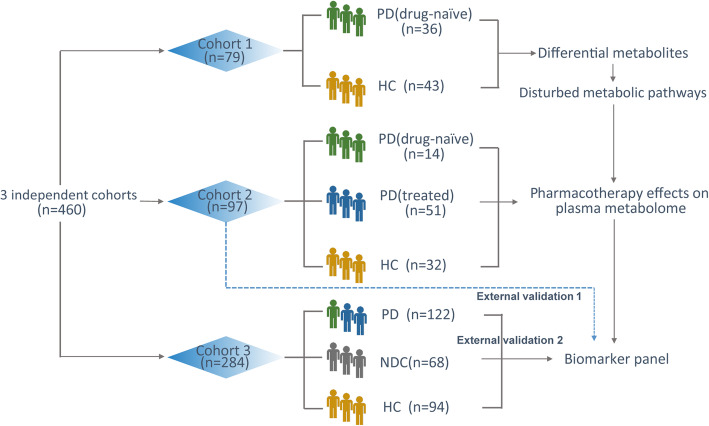
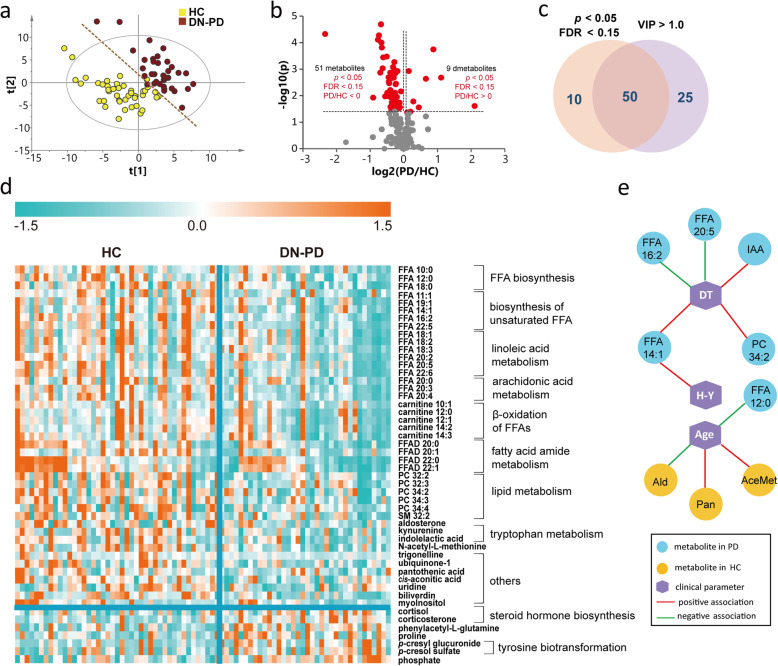
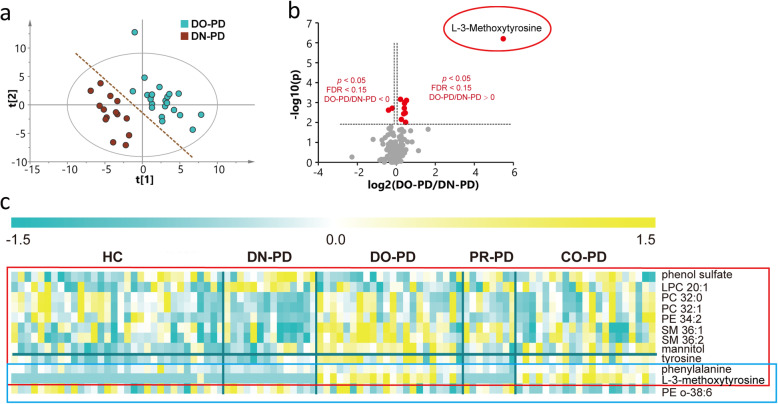
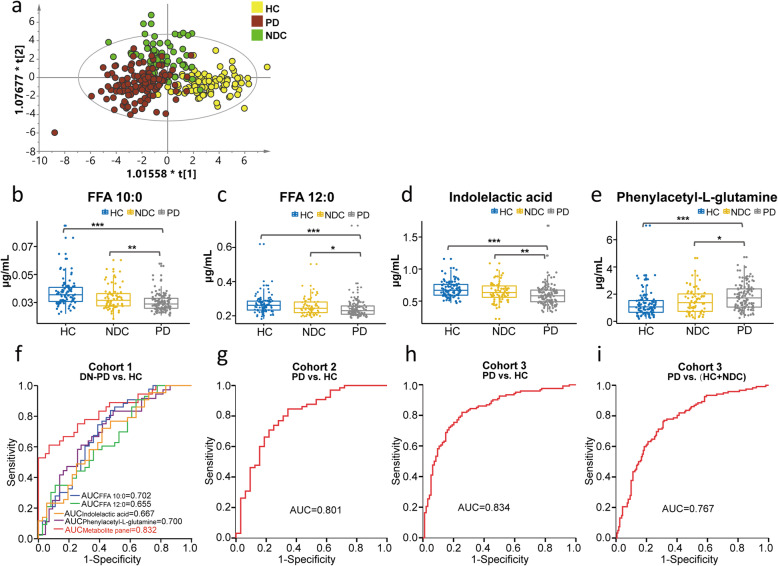
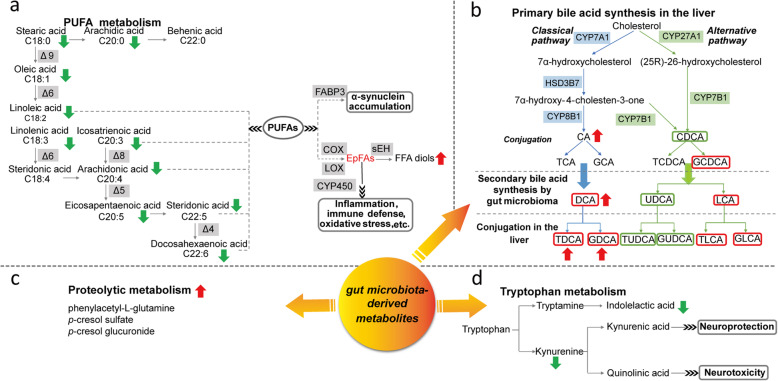
Background: Parkinson’s disease (PD) is a prevalent neurological disease in the elderly with increasing morbidity and mortality. Despite enormous efforts, rapid and accurate diagnosis of PD is still compromised. Metabolomics defines the final readout of genome-environment interactions through the analysis of the entire metabolic profile in biological matrices. Recently, unbiased metabolic profiling of human sample has been initiated to identify novel PD metabolic biomarkers and dysfunctional metabolic pathways, however, it remains a challenge to define reliable biomarker(s) for clinical use. Methods: We presented a comprehensive metabolic evaluation for identifying crucial metabolic disturbances in PD using liquid chromatography-high resolution mass spectrometry-based metabolomics approach. Plasma samples from 3 independent cohorts (n = 460, 223 PD, 169 healthy controls (HCs) and 68 PD-unrelated neurological disease controls) were collected for the characterization of metabolic changes resulted from PD, antiparkinsonian treatment and potential interferences of other diseases. Unbiased multivariate and univariate analyses were performed to determine the most promising metabolic signatures from all metabolomic datasets. Multiple linear regressions were applied to investigate the associations of metabolites with age, duration time and stage of PD. The combinational biomarker model established by binary logistic regression analysis was validated by 3 cohorts. Results: A list of metabolites including amino acids, acylcarnitines, organic acids, steroids, amides, and lipids from human plasma of 3 cohorts were identified. Compared with HC, we observed significant reductions of fatty acids (FFAs) and caffeine metabolites, elevations of bile acids and microbiota-derived deleterious metabolites, and alterations in steroid hormones in drug-naïve PD. Additionally, we found that L-dopa treatment could affect plasma metabolome involved in phenylalanine and tyrosine metabolism and alleviate the elevations of bile acids in PD. Finally, a metabolite panel of 4 biomarker candidates, including FFA 10:0, FFA 12:0, indolelactic acid and phenylacetyl-glutamine was identified based on comprehensive discovery and validation workflow. This panel showed favorable discriminating power for PD. Conclusions: This study may help improve our understanding of PD etiopathogenesis and facilitate target screening for therapeutic intervention. The metabolite panel identified in this study may provide novel approach for the clinical diagnosis of PD in the future.
Overview
The claims and statistics of this paper haven’t been checked yet.
Run the check — free, no account needed. It reads the open-access text and checks the sources it cites.
Integrity signals
Registry
Cites
Statistics
Figures
Verification
Claims the paper makes
The claims and statistics of this paper haven’t been checked yet.
Run the check — free, no account needed. It reads the open-access text and checks the sources it cites.
Claims other papers make about this one
Each is checked against this paper’s own text: does it say what the citing paper says it does?
In the citing paper
“Moreover, PD patients exhibited reduced plasma levels of neuroprotective BAs, namely UDCA and TUDCA.379”
From Microbiota–gut–brain axis and its therapeutic applications in neurodegenerative diseases (2024) · cites this paper as [379]
In the citing paper
“However, another study reported increased levels of glycine- and taurine-conjugated primary BAs in plasma samples of PD patients.379”
From Microbiota–gut–brain axis and its therapeutic applications in neurodegenerative diseases (2024) · cites this paper as [379]
In the citing paper
“An elevated level of primary BA (cholic acid) was identified in the plasma of PD patients.379,380”
From Microbiota–gut–brain axis and its therapeutic applications in neurodegenerative diseases (2024) · cites this paper as [379]
In the citing paper
“Studies have revealed elevated levels of secondary BAs in PD patients, while findings regarding primary BAs have yielded varying results.377–380”
From Microbiota–gut–brain axis and its therapeutic applications in neurodegenerative diseases (2024) · cites this paper as [379]
Self-check
Percentages, sums and reported differences re-computed from the paper’s own numbers.
The self-check needs the paper’s full text.
Citations
Cites
Controlling the False Discovery Rate: A Practical and Powerful Approach to Multiple Testing
Benjamini, Y., & Hochberg, Y. (1995) · Journal of the Royal Statistical Society Series B: Statistical Methodology · doi:10.1111/j.2517-6161.1995.tb02031.x · Cited by 109,482
MDS clinical diagnostic criteria for Parkinson’s disease
Postuma, R. B., Berg, D., Stern, M., Poewe, W., Olanow, C. W., Oertel, W., Obeso, J., Marek, K., Litvan, I., Lang, A. E., et al. (2015) · Movement Disorders · doi:10.1002/mds.26424 · Cited by 7,653
Epidemiology of Parkinson's disease
de Lau, L. M., & Breteler, M. M. (2006) · The Lancet Neurology · doi:10.1016/s1474-4422(06)70471-9 · Cited by 4,110
Goetz, C. G., Poewe, W. H., Rascol, O., Sampaio, C., Stebbins, G. T., Counsell, C. E., Giladi, N., Holloway, R. G., Moore, C. G., Wenning, G. K., et al. (2004) · Movement Disorders · doi:10.1002/mds.20213 · Cited by 2,488
Epidemiology of Parkinson’s disease
Tysnes, O., & Storstein, A. M. (2017) · Journal of Neural Transmission · doi:10.1007/s00702-017-1686-y · Cited by 2,437
Microbial tryptophan catabolites in health and disease
Roager, H. M., & Licht, T. R. (2018) · Nature Communications · doi:10.1038/s41467-018-05470-4 · Cited by 2,236
Cellular Fatty Acid Metabolism and Cancer
Currie, E., Schulze, A., Zechner, R., Walther, T. C., & Farese, R. V. (2013) · Cell Metabolism · doi:10.1016/j.cmet.2013.05.017 · Cited by 2,123
Gut microbiota are related to Parkinson's disease and clinical phenotype
Scheperjans, F., Aho, V., Pereira, P. A. B., Koskinen, K., Paulin, L., Pekkonen, E., Haapaniemi, E., Kaakkola, S., Eerola‐Rautio, J., Pohja, M., et al. (2015) · Movement Disorders · doi:10.1002/mds.26069 · Cited by 1,968
The epidemiology of Parkinson's disease: risk factors and prevention
Ascherio, A., & Schwarzschild, M. A. (2016) · The Lancet Neurology · doi:10.1016/s1474-4422(16)30230-7 · Cited by 1,930
A gut bacterial pathway metabolizes aromatic amino acids into nine circulating metabolites
Dodd, D., Spitzer, M. H., Van Treuren, W., Merrill, B. D., Hryckowian, A. J., Higginbottom, S. K., Le, A., Cowan, T. M., Nolan, G. P., Fischbach, M. A., et al. (2017) · Nature · doi:10.1038/nature24661 · Cited by 1,425
Cited by
Sorted by citations
Items 201–226 of 226
He, R., Wei, Y., Peng, Z., Yang, J., Zhou, Z., Li, A., Wu, Y., Wang, M., Li, X., Zhao, D., et al. (2024) · Figshare · doi:10.6084/m9.figshare.26733882
Self-citationAdditional file 1 of Metabolomics of blood reveals age-dependent pathways in Parkinson’s Disease
D’Ascenzo, N., Antonecchia, E., Angiolillo, A., Bender, V., Camerlenghi, M., Xie, Q., & Costanzo, A. D. (2022) · Figshare · doi:10.6084/m9.figshare.20250435
He, R., Wei, Y., Peng, Z., Yang, J., Zhou, Z., Li, A., Wu, Y., Wang, M., Li, X., Zhao, D., et al. (2024) · Figshare · doi:10.6084/m9.figshare.26733873
Self-citationHe, R., Wei, Y., Peng, Z., Yang, J., Zhou, Z., Li, A., Wu, Y., Wang, M., Li, X., Zhao, D., et al. (2024) · Figshare · doi:10.6084/m9.figshare.26733879
Self-citationHe, R., Wei, Y., Peng, Z., Yang, J., Zhou, Z., Li, A., Wu, Y., Wang, M., Li, X., Zhao, D., et al. (2024) · Figshare · doi:10.6084/m9.figshare.26733876
Self-citationYi, S., Luo, L., Dong, Z., Wang, K., Zhu, Z., Gao, Q., Jiang, Y. Y., Yang, X., & Hei, F. (2026) · Frontiers in Immunology · doi:10.3389/fimmu.2025.1713650
Oropeza-Valdez, J. J., Elizalde-Díaz, J. P., Reséndis-Antonio, O., Leyva-Hernández, J., Adalid-Peralta, L. V., Rodríguez‐Violante, M., Mandal, R., Wishart, D. S., López‐Hernández, Y., & Martínez‐Martínez, E. (2026) · Scientific Reports · doi:10.1038/s41598-026-36756-z
Wang, N., Li, X., Li, B., Li, X., Lai, H., Zhu, J., Yao, T., Zhu, Q., Shui, G., Lam, S. M., et al. (2026) · Parkinsonism & Related Disorders · doi:10.1016/j.parkreldis.2026.108230
The Emerging Parkinson's Disease Oxylipin‐Ome
Kelliher, J. C., & Fanning, S. (2026) · Advanced Science · doi:10.1002/advs.202522997
Da, A., Fedorova, T. N., Шабалина, А. А., Silantyev, A., Konanov, D. N., Fedotova, E. Y., Полещук, В. В., Andreev, M. N., Trifonova, O. V., Maslov, D. L., et al. (2026) · Biomeditsinskaya Khimiya · doi:10.18097/pbmcr1642
Rijlaarsdam, D. J., Kaczmarek, M., Klaas, C., Thöing, C., Fort, K. L., Bird, S. S., Berkers, C. R., & Zaal, E. A. (2026) · Analytical Chemistry · doi:10.1021/acs.analchem.6c04010
Metabolic Remodeling of the Parkinson’s Disease Frontal Cortex Revealed by LC-MS/MS Metabolomics
Daramola, O. E., Nwaiwu, J. I., Oluokun, O. O., Fowowe, M., Lux, A., Lopez, I., Bennett, A. I., & Mechref, Y. S. (2026) · Biomolecules · doi:10.3390/biom16060866
Metabolomics and Brain & Neurological Diseases
Liu, J., Lin, S., He, N., Mai, Y., Yu, W., & Liao, W. (2026) · Springer eBooks · doi:10.1007/978-981-95-9567-9_7
Zheng, X., Li, L., Huang, Z., & Zhou, L. (2026) · Brain Network Disorders · doi:10.1016/j.bnd.2026.06.001
Cao, R., Bai, X., & Zhong, H. (2026) · Frontiers in Molecular Neuroscience · doi:10.3389/fnmol.2026.1821875
Raj, S. N., Natnan, M. E., Lou, W. P., Mediani, A., Tencomnao, T., & Baharum, S. N. (2026) · Molecular Biology Reports · doi:10.1007/s11033-026-12565-5
Hu, R., Song, Y., Liu, T., He, X., Qiu, Y.-Y., Zhong, F., Huang, X., Huang, J. J., & Jiao, Z. (2026) · Frontiers in Immunology · doi:10.3389/fimmu.2026.1937115
Xu, C., Li, W., Ma, X., Han, L., Cui, G., Zhao, J., Wang, X., & Guan, Y. (2026) · Cells · doi:10.3390/cells15181718
Self-citationDetecting and Quantifying Variability in Mass Spectrometry-Based Metabolomics Datasets
Chua, A. E., & Desaire, H. (2026) · Biomolecules · doi:10.3390/biom16101399
Ortega‐Robles, E., Guerra‐Crespo, M., & Arias-Carrión, Ó. (2026) · Medical Sciences · doi:10.3390/medsci14060608
Oral microbiome–metabolome axis links glycerophospholipid dysregulation to Alzheimer’s disease
Jia, M., Yang, R., Xu, Y., 吴正华, Lü, J., Li, Z., Yan, Q., Fan, G., & Ya⁃xing, G. (2026) · Journal of Oral Microbiology · doi:10.1080/20002297.2026.2732297
Glutamine metabolism in health and disease
Zhao, J., Lin, Y., Gao, R., Gao, H., & Li, L. (2026) · Signal Transduction and Targeted Therapy · doi:10.1038/s41392-026-02981-1
Zhao, Z., Yixuan, L., Ma, W., Hu, G., Hao, J., Chaobo, B., Chen, J., Zhang, Q., Cao, H., Liu, X., et al. (2026) · Cell Reports Medicine · doi:10.1016/j.xcrm.2026.103098
Emerging links between gut dysbiosis, aryl hydrocarbon receptor activation, and Parkinson’s disease
Aziz, N. F., & Kortagere, S. (2026) · Communications Biology · doi:10.1038/s42003-026-11156-1
Genetic therapies for Parkinson's disease: The dawn of precision medicine
Saad, H. A., Almarsafy, R. K., Mohammed, D. H., & Hefnawy, M. T. (2026) · Elsevier eBooks · doi:10.1016/b978-0-443-54032-5.00001-2
Metadata
- Authors
- Shao, Y., Li, T., Liu, Z., Wang, X., Xu, X., Li, S., Xu, G., & Le, W.
- Affiliations
- Dalian Medical University (CN)
- Dalian Institute of Chemical Physics (CN)
- University of Electronic Science and Technology of China (CN)
- Corresponding author
- Xu, Guowang
- Le, Weidong
- Venue
- Molecular Neurodegeneration
- Published
- 2021-01-23
- Volume
- 16
- Issue
- 1
- Pages
- 4-4
- ISSN
- 1750-1326 (ISSN-L)
- PMC
- PMC7825156
- OpenAlex
- W3125488374
- Cited by
- 226
- References
- 83
- Citations by year
- 2026: 37 · 2025: 57 · 2024: 56 · 2023: 36 · 2022: 27 · 2021: 11
- FWCI
- 10.19
- Type
- journal article
- Language
- en
- Open access
- gold
- doi.org
- Locations
- Molecular Neurodegeneration (publishedVersion, cc-by)
- PubMed Central (publishedVersion, cc-by)
- PubMed (publishedVersion)
- DOAJ (DOAJ: Directory of Open Access Journals) (submittedVersion, cc-by-sa)
- Funders
- National Key Research and Development Program of China (2016YFC1306600)
- National Natural Science Foundation of China (81771521, 21876169, 22004013)
- Key Realm R&D Program of Guangdong Province (2018B030337001)
- Topics
- Life Sciences › Biochemistry, Genetics and Molecular Biology › Molecular Biology › Metabolomics and Mass Spectrometry Studies
- Health Sciences › Medicine › Clinical Neurology › Parkinson's Disease Mechanisms and Treatments
- Life Sciences › Biochemistry, Genetics and Molecular Biology › Clinical Biochemistry › Metabolism and Genetic Disorders
- Keywords
- Parkinson's disease, plasma metabolomics, metabolic biomarkers, diagnostic biomarker panel, fatty acids, bile acids, L-dopa treatment, phenylalanine and tyrosine metabolism, caffeine metabolites, gut microbiota metabolites, steroid hormones, indolelactic acid, Parkinson's disease diagnosis
- MeSH terms
- Aged, Chromatography, Liquid, Female, Humans, Male, Parkinson Disease, Mass Spectrometry, Biomarkers, Case-Control Studies, Metabolomics, Metabolome
About these checks
Registry, retraction, Cites and statistics results are computed, not judged, with one exception: a printed reference that no index lists is read once by a model before it counts as a citation error. Claims are extracted by a model and kept only when their quote appears verbatim in the text; each cited source is then checked, with a model’s help, for whether it says what the claim relies on. Those verdicts can be wrong — read the claim’s quote and the cited source before relying on one.
Statistics and arithmetic are recomputed, not judged.
Confidence bands are shown only for fields calibrated on our annotated test set. None is calibrated yet, so no band is shown.
What counts as a claim ›How we measure confidence ›How we check this ›
Are you an author, or do you see a problem with this page? Request a review
