

The DOI matches its Crossref record; 83 of the 83 references it cites were found in a registry or an index.
Comprehensive metabolic profiling of Parkinson’s disease by liquid chromatography-mass spectrometry
Open accessAbstract
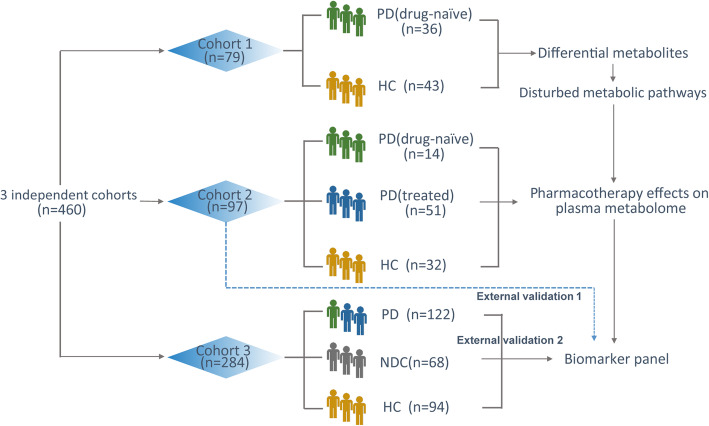
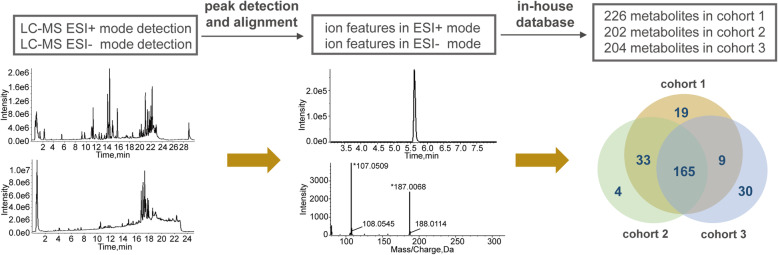
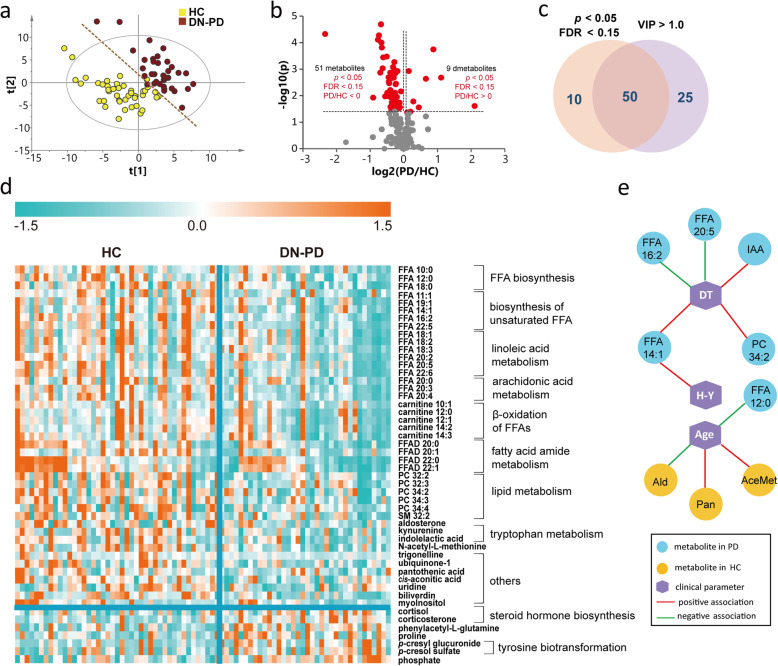
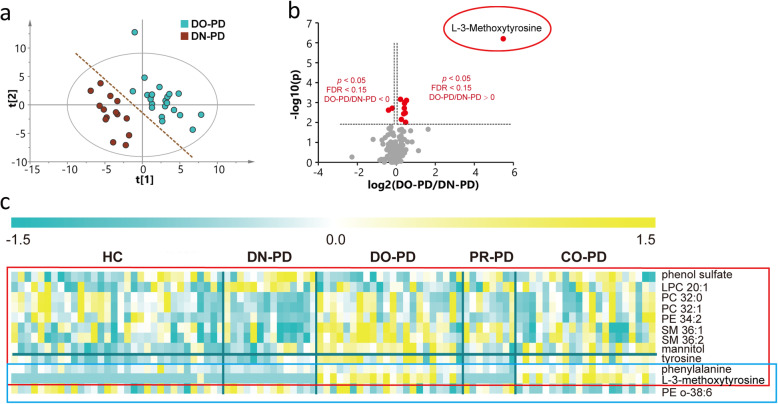
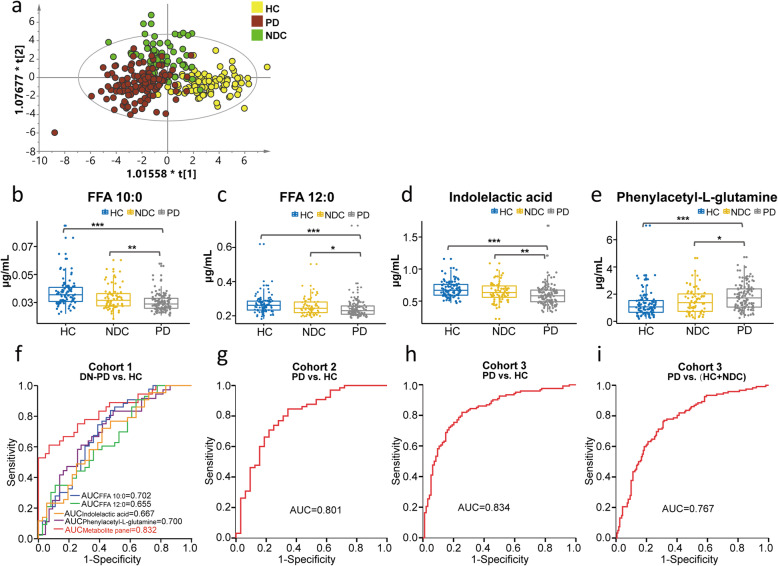
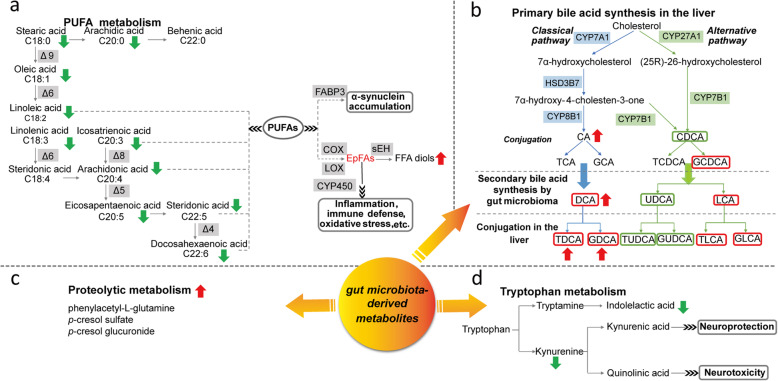
Background: Parkinson’s disease (PD) is a prevalent neurological disease in the elderly with increasing morbidity and mortality. Despite enormous efforts, rapid and accurate diagnosis of PD is still compromised. Metabolomics defines the final readout of genome-environment interactions through the analysis of the entire metabolic profile in biological matrices. Recently, unbiased metabolic profiling of human sample has been initiated to identify novel PD metabolic biomarkers and dysfunctional metabolic pathways, however, it remains a challenge to define reliable biomarker(s) for clinical use. Methods: We presented a comprehensive metabolic evaluation for identifying crucial metabolic disturbances in PD using liquid chromatography-high resolution mass spectrometry-based metabolomics approach. Plasma samples from 3 independent cohorts (n = 460, 223 PD, 169 healthy controls (HCs) and 68 PD-unrelated neurological disease controls) were collected for the characterization of metabolic changes resulted from PD, antiparkinsonian treatment and potential interferences of other diseases. Unbiased multivariate and univariate analyses were performed to determine the most promising metabolic signatures from all metabolomic datasets. Multiple linear regressions were applied to investigate the associations of metabolites with age, duration time and stage of PD. The combinational biomarker model established by binary logistic regression analysis was validated by 3 cohorts. Results: A list of metabolites including amino acids, acylcarnitines, organic acids, steroids, amides, and lipids from human plasma of 3 cohorts were identified. Compared with HC, we observed significant reductions of fatty acids (FFAs) and caffeine metabolites, elevations of bile acids and microbiota-derived deleterious metabolites, and alterations in steroid hormones in drug-naïve PD. Additionally, we found that L-dopa treatment could affect plasma metabolome involved in phenylalanine and tyrosine metabolism and alleviate the elevations of bile acids in PD. Finally, a metabolite panel of 4 biomarker candidates, including FFA 10:0, FFA 12:0, indolelactic acid and phenylacetyl-glutamine was identified based on comprehensive discovery and validation workflow. This panel showed favorable discriminating power for PD. Conclusions: This study may help improve our understanding of PD etiopathogenesis and facilitate target screening for therapeutic intervention. The metabolite panel identified in this study may provide novel approach for the clinical diagnosis of PD in the future.
Overview
The claims and statistics of this paper haven’t been checked yet.
Run the check — free, no account needed. It reads the open-access text and checks the sources it cites.
Integrity signals
Registry
Cites
Statistics
Figures
Verification
Claims the paper makes
The claims and statistics of this paper haven’t been checked yet.
Run the check — free, no account needed. It reads the open-access text and checks the sources it cites.
Claims other papers make about this one
Each is checked against this paper’s own text: does it say what the citing paper says it does?
The cited source says what the claim attributes to it.
In the citing paper
“However, another study reported increased levels of glycine- and taurine-conjugated primary BAs in plasma samples of PD patients.379”
From Microbiota–gut–brain axis and its therapeutic applications in neurodegenerative diseases (2024) · cites this paper as [379]
In the citing paper
“Moreover, PD patients exhibited reduced plasma levels of neuroprotective BAs, namely UDCA and TUDCA.379”
From Microbiota–gut–brain axis and its therapeutic applications in neurodegenerative diseases (2024) · cites this paper as [379]
In the citing paper
“An elevated level of primary BA (cholic acid) was identified in the plasma of PD patients.379,380”
From Microbiota–gut–brain axis and its therapeutic applications in neurodegenerative diseases (2024) · cites this paper as [379]
In the citing paper
“Studies have revealed elevated levels of secondary BAs in PD patients, while findings regarding primary BAs have yielded varying results.377–380”
From Microbiota–gut–brain axis and its therapeutic applications in neurodegenerative diseases (2024) · cites this paper as [379]
Self-check
Percentages, sums and reported differences re-computed from the paper’s own numbers.
The self-check needs the paper’s full text.
Citations
Cites
Controlling the False Discovery Rate: A Practical and Powerful Approach to Multiple Testing
Benjamini, Y., & Hochberg, Y. (1995) · Journal of the Royal Statistical Society Series B: Statistical Methodology · doi:10.1111/j.2517-6161.1995.tb02031.x · Cited by 109,482
MDS clinical diagnostic criteria for Parkinson’s disease
Postuma, R. B., Berg, D., Stern, M., Poewe, W., Olanow, C. W., Oertel, W., Obeso, J., Marek, K., Litvan, I., Lang, A. E., et al. (2015) · Movement Disorders · doi:10.1002/mds.26424 · Cited by 7,653
Epidemiology of Parkinson's disease
de Lau, L. M., & Breteler, M. M. (2006) · The Lancet Neurology · doi:10.1016/s1474-4422(06)70471-9 · Cited by 4,110
Goetz, C. G., Poewe, W. H., Rascol, O., Sampaio, C., Stebbins, G. T., Counsell, C. E., Giladi, N., Holloway, R. G., Moore, C. G., Wenning, G. K., et al. (2004) · Movement Disorders · doi:10.1002/mds.20213 · Cited by 2,488
Epidemiology of Parkinson’s disease
Tysnes, O., & Storstein, A. M. (2017) · Journal of Neural Transmission · doi:10.1007/s00702-017-1686-y · Cited by 2,437
Microbial tryptophan catabolites in health and disease
Roager, H. M., & Licht, T. R. (2018) · Nature Communications · doi:10.1038/s41467-018-05470-4 · Cited by 2,236
Cellular Fatty Acid Metabolism and Cancer
Currie, E., Schulze, A., Zechner, R., Walther, T. C., & Farese, R. V. (2013) · Cell Metabolism · doi:10.1016/j.cmet.2013.05.017 · Cited by 2,123
Gut microbiota are related to Parkinson's disease and clinical phenotype
Scheperjans, F., Aho, V., Pereira, P. A. B., Koskinen, K., Paulin, L., Pekkonen, E., Haapaniemi, E., Kaakkola, S., Eerola‐Rautio, J., Pohja, M., et al. (2015) · Movement Disorders · doi:10.1002/mds.26069 · Cited by 1,968
The epidemiology of Parkinson's disease: risk factors and prevention
Ascherio, A., & Schwarzschild, M. A. (2016) · The Lancet Neurology · doi:10.1016/s1474-4422(16)30230-7 · Cited by 1,930
A gut bacterial pathway metabolizes aromatic amino acids into nine circulating metabolites
Dodd, D., Spitzer, M. H., Van Treuren, W., Merrill, B. D., Hryckowian, A. J., Higginbottom, S. K., Le, A., Cowan, T. M., Nolan, G. P., Fischbach, M. A., et al. (2017) · Nature · doi:10.1038/nature24661 · Cited by 1,425
Schisterman, E. F., Perkins, N. J., Liu, A., & Bondell, H. D. (2004) · Epidemiology · doi:10.1097/01.ede.0000147512.81966.ba · Cited by 1,187
Bile acid signaling in metabolic disease and drug therapy
Li, T., & Chiang, J. Y. L. (2014) · Pharmacological Reviews · doi:10.1124/pr.113.008201 · Cited by 935
Self-citationSmall molecules from the human microbiota
Donia, M. S., & Fischbach, M. A. (2015) · Science · doi:10.1126/science.1254766 · Cited by 760
The fecal metabolome as a functional readout of the gut microbiome
Zierer, J., Jackson, M. A., Kastenmüller, G., Mangino, M., Long, T., Telenti, A., Mohney, R. P., Small, K. S., Bell, J. T., Steves, C. J., et al. (2018) · Nature Genetics · doi:10.1038/s41588-018-0135-7 · Cited by 751
MahmoudianDehkordi, S., Arnold, M., Nho, K., Ahmad, S., Jia, W., Xie, G., Louie, G., Kueider‐Paisley, A., Moseley, M. A., Thompson, J. W., et al. (2019) · Alzheimer's & Dementia · doi:10.1016/j.jalz.2018.07.217 · Cited by 706
Krishnan, S., Ding, Y., Saedi, N., Choi, M., Sridharan, G. V., Sherr, D. H., Yarmush, M. L., Alaniz, R. C., Jayaraman, A., & Lee, K. (2018) · Cell Reports · doi:10.1016/j.celrep.2018.03.109 · Cited by 679
Bedarf, J. R., Hildebrand, F., Coelho, L. P., Sunagawa, S., Bahram, M., Goeser, F., Bork, P., & Wüllner, U. (2017) · Genome Medicine · doi:10.1186/s13073-017-0428-y · Cited by 642
Microbial Fermentation of Dietary Protein: An Important Factor in Diet–Microbe–Host Interaction
Diether, N. E., & Willing, B. P. (2019) · Microorganisms · doi:10.3390/microorganisms7010019 · Cited by 614
Sharon, R., Bar-Joseph, I., Frosch, M. P., Walsh, D. M., Hamilton, J. A., & Selkoe, D. J. (2003) · Neuron · doi:10.1016/s0896-6273(03)00024-2 · Cited by 572
The Oxylipin Pathways: Biochemistry and Function
Wasternack, C., & Feußner, I. (2017) · Annual Review of Plant Biology · doi:10.1146/annurev-arplant-042817-040440 · Cited by 570
Intestinal dysbiosis and lowered serum lipopolysaccharide-binding protein in Parkinson's disease
Hasegawa, S., Goto, S., Tsuji, H., Okuno, T., Asahara, T., Nomoto, K., Shibata, A., Fujisawa, Y., Minato, T., Okamoto, A., et al. (2015) · PLOS ONE · doi:10.1371/journal.pone.0142164 · Cited by 523
Colonic transit time is related to bacterial metabolism and mucosal turnover in the gut
Roager, H. M., Hansen, L. B. S., Bahl, M. I., Frandsen, H. L., Carvalho, V., Gøbel, R. J., Dalgaard, M. D., Plichta, D. R., Sparholt, M. H., Vestergaard, H., et al. (2016) · Nature Microbiology · doi:10.1038/nmicrobiol.2016.93 · Cited by 449
Dysbiosis of gut microbiota and microbial metabolites in Parkinson's disease
Sun, M.-F., & Shen, Y.-Q. (2018) · Ageing Research Reviews · doi:10.1016/j.arr.2018.04.004 · Cited by 445
Gender differences in Parkinson's disease: Clinical characteristics and cognition
Miller, I. N., & Cronin‐Golomb, A. (2010) · Movement Disorders · doi:10.1002/mds.23388 · Cited by 405
Impaired dopamine metabolism in Parkinson’s disease pathogenesis
Masato, A., Plotegher, N., Boassa, D., & Bubacco, L. (2019) · Molecular Neurodegeneration · doi:10.1186/s13024-019-0332-6 · Cited by 350
Nho, K., Kueider‐Paisley, A., MahmoudianDehkordi, S., Arnold, M., Risacher, S. L., Louie, G., Blach, C., Baillie, R., Han, X., Kastenmüller, G., et al. (2019) · Alzheimer's & Dementia · doi:10.1016/j.jalz.2018.08.012 · Cited by 343
Fusion of Mass Spectrometry-Based Metabolomics Data
Smilde, A. K., WERF, M. J. V. D., Bijlsma, S., der Vat, B. J. C. V. D. W.-V., & Jellema, R. H. (2005) · Analytical Chemistry · doi:10.1021/ac051080y · Cited by 336
[Epidemiology of Parkinson disease].
Domínguez Carmona, M. (1989) · PubMed · Cited by 330
Microbiota composition and metabolism are associated with gut function in Parkinson's disease
Cirstea, M. S., Yu, A. C., Golz, E., Sundvick, K., Kliger, D., Radisavljevic, N., Foulger, L. H., Mackenzie, M., Huan, T., Finlay, B. B., et al. (2020) · Movement Disorders · doi:10.1002/mds.28052 · Cited by 326
Exposing Rats to a Predator Blocks Primed Burst Potentiation in the Hippocampus In Vitro
Mesches, M. H., Fleshner, M., Heman, K. L., Rose, G. M., & Diamond, D. M. (1999) · The Journal of Neuroscience · doi:10.1523/jneurosci.19-14-j0004.1999 · Cited by 276
Identification of novel biomarkers for Parkinson's disease by metabolomic technologies
Hatano, T., Saiki, S., Okuzumi, A., Mohney, R., & Hattori, N. (2015) · Journal of Neurology Neurosurgery & Psychiatry · doi:10.1136/jnnp-2014-309676 · Cited by 257
Gut microbiota in patients with Parkinson's disease in southern China
Lin, A., Zheng, W., He, Y., Tang, W., Wei, X., He, R., Huang, W., Su, Y., Huang, Y., Zhou, H., et al. (2018) · Parkinsonism & Related Disorders · doi:10.1016/j.parkreldis.2018.05.007 · Cited by 253 · cited 1×
“Abnormalities in the composition and distribution of intestinal bacteria have been suggested in PD patients [57].”
BackgroundRecent advances and perspectives of metabolomics-based investigations in Parkinson’s disease
Shao, Y., & Le, W. (2019) · Molecular Neurodegeneration · doi:10.1186/s13024-018-0304-2 · Cited by 243
Self-citationRen, S., Shao, Y., Zhao, X., Hong, C. S., Wang, F., Lu, X., Li, J., Ye, G., Yan, M., Zhuang, Z., et al. (2015) · Molecular & Cellular Proteomics · doi:10.1074/mcp.m115.052381 · Cited by 216
Self-citationThe biosynthesis, signaling, and neurological functions of bile acids
Kiriyama, Y., & Nochi, H. (2019) · Biomolecules · doi:10.3390/biom9060232 · Cited by 204
Takahashi, T., Kimoto, T., Tanabe, N., Hattori, T., Yasumatsu, N., & Kawato, S. (2002) · Journal of Neurochemistry · doi:10.1046/j.1471-4159.2002.01251.x · Cited by 176
Luan, H., Liu, L., Tang, Z., Zhang, M., Chua, K.-K., Song, J., Mok, V., Li, M., & Cai, Z. (2015) · Scientific Reports · doi:10.1038/srep13888 · Cited by 157
Alternations of Metabolic Profile and Kynurenine Metabolism in the Plasma of Parkinson’s Disease
Chang, K., Cheng, M., Tang, H.-Y., Huang, C.-Y., Wu, Y., & Chen, C. (2018) · Molecular Neurobiology · doi:10.1007/s12035-017-0845-3 · Cited by 152
Saiki, S., Hatano, T., Fujimaki, M., Ishikawa, K., Mori, A., Oji, Y., Okuzumi, A., Fukuhara, T., Koinuma, T., Imamichi, Y., et al. (2017) · Scientific Reports · doi:10.1038/s41598-017-06767-y · Cited by 147
Decreased NURR1 gene expression in patients with Parkinson's disease
Le, W., Pan, T., Huang, M., Xu, P., Xie, W., Zhu, W., Zhang, X., Deng, H., & Jankovic, J. J. (2008) · Journal of the Neurological Sciences · doi:10.1016/j.jns.2008.06.007 · Cited by 145
Self-citationBarrasa, J. I., Olmo, N., Pérez-Ramos, P., Santiago-Gómez, A., Lecona, E., Turnay, J., & Lizarbe, M. A. (2011) · APOPTOSIS · doi:10.1007/s10495-011-0633-x · Cited by 139
LC–MS-Based Urinary Metabolite Signatures in Idiopathic Parkinson’s Disease
Luan, H., Liu, L., Meng, N., Tang, Z., Chua, K.-K., Chen, L., Song, J., Mok, V., Xie, L.-X., Li, M., et al. (2014) · Journal of Proteome Research · doi:10.1021/pr500807t · Cited by 134
UDCA exerts beneficial effect on mitochondrial dysfunction in LRRK2 G2019S carriers and in vivo
Mortiboys, H., Furmston, R., Bronstad, G., Aasly, J., Elliott, C., & Bandmann, O. (2015) · Neurology · doi:10.1212/wnl.0000000000001905 · Cited by 131
Soluble epoxide hydrolase plays a key role in the pathogenesis of Parkinson’s disease
Ren, Q., Ma, M., Yang, J., Nonaka, R., Yamaguchi, A., Ishikawa, K., Kobayashi, K., Murayama, S., Hwang, S. H., Saiki, S., et al. (2018) · Proceedings of the National Academy of Sciences · doi:10.1073/pnas.1802179115 · Cited by 131
Abdelkader, N. F., Safar, M. M., & Salem, H. A. (2016) · Molecular Neurobiology · doi:10.1007/s12035-014-9043-8 · Cited by 127
Changes in kynurenine pathway metabolism in Parkinson patients with L‐ DOPA ‐induced dyskinesia
Havelund, J. F., Andersen, A. D., Binzer, M., Blaabjerg, M., Heegaard, N. H. H., Stenager, E., Færgeman, N. J., & Gramsbergen, J. B. (2017) · Journal of Neurochemistry · doi:10.1111/jnc.14104 · Cited by 115
Zhao, X., Zeng, Z., Chen, A., Lu, X., Zhao, C., Hu, C., Zhou, L., Liu, X., Wang, X., Hou, X. S., et al. (2018) · Analytical Chemistry · doi:10.1021/acs.analchem.8b01482 · Cited by 114
Self-citationCressatti, M., Juwara, L., Galindez, J. M., Velly, A. M., Nkurunziza, E. S., Marier, S., Canie, O., Gornistky, M., & Schipper, H. M. (2019) · Movement Disorders · doi:10.1002/mds.27935 · Cited by 113
Sankowski, B., Księżarczyk, K., Raćkowska, E., Szlufik, S., Koziorowski, D., & Giebułtowicz, J. (2020) · Clinica Chimica Acta · doi:10.1016/j.cca.2019.10.038 · Cited by 105
Heart-Type Fatty Acid Binding Protein Regulates Dopamine D2Receptor Function in Mouse Brain
Shioda, N., Yamamoto, Y., Watanabe, M., Binas, B., Owada, Y., & Fukunaga, K. (2010) · Journal of Neuroscience · doi:10.1523/jneurosci.4140-09.2010 · Cited by 101
Serum caffeine and metabolites are reliable biomarkers of early Parkinson disease
Fujimaki, M., Saiki, S., Li, Y., Kaga, N., Taka, H., Hatano, T., Ishikawa, K., Oji, Y., Mori, A., Okuzumi, A., et al. (2018) · Neurology · doi:10.1212/wnl.0000000000004888 · Cited by 99
Profiling novel metabolic biomarkers for Parkinson's disease using in‐depth metabolomic analysis
Han, W., Sapkota, S., Camicioli, R. M., Dixon, R. A., & Li, L. (2017) · Movement Disorders · doi:10.1002/mds.27173 · Cited by 98
Tauroursodeoxycholic acid improves motor symptoms in a mouse model of Parkinson's disease
Rosa, A. I., Duarte-Silva, S., Silva-Fernandes, A., Nunes, M. J., Carvalho, A. N., Rodrigues, E., Gama, M. J., Rodrigues, C. M. P., Maciel, P., & Castro-Caldas, M. (2018) · Molecular Neurobiology · doi:10.1007/s12035-018-1062-4 · Cited by 94
Huang, Y., Chen, G., Liu, X., Shao, Y., Gao, P., Xin, C., Cui, Z.-Z., Zhao, X., & Xu, G. (2014) · Journal of Proteome Research · doi:10.1021/pr5007069 · Cited by 83
Self-citationMollenhauer, B., Steinacker, P., Bahn, E., Bibl, M., Brechlin, P., Schlossmacher, M. G., Locascio, J. J., Wiltfang, J., Kretzschmar, H. A., Poser, S., et al. (2007) · Neurodegenerative Diseases · doi:10.1159/000105157 · Cited by 82
Kim, S. T., Choi, J. H., Chang, J. W., Kim, S. W., & Hwang, O. (2005) · Journal of Neurochemistry · doi:10.1111/j.1471-4159.2005.03342.x · Cited by 81
metabolic profiling of Parkinson's disease and mild cognitive impairment
Burté, F., Houghton, D. J., Lowes, H., Pyle, A., Nesbitt, S., Yarnall, A. J., Yu‐Wai‐Man, P., Burn, D. J., Santibanez‐Koref, M., & Hudson, G. (2017) · Movement Disorders · doi:10.1002/mds.26992 · Cited by 74
Mascolo, A., Sessa, M., Scavone, C., Angelis, A. D., Vitale, C., Berrino, L., Rossi, F., Rosano, G. M. C., & Capuano, A. (2016) · International Journal of Cardiology · doi:10.1016/j.ijcard.2016.10.069 · Cited by 68
Soares, N. M., Pereira, G. M., Altmann, V., de Almeida, R. M. M., & Rieder, C. R. D. M. (2018) · Journal of Neural Transmission · doi:10.1007/s00702-018-1947-4 · Cited by 68
Metabolic Investigations of the Molecular Mechanisms Associated with Parkinson’s Disease
Powers, R., Lei, S., Anandhan, A., Marshall, D. D., Worley, B., Cerny, R. L., Dodds, E. D., Huang, Y., Panayiotidis, M. I., Pappa, A., et al. (2017) · Metabolites · doi:10.3390/metabo7020022 · Cited by 61
Atone, J., Wagner, K. M., Hashimoto, K., & Hammock, B. D. (2019) · Prostaglandins & Other Lipid Mediators · doi:10.1016/j.prostaglandins.2019.106385 · Cited by 61
Metabolomic Profiling of Bile Acids in an Experimental Model of Prodromal Parkinson’s Disease
Graham, S. F., Rey, N. L., Ugur, Z., Yilmaz, A., Sherman, E., Maddens, M., Bahado-Singh, R. O., Becker, K., Schulz, E., Meyerdirk, L. K., et al. (2018) · Metabolites · doi:10.3390/metabo8040071 · Cited by 60
Kawahata, I., Bousset, L., Melki, R., & Fukunaga, K. (2019) · International Journal of Molecular Sciences · doi:10.3390/ijms20215358 · Cited by 56
Kim, D., Quang, T. H., Yoon, C., Ngân, N. T. T., Lim, S., Lee, S., Kim, Y., & Oh, H. (2016) · Food Chemistry · doi:10.1016/j.foodchem.2016.06.068 · Cited by 54
Inaccurate quantitation of palmitate in metabolomics and isotope tracer studies due to plastics
Yao, C.-H., Liu, G., Yang, K., Gross, R. W., & Patti, G. J. (2016) · Metabolomics · doi:10.1007/s11306-016-1081-y · Cited by 53
Bacterial Metabolites Mirror Altered Gut Microbiota Composition in Patients with Parkinson’s Disease
van Kessel, S. P., & Aidy, S. E. (2019) · Journal of Parkinson s Disease · doi:10.3233/jpd-191780 · Cited by 53
Picca, A., Calvani, R., Landi, G., Marini, F., Biancolillo, A., Gervasoni, J., Persichilli, S., Primiano, A., Urbani, A., Bossola, M., et al. (2019) · Experimental Gerontology · doi:10.1016/j.exger.2019.110766 · Cited by 51
Development of FABP3 ligands that inhibit arachidonic acid-induced α-synuclein oligomerization
Cheng, A., Shinoda, Y., Yamamoto, T., Miyachi, H., & Fukunaga, K. (2019) · Brain Research · doi:10.1016/j.brainres.2018.11.036 · Cited by 50
Yang, Z., Li, T., Cui, Y., Li, S., Cheng, C., Shen, B., & Le, W. (2019) · Frontiers in Neuroscience · doi:10.3389/fnins.2019.00218 · Cited by 44
Self-citationAndersen, A. D., Blaabjerg, M., Binzer, M., Kamal, A., Thagesen, H., Kjær, T. W., Stenager, E., & Gramsbergen, J. B. (2017) · Journal of Neurochemistry · doi:10.1111/jnc.13997 · Cited by 43
Alterations in Lipid and Inositol Metabolisms in Two Dopaminergic Disorders
Schulte, E. C., Altmaier, E., Berger, H. S., Do, K. T., Kastenmüller, G., Wahl, S., Adamski, J., Peters, A., Krumsiek, J., Suhre, K., et al. (2016) · PLoS ONE · doi:10.1371/journal.pone.0147129 · Cited by 41
Li, T., Yang, Z., Li, S., Cheng, C., Shen, B., & Le, W. (2018) · Frontiers in Aging Neuroscience · doi:10.3389/fnagi.2018.00392 · Cited by 39
Self-citationDisease-modifying effects of metabolic perturbations in ALS/FTLD
Jawaid, A., Khan, R., Polymenidou, M., & Schulz, P. E. (2018) · Molecular Neurodegeneration · doi:10.1186/s13024-018-0294-0 · Cited by 37
Levels of cortisol and neurotrophic factor brain-derived in Parkinson’s disease
Costa, C. M., de Oliveira, G. L., Fonseca, A. C. S., Lana, R. D. C., Polese, J. C., & Pernambuco, A. P. (2019) · Neuroscience Letters · doi:10.1016/j.neulet.2019.134359 · Cited by 36
miRNAs and target genes in the blood as biomarkers for the early diagnosis of Parkinson’s disease
Liu, X., Chen, J., Guan, T., Yao, H., Zhang, W., Guan, Z., & Wang, Y. (2019) · BMC Systems Biology · doi:10.1186/s12918-019-0680-4 · Cited by 34
Alam, M., & SCHMIDT, W. (2004) · Physiology & Behavior · doi:10.1016/j.physbeh.2004.08.010 · Cited by 29
Růžička, F., Jech, R., Nováková, L., Urgošík, D., Bezdíček, O., Vymazal, J., & Růžička, E. (2014) · Psychoneuroendocrinology · doi:10.1016/j.psyneuen.2014.12.001 · Cited by 28
Palmitate and Stearate are Increased in the Plasma in a 6-OHDA Model of Parkinson’s Disease
Shah, A., Han, P., Wong, M.-Y., Chang, R. C., & Legido‐Quigley, C. (2019) · Metabolites · doi:10.3390/metabo9020031 · Cited by 27
Elevated excretion of biopyrrin as a new marker for idiopathic Parkinson's disease
Luan, H., Liu, L., Tang, Z., Mok, V., Li, M., & Cai, Z. (2015) · Parkinsonism & Related Disorders · doi:10.1016/j.parkreldis.2015.09.009 · Cited by 23
Integrative Metabolomic and Metallomic Analysis in a Case–Control Cohort With Parkinson’s Disease
Lucio, M., Willkommen, D., Schroeter, M., Sigaroudi, A., Schmitt‐Kopplin, P., & Michalke, B. (2019) · Frontiers in Aging Neuroscience · doi:10.3389/fnagi.2019.00331 · Cited by 21
Shared Metabolic Profile of Caffeine in Parkinsonian Disorders
Takeshige‐Amano, H., Saiki, S., Fujimaki, M., Ueno, S., Li, Y., Hatano, T., Ishikawa, K., Oji, Y., Mori, A., Okuzumi, A., et al. (2020) · Movement Disorders · doi:10.1002/mds.28068 · Cited by 20
Zonisamide Administration Improves Fatty Acid β-Oxidation in Parkinson’s Disease
Ueno, S., Saiki, S., Fujimaki, M., Takeshige‐Amano, H., Hatano, T., Oyama, G., Ishikawa, K., Yamaguchi, A., Nojiri, S., Akamatsu, W., et al. (2018) · Cells · doi:10.3390/cells8010014 · Cited by 14
Wang, X., Zhu, Y., Wang, S., Wang, Z., Sun, H., He, Y., & Wei, Y. (2020) · Clinical and Experimental Hypertension · doi:10.1080/10641963.2020.1723615 · Cited by 12
Self-citation
Cited by
Sorted by citations
Microbiota–gut–brain axis and its therapeutic applications in neurodegenerative diseases
Loh, J. S., Mak, W. Q., Tan, L. K. S., Ng, C. X., Chan, H. H., Yeow, S. H., Foo, J. B., Ong, Y. S., How, C. W., & Khaw, K. Y. (2024) · Signal Transduction and Targeted Therapy · doi:10.1038/s41392-024-01743-1 · Cited by 1,193
Small molecule metabolites: discovery of biomarkers and therapeutic targets
Qiu, S., Cai, Y., Yao, H., Lin, C., Xie, Y., Tang, S., & Zhang, A. (2023) · Signal Transduction and Targeted Therapy · doi:10.1038/s41392-023-01399-3 · Cited by 993
The Gut Microbial Bile Acid Modulation and Its Relevance to Digestive Health and Diseases
Fogelson, K. A., Dorrestein, P. C., Zarrinpar, A., & Knight, R. (2023) · Gastroenterology · doi:10.1053/j.gastro.2023.02.022 · Cited by 177
Lipid pathway dysfunction is prevalent in patients with Parkinson’s disease
Galper, J., Dean, N. J., Pickford, R., Lewis, S. J. G., Halliday, G. M., Kim, W. S., & Dzamko, N. L. (2022) · Brain · doi:10.1093/brain/awac176 · Cited by 168
Roles of bile acids signaling in neuromodulation under physiological and pathological conditions
Chen, X., Huang, X., Wang, D., Yu, D., Hou, S., Cui, H., & Song, L. (2023) · Cell & Bioscience · doi:10.1186/s13578-023-01053-z · Cited by 128
Metadata
- Authors
- Shao, Y., Li, T., Liu, Z., Wang, X., Xu, X., Li, S., Xu, G., & Le, W.
- Affiliations
- Dalian Medical University (CN)
- Dalian Institute of Chemical Physics (CN)
- University of Electronic Science and Technology of China (CN)
- Corresponding author
- Xu, Guowang
- Le, Weidong
- Venue
- Molecular Neurodegeneration
- Published
- 2021-01-23
- Volume
- 16
- Issue
- 1
- Pages
- 4-4
- ISSN
- 1750-1326 (ISSN-L)
- PMC
- PMC7825156
- OpenAlex
- W3125488374
- Cited by
- 226
- References
- 83
- Citations by year
- 2026: 37 · 2025: 57 · 2024: 56 · 2023: 36 · 2022: 27 · 2021: 11
- FWCI
- 10.19
- Type
- journal article
- Language
- en
- Open access
- gold
- doi.org
- Locations
- Molecular Neurodegeneration (publishedVersion, cc-by)
- PubMed Central (publishedVersion, cc-by)
- PubMed (publishedVersion)
- DOAJ (DOAJ: Directory of Open Access Journals) (submittedVersion, cc-by-sa)
- Funders
- National Key Research and Development Program of China (2016YFC1306600)
- National Natural Science Foundation of China (81771521, 21876169, 22004013)
- Key Realm R&D Program of Guangdong Province (2018B030337001)
- Topics
- Life Sciences › Biochemistry, Genetics and Molecular Biology › Molecular Biology › Metabolomics and Mass Spectrometry Studies
- Health Sciences › Medicine › Clinical Neurology › Parkinson's Disease Mechanisms and Treatments
- Life Sciences › Biochemistry, Genetics and Molecular Biology › Clinical Biochemistry › Metabolism and Genetic Disorders
- Keywords
- Parkinson's disease, plasma metabolomics, metabolic biomarkers, diagnostic biomarker panel, fatty acids, bile acids, L-dopa treatment, phenylalanine and tyrosine metabolism, caffeine metabolites, gut microbiota metabolites, steroid hormones, indolelactic acid, Parkinson's disease diagnosis
- MeSH terms
- Aged, Chromatography, Liquid, Female, Humans, Male, Parkinson Disease, Mass Spectrometry, Biomarkers, Case-Control Studies, Metabolomics, Metabolome
About these checks
Registry, retraction, Cites and statistics results are computed, not judged, with one exception: a printed reference that no index lists is read once by a model before it counts as a citation error. Claims are extracted by a model and kept only when their quote appears verbatim in the text; each cited source is then checked, with a model’s help, for whether it says what the claim relies on. Those verdicts can be wrong — read the claim’s quote and the cited source before relying on one.
Statistics and arithmetic are recomputed, not judged.
Confidence bands are shown only for fields calibrated on our annotated test set. None is calibrated yet, so no band is shown.
What counts as a claim ›How we measure confidence ›How we check this ›
Are you an author, or do you see a problem with this page? Request a review
