

Interleukin-17 induced by cumulative mild stress promoted depression-like behaviors in young adult mice
Open accessThe DOI matches its Crossref record; 63 of the 63 references it cites were found in a registry or an index.
Abstract
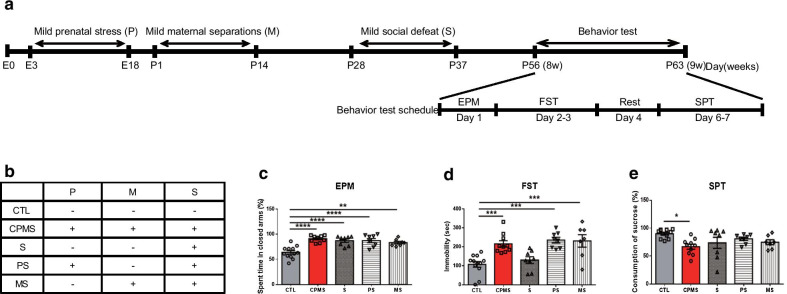
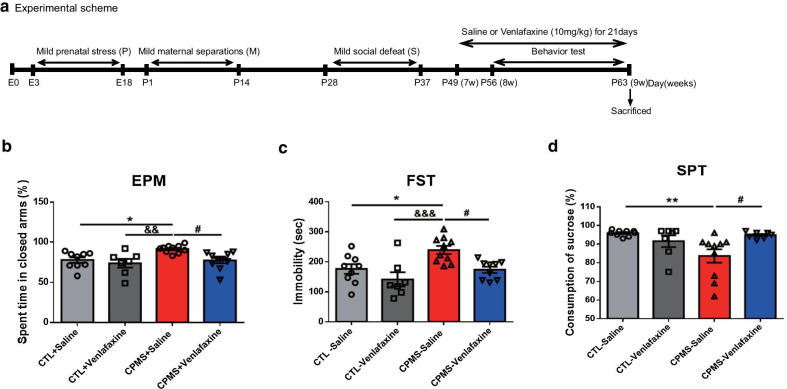
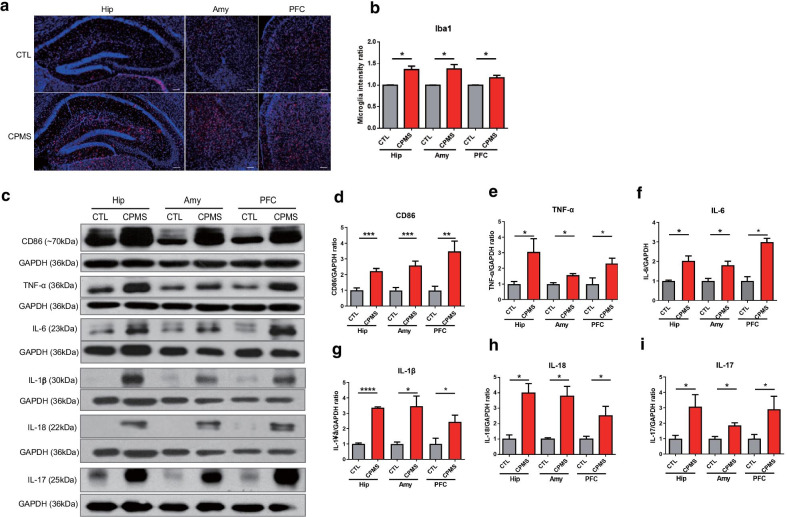
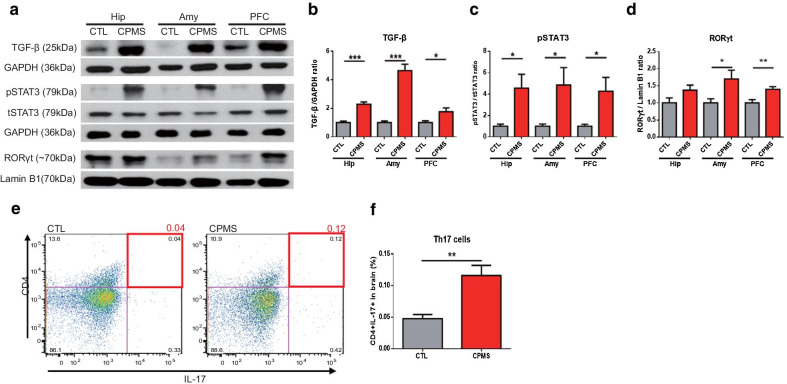
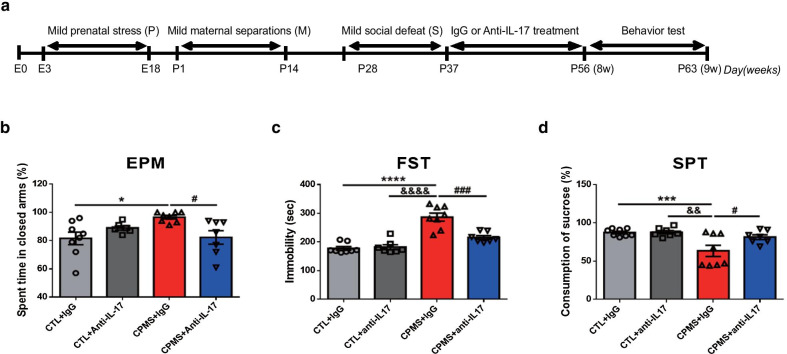
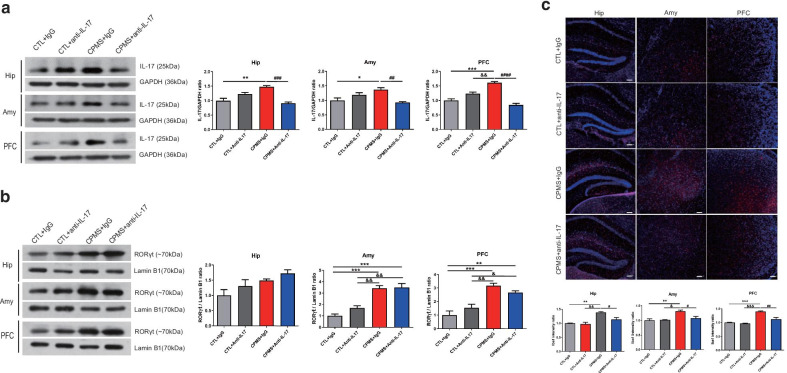
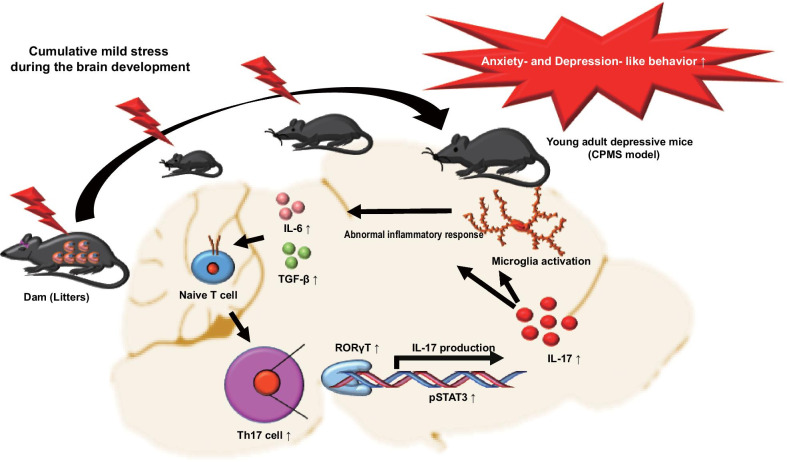
The number of young adult patients with major depression, one of the most common mental disorders, is gradually increasing in modern society. Stressful experiences in early life are considered one of the risk factors for chronic depressive symptoms, along with an abnormal inflammatory response in later life. Although increased inflammatory activity has been identified in patients with depression, the cause of long-lasting depressive states is still unclear. To identify the effects of cumulative mild stress in brain development periods, we generated a young adult depression mouse model exposed to cumulative mild stress (CPMS; cumulative mild prenatal stress, mild maternal separation, and mild social defeat) to mimic early life adversities. CPMS mice exhibited more long-lasting anxiety and depression-like behaviors than groups exposed to single or double combinations of mild stress in young adult age. Using the molecular works, we found that inflammatory cytokines, especially interleukin (IL)-17, upregulated microglial activation in the hippocampus, amygdala, and prefrontal cortex of CPMS mice. In the brains of CPMS mice, we also identified changes in the T helper (Th)-17 cell population as well as differentiation. Finally, anti-IL-17 treatment rescued anxiety and depression-like behavior in CPMS mice. In conclusion, we found that cumulative mild stress promoted long-lasting depressive symptoms in CPMS mice through the upregulation of IL-17. We suggest that the CPMS model may be useful to study young adult depression and expect that IL-17 may be an important therapeutic target for depression in young adults.
Overview
The claims and statistics of this paper haven’t been checked yet.
Free: it reads the open-access text and checks the first 5 claims that cite a source we can check. Create a free account to check every claim.
Integrity signals
Registry
Cites
Statistics
Figures
Verification
Claims the paper makes
The claims and statistics of this paper haven’t been checked yet.
Free: it reads the open-access text and checks the first 5 claims that cite a source we can check. Create a free account to check every claim.
Claims other papers make about this one
Each is checked against this paper’s own text: does it say what the citing paper says it does?
The source backs part of the claim, not all of it — or backs it for a different population, condition or comparison.
In the citing paper
“The sustained activation of the IL-17 pathway in chronic social defeat stress conditions suggests a maladaptive neuroimmune response, which may underlie the persistent behavioral changes observed”
From Comparative Analysis of HPA-Axis Dysregulation and Dynamic Molecular Mechanisms in Acute Versus Chronic Social Defeat Stress (2025) · cites this paper as [47]
Experimental — accuracy not yet measured
Self-check
Percentages, sums and reported differences re-computed from the paper’s own numbers.
The self-check needs the paper’s full text.
Citations
Cites
Ivanov, I. I., McKenzie, B. S., Zhou, L., Tadokoro, C. E., Lepelley, A., Lafaille, J. J., Cua, D. J., & Littman, D. R. (2006) · Cell · doi:10.1016/j.cell.2006.07.035 · Cited by 5,145
Kessler, R. C., & Üstün, T. B. (2004) · International Journal of Methods in Psychiatric Research · doi:10.1002/mpr.168 · Cited by 4,771
Behavioral despair in mice: a primary screening test for antidepressants.
Porsolt, R. D., Bertin, A., & Jalfre, M. (1977) · PubMed · Cited by 4,063
Zhou, L., Ivanov, I. I., Spolski, R., Min, R., Shenderov, K., Egawa, T., Levy, D. E., Leonard, W. J., & Littman, D. R. (2007) · Nature Immunology · doi:10.1038/ni1488 · Cited by 2,141
Willner, P., Towell, A., Sampson, D., Sophokleous, S., & Muscat, R. (1987) · Psychopharmacology · doi:10.1007/bf00187257 · Cited by 1,993
The effects of childhood maltreatment on brain structure, function and connectivity
Teicher, M. H., Samson, J. A., Anderson, C. M., & Ohashi, K. (2016) · Nature Reviews Neuroscience · doi:10.1038/nrn.2016.111 · Cited by 1,856 · cited 1×
“Thus, cumulative mild stress throughout the growth process can alter emotional regulation, metabolism, and immune systems [37].”
BackgroundIL-21 initiates an alternative pathway to induce proinflammatory TH17 cells
Korn, T., Bettelli, E., Gao, W., Awasthi, A., Jäger, A., Strom, T. B., Oukka, M., & Kuchroo, V. K. (2007) · Nature · doi:10.1038/nature05970 · Cited by 1,848
Masten, A. S., & Cicchetti, D. (2010) · Development and Psychopathology · doi:10.1017/s0954579410000222 · Cited by 1,800
T Helper 17 Lineage Differentiation Is Programmed by Orphan Nuclear Receptors RORα and RORγ
Yang, X. O., Pappu, B. P., Nurieva, R., Akimzhanov, A., Kang, H. S., Chung, Y., Ma, L., Shah, B., Panopoulos, A. D., Schluns, K. S., et al. (2008) · Immunity · doi:10.1016/j.immuni.2007.11.016 · Cited by 1,605 · cited 1×
“This transcription factor promotes the expression of RAR-related orphan receptor γt (RORγt) [19, 20].”
BackgroundNormal development of brain circuits
Tau, G. Z., & Peterson, B. S. (2010) · Neuropsychopharmacology · doi:10.1038/npp.2009.115 · Cited by 1,391
Cited by
Hassamal, S. (2023) · Frontiers in Psychiatry · doi:10.3389/fpsyt.2023.1130989 · Cited by 578
“In animal models, anti-IL-17 treatment rescues depression and anxiety behaviors in mice exposed to cumulative mild stress (75).”
BackgroundBrain–gut–microbiota axis in depression: A historical overview and future directions
Chang, L., Wei, Y., & Hashimoto, K. (2022) · Brain Research Bulletin · doi:10.1016/j.brainresbull.2022.02.004 · Cited by 377
Kouba, B. R., de Araujo Borba, L., Borges de Souza, P., Gil-Mohapel, J., & Rodrigues, A. L. S. (2024) · Cells · doi:10.3390/cells13050423 · Cited by 209
“Likewise, in animal models of depression, an increase in brain levels of Th17 has also been reported [158,159].”
BackgroundNeuroinflammation—A Crucial Factor in the Pathophysiology of Depression—A Comprehensive Review
Sălcudean, A., Bodo, C.-R., Popovici, R. A., Lica, M. M., Păcurar, M., Crăciun, R.-E., Crișan, A., ENĂTESCU, V. R., Marinescu, I. P., Cîmpian, D. M., et al. (2025) · Biomolecules · doi:10.3390/biom15040502 · Cited by 202
Hu, P., Lü, Y., Pan, B., & Zhang, W. (2022) · International Journal of Molecular Sciences · doi:10.3390/ijms231911076 · Cited by 152
Th17 cells and inflammation in neurological disorders: Possible mechanisms of action
Shi, Y., Wei, B., Li, L., Wang, B., & Sun, M. (2022) · Frontiers in Immunology · doi:10.3389/fimmu.2022.932152 · Cited by 108
“GM-CSF was reported to play a pathogenic role in NDs, such as AD, PD, MS, and MDD.”
ResultInfluentialThe Role of IL-17 Cytokines in Psoriasis
Mosca, M., Hong, J., Hadeler, E., Hakimi, M., Liao, W. J., & Bhutani, T. (2021) · ImmunoTargets and Therapy · doi:10.2147/itt.s240891 · Cited by 127
Psoriasis and Systemic Inflammatory Disorders
Tashiro, T., & Sawada, Y. (2022) · International Journal of Molecular Sciences · doi:10.3390/ijms23084457 · Cited by 104
“This animal model also increased interleukin IL-17 and Anti-IL-17 treatment impaired anxiety and depression-like behavior [79].”
BackgroundThe Role of IL-17 Cytokines in Psoriasis
Mosca, M., Hong, J. J., Hadeler, E. K., Hakimi, M., Liao, W. J., & Bhutani, T. (2021) · Dove Medical Press (Taylor and Francis Group) · Cited by 73
Lee, B., Kwon, J.-T., Jeong, Y., Caris, H., Oh, D., Feng, M., Davila Mejia, I., Zhang, X., Ishikawa, T., Watson, B. R., et al. (2025) · Cell · doi:10.1016/j.cell.2025.03.005 · Cited by 70
Depression, a major comorbidity of psoriatic disease, is caused by metabolic inflammation
Mrowietz, U., Sümbül, M., & Gerdes, S. (2023) · Journal of the European Academy of Dermatology and Venereology · doi:10.1111/jdv.19192 · Cited by 87
Targeting the Adaptive Immune System in Depression: Focus on T Helper 17 Cells
Beurel, E., Medina-Rodriguez, E. M., & Jope, R. S. (2022) · Pharmacological Reviews · doi:10.1124/pharmrev.120.000256 · Cited by 62
Advancing electrochemical biosensors for interleukin-6 detection
McCrae, L. E., Ting, W., & Howlader, M. M. R. (2022) · Biosensors and Bioelectronics X · doi:10.1016/j.biosx.2022.100288 · Cited by 63
Zafiriou, E., Daponte, A., Siokas, V., Tsigalou, C., Dardiotis, E., & Bogdanos, D. P. (2021) · Frontiers in Immunology · doi:10.3389/fimmu.2021.699848 · Cited by 82
The Mind Body Connection in Dermatologic Conditions: A Literature Review
Mar, K., & Rivers, J. K. (2023) · Journal of Cutaneous Medicine and Surgery · doi:10.1177/12034754231204295 · Cited by 66
Depression in breast cancer patients: Immunopathogenesis and immunotherapy
Yu, S., Li, W., Tang, L., Fan, X., Yao, S., Zhang, X., Bi, Z., & Cheng, H. (2022) · Cancer Letters · doi:10.1016/j.canlet.2022.215648 · Cited by 54
Sex differences in depression: An immunological perspective
Kropp, D. R., & Hodes, G. E. (2023) · Brain Research Bulletin · doi:10.1016/j.brainresbull.2023.02.016 · Cited by 48
Th17 Cells, Glucocorticoid Resistance, and Depression
Khantakova, J. N., Mutovina, A., Ayriyants, K. A., & Bondar, N. P. (2023) · Cells · doi:10.3390/cells12232749 · Cited by 38
T helper cells in depression: central role of Th17 cells
Ghosh, R., Mitra, P., Kumar, P. V. S. N. K., Goyal, T., & Sharma, P. (2021) · Critical Reviews in Clinical Laboratory Sciences · doi:10.1080/10408363.2021.1965535 · Cited by 38
Kim, J., Kim, J., & Chang, K. (2021) · Biomedicines · doi:10.3390/biomedicines9070708 · Cited by 36
Self-citationZhu, Z., Cheng, Y., Liu, X., Xu, X., Ding, W., Ling, Z., Liu, J., & Cai, G. (2025) · Frontiers in Immunology · doi:10.3389/fimmu.2025.1644160 · Cited by 60
Wang, Z., Meng, Z., & Chen, C. (2022) · Frontiers in Psychiatry · doi:10.3389/fpsyt.2022.1009911 · Cited by 34
Daray, F. M., Grendas, L. N., Arena, Á. R., Tifner, V., Casiani, R. I. Á., Olaviaga, A., Chiapella, L. C., Vázquez, G. H., Penna, M. B., Hunter, F., et al. (2024) · Translational Psychiatry · doi:10.1038/s41398-024-02902-2 · Cited by 36
T cell-mediated skin-brain axis: Bridging the gap between psoriasis and psychiatric comorbidities
Yang, J., Zhang, S., Wu, Q., Chen, P., Dai, Y., Long, J., Wu, Y., & Lin, Y. (2024) · Journal of Autoimmunity · doi:10.1016/j.jaut.2024.103176 · Cited by 32
Li, Y., Mao, M., Zhu, L.-Y., Sun, Q., Tong, J.-H., & Zhou, Z. (2022) · International Immunopharmacology · doi:10.1016/j.intimp.2022.108898 · Cited by 27
Zhou, Y., & Ke, Y. (2022) · Frontiers in Surgery · doi:10.3389/fsurg.2022.996680 · Cited by 30
Wei, Q., Jiang, Z., Shi, H., Zou, J., Lu, W., Xiao, X., & Zhang, Y. (2022) · Psychoneuroendocrinology · doi:10.1016/j.psyneuen.2022.105787 · Cited by 26
Fang, Q., Tu, Y., Fan, X., Zang, T., Ni, W., Qiu, T., Li, Y., Bai, J., & Liu, Y. (2023) · Journal of Psychiatric Research · doi:10.1016/j.jpsychires.2023.06.034 · Cited by 27
Early Adversity and Accelerated Brain Aging: A Mini-Review
Chaudhari, P. R., Singla, A., & Vaidya, V. A. (2022) · Frontiers in Molecular Neuroscience · doi:10.3389/fnmol.2022.822917 · Cited by 26
Graves’ disease as a driver of depression: a mechanistic insight
Song, Y., Wang, X., Ma, W., Yang, Y., Yan, S., Sun, J., Zhu, X., & Tang, Y. (2023) · Frontiers in Endocrinology · doi:10.3389/fendo.2023.1162445 · Cited by 28
Th17-cells in depression: Implication in multiple sclerosis
Melnikov, M., & Lopatina, A. (2022) · Frontiers in Immunology · doi:10.3389/fimmu.2022.1010304 · Cited by 21
Inan, S., Meissler, J. J., Bessho, S., Wiah, S., Tükel, Ç., Eisenstein, T. K., & Rawls, S. M. (2024) · Brain Behavior and Immunity · doi:10.1016/j.bbi.2024.01.001 · Cited by 20
The role of the placenta-brain axis in psychoneuroimmune programming
Gumusoglu, S. B. (2024) · Brain Behavior & Immunity - Health · doi:10.1016/j.bbih.2024.100735 · Cited by 31
Chen, Y., Xie, S.-Y., Chen, C., & Lu, D. (2021) · Molecular Brain · doi:10.1186/s13041-021-00860-0 · Cited by 27
Goodman, E. J., DiSabato, D. J., Sheridan, J. F., & Godbout, J. P. (2024) · Communications Biology · doi:10.1038/s42003-024-06898-9 · Cited by 19
Neuro-immune crosstalk in depressive symptoms of multiple sclerosis
Wang, C., Zhou, Y., & Feinstein, A. (2023) · Neurobiology of Disease · doi:10.1016/j.nbd.2023.106005 · Cited by 22
Physiological roles of human interleukin‐17 family
Liu, Y., Ouyang, Y., You, W., Liu, W., Cheng, Y., Mai, X., & Shen, Z. (2023) · Experimental Dermatology · doi:10.1111/exd.14964 · Cited by 25
Li, X., Liu, T., Mo, X., Wang, R., Kong, X., Shao, R., McIntyre, R. S., So, K., & Lin, K. (2023) · Neural Regeneration Research · doi:10.4103/1673-5374.389360 · Cited by 21
The role of T-lymphocytes in central nervous system diseases
Shen, J., Bian, N., Zhao, L., & Wei, J. (2024) · Brain Research Bulletin · doi:10.1016/j.brainresbull.2024.110904 · Cited by 22
Bocharova, M., Borza, T., Watne, L. O., Engedal, K., O'Brien, J. T., Selbæk, G., Idland, A., Hodsoll, J. P., Young, A. H., & Aarsland, D. (2025) · Molecular Psychiatry · doi:10.1038/s41380-025-02908-2 · Cited by 21
Mamun-or-Rashid, Roknuzzaman, A. S. M., Sarker, R., Nayem, J., Bhuiyan, M. A., Islam, M. R., & Mahmud, Z. A. (2024) · Scientific Reports · doi:10.1038/s41598-024-66131-9 · Cited by 25
Choi, I., Cho, M., & Cho, K. (2022) · Frontiers in Molecular Neuroscience · doi:10.3389/fnmol.2022.917598 · Cited by 18
Seo, H.-W., Ha, T.-Y., Ko, G., Jang, A., Choi, J.-W., Lee, D., & Chang, K. (2023) · Cells · doi:10.3390/cells12172133 · Cited by 18
Self-citationShimba, A., Cui, G., Abe, S., Hirota, K., Miyauchi, E., Takami, D., Tani-ichi, S., Kato, R., Tajima, M., Kanahashi, T., et al. (2025) · Cell Reports · doi:10.1016/j.celrep.2025.116093 · Cited by 15
Potula, R., Gentile, T. A., Meissler, J. J., Shekarabi, A., Wiah, S., Farkas, D. J., Inan, S., Eisenstein, T. K., & Rawls, S. M. (2022) · Brain Behavior and Immunity · doi:10.1016/j.bbi.2022.09.012 · Cited by 14
Inan, S., Meissler, J. J., Shekarabi, A., Foss, J., Wiah, S., Eisenstein, T. K., & Rawls, S. M. (2022) · Brain Research · doi:10.1016/j.brainres.2023.148310 · Cited by 15
Dragasevic, S., Stankovic, B., Kotur, N., Sokic Milutinovic, A., Nikolic, A., Pavlovic, S., & Popovic, D. (2025) · Inflammatory Bowel Diseases · doi:10.1093/ibd/izae180 · Cited by 13
Generalized Pustular Psoriasis and Systemic Organ Dysfunctions
Teshima, R., Saito‐Sasaki, N., & Sawada, Y. (2024) · International Journal of Molecular Sciences · doi:10.3390/ijms25116270 · Cited by 17
Gu, Y., Ye, X., Zhao, W., He, S., Zhang, W., & Zeng, X. (2024) · Frontiers in Endocrinology · doi:10.3389/fendo.2024.1379130 · Cited by 16
The Development of Systemic Inflammatory Diseases in Hidradenitis Suppurativa
Saito‐Sasaki, N., & Sawada, Y. (2023) · Diagnostics · doi:10.3390/diagnostics13030502 · Cited by 14
The complex relationship between gut microbiota dysregulation and mood disorders: A narrative review
Minuti, A., Brufani, F., Menculini, G., Moretti, P., & Tortorella, A. A. V. (2022) · Current Research in Neurobiology · doi:10.1016/j.crneur.2022.100044 · Cited by 12
Liu, B., Xu, X., Ge, Q., Yang, M.-S., Zhuang, Y., Zhang, B., Dong, J., Niu, F., & Li, H. (2022) · Neural Regeneration Research · doi:10.4103/1673-5374.355767 · Cited by 12
Yang, J., Jia, Y., Guo, T., Zhang, S., Huang, J., Lu, H., Li, L., Xu, J., Liu, G., & Xiao, K. (2025) · International Journal of Molecular Sciences · doi:10.3390/ijms26136063 · Cited by 11
“The sustained activation of the IL-17 pathway in chronic social defeat stress conditions suggests a maladaptive neuroimmune response, which may underlie the persistent behavioral changes observed [47,48].”
Guo, D., Mao, Q., Fang, X., Huang, L., Tian, H., Yang, W., Zhou, F., & Ma, K. (2025) · Advanced Science · doi:10.1002/advs.202503889 · Cited by 18
Kim, K.-R., Jeong, H., Kim, Y., Lee, S. Y., Kim, Y., Kim, H.-J., Lee, S., Cho, H., Kang, J.-S., & Ho, W. (2021) · Experimental & Molecular Medicine · doi:10.1038/s12276-021-00645-4 · Cited by 12
Role of interleukin 17 (IL-17) in the inflammatory hypothesis of depression
Bliźniewska-Kowalska, K. M., Halaris, A. E., Gałecki, P., & Gałecka, M. (2023) · Journal of Affective Disorders Reports · doi:10.1016/j.jadr.2023.100610 · Cited by 15
Downregulated NPAS4 in multiple brain regions is associated with major depressive disorder
Selçuk, B., Aksu, T., Dereli, O., & Adebalı, O. (2023) · Scientific Reports · doi:10.1038/s41598-023-48646-9 · Cited by 12
“It has been previously suggested that IL-17A induces depressive 144 behavior in mice (Kim et al., 2021; Nadeem et al., 2017), but studies for humans (Saraykar et 145 al.”
BackgroundMaltz, R. M., Marte-Ortiz, P., Rajasekera, T. A., Loman, B. R., Gur, T., & Bailey, M. T. (2022) · International Journal of Molecular Sciences · doi:10.3390/ijms23042000 · Cited by 10
Schiweck, C., Aichholzer, M., Reif, A., & Thanarajah, S. E. (2022) · Journal of Affective Disorders Reports · doi:10.1016/j.jadr.2022.100454 · Cited by 13
Tsuboi, H., Sakakibara, H., Minamida, Y., Tsujiguchi, H., Hara, A., Suzuki, K., Miyagi, S., Nakamura, M., Takazawa, C., Kannon, T., et al. (2024) · BioPsychoSocial Medicine · doi:10.1186/s13030-024-00317-5 · Cited by 13
Hwang, H.-G., Park, J.-W., Lee, H. J., Ko, M. Y., Ka, M., Lee, Y. K., Choi, J., In, S.-A., Lee, Y.-E., Lee, S., et al. (2025) · Gut Microbes · doi:10.1080/19490976.2025.2508424 · Cited by 11
Self-citationThe role of interleukin-17 in neurological disorders
Park, S. E., Ferreira, A. F. F., Kwon, H., Yu, J., Diniz, L., Ulrich, H., Britto, L. R. G., & Kim, E. (2025) · Animal Cells and Systems · doi:10.1080/19768354.2025.2510994 · Cited by 9
Porta, C. L., Plum, T., Palme, R., Mack, M., & Tappe‐Theodor, A. (2024) · Brain Behavior and Immunity · doi:10.1016/j.bbi.2024.04.025 · Cited by 9
Depressive-like Behaviors Induced by mGluR5 Reduction in 6xTg in Mouse Model of Alzheimer’s Disease
Kim, Y., Kim, J., Kang, S., & Chang, K. (2023) · International Journal of Molecular Sciences · doi:10.3390/ijms241613010 · Cited by 10
Self-citationReyes, A. A., & Chandler, D. J. (2023) · Neuroglia · doi:10.3390/neuroglia4020007 · Cited by 10
Pantoja, M. H. D. A., Poleti, M., de Novais, F. J., Duarte, K. K. S., Mateescu, R. G., Mourão, G. B., Coutinho, L. L., Fukumasu, H., & Titto, C. G. (2023) · International Journal of Biometeorology · doi:10.1007/s00484-023-02602-4 · Cited by 9
Forkhead Box 1(FoxO1) mediates psychological stress-induced neuroinflammation
Zhu, Y., Geng, X., Stone, C., Guo, S., Syed, S., & Ding, Y. (2022) · Neurological Research · doi:10.1080/01616412.2021.2022913 · Cited by 8
Yu, Y., Zhang, S., Li, Q., Li, W., Zhou, X., Xue, R., Liang, J., & Zhang, X. (2023) · International Journal of Dermatology and Venereology · doi:10.1097/jd9.0000000000000307 · Cited by 7
High-salt diet drives depression-like behavior in mice by inducing IL-17A production
Lu, D., Chen, W., Sun, W., Wei, C., Xie, X., Li, N., Yan, H., Chen, Y., Wu, Y., Lei, Z., et al. (2025) · The Journal of Immunology · doi:10.1093/jimmun/vkaf019 · Cited by 7
Petrillo, A. D., Favale, A., Onali, S., Kumar, A., Abbracciavento, G., & Fantini, M. C. (2025) · Journal of Clinical Medicine · doi:10.3390/jcm14155522 · Cited by 9
Shen, Y., Fan, J., Liu, S., Tao, L., Yang, Q., & Shen, X. (2024) · PLoS ONE · doi:10.1371/journal.pone.0303189 · Cited by 5
Tang, J., Zhao, S., Su, Y., Shi, H., Li, X., Zhang, X., Wang, J., Jin, X., & He, Y. (2025) · Experimental Dermatology · doi:10.1111/exd.70128 · Cited by 7
Kristóf, Z., Szabó, D., Sperlágh, B., Török, D., & Gonda, X. (2025) · International Journal of Molecular Sciences · doi:10.3390/ijms26104687 · Cited by 6
Ma, H., Chang, Q., Jia, J., Zhang, Y., Wang, G., & Li, Y. (2023) · Brazilian Journal of Medical and Biological Research · doi:10.1590/1414-431x2023e12855 · Cited by 5
Fan, W., Zhu, D., Cao, L., Wang, S., Tong, Y., Xie, F., Zhang, X., Su, P., & Wang, G. (2024) · Neuroscience · doi:10.1016/j.neuroscience.2024.07.027 · Cited by 7
Wang, X., Hu, X., Chen, F., Yu, Q., Wang, Y., Qiu, X., Yang, F., Wang, C., & Wang, W. (2025) · Psychiatry Research · doi:10.1016/j.psychres.2025.116475 · Cited by 4
Antunes, G. F., Gouveia, F. V., Kuroki, M. A., Martins, D. O., Pagano, R. L., Campos, A. C. P., & Martinez, R. C. R. (2024) · Heliyon · doi:10.1016/j.heliyon.2024.e30427 · Cited by 6
Li, Y., Ng, S., Kong, K., Jin, M., Fan, W., Zhou, W., Zhai, Z., & Li, H. (2026) · Journal of Orthopaedic Translation · doi:10.1016/j.jot.2025.101044 · Cited by 7
Milton, M., Inan, S., & Rawls, S. M. (2023) · Cytokine · doi:10.1016/j.cyto.2023.156345 · Cited by 3
Lee, J., Choi, S., Lee, D.-E., Kang, H.-W., Lee, J., & Kim, J.-H. (2025) · International Journal of Molecular Sciences · doi:10.3390/ijms26052162 · Cited by 4
Self-citationTao, Y., Li, Z., Yuan, J., Wang, H., He, Y., Wu, H., Yang, J., Shi, H., Wang, G., Wu, X., et al. (2025) · Journal of Affective Disorders · doi:10.1016/j.jad.2025.119412 · Cited by 2
IONESCU, V.-A., Gheorghe, G., Turculet, C. Ş., Georgescu, T. F., Bratu, M. R., Mambet, C., Enache, V., Gheorghiu, M., Păsărică, D., Diaconu, C. C., et al. (2026) · Biomolecules · doi:10.3390/biom16030426 · Cited by 2
IL-17A in the hippocampus regulates despair-like behaviors via inhibitory synaptic transmission
Wang, Y., Yu, H., He, Y., Cai, J.-C., Tian, Y., Chen, X., Wu, Q.-Y., Yuan, T., Xie, A., Guo, Y., et al. (2026) · Acta Pharmacologica Sinica · doi:10.1038/s41401-026-01761-5 · Cited by 2
Wang, X.-L., & Serchov, T. (2026) · Neuroscience & Biobehavioral Reviews · doi:10.1016/j.neubiorev.2026.106700 · Cited by 3
Mersha, D. G. A., Fromme, S. E., van Boven, F. E., Arteaga-Henríquez, G., Wijkhuijs, A. J. M., van der Ent, M., Berghmans, R., Baune, B., Drexhage, H. A., & Dalm, V. A. S. H. (2025) · Brain Behavior & Immunity - Health · doi:10.1016/j.bbih.2024.100934 · Cited by 4
Thermoregulation responses in sheep: a cellular approach
Pantoja, M. H. D. A. (2022) · Digital Library of Theses and Dissertations (Universidade de São Paulo) · doi:10.11606/t.74.2022.tde-07022023-085254 · Cited by 3
Kong, L., Liu, M., Li, H., Shang, R., Lv, S., Wang, Z., & Ren, Q. (2025) · ALPHA PSYCHIATRY · doi:10.31083/ap45684 · Cited by 2
Smith, J., Smith, S., Jones, K., Castillo, A., Bolton, J. L., Howard, A., Colón-Pérez, L. M., Femi-Ogunyemi, F., Burkes, A., & Cunningham, M. (2026) · Biology of Sex Differences · doi:10.1186/s13293-026-00842-8 · Cited by 1
Boller, A.-L., Freff, J., Bast, M., Schwarte, K., Dannlowski, U., Baune, B. T., Scheu, S., & Alferink, J. (2026) · Frontiers in Cellular Neuroscience · doi:10.3389/fncel.2026.1753241 · Cited by 1
The emerging role of T cells in depression
Wang, H., Tao, H., Yuan, M., & Zhang, W. (2026) · Frontiers in Psychiatry · doi:10.3389/fpsyt.2026.1780383 · Cited by 2
Huang, H., Jiang, H., & Sun, H. (2023) · Frontiers in Bioscience-Landmark · doi:10.31083/j.fbl2812347 · Cited by 1
Inan, S., Wiah, S., Szmacinski, A., Dunn, S., Meissler, J. J., Koltsova, E. K., Grivennikov, S., & Rawls, S. M. (2025) · Neuropharmacology · doi:10.1016/j.neuropharm.2025.110571 · Cited by 2
Inan, S., Meissler, J. J., Shekarabi, A., Foss, J., Wiah, S., Eisenstein, T. K., & Rawls, S. M. (2022) · Research Square · doi:10.21203/rs.3.rs-2326678/v1 · Cited by 1
GluN2A Mediated PS-Induced Depressive-Like Behavior Through Ca 2+ Overload Inhibited MyelinizationPreprint
Huang, H., He, W., Sun, H., & Jiang, H. (2022) · SSRN Electronic Journal · doi:10.2139/ssrn.4002902
Innate lymphoid cells in depression: Current status and perspectives
Madeshiya, A. K., & Pillai, A. (2022) · Biomarkers in Neuropsychiatry · doi:10.1016/j.bionps.2022.100055
Li, X., Liu, T., Mo, X., Wang, R., Kong, X., Shao, R., McIntyre, R. S., So, K., & Lin, K. (2022) · Research Square · doi:10.21203/rs.3.rs-2031269/v1
Investigating the Link Between Anxiety and Multiple Sclerosis: A ReviewPreprint
Mohammed, E. M. A. (2023) · Research Square · doi:10.21203/rs.3.rs-3542372/v1
The Effect of Physical Activity on Stress and Inflammation in Mice with Rheumatoid Arthritis
Payamipour, S., Peeri, M., Azarbaijani, M. A., & Masrour, F. F. (2024) · مجله دانشگاه علوم پزشکی اردبیل · doi:10.61186/jarums.24.1.92
Nicola, C., Pédard, M., Dubois, M., Desrues, L., Neveu, P., Riou, G., Johnston, I., Kleouforo, P. D., Lecras, P., Vaudry, D., et al. (2025) · bioRxiv (Cold Spring Harbor Laboratory) · doi:10.1101/2025.09.03.673981
Potential anti-amyloid beta oligomerization effects of PD166793 in Alzheimer's disease
Kim, D., Shim, K., Kim, J., Ko, G., Tan, M. A., Chang, K.-A., & An, S. S. A. (2025) · Experimental Neurology · doi:10.1016/j.expneurol.2025.115504 · Cited by 2
Self-citation
Metadata
- Authors
- Kim, J., Suh, Y.-H., & Chang, K.-A.
- Affiliations
- Gachon University (KR)
- Corresponding author
- Chang, Keun-A
- Venue
- Molecular Brain
- Published
- 2021-01-13
- Volume
- 14
- Issue
- 1
- Pages
- 11-11
- ISSN
- 1756-6606 (ISSN-L)
- PMC
- PMC7805143
- OpenAlex
- W3120285757
- Cited by
- 116
- References
- 63
- Citations by year
- 2026: 21 · 2025: 21 · 2024: 17 · 2023: 25 · 2022: 25 · 2021: 7
- FWCI
- 6.15
- Type
- journal article
- Language
- en
- Open access
- gold
- doi.org
- Licence
- cc-by
- creativecommons.org/licenses/by/4.0/ (tdm)
- creativecommons.org/licenses/by/4.0/ (vor)
- Locations
- Molecular Brain (publishedVersion, cc-by)
- PubMed Central (publishedVersion, cc-by)
- PubMed (publishedVersion)
- DOAJ (DOAJ: Directory of Open Access Journals) (submittedVersion, cc-by-sa)
- Funders
- National Research Foundation of Korea (2016M3C7A1914451, 2020M3A9E4104384)
- Topics
- Life Sciences › Neuroscience › Biological Psychiatry › Tryptophan and brain disorders
- Life Sciences › Neuroscience › Behavioral Neuroscience › Stress Responses and Cortisol
- Life Sciences › Neuroscience › Neurology › Neuroinflammation and Neurodegeneration Mechanisms
- Keywords
- IL-17, childhood adversity, depression-like behavior, anxiety-like behavior, Th17 cells, microglial activation, neuroinflammation, maternal separation, social defeat, prenatal stress, young adult depression, hippocampus, amygdala, prefrontal cortex
- MeSH terms
- Aging, Animals, Anxiety, Behavior, Animal, Cell Differentiation, Depression, Female, Inflammation, Male, Mice, Inbred C57BL, Models, Biological, Stress, Psychological, Up-Regulation, Cytokines, Microglia, Inflammation Mediators, Interleukin-17, Mice, Th17 Cells
About these checks
Registry, retraction, Cites and statistics results are computed, not judged, with one exception: a printed reference that no index lists is read once by a model before it counts as a citation error. Claims are extracted by a model and kept only when their quote appears verbatim in the text; each cited source is then checked, with a model’s help, for whether it says what the claim relies on. Those verdicts can be wrong — read the claim’s quote and the cited source before relying on one.
Statistics and arithmetic are recomputed, not judged.
Confidence bands are shown only for fields calibrated on our annotated test set. None is calibrated yet, so no band is shown.
What counts as a claim ›How we measure confidence ›How we check this ›
Are you an author, or do you see a problem with this page? Request a review
Data sources
Bibliographic data: Semantic Scholar, OpenAlex, Crossref.
Contains information from the Semantic Scholar Academic Graph Datasets, made available under the ODC Attribution License (ODC-BY 1.0).
Semantic Scholar’s data is described in: Kinney, R., et al. (2023). The Semantic Scholar Open Data Platform. arXiv:2301.10140.
