

Interleukin-17 induced by cumulative mild stress promoted depression-like behaviors in young adult mice
Open accessThe DOI matches its Crossref record; 63 of the 63 references it cites were found in a registry or an index.
Abstract
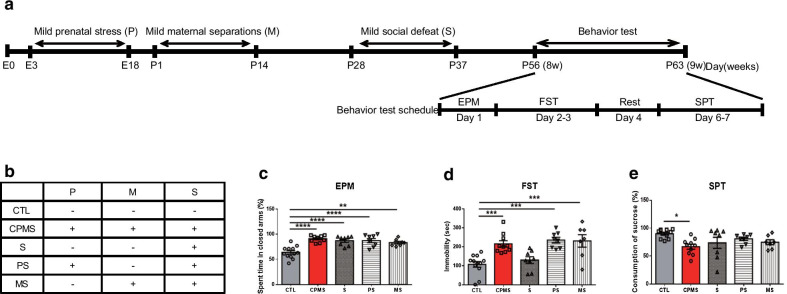
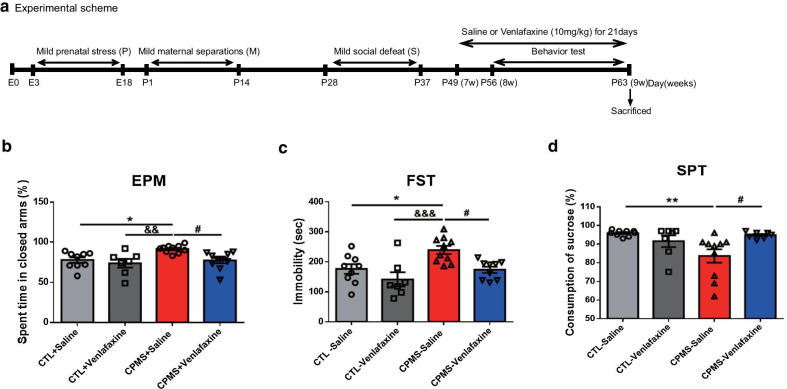
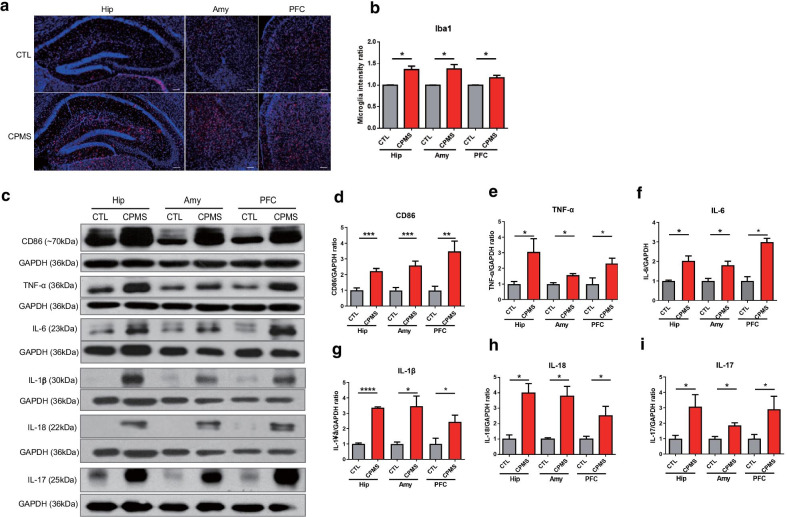
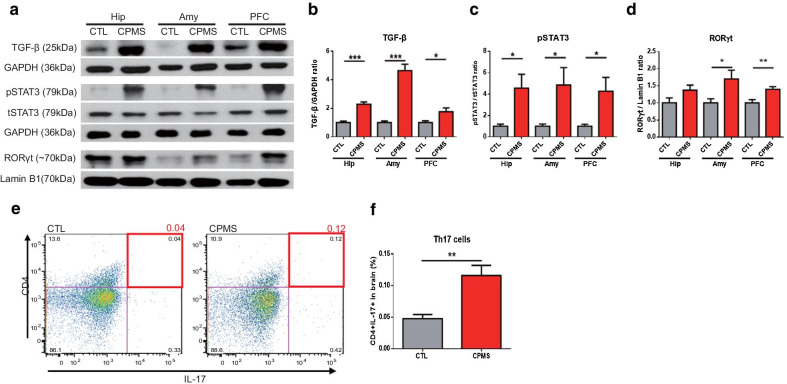
The number of young adult patients with major depression, one of the most common mental disorders, is gradually increasing in modern society. Stressful experiences in early life are considered one of the risk factors for chronic depressive symptoms, along with an abnormal inflammatory response in later life. Although increased inflammatory activity has been identified in patients with depression, the cause of long-lasting depressive states is still unclear. To identify the effects of cumulative mild stress in brain development periods, we generated a young adult depression mouse model exposed to cumulative mild stress (CPMS; cumulative mild prenatal stress, mild maternal separation, and mild social defeat) to mimic early life adversities. CPMS mice exhibited more long-lasting anxiety and depression-like behaviors than groups exposed to single or double combinations of mild stress in young adult age. Using the molecular works, we found that inflammatory cytokines, especially interleukin (IL)-17, upregulated microglial activation in the hippocampus, amygdala, and prefrontal cortex of CPMS mice. In the brains of CPMS mice, we also identified changes in the T helper (Th)-17 cell population as well as differentiation. Finally, anti-IL-17 treatment rescued anxiety and depression-like behavior in CPMS mice. In conclusion, we found that cumulative mild stress promoted long-lasting depressive symptoms in CPMS mice through the upregulation of IL-17. We suggest that the CPMS model may be useful to study young adult depression and expect that IL-17 may be an important therapeutic target for depression in young adults.
Overview
The claims and statistics of this paper haven’t been checked yet.
Free: it reads the open-access text and checks the first 5 claims that cite a source we can check. Create a free account to check every claim.
Integrity signals
Registry
Cites
Statistics
Figures
Verification
Claims the paper makes
The claims and statistics of this paper haven’t been checked yet.
Free: it reads the open-access text and checks the first 5 claims that cite a source we can check. Create a free account to check every claim.
Claims other papers make about this one
Each is checked against this paper’s own text: does it say what the citing paper says it does?
The source backs part of the claim, not all of it — or backs it for a different population, condition or comparison.
In the citing paper
“The sustained activation of the IL-17 pathway in chronic social defeat stress conditions suggests a maladaptive neuroimmune response, which may underlie the persistent behavioral changes observed”
From Comparative Analysis of HPA-Axis Dysregulation and Dynamic Molecular Mechanisms in Acute Versus Chronic Social Defeat Stress (2025) · cites this paper as [47]
Experimental — accuracy not yet measured
Self-check
Percentages, sums and reported differences re-computed from the paper’s own numbers.
The self-check needs the paper’s full text.
Citations
Cites
Ivanov, I. I., McKenzie, B. S., Zhou, L., Tadokoro, C. E., Lepelley, A., Lafaille, J. J., Cua, D. J., & Littman, D. R. (2006) · Cell · doi:10.1016/j.cell.2006.07.035 · Cited by 5,145
Kessler, R. C., & Üstün, T. B. (2004) · International Journal of Methods in Psychiatric Research · doi:10.1002/mpr.168 · Cited by 4,771
Behavioral despair in mice: a primary screening test for antidepressants.
Porsolt, R. D., Bertin, A., & Jalfre, M. (1977) · PubMed · Cited by 4,063
Zhou, L., Ivanov, I. I., Spolski, R., Min, R., Shenderov, K., Egawa, T., Levy, D. E., Leonard, W. J., & Littman, D. R. (2007) · Nature Immunology · doi:10.1038/ni1488 · Cited by 2,141
Willner, P., Towell, A., Sampson, D., Sophokleous, S., & Muscat, R. (1987) · Psychopharmacology · doi:10.1007/bf00187257 · Cited by 1,993
The effects of childhood maltreatment on brain structure, function and connectivity
Teicher, M. H., Samson, J. A., Anderson, C. M., & Ohashi, K. (2016) · Nature Reviews Neuroscience · doi:10.1038/nrn.2016.111 · Cited by 1,856 · cited 1×
“Thus, cumulative mild stress throughout the growth process can alter emotional regulation, metabolism, and immune systems [37].”
BackgroundIL-21 initiates an alternative pathway to induce proinflammatory TH17 cells
Korn, T., Bettelli, E., Gao, W., Awasthi, A., Jäger, A., Strom, T. B., Oukka, M., & Kuchroo, V. K. (2007) · Nature · doi:10.1038/nature05970 · Cited by 1,848
Masten, A. S., & Cicchetti, D. (2010) · Development and Psychopathology · doi:10.1017/s0954579410000222 · Cited by 1,800
T Helper 17 Lineage Differentiation Is Programmed by Orphan Nuclear Receptors RORα and RORγ
Yang, X. O., Pappu, B. P., Nurieva, R., Akimzhanov, A., Kang, H. S., Chung, Y., Ma, L., Shah, B., Panopoulos, A. D., Schluns, K. S., et al. (2008) · Immunity · doi:10.1016/j.immuni.2007.11.016 · Cited by 1,605 · cited 1×
“This transcription factor promotes the expression of RAR-related orphan receptor γt (RORγt) [19, 20].”
BackgroundNormal development of brain circuits
Tau, G. Z., & Peterson, B. S. (2010) · Neuropsychopharmacology · doi:10.1038/npp.2009.115 · Cited by 1,391
Childhood maltreatment predicts adult inflammation in a life-course study
Danese, A., Pariante, C. M., Caspi, A., Taylor, A., & Poulton, R. (2007) · Proceedings of the National Academy of Sciences · doi:10.1073/pnas.0610362104 · Cited by 1,264
Katon, W. J. (2003) · Biological Psychiatry · doi:10.1016/s0006-3223(03)00273-7 · Cited by 1,223
Baumeister, D., Akhtar, R., Ciufolini, S., Pariante, C. M., & Mondelli, V (2016) · Molecular Psychiatry · doi:10.1038/mp.2015.67 · Cited by 1,084
Forced swimming test in mice: A review of antidepressant activity
Petit-Demouliere, B., Chenu, F., & Bourin, M. (2005) · Psychopharmacology · doi:10.1007/s00213-004-2048-7 · Cited by 1,003
The prevention of depressive symptoms in children and adolescents: a meta-analytic review
Horowitz, J. L., & Garber, J. (2006) · Journal of Consulting and Clinical Psychology · doi:10.1037/0022-006x.74.3.401 · Cited by 803
Mahmoud, J. S. R., Staten, R. “., Hall, L. A., & Lennie, T. A. (2012) · Issues in Mental Health Nursing · doi:10.3109/01612840.2011.632708 · Cited by 698
Early-life programming of later-life brain and behavior: a critical role for the immune system
Bilbo, S. D. (2009) · Frontiers in Behavioral Neuroscience · doi:10.3389/neuro.08.014.2009 · Cited by 652 · cited 1×
“Another previous study showed that the consequences of early life stress-induced infection altered cytokine production, such as IL-6, TNF-α, or IL-1β, and changed behaviors in later life [49].”
BackgroundDevelopmental Cascades [Special Issue, Part 1]
Masten, A. S., & CICCHETTI, D. V. (2010) · Development and Psychopathology · Cited by 603
Miller, G. E., Chen, E., Sze, J., Marin, T., Arevalo, J. M. G., Doll, R., Ma, R., & Cole, S. W. (2008) · Biological Psychiatry · doi:10.1016/j.biopsych.2008.03.017 · Cited by 552 · cited 2×
“Indeed, early life stress may impact the inflammatory reactions in adults by enhancing the transcription of nuclear factor kappa B (NF-κB) by increasing pro-inflammatory cytokines [33].”
BackgroundEffect of Age at Onset on the Course of Major Depressive Disorder
Zisook, S., Lesser, I., Stewart, J. W., Wisniewski, S. R., Balasubramani, G. K., Fava, M., Gilmer, W. S., Dresselhaus, T. R., Thase, M. E., Nierenberg, A. A., et al. (2007) · American Journal of Psychiatry · doi:10.1176/appi.ajp.2007.06101757 · Cited by 548
Animal Models of Depression: Molecular Perspectives
Krishnan, V., & Nestler, E. J. (2011) · Current Topics in Behavioral Neurosciences · doi:10.1007/7854_2010_108 · Cited by 528 · cited 1×
“To approve as depression models, pharmacological validity, which requires the reversal of depressive symptoms by available anti-depressants, need to be met [39].”
BackgroundAnimal models of major depression: drawbacks and challenges
Planchez, B., Surget, A., & Belzung, C. (2019) · Journal of Neural Transmission · doi:10.1007/s00702-019-02084-y · Cited by 480 · cited 1×
“So we generated a CPMS mouse model for depression in young adulthood by exposing cumulative three kinds of mild stress (P, M, and S) in early life using a modified protocol that complements the previous mouse model based on stress [34].”
MethodToward understanding how early-life stress reprograms cognitive and emotional brain networks
Chen, Y., & Baram, T. Z. (2016) · Neuropsychopharmacology · doi:10.1038/npp.2015.181 · Cited by 474
Suliman, S., Mkabile, S. G., Fincham, D. S., Ahmed, R., Stein, D. J., & Seedat, S. (2009) · Comprehensive Psychiatry · doi:10.1016/j.comppsych.2008.06.006 · Cited by 428 · cited 1×
“Also, multiple stressors accumulating and combining to lead to more severe outcomes such as abnormal inflammation in the developmental literature [32, 33].”
BackgroundSocial model of depression in mice of C57BL/6J strain
Kudryavtseva, N. N., Bakshtanovskaya, I. V., & Koryakina, L. A. (1991) · Pharmacology Biochemistry and Behavior · doi:10.1016/0091-3057(91)90284-9 · Cited by 404 · cited 1×
“When the mice were 4 weeks old, they were exposed to mild social defeat stress for 10 days according to the modified schedules of the previous paradigm [57, 58] shown in Additional file 1: Fig.”
MethodAnticipatory pleasure predicts motivation for reward in major depression.
Sherdell, L., Waugh, C. E., & Gotlib, I. H. (2012) · Journal of Abnormal Psychology · doi:10.1037/a0024945 · Cited by 367
Dietary salt promotes neurovascular and cognitive dysfunction through a gut-initiated TH17 response
Faraco, G., Brea, D., Garcia-Bonilla, L., Wang, G., Racchumi, G., Chang, H., Buendia, I., Santisteban, M. M., Segarra, S. G., Koizumi, K., et al. (2018) · Nature Neuroscience · doi:10.1038/s41593-017-0059-z · Cited by 343 · cited 1×
“Anti-IL-17 (Bioxcell, Lebanon, NH, USA) and IgG (Bioxcell) was dissolved in purified dilution buffer [59].”
MethodThe role of IL-17 in CNS diseases
Waisman, A., Hauptmann, J., & Regen, T. (2015) · Acta Neuropathologica · doi:10.1007/s00401-015-1402-7 · Cited by 340
Early-life stress, HPA axis adaptation, and mechanisms contributing to later health outcomes
Maniam, J., Antoniadis, C., & Morris, M. J. (2014) · Frontiers in Endocrinology · doi:10.3389/fendo.2014.00073 · Cited by 295 · cited 1×
“GC could destroy the negative feedback loop of the HPA axis, triggering behaviors such as anxiety and depression [47].”
BackgroundSocial defeat stress induces a depression-like phenotype in adolescent male c57BL/6 mice
Iñiguez, S. D., Riggs, L. M., Nieto, S. J., Dayrit, G., Zamora, N. N., Shawhan, K. L., Cruz, B., & Warren, B. L. (2014) · Stress · doi:10.3109/10253890.2014.910650 · Cited by 269 · cited 1×
“When the mice were 4 weeks old, they were exposed to mild social defeat stress for 10 days according to the modified schedules of the previous paradigm [57, 58] shown in Additional file 1: Fig.”
MethodInflammatory T helper 17 cells promote depression-like behavior in mice
Beurel, E., Harrington, L. E., & Jope, R. S. (2013) · Biological Psychiatry · doi:10.1016/j.biopsych.2012.09.021 · Cited by 254 · cited 1×
“Previous studies have also shown increased Th17 cells in the brains of the learned helplessness rodent model [14, 16].”
ResultGender issues in youth suicidal behaviour
Beautrais, A. L. (2002) · Emergency Medicine · doi:10.1046/j.1442-2026.2002.00283.x · Cited by 252
Goodwill, H. L., Manzano-Nieves, G., Gallo, M., Lee, H.-I., Oyerinde, E., Serre, T., & Bath, K. G. (2019) · Neuropsychopharmacology · doi:10.1038/s41386-018-0195-5 · Cited by 234
Das, J., Ren, G., Zhang, L., Roberts, A. I., Zhao, X., Bothwell, A. L. M., Van Kaer, L., Shi, Y., & Das, G. (2009) · Journal of Experimental Medicine · doi:10.1084/jem.20082286 · Cited by 216
Jeong, J. Y., Lee, D. H., & Kang, S. S. (2013) · Endocrinology and Metabolism · doi:10.3803/enm.2013.28.4.288 · Cited by 215
Chen, Y., Jiang, T., Chen, P., Ouyang, J., Xu, G., Zeng, Z., & Sun, Y. (2011) · Psychiatry Research · doi:10.1016/j.psychres.2010.10.029 · Cited by 209 · cited 1×
“In clinical studies, adult patients with depression exhibited higher IL-17 levels in serum than in healthy controls and have more Th17 cells, which produce IL-17 [14, 15].”
BackgroundBeurel, E., & Lowell, J. A. (2018) · Brain, Behavior, and Immunity · doi:10.1016/j.bbi.2017.08.001 · Cited by 187
Early adversity in chronic depression: clinical correlates and response to pharmacotherapy
Klein, D. N., Arnow, B. A., Barkin, J. L., Dowling, F., Kocsis, J. H., Leon, A. C., Manber, R., Rothbaum, B. O., Trivedi, M. H., & Wisniewski, S. R. (2009) · Depression and Anxiety · doi:10.1002/da.20577 · Cited by 167
Early Life Stress, Mood, and Anxiety Disorders
Syed, S. A., & Nemeroff, C. B. (2017) · Chronic Stress · doi:10.1177/2470547017694461 · Cited by 151
Th17 and Cognitive Impairment: Possible Mechanisms of Action
Cipollini, V., Anrather, J., Orzi, F., & Iadecola, C. (2019) · Frontiers in Neuroanatomy · doi:10.3389/fnana.2019.00095 · Cited by 149
Childhood adversities and depression in adulthood: Current findings and future directions.
Liu, R. T. (2017) · Clinical Psychology: Science and Practice · doi:10.1111/cpsp.12190 · Cited by 147
Nadeem, A., Ahmad, S. F., Al-Harbi, N. O., Fardan, A. S., El-Sherbeeny, A. M., Ibrahim, K. E., & Attia, S. M. (2017) · Cytokine · doi:10.1016/j.cyto.2017.05.018 · Cited by 147
Timing of therapies for Down syndrome: the sooner, the better
Stagni, F., Giacomini, A., Guidi, S., Ciani, E., & Bartesaghi, R. (2015) · Frontiers in Behavioral Neuroscience · doi:10.3389/fnbeh.2015.00265 · Cited by 124
Davami, M., Baharlou, R., Ahmadi Vasmehjani, A., Ghanizadeh, A., Keshtkar, M., Dezhkam, I., & Atashzar, M. (2016) · Basic and Clinical Neuroscience Journal · doi:10.15412/j.bcn.03070207 · Cited by 124 · cited 2×
“Previous studies have also shown increased Th17 cells in the brains of the learned helplessness rodent model [14, 16].”
BackgroundResultHow could stress lead to major depressive disorder?
Richter-Levin, G., & Xu, L. (2018) · IBRO Reports · doi:10.1016/j.ibror.2018.04.001 · Cited by 120
New insights into early-life stress and behavioral outcomes
Bolton, J. L., Molet, J., Ivy, A., & Baram, T. Z. (2017) · Current Opinion in Behavioral Sciences · doi:10.1016/j.cobeha.2016.12.012 · Cited by 113
Early-Life Stress and Adult Inflammation
Fagundes, C. P., & Way, B. (2014) · Current Directions in Psychological Science · doi:10.1177/0963721414535603 · Cited by 108
Lu, Y., Tang, C. S., Liow, C. S., Ng, W. W. N., Ho, C. S. H., & Ho, R. (2014) · Asian Journal of Psychiatry · doi:10.1016/j.ajp.2014.06.014 · Cited by 90
Venlafaxine exhibits an anti-inflammatory effect in an inflammatory co-culture model
Vollmar, P., Haghikia, A., Dermietzel, R., & Faustmann, P. M. (2008) · The International Journal of Neuropsychopharmacology · doi:10.1017/s1461145707007729 · Cited by 75
Pharmacological inhibition of RORγt suppresses the Th17 pathway and alleviates arthritis in vivo
Guendisch, U., Weiss, J., Ecoeur, F., Riker, J., Kaupmann, K., Kallen, J. A., Hintermann, S., Orain, D., Dawson, J., Billich, A., et al. (2017) · PLoS ONE · doi:10.1371/journal.pone.0188391 · Cited by 75
Fronto-limbic volumetric changes in major depressive disorder
Malykhin, N. V., Carter, R., Hegadoren, K., Seres, P., & Coupland, N. J. (2011) · Journal of Affective Disorders · doi:10.1016/j.jad.2011.10.038 · Cited by 73
SANDERS, B., & Anticevic, A. (2007) · Behavioural Brain Research · doi:10.1016/j.bbr.2007.05.020 · Cited by 70
Anti-depressive-like effect of 2-phenylethanol inhalation in mice
Ueno, H., Shimada, A., Suemitsu, S., Murakami, S., Kitamura, N., Wani, K., Matsumoto, Y., Okamoto, M., & Ishihara, T. (2018) · Biomedicine & Pharmacotherapy · doi:10.1016/j.biopha.2018.10.073 · Cited by 64
Zhang, Y., Bi, X., Adebiyi, O., Wang, J., Mooshekhian, A., Cohen, J., Wei, Z., Wang, F., & Li, X.-M. (2019) · Frontiers in Pharmacology · doi:10.3389/fphar.2019.00332 · Cited by 63
The role of Th17 cells in the pathophysiology of pregnancy and perinatal mood and anxiety disorders
Osborne, L. M., Brar, A., & Klein, S. L. (2019) · Brain, Behavior, and Immunity · doi:10.1016/j.bbi.2018.11.015 · Cited by 62
Söderlund, J., & Lindskog, M. (2018) · International Journal of Neuropsychopharmacology · doi:10.1093/ijnp/pyy037 · Cited by 50
A novel human STAT3 mutation presents with autoimmunity involving Th17 hyperactivation
Wienke, J., Janssen, W. J. M., Scholman, R. C., Spits, H. B., van Gijn, M. E., Boes, M. L., van Montfrans, J. M., Moes, N. D., & de Roock, S. (2015) · Oncotarget · doi:10.18632/oncotarget.5042 · Cited by 45
Yu, A., Duan, H., Zhang, T., Pan, Y., Zhi, K., Zhang, X., Lu, Y., Wang, S., & Yang, Z. (2016) · Molecular Immunology · doi:10.1016/j.molimm.2016.04.003 · Cited by 41
Suzuki, H., Botteron, K. N., Luby, J. L., Belden, A. C., Gaffrey, M. S., Babb, C. M., Nishino, T., Miller, M. I., Ratnanather, J. T., & Barch, D. M. (2013) · Cognitive, Affective, & Behavioral Neuroscience · doi:10.3758/s13415-012-0121-y · Cited by 38
Wang, C.-H., Gu, J.-Y., Zhang, X.-L., Dong, J., Yang, J., Zhang, Y.-L., Ning, Q.-F., Shan, X.-W., & Li, Y. (2016) · Behavioral and Brain Functions · doi:10.1186/s12993-016-0116-x · Cited by 33 · cited 2×
“Louis, MO, USA), a serotonin-norepinephrine reuptake inhibitor (SNRI) anti-depressant, was dissolved in normal saline [40].”
BackgroundThe History and Timing of Depression Onset as Predictors of Young Adult Self-Esteem
Gayman, M. D., Lloyd, D. A., & Ueno, K. (2010) · Journal of Research on Adolescence · doi:10.1111/j.1532-7795.2010.00702.x · Cited by 29
Wedervang‐Resell, K., Friis, S., Lonning, V., Smelror, R. E., Johannessen, C. H., Reponen, E. J., Lyngstad, S. H., Lekva, T., Aukrust, P., Ueland, T., et al. (2019) · Psychoneuroendocrinology · doi:10.1016/j.psyneuen.2019.104513 · Cited by 29
Kamel, K. M., Gad, A. M., Mansour, S. M., Safar, M. M., & Fawzy, H. M. (2019) · Life Sciences · doi:10.1016/j.lfs.2019.03.063 · Cited by 26
Cited by
Hassamal, S. (2023) · Frontiers in Psychiatry · doi:10.3389/fpsyt.2023.1130989 · Cited by 578
“In animal models, anti-IL-17 treatment rescues depression and anxiety behaviors in mice exposed to cumulative mild stress (75).”
BackgroundBrain–gut–microbiota axis in depression: A historical overview and future directions
Chang, L., Wei, Y., & Hashimoto, K. (2022) · Brain Research Bulletin · doi:10.1016/j.brainresbull.2022.02.004 · Cited by 377
Kouba, B. R., de Araujo Borba, L., Borges de Souza, P., Gil-Mohapel, J., & Rodrigues, A. L. S. (2024) · Cells · doi:10.3390/cells13050423 · Cited by 209
“Likewise, in animal models of depression, an increase in brain levels of Th17 has also been reported [158,159].”
BackgroundNeuroinflammation—A Crucial Factor in the Pathophysiology of Depression—A Comprehensive Review
Sălcudean, A., Bodo, C.-R., Popovici, R. A., Lica, M. M., Păcurar, M., Crăciun, R.-E., Crișan, A., ENĂTESCU, V. R., Marinescu, I. P., Cîmpian, D. M., et al. (2025) · Biomolecules · doi:10.3390/biom15040502 · Cited by 202
Hu, P., Lü, Y., Pan, B., & Zhang, W. (2022) · International Journal of Molecular Sciences · doi:10.3390/ijms231911076 · Cited by 152
Metadata
- Authors
- Kim, J., Suh, Y.-H., & Chang, K.-A.
- Affiliations
- Gachon University (KR)
- Corresponding author
- Chang, Keun-A
- Venue
- Molecular Brain
- Published
- 2021-01-13
- Volume
- 14
- Issue
- 1
- Pages
- 11-11
- ISSN
- 1756-6606 (ISSN-L)
- PMC
- PMC7805143
- OpenAlex
- W3120285757
- Cited by
- 116
- References
- 63
- Citations by year
- 2026: 21 · 2025: 21 · 2024: 17 · 2023: 25 · 2022: 25 · 2021: 7
- FWCI
- 6.15
- Type
- journal article
- Language
- en
- Open access
- gold
- doi.org
- Licence
- cc-by
- creativecommons.org/licenses/by/4.0/ (tdm)
- creativecommons.org/licenses/by/4.0/ (vor)
- Locations
- Molecular Brain (publishedVersion, cc-by)
- PubMed Central (publishedVersion, cc-by)
- PubMed (publishedVersion)
- DOAJ (DOAJ: Directory of Open Access Journals) (submittedVersion, cc-by-sa)
- Funders
- National Research Foundation of Korea (2016M3C7A1914451, 2020M3A9E4104384)
- Topics
- Life Sciences › Neuroscience › Biological Psychiatry › Tryptophan and brain disorders
- Life Sciences › Neuroscience › Behavioral Neuroscience › Stress Responses and Cortisol
- Life Sciences › Neuroscience › Neurology › Neuroinflammation and Neurodegeneration Mechanisms
- Keywords
- IL-17, childhood adversity, depression-like behavior, anxiety-like behavior, Th17 cells, microglial activation, neuroinflammation, maternal separation, social defeat, prenatal stress, young adult depression, hippocampus, amygdala, prefrontal cortex
- MeSH terms
- Aging, Animals, Anxiety, Behavior, Animal, Cell Differentiation, Depression, Female, Inflammation, Male, Mice, Inbred C57BL, Models, Biological, Stress, Psychological, Up-Regulation, Cytokines, Microglia, Inflammation Mediators, Interleukin-17, Mice, Th17 Cells
About these checks
Registry, retraction, Cites and statistics results are computed, not judged, with one exception: a printed reference that no index lists is read once by a model before it counts as a citation error. Claims are extracted by a model and kept only when their quote appears verbatim in the text; each cited source is then checked, with a model’s help, for whether it says what the claim relies on. Those verdicts can be wrong — read the claim’s quote and the cited source before relying on one.
Statistics and arithmetic are recomputed, not judged.
Confidence bands are shown only for fields calibrated on our annotated test set. None is calibrated yet, so no band is shown.
What counts as a claim ›How we measure confidence ›How we check this ›
Are you an author, or do you see a problem with this page? Request a review
Data sources
Bibliographic data: Semantic Scholar, OpenAlex, Crossref.
Contains information from the Semantic Scholar Academic Graph Datasets, made available under the ODC Attribution License (ODC-BY 1.0).
Semantic Scholar’s data is described in: Kinney, R., et al. (2023). The Semantic Scholar Open Data Platform. arXiv:2301.10140.
