

Contribution of Candida biomarkers and DNA detection for the diagnosis of invasive candidiasis in ICU patients with severe abdominal conditions
Open accessThe DOI matches its Crossref record; 39 of the 39 references it cites were found in a registry or an index.
Abstract
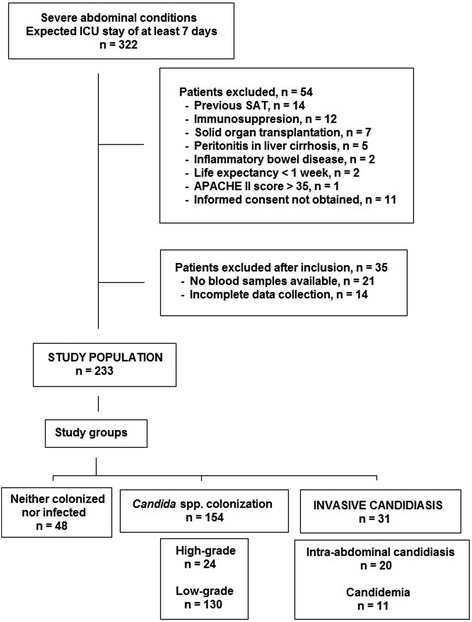
BACKGROUND: To assess the performance of Candida albicans germ tube antibody (CAGTA), (1 → 3)-ß-D-glucan (BDG), mannan antigen (mannan-Ag), anti-mannan antibodies (mannan-Ab), and Candida DNA for diagnosing invasive candidiasis (IC) in ICU patients with severe abdominal conditions (SAC). METHODS: A prospective study of 233 non-neutropenic patients with SAC on ICU admission and expected stay ≥ 7 days. CAGTA (cutoff positivity ≥ 1/160), BDG (≥80, 100 and 200 pg/mL), mannan-Ag (≥60 pg/mL), mannan-Ab (≥10 UA/mL) were measured twice a week, and Candida DNA only in patients treated with systemic antifungals. IC diagnosis required positivities of two biomarkers in a single sample or positivities of any biomarker in two consecutive samples. Patients were classified as neither colonized nor infected (n = 48), Candida spp. colonization (n = 154) (low-grade, n = 130; high-grade, n = 24), and IC (n = 31) (intra-abdominal candidiasis, n = 20; candidemia, n = 11). RESULTS: The combination of CAGTA and BDG positivities in a single sample or at least one of the two biomarkers positive in two consecutive samples showed 90.3 % (95 % CI 74.2-98.0) sensitivity, 42.1 % (95 % CI 35.2-98.8) specificity, and 96.6 % (95 % CI 90.5-98.8) negative predictive value. BDG positivities in two consecutive samples had 76.7 % (95 % CI 57.7-90.1) sensitivity and 57.2 % (95 % CI 49.9-64.3) specificity. Mannan-Ag, mannan-Ab, and Candida DNA individually or combined showed a low discriminating capacity. CONCLUSIONS: Positive Candida albicans germ tube antibody and (1 → 3)-ß-D-glucan in a single blood sample or (1 → 3)-ß-D-glucan positivity in two consecutive blood samples allowed discriminating invasive candidiasis from Candida spp. colonization in critically ill patients with severe abdominal conditions. These findings may be helpful to tailor empirical antifungal therapy in this patient population.
Overview
The claims and statistics of this paper haven’t been checked yet.
Free: it reads the open-access text and checks the first 5 claims that cite a source we can check. Create a free account to check every claim.
Integrity signals
Registry
Cites
Statistics
Figures
Verification
Claims the paper makes
The claims and statistics of this paper haven’t been checked yet.
Free: it reads the open-access text and checks the first 5 claims that cite a source we can check. Create a free account to check every claim.
Claims other papers make about this one
Each is checked against this paper’s own text: does it say what the citing paper says it does?
The cited source says what the claim attributes to it.
In the citing paper
“In this group, the sensitivity of the mannan antigen was only 43.3% with a specificity of 67.3%.20”
From Epidemiology of Invasive Candidiasis (2024) · cites this paper as [20]
The cited source says what the claim attributes to it.
In the citing paper
“but performed poorly in a large prospective study of non-neutropenic intensive care unit (ICU) patients at risk of IC due to severe abdominal conditions.”
From Epidemiology of Invasive Candidiasis (2024) · cites this paper as [20]
The cited source says what the claim attributes to it.
In the citing paper
“Anti-mannan antibody performance exhibited a sensitivity of only 25.8% but a more favorable specificity of 89%.20”
From Epidemiology of Invasive Candidiasis (2024) · cites this paper as [20]
Self-check
Percentages, sums and reported differences re-computed from the paper’s own numbers.
The self-check needs the paper’s full text.
Citations
Cites
Surviving Sepsis Campaign: International Guidelines for Management of Severe Sepsis and Septic Shock
Dellinger, R. P., Levy, M. M., Rhodes, A., Annane, D., Gerlach, H., Opal, S. M., Sevransky, J. E., Sprung, C. L., Douglas, I. S., Jaeschke, R., et al. (2013) · Critical Care Medicine · doi:10.1097/ccm.0b013e31827e83af · Cited by 9,694
The Surviving Sepsis Campaign Guidelines Committee including The Pediatric Subgroup*, Dellinger, R. P., Levy, M. M., Rhodes, A., Annane, D., Gerlach, H., Opal, S. M., Sevransky, J. E., Sprung, C. L., Douglas, I. S., et al. (2013) · Intensive Care Medicine · doi:10.1007/s00134-012-2769-8 · Cited by 7,290
De Pauw, B., Walsh, T. J., Donnelly, J. P., Stevens, D. A., Edwards, J. E., Calandra, T., Pappas, P. G., Maertens, J., Lortholary, O., Kauffman, C. A., et al. (2008) · Clinical Infectious Diseases · doi:10.1086/588660 · Cited by 4,917 · cited 1×
“Also, performance of BDG as a complementary test to blood cultures is currently under the scope of various clinical recommendations [27–29].”
BackgroundKullberg, B. J., & Arendrup, M. C. (2015) · New England Journal of Medicine · doi:10.1056/nejmra1315399 · Cited by 1,315
Candida Colonization and Subsequent Infections in Critically III Surgical Patients
Pittet, D., Monod, M., Suter, P. M., Frenk, E., & Auckenthaler, R. (1994) · Annals of Surgery · doi:10.1097/00000658-199412000-00008 · Cited by 798 · cited 1×
“colonization was defined as colonization of at least three body sites on two or more consecutive screening days [14].”
Clancy, C. J., & Nguyen, M. H. (2013) · Clinical Infectious Diseases · doi:10.1093/cid/cit006 · Cited by 688 · cited 1×
“The use of single or combined biomarkers, such as (1→ 3)-ß-D-glucan (BDG), Candida albicans germ tube antibody (CAGTA), mannan antigen (mannan-Ag), anti-mannan antibodies (mannan-Ab), and polymerase chain reaction (PCR) detection of Candida DNA has received increasing attention [7–10], but the appropriate incorporatio…”
BackgroundLeón, C., Ruiz-Santana, S., Saavedra, P., Almirante, B., Nolla-Salas, J., Álvarez-Lerma, F., Garnacho-Montero, J., & León, M. Á. (2006) · Critical Care Medicine · doi:10.1097/01.ccm.0000202208.37364.7d · Cited by 659
Self-citationPCR Diagnosis of Invasive Candidiasis: Systematic Review and Meta-Analysis
Avni, T., Leibovici, L., & Paul, M. (2011) · Journal of Clinical Microbiology · doi:10.1128/jcm.01602-10 · Cited by 389 · cited 1×
“Results of a meta-analysis with 54 studies and 4694 patients, PCR positivity rates among patients with proven or probable IC were 85 %, while blood cultures were positive for 38 % [36].”
BackgroundESCMID guideline for the diagnosis and management of Candida diseases 2012: diagnostic procedures.
Cuenca-Estrella, M., Verweij, P. E., Arendrup, M. C., Arikan-Akdagli, S., Bille, J., Donnelly, J. P., Jensen, H. E., Lass-Flörl, C., Richardson, M. D., Akova, M., et al. (2012) · Clinical Microbiology and Infection · doi:10.1111/1469-0691.12038 · Cited by 386 · cited 1×
“The combination of mannan-Ag and mannan-Ab has been also recommended [28, 34] but results of clinical studies are not very encouraging, with a diagnostic specificity of 51 % and sensitivity of 77 % in a retrospective analysis of 162 patients of whom 91 had proven IC [35].”
BackgroundLeón, C., Ruiz-Santana, S., Saavedra, P., Galván, B., Blanco, A., Castro, C., Balasini, C., Utande-Vázquez, A., González de Molina, F. J., Blasco-Navalproto, M. A., et al. (2009) · Critical Care Medicine · doi:10.1097/ccm.0b013e31819daa14 · Cited by 375 · cited 1×
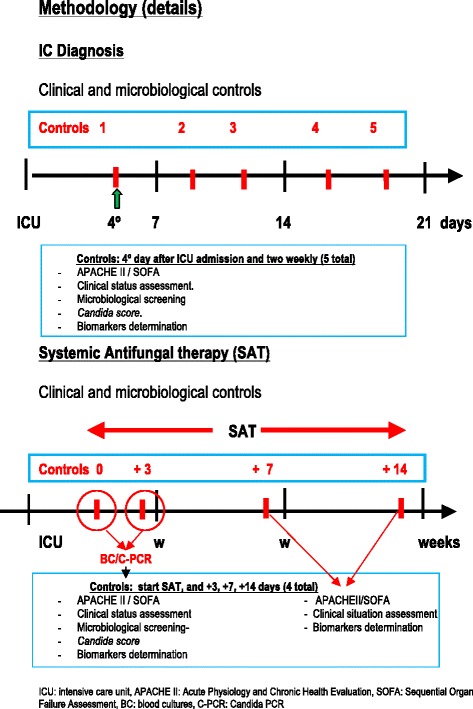
“Candida score [11, 12] was calculated coinciding with collection of samples and once culture data were available.”
MethodSelf-citationMolecular and Nonmolecular Diagnostic Methods for Invasive Fungal Infections
Arvanitis, M., Anagnostou, T., Fuchs, B. B., Caliendo, A. M., & Mylonakis, E. (2014) · Clinical Microbiology Reviews · doi:10.1128/cmr.00091-13 · Cited by 353 · cited 2×
“Currently, molecular techniques are increasingly used to diagnose invasive fungal infections [8, 9].”
BackgroundMikulska, M., Calandra, T., Sanguinetti, M., Poulain, D., Viscoli, C., & the Third European Conference on Infections in Leukemia Group (2010) · Critical Care · doi:10.1186/cc9365 · Cited by 319
Self-citationThe French Mycosis Study Group, Lortholary, O., Renaudat, C., Sitbon, K., Madec, Y., Denoeud-Ndam, L., Wolff, M., Fontanet, A., Bretagne, S., & Dromer, F. (2014) · Intensive Care Medicine · doi:10.1007/s00134-014-3408-3 · Cited by 312
Self-citationNguyen, M. H., Wissel, M. C., Shields, R. K., Salomoni, M. A., Hao, B., Press, E. G., Shields, R. M., Cheng, S., Mitsani, D., Vadnerkar, A., et al. (2012) · Clinical Infectious Diseases · doi:10.1093/cid/cis200 · Cited by 290 · cited 1×
“[37] in blood samples collected prospectively from 55 patients with IC and 73 controls, PCR and BDG were similar for diagnosing candidemia (59 % vs.”
Methodβ-Glucan Antigenemia Anticipates Diagnosis of Blood Culture–Negative Intraabdominal Candidiasis
Tissot, F., Lamoth, F., Hauser, P. M., Orasch, C., Flückiger, U., Siegemund, M., Zimmerli, S., Calandra, T., Bille, J., Eggimann, P., et al. (2013) · American Journal of Respiratory and Critical Care Medicine · doi:10.1164/rccm.201211-2069oc · Cited by 203
Bassetti, M., Marchetti, M., Chakrabarti, A., Colizza, S., Garnacho-Montero, J., Kett, D. H., Munoz, P., Cristini, F., Andoniadou, A., Viale, P., et al. (2013) · Intensive Care Medicine · doi:10.1007/s00134-013-3109-3 · Cited by 198
Colombo, A. L., Guimarães, T., Sukienik, T., Pasqualotto, A. C., Andreotti, R., Queiroz-Telles, F., Nouér, S. A., & Nucci, M. (2014) · Intensive Care Medicine · doi:10.1007/s00134-014-3400-y · Cited by 183 · cited 1×
“infection showed similar characteristics, except for a higher Candida score in patients with IC (median [IQR] 4 [3, 4] vs.”
ResultResistance of Candida spp. to antifungal drugs in the ICU: where are we now?
Maubon, D., Garnaud, C., Calandra, T., Sanglard, D., & Cornet, M. (2014) · Intensive Care Medicine · doi:10.1007/s00134-014-3404-7 · Cited by 166 · cited 1×
“infection showed similar characteristics, except for a higher Candida score in patients with IC (median [IQR] 4 [3, 4] vs.”
ResultSystemic antifungal therapy in critically ill patients without invasive fungal infection*
Azoulay, E., Dupont, H., Tabah, A., Lortholary, O., Stahl, J.-P., Francais, A., Martin, C., Guidet, B., & Timsit, J.-F. (2012) · Critical Care Medicine · doi:10.1097/ccm.0b013e318236f297 · Cited by 138 · cited 1×
“Discussion Because of difficulties in the diagnosis IC in ICU settings, up to two thirds of critically ill patients with suspicion of fungal infection are given empirical antifungals [17, 18], a strategy with a well-recognized negative impact on adverse effects, risk of resistances [5], length of stay, patient’s outco…”
BackgroundEllis, M., al-Ramadi, B., Finkelman, M., Hedstrom, U., Kristensen, J., Ali-Zadeh, H., & Klingspor, L. (2008) · Journal of Medical Microbiology · doi:10.1099/jmm.0.47479-0 · Cited by 131 · cited 1×
“The clinician can prescribe SAT if two consecutive [21–26] or more positive BDG determinations within 48 hours are present, or may stop SAT when BDG and CAGTA are negative in a single sample due to the high negative predictive value of this combination.”
MethodHanson, K. E., Pfeiffer, C. D., Lease, E. D., Balch, A. H., Zaas, A. K., Perfect, J. R., & Alexander, B. D. (2012) · PLoS ONE · doi:10.1371/journal.pone.0042282 · Cited by 122
León, C., Ostrosky-Zeichner, L. L., & Schuster, M. G. (2014) · Intensive Care Medicine · doi:10.1007/s00134-014-3281-0 · Cited by 118 · cited 1×
“Background Accurate and timely diagnosis of invasive candidiasis (IC) from the patient’s perspective and to optimize antifungal therapy in the intensive care unit (ICU) setting remains a topic of great interest [1–6].”
BackgroundSelf-citationRacil, Z., Kocmanova, I., Lengerova, M., Weinbergerova, B., Buresova, L., Toskova, M., Winterova, J., Timilsina, S., Rodriguez, I., & Mayer, J. (2010) · Journal of Medical Microbiology · doi:10.1099/jmm.0.019299-0 · Cited by 115
León, C., Ruiz‐Santana, S., Saavedra, P., Castro, C., Úbeda, A., Loza, A., Martín‐Mazuelos, E., Blanco, A., Jerez, V., Ballús, J., et al. (2012) · Intensive Care Medicine · doi:10.1007/s00134-012-2616-y · Cited by 108
Self-citationHeld, J., Kohlberger, I., Rappold, E., Busse Grawitz, A., & Häcker, G. (2013) · Journal of Clinical Microbiology · doi:10.1128/jcm.02473-12 · Cited by 102
Antifungal stewardship in invasive Candida infections
Ruhnke, M. (2014) · Clinical Microbiology and Infection · doi:10.1111/1469-0691.12622 · Cited by 101 · cited 1×
“Discussion Because of difficulties in the diagnosis IC in ICU settings, up to two thirds of critically ill patients with suspicion of fungal infection are given empirical antifungals [17, 18], a strategy with a well-recognized negative impact on adverse effects, risk of resistances [5], length of stay, patient’s outco…”
BackgroundAntifungal stewardship in daily practice and health economic implications
Muñoz, P., Valerio, M., Vena, A., & Bouza, E. (2015) · Mycoses · doi:10.1111/myc.12329 · Cited by 100 · cited 17×
“We investigated the performance of these five tests, alone and in combination, for discriminating IC in critically ill patients with severe abdominal conditions (SAC).”
BackgroundResultInfluentialClinical perspectives on echinocandin resistance among Candida species
Shields, R. K., Nguyen, M. H., & Clancy, C. J. (2015) · Current Opinion in Infectious Diseases · doi:10.1097/qco.0000000000000215 · Cited by 76 · cited 1×
“Discussion Because of difficulties in the diagnosis IC in ICU settings, up to two thirds of critically ill patients with suspicion of fungal infection are given empirical antifungals [17, 18], a strategy with a well-recognized negative impact on adverse effects, risk of resistances [5], length of stay, patient’s outco…”
BackgroundBailly, S., Leroy, O., Montravers, P., Constantin, J., Dupont, H., Guillemot, D., Lortholary, O., Mira, J. P., Pérrigault, P.-F., Gangneux, J., et al. (2015) · Intensive Care Medicine · doi:10.1007/s00134-015-4053-1 · Cited by 72 · cited 1×
“[30] have recently demonstrated that in the absence of proven IC empiric SAT treatment could be safely stopped after 5 days of therapy without apparent deleterious effect on day-28 mortality.”
BackgroundCandida biomarkers in patients with candidaemia and bacteraemia
Martínez-Jiménez, M. C., Muñoz, P., Valerio, M., Alonso, R., Martos, C., Guinea, J., & Bouza, E. (2015) · Journal of Antimicrobial Chemotherapy · doi:10.1093/jac/dkv090 · Cited by 65 · cited 1×
“[31] showed that the presence of a positive CAGTA test in a sample from a patient with candidemia suggests deepseated candidiasis, and more recently, provided evidence that the combination of CAGTA and BDG, or CAGTA and mannan-Ag, had high negative predictive values [32].”
ResultMartínez-Jiménez, M. C., Muñoz, P., Valerio, M., Vena, A., Guinea, J., & Bouza, E. (2015) · Journal of Antimicrobial Chemotherapy · doi:10.1093/jac/dkv241 · Cited by 64
Potential role of Candida albicans germ tube antibody in the diagnosis of deep-seated candidemia
Martínez‐Jiménez, M. D. C., Muñóz, P., Guinea, J., Valerio, M., Alonso, R., Escribano, P., & Bouza, E. (2014) · Medical Mycology · doi:10.1093/mmy/myt025 · Cited by 62 · cited 1×
“[31] showed that the presence of a positive CAGTA test in a sample from a patient with candidemia suggests deepseated candidiasis, and more recently, provided evidence that the combination of CAGTA and BDG, or CAGTA and mannan-Ag, had high negative predictive values [32].”
ResultFortun, J., Meije, Y., Buitrago, M. J., Gago, S., Bernal-Martinez, L., Peman, J., Perez, M., Gomez-G Pedrosa, E., Madrid, N., Pintado, V., et al. (2014) · Journal of Antimicrobial Chemotherapy · doi:10.1093/jac/dku225 · Cited by 61 · cited 1×
“Multiplex quantitative real-time PCR (MRT-PCR) The MRT-PCR assay [13] was performed to detect the six most frequent species of the genus Candida in invasive candidiasis (IC).”
MethodNon-cultural methods for the diagnosis of invasive fungal disease
Mikulska, M., Furfaro, E., & Viscoli, C. (2014) · Expert Review of Anti-infective Therapy · doi:10.1586/14787210.2015.979788 · Cited by 47 · cited 1×
“Currently, molecular techniques are increasingly used to diagnose invasive fungal infections [8, 9].”
Backgroundβ-d-Glucan and Candida albicans germ tube antibody in ICU patients with invasive candidiasis
Martín‐Mazuelos, E., Loza, A., Castro, C., Guerrero, D. M., Zakariya, I., Saavedra, P., Ruiz‐Santana, S., Marín, E., & León, C. (2015) · Intensive Care Medicine · doi:10.1007/s00134-015-3922-y · Cited by 41 · cited 1×
“The clinician can prescribe SAT if two consecutive [21–26] or more positive BDG determinations within 48 hours are present, or may stop SAT when BDG and CAGTA are negative in a single sample due to the high negative predictive value of this combination.”
MethodSelf-citationClancy, C. J., & Nguyen, M. H. (2014) · Expert Review of Anti-infective Therapy · doi:10.1586/14787210.2014.919853 · Cited by 40
Chumpitazi, B. F. F., Lebeau, B., Faure-Cognet, O., Hamidfar-Roy, R., Timsit, J.-F., Pavese, P., Thiebaut-Bertrand, A., Quesada, J.-L., Pelloux, H., & Pinel, C. (2014) · Medical Mycology · doi:10.1093/mmy/myu018 · Cited by 31
Ráčil, Z., Kocmanová, I., Lengerová, M., Weinbergerová, B., Burešová, L., Tošková, M., Winterová, J., Timilsina, S., Rodriguez, I., & Mayer, J. (2010) · Cited by 22
Olaechea‐Astigarraga, P., Álvarez-Lerma, F., Palomar, M., Ordeñana, J. I., López-Pueyo, M. J., Seijas, I., Otal-Entraigas, J. J., Gimeno-Costa, R., & Gracia, M. P. (2012) · Enfermedades Infecciosas y Microbiología Clínica · doi:10.1016/j.eimc.2012.02.006 · Cited by 20 · cited 1×
“Discussion Because of difficulties in the diagnosis IC in ICU settings, up to two thirds of critically ill patients with suspicion of fungal infection are given empirical antifungals [17, 18], a strategy with a well-recognized negative impact on adverse effects, risk of resistances [5], length of stay, patient’s outco…”
Background
Cited by
Pappas, P. G., Lionakis, M. S., Arendrup, M. C., Ostrosky-Zeichner, L., & Kullberg, B. J. (2018) · Nature Reviews Disease Primers · doi:10.1038/nrdp.2018.26 · Cited by 1,636
Diagnosis of invasive fungal infections: challenges and recent developments
Fang, W., Wu, J., Cheng, M., Zhu, X., Du, M., Chen, C., Liao, W., Zhi, K., & Pan, W. (2023) · Journal of Biomedical Science · doi:10.1186/s12929-023-00926-2 · Cited by 356
Bassetti, M., Azoulay, E., Kullberg, B.-J., Ruhnke, M., Shoham, S., Vazquez, J., Giacobbe, D. R., & Calandra, T. (2021) · Clinical Infectious Diseases · doi:10.1093/cid/ciaa1751 · Cited by 327
Dadar, M., Tiwari, R., Karthik, K., Chakraborty, S., Shahali, Y., & Dhama, K. (2018) · Microbial Pathogenesis · doi:10.1016/j.micpath.2018.02.028 · Cited by 332
Diagnosing invasive candidiasis
Clancy, C. J., & Nguyen, M. H. (2018) · Journal of Clinical Microbiology · doi:10.1128/jcm.01909-17 · Cited by 293
Metadata
- Authors
- The Cava Trem Study Group, León, C., Ruiz-Santana, S., Saavedra, P., Castro, C., Loza, A., Zakariya, I., Úbeda, A., Parra, M., Macías, D., Tomás, J. I., Rezusta, A., Rodríguez, A., Gómez, F., & Martín-Mazuelos, E.
- Affiliations
- Hospital Universitario de Valme (ES)
- Universidad de Las Palmas de Gran Canaria (ES)
- Hospital Universitario Miguel Servet (ES)
- Hospital Universitari Joan XXIII de Tarragona (ES)
- Corresponding author
- León, Cristóbal
- Venue
- Critical Care
- Published
- 2016-05-16
- Volume
- 20
- Issue
- 1
- Pages
- 107-107
- ISSN
- 1364-8535 (ISSN-L)
- PMC
- PMC4867537
- OpenAlex
- W2373438064
- Cited by
- 110
- References
- 39
- Citations by year
- 2026: 6 · 2025: 9 · 2024: 11 · 2023: 8 · 2022: 13 · 2021: 11 · 2020: 12 · 2019: 14 · 2018: 12 · 2017: 11 · 2016: 3
- FWCI
- 12.31
- Type
- journal article
- Language
- en
- Update notices
- correction (2017-05-15)
- Open access
- gold
- doi.org
- Licence
- cc-by
- Locations
- Critical Care (publishedVersion, cc-by)
- Europe PMC (PubMed Central) (publishedVersion, cc-by)
- PubMed Central (publishedVersion, cc-by)
- PubMed (publishedVersion)
- RISalud Institutional Health Repository of Andalucía (submittedVersion, cc-by)
- Rovira & Virgili repository (submittedVersion, cc-by)
- Acceda (Universidad de Las Palmas de Gran Canaria) (submittedVersion)
- Zaguan (Universidad de Zaragoza) (submittedVersion, cc-by)
- Funders
- Instituto de Salud Carlos III (PI 13/01168)
- Astellas Pharma Europe
- Topics
- Health Sciences › Medicine › Infectious Diseases › Antifungal resistance and susceptibility
- Health Sciences › Medicine › Cardiology and Cardiovascular Medicine › Infective Endocarditis Diagnosis and Management
- Health Sciences › Medicine › Infectious Diseases › Fungal Infections and Studies
- Keywords
- Candida albicans, β-1,3-glucan, mannan antigen, anti-mannan antibodies, biomarkers, intensive care unit patients, candidemia, intra-abdominal candidiasis, diagnostic accuracy, non-neutropenic patients, systemic antifungal therapy
- MeSH terms
- Aged, Aged, 80 and over, Antibodies, Fungal, Antifungal Agents, Candida albicans, Female, Humans, Intensive Care Units, Male, Mannans, Middle Aged, Prospective Studies, Biomarkers, Critical Illness, Candidiasis, Invasive
About these checks
Registry, retraction, Cites and statistics results are computed, not judged, with one exception: a printed reference that no index lists is read once by a model before it counts as a citation error. Claims are extracted by a model and kept only when their quote appears verbatim in the text; each cited source is then checked, with a model’s help, for whether it says what the claim relies on. Those verdicts can be wrong — read the claim’s quote and the cited source before relying on one.
Statistics and arithmetic are recomputed, not judged.
Confidence bands are shown only for fields calibrated on our annotated test set. None is calibrated yet, so no band is shown.
What counts as a claim ›How we measure confidence ›How we check this ›
Are you an author, or do you see a problem with this page? Request a review
Data sources
Bibliographic data: Semantic Scholar, OpenAlex, Crossref.
Contains information from the Semantic Scholar Academic Graph Datasets, made available under the ODC Attribution License (ODC-BY 1.0).
Semantic Scholar’s data is described in: Kinney, R., et al. (2023). The Semantic Scholar Open Data Platform. arXiv:2301.10140.
