

Transcriptome-wide characterization of the eIF4A signature highlights plasticity in translation regulation
Open accessThe DOI matches its Crossref record; 46 of the 46 references it cites were found in a registry or an index.
Abstract
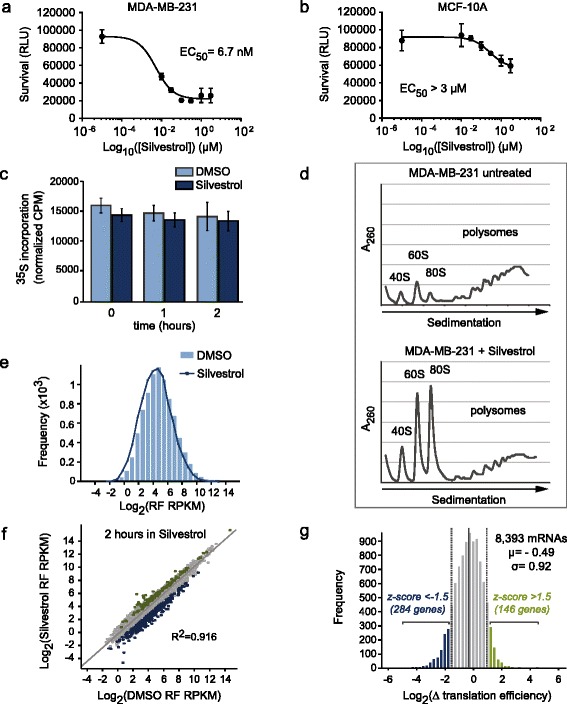
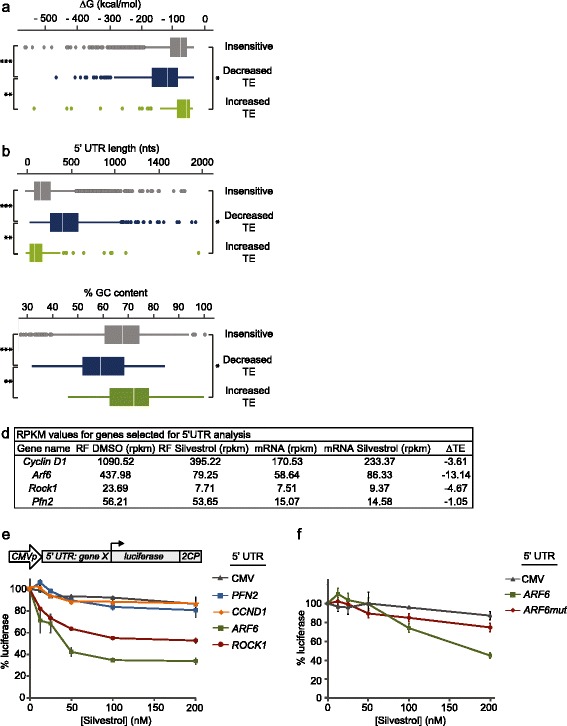
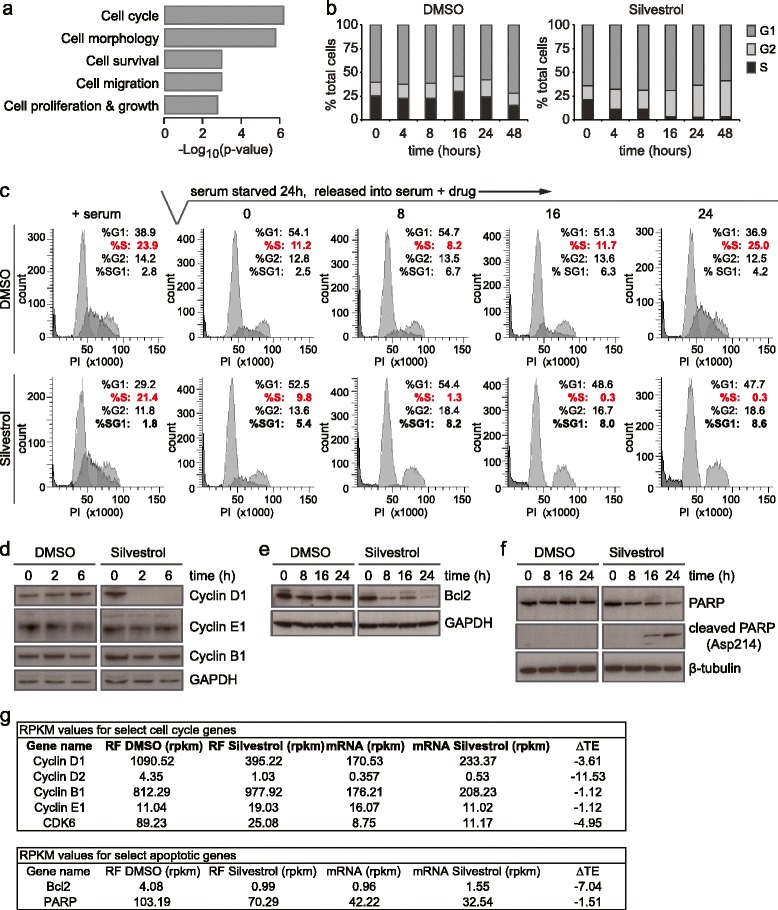
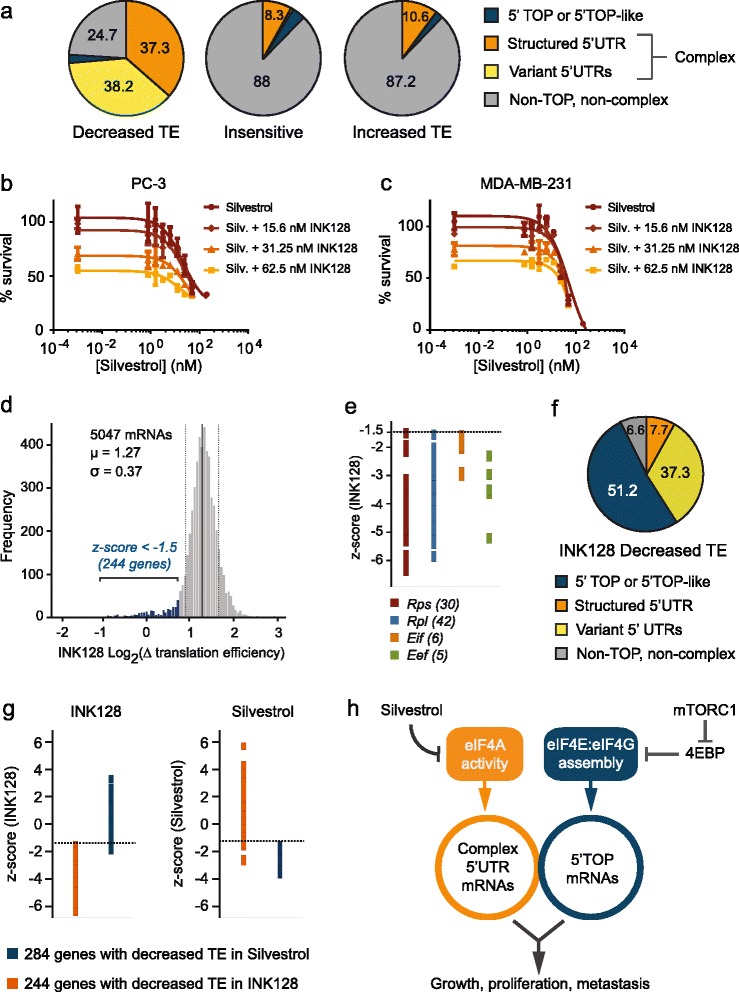
Background: Protein synthesis is tightly regulated and alterations to translation are characteristic of many cancers. Translation regulation is largely exerted at initiation through the eukaryotic translation initiation factor 4 F (eIF4F). eIF4F is pivotal for oncogenic signaling as it integrates mitogenic signals to amplify production of pro-growth and pro-survival factors. Convergence of these signals on eIF4F positions this factor as a gatekeeper of malignant fate. While the oncogenic properties of eIF4F have been characterized, genome-wide evaluation of eIF4F translational output is incomplete yet critical for developing novel translation-targeted therapies. Results: To understand the impact of eIF4F on malignancy, we utilized a genome-wide ribosome profiling approach to identify eIF4F-driven mRNAs in MDA-MB-231 breast cancer cells. Using Silvestrol, a selective eIF4A inhibitor, we identify 284 genes that rely on eIF4A for efficient translation. Our screen confirmed several known eIF4F-dependent genes and identified many unrecognized targets of translation regulation. We show that 5’UTR complexity determines Silvestrol-sensitivity and altering 5’UTR structure modifies translational output. We highlight physiological implications of eIF4A inhibition, providing mechanistic insight into eIF4F pro-oncogenic activity. Conclusions: Here we describe the transcriptome-wide consequence of eIF4A inhibition in malignant cells, define mRNA features that confer eIF4A dependence, and provide genetic support for Silvestrol’s anti-oncogenic properties. Importantly, our results show that eIF4A inhibition alters translation of an mRNA subset distinct from those affected by mTOR-mediated eIF4E inhibition. These results have significant implications for therapeutically targeting translation and underscore a dynamic role for eIF4F in remodeling the proteome toward malignancy.
Overview
The claims and statistics of this paper haven’t been checked yet.
Free: it reads the open-access text and checks the first 5 claims that cite a source we can check. Create a free account to check every claim.
Integrity signals
Registry
Cites
Statistics
Figures
Verification
Claims the paper makes
The claims and statistics of this paper haven’t been checked yet.
Free: it reads the open-access text and checks the first 5 claims that cite a source we can check. Create a free account to check every claim.
Claims other papers make about this one
Each is checked against this paper’s own text: does it say what the citing paper says it does?
The source backs part of the claim, not all of it — or backs it for a different population, condition or comparison.
In the citing paper
“Importantly, these mRNAs include key oncogenes such as MYC, BCL2, CDK6, KRAS, and YAP1 (15–17), which are critical for tumorigenesis.”
From Targeting eIF4A-dependent translation in genetically complex sarcoma (2026) · cites this paper as [16]
Experimental — accuracy not yet measuredThe cited source says what the claim attributes to it.
In the citing paper
“The RNA helicase component of this complex is required to unwind secondary structure in the 5′-UTR and initiate translation of mRNAs, specifically those RNAs whose 5′-UTRs contain complex structures such as RNA G-quadruplexes (15–17).”
From Targeting eIF4A-dependent translation in genetically complex sarcoma (2026) · cites this paper as [16]
In the citing paper
“EIF4A inhibitors block this pro-oncogenic translation program and produce powerful anti-cancer effects with limited effects in non-proliferative tissues [21,23].”
From NRF2 Activation Confers Resistance to eIF4A Inhibitors in Cancer Therapy (2021) · cites this paper as [23]
In the citing paper
“Specifically, they reveal that less than 1% of the transcriptome depends on eIF4A and, importantly, these eIF4A-dependent genes include key growth and cell death factors such as MYC, BCL2, MCL1, CDK4, CCND3, EZH2, NOTCH1, and others [21,23].”
From NRF2 Activation Confers Resistance to eIF4A Inhibitors in Cancer Therapy (2021) · cites this paper as [23]
Self-check
Percentages, sums and reported differences re-computed from the paper’s own numbers.
The self-check needs the paper’s full text.
Citations
Cites
Fast gapped-read alignment with Bowtie 2
Langmead, B., & Salzberg, S. L. (2012) · Nature Methods · doi:10.1038/nmeth.1923 · Cited by 56,400 · cited 2×
“Langmead B, Salzberg SL: Fast gapped-read alignment with Bowtie 2.”
MethodGene Expression Omnibus: NCBI gene expression and hybridization array data repository
Edgar, R. (2002) · Nucleic Acids Research · doi:10.1093/nar/30.1.207 · Cited by 13,288 · cited 1×
“The next generation sequencing data presented in this paper have been deposited in NCBI’s Gene Expression Omnibus [45] and are accessible through GEO Series accession number GSE61375 [46].”
MethodGenome-Wide Analysis in Vivo of Translation with Nucleotide Resolution Using Ribosome Profiling
Ingolia, N. T., Ghaemmaghami, S., Newman, J. R. S., & Weissman, J. S. (2009) · Science · doi:10.1126/science.1168978 · Cited by 3,853 · cited 2×
“To explore the possibility that a select mRNA subset is regulated by eIF4A, we employed the comprehensive, transcriptome-wide method of ribosome profiling [10-13,15,16].”
BackgroundMethodProteomeXchange provides globally coordinated proteomics data submission and dissemination
Vizcaíno, J. A., Deutsch, E. W., Wang, R., Csordas, A., Reisinger, F., Ríos, D., Dianes, J. A., Sun, Z., Farrah, T., Bandeira, N., et al. (2014) · Nature Biotechnology · doi:10.1038/nbt.2839 · Cited by 2,729 · cited 1×
“The mass spectrometry data have been deposited to the ProteomeXchange Consortium [47] via the PRIDE partner repository [48] with the dataset identifier PXD001310 and DOI 10.”
MethodIngolia, N. T., Lareau, L. F., & Weissman, J. S. (2011) · Cell · doi:10.1016/j.cell.2011.10.002 · Cited by 2,187 · cited 5×
“Emerging methods that allow for global dissection of translation have bolstered the long standing knowledge that translation is subject to considerable regulation and thus plays a key role in regulating gene expression [10-13].”
BackgroundMethodInfluentialA unifying model for mTORC1-mediated regulation of mRNA translation
Thoreen, C. C., Chantranupong, L., Keys, H. R., Wang, T., Gray, N. S., & Sabatini, D. M. (2012) · Nature · doi:10.1038/nature11083 · Cited by 1,477 · cited 4×
“This pool of mRNAs was overwhelmingly characterized by the presence of 5′ TOP and 5′ TOP-like sequences adjacent to the 5′-m(7)GTP cap and lacked mRNAs with long, structured 5′ UTRs [15,16].”
BackgroundMethodInfluentialThe translational landscape of mTOR signalling steers cancer initiation and metastasis
Hsieh, A. C., Liu, Y., Edlind, M. P., Ingolia, N. T., Janes, M. R., Sher, A., Shi, E. Y., Stumpf, C. R., Christensen, C., Bonham, M. J., et al. (2012) · Nature · doi:10.1038/nature10912 · Cited by 1,313 · cited 25×
“Each point represents a single gene; genes in orange had decreased TE in INK128 while those in blue had decreased TE in Silvestrol.”
BackgroundMethodInfluentialThe equilibrium partition function and base pair binding probabilities for RNA secondary structure
McCaskill, J. S. (1990) · Biopolymers · doi:10.1002/bip.360290621 · Cited by 1,310 · cited 4×
“McCaskill JS: The equilibrium partition function and base pair binding probabilities for RNA secondary structure.”
MethodInfluentialIngolia, N. T., Brar, G. A., Rouskin, S., McGeachy, A. M., & Weissman, J. S. (2012) · Nature Protocols · doi:10.1038/nprot.2012.086 · Cited by 1,259 · cited 3×
“The location of the P-site in RF reads was calculated based on the mapped distance from the 5′-terminal base to the base occupying the P-site of the translating ribosome [11,13,41].”
MethodRNA G-quadruplexes cause eIF4A-dependent oncogene translation in cancer
Wolfe, A. L., Singh, K., Zhong, Y., Drewe, P., Rajasekhar, V. K., Sanghvi, V. R., Mavrakis, K. J., Jiang, M., Roderick, J. E., Van der Meulen, J., et al. (2014) · Nature · doi:10.1038/nature13485 · Cited by 635 · cited 1×
“[34].”
Research works printed but not linked: 1
- 46. Gene Expression Omnibus: Ribosome profiling upon inhibition of eIF4A. [http://www.ncbi.nlm.nih.gov/geo/query/acc.cgi?acc=GSE61375]
Cited by
Items 101–200 of 201
Megat, S., & Price, T. J. (2018) · Neurobiology of Pain · doi:10.1016/j.ynpai.2018.02.001 · Cited by 21
“It is controversial whether eIF4A has specific effects on certain structures or more generally influences bulk translation in cells (Rubio et al., 2014).”
Regulation and function of poised mRNAs in lymphocytes
Turner, M. (2023) · BioEssays · doi:10.1002/bies.202200236 · Cited by 21
Medicinal chemistry approaches to target the MNK–eIF4E axis in cancer
Fernandez, A., Monsen, P. J., Platanias, L. C., & Schiltz, G. E. (2023) · RSC Medicinal Chemistry · doi:10.1039/d3md00121k · Cited by 21
Cramer, Z., Sadek, J., Galicia-Vázquez, G., Marco, S. D., Pause, A., Pelletier, J., & Gallouzi, I. (2018) · Scientific Reports · doi:10.1038/s41598-018-26625-9 · Cited by 21
mQC: A post-mapping data exploration tool for ribosome profiling
Verbruggen, S., & Menschaert, G. (2018) · Computer Methods and Programs in Biomedicine · doi:10.1016/j.cmpb.2018.10.018 · Cited by 25
Regulation of mRNA Translation by Hormone Receptors in Breast and Prostate Cancer
Xie, J., Kusnadi, E. P., Furic, L., & Selth, L. A. (2021) · Cancers · doi:10.3390/cancers13133254 · Cited by 20
mTOR Contributes to the Proteome Diversity through Transcriptome-Wide Alternative Splicing
Cheng, S. L. A., Fahmi, N. A., Park, M., Chang, J.-W., Sun, J., Thao, K., Yeh, H.-S., Zhang, W., & Yong, J. (2022) · International Journal of Molecular Sciences · doi:10.3390/ijms232012416 · Cited by 18
Lezina, L., Spriggs, R. V., Beck, D., Jones, C., Dudek, K., Bzura, A., Jones, G. D. D., Packham, G., Willis, A. E., & Wagner, S. D. (2018) · Blood Advances · doi:10.1182/bloodadvances.2017015560 · Cited by 20
Chen, R., Zhu, M., Chaudhari, R. R., Robles, O., Chen, Y., Skillern, W., Qin, Q., Wierda, W. G., Zhang, S., Hull, K. G., et al. (2019) · Leukemia · doi:10.1038/s41375-018-0364-x · Cited by 20
Translation initiation and its relevance in colorectal cancer
Minnee, E., & Faller, W. J. (2021) · FEBS Journal · doi:10.1111/febs.15690 · Cited by 21
Dinan, A. M., Atkins, J. F., & Firth, A. E. (2017) · Biology Direct · doi:10.1186/s13062-017-0195-0 · Cited by 19
“[39] – are shown in Additional file 1: Figure S6.”
Díaz‐López, I., Toribio, R., Berlanga, J. J., & Ventoso, I. (2019) · eLife · doi:10.7554/elife.48246 · Cited by 20
UFMylation regulates translational homeostasis and cell cycle progressionPreprint
Gak, I. A., Vasiljević, D., Zerjatke, T., Yu, L., Brosch, M., Roumeliotis, T. I., Horenburg, C., Klemm, N., Bakos, G., Herrmann, A., et al. (2020) · bioRxiv (Cold Spring Harbor Laboratory) · doi:10.1101/2020.02.03.931196 · Cited by 15
“Despite featuring a relatively short, unstructured 5’UTR the translation of CCND1 mRNA has been reported to be especially sensitive to inhibition of eIF4A1 helicase activity (Rubio et al., 2014).”
BackgroundeIF4A1 enhances LARP1-mediated translational repression during mTORC1 inhibition
Shichino, Y., Yamaguchi, T., Kashiwagi, K., Mito, M., Takahashi, M., Ito, T., Ingolia, N. T., Kuba, K., & Iwasaki, S. (2024) · Nature Structural & Molecular Biology · doi:10.1038/s41594-024-01321-7 · Cited by 20
“A DNA fragment of the hCL/hPEST (CP) sequence 58 was inserted downstream of Renilla luciferase.”
Akirtava, C., & McManus, C. J. (2020) · Wiley Interdisciplinary Reviews - RNA · doi:10.1002/wrna.1623 · Cited by 17
“In mammalian systems, mRNA with highly structured TLs required eIF4A for in vitro translation (Svitkin et al., 2001) and hundreds of genes were specifically sensitive to eIF4A inhibition in vivo (Iwasaki, Floor, & Ingolia, 2016; Rubio et al., 2014).”
BackgroundShirokikh, N. E. (2021) · Critical Reviews in Biochemistry and Molecular Biology · doi:10.1080/10409238.2021.2006599 · Cited by 15
Role of DEAD/DEAH-box helicases in immunity, infection and cancers
Balaya, R. D. A., Kanekar, S., Kumar, S., & Kandasamy, R. K. (2025) · Cell Communication and Signaling · doi:10.1186/s12964-025-02225-9 · Cited by 22
“This regulates the overexpression of downstream target genes, such as EGFR and cyclin D1, which promote G1/S transition [132]. eIF4 A and DDX2 regulate the G1/S transition by promoting the translation of cyclin D1, cyclin D2, and CDK6 [133].”
Compounds for selective translational inhibition
Shichino, Y., & Iwasaki, S. (2022) · Current Opinion in Chemical Biology · doi:10.1016/j.cbpa.2022.102158 · Cited by 12
Praditya, D., Klöhn, M., Brüggemann, Y., Brown, L. E., Porco, J. A. J., Zhang, W., Kinast, V., Kirschning, A., Vondran, F. W. R., Tödt, D., et al. (2022) · Antiviral Research · doi:10.1016/j.antiviral.2022.105359 · Cited by 13
Lyabin, D. N., & Ovchinnikov, L. P. (2016) · Scientific Reports · doi:10.1038/srep22502 · Cited by 15
A novel micropeptide miPEP205 suppresses the growth and metastasis of TNBC
Zhang, Z., Li, F., Dai, X., Deng, J., Wang, Y., Zhang, S., Liu, W., Xie, Y., Pan, Y., Wang, J., et al. (2024) · Oncogene · doi:10.1038/s41388-024-03240-9 · Cited by 16
Multifaceted control of mRNA translation machinery in cancer
Alboushi, L., Hackett, A. P., Naeli, P., Bakhti, M., & Jafarnejad, S. M. (2021) · Cellular Signalling · doi:10.1016/j.cellsig.2021.110037 · Cited by 13
eIF4A1 Is a Prognostic Marker and Actionable Target in Human Hepatocellular Carcinoma
Steinmann, S. M., Sánchez-Martín, A., Tanzer, E., Cigliano, A., Pes, G. M., Simile, M. M., Désaubry, L., Marín, J. J. G., Evert, M., & Calvisi, D. F. (2023) · International Journal of Molecular Sciences · doi:10.3390/ijms24032055 · Cited by 13
“These complex structures characterize the 5-UTRs of many oncogenes considered eIF4A-dependent genes, such as KRAS, BLC2, NOTCH1, CDK6, and CCND1 [17,18].”
BackgroundChu, J., y Cajal, S. R., Sonenberg, N., & Pelletier, J. (2017) · Current Opinion in Genetics & Development · doi:10.1016/j.gde.2017.11.002 · Cited by 13
“Wolfe et al. [55] and Rubio et al. [56] both found that rocaglate-responsive transcripts have more complex 5 0 leader regions — with length, D G values, and the presence of G-quadruplexes in the 5 0 leader being important determinants of this response [55,56].”
BackgroundBiswas, B., Guemiri, R., Cadix, M., Labbé, C. M., Chakraborty, A., Dutertre, M., Robert, C., & Vagner, S. (2022) · Cancers · doi:10.3390/cancers14051177 · Cited by 12
Jiang, Y., Ma, C., Hu, Y., Yang, Y., Ma, C., Wu, C., Liu, L., Wen, S., Moynagh, P. N., Wang, B., et al. (2023) · Advanced Science · doi:10.1002/advs.202205180 · Cited by 12
Peron, G., Mastinu, A., Peña‐Corona, S. I., Hernández‐Parra, H., Leyva‐Gómez, G., Călina, D. C., & Sharifi‐Rad, J. (2024) · Biomedicine & Pharmacotherapy · doi:10.1016/j.biopha.2024.117047 · Cited by 12
Comparative survey of the relative impact of mRNA features on local ribosome profiling read density
O’Connor, P. B. F., Andreev, D. E., & Baranov, P. V. (2016) · RePEc: Research Papers in Economics · Cited by 11
Discovery of an eIF4A Inhibitor with a Novel Mechanism of Action
Zerio, C. J., Cunningham, T. A., Tulino, A. S., Alimusa, E. A., Buckley, T. M., Moore, K. T., Dodson, M. B., Wilson, N. C., Ambrose, A. J., Shi, T., et al. (2021) · Journal of Medicinal Chemistry · doi:10.1021/acs.jmedchem.1c01014 · Cited by 11
Hashimoto, A., & Hashimoto, S. (2024) · Cancers · doi:10.3390/cancers16234094 · Cited by 13
“The 5 ′ -untranslated regions (UTRs) of ARF6 and AMAP1 mRNAs have a high G/C content, and ARF6 has a G-quadruplex structure in its 5 ′ -UTR, indicating the necessity of RNA helicase eukaryotic translation initiation factor 4A (eIF4A) activity to unwind this structure for translation [362,363].”
Oxo-aglaiastatin-Mediated Inhibition of Translation Initiation
Maïga, R. I., Cencic, R., Chu, J., Waller, D. D., Brown, L. E., Devine, W. G., Zhang, W., Sébag, M., Porco, J. A. J., & Pelletier, J. (2019) · Scientific Reports · doi:10.1038/s41598-018-37666-5 · Cited by 11
Taylor, J., Yeomans, A., & Packham, G. K. (2020) · Exploration of Targeted Anti-tumor Therapy · doi:10.37349/etat.2020.00002 · Cited by 11
“complexed within eIF4F) and mRNA [105, 106] and preferentially reduces translation of mRNAs with highly structured 5'-UTRs [33, 34].”
BackgroundThe MYCN 5′ UTR as a therapeutic target in neuroblastoma
Volegova, M. P., Brown, L. E., Banerjee, U., Dries, R., Sharma, B., Kennedy, A. L., Porco, J. A. J., & George, R. E. (2024) · Cell Reports · doi:10.1016/j.celrep.2024.114134 · Cited by 11
WD Repeat Domain 77 Protein Regulates Translation of E2F1 and E2F3 mRNA
Altayyar, M. A., Sheng, X., & Wang, Z. (2020) · Molecular and Cellular Biology · doi:10.1128/mcb.00302-20 · Cited by 11
Hashimoto, A., Handa, H., Hata, S., & Hashimoto, S. (2022) · Frontiers in Oncology · doi:10.3389/fonc.2022.1005566 · Cited by 11
Regulation of mRNA translation by estrogen receptor in breast cancer
Fard, S. S., & Holz, M. K. (2023) · Steroids · doi:10.1016/j.steroids.2023.109316 · Cited by 11
Programmed cell death 4 mechanism of action: The model to be updated?
Вихрева, П. Н., Калиниченко, С. В., & Korobko, I. V. (2017) · Cell Cycle · doi:10.1080/15384101.2017.1371881 · Cited by 9
Emerging drug targets for triple-negative breast cancer: a guided tour of the preclinical landscape
Xie, X., Lee, J., Iwase, T., Kai, M., & Ueno, N. T. (2022) · Expert Opinion on Therapeutic Targets · doi:10.1080/14728222.2022.2077188 · Cited by 12
Taylor, J., Wilmore, S., Marriot, S., Rogers‐Broadway, K., Fell, R., Minton, A. R., Branch, T., Ashton-Key, M., Coldwell, M. J., Stevenson, F. K., et al. (2022) · Cellular Signalling · doi:10.1016/j.cellsig.2022.110311 · Cited by 8
Identification of Rocaglate Acyl Sulfamides as Selective Inhibitors of Glioblastoma Stem Cells
Wang, Z., Thakare, R., Chitale, S., Mishra, A. K., Goldstein, S. I., Fan, A. C., Li, R., Zhu, L. J., Brown, L. E., Cencic, R., et al. (2024) · ACS Central Science · doi:10.1021/acscentsci.4c01073 · Cited by 7
de Breyne, S., Polvèche, H., Auboeuf, D., Ohlmann, T., Gruffat, H., & Manet, É. (2025) · Scientific Reports · doi:10.1038/s41598-025-03274-3 · Cited by 9
Kim, J. G., Xu, J., Lee, D., Song, J., Lee, S., Hong, M. H., Zhu, J., Zhu, A. T., Patwari, K., Shim, E.-H., et al. (2026) · ACS Nano · doi:10.1021/acsnano.5c19036 · Cited by 8
Webb, T. E., Davies, M., Maher, J. F., & Sarker, D. (2020) · Clinical and Translational Radiation Oncology · doi:10.1016/j.ctro.2020.07.002 · Cited by 7
JUN mRNA translation regulation is mediated by multiple 5’ UTR and start codon features
González-Sánchez, A. M., Castellanos-Silva, E. A., Díaz-Figueroa, G., & Cate, J. H. D. (2024) · PLoS ONE · doi:10.1371/journal.pone.0299779 · Cited by 11
“The interaction between eIF3 and mRNAs was shown to be mediated by RNA structural elements in the 5 0 UTR of specific mRNAs in human embryonic kidney (HEK293T) cells and to cause translational activation or repression of these mRNAs [18]. eIF3 has also been shown to have cell-specific regulatory…”
Quantitative Comparisons of Translation Activity by Ribosome Profiling with Internal Standards
Wang, Y. J., & Gilbert, W. V. (2021) · Methods in molecular biology · doi:10.1007/978-1-0716-1150-0_5 · Cited by 5
Inhibition of the Translation Initiation Factor eIF4A Enhances Tumor Cell Radiosensitivity
Lehman, S. L., Wechsler, T., Schwartz, K., Brown, L. E., Porco, J. A. J., Devine, W. G., Pelletier, J., Shankavaram, U. T., Camphausen, K. A., & Tofilon, P. J. (2022) · Molecular Cancer Therapeutics · doi:10.1158/1535-7163.mct-22-0037 · Cited by 8
Wu, K., Huang, Y., Wu, Y., Chang, C., Chang, Y.-Y., Chiang, H., Liu, L.-X., Tsai, Y., & Hung, J. (2022) · Biology · doi:10.3390/biology11070975 · Cited by 7
“Genome-wide studies have suggested that EIF4A-dependent mRNAs are associated with cell proliferation, cell survival, cell cycle progression and angiogenesis through activation of the PI3K and RAS pathways [13,14].”
BackgroundADP-Ribosylation Factor 6 Pathway Acts as a Key Executor of Mesenchymal Tumor Plasticity
Hashimoto, A., & Hashimoto, S. (2023) · International Journal of Molecular Sciences · doi:10.3390/ijms241914934 · Cited by 6
“Importantly, mutant KRAS acts in a eukaryotic translation initiation factor (eIF) 4A-dependent manner to enhance the translation of ARF6 mRNA, which has a quadruplex structure in the 5 (cid:48) -untranslated region [35] and upregulates the expression of the ARF6 protein.”
Role of eIF4A1 in triple‐negative breast cancer stem‐like cell‐mediated drug resistance
Raman, D., & Tiwari, A. K. (2020) · Cancer Reports · doi:10.1002/cnr2.1299 · Cited by 12
Comparative survey of the relative impact of mRNA features on local ribosome profiling read densityPreprint
O’Connor, P. B., Andreev, D. E., & Baranov, P. V. (2015) · bioRxiv (Cold Spring Harbor Laboratory) · doi:10.1101/018762 · Cited by 6
RNA helicase EIF4A1-mediated translation is essential for the GC response
Screen, M., Matheson, L. S., Howden, A. J. M., Strathdee, D., Willis, A. E., Bushell, M., Sansom, O. J., & Turner, M. (2023) · Life Science Alliance · doi:10.26508/lsa.202302301 · Cited by 6
“EIF4A inhibition in cancer cells leads to G1-arrest through translation inhibition of CDK4, CDK6 or members of the cyclin D family (26, 27).”
BackgroundPotent anti-coronaviral activity of pateamines and new insights into their mode of action
Magari, F., Messner, H., Salisch, F., Schmelzle, S. M., van Zandbergen, G., Fürstner, A., Ziebuhr, J., Heine, A., Müller, C., & Grünweller, A. (2024) · Heliyon · doi:10.1016/j.heliyon.2024.e33409 · Cited by 5
“Moreover, ribosome profiling experiments have revealed that only approximately 300 mRNAs are eIF4A-dependent [30] (own unpublished data).”
Zhou, X., Ren, Z., Xu, J., Deng, C., Zhang, Z., Godoy-Parejo, C., Xu, F., Huang, E. C. C., Wang, J., Cai, Z., et al. (2022) · International Journal of Biological Sciences · doi:10.7150/ijbs.71199 · Cited by 4
“Polysome profiling was performed as previously described with some modifications [23].”
MethodCrippa, S., Alberti, G., Passerini, L., Savoia, E. O., Mancino, M., Ponti, G. D., Santi, L., Berti, M., Testa, M., Hernández, R. J., et al. (2024) · Molecular Therapy — Methods & Clinical Development · doi:10.1016/j.omtm.2024.101313 · Cited by 6
ISGylation directly modifies hypoxia‐inducible factor‐2α and enhances its polysome association
Melanson, G., Bois, A. C. D., Webster, C., & Uniacke, J. (2022) · FEBS Letters · doi:10.1002/1873-3468.14476 · Cited by 4
Tichon, A., Gil, N., Lubelsky, Y., Solomon, T. H., Lemze, D., Itzkovitz, S., Stern‐Ginossar, N., & Ulitsky, I. (2015) · bioRxiv (Cold Spring Harbor Laboratory) · doi:10.1101/033423 · Cited by 6
Bursting Translation on Single mRNAs in Live CellsPreprint
Livingston, N. M., Kwon, J., Valera, O., Saba, J. A., Sinha, N., Reddy, P. M., Nelson, B., Wolfe, C. H., Ha, T., Green, R., et al. (2022) · bioRxiv · doi:10.1101/2022.11.07.515520 · Cited by 53
Wang, Q., He, W., Han, S., Li, M., Wang, Y., Zaytseva, Y. Y., Chen, L., Zhu, J., & Yang, H. (2025) · Cancer Medicine · doi:10.1002/cam4.71145 · Cited by 3
“[48].”
RNA G-quadruplexes mark repressive upstream open reading frames in human mRNAsPreprint
Murat, P., Marsico, G., Herdy, B., Ghanbarian, A. T., Portella, G., & Balasubramanian, S. (2017) · bioRxiv (Cold Spring Harbor Laboratory) · doi:10.1101/223073 · Cited by 3
Zhao, N., Kabotyanski, E. B., Saltzman, A. B., Malovannaya, A., Yuan, X., Reineke, L. C., Lieu, N., Gao, Y., Pedroza, D. A., Calderon, S. J., et al. (2023) · bioRxiv (Cold Spring Harbor Laboratory) · doi:10.1101/2023.09.28.559973 · Cited by 3
“Multiple tumor-promoting genes that contain structured 5’-UTRs require enhanced eIF4A activity for translation (10-13).”
Immune Modulatory Profile of the Pateamines PatA and Des-Methyl Des-Amino PatA
Schiffmann, S., Henke, M., Brünner, S., Bennett, A., Yagubi, Y., Magari, F., Parnham, M. J., & Grünweller, A. (2024) · International Journal of Molecular Sciences · doi:10.3390/ijms252111430 · Cited by 2
“The inhibition of RNA-bound eIF4A by rocaglates affects only about 300 mRNAs in our cells primarily involved in regulating proliferation [29].”
BackgroundTargeting EIF4A1 is effective against human intrahepatic cholangiocarcinoma
Mi, W., Cigliano, A., Galleri, G., Gigante, I., Steinmann, S. M., Cibali, E., Serra, M., Pes, G. M., Schlösser, D., Pizzuto, E., et al. (2025) · JHEP Reports · doi:10.1016/j.jhepr.2025.101416 · Cited by 3
CDH3-AS1 antisense RNA enhances P-cadherin translation and acts as a tumor suppressor in melanoma
Chadourne, M., Griffith, C., Jasani, N., Xu, X., Brennan, E., Vera, O., Mecozzi, N., Wang, K., Jaeger, A. M., & Karreth, F. A. (2025) · Cell Reports · doi:10.1016/j.celrep.2025.116362 · Cited by 3
“Treatment of Hermes4B and SKMel28 cells with silvestrol, an inhibitor of eIF4A that unwinds RNA secondary structures to facilitate pre-initiation complex recruitment and translation, 32,33 resulted in reduced P-cadherin levels without a corresponding change in CDH3 levels (Figures 5C and 5D).”
Lee, Y. S., Good, J., Awais, N., Eschle, B. K., Lineberry, M. S., Lin, J., Wunderlich, M., Thibodeau, J., Edwards, H. J., Teo, J. L., et al. (2026) · Blood Neoplasia · doi:10.1016/j.bneo.2026.100202 · Cited by 4
“19,20 21-25 eIF4A is highly expressed in leukemia when compared with other cancer types, and the eIF4A inhibitor CR-131-B was found to synergize with venetoclax in killing MOLM-14 AML cells 26,27 ; however, targeting eIF4A in human cancer has been complicated by poor physicochemical properties of…”
Chaudhury, A., Pal, R., Kongchan, N., Zhao, N., Zhu, Y., Olokpa, E., Cheema, S. A., Rincon, S. V. D., Reineke, L. C., Mao, S., et al. (2019) · bioRxiv (Cold Spring Harbor Laboratory) · doi:10.1101/640300 · Cited by 2
“More broadly however, it has also been shown that chemical inhibition of eIF4A does not significantly affect in vitro survival of breast epithelial cells - and indeed upregulates translation of certain transcripts (48) - supporting the notion that robust translation initiation mechanisms that are not dependent upon eI…”
BackgroundWelsch, S., Puckelwaldt, O., Ajmera, S., Magari, F., Haeberlein, S., Grünweller, A., & Grevelding, C. G. (2026) · Frontiers in Cellular and Infection Microbiology · doi:10.3389/fcimb.2025.1731808 · Cited by 1
Dezi, V., Harvey, R. F., Smith, T. S., Cole, C. H., Pizzinga, M., Stoneley, M., Garland, G. D., Horvilleur, E., Kalmár, L., Sawarkar, R., et al. (2026) · Nucleic Acids Research · doi:10.1093/nar/gkag071 · Cited by 2
“UTRs, it has been proposed that through the inhibition of eIF4A activity, PDCD4 acts as a tumour suppressor [ 5 , 6 ].”
Shin, H.-C., Bochkov, Y. A., Kim, K., Gern, J. E., Jarjour, N. N., & Esnault, S. J. (2023) · Advances in Biological Regulation · doi:10.1016/j.jbior.2023.100975 · Cited by 1
Silvestrol: A Potential Future Drug for Acute Ebola and Other Viral Infections
Grünweller, A., & Hartmann, R. K. (2017) · Future Virology · doi:10.2217/fvl-2017-0023 · Cited by 1
A specific eIF4A paralog facilitates LARP1-mediated translation repression during mTORC1 inhibitionPreprint
Shichino, Y., Mito, M., Kashiwagi, K., Takahashi, M., Ito, T., Ingolia, N. T., & Iwasaki, S. (2021) · bioRxiv (Cold Spring Harbor Laboratory) · doi:10.1101/2021.09.18.460932 · Cited by 1
“A DNA fragment of hCL/hPEST (CP) sequence (Rubio et al., 2014) was inserted downstream of Renilla luciferase.”
MethodSchmidt, T., Dąbrowska, A., Waldron, J. A., Hodge, K., Koulouras, G., Gabrielsen, M., Munro, J., Tack, D. C., Harris, G., McGhee, E. J., et al. (2022) · bioRxiv (Cold Spring Harbor Laboratory) · doi:10.1101/2022.08.08.503179 · Cited by 1
Smith, R. J., Diba, L. Z., Srinivasan, A., Zollo, R. A., Ossevoort, T., He, Q., Colligan, S. H., Dolan, M., Vedire, Y., Sultana, T., et al. (2022) · bioRxiv (Cold Spring Harbor Laboratory) · doi:10.1101/2022.09.16.508318 · Cited by 1
“Keywords: eIF4B, breast cancer, metastasis, tumor immunity This PDF file includes: Main Text Figures 1 to 4 Supplementary Figures (1-18) and Tables (1-2)”
BackgroundInfluentialClauwaert, J., McVey, Z., Gupta, R., & Menschaert, G. (2023) · bioRxiv (Cold Spring Harbor Laboratory) · doi:10.1101/2023.06.20.545724 · Cited by 1
Targeting eIF4A-dependent translation in genetically complex sarcoma
Kim, Y.-M., Mohan, P., Sehrawat, U., Seffar, E., De Queiroz, R. M., Chadalavada, K., Persaud, N., Okada, T., Kulkarni, A., Lin, J., et al. (2026) · JCI Insight · doi:10.1172/jci.insight.192936
A Phase I Pharmacologic Study of Necitumumab (IMC-11F8), a Fully Human IgG1 Monoclonal Antibody
Bader, A. G., Brown, D., Winkler, M., Shim, E., Livi, C. B., Rakheja, D., Tan, J. C., Benson, D. G., Parekh, V., Kho, E.-Y., et al. (2014)
Ribosomal profiling—Diversity and applications
Giri, S., & Kumar, V. (2021) · Elsevier eBooks · doi:10.1016/b978-0-12-816364-1.00012-3
Kinetic Analysis of Mammalian Translation Initiation
Yi, S.-H. (2021) · eDiss (Georg-August-Universität Göttingen) · doi:10.53846/goediss-8411
Županič, A., & Grellscheid, S. N. (2016) · Springer eBooks · doi:10.1007/978-3-319-31350-4_8
Brar, G. A. (2019) · Faculty Opinions – Post-Publication Peer Review of the Biomedical Literature · doi:10.3410/f.734699271.793555940
Sahoo, A., Zollo, R. A., Shen, S., Ashraf, M., Nelson, S., Koudelka, G. B., Qu, J., Barbi, J. J., & Walker, S. E. (2022) · bioRxiv (Cold Spring Harbor Laboratory) · doi:10.1101/2022.08.14.503931 · Cited by 1
“How might eIF4A inhibition affect these translation events during the cell cycle? It has been demonstrated that certain transcripts exhibit more and less dependence on eIF4A for translation (4, 40, 41), and that translational control is intimately linked to the cell cycle (42).”
BackgroundData from Targeting eIF4A-Dependent Translation of KRAS Signaling Molecules
Singh, K., Lin, J., Lecomte, N., Mohan, P., Askan, G., Sanghvi, V. R., Jiang, M., Grbovic-Huezo, O., Burčul, A., Stark, S. G., et al. (2023) · doi:10.1158/0008-5472.c.6513651.v1
Thompson, P. A., Eam, B., Young, N. P., Fish, S., Chen, J. W., Barrera, M., Howard, H., Sung, E., Parra, A., Staunton, J., et al. (2023) · doi:10.1158/1535-7163.c.6542892
Assessment of Rocaglates and Targeted Derivatives as Selective Inhibitors of Glioblastoma Stem CellsPreprint
Wang, Z., Thakare, R., Chitale, S., Mishra, A., Goldstein, S. I., Fan, A. C., Li, R., Zhu, L. J., Brown, L. E., Green, M. R., et al. (2023) · SSRN Electronic Journal · doi:10.2139/ssrn.4665170
Wang, G., Zhang, Z., Wang, J., Kang, L., Zheng, G., Liu, B., Yang, J., Sun, Y., Zeng, H., & Zhang, Z. (2024) · Scientific Reports · doi:10.1038/s41598-024-70174-3
“The convergence of these signals on eIF4F makes it a key regulator of the malignant cancer cells 11 .”
BackgroundSchmidt, T., Turnbull, A. P., Gupta, A., Waldron, J. A., Pollock, K., Munro, J., Nepravishta, R., Herviou, P., Dąbrowska, A., Hodge, K., et al. (2025) · bioRxiv (Cold Spring Harbor Laboratory) · doi:10.1101/2025.03.24.644895 · Cited by 1
Additional file 1 of Novel eIF4A1 inhibitors with anti‐tumor activity in lymphoma
Kayastha, F. B., Herrington, N. B., Kapadia, B. B., Roychowdhury, A., Nanaji, N. M., Kellogg, G. E., & Gartenhaus, R. B. (2022) · Figshare · doi:10.6084/m9.figshare.20921226
Conséquences traductionnelles de la perte de 4E-BP1 dans l'adénocarcinome pancréatique
Müller, D. (2016) · theses.fr (ABES) · doi:10.70675/1f894fb2zc2daz446fza7f2z2b28408eb6e2
Inhibition de la traduction des ARN messagers Hox par les éléments de type TIE
Alghoul, F. (2019) · theses.fr (ABES) · doi:10.70675/80ca1016zc3eaz4efezae71z94876d9ea36d
Rôle de la kinase ARAF dans le mélanome cutané muté NRAS
Estrada, C. (2020) · theses.fr (ABES) · doi:10.70675/e84b4f6az1676z4c2dz80e4zd8668460d3c5
THOMAS, M. L. (2018) · theses.fr (ABES) · doi:10.70675/823b99a7za117z4efaz80d3zab5f82a8327c
Kindrick, J. D., Bhadresha, K. P., Zhang, X., Beatson, E. L., Gaut, S. S., Brim, B. C., Signorelli, P. J., Depaz, R. D., Horner, J. L., Whidden, P. S., et al. (2026) · bioRxiv (Cold Spring Harbor Laboratory) · doi:10.64898/2026.05.04.722693
N6-Adenosine Methylation of a Single Site in SARS-CoV-2 5′-UTR Promotes TranslationPreprint
Aly, A., Scott, G., Calderon, M., & Haghighi, A. P. (2026) · eLife · doi:10.7554/elife.111963.1 · Cited by 1
N6-Adenosine Methylation of a Single Site in SARS-CoV-2 5′-UTR Promotes TranslationPreprint
Aly, A., Scott, G., Calderon, M., & Haghighi, A. P. (2026) · eLife · doi:10.7554/elife.111963
Welsch, S., Magari, F., Mokosch, A. S., Haeberlein, S., Gerbig, S., Spengler, B., Grünweller, A., & Grevelding, C. G. (2026) · Scientific Reports · doi:10.1038/s41598-026-63203-w
Kikuchi, I., Ohira, T., 中塚太一, Ishigami, Y., & Suzuki, T. (2026) · Nature Communications · doi:10.1038/s41467-026-76325-6
“The hCL/hPEST (CP) degradation signal 91 was inserted at the N-terminus of Fluc.”
Halting translation by the letter with sequence-selective small molecules
Schneider‐Poetsch, T., Yoshida, M., Ito, T., & Iwasaki, S. (2026) · Nature Chemical Biology · doi:10.1038/s41589-026-02318-7
BindingDB Entry 50020008: Medicinal chemistry approaches to target the MNK-eIF4E axis in cancer.
BindingDB (2024) · UC San Diego · doi:10.7270/q2xw4q6v
Metadata
- Authors
- Rubio, C. A., Weisburd, B., Holderfield, M., Arias, C., Fang, E., DeRisi, J. L., & Fanidi, A.
- Affiliations
- Frederick National Laboratory for Cancer Research (US)
- University of California, San Francisco (US)
- Corresponding author
- Rubio, Claudia A
- Venue
- Genome Biology
- Published
- 2014-10-02
- Volume
- 15
- Issue
- 10
- Pages
- 476-476
- ISSN
- 1465-6906 (ISSN-L)
- 1474-760X
- PMC
- PMC4203936
- OpenAlex
- W2140617443
- Cited by
- 200
- References
- 46
- Citations by year
- 2026: 10 · 2025: 7 · 2024: 13 · 2023: 20 · 2022: 21 · 2021: 26 · 2020: 17 · 2019: 19 · 2018: 19 · 2017: 17 · 2016: 21 · 2015: 9 · 2014: 1
- FWCI
- 6.56
- Type
- journal article
- Language
- en
- Open access
- gold
- doi.org
- Licence
- cc-by
- creativecommons.org/licenses/by/4.0 (tdm)
- creativecommons.org/licenses/by/4.0 (vor)
- Locations
- Genome biology (publishedVersion, cc-by)
- PubMed Central (publishedVersion, cc-by)
- PubMed (publishedVersion)
- eScholarship (California Digital Library) (submittedVersion)
- eScholarship (California Digital Library) (submittedVersion, cc-by)
- Funders
- Howard Hughes Medical Institute
- Novartis Institutes for BioMedical Research
- Topics
- Life Sciences › Biochemistry, Genetics and Molecular Biology › Molecular Biology › RNA and protein synthesis mechanisms
- Life Sciences › Biochemistry, Genetics and Molecular Biology › Molecular Biology › PI3K/AKT/mTOR signaling in cancer
- Life Sciences › Biochemistry, Genetics and Molecular Biology › Molecular Biology › RNA modifications and cancer
- Keywords
- eIF4A, eIF4F, translation initiation, ribosome profiling, silvestrol, breast cancer, MDA-MB-231 cells, translational regulation, mTOR, eIF4E, oncogenic signaling
- MeSH terms
- Benzofurans, Humans, RNA, Messenger, Protein Biosynthesis, Triterpenes, Gene Expression Regulation, Neoplastic, Apoptosis, Eukaryotic Initiation Factor-4A, Cell Line, Tumor, DEAD-box RNA Helicases, Cell Cycle Checkpoints, Transcriptome
About these checks
Registry, retraction, Cites and statistics results are computed, not judged, with one exception: a printed reference that no index lists is read once by a model before it counts as a citation error. Claims are extracted by a model and kept only when their quote appears verbatim in the text; each cited source is then checked, with a model’s help, for whether it says what the claim relies on. Those verdicts can be wrong — read the claim’s quote and the cited source before relying on one.
Statistics and arithmetic are recomputed, not judged.
Confidence bands are shown only for fields calibrated on our annotated test set. None is calibrated yet, so no band is shown.
What counts as a claim ›How we measure confidence ›How we check this ›
Are you an author, or do you see a problem with this page? Request a review
Data sources
Bibliographic data: Semantic Scholar, OpenAlex, Crossref.
Contains information from the Semantic Scholar Academic Graph Datasets, made available under the ODC Attribution License (ODC-BY 1.0).
Semantic Scholar’s data is described in: Kinney, R., et al. (2023). The Semantic Scholar Open Data Platform. arXiv:2301.10140.
