

Transcriptome-wide characterization of the eIF4A signature highlights plasticity in translation regulation
Open accessThe DOI matches its Crossref record; 46 of the 46 references it cites were found in a registry or an index.
Abstract
Background: Protein synthesis is tightly regulated and alterations to translation are characteristic of many cancers. Translation regulation is largely exerted at initiation through the eukaryotic translation initiation factor 4 F (eIF4F). eIF4F is pivotal for oncogenic signaling as it integrates mitogenic signals to amplify production of pro-growth and pro-survival factors. Convergence of these signals on eIF4F positions this factor as a gatekeeper of malignant fate. While the oncogenic properties of eIF4F have been characterized, genome-wide evaluation of eIF4F translational output is incomplete yet critical for developing novel translation-targeted therapies. Results: To understand the impact of eIF4F on malignancy, we utilized a genome-wide ribosome profiling approach to identify eIF4F-driven mRNAs in MDA-MB-231 breast cancer cells. Using Silvestrol, a selective eIF4A inhibitor, we identify 284 genes that rely on eIF4A for efficient translation. Our screen confirmed several known eIF4F-dependent genes and identified many unrecognized targets of translation regulation. We show that 5’UTR complexity determines Silvestrol-sensitivity and altering 5’UTR structure modifies translational output. We highlight physiological implications of eIF4A inhibition, providing mechanistic insight into eIF4F pro-oncogenic activity. Conclusions: Here we describe the transcriptome-wide consequence of eIF4A inhibition in malignant cells, define mRNA features that confer eIF4A dependence, and provide genetic support for Silvestrol’s anti-oncogenic properties. Importantly, our results show that eIF4A inhibition alters translation of an mRNA subset distinct from those affected by mTOR-mediated eIF4E inhibition. These results have significant implications for therapeutically targeting translation and underscore a dynamic role for eIF4F in remodeling the proteome toward malignancy.
Overview
The claims and statistics of this paper haven’t been checked yet.
Free: it reads the open-access text and checks the first 5 claims that cite a source we can check. Create a free account to check every claim.
Integrity signals
Registry
Cites
Statistics
Figures
Verification
Claims the paper makes
The claims and statistics of this paper haven’t been checked yet.
Free: it reads the open-access text and checks the first 5 claims that cite a source we can check. Create a free account to check every claim.
Claims other papers make about this one
Each is checked against this paper’s own text: does it say what the citing paper says it does?
The source backs part of the claim, not all of it — or backs it for a different population, condition or comparison.
In the citing paper
“Importantly, these mRNAs include key oncogenes such as MYC, BCL2, CDK6, KRAS, and YAP1 (15–17), which are critical for tumorigenesis.”
From Targeting eIF4A-dependent translation in genetically complex sarcoma (2026) · cites this paper as [16]
Experimental — accuracy not yet measuredThe cited source says what the claim attributes to it.
In the citing paper
“The RNA helicase component of this complex is required to unwind secondary structure in the 5′-UTR and initiate translation of mRNAs, specifically those RNAs whose 5′-UTRs contain complex structures such as RNA G-quadruplexes (15–17).”
From Targeting eIF4A-dependent translation in genetically complex sarcoma (2026) · cites this paper as [16]
Self-check
Percentages, sums and reported differences re-computed from the paper’s own numbers.
The self-check needs the paper’s full text.
Citations
Cites
Fast gapped-read alignment with Bowtie 2
Langmead, B., & Salzberg, S. L. (2012) · Nature Methods · doi:10.1038/nmeth.1923 · Cited by 56,400 · cited 2×
“Langmead B, Salzberg SL: Fast gapped-read alignment with Bowtie 2.”
MethodGene Expression Omnibus: NCBI gene expression and hybridization array data repository
Edgar, R. (2002) · Nucleic Acids Research · doi:10.1093/nar/30.1.207 · Cited by 13,288 · cited 1×
“The next generation sequencing data presented in this paper have been deposited in NCBI’s Gene Expression Omnibus [45] and are accessible through GEO Series accession number GSE61375 [46].”
MethodGenome-Wide Analysis in Vivo of Translation with Nucleotide Resolution Using Ribosome Profiling
Ingolia, N. T., Ghaemmaghami, S., Newman, J. R. S., & Weissman, J. S. (2009) · Science · doi:10.1126/science.1168978 · Cited by 3,853 · cited 2×
“To explore the possibility that a select mRNA subset is regulated by eIF4A, we employed the comprehensive, transcriptome-wide method of ribosome profiling [10-13,15,16].”
BackgroundMethodProteomeXchange provides globally coordinated proteomics data submission and dissemination
Vizcaíno, J. A., Deutsch, E. W., Wang, R., Csordas, A., Reisinger, F., Ríos, D., Dianes, J. A., Sun, Z., Farrah, T., Bandeira, N., et al. (2014) · Nature Biotechnology · doi:10.1038/nbt.2839 · Cited by 2,729 · cited 1×
“The mass spectrometry data have been deposited to the ProteomeXchange Consortium [47] via the PRIDE partner repository [48] with the dataset identifier PXD001310 and DOI 10.”
MethodIngolia, N. T., Lareau, L. F., & Weissman, J. S. (2011) · Cell · doi:10.1016/j.cell.2011.10.002 · Cited by 2,187 · cited 5×
“Emerging methods that allow for global dissection of translation have bolstered the long standing knowledge that translation is subject to considerable regulation and thus plays a key role in regulating gene expression [10-13].”
BackgroundMethodInfluentialA unifying model for mTORC1-mediated regulation of mRNA translation
Thoreen, C. C., Chantranupong, L., Keys, H. R., Wang, T., Gray, N. S., & Sabatini, D. M. (2012) · Nature · doi:10.1038/nature11083 · Cited by 1,477 · cited 4×
“This pool of mRNAs was overwhelmingly characterized by the presence of 5′ TOP and 5′ TOP-like sequences adjacent to the 5′-m(7)GTP cap and lacked mRNAs with long, structured 5′ UTRs [15,16].”
BackgroundMethodInfluentialThe translational landscape of mTOR signalling steers cancer initiation and metastasis
Hsieh, A. C., Liu, Y., Edlind, M. P., Ingolia, N. T., Janes, M. R., Sher, A., Shi, E. Y., Stumpf, C. R., Christensen, C., Bonham, M. J., et al. (2012) · Nature · doi:10.1038/nature10912 · Cited by 1,313 · cited 25×
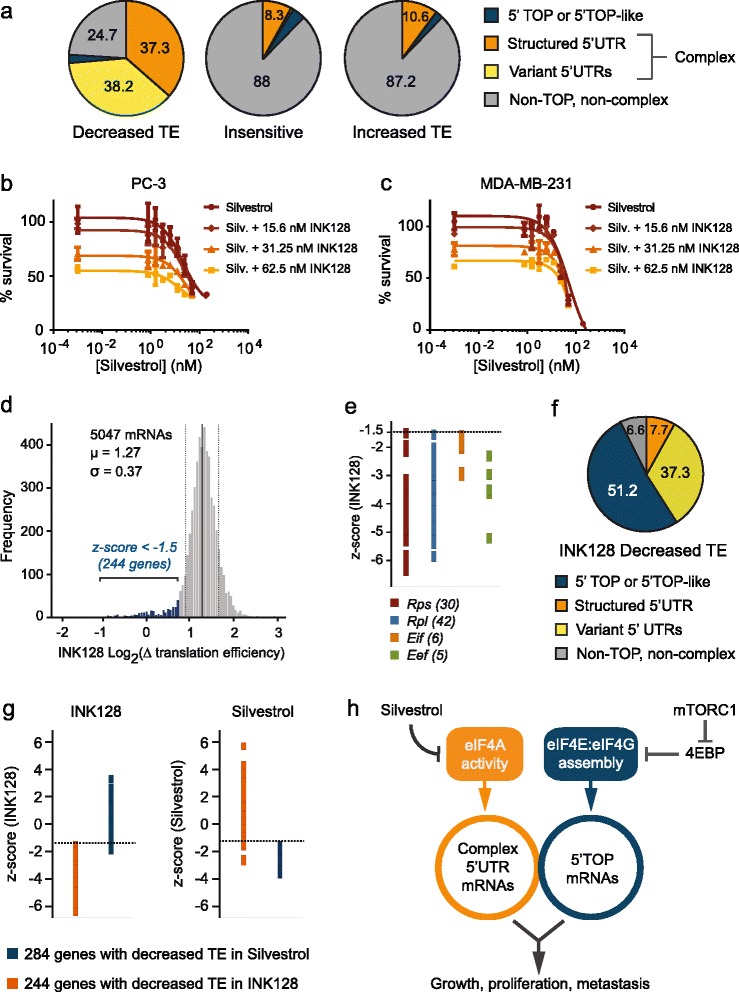
“Each point represents a single gene; genes in orange had decreased TE in INK128 while those in blue had decreased TE in Silvestrol.”
BackgroundMethodInfluentialThe equilibrium partition function and base pair binding probabilities for RNA secondary structure
McCaskill, J. S. (1990) · Biopolymers · doi:10.1002/bip.360290621 · Cited by 1,310 · cited 4×
“McCaskill JS: The equilibrium partition function and base pair binding probabilities for RNA secondary structure.”
MethodInfluentialIngolia, N. T., Brar, G. A., Rouskin, S., McGeachy, A. M., & Weissman, J. S. (2012) · Nature Protocols · doi:10.1038/nprot.2012.086 · Cited by 1,259 · cited 3×
“The location of the P-site in RF reads was calculated based on the mapped distance from the 5′-terminal base to the base occupying the P-site of the translating ribosome [11,13,41].”
MethodRNA G-quadruplexes cause eIF4A-dependent oncogene translation in cancer
Wolfe, A. L., Singh, K., Zhong, Y., Drewe, P., Rajasekhar, V. K., Sanghvi, V. R., Mavrakis, K. J., Jiang, M., Roderick, J. E., Van der Meulen, J., et al. (2014) · Nature · doi:10.1038/nature13485 · Cited by 635 · cited 1×
“[34].”
Research works printed but not linked: 1
- 46. Gene Expression Omnibus: Ribosome profiling upon inhibition of eIF4A. [http://www.ncbi.nlm.nih.gov/geo/query/acc.cgi?acc=GSE61375]
Cited by
Translational control by 5′-untranslated regions of eukaryotic mRNAs
Hinnebusch, A. G., Ivanov, I. P., & Sonenberg, N. (2016) · Science · doi:10.1126/science.aad9868 · Cited by 1,079
Functional 5′ UTR mRNA structures in eukaryotic translation regulation and how to find them
Leppek, K., Das, R., & Barna, M. (2018) · Nature Reviews Molecular Cell Biology · doi:10.1038/nrm.2017.103 · Cited by 949
Targeting the translation machinery in cancer
Bhat, M., Robichaud, N., Hulea, L., Sonenberg, N., Pelletier, J., & Topisirovic, I. (2015) · Nature Reviews Drug Discovery · doi:10.1038/nrd4505 · Cited by 799
New frontiers in translational control of the cancer genome
Truitt, M. L., & Ruggero, D. (2016) · Nature Reviews Cancer · doi:10.1038/nrc.2016.27 · Cited by 378
Targeting the eIF4F Translation Initiation Complex: A Critical Nexus for Cancer Development
Pelletier, J., Graff, J., Ruggero, D., & Sonenberg, N. (2015) · Cancer Research · doi:10.1158/0008-5472.can-14-2789 · Cited by 367
Signaling Pathways Involved in the Regulation of mRNA Translation
Roux, P. P., & Topisirovic, I. (2018) · Molecular and Cellular Biology · doi:10.1128/mcb.00070-18 · Cited by 324
Erratum: New frontiers in translational control of the cancer genome
Truitt, M. L., & Ruggero, D. (2017) · Nature Reviews Cancer · doi:10.1038/nrc.2017.30 · Cited by 303
The multiple functions of RNA helicases as drivers and regulators of gene expression
Bourgeois, C. F., Mortreux, F., & Auboeuf, D. (2016) · Nature Reviews Molecular Cell Biology · doi:10.1038/nrm.2016.50 · Cited by 290
The plasticity of mRNA translation during cancer progression and therapy resistance
Fabbri, L., Chakraborty, A., Robert, C., & Vagner, S. (2021) · Nature Reviews Cancer · doi:10.1038/s41568-021-00380-y · Cited by 276
Translational control of tumor immune escape via the eIF4F–STAT1–PD-L1 axis in melanoma
Cerezo, M., Guemiri, R., Druillennec, S., Girault, I., Malka-Mahieu, H., Shen, S., Allard, D., Martineau, S., Welsch, C., Agoussi, S., et al. (2018) · Nature Medicine · doi:10.1038/s41591-018-0217-1 · Cited by 254
Tichon, A., Gil, N., Lubelsky, Y., Havkin Solomon, T., Lemze, D., Itzkovitz, S., Stern-Ginossar, N., & Ulitsky, I. (2016) · Nature Communications · doi:10.1038/ncomms12209 · Cited by 221
RNA G-quadruplexes: emerging mechanisms in disease
Cammas, A., & Millevoi, S. (2016) · Nucleic Acids Research · doi:10.1093/nar/gkw1280 · Cited by 219
Gandin, V., Masvidal, L., Hulea, L., Gravel, S.-P., Cargnello, M., McLaughlan, S., Cai, Y., Balanathan, P., Morita, M., Rajakumar, A., et al. (2016) · Genome Research · doi:10.1101/gr.197566.115 · Cited by 204
“In mammals, EIF4A1 selectively stimulates translation of mRNAs that encode survival-promoting proteins (e.g., BCL2, MCL1, and BIRC5) without altering translation of mitochondria-related short 5 ′ UTR mRNAs (Rubio et al. 2014; Wolfe et al. 2014; Modelska et al. 2015).”
Müller, C., Schulte, F. W., Lange-Grünweller, K., Obermann, W., Madhugiri, R., Pleschka, S., Ziebuhr, J., Hartmann, R. K., & Grünweller, A. (2018) · Antiviral Research · doi:10.1016/j.antiviral.2017.12.010 · Cited by 200
“proposed that targeting eIF4A by silvestrol might lead to mRNA discrimination during translation (Cencic et al., 2009; Rubio et al., 2014).”
BackgroundTranslational control of stem cell function
Saba, J. A., Liakath-Ali, K., Green, R., & Watt, F. M. (2021) · Nature Reviews Molecular Cell Biology · doi:10.1038/s41580-021-00386-2 · Cited by 194
The Translation Inhibitor Rocaglamide Targets a Bimolecular Cavity between eIF4A and Polypurine RNA
Iwasaki, S., Iwasaki, W., Takahashi, M., Sakamoto, A., Watanabe, C., Shichino, Y., Floor, S. N., Fujiwara, K., Mito, M., Dodo, K., et al. (2019) · Molecular Cell · doi:10.1016/j.molcel.2018.11.026 · Cited by 190
“RocA has been shown to act as an mRNA-selective translation inhibitor (Rubio et al., 2014; Wolfe et al., 2014; Rubio et al., 2014; Wolfe et al., 2014; Iwasaki et al., 2016).”
BackgroundGlobal analysis of LARP1 translation targets reveals tunable and dynamic features of 5′ TOP motifs
Philippe, L., van den Elzen, A. M. G., Watson, M. J., & Thoreen, C. C. (2020) · Proceedings of the National Academy of Sciences · doi:10.1073/pnas.1912864117 · Cited by 173
“Short-lived Renilla luciferase constructs were generated by appending a tandem PEST and CL1 motif to the C terminus of the Renilla coding sequence, which we confirmed to decrease the protein half-life to ∼20 min (24).”
MethodMurat, P., Marsico, G., Herdy, B., Ghanbarian, A., Portella, G., & Balasubramanian, S. (2018) · Genome Biology · doi:10.1186/s13059-018-1602-2 · Cited by 167
Genome-wide identification and differential analysis of translational initiation
Zhang, P., He, D., Xu, Y., Hou, J., Pan, B.-F., Wang, Y., Liu, T., Davis, C. M., Ehli, E. A., Tan, L., et al. (2017) · Nature Communications · doi:10.1038/s41467-017-01981-8 · Cited by 155
RNA G-quadruplexes and their potential regulatory roles in translation
Song, J., Perreault, J., Topisirović, I., & Richard, S. (2016) · Translation · doi:10.1080/21690731.2016.1244031 · Cited by 177
“It was, however, suggested that motifs other than 50-UTR G4 structures may be required to render mRNA translation sensitive to eIF4A.(77) To this end, mRNAs with long, but not short 50-UTRs, appear to exhibit eIF4A-sensitivity, thereby suggesting that the length of 50-UTR may also determine eIF4A requirement.”
BackgroundHashimoto, S., Furukawa, S., Hashimoto, A., Tsutaho, A., Fukao, A., Sakamura, Y., Parajuli, G., Onodera, Y., Otsuka, Y., Handa, H., et al. (2019) · Proceedings of the National Academy of Sciences · doi:10.1073/pnas.1901765116 · Cited by 149
“2B) (32), which is indicative of its translational control by the RNA helicase eIF4A (33).”
BackgroundInsights into the mechanisms of eukaryotic translation gained with ribosome profiling
Andreev, D. E., O’Connor, P. B. F., Loughran, G., Dmitriev, S. E., Baranov, P. V., & Shatsky, I. N. (2016) · Nucleic Acids Research · doi:10.1093/nar/gkw1190 · Cited by 164
“In two studies the inhibition was achieved by silvestrol, which belongs to the flavagline family of plant natural products (80,81).”
The Untranslated Regions of mRNAs in Cancer
Schuster, S. L., & Hsieh, A. C. (2019) · Trends in cancer · doi:10.1016/j.trecan.2019.02.011 · Cited by 166
“Interestingly, many oncogenes possess structured 5’UTRs including hairpins and Gquadruplexes, making expression of eIF4F components, particularly eIF4A or eIF4E, oncogenic [17,24,25].”
BackgroundTranslation Initiation Factors: Reprogramming Protein Synthesis in Cancer
Chu, J., Cargnello, M., Topisirović, I., & Pelletier, J. (2016) · Trends in Cell Biology · doi:10.1016/j.tcb.2016.06.005 · Cited by 144
Phosphorylation and Signal Transduction Pathways in Translational Control
Proud, C. G. (2019) · Cold Spring Harbor Perspectives in Biology · doi:10.1101/cshperspect.a033050 · Cited by 125
The Growing Toolbox for Protein Synthesis Studies
Iwasaki, S., & Ingolia, N. T. (2017) · Trends in Biochemical Sciences · doi:10.1016/j.tibs.2017.05.004 · Cited by 123
Protein synthesis control in cancer: selectivity and therapeutic targeting
Kovalski, J. R., Kuzuoğlu‐Öztürk, D., & Ruggero, D. (2022) · The EMBO Journal · doi:10.15252/embj.2021109823 · Cited by 133
Thandapani, P., Song, J., Gandin, V., Cai, Y., Rouleau, S. G., Garant, J.-M., Boisvert, F.-M., Yu, Z., Perreault, J.-P., Topisirovic, I., et al. (2015) · eLife · doi:10.7554/elife.06234 · Cited by 116
Wiegering, A., Uthe, F. W., Jamieson, T., Ruoss, Y., Hüttenrauch, M., Küspert, M., Pfann, C., Nixon, C., Herold, S., Walz, S., et al. (2015) · Cancer Discovery · doi:10.1158/2159-8290.cd-14-1040 · Cited by 111
Wanted DEAD/H or Alive: Helicases Winding Up in Cancers
Cai, W., Chen, Z. X., Rane, G., Singh, S. S., Choo, Z., Wang, C., Yuan, Y., Tan, T. Z., Arfuso, F., Yap, C. T., et al. (2017) · JNCI Journal of the National Cancer Institute · doi:10.1093/jnci/djw278 · Cited by 119
eIF4A supports an oncogenic translation program in pancreatic ductal adenocarcinoma
Chan, K., Robert, F., Oertlin, C., Kapeller-Libermann, D., Avizonis, D., Gutierrez, J., Handly-Santana, A., Doubrovin, M., Park, J., Schoepfer, C., et al. (2019) · Nature Communications · doi:10.1038/s41467-019-13086-5 · Cited by 106
Comparative survey of the relative impact of mRNA features on local ribosome profiling read density
O’Connor, P. B. F., Andreev, D. E., & Baranov, P. V. (2016) · Nature Communications · doi:10.1038/ncomms12915 · Cited by 102
“To illustrate RUST capacity at analysing mRNA features that may affect ribosome velocities, we chose three studies, ‘Andreev’ 27 , ‘Rubio’ 36 , ‘Pop’ 12 .”
Palangat, M., Anastasakis, D. G., Fei, D. L., Lindblad, K. E., Bradley, R., Hourigan, C. S., Hafner, M., & Larson, D. R. (2019) · Genes & Development · doi:10.1101/gad.319590.118 · Cited by 102
“2012) show greater enrichment in the U2AF1 IP than either the total pool of transcripts or another class of translationally regulated transcripts such as EIF4A-senstive mRNA (Fig. 2G; Rubio et al. 2014; Wolfe et al. 2014).”
eIF4G has intrinsic G-quadruplex binding activity that is required for tiRNA function
Lyons, S. M., Kharel, P., Akiyama, Y., Ojha, S., Dave, D., Tsvetkov, V., Merrick, W., Ivanov, P., & Anderson, P. (2020) · Nucleic Acids Research · doi:10.1093/nar/gkaa336 · Cited by 102
“Genome wide studies using Silvestrol showed that mRNAs with longer 5′ UTRs were more sensitive to inhibition of eIF4A (28).”
BackgroundChu, J., Galicia-Vázquez, G., Cencic, R., Mills, J. R., Katigbak, A., Porco, J. A., & Pelletier, J. (2016) · Cell Reports · doi:10.1016/j.celrep.2016.05.005 · Cited by 95
“…activity in a number of pre-clinical models (Bordeleau et al., 2008; Cencic et al., 2009; Wolfe et al., 2014), and are thought to exert their effects by preferentially inhibiting the translation of key oncogenic mRNAs (e.g., MYC) (Cencic et al., 2009; Rubio et al., 2014; Wolfe et al., 2014).”
BackgroundSchmidt, S., Gay, D. M., Uthe, F. W., Denk, S., Paauwe, M., Matthes, N., Diefenbacher, M. E., Bryson, S., Warrander, F., Erhard, F., et al. (2019) · Nature Cell Biology · doi:10.1038/s41556-019-0408-0 · Cited by 108
Dual targeting of DDX3 and eIF4A by the translation inhibitor rocaglamide A
Chen, M., Asanuma, M., Takahashi, M., Shichino, Y., Mito, M., Fujiwara, K., Saito, H., Floor, S. N., Ingolia, N. T., Sodeoka, M., et al. (2020) · Cell chemical biology · doi:10.1016/j.chembiol.2020.11.008 · Cited by 82
“Ultimately, rocaglates block translation of select mRNAs (Wolfe et al., 2014; Rubio et al., 2014; Iwasaki et al., 2016; Iwasaki et al., 2019; Chu et al., 2019; Chu et al., 2020).”
BackgroundTargeting RNA helicases in cancer: The translation trap
van Voss, M. R. H., van Diest, P. J., & Raman, V. (2017) · Biochimica et Biophysica Acta (BBA) - Reviews on Cancer · doi:10.1016/j.bbcan.2017.09.006 · Cited by 100
“However, the sensitivity of translation of specific mRNAs to Silvestrol could only partially be explained by complex features in the 5’UTR[21], and a recent study by Iwasaki et”
BackgroundThe molecular basis of mTORC1-regulated translation
Thoreen, C. C. (2017) · Biochemical Society Transactions · doi:10.1042/bst20160072 · Cited by 81
iRQC, a surveillance pathway for 40S ribosomal quality control during mRNA translation initiation
Garshott, D. M., An, H., Sundaramoorthy, E., Leonard, M., Vicary, A. C., Harper, J. W., & Bennett, E. J. (2021) · Cell Reports · doi:10.1016/j.celrep.2021.109642 · Cited by 87
Wilczynska, A., Gillen, S. L., Schmidt, T., Meijer, H. A., Jukes-Jones, R., Langlais, C., Kopra, K., Lu, W.-T., Godfrey, J. D., Hawley, B. R., et al. (2019) · Genome Biology · doi:10.1186/s13059-019-1857-2 · Cited by 62
Rocaglates Induce Gain-of-Function Alterations to eIF4A and eIF4F
Chu, J., Zhang, W., Cencic, R., O’Connor, P. B. F., Robert, F., Devine, W. G., Selznick, A., Henkel, T. O., Merrick, W. C., Brown, L. E., et al. (2020) · Cell Reports · doi:10.1016/j.celrep.2020.02.002 · Cited by 83
“However, purine content was not identified as a sensitizing element in two other ribosome-profiling studies using the related rocaglate member silvestrol (Rubio et al., 2014; Wolfe et al., 2014).”
BackgroundmTOR-sensitive translation: Cleared fog reveals more trees
Masvidal, L., Hulea, L., Furic, L., Topisirovic, I., & Larsson, O. (2017) · RNA Biology · doi:10.1080/15476286.2017.1290041 · Cited by 73
Michel, A. M., Kiniry, S. J., O’Connor, P. B. F., Mullan, J. P. A., & Baranov, P. V. (2017) · Nucleic Acids Research · doi:10.1093/nar/gkx790 · Cited by 76
Inhibition of Zika Virus Replication by Silvestrol
Elgner, F., Sabino, C., Basic, M., Ploen, D., Grünweller, A., & Hildt, E. (2018) · Viruses · doi:10.3390/v10040149 · Cited by 77
A subset of conserved mammalian long non-coding RNAs are fossils of ancestral protein-coding genes
Hezroni, H., Perry, R. B., Meir, Z., Housman, G., Lubelsky, Y., & Ulitsky, I. (2017) · Genome biology · doi:10.1186/s13059-017-1293-0 · Cited by 78
mRNA Therapeutic Modalities Design, Formulation and Manufacturing under Pharma 4.0 Principles
Ouranidis, A., Vavilis, T., Mandala, E., Davidopoulou, C., Stamoula, Ε., Markopoulou, C. K., Karagianni, A., & Kachrimanis, K. (2021) · Biomedicines · doi:10.3390/biomedicines10010050 · Cited by 83
Kim, J. K., Cho, J., Kim, S. H., Kang, H.-C., Kim, D.-S., Kim, V. N., & Lee, J. H. (2019) · Journal of Clinical Investigation · doi:10.1172/jci127032 · Cited by 66
Role of Eukaryotic Initiation Factors during Cellular Stress and Cancer Progression
Sharma, D. K., Bressler, K. R., Patel, H., Balasingam, N., & Thakor, N. (2016) · Journal of Nucleic Acids · doi:10.1155/2016/8235121 · Cited by 79
Hippuristanol - A potent steroid inhibitor of eukaryotic initiation factor 4A
Cencic, R., & Pelletier, J. (2016) · Translation · doi:10.1080/21690731.2015.1137381 · Cited by 62
General and Target-Specific DExD/H RNA Helicases in Eukaryotic Translation Initiation
Shen, L. L., & Pelletier, J. (2020) · International Journal of Molecular Sciences · doi:10.3390/ijms21124402 · Cited by 70
Translational dysregulation in cancer: eIF4A isoforms and sequence determinants of eIF4A dependence
Raza, F., Waldron, J. A., & Quesne, J. L. (2015) · Biochemical Society Transactions · doi:10.1042/bst20150163 · Cited by 61
Bursting translation on single mRNAs in live cells
Livingston, N. M., Kwon, J., Valera, O., Saba, J. A., Sinha, N. K., Reddy, P., Nelson, B., Wolfe, C. H., Ha, T., Green, R., et al. (2023) · Molecular Cell · doi:10.1016/j.molcel.2023.05.019 · Cited by 69
Ribosome profiling and dynamic regulation of translation in mammals
Gobet, C., & Naef, F. (2017) · Current Opinion in Genetics & Development · doi:10.1016/j.gde.2017.03.005 · Cited by 59
Waldron, J. A., Tack, D. C., Ritchey, L. E., Gillen, S. L., Wilczynska, A., Turro, E., Bevilacqua, P. C., Assmann, S. M., Bushell, M., & Quesne, J. P. C. L. (2019) · Genome biology · doi:10.1186/s13059-019-1901-2 · Cited by 56
Müller, C., Obermann, W., Schulte, F. W., Lange‐Grünweller, K., Oestereich, L., Elgner, F., Glitscher, M., Hildt, E., Singh, K., Wendel, H., et al. (2020) · Antiviral Research · doi:10.1016/j.antiviral.2020.104706 · Cited by 56
“In cells, eIF4A has a critical role in the translation of protooncogenic mRNAs with complex-structured 5′-UTRs (Wolfe et al., 2014; Rubio et al., 2014).”
BackgroundExpression and Functional Roles of Eukaryotic Initiation Factor 4A Family Proteins in Human Cancers
Xue, C., Gu, X., Li, G., Bao, Z., & Li, L. (2021) · Frontiers in Cell and Developmental Biology · doi:10.3389/fcell.2021.711965 · Cited by 60
Zhang, L., Liu, X., Gaikwad, K., Kou, X., Wang, F., Tian, X., Xin, M., Ni, Z., Sun, Q., Peng, H., et al. (2017) · The Plant Cell · doi:10.1105/tpc.16.00808 · Cited by 60
“15 initiation factors can disrupt gene-specific pathways of translational control (Kim et al., 2007; Martinez-Silva et al., 2012; Rubio et al., 2014), but there is no comprehensive information about the extent to which translational regulation may involve eIF5B.”
BackgroundShen, L. L., & Pelletier, J. (2020) · Natural Product Reports · doi:10.1039/c9np00052f · Cited by 60
DEAD-Box RNA Helicases in Cell Cycle Control and Clinical Therapy
Zhang, L., & Li, X. (2021) · Cells · doi:10.3390/cells10061540 · Cited by 57
“The binding of eIF4A3 to LncRNA H19 prevents the recruitment of eIF4A3 to the mRNAs of the cell cycle regulators, including cyclin D1 and cyclin E1, for post-transcriptional modification, resulting in an acceleration of colon cancer cell growth [73,76].”
BackgroundInfluentialThompson, P. A., Eam, B., Young, N. P., Fish, S., Chen, J., Barrera, M., Howard, H., Sung, E., Parra, A., Staunton, J., et al. (2021) · Molecular Cancer Therapeutics · doi:10.1158/1535-7163.mct-19-0973 · Cited by 50
Translation initiation in cancer at a glance
Smith, R. C. L., Kanellos, G., Vlahov, N., Alexandrou, C., Willis, A. E., Knight, J. R. P., & Sansom, O. J. (2021) · Journal of Cell Science · doi:10.1242/jcs.248476 · Cited by 57
BC200 (BCYRN1) – The shortest, long, non-coding RNA associated with cancer
Samson, J., Cronin, S., & Dean, K. A. (2018) · Non-coding RNA Research · doi:10.1016/j.ncrna.2018.05.003 · Cited by 52
Peters, T. L., Tillotson, J., Yeomans, A., Wilmore, S., Lemm, E. A., Jiménez-Romero, C., Amador, L. A., Li, L., Amin, A. D., Pongtornpipat, P., et al. (2018) · Clinical Cancer Research · doi:10.1158/1078-0432.ccr-17-3645 · Cited by 51
“Leukemia and lymphoma cell lines were themost sensitive tumor type overall, followed by breast and lung, all of which have been previously identified as candidates for eIF4A or eIF4F complex inhibition (12, 29).”
BackgroundXu, Z., Hu, L., Shi, B., Geng, S., Xu, L., Wang, D., & Lu, Z. J. (2018) · Nucleic Acids Research · doi:10.1093/nar/gky533 · Cited by 50
“We selected differentially translated genes (Z-score > 2 or Z-score < −2) and picked top 200 translationally up/downregulated genes for further studies (28,29,65,76).”
BackgroundGerson‐Gurwitz, A., Young, N. P., Goel, V., Eam, B., Stumpf, C. R., Chen, J. W., Fish, S., Barrera, M., Sung, E., Staunton, J., et al. (2021) · Frontiers in Oncology · doi:10.3389/fonc.2021.766298 · Cited by 51
“Translational downregulation of FGFR1/2 and HER2 oncogenes by eIF4A inhibitors has previously been identified by genome wide ribosome profiling following treatment with either silvestrol or rocaglamide A (8, 9).”
BackgroundSurvey of the translation shifts in hepatocellular carcinoma with ribosome profiling
Zou, Q., Xiao, Z., Huang, R., Wang, X., Wang, X., Zhao, H., & Yang, X. (2019) · Theranostics · doi:10.7150/thno.35033 · Cited by 48
“In cancer research, ribosome profiling of model cancer cell lines has facilitated multiple detailed studies about translation inhibition in cancer cells by tumor inhibitory drugs such as mTOR inhibitors [9, 10] and an eIF4A inhibitor [11, 12].”
BackgroundKong, T., Xue, Y., Cencic, R., Zhu, X., Monast, A., Fu, Z., Pilon, V., Sangwan, V., Guiot, M., Foulkes, W. D., et al. (2019) · Molecular Cancer Therapeutics · doi:10.1158/1535-7163.mct-19-0162 · Cited by 48
“Silvestrol-responsive mRNAs include oncogenes involved in the inhibition of apoptosis such as MCL1 and BCL2, and in the regulation of cell-cycle progression, notably CCND1, CCND3, CCNE1, and CDK6 (23, 24).”
BackgroundResultInfluentialWaldron, J. A., Raza, F., & Quesne, J. P. C. L. (2018) · Nucleic Acids Research · doi:10.1093/nar/gky108 · Cited by 45
“Alternatively, given that (GGC)4 sequences are the most common trinucleotide repeat within 5′UTRs (51), the enrichment of (GGC)4 motifs may be a passenger phenomenon of general classical structure formation, given that we already know the requirement of eIF4A for translation is strongly associated with the degree of c…”
BackgroundInfluentialTherapeutic Opportunities in Eukaryotic Translation
Chu, J., & Pelletier, J. (2018) · Cold Spring Harbor Perspectives in Biology · doi:10.1101/cshperspect.a032995 · Cited by 47
“ThesemRNAs had 50 leaders with longer, structured sequences and relatively low overall guanine-cytosine (GC) content compared with nonresponsive mRNAs (Rubio et al. 2014).”
BackgroundInfluentialThe role of eIF4F-driven mRNA translation in regulating the tumour microenvironment
Bartish, M., Abraham, M. J., Gonçalves, C., Larsson, O. S., Rolny, C., & Rincon, S. V. D. (2023) · Nature reviews. Cancer · doi:10.1038/s41568-023-00567-5 · Cited by 42
Control of Translation at the Initiation Phase During Glucose Starvation in Yeast
Janapala, Y., Preiß, T., & Shirokikh, N. E. (2019) · International Journal of Molecular Sciences · doi:10.3390/ijms20164043 · Cited by 46
“Hence, eukaryotes evolved a substantially more complex initiation pathway where several additional factors serve as effective targets for eukaryote-specific control and often provide signal integration from different inputs to alter translation globally [193,194].”
BackgroundChaparro, V., Leroux, L., Masvidal, L., Lorent, J., Graber, T. E., Zimmermann, A., Duque, G. A., Descoteaux, A., Alain, T., Larsson, O. S., et al. (2020) · PLoS Pathogens · doi:10.1371/journal.ppat.1008291 · Cited by 47
Targeting eIF4A-Dependent Translation of KRAS Signaling Molecules
Singh, K., Lin, J., Lecomte, N., Mohan, P., Gokce, A., Sanghvi, V. R., Jiang, M., Grbovic-Huezo, O., Burčul, A., Stark, S. G., et al. (2021) · Cancer Research · doi:10.1158/0008-5472.can-20-2929 · Cited by 39
“EIF4A (DDX2) is the RNA helicase component of the eIF4F translation initiation complex and is especially required to initiate translation of mRNAs with long 5’UTRs that contain highly structured RNA sequences such as multiple Gquadruplex (GQ) elements (2-4).”
BackgroundPopa, A., Lebrigand, K., Barbry, P., & Waldmann, R. (2016) · BMC Genomics · doi:10.1186/s12864-016-2384-0 · Cited by 45
“tures was reported [19] [20].”
Zennami, K., Choi, S., Liao, R. S., Li, Y., Dinalankara, W., Marchionni, L., Rafiqi, F. H., Kurozumi, A., Hatano, K., & Lupold, S. E. (2019) · Molecular Cancer Research · doi:10.1158/1541-7786.mcr-18-0837 · Cited by 41
Taroncher‐Oldenburg, G., Müller, C., Obermann, W., Ziebuhr, J., Hartmann, R. K., & Grünweller, A. (2021) · Microorganisms · doi:10.3390/microorganisms9030540 · Cited by 42
“Several studies showed that the global cellular effects of eIF4A inhibition are limited to about 300 cellular mRNAs [96,97].”
BackgroundCuesta, R., & Holz, M. K. (2016) · Oncotarget · doi:10.18632/oncotarget.8375 · Cited by 37
“Thus, inhibition of eIF4A with silvestrol in MDA-MB-231 cells alters the translation of mRNAs with this structural complexity at the 5’ UTR that encodes factors involved in cellular proliferation, survival, and migration [37].”
BackgroundWilmore, S., Rogers‐Broadway, K., Taylor, J., Lemm, E. A., Fell, R., Stevenson, F. K., Forconi, F., Steele, A. J., Coldwell, M. J., Packham, G., et al. (2021) · Cellular and Molecular Life Sciences · doi:10.1007/s00018-021-03910-x · Cited by 36
Differential Regulation of the Melanoma Proteome by eIF4A1 and eIF4E
Joyce, C. E., Yanez, A. G., Mori, A., Yoda, A., Carroll, J. S., & Novina, C. D. (2017) · Cancer Research · doi:10.1158/0008-5472.can-16-1298 · Cited by 41
“Some mRNAs have different requirements for individual eIF4F subunits (19,22), but global effects of eIF4A1 and eIF4E depletion have not been assessed in parallel in the same cancer model.”
BackgroundSchmidt, T., Dąbrowska, A., Waldron, J. A., Hodge, K., Koulouras, G., Gabrielsen, M., Munro, J., Tack, D. C., Harris, G., McGhee, E. J., et al. (2023) · Nucleic Acids Research · doi:10.1093/nar/gkad030 · Cited by 41
“For this, we grouped mRNAs if their 5’UTRs contained non-overlapping 10 nt AG motifs (see methods) or, as a reference, GC-repeats (GC5), a previously highlighted marker for eIF4A1-dependence of translation (5,11–13).”
Jang, S., Lee, J., Mathews, J. A., Ruess, H., Williford, A., Rangan, P., Betrán, E., & Buszczak, M. (2021) · Development · doi:10.1242/dev.199511 · Cited by 35
Action and function of helicases on RNA G-quadruplexes
Caterino, M., & Paeschke, K. (2021) · Methods · doi:10.1016/j.ymeth.2021.09.003 · Cited by 34
Slobodin, B., & Dikstein, R. (2020) · EMBO Reports · doi:10.15252/embr.202050799 · Cited by 35
“Indeed, transcripts with structured 5 0 UTRs show enhanced dependency on the RNA helicase eIF4A (Svitkin et al , 2001; Rubio et al , 2014).”
Liedmann, S., Liu, X., Guy, C. S., Crawford, J. C., Rodríguez, D. A., Kuzuoğlu‐Öztürk, D., Guo, A., Verbist, K., Temirov, J. P., Chen, J., et al. (2022) · Molecular Cell · doi:10.1016/j.molcel.2022.04.016 · Cited by 30
Zhao, N., Kabotyanski, E. B., Saltzman, A. B., Malovannaya, A., Yuan, X., Reineke, L. C., Lieu, N., Gao, Y., Pedroza, D. A., Calderon, S. J., et al. (2023) · Journal of Clinical Investigation · doi:10.1172/jci172503 · Cited by 30
Ho, J. J. D., Cunningham, T. A., Manara, P., Coughlin, C. A., Arumov, A., Roberts, E. R., Osteen, A., Kumar, P., Bilbao, D., Krieger, J. R., et al. (2021) · Cell Reports · doi:10.1016/j.celrep.2021.109806 · Cited by 30
“These endeavors are premised solely on the understanding of these compounds as disruptors of eIF4A activity (Chan et al., 2019; Chu et al., 2020; Gandin et al., 2016; Iwasaki et al., 2016; Iwasaki et al., 2019; Rubio et al., 2014; Thompson et al., 2021; Wolfe et al., 2014).”
NRF2 Activation Confers Resistance to eIF4A Inhibitors in Cancer Therapy
Sanghvi, V. R., Mohan, P., Singh, K., Cao, L., Berishaj, M., Wolfe, A. L., Schatz, J. H., Lailler, N., de Stanchina, E., Viale, A., et al. (2021) · Cancers · doi:10.3390/cancers13040639 · Cited by 27
“Specifically, they reveal that less than 1% of the transcriptome depends on eIF4A and, importantly, these eIF4A‐dependent genes include key growth and cell death factors such as MYC, BCL2, MCL1, CDK4, CCND3, EZH2, NOTCH1, and others [21,23].”
BackgroundInfluentialGillen, S. L., Waldron, J. A., & Bushell, M. (2021) · Oncogene · doi:10.1038/s41388-021-02022-x · Cited by 33
Cencic, R., Im, Y. K., Naineni, S. K., Moustafa-Kamal, M., Jovanovic, P., Sabourin, V., Annis, M. G., Robert, F., Schmeing, T. M., Koromilas, A. E., et al. (2024) · Proceedings of the National Academy of Sciences · doi:10.1073/pnas.2318093121 · Cited by 32
“2 A ), consistent with previous reports regarding the effects of rocaglates on other cell lines (41–43).”
ResultWang, C., Leavenworth, J. D., Zhang, C., Liu, Z., Yuan, K. Y., Wang, Y., Zhang, G., Wang, S., Cui, X., Zhang, Y., et al. (2022) · Oncogene · doi:10.1038/s41388-022-02272-3 · Cited by 30
RNA Helicases as Shadow Modulators of Cell Cycle Progression
Sergeeva, O. V., & Zatsepin, T. S. (2021) · International Journal of Molecular Sciences · doi:10.3390/ijms22062984 · Cited by 28
“In addition to its helicase activity, eIF4A may function as a regulatory switch to control the conformation of the 43S preinitiation complex during mRNA recruitment in cap-dependent translation [112].”
BackgroundHashimoto, A., Handa, H., Hata, S., Tsutaho, A., Yoshida, T., Hirano, S., Hashimoto, S., & Sabe, H. (2021) · Cell Communication and Signaling · doi:10.1186/s12964-021-00733-y · Cited by 28
Translation Inhibition by Rocaglates Is Independent of eIF4E Phosphorylation Status
Chu, J., Cencic, R., Wang, W., Porco, J. A. J., & Pelletier, J. (2016) · Molecular Cancer Therapeutics · doi:10.1158/1535-7163.mct-15-0409 · Cited by 29
“As well, transcriptome-wide studies attributing alterations in mRNA translational efficiency to eIF4A inhibition by rocaglates would have to be re-interpreted if inhibition of eIF4E phosphorylation was a significant biological property of rocaglates (12, 13).”
BackgroundHoward, C. M., Bearss, N. R., Subramaniyan, B., Tilley, A. M. C., Sridharan, S., Villa, N., Fraser, C. S., & Raman, D. (2019) · Frontiers in Oncology · doi:10.3389/fonc.2019.00284 · Cited by 27
Small-molecule RNA therapeutics to target prostate cancer
Kuzuoglu-Ozturk, D., Nguyen, H. G., Xue, L., Figueredo, E., Subramanyam, V., Liu, I., Bonitto, K., Noronha, A., Dabrowska, A., Cowan, J. E., et al. (2025) · Cancer Cell · doi:10.1016/j.ccell.2025.02.027 · Cited by 24
Novel eIF4A1 inhibitors with anti‐tumor activity in lymphoma
Kayastha, F. B., Herrington, N. B., Kapadia, B. B., Roychowdhury, A., Nanaji, N. M., Kellogg, G. E., & Gartenhaus, R. B. (2022) · Molecular Medicine · doi:10.1186/s10020-022-00534-0 · Cited by 26
Cotargeting a MYC/eIF4A-survival axis improves the efficacy of KRAS inhibitors in lung cancer
Nardi, F., Perurena, N., Schade, A. E., Li, Z.-H., Ngo, K., Ivanova, E. V., Saldanha, A., Li, C., Gokhale, P. C., Hata, A. N., et al. (2023) · Journal of Clinical Investigation · doi:10.1172/jci167651 · Cited by 21
“E, CDK4), survival (e.g., MCL1, BCL-xL, BCL-2), transcription (e.g., YAP), metastasis (e.g., MMPs), angiogenesis (e.g., VEGF), immune recognition (e.g., PD-L1), and cell signaling (e.g., RAS, ERK, AKT, PI3K, MET, HER2) (14–16 , 23– 25).”
A parasitic fungus employs mutated eIF4A to survive on rocaglate-synthesizing Aglaia plants
Chen, M., Kumakura, N., Saito, H., Muller, R. Y., Nishimoto, M., Mito, M., Gan, P., Ingolia, N. T., Shirasu, K., Ito, T., et al. (2023) · eLife · doi:10.7554/elife.81302 · Cited by 20
“Although eIF4A activates the translation of cellular mRNA through ATPdependent RNA binding, rocaglates impose polypurine (A and G repeated) sequence selectivity on eIF4A, bypassing the ATP requirements and evoking mRNAselective translational repression (Chen et al., 2021; Chu et al., 2020; Chu et al., 2019; Iwasaki et…”
BackgroundModulation of the Translational Landscape During Herpesvirus Infection
Glaunsinger, B. A. (2015) · Annual Review of Virology · doi:10.1146/annurev-virology-100114-054839 · Cited by 27
“Inhibiting eIF4A selectively impacts transcripts with long, structured 5′ UTRs (among other features)—for example, those frequently found in growth regulatory factors and oncogenes (94, 95).”
Metadata
- Authors
- Rubio, C. A., Weisburd, B., Holderfield, M., Arias, C., Fang, E., DeRisi, J. L., & Fanidi, A.
- Affiliations
- Frederick National Laboratory for Cancer Research (US)
- University of California, San Francisco (US)
- Corresponding author
- Rubio, Claudia A
- Venue
- Genome Biology
- Published
- 2014-10-02
- Volume
- 15
- Issue
- 10
- Pages
- 476-476
- ISSN
- 1465-6906 (ISSN-L)
- 1474-760X
- PMC
- PMC4203936
- OpenAlex
- W2140617443
- Cited by
- 200
- References
- 46
- Citations by year
- 2026: 10 · 2025: 7 · 2024: 13 · 2023: 20 · 2022: 21 · 2021: 26 · 2020: 17 · 2019: 19 · 2018: 19 · 2017: 17 · 2016: 21 · 2015: 9 · 2014: 1
- FWCI
- 6.56
- Type
- journal article
- Language
- en
- Open access
- gold
- doi.org
- Licence
- cc-by
- creativecommons.org/licenses/by/4.0 (tdm)
- creativecommons.org/licenses/by/4.0 (vor)
- Locations
- Genome biology (publishedVersion, cc-by)
- PubMed Central (publishedVersion, cc-by)
- PubMed (publishedVersion)
- eScholarship (California Digital Library) (submittedVersion)
- eScholarship (California Digital Library) (submittedVersion, cc-by)
- Funders
- Howard Hughes Medical Institute
- Novartis Institutes for BioMedical Research
- Topics
- Life Sciences › Biochemistry, Genetics and Molecular Biology › Molecular Biology › RNA and protein synthesis mechanisms
- Life Sciences › Biochemistry, Genetics and Molecular Biology › Molecular Biology › PI3K/AKT/mTOR signaling in cancer
- Life Sciences › Biochemistry, Genetics and Molecular Biology › Molecular Biology › RNA modifications and cancer
- Keywords
- eIF4A, eIF4F, translation initiation, ribosome profiling, silvestrol, breast cancer, MDA-MB-231 cells, translational regulation, mTOR, eIF4E, oncogenic signaling
- MeSH terms
- Benzofurans, Humans, RNA, Messenger, Protein Biosynthesis, Triterpenes, Gene Expression Regulation, Neoplastic, Apoptosis, Eukaryotic Initiation Factor-4A, Cell Line, Tumor, DEAD-box RNA Helicases, Cell Cycle Checkpoints, Transcriptome
About these checks
Registry, retraction, Cites and statistics results are computed, not judged, with one exception: a printed reference that no index lists is read once by a model before it counts as a citation error. Claims are extracted by a model and kept only when their quote appears verbatim in the text; each cited source is then checked, with a model’s help, for whether it says what the claim relies on. Those verdicts can be wrong — read the claim’s quote and the cited source before relying on one.
Statistics and arithmetic are recomputed, not judged.
Confidence bands are shown only for fields calibrated on our annotated test set. None is calibrated yet, so no band is shown.
What counts as a claim ›How we measure confidence ›How we check this ›
Are you an author, or do you see a problem with this page? Request a review
Data sources
Bibliographic data: Semantic Scholar, OpenAlex, Crossref.
Contains information from the Semantic Scholar Academic Graph Datasets, made available under the ODC Attribution License (ODC-BY 1.0).
Semantic Scholar’s data is described in: Kinney, R., et al. (2023). The Semantic Scholar Open Data Platform. arXiv:2301.10140.
