

Transcriptome-wide characterization of the eIF4A signature highlights plasticity in translation regulation
Open accessThe DOI matches its Crossref record; 46 of the 46 references it cites were found in a registry or an index.
Abstract
Background: Protein synthesis is tightly regulated and alterations to translation are characteristic of many cancers. Translation regulation is largely exerted at initiation through the eukaryotic translation initiation factor 4 F (eIF4F). eIF4F is pivotal for oncogenic signaling as it integrates mitogenic signals to amplify production of pro-growth and pro-survival factors. Convergence of these signals on eIF4F positions this factor as a gatekeeper of malignant fate. While the oncogenic properties of eIF4F have been characterized, genome-wide evaluation of eIF4F translational output is incomplete yet critical for developing novel translation-targeted therapies. Results: To understand the impact of eIF4F on malignancy, we utilized a genome-wide ribosome profiling approach to identify eIF4F-driven mRNAs in MDA-MB-231 breast cancer cells. Using Silvestrol, a selective eIF4A inhibitor, we identify 284 genes that rely on eIF4A for efficient translation. Our screen confirmed several known eIF4F-dependent genes and identified many unrecognized targets of translation regulation. We show that 5’UTR complexity determines Silvestrol-sensitivity and altering 5’UTR structure modifies translational output. We highlight physiological implications of eIF4A inhibition, providing mechanistic insight into eIF4F pro-oncogenic activity. Conclusions: Here we describe the transcriptome-wide consequence of eIF4A inhibition in malignant cells, define mRNA features that confer eIF4A dependence, and provide genetic support for Silvestrol’s anti-oncogenic properties. Importantly, our results show that eIF4A inhibition alters translation of an mRNA subset distinct from those affected by mTOR-mediated eIF4E inhibition. These results have significant implications for therapeutically targeting translation and underscore a dynamic role for eIF4F in remodeling the proteome toward malignancy.
Overview
The claims and statistics of this paper haven’t been checked yet.
Free: it reads the open-access text and checks the first 5 claims that cite a source we can check. Create a free account to check every claim.
Integrity signals
Registry
Cites
Statistics
Figures
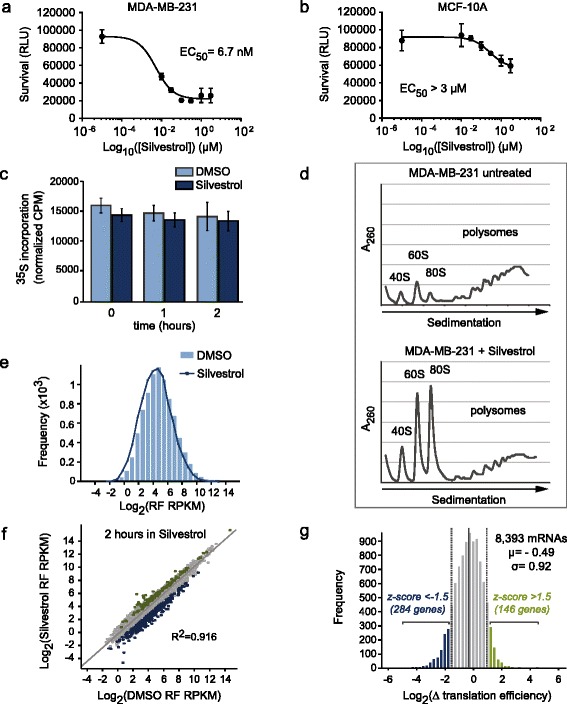
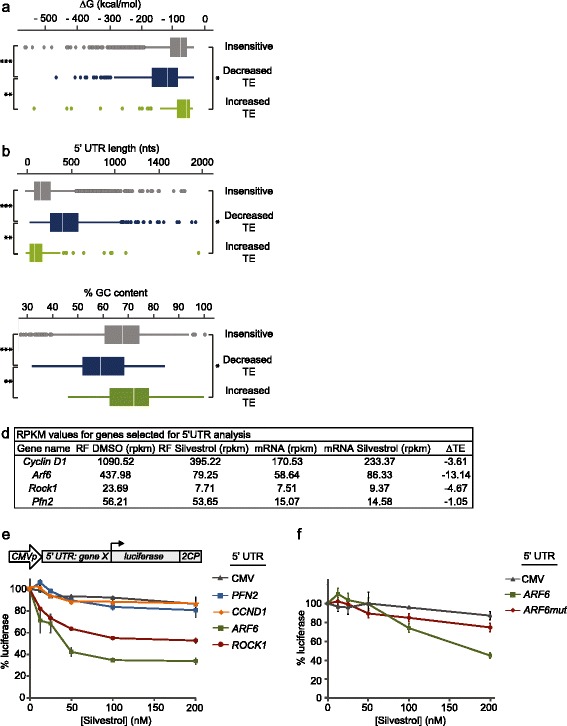
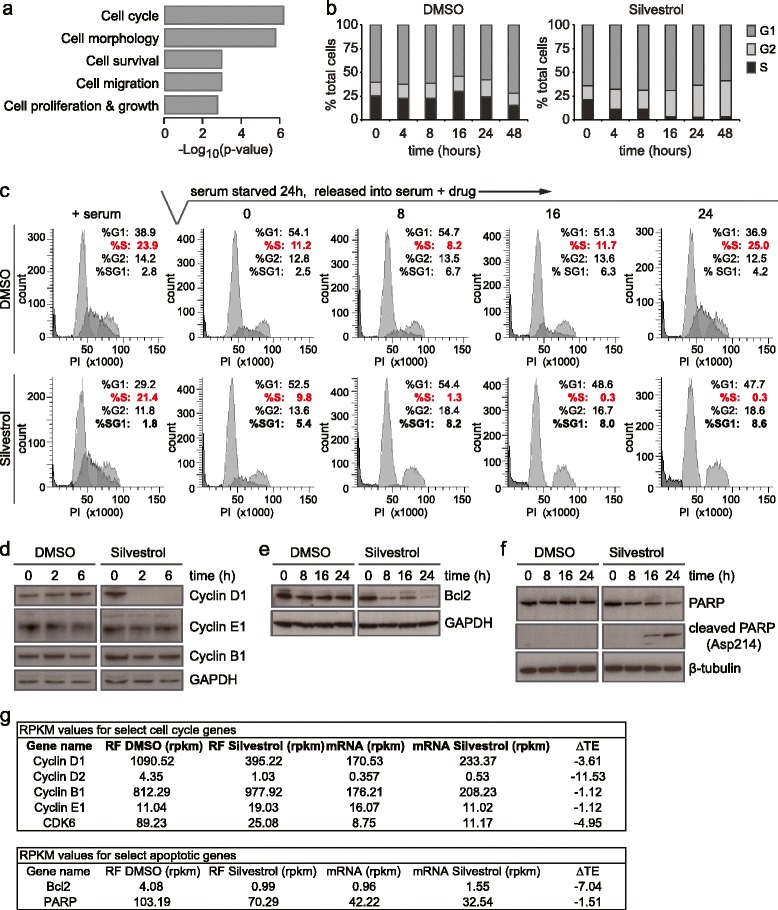
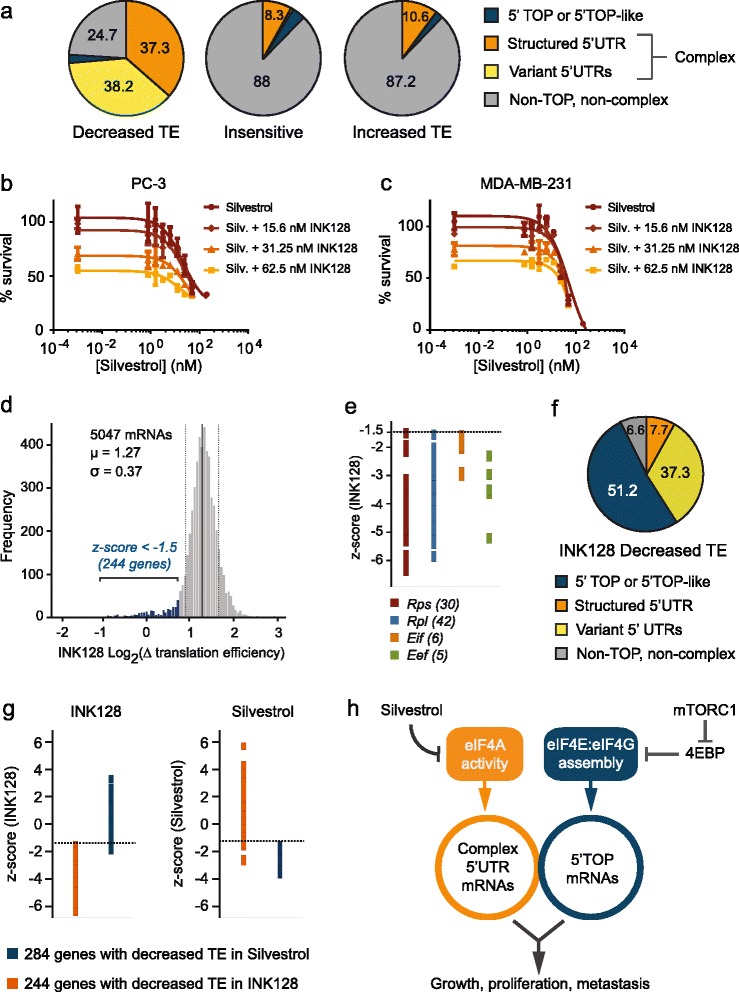
Verification
Claims the paper makes
The claims and statistics of this paper haven’t been checked yet.
Free: it reads the open-access text and checks the first 5 claims that cite a source we can check. Create a free account to check every claim.
Claims other papers make about this one
Each is checked against this paper’s own text: does it say what the citing paper says it does?
The source backs part of the claim, not all of it — or backs it for a different population, condition or comparison.
In the citing paper
“Importantly, these mRNAs include key oncogenes such as MYC, BCL2, CDK6, KRAS, and YAP1 (15–17), which are critical for tumorigenesis.”
From Targeting eIF4A-dependent translation in genetically complex sarcoma (2026) · cites this paper as [16]
Experimental — accuracy not yet measuredThe cited source says what the claim attributes to it.
In the citing paper
“The RNA helicase component of this complex is required to unwind secondary structure in the 5′-UTR and initiate translation of mRNAs, specifically those RNAs whose 5′-UTRs contain complex structures such as RNA G-quadruplexes (15–17).”
From Targeting eIF4A-dependent translation in genetically complex sarcoma (2026) · cites this paper as [16]
Self-check
Percentages, sums and reported differences re-computed from the paper’s own numbers.
The self-check needs the paper’s full text.
Citations
Cites
Fast gapped-read alignment with Bowtie 2
Langmead, B., & Salzberg, S. L. (2012) · Nature Methods · doi:10.1038/nmeth.1923 · Cited by 56,400 · cited 2×
“Langmead B, Salzberg SL: Fast gapped-read alignment with Bowtie 2.”
MethodGene Expression Omnibus: NCBI gene expression and hybridization array data repository
Edgar, R. (2002) · Nucleic Acids Research · doi:10.1093/nar/30.1.207 · Cited by 13,288 · cited 1×
“The next generation sequencing data presented in this paper have been deposited in NCBI’s Gene Expression Omnibus [45] and are accessible through GEO Series accession number GSE61375 [46].”
MethodGenome-Wide Analysis in Vivo of Translation with Nucleotide Resolution Using Ribosome Profiling
Ingolia, N. T., Ghaemmaghami, S., Newman, J. R. S., & Weissman, J. S. (2009) · Science · doi:10.1126/science.1168978 · Cited by 3,853 · cited 2×
“To explore the possibility that a select mRNA subset is regulated by eIF4A, we employed the comprehensive, transcriptome-wide method of ribosome profiling [10-13,15,16].”
BackgroundMethodProteomeXchange provides globally coordinated proteomics data submission and dissemination
Vizcaíno, J. A., Deutsch, E. W., Wang, R., Csordas, A., Reisinger, F., Ríos, D., Dianes, J. A., Sun, Z., Farrah, T., Bandeira, N., et al. (2014) · Nature Biotechnology · doi:10.1038/nbt.2839 · Cited by 2,729 · cited 1×
“The mass spectrometry data have been deposited to the ProteomeXchange Consortium [47] via the PRIDE partner repository [48] with the dataset identifier PXD001310 and DOI 10.”
MethodIngolia, N. T., Lareau, L. F., & Weissman, J. S. (2011) · Cell · doi:10.1016/j.cell.2011.10.002 · Cited by 2,187 · cited 5×
“Emerging methods that allow for global dissection of translation have bolstered the long standing knowledge that translation is subject to considerable regulation and thus plays a key role in regulating gene expression [10-13].”
BackgroundMethodInfluentialA unifying model for mTORC1-mediated regulation of mRNA translation
Thoreen, C. C., Chantranupong, L., Keys, H. R., Wang, T., Gray, N. S., & Sabatini, D. M. (2012) · Nature · doi:10.1038/nature11083 · Cited by 1,477 · cited 4×
“This pool of mRNAs was overwhelmingly characterized by the presence of 5′ TOP and 5′ TOP-like sequences adjacent to the 5′-m(7)GTP cap and lacked mRNAs with long, structured 5′ UTRs [15,16].”
BackgroundMethodInfluentialThe translational landscape of mTOR signalling steers cancer initiation and metastasis
Hsieh, A. C., Liu, Y., Edlind, M. P., Ingolia, N. T., Janes, M. R., Sher, A., Shi, E. Y., Stumpf, C. R., Christensen, C., Bonham, M. J., et al. (2012) · Nature · doi:10.1038/nature10912 · Cited by 1,313 · cited 25×
“Each point represents a single gene; genes in orange had decreased TE in INK128 while those in blue had decreased TE in Silvestrol.”
BackgroundMethodInfluentialThe equilibrium partition function and base pair binding probabilities for RNA secondary structure
McCaskill, J. S. (1990) · Biopolymers · doi:10.1002/bip.360290621 · Cited by 1,310 · cited 4×
“McCaskill JS: The equilibrium partition function and base pair binding probabilities for RNA secondary structure.”
MethodInfluentialIngolia, N. T., Brar, G. A., Rouskin, S., McGeachy, A. M., & Weissman, J. S. (2012) · Nature Protocols · doi:10.1038/nprot.2012.086 · Cited by 1,259 · cited 3×
“The location of the P-site in RF reads was calculated based on the mapped distance from the 5′-terminal base to the base occupying the P-site of the translating ribosome [11,13,41].”
MethodRNA G-quadruplexes cause eIF4A-dependent oncogene translation in cancer
Wolfe, A. L., Singh, K., Zhong, Y., Drewe, P., Rajasekhar, V. K., Sanghvi, V. R., Mavrakis, K. J., Jiang, M., Roderick, J. E., Van der Meulen, J., et al. (2014) · Nature · doi:10.1038/nature13485 · Cited by 635 · cited 1×
“[34].”
CONTRAfold: RNA secondary structure prediction without physics-based models
Do, C. B., Woods, D. A., & Batzoglou, S. (2006) · Bioinformatics · doi:10.1093/bioinformatics/btl246 · Cited by 619 · cited 8×
“Energy values were predicted using the CONTRAfold algorithm [25].”
MethodInfluentialPelletier, J., & Sonenberg, N. (1985) · Cell · doi:10.1016/0092-8674(85)90200-4 · Cited by 610 · cited 3×
“The translation initiation complex eIF4F has been shown to regulate genes with exogenous structural elements added to their 5′ UTRs [14,17-19].”
BackgroundDecoding Human Cytomegalovirus
Stern-Ginossar, N., Weisburd, B., Michalski, A., Le, V. T. K., Hein, M. Y., Huang, S.-X., Ma, M., Shen, B., Qian, S.-B., Hengel, H., et al. (2012) · Science · doi:10.1126/science.1227919 · Cited by 589 · cited 4×
“The location of the P-site in RF reads was calculated based on the mapped distance from the 5′-terminal base to the base occupying the P-site of the translating ribosome [11,13,41].”
BackgroundMethodInfluentialSelf-citationThe translation factor eIF-4E promotes tumor formation and cooperates with c-Myc in lymphomagenesis
Ruggero, D., Montanaro, L., Ma, L., Xu, W., Londei, P., Cordon-Cardo, C., & Pandolfi, P. P. (2004) · Nature Medicine · doi:10.1038/nm1042 · Cited by 586 · cited 1×
“Moreover, components of the translation apparatus and the rate of protein synthesis are commonly increased in cancer [4,5], overexpression of translation initiation factors, in particular eIF4E and eIF4G, is transforming [6,7], and increased levels of PDCD4, a negative regulator of eIF4A, suppresses transformation [8,…”
BackgroundPestova, T. V., & Kolupaeva, V. G. (2002) · Genes & Development · doi:10.1101/gad.1020902 · Cited by 566 · cited 4×
“The translation initiation complex eIF4F has been shown to regulate genes with exogenous structural elements added to their 5′ UTRs [14,17-19].”
BackgroundInfluentialHigh-Resolution View of the Yeast Meiotic Program Revealed by Ribosome Profiling
Brar, G. A., Yassour, M., Friedman, N., Regev, A., Ingolia, N. T., & Weissman, J. S. (2012) · Science · doi:10.1126/science.1215110 · Cited by 533 · cited 2×
“To explore the possibility that a select mRNA subset is regulated by eIF4A, we employed the comprehensive, transcriptome-wide method of ribosome profiling [10-13,15,16].”
BackgroundMethodHsu, F., Kent, W. J., Clawson, H., Kuhn, R. M., Diekhans, M., & Haussler, D. (2006) · Bioinformatics · doi:10.1093/bioinformatics/btl048 · Cited by 502
Yang, H.-S., Jansen, A. P., Komar, A. A., Zheng, X., Merrick, W. C., Costes, S., Lockett, S. J., Sonenberg, N., & Colburn, N. H. (2003) · Molecular and Cellular Biology · doi:10.1128/mcb.23.1.26-37.2003 · Cited by 494 · cited 1×
“Moreover, components of the translation apparatus and the rate of protein synthesis are commonly increased in cancer [4,5], overexpression of translation initiation factors, in particular eIF4E and eIF4G, is transforming [6,7], and increased levels of PDCD4, a negative regulator of eIF4A, suppresses transformation [8,…”
BackgroundSVITKIN, Y. V., PAUSE, A., HAGHIGHAT, A., PYRONNET, S., WITHERELL, G., BELSHAM, G. J., & SONENBERG, N. (2001) · RNA · doi:10.1017/s135583820100108x · Cited by 477 · cited 2×
“Previous studies have shown that structured RNA elements derived from exogenous sources increased dependency on eIF4F when added to 5′ UTR reporters [14,17-20].”
BackgroundKoromilas, A. E., Lazaris-Karatzas, A., & Sonenberg, N. (1992) · The EMBO Journal · doi:10.1002/j.1460-2075.1992.tb05508.x · Cited by 419 · cited 3×
“The translation initiation complex eIF4F has been shown to regulate genes with exogenous structural elements added to their 5′ UTRs [14,17-19].”
BackgroundModulation of the Helicase Activity of eIF4A by eIF4B, eIF4H, and eIF4F
Rogers, G. W., Richter, N. J., Lima, W. F., & Merrick, W. C. (2001) · Journal of Biological Chemistry · doi:10.1074/jbc.m100157200 · Cited by 339 · cited 1×
“Importantly, the helicase activity of eIF4A in vitro is known to be strongly stimulated by its association with other initiation factors, namely eIF4G, eIF4B and eIF4H [37,38].”
BackgroundControl of mammalian translation by mRNA structure near caps
Babendure, J. R., Babendure, J. L., Ding, J.-H., & Tsien, R. Y. (2006) · RNA · doi:10.1261/rna.2309906 · Cited by 339
Bordeleau, M.-E., Robert, F., Gerard, B., Lindqvist, L., Chen, S. M. H., Wendel, H.-G., Brem, B., Greger, H., Lowe, S. W., Porco, J. A., et al. (2008) · Journal of Clinical Investigation · doi:10.1172/jci34753 · Cited by 332 · cited 1×
“This compound has been shown to selectively target the RNA helicase activity of eIF4A both in vitro and in vivo, thereby impairing translation initiation [21,22], and is known to have robust anti-cancer effects [23,24].”
BackgroundAntitumor Activity and Mechanism of Action of the Cyclopenta[b]benzofuran, Silvestrol
Cencic, R., Carrier, M., Galicia-Vázquez, G., Bordeleau, M.-E., Sukarieh, R., Bourdeau, A., Brem, B., Teodoro, J. G., Greger, H., Tremblay, M. L., et al. (2009) · PLoS ONE · doi:10.1371/journal.pone.0005223 · Cited by 302 · cited 2×
“This compound has been shown to selectively target the RNA helicase activity of eIF4A both in vitro and in vivo, thereby impairing translation initiation [21,22], and is known to have robust anti-cancer effects [23,24].”
BackgroundeIF4A3 is a novel component of the exon junction complex
CHAN, C. C., DOSTIE, J., DIEM, M. D., FENG, W., MANN, M., RAPPSILBER, J., & DREYFUSS, G. (2004) · RNA · doi:10.1261/rna.5230104 · Cited by 292 · cited 1×
“In support of this, evidence suggests that the role of eIF4A3 in translation includes the ATP-dependent rearrangement of protein-protein or protein-mRNA complexes since this nuclear isoform of eIF4A binds mRNAs at exon junctions [31-33].”
BackgroundChemical combination effects predict connectivity in biological systems
Lehár, J., Zimmermann, G. R., Krueger, A. S., Molnar, R. A., Ledell, J. T., Heilbut, A. M., Short, G. F., Giusti, L. C., Nolan, G. P., Magid, O. A., et al. (2007) · Molecular Systems Biology · doi:10.1038/msb4100116 · Cited by 275 · cited 1×
“Dose-matrix plots of these data (lower panels of Figure S9a,b,e,f in Additional file 10) are best described by a highest single agent- or Bliss-like masking model in which dual inhibition of targets across two intersecting pathways is required for full inhibition [29].”
BackgroundShibuya, T., Tange, T. Ø., Sonenberg, N., & Moore, M. J. (2004) · Nature Structural & Molecular Biology · doi:10.1038/nsmb750 · Cited by 274 · cited 1×
“In support of this, evidence suggests that the role of eIF4A3 in translation includes the ATP-dependent rearrangement of protein-protein or protein-mRNA complexes since this nuclear isoform of eIF4A binds mRNAs at exon junctions [31-33].”
BackgroundRequirement for Arf6 in breast cancer invasive activities
Hashimoto, S., Onodera, Y., Hashimoto, A., Tanaka, M., Hamaguchi, M., Yamada, A., & Sabe, H. (2004) · Proceedings of the National Academy of Sciences · doi:10.1073/pnas.0401753101 · Cited by 270 · cited 2×
“Indeed, silencing ARF6 in MDA-MB-231 cells has been shown to impair migration and invasion [27] and ARF6 overexpression in conjunction with a partner, Gep100, triggered invasion in non-invasive MCF-7 cells [28].”
BackgroundTranslation Initiation on Mammalian mRNAs with Structured 5′UTRs Requires DExH-Box Protein DHX29
Pisareva, V. P., Pisarev, A. V., Komar, A. A., Hellen, C. U. T., & Pestova, T. V. (2008) · Cell · doi:10.1016/j.cell.2008.10.037 · Cited by 235 · cited 1×
“One possible explanation is that helicases with a redundant function in translation, such as DHX29, might serve to unwind highly structured mRNAs when eIF4A activity is compromised [35].”
BackgroundEpigenetic Activation of a Subset of mRNAs by eIF4E Explains Its Effects on Cell Proliferation
Mamane, Y., Petroulakis, E., Martineau, Y., Sato, T.-A., Larsson, O., Rajasekhar, V. K., & Sonenberg, N. (2007) · PLoS ONE · doi:10.1371/journal.pone.0000242 · Cited by 224 · cited 1×
“Formation of eIF4F is tightly controlled by multiple mitogenic signaling pathways, namely mitogen-activated protein kinase (MAPK) and phosphoinositide-3-kinase (PI3K)/Akt/mammalian target of rapamycin (mTOR), and has been shown to stimulate translation of mRNAs involved in cell proliferation, growth, survival, cell cy…”
BackgroundMorishige, M., Hashimoto, S., Ogawa, E., Toda, Y., Kotani, H., Hirose, M., Wei, S., Hashimoto, A., Yamada, A., Yano, H., et al. (2008) · Nature Cell Biology · doi:10.1038/ncb1672 · Cited by 220 · cited 2×
“Indeed, silencing ARF6 in MDA-MB-231 cells has been shown to impair migration and invasion [27] and ARF6 overexpression in conjunction with a partner, Gep100, triggered invasion in non-invasive MCF-7 cells [28].”
BackgroundeIF4GI links nutrient sensing by mTOR to cell proliferation and inhibition of autophagy
Ramírez-Valle, F., Braunstein, S., Zavadil, J., Formenti, S. C., & Schneider, R. J. (2008) · The Journal of Cell Biology · doi:10.1083/jcb.200710215 · Cited by 191 · cited 1×
“of 5′ TOP mRNAs [16,40].”
Ferraiuolo, M. A., Lee, C.-S., Ler, L. W., Hsu, J. L., Costa-Mattioli, M., Luo, M.-J., Reed, R., & Sonenberg, N. (2004) · Proceedings of the National Academy of Sciences · doi:10.1073/pnas.0400933101 · Cited by 186 · cited 1×
“In support of this, evidence suggests that the role of eIF4A3 in translation includes the ATP-dependent rearrangement of protein-protein or protein-mRNA complexes since this nuclear isoform of eIF4A binds mRNAs at exon junctions [31-33].”
BackgroundYang, H.-S., Jansen, A. P., Nair, R., Shibahara, K., Verma, A. K., Cmarik, J. L., & Colburn, N. H. (2001) · Oncogene · doi:10.1038/sj.onc.1204137 · Cited by 185 · cited 1×
“Moreover, components of the translation apparatus and the rate of protein synthesis are commonly increased in cancer [4,5], overexpression of translation initiation factors, in particular eIF4E and eIF4G, is transforming [6,7], and increased levels of PDCD4, a negative regulator of eIF4A, suppresses transformation [8,…”
BackgroundLucas, D. M., Edwards, R. B., Lozanski, G., West, D. A., Shin, J. D., Vargo, M. A., Davis, M. E., Rozewski, D. M., Johnson, A. J., Su, B.-N., et al. (2009) · Blood · doi:10.1182/blood-2008-09-175430 · Cited by 171 · cited 1×
“This compound has been shown to selectively target the RNA helicase activity of eIF4A both in vitro and in vivo, thereby impairing translation initiation [21,22], and is known to have robust anti-cancer effects [23,24].”
BackgroundLarsson, O., Li, S., Issaenko, O. A., Avdulov, S., Peterson, M., Smith, K., Bitterman, P. B., & Polunovsky, V. A. (2007) · Cancer Research · doi:10.1158/0008-5472.can-07-0752 · Cited by 163 · cited 1×
“Formation of eIF4F is tightly controlled by multiple mitogenic signaling pathways, namely mitogen-activated protein kinase (MAPK) and phosphoinositide-3-kinase (PI3K)/Akt/mammalian target of rapamycin (mTOR), and has been shown to stimulate translation of mRNAs involved in cell proliferation, growth, survival, cell cy…”
BackgroundMalignant transformation by overproduction of translation initiation factor eIF4G.
Shimogori, T., Ishii, I., Kashiwagi, K., Mashiba, H., EKIMOTO, H., & Igarashi, K. (1997) · PubMed · Cited by 159
Evidence for a Functionally Relevant Rocaglamide Binding Site on the eIF4A–RNA Complex
Sadlish, H., Galicia-Vazquez, G., Paris, C. G., Aust, T., Bhullar, B., Chang, L., Helliwell, S. B., Hoepfner, D., Knapp, B., Riedl, R., et al. (2013) · ACS Chemical Biology · doi:10.1021/cb400158t · Cited by 127 · cited 1×
“This compound has been shown to selectively target the RNA helicase activity of eIF4A both in vitro and in vivo, thereby impairing translation initiation [21,22], and is known to have robust anti-cancer effects [23,24].”
BackgroundElevated expression of eIF4E and FGF-2 isoforms during vascularization of breast carcinomas
Nathan, C. O., Carter, P., Liu, L., Li, B. D. �., Abreo, F. W., Tudor, A., Zimmer, S. G., & Benedetti, A. D. (1997) · Oncogene · doi:10.1038/sj.onc.1201272 · Cited by 122 · cited 1×
“Moreover, components of the translation apparatus and the rate of protein synthesis are commonly increased in cancer [4,5], overexpression of translation initiation factors, in particular eIF4E and eIF4G, is transforming [6,7], and increased levels of PDCD4, a negative regulator of eIF4A, suppresses transformation [8,…”
BackgroundDNA damage and eIF4G1 in breast cancer cells reprogram translation for survival and DNA repair mRNAs
Badura, M., Braunstein, S., Zavadil, J., & Schneider, R. J. (2012) · Proceedings of the National Academy of Sciences · doi:10.1073/pnas.1203853109 · Cited by 120 · cited 1×
“Formation of eIF4F is tightly controlled by multiple mitogenic signaling pathways, namely mitogen-activated protein kinase (MAPK) and phosphoinositide-3-kinase (PI3K)/Akt/mammalian target of rapamycin (mTOR), and has been shown to stimulate translation of mRNAs involved in cell proliferation, growth, survival, cell cy…”
BackgroundDuplex Unwinding and ATPase Activities of the DEAD-Box Helicase eIF4A Are Coupled by eIF4G and eIF4B
Özeş, A. R., Feoktistova, K., Avanzino, B. C., & Fraser, C. S. (2011) · Journal of Molecular Biology · doi:10.1016/j.jmb.2011.08.004 · Cited by 114 · cited 1×
“Importantly, the helicase activity of eIF4A in vitro is known to be strongly stimulated by its association with other initiation factors, namely eIF4G, eIF4B and eIF4H [37,38].”
BackgroundYamashita, R., Suzuki, Y., Takeuchi, N., Wakaguri, H., Ueda, T., Sugano, S., & Nakai, K. (2008) · Nucleic Acids Research · doi:10.1093/nar/gkn248 · Cited by 113 · cited 1×
“Moreover, INK128-sensitive transcripts were predominantly composed of known 5′ TOP mRNAs (Figure 4e) as well as transcripts bearing 5′ TOP-like sequences [16,30] and largely unstructured 5′ UTRs (Figure 4f ).”
BackgroundeIF4F suppression in breast cancer affects maintenance and progression
Nasr, Z., Robert, F., Porco, J. A., Muller, W. J., & Pelletier, J. (2013) · Oncogene · doi:10.1038/onc.2012.105 · Cited by 81 · cited 2×
“found that eIF4F inhibition impaired cell migration in highly metastatic TM15 breast cancer cells [26].”
BackgroundLee, S., & McCormick, F. P. (2006) · The EMBO Journal · doi:10.1038/sj.emboj.7601268 · Cited by 79 · cited 1×
“Indeed, eIF4G2, a homolog of eIF4G, significantly impacts protein synthesis [39]”
BackgroundHeys, S. D., Park, K. G. M., McNurlan, M. A., Calder, A. G., Buchan, V., Blessing, K., Eremin, O., & Garlick, P. J. (1991) · Clinical Science · doi:10.1042/cs0800587 · Cited by 26 · cited 1×
“Moreover, components of the translation apparatus and the rate of protein synthesis are commonly increased in cancer [4,5], overexpression of translation initiation factors, in particular eIF4E and eIF4G, is transforming [6,7], and increased levels of PDCD4, a negative regulator of eIF4A, suppresses transformation [8,…”
BackgroundRocaglaol induces apoptosis and cell cycle arrest in LNCaP cells.
Mi, Q., Su, B.-N., Chai, H., Cordell, G. A., Farnsworth, N. R., Kinghorn, A. D., & Swanson, S. M. (2006) · PubMed · Cited by 25
Research works printed but not linked: 1
- 46. Gene Expression Omnibus: Ribosome profiling upon inhibition of eIF4A. [http://www.ncbi.nlm.nih.gov/geo/query/acc.cgi?acc=GSE61375]
Cited by
Translational control by 5′-untranslated regions of eukaryotic mRNAs
Hinnebusch, A. G., Ivanov, I. P., & Sonenberg, N. (2016) · Science · doi:10.1126/science.aad9868 · Cited by 1,079
Functional 5′ UTR mRNA structures in eukaryotic translation regulation and how to find them
Leppek, K., Das, R., & Barna, M. (2018) · Nature Reviews Molecular Cell Biology · doi:10.1038/nrm.2017.103 · Cited by 949
Targeting the translation machinery in cancer
Bhat, M., Robichaud, N., Hulea, L., Sonenberg, N., Pelletier, J., & Topisirovic, I. (2015) · Nature Reviews Drug Discovery · doi:10.1038/nrd4505 · Cited by 799
New frontiers in translational control of the cancer genome
Truitt, M. L., & Ruggero, D. (2016) · Nature Reviews Cancer · doi:10.1038/nrc.2016.27 · Cited by 378
Targeting the eIF4F Translation Initiation Complex: A Critical Nexus for Cancer Development
Pelletier, J., Graff, J., Ruggero, D., & Sonenberg, N. (2015) · Cancer Research · doi:10.1158/0008-5472.can-14-2789 · Cited by 367
Metadata
- Authors
- Rubio, C. A., Weisburd, B., Holderfield, M., Arias, C., Fang, E., DeRisi, J. L., & Fanidi, A.
- Affiliations
- Frederick National Laboratory for Cancer Research (US)
- University of California, San Francisco (US)
- Corresponding author
- Rubio, Claudia A
- Venue
- Genome Biology
- Published
- 2014-10-02
- Volume
- 15
- Issue
- 10
- Pages
- 476-476
- ISSN
- 1465-6906 (ISSN-L)
- 1474-760X
- PMC
- PMC4203936
- OpenAlex
- W2140617443
- Cited by
- 200
- References
- 46
- Citations by year
- 2026: 10 · 2025: 7 · 2024: 13 · 2023: 20 · 2022: 21 · 2021: 26 · 2020: 17 · 2019: 19 · 2018: 19 · 2017: 17 · 2016: 21 · 2015: 9 · 2014: 1
- FWCI
- 6.56
- Type
- journal article
- Language
- en
- Open access
- gold
- doi.org
- Licence
- cc-by
- creativecommons.org/licenses/by/4.0 (tdm)
- creativecommons.org/licenses/by/4.0 (vor)
- Locations
- Genome biology (publishedVersion, cc-by)
- PubMed Central (publishedVersion, cc-by)
- PubMed (publishedVersion)
- eScholarship (California Digital Library) (submittedVersion)
- eScholarship (California Digital Library) (submittedVersion, cc-by)
- Funders
- Howard Hughes Medical Institute
- Novartis Institutes for BioMedical Research
- Topics
- Life Sciences › Biochemistry, Genetics and Molecular Biology › Molecular Biology › RNA and protein synthesis mechanisms
- Life Sciences › Biochemistry, Genetics and Molecular Biology › Molecular Biology › PI3K/AKT/mTOR signaling in cancer
- Life Sciences › Biochemistry, Genetics and Molecular Biology › Molecular Biology › RNA modifications and cancer
- Keywords
- eIF4A, eIF4F, translation initiation, ribosome profiling, silvestrol, breast cancer, MDA-MB-231 cells, translational regulation, mTOR, eIF4E, oncogenic signaling
- MeSH terms
- Benzofurans, Humans, RNA, Messenger, Protein Biosynthesis, Triterpenes, Gene Expression Regulation, Neoplastic, Apoptosis, Eukaryotic Initiation Factor-4A, Cell Line, Tumor, DEAD-box RNA Helicases, Cell Cycle Checkpoints, Transcriptome
About these checks
Registry, retraction, Cites and statistics results are computed, not judged, with one exception: a printed reference that no index lists is read once by a model before it counts as a citation error. Claims are extracted by a model and kept only when their quote appears verbatim in the text; each cited source is then checked, with a model’s help, for whether it says what the claim relies on. Those verdicts can be wrong — read the claim’s quote and the cited source before relying on one.
Statistics and arithmetic are recomputed, not judged.
Confidence bands are shown only for fields calibrated on our annotated test set. None is calibrated yet, so no band is shown.
What counts as a claim ›How we measure confidence ›How we check this ›
Are you an author, or do you see a problem with this page? Request a review
Data sources
Bibliographic data: Semantic Scholar, OpenAlex, Crossref.
Contains information from the Semantic Scholar Academic Graph Datasets, made available under the ODC Attribution License (ODC-BY 1.0).
Semantic Scholar’s data is described in: Kinney, R., et al. (2023). The Semantic Scholar Open Data Platform. arXiv:2301.10140.
