

The Ensembl Variant Effect Predictor
Open accessPublished version of a preprint
The DOI matches its Crossref record; 125 of the 125 references it cites were found in a registry or an index.
Abstract
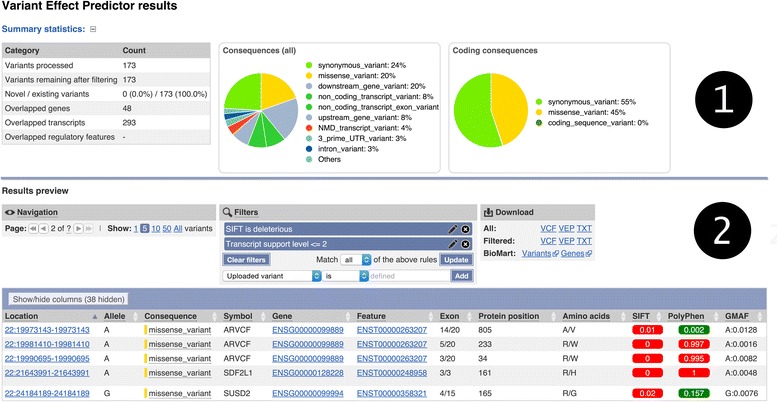
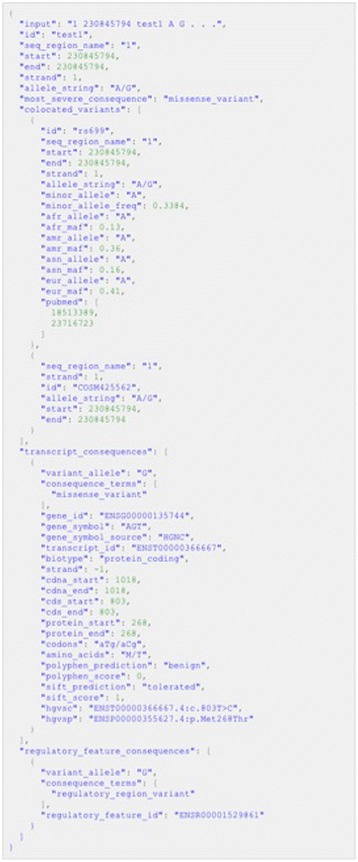
The Ensembl Variant Effect Predictor (VEP) is a powerful toolset for the analysis, annotation and prioritization of genomic variants, including in non-coding regions. The VEP accurately predicts the effects of sequence variants on transcripts, protein products, regulatory regions and binding motifs by leveraging the high quality, broad scope, and integrated nature of the Ensembl databases. In addition, it enables comparison with a large collection of existing publicly available variation data within Ensembl to provide insights into population and ancestral genetics, phenotypes and disease. The VEP is open source and free to use. It is available via a simple web interface ( http://www.ensembl.org/vep ), a powerful downloadable package, and both Ensembl’s Perl and REST application program interface (API) services.
Overview
The claims and statistics of this paper haven’t been checked yet.
Free: it reads the open-access text and checks the first 5 claims that cite a source we can check. Create a free account to check every claim.
Integrity signals
Registry
Cites
Statistics
Figures
Verification
Claims the paper makes
The claims and statistics of this paper haven’t been checked yet.
Free: it reads the open-access text and checks the first 5 claims that cite a source we can check. Create a free account to check every claim.
Claims other papers make about this one
Each is checked against this paper’s own text: does it say what the citing paper says it does?
The check wasn’t confident either way, so it gives no verdict — never disputed.
In the citing paper
“The ranking of variant types based on the lowest percentile of GPN scores is generally consistent with established notions of deleteriousness (41)*.”
From DNA language models are powerful predictors of genome-wide variant effects (2023) · cites this paper as [41]
Experimental — accuracy not yet measured
Self-check
Percentages, sums and reported differences re-computed from the paper’s own numbers.
The self-check needs the paper’s full text.
Citations
Cites
An integrated encyclopedia of DNA elements in the human genome
The ENCODE Project Consortium (2012) · Nature · doi:10.1038/nature11247 · Cited by 18,072
Self-citationANNOVAR: functional annotation of genetic variants from high-throughput sequencing data
Wang, K., Li, M., & Hakonarson, H. (2010) · Nucleic Acids Research · doi:10.1093/nar/gkq603 · Cited by 14,621
A method and server for predicting damaging missense mutations.
Adzhubei, I. A., Schmidt, S., Peshkin, L., Ramensky, V. E., Gerasimova, A., Bork, P., Kondrashov, A. S., & Sunyaev, S. R. (2010) · Nature Methods · doi:10.1038/nmeth0410-248 · Cited by 13,194 · cited 2×
“PolyPhen-2 [41] results are available for human proteins.”
BackgroundCingolani, P., Platts, A., Wang, L. L., Coon, M., Nguyen, T., Wang, L., Land, S. J., Lu, X., & Ruden, D. M. (2012) · Fly · doi:10.4161/fly.19695 · Cited by 11,816 · cited 2×
“The VEP’s VCF output follows a standard agreed with other annotation tool providers (Cingolani et al. 2012) to promote transparent cross-comparison and benchmarking of results.”
An integrated map of genetic variation from 1,092 human genomes
The 1000 Genomes Project Consortium (2012) · Nature · doi:10.1038/nature11632 · Cited by 7,711 · cited 1×
“It has been used for analysis in numerous large-scale projects, including the 1000 Genomes [31] and Exome Aggregation Consortium (ExAC) [32].”
MethodSelf-citationdbSNP: the NCBI database of genetic variation
Sherry, S. T. (2001) · Nucleic Acids Research · doi:10.1093/nar/29.1.308 · Cited by 7,502 · cited 2×
“Ensembl integrates and quality checks variants from dbSNP [56] and other sources for 20 species.”
BackgroundKumar, P., Henikoff, S., & Ng, P. C. (2009) · Nature Protocols · doi:10.1038/nprot.2009.86 · Cited by 6,521 · cited 1×
“Sorting Intolerant From Tolerant (SIFT, Kumar et al. 2009) results are available for the ten species that are most used in Ensembl.”
BackgroundA general framework for estimating the relative pathogenicity of human genetic variants
Kircher, M., Witten, D. M., Jain, P., O'Roak, B. J., Cooper, G. M., & Shendure, J. (2014) · Nature Genetics · doi:10.1038/ng.2892 · Cited by 6,183
A New Initiative on Precision Medicine
Collins, F. S., & Varmus, H. (2015) · New England Journal of Medicine · doi:10.1056/nejmp1500523 · Cited by 5,202
The Genotype-Tissue Expression (GTEx) pilot analysis: Multitissue gene regulation in humans
The GTEx Consortium, Ardlie, K. G., Deluca, D. S., Segrè, A. V., Sullivan, T. J., Young, T. R., Gelfand, E. T., Trowbridge, C. A., Maller, J. B., Tukiainen, T., et al. (2015) · Science · doi:10.1126/science.1262110 · Cited by 5,062 · cited 1×
“Data from large scale efforts such as the Genotype-Tissue Expression project, which aims to systematically characterize the effects of regulatory variants in different tissues [84], will be integrated into the VEP reference data in order to have the most current data available to the VEP for analysis.”
Method
Cited by
Items 701–800 of 1,113
Bioinformatics Accelerates the Major Tetrad: A Real Boost for the Pharmaceutical Industry
Behl, T., Kaur, I., Sehgal, A., Singh, S., Bhatia, S., Al‐Harrasi, A., Zengin, G., Babeş, E. E., Brisc, C., Stoicescu, M., et al. (2021) · International Journal of Molecular Sciences · doi:10.3390/ijms22126184 · Cited by 83
“VEP Annotation and prediction of impact of variant on genes [133]”
BackgroundZhou, Z., Ding, Z., Yuan, J., Shen, S., Jian, H., Tan, Q., Yang, Y., Chen, Z., Luo, Q., Cheng, X., et al. (2022) · Journal of Hematology & Oncology · doi:10.1186/s13045-022-01283-7 · Cited by 82
Wilcox, N., Dumont, M., González‐Neira, A., Carvalho, S., Beauparlant, C. J., Crotti, M., Luccarini, C., Soucy, P., Dubois, S., Núñez‐Torres, R., et al. (2023) · Nature Genetics · doi:10.1038/s41588-023-01466-z · Cited by 82
Lee, M., Roos, P., Sharma, N., Atalar, M., Evans, T. A., Pellicore, M. J., Davis-Marcisak, E. F., Lam, A.-T. N., Stanley, S. E., Khalil, S. E., et al. (2017) · The American Journal of Human Genetics · doi:10.1016/j.ajhg.2017.04.001 · Cited by 82
“18 To standardize the numbering, we assigned the last nucleotide of the intron a 0 and the last nucleotide of the exon a 0.”
MethodAncient Hybridization with an Unknown Population Facilitated High-Altitude Adaptation of Canids
Wang, M., Wang, S., Li, Y., Jhala, Y. V., Thakur, M. K., Otecko, N. O., Si, J., Chen, H.-M., Shapiro, B., Nielsen, R., et al. (2020) · Molecular Biology and Evolution · doi:10.1093/molbev/msaa113 · Cited by 82
“9th percentile as the cutoff to retrieve candidate selective sweeps, which were then annotated using the variant effect predictor (McLaren et al. 2016).”
MethodNatural Selection Shapes Codon Usage in the Human Genome
Dhindsa, R. S., Copeland, B. R., Mustoe, A. M., & Goldstein, D. B. (2020) · The American Journal of Human Genetics · doi:10.1016/j.ajhg.2020.05.011 · Cited by 82
Bayesian estimation of gene constraint from an evolutionary model with gene features
Zeng, T., Spence, J. P., Mostafavi, H., & Pritchard, J. K. (2024) · Nature Genetics · doi:10.1038/s41588-024-01820-9 · Cited by 81
“The effects of variants on protein function were predicted us-ing Variant Effect Predictor (VEP) version 85 [75] using GENCODE v19 gene annotations [76] as a reference.”
Loss of function mutations in essential genes cause embryonic lethality in pigs
Derks, M. F. L., Gjuvsland, A. B., Bosse, M., Lopes, M. S., van Son, M., Harlizius, B., Tan, B. F., Hamland, H., Grindflek, E. H., Groenen, M. A. M., et al. (2019) · PLoS Genetics · doi:10.1371/journal.pgen.1008055 · Cited by 81
Genetic variation in CADM2 as a link between psychological traits and obesity
Morris, J., Bailey, M. E. S., Baldassarre, D., Cullen, B., Fairé, U. D., Ferguson, A., Gigante, B., Giral, P., Goel, A., Graham, N., et al. (2019) · Scientific Reports · doi:10.1038/s41598-019-43861-9 · Cited by 82
Repeated evolution of circadian clock dysregulation in cavefish populations
Mack, K. L., Jaggard, J. B., Persons, J. L., Roback, E. Y., Passow, C. N., Stanhope, B. A., Ferrufino, E., Tsuchiya, D., Smith, S. E., Slaughter, B. D., et al. (2021) · PLoS Genetics · doi:10.1371/journal.pgen.1009642 · Cited by 83
Analysis of genetic dominance in the UK Biobank
Palmer, D. S., Zhou, W., Abbott, L. E., Wigdor, E. M., Baya, N. A., Churchhouse, C. L., Seed, C., Poterba, T., King, D. A., Kanai, M., et al. (2023) · Science · doi:10.1126/science.abn8455 · Cited by 82
Next-Generation sequencing transforming clinical practice and precision medicine
Yadav, D., Patil‐Takbhate, B., Khandagale, A. S., Bhawalkar, J., Tripathy, S. P., & Khopkar-Kale, P. (2023) · Clinica Chimica Acta · doi:10.1016/j.cca.2023.117568 · Cited by 83
Cross-ancestry atlas of gene, isoform, and splicing regulation in the developing human brain
Wen, C., Margolis, M., Dai, R., Zhang, P., Przytycki, P. F., Vo, D. D., Bhattacharya, A., Matoba, N., Tang, M., Jiao, C., et al. (2024) · Science · doi:10.1126/science.adh0829 · Cited by 69
Measuring coverage and accuracy of whole-exome sequencing in clinical context
Kong, S. W., Lee, I., Liu, X., Hirschhorn, J. N., & Mandl, K. D. (2018) · Genetics in Medicine · doi:10.1038/gim.2018.51 · Cited by 82
Ramos, E. M., Dokuru, D. R., Van Berlo, V., Wojta, K., Wang, Q., Huang, A. Y., Deverasetty, S., Qin, Y., van Blitterswijk, M., Jackson, J., et al. (2020) · Alzheimer's & Dementia · doi:10.1002/alz.12011 · Cited by 80
Denisovan, modern human and mouse TNFAIP3 alleles tune A20 phosphorylation and immunity
Zammit, N. W., Siggs, O. M., Gray, P. E., Horikawa, K., Langley, D. B., Walters, S. N., Daley, S. R., Loetsch, C., Warren, J., Yap, J. Y., et al. (2019) · Nature Immunology · doi:10.1038/s41590-019-0492-0 · Cited by 80
MTR-Viewer: identifying regions within genes under purifying selection
Silk, M. A., Petrovski, S., & Ascher, D. B. (2019) · Nucleic Acids Research · doi:10.1093/nar/gkz457 · Cited by 80
“All possible singlepoint mutations within all gene transcripts were labelled by the Variant Effect Predictor (Release 95) (15) as either missense or synonymous.”
MethodJúnior, G. A. F., de Oliveira, H. N., Carvalheiro, R., Cardoso, D. F., Fonseca, L. F. S., Ventura, R. V., & de Albuquerque, L. G. (2020) · Scientific Reports · doi:10.1038/s41598-020-66272-7 · Cited by 80
An online coronavirus analysis platform from the National Genomics Data Center
Gong, Z., 国家生物信息中心&中国科学院北京基因组研究所国家基因组科学数据中心, 北. 1., Zhu, J.-W., Li, C. P., Jiang, S., Ma, L., Tang, B. X., Zou, D., Chen, M. L., Sun, Y.-B., et al. (2020) · 动物学研究 · doi:10.24272/j.issn.2095-8137.2020.065 · Cited by 80
“Variation annotation module To clarify the mutation influence on gene function, the variation annotation module integrates the Ensembl Variant Effect Predictor (VEP) (McLaren et al., 2016) to show codon and amino acid changes, and then calculates the degree of function influence.”
Schobers, G., Schieving, J., Yntema, H. G., Pennings, M., Pfundt, R., Derks, R. C., Hofste, T. G. J., de Wijs, I. J., Wieskamp, N., van den Heuvel, S., et al. (2022) · Genome Medicine · doi:10.1186/s13073-022-01069-z · Cited by 80
“Reannotations reflected gene-panel updates and the Variant Effect Predictor (VEP) [20] for prioritization as well as knowledge bases such as gnomAD [21], in-house variant frequencies, OMIM phenotypes, and new literature searches.”
BackgroundMethodMonge, C., Xie, C., Myojin, Y., Coffman, K., Hrones, D. M., Wang, S., Hernandez, J. M., Wood, B. J., Levy, E. B., Juburi, I., et al. (2023) · Journal for ImmunoTherapy of Cancer · doi:10.1136/jitc-2022-005640 · Cited by 75
Characterization of genome-wide STR variation in 6487 human genomes
Shi, Y., Niu, Y., Zhang, P., Luo, H., Liu, S., Zhang, S., Wang, J., Li, Y., Liu, X., Song, T., et al. (2023) · Nature Communications · doi:10.1038/s41467-023-37690-8 · Cited by 80
“To assess the functional properties of pSTRs, we fi rst annotated pSTRs using Variant Effect Predictor (VEP).”
The genetic architecture and evolution of the human skeletal form
Kun, E., Javan, E. M., Smith, O. S., Gulamali, F. F., de la Fuente, J., Flynn, B. I., Vajrala, K., Trutner, Z. D., Jayakumar, P., Tucker–Drob, E. M., et al. (2023) · Science · doi:10.1126/science.adf8009 · Cited by 80
Abyzov, A., Tomasini, L., Zhou, B., Vasmatzis, N., Coppola, G., Amenduni, M., Pattni, R., Wilson, M., Gerstein, M., Weissman, S., et al. (2017) · Genome Research · doi:10.1101/gr.215517.116 · Cited by 75
“Annotation of all mosaic SNV sets with the Variant Effect Predictor (VEP) (McLaren et al. 2010) based on the RefSeq annotation showed that 83% are likely benign SNVs located in intergenic and intron regions.”
MethodTeh, J. L. F., Cheng, P. F., Purwin, T. J., Nikbakht, N., Patel, P., Chervoneva, I., Ertel, A., Fortina, P. M., Kleiber, I., HooKim, K., et al. (2018) · Cancer Discovery · doi:10.1158/2159-8290.cd-17-0699 · Cited by 75
“32), and variants were annotated with the Variant Effect Predictor (33).”
Identification of pathogenic variant enriched regions across genes and gene families
Pérez-Palma, E., May, P., Iqbal, S., Niestroj, L.-M., Du, J., Heyne, H. O., Castrillon, J. A., O'Donnell-Luria, A., Nürnberg, P., Palotie, A., et al. (2020) · Genome Research · doi:10.1101/gr.252601.119 · Cited by 76
“PER Pfam domain annotation was performed with VEP software (McLaren et al. 2016) using the genomic coordinates of PERs for both gene-wise and family-wise analysis approaches.”
MethodMascarenhas, J. O., Rampal, R. K., Kosiorek, H., Bhave, R. R., Hexner, E. O., Wang, E. S., Gerds, A. T., Abboud, C. N., Kremyanskaya, M., Berenzon, D., et al. (2020) · Blood Advances · doi:10.1182/bloodadvances.2020002119 · Cited by 80
VarFish: comprehensive DNA variant analysis for diagnostics and research
Holtgrewe, M., Stolpe, O., Nieminen, M., Mundlos, S., Knaus, A., Kornak, U., Seelow, D., Segebrecht, L., Spielmann, M., Fischer‐Zirnsak, B., et al. (2020) · Nucleic Acids Research · doi:10.1093/nar/gkaa241 · Cited by 79
“We limit our discussion to freely accessible, web-based tools allowing for exome-wide variant analysis which focus on rare diseases; these include Ex-omiser (4), eXtasy (5), GeneTalk (6), MutationDistiller (7), OVA (8), Phen-Gen (9), Variant Ranker (10), VCF-Server (11), VEP (12) and wANNOVAR (13).”
MethodFrazier, A. E., Compton, A. G., Kishita, Y., Hock, D. H., Welch, A. E., Amarasekera, S. S. C., Rius, R., Formosa, L. E., Imai‐Okazaki, A., Francis, D. I., et al. (2020) · Med · doi:10.1016/j.medj.2020.06.004 · Cited by 79
Pathogenic variants in actionable MODY genes are associated with type 2 diabetes
Bonnefond, A., Boissel, M., Bolze, A., Durand, E., Toussaint, B., Vaillant, E., Gaget, S., Graeve, F. D., Dechaume, A., Allegaert, F., et al. (2020) · Nature Metabolism · doi:10.1038/s42255-020-00294-3 · Cited by 80
An effector index to predict target genes at GWAS loci
Forgetta, V., Jiang, L., Vulpescu, N. A., Hogan, M. S., Chen, S., Morris, J. A., Grinek, S., Benner, C., Jang, D., Hoang, Q., et al. (2022) · Human Genetics · doi:10.1007/s00439-022-02434-z · Cited by 74
“2, SNVs affecting missense coding sequence or transcript structure were identi ed using the ENSEMBL Variant Effect Predictor v92(McLaren et al. 2016) and Gencode v24, using the following tags: splice_donor_variant, splice_acceptor_variant, stop_gained, stop_lost, start_lost, missense_variant, splice_region_variant, in…”
MethodGenetic Basis of Childhood Cardiomyopathy
Bagnall, R. D., Singer, E. S., Wacker, J., Nowak, N., Ingles, J., King, I., Macciocca, I., Crowe, J., Ronan, A., Weintraub, R. G., et al. (2022) · Circulation Genomic and Precision Medicine · doi:10.1161/circgen.121.003686 · Cited by 79
Xiang, R., Fang, L., Liu, S., MacLeod, I. M., Liu, Z., Breen, E. J., Gao, Y., Liu, G. E., Tenesa, A., Mason, B., et al. (2023) · Cell Genomics · doi:10.1016/j.xgen.2023.100385 · Cited by 79
“We also analyzed regulatory variants with coding variants annotated by Ensembl VEP 25 (STAR Methods; Table S6).”
MethodSchmidt, A., Danyel, M., Grundmann, K., Brunet, T., Klinkhammer, H., Hsieh, T., Engels, H., Peters, S., Knaus, A., Moosa, S., et al. (2024) · Nature Genetics · doi:10.1038/s41588-024-01836-1 · Cited by 79
“Variants were annotated using VEP (four laboratories, 80.2% of cases) 78 or Jannovar (one laboratory, 19.8% of cases) 79 and analyzed in VarFish 80 , megaSAP (https://github.com/imgag/megSAP) or EVAdb (https://github.com/mri-ihg/EVAdb) or in tabular format depending on the center.”
InfluentialThe correlation between CpG methylation and gene expression is driven by sequence variants
Stefánsson, Ó. A., Sigurpalsdottir, B. D., Rögnvaldsson, S., Halldorsson, G. H., Juliusson, K., Sveinbjörnsson, G., Gunnarsson, B., Beyter, D., Jónsson, H., Gudjonsson, S. A., et al. (2024) · Nature Genetics · doi:10.1038/s41588-024-01851-2 · Cited by 79
“This model works well to estimate enrichment of VEP (variant effect predictor) annotations 60,61 but has its drawbacks in the current context.”
Richardson, T. G., Zheng, J., Davey Smith, G., Timpson, N. J., Gaunt, T. R., Relton, C. L., & Hemani, G. (2017) · The American Journal of Human Genetics · doi:10.1016/j.ajhg.2017.09.003 · Cited by 71
Weerakkody, R. A., Ross, D. B., Parry, D. A., Ziganshin, B. A., Vandrovcová, J., Gampawar, P. G., Abdullah, A., Biggs, J., Dumfarth, J., Ibrahim, Y., et al. (2018) · Genetics in Medicine · doi:10.1038/gim.2018.27 · Cited by 81
Bassani-Sternberg, M., Digklia, A., Huber, F., Wagner, D., Sempoux, C., Stevenson, B. J., Thierry, A.-C., Michaux, J., Pak, H., Racle, J., et al. (2019) · Frontiers in Immunology · doi:10.3389/fimmu.2019.01832 · Cited by 74
Antitumor activity of the dual BET and CBP/EP300 inhibitor NEO2734
Spriano, F., Gaudio, E., Cascione, L., Tarantelli, C., Melle, F., Motta, G., Priebe, V., Rinaldi, A., Golino, G., Mensah, A. A., et al. (2020) · Blood Advances · doi:10.1182/bloodadvances.2020001879 · Cited by 79
“Variants were annotated using Ensembl Variant Effect Predictor.(38) The effect of an amino acid substitution induced by a mutation was predicted with SIFT(39) and PolyPhen2(40) algorithms.”
Maroilley, T., Lemonnier, G., Lecardonnel, J., Esquerré, D., Ramayo‐Caldas, Y., Mercat, M.-J., Rogel-Gaillard, C., & Estellé, J. (2017) · BMC Genomics · doi:10.1186/s12864-017-4354-6 · Cited by 79
“The remaining two were considered to be intergenic when only the most severe consequence of each SNP was considered in VEP analysis.”
MethodInfluentialHoffman, G. E., Bendl, J. M., Girdhar, K., Schadt, E. E., & Roussos, P. (2019) · Nucleic Acids Research · doi:10.1093/nar/gkz808 · Cited by 78
“Genome annotation of sites were obtained from VEP v85 (38) provided by gnomAD (11).”
MethodSanchez, M.-P., Guatteo, R. R., Davergne, A., Saout, J., Grohs, C., Deloche, M.-C., Taussat, S., Fritz, S., Boussaha, M., Blanquefort, P., et al. (2020) · Genetics Selection Evolution · doi:10.1186/s12711-020-00535-9 · Cited by 78
“Variants that were located within QTL regions were annotated using Variant Effect Predictor (VEP) [34] based on the UMD3.”
MethodLaurie, S., Piscia, D., Matalonga, L., Corvò, A., García, C., Fernández-Callejo, M., Hernandéz-Ferrer, C., Luengo, C., Papakonstantinou, A., Protasio, J., et al. (2022) · Human Mutation · doi:10.1002/humu.24353 · Cited by 78
“Following this, a range of filters can be applied within four broad categories: variant effect (McLaren et al., 2016) including presence in ClinVar; allele frequency described in control populations such as gnomAD and the 1000 Genomes Project (Genomes Project et al., 2015); predicted variant impact…”
BackgroundGenetic risk factors have a substantial impact on healthy life years
Jukarainen, S., Kiiskinen, T., Kuitunen, S., Havulinna, A. S., Karjalainen, J. M., Cordioli, M., Rämö, J. T., Mars, N., FinnGen, Samocha, K. E., et al. (2022) · Nature Medicine · doi:10.1038/s41591-022-01957-2 · Cited by 75
Analyses of rare predisposing variants of lung cancer in 6,004 whole genomes in Chinese
Wang, C., Dai, J., Qin, N., Fan, J., Ma, H., Chen, C., An, M., Zhang, J., Yan, C., Gu, Y., et al. (2022) · Cancer Cell · doi:10.1016/j.ccell.2022.08.013 · Cited by 78
Current Bioinformatics Tools in Precision Oncology
Wolde, T., Bhardwaj, V., & Pandey, V. (2025) · MedComm · doi:10.1002/mco2.70243 · Cited by 78
“Additionally, variant annotation tools like ANNOVAR and SnpEff, combined with computational predictions, have assessed the functional implications of these mutations [308].”
Wright, G. E. B., Amstutz, U., Drögemöller, B. I., Shih, J., Rassekh, S. R., Hayden, M. R., Carleton, B., & Ross, C. J. (2018) · Clinical Pharmacology & Therapeutics · doi:10.1002/cpt.1179 · Cited by 78
1,000 ancient genomes uncover 10,000 years of natural selection in EuropePreprint
Le, M. K., Smith, O. S., Akbari, A., Harpak, A., Reich, D., & Narasimhan, V. M. (2022) · bioRxiv (Cold Spring Harbor Laboratory) · doi:10.1101/2022.08.24.505188 · Cited by 79
Barrett, M. T., Lenkiewicz, E., Malasi, S., Basu, A., Yearley, J. H., Annamalai, L., McCullough, A. E., Kosiorek, H., Narang, P., Sayres, M. A. W., et al. (2018) · Breast Cancer Research · doi:10.1186/s13058-018-1004-0 · Cited by 77
“We used the variant effect predictor tool [24] with ensemble transcript versions for the hg19 reference genome to generate fasta sequences for a range of flanking amino acids (7, 8, 9, and 10 bp) on each side of the mutated amino acid to generate 15, 17, 19, and 21 amino acid sequences, respectively, to be used in the…”
MethodMeurs, K. M., Friedenberg, S. G., Kolb, J. S., Saripalli, C., Tonino, P., Woodruff, K., Olby, N. J., Keene, B. W., Adin, D. B., Yost, O. L., et al. (2019) · Human Genetics · doi:10.1007/s00439-019-01973-2 · Cited by 77
Children’s rare disease cohorts: an integrative research and clinical genomics initiative
Rockowitz, S., LeCompte, N., Carmack, M. M., Quitadamo, A., Wang, L., Park, M., Knight, D., Sexton, E. L., Smith, L. A., Sheidley, B. R., et al. (2020) · npj Genomic Medicine · doi:10.1038/s41525-020-0137-0 · Cited by 78
The mutational landscape of histiocytic sarcoma associated with lymphoid malignancy
Egan, C., Lack, J., Skarshaug, S., Pham, T., Abdullaev, Z., Xi, L., Pack, S., Pittaluga, S., Jaffe, E. S., & Raffeld, M. A. (2020) · Modern Pathology · doi:10.1038/s41379-020-00673-x · Cited by 78
“mskcc/vcf2maf) and Ensembl VEP 92 [25], followed by CADD GRCh37-v1.”
MethodHigh-Throughput Imaging Assay for Drug Screening of 3D Prostate Cancer Organoids
Choo, N., Ramm, S., Luu, J., Winter, J. M., Selth, L. A., Dwyer, A. R., Frydenberg, M., Grummet, J., Sandhu, S., Hickey, T. E., et al. (2021) · SLAS Discovery · doi:10.1177/24725552211020668 · Cited by 69
Genomic landscape of TCRαβ and TCRγδ T-large granular lymphocyte leukemia
Cheon, H., Xing, J. C., Moosic, K. B., Ung, J., Chan, V., Chung, D., Toro, M. F., Elghawy, O., Wang, J. S., Hamele, C. E., et al. (2022) · Blood · doi:10.1182/blood.2021013164 · Cited by 77
Allen, R. J., Oldham, J. M., Jenkins, D. A., Leavy, O. C., Guillén‐Guío, B., Melbourne, C., Ma, S., Jou, J., Kim, J. S., CleanUP-IPF Investigators of the Pulmonary Trials Cooperative, et al. (2022) · The Lancet Respiratory Medicine · doi:10.1016/s2213-2600(22)00251-x · Cited by 76
“25 Rare variants in both PKN2 (percentage predicted FEV 1 ) and LMO4 (FEV 1 and FVC) had p<5 × 10 −6 with lung function and rare variants in HFM1 show an association with the level of IGF-1 (which is known to promote pulmonary fibrosis; appendix pp 19–21).”
BackgroundMethodInfluentialThe impact of rare protein coding genetic variation on adult cognitive function
Chen, C., Tian, R., Ge, T., Lam, M., Sánchez-Andrade, G., Singh, T., Urpa, L., Liu, J. Z., Sanderson, M., Rowley, C., et al. (2023) · Nature Genetics · doi:10.1038/s41588-023-01398-8 · Cited by 77
Gao, B., & Zhou, X. (2024) · Nature Genetics · doi:10.1038/s41588-023-01604-7 · Cited by 77
“Here, the variant-based categories (missense, synonymous, and 5’/3′ UTR variants) are predicted by Ensembl Variant Effect Predictor (VEP) v85 (GRCh37 and GENCODE v19) using the most severe consequence 53 .”
Whitworth, J., Smith, P., Martín, J., West, H. D., Luchetti, A., Rodger, F., Clark, G. R., Carss, K., Stephens, J. C., Stirrups, K. E., et al. (2018) · The American Journal of Human Genetics · doi:10.1016/j.ajhg.2018.04.013 · Cited by 78
Quinlan-Jones, E., Lord, J., Williams, D., Hamilton, S., Marton, T., Eberhardt, R. Y., Rinck, G., Prigmore, E., Keelagher, R., McMullan, D. J., et al. (2018) · Genetics in Medicine · doi:10.1038/s41436-018-0298-8 · Cited by 77
Kennedy, S. A., Jarboui, M. A., Srihari, S., Raso, C., Bryan, K. R., Dernayka, L., Charitou, T., Llinares, M. B., Herrera-Montávez, C., Krstić, A., et al. (2020) · Nature Communications · doi:10.1038/s41467-019-14224-9 · Cited by 79
The genetics of situs inversus without primary ciliary dyskinesia
Postema, M. C., Carrión-Castillo, A., Fisher, S. E., Vingerhoets, G., & Francks, C. (2020) · Scientific Reports · doi:10.1038/s41598-020-60589-z · Cited by 78
Ray, J. P., de Boer, C. G., Fulco, C. P., Lareau, C. A., Kanai, M., Ulirsch, J. C., Tewhey, R., Ludwig, L. S., Reilly, S. K., Bergman, D. T., et al. (2020) · Nature Communications · doi:10.1038/s41467-020-15022-4 · Cited by 78
Programmable C‐to‐U RNA editing using the human APOBEC3A deaminase
Huang, X., Lv, J., Li, Y., Mao, S., Li, Z., Jing, Z., Sun, Y., Zhang, X., Shen, S., Wang, X., et al. (2020) · The EMBO Journal · doi:10.15252/embj.2020104741 · Cited by 76
The contribution of X-linked coding variation to severe developmental disorders
Martin, H. C., Gardner, E. J., Samocha, K. E., Kaplanis, J., Akawi, N. A., Sifrim, A., Eberhardt, R. Y., Tavares, A. L. T., Neville, M. D. C., Niemi, M., et al. (2021) · Nature Communications · doi:10.1038/s41467-020-20852-3 · Cited by 77
Feasibility of whole genome and transcriptome profiling in pediatric and young adult cancers
Shukla, N. N., Levine, M. F., Gundem, G., Domenico, D., Spitzer, B. G., Bouvier, N., Ossa, J. A., Głodzik, D., Medina-Martinez, J. S., Bhanot, U. K., et al. (2022) · Nature Communications · doi:10.1038/s41467-022-30233-7 · Cited by 77
“63 ).”
InfluentialRoselli, C., Surakka, I. L., OLESEN, M. S., Sveinbjörnsson, G., Marston, N., Choi, S. H., Hólm, H., Chaffin, M. D., Gudbjartsson, D. F., Hill, M. C., et al. (2025) · Nature Genetics · doi:10.1038/s41588-024-02072-3 · Cited by 78
Bakhtiarizadeh, M. R., & Alamouti, A. A. (2020) · Scientific Reports · doi:10.1038/s41598-020-70527-8 · Cited by 75
Annotating high-impact 5′untranslated region variants with the UTRannotator
Zhang, X., Wakeling, M. N., Ware, J. S., & Whiffin, N. (2020) · Bioinformatics · doi:10.1093/bioinformatics/btaa783 · Cited by 75
“To aid the assessment of high-impact uORF-perturbing variants, we have developed a plugin for VEP to identify 5’UTR variants that create upstream start sites (uAUGs), disrupt the start or stop codon of existing uORFs, or shift the frame of an existing uORF.”
Buggiotti, L., Yurchenko, A. A., Yudin, N. S., Vander Jagt, C. J., Vorobieva, N. V., Kusliy, M. A., Vasiliev, S. K., Rodionov, A. N., Boronetskaya, O. I., Zinovieva, N. A., et al. (2021) · Molecular Biology and Evolution · doi:10.1093/molbev/msab078 · Cited by 63
Genomic reanalysis of a pan-European rare-disease resource yields new diagnoses
Laurie, S., Steyaert, W., de Boer, E., Polavarapu, K., Schuermans, N., Sommer, A. K., Demidov, G., Ellwanger, K., Paramonov, I., Thomas, C., et al. (2025) · Nature Medicine · doi:10.1038/s41591-024-03420-w · Cited by 76
“SNVs, InDels and mitochondrial variants received detailed annotations provided by Ensembl Variant Effect Predictor 61 , gnomAD 62 and ClinVar 16 , among other resources.”
Derks, M. F. L., Lopes, M. S., Bosse, M., Madsen, O., Dibbits, B. W., Harlizius, B., Groenen, M. A. M., & Megens, H. (2018) · PLoS Genetics · doi:10.1371/journal.pgen.1007661 · Cited by 75
Systematic design and comparison of expanded carrier screening panels
Beauchamp, K. A., Muzzey, D., Wong, K. K., Hogan, G. J., Karimi, K., Candille, S. I., Mehta, N. N., Mar‐Heyming, R., Kaseniit, K. E., Kang, H. P., et al. (2017) · Genetics in Medicine · doi:10.1038/gim.2017.69 · Cited by 75
AutoPVS1: An automatic classification tool for PVS1 interpretation of null variants
Xiang, J., Peng, J., Baxter, S. M., & Peng, Z. (2020) · Human Mutation · doi:10.1002/humu.24051 · Cited by 76
Solving patients with rare diseases through programmatic reanalysis of genome-phenome data
Matalonga, L., Hernandéz-Ferrer, C., Piscia, D., Solve-RD SNV-indel working group, Cohen, E., Cuesta, I., Danis, D., Denommé‐Pichon, A., Duffourd, Y., Gilissen, C., et al. (2021) · European Journal of Human Genetics · doi:10.1038/s41431-021-00852-7 · Cited by 76
pCADD: SNV prioritisation in Sus scrofa
Groß, C., Derks, M., Megens, H.-J., Bosse, M., Groenen, M. A. M., Reinders, M., & de Ridder, D. (2020) · Genetics Selection Evolution · doi:10.1186/s12711-020-0528-9 · Cited by 62
Shoily, S. S., Ahsan, T., Fatema, K., & Sajib, A. A. (2021) · Scientific Reports · doi:10.1038/s41598-021-86801-2 · Cited by 74
Genome‐Wide Association Study Identifies Risk Loci for Cluster Headache
O’Connor, E., Fourier, C., Ran, C., Sivakumar, P., Liesecke, F., Southgate, L., Harder, A. V. E., Vijfhuizen, L. S., Yip, J., Giffin, N., et al. (2021) · Annals of Neurology · doi:10.1002/ana.26150 · Cited by 77
“Depletion (CADD) score; and Genomic Evolutionary Rate Profiling (GERP) score annotation.(22,23) CADD scores of >10 are”
Identification of genetic effects underlying type 2 diabetes in South Asian and European populations
Loh, M. C. S., Zhang, W., Ng, H. K., Schmid, K., Lamri, A., Lin, T., Ahmad, M., Lee, J., Ng, M. C. Y., Petty, L. E., et al. (2022) · Communications Biology · doi:10.1038/s42003-022-03248-5 · Cited by 75
Cho, B. P. H., Harshfield, E. L., Al-Thani, M., Tozer, D. J., Bell, S., & Markus, H. S. (2022) · JAMA Neurology · doi:10.1001/jamaneurol.2022.3832 · Cited by 67
Ingels, J., Cock, L. D., Stevens, D., Mayer, R. L., Théry, F., Sanchez, G. S., Vermijlen, D., Weening, K., Smet, S. D., Lootens, N., et al. (2024) · Cell Reports Medicine · doi:10.1016/j.xcrm.2024.101516 · Cited by 76
“For the identification of non-synonymous mutations and the binding affinity prediction the framework makes use of the Ensembl Variant Effect Predictor (VEP) 79 (version 93) and netMHCpan 80 (version 4.0) respectively.”
MethodInfluentialLopdell, T., Tiplady, K., Struchalin, M. V., Johnson, T., Keehan, M., Sherlock, R. G., Couldrey, C., Davis, S. R., Snell, R. G., Spelman, R. J., et al. (2017) · BMC Genomics · doi:10.1186/s12864-017-4320-3 · Cited by 74
“Variants predicted to impact protein-coding sequences were also annotated using the Variant Effect Predictor [20] (Ensembl release 87).”
MethodInfluentialGenomic Variation Among and Within SixJuglansSpecies
Stevens, K., Woeste, K., Chakraborty, S., Crepeau, M., Leslie, C. A., Martínez‐García, P. J., Puiu, D., Romero‐Severson, J., Coggeshall, M. V., Dandekar, A. M., et al. (2018) · G3 Genes Genomes Genetics · doi:10.1534/g3.118.200030 · Cited by 74
Targeted gene sequencing in 6994 individuals with neurodevelopmental disorder with epilepsy
Heyne, H. O., Artomov, M., Battke, F., Bianchini, C., Smith, D. R., Liebmann, N., Tadigotla, V., Stanley, C. M., Lal, D., Rehm, H., et al. (2019) · Genetics in Medicine · doi:10.1038/s41436-019-0531-0 · Cited by 65
Molecular Parallelism Underlies Convergent Highland Adaptation of Maize Landraces
Wang, L., Josephs, E. B., Lee, K. M., Roberts, L. M., Rellán‐Álvarez, R., Ross‐Ibarra, J., & Hufford, M. B. (2021) · Molecular Biology and Evolution · doi:10.1093/molbev/msab119 · Cited by 68
“We employed variant effect predictor from Ensembl (McLaren et al. 2016) to further annotate genomic location and functional consequences of SNPs.”
MethodJordan, D. M., Verbanck, M., & Do, R. (2019) · Genome Biology · doi:10.1186/s13059-019-1844-7 · Cited by 73
Structurally divergent and recurrently mutated regions of primate genomes
(2024) · doi:10.1016/j.cell.2024.01.052 · Cited by 73
Genetic study of multimodal imaging Alzheimer’s disease progression score implicates novel loci
Scelsi, M. A., Khan, R. R., Lorenzi, M., Christopher, L., Greicius, M. D., Schott, J. M., Ourselin, S., & Altmann, A. (2018) · Brain · doi:10.1093/brain/awy141 · Cited by 73
“Variants passing the genome-wide suggestive threshold (P = 10 5) were annotated using the Ensembl Variant Effect Predictor (McLaren et al., 2016).”
Schaettler, M. O., Richters, M. M., Wang, A. Z., Skidmore, Z. L., Fisk, B., Miller, K. E., Vickery, T. L., Kim, A. H., Chicoine, M. R., Osbun, J. W., et al. (2022) · Cancer Discovery · doi:10.1158/2159-8290.cd-21-0291 · Cited by 69
Comprehensive assessment of germline pathogenic variant detection in tumor-only sequencing
Terraf, P., Pareja, F. G., Brown, D. N., Ceyhan‐Birsoy, O., Misyura, M., Rana, S., O'Reilly, E. M., Carlo, M. I., Aghajanian, C. A., Liu, Y. L., et al. (2022) · Annals of Oncology · doi:10.1016/j.annonc.2022.01.006 · Cited by 74
Saturation genome editing of DDX3X clarifies pathogenicity of germline and somatic variation
Radford, E. J., Tan, H.-K., Andersson, M. H. L., Stephenson, J. D., Gardner, E. J., Ironfield, H., Waters, A. J., Gitterman, D., Lindsay, S., Abascal, F., et al. (2023) · Nature Communications · doi:10.1038/s41467-023-43041-4 · Cited by 63
Nemkov, T. G., Stephenson, D., Earley, E. J., Keele, G. R., Hay, A. M., Key, A., Haiman, Z. B., Erickson, C. B., Dzieciątkowska, M., Reisz, J. A., et al. (2024) · Cell Metabolism · doi:10.1016/j.cmet.2024.06.007 · Cited by 74
GAVIN: Gene-Aware Variant INterpretation for medical sequencing
van der Velde, K. J., de Boer, E. N., van Diemen, C. C., Sikkema-Raddatz, B., Abbott, K. M., Knopperts, A., Franke, L., Sijmons, R. H., de Koning, T. J., Wijmenga, C., et al. (2017) · Genome Biology · doi:10.1186/s13059-016-1141-7 · Cited by 64
Comprehensive analysis of cutaneous and uveal melanoma liver metastases
Hoefsmit, E. P., Rozeman, E. A., Van, T. M., Dimitriadis, P., Krijgsman, O., Conway, J. W., da Silva, I. P., van der Wal, J. E., Ketelaars, S. L. C., Bresser, K., et al. (2020) · Journal for ImmunoTherapy of Cancer · doi:10.1136/jitc-2020-001501 · Cited by 75
BEND: Benchmarking DNA Language Models on biologically meaningful tasks
Marin, F. I., Teufel, F., Horlacher, M., Madsen, D., Pultz, D., Winther, O., & Boomsma, W. (2024) · International Conference on Learning Representations · doi:10.48550/arxiv.2311.12570 · Cited by 79
“VEP infers the consequence of a variant by comparing a variant’s position to the reference genome annotation, determining what type of sequence region (Table A4) the variant lies in.”
MethodInfluentialReduced reproductive success is associated with selective constraint on human genes
Gardner, E. J., Neville, M. D. C., Samocha, K. E., Barclay, K., Kolk, M., Niemi, M. E. K., Kirov, G., Martin, H. C., & Hurles, M. E. (2022) · Nature · doi:10.1038/s41586-022-04549-9 · Cited by 72
Mathur, S., Tomeček, J. M., Tarango-Arámbula, L. A., Perez, R. M., & DeWoody, J. A. (2022) · Evolution · doi:10.1093/evolut/qpac061 · Cited by 72
McGurk, K. A., Zhang, X., Theotokis, P. I., Thomson, K. L., Harper, A. R., Buchan, R. J., Mazaika, E., Ormondroyd, E., Wright, W. T., Macaya, D., et al. (2023) · The American Journal of Human Genetics · doi:10.1016/j.ajhg.2023.08.003 · Cited by 74
Genetic features and genomic targets of human KRAB-zinc finger proteins
de Tribolet-Hardy, J., Thorball, C. W., Forey, R., Planet, E., Duc, J., Coudray, A., Khubieh, B., Offner, S., Pulver, C., Fellay, J., et al. (2023) · Genome Research · doi:10.1101/gr.277722.123 · Cited by 74
“8) (Danecek et al. 2021) and reanno-tated with the Variant Effect Predictor (McLaren et al. 2016) and LOFTEE (v0.”
Ciliopathy patient variants reveal organelle-specific functions for TUBB4B in axonemal microtubules
Dodd, D. O., Mechaussier, S., Yeyati, P. L., McPhie, F., Anderson, J. R., Khoo, C. J., Shoemark, A., Gupta, D. K., Attard, T., Zariwala, M. A., et al. (2024) · Science · doi:10.1126/science.adf5489 · Cited by 61
“In some axoneme types, like those of microtubule doublets of respiratory cilia (38), we demonstrated that only one predominant β -tubulin isotype is utilized.”
BackgroundVerma, A., Lucas, A., Verma, S. S., Zhang, Y., Josyula, N. S., Khan, A., Hartzel, D. N., Lavage, D. R., Leader, J. B., Ritchie, M. D., et al. (2018) · The American Journal of Human Genetics · doi:10.1016/j.ajhg.2018.02.017 · Cited by 72
Metadata
- Authors
- McLaren, W., Gil, L., Hunt, S. E., Riat, H. S., Ritchie, G. R. S., Thormann, A., Flicek, P., & Cunningham, F.
- Affiliations
- European Bioinformatics Institute (GB)
- Corresponding author
- McLaren, William
- Cunningham, Fiona
- ORCID
- Venue
- Genome Biology
- Published
- 2016-06-06
- Volume
- 17
- Issue
- 1
- Pages
- 122-122
- ISSN
- 1465-6906 (ISSN-L)
- 1474-760X
- PMC
- PMC4893825
- OpenAlex
- W2417483443
- Semantic Scholar
- 54ec58ccaf8b33bc7593d3413e1dbd58d6c8ca18
- Cited by
- 8,099
- References
- 77
- Citations by year
- 2026: 858 · 2025: 1154 · 2024: 1277 · 2023: 1092 · 2022: 961 · 2021: 939 · 2020: 722 · 2019: 510 · 2018: 381 · 2017: 174 · 2016: 22
- FWCI
- 294.55
- Type
- journal article
- Language
- en
- Open access
- gold
- doi.org
- Licence
- cc-by
- Locations
- Genome biology (publishedVersion, cc-by)
- bioRxiv (Cold Spring Harbor Laboratory) (acceptedVersion, cc-by)
- Europe PMC (PubMed Central) (publishedVersion, cc-by)
- PubMed Central (publishedVersion, cc-by)
- PubMed (publishedVersion)
- Funders
- Wellcome Trust (GB) (WT095908 and WT098051)
- European Molecular Biology Laboratory
- Seventh Framework Programme (BE) (200754 (GEN2PHEN), 222664 (Quantomics))
- European Union’s Horizon 2020 research and innovation programme (634143 (MedBioinformatics))
- Topics
- Life Sciences › Biochemistry, Genetics and Molecular Biology › Genetics › Genomics and Rare Diseases
- Life Sciences › Biochemistry, Genetics and Molecular Biology › Molecular Biology › Genomics and Phylogenetic Studies
- Life Sciences › Biochemistry, Genetics and Molecular Biology › Genetics › Genetic Associations and Epidemiology
- Keywords
- genomic variant annotation, variant prioritization, variant interpretation, genome annotation, open source software, reproducibility
- MeSH terms
- Humans, Software, Genetic Variation, Computational Biology, Internet, Genomics, Databases, Nucleic Acid, Molecular Sequence Annotation
About these checks
Registry, retraction, Cites and statistics results are computed, not judged, with one exception: a printed reference that no index lists is read once by a model before it counts as a citation error. Claims are extracted by a model and kept only when their quote appears verbatim in the text; each cited source is then checked, with a model’s help, for whether it says what the claim relies on. Those verdicts can be wrong — read the claim’s quote and the cited source before relying on one.
Statistics and arithmetic are recomputed, not judged.
Confidence bands are shown only for fields calibrated on our annotated test set. None is calibrated yet, so no band is shown.
What counts as a claim ›How we measure confidence ›How we check this ›
Are you an author, or do you see a problem with this page? Request a review
Data sources
Bibliographic data: Semantic Scholar, OpenAlex, Crossref.
Contains information from the Semantic Scholar Academic Graph Datasets, made available under the ODC Attribution License (ODC-BY 1.0).
Semantic Scholar’s data is described in: Kinney, R., et al. (2023). The Semantic Scholar Open Data Platform. arXiv:2301.10140.
