

The Ensembl Variant Effect Predictor
Open accessPublished version of a preprint
The DOI matches its Crossref record; 125 of the 125 references it cites were found in a registry or an index.
Abstract
The Ensembl Variant Effect Predictor (VEP) is a powerful toolset for the analysis, annotation and prioritization of genomic variants, including in non-coding regions. The VEP accurately predicts the effects of sequence variants on transcripts, protein products, regulatory regions and binding motifs by leveraging the high quality, broad scope, and integrated nature of the Ensembl databases. In addition, it enables comparison with a large collection of existing publicly available variation data within Ensembl to provide insights into population and ancestral genetics, phenotypes and disease. The VEP is open source and free to use. It is available via a simple web interface ( http://www.ensembl.org/vep ), a powerful downloadable package, and both Ensembl’s Perl and REST application program interface (API) services.
Overview
The claims and statistics of this paper haven’t been checked yet.
Free: it reads the open-access text and checks the first 5 claims that cite a source we can check. Create a free account to check every claim.
Integrity signals
Registry
Cites
Statistics
Figures
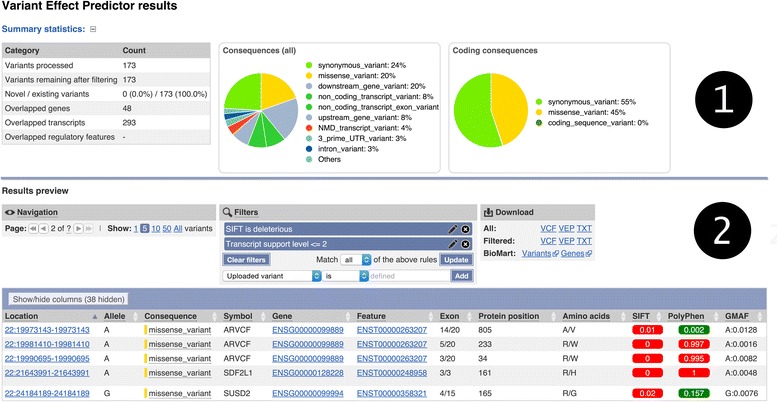
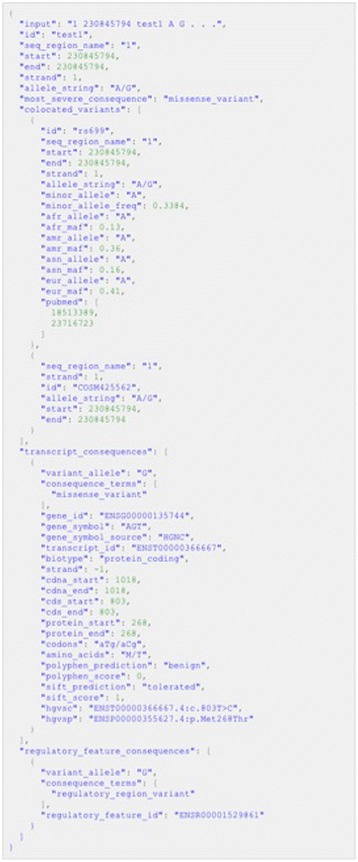
Verification
Claims the paper makes
The claims and statistics of this paper haven’t been checked yet.
Free: it reads the open-access text and checks the first 5 claims that cite a source we can check. Create a free account to check every claim.
Claims other papers make about this one
Each is checked against this paper’s own text: does it say what the citing paper says it does?
The check wasn’t confident either way, so it gives no verdict — never disputed.
In the citing paper
“The ranking of variant types based on the lowest percentile of GPN scores is generally consistent with established notions of deleteriousness (41)*.”
From DNA language models are powerful predictors of genome-wide variant effects (2023) · cites this paper as [41]
Experimental — accuracy not yet measured
Self-check
Percentages, sums and reported differences re-computed from the paper’s own numbers.
The self-check needs the paper’s full text.
Citations
Cites
An integrated encyclopedia of DNA elements in the human genome
The ENCODE Project Consortium (2012) · Nature · doi:10.1038/nature11247 · Cited by 18,072
Self-citationANNOVAR: functional annotation of genetic variants from high-throughput sequencing data
Wang, K., Li, M., & Hakonarson, H. (2010) · Nucleic Acids Research · doi:10.1093/nar/gkq603 · Cited by 14,621
A method and server for predicting damaging missense mutations.
Adzhubei, I. A., Schmidt, S., Peshkin, L., Ramensky, V. E., Gerasimova, A., Bork, P., Kondrashov, A. S., & Sunyaev, S. R. (2010) · Nature Methods · doi:10.1038/nmeth0410-248 · Cited by 13,194 · cited 2×
“PolyPhen-2 [41] results are available for human proteins.”
BackgroundCingolani, P., Platts, A., Wang, L. L., Coon, M., Nguyen, T., Wang, L., Land, S. J., Lu, X., & Ruden, D. M. (2012) · Fly · doi:10.4161/fly.19695 · Cited by 11,816 · cited 2×
“The VEP’s VCF output follows a standard agreed with other annotation tool providers (Cingolani et al. 2012) to promote transparent cross-comparison and benchmarking of results.”
An integrated map of genetic variation from 1,092 human genomes
The 1000 Genomes Project Consortium (2012) · Nature · doi:10.1038/nature11632 · Cited by 7,711 · cited 1×
“It has been used for analysis in numerous large-scale projects, including the 1000 Genomes [31] and Exome Aggregation Consortium (ExAC) [32].”
MethodSelf-citationdbSNP: the NCBI database of genetic variation
Sherry, S. T. (2001) · Nucleic Acids Research · doi:10.1093/nar/29.1.308 · Cited by 7,502 · cited 2×
“Ensembl integrates and quality checks variants from dbSNP [56] and other sources for 20 species.”
BackgroundKumar, P., Henikoff, S., & Ng, P. C. (2009) · Nature Protocols · doi:10.1038/nprot.2009.86 · Cited by 6,521 · cited 1×
“Sorting Intolerant From Tolerant (SIFT, Kumar et al. 2009) results are available for the ten species that are most used in Ensembl.”
BackgroundA general framework for estimating the relative pathogenicity of human genetic variants
Kircher, M., Witten, D. M., Jain, P., O'Roak, B. J., Cooper, G. M., & Shendure, J. (2014) · Nature Genetics · doi:10.1038/ng.2892 · Cited by 6,183
A New Initiative on Precision Medicine
Collins, F. S., & Varmus, H. (2015) · New England Journal of Medicine · doi:10.1056/nejmp1500523 · Cited by 5,202
The Genotype-Tissue Expression (GTEx) pilot analysis: Multitissue gene regulation in humans
The GTEx Consortium, Ardlie, K. G., Deluca, D. S., Segrè, A. V., Sullivan, T. J., Young, T. R., Gelfand, E. T., Trowbridge, C. A., Maller, J. B., Tukiainen, T., et al. (2015) · Science · doi:10.1126/science.1262110 · Cited by 5,062 · cited 1×
“Data from large scale efforts such as the Genotype-Tissue Expression project, which aims to systematically characterize the effects of regulatory variants in different tissues [84], will be integrated into the VEP reference data in order to have the most current data available to the VEP for analysis.”
Method
Cited by
Items 301–400 of 1,113
CUBIC: an atlas of genetic architecture promises directed maize improvement
Liu, H., Wang, X., Xiao, Y., Luo, J., Qiao, F., Yang, W., Zhang, R., Meng, Y., Sun, J., Yan, S., et al. (2020) · Genome biology · doi:10.1186/s13059-020-1930-x · Cited by 168
“via functional annotation (predicted by ensemble VEP program [58]) of polymorphisms located within the QTL interval, based on the generic feature format file version 3 (gff3) in maize following the listed procedure [59].”
MethodRecent advances in understanding the molecular genetic basis of mitochondrial disease
Thompson, K., Collier, J. J., Glasgow, R. I. C., Robertson, F. M., Pyle, A., Blakely, E. L., Alston, C. L., Oláhová, M., McFarland, R., & Taylor, R. W. (2020) · Journal of Inherited Metabolic Disease · doi:10.1002/jimd.12104 · Cited by 166
“There are online tools which can take into account these factors such as Ensembl's Variant Effect Predictor.(63) Bioinformatic tools will continue to improve and inclusion of such data may allow for better assessment into the authenticity of variants.”
MethodLindstrand, A., Eisfeldt, J., Pettersson, M., Carvalho, C. M. B., Kvarnung, M., Grigelioniené, G., Anderlid, B., Bjerin, O., Gustavsson, P., Hammarsjö, A., et al. (2019) · Genome Medicine · doi:10.1186/s13073-019-0675-1 · Cited by 168
ALSGENS Consortium, Farhan, S. M. K., FALS Consortium, Project MinE Consortium, CReATe Consortium, Howrigan, D. P., Abbott, L. E., Klim, J. R., Topp, S. D., Byrnes, A. E., et al. (2019) · Nature Neuroscience · doi:10.1038/s41593-019-0530-0 · Cited by 145
Li, B., Yang, Y. T., Capra, J. A., & Gerstein, M. B. (2020) · PLOS Computational Biology · doi:10.1371/journal.pcbi.1008291 · Cited by 140
On the genetic basis of tail-loss evolution in humans and apes
Xia, B., Zhang, W., Zhao, G., Zhang, X., Bai, J., Brosh, R., Wudzinska, A., Huang, E., Ashe, H., Ellis, G., et al. (2024) · Nature · doi:10.1038/s41586-024-07095-8 · Cited by 136
“We used the Ensembl variant effect predictor (integrated in Ensembl 109) 53 to infer the potential functional impact of the detected hominoid-specific SNVs, insertions and deletions.”
MethodMismatch repair deficiency is not sufficient to elicit tumor immunogenicity
Westcott, P. M. K., Muyas, F., Hauck, H., Smith, O. C., Sacks, N. J., Ely, Z. A., Jaeger, A. M., Rideout, W. M., Zhang, D., Bhutkar, A., et al. (2023) · Nature Genetics · doi:10.1038/s41588-023-01499-4 · Cited by 165
The 23andMe Research Team, Waage, J., collaborators, A., Standl, M., Curtin, J. A., Jessen, L. E., Thorsen, J., Tian, C., Schoettler, N., Flores, C., et al. (2018) · Nature Genetics · doi:10.1038/s41588-018-0157-1 · Cited by 165
Detection of aberrant gene expression events in RNA sequencing data
Yépez, V. A., Mertes, C., Müller, M. F., Klaproth-Andrade, D., Wachutka, L., Frésard, L., Gusic, M., Scheller, I. F., Goldberg, P. F., Prokisch, H., et al. (2021) · Nature Protocols · doi:10.1038/s41596-020-00462-5 · Cited by 165
Tamborero, D., Dienstmann, R., Rachid, M. H., Boekel, J., López‐Fernández, A., Jonsson, M., Razzak, A., Braña, I., Petris, L. D., Yachnin, J., et al. (2022) · Nature Cancer · doi:10.1038/s43018-022-00332-x · Cited by 168
Fowler, C., Rainey-Smith, S. R., Bird, S., Bomke, J., Bourgeat, P., Brown, B. M., Burnham, S. C., Bush, A. I., Chadunow, C., Collins, S., et al. (2021) · Journal of Alzheimer's Disease Reports · doi:10.3233/adr-210005 · Cited by 164
“Finally, the annotation of per-sample variants was performed using Ensembl’s Variant Effect Predictor (VEP) [40].”
MethodNewell, F., Pires da Silva, I., Johansson, P. A., Menzies, A. M., Wilmott, J. S., Addala, V., Carlino, M. S., Rizos, H., Nones, K., Edwards, J. J., et al. (2022) · Cancer Cell · doi:10.1016/j.ccell.2021.11.012 · Cited by 164
Gussow, A. B., Copeland, B. R., Dhindsa, R. S., Wang, Q., Petrovski, S., Majoros, W. H., Allen, A. S., & Goldstein, D. B. (2017) · PLOS ONE · doi:10.1371/journal.pone.0181604 · Cited by 164
“The first set consisted of ClinVar [17] (accessed November 2016) “Benign” variants that were annotated as non-coding based on the variant effect predictor [18] (VEP, version 84) (n = 5,031).”
Buckley, R. M., Davis, B. W., Brashear, W. A., Farias, F. G., Kuroki, K., Graves, T., Hillier, L., Kremitzki, M., Li, G., Middleton, R. P., et al. (2020) · PLoS Genetics · doi:10.1371/journal.pgen.1008926 · Cited by 165
“0, of which the cause is unknown (S1 Table).”
MethodInfluentialGenetic associations of protein-coding variants in human disease
Sun, B. B., Kurki, M. I., Foley, C. N., Mechakra, A., Chen, C.-Y., Marshall, E., Wilk, J. B., Biogen Biobank Team, Sun, B. B., Ghen, C.-Y., et al. (2022) · Nature · doi:10.1038/s41586-022-04394-w · Cited by 147
Dayem Ullah, A. Z., Oscanoa, J., Wang, J., Nagano, A., Lemoine, N. R., & Chelala, C. (2018) · Nucleic Acids Research · doi:10.1093/nar/gky399 · Cited by 163
“A few command-line-based tools such as ANNOVAR (26), Ensembl Variant Effect Predictor (VEP) (27), SnpEff (28) and VAAST (29) provide a similar breadth of support for functional annotations of both novel and known variants.”
BackgroundReindl‐Schwaighofer, R., Heinzel, A., Kainz, A., van Setten, J., Jelencsics, K. E., Hu, K., Loza, B., Kammer, M., Heinze, G., Hrubá, P., et al. (2019) · The Lancet · doi:10.1016/s0140-6736(18)32473-5 · Cited by 165
The Kipoi repository accelerates community exchange and reuse of predictive models for genomics
Avsec, Ž., Kreuzhuber, R., Israeli, J., Xu, N., Cheng, J., Shrikumar, A., Banerjee, A., Kim, D. S., Beier, T., Urban, L., et al. (2019) · Nature Biotechnology · doi:10.1038/s41587-019-0140-0 · Cited by 155
Wang, S., Li, H., Song, M., He, Z., Wu, T., Wang, X., Tao, Z., Wu, K., & Liu, X. (2021) · PLoS Genetics · doi:10.1371/journal.pgen.1009557 · Cited by 165
“The resulting VCF files were annotated by VEP [38] and further converted to MAF file by vcf2maf.”
MethodGermline Elongator mutations in Sonic Hedgehog medulloblastoma
Waszak, S. M., Robinson, G. W., Gudenas, B. L., Smith, K. S., Forget, A., Kojic, M., Garcia-Lopez, J., Hadley, J., Hamilton, K. V., Indersie, E., et al. (2020) · Nature · doi:10.1038/s41586-020-2164-5 · Cited by 162
Pitt, J. J., Riester, M., Zheng, Y., Yoshimatsu, T. F., Sanni, A., Oluwasola, O., Veloso, A., Labrot, E., Wang, S., Odetunde, A., et al. (2018) · Nature Communications · doi:10.1038/s41467-018-06616-0 · Cited by 162
Wong, K., van der Weyden, L., Schott, C. R., Foote, A. K., Constantino‐Casas, F., Smith, S., Dobson, J. M., Murchison, E. P., Wu, H. G., Yeh, I., et al. (2019) · Nature Communications · doi:10.1038/s41467-018-08081-1 · Cited by 162
Xiang, R., MacLeod, I. M., Daetwyler, H. D., de Jong, G., O’Connor, E. S., Schrooten, C., Chamberlain, A. J., & Goddard, M. E. (2021) · Nature Communications · doi:10.1038/s41467-021-21001-0 · Cited by 162
Whole-exome sequencing improves the diagnosis and care of men with non-obstructive azoospermia
Kherraf, Z., Cazin, C., Bouker, A., Mustapha, S. F. B., Hennebicq, S., Septier, A., Coutton, C., Raymond, L., Nouchy, M., Thierry‐Mieg, N., et al. (2022) · The American Journal of Human Genetics · doi:10.1016/j.ajhg.2022.01.011 · Cited by 163
Zhou, H., Arapoglou, T., Li, X., Li, Z., Zheng, X., Moore, J. E., Asok, A., Kumar, S., Blue, E., Buyske, S. G., et al. (2022) · Nucleic Acids Research · doi:10.1093/nar/gkac966 · Cited by 160
“Although there are several well-established variant functional annotation databases, such as CADD (5,33), VEP (34), Annovar (35), WGSA (36), SnpEff (37), and recently developed functional databases VarSome (38) and VannoPortal (39), there are several limitations.”
BackgroundMethodInfluentialPhenotypic Refinement of Heart Failure in a National Biobank Facilitates Genetic Discovery
Aragam, K. G., Chaffin, M., Levinson, R. T., McDermott, G., Choi, S. H., Shoemaker, M. B., Haas, M. E., Weng, L.-C., Lindsay, M. E., Smith, J. G., et al. (2019) · Circulation · doi:10.1161/circulationaha.118.035774 · Cited by 161
Couto Alves, A., De Silva, N. M. G., Karhunen, V., Sovio, U., Das, S., Taal, H. R., Warrington, N. M., Lewin, A. M., Kaakinen, M., Cousminer, D. L., et al. (2019) · Science Advances · doi:10.1126/sciadv.aaw3095 · Cited by 160
Sex-Based Analysis of De Novo Variants in Neurodevelopmental Disorders
Turner, T. N., Wilfert, A. B., Bakken, T. E., Bernier, R. A., Pepper, M. R., Zhang, Z., Torene, R. I., Retterer, K., & Eichler, E. E. (2019) · The American Journal of Human Genetics · doi:10.1016/j.ajhg.2019.11.003 · Cited by 159
“Variants in VQSR VCF files were annotated with Ensembl Variant Effect Predictor (VEP).(34) The transcript with the”
MethodHadinnapola, C., Bleda, M., Haimel, M., Screaton, N., Swift, A., Dorfmüller, P., Preston, S. D., Southwood, M., Hernandez-Sanchez, J., Martin, J., et al. (2017) · Circulation · doi:10.1161/circulationaha.117.028351 · Cited by 147
“28E-05 probably damaging (1) deleterious (0) 34 Heterozygous variant”
BackgroundInfluentialNon-genetic determinants of malignant clonal fitness at single-cell resolution
Fennell, K. A., Vassiliadis, D., Lam, E. Y. N., Martelotto, L. G., Balic, J. J., Hollizeck, S., Weber, T., Semple, T. J., Wang, Q., Miles, D. C., et al. (2021) · Nature · doi:10.1038/s41586-021-04206-7 · Cited by 159
ALG9 Mutation Carriers Develop Kidney and Liver Cysts
Besse, W., Chang, A. R., Luo, J. Z., Triffo, W. J., Moore, B. S., Gulati, A., Hartzel, D. N., Mane, S., Regeneron Genetics Center, Torres, V. E., et al. (2019) · Journal of the American Society of Nephrology · doi:10.1681/asn.2019030298 · Cited by 158
Inborn errors of OAS–RNase L in SARS-CoV-2–related multisystem inflammatory syndrome in children
Lee, D., Le Pen, J., Yatim, A., Dong, B., Aquino, Y., Ogishi, M., Pescarmona, R., Talouarn, E., Rinchai, D., Zhang, P., et al. (2023) · Science · doi:10.1126/science.abo3627 · Cited by 158
Genomics-First Evaluation of Heart Disease Associated With Titin-Truncating Variants
Haggerty, C. M., Damrauer, S. M., Levin, M. G., Birtwell, D., Carey, D. J., Golden, A. M., Hartzel, D. N., Hu, Y., Judy, R., Kelly, M. A., et al. (2019) · Circulation · doi:10.1161/circulationaha.119.039573 · Cited by 158
“CAD, n (%) 11 005 (18) 93 (26) 3×10⁻⁴ 4449 (44) 55 (39) 0.”
Variation in abundance of predicted resistance genes in the Brassica oleracea pangenome
Bayer, P. E., Golicz, A. A., Tirnaz, S., Chan, C. K., Edwards, D., & Batley, J. (2018) · Plant Biotechnology Journal · doi:10.1111/pbi.13015 · Cited by 158
“13 (McLaren et al., 2016), GenVisR v1.”
Dolatabadian, A., Bayer, P. E., Tirnaz, S., Hurgobin, B., Edwards, D., & Batley, J. (2020) · Plant Biotechnology Journal · doi:10.1111/pbi.13262 · Cited by 126
“13 (McLaren et al ., 2016), GenVisR v1.”
Spontaneous mutations in the single TTN gene represent high tumor mutation burden
Oh, J., Jang, S. J., Kim, J., Sohn, I., Lee, J., Cho, E. J., Chun, S., & Sung, C. O. (2020) · npj Genomic Medicine · doi:10.1038/s41525-019-0107-6 · Cited by 160
Role of specialized composition of SWI/SNF complexes in prostate cancer lineage plasticity
Cyrta, J., Augspach, A., De Filippo, M. R., Prandi, D., Thienger, P., Benelli, M., Cooley, V., Bareja, R., Wilkes, D., Chae, S.-S., et al. (2020) · Nature Communications · doi:10.1038/s41467-020-19328-1 · Cited by 147
The AML microenvironment catalyzes a stepwise evolution to gilteritinib resistance
Joshi, S. K., Nechiporuk, T., Bottomly, D., Piehowski, P., Reisz, J. A., Pittsenbarger, J., Kaempf, A. J., Gosline, S. J. C., Wang, Y.-T., Hansen, J., et al. (2021) · Cancer Cell · doi:10.1016/j.ccell.2021.06.003 · Cited by 162
Decomposition of phenotypic heterogeneity in autism reveals underlying genetic programs
Litman, A., Sauerwald, N., Snyder, L. G., Foss‐Feig, J. H., Park, C. Y., Hao, Y., Dinstein, I., Theesfeld, C. L., & Troyanskaya, O. G. (2025) · Nature Genetics · doi:10.1038/s41588-025-02224-z · Cited by 161
DNA language models are powerful predictors of genome-wide variant effects
Benegas, G., Batra, S. S., & Song, Y. S. (2023) · Proceedings of the National Academy of Sciences · doi:10.1073/pnas.2311219120 · Cited by 157
Pendleton, A. L., Shen, F., Taravella, A. M., Emery, S., Veeramah, K. R., Boyko, A. R., & Kidd, J. M. (2018) · BMC Biology · doi:10.1186/s12915-018-0535-2 · Cited by 156
An Unexpectedly Complex Architecture for Skin Pigmentation in Africans
Martin, A. R., Lin, M., Granka, J. M., Myrick, J. W., Liu, X., Sockell, A., Atkinson, E. G., Werely, C. J., Möller, M., Sandhu, M. S., et al. (2017) · Cell · doi:10.1016/j.cell.2017.11.015 · Cited by 156
Klarić, L., Tsepilov, Y. A., Stanton, C. M., Mangino, M., Sikka, T. T., Esko, T., Pakhomov, E., Salo, P. P., Deelen, J., McGurnaghan, S. J., et al. (2020) · Science Advances · doi:10.1126/sciadv.aax0301 · Cited by 157
“Coding variation To obtain the putative functional effect of associated variants, significantly or suggestively associated SNPs were annotated with VEP (11) in May 2016.”
InfluentialMC3R links nutritional state to childhood growth and the timing of puberty
Lam, B. Y. H., Williamson, A., Finer, S., Day, F. R., Tadross, J. A., Gonçalves Soares, A., Wade, K., Sweeney, P., Bedenbaugh, M. N., Porter, D. T., et al. (2021) · Nature · doi:10.1038/s41586-021-04088-9 · Cited by 139
A new chicken 55K SNP genotyping array
Liu, R., Xing, S., Wang, J., Zheng, M., Cui, H., Crooijmans, R. P. M. A., Li, Q., Zhao, G., & Wen, J. (2019) · BMC Genomics · doi:10.1186/s12864-019-5736-8 · Cited by 154
“The SNPs on 600 K array and 60 K array were also performed by Ensembl VEP [31].”
MethodGenetic architecture of host proteins involved in SARS-CoV-2 infection
Pietzner, M., Wheeler, E., Carrasco-Zanini, J., Raffler, J., Kerrison, N. D., Oerton, E., Auyeung, V. P. W., Luan, J., Finan, C., Casas, J. P., et al. (2020) · Nature Communications · doi:10.1038/s41467-020-19996-z · Cited by 143
A first-generation pediatric cancer dependency map
Dharia, N. V., Kugener, G., Guenther, L. M., Malone, C. F., Durbin, A. D., Hong, A. L., Howard, T. P., Bandopadhayay, P., Wechsler, C. S., Fung, I., et al. (2021) · Nature Genetics · doi:10.1038/s41588-021-00819-w · Cited by 153
Mayrhofer, M., De Laere, B., Whitington, T., Van Oyen, P., Ghysel, C., Ampe, J., Ost, P., Demey, W., Hoekx, L., Schrijvers, D., et al. (2018) · Genome Medicine · doi:10.1186/s13073-018-0595-5 · Cited by 139
“Additional small variants indicating clonal hematopoiesis were identified with VarDict, using patient blood samples with a merged file of all healthy donor blood samples as a control, and annotated with VEP.”
InfluentialWerling, D. M., Pochareddy, S., Choi, J., An, J.-Y., Sheppard, B., Peng, M., Li, Z., Dastmalchi, C., Santpere, G., Sousa, A. M. M., et al. (2020) · Cell Reports · doi:10.1016/j.celrep.2020.03.053 · Cited by 144
“SNPs and insertions/deletions (up to 50bp) annotation based on the GENCODE comprehensive version 21 (Harrow et al., 2012) using Ensemble VEP version 90 (McLaren et al., 2016).”
Flexible and scalable diagnostic filtering of genomic variants using G2P with Ensembl VEP
Thormann, A., Halachev, M., McLaren, W., Moore, D. J., Svinti, V., Campbell, A., Kerr, S. M., Tischkowitz, M., Hunt, S. E., Dunlop, M. G., et al. (2019) · Nature Communications · doi:10.1038/s41467-019-10016-3 · Cited by 151
Self-citationBudu‐Aggrey, A., Kilanowski, A., Sobczyk, M., Shringarpure, S., Mitchell, R. E., Reis, K., Reigo, A., Mägi, R., Nelis, M., Tanaka, N., et al. (2023) · Nature Communications · doi:10.1038/s41467-023-41180-2 · Cited by 152
Cancer-mutation network and the number and specificity of driver mutations
Iranzo, J., Martincorena, I., & Koonin, E. V. (2018) · Proceedings of the National Academy of Sciences · doi:10.1073/pnas.1803155115 · Cited by 155
“Mutations were reannotated with the Ensembl Variant Effect Predictor (VEP) software (61); information on the affected gene, type of mu-”
MethodInherited myeloproliferative neoplasm risk affects haematopoietic stem cells
Bao, E. L., Nandakumar, S. K., Liao, X., Bick, A. G., Karjalainen, J., Tabaka, M., Gan, O. I., Havulinna, A. S., Kiiskinen, T. T. J., Lareau, C. A., et al. (2020) · Nature · doi:10.1038/s41586-020-2786-7 · Cited by 141
Recent ultra-rare inherited variants implicate new autism candidate risk genes
Wilfert, A. B., Turner, T. N., Murali, S. C., Hsieh, P., Sulovari, A., Wang, T., Coe, B. P., Guo, H., Hoekzema, K., Bakken, T. E., et al. (2021) · Nature Genetics · doi:10.1038/s41588-021-00899-8 · Cited by 136
Comparative Genomics Provides Etiologic and Biological Insight into Melanoma Subtypes
Newell, F., Johansson, P. A., Wilmott, J. S., Nones, K., Lakis, V., Pritchard, A. L., Lo, S., Rawson, R. V., Kazakoff, S. H., Colebatch, A. J., et al. (2022) · Cancer Discovery · doi:10.1158/2159-8290.cd-22-0603 · Cited by 152
The contributions of rare inherited and polygenic risk to ASD in multiplex families
Cirnigliaro, M., Chang, T. S., Arteaga, S. A., Pérez‐Cano, L., Ruzzo, E. K., Gordon, A., Bicks, L. K., Jung, J.-Y., Lowe, J. K., Wall, D. P., et al. (2023) · Proceedings of the National Academy of Sciences · doi:10.1073/pnas.2215632120 · Cited by 152
A metabolomic profile of biological aging in 250,341 individuals from the UK Biobank
Zhang, S.-Y., Wang, Z., Wang, Y.-J., Zhu, Y.-X., Zhou, Q., Jian, X., Zhao, G.-H., Qiu, J., Xia, K., Tang, B.-S., et al. (2024) · Nature Communications · doi:10.1038/s41467-024-52310-9 · Cited by 115
“For each colocalized NMR biomarker-disease pair, we annotated the colocalized causal SNP with its target gene and associated phenotypes using the Ensembl Variant Effect Predictor 37 (Supplementary Data 14).”
Jamialahmadi, O., Mancina, R. M., Ciociola, E., Tavaglione, F., Luukkonen, P. K., Baselli, G., Malvestiti, F., Thuillier, D., Raverdy, V., Männistö, V., et al. (2021) · Gastroenterology · doi:10.1053/j.gastro.2020.12.023 · Cited by 148
Assessing performance of pathogenicity predictors using clinically relevant variant datasets
Gunning, A. C., Fryer, V., Fasham, J., Crosby, A. H., Ellard, S., Baple, E. L., & Wright, C. F. (2021) · Journal of Medical Genetics · doi:10.1136/jmedgenet-2020-107003 · Cited by 133
“FN, false negatives (ie, pathogenic variants predicted to be benign); FP, false positives (ie, benign variants predicted to be pathogenic); TN, true negatives (ie, benign variants predicted to be benign); TP, true positives (ie, pathogenic variants predicted to be pathogenic). on M a r c h 1 , 2021…”
BackgroundCrowley, E., Warner, N. E., Pan, J., Khalouei, S., Elkadri, A. A., Fiedler, K. B., Foong, J., Turinsky, A. L., Bronte-Tinkew, D. M., Zhang, S., et al. (2020) · Gastroenterology · doi:10.1053/j.gastro.2020.02.023 · Cited by 146
Christakoudi, S., Evangelou, E., Riboli, E., & Tsilidis, K. K. (2021) · Scientific Reports · doi:10.1038/s41598-021-89176-6 · Cited by 120
“Genomic Risk Regions (gene-based) 60 (72) 58 (75) 31 (51) * 108 (66) * 17 (33) 68 (31)”
The co-evolution of the genome and epigenome in colorectal cancer
Heide, T., Househam, J., Cresswell, G. D., Spiteri, I., Lynn, C., Mossner, M., Kimberley, C., Fernandez-Mateos, J., Chen, B., Zapata, L., et al. (2022) · Nature · doi:10.1038/s41586-022-05202-1 · Cited by 130
“2 (McLaren et al., 2016).”
Costanzo, M. C., von Grotthuss, M., Massung, J., Jang, D., Caulkins, L., Koesterer, R., Gilbert, C., Welch, R., Kudtarkar, P., Hoang, Q., et al. (2023) · Cell Metabolism · doi:10.1016/j.cmet.2023.03.001 · Cited by 149
Self-citationGenetic diagnoses in epilepsy: The impact of dynamic exome analysis in a pediatric cohort
Rochtus, A. M., Olson, H. E., Smith, L. A., Keith, L. G., Achkar, C. M. E., Taylor, A., Mahida, S., Park, M., Kelly, M., Shain, C., et al. (2020) · Epilepsia · doi:10.1111/epi.16427 · Cited by 147
van Riet, J., van de Werken, H. J. G., Cuppen, E. P. J. G., Eskens, F. A. L. M., Tesselaar, M. E. T., van Veenendaal, L. M., Klümpen, H., Dercksen, M. W., Valk, G. D., Lolkema, M. P., et al. (2021) · Nature Communications · doi:10.1038/s41467-021-24812-3 · Cited by 147
An atlas of protein homo-oligomerization across domains of life
Schweke, H., Pacesa, M., Levin, T., Goverde, C. A., Kumar, P., Duhoo, Y., Dornfeld, L. J., Dubreuil, B., Georgeon, S., Ovchinnikov, S., et al. (2024) · Cell · doi:10.1016/j.cell.2024.01.022 · Cited by 144
Tsuo, K., Zhou, W., Wang, Y., Kanai, M., Namba, S., Gupta, R., Majara, L., Nkambule, L. L., Morisaki, T., Okada, Y., et al. (2022) · Cell Genomics · doi:10.1016/j.xgen.2022.100212 · Cited by 145
“We annotated genetic variants with the nearest genes using ANNOVAR101 and putative loss-of-function using VEP107 with the LOFTEE plug93 as implemented in Hail.33We also annotated whether the index or tagging variants (r2 > 0.8) of asthma were fine-mapped in any of the cis-eQTL fine-mapping resources.”
MethodInfluentialAn atlas of protein homo-oligomerization across domains of life
Schweke, H., Levin, T., Pacesa, M., Goverde, C. A., Kumar, P., Duhoo, Y., Dornfeld, L. J., Dubreuil, B., Georgeon, S., Ovchinnikov, S., et al. (2023) · doi:10.1101/2023.06.09.544317 · Cited by 144
PDX-derived organoids model in vivo drug response and secrete biomarkers
Huang, L., Bockorny, B., Paul, I., Akshinthala, D., Frappart, P.-O., Gandarilla, O., Bose, A., Sanchez-Gonzalez, V., Rouse, E. E., Lehoux, S. D., et al. (2020) · JCI Insight · doi:10.1172/jci.insight.135544 · Cited by 128
Eisfeldt, J., Vezzi, F., Olason, P. I., Nilsson, D., & Lindstrand, A. (2017) · F1000Research · doi:10.12688/f1000research.11168.1 · Cited by 144
Bradfield, J. P., Vogelezang, S., Felix, J. F., Chesi, A., Helgeland, Ø., Horikoshi, M., Karhunen, V., Lowry, E., Cousminer, D. L., Ahluwalia, T. S., et al. (2019) · Human Molecular Genetics · doi:10.1093/hmg/ddz161 · Cited by 143
Hardy-Weinberg Equilibrium in the Large Scale Genomic Sequencing Era
Abramovs, N., Brass, A., & Tassabehji, M. (2020) · Frontiers in Genetics · doi:10.3389/fgene.2020.00210 · Cited by 142
“Variants which satisfied the following criteria were selected for initial analysis of deviations from Hardy-Weinberg Equilibrium (HWE): (i) Variant has to be located in the canonical transcript of a gene (as defined in gnomAD who used GENCODE (Frankish et al., 2019) v19 annotation); (ii) Variant has to be located on a…”
InfluentialHong, J. Y., Cho, H. J., Sa, J. K., Liu, X., Ha, S. Y., Lee, T., Kim, H., Kang, W., Sinn, D. H., Gwak, G.-Y., et al. (2022) · Genome Medicine · doi:10.1186/s13073-021-00995-8 · Cited by 137
“Somatic mutations were annotated with variant effect predictors [14].”
MethodEscudero, L., Llort, A., Arias, A., Diaz-Navarro, A., Martínez-Ricarte, F., Rubio-Perez, C., Mayor, R., Caratù, G., Martínez-Sáez, E., Vázquez-Méndez, É., et al. (2020) · Nature Communications · doi:10.1038/s41467-020-19175-0 · Cited by 124
Predicting functional effects of missense variants in voltage-gated sodium and calcium channels
Heyne, H. O., Baez-Nieto, D., Iqbal, S., Palmer, D. S., Brunklaus, A., May, P., Collaborative, E., Johannesen, K. M., Lauxmann, S., Lemke, J. R., et al. (2020) · Science Translational Medicine · doi:10.1126/scitranslmed.aay6848 · Cited by 140
“All variants were annotated with Variant Effect Predictor (VEP) (McLaren et al., 2016) of Ensembl GRCh37 release 94.”
MethodHolstege, H., van der Lee, S. J., Hulsman, M., Wong, T. H., van Rooij, J. G., Weiss, M., Louwersheimer, E., Wolters, F. J., Amin, N., Uitterlinden, A. G., et al. (2017) · European Journal of Human Genetics · doi:10.1038/ejhg.2017.87 · Cited by 140
Licht, K., Kapoor, U., Amman, F., Picardi, E., Martin, D., Bajad, P., & Jantsch, M. F. (2019) · Genome Research · doi:10.1101/gr.242636.118 · Cited by 141
“2C; McLaren et al. 2016).”
Pedrosa, V. B., Schenkel, F. S., Chen, S., de Oliveira, H. R., Casey, T., Melka, M. G., & Brito, L. F. (2021) · Genes · doi:10.3390/genes12111830 · Cited by 142
“The Variant Effect Predictor (VEP) tool from Ensembl [55] was utilized to identify novel variants associated with the main peaks observed in the Manhattan plots.”
MethodThe GAPDH redox switch safeguards reductive capacity and enables survival of stressed tumour cells
Talwar, D., Miller, C. G., Grossmann, J., Szyrwiel, L., Schwecke, T., Demichev, V., Mikecin Drazic, A.-M., Mayakonda, A., Lutsik, P., Veith, C., et al. (2023) · Nature Metabolism · doi:10.1038/s42255-023-00781-3 · Cited by 132
Unveiling microbial diversity: harnessing long-read sequencing technology
Agustinho, D. P., Fu, Y., Menon, V. K., Metcalf, G., Treangen, T. J., & Sedlazeck, F. J. (2024) · Nature Methods · doi:10.1038/s41592-024-02262-1 · Cited by 142
“The most used variant annotation tools for SNVs and indels are SNPEff 103 , ANNOVAR 104 and Ensembl-VEP 105 (Supplementary Table 1).”
Genome-wide rare variant analysis for thousands of phenotypes in over 70,000 exomes from two cohorts
Cirulli, E. T., White, S., Read, R. W., Elhanan, G., Metcalf, W. J., Tanudjaja, F., Fath, D. M., Sandoval, E., Isaksson, M., Schlauch, K. A., et al. (2020) · Nature Communications · doi:10.1038/s41467-020-14288-y · Cited by 139
Thind, A. S., Monga, I., Thakur, P. K., Kumari, P., Dindhoria, K., Krzak, M., Ranson, M., & Ashford, B. (2021) · Briefings in Bioinformatics · doi:10.1093/bib/bbab259 · Cited by 129
Winkler, T. W., Grassmann, F., Brandl, C., Kiel, C., Günther, F., Strunz, T., Weidner, L., Zimmermann, M. E., Korb, C. A., Poplawski, A., et al. (2020) · BMC Medical Genomics · doi:10.1186/s12920-020-00760-7 · Cited by 138
“[33], we assessed overlap of credible set variants with”
BackgroundMethodSignificant sparse polygenic risk scores across 813 traits in UK Biobank
Tanigawa, Y., Qian, J., Venkataraman, G., Justesen, J. M., Li, R., Tibshirani, R., Hastie, T., & Rivas, M. A. (2022) · PLOS Genetics · doi:10.1371/journal.pgen.1010105 · Cited by 138
“We annotated the directly-genotyped variants using Ensembl’s Variant Effect Predictor (VEP) (version 101) [57,58] with the LOFTEE plugin (https://github.”
BackgroundMethodDeelen, P., van Dam, S., Herkert, J. C., Karjalainen, J. M., Brugge, H., Abbott, K. M., van Diemen, C. C., van der Zwaag, P. A., Gerkes, E. H., Zonneveld-Huijssoon, E., et al. (2019) · Nature Communications · doi:10.1038/s41467-019-10649-4 · Cited by 138
Crespo‐Piazuelo, D., Criado‐Mesas, L., Revilla, M., Castelló, A., Noguera, J. L., Fernández, A. I., Ballester, M., & Folch, J. M. (2020) · Scientific Reports · doi:10.1038/s41598-020-70894-2 · Cited by 138
The drug-induced phenotypic landscape of colorectal cancer organoids
Betge, J., Rindtorff, N., Sauer, J., Rauscher, B., Dingert, C., Gaitantzi, H., Herweck, F., Srour-Mhanna, K., Miersch, T., Valentini, E., et al. (2022) · Nature Communications · doi:10.1038/s41467-022-30722-9 · Cited by 112
Bovo, S., Ribani, A., Muñoz, M., Alves, E., Araújo, J. P., Bozzi, R., Čandek‐Potokar, M., Charneca, R., Palma, F. D., Etherington, G., et al. (2020) · Genetics Selection Evolution · doi:10.1186/s12711-020-00553-7 · Cited by 139
Effective variant filtering and expected candidate variant yield in studies of rare human disease
Pedersen, B. S., Brown, J. M., Dashnow, H., Wallace, A. D., Velinder, M., Tristani-Firouzi, M., Schiffman, J. D., Tvrdik, T., Mao, R., Best, D. H., et al. (2021) · npj Genomic Medicine · doi:10.1038/s41525-021-00227-3 · Cited by 122
Monogenic and Polygenic Contributions to Atrial Fibrillation Risk: Results From a National Biobank
Choi, S. H., Jurgens, S. J., Weng, L.-C., Pirruccello, J. P., Roselli, C., Chaffin, M., Lee, C. J.-Y., Hall, A. W., Khera, A. V., Lunetta, K. L., et al. (2020) · Circulation Research · doi:10.1161/circresaha.119.315686 · Cited by 127
A new genomic framework to categorize pediatric acute myeloid leukemia
Umeda, M., Ma, J., Westover, T., Ni, Y., Song, G., Maciaszek, J. L., Rusch, M., Rahbarinia, D., Foy, S. G., Huang, B. J., et al. (2024) · Nature Genetics · doi:10.1038/s41588-023-01640-3 · Cited by 136
Medical relevance of protein-truncating variants across 337,205 individuals in the UK Biobank study
DeBoever, C., Tanigawa, Y., Lindholm, M. E., McInnes, G., Lavertu, A., Ingelsson, E., Chang, C., Ashley, E. A., Bustamante, C. D., Daly, M. J., et al. (2018) · Nature Communications · doi:10.1038/s41467-018-03910-9 · Cited by 126
Gramene 2021: harnessing the power of comparative genomics and pathways for plant research
Tello-Ruiz, M. K., Naithani, S., Gupta, P., Olson, A., Wei, S., Preece, J., Jiao, Y., Wang, B., Chougule, K., Garg, P., et al. (2021) · Nucleic Acids Research · doi:10.1093/nar/gkaa979 · Cited by 120
“We continued to routinely run all new and updated variants through Ensembl’s variant effect prediction (VEP) workflow (34).”
MethodSelf-citationGenome-wide identification of the genetic basis of amyotrophic lateral sclerosis
Zhang, S., Cooper-Knock, J., Weimer, A. K., Shi, M., Moll, T., Marshall, J. N. G., Harvey, C., Nezhad, H. G., Franklin, J., Souza, C. D. S., et al. (2022) · Neuron · doi:10.1016/j.neuron.2021.12.019 · Cited by 116
“In coding regions, we annotated variants using VEP (McLaren et al., 2016); LoF variants were defined as nonsense mutations, high-effect splice-site mutations (Jaganathan et al., 2019), or 50UTR variants involving a gain/loss of a start/stop codon (Zhang et al., 2021).”
Insights on variant analysis in silico tools for pathogenicity prediction
Garcia, F. A. D. O., de Andrade, E. S., & Palmero, E. I. (2022) · Frontiers in Genetics · doi:10.3389/fgene.2022.1010327 · Cited by 137
“The SIFT tool was designed by John Craig Venter Institute in 2003, and at present, it is only available through annotation software [such as Ensembl Variant Effect Predictor (VEP) (McLaren et al., 2016) or ANNOVAR (Wang et al.”
MethodLam, M., Trampush, J. W., Yu, J., Knowles, E., Davies, G., Liewald, D. C. M., Starr, J. M., Djurovic, S., Melle, I., Sundet, K. S., et al. (2017) · Cell Reports · doi:10.1016/j.celrep.2017.11.028 · Cited by 136
Cox, L. L., Cox, T. C., Uribe, L. M. M., Zhu, Y., Richter, C. T., Nidey, N., Standley, J. M., Deng, M., Blue, E., Chong, J. X., et al. (2018) · The American Journal of Human Genetics · doi:10.1016/j.ajhg.2018.04.009 · Cited by 135
“This allowed variants at high frequency within the cohort to be de-prioritized as being unlikely to be the etiology in multiple families with Mendelian forms of CL/P. Variants were annotated with the Ensembl Variant Effect Predictor (VEP) 19 and then filtered using GEMINI 20 according to a standardized set of criteria…”
MethodUndifferentiated Sarcomas Develop through Distinct Evolutionary Pathways
Steele, C. D., Tarabichi, M., Oukrif, D., Webster, A. P., Ye, H., Fittall, M. W., Lombard, P., Martincorena, I., Tarpey, P. S., Collord, G., et al. (2019) · Cancer Cell · doi:10.1016/j.ccell.2019.02.002 · Cited by 137
Pailler, E., Faugeroux, V., Oulhen, M., Mezquita, L., Laporte, M., Honoré, A., Lécluse, Y., Queffelec, P., Ngo‐Camus, M., Nicotra, C., et al. (2019) · Clinical Cancer Research · doi:10.1158/1078-0432.ccr-19-1176 · Cited by 134
Kim, R., Kwon, M., An, M., Kim, S. T., Smith, S. A., Loembé, A., Mortimer, P. G. S., Armenia, J., Lukashchuk, N., Shah, N., et al. (2021) · Annals of Oncology · doi:10.1016/j.annonc.2021.10.009 · Cited by 136
Metadata
- Authors
- McLaren, W., Gil, L., Hunt, S. E., Riat, H. S., Ritchie, G. R. S., Thormann, A., Flicek, P., & Cunningham, F.
- Affiliations
- European Bioinformatics Institute (GB)
- Corresponding author
- McLaren, William
- Cunningham, Fiona
- ORCID
- Venue
- Genome Biology
- Published
- 2016-06-06
- Volume
- 17
- Issue
- 1
- Pages
- 122-122
- ISSN
- 1465-6906 (ISSN-L)
- 1474-760X
- PMC
- PMC4893825
- OpenAlex
- W2417483443
- Semantic Scholar
- 54ec58ccaf8b33bc7593d3413e1dbd58d6c8ca18
- Cited by
- 8,099
- References
- 77
- Citations by year
- 2026: 858 · 2025: 1154 · 2024: 1277 · 2023: 1092 · 2022: 961 · 2021: 939 · 2020: 722 · 2019: 510 · 2018: 381 · 2017: 174 · 2016: 22
- FWCI
- 294.55
- Type
- journal article
- Language
- en
- Open access
- gold
- doi.org
- Licence
- cc-by
- Locations
- Genome biology (publishedVersion, cc-by)
- bioRxiv (Cold Spring Harbor Laboratory) (acceptedVersion, cc-by)
- Europe PMC (PubMed Central) (publishedVersion, cc-by)
- PubMed Central (publishedVersion, cc-by)
- PubMed (publishedVersion)
- Funders
- Wellcome Trust (GB) (WT095908 and WT098051)
- European Molecular Biology Laboratory
- Seventh Framework Programme (BE) (200754 (GEN2PHEN), 222664 (Quantomics))
- European Union’s Horizon 2020 research and innovation programme (634143 (MedBioinformatics))
- Topics
- Life Sciences › Biochemistry, Genetics and Molecular Biology › Genetics › Genomics and Rare Diseases
- Life Sciences › Biochemistry, Genetics and Molecular Biology › Molecular Biology › Genomics and Phylogenetic Studies
- Life Sciences › Biochemistry, Genetics and Molecular Biology › Genetics › Genetic Associations and Epidemiology
- Keywords
- genomic variant annotation, variant prioritization, variant interpretation, genome annotation, open source software, reproducibility
- MeSH terms
- Humans, Software, Genetic Variation, Computational Biology, Internet, Genomics, Databases, Nucleic Acid, Molecular Sequence Annotation
About these checks
Registry, retraction, Cites and statistics results are computed, not judged, with one exception: a printed reference that no index lists is read once by a model before it counts as a citation error. Claims are extracted by a model and kept only when their quote appears verbatim in the text; each cited source is then checked, with a model’s help, for whether it says what the claim relies on. Those verdicts can be wrong — read the claim’s quote and the cited source before relying on one.
Statistics and arithmetic are recomputed, not judged.
Confidence bands are shown only for fields calibrated on our annotated test set. None is calibrated yet, so no band is shown.
What counts as a claim ›How we measure confidence ›How we check this ›
Are you an author, or do you see a problem with this page? Request a review
Data sources
Bibliographic data: Semantic Scholar, OpenAlex, Crossref.
Contains information from the Semantic Scholar Academic Graph Datasets, made available under the ODC Attribution License (ODC-BY 1.0).
Semantic Scholar’s data is described in: Kinney, R., et al. (2023). The Semantic Scholar Open Data Platform. arXiv:2301.10140.
