

The Ensembl Variant Effect Predictor
Open accessPublished version of a preprint
The DOI matches its Crossref record; 125 of the 125 references it cites were found in a registry or an index.
Abstract
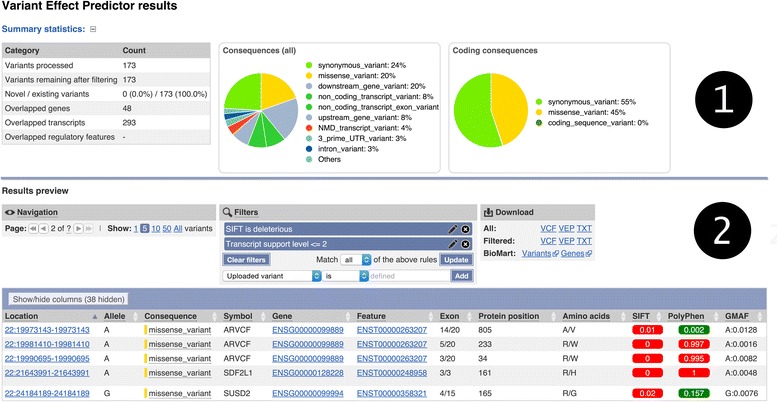
The Ensembl Variant Effect Predictor (VEP) is a powerful toolset for the analysis, annotation and prioritization of genomic variants, including in non-coding regions. The VEP accurately predicts the effects of sequence variants on transcripts, protein products, regulatory regions and binding motifs by leveraging the high quality, broad scope, and integrated nature of the Ensembl databases. In addition, it enables comparison with a large collection of existing publicly available variation data within Ensembl to provide insights into population and ancestral genetics, phenotypes and disease. The VEP is open source and free to use. It is available via a simple web interface ( http://www.ensembl.org/vep ), a powerful downloadable package, and both Ensembl’s Perl and REST application program interface (API) services.
Overview
The claims and statistics of this paper haven’t been checked yet.
Free: it reads the open-access text and checks the first 5 claims that cite a source we can check. Create a free account to check every claim.
Integrity signals
Registry
Cites
Statistics
Figures
Verification
Claims the paper makes
The claims and statistics of this paper haven’t been checked yet.
Free: it reads the open-access text and checks the first 5 claims that cite a source we can check. Create a free account to check every claim.
Claims other papers make about this one
Each is checked against this paper’s own text: does it say what the citing paper says it does?
The check wasn’t confident either way, so it gives no verdict — never disputed.
In the citing paper
“The ranking of variant types based on the lowest percentile of GPN scores is generally consistent with established notions of deleteriousness (41)*.”
From DNA language models are powerful predictors of genome-wide variant effects (2023) · cites this paper as [41]
Experimental — accuracy not yet measured
Self-check
Percentages, sums and reported differences re-computed from the paper’s own numbers.
The self-check needs the paper’s full text.
Citations
Cites
An integrated encyclopedia of DNA elements in the human genome
The ENCODE Project Consortium (2012) · Nature · doi:10.1038/nature11247 · Cited by 18,072
Self-citationANNOVAR: functional annotation of genetic variants from high-throughput sequencing data
Wang, K., Li, M., & Hakonarson, H. (2010) · Nucleic Acids Research · doi:10.1093/nar/gkq603 · Cited by 14,621
A method and server for predicting damaging missense mutations.
Adzhubei, I. A., Schmidt, S., Peshkin, L., Ramensky, V. E., Gerasimova, A., Bork, P., Kondrashov, A. S., & Sunyaev, S. R. (2010) · Nature Methods · doi:10.1038/nmeth0410-248 · Cited by 13,194 · cited 2×
“PolyPhen-2 [41] results are available for human proteins.”
BackgroundCingolani, P., Platts, A., Wang, L. L., Coon, M., Nguyen, T., Wang, L., Land, S. J., Lu, X., & Ruden, D. M. (2012) · Fly · doi:10.4161/fly.19695 · Cited by 11,816 · cited 2×
“The VEP’s VCF output follows a standard agreed with other annotation tool providers (Cingolani et al. 2012) to promote transparent cross-comparison and benchmarking of results.”
An integrated map of genetic variation from 1,092 human genomes
The 1000 Genomes Project Consortium (2012) · Nature · doi:10.1038/nature11632 · Cited by 7,711 · cited 1×
“It has been used for analysis in numerous large-scale projects, including the 1000 Genomes [31] and Exome Aggregation Consortium (ExAC) [32].”
MethodSelf-citationdbSNP: the NCBI database of genetic variation
Sherry, S. T. (2001) · Nucleic Acids Research · doi:10.1093/nar/29.1.308 · Cited by 7,502 · cited 2×
“Ensembl integrates and quality checks variants from dbSNP [56] and other sources for 20 species.”
BackgroundKumar, P., Henikoff, S., & Ng, P. C. (2009) · Nature Protocols · doi:10.1038/nprot.2009.86 · Cited by 6,521 · cited 1×
“Sorting Intolerant From Tolerant (SIFT, Kumar et al. 2009) results are available for the ten species that are most used in Ensembl.”
BackgroundA general framework for estimating the relative pathogenicity of human genetic variants
Kircher, M., Witten, D. M., Jain, P., O'Roak, B. J., Cooper, G. M., & Shendure, J. (2014) · Nature Genetics · doi:10.1038/ng.2892 · Cited by 6,183
A New Initiative on Precision Medicine
Collins, F. S., & Varmus, H. (2015) · New England Journal of Medicine · doi:10.1056/nejmp1500523 · Cited by 5,202
The Genotype-Tissue Expression (GTEx) pilot analysis: Multitissue gene regulation in humans
The GTEx Consortium, Ardlie, K. G., Deluca, D. S., Segrè, A. V., Sullivan, T. J., Young, T. R., Gelfand, E. T., Trowbridge, C. A., Maller, J. B., Tukiainen, T., et al. (2015) · Science · doi:10.1126/science.1262110 · Cited by 5,062 · cited 1×
“Data from large scale efforts such as the Genotype-Tissue Expression project, which aims to systematically characterize the effects of regulatory variants in different tissues [84], will be integrated into the VEP reference data in order to have the most current data available to the VEP for analysis.”
Method
Cited by
Items 1,001–1,100 of 1,113
Din, S., Wong, K., Mueller, M. F., Oniscu, A., Hewinson, J., Black, C. J., Miller, M. L., Jiménez-Sánchez, A., Rabbie, R., Rashid, M., et al. (2018) · Clinical Cancer Research · doi:10.1158/1078-0432.ccr-17-3713 · Cited by 58
“The Ensembl Variant Effect Predictor (7) software was used to predict the effect of each variant on protein sequences, and the clinical significance of the changes was predicted by comparison to variants in the ClinVar database (release date 2016-05-31).”
Uddin, M. M., Hozé, C., Michot, P., Barbat, A., Lefebvre, R., Boussaha, M., Sahana, G., Fritz, S., Boichard, D., & Capitan, A. (2019) · Journal of Dairy Science · doi:10.3168/jds.2018-16100 · Cited by 58
“We annotated these 8 WGS variants using the VEP software tool (version 87) from Ensembl (McLaren et al., 2016), including 1 intergenic variant, 2 intronic variants in PLB1, 3 intronic variants in BRE, and 1 intronic and 1 missense variants in the CAD gene (Table 3).”
BackgroundMethodInfluentialSuhre, K., Venkataraman, G. R., Guturu, H., Halama, A., Stephan, N., Thareja, G., Sarwath, H., Motamedchaboki, K., Donovan, M. K. R., Siddiqui, A., et al. (2024) · Nature Communications · doi:10.1038/s41467-024-45233-y · Cited by 57
“%) protein-altering variants were identi fi ed using the Ensembl Variant Effect Predictor (VEP) 27 and injected into the corresponding reference protein sequences.”
MethodProteogenomic links to human metabolic diseases
Koprulu, M., Carrasco-Zanini, J., Wheeler, E., Lockhart, S., Kerrison, N. D., Wareham, N. J., Pietzner, M., & Langenberg, C. (2023) · Nature Metabolism · doi:10.1038/s42255-023-00753-7 · Cited by 57
Mapping the serum proteome to neurological diseases using whole genome sequencing
Png, G., Barysenka, A., Repetto, L., Navarro, P., Shen, X., Pietzner, M., Wheeler, E., Wareham, N. J., Langenberg, C., Tsafantakis, E., et al. (2021) · Nature Communications · doi:10.1038/s41467-021-27387-1 · Cited by 55
Spatiotemporal dynamics of clonal selection and diversification in normal endometrial epithelium
Yamaguchi, M., Nakaoka, H., Suda, K., Yoshihara, K., Ishiguro, T., Yachida, N., Saito, K., Ueda, H., Sugino, K., Mori, Y., et al. (2022) · Nature Communications · doi:10.1038/s41467-022-28568-2 · Cited by 54
Large multi-ethnic genetic analyses of amyloid imaging identify new genes for Alzheimer disease
Ali, M., Archer, D. B., Gorijala, P., Western, D., Timsina, J., Fernández, M. V., Wang, T.-C., Satizabal, C. L., Yang, Q., Beiser, A. S., et al. (2023) · Acta Neuropathologica Communications · doi:10.1186/s40478-023-01563-4 · Cited by 54
“[56] suggest this SNP to be a regulatory region variant for UXS1 protein coding gene, however, another nominally significant SNP, chr2q.”
BackgroundStein, D., Kars, M. E., Wu, Y., Bayrak, Ç. S., Stenson, P. D., Cooper, D. N., Schlessinger, A., & Itan, Y. (2023) · Genome Medicine · doi:10.1186/s13073-023-01261-9 · Cited by 53
“Using VEP [21] and other tools, variants were annotated with protein structural and functional features derived from AlphaFold2 [12] models or from sequence, with gene-and genomic-level features, variant-level features, and network-derived protein interaction features.”
MethodInfluentialProtVar: mapping and contextualizing human missense variation
Stephenson, J. D., Totoo, P., Burke, D. F., Jänes, J., Beltrao, P., & Martin, M. J. (2024) · Nucleic Acids Research · doi:10.1093/nar/gkae413 · Cited by 53
“For variant analyses at the genetic level, VEP ( 8 ) is a rich resource of in depth and highly trusted information.”
BackgroundStein, D., Sevim Bayrak, Ç., Wu, Y., Kars, M. E., Stenson, P. D., Cooper, D. N., Schlessinger, A., & Itan, Y. (2022) · doi:10.1101/2022.06.08.495288 · Cited by 53
AI-MARRVEL — A Knowledge-Driven AI System for Diagnosing Mendelian Disorders
Mao, D., Liu, C., Wang, L., AI-Ouran, R., Deisseroth, C., Pasupuleti, S., Kim, S. Y., Li, L., Rosenfeld, J. A., Meng, L., et al. (2024) · NEJM AI · doi:10.1056/aioa2300009 · Cited by 51
Young, W. J., Lahrouchi, N., Isaacs, A., Duong, T., Foco, L., Ahmed, F., Brody, J. A., Salman, R., Noordam, R., Benjamins, J.-W., et al. (2022) · Nature Communications · doi:10.1038/s41467-022-32821-z · Cited by 49
“Variants from all studies, however, were subsequently fi ltered to only include those predicted by VEP (Ensembl release 99) to have high or moderate impact (and thus be protein-altering).”
MethodInfluentialIntegrated analysis of the complete sequence of a macaque genome
Zhang, S., Xu, N., Fu, L., Yang, X., Ma, K., Li, Y., Yang, Z., Li, Z., Feng, Y., Jiang, X., et al. (2025) · Nature · doi:10.1038/s41586-025-08596-w · Cited by 48
Zhang, S., Xu, N., Fu, L., Yang, X., Li, Y., Yang, Z., Feng, Y., Ma, K., Jiang, X., Han, J., et al. (2024) · doi:10.1101/2024.04.07.588379 · Cited by 48
Homann, J., Osburg, T., Ohlei, O., Dobricic, V., Deecke, L., Bos, I., Vandenberghe, R., Gabel, S., Scheltens, P., Teunissen, C. E., et al. (2022) · Frontiers in Aging Neuroscience · doi:10.3389/fnagi.2022.840651 · Cited by 46
ADGC, Bonn, CHARGE, EADB, Bellenguez, C., EADI, FinnGen, GERAD, GR@ACE/DEGESCO, & PGC-ALZ (2025) · medRxiv · doi:10.1101/2025.10.20.25338060 · Cited by 46
High-resolution functional mapping of RAD51C by saturation genome editing
Olvera-León, R., Zhang, F., Offord, V., Zhao, Y., Tan, H. K., Gupta, P., Pal, T., Robles-Espinoza, C. D., Arriaga-González, F. G., Matsuyama, L. S. A. S., et al. (2024) · Cell · doi:10.1016/j.cell.2024.08.039 · Cited by 44
Chemparathy, A., Le Guen, Y., Chen, S., Lee, E.-G., Leong, L., Gorzynski, J. E., Jensen, T. D., Ferrasse, A., Xu, G., Xiang, H., et al. (2024) · Neuron · doi:10.1016/j.neuron.2024.01.008 · Cited by 43
Celse, T., Cazin, C., Mietton, F., Martinez, G., Martinez, D., Thierry-Mieg, N., Septier, A., Guillemain, C., Beurois, J., Clergeau, A., et al. (2021) · Human Genetics · doi:10.1007/s00439-020-02229-0 · Cited by 42
Jivanji, S., Worth, G., Lopdell, T. J., Yeates, A., Couldrey, C., Reynolds, E., Tiplady, K., McNaughton, L., Johnson, T. J. J., Davis, S. R., et al. (2019) · Genetics Selection Evolution · doi:10.1186/s12711-019-0506-2 · Cited by 41
“72, and when assessing the predicted functional impact of the missense variant using the SIFT algorithm [33] that is integrated as part of the Ensembl Variant Effect Predictor [32], this SNP is predicted to be ‘deleterious’ (score 0.”
MethodInfluentialMerkhofer, R. M., O’Neill, M. B., Xiong, D., Hernandez-Santos, N., Dobson, H., Fites, J. S., Shockey, A. C., Wuethrich, M., Pepperell, C. S., & Klein, B. S. (2019) · mBio · doi:10.1128/mbio.01224-19 · Cited by 39
“SNPs within consensus ROH were annotated using the Ensembl Variant Effector Predictor (31) and cross-referenced with the 1000 Genomes and Genotype-Tissue Expression (GTEx; May/June 2019 Volume 10 Issue 3 e01224-19 mbio.asm.org 9 https://gtexportal.org/home/) projects to identify variants with predicted or demonstrated…”
MethodInfluentialSaid, M. A., Yeung, M. W., van de Vegte, Y. J., Benjamins, J. W., Dullaart, R. P. F., Ruotsalainen, S., Ripatti, S., Natarajan, P., Juarez-Orozco, L. E., Verweij, N., et al. (2021) · Arteriosclerosis, Thrombosis, and Vascular Biology · doi:10.1161/atvbaha.120.315300 · Cited by 39
Jammihal, T., Saliby, R. M., Labaki, C., Soulati, H., Gallegos, J., Peris, A., McCurry, D., Yu, C., Shah, V., Poduval, D., et al. (2025) · Nature Cancer · doi:10.1038/s43018-024-00896-w · Cited by 38
“The pipeline uses the following tools: MuTect 46 , ContEst 47 , Strelka 48 , Orientation Bias Filter 49 , DeTiN 50 , AllelicCapSeg 51 , MAFPoN-Filter 52 , RealignmentFilter, ABSOLUTE 53,54 , GATK 44 , PicardTools, Variant Effect Predictor 55 and Oncotator 56 .”
Slavotinek, A., Misceo, D., Htun, S., Mathisen, L., Frengen, E., Foreman, M., Hurtig, J. E., Enyenihi, L., Sterrett, M. C., Leung, S. W., et al. (2020) · Human Molecular Genetics · doi:10.1093/hmg/ddaa108 · Cited by 38
VIPdb, a genetic variant impact predictor database
Hu, Z., Yu, C., Furutsuki, M., Andreoletti, G., Ly, M., Hoskins, R., Adhikari, A. N., & Brenner, S. E. (2019) · Human Mutation · doi:10.1002/humu.23858 · Cited by 37
50,000 years of evolutionary history of India: Impact on health and disease variation
Kerdoncuff, E., Skov, L., Patterson, N., Banerjee, J., Khobragade, P., Chakrabarti, S. S., Chakrawarty, A., Chatterjee, P., Dhar, M., Gupta, M., et al. (2025) · Cell · doi:10.1016/j.cell.2025.04.027 · Cited by 36
Bustoros, M., Anand, S., Sklavenitis-Pistofidis, R., Redd, R., Boyle, E. M., Zhitomirsky, B., Dunford, A. J., Tai, Y.-T., Chavda, S. J., Boehner, C., et al. (2022) · Nature Communications · doi:10.1038/s41467-022-30694-w · Cited by 35
A novel age-informed approach for genetic association analysis in Alzheimer’s disease
Initiative, F. T. A. D. N., Le Guen, Y., Belloy, M. E., Napolioni, V., Eger, S. J., Kennedy, G., Tao, R., He, Z., & Greicius, M. D. (2021) · Alzheimer's Research & Therapy · doi:10.1186/s13195-021-00808-5 · Cited by 35
MutationExplorer : a webserver for mutation of proteins and 3D visualization of energetic impacts
Philipp, M., Moth, C. W., Ristic, N., Tiemann, J. K. S., Seufert, F., Panfilova, A., Meiler, J., Hildebrand, P. W., Stein, A., Wiegreffe, D., et al. (2024) · Nucleic Acids Research · doi:10.1093/nar/gkae301 · Cited by 35
“We employ the Ensembl Variant Effect Predictor (VEP) ( 22 ) to analyze the VCF file and return impacted Ensembl transcript IDs and amino acid variants.”
MethodMutationExplorer- a webserver for mutation of proteins and 3D visualization of energetic impacts
(2023) · doi:10.1101/2023.03.23.533926 · Cited by 35
The Population-Specific Impact of Neandertal Introgression on Human Disease
Dannemann, M. (2021) · Genome Biology and Evolution · doi:10.1093/gbe/evaa250 · Cited by 33
Rajendran, B. K., & Deng, C.-X. (2017) · Oncotarget · doi:10.18632/oncotarget.20404 · Cited by 32
A 3D structural SARS-CoV-2–human interactome to explore genetic and drug perturbations
Wierbowski, S. D., Liang, S., Liu, Y., Chen, Y., Gupta, S., Andre, N. M., Lipkin, S. M., Whittaker, G. R., & Yu, H. (2021) · Nature Methods · doi:10.1038/s41592-021-01318-w · Cited by 32
“We used the Ensembl Variant Effect Predictor 113 to map gnomAD DNA-level single-nucleotide polymorphisms (SNPs) to equivalent protein-level UniProt annotations.”
MethodJoint genotypic and phenotypic outcome modeling improves base editing variant effect quantification
Ryu, J., Barkal, S., Yu, T., Jankowiak, M., Zhou, Y., Francoeur, M., Phan, Q. V., Li, Z., Tognon, M., Brown, L., et al. (2023) · doi:10.1101/2023.09.08.23295253 · Cited by 32
Baker, E., Sims, R., Leonenko, G., Frizzati, A., Harwood, J., Grozeva, D., GERAD/PERADES, consortia, I., Morgan, K., Passmore, P., et al. (2018) · doi:10.1101/374876 · Cited by 31
COVID-19 research risks ignoring important host genes due to pre-established research patterns
Stoeger, T., & Nunes Amaral, L. A. (2020) · eLife · doi:10.7554/elife.61981 · Cited by 30
Somatic mutations alter the differentiation outcomes of iPSC-derived neurons
Puigdevall, P., Jerber, J., Danecek, P., Castellano, S., & Kilpinen, H. (2023) · Cell Genomics · doi:10.1016/j.xgen.2023.100280 · Cited by 29
GPN-MSA: an alignment-based DNA language model for genome-wide variant effect prediction
Benegas, G., Albors, C., Aw, A. J., Ye, C., & Song, Y. S. (2023) · doi:10.1101/2023.10.10.561776 · Cited by 118
“Variant consequences were obtained by running Ensemble VEP Release 109 [44] with arguments --most severe --distance 1000 .”
(2024) · doi:10.1038/s41592-024-02409-0 · Cited by 29
Siles, L., Ruiz-Nogales, S., Navinés-Ferrer, A., Méndez-Vendrell, P., & Pomares, E. (2023) · Molecular Therapy - Nucleic Acids · doi:10.1016/j.omtn.2023.02.032 · Cited by 29
de Boer, E., Ockeloen, C. W., Kampen, R. A., Hampstead, J. E., Dingemans, A. J. M., Rots, D., Lütje, L., Ashraf, T., Baker, R., Barat-Houari, M., et al. (2022) · Genetics in Medicine · doi:10.1016/j.gim.2022.06.007 · Cited by 28
(2021) · doi:10.1101/2021.12.20.21267971 · Cited by 28
Arastehfar, A., Daneshnia, F., Hovhannisyan, H., Fuentes, D., Cabrera, N., Quinteros, C., Ilkit, M., Ünal, N., Hilmioğlu-Polat, S., Jabeen, K., et al. (2023) · mBio · doi:10.1128/mbio.01180-23 · Cited by 27
Huang, N., Zhao, L., Wang, J., Jiang, Q., Ju, Z., Wang, X., Yang, C., Gao, Y., Wei, X., Zhang, Y., et al. (2023) · Journal of Animal Science · doi:10.1093/jas/skad006 · Cited by 26
Aherrahrou, R., Reinberger, T., Hashmi, S., & Erdmann, J. (2024) · Cardiovascular Research · doi:10.1093/cvr/cvae161 · Cited by 25
Identifying therapeutic drug targets using bidirectional effect genes
Estrada, K., Froelich, S., Wuster, A., Bauer, C. R., Sterling, T., Clark, W. T., Ru, Y., Trinidad, M., Nguyen, H. P., Luu, A. R., et al. (2021) · Nature Communications · doi:10.1038/s41467-021-21843-8 · Cited by 25
Human-specific gene expansions contribute to brain evolution
(2025) · doi:10.1016/j.cell.2025.06.037 · Cited by 25
Human-specific gene expansions contribute to brain evolution
Soto, D. C., Uribe-Salazar, J. M., Kaya, G., Valdarrago, R., Sekar, A., Haghani, N. K., Hino, K., La, G., Mariano, N. A. F., Ingamells, C., et al. (2024) · doi:10.1101/2024.09.26.615256 · Cited by 25
Dannemann, M., Milaneschi, Y., Yermakovich, D., Stiglbauer, V., Kariis, H. M., Krebs, K., Friese, M. A., Otte, C., Estonian Biobank Research Team, Esko, T., et al. (2022) · Translational Psychiatry · doi:10.1038/s41398-022-02196-2 · Cited by 23
“Similarly, we tested whether any candidate aSNP or aSNPs associated with the candidate aSNPs’ haplotype were predicted to modify the amino acid sequence using the ENSEMBLs’ Variant Effect Predictor [36] by extracting all of the aSNPs that were annotated as ‘missense variant’.”
MethodGorman, B. R., Francis, M., Nealon, C. L., Halladay, C. W., Duro, N., Markianos, K., Genovese, G., Hysi, P. G., Choquet, H., Afshari, N. A., et al. (2024) · Communications Biology · doi:10.1038/s42003-024-06046-3 · Cited by 23
Heritability of interpack aggression in a wild pedigreed population of North American grey wolves
vonHoldt, B. M., DeCandia, A. L., Heppenheimer, E., Janowitz‐Koch, I., Shi, R., Zhou, H., German, C. A., Brzeski, K. E., Cassidy, K. A., Stahler, D. R., et al. (2020) · Molecular Ecology · doi:10.1111/mec.15349 · Cited by 22
“All sites were catalogued with Ensembl’s Variant Effect Predictor for their predicted impact (McLaren et al., 2016).”
MethodPopulation-scale immune multiome atlas reveals regulatory disease mechanisms
Kanai, M., Delorey, T. M., Honkanen, J., Rodosthenous, R. S., Juvila, J., Murphy, S., Teixeira-Soldano, I., Hwang, H. S., Karjalainen, J., Halonen, J., et al. (2026) · Nature · doi:10.1038/s41586-026-11078-2 · Cited by 22
“Variant-based categories (pLoF, missense, synonymous, intron and 5′/3′-UTR variants) were defined on the basis of the most severe consequence for each variant on a canonical transcript, as predicted by Ensembl Variant Effect Predictor (VEP) (v.105) 120 (using GRCh38 and GENCODE (v.39) 121 ).”
González-del Pozo, M., Fernández-Suárez, E., Bravo-Gil, N., Méndez-Vidal, C., Martín-Sánchez, M., Rodríguez-de la Rúa, E., Ramos-Jiménez, M., Morillo-Sánchez, M. J., Borrego, S., & Antiñolo, G. (2022) · npj Genomic Medicine · doi:10.1038/s41525-022-00286-0 · Cited by 21
Winter, D. J., Weir, B. S., Glare, T., Rhodes, J., Perrott, J., Fisher, M. C., Stajich, J. E., Digby, A., Dearden, P. K., & Cox, M. P. (2022) · iScience · doi:10.1016/j.isci.2022.105470 · Cited by 21
“Ensembl Fungi variant effect predictor McLaren et al.(36) https://doi.”
BackgroundMethodInfluentialBadonyi, M., & Marsh, J. A. (2025) · Nature Communications · doi:10.1038/s41467-025-63234-3 · Cited by 19
“These were subsequently mapped to human reference sequences in UniProt 76 release 2024_04 with Ensembl VEP 112 111 .”
Mitchell, J., Camacho, N., Shea, P., Stopsack, K. H., Joseph, V., Burren, O. S., Dhindsa, R. S., Nag, A., Berchuck, J. E., O’Neill, A., et al. (2025) · Nature Communications · doi:10.1038/s41467-025-56944-1 · Cited by 19
“Variants were annotated with VEP v105 with the gnomAD plugin included 50 .”
Badonyi, M., & Marsh, J. A. (2025) · doi:10.1101/2025.03.13.642984 · Cited by 19
Requena, D., Medico, J. A., Soto-Ugaldi, L. F., Shirani, M., Saltsman, J. A., Torbenson, M. S., Coffino, P., & Simon, S. M. (2024) · Nature Communications · doi:10.1038/s41467-024-55238-2 · Cited by 19
Dual PD-L1 and TGF-b blockade in patients with recurrent respiratory papillomatosis
Robbins, Y., Friedman, J., Clavijo, P. E., Sievers, C., Bai, K., Donahue, R. N., Schlom, J., Sinkoe, A., Abdul Sater, H., Gulley, J. L., et al. (2021) · Journal for ImmunoTherapy of Cancer · doi:10.1136/jitc-2021-003113 · Cited by 17
Su, C.-Y., van der Graaf, A., Zhang, W., Jang, D.-K., Selber-Hnatiw, S., Yang, T.-Y., Butler-Laporte, G., Liang, K. Y. H., Matsuda, F., Costanzo, M. C., et al. (2024) · doi:10.1101/2024.10.17.24315553 · Cited by 17
iPSC culture expansion selects against putatively actionable mutations in the mitochondrial genome
Kosanke, M., Davenport, C., Szepes, M., Wiehlmann, L., Kohrn, T., Dorda, M., Gruber, J., Menge, K., Sievert, M., Melchert, A., et al. (2021) · Stem Cell Reports · doi:10.1016/j.stemcr.2021.08.016 · Cited by 17
Cazin, C., Boumerdassi, Y., Martinez, G., Fourati Ben Mustapha, S., Whitfield, M., Coutton, C., Thierry-Mieg, N., Di Pizio, P., Rives, N., Arnoult, C., et al. (2021) · International Journal of Molecular Sciences · doi:10.3390/ijms22042187 · Cited by 16
“, stop-gain or frameshift variants) [37]; gene expression data from the Genotype-Tissue Expression project (GTEx v7) are added; variants with a minor allele frequency greater than 1% in gnomAD v2.”
MethodSystematic elucidation of genetic mechanisms underlying cholesterol uptake
Hamilton, M. C., Fife, J. D., Akinci, E., Yu, T., Khowpinitchai, B., Cha, M., Barkal, S., Thi, T. T., Yeo, G. H. T., Ramos Barroso, J. P., et al. (2023) · Cell Genomics · doi:10.1016/j.xgen.2023.100304 · Cited by 16
Pozarickij, A., Said, S., Lin, K., Morris, S., Edris, A., Iona, A., Kartsonaki, C., Wright, N., Yao, P., Fry, H., et al. (2023) · doi:10.1101/2023.11.13.23298365 · Cited by 16
Hay, R., Cullen, B., Graham, N., Lyall, D. M., Aman, A., Pell, J. P., Ward, J., Smith, D. J., & Strawbridge, R. J. (2022) · European Journal of Human Genetics · doi:10.1038/s41431-022-01107-9 · Cited by 16
“Ensembl VEP (https://www.ensembl.org/info/docs/tools/vep/index.html, 38 ) was used to explore the predicted functional effects of a SNP, with SIFT and PolyPhen being used to assess tolerance.”
Ksiezopolska, E., Schikora-Tamarit, M. À., Carlos Nunez-Rodriguez, J., & Gabaldón, T. (2024) · Frontiers in Cellular and Infection Microbiology · doi:10.3389/fcimb.2024.1416509 · Cited by 15
“To annotate these variants, we used the “ annotate_small_vars ” module of perSVade, which uses VEP (McLaren et al., 2016) to annotate the functional effect of each variant.”
mGWAS-Explorer: Linking SNPs, Genes, Metabolites, and Diseases for Functional Insights
Chang, L., Zhou, G., Ou, H., & Xia, J. (2022) · Metabolites · doi:10.3390/metabo12060526 · Cited by 15
“With VEP, users can select either a specific distance or the nearest number of genes for SNP annotation.”
MethodInfluentialProteome-scale prediction of molecular mechanisms underlying dominant genetic diseases
(2024) · doi:10.1371/journal.pone.0307312 · Cited by 15
GraphMHC: Neoantigen prediction model applying the graph neural network to molecular structure
Jeong, H., Cho, Y.-R., Gim, J., Cha, S.-K., Kim, M., & Kang, D. R. (2024) · PLOS ONE · doi:10.1371/journal.pone.0291223 · Cited by 14
Cross-ancestry comparison of aptamer and antibody protein measures
Nicholas, J. C., Katz, D. H., Tahir, U. A., Debban, C. L., Aguet, F., Blackwell, T., Bowler, R. P., Broadaway, K. A., Chen, J., Clish, C. B., et al. (2026) · Nature Communications · doi:10.1038/s41467-025-67814-1 · Cited by 13
“Here, we used thereport-predictedconsequencesoutputbyVEP 71 ,annotatedrelative to Ensembl, in the main analyses.”
InfluentialBojsen-Møller, K. N., Svane, M. S., Martinussen, C., Dirksen, C., Jørgensen, N. B., Jensen, J.-E. B., Jensen, C. Z., Torekov, S. S., Kristiansen, V. B., Rehfeld, J. F., et al. (2023) · International Journal of Obesity · doi:10.1038/s41366-023-01372-8 · Cited by 13
“%) of high quality (R2<0.8) in the glucagon (GCG), PYY, GLP-1 Receptor (GLP1R) and Neuropeptide Y2 Receptor (NPY2R) gene loci were extracted (from transcription start site − 500kb to end site + 250kb) and annotated using VEP [24].”
MethodInfluentialEnzyme structure correlates with variant effect predictability
(2024) · doi:10.1016/j.csbj.2024.09.007 · Cited by 13
Denisovan admixture facilitated environmental adaptation in Papua New Guinean populations
(2024) · doi:10.1101/2024.01.14.575483 · Cited by 13
Denisovan admixture facilitated environmental adaptation in Papua New Guinean populations
Yermakovich, D., André, M., Brucato, N., Kariwiga, J., Leavesley, M., Pankratov, V., Mondal, M., Ricaut, F.-X., & Dannemann, M. (2024) · Proceedings of the National Academy of Sciences · doi:10.1073/pnas.2405889121 · Cited by 12
Zhuang, Y., Grainger, J. M., Vedell, P. T., Yu, J., Moyer, A. M., Gao, H., Fan, X.-Y., Qin, S., Liu, D., Kalari, K. R., et al. (2021) · npj Breast Cancer · doi:10.1038/s41523-021-00285-x · Cited by 11
Genomes of critically endangered saola are shaped by population structure and purging
Garcia-Erill, G., Liu, S., Le, M. D., Hurley, M. M., Nguyen, H. D., Nguyen, D. Q., Nguyen, D. H., Santander, C. G., Sánchez Barreiro, F., Gomes Martins, N. F., et al. (2025) · Cell · doi:10.1016/j.cell.2025.03.040 · Cited by 10
“2 software 119 to predict the functional impact of the saola’s called variants, using the gene annotation that we generated as previously described.”
Siles, L., Gaudó, P., & Pomares, E. (2023) · International Journal of Molecular Sciences · doi:10.3390/ijms24043655 · Cited by 9
“Missense mutations were analyzed with the ENSEMBL Variant Effect predictor (VEP) [69], which provides results from a range of algorithms to assess the potential pathogenicity”
MethodInfluentialQSOX2 Deficiency-induced short stature, gastrointestinal dysmotility and immune dysfunction
Maharaj, A. V., Ishida, M., Rybak, A., Elfeky, R., Andrews, A., Joshi, A., Elmslie, F., Joensuu, A., Kantojärvi, K., Jia, R. Y., et al. (2024) · Nature Communications · doi:10.1038/s41467-024-52587-w · Cited by 9
Macdonald-Dunlop, E., Klarić, L., Folkersen, L., Timmers, P. R. H. J., Gustafsson, S., Zhao, J. H., Eriksson, N., Richmond, A., Enroth, S., Mattsson-Carlgren, N., et al. (2021) · doi:10.1101/2021.08.03.21261494 · Cited by 9
QSOX2 Deficiency-induced short stature, gastrointestinal dysmotility and immune dysfunction
(2023) · doi:10.21203/rs.3.rs-3303791/v1 · Cited by 9
Thomassen, J. Q., Leonard, H., Ulms, B., Grenier-Boley, B., Heikkinen, S., Garcia-González, P., Castillo-Morales, A., Kikuchi, M., Gim, J., Cao, H., et al. (2026) · Nature Genetics · doi:10.1038/s41588-026-02713-9 · Cited by 9
“1.1) 44 .”
InfluentialSchiabor Barrett, K. M., Telis, N., McEwen, L. M., Burrows, E. K., Khuder, B., Judge, D. P., Pawloski, P. A., Grzymski, J. J., Washington, N. L., Bolze, A., et al. (2024) · Communications Medicine · doi:10.1038/s43856-024-00663-z · Cited by 8
Dilliott, A. A., Kwon, S., Rouleau, G. A., Iqbal, S., & Farhan, S. M. K. (2023) · Brain · doi:10.1093/brain/awad224 · Cited by 8
“Variants from both datasets were annotated using Variant Effect Predictor (VEP; Ensemble v.105.0) 33 with the following features: gene symbol; Human Genome Variation Society (HGVS) coding and protein sequence alteration; variant consequence; Genome Aggregation Database (gnomAD) v2.”
MethodInfluentialDilliott, A. A., Rouleau, G. A., Iqbal, S., & Farhan, S. M. K. (2022) · doi:10.1101/2022.12.21.22283728 · Cited by 8
EADB, Bellenguez, C., Castillo Morales, A., Amin, N., van der Lee, S. J., Muntaner, M., Parveen, K., Küçükali, F., Grenier-Boley, B., Heikkinen, S., et al. (2026) · Nature Genetics · doi:10.1038/s41588-026-02583-1 · Cited by 36
Hybrid adaptation is hampered by Haldane’s sieve
Bautista, C., Gagnon-Arsenault, I., Utrobina, M., Fijarczyk, A., Bendixsen, D. P., Stelkens, R., & Landry, C. R. (2024) · Nature Communications · doi:10.1038/s41467-024-54105-4 · Cited by 7
Gilly, A., Klaric, L., Park, Y.-C., Png, G., Barysenka, A., Marsh, J. A., Tsafantakis, E., Karaleftheri, M., Dedoussis, G., Wilson, J. F., et al. (2022) · Molecular Metabolism · doi:10.1016/j.molmet.2022.101509 · Cited by 7
“The first set comprises all unweighted variants with an Ensembl VEP [33] predicted consequence more severe than missense.”
BackgroundJongbloed, E. M., Jansen, M. P. H. M., de Weerd, V., Helmijr, J. A., Beaufort, C. M., Reinders, M. J. T., van Marion, R., van IJcken, W. F. J., Sonke, G. S., Konings, I. R., et al. (2023) · Scientific Reports · doi:10.1038/s41598-023-37409-1 · Cited by 6
Proteome-scale prediction of molecular mechanisms underlying dominant genetic diseases
Badonyi, M., & Marsh, J. A. (2023) · doi:10.1101/2023.09.08.556798 · Cited by 6
The utility of ultra-deep RNA sequencing in Mendelian disorder diagnostics
Zhao, S., Sinson, J. C., Li, S., Rosenfeld, J. A., Zapata, G., Macakova, K., Pena, M., Maywald, B., Worley, K. C., Burrage, L. C., et al. (2025) · The American Journal of Human Genetics · doi:10.1016/j.ajhg.2025.09.013 · Cited by 5
Transformers meets neoantigen detection: a systematic literature review
Machaca, V., Goyzueta, V., Cruz, M. G., Sejje, E., Pilco, L. M., López, J., & Túpac, Y. (2024) · Journal of Integrative Bioinformatics · doi:10.1515/jib-2023-0043 · Cited by 5
“Various tools, such as Isovar [59], Annovar [60], Ensembl’s Variant Effect Predictor (VEP) tool [61], or SnpEff [62], are commonly employed for this task.”
MethodMosaic chromosomal alterations in blood are associated with an increased risk of Alzheimer’s disease
Naito, T., Hirata, K., Jang, B., Lakhani, C. M., Buonfiglioli, A., Lee, W.-P., Valladares, O., Wang, L.-S., Okada, Y., Won, H.-H., et al. (2025) · doi:10.1101/2025.05.29.25328544 · Cited by 4
“The output from the Mutect2 pipeline was then annotated using Ensembl Variant Effect Predictor (v112) 24 for detecting known CHIP variants in 73 genes from a curated list used in a previous study.”
Structural changes from wild-type define tumor-rejecting neoantigens
Adams, A. C., Macy, A. M., Borden, E. S., Herrmann, L. M., Brambley, C. A., Sonar, S. A., Ma, T., Li, X., Hughes, A., Roe, D. J., et al. (2025) · Journal for ImmunoTherapy of Cancer · doi:10.1136/jitc-2025-013148 · Cited by 4
Adolph, M. B., Garje, A. S., Balakrishnan, S., Morati, F., Modesti, M., Chazin, W. J., & Cortez, D. (2023) · Journal of Molecular Biology · doi:10.1016/j.jmb.2023.168236 · Cited by 4
(2025) · doi:10.1038/s41467-024-54176-3 · Cited by 4
“A single canonical effect per mutation was reported using Variant Effect Predictor (VEP) version 107 102 , following the approach used by Chang et al. 1 .”
Pellegrini, S., Estrella, O. D., Muiños, F., Lopez-Bigas, N., & Gonzalez-Perez, A. (2025) · doi:10.1101/2025.01.11.632354 · Cited by 4
Klaproth-Andrade, D., Scheller, I. F., Tsitsiridis, G., Loipfinger, S., Mertes, C., Smirnov, D., Prokisch, H., Yépez, V. A., & Gagneur, J. (2025) · doi:10.1101/2025.02.01.636024 · Cited by 4
Distinct sets of molecular characteristics define tumor-rejecting neoantigens
Adams, A. C., Macy, A. M., Borden, E. S., Herrmann, L. M., Brambley, C. A., Ma, T., Li, X., Hughes, A., Roe, D. J., Mangold, A. R., et al. (2024) · doi:10.1101/2024.02.13.579546 · Cited by 4
Perez-Alcantara, M., Washer, S. J., Chen, Y., Steer, J., Gonzalez-Padilla, D., McWilliam, J., Willé, D., Panousis, N., Kolberg, P., Navarro-Guerrero, E., et al. (2026) · Nature Genetics · doi:10.1038/s41588-026-02843-0 · Cited by 4
Yuan, H., Liu, Z., Chen, M., Xu, Q., Jiang, Y., Zhang, T., Suo, C., & Chen, X. (2024) · BMC Medicine · doi:10.1186/s12916-024-03466-0 · Cited by 3
“Variants were then annotated using VEP v.102 [13] and LOFTEE v.1.0.4 plugin [14].”
MethodInfluential
Metadata
- Authors
- McLaren, W., Gil, L., Hunt, S. E., Riat, H. S., Ritchie, G. R. S., Thormann, A., Flicek, P., & Cunningham, F.
- Affiliations
- European Bioinformatics Institute (GB)
- Corresponding author
- McLaren, William
- Cunningham, Fiona
- ORCID
- Venue
- Genome Biology
- Published
- 2016-06-06
- Volume
- 17
- Issue
- 1
- Pages
- 122-122
- ISSN
- 1465-6906 (ISSN-L)
- 1474-760X
- PMC
- PMC4893825
- OpenAlex
- W2417483443
- Semantic Scholar
- 54ec58ccaf8b33bc7593d3413e1dbd58d6c8ca18
- Cited by
- 8,099
- References
- 77
- Citations by year
- 2026: 858 · 2025: 1154 · 2024: 1277 · 2023: 1092 · 2022: 961 · 2021: 939 · 2020: 722 · 2019: 510 · 2018: 381 · 2017: 174 · 2016: 22
- FWCI
- 294.55
- Type
- journal article
- Language
- en
- Open access
- gold
- doi.org
- Licence
- cc-by
- Locations
- Genome biology (publishedVersion, cc-by)
- bioRxiv (Cold Spring Harbor Laboratory) (acceptedVersion, cc-by)
- Europe PMC (PubMed Central) (publishedVersion, cc-by)
- PubMed Central (publishedVersion, cc-by)
- PubMed (publishedVersion)
- Funders
- Wellcome Trust (GB) (WT095908 and WT098051)
- European Molecular Biology Laboratory
- Seventh Framework Programme (BE) (200754 (GEN2PHEN), 222664 (Quantomics))
- European Union’s Horizon 2020 research and innovation programme (634143 (MedBioinformatics))
- Topics
- Life Sciences › Biochemistry, Genetics and Molecular Biology › Genetics › Genomics and Rare Diseases
- Life Sciences › Biochemistry, Genetics and Molecular Biology › Molecular Biology › Genomics and Phylogenetic Studies
- Life Sciences › Biochemistry, Genetics and Molecular Biology › Genetics › Genetic Associations and Epidemiology
- Keywords
- genomic variant annotation, variant prioritization, variant interpretation, genome annotation, open source software, reproducibility
- MeSH terms
- Humans, Software, Genetic Variation, Computational Biology, Internet, Genomics, Databases, Nucleic Acid, Molecular Sequence Annotation
About these checks
Registry, retraction, Cites and statistics results are computed, not judged, with one exception: a printed reference that no index lists is read once by a model before it counts as a citation error. Claims are extracted by a model and kept only when their quote appears verbatim in the text; each cited source is then checked, with a model’s help, for whether it says what the claim relies on. Those verdicts can be wrong — read the claim’s quote and the cited source before relying on one.
Statistics and arithmetic are recomputed, not judged.
Confidence bands are shown only for fields calibrated on our annotated test set. None is calibrated yet, so no band is shown.
What counts as a claim ›How we measure confidence ›How we check this ›
Are you an author, or do you see a problem with this page? Request a review
Data sources
Bibliographic data: Semantic Scholar, OpenAlex, Crossref.
Contains information from the Semantic Scholar Academic Graph Datasets, made available under the ODC Attribution License (ODC-BY 1.0).
Semantic Scholar’s data is described in: Kinney, R., et al. (2023). The Semantic Scholar Open Data Platform. arXiv:2301.10140.
