

The Ensembl Variant Effect Predictor
Open accessPublished version of a preprint
The DOI matches its Crossref record; 125 of the 125 references it cites were found in a registry or an index.
Abstract
The Ensembl Variant Effect Predictor (VEP) is a powerful toolset for the analysis, annotation and prioritization of genomic variants, including in non-coding regions. The VEP accurately predicts the effects of sequence variants on transcripts, protein products, regulatory regions and binding motifs by leveraging the high quality, broad scope, and integrated nature of the Ensembl databases. In addition, it enables comparison with a large collection of existing publicly available variation data within Ensembl to provide insights into population and ancestral genetics, phenotypes and disease. The VEP is open source and free to use. It is available via a simple web interface ( http://www.ensembl.org/vep ), a powerful downloadable package, and both Ensembl’s Perl and REST application program interface (API) services.
Overview
The claims and statistics of this paper haven’t been checked yet.
Free: it reads the open-access text and checks the first 5 claims that cite a source we can check. Create a free account to check every claim.
Integrity signals
Registry
Cites
Statistics
Figures
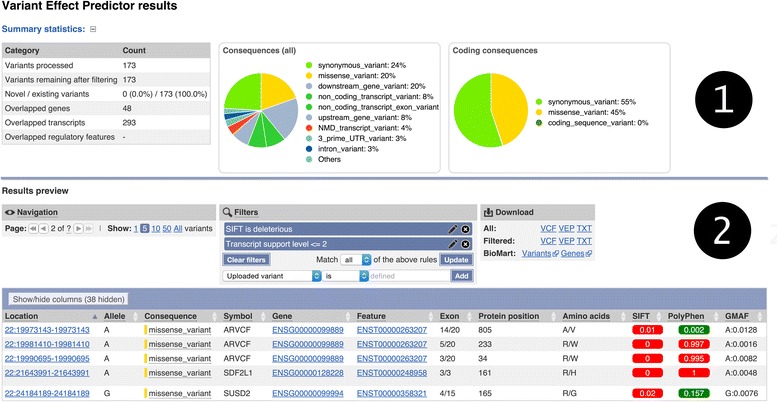
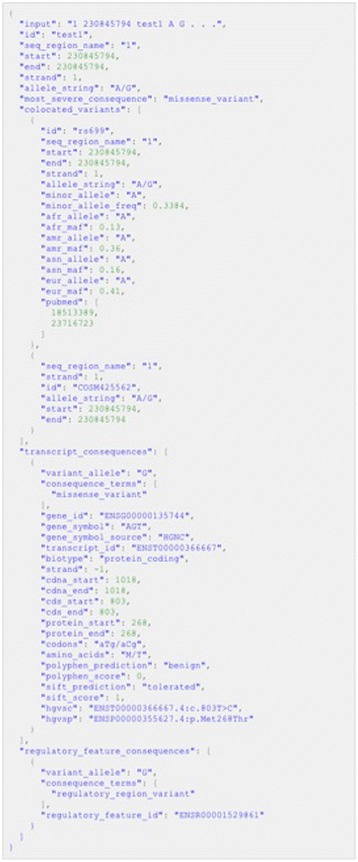
Verification
Claims the paper makes
The claims and statistics of this paper haven’t been checked yet.
Free: it reads the open-access text and checks the first 5 claims that cite a source we can check. Create a free account to check every claim.
Claims other papers make about this one
Each is checked against this paper’s own text: does it say what the citing paper says it does?
The check wasn’t confident either way, so it gives no verdict — never disputed.
In the citing paper
“The ranking of variant types based on the lowest percentile of GPN scores is generally consistent with established notions of deleteriousness (41)*.”
From DNA language models are powerful predictors of genome-wide variant effects (2023) · cites this paper as [41]
Experimental — accuracy not yet measured
Self-check
Percentages, sums and reported differences re-computed from the paper’s own numbers.
The self-check needs the paper’s full text.
Citations
Cites
An integrated encyclopedia of DNA elements in the human genome
The ENCODE Project Consortium (2012) · Nature · doi:10.1038/nature11247 · Cited by 18,072
Self-citationANNOVAR: functional annotation of genetic variants from high-throughput sequencing data
Wang, K., Li, M., & Hakonarson, H. (2010) · Nucleic Acids Research · doi:10.1093/nar/gkq603 · Cited by 14,621
A method and server for predicting damaging missense mutations.
Adzhubei, I. A., Schmidt, S., Peshkin, L., Ramensky, V. E., Gerasimova, A., Bork, P., Kondrashov, A. S., & Sunyaev, S. R. (2010) · Nature Methods · doi:10.1038/nmeth0410-248 · Cited by 13,194 · cited 2×
“PolyPhen-2 [41] results are available for human proteins.”
BackgroundCingolani, P., Platts, A., Wang, L. L., Coon, M., Nguyen, T., Wang, L., Land, S. J., Lu, X., & Ruden, D. M. (2012) · Fly · doi:10.4161/fly.19695 · Cited by 11,816 · cited 2×
“The VEP’s VCF output follows a standard agreed with other annotation tool providers (Cingolani et al. 2012) to promote transparent cross-comparison and benchmarking of results.”
An integrated map of genetic variation from 1,092 human genomes
The 1000 Genomes Project Consortium (2012) · Nature · doi:10.1038/nature11632 · Cited by 7,711 · cited 1×
“It has been used for analysis in numerous large-scale projects, including the 1000 Genomes [31] and Exome Aggregation Consortium (ExAC) [32].”
MethodSelf-citationdbSNP: the NCBI database of genetic variation
Sherry, S. T. (2001) · Nucleic Acids Research · doi:10.1093/nar/29.1.308 · Cited by 7,502 · cited 2×
“Ensembl integrates and quality checks variants from dbSNP [56] and other sources for 20 species.”
BackgroundKumar, P., Henikoff, S., & Ng, P. C. (2009) · Nature Protocols · doi:10.1038/nprot.2009.86 · Cited by 6,521 · cited 1×
“Sorting Intolerant From Tolerant (SIFT, Kumar et al. 2009) results are available for the ten species that are most used in Ensembl.”
BackgroundA general framework for estimating the relative pathogenicity of human genetic variants
Kircher, M., Witten, D. M., Jain, P., O'Roak, B. J., Cooper, G. M., & Shendure, J. (2014) · Nature Genetics · doi:10.1038/ng.2892 · Cited by 6,183
A New Initiative on Precision Medicine
Collins, F. S., & Varmus, H. (2015) · New England Journal of Medicine · doi:10.1056/nejmp1500523 · Cited by 5,202
The Genotype-Tissue Expression (GTEx) pilot analysis: Multitissue gene regulation in humans
The GTEx Consortium, Ardlie, K. G., Deluca, D. S., Segrè, A. V., Sullivan, T. J., Young, T. R., Gelfand, E. T., Trowbridge, C. A., Maller, J. B., Tukiainen, T., et al. (2015) · Science · doi:10.1126/science.1262110 · Cited by 5,062 · cited 1×
“Data from large scale efforts such as the Genotype-Tissue Expression project, which aims to systematically characterize the effects of regulatory variants in different tissues [84], will be integrated into the VEP reference data in order to have the most current data available to the VEP for analysis.”
Method
Cited by
Items 601–700 of 1,113
Selection-driven trait loss in independently evolved cavefish populations
Moran, R. L., Richards, E. J., Ornelas‐García, C. P., Gross, J. B., Donny, A. E., Wiese, J., Keene, A. C., Kowalko, J. E., Rohner, N., & McGaugh, S. E. (2023) · Nature Communications · doi:10.1038/s41467-023-37909-8 · Cited by 97
“…coding variants across all populations and predicted the consequence of each variant on protein function using computational analysis with the SIFT (sorting intolerant from tolerant) algorithm 107 and the Ensembl Variant Effect Predictor (VEP) software suite using Ensembl v100 annotations 108 .”
Yuan, K., Longchamps, R. J., Pardiñas, A. F., Yu, M., Chen, T.-T., Lin, S.-C., Chen, Y., Lam, M., Liu, R., Xia, Y., et al. (2023) · doi:10.1101/2023.01.07.23284293 · Cited by 94
The genomic basis of environmental adaptation in house mice
Phifer‐Rixey, M., Bi, K., Ferris, K. G., Sheehan, M. J., Lin, D., Mack, K. L., Keeble, S., Suzuki, T. A., Good, J. M., & Nachman, M. W. (2018) · PLoS Genetics · doi:10.1371/journal.pgen.1007672 · Cited by 97
“The potential functional consequence of each SNP was determined using Ensembl’s variant effect predictor [88].”
MethodEvolutionary dynamics of residual disease in human glioblastoma
Spiteri, I., Caravagna, G., Cresswell, G. D., Vatsiou, A. I., Nichol, D., Acar, A., Ermini, L., Chkhaidze, K., Werner, B., Mair, R. J., et al. (2018) · Annals of Oncology · doi:10.1093/annonc/mdy506 · Cited by 94
Chen, X., Chang, C., Spoerke, J. M., Yoh, K. E., Kapoor, V., Baudo, C. D., Aimi, J., Yu, M., Liang-Chu, M. M. Y., Suttmann, R., et al. (2019) · Clinical Cancer Research · doi:10.1158/1078-0432.ccr-18-1593 · Cited by 94
Wright, C. F., Prigmore, E., Rajan, D., Handsaker, J., McRae, J. F., Kaplanis, J., Fitzgerald, T. W., FitzPatrick, D. R., Firth, H. V., & Hurles, M. E. (2019) · Nature Communications · doi:10.1038/s41467-019-11059-2 · Cited by 94
von der Heyde, B., Emmanouilidou, A., Mazzaferro, E., Vicenzi, S., Höijer, I., Klingström, T., Jumaa, S., Dethlefsen, O., Snieder, H., de Geus, E., et al. (2020) · Scientific Reports · doi:10.1038/s41598-020-68567-1 · Cited by 91
Predicting expression-altering promoter mutations with deep learning
Jaganathan, K., Ferraro, N. M., Novakovsky, G., Wang, Y., James, T., Schwartzentruber, J., Fiziev, P. P., Kassam, I., Cao, F., Hawe, J. S., et al. (2025) · Science · doi:10.1126/science.ads7373 · Cited by 98
Rare Germline Variants in ATM Predispose to Prostate Cancer: A PRACTICAL Consortium Study
Karlsson, Q., Brook, M. N., Dadaev, T., Wakerell, S., Saunders, E. J., Muir, K. R., Neal, D. E., Giles, G. G., MacInnis, R. J., Thibodeau, S. N., et al. (2021) · European Urology Oncology · doi:10.1016/j.euo.2020.12.001 · Cited by 93
“Variant annotation was performed on multisample VCF files using variant effect predictors (VEP; ClinVar classification, ExAC MAF, CADD scores, Impact, and REVEL scores).”
BackgroundInfluentialCancer Neoantigens: Challenges and Future Directions for Prediction, Prioritization, and Validation
Borden, E. S., Buetow, K. H., Wilson, M. A., & Hastings, K. T. (2022) · Frontiers in Oncology · doi:10.3389/fonc.2022.836821 · Cited by 78
“Between the two most common variant annotation software, the Variant Effects Predictor (VEP) (69) and ANNOVAR (70), there was an 86.”
MethodInfluentialA cfDNA methylation-based tissue-of-origin classifier for cancers of unknown primary
Conway, A., Pearce, S. P., Clipson, A., Hill, S. M., Chemi, F., Slane-Tan, D., Ferdous, S., Hossain, A., Kamieniecka, K., White, D. J., et al. (2024) · Nature Communications · doi:10.1038/s41467-024-47195-7 · Cited by 97
Mansour, T. A., Lucot, K. L., Konopelski, S. E., Dickinson, P. J., Sturges, B. K., Vernau, K. L., Choi, S. S., Stern, J. A., Thomasy, S. M., Döring, S., et al. (2018) · PLoS Genetics · doi:10.1371/journal.pgen.1007850 · Cited by 93
Functional implications of Neandertal introgression in modern humans
Dannemann, M., Prüfer, K., & Kelso, J. (2017) · Genome biology · doi:10.1186/s13059-017-1181-7 · Cited by 92
“annotated introgressed alleles that modify amino acid sequences [15] and tested alleles within 50 kb of genes for their association with gene expression in multiple human tissues [16].”
BackgroundMethodCDKL5 variants: Improving our understanding of a rare neurologic disorder
Hector, R. D., Kalscheuer, V. M., Hennig, F., Leonard, H., Downs, J. A., Clarke, A. J., Benke, T. A., Armstrong, J., Pineda, M., Bailey, M. E. S., et al. (2017) · Neurology Genetics · doi:10.1212/nxg.0000000000000200 · Cited by 93
“splicing variants: MaxEntScan and dbscSNV), provided within the Ensembl Variant Effect Predictor (VEP).(15)”
MethodShamsani, J., Kazakoff, S. H., Armean, I. M., McLaren, W., Parsons, M. T., Thompson, B. A., O’Mara, T. A., Hunt, S. E., Waddell, N., & Spurdle, A. B. (2019) · Bioinformatics · doi:10.1093/bioinformatics/bty960 · Cited by 85
Self-citationPark, S., Lee, H., Lee, B., Lee, S., Sun, J., Park, W., Ahn, J. S., Ahn, M., & Park, K. (2019) · Journal of Thoracic Oncology · doi:10.1016/j.jtho.2019.05.014 · Cited by 93
Deng, L., Zhang, C., Yuan, K., Gao, Y., Pan, Y., Ge, X., He, Y., Yuan, Y., Lü, Y., Zhang, X., et al. (2019) · National Science Review · doi:10.1093/nsr/nwz108 · Cited by 89
“html) [76], which assigns each genetic variant to at least one of the 34 types based on the sequence ontology.”
BackgroundCampbell, K. M., Amouzgar, M., Pfeiffer, S. M., Howes, T. R., Medina, E., Travers, M., Steiner, G., Weber, J. S., Wolchok, J. D., Larkin, J., et al. (2023) · Cancer Cell · doi:10.1016/j.ccell.2023.03.010 · Cited by 94
Zhang, Y., Ho, K., Keaton, J. M., Hartzel, D. N., Day, F., Justice, A. E., Josyula, N. S., Pendergrass, S. A., Actkins, K., Davis, L. K., et al. (2020) · American Journal of Obstetrics and Gynecology · doi:10.1016/j.ajog.2020.04.004 · Cited by 91
Warrier, V., Stauffer, E.-M., Huang, Q. Q., Wigdor, E. M., Slob, E. A. W., Seidlitz, J., Ronan, L., Valk, S. L., Mallard, T. T., Grotzinger, A. D., et al. (2023) · Nature Genetics · doi:10.1038/s41588-023-01475-y · Cited by 91
“Additionally, we (5) used Ensembl Variant Effect Predictor 137 to identify genes containing damaging missense (deleterious in SIFT and/or damaging/probably damaging/possibly damaging in PolyPhen) and protein truncating variants from the list of the 95% credible sets.”
MethodOstrander, B., Butterfield, R. J., Pedersen, B. S., Farrell, A., Layer, R. M., Ward, A. N., Miller, C., DiSera, T., Filloux, F. M., Candee, M. S., et al. (2018) · npj Genomic Medicine · doi:10.1038/s41525-018-0061-8 · Cited by 91
Harrand, A. S., Jagadeesan, B., Baert, L., Wiedmann, M., & Orsi, R. H. (2020) · Applied and Environmental Microbiology · doi:10.1128/aem.02493-19 · Cited by 91
van den Berg, I., Xiang, R., Jenko, J., Pausch, H., Boussaha, M., Schrooten, C., Tribout, T., Gjuvsland, A. B., Boichard, D., Nordbø, Ø., et al. (2020) · Genetics Selection Evolution · doi:10.1186/s12711-020-00556-4 · Cited by 91
Germline Sequencing DNA Repair Genes in 5545 Men With Aggressive and Nonaggressive Prostate Cancer
Darst, B. F., Dadaev, T., Saunders, E. J., Sheng, X., Wan, P. C., Pooler, L., Xia, L. Y., Chanock, S. J., Berndt, S. I., Gapstur, S. M., et al. (2020) · JNCI Journal of the National Cancer Institute · doi:10.1093/jnci/djaa132 · Cited by 91
“01) and had either 1) a variant effect predictor impact score of “high” (30), representing variants with deleterious (protein truncating or splice altering) functional consequences, or 2) a pathogenic or likely pathogenic Clinvar classification (31) to identify known pathogenic variants, including nonsynonymous substi…”
BackgroundMa, X., Riaz, N., Samstein, R. M., Lee, M., Makarov, V., Valero, C., Chowell, D., Kuo, F., Hoen, D. R., Fitzgerald, C. W. R., et al. (2022) · Nature Genetics · doi:10.1038/s41588-022-01108-w · Cited by 91
Ghouse, J., Sveinbjörnsson, G., Vujković, M., Seidelin, A.-S., Gellert‐Kristensen, H., Ahlberg, G., Tragante, V., Rand, S. A., Brancale, J., Vilarinho, S., et al. (2024) · Nature Genetics · doi:10.1038/s41588-024-01720-y · Cited by 93
“37).”
Experimental evidence for rapid genomic adaptation to a new niche in an adaptive radiation
Marques, D. A., Jones, F. C., Palma, F. D., Kingsley, D. M., & Reimchen, T. E. (2018) · Nature Ecology & Evolution · doi:10.1038/s41559-018-0581-8 · Cited by 92
Varicose veins of lower extremities: Insights from the first large-scale genetic study
Shadrina, A. S., Sharapov, S. Z., Shashkova, T. I., & Tsepilov, Y. A. (2019) · PLOS Genetics · doi:10.1371/journal.pgen.1008110 · Cited by 82
Currás-Freixes, M., Piñeiro-Yáñez, E., Montero‐Conde, C., Apellániz-Ruiz, M., Calsina, B., Mančíková, V., Remacha, L., Richter, S., Ercolino, T., Rogowski-Lehmann, N., et al. (2017) · Journal of Molecular Diagnostics · doi:10.1016/j.jmoldx.2017.04.009 · Cited by 89
Genetic modification of primary human B cells to model high-grade lymphoma
Caeser, R., Re, M. D., Krupka, J. A., Gao, J., Lara‐Chica, M., Dias, J. M. L., Cooke, S. L., Fenner, R. E., Usheva, Z., Runge, H. F. P., et al. (2019) · Nature Communications · doi:10.1038/s41467-019-12494-x · Cited by 90
Dudin, O., Ondracka, A., Grau-Bové, X., Haraldsen, A. A., Toyoda, A., Suga, H., Bråte, J., & Ruiz-Trillo, I. (2019) · eLife · doi:10.7554/elife.49801 · Cited by 90
“3) (McLaren et al., 2016)̀ (SE were encoded as deletions, RI as insertions, and MX as insertion/deletion complex events).”
BackgroundA yeast living ancestor reveals the origin of genomic introgressions
D’Angiolo, M., De Chiara, M., Yue, J.-X., Irizar, A., Stenberg, S., Persson, K., Llored, A., Barré, B., Schacherer, J., Marangoni, R., et al. (2020) · Nature · doi:10.1038/s41586-020-2889-1 · Cited by 75
Variants at the ASIP locus contribute to coat color darkening in Nellore cattle
Trigo, B. B., Utsunomiya, A. T. H., Fortunato, A. A. A. D., Milanesi, M., Torrecilha, R. B. P., Lamb, H., Nguyen, L., Ross, E. M., Hayes, B., Padula, R. C. M., et al. (2021) · Genetics Selection Evolution · doi:10.1186/s12711-021-00633-2 · Cited by 61
“Variant effects were predicted and annotated with the Ensembl Variant Effect Predictor tool (VEP) [26].”
MethodCharacterization of the genetic architecture of infant and early childhood body mass index
Helgeland, Ø., Vaudel, M., Solé-Navais, P., Flatley, C. J., Juodakis, J., Bačelis, J., Koløen, I. L., Knudsen, G. P., Johansson, B. B., Magnus, P. M., et al. (2022) · Nature Metabolism · doi:10.1038/s42255-022-00549-1 · Cited by 91
Designing neoantigen cancer vaccines, trials, and outcomes
Biswas, N., Chakrabarti, S., Padul, V. G., Jones, L. D., & Ashili, S. (2023) · Frontiers in Immunology · doi:10.3389/fimmu.2023.1105420 · Cited by 90
“The commonly used annotation software are Ensembl-VEP (48), ANNOVAR (49), SnpEff (50), and the databases are dbSNP (47), 1000 Genomes (51), etc.”
MethodLandscape of mSWI/SNF chromatin remodeling complex perturbations in neurodevelopmental disorders
Valencia, A. M., Sankar, A., van der Sluijs, P. J., Satterstrom, F. K., Fu, J. M., Talkowski, M. E., Vergano, S. A. S., Santen, G. W. E., & Kadoch, C. (2023) · Nature Genetics · doi:10.1038/s41588-023-01451-6 · Cited by 92
The Critical Assessment of Genome Interpretation Consortium, Jain, S., Bakolitsa, C., Brenner, S. E., Radivojac, P., Moult, J., Repo, S., Hoskins, R. A., Andreoletti, G., Barsky, D., et al. (2024) · Genome Biology · doi:10.1186/s13059-023-03113-6 · Cited by 60
Self-citationFehlings, M., Jhunjhunwala, S., Kowanetz, M., O’Gorman, W. E., Hegde, P. S., Sumatoh, H., Lee, B. H., Nardin, A., Becht, É., Flynn, S., et al. (2019) · Journal for ImmunoTherapy of Cancer · doi:10.1186/s40425-019-0695-9 · Cited by 92
Faugeroux, V., Pailler, E., Oulhen, M., Déas, O., Brullé, L., Hervieu, C., Marty, V., Alexandrova, K., Andree, K., Stoecklein, N. H., et al. (2020) · Nature Communications · doi:10.1038/s41467-020-15426-2 · Cited by 89
Rapid Whole-Exome Sequencing as a Diagnostic Tool in a Neonatal/Pediatric Intensive Care Unit
Śmigiel, R. S., Biela, M., Szmyd, K., Błoch, M., Szmida, E., Skiba, P., Walczak, A., Gasperowicz, P., Kosińska, J., Rydzanicz, M., et al. (2020) · Journal of Clinical Medicine · doi:10.3390/jcm9072220 · Cited by 89
Zhao, Q., Wang, F., Chen, Y., Chen, S., Yao, Y.-C., Zeng, Z.-L., Jiang, T., Wang, Y., Wu, C., Jing, Y., et al. (2022) · Nature Communications · doi:10.1038/s41467-022-30062-8 · Cited by 90
Robbe, P., Ridout, K. E., Vavoulis, D. V., Dreau, H. M.-P., Kinnersley, B., Denny, N., Chubb, D., Appleby, N., Cutts, A., Cornish, A. J., et al. (2022) · Nature Genetics · doi:10.1038/s41588-022-01211-y · Cited by 89
Wang, P., Song, Q., Ren, J., Zhang, W., Wang, Y., Zhou, L., Wang, D., Chen, K., Jiang, L., Zhang, B., et al. (2022) · Science Translational Medicine · doi:10.1126/scitranslmed.abp8704 · Cited by 90
Ferraj, A., Audano, P. A., Balachandran, P., Czechanski, A., Flores, J. I., Radecki, A. A., Mosur, V. V., Gordon, D., Walawalkar, I. A., Eichler, E. E., et al. (2023) · Cell Genomics · doi:10.1016/j.xgen.2023.100291 · Cited by 90
“The consequences of structural variation on mouse genomes To assess the potential functional impact of mouse SV, we used the Ensembl Variant Effect Predictor tool to intersect SV calls with known genomic features and predict variant severity.(36) We find that 55% (228,232) of SVs map within or around (5 kbp up-/downst…”
MethodExamining the role of common variants in rare neurodevelopmental conditions
Huang, Q. Q., Wigdor, E. M., Malawsky, D. S., Campbell, P. H., Samocha, K. E., Chundru, V. K., Danecek, P., Lindsay, S., Marchant, T., Koko, M., et al. (2024) · Nature · doi:10.1038/s41586-024-08217-y · Cited by 89
“Sequence data from DDD, GEL and MCS were annotated with the Ensembl Variant Effect Predictor (VEP) 92 .”
Strawbridge, R. J., Ward, J., Cullen, B., Tunbridge, E. M., Hartz, S. M., Bierut, L. J., Horton, A. C., Bailey, M. E. S., Graham, N., Ferguson, A., et al. (2018) · Translational Psychiatry · doi:10.1038/s41398-017-0079-1 · Cited by 90
Genetic architectures of proximal and distal colorectal cancer are partly distinct
Huyghe, J. R., Harrison, T. A., Bien, S. A., Hampel, H., Figueiredo, J. C., Schmit, S. L., Conti, D. V., Chen, S., Qu, C., Lin, Y., et al. (2021) · Gut · doi:10.1136/gutjnl-2020-321534 · Cited by 90
Courage, C., Oliver, K. L., Park, E. J., Cameron, J. M., Grabińska, K. A., Muona, M., Canafoglia, L., Gambardella, A., Said, E., Afawi, Z., et al. (2021) · The American Journal of Human Genetics · doi:10.1016/j.ajhg.2021.03.013 · Cited by 89
“Variant consequences were annotated using Variant Effect Predictor tool.(9) In silico prediction of deleterious variants was”
MethodClinical and genetic spectra of 1550 index patients with hereditary spastic paraplegia
Méreaux, J., Banneau, G., Papin, M., Coarelli, G., Valter, R., Raymond, L., Kol, B., Ariste, O., Parodi, L., Tissier, L., et al. (2021) · Brain · doi:10.1093/brain/awab386 · Cited by 88
Analysis of somatic mutations in 131 human brains reveals aging-associated hypermutability
Bae, T., Fasching, L., Wang, Y., Shin, J. H., Suvakov, M., Jang, Y., Norton, S., Dias, C., Mariani, J., Jourdon, A., et al. (2022) · Science · doi:10.1126/science.abm6222 · Cited by 72
Antoniou, P., Hardouin, G., Martinucci, P., Frati, G., Félix, T., Chalumeau, A., Fontana, L., Martin, J., Masson, C., Brusson, M., et al. (2022) · Nature Communications · doi:10.1038/s41467-022-34493-1 · Cited by 88
Circular extrachromosomal DNA promotes tumor heterogeneity in high-risk medulloblastoma
Chapman, O. S., Luebeck, J., Sridhar, S., Wong, I. T.-L., Dixit, D., Wang, S., Prasad, G., Rajkumar, U., Pagadala, M. S., Larson, J. D., et al. (2023) · Nature Genetics · doi:10.1038/s41588-023-01551-3 · Cited by 91
Yates, A. D., Austine-Orimoloye, O., Azov, A. G., Barba, M., Barnes, I., Enriquez, V. P. B., Becker, A., Bennett, R., Berry, A. E., Bhai, J. N. N. T., et al. (2025) · Nucleic Acids Research · doi:10.1093/nar/gkaf1239 · Cited by 93
“Ensembl software is available from GitHub ( https:// github.com/ Ensembl and https:// github.com/ EnsemblGenomes ) including the En-sembl Variant Effect Predictor (Ensembl VEP) [ 8 ].”
Self-citationWilliamson, D., Schwalbe, E. C., Hicks, D., Aldinger, K. A., Lindsey, J. C., Crosier, S., Richardson, S., Goddard, J., Hill, R. M., Castle, J., et al. (2022) · Cell Reports · doi:10.1016/j.celrep.2022.111162 · Cited by 87
Wang, Q. S., Kelley, D. R., Ulirsch, J., Kanai, M., Sadhuka, S., Cui, R., Albors, C., Cheng, N., Okada, Y., The Biobank Japan Project, et al. (2021) · Nature Communications · doi:10.1038/s41467-021-23134-8 · Cited by 87
Bastian, L., Schroeder, M. P., Eckert, C., Schlee, C., Tanchez, J. O., Kämpf, S., Wagner, D. L., Schulze, V., Isaakidis, K., Lázaro, J. J., et al. (2019) · Leukemia · doi:10.1038/s41375-019-0430-z · Cited by 87
Genomic regions associated with muscularity in beef cattle differ in five contrasting cattle breeds
Doyle, J. L., Berry, D. P., Veerkamp, R. F., Carthy, T. R., Evans, R. D., Walsh, S. W., & Purfield, D. C. (2020) · Genetics Selection Evolution · doi:10.1186/s12711-020-0523-1 · Cited by 87
Toward predicting CYP2D6-mediated variable drug response from CYP2D6 gene sequencing data
van der Lee, M., Allard, W. G., Vossen, R. H. A. M., Baak-Pablo, R. F., Menafra, R., Deiman, B. A. L. M., Deenen, M. J., Neven, P., Johansson, I., Gastaldello, S., et al. (2021) · Science Translational Medicine · doi:10.1126/scitranslmed.abf3637 · Cited by 87
OpenPBTA: The Open Pediatric Brain Tumor Atlas
Shapiro, J. A., Gaonkar, K. S., Spielman, S. J., Savonen, C., Bethell, C. J., Jin, R., Rathi, K. S., Zhu, Y., Egolf, L. E., Farrow, B., et al. (2023) · Cell Genomics · doi:10.1016/j.xgen.2023.100340 · Cited by 87
DECIPHER: Improving Genetic Diagnosis Through Dynamic Integration of Genomic and Clinical Data
Foreman, J., Perrett, D., Mazaika, E., Hunt, S. E., Ware, J. S., & Firth, H. V. (2023) · Annual Review of Genomics and Human Genetics · doi:10.1146/annurev-genom-102822-100509 · Cited by 87
“Colors indicate the molecular consequence of variants predicted by Ensembl VEP; for example, red indicates a variant likely to have LOF consequences, such as a frameshift variant or splice acceptor variant, and yellow indicates a variant likely to have protein-changing consequences, such as a missense variant or in-fr…”
BackgroundMethodInfluentialSelf-citationSomatic evolution and global expansion of an ancient transmissible cancer lineage
Baez‐Ortega, A., Gori, K. C., Strakova, A., Allen, J. L., Allum, K. M., Bansse-Issa, L., Bhutia, T. N., Bisson, J. L., Briceño, C., Domracheva, A. C., et al. (2019) · Science · doi:10.1126/science.aau9923 · Cited by 88
Halvorsen, M., Huh, R., Oskolkov, N., Wen, J., Netotea, S., Giusti-Rodriguez, P., Karlsson, R., Bryois, J., Nystedt, B., Ameur, A., et al. (2020) · Nature Communications · doi:10.1038/s41467-020-15707-w · Cited by 81
Jehl, F., Degalez, F., Bernard, M., Lecerf, F., Lagoutte, L., Désert, C., Coulée, M., Bouchez, O., Leroux, S., Abasht, B., et al. (2021) · Frontiers in Genetics · doi:10.3389/fgene.2021.655707 · Cited by 87
“Rare Deleterious Variants Detection in the Populations We predicted the impacts of the 9,496,283 SNPs detected in at least one population using the VEP tool (McLaren et al., 2016) which predicts the potential consequences of the SNPs in each of the transcripts carrying them: we found 33,304,412 consequences.”
MethodInfluentialVela, V., Juškevičius, D., Dirnhofer, S., Menter, T., & Tzankov, A. (2021) · Archiv für Pathologische Anatomie und Physiologie und für Klinische Medicin · doi:10.1007/s00428-021-03186-3 · Cited by 86
“The missing information on variants such as genomic location and reference sequence variant effect annotation was obtained with the variant effect predictor (VEP) by Ensemble [15] and Annovar software [16] (Fig.”
MethodInfluentialGenome-wide association meta-analysis identifies 29 new acne susceptibility loci
Mitchell, B. L., Saklatvala, J. R., Dand, N., Hagenbeek, F. A., Li, X., Min, J. L., Thomas, L. F., Bartels, M., Hottenga, J., Lupton, M. K., et al. (2022) · Nature Communications · doi:10.1038/s41467-022-28252-5 · Cited by 86
Axenfeld-Rieger syndrome: more than meets the eye
Reis, L. M., Maheshwari, M., Capasso, J. E., Atilla, H., Ďuďáková, Ľ., Thompson, S., Zitano, L., Guillermo Lay-Son, R., Lowry, R. B., Black, J., et al. (2022) · Journal of Medical Genetics · doi:10.1136/jmg-2022-108646 · Cited by 87
Indigenous Australian genomes show deep structure and rich novel variation
Silcocks, M., Farlow, A., Hermes, A., Tsambos, G., Patel, H. R., Huebner, S., Baynam, G. S., Jenkins, M. R., Vukcevic, D., Easteal, S., et al. (2023) · Nature · doi:10.1038/s41586-023-06831-w · Cited by 86
Bortoluzzi, C., Bosse, M., Derks, M. F. L., Crooijmans, R. P. M. A., Groenen, M. A. M., & Megens, H. (2019) · Evolutionary Applications · doi:10.1111/eva.12872 · Cited by 90
“Variant annotation was performed with the Variant Effect Predictor (VEP) (McLaren et al., 2016) running the Sort Intolerant From Tolerate (SIFT) algorithm, using the Ensembl Gallus gallus annotation database (release 90).”
MethodATP13A3 is a major component of the enigmatic mammalian polyamine transport system
Hamouda, N. N., Van den Haute, C., Vanhoutte, R., Sannerud, R., Azfar, M., Mayer, R., Cortés Calabuig, Á., Swinnen, J. V., Agostinis, P., Baekelandt, V., et al. (2021) · Journal of Biological Chemistry · doi:10.1074/jbc.ra120.013908 · Cited by 85
Tumor heterogeneity in VHL drives metastasis in clear cell renal cell carcinoma
Hu, J., Tan, P., Ishihara, M., Bayley, N. A., Schokrpur, S., Reynoso, J. G., Zhang, Y., Lim, R. J., Dumitras, C., Yang, L., et al. (2023) · Signal Transduction and Targeted Therapy · doi:10.1038/s41392-023-01362-2 · Cited by 85
“1.4.0 best practices.68 Mutation calls were made using Mutect269 and known variants were annotated using VEP.70 Copy number calls were made using CNVkit v0.”
MethodInfluentialPérez‐Palma, E., Gramm, M., Nürnberg, P., May, P., & Lal, D. (2019) · Nucleic Acids Research · doi:10.1093/nar/gkz411 · Cited by 86
“Reference canonical transcripts were extracted from the Ensembl VEP tool version 96 (11).”
MethodMarenne, G., Hendricks, A. E., Perdikari, A., Bounds, R., Payne, F., Keogh, J. M., Lelliott, C. J., Henning, E., Pathan, S., Ashford, S., et al. (2020) · Cell Metabolism · doi:10.1016/j.cmet.2020.05.007 · Cited by 81
Ballester, M., Ramayo‐Caldas, Y., González-Rodríguez, O., Pascual, M., Reixach, J., Díaz, M., Blanc, F., López-Serrano, S., Tibau, J., & Quintanilla, R. (2020) · Scientific Reports · doi:10.1038/s41598-020-75417-7 · Cited by 85
Limited haplotype diversity underlies polygenic trait architecture across 70 years of wheat breeding
Scott, M. F., Fradgley, N. S., Bentley, A. R., Brabbs, T., Corke, F. M. K., Gardner, K. A., Horsnell, R. A., Howell, P., Ladejobi, O., Mackay, I., et al. (2021) · Genome biology · doi:10.1186/s13059-021-02354-7 · Cited by 85
BTK and PLCG2 remain unmutated in one-third of patients with CLL relapsing on ibrutinib
Bonfiglio, S., Sutton, L., Ljungström, V., Capasso, A., Pandzic, T., Weström, S., Asl, H. F., Skaftason, A., Gellerbring, A., Lyander, A., et al. (2023) · Blood Advances · doi:10.1182/bloodadvances.2022008821 · Cited by 86
“CR 5/49 14/49 19/98 ns Median duration of ibrutinib treatment, (range) (mo) 36 (6-68) 44 (18-87) 40 (6-87) ns”
BackgroundWeisschuh, N., Mazzola, P., Zuleger, T., Schaeferhoff, K., Kuehlewein, L., Kortüm, F. C., Witt, D., Liebmann, A., Falb, R. J., Pohl, L., et al. (2023) · Journal of Medical Genetics · doi:10.1136/jmg-2023-109470 · Cited by 85
Watkins, W. S., Hernandez, E. J., Wesołowski, S., Bisgrove, B. W., Sunderland, R. T., Lin, E., Lemmon, G., Demarest, B. L., Miller, T. A., Bernstein, D., et al. (2019) · Nature Communications · doi:10.1038/s41467-019-12582-y · Cited by 85
Cai, Z., Guldbrandtsen, B., Lund, M. S., & Sahana, G. (2019) · BMC Genomics · doi:10.1186/s12864-019-5638-9 · Cited by 84
Personal Cancer Genome Reporter: variant interpretation report for precision oncology
Nakken, S., Fournous, G., Vodák, D., Aasheim, L. B., Myklebost, O., & Hovig, E. J. (2017) · Bioinformatics · doi:10.1093/bioinformatics/btx817 · Cited by 85
Chen, J., Chu, X., Zhang, J., Nie, Q., Tang, W., Su, J., Yan, H., Zheng, H., Chen, Z., Chen, X., et al. (2020) · Thoracic Cancer · doi:10.1111/1759-7714.13542 · Cited by 75
Genomic diversity and post-admixture adaptation in the Uyghurs
Pan, Y., Zhang, C., Lü, Y., Ning, Z., Lu, D., Gao, Y., Zhao, X., Yang, Y., Guan, Y., Mamatyusupu, D., et al. (2021) · National Science Review · doi:10.1093/nsr/nwab124 · Cited by 84
“Genetic load was estimated based on the SNVs of ‘high’ and ‘moderate’ impact as annotated by VEP (version 96) [10].”
Redman, J. M., Friedman, J., Robbins, Y., Sievers, C., Yang, X., Lassoued, W., Sinkoe, A., Papanicolau-Sengos, A., Lee, C.-C., Marte, J. L., et al. (2022) · Journal of Clinical Investigation · doi:10.1172/jci161400 · Cited by 74
“Variant effect prediction was performed using VEP (version 101) (41).”
MethodStawiński, P., & Płoski, R. (2024) · Clinical Genetics · doi:10.1111/cge.14516 · Cited by 86
Understanding the genetic complexity of puberty timing across the allele frequency spectrum
Kentistou, K. A., Kaisinger, L. R., Stankovic, S., Vaudel, M., de Oliveira, E. M., Messina, A., Walters, R. G., Liu, X., Busch, A. S., Helgason, H., et al. (2024) · Nature Genetics · doi:10.1038/s41588-024-01798-4 · Cited by 85
“We defined the following two functional categories of rare variants: (1) HC PTV annotated using VEP 78 and LOFTEE 79 and (2) DMG including HC PTVs plus missense variants with CADD score ≥25 (ref.”
MethodAdvancing precision oncology with AI-powered genomic analysis
Srivastava, R. (2025) · Frontiers in Pharmacology · doi:10.3389/fphar.2025.1591696 · Cited by 85
Beichman, A. C., Koepfli, K., Li, G., Murphy, W. J., Dobrynin, P., Kliver, S. F., Tinker, M. T., Murray, M. J., Johnson, J., Lindblad‐Toh, K., et al. (2019) · Molecular Biology and Evolution · doi:10.1093/molbev/msz101 · Cited by 84
“We used VEP (McLaren et al. 2016) to classify the impact of coding variants in the southern sea otter, northern sea otter, and giant otter relative to the domestic ferret reference genome.”
BackgroundMethodInfluentialTraschütz, A., Schirinzi, T., Laugwitz, L., Murray, N. H., Bingman, C. A., Reich, S., Kern, J., Heinzmann, A., Vasco, G., Bertini, E., et al. (2020) · Annals of Neurology · doi:10.1002/ana.25751 · Cited by 84
“All COQ8A variants were annotated according to the Ensembl variant effect predictor (VEP) in January 2019.(12) Loss of function (LOF) variants (frameshift, stop, and splice) were included if minor allele frequency (MAF) was <1% in the Genome Aggregation Database (gnomAD).”
Huang, D., Yi, X., Zhang, S., Zheng, Z., Wang, P., Xuan, C., Sham, P. C., Wang, J., & Li, M. J. (2018) · Nucleic Acids Research · doi:10.1093/nar/gky407 · Cited by 83
“SNPs that overlapped with protein coding regions and splicing sites were filtered out according to VEP annotation (50).”
MethodHaplotype-aware pantranscriptome analyses using spliced pangenome graphs
Sibbesen, J. A., Eizenga, J. M., Novak, A. M., Sirén, J., Chang, X., Garrison, E., & Paten, B. (2023) · Nature Methods · doi:10.1038/s41592-022-01731-9 · Cited by 83
“This was done using the Ensembl Variant Effect Predictor (VEP) toolset [47].”
MethodRNA damage compartmentalization by DHX9 stress granules
Zhou, Y., Panhale, A., Shvedunova, M., Balan, M., Gomez-Auli, A., Holz, H., Seyfferth, J., Helmstädter, M., Kayser, S., Zhao, Y., et al. (2024) · Cell · doi:10.1016/j.cell.2024.02.028 · Cited by 83
Gong, H., Xiao, S., Li, W., Huang, T., Huang, X., Yan, G., Huang, Y., Qiu, H., Jiang, K., Wang, X., et al. (2018) · Journal of Animal Breeding and Genetics · doi:10.1111/jbg.12365 · Cited by 83
Stenton, S. L., Kremer, L. S., Kopajtich, R., Ludwig, C., & Prokisch, H. (2019) · Journal of Inherited Metabolic Disease · doi:10.1002/jimd.12130 · Cited by 85
Wright, C. F., Quaife, N. M., Ramos-Hernández, L., Danecek, P., Ferla, M. P., Samocha, K. E., Kaplanis, J., Gardner, E. J., Eberhardt, R. Y., Chao, K. R., et al. (2021) · The American Journal of Human Genetics · doi:10.1016/j.ajhg.2021.04.025 · Cited by 73
Risbridger, G. P., Clark, A. K., Porter, L. H., Toivanen, R., Bakshi, A., Lister, N. L., Pook, D. W., Pezaro, C. J., Sandhu, S. K., Keerthikumar, S., et al. (2021) · Nature Communications · doi:10.1038/s41467-021-25175-5 · Cited by 84
Hindy, G., Dornbos, P., Chaffin, M. D., Liu, D. J., Wang, M., Selvaraj, M. S., Zhang, D., Park, J., Aguilar-Salinas, C. A., Fulton, L., et al. (2021) · The American Journal of Human Genetics · doi:10.1016/j.ajhg.2021.11.021 · Cited by 83
Svensson‐Arvelund, J., Cuadrado‐Castano, S., Pantsulaia, G., Kim, K., Aleynick, M., Hammerich, L., Upadhyay, R., Yellin, M. J., Marsh, H. C., Oreper, D., et al. (2022) · Nature Communications · doi:10.1038/s41467-022-34791-8 · Cited by 84
Bhati, M., Kadri, N. K., Crysnanto, D., & Pausch, H. (2020) · BMC Genomics · doi:10.1186/s12864-020-6446-y · Cited by 87
Coding and noncoding drivers of mantle cell lymphoma identified through exome and genome sequencing
Pararajalingam, P., Coyle, K. M., Arthur, S. E., Thomas, N., Alcaide, M., Meissner, B., Boyle, M., Qureshi, Q., Grande, B. M., Rushton, C. K., et al. (2020) · Blood · doi:10.1182/blood.2019002385 · Cited by 83
Molecular insights into genome-wide association studies of chronic kidney disease-defining traits
Xu, X., Eales, J., Akbarov, A., Guo, H., Becker, L. K., Talavera, D., Ashraf, F., Nawaz, J., Pramanik, S., Bowes, J., et al. (2018) · Nature Communications · doi:10.1038/s41467-018-07260-4 · Cited by 82
Wang, T.-Y., Liu, Q., Ren, Y., Alam, S. K., Wang, L., Zhu, Z., Hoeppner, L. H., Dehm, S. M., Cao, Q., & Yang, R. (2021) · Molecular Cell · doi:10.1016/j.molcel.2021.03.028 · Cited by 82
Metadata
- Authors
- McLaren, W., Gil, L., Hunt, S. E., Riat, H. S., Ritchie, G. R. S., Thormann, A., Flicek, P., & Cunningham, F.
- Affiliations
- European Bioinformatics Institute (GB)
- Corresponding author
- McLaren, William
- Cunningham, Fiona
- ORCID
- Venue
- Genome Biology
- Published
- 2016-06-06
- Volume
- 17
- Issue
- 1
- Pages
- 122-122
- ISSN
- 1465-6906 (ISSN-L)
- 1474-760X
- PMC
- PMC4893825
- OpenAlex
- W2417483443
- Semantic Scholar
- 54ec58ccaf8b33bc7593d3413e1dbd58d6c8ca18
- Cited by
- 8,099
- References
- 77
- Citations by year
- 2026: 858 · 2025: 1154 · 2024: 1277 · 2023: 1092 · 2022: 961 · 2021: 939 · 2020: 722 · 2019: 510 · 2018: 381 · 2017: 174 · 2016: 22
- FWCI
- 294.55
- Type
- journal article
- Language
- en
- Open access
- gold
- doi.org
- Licence
- cc-by
- Locations
- Genome biology (publishedVersion, cc-by)
- bioRxiv (Cold Spring Harbor Laboratory) (acceptedVersion, cc-by)
- Europe PMC (PubMed Central) (publishedVersion, cc-by)
- PubMed Central (publishedVersion, cc-by)
- PubMed (publishedVersion)
- Funders
- Wellcome Trust (GB) (WT095908 and WT098051)
- European Molecular Biology Laboratory
- Seventh Framework Programme (BE) (200754 (GEN2PHEN), 222664 (Quantomics))
- European Union’s Horizon 2020 research and innovation programme (634143 (MedBioinformatics))
- Topics
- Life Sciences › Biochemistry, Genetics and Molecular Biology › Genetics › Genomics and Rare Diseases
- Life Sciences › Biochemistry, Genetics and Molecular Biology › Molecular Biology › Genomics and Phylogenetic Studies
- Life Sciences › Biochemistry, Genetics and Molecular Biology › Genetics › Genetic Associations and Epidemiology
- Keywords
- genomic variant annotation, variant prioritization, variant interpretation, genome annotation, open source software, reproducibility
- MeSH terms
- Humans, Software, Genetic Variation, Computational Biology, Internet, Genomics, Databases, Nucleic Acid, Molecular Sequence Annotation
About these checks
Registry, retraction, Cites and statistics results are computed, not judged, with one exception: a printed reference that no index lists is read once by a model before it counts as a citation error. Claims are extracted by a model and kept only when their quote appears verbatim in the text; each cited source is then checked, with a model’s help, for whether it says what the claim relies on. Those verdicts can be wrong — read the claim’s quote and the cited source before relying on one.
Statistics and arithmetic are recomputed, not judged.
Confidence bands are shown only for fields calibrated on our annotated test set. None is calibrated yet, so no band is shown.
What counts as a claim ›How we measure confidence ›How we check this ›
Are you an author, or do you see a problem with this page? Request a review
Data sources
Bibliographic data: Semantic Scholar, OpenAlex, Crossref.
Contains information from the Semantic Scholar Academic Graph Datasets, made available under the ODC Attribution License (ODC-BY 1.0).
Semantic Scholar’s data is described in: Kinney, R., et al. (2023). The Semantic Scholar Open Data Platform. arXiv:2301.10140.
