

The Ensembl Variant Effect Predictor
Open accessPublished version of a preprint
The DOI matches its Crossref record; 125 of the 125 references it cites were found in a registry or an index.
Abstract
The Ensembl Variant Effect Predictor (VEP) is a powerful toolset for the analysis, annotation and prioritization of genomic variants, including in non-coding regions. The VEP accurately predicts the effects of sequence variants on transcripts, protein products, regulatory regions and binding motifs by leveraging the high quality, broad scope, and integrated nature of the Ensembl databases. In addition, it enables comparison with a large collection of existing publicly available variation data within Ensembl to provide insights into population and ancestral genetics, phenotypes and disease. The VEP is open source and free to use. It is available via a simple web interface ( http://www.ensembl.org/vep ), a powerful downloadable package, and both Ensembl’s Perl and REST application program interface (API) services.
Overview
The claims and statistics of this paper haven’t been checked yet.
Free: it reads the open-access text and checks the first 5 claims that cite a source we can check. Create a free account to check every claim.
Integrity signals
Registry
Cites
Statistics
Figures
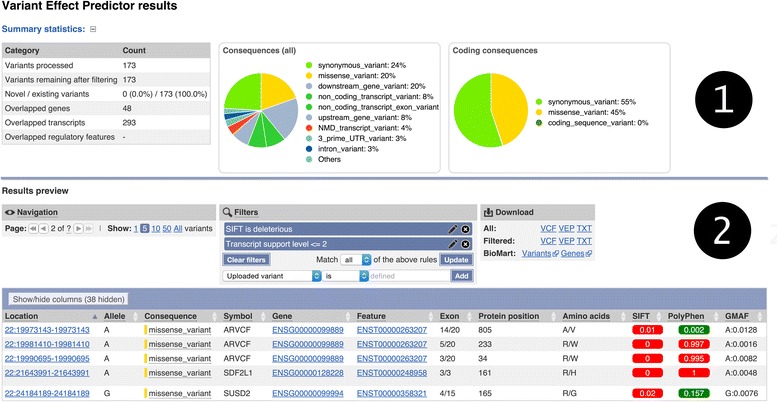
Verification
Claims the paper makes
The claims and statistics of this paper haven’t been checked yet.
Free: it reads the open-access text and checks the first 5 claims that cite a source we can check. Create a free account to check every claim.
Claims other papers make about this one
Each is checked against this paper’s own text: does it say what the citing paper says it does?
The check wasn’t confident either way, so it gives no verdict — never disputed.
In the citing paper
“The ranking of variant types based on the lowest percentile of GPN scores is generally consistent with established notions of deleteriousness (41)*.”
From DNA language models are powerful predictors of genome-wide variant effects (2023) · cites this paper as [41]
Experimental — accuracy not yet measured
Self-check
Percentages, sums and reported differences re-computed from the paper’s own numbers.
The self-check needs the paper’s full text.
Citations
Cites
An integrated encyclopedia of DNA elements in the human genome
The ENCODE Project Consortium (2012) · Nature · doi:10.1038/nature11247 · Cited by 18,072
Self-citationANNOVAR: functional annotation of genetic variants from high-throughput sequencing data
Wang, K., Li, M., & Hakonarson, H. (2010) · Nucleic Acids Research · doi:10.1093/nar/gkq603 · Cited by 14,621
A method and server for predicting damaging missense mutations.
Adzhubei, I. A., Schmidt, S., Peshkin, L., Ramensky, V. E., Gerasimova, A., Bork, P., Kondrashov, A. S., & Sunyaev, S. R. (2010) · Nature Methods · doi:10.1038/nmeth0410-248 · Cited by 13,194 · cited 2×
“PolyPhen-2 [41] results are available for human proteins.”
BackgroundCingolani, P., Platts, A., Wang, L. L., Coon, M., Nguyen, T., Wang, L., Land, S. J., Lu, X., & Ruden, D. M. (2012) · Fly · doi:10.4161/fly.19695 · Cited by 11,816 · cited 2×
“The VEP’s VCF output follows a standard agreed with other annotation tool providers (Cingolani et al. 2012) to promote transparent cross-comparison and benchmarking of results.”
An integrated map of genetic variation from 1,092 human genomes
The 1000 Genomes Project Consortium (2012) · Nature · doi:10.1038/nature11632 · Cited by 7,711 · cited 1×
“It has been used for analysis in numerous large-scale projects, including the 1000 Genomes [31] and Exome Aggregation Consortium (ExAC) [32].”
MethodSelf-citationdbSNP: the NCBI database of genetic variation
Sherry, S. T. (2001) · Nucleic Acids Research · doi:10.1093/nar/29.1.308 · Cited by 7,502 · cited 2×
“Ensembl integrates and quality checks variants from dbSNP [56] and other sources for 20 species.”
BackgroundKumar, P., Henikoff, S., & Ng, P. C. (2009) · Nature Protocols · doi:10.1038/nprot.2009.86 · Cited by 6,521 · cited 1×
“Sorting Intolerant From Tolerant (SIFT, Kumar et al. 2009) results are available for the ten species that are most used in Ensembl.”
BackgroundA general framework for estimating the relative pathogenicity of human genetic variants
Kircher, M., Witten, D. M., Jain, P., O'Roak, B. J., Cooper, G. M., & Shendure, J. (2014) · Nature Genetics · doi:10.1038/ng.2892 · Cited by 6,183
A New Initiative on Precision Medicine
Collins, F. S., & Varmus, H. (2015) · New England Journal of Medicine · doi:10.1056/nejmp1500523 · Cited by 5,202
The Genotype-Tissue Expression (GTEx) pilot analysis: Multitissue gene regulation in humans
The GTEx Consortium, Ardlie, K. G., Deluca, D. S., Segrè, A. V., Sullivan, T. J., Young, T. R., Gelfand, E. T., Trowbridge, C. A., Maller, J. B., Tukiainen, T., et al. (2015) · Science · doi:10.1126/science.1262110 · Cited by 5,062 · cited 1×
“Data from large scale efforts such as the Genotype-Tissue Expression project, which aims to systematically characterize the effects of regulatory variants in different tissues [84], will be integrated into the VEP reference data in order to have the most current data available to the VEP for analysis.”
Method
Cited by
Items 801–900 of 1,113
Diagnosis of ‘possible’ mitochondrial disease: an existential crisis
Parikh, S., Karaa, A., Goldstein, A. C., Bertini, E., Chinnery, P. F., Christodoulou, J., Cohen, B. H., Davis, R. L., Falk, M. J., Fratter, C., et al. (2019) · Journal of Medical Genetics · doi:10.1136/jmedgenet-2018-105800 · Cited by 74
Delineation of dominant and recessive forms of LZTR1‐associated Noonan syndrome
Pagnamenta, A. T., Kaisaki, P. J., Bennett, F., Burkitt‐Wright, E., Martin, H. C., Ferla, M. P., Taylor, J., Gompertz, L., Lahiri, N., Tatton‐Brown, K., et al. (2019) · Clinical Genetics · doi:10.1111/cge.13533 · Cited by 73
van Son, M., Lopes, M. S., Martell, H. J., Derks, M. F. L., Gangsei, L. E., Kongsro, J., Wass, M. N., Grindflek, E. H., & Harlizius, B. (2019) · Frontiers in Genetics · doi:10.3389/fgene.2019.00272 · Cited by 72
Removal of alleles by genome editing (RAGE) against deleterious load
Johnsson, M., Gaynor, R. C., Jenko, J., Gorjanc, G., de Koning, D., & Hickey, J. M. (2019) · Genetics Selection Evolution · doi:10.1186/s12711-019-0456-8 · Cited by 74
Iyer, A., Hennessey, D., O’Keefe, S. L., Patterson, J., Wang, W., Wong, G. K., & Gniadecki, R. (2020) · Blood Advances · doi:10.1182/bloodadvances.2020001441 · Cited by 72
Stallmeyer, B., Bühlmann, C., Stakaitis, R., Dicke, A.-K., Ghieh, F., Meier, L., Zoch, A., MacKenzie MacLeod, D., Steingröver, J., Okutman, Ö., et al. (2024) · Nature Communications · doi:10.1038/s41467-024-50930-9 · Cited by 71
“Resulting variants wereannotated with Ensembl Variant Effect Predictor 70”
Araujo, T. F., Friedrich, C., Grangeiro, C. H. P., Martelli, L. R., Grzesiuk, J. D., Emich, J., Wyrwoll, M. J., Kliesch, S., Simões, A. L., & Tüttelmann, F. (2019) · Andrology · doi:10.1111/andr.12704 · Cited by 71
“The same variant we found, c.671A>G, has already been reported in two patients with SCO (Tewes et al., 2014), whereas missense and splicing variants in KLHL10 have only been associated with oligozoospermia in humans (Yatsenko et al., 2006; Miyamoto et al., 2016).”
BackgroundGenomic signatures of pre-resistance in Mycobacterium tuberculosis
Ortiz, A. T., Coronel, J., Vidal, J. R., Bonilla-Asalde, C. A., Moore, D., Gilman, R. H., Balloux, F., Kon, O. M., Didelot, X., & Grandjean, L. (2021) · Nature Communications · doi:10.1038/s41467-021-27616-7 · Cited by 71
Schratz, K. E., Flasch, D. A., Atik, C. C., Cosner, Z. L., Blackford, A. L., Yang, W., Gable, D. L., Vellanki, P. J., Xiang, Z., Gaysinskaya, V. A., et al. (2023) · Cancer Cell · doi:10.1016/j.ccell.2023.03.005 · Cited by 71
Sahana, G., Cai, Z., Sanchez, M.-P., Bouwman, A. C., & Boichard, D. (2023) · Journal of Dairy Science · doi:10.3168/jds.2022-22694 · Cited by 71
“Statistical power, which is the probability to detect a true association, is a function of the true effect (β), i.e., the allele substitution effect (Falconer and Mackay, 1996), and therefore, QTL with larger effects are easier Step Task Software tool Best practice Post-GWAS analysis Variants annotation VEP (McLaren e…”
MethodInfluentialThe copy number and mutational landscape of recurrent ovarian high-grade serous carcinoma
Smith, P., Bradley, T., Gavarró, L. M., Goranova, T., Ennis, D. P., Mirza, H., Silva, D. D., Piskorz, A., Sauer, C. M., Al-Khalidi, S., et al. (2023) · Nature Communications · doi:10.1038/s41467-023-39867-7 · Cited by 71
“All non-TP53 variants were functionally annotated using Ensembl ’ s variant effect prediction (VEP) pipeline 54 (v102.”
Genetic determinants of micronucleus formation in vivo
Adams, D. J., Barlas, B., McIntyre, R. E., Salguero, I., van der Weyden, L., Barros, A., Vicente, J. R., Karimpour, N., Haider, A., Ranzani, M., et al. (2024) · Nature · doi:10.1038/s41586-023-07009-0 · Cited by 72
“We have made this clear in the revised (supplementary) figure legend which also points readers at the underlying data.”
BackgroundGenetic drivers and cellular selection of female mosaic X chromosome loss
Liu, A., Genovese, G., Zhao, Y., Pirinen, M., Zekavat, S. M., Kentistou, K. A., Yang, Z., Yu, K. F., Vlasschaert, C., Liu, X., et al. (2024) · Nature · doi:10.1038/s41586-024-07533-7 · Cited by 72
“We annotated variants us-ing the ENSEMBL Variant Effect Predictor (VEP) v104 78 and defined protein-truncating variants (PTVs) as high-confidence (HC, as defined by LOFTEE) stop gained, splice donor/acceptor, and frameshift consequences.”
MethodProteome-wide model for human disease genetics
Orenbuch, R., Shearer, C. A., Kollasch, A. W., Spinner, A. D., Hopf, T., van Niekerk, L., Franceschi, D., Dias, M., Frazer, J., & Marks, D. S. (2025) · Nature Genetics · doi:10.1038/s41588-025-02400-1 · Cited by 50
Machine learning annotation of human branchpoints
Signal, B., Gloss, B., Dinger, M. E., & Mercer, T. R. (2017) · Bioinformatics · doi:10.1093/bioinformatics/btx688 · Cited by 70
“Aberrant splicing is known to lead to many human diseases (Singh and Cooper, 2012), however interpretation of intronic variant effects have been typically limited to splice site alterations (McLaren et al., 2016; Wang et al., 2010).”
BackgroundPlacenta Transcriptome Profiling in Intrauterine Growth Restriction (IUGR)
Majewska, M., Lipka, A., Paukszto, Ł., Jastrzebski, J., Szeszko, K., Gowkielewicz, M., Lepiarczyk, E., Jóźwik, M., & Majewski, M. K. (2019) · International Journal of Molecular Sciences · doi:10.3390/ijms20061510 · Cited by 71
“Survived SNVs were tested by VEP [143] and SnpEff [144] to predict the effects of variants.”
MethodSharo, A. G., Hu, Z., Sunyaev, S. R., & Brenner, S. E. (2022) · The American Journal of Human Genetics · doi:10.1016/j.ajhg.2021.12.007 · Cited by 71
(2024) · doi:10.21203/rs.3.rs-3710476/v1 · Cited by 71
Chae, Y. K., Pan, A. P., Davis, A. A., Patel, S. P., Carneiro, B. A., Kurzrock, R., & Giles, F. J. (2017) · Molecular Cancer Therapeutics · doi:10.1158/1535-7163.mct-17-0597 · Cited by 70
Araujo, H. A., Pechuan-Jorge, X., Zhou, T., Do, M. T., Hu, X., Rojas Alvarez, F. R., Salvatierra, M. E., Ibarguen, H. P., Lee, R., Raghulan, R., et al. (2024) · Cancer Discovery · doi:10.1158/2159-8290.cd-24-0421 · Cited by 70
Genome-wide somatic alterations in multiple myeloma reveal a superior outcome group
Samur, M. K., Aktas Samur, A., Fulciniti, M., Szalat, R., Han, T., Shammas, M., Richardson, P., Magrangeas, F., Minvielle, S., Corre, J., et al. (2020) · Journal of Clinical Oncology · doi:10.1200/jco.20.00461 · Cited by 70
Immune biomarkers of response to immunotherapy in patients with high-risk smoldering myeloma
Sklavenitis-Pistofidis, R., Aranha, M. P., Redd, R. A., Baginska, J., Haradhvala, N. J., Hallisey, M., Dutta, A. K., Savell, A., Varmeh, S., Heilpern-Mallory, D., et al. (2022) · Cancer Cell · doi:10.1016/j.ccell.2022.10.017 · Cited by 70
The Medical Genome Reference Bank contains whole genome and phenotype data of 2570 healthy elderly
Pinese, M., Lacaze, P., Rath, E. M., Stone, A., Brion, M.-J., Ameur, A., Nagpal, S., Puttick, C., Husson, S., Degrave, D., et al. (2020) · Nature Communications · doi:10.1038/s41467-019-14079-0 · Cited by 70
From high masked to high realized genetic load in inbred Scandinavian wolves
Smeds, L., & Ellegren, H. (2023) · Molecular Ecology · doi:10.1111/mec.16802 · Cited by 62
“The command line version of Ensembl's variant effect predictor (VEP; McLaren et al., 2016) release 99 was run using the settings - - species “canis_familiaris” and - - sift b.”
MethodGenomic analyses of hair from Ludwig van Beethoven
Begg, T. J. A., Schmidt, A., Kocher, A., Larmuseau, M., Runfeldt, G., Maier, P. A., Wilson, J. D., Barquera, R., Maj, C., Szolek, A., et al. (2023) · Current Biology · doi:10.1016/j.cub.2023.02.041 · Cited by 70
“1, spliceAI and ClinVar 2021-1002).(90) After annotation we excluded common variants (allele frequency of > 2% in subcohorts of the population-based databases gnomAD, Exome Variant Server (EVS), and 1000Genomes; or > 4 reported homozygous occurrences in gnomAD).”
Zou, J., Valiant, G. J., Valiant, P., Karczewski, K. J., Chan, S. O., Samocha, K. E., Lek, M., Sunyaev, S. R., Daly, M. J., & MacArthur, D. G. (2016) · Nature Communications · doi:10.1038/ncomms13293 · Cited by 74
Bu, F., Zhang, Y., Wang, K., Borsa, N. G., Jones, M. B., Taylor, A. O., Takanami, E., Meyer, N. C., Frees, K. L., Thomas, C. P., et al. (2018) · Journal of the American Society of Nephrology · doi:10.1681/asn.2018070759 · Cited by 71
Leongamornlert, D. A., Saunders, E. J., Wakerell, S., Whitmore, I., Dadaev, T., Cieza-Borrella, C., Benafif, S., Brook, M. N., Donovan, J., Hamdy, F. C., et al. (2019) · European Urology · doi:10.1016/j.eururo.2019.01.050 · Cited by 70
“definitions [18], and variant consequence was checked using Variant Effect Predictor (VEP; release 84, March 2016) [19].”
MethodYe, C., Chen, J., Villani, A., Gate, R. E., Subramaniam, M., Bhangale, T., Lee, M. N., Raj, T., Raychowdhury, R., Li, W., et al. (2018) · Genome Research · doi:10.1101/gr.240390.118 · Cited by 70
Implementing the FAIR Data Principles in precision oncology: review of supporting initiatives
Vesteghem, C., Brøndum, R. F., Sønderkær, M., Sommer, M., Schmitz, A., Bødker, J. S., Dybkær, K., El‐Galaly, T. C., & Bøgsted, M. (2019) · Briefings in Bioinformatics · doi:10.1093/bib/bbz044 · Cited by 70
“The Ensembl Variant Effect Predictor [70] (VEP) tool is a convenient solution because it can annotate and provide a basic interpretation of variants.”
MethodThe LDLR, APOB, and PCSK9 Variants of Index Patients with Familial Hypercholesterolemia in Russia
Meshkov, A. N., Ershova, A. I., Kiseleva, A. V., Zotova, E. D., Сотникова, Е. А., Petukhova, A. V., Zharikova, A. A., Прокопьевич, М. П., Ta, R., Блохина, А. В., et al. (2021) · Genes · doi:10.3390/genes12010066 · Cited by 70
Michaud, V., Lasseaux, E., Green, D. J., Gerrard, D. T., Plaisant, C., Fitzgerald, T. W., Birney, E., Arveiler, B., Black, G. C. M., & Sergouniotis, P. I. (2022) · Nature Communications · doi:10.1038/s41467-022-31392-3 · Cited by 72
Gardner, E. J., Kentistou, K. A., Stankovic, S., Lockhart, S. M., Wheeler, E., Day, F. R., Kerrison, N. D., Wareham, N. J., Langenberg, C., O’Rahilly, S., et al. (2022) · Cell Genomics · doi:10.1016/j.xgen.2022.100208 · Cited by 69
Proteomic and genetic analyses of influenza A viruses identify pan-viral host targets
Haas, K. M., McGregor, M., Bouhaddou, M., Polacco, B. J., Kim, E., Nguyen, T. T., Newton, B. W., Urbanowski, M., Kim, H. J., Williams, M. A. P., et al. (2023) · Nature Communications · doi:10.1038/s41467-023-41442-z · Cited by 72
“Each base position was converted to codon coding using Ensembl Variant Effect Predictor (VEP) 139 and RefSeq as reference data.”
Rare coding variant analysis for human diseases across biobanks and ancestries
Jurgens, S. J., Wang, X., Choi, S. H., Weng, L.-C. C., Koyama, S., Pirruccello, J. P., Nguyen, T. T. H., Smadbeck, P., Jang, D., Chaffin, M. D., et al. (2024) · Nature Genetics · doi:10.1038/s41588-024-01894-5 · Cited by 68
“In each dataset, variants were annotated using dbNSFP (v.4.2a for MGB and v.4.3a for UKB and AoU 72 ) and the loss-of-function transcript effect estimator (LOFTEE 25 ) plug-in implemented in the variant effect predictor (VEP; v.105) 73 (https://github.com/konradjk/loftee).”
Gain-of-Function Mutations: An Emerging Advantage for Cancer Biology
Li, Y., Zhang, Y., Li, X., Yi, S., & Xu, J. (2019) · Trends in Biochemical Sciences · doi:10.1016/j.tibs.2019.03.009 · Cited by 64
“McLaren W et al. (2016) The Ensembl Variant Effect Predictor.”
MethodDemystifying non-coding GWAS variants: an overview of computational tools and methods
Schipper, M., & Posthuma, D. (2022) · Human Molecular Genetics · doi:10.1093/hmg/ddac198 · Cited by 70
“For example, ANNOVAR (20), FUMA (21), GEMINI (22), HaploREG (23), RegulomeDB (24) and VEP (25) annotate variants with a broad range of sources, including the resources mentioned before (Table 1).”
BackgroundSpinal cord extracts of amyotrophic lateral sclerosis spread TDP-43 pathology in cerebral organoids
Tamaki, Y., Ross, J. P., Alipour, P., Castonguay, C.-E., Li, B., Catoire, H., Rochefort, D. L., Urushitani, M., Takahashi, R., Sonnen, J. A., et al. (2023) · PLoS Genetics · doi:10.1371/journal.pgen.1010606 · Cited by 68
Wallenius, J., Kafantari, E., Jhaveri, E., Gorcenco, S., Ameur, A., Karremo, C., Dobloug, S., Karrman, K., de Koning, T. J., Ilinca, A., et al. (2023) · The American Journal of Human Genetics · doi:10.1016/j.ajhg.2023.11.008 · Cited by 68
Saturation genome editing of BAP1 functionally classifies somatic and germline variants
Waters, A. J., Brendler-Spaeth, T., Smith, D., Offord, V., Tan, H. K., Zhao, Y., Obolenski, S., Nielsen, M., van Doorn, R., Murphy, J.-E., et al. (2024) · Nature Genetics · doi:10.1038/s41588-024-01799-3 · Cited by 57
Genetic links between ovarian ageing, cancer risk and de novo mutation rates
Stankovic, S., Shekari, S., Huang, Q. Q., Gardner, E. J., Ivarsdottir, E. V., Owens, N. D. L., Mavaddat, N., Azad, A., Hawkes, G., Kentistou, K. A., et al. (2024) · Nature · doi:10.1038/s41586-024-07931-x · Cited by 68
“Annotations were extracted from VEP105.”
MethodInfluentialThe interplay of mutagenesis and ecDNA shapes urothelial cancer evolution
Nguyen, D., Hooper, W. F., Liu, W., Chu, T. R., Geiger, H. M., Shelton, J. M., Shah, M. J., Goldstein, Z. R., Winterkorn, L. H., Helland, A., et al. (2024) · Nature · doi:10.1038/s41586-024-07955-3 · Cited by 69
Alver, M., Palover, M., Saar, A., Läll, K., Zekavat, S. M., Tõnisson, N., Leitsalu, L., Reigo, A., Nikopensius, T., Ainla, T., et al. (2019) · Genetics in Medicine · doi:10.1038/s41436-018-0311-2 · Cited by 56
Maffucci, P., Bigio, B., Rapaport, F., Cobat, A., Borghesi, A., Lopez, M., Patin, É., Bolze, A., Shang, L., Bendavid, M., et al. (2018) · Proceedings of the National Academy of Sciences · doi:10.1073/pnas.1808403116 · Cited by 68
“The main sources of misannotation are as follows: ( i ) variants in gnomAD collected by different technologies (PCR for WES and PCR-free plus PCR for WGS) apply rigorous QC cutoffs based on high-quality technologies, resulting in higher proportions of variants from lower-quality technologies being removed; ( ii ) desp…”
MethodWard, D. G., Gordon, N. S., Boucher, R. H., Pirrie, S. J., Baxter, L. A., Ott, S., Silcock, L., Whalley, C., Stockton, J., Beggs, A. D., et al. (2019) · British Journal of Urology · doi:10.1111/bju.14808 · Cited by 68
Liu, A., Lund, M. S., Boichard, D., Karaman, E., Fritz, S., Aamand, G. P., Nielsen, U., Wang, Y., & Su, G. (2019) · Heredity · doi:10.1038/s41437-019-0246-7 · Cited by 68
Yoo, S., Kim, C.-U., Kim, H. L., Kim, S., Shin, J.-Y., Kim, N., Yang, J. S. W., Lo, K. W., Cho, B., Matsuda, F., et al. (2019) · Genome Medicine · doi:10.1186/s13073-019-0677-z · Cited by 68
“3-beta) [39] which is a plugin of Variant Effect Predictor [49] to remove low con-”
BackgroundInfluentialThe Laboratory Domestication of Zebrafish: From Diverse Populations to Inbred Substrains
Suurväli, J., Whiteley, A. R., Zheng, Y., Gharbi, K., Leptin, M., & Wiehe, T. (2020) · Molecular Biology and Evolution · doi:10.1093/molbev/msz289 · Cited by 58
del Angel, G., Reynders, J., Negron, C., Steinbrecher, T. B., & Mornet, É. (2020) · Human Mutation · doi:10.1002/humu.24010 · Cited by 69
“ROC and AUC scores were computed using the algorithm rank scores obtained from the dbNSFP variant annotation database (version 3.1; Liu, Wu, Li, & Boerwinkle, 2016), accessed through the Ensembl Variant Effect Predictor annotation tool (version 87; McLaren et al., 2016).”
MethodInfluentialComparing signals of natural selection between three Indigenous North American populations
Reynolds, A. W., Mata-Míguez, J., Miró-Herrans, A., Briggs-Cloud, M., Sylestine, A., Barajas-Olmos, F., Garcia-Ortiz, H., Rzhetskaya, M., Orozco, L., Raff, J. A., et al. (2019) · Proceedings of the National Academy of Sciences · doi:10.1073/pnas.1819467116 · Cited by 67
Wong, K., Ludwig, L., Krijgsman, O., Adams, D. J., Wood, G. A., & van der Weyden, L. (2021) · Disease Models & Mechanisms · doi:10.1242/dmm.049044 · Cited by 67
“The Variant Effect Predictor (McLaren et al., 2016) and Ensembl gene models (v98) were used to predict the consequences of base changes and indels on proteins.”
CFAP61 is required for sperm flagellum formation and male fertility in human and mouse
Liu, S., Zhang, J., Kherraf, Z. E., Sun, S., Zhang, X., Cazin, C., Coutton, C., Zouari, R., Zhao, S., Hu, F., et al. (2021) · Development · doi:10.1242/dev.199805 · Cited by 63
Rare loss of function variants in the hepatokine gene INHBE protect from abdominal obesity
Deaton, A. M., Dubey, A., Ward, L. D., Dornbos, P., Flannick, J., AMP-T2D-GENES Consortium, Yee, E., Ticau, S., Noetzli, L., Parker, M. M., et al. (2022) · Nature Communications · doi:10.1038/s41467-022-31757-8 · Cited by 57
Whole genome sequencing increases the diagnostic rate in Charcot-Marie-Tooth disease
Record, C. J., Pipis, M., Skorupinska, M., Blake, J. C., Poh, R., Polke, J. M., Eggleton, K., Nanji, T., Zuchner, S. L., Cortese, A., et al. (2024) · Brain · doi:10.1093/brain/awae064 · Cited by 67
“Following quality control checks, variant calling files (vcf) were annotated using Ensembl Variant Effect Predictor v.103 20 to facilitate further variant interpretation and prioritization.”
MethodCamarena, M. E., Theunissen, P., Ruiz, M., Ruiz‐Orera, J., Calvo-Serra, B., Castelo, R., Castro, C., Sarobe, P., Fortes, P., Perera‐Bel, J., et al. (2024) · Science Advances · doi:10.1126/sciadv.adn3628 · Cited by 68
Henke, K., Daane, J. M., Hawkins, M. B., Dooley, C. M., Busch-Nentwich, E. M., Stemple, D. L., & Harris, M. P. (2017) · Genetics · doi:10.1534/genetics.117.300187 · Cited by 62
Chae, Y. K., Anker, J. F., Bais, P., Namburi, S., Giles, F. J., & Chuang, J. H. (2017) · Oncotarget · doi:10.18632/oncotarget.23742 · Cited by 67
“HLA typing, neo-antigen identification, and HLA-peptide affinity prediction were performed using HLAminer [61],Variant Effect Predictor Tool [62], NetMHCpan [63], and the UCSC browser [64] (http:// www.”
MethodArciero, E., Kraaijenbrink, T., Asan, Haber, M., Mezzavilla, M., Ayub, Q., Wang, W., Pingcuo, Z., Yang, H., Wang, J., et al. (2018) · Molecular Biology and Evolution · doi:10.1093/molbev/msy094 · Cited by 68
“Finally, we used the Ensembl Variant Effect Predictor (VEP) (McLaren et al. 2016) to predict the consequences of variants of interest on gene expression and protein sequence.”
MethodDeep whole-genome sequencing of 3 cancer cell lines on 2 sequencing platforms
Arora, K. S., Shah, M. J., Johnson, M. E., Sanghvi, R., Shelton, J., Nagulapalli, K., Oschwald, D. M., Zody, M. C., Germer, S., Jobanputra, V., et al. (2019) · Scientific Reports · doi:10.1038/s41598-019-55636-3 · Cited by 67
Li, S., van der Velde, K. J., de Ridder, D., van Dijk, A. D. J., Soudis, D., Zwerwer, L. R., Deelen, P., Hendriksen, D., Charbon, B., van Gijn, M. E., et al. (2020) · Genome Medicine · doi:10.1186/s13073-020-00775-w · Cited by 63
Clonal Hematopoiesis Before, During, and After Human Spaceflight
Mencia-Trinchant, N., MacKay, M. J., Chin, C. R., Afshinnekoo, E., Foox, J., Meydan, C., Butler, D., Mozsary, C., Vernice, N. A., Darby, C. A., et al. (2020) · Cell Reports · doi:10.1016/j.celrep.2020.108458 · Cited by 68
ScanNeo: identifying indel-derived neoantigens using RNA-Seq data
Wang, T.-Y., Wang, L., Alam, S. K., Hoeppner, L. H., & Yang, R. (2019) · Bioinformatics · doi:10.1093/bioinformatics/btz193 · Cited by 66
Forsyth, J. K., Nachun, D. C., Gandal, M. J., Geschwind, D. H., Anderson, A., Coppola, G., & Bearden, C. E. (2019) · Biological Psychiatry · doi:10.1016/j.biopsych.2019.06.029 · Cited by 67
Meta-Analysis and Systematic Review of the Genomics of Mucosal Melanoma
Broit, N., Johansson, P. A., Rodgers, C. B., Walpole, S., Newell, F., Hayward, N. K., & Pritchard, A. L. (2021) · Molecular Cancer Research · doi:10.1158/1541-7786.mcr-20-0839 · Cited by 66
“Variants were annotated using the Ensembl Variant Effect Predictor (64).”
MethodWittenbecher, C., Cuadrat, R. R. C., Johnston, L., Eichelmann, F., Jäger, S., Kuxhaus, O., Prada, M., Fabiola Del Greco, M., Hicks, A. A., Hoffman, P., et al. (2022) · Nature Communications · doi:10.1038/s41467-022-28496-1 · Cited by 66
Pagadala, M. S., Sears, T. J., Wu, V. H., Pérez‐Guijarro, E., Kim, H., Castro, A., Talwar, J. V., González-Colín, C., Cao, S., Schmiedel, B. J., et al. (2023) · Nature Communications · doi:10.1038/s41467-023-38271-5 · Cited by 67
Relapse Timing Is Associated With Distinct Evolutionary Dynamics in Diffuse Large B-Cell Lymphoma
Hilton, L. K., Ngu, H. S., Collinge, B. J., Dreval, K., Ben‐Neriah, S., Rushton, C. K., Wong, J., Cruz, M., Roth, A. J. L., Boyle, M., et al. (2023) · Journal of Clinical Oncology · doi:10.1200/jco.23.00570 · Cited by 67
Penetrance of pathogenic genetic variants associated with premature ovarian insufficiency
Shekari, S., Stankovic, S., Gardner, E. J., Hawkes, G., Kentistou, K. A., Beaumont, R. N., Mörseburg, A., Wood, A. R., Prague, J., Mishra, G. D., et al. (2023) · Nature Medicine · doi:10.1038/s41591-023-02405-5 · Cited by 67
“We selected variants in the Consensus CDS (CCDS) transcripts and variants were annotated using the Ensembl Variant Effect Predictor 46 and LOFTEE plugin (https://github.com/konradjk/loftee).”
MethodBjornsdottir, G., Chalmer, M. A., Stefansdottir, L., Skuladottir, A. T., Einarsson, G., Andresdottir, M., Beyter, D., Ferkingstad, E., Gretarsdottir, S., Halldorsson, B. V., et al. (2023) · Nature Genetics · doi:10.1038/s41588-023-01538-0 · Cited by 61
“We used VEP 90 to attribute predicted consequences to the variants sequenced in each dataset.”
MethodInfluentialMultiomics Analysis Provides Novel Pathways Related to Progression of Heart Failure
Ouwerkerk, W., Pereira, J. P. B., Maasland, T., Emmens, J. E., Figarska, S. M., Tromp, J., Koekemoer, A. L., Nelson, C. P., Nath, M., Romaine, S. P. R., et al. (2023) · Journal of the American College of Cardiology · doi:10.1016/j.jacc.2023.08.053 · Cited by 66
An, M., Mehta, A., Min, B., Heo, Y. J., Wright, S. J., Parikh, M., Bi, L., Lee, H., Kim, T. J., Lee, S.-Y., et al. (2024) · Cancer Discovery · doi:10.1158/2159-8290.cd-23-0857 · Cited by 70
Mitochondrial metabolism sustains DNMT3A-R882-mutant clonal haematopoiesis
Gozdecka, M., Dudek, M., Wen, S., Gu, M., Stopforth, R. J., Rak, J. M., Damaskou, A., Grice, G. L., McLoughlin, M. A., Bond, L., et al. (2025) · Nature · doi:10.1038/s41586-025-08980-6 · Cited by 67
Gramene database: Navigating plant comparative genomics resources
Gupta, P., Naithani, S., Tello-Ruiz, M. K., Chougule, K. M., D’Eustachio, P., Fabregat, A., Jiao, Y., Keays, M., Lee, Y. K., Kumari, S., et al. (2016) · Current Plant Biology · doi:10.1016/j.cpb.2016.12.005 · Cited by 66
“Another tool, the Variant Effect Predictor (VEP), allows users to predict – either online or offline – the functional effect of genetic variants on gene regulation and encoded gene products [4].”
MethodGenome Variation Map: a data repository of genome variations in BIG Data Center
Song, S., Tian, D., Li, C., Tang, B., Dong, L., Xiao, J., Bào, Y., Zhao, W., He, H., & Zhang, Z. (2017) · Nucleic Acids Research · doi:10.1093/nar/gkx986 · Cited by 66
“Variants Effect Predictor (VEP) (15) is used to predict all variants’ effects.”
MethodLoose ends: almost one in five human genes still have unresolved coding status
Abascal, F., Juan, D., Jungreis, I., Martinez, L., Rigau, M., Rodriguez, J. M., Vazquez, J., & Tress, M. L. (2018) · Nucleic Acids Research · doi:10.1093/nar/gky587 · Cited by 68
“We ran VEP (variant effect predictor.pl, (44)) v84 using either the Ensembl v84 cache (for Ensembl/GENCODE) or a cache built locally using gene annotations from RefSeq v107 to predict the effects of variants.”
MethodInfluentialMishra, A., Chauhan, G., Violleau, M., Vojinović, D., Jian, X., Bis, J. C., Li, S., Saba, Y., Grenier‐Boley, B., Yang, Q., et al. (2019) · Brain · doi:10.1093/brain/awz024 · Cited by 66
“We used the variant effect predictor (v90) software (McLaren et al., 2016) to annotate functional consequences of genetic variants localized within five candidate genes considering the default ‘GRCh37’ ensemble annotation database.”
MethodFadaie, Z., Whelan, L., Ben‐Yosef, T., Dockery, A., Corradi, Z., Gilissen, C., Haer‐Wigman, L., Corominas, J., Astuti, G., de Rooij, L. P. M. H., et al. (2021) · npj Genomic Medicine · doi:10.1038/s41525-021-00261-1 · Cited by 66
Huang, X., Otecko, N. O., Peng, M., Weng, Z., Li, W., Chen, J., Zhong, M., Zhong, F., Jin, S., Geng, Z., et al. (2020) · BMC Genomics · doi:10.1186/s12864-020-6736-4 · Cited by 65
“An empirical cutoff of 99th percentile was used to retrieve candidate selective sweeps, which were then annotated using variant effect predictor (VEP) to identify the putative positively selected genes (PSGs) [71].”
MethodWagner, A. H., Babb, L., Alterovitz, G., Baudis, M., Brush, M., Cameron, D. L., Cline, M., Griffith, M., Griffith, O. L., Hunt, S. E., et al. (2021) · Cell Genomics · doi:10.1016/j.xgen.2021.100027 · Cited by 62
“Normalization is the process by which a representation is converted into a canonical form, 11,29–31 and is an important componentofminimizingambiguity.”
Self-citationWinsvold, B. S., Harder, A. V. E., Ran, C., Chalmer, M. A., Dalmasso, M. C., Ferkingstad, E., Tripathi, K. P., Bacchelli, E., Børte, S., Fourier, C., et al. (2023) · Annals of Neurology · doi:10.1002/ana.26743 · Cited by 66
“23 Gene Set and Tissue Enrichment Analyses Genes prioritized by at least one of the fi ve methods were used as input to the GENE2FUNC tool implemented in FUMA 24 to examine enrichment in differentially expressed gene (DEG) sets for 54 tissues from GTEX version 8, 25 and in biological pathways and…”
MethodThe alliance of genome resources: transforming comparative genomics
Bult, C. J., & Sternberg, P. W. (2023) · Mammalian Genome · doi:10.1007/s00335-023-10015-2 · Cited by 65
“As the harmonization for the concept of a model across different model systems is still being discussed, the details for model genotypes displayed on Alliance gene detail page are available as links back to the relevant Knowledge Center. et al. 2016).”
MethodZhao, Y., Chukanova, M., Kentistou, K. A., Fairhurst-Hunter, Z., Siegert, A. M., Jia, R., Dowsett, G. K. C., Gardner, E. J., Lawler, K., Day, F. R., et al. (2024) · Nature Genetics · doi:10.1038/s41588-024-01694-x · Cited by 65
“The remaining variants underwent annotation using Ensembl Variant Effect Predictor (VEP v104) 41 with the ‘-everything’ flag and additional plugins for REVEL 14 , CADD 42 and LOFTEE 43 .”
MethodSperm sequencing reveals extensive positive selection in the male germline
Neville, M. D. C., Lawson, A. R. J., Sanghvi, R., Abascal, F., Pham, M. H., Cagan, A., Nicola, P. A., Bayzetinova, T., Baez‐Ortega, A., Roberts, K., et al. (2025) · Nature · doi:10.1038/s41586-025-09448-3 · Cited by 65
A PLAG1 mutation contributed to stature recovery in modern cattle
Utsunomiya, Y. T., Milanesi, M., Utsunomiya, A. T. H., Torrecilha, R. B. P., Kim, E.-S., Costa, M. S., Aguiar, T. S., Schroeder, S., do Carmo, A. S., Carvalheiro, R., et al. (2017) · Scientific Reports · doi:10.1038/s41598-017-17127-1 · Cited by 56
Cirillo, E., Kutmon, M., Hernández, M. A. G., Hooimeijer, T., Adriaens, M. E., Eijssen, L., Parnell, L. D., Coort, S. L., & Evelo, C. T. (2018) · PLoS ONE · doi:10.1371/journal.pone.0193515 · Cited by 66
Lahola-Chomiak, A. A., Footz, T. K., Nguyen-Phuoc, K., Neil, G. J., Fan, B., Allen, K. F., Greenfield, D. S., Parrish, R. K., II, Linkroum, K., Pasquale, L. R., et al. (2018) · Human Molecular Genetics · doi:10.1093/hmg/ddy429 · Cited by 65
“35 and annotated with Ensembl’s Variant Effect Predictor (81).”
BackgroundInfluentialUcuncu, E., Rajamani, K., Wilson, M., Medina-Cano, D., Altin, N., David, P., Barcia, G., Lefort, N., Banal, C., Vasilache-Dangles, M.-T., et al. (2020) · Nature Communications · doi:10.1038/s41467-020-19919-y · Cited by 66
Levin, M. G., Zuber, V., Walker, V. M., Klarin, D., Lynch, J., Malik, R., Aday, A. W., Bottolo, L., Pradhan, A. D., Dichgans, M., et al. (2021) · Circulation · doi:10.1161/circulationaha.121.053797 · Cited by 65
Wang, B., Pozarickij, A., Mazidi, M., Wright, N., Yao, P., Said, S., Iona, A., Kartsonaki, C., Fry, H., Lin, K., et al. (2025) · Nature Communications · doi:10.1038/s41467-025-56935-2 · Cited by 64
“Based on Ensembl Variant Effect Predictor (VEP) 56 , we used BCFtools 57 to annotate the sentinel variants of all identi fi ed cis -pQTLs,as wellas their proxies with r 2 >0.8 and within a 500kb window on either side.”
InfluentialDefining the genetic control of human blood plasma N-glycome using genome-wide association study
Sharapov, S., Tsepilov, Y. A., Klarić, L., Mangino, M., Thareja, G., Shadrina, A. S., Šimurina, M., Dagostino, C., Dmitrieva, J., Vilaj, M. Ć., et al. (2019) · Human Molecular Genetics · doi:10.1093/hmg/ddz054 · Cited by 64
Sevim Bayrak, C., Stein, D., Jain, A., Chaudhary, K., Nadkarni, G. N., Van Vleck, T. T., Puel, A., Boisson-Dupuis, S., Okada, S., Stenson, P. D., et al. (2021) · The American Journal of Human Genetics · doi:10.1016/j.ajhg.2021.10.007 · Cited by 53
Coding and regulatory variants are associated with serum protein levels and disease
Emilsson, V., Guðmundsdóttir, V., Guðjónsson, A., Jónmundsson, Þ., Jonsson, B. G., Karim, M. A., Ilkov, M., Staley, J. R., Gudmundsson, E. F., Launer, L. J., et al. (2022) · Nature Communications · doi:10.1038/s41467-022-28081-6 · Cited by 66
Breast cancer risks associated with missense variants in breast cancer susceptibility genes
Dorling, L., Carvalho, S., Allen, J., Parsons, M. T., Fortuño, C., González‐Neira, A., Heijl, S., Adank, M. A., Ahearn, T. U., Andrulis, I. L., et al. (2022) · Genome Medicine · doi:10.1186/s13073-022-01052-8 · Cited by 64
Integrative Pan-Cancer Genomic and Transcriptomic Analyses of Refractory Metastatic Cancer
Pradat, Y., Viot, J., Владимирович, Г. К., Yurchenko, A. A., Cerbone, L., Deloger, M., Grisay, G., Verlingue, L., Scott, V., Padioleau, I., et al. (2023) · Cancer Discovery · doi:10.1158/2159-8290.cd-22-0966 · Cited by 64
“All mutations were annotated using VEP release 104 (66) on canonical transcripts.”
Zhang, G., Yuan, J., Pan, C., Xu, Q., Cui, X., Zhang, J., Liu, M., Song, Z., Wu, L., Wu, D., et al. (2023) · EBioMedicine · doi:10.1016/j.ebiom.2023.104515 · Cited by 64
Park, Y. H., Im, S., Park, K., Wen, J., Lee, K.-H., Choi, Y., Lee, W., Min, A., Bonato, V., Park, S., et al. (2023) · Genome Medicine · doi:10.1186/s13073-023-01201-7 · Cited by 66
“Variants were annotated using Ensembl Variant Effect Predictor (VEP) version 87 [15].”
MethodIn vivo base editing extends lifespan of a humanized mouse model of prion disease
An, M., Davis, J. R., Levy, J. M., Serack, F. E., Harvey, J. W., Brauer, P. P., Pirtle, C. P., Berríos, K. N., Newby, G. A., Yeh, W.-H., et al. (2025) · Nature Medicine · doi:10.1038/s41591-024-03466-w · Cited by 66
“To perform VEP on human amplicons, hg19 coordinates were lifted over to GRCh38 using UCSC’s liftOver tool.”
Glusman, G., Rose, P. W., Prlić, A., Dougherty, J., Duarte, J. M., Hoffman, A. S., Barton, G. J., Bendixen, E., Bergquist, T., Bock, C., et al. (2017) · Genome Medicine · doi:10.1186/s13073-017-0509-y · Cited by 66
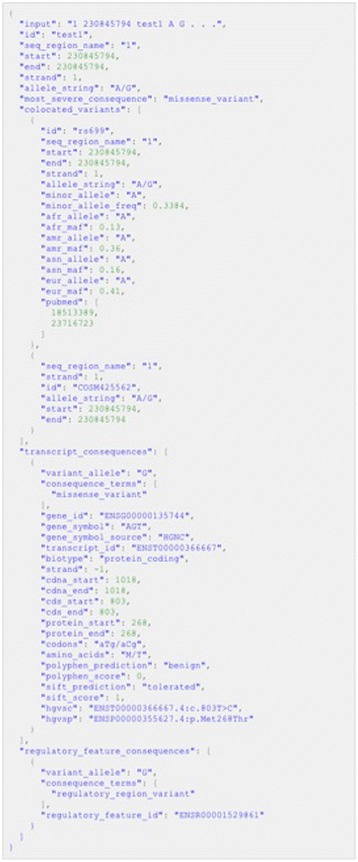
“In addition to VCF, a few other formats have been described, such as ANN, which defines a different standard for representing variant information in INFO fields; VEP [97] supports a simple tab-delimited, as well as JavaScript Object Notation (JSON) output format.”
BackgroundMethodInfluentialRichardson, T. G., Haycock, P., Zheng, J., Timpson, N. J., Gaunt, T. R., Smith, G. D., Relton, C. L., & Hemani, G. (2018) · Human Molecular Genetics · doi:10.1093/hmg/ddy210 · Cited by 65
“Variant annotation and gene prioritization Genetic variants for effects potentially mediated by changes in DNA methylation were analysed using the variant effect predictor (VEP) (65) to calculate their predicted consequence.”
MethodAccounting for proximal variants improves neoantigen prediction
Hundal, J., Kiwala, S., Feng, Y.-Y., Liu, C. J., Govindan, R., Chapman, W. C., Uppaluri, R., Swamidass, S. J., Griffith, O. L., Mardis, E. R., et al. (2018) · Nature Genetics · doi:10.1038/s41588-018-0283-9 · Cited by 64
Metadata
- Authors
- McLaren, W., Gil, L., Hunt, S. E., Riat, H. S., Ritchie, G. R. S., Thormann, A., Flicek, P., & Cunningham, F.
- Affiliations
- European Bioinformatics Institute (GB)
- Corresponding author
- McLaren, William
- Cunningham, Fiona
- ORCID
- Venue
- Genome Biology
- Published
- 2016-06-06
- Volume
- 17
- Issue
- 1
- Pages
- 122-122
- ISSN
- 1465-6906 (ISSN-L)
- 1474-760X
- PMC
- PMC4893825
- OpenAlex
- W2417483443
- Semantic Scholar
- 54ec58ccaf8b33bc7593d3413e1dbd58d6c8ca18
- Cited by
- 8,099
- References
- 77
- Citations by year
- 2026: 858 · 2025: 1154 · 2024: 1277 · 2023: 1092 · 2022: 961 · 2021: 939 · 2020: 722 · 2019: 510 · 2018: 381 · 2017: 174 · 2016: 22
- FWCI
- 294.55
- Type
- journal article
- Language
- en
- Open access
- gold
- doi.org
- Licence
- cc-by
- Locations
- Genome biology (publishedVersion, cc-by)
- bioRxiv (Cold Spring Harbor Laboratory) (acceptedVersion, cc-by)
- Europe PMC (PubMed Central) (publishedVersion, cc-by)
- PubMed Central (publishedVersion, cc-by)
- PubMed (publishedVersion)
- Funders
- Wellcome Trust (GB) (WT095908 and WT098051)
- European Molecular Biology Laboratory
- Seventh Framework Programme (BE) (200754 (GEN2PHEN), 222664 (Quantomics))
- European Union’s Horizon 2020 research and innovation programme (634143 (MedBioinformatics))
- Topics
- Life Sciences › Biochemistry, Genetics and Molecular Biology › Genetics › Genomics and Rare Diseases
- Life Sciences › Biochemistry, Genetics and Molecular Biology › Molecular Biology › Genomics and Phylogenetic Studies
- Life Sciences › Biochemistry, Genetics and Molecular Biology › Genetics › Genetic Associations and Epidemiology
- Keywords
- genomic variant annotation, variant prioritization, variant interpretation, genome annotation, open source software, reproducibility
- MeSH terms
- Humans, Software, Genetic Variation, Computational Biology, Internet, Genomics, Databases, Nucleic Acid, Molecular Sequence Annotation
About these checks
Registry, retraction, Cites and statistics results are computed, not judged, with one exception: a printed reference that no index lists is read once by a model before it counts as a citation error. Claims are extracted by a model and kept only when their quote appears verbatim in the text; each cited source is then checked, with a model’s help, for whether it says what the claim relies on. Those verdicts can be wrong — read the claim’s quote and the cited source before relying on one.
Statistics and arithmetic are recomputed, not judged.
Confidence bands are shown only for fields calibrated on our annotated test set. None is calibrated yet, so no band is shown.
What counts as a claim ›How we measure confidence ›How we check this ›
Are you an author, or do you see a problem with this page? Request a review
Data sources
Bibliographic data: Semantic Scholar, OpenAlex, Crossref.
Contains information from the Semantic Scholar Academic Graph Datasets, made available under the ODC Attribution License (ODC-BY 1.0).
Semantic Scholar’s data is described in: Kinney, R., et al. (2023). The Semantic Scholar Open Data Platform. arXiv:2301.10140.
