

Single-cell epigenomic variability reveals functional cancer heterogeneity
Open accessThe DOI matches its Crossref record; 60 of the 60 references it cites were found in a registry or an index.
Abstract
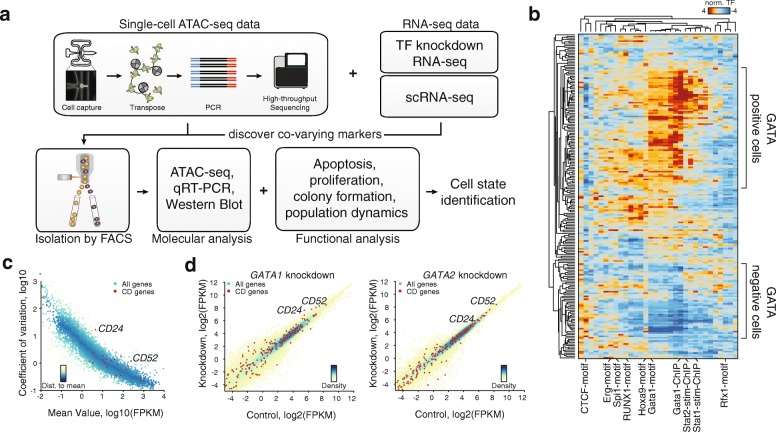
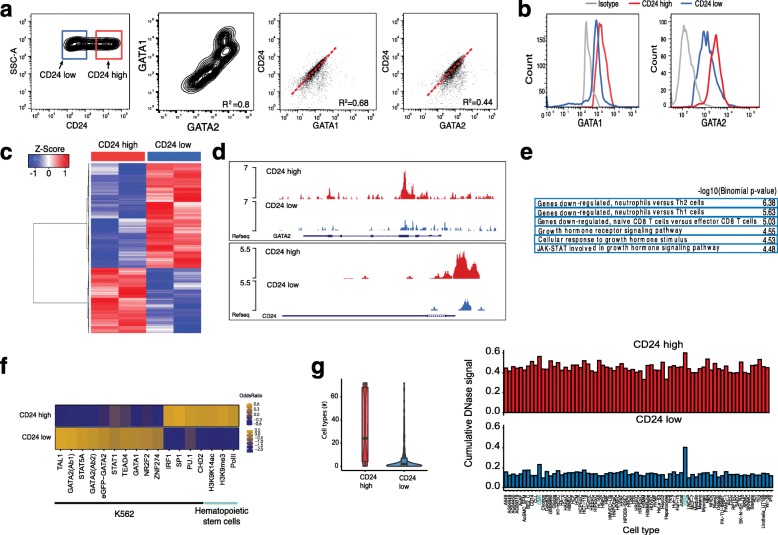
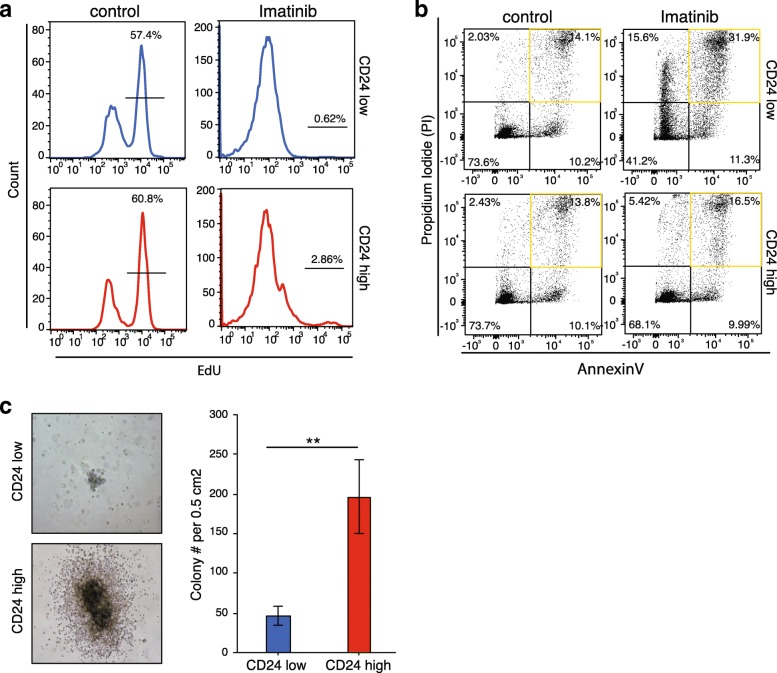
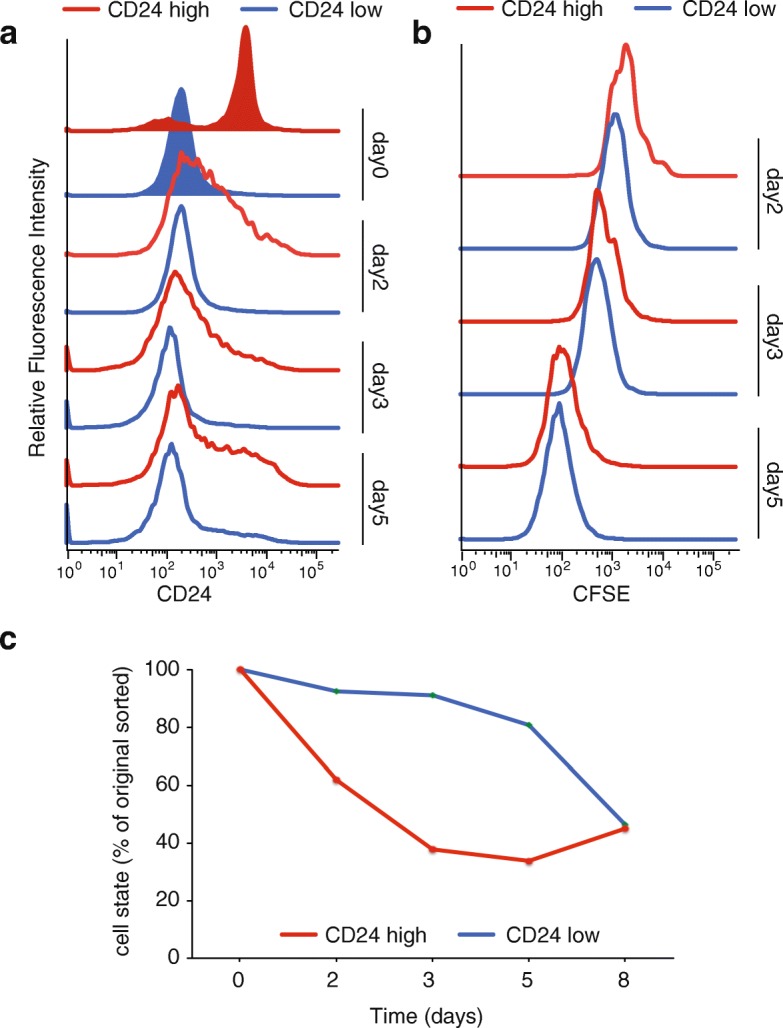
BACKGROUND: Cell-to-cell heterogeneity is a major driver of cancer evolution, progression, and emergence of drug resistance. Epigenomic variation at the single-cell level can rapidly create cancer heterogeneity but is difficult to detect and assess functionally. RESULTS: We develop a strategy to bridge the gap between measurement and function in single-cell epigenomics. Using single-cell chromatin accessibility and RNA-seq data in K562 leukemic cells, we identify the cell surface marker CD24 as co-varying with chromatin accessibility changes linked to GATA transcription factors in single cells. Fluorescence-activated cell sorting of CD24 high versus low cells prospectively isolated GATA1 and GATA2 high versus low cells. GATA high versus low cells express differential gene regulatory networks, differential sensitivity to the drug imatinib mesylate, and differential self-renewal capacity. Lineage tracing experiments show that GATA/CD24hi cells have the capability to rapidly reconstitute the heterogeneity within the entire starting population, suggesting that GATA expression levels drive a phenotypically relevant source of epigenomic plasticity. CONCLUSION: Single-cell chromatin accessibility can guide prospective characterization of cancer heterogeneity. Epigenomic subpopulations in cancer impact drug sensitivity and the clonal dynamics of cancer evolution.
Overview
The claims and statistics of this paper haven’t been checked yet.
Free: it reads the open-access text and checks the first 5 claims that cite a source we can check. Create a free account to check every claim.
Integrity signals
Registry
Cites
Statistics
Figures
Verification
Claims the paper makes
The claims and statistics of this paper haven’t been checked yet.
Free: it reads the open-access text and checks the first 5 claims that cite a source we can check. Create a free account to check every claim.
Claims other papers make about this one
Each is checked against this paper’s own text: does it say what the citing paper says it does?
In the citing paper
“Litzenburger et al. [76] combined scATAC-seq and scRNA-seq data from the same cell population to study effects of variation in DNA accessibility at GATA-binding sites and identified co-varying expression of cell surface markers.”
From Mapping gene regulatory networks from single-cell omics data (2018) · cites this paper as [76]
Self-check
Percentages, sums and reported differences re-computed from the paper’s own numbers.
The self-check needs the paper’s full text.
Citations
Cites
Trapnell, C., Cacchiarelli, D., Grimsby, J., Pokharel, P., Li, S., Morse, M., Lennon, N. J., Livak, K. J., Mikkelsen, T. S., & Rinn, J. L. (2014) · Nature Biotechnology · doi:10.1038/nbt.2859 · Cited by 7,314 · cited 1×
“Methods for measuring single-cell gene expression have begun to provide genome-wide measures of cell-to-cell differences; however, these methods provide only an indirect readout of genome-wide epigenomic variance [10, 11].”
MethodHighly parallel genome-wide expression profiling of individual cells using nanoliter droplets.
Macosko, E. Z., Basu, A., Satija, R., Nemesh, J., Shekhar, K., Goldman, M., Tirosh, I., Bialas, A. R., Kamitaki, N., Martersteck, E. M., et al. (2015) · Cell · doi:10.1016/j.cell.2015.05.002 · Cited by 7,110
High-Resolution Profiling of Histone Methylations in the Human Genome
Barski, A., Cuddapah, S., Cui, K., Roh, T.-Y., Schones, D. E., Wang, Z., Wei, G., Chepelev, I., & Zhao, K. (2007) · Cell · doi:10.1016/j.cell.2007.05.009 · Cited by 6,845
Buenrostro, J. D., Giresi, P. G., Zaba, L. C., Chang, H. Y., & Greenleaf, W. J. (2013) · Nature Methods · doi:10.1038/nmeth.2688 · Cited by 6,422 · cited 1×
“ATAC-seq measures regions of open chromatin using the Tn5-transposase, which preferentially inserts sequencing adapters into accessible chromatin [16].”
MethodSelf-citationGREAT improves functional interpretation of cis-regulatory regions
McLean, C. Y., Bristor, D., Hiller, M., Clarke, S. L., Schaar, B. T., Lowe, C. B., Wenger, A. M., & Bejerano, G. (2010) · Nature Biotechnology · doi:10.1038/nbt.1630 · Cited by 4,502
Genome-wide maps of chromatin state in pluripotent and lineage-committed cells
Mikkelsen, T. S., Ku, M., Jaffe, D. B., Issac, B., Lieberman, E., Giannoukos, G., Alvarez, P., Brockman, W., Kim, T.-K., Koche, R. P., et al. (2007) · Nature · doi:10.1038/nature06008 · Cited by 4,129 · cited 1×
“org/publicdomain/ze Methods for profiling the epigenomic landscape include bisulfite sequencing for analyzing DNA methylation, DNase-seq and MNase-seq [5–7] for accessibility or nucleosome positioning information, and chromatin immunoprecipitation followed by sequencing (ChIP-seq) for binding sites of individual facto…”
MethodDroplet barcoding for single-cell transcriptomics applied to embryonic stem cells
Klein, A. M., Mazutis, L., Akartuna, I., Tallapragada, N., Veres, A., Li, V., Peshkin, L., Weitz, D. A., & Kirschner, M. W. (2015) · Cell · doi:10.1016/j.cell.2015.04.044 · Cited by 3,356 · cited 1×
“Specifically, high-throughput scRNA-seq profiling has been shown to uncover gene-expression networks [58, 59].”
BackgroundATAC-seq: a method for assaying chromatin accessibility genome-wide
Buenrostro, J. D., Wu, B., Chang, H. Y., & Greenleaf, W. J. (2015) · Current Protocols in Molecular Biology · doi:10.1002/0471142727.mb2129s109 · Cited by 3,289
Self-citationHuman chronic myelogenous leukemia cell-line with positive Philadelphia chromosome
Lozzio, C., & Lozzio, B. (1975) · Blood · doi:10.1182/blood.v45.3.321.321 · Cited by 2,995
Genome-Wide Mapping of in Vivo Protein-DNA Interactions
Johnson, D. S., Mortazavi, A., Myers, R. M., & Wold, B. (2007) · Science · doi:10.1126/science.1141319 · Cited by 2,927
Cited by
From reads to insight: a hitchhiker’s guide to ATAC-seq data analysis
Yan, F., Powell, D. R., Curtis, D. J., & Wong, N. C. (2020) · Genome Biology · doi:10.1186/s13059-020-1929-3 · Cited by 473
Making Waves: New Developments in Toxicology With the Zebrafish
Horzmann, K. A., & Freeman, J. L. (2018) · Toxicological Sciences · doi:10.1093/toxsci/kfy044 · Cited by 332
The epigenetic basis of cellular heterogeneity
Carter, B., & Zhao, K. (2021) · Nature Reviews Genetics · doi:10.1038/s41576-020-00300-0 · Cited by 314
Status and Challenges of Plant-Anticancer Compounds in Cancer Treatment
Garcia-Oliveira, P., Otero, P., Pereira, A. G., Chamorro, F., Carpena, M., Echave, J., Fraga-Corral, M., Simal-Gandara, J., & Prieto, M. A. (2021) · Pharmaceuticals · doi:10.3390/ph14020157 · Cited by 303
Cancer epigenetics in clinical practice
Davalos, V., & Esteller, M. (2023) · CA: A Cancer Journal for Clinicians · doi:10.3322/caac.21765 · Cited by 237
Mapping gene regulatory networks from single-cell omics data
Fiers, M. W. E. J., Minnoye, L., Aibar, S., Bravo González-Blas, C., Kalender Atak, Z., & Aerts, S. (2018) · Briefings in Functional Genomics · doi:10.1093/bfgp/elx046 · Cited by 235
The Myeloid Cell Compartment—Cell by Cell
Bassler, K., Schulte-Schrepping, J., Warnat-Herresthal, S., Aschenbrenner, A. C., & Schultze, J. L. (2019) · Annual Review of Immunology · doi:10.1146/annurev-immunol-042718-041728 · Cited by 195
Chiou, J., Zeng, C., Cheng, Z., Han, J. Y., Schlichting, M., Huang, S., Wang, J., Sui, Y., Deogaygay, A., Okino, M.-L., et al. (2019) · doi:10.1101/693671 · Cited by 189
Chiou, J., Zeng, C., Cheng, Z., Han, J. Y., Schlichting, M., Miller, M., Mendez, R., Huang, S., Wang, J., Sui, Y., et al. (2021) · Nature Genetics · doi:10.1038/s41588-021-00823-0 · Cited by 186
Piña‐Sánchez, P., Chávez‐González, A., Tachiquín, M. E. R., Vadillo, E., Monroy-García, A., Montesinos, J. J., Álvarez, R. G., de la Barrera, M. G., & Mayani, H. (2021) · Cancer Control · doi:10.1177/10732748211038735 · Cited by 189
The Impact of Heterogeneity on Single-Cell Sequencing
Goldman, S. L., MacKay, M., Afshinnekoo, E., Melnick, A. M., Wu, S., & Mason, C. E. (2019) · Frontiers in Genetics · doi:10.3389/fgene.2019.00008 · Cited by 138
Zhang, J., Späth, S. S., Marjani, S. L., Zhang, W., & Pan, X. (2018) · Precision Clinical Medicine · doi:10.1093/pcmedi/pby007 · Cited by 157
Computational Oncology in the Multi-Omics Era: State of the Art
de Anda‐Jáuregui, G., & Lemus, E. H. (2020) · Frontiers in Oncology · doi:10.3389/fonc.2020.00423 · Cited by 117
Moudgil, A., Wilkinson, M., Chen, X., He, J., Cammack, A. J., Vasek, M. J., Lagunas, T., Qi, Z., Lalli, M. A., Guo, C., et al. (2020) · Cell · doi:10.1016/j.cell.2020.06.037 · Cited by 95
Systems Immunology: Learning the Rules of the Immune System
Villani, A., Sarkizova, S., & Hacohen, N. (2018) · Annual Review of Immunology · doi:10.1146/annurev-immunol-042617-053035 · Cited by 102
Datta, S., Cano, M., Satyanarayana, G., Liu, T., Wang, L., Wang, J., Cheng, J., Itoh, K., Sharma, A., Bhutto, I. A., et al. (2022) · Autophagy · doi:10.1080/15548627.2022.2109286 · Cited by 91
Chen, X., Litzenburger, U. M., Wei, Y., Schep, A. N., LaGory, E. L., Choudhry, H., Giaccia, A. J., Greenleaf, W. J., & Chang, H. Y. (2018) · Nature Communications · doi:10.1038/s41467-018-07115-y · Cited by 80
Self-citationA single-cell massively parallel reporter assay detects cell-type-specific gene regulation
Zhao, S., Hong, C. K., Myers, C. A., Granas, D. M., White, M. A., Corbo, J. C., & Cohen, B. A. (2023) · Nature Genetics · doi:10.1038/s41588-022-01278-7 · Cited by 84
Morrison, J. A., McLennan, R., Wolfe, L. A., Gogol, M., Meier, S. R., McKinney, M. C., Teddy, J. M., Holmes, L., Semerad, C. L., Box, A., et al. (2017) · eLife · doi:10.7554/elife.28415 · Cited by 83
Wu, C.-Y., Lau, B. T., Kim, H. S., Sathe, A., Grimes, S. M., Ji, H. P., & Zhang, N. R. (2021) · Nature Biotechnology · doi:10.1038/s41587-021-00911-w · Cited by 84
Sarno, F., Benincasa, G., List, M., Barabási, A.-L., Baumbach, J., Ciardiello, F., Filetti, S., Glass, K., Loscalzo, J., Marchese, C., et al. (2021) · Clinical Epigenetics · doi:10.1186/s13148-021-01047-z · Cited by 84
Xue, Y., Theisen, T. C., Rastogi, S., Ferrel, A., Quake, S. R., & Boothroyd, J. C. (2020) · eLife · doi:10.7554/elife.54129 · Cited by 81
Koschmieder, S., & Vetrie, D. L. P. (2017) · Seminars in Cancer Biology · doi:10.1016/j.semcancer.2017.07.006 · Cited by 76
Intratumor heterogeneity in epigenetic patterns
Assenov, Y., Brocks, D., & Gerhäuser, C. (2018) · Seminars in Cancer Biology · doi:10.1016/j.semcancer.2018.01.010 · Cited by 72
The Spatial and Genomic Hierarchy of Tumor Ecosystems Revealed by Single-Cell Technologies
Smith, E. A., & Hodges, H. C. (2019) · Trends in Cancer · doi:10.1016/j.trecan.2019.05.009 · Cited by 64
Paolillo, C., Londin, E. R., & Fortina, P. M. (2019) · Clinical Chemistry · doi:10.1373/clinchem.2017.283895 · Cited by 72
Application of single-cell technology in cancer research
Liang, S.-B., & Fu, L. (2017) · Biotechnology Advances · doi:10.1016/j.biotechadv.2017.04.001 · Cited by 65
Leveraging Single-Cell Approaches in Cancer Precision Medicine
Nath, A., & Bild, A. (2021) · Trends in cancer · doi:10.1016/j.trecan.2021.01.007 · Cited by 72
Rudzka, D. A., Spennati, G., McGarry, D. J., Chim, Y.-H., Neilson, M., Ptak, A., Munro, J., Kalna, G., Hedley, A., Moralli, D., et al. (2019) · Journal of Cell Science · doi:10.1242/jcs.224071 · Cited by 52
Heuston, E. F., Keller, C. A., Lichtenberg, J., Giardine, B. M., Anderson, S. M., Hardison, R. C., & Bodine, D. M. (2018) · Epigenetics & Chromatin · doi:10.1186/s13072-018-0195-z · Cited by 48
Drug-adapted cancer cell lines as preclinical models of acquired resistance
Michaelis, M., Wass, M. N., & Cinatl, J. J. (2019) · Cancer Drug Resistance · doi:10.20517/cdr.2019.005 · Cited by 61
Exploiting Single-Cell Tools in Gene and Cell Therapy
Bode, D., Cull, A. H., Rubio-Lara, J. A., & Kent, D. G. (2021) · Frontiers in Immunology · doi:10.3389/fimmu.2021.702636 · Cited by 46
Beyes, S., Bediaga, N. G., & Zippo, A. (2021) · Cancers · doi:10.3390/cancers13194969 · Cited by 50
Chen, S.-Y., Zhao, J., Xu, C., Sakharov, I. Y., & Zhao, S. (2021) · Analytical Chemistry · doi:10.1021/acs.analchem.1c01463 · Cited by 42
Emerging techniques in single-cell epigenomics and their applications to cancer research.
Lo, P., & Zhou, Q. Y. (2018) · PubMed · doi:10.4172/jcg.1000103 · Cited by 43
High-dimension single-cell analysis applied to cancer
Wang, L., Livak, K. J., & Wu, C. J. (2017) · Molecular Aspects of Medicine · doi:10.1016/j.mam.2017.08.005 · Cited by 43
Li, L., Li, Y., Shao, Z., Luo, G., Ding, M., & Liang, Q. (2018) · Analytical Chemistry · doi:10.1021/acs.analchem.8b02070 · Cited by 32
Jawa, Y., Yadav, P., Gupta, S., Mathan, S. V., Pandey, J., Saxena, A. K., Kateriya, S., Tiku, A. B., Mondal, N., Bhattacharya, J., et al. (2021) · Frontiers in Oncology · doi:10.3389/fonc.2021.676948 · Cited by 39
BindSpace decodes transcription factor binding signals by large-scale sequence embedding
Yuan, H., Kshirsagar, M., Zamparo, L., Lu, Y., & Leslie, C. S. (2019) · Nature Methods · doi:10.1038/s41592-019-0511-y · Cited by 34
Yin, C., Castillo-Hair, S. M., Byeon, G. W., Bromley, P. A., Meuleman, W. R. A., & Seelig, G. (2025) · Cell Systems · doi:10.1016/j.cels.2025.101302 · Cited by 40
Computational Methods for Assessing Chromatin Hierarchy
Chang, P. P.-C., Gohain, M., Yen, M., & Chen, P. (2018) · Computational and Structural Biotechnology Journal · doi:10.1016/j.csbj.2018.02.003 · Cited by 35
Cancer metastasis under the magnifying glass of epigenetics and epitranscriptomics
Janin, M., Dávalos, V., & Esteller, M. (2023) · Cancer and Metastasis Reviews · doi:10.1007/s10555-023-10120-3 · Cited by 35
Kulkarni, A. H., Ghosh, P., Seetharaman, A., Kondaiah, P., & Gundiah, N. (2018) · Soft Matter · doi:10.1039/c7sm02214j · Cited by 28
What is a cell type, really? The quest to categorize life’s myriad forms
Dance, A. (2024) · Nature · doi:10.1038/d41586-024-03073-2 · Cited by 33
Kong, S., Li, R., Tian, Y., Zhang, Y., Lu, Y., Ou, Q., Gao, P., Li, K., & Zhang, Y. (2023) · Frontiers in Genetics · doi:10.3389/fgene.2022.1100016 · Cited by 30
Ren, L., Huang, D., Liu, H., Lin, N., Cai, P., Yu, X., Zhang, Y., Luo, N., Lin, H., Su, J., et al. (2024) · Oncology Letters · doi:10.3892/ol.2024.14285 · Cited by 33
Applications of single-cell technologies in drug discovery for tumor treatment
Liu, B., Hu, S., & Wang, X. (2024) · iScience · doi:10.1016/j.isci.2024.110486 · Cited by 25
Herwig‐Carl, M. C., Sharma, A., Höller, T., Holz, F. G., Schlitter, A. M., & Loeffler, K. U. (2019) · Experimental Eye Research · doi:10.1016/j.exer.2019.04.001 · Cited by 23
Islam, M., Chen, B., Spraggins, J. M., Kelly, R., & Lau, K. S. (2020) · Gastroenterology · doi:10.1053/j.gastro.2020.04.073 · Cited by 23
Single-Cell Sequencing and Its Applications in Liver Cancer
Tian, B., & Li, Q. (2022) · Frontiers in Oncology · doi:10.3389/fonc.2022.857037 · Cited by 26
Considerations for manufacturing of cell and gene medicines for clinical development
Lowdell, M. W. (2024) · Cytotherapy · doi:10.1016/j.jcyt.2024.11.015 · Cited by 25
Microfluidic design in single-cell sequencing and application to cancer precision medicine
Han, X., Xu, X. J., Yang, C. J., & Liu, G. (2023) · Cell Reports Methods · doi:10.1016/j.crmeth.2023.100591 · Cited by 26
Zou, J., Deng, F., Wang, M., Zhang, Z., Liu, Z., Zhang, X., Hua, R., Chen, K., Zou, X., & Hao, J. (2022) · Briefings in Bioinformatics · doi:10.1093/bib/bbac180 · Cited by 23
Studying Chromatin Epigenetics with Fluorescence Microscopy
Stepanov, A. I., Беседовская, З. В., Moshareva, M. A., Lukyanov, K. A., & Putlyaeva, L. V. (2022) · International Journal of Molecular Sciences · doi:10.3390/ijms23168988 · Cited by 19
Single-Cell DNA Methylation Analysis in Cancer
O’Neill, H., Lee, H. J., Gupta, I., Rodger, E. J., & Chatterjee, A. (2022) · Cancers · doi:10.3390/cancers14246171 · Cited by 19
Köhnke, T., Nuno, K. A., Alder, C. C., Gars, E. J., Phan, P., Fan, A. C., & Majeti, R. (2024) · Blood Cancer Discovery · doi:10.1158/2643-3230.bcd-23-0235 · Cited by 25
Systems Genetics for Mechanistic Discovery in Heart Diseases
Rau, C. D., Lusis, A. J., & Wang, Y. (2020) · Circulation Research · doi:10.1161/circresaha.119.315863 · Cited by 20
Aqueous Processed Biopolymer Interfaces for Single-Cell Microarrays
Ferrara, V., Zito, G., Arrabito, G., Cataldo, S., Scopelliti, M., Giordano, C. S. D. S., Vetri, V., & Pignataro, B. (2020) · ACS Biomaterials Science & Engineering · doi:10.1021/acsbiomaterials.9b01871 · Cited by 17
Li, Y., Wang, J., Wang, F., Gao, C., Cao, Y., & Wang, J. (2021) · BioMed Research International · doi:10.1155/2021/1005793 · Cited by 18
Applications and challenges of high performance computing in genomics
Jiang, M., Bu, C., Zeng, J., Du, Z., & Xiao, J. (2021) · CCF Transactions on High Performance Computing · doi:10.1007/s42514-021-00081-w · Cited by 19
Pfisterer, U., Bräunig, J., Brattås, P. L., Heidenblad, M., Karlsson, G., & Fioretos, T. (2021) · Genes Chromosomes and Cancer · doi:10.1002/gcc.22944 · Cited by 18
TRAIL-induced variation of cell signaling states provides nonheritable resistance to apoptosis
Baskar, R., Fienberg, H. G., Khair, Z., Favaro, P. M. B., Kimmey, S. C., Green, D. R., Nolan, G. P., Plevritis, S. K., & Bendall, S. C. (2019) · Life Science Alliance · doi:10.26508/lsa.201900554 · Cited by 14
Single-Cell Epigenomics in Cancer: Charting a Course to Clinical Impact
Bond, D. R., Uddipto, K., Enjeti, A. K., & Lee, H. J. (2020) · Epigenomics · doi:10.2217/epi-2020-0046 · Cited by 16
Characteristics and homogeneity of N6-methylation in human genomes
Pacini, C., Bradshaw, C. R., Garrett, N. J., & Koziol, M. J. (2019) · Scientific Reports · doi:10.1038/s41598-019-41601-7 · Cited by 16
Epigenomic technologies for precision oncology
Weichenhan, D., Lipka, D. B., Lutsik, P., Goyal, A., & Plass, C. (2020) · Seminars in Cancer Biology · doi:10.1016/j.semcancer.2020.08.004 · Cited by 20
DeNOPA: decoding nucleosome positions sensitively with sparse ATAC-seq data
Xu, B., Li, X., Gao, X., Jia, Y., Liu, J., Li, F., & Zhang, Z. (2021) · Briefings in Bioinformatics · doi:10.1093/bib/bbab469 · Cited by 13
Neurological Disorder Drug Discovery from Gene Expression with Tensor Decomposition
Taguchi, Y., & Turki, T. (2019) · Current Pharmaceutical Design · doi:10.2174/1381612825666191210160906 · Cited by 12
Ahuja, P., Yadav, R., Goyal, S., Yadav, C., Ranga, S., & Kadian, L. K. (2023) · Cell Biology and Toxicology · doi:10.1007/s10565-023-09818-5 · Cited by 13
Li, J., Xu, Z.-Y., Li, M., Zheng, W.-L., Huang, X., Xiao, F., Cui, Y., & Pan, H. (2020) · Chemico-Biological Interactions · doi:10.1016/j.cbi.2020.109212 · Cited by 13
Bavli, D., Sun, X., Kozulin, C., Ennis, D., Motzik, A., Biran, A., Brielle, S., Alajem, A., Meshorer, E., Buxboim, A., et al. (2021) · Developmental Cell · doi:10.1016/j.devcel.2021.04.026 · Cited by 11
Meluzzi, D., & Arya, G. (2019) · Methods · doi:10.1016/j.ymeth.2019.08.008 · Cited by 13
Nikanfar, M., Avci, Ç. B., Khalilnezhad, A., Shahriyari, E., & Nourazarian, A. (2025) · Molecular Neurobiology · doi:10.1007/s12035-025-05247-z · Cited by 13
Womersley, H. J., Muliaditan, D., DasGupta, R., & Cheow, L. F. (2024) · Genome Research · doi:10.1101/gr.279105.124 · Cited by 9
Rudzka, D. A., Mason, S. M., Neilson, M., McGarry, L., Kalna, G., Hedley, A., Blyth, K., & Olson, M. F. (2020) · Small GTPases · doi:10.1080/21541248.2020.1780108 · Cited by 8
Stampe, H., Jakobsen, K. K., Bendtsen, S. K., Grønhøj, C., & von Buchwald, C. (2021) · Apmis · doi:10.1111/apm.13173 · Cited by 5
Single molecule MATAC-seq reveals key determinants of DNA replication origin efficiency
Chanou, A., Weiβ, M., Holler, K., Sajid, A., Straub, T., Krietsch, J., Sanchi, A., Ummethum, H., Lee, C. S. K., Kruse, E., et al. (2023) · Nucleic Acids Research · doi:10.1093/nar/gkad1022 · Cited by 7
Effect of genomic and cellular environments on gene expression noise
Hong, C. K. Y., Ramu, A., Zhao, S.-Q., & Cohen, B. (2022) · bioRxiv · doi:10.1186/s13059-024-03277-9 · Cited by 7
Enhancer-priming in ageing human bone marrow mesenchymal stromal cells contributes to immune traitsPreprint
Lai, M. C., Ruiz-Velasco, M., Arnold, C., Sigalova, O. M., Bunina, D., Berest, I., Ding, X., Hennrich, M. L., Poisa-Beiro, L., Claringbould, A., et al. (2021) · bioRxiv (Cold Spring Harbor Laboratory) · doi:10.1101/2021.09.03.458728 · Cited by 5
The histone-modified landscape: Core mechanisms of osimertinib resistance in EGFR-mutant lung cancer
Yang, J., Zhang, M., Gao, C., Yao, X., Sun, C., & Zhuang, J. (2026) · Cancer Letters · doi:10.1016/j.canlet.2026.218321 · Cited by 7
Toward a systems-level probing of tumor clonality
Grody, E. I., Abraham, A., Shukla, V., & Goyal, Y. (2023) · iScience · doi:10.1016/j.isci.2023.106574 · Cited by 5
A workflow for simplified analysis of ATAC-cap-seq data in R
Shrestha, R. K., Ding, P., Jones, J. D. G., & MacLean, D. (2018) · GigaScience · doi:10.1093/gigascience/giy080 · Cited by 5
Application of multi-omics in single cells
Animal Genomics and Improvement Lab, U., Kang, X., Liu, A., Liu, G. E., & Animal Genomics and Improvement Lab, U. (2018) · Annals of Biotechnology · doi:10.33582/2637-4927/1007 · Cited by 6
Translational Research in Oncology
Qazi, A. S., Akbar, S., Saeed, R. F., & Bhatti, M. Z. (2020) · Springer eBooks · doi:10.1007/978-981-15-1067-0_11 · Cited by 5
Deep learning identifies heterogeneous subpopulations in breast cancer cell lines
Jost, T. A., Gardner, A. L., Morgan, D., & Brock, A. (2025) · npj Biomedical Innovations. · doi:10.1038/s44385-025-00023-z · Cited by 7
Contributions of transcriptional noise to leukaemia evolution: KAT2A as a case-study
Pina, C. (2024) · Philosophical Transactions of the Royal Society B Biological Sciences · doi:10.1098/rstb.2023.0052 · Cited by 6
Cigarette smoke and biological age induce degenerative heterogeneity in retinal pigment epitheliumPreprint
Singh, K., Jin, Y. O., Hu, M.-W., Palazzo, I., Cano, M., Hoang, T. V., Bhutto, I. A., Wang, S., Sinha, D., Blackshaw, S., et al. (2025) · bioRxiv (Cold Spring Harbor Laboratory) · doi:10.1101/2025.01.27.635096 · Cited by 4
Learning single-cell chromatin accessibility profiles using meta-analytic marker genes
Kawaguchi, R. K., Tang, Z., Fischer, S., Rajesh, C., Tripathy, R. K., Koo, P. K., & Gillis, J. (2022) · Briefings in Bioinformatics · doi:10.1093/bib/bbac541 · Cited by 3
Effect of genomic and cellular environments on gene expression noisePreprint
Hong, C. K., Ramu, A., Zhao, S., & Cohen, B. A. (2022) · bioRxiv (Cold Spring Harbor Laboratory) · doi:10.1101/2022.08.31.506082 · Cited by 3
Advances in single-cell epigenomics of the immune system
Schulte-Schrepping, J., Ferreira, H. J., Saglam, A., Hinkley, E. R., & Schultze, J. L. (2020) · Elsevier eBooks · doi:10.1016/b978-0-12-817964-2.00008-3 · Cited by 2
Single-cell Technology in Stem Cell Research
Golchin, A., Shams, F., Moradi, F., Sadrabadi, A. E., Parviz, S., Alipour, S., Ranjbarvan, P., Hemmati, Y., Rahnama, M., Rasmi, Y., et al. (2024) · Current Stem Cell Research & Therapy · doi:10.2174/011574888x265479231127065541 · Cited by 3
Zajanckauskaite, A., Lingelbach, M., Juozapaitė, D., Utkus, A., Rukšnaitytė, G., Jonuškienė, G., & Gulla, A. (2024) · Genes · doi:10.3390/genes15101242 · Cited by 2
Das, A. C., Foroutan, A., Qian, B., Naghavi, N. H., Shabani, K., & Shooshtari, P. (2022) · International Journal of Molecular Sciences · doi:10.3390/ijms231911456 · Cited by 2
Du, Y., Yang, J., Han, Y., Liu, Y., & Chen, X. (2024) · Toxicology and Applied Pharmacology · doi:10.1016/j.taap.2024.116841 · Cited by 2
Single-Cell Multiomics: Dissecting Cancer
Sambath, J., Patel, K., Limaye, S. A., & Kumar, P. (2020) · Algorithms for intelligent systems · doi:10.1007/978-981-15-2445-5_14 · Cited by 2
Decoding nucleosome positions with ATAC-seq data at single-cell levelPreprint
Xu, B., Li, X., Gao, X., Jia, Y., Li, F., & Zhang, Z. (2021) · bioRxiv (Cold Spring Harbor Laboratory) · doi:10.1101/2021.02.07.430096 · Cited by 2
Navigating disease phenotypes – A multidimensional single-cell resolution compass leads the way
Beyer, M., Händler, K., Günther, P. S., Bassler, K. E., Ulas, T., Becker, M., Klee, K., Schultze, J. L., & Schlitzer, A. (2017) · Current Opinion in Systems Biology · doi:10.1016/j.coisb.2017.05.004 · Cited by 1
Preventing phenotypic plasticity in cancer to mitigate therapy resistance
Coatham, M. L., Jewer, M., & Postovit, L.-M. M. (2021) · Elsevier eBooks · doi:10.1016/b978-0-12-821310-0.00002-4 · Cited by 1
Heuts, B. M. H., & Martens, J. H. A. (2023) · Frontiers in Molecular Biosciences · doi:10.3389/fmolb.2023.1266697 · Cited by 1
BindSpace: decoding transcription factor binding signals by large-scale joint embeddingPreprint
Yuan, H., Kshirsagar, M., Zamparo, L., Lu, Y., & Leslie, C. S. (2018) · bioRxiv (Cold Spring Harbor Laboratory) · doi:10.1101/359539 · Cited by 1
Bavli, D., Sun, X., Kozulin, C., Ennis, D., Motzik, A., Biran, A., Brielle, S., Alajem, A., Meshorer, E., Buxboim, A., et al. (2020) · bioRxiv (Cold Spring Harbor Laboratory) · doi:10.1101/2020.11.24.395541 · Cited by 1
Metadata
- Authors
- Litzenburger, U. M., Buenrostro, J. D., Wu, B., Shen, Y., Sheffield, N. C., Kathiria, A., Greenleaf, W. J., & Chang, H. Y.
- Affiliations
- Stanford Medicine (US)
- Broad Institute (US)
- Corresponding author
- Greenleaf, William J.
- Chang, Howard Y.
- ORCID
- Venue
- Genome Biology
- Published
- 2017-01-24
- Volume
- 18
- Issue
- 1
- Pages
- 15-15
- ISSN
- 1465-6906 (ISSN-L)
- 1474-760X
- PMC
- PMC5259890
- OpenAlex
- W2582450548
- Cited by
- 115
- References
- 60
- Citations by year
- 2026: 5 · 2025: 5 · 2024: 14 · 2023: 10 · 2022: 9 · 2021: 22 · 2020: 18 · 2019: 13 · 2018: 13 · 2017: 6
- FWCI
- 5.59
- Type
- journal article
- Language
- en
- Open access
- gold
- doi.org
- Licence
- cc-by
- creativecommons.org/licenses/by/4.0/ (tdm)
- creativecommons.org/licenses/by/4.0/ (vor)
- Locations
- Genome biology (publishedVersion, cc-by)
- PubMed Central (publishedVersion, cc-by)
- PubMed (publishedVersion)
- Digital Access to Scholarship at Harvard (DASH) (Harvard University) (submittedVersion, cc-by)
- eScholarship (California Digital Library) (submittedVersion)
- eScholarship (California Digital Library) (submittedVersion, cc-by)
- Funders
- National Institutes of Health (P50-HG007735, R35-CA209919)
- Human Frontier Science Program (LT000211/2014)
- Topics
- Life Sciences › Biochemistry, Genetics and Molecular Biology › Molecular Biology › Epigenetics and DNA Methylation
- Life Sciences › Biochemistry, Genetics and Molecular Biology › Molecular Biology › Genomics and Chromatin Dynamics
- Life Sciences › Biochemistry, Genetics and Molecular Biology › Molecular Biology › Single-cell and spatial transcriptomics
- Keywords
- tumor heterogeneity, single-cell chromatin accessibility, CD24, GATA-1, GATA2, K562 cells, chronic myeloid leukemia, imatinib resistance, drug sensitivity, self-renewal, lineage tracing, clonal dynamics, gene regulatory networks, cell surface markers
- MeSH terms
- Antigens, Surface, Humans, Neoplasms, Genetic Variation, Reproducibility of Results, Biomarkers, Immunophenotyping, Genetic Heterogeneity, K562 Cells, Epigenesis, Genetic, Cell Line, Tumor, Epigenomics, Single-Cell Analysis, High-Throughput Nucleotide Sequencing, Nucleotide Motifs
About these checks
Registry, retraction, Cites and statistics results are computed, not judged, with one exception: a printed reference that no index lists is read once by a model before it counts as a citation error. Claims are extracted by a model and kept only when their quote appears verbatim in the text; each cited source is then checked, with a model’s help, for whether it says what the claim relies on. Those verdicts can be wrong — read the claim’s quote and the cited source before relying on one.
Statistics and arithmetic are recomputed, not judged.
Confidence bands are shown only for fields calibrated on our annotated test set. None is calibrated yet, so no band is shown.
What counts as a claim ›How we measure confidence ›How we check this ›
Are you an author, or do you see a problem with this page? Request a review
Data sources
Bibliographic data: Semantic Scholar, OpenAlex, Crossref.
Contains information from the Semantic Scholar Academic Graph Datasets, made available under the ODC Attribution License (ODC-BY 1.0).
Semantic Scholar’s data is described in: Kinney, R., et al. (2023). The Semantic Scholar Open Data Platform. arXiv:2301.10140.
