

Single-cell epigenomic variability reveals functional cancer heterogeneity
Open accessThe DOI matches its Crossref record; 60 of the 60 references it cites were found in a registry or an index.
Abstract
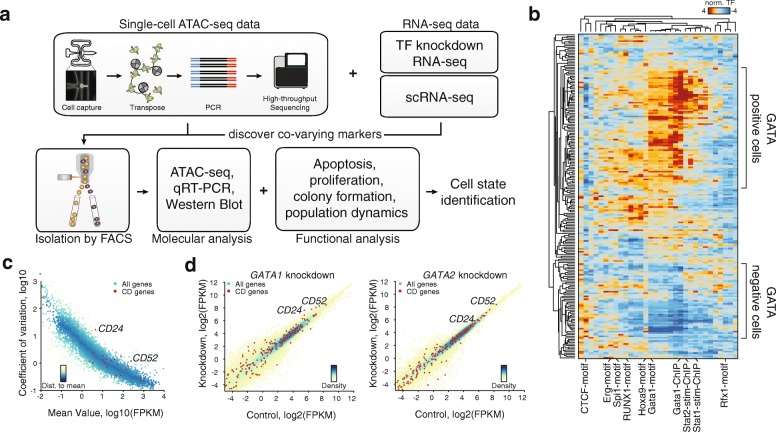
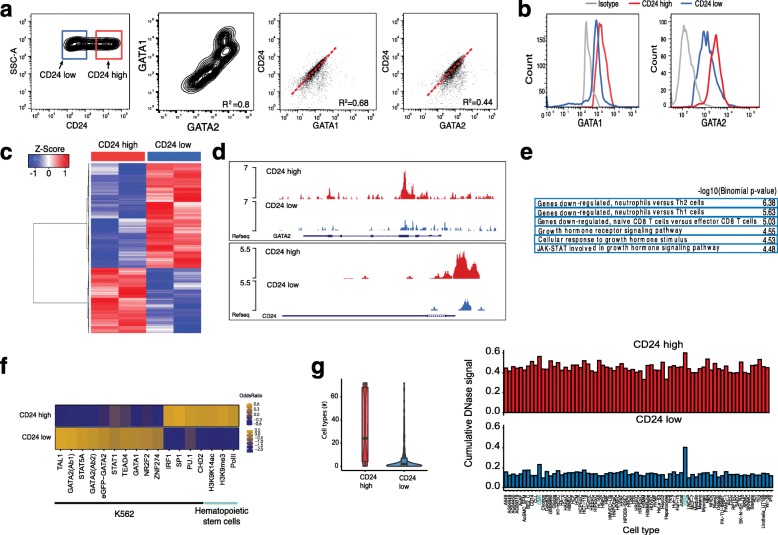
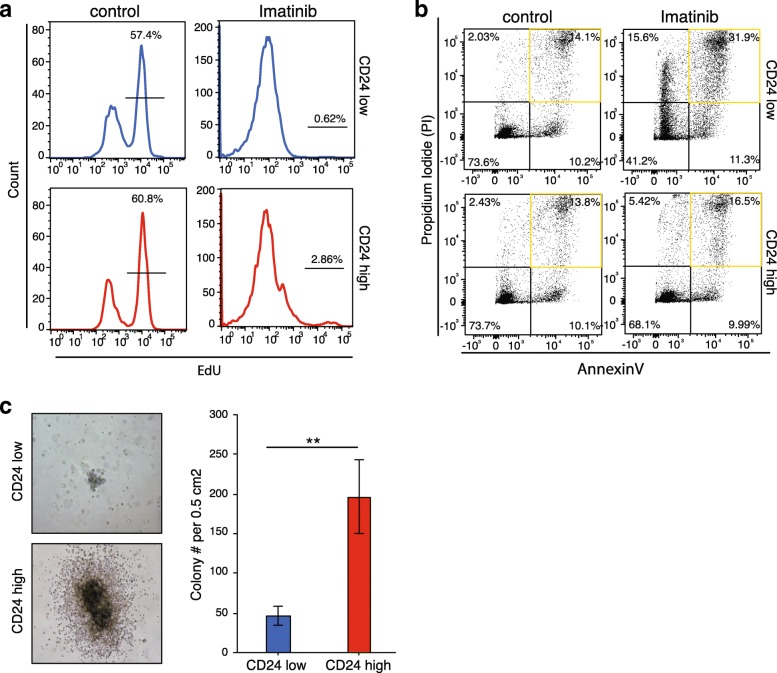
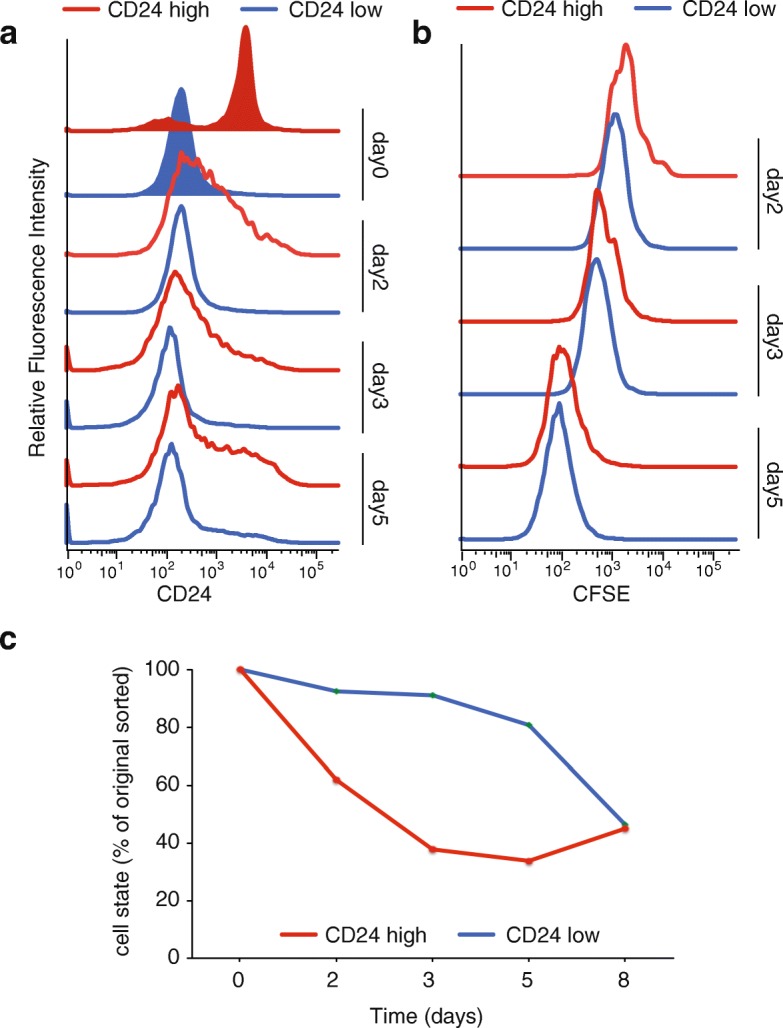
BACKGROUND: Cell-to-cell heterogeneity is a major driver of cancer evolution, progression, and emergence of drug resistance. Epigenomic variation at the single-cell level can rapidly create cancer heterogeneity but is difficult to detect and assess functionally. RESULTS: We develop a strategy to bridge the gap between measurement and function in single-cell epigenomics. Using single-cell chromatin accessibility and RNA-seq data in K562 leukemic cells, we identify the cell surface marker CD24 as co-varying with chromatin accessibility changes linked to GATA transcription factors in single cells. Fluorescence-activated cell sorting of CD24 high versus low cells prospectively isolated GATA1 and GATA2 high versus low cells. GATA high versus low cells express differential gene regulatory networks, differential sensitivity to the drug imatinib mesylate, and differential self-renewal capacity. Lineage tracing experiments show that GATA/CD24hi cells have the capability to rapidly reconstitute the heterogeneity within the entire starting population, suggesting that GATA expression levels drive a phenotypically relevant source of epigenomic plasticity. CONCLUSION: Single-cell chromatin accessibility can guide prospective characterization of cancer heterogeneity. Epigenomic subpopulations in cancer impact drug sensitivity and the clonal dynamics of cancer evolution.
Overview
The claims and statistics of this paper haven’t been checked yet.
Free: it reads the open-access text and checks the first 5 claims that cite a source we can check. Create a free account to check every claim.
Integrity signals
Registry
Cites
Statistics
Figures
Verification
Claims the paper makes
The claims and statistics of this paper haven’t been checked yet.
Free: it reads the open-access text and checks the first 5 claims that cite a source we can check. Create a free account to check every claim.
Claims other papers make about this one
Each is checked against this paper’s own text: does it say what the citing paper says it does?
In the citing paper
“Litzenburger et al. [76] combined scATAC-seq and scRNA-seq data from the same cell population to study effects of variation in DNA accessibility at GATA-binding sites and identified co-varying expression of cell surface markers.”
From Mapping gene regulatory networks from single-cell omics data (2018) · cites this paper as [76]
Self-check
Percentages, sums and reported differences re-computed from the paper’s own numbers.
The self-check needs the paper’s full text.
Citations
Cites
Trapnell, C., Cacchiarelli, D., Grimsby, J., Pokharel, P., Li, S., Morse, M., Lennon, N. J., Livak, K. J., Mikkelsen, T. S., & Rinn, J. L. (2014) · Nature Biotechnology · doi:10.1038/nbt.2859 · Cited by 7,314 · cited 1×
“Methods for measuring single-cell gene expression have begun to provide genome-wide measures of cell-to-cell differences; however, these methods provide only an indirect readout of genome-wide epigenomic variance [10, 11].”
MethodHighly parallel genome-wide expression profiling of individual cells using nanoliter droplets.
Macosko, E. Z., Basu, A., Satija, R., Nemesh, J., Shekhar, K., Goldman, M., Tirosh, I., Bialas, A. R., Kamitaki, N., Martersteck, E. M., et al. (2015) · Cell · doi:10.1016/j.cell.2015.05.002 · Cited by 7,110
High-Resolution Profiling of Histone Methylations in the Human Genome
Barski, A., Cuddapah, S., Cui, K., Roh, T.-Y., Schones, D. E., Wang, Z., Wei, G., Chepelev, I., & Zhao, K. (2007) · Cell · doi:10.1016/j.cell.2007.05.009 · Cited by 6,845
Buenrostro, J. D., Giresi, P. G., Zaba, L. C., Chang, H. Y., & Greenleaf, W. J. (2013) · Nature Methods · doi:10.1038/nmeth.2688 · Cited by 6,422 · cited 1×
“ATAC-seq measures regions of open chromatin using the Tn5-transposase, which preferentially inserts sequencing adapters into accessible chromatin [16].”
MethodSelf-citationGREAT improves functional interpretation of cis-regulatory regions
McLean, C. Y., Bristor, D., Hiller, M., Clarke, S. L., Schaar, B. T., Lowe, C. B., Wenger, A. M., & Bejerano, G. (2010) · Nature Biotechnology · doi:10.1038/nbt.1630 · Cited by 4,502
Genome-wide maps of chromatin state in pluripotent and lineage-committed cells
Mikkelsen, T. S., Ku, M., Jaffe, D. B., Issac, B., Lieberman, E., Giannoukos, G., Alvarez, P., Brockman, W., Kim, T.-K., Koche, R. P., et al. (2007) · Nature · doi:10.1038/nature06008 · Cited by 4,129 · cited 1×
“org/publicdomain/ze Methods for profiling the epigenomic landscape include bisulfite sequencing for analyzing DNA methylation, DNase-seq and MNase-seq [5–7] for accessibility or nucleosome positioning information, and chromatin immunoprecipitation followed by sequencing (ChIP-seq) for binding sites of individual facto…”
MethodDroplet barcoding for single-cell transcriptomics applied to embryonic stem cells
Klein, A. M., Mazutis, L., Akartuna, I., Tallapragada, N., Veres, A., Li, V., Peshkin, L., Weitz, D. A., & Kirschner, M. W. (2015) · Cell · doi:10.1016/j.cell.2015.04.044 · Cited by 3,356 · cited 1×
“Specifically, high-throughput scRNA-seq profiling has been shown to uncover gene-expression networks [58, 59].”
BackgroundATAC-seq: a method for assaying chromatin accessibility genome-wide
Buenrostro, J. D., Wu, B., Chang, H. Y., & Greenleaf, W. J. (2015) · Current Protocols in Molecular Biology · doi:10.1002/0471142727.mb2129s109 · Cited by 3,289
Self-citationHuman chronic myelogenous leukemia cell-line with positive Philadelphia chromosome
Lozzio, C., & Lozzio, B. (1975) · Blood · doi:10.1182/blood.v45.3.321.321 · Cited by 2,995
Genome-Wide Mapping of in Vivo Protein-DNA Interactions
Johnson, D. S., Mortazavi, A., Myers, R. M., & Wold, B. (2007) · Science · doi:10.1126/science.1141319 · Cited by 2,927
Genome-Scale CRISPR-Mediated Control of Gene Repression and Activation
Gilbert, L. A., Horlbeck, M. A., Adamson, B., Villalta, J. E., Chen, Y., Whitehead, E. H., Guimaraes, C., Panning, B., Ploegh, H. L., Bassik, M. C., et al. (2014) · Cell · doi:10.1016/j.cell.2014.09.029 · Cited by 2,728 · cited 1×
“With new genetic perturbation tools like CRISPR [55, 56] and CRISPRi [57], we anticipate this strategy to become more generally applicable and a common tool for single-cell epigenomics.”
MethodSingle-cell chromatin accessibility reveals principles of regulatory variation
Buenrostro, J. D., Wu, B., Litzenburger, U. M., Ruff, D., Gonzales, M. L., Snyder, M. P., Chang, H. Y., & Greenleaf, W. J. (2015) · Nature · doi:10.1038/nature14590 · Cited by 2,308 · cited 3×
“Single cell (sc)ATAC-seq has been used to identify specific transcription factors associated with cell-to-cell regulatory variability, such as GATA1 and GATA2 in K562 cells [19].”
BackgroundMethodSelf-citationA chemical method for fast and sensitive detection of DNA synthesis in vivo
Salic, A., & Mitchison, T. J. (2008) · Proceedings of the National Academy of Sciences · doi:10.1073/pnas.0712168105 · Cited by 1,861
High-Resolution CRISPR Screens Reveal Fitness Genes and Genotype-Specific Cancer Liabilities.
Hart, T., Chandrashekhar, M., Aregger, M., Steinhart, Z., Brown, K. R., MacLeod, G., Mis, M., Zimmermann, M., Fradet-Turcotte, A., Sun, S., et al. (2015) · Cell · doi:10.1016/j.cell.2015.11.015 · Cited by 1,571
Stochastic State Transitions Give Rise to Phenotypic Equilibrium in Populations of Cancer Cells
Gupta, P. B., Fillmore, C. M., Jiang, G., Shapira, S. D., Tao, K., Kuperwasser, C., & Lander, E. S. (2011) · Cell · doi:10.1016/j.cell.2011.07.026 · Cited by 1,475
High-Resolution Mapping and Characterization of Open Chromatin across the Genome
Boyle, A. P., Davis, S., Shulha, H. P., Meltzer, P., Margulies, E. H., Weng, Z., Furey, T. S., & Crawford, G. E. (2008) · Cell · doi:10.1016/j.cell.2007.12.014 · Cited by 1,415
Reconstructing lineage hierarchies of the distal lung epithelium using single-cell RNA-seq
Treutlein, B., Brownfield, D. G., Wu, A. R., Neff, N. F., Mantalas, G. L., Espinoza, F. H., Desai, T. J., Krasnow, M. A., & Quake, S. R. (2014) · Nature · doi:10.1038/nature13173 · Cited by 1,342 · cited 1×
“Methods for measuring single-cell gene expression have begun to provide genome-wide measures of cell-to-cell differences; however, these methods provide only an indirect readout of genome-wide epigenomic variance [10, 11].”
MethodPevny, L., Simon, M. C., Robertson, E., Klein, W. H., Tsai, S.-F., D'Agati, V., Orkin, S. H., & Costantini, F. (1991) · Nature · doi:10.1038/349257a0 · Cited by 1,308 · cited 1×
“Interestingly, ChIP-seq signals of TAL-1, GATA1, and GATA2, factors involved in hematopoietic differentiation [41, 42], are preferentially enriched in accessible locations in CD24 K562 cells.”
BackgroundMultiplex single-cell profiling of chromatin accessibility by combinatorial cellular indexing
Cusanovich, D. A., Daza, R., Adey, A., Pliner, H. A., Christiansen, L., Gunderson, K. L., Steemers, F. J., Trapnell, C., & Shendure, J. (2015) · Science · doi:10.1126/science.aab1601 · Cited by 1,248 · cited 1×
“As applied to single cells [18, 19], this method quantifies cell-to-cell variation in regions of chromatin accessibility.”
MethodSingle-cell genome-wide bisulfite sequencing for assessing epigenetic heterogeneity
Smallwood, S. A., Lee, H. J., Angermueller, C., Krueger, F., Saadeh, H., Peat, J., Andrews, S. R., Stegle, O., Reik, W., & Kelsey, G. (2014) · Nature Methods · doi:10.1038/nmeth.3035 · Cited by 1,125 · cited 1×
“Recently, single-cell methods for measuring DNA methylation [12, 13], histone modifications [14], and chromatin accessibility have been developed to directly quantify epigenomic variation within cellular populations [15–17]; nevertheless, the functional relevance of this observed epigenomic variability remains to be e…”
BackgroundMicalizzi, D. S., Farabaugh, S. M., & Ford, H. L. (2010) · Journal of Mammary Gland Biology and Neoplasia · doi:10.1007/s10911-010-9178-9 · Cited by 984
Giresi, P. G., Kim, J., McDaniell, R. M., Iyer, V. R., & Lieb, J. D. (2007) · Genome Research · doi:10.1101/gr.5533506 · Cited by 955
Pollen, A. A., Nowakowski, T. J., Shuga, J., Wang, X., Leyrat, A. A., Lui, J. H., Li, N., Szpankowski, L., Fowler, B., Chen, P., et al. (2014) · Nature Biotechnology · doi:10.1038/nbt.2967 · Cited by 920
Forcing cells to change lineages
Graf, T., & Enver, T. (2009) · Nature · doi:10.1038/nature08533 · Cited by 899
Single-cell ChIP-seq reveals cell subpopulations defined by chromatin state
Rotem, A., Ram, O., Shoresh, N., Sperling, R. A., Goren, A., Weitz, D. A., & Bernstein, B. E. (2015) · Nature Biotechnology · doi:10.1038/nbt.3383 · Cited by 854 · cited 1×
“Recently, single-cell methods for measuring DNA methylation [12, 13], histone modifications [14], and chromatin accessibility have been developed to directly quantify epigenomic variation within cellular populations [15–17]; nevertheless, the functional relevance of this observed epigenomic variability remains to be e…”
BackgroundImatinib Mesylate — A New Oral Targeted Therapy
Savage, D. G., & Antman, K. H. (2002) · New England Journal of Medicine · doi:10.1056/nejmra013339 · Cited by 844
Origin and progeny of reactive gliosis: A source of multipotent cells in the injured brain
Buffo, A., Rite, I., Tripathi, P., Lepier, A., Colak, D., Horn, A.-P., Mori, T., & Götz, M. (2008) · Proceedings of the National Academy of Sciences · doi:10.1073/pnas.0709002105 · Cited by 765
The T Cell Leukemia Oncoprotein SCL/tal-1 Is Essential for Development of All Hematopoietic Lineages
Porcher, C., Swat, W., Rockwell, K., Fujiwara, Y., Alt, F. W., & Orkin, S. H. (1996) · Cell · doi:10.1016/s0092-8674(00)80076-8 · Cited by 736
JAK/STAT, Raf/MEK/ERK, PI3K/Akt and BCR-ABL in cell cycle progression and leukemogenesis
Steelman, L. S., Pohnert, S. C., Shelton, J. G., Franklin, R. A., Bertrand, F. E., & McCubrey, J. A. (2004) · Leukemia · doi:10.1038/sj.leu.2403241 · Cited by 684
North, T. E., de Bruijn, M. F. T. R., Stacy, T., Talebian, L., Lind, E., Robin, C., Binder, M., Dzierzak, E., & Speck, N. A. (2002) · Immunity · doi:10.1016/s1074-7613(02)00296-0 · Cited by 583
Dedifferentiation and reprogramming: origins of cancer stem cells
Friedmann‐Morvinski, D., & Verma, I. M. (2014) · EMBO reports · doi:10.1002/embr.201338254 · Cited by 495
Nucleosome dynamics define transcriptional enhancers
He, H. H., Meyer, C. A., Shin, H., Bailey, S. T., Wei, G., Wang, Q., Zhang, Y., Xu, K., Ni, M., Lupien, M., et al. (2010) · Nature Genetics · doi:10.1038/ng.545 · Cited by 475
Wilson, N. K., Kent, D. G., Buettner, F., Shehata, M., Macaulay, I. C., Calero-Nieto, F. J., Sánchez Castillo, M., Oedekoven, C. A., Diamanti, E., Schulte, R., et al. (2015) · Cell Stem Cell · doi:10.1016/j.stem.2015.04.004 · Cited by 466 · cited 1×
“A similar approach has been described to resolve heterogeneity within stem cell populations, combining RNA-seq with flow cytometry data [54].”
MethodLOLA: enrichment analysis for genomic region sets and regulatory elements in R and Bioconductor
Sheffield, N. C., & Bock, C. (2016) · Bioinformatics · doi:10.1093/bioinformatics/btv612 · Cited by 454
Self-citationA Genome-wide CRISPR Screen in Primary Immune Cells to Dissect Regulatory Networks
Parnas, O., Jovanovic, M., Eisenhaure, T. M., Herbst, R. H., Dixit, A., Ye, C. J., Przybylski, D., Platt, R. J., Tirosh, I., Sanjana, N. E., et al. (2015) · Cell · doi:10.1016/j.cell.2015.06.059 · Cited by 440
Single-cell DNA methylome sequencing and bioinformatic inference of epigenomic cell-state dynamics
Farlik, M., Sheffield, N. C., Nuzzo, A., Datlinger, P., Schönegger, A., Klughammer, J., & Bock, C. (2015) · Cell Reports · doi:10.1016/j.celrep.2015.02.001 · Cited by 422 · cited 1×
“Recently, single-cell methods for measuring DNA methylation [12, 13], histone modifications [14], and chromatin accessibility have been developed to directly quantify epigenomic variation within cellular populations [15–17]; nevertheless, the functional relevance of this observed epigenomic variability remains to be e…”
BackgroundSelf-citationReactive Glia in the Injured Brain Acquire Stem Cell Properties in Response to Sonic Hedgehog
Sirko, S., Behrendt, G., Johansson, P. A., Tripathi, P., Costa, M. R., Bek, S., Heinrich, C., Tiedt, S., Colak, D., Dichgans, M., et al. (2013) · Cell Stem Cell · doi:10.1016/j.stem.2013.01.019 · Cited by 381
Discovering Hematopoietic Mechanisms through Genome-wide Analysis of GATA Factor Chromatin Occupancy
Fujiwara, T., O'Geen, H., Keles, S., Blahnik, K., Linnemann, A. K., Kang, Y.-A., Choi, K., Farnham, P. J., & Bresnick, E. H. (2009) · Molecular Cell · doi:10.1016/j.molcel.2009.11.001 · Cited by 350
Genome-wide detection of DNase I hypersensitive sites in single cells and FFPE tissue samples
Jin, W., Tang, Q., Wan, M., Cui, K., Zhang, Y., Ren, G., Ni, B., Sklar, J., Przytycka, T. M., Childs, R., et al. (2015) · Nature · doi:10.1038/nature15740 · Cited by 332
Dynamic regulation of PU.1 expression in multipotent hematopoietic progenitors
Nutt, S. L., Metcalf, D., D'Amico, A., Polli, M., & Wu, L. (2005) · The Journal of Experimental Medicine · doi:10.1084/jem.20041535 · Cited by 325 · cited 1×
“1 is a key regulator of hematopoietic differentiation, which is tightly regulated transcriptionally and not expressed in differentiated erythroid or myeloid cells [44] and thus implicates CD24 as a less differentiated “stem-like” subpopulation.”
BackgroundThe Jak-Stat pathway in normal and perturbed hematopoiesis
Ward, A. C., Touw, I., & Yoshimura, A. (2000) · Blood · doi:10.1182/blood.v95.1.19 · Cited by 313
GATA Switches as Developmental Drivers
Bresnick, E. H., Lee, H.-Y., Fujiwara, T., Johnson, K. D., & Keles, S. (2010) · Journal of Biological Chemistry · doi:10.1074/jbc.r110.159079 · Cited by 269
A Multipotential Leukemia Cell Line (K-562) of Human Origin
Lozzio, B. B., Lozzio, C. B., Bamberger, E. G., & Feliu, A. S. (1981) · Experimental Biology and Medicine · doi:10.3181/00379727-166-41106 · Cited by 242
Sheffield, N. C., Thurman, R. E., Song, L., Safi, A., Stamatoyannopoulos, J. A., Lenhard, B., Crawford, G. E., & Furey, T. S. (2013) · Genome Research · doi:10.1101/gr.152140.112 · Cited by 211
Self-citationSTAT signaling in the pathogenesis and treatment of leukemias
Lin, T. S., Mahajan, S., & Frank, D. A. (2000) · Oncogene · doi:10.1038/sj.onc.1203486 · Cited by 205
Rieger, M. A., & Schroeder, T. (2012) · Cold Spring Harbor Perspectives in Biology · doi:10.1101/cshperspect.a008250 · Cited by 187
The role of PU.1 and GATA-1 transcription factors during normal and leukemogenic hematopoiesis
Burda, P., Laslo, P., & Stopka, T. (2010) · Leukemia · doi:10.1038/leu.2010.104 · Cited by 184
JAK-STAT signaling activated by Abl oncogenes
Danial, N. N., & Rothman, P. B. (2000) · Oncogene · doi:10.1038/sj.onc.1203484 · Cited by 165
In vivo requirements for GATA‐1 functional domains during primitive and definitive erythropoiesis
Shimizu, R., Takahashi, S., Ohneda, K., Engel, J. D., & Yamamoto, M. P. (2001) · The EMBO Journal · doi:10.1093/emboj/20.18.5250 · Cited by 160
Integration of Hi-C and ChIP-seq data reveals distinct types of chromatin linkages
Lan, X., Witt, H. N., Katsumura, K. R., Ye, Z., Wang, Q., Bresnick, E. H., Farnham, P., & Jin, V. X. (2012) · Nucleic Acids Research · doi:10.1093/nar/gks501 · Cited by 124
HOXA9 promotes hematopoietic commitment of human embryonic stem cells
Ramos–Mejía, V., Navarro-Montero, Ó., Ayllón, V., Bueno, C., Romero, T., Real, P. J., & Menéndez, P. R. (2014) · Blood · doi:10.1182/blood-2014-03-558825 · Cited by 118
Minegishi, N., Suzuki, N., Yokomizo, T., Pan, X., Fujimoto, T., Takahashi, S., Hara, T., Miyajima, A., Nishikawa, S.-I., & Yamamoto, M. P. (2003) · Blood · doi:10.1182/blood-2002-12-3809 · Cited by 118
ERG promotes the maintenance of hematopoietic stem cells by restricting their differentiation
Knudsen, K. J., Rehn, M., Hasemann, M. S., Rapin, N., Bagger, F. O., Ohlsson, E., Willer, A., Frank, A.-K., Søndergaard, E., Jendholm, J., et al. (2015) · Genes & Development · doi:10.1101/gad.268409.115 · Cited by 98
Developmental control via GATA factor interplay at chromatin domains
Bresnick, E. H., Martowicz, M. L., Pal, S., & Johnson, K. D. (2005) · Journal of Cellular Physiology · doi:10.1002/jcp.20393 · Cited by 96
Nagai, T., Harigae, H., Ishihara, H., Motohashi, H., Minegishi, N., Tsuchiya, S., Hayashi, N., Gu, L., Andres, B., & Engel, J. (1994) · Blood · doi:10.1182/blood.v84.4.1074.1074 · Cited by 94
The effects of transcription factor competition on gene regulation
Zabet, N. R., & Adryan, B. (2013) · Frontiers in Genetics · doi:10.3389/fgene.2013.00197 · Cited by 47
Histone demethylase LSD1-mediated repression of GATA-2 is critical for erythroid differentiation
Hu, X., Liu, Y., Sun, J., Jin, Y., Guo, Y., Huo, B., Li, X., & Fu, X. (2015) · Drug Design Development and Therapy · doi:10.2147/dddt.s81911 · Cited by 27
GATA-1, GATA-2, and stem cell leukemia gene expression in acute myeloid leukemia.
Shimamoto, T., Ohyashiki, J. H., Ohyashiki, K., Kawakubo, K., Kimura, N., Nakazawa, S., & Toyama, K. (1994) · PubMed · Cited by 23
Expression of GATA transcription factors in myelogenous and lymphoblastic leukemia cells.
Minegishi (1997) · International Journal of Hematology · doi:10.1016/s0925-5710(96)00553-1 · Cited by 20
Histone Demethylase LSD1-Mediated Repression of GATA-2 Is Critical for Erythroid Differentiation
Guo, Y., Li, Y., Huang, T., Liang, D., Li, Z., & Hu, X. (2014) · Blood · doi:10.1182/blood.v124.21.5128.5128 · Cited by 10
Cited by
From reads to insight: a hitchhiker’s guide to ATAC-seq data analysis
Yan, F., Powell, D. R., Curtis, D. J., & Wong, N. C. (2020) · Genome Biology · doi:10.1186/s13059-020-1929-3 · Cited by 473
Making Waves: New Developments in Toxicology With the Zebrafish
Horzmann, K. A., & Freeman, J. L. (2018) · Toxicological Sciences · doi:10.1093/toxsci/kfy044 · Cited by 332
The epigenetic basis of cellular heterogeneity
Carter, B., & Zhao, K. (2021) · Nature Reviews Genetics · doi:10.1038/s41576-020-00300-0 · Cited by 314
Status and Challenges of Plant-Anticancer Compounds in Cancer Treatment
Garcia-Oliveira, P., Otero, P., Pereira, A. G., Chamorro, F., Carpena, M., Echave, J., Fraga-Corral, M., Simal-Gandara, J., & Prieto, M. A. (2021) · Pharmaceuticals · doi:10.3390/ph14020157 · Cited by 303
Cancer epigenetics in clinical practice
Davalos, V., & Esteller, M. (2023) · CA: A Cancer Journal for Clinicians · doi:10.3322/caac.21765 · Cited by 237
Metadata
- Authors
- Litzenburger, U. M., Buenrostro, J. D., Wu, B., Shen, Y., Sheffield, N. C., Kathiria, A., Greenleaf, W. J., & Chang, H. Y.
- Affiliations
- Stanford Medicine (US)
- Broad Institute (US)
- Corresponding author
- Greenleaf, William J.
- Chang, Howard Y.
- ORCID
- Venue
- Genome Biology
- Published
- 2017-01-24
- Volume
- 18
- Issue
- 1
- Pages
- 15-15
- ISSN
- 1465-6906 (ISSN-L)
- 1474-760X
- PMC
- PMC5259890
- OpenAlex
- W2582450548
- Cited by
- 115
- References
- 60
- Citations by year
- 2026: 5 · 2025: 5 · 2024: 14 · 2023: 10 · 2022: 9 · 2021: 22 · 2020: 18 · 2019: 13 · 2018: 13 · 2017: 6
- FWCI
- 5.59
- Type
- journal article
- Language
- en
- Open access
- gold
- doi.org
- Licence
- cc-by
- creativecommons.org/licenses/by/4.0/ (tdm)
- creativecommons.org/licenses/by/4.0/ (vor)
- Locations
- Genome biology (publishedVersion, cc-by)
- PubMed Central (publishedVersion, cc-by)
- PubMed (publishedVersion)
- Digital Access to Scholarship at Harvard (DASH) (Harvard University) (submittedVersion, cc-by)
- eScholarship (California Digital Library) (submittedVersion)
- eScholarship (California Digital Library) (submittedVersion, cc-by)
- Funders
- National Institutes of Health (P50-HG007735, R35-CA209919)
- Human Frontier Science Program (LT000211/2014)
- Topics
- Life Sciences › Biochemistry, Genetics and Molecular Biology › Molecular Biology › Epigenetics and DNA Methylation
- Life Sciences › Biochemistry, Genetics and Molecular Biology › Molecular Biology › Genomics and Chromatin Dynamics
- Life Sciences › Biochemistry, Genetics and Molecular Biology › Molecular Biology › Single-cell and spatial transcriptomics
- Keywords
- tumor heterogeneity, single-cell chromatin accessibility, CD24, GATA-1, GATA2, K562 cells, chronic myeloid leukemia, imatinib resistance, drug sensitivity, self-renewal, lineage tracing, clonal dynamics, gene regulatory networks, cell surface markers
- MeSH terms
- Antigens, Surface, Humans, Neoplasms, Genetic Variation, Reproducibility of Results, Biomarkers, Immunophenotyping, Genetic Heterogeneity, K562 Cells, Epigenesis, Genetic, Cell Line, Tumor, Epigenomics, Single-Cell Analysis, High-Throughput Nucleotide Sequencing, Nucleotide Motifs
About these checks
Registry, retraction, Cites and statistics results are computed, not judged, with one exception: a printed reference that no index lists is read once by a model before it counts as a citation error. Claims are extracted by a model and kept only when their quote appears verbatim in the text; each cited source is then checked, with a model’s help, for whether it says what the claim relies on. Those verdicts can be wrong — read the claim’s quote and the cited source before relying on one.
Statistics and arithmetic are recomputed, not judged.
Confidence bands are shown only for fields calibrated on our annotated test set. None is calibrated yet, so no band is shown.
What counts as a claim ›How we measure confidence ›How we check this ›
Are you an author, or do you see a problem with this page? Request a review
Data sources
Bibliographic data: Semantic Scholar, OpenAlex, Crossref.
Contains information from the Semantic Scholar Academic Graph Datasets, made available under the ODC Attribution License (ODC-BY 1.0).
Semantic Scholar’s data is described in: Kinney, R., et al. (2023). The Semantic Scholar Open Data Platform. arXiv:2301.10140.
