

Single-cell transcriptomics unveils gene regulatory network plasticity
Open accessPublished version of a preprint
The DOI matches its Crossref record; 67 of the 68 references it cites were found in a registry or an index.
Abstract
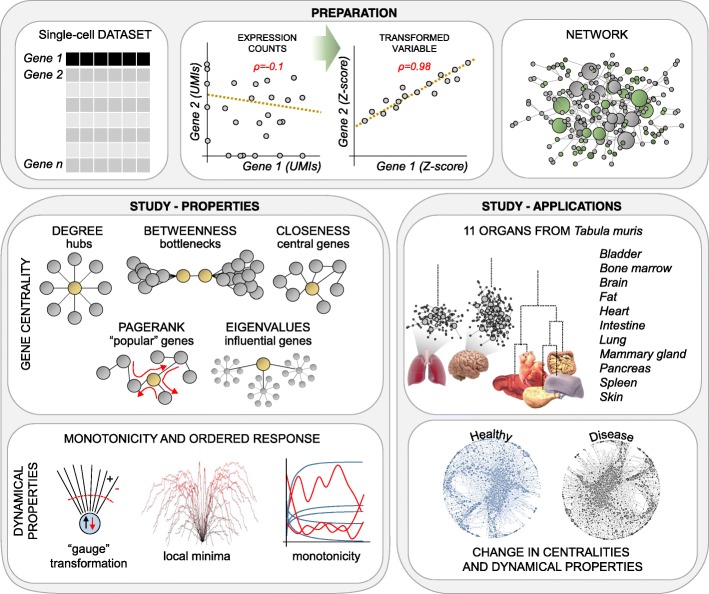
BACKGROUND: Single-cell RNA sequencing (scRNA-seq) plays a pivotal role in our understanding of cellular heterogeneity. Current analytical workflows are driven by categorizing principles that consider cells as individual entities and classify them into complex taxonomies. RESULTS: We devise a conceptually different computational framework based on a holistic view, where single-cell datasets are used to infer global, large-scale regulatory networks. We develop correlation metrics that are specifically tailored to single-cell data, and then generate, validate, and interpret single-cell-derived regulatory networks from organs and perturbed systems, such as diabetes and Alzheimer's disease. Using tools from graph theory, we compute an unbiased quantification of a gene's biological relevance and accurately pinpoint key players in organ function and drivers of diseases. CONCLUSIONS: Our approach detects multiple latent regulatory changes that are invisible to single-cell workflows based on clustering or differential expression analysis, significantly broadening the biological insights that can be obtained with this leading technology.
Overview
The claims and statistics of this paper haven’t been checked yet.
Free: it reads the open-access text and checks the first 5 claims that cite a source we can check. Create a free account to check every claim.
Integrity signals
Registry
Cites
Statistics
Figures
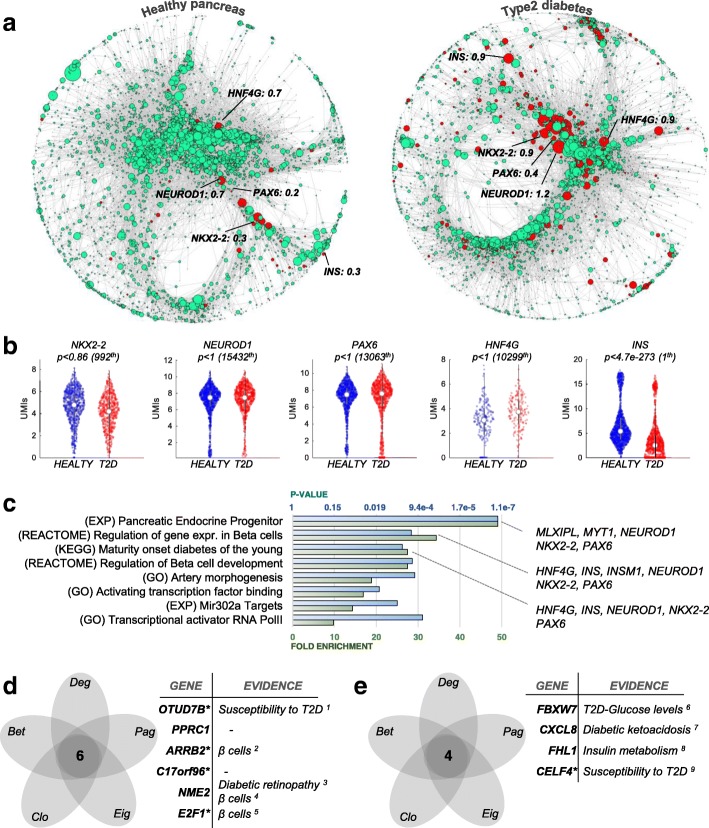
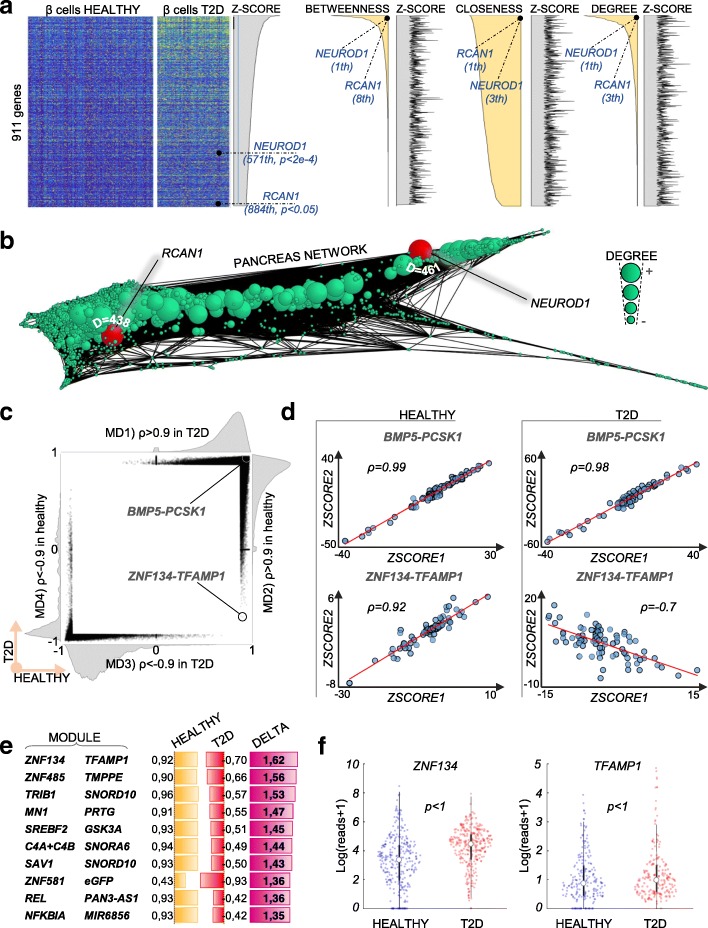
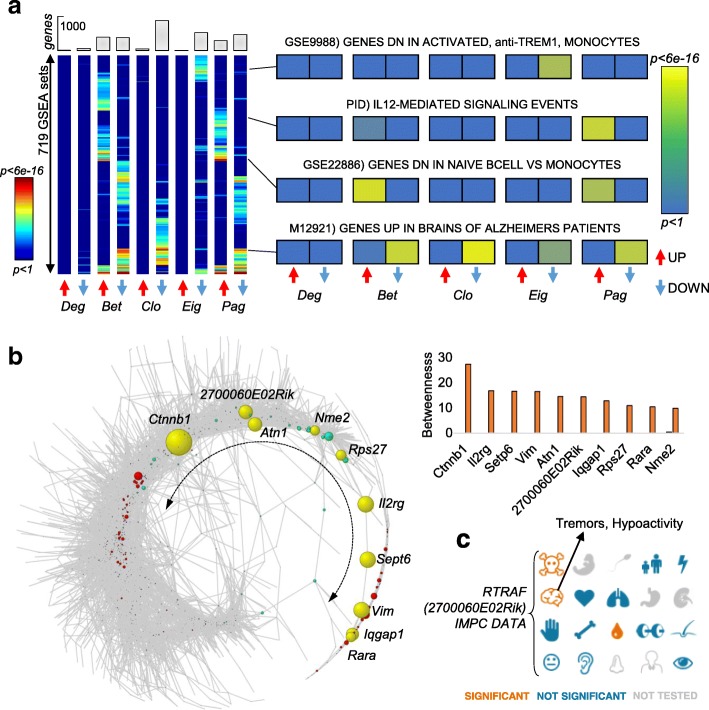
Verification
Claims the paper makes
The claims and statistics of this paper haven’t been checked yet.
Free: it reads the open-access text and checks the first 5 claims that cite a source we can check. Create a free account to check every claim.
Claims other papers make about this one
Each is checked against this paper’s own text: does it say what the citing paper says it does?
The cited source says what the claim attributes to it.
In the citing paper
“In this respect, gene-regulatory network (GRN) modelling approaches are promising as they reconstruct systematic gene–gene associations from unperturbed single-cell omics data6–11.”
From Dissecting cell identity via network inference and in silico gene perturbation (2023) · cites this paper as [8]
Self-check
Percentages, sums and reported differences re-computed from the paper’s own numbers.
The self-check needs the paper’s full text.
Citations
Cites
Scenic: single-cell regulatory network inference and clustering.
Aibar, S., González-Blas, C. B., Moerman, T., Huynh-Thu, V. A., Imrichova, H., Hulselmans, G., Rambow, F., Marine, J.-C., Geurts, P., Aerts, J., et al. (2017) · Nature Methods · doi:10.1038/nmeth.4463 · Cited by 6,520 · cited 1×
“More recently, Aibar and colleagues developed the first tool designed to infer transcription factors and their target genes from single-cell data [60].”
BackgroundA Unique Microglia Type Associated with Restricting Development of Alzheimer’s Disease
Keren-Shaul, H., Spinrad, A., Weiner, A., Matcovitch-Natan, O., Dvir-Szternfeld, R., Ulland, T. K., David, E., Baruch, K., Lara-Astaiso, D., Toth, B., et al. (2017) · Cell · doi:10.1016/j.cell.2017.05.018 · Cited by 5,493
Cell types in the mouse cortex and hippocampus revealed by single-cell RNA-seq
Zeisel, A., Muñoz-Manchado, A. B., Codeluppi, S., Lönnerberg, P., La Manno, G., Juréus, A., Marques, S., Munguba, H., He, L., Betsholtz, C., et al. (2015) · Science · doi:10.1126/science.aaa1934 · Cited by 3,124
Single-cell transcriptomics of 20 mouse organs creates a Tabula Muris
The Tabula Muris Consortium, coordination, O., coordination, L., processing, O. C. A., sequencing, L. P. A., analysis, C. D., annotation, C. T., Writing group, Supplemental text writing group, & Principal investigators (2018) · Nature · doi:10.1038/s41586-018-0590-4 · Cited by 2,842 · cited 6×
“We apply this new metric to generate global, large scale regulatory networks for 11 mouse organs (Tabula Muris Consortium et al., 2018), for pancreas tissue from healthy individuals and patients with type 2 diabetes (Segerstolpe et al., 2016), and for a mouse model of Alzheimer’s disease (Keren-Shaul et al., 2017).”
MethodInfluentialMolecular Architecture of the Mouse Nervous System
Zeisel, A., Hochgerner, H., Lönnerberg, P., Johnsson, A., Memic, F., van der Zwan, J., Häring, M., Braun, E., Borm, L. E., La Manno, G., et al. (2018) · Cell · doi:10.1016/j.cell.2018.06.021 · Cited by 2,552
Using GOstats to test gene lists for GO term association
Falcon, S., & Gentleman, R. (2007) · Bioinformatics · doi:10.1093/bioinformatics/btl567 · Cited by 2,015
Recovering Gene Interactions from Single-Cell Data Using Data Diffusion
van Dijk, D., Sharma, R., Nainys, J., Yim, K., Kathail, P., Carr, A. J., Burdziak, C., Moon, K. R., Chaffer, C. L., Pattabiraman, D., et al. (2018) · Cell · doi:10.1016/j.cell.2018.05.061 · Cited by 1,829 · cited 1×
“We further tested MAGIC, a Markov affinity-based graph imputation method, previously shown to be able to denoise count matrixes and to fill in missing transcripts [23].”
MethodSingle-Cell Transcriptome Profiling of Human Pancreatic Islets in Health and Type 2 Diabetes
Segerstolpe, Å., Palasantza, A., Eliasson, P., Andersson, E.-M., Andréasson, A.-C., Sun, X., Picelli, S., Sabirsh, A., Clausen, M., Bjursell, M. K., et al. (2016) · Cell Metabolism · doi:10.1016/j.cmet.2016.08.020 · Cited by 1,550
Itani, S. I., Ruderman, N. B., Schmieder, F., & Boden, G. (2002) · Diabetes · doi:10.2337/diabetes.51.7.2005 · Cited by 1,390
Scale-free networks in cell biology
Albert, R. (2005) · Journal of Cell Science · doi:10.1242/jcs.02714 · Cited by 1,215
Cited by
Adams, T. S., Schupp, J. C., Poli, S., Ayaub, E. A., Neumark, N., Ahangari, F., Chu, S. G., Raby, B. A., DeIuliis, G., Januszyk, M., et al. (2020) · Science Advances · doi:10.1126/sciadv.aba1983 · Cited by 1,420
“B (31) B plasma (32) cDC2 (25) cDC1 (26) DC mature (27) DC langerhans (28) pDC (29) ILC A (37) ILC B (38) MΦ (23) MΦ alveolar (24) Mast (30) cMonocyte (21) ncMonocyte (22)”
MethodA new gene set identifies senescent cells and predicts senescence-associated pathways across tissues
Saul, D., Kosinsky, R. L., Atkinson, E. J., Doolittle, M. L., Zhang, X., LeBrasseur, N. K., Pignolo, R. J., Robbins, P. D., Niedernhofer, L. J., Ikeno, Y., et al. (2022) · Nature Communications · doi:10.1038/s41467-022-32552-1 · Cited by 1,022
Dissecting cell identity via network inference and in silico gene perturbation
Kamimoto, K., Stringa, B., Hoffmann, C. M., Jindal, K., Solnica-Krezel, L., & Morris, S. A. (2023) · Nature · doi:10.1038/s41586-022-05688-9 · Cited by 677
Hoeft, K., Schaefer, G. J. L., Kim, H., Schumacher, D., Bleckwehl, T., Long, Q., Klinkhammer, B. M., Peisker, F., Koch, L., Nagai, J., et al. (2023) · Cell Reports · doi:10.1016/j.celrep.2023.112131 · Cited by 326
Quiescent cancer cells resist T cell attack by forming an immunosuppressive niche
Baldominos, P., Barbera-Mourelle, A., Barreiro, O., Huang, Y., Wight, A., Cho, J.-W., Zhao, X., Estivill, G., Adam, I., Sanchez, X., et al. (2022) · Cell · doi:10.1016/j.cell.2022.03.033 · Cited by 317
The single-cell eQTLGen consortium
van der Wijst, M., de Vries, D., Groot, H., Trynka, G., Hon, C., Bonder, M., Stegle, O., Nawijn, M., Idaghdour, Y., van der Harst, P., et al. (2020) · eLife · doi:10.7554/elife.52155 · Cited by 218
“Sorting (Fairfax et al., 2012; Ishigaki et al., 2017) and computational deconvolution (Westra et al., *For correspondence:m.g.p.van. der.wijst@umcg.nl †These authors contributed equally to this work Competing interests: The authors declare that no competing interests exist.”
BackgroundDeciphering cell lineage specification of human lung adenocarcinoma with single-cell RNA sequencing
Wang, Z., Li, Z., Zhou, K., Wang, C., Jiang, L., Zhang, L., Yang, Y., Luo, W., Qiao, W., Wang, G., et al. (2021) · Nature Communications · doi:10.1038/s41467-021-26770-2 · Cited by 185
Single-cell biological network inference using a heterogeneous graph transformer
Ma, A., Wang, X., Li, J., Wang, C., Xiao, T., Liu, Y., Cheng, H., Wang, J., Li, Y., Chang, Y., et al. (2023) · Nature Communications · doi:10.1038/s41467-023-36559-0 · Cited by 184
An atlas of cells in the human tonsil
Massoni-Badosa, R., Aguilar-Fernández, S., Nieto, J. C., Soler-Vila, P., Elosua-Bayes, M., Marchese, D., Kulis, M., Vilas-Zornoza, A., Bühler, M. M., Rashmi, S., et al. (2024) · Immunity · doi:10.1016/j.immuni.2024.01.006 · Cited by 183
“Because these TFs are expressed at low levels and affected by technical dropout events (Iacono et al., 2019), we inferred their activity using gene regulatory network (GRN) modeling (Van de Sande et al.”
MethodSelf-citationDecoding gene regulation in the fly brain
Janssens, J., Aibar, S., Taskiran, I. I., Ismail, J. N., Spanier, K. I., Bravo González-Blas, C., Quan, X. J., Papasokrati, D., Hulselmans, G., Makhzami, S., et al. (2021) · doi:10.1101/2021.08.11.454937 · Cited by 170
Decoding gene regulation in the fly brain
Janssens, J., Aibar, S., Taskiran, I. I., Ismail, J. N., Gomez, A. E., Aughey, G., Spanier, K. I., De Rop, F. V., González-Blas, C. B., Dionne, M., et al. (2022) · Nature · doi:10.1038/s41586-021-04262-z · Cited by 170
Single-cell network biology for resolving cellular heterogeneity in human diseases
Cha, J., & Lee, I. (2020) · Experimental & Molecular Medicine · doi:10.1038/s12276-020-00528-0 · Cited by 161
Liu, X., Chen, W., Zeng, Q., Ma, B., Li, Z., Meng, T., Chen, J., Yu, N., Zhou, Z., & Long, X. (2021) · Journal of Investigative Dermatology · doi:10.1016/j.jid.2021.06.010 · Cited by 154
A comprehensive overview and critical evaluation of gene regulatory network inference technologies
Zhao, M., He, W., Tang, J., Zou, Q., & Guo, F. (2021) · Briefings in Bioinformatics · doi:10.1093/bib/bbab009 · Cited by 150
Correlation AnalyzeR: functional predictions from gene co-expression correlations
Miller, H. E., & Bishop, A. J. R. (2021) · BMC Bioinformatics · doi:10.1186/s12859-021-04130-7 · Cited by 136
“Finally, one of the primary emerging applications for co-expression correlation analysis is single-cell RNA-Sequencing [69, 70].”
BackgroundModeling Human TBX5 Haploinsufficiency Predicts Regulatory Networks for Congenital Heart Disease
Kathiriya, I. S., Rao, K. S., Iacono, G., Devine, W. P., Blair, A. P., Hota, S. K., Lai, M. H., Garay, B. I., Thomas, R., Gong, H. Z., et al. (2021) · Developmental Cell · doi:10.1016/j.devcel.2020.11.020 · Cited by 116
“com/iaconogi/ bigSCale2) (Iacono et al., 2019; 2018) was used with default parameters to infer gene regulatory networks and “correlomes” from single cell RNA-seq expression data for TNNT2+ cells.”
MethodSelf-citationGRNdb: decoding the gene regulatory networks in diverse human and mouse conditions
Li, F., Li, Y., Ma, L., Xu, Q., Tan, F., & Chen, G. (2020) · Nucleic Acids Research · doi:10.1093/nar/gkaa995 · Cited by 124
“Since TFs may regulate distinct sets of downstream target genes under disparate conditions (2), it is crucial to take the spatiotemporal specificity of gene expression regulation into account.”
BackgroundLiu, X., Chen, W., Zhu, G., Yang, H., Li, W., Luo, M., Shu, C., & Zhou, Z. (2022) · Cell Discovery · doi:10.1038/s41421-021-00362-2 · Cited by 121
Mullane, K., & Williams, M. (2020) · Biochemical Pharmacology · doi:10.1016/j.bcp.2020.113945 · Cited by 105
Integrative analysis of cell state changes in lung fibrosis with peripheral protein biomarkers
Mayr, C. H., Simon, L. M., Leuschner, G., Ansari, M., Schniering, J., Geyer, P. E., Angelidis, I., Strunz, M., Singh, P., Kneidinger, N., et al. (2021) · EMBO Molecular Medicine · doi:10.15252/emmm.202012871 · Cited by 106
“To mitigate the impact of sparse counts on correlation measures, we aggregated cells into small clusters of transcriptionally similar cells before calculating correlation following previous work (Iacono et al, 2019).”
MethodImputing single-cell RNA-seq data by combining graph convolution and autoencoder neural networks
Rao, J., Zhou, X., Lu, Y., Zhao, H., & Yang, Y. (2021) · iScience · doi:10.1016/j.isci.2021.102393 · Cited by 108
SERGIO: A Single-Cell Expression Simulator Guided by Gene Regulatory Networks
Dibaeinia, P., & Sinha, S. (2020) · Cell Systems · doi:10.1016/j.cels.2020.08.003 · Cited by 108
Wang, M., Song, W., Chen, M., Wang, Q., Zhou, X., Xu, P., Krek, A., Yoon, Y., Ho, L., Orr, M. E., et al. (2022) · Molecular Neurodegeneration · doi:10.1186/s13024-022-00517-z · Cited by 110
Zhao, M., He, W., Tang, J., Zou, Q., & Guo, F. (2022) · Briefings in Bioinformatics · doi:10.1093/bib/bbab568 · Cited by 109
Recent advances in network-based methods for disease gene prediction
Ata, S. K., Wu, M., Fang, Y., Ou-Yang, L., Kwoh, C. K., & Li, X.-L. (2020) · Briefings in Bioinformatics · doi:10.1093/bib/bbaa303 · Cited by 109
Liu, X., Yin, K., Chen, L., Chen, W., Li, W., Zhang, T., Sun, Y., Yuan, M., Wang, H., Song, Y., et al. (2023) · Cell Discovery · doi:10.1038/s41421-022-00490-3 · Cited by 110
Computational Methods for Single-Cell RNA Sequencing
Hie, B., Peters, J., Nyquist, S. K., Shalek, A. K., Berger, B., & Bryson, B. D. (2020) · Annual Review of Biomedical Data Science · doi:10.1146/annurev-biodatasci-012220-100601 · Cited by 89
CellOracle: Dissecting cell identity via network inference and in silico gene perturbation
Kamimoto, K., Hoffmann, C. M., & Morris, S. A. (2020) · doi:10.1101/2020.02.17.947416 · Cited by 81
Single cell transcriptome research in human placenta
Li, H., Huang, Q., Liu, Y., & Garmire, L. X. (2020) · Reproduction · doi:10.1530/rep-20-0231 · Cited by 81
Zhou, S., Huang, Y., Liu, H., Zhou, X., Yuan, M., Hou, F., Wang, L., & Jiang, W. (2020) · Molecular Therapy — Nucleic Acids · doi:10.1016/j.omtn.2020.12.018 · Cited by 81
“In this study, we used degree, betweenness, eigenvalue, PageRank, and closeness to evaluate the centrality of nodes.(13) Degree is the number of adjacent nodes of the corresponding node.”
BackgroundMethodInfluentialSingle-Cell RNA Sequencing: Technological Progress and Biomedical Application in Cancer Research
Xu, C., Zheng, Y., & Xu, K. (2023) · Molecular Biotechnology · doi:10.1007/s12033-023-00777-0 · Cited by 85
“For ethical reasons, it is difficult to acquire information on the lineage potential and hierarchical connections among early human hematopoietic progenitors [52, 56].”
BackgroundNetwork modeling of single-cell omics data: challenges, opportunities, and progresses
Blencowe, M., Arneson, D., Ding, J., Chen, Y.-W., Saleem, Z., & Yang, X. (2019) · Emerging Topics in Life Sciences · doi:10.1042/etls20180176 · Cited by 73
Nault, R., Fader, K. A., Bhattacharya, S., & Zacharewski, T. R. (2021) · Cellular and Molecular Gastroenterology and Hepatology · doi:10.1016/j.jcmgh.2020.07.012 · Cited by 69
Androvic, P., Schifferer, M., Perez Anderson, K., Cantuti-Castelvetri, L., Jiang, H., Ji, H., Liu, L., Gouna, G., Berghoff, S. A., Besson-Girard, S., et al. (2023) · Nature Communications · doi:10.1038/s41467-023-39447-9 · Cited by 67
“Thisapproachgroupstranscriptionallysimilar cellsintometacellstorobustlycalculatecorrelationsbyaccountingfor sparsityandnoiseknowntohampersingle-cellcorrelationanalyses 46,47 (Methods).”
MethodA review of dynamical systems approaches for the detection of chaotic attractors in cancer networks
Uthamacumaran, A. (2021) · Patterns · doi:10.1016/j.patter.2021.100226 · Cited by 77
“130 Z scores are preferred over Pearson or Spearman correlation metrics for single-cell datasets, while the latter may be better suited for bulk RNA-seq datasets.”
BackgroundInfluentialA root phloem pole cell atlas reveals common transcriptional states in protophloem-adjacent cells
Otero, S., Gildea, I., Roszak, P., Lu, Y., Vittori, V. D., Bourdon, M., Kalmbach, L., Blob, B., Heo, J., Peruzzo, F., et al. (2022) · Nature Plants · doi:10.1038/s41477-022-01178-y · Cited by 70
Tolios, A., Rivas, J. D. L., Hovig, E. J., Trouillas, P., Scorilas, A., & Mohr, T. T. (2019) · Drug Resistance Updates · doi:10.1016/j.drup.2019.100662 · Cited by 74
A New Gene Set Identifies Senescent Cells and Predicts Senescence-Associated Pathways Across Tissues
(2021) · doi:10.1101/2021.12.10.472095 · Cited by 58
Short-term PM2.5 exposure induces transient lung injury and repair
Li, Y., Lin, B., Hao, D., Du, Z., Wang, Q., Song, Z., Li, X., Li, K., Wang, J., Zhang, Q., et al. (2023) · Journal of Hazardous Materials · doi:10.1016/j.jhazmat.2023.132227 · Cited by 59
Liu, X., Yuan, M., Xiang, Q., Li, Z., Xu, F., Chen, W., Chen, J., Huang, J., Yu, N., Zhou, Z., et al. (2022) · Cell Discovery · doi:10.1038/s41421-022-00402-5 · Cited by 68
Network Approaches for Dissecting the Immune System
Shi, H., Yan, K., Ding, L., Qian, C., Chi, H., & Yu, J. (2020) · iScience · doi:10.1016/j.isci.2020.101354 · Cited by 56
Sequential progenitor states mark the generation of pancreatic endocrine lineages in mice and humans
Yu, X., Qiu, W., Yang, L., Wang, Y., He, M., Wang, D., Zhang, Y., Li, L., Zhang, J., Wang, Y. H., et al. (2021) · Cell Research · doi:10.1038/s41422-021-00486-w · Cited by 56
Johnson, T. S., Yu, C. Y., Huang, Z., Xu, S., Wang, T., Dong, C., Shao, W., Zaid, M. I. A., Huang, X., Wang, Y., et al. (2022) · Genome Medicine · doi:10.1186/s13073-022-01012-2 · Cited by 64
“The gene expression was converted to sample-wise z -scores because it allows the genes to be more comparable between samples and has been performed in multiple other studies [28, 53 – 55].”
MethodLee, C.-M., Zhou, L., Liu, J., Shi, J., Geng, Y., Liu, M., Wang, J., Su, X., Barad, N., Wang, J., et al. (2020) · Proceedings of the National Academy of Sciences · doi:10.1073/pnas.1918883117 · Cited by 47
“The NPC1, NPC2, and CH clusters of each condition (CTL and TAM) were merged and served as the input for inferring the putative gene-to-gene correlated network using the bigSCale2 algorithm (28).”
MethodBridges, K., & Miller‐Jensen, K. (2022) · Frontiers in Immunology · doi:10.3389/fimmu.2022.885267 · Cited by 54
“While centralitymetrics areoften reserved for analyzing scRNAseq-derived gene regulatory networks (3, 147), they are becoming a useful tool to evaluate cell-cell communication.”
BackgroundMethodBeppu, A., Zhao, J., Yao, C., Carraro, G., Israely, E., Coelho, A. L., Drake, K., Hogaboam, C. M., Parks, W. C., Kolls, J. K., et al. (2023) · Nature Communications · doi:10.1038/s41467-023-41387-3 · Cited by 54
“To gain further insights into pathways regulating the behavior of either IS or BC, we evaluated changes in regulatory genes over the time course of PR8 infection and recovery using Bigscale2 32,33 .”
Li, G., Zhao, H., Cheng, Z., Liu, J., Li, G., & Guo, Y. (2024) · Journal of Advanced Research · doi:10.1016/j.jare.2024.02.006 · Cited by 48
Transcriptional Networks of Microglia in Alzheimer’s Disease and Insights into Pathogenesis
Chew, G., & Petretto, E. G. (2019) · Genes · doi:10.3390/genes10100798 · Cited by 51
scLink: Inferring Sparse Gene Co-Expression Networks from Single-Cell Expression Data
Li, W. V., & Li, Y. (2021) · Genomics Proteomics & Bioinformatics · doi:10.1016/j.gpb.2020.11.006 · Cited by 47
“In bulk RNA-seq data analysis, gene network studies mostly rely on the Pearson or Spearman’s correlation coefficients to characterize the gene co-expression strength [17,18].”
Kim, A., Bellar, A., McMullen, M. R., Li, X., & Nagy, L. E. (2020) · Hepatology Communications · doi:10.1002/hep4.1563 · Cited by 44
Advances in Mass Spectrometry-Based Single Cell Analysis
Lee, S., Vu, H. M., Lee, J., Lim, H., & Kim, M. (2023) · Biology · doi:10.3390/biology12030395 · Cited by 53
Constructing local cell-specific networks from single-cell data
Wang, X., Choi, D. S., & Roeder, K. (2021) · Proceedings of the National Academy of Sciences · doi:10.1073/pnas.2113178118 · Cited by 47
“Likewise, simulations show that BigSCale (12), a powerful alternative approach for coexpression estimation, yields many false connections not detected by locCSN ( SI Appendix , Fig.”
Pokhilko, A. V., Handel, A. E., Curion, F., Volpato, V., Whiteley, E. S., Bøstrand, S. M. K., Newey, S. E., Akerman, C. J., Webber, C., Clark, M. B., et al. (2021) · Genome Research · doi:10.1101/gr.273961.120 · Cited by 44
Peng, G., Cui, G., Ke, J., & Jing, N. (2020) · Annual Review of Genomics and Human Genetics · doi:10.1146/annurev-genom-120219-083220 · Cited by 42
Adversarial domain translation networks for integrating large-scale atlas-level single-cell datasets
Zhao, J., Wang, G., Ming, J., Lin, Z., Wang, Y., Agarwal, S., Agrawal, A., Al‐Moujahed, A., Alam, A. A., Albertelli, M. A., et al. (2022) · Nature Computational Science · doi:10.1038/s43588-022-00251-y · Cited by 47
“Besides the autoencoder consistency, the cosine similarity regularizer in expression (3) plays a critical role in data alignment between domains, where”
BackgroundMethodInfluentialResolving the Rules of Robustness and Resilience in Biology Across Scales
Crespi, E. J., Burnap, R. L., Chen, J., Das, M., Gassman, N. R., Rosa, E., Simmons, R. B., Wada, H., Wang, Z. Q., Xiao, J., et al. (2021) · Integrative and Comparative Biology · doi:10.1093/icb/icab183 · Cited by 50
Review: Challenges and perspectives in applying single nuclei RNA-seq technology in plant biology
Cervantes-Pérez, S. A., Thibivilliers, S., Tennant, S., & Libault, M. (2022) · Plant Science · doi:10.1016/j.plantsci.2022.111486 · Cited by 43
Network medicine in Cardiovascular Research
Lee, L. Y.-H., Pandey, A. K., Maron, B. A., & Loscalzo, J. (2020) · Cardiovascular Research · doi:10.1093/cvr/cvaa321 · Cited by 47
“32,33 By annotating more richly the PPI, these approaches hold the potential to elucidate better common interacting partners and critical hubs in the interactome.”
BackgroundNetwork biology to uncover functional and structural properties of the plant immune system
Mishra, B., Kumar, N., & Mukhtar, M. S. (2021) · Current Opinion in Plant Biology · doi:10.1016/j.pbi.2021.102057 · Cited by 50
Modeling bursty transcription and splicing with the chemical master equation
Gorin, G., & Pachter, L. S. (2022) · Biophysical Journal · doi:10.1016/j.bpj.2022.02.004 · Cited by 41
Wang, L., Li, Z., Wan, R., Pan, X., Li, B., Zhao, H., Yang, J., Zhao, W., Wang, S., Wang, Q., et al. (2023) · American Journal of Respiratory Cell and Molecular Biology · doi:10.1165/rcmb.2023-0080oc · Cited by 42
“Gene Expression Regulation Network Analysis We used the R package bigSCale2 to construct the gene regulatory networks (GRNs) (13).”
BackgroundMethodHT SpaceM: A high-throughput and reproducible method for small-molecule single-cell metabolomics
Delafiori, J., Shahraz, M., Eisenbarth, A., Hilsenstein, V., Drotleff, B., Bailoni, A., Wadie, B., Ekelöf, M., Mattausch, A., & Alexandrov, T. (2025) · Cell · doi:10.1016/j.cell.2025.08.015 · Cited by 47
Diabetes and dementia: Clinical perspective, innovation, knowledge gaps
Savelieff, M. G., Chen, K. S., Elzinga, S. E., & Feldman, E. L. (2022) · Journal of Diabetes and its Complications · doi:10.1016/j.jdiacomp.2022.108333 · Cited by 35
Gupta, C., Xu, J., Jin, T., Khullar, S., Liu, X., Alatkar, S., Cheng, F., & Wang, D. (2022) · PLOS Computational Biology · doi:10.1371/journal.pcbi.1010287 · Cited by 33
“analyzed healthy and diabetic pancreatic cell networks and found that genes involved in type-2 diabetes differ in their centralities scores [14].”
BackgroundInference of gene regulatory networks using pseudo-time series data
Zhang, Y., Chang, X., & Liu, X. (2021) · Bioinformatics · doi:10.1093/bioinformatics/btab099 · Cited by 37
Chen, G. M., Azzam, A., Ding, Y., Barrett, D. M., Grupp, S. A., & Tan, K. (2020) · Clinical Cancer Research · doi:10.1158/1078-0432.ccr-19-3888 · Cited by 28
ESCO: single cell expression simulation incorporating gene co-expression
Tian, J., Wang, J., & Roeder, K. (2021) · Bioinformatics · doi:10.1093/bioinformatics/btab116 · Cited by 28
Inferring better gene regulation networks from single-cell data
Stumpf, M. P. H. (2021) · Current Opinion in Systems Biology · doi:10.1016/j.coisb.2021.05.003 · Cited by 29
Tani, S., Okada, H., Onodera, S., Chijimatsu, R., Seki, M., Suzuki, Y., Xin, X., Rowe, D. W., Saito, T., Tanaka, S., et al. (2022) · Cell Reports · doi:10.1016/j.celrep.2023.112276 · Cited by 31
Wu, S., Chen, D., & Snyder, M. P. (2022) · Current Opinion in Chemical Biology · doi:10.1016/j.cbpa.2021.102101 · Cited by 25
Elucidation of Biological Networks across Complex Diseases Using Single-Cell Omics
Li, Y., Ma, A., Mathé, E. A., Li, L., Liu, B., & Ma, Q. (2020) · Trends in Genetics · doi:10.1016/j.tig.2020.08.004 · Cited by 26
“Lacono et al discovered the altered GRN architecture in the pancreas from T2D patients [52].”
BackgroundFan, C., Zhao, Y., Chen, Y., Qin, T., Lin, J., Han, S., Yan, R., Lei, T., Xie, Y., Wang, T., et al. (2022) · Cell Reports · doi:10.1016/j.celrep.2022.110762 · Cited by 30
Ishikawa, M., Sugino, S., Masuda, Y., Tarumoto, Y., Seto, Y., Taniyama, N., Wagai, F., Yamauchi, Y., Kojima, Y., Kiryu, H., et al. (2023) · Communications Biology · doi:10.1038/s42003-023-05594-4 · Cited by 22
“To capture the time-series expression changes, samples were collected on days 2, 3, 4, and 5 after transduction and scRNA-seq analysis was performed (Fig.”
Cell Type– and Age-Specific Expression of lncRNAs across Kidney Cell Types
Kim, G. D., Shin, S.-I., Jung, S. W., An, H., Choi, S. Y., Eun, M., Jun, C., Lee, S. H., & Park, J. (2024) · Journal of the American Society of Nephrology · doi:10.1681/asn.0000000000000354 · Cited by 23
“43 Raw count matrix was used to analyze, and analysis was performed by Jupyter Notebook (v.6.0.1).”
MethodInfluentialEffect of imputation on gene network reconstruction from single-cell RNA-seq data
Ly, L.-H., & Vingron, M. (2022) · Patterns · doi:10.1016/j.patter.2021.100414 · Cited by 24
SCGRNs: Novel supervised inference of single-cell gene regulatory networks of complex diseases
Turki, T., & Taguchi, Y. (2020) · Computers in Biology and Medicine · doi:10.1016/j.compbiomed.2020.103656 · Cited by 22
Noise regularization removes correlation artifacts in single-cell RNA-seq data preprocessing
Zhang, R., Atwal, G. S., & Lim, W. K. (2021) · Patterns · doi:10.1016/j.patter.2021.100211 · Cited by 20
“used single-cell data-derived correlation metrics to generate gene regulatory networks and found that the networks could detect latent regulatory changes.(30) A deep-learning approach has also been developed to predict transcription factor targets from single-cell expression data.”
MethodEnhancing Our Understanding of Plant Cell-to-Cell Interactions Using Single-Cell Omics
Thibivilliers, S., & Libault, M. (2021) · Frontiers in Plant Science · doi:10.3389/fpls.2021.696811 · Cited by 22
Ye, F., Zhang, G., Weigao, E., Chen, H., Yu, C., Yang, L. X., Fu, Y., Li, J., Fu, S., Sun, Z., et al. (2022) · Nature Communications · doi:10.1038/s41467-022-31879-z · Cited by 24
MICA: a multi-omics method to predict gene regulatory networks in early human embryos
Alanis‐Lobato, G., Bartlett, T. E., Huang, Q., Simon, C., McCarthy, A., Elder, K. T., Snell, P., Christie, L., & Niakan, K. K. (2023) · Life Science Alliance · doi:10.26508/lsa.202302415 · Cited by 25
“…has prompted the application of these methods to single-cell RNA-seq (scRNA-seq) datasets (Aibar et al, 2017; Chen and Mar 2018; Fiers et al, 2018; Mochida et al, 2018; Iacono et al, 2019; Pratapaetal, 2020;Kangetal,2021;Nguyenetal,2021; Stoneetal, 2021 Preprint ; Badia-i-Mompel et al, 2023).”
MethodInferring Gene Regulatory Networks From Single-Cell Transcriptomic Data Using Bidirectional RNN
Gan, Y., Hu, X., Zou, G., Yan, C., & Xu, G. (2022) · Frontiers in Oncology · doi:10.3389/fonc.2022.899825 · Cited by 21
“Unraveling GRNs is one of the major challenges in the fi eld of computational biology, which allows us to pinpoint key factors that determine phenotype in health systems as well as in diseases (4, 5).”
BackgroundCha, J., Yu, J., Cho, J.-W., Hemberg, M., & Lee, I. (2022) · Nucleic Acids Research · doi:10.1093/nar/gkac1042 · Cited by 22
“Using published breast cancer scRNA-seq data (10), we constructed networks for T cells, B cells, myeloid cells, ECs, CAFs, and cancer cells using five reference-free methods, including rawPCC, MetaCell (12), SAVER (14), GRNboost2 (18), and bigSCale2 (16), as well as one reference-guided method, SCINET (9) based on PCN…”
MethodSelective phase separation of transcription factors is driven by orthogonal molecular grammar
Driver, M. D., & Onck, P. R. (2025) · Nature Communications · doi:10.1038/s41467-025-58445-7 · Cited by 21
“Independent gene regulation requires multiple differential transcription activation pathways within a TRN to enable selective gene expression to ensure that the correct genes are transcribed by the associated TF 18 – 21 .”
Reconstructing gene regulatory networks in single-cell transcriptomic data analysis
Dai, H., 200031,中国, 国., Jin, Q., Li, L., Chen, L., 201210,中国, 张., 100049,中国, 中., 201210,中国, 上., 310024,中国, 中. 杭., & 650223,中国, 中. 昆. (2020) · 动物学研究 · doi:10.24272/j.issn.2095-8137.2020.215 · Cited by 20
Conditionally Activated (“Caged”) Oligonucleotides
Yang, L., & Dmochowski, I. J. (2021) · Molecules · doi:10.3390/molecules26051481 · Cited by 17
“Single cell transcriptome analysis has drawn increasing interest as a method for studying cell heterogeneity within live tissue, making it possible to identify rare cell populations [86] and gene regulatory networks [87], or reconstruct cell lineage [88].”
MethodSaul, D., Barros, L. L., Wixom, A. Q., Gellhaus, B., Gibbons, H. R., Faubion, W. A., & Kosinsky, R. L. (2022) · International Journal of Molecular Sciences · doi:10.3390/ijms23063082 · Cited by 19
Living in a noisy world—origins of gene expression noise and its impact on cellular decision‐making
Pal, S., & Dhar, R. (2024) · FEBS Letters · doi:10.1002/1873-3468.14898 · Cited by 21
Applications of cell- and tissue-specific ‘omics to improve plant productivity
Hurgobin, B., & Lewsey, M. G. (2022) · Emerging Topics in Life Sciences · doi:10.1042/etls20210286 · Cited by 19
Debiased personalized gene coexpression networks for population-scale scRNA-seq data
Lu, S., & Keleş, S. (2023) · Genome Research · doi:10.1101/gr.277363.122 · Cited by 22
“BigSCale2 (Iacono et al. 2019) leveraged pat-ternsof differentialexpressionbetweenclustersofcellstocalculate correlations from transformed scRNA-seq data.”
BackgroundMethodInfluentialKupai, K., Várkonyi, T. T., Török, S., Gáti, V., Czimmerer, Z., Puskás, L. G., & Szebeni, G. J. (2022) · Life · doi:10.3390/life12081205 · Cited by 19
“After analyzing five centralities driving the regulatory changes in diabetes, they found six markers with increased levels (OTUD7B, PPRC1, ARRB2, C17orf96, NME2, and E2F1) and four markers with decreased centrality (FBXW7, CXCL8, FHL1, and CELF4) [178].”
BackgroundInferring gene regulatory networks from single-cell transcriptomics based on graph embedding
Gan, Y., Yu, J., Xu, G., Yan, C., & Zou, G. (2024) · Bioinformatics · doi:10.1093/bioinformatics/btae291 · Cited by 19
“Therefore, inferring GRNs based on gene expression profiles is a long-standing computational challenge in system biology research field (Iacono et al. 2019).”
Bi, X.-P., 深圳518083,中国, 深., BGI-Shenzhen, S., Zhang, G.-J., 650223,中国, 中. 昆., 650223,中国, 中. 昆., Villum Center for Biodiversity Genomics, S. F. E. A. E., Center for Excellence in Animal Evolution and Genetics, C. A. O. S., State Key Laboratory of Genetic Resources and Evolution, K. I. O. Z., & Villum Center for Biodiversity Genomics, S. F. E. A. E. (2021) · Zoological Research · doi:10.24272/j.issn.2095-8137.2021.066 · Cited by 15
Algorithmic reconstruction of glioblastoma network complexity
Uthamacumaran, A., & Craig, M. (2022) · iScience · doi:10.1016/j.isci.2022.104179 · Cited by 22
“Network centrality measures identify master regulators of information flow across the regulatory networks underlying glioblastoma/GSC cell fate decision-making Centrality is a key property of complex networks that influences the network dynamics and information flow (Iacono et al., 2019).”
BackgroundInfluentialAlgabri, Y. A., Li, L., & Liu, Z. (2022) · Bioengineering · doi:10.3390/bioengineering9080353 · Cited by 16
“Therefore, because single-cell data are intrinsically noisy and sparse, traditional measures (such as Pearson, Spearman, or cosine correlation) cannot be used effectively [33].”
MethodA bivariate zero-inflated negative binomial model and its applications to biomedical settings
Cho, H., Li, C., Preisser, J. S., & Wu, D. (2023) · Statistical Methods in Medical Research · doi:10.1177/09622802231172028 · Cited by 16
Wang, R., Zhao, W., Yang, H., Dong, J.-M., Lin, W. V., He, F., Cui, M., & Zhou, Z. (2021) · Frontiers in Cell and Developmental Biology · doi:10.3389/fcell.2021.765578 · Cited by 15
“Critical Regulator Identification To identify the critical regulators that play important roles in the GRN of each subtype, we adopted five measurements to evaluate the centrality of each node, as mentioned previously (Iacono et al., 2019).”
MethodKarri, K., & Waxman, D. J. (2023) · RNA · doi:10.1261/rna.079580.123 · Cited by 15
“Regulatory networks were generated using the R package bigSCale2 (Iacono et al. 2019) for scRNA-seq data sets comprised of all cells that passed the gene expression filters described above.”
BackgroundMethodInfluentialMillard, N., Chen, J. H., Palshikar, M. G., Pelka, K., Spurrell, M., Price, C. O., He, J., Hacohen, N., Raychaudhuri, S., & Korsunsky, I. (2025) · Genome biology · doi:10.1186/s13059-025-03479-9 · Cited by 17
acorde unravels functionally interpretable networks of isoform co-usage from single cell data
Arzalluz-Luque, Á., Salguero, P., Tarazona, S., & Conesa, A. (2022) · Nature Communications · doi:10.1038/s41467-022-29497-w · Cited by 15
Single-Cell RNA Sequencing Procedures and Data Analysis
Wolfien, M., David, R., & Galow, A.-M. (2021) · Exon Publications eBooks · doi:10.36255/exonpublications.bioinformatics.2021.ch2 · Cited by 21
“In addition, further algorithms are used to infer global, large-scale regulatory networks on organ scale and perturbed systems, such as diabetes and Alzheimer’s disease (81), or reconstruct networks by using scRNA-seq data of barcoded genotypes (82).”
Background
Metadata
- Authors
- Iacono, G., Massoni-Badosa, R., & Heyn, H.
- Affiliations
- Barcelona Institute of Science and Technology (ES)
- Universitat Pompeu Fabra (ES)
- Corresponding author
- Iacono, Giovanni
- Heyn, Holger
- Venue
- Genome Biology
- Published
- 2019-06-04
- Volume
- 20
- Issue
- 1
- Pages
- 110-110
- ISSN
- 1465-6906 (ISSN-L)
- 1474-760X
- PMC
- PMC6547541
- OpenAlex
- W2952382191
- Cited by
- 218
- References
- 68
- Citations by year
- 2026: 17 · 2025: 26 · 2024: 18 · 2023: 35 · 2022: 38 · 2021: 43 · 2020: 32 · 2019: 9
- FWCI
- 10.50
- Type
- journal article
- Language
- en
- Open access
- gold
- doi.org
- Licence
- cc-by
- creativecommons.org/licenses/by/4.0/ (tdm)
- creativecommons.org/licenses/by/4.0/ (vor)
- Locations
- Genome biology (publishedVersion, cc-by)
- PubMed Central (publishedVersion, cc-by)
- PubMed (publishedVersion)
- DOAJ (DOAJ: Directory of Open Access Journals) (submittedVersion, cc-by-sa)
- Repositori digital de la UPF (Universitat Pompeu Fabra) (submittedVersion, cc-by)
- Funders
- Instituto de Salud Carlos III (CP14/00229)
- Ministerio de Economía, Industria y Competitividad, Gobierno de España (SAF2017-89109-P)
- Topics
- Life Sciences › Biochemistry, Genetics and Molecular Biology › Molecular Biology › Single-cell and spatial transcriptomics
- Life Sciences › Biochemistry, Genetics and Molecular Biology › Molecular Biology › Gene Regulatory Network Analysis
- Life Sciences › Biochemistry, Genetics and Molecular Biology › Molecular Biology › Bioinformatics and Genomic Networks
- Keywords
- gene regulatory networks, single-cell transcriptomics, regulatory network inference, correlation measures, network plasticity, graph theory, diabetes mellitus, Alzheimer's disease, cellular heterogeneity, organ function
- MeSH terms
- Alzheimer Disease, Animals, Diabetes Mellitus, Type 2, Feasibility Studies, Humans, Mice, Transgenic, Genes, Essential, Genomics, Gene Regulatory Networks, Single-Cell Analysis, Transcriptome
About these checks
Registry, retraction, Cites and statistics results are computed, not judged, with one exception: a printed reference that no index lists is read once by a model before it counts as a citation error. Claims are extracted by a model and kept only when their quote appears verbatim in the text; each cited source is then checked, with a model’s help, for whether it says what the claim relies on. Those verdicts can be wrong — read the claim’s quote and the cited source before relying on one.
Statistics and arithmetic are recomputed, not judged.
Confidence bands are shown only for fields calibrated on our annotated test set. None is calibrated yet, so no band is shown.
What counts as a claim ›How we measure confidence ›How we check this ›
Are you an author, or do you see a problem with this page? Request a review
Data sources
Bibliographic data: Semantic Scholar, OpenAlex, Crossref.
Contains information from the Semantic Scholar Academic Graph Datasets, made available under the ODC Attribution License (ODC-BY 1.0).
Semantic Scholar’s data is described in: Kinney, R., et al. (2023). The Semantic Scholar Open Data Platform. arXiv:2301.10140.
