

The DOI matches its Crossref record; 112 of the 113 references it cites were found in a registry or an index, and 1 are not checked yet.
The genetic and biochemical determinants of mRNA degradation rates in mammals
Open accessPublished version of a preprint
Abstract
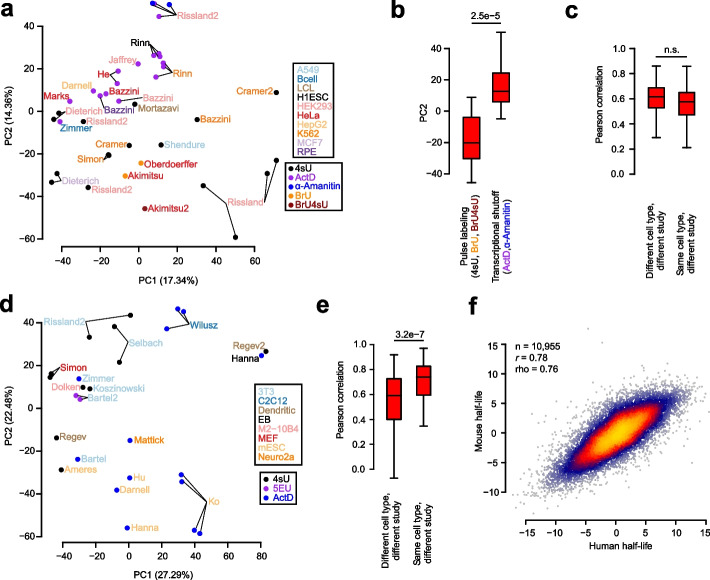
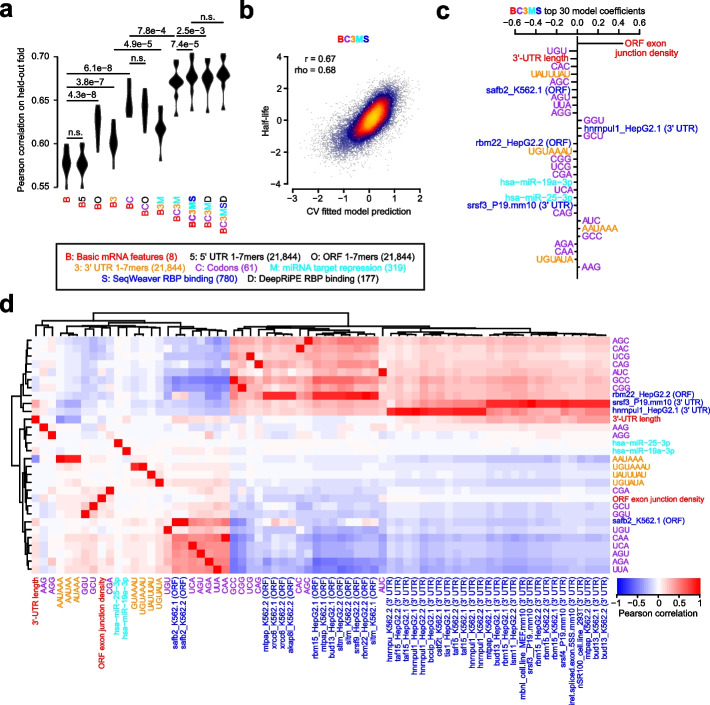
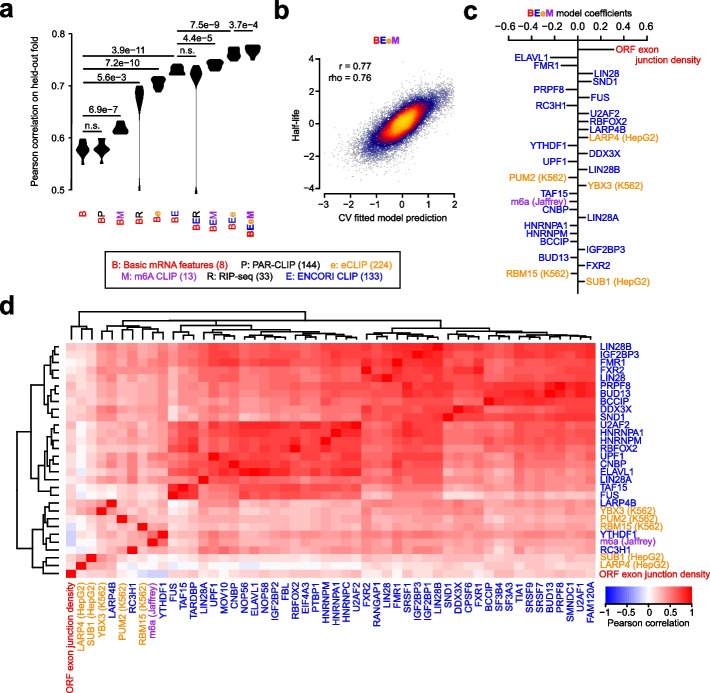
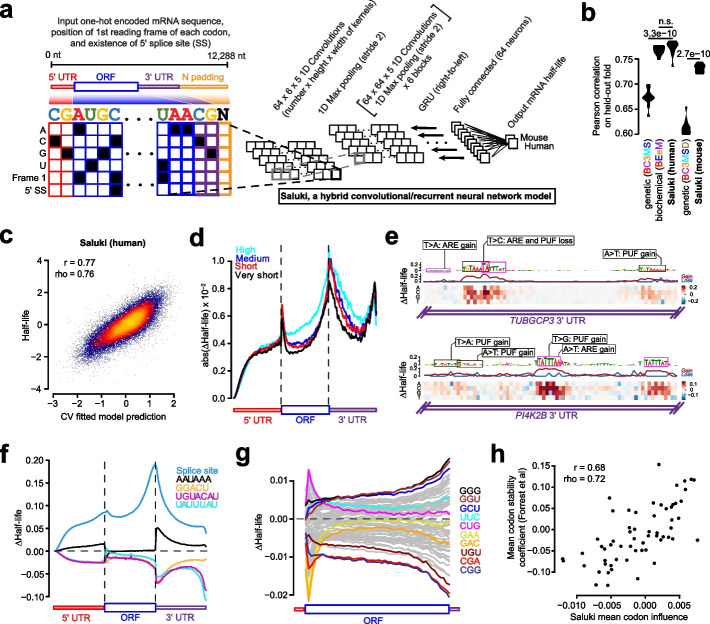
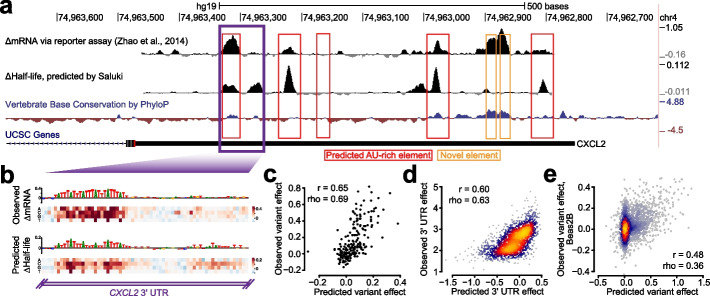
BACKGROUND: Degradation rate is a fundamental aspect of mRNA metabolism, and the factors governing it remain poorly characterized. Understanding the genetic and biochemical determinants of mRNA half-life would enable more precise identification of variants that perturb gene expression through post-transcriptional gene regulatory mechanisms. RESULTS: We establish a compendium of 39 human and 27 mouse transcriptome-wide mRNA decay rate datasets. A meta-analysis of these data identified a prevalence of technical noise and measurement bias, induced partially by the underlying experimental strategy. Correcting for these biases allowed us to derive more precise, consensus measurements of half-life which exhibit enhanced consistency between species. We trained substantially improved statistical models based upon genetic and biochemical features to better predict half-life and characterize the factors molding it. Our state-of-the-art model, Saluki, is a hybrid convolutional and recurrent deep neural network which relies only upon an mRNA sequence annotated with coding frame and splice sites to predict half-life (r=0.77). The key novel principle learned by Saluki is that the spatial positioning of splice sites, codons, and RNA-binding motifs within an mRNA is strongly associated with mRNA half-life. Saluki predicts the impact of RNA sequences and genetic mutations therein on mRNA stability, in agreement with functional measurements derived from massively parallel reporter assays. CONCLUSIONS: Our work produces a more robust ground truth for transcriptome-wide mRNA half-lives in mammalian cells. Using these revised measurements, we trained Saluki, a model that is over 50% more accurate in predicting half-life from sequence than existing models. Saluki succinctly captures many of the known determinants of mRNA half-life and can be rapidly deployed to predict the functional consequences of arbitrary mutations in the transcriptome.
Overview
The claims and statistics of this paper haven’t been checked yet.
Run the check — free, no account needed. It reads the open-access text and checks the sources it cites.
Integrity signals
Registry
Cites
Statistics
Figures
Verification
Claims the paper makes
The claims and statistics of this paper haven’t been checked yet.
Run the check — free, no account needed. It reads the open-access text and checks the sources it cites.
Claims other papers make about this one
Each is checked against this paper’s own text: does it say what the citing paper says it does?
The source backs part of the claim, not all of it — or backs it for a different population, condition or comparison.
In the citing paper
“Similarly, sequence-based models of post-transcriptional regulation rely on genome annotations and transformed measurements extracted from RNA-seq to isolate each regulatory mechanism (for example, percent spliced-in for splicing)14–23.”
From Predicting RNA-seq coverage from DNA sequence as a unifying model of gene regulation (2025) · cites this paper as [23]
Experimental — accuracy not yet measuredThe source backs part of the claim, not all of it — or backs it for a different population, condition or comparison.
In the citing paper
“Furthermore, we did not find sequence elements related to mRNA half-life in Borzoi’s sequence attributions23,82.”
From Predicting RNA-seq coverage from DNA sequence as a unifying model of gene regulation (2025) · cites this paper as [23]
Experimental — accuracy not yet measuredThe cited source says what the claim attributes to it.
In the citing paper
“Prior work has demonstrated strong relationships between codon usage and mRNA half-life23,78.”
From Predicting RNA-seq coverage from DNA sequence as a unifying model of gene regulation (2025) · cites this paper as [23]
The check wasn’t confident either way, so it gives no verdict — never disputed.
In the citing paper
“Borzoi performs better at longer distances (dAUPRC > 0.050 at 2,000 bp) with a more comparable performance closer to the PAS (dAUPRC = 0.025 at 50 bp) (Fig. 6g).”
From Predicting RNA-seq coverage from DNA sequence as a unifying model of gene regulation (2025) · cites this paper as [23]
Experimental — accuracy not yet measured
Self-check
Percentages, sums and reported differences re-computed from the paper’s own numbers.
The self-check needs the paper’s full text.
Citations
Cites
BEDTools: a flexible suite of utilities for comparing genomic features
Quinlan, A. R., & Hall, I. M. (2010) · Bioinformatics · doi:10.1093/bioinformatics/btq033 · Cited by 27,437
Most mammalian mRNAs are conserved targets of microRNAs
Friedman, R. C., Farh, K. K.-H., Burge, C. B., & Bartel, D. P. (2009) · Genome Research · doi:10.1101/gr.082701.108 · Cited by 8,462
Predicting effective microRNA target sites in mammalian mRNAs
Agarwal, V., Bell, G. W., Nam, J.-W., & Bartel, D. P. (2015) · eLife · doi:10.7554/elife.05005 · Cited by 7,318
Self-citationGlobal quantification of mammalian gene expression control
Schwanhäusser, B., Busse, D., Li, N., Dittmar, G., Schuchhardt, J., Wolf, J., Chen, W., & Selbach, M. (2011) · Nature · doi:10.1038/nature10098 · Cited by 6,566 · cited 1×
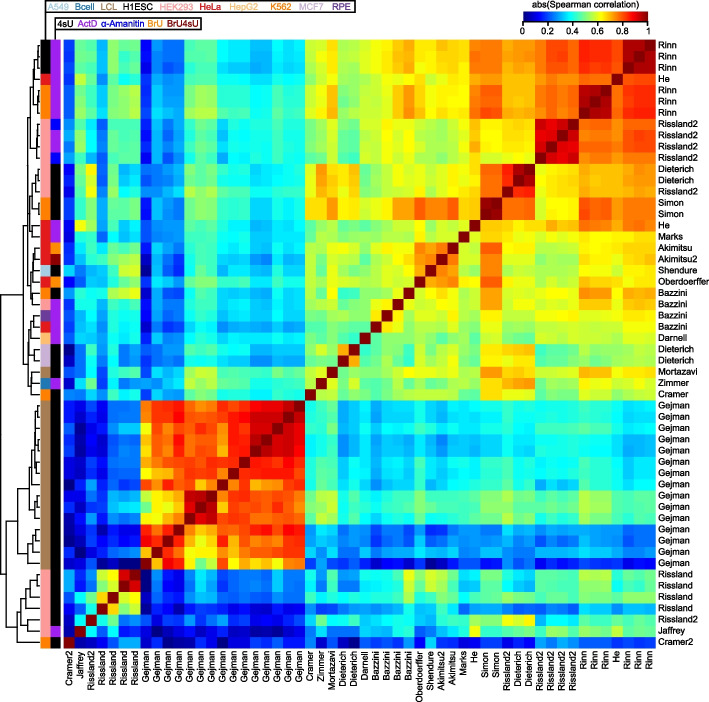
“GroupID Method Species Cell types Samples Reference Akimitsu BrU (BRIC-seq) H HeLa 1 [45] Akimitsu2 BrU+4sU (Dyrec-seq) H HeLa 1 [46] Bazzini 4sU (SLAM-seq), ActD H K562, RPE, HeLa, HEK293 4 [29] Cramer 4sU (TT-seq) H K562 1 [47] Cramer2 4sU (TT-seq) H K562 1 [43] Darnell ActD H HepG2 1 [38] Dieterich 4sU H HEK293, MC…”
The GTEx Consortium atlas of genetic regulatory effects across human tissues
The GTEx Consortium, Aguet, F., Anand, S., Ardlie, K. G., Gabriel, S., Getz, G. A., Graubert, A., Hadley, K., Handsaker, R. E., Huang, K. H., et al. (2020) · Science · doi:10.1126/science.aaz1776 · Cited by 5,547
Li, J.-H., Liu, S., Zhou, H., Qu, L.-H., & Yang, J.-H. (2014) · Nucleic Acids Research · doi:10.1093/nar/gkt1248 · Cited by 4,686
N6-methyladenosine-dependent regulation of messenger RNA stability
Wang, X., Lu, Z., Gomez, A., Hon, G. C., Yue, Y., Han, D., Fu, Y., Parisien, M., Dai, Q., Jia, G., et al. (2014) · Nature · doi:10.1038/nature12730 · Cited by 4,558
MicroRNA Targeting Specificity in Mammals: Determinants beyond Seed Pairing
Grimson, A., Farh, K. K.-H., Johnston, W. K., Garrett-Engele, P., Lim, L. P., & Bartel, D. P. (2007) · Molecular Cell · doi:10.1016/j.molcel.2007.06.017 · Cited by 3,766
Bartel, D. P. (2018) · Cell · doi:10.1016/j.cell.2018.03.006 · Cited by 3,751
CADD: predicting the deleteriousness of variants throughout the human genome
Rentzsch, P., Witten, D., Cooper, G. M., Shendure, J., & Kircher, M. (2019) · Nucleic Acids Research · doi:10.1093/nar/gky1016 · Cited by 3,534
Research works printed but not linked: 3
- [cited 2022 Feb 22]. Available from: https://academic.oup.com/g3journal/article-abstract/12/1/jkab404/6446033.
- Ba JL, Kiros JR, Hinton GE. Layer normalization. arXiv preprint arXiv:160706450. arxiv.org; 2016; Available from: http://arxiv.org/abs/1607.06450 · arXiv
- Chung J, Gulcehre C, Cho K, Bengio Y. Empirical evaluation of gated recurrent neural networks on sequence modeling. arXiv [cs.NE]. 2014. Available from: http://arxiv.org/abs/1412.3555 · arXiv
Cited by
Sorted by citations
Predicting RNA-seq coverage from DNA sequence as a unifying model of gene regulation
Linder, J., Srivastava, D., Yuan, H., Agarwal, V., & Kelley, D. R. (2025) · Nature Genetics · doi:10.1038/s41588-024-02053-6 · Cited by 265
Self-citationUzonyi, A., Dierks, D., Nir, R., Kwon, O. S., Toth, U., Barbosa, I., Burel, C., Brandis, A. S., Rossmanith, W., Hir, H. L., et al. (2023) · Molecular Cell · doi:10.1016/j.molcel.2022.12.026 · Cited by 209
Massively parallel characterization of transcriptional regulatory elements
Agarwal, V., Inoue, F., Schubach, M., Penzar, D., Martin, B. K., Dash, P. M., Keukeleire, P., Zhang, Z., Sohota, A., Zhao, J., et al. (2025) · Nature · doi:10.1038/s41586-024-08430-9 · Cited by 146
Self-citationOptimizing 5’UTRs for mRNA-delivered gene editing using deep learning
Castillo-Hair, S., Fedak, S., Wang, B., Linder, J., Havens, K., Certo, M., & Seelig, G. (2024) · Nature Communications · doi:10.1038/s41467-024-49508-2 · Cited by 98
Ietswaart, R., Smalec, B. M., Xu, A., Choquet, K., McShane, E., Jowhar, Z. M., Guegler, C. K., Baxter-Koenigs, A. R., West, E. R., Fu, B. X. H., et al. (2024) · Molecular Cell · doi:10.1016/j.molcel.2024.06.008 · Cited by 83
2′-O-methylation at internal sites on mRNA promotes mRNA stability
Li, Y., Yang, Y., Gao, X., Wang, X., Zhao, D., Wang, R., Zhang, L., Gao, B., Zhang, Y., Zhang, L., et al. (2024) · Molecular Cell · doi:10.1016/j.molcel.2024.04.011 · Cited by 79
Predicting expression-altering promoter mutations with deep learning
Jaganathan, K., Ferraro, N. M., Novakovsky, G., Wang, Y., James, T., Schwartzentruber, J., Fiziev, P. P., Kassam, I., Cao, F., Hawe, J. S., et al. (2025) · Science · doi:10.1126/science.ads7373 · Cited by 87
CodonBERT large language model for mRNA vaccinesPreprint
Li, S., Moayedpour, S., Li, R., Bailey, M., Riahi, S., Kogler-Anele, L., Miladi, M., Miner, J. C., Pertuy, F., Zheng, D., et al. (2024) · Genome Research · doi:10.1101/gr.278870.123 · Cited by 66
Self-citationDeciphering the impact of genetic variation on human polyadenylation using APARENT2
Linder, J., Koplik, S. E., Kundaje, A., & Seelig, G. (2022) · Genome Biology · doi:10.1186/s13059-022-02799-4 · Cited by 49
Predicting the translation efficiency of messenger RNA in mammalian cells
Zheng, D., Persyn, L., Wang, J., Liu, Y., Ulloa-Montoya, F., Cenik, C., & Agarwal, V. (2026) · Nature Biotechnology · doi:10.1038/s41587-025-02712-x · Cited by 52
Self-citationCellular control of protein levels: A systems biology perspective
Munro, V., Kelly, V. C., Messner, C. B., & Kustatscher, G. (2023) · PROTEOMICS · doi:10.1002/pmic.202200220 · Cited by 45
From computational models of the splicing code to regulatory mechanisms and therapeutic implications
Capitanchik, C., Wilkins, O. G., Wagner, N., Gagneur, J., & Ule, J. (2024) · Nature Reviews Genetics · doi:10.1038/s41576-024-00774-2 · Cited by 45
Guo, X., Guo, M., Cai, R., Hu, M., Rao, L., Su, W., Liu, H., Gao, F., Zhang, X., Liu, J., et al. (2024) · Science Advances · doi:10.1126/sciadv.adp3680 · Cited by 37
CodonBERT: Large Language Models for mRNA design and optimizationPreprint
Li, S., Moayedpour, S., Li, R., Bailey, M., Riahi, S., Kogler-Anele, L., Miladi, M., Miner, J. C., Zheng, D., Wang, J., et al. (2023) · bioRxiv (Cold Spring Harbor Laboratory) · doi:10.1101/2023.09.09.556981 · Cited by 36
Self-citationmRNA nuclear export: how mRNA identity features distinguish functional RNAs from junk transcripts
Palazzo, A. F., Qiu, Y., & Kang, Y. M. (2023) · RNA Biology · doi:10.1080/15476286.2023.2293339 · Cited by 32
Annotating the genome at single-nucleotide resolution with DNA foundation models
de Almeida, B. P., Dalla-Torre, H., Richard, G., Blum, C. F., Hexemer, L., Gélard, M., Mendoza‐Revilla, J., Tang, Z., Marin, F. I., Emms, D., et al. (2025) · Nature Methods · doi:10.1038/s41592-025-02881-2 · Cited by 39
An RNA foundation model enables discovery of disease mechanisms and candidate therapeuticsPreprint
Celaj, A., Gao, A. J., Lau, T., Holgersen, E. M., Lo, A., Lodaya, V., Cole, C. B., Denroche, R. E., Spickett, C., Wagih, O., et al. (2023) · bioRxiv (Cold Spring Harbor Laboratory) · doi:10.1101/2023.09.20.558508 · Cited by 36
Martini 3 Building Blocks for Lipid Nanoparticle Design
Kjølbye, L. R., Valério, M., Paloncýová, M., Borges-Araújo, L., Pestana-Nobles, R., Grünewald, F., Bruininks, B. M. H., Araya‐Osorio, R., Šrejber, M., Mera‐Adasme, R., et al. (2025) · Journal of Chemical Theory and Computation · doi:10.1021/acs.jctc.5c01207 · Cited by 28
A multimodal conversational agent for DNA, RNA and protein tasks
de Almeida, B. P., Richard, G., Dalla-Torre, H., Blum, C. F., Hexemer, L., Pandey, P., Laurent, S., Rajesh, C., Lopez, M., Laterre, A., et al. (2025) · Nature Machine Intelligence · doi:10.1038/s42256-025-01047-1 · Cited by 50
The molecular mechanisms underpinning maternal mRNA dormancy
Lorenzo‐Orts, L., & Pauli, A. (2024) · Biochemical Society Transactions · doi:10.1042/bst20231122 · Cited by 28
Decoding biology with massively parallel reporter assays and machine learningPreprint
Fleur, A. L., Shi, Y., & Seelig, G. (2024) · Genes & Development · doi:10.1101/gad.351800.124 · Cited by 29
Orthrus: toward evolutionary and functional RNA foundation models
Fradkin, P., Shi, R. “., Dalal, T., Isaev, K., Frey, B. J., Lee, L. J., Morris, Q., & Wang, B. (2026) · Nature Methods · doi:10.1038/s41592-026-03064-3 · Cited by 22
RNA stability enhancers for durable base-modified mRNA therapeutics
Jung, S.-J., Seo, J. J., Lee, S., Hyun, S.-I., Lee, J.-E., Lee, S., Lee, Y., Chang, H., Lee, H., Kim, J.-H., et al. (2025) · Nature Biotechnology · doi:10.1038/s41587-025-02891-7 · Cited by 26
The G3BP stress-granule proteins reinforce the integrated stress response translation programme
Smith, J., & Bartel, D. P. (2025) · Nature Cell Biology · doi:10.1038/s41556-025-01834-3 · Cited by 31
The quantitative impact of 3′UTRs on gene expression
West, J. D., Smith, H. J., Vu, L. T., Fogarty, E. A., Matreyek, K. A., Fowler, D. M., & Grimson, A. (2025) · Nucleic Acids Research · doi:10.1093/nar/gkaf568 · Cited by 20
RNA Pol II inhibition activates cell death independently from the loss of transcription
Harper, N. W., Birdsall, G. A., Honeywell, M. E., Ward, K. M., Pai, A. A., & Lee, M. J. (2025) · Cell · doi:10.1016/j.cell.2025.07.034 · Cited by 18
Géraud, M., Cristini, A., Salimbeni, S., Béry, N., Jouffret, V., Russo, M. V., Ajello, A. C., Martinez, L. F., Marinello, J., Cordelier, P., et al. (2024) · Cell Reports · doi:10.1016/j.celrep.2024.114214 · Cited by 18
mRNA-LM: full-length integrated SLM for mRNA analysis
Li, S., Noroozizadeh, S., Moayedpour, S., Kogler-Anele, L., Xue, Z., Zheng, D., Montoya, F. U., Agarwal, V., Bar‐Joseph, Z., & Jäger, S. (2025) · Nucleic Acids Research · doi:10.1093/nar/gkaf044 · Cited by 18
Self-citationAsturias, E. J., Chen, L. H., Shaw, A. C., Moser, C. A., Maldonado, Y., Zucker, J. R., Chu, H. Y., Talbot, H. K., Cineas, S., Lyons, K., et al. (2025) · Vaccine · doi:10.1016/j.vaccine.2025.127876 · Cited by 15
Tangermeme: a toolkit for understanding cis-regulatory logic using deep learning models
Schreiber, J. M. (2026) · Nature Methods · doi:10.1038/s41592-026-03254-z · Cited by 16
HNRNPU's multi‐tasking is essential for proper cortical development
Sapir, T., & Reiner, O. (2023) · BioEssays · doi:10.1002/bies.202300039 · Cited by 14
DNA Vaccines in the Post-mRNA Era: Engineering, Applications, and Emerging Innovations
Neeli, P. K., Chai, D., Roy, D., Prajapati, S., & Bonam, S. R. (2025) · International Journal of Molecular Sciences · doi:10.3390/ijms26178716 · Cited by 14
Mitotic checkpoint gene expression is tuned by codon usage bias
Esposito, E., Weidemann, D. E., Rogers, J. M., Morton, C. M., Baybay, E. K., Chen, J., & Hauf, S. (2022) · The EMBO Journal · doi:10.15252/embj.2021107896 · Cited by 13
ChatNT: A Multimodal Conversational Agent for DNA, RNA and Protein TasksPreprint
Richard, G., de Almeida, B. P., Dalla-Torre, H., Blum, C. F., Hexemer, L., Pandey, P., Laurent, S., Lopez, M., Laterre, A., Lang, M., et al. (2024) · bioRxiv (Cold Spring Harbor Laboratory) · doi:10.1101/2024.04.30.591835 · Cited by 14
ML-driven design of 3’ UTRs for mRNA stabilityPreprint
Morrow, A., Thornal, A., Flynn, E. D., Hoelzli, E., Shan, M., Garipler, G., Kirchner, R., Reddy, A. J., Tabchouri, S., Gupta, A., et al. (2024) · bioRxiv (Cold Spring Harbor Laboratory) · doi:10.1101/2024.10.07.616676 · Cited by 15
Su, J.-Y., Wang, Y.-L., Hsieh, Y.-T., Chang, Y.-C., Yang, C., Kang, Y., Huang, Y., & Lin, C. (2024) · eLife · doi:10.7554/elife.97682 · Cited by 12
Cas13d-mediated isoform-specific RNA knockdown with a unified computational and experimental toolbox
Schertzer, M. D., Stirn, A., Isaev, K., Pereira, L., Park, S. H., Das, A., Réal, A., Jeffery, E. D., Harbison, C., Wessels, H., et al. (2025) · Nature Communications · doi:10.1038/s41467-025-62066-5 · Cited by 11
Poised PABP–RNA hubs implement signal-dependent mRNA decay in development
Modic, M., Kuret, K., Steinhauser, S., Faraway, R., van Genderen, E., Mozos, I. R. D. L., Novljan, J., Vičič, Ž., Lee, F. C. Y., ten Berge, D., et al. (2024) · Nature Structural & Molecular Biology · doi:10.1038/s41594-024-01363-x · Cited by 11
Mercier, B. C., Labaronne, E., Cluet, D., Guiguettaz, L., Fontrodona, N., Bicknell, A. A., Corbin, A., Wencker, M., Aubé, F., Modolo, L., et al. (2024) · Genome Research · doi:10.1101/gr.277863.123 · Cited by 11
Bohn, E., Lau, T. T. Y., Wagih, O., Masud, T., & Merico, D. (2023) · Frontiers in Molecular Biosciences · doi:10.3389/fmolb.2023.1257550 · Cited by 9
dos Santos, O. A. L., Carneiro, R. L., Requião, R. D., Alves, M. R., Domitrovic, T., & Palhano, F. L. (2024) · Scientific Reports · doi:10.1038/s41598-023-50811-z · Cited by 10
Wang, H., Kovaleski, A. P., & Londo, J. P. (2024) · Physiologia Plantarum · doi:10.1111/ppl.14607 · Cited by 9
Translational buffering tunes gene expression in mice and humans
Rao, S., Le, A. Y., Persyn, L., & Cenik, C. (2026) · Genome biology · doi:10.1186/s13059-026-04010-4 · Cited by 8
Cis-regulatory control of transcriptional timing and noise in response to estrogen
Ginley-Hidinger, M., Abewe, H., Osborne, K. S., Richey, A., Kitchen, N., Mortenson, K. L., Wissink, E. M., Lis, J. T., Zhang, X., & Gertz, J. (2024) · Cell Genomics · doi:10.1016/j.xgen.2024.100542 · Cited by 12
A Suite of Foundation Models Captures the Contextual Interplay Between CodonsPreprint
Naghipourfar, M., Chen, S., Howard, M. K., Macdonald, C. B., Khoroshkin, M., Lee, S., Saberi, A., Hagen, T., Mofrad, M. R. K., Coyote‐Maestas, W., et al. (2024) · SSRN Electronic Journal · doi:10.1101/2024.10.10.617568 · Cited by 10
Gameiro, P. A., Foskolou, I. P., Butt, Y. A., Martens, A., Kuret, K., Mozos, I. R. D. L., Zandhuis, N. D., Hozjan, Ž., Kot, V., Faraway, R., et al. (2026) · Nature Communications · doi:10.1038/s41467-025-67762-w · Cited by 8
GUANinE v1.0: Benchmark Datasets for Genomic AI Sequence-to-Function ModelsPreprint
Robson, E. S., & Ioannidis, N. M. (2023) · bioRxiv (Cold Spring Harbor Laboratory) · doi:10.1101/2023.10.12.562113 · Cited by 9
The G3BP stress-granule proteins reinforce the integrated-stress-response translation programPreprint
Smith, J., & Bartel, D. P. (2024) · bioRxiv (Cold Spring Harbor Laboratory) · doi:10.1101/2024.10.04.616305 · Cited by 8
A foundation language model to decipher diverse regulation of RNAs
Zhou, H., Hu, Y., Zheng, Y., Li, J., Peng, J., Jiang, H., Yang, Y., Chen, W., Zhang, G., & Wang, Z. (2025) · Genome biology · doi:10.1186/s13059-025-03752-x · Cited by 14
Investigating the performance of foundation models on human 3′UTR sequences
Вилов, С. А., & Heinig, M. (2025) · Nucleic Acids Research · doi:10.1093/nar/gkaf871 · Cited by 6
Passive shaping of intra- and intercellular m6A dynamics via mRNA metabolismPreprint
Dierks, D., Shachar, R., Nir, R., García-Campos, M. A., Uzonyi, A., Wiener, D., Toth, U., Rossmanith, W., Lasman, L., Slobodin, B., et al. (2024) · eLife · doi:10.7554/elife.100448 · Cited by 7
A foundation language model to decipher diverse regulation of RNAsPreprint
Zhou, H., Hu, Y., Zheng, Y., Li, J., Peng, J., Hu, J., Yang, Y., Zhang, G., & Wang, Z. (2024) · bioRxiv (Cold Spring Harbor Laboratory) · doi:10.1101/2024.10.12.617732 · Cited by 7
Sasse, A., Chikina, M. D., & Mostafavi, S. (2024) · iScience · doi:10.1016/j.isci.2024.110807 · Cited by 8
Unveil cis-acting combinatorial mRNA motifs by interpreting deep neural network
Zeng, X., Zheng, W., Du, Q., Li, J., Xie, Z., & Wang, X. (2024) · Bioinformatics · doi:10.1093/bioinformatics/btae262 · Cited by 6
Uncovering the isoform-resolution kinetic landscape of nonsense-mediated mRNA decay with EZbakR
Mabin, J. W., Vock, I. W., Machyna, M., Haque, N., Thakran, P., Zhang, A., Rai, G., Leibler, I. N.-M., Inglese, J., Simon, M. D., et al. (2026) · Genome biology · doi:10.1186/s13059-026-04204-w · Cited by 6
Zhong, Z., Bailey, M., Kim, Y., Afsharyan, N. P., Parker, B., Arathoon, L., Li, X., Rundle, C. A., Behrens, A., Nedialkova, D. D., et al. (2025) · Genome biology · doi:10.1186/s13059-025-03741-0 · Cited by 6
Chao, K.-H., Mao, A., Liu, A., Salzberg, S. L., & Pertea, M. (2025) · eLife · doi:10.7554/elife.107454 · Cited by 6
Valencia, J. D., & Hendrix, D. A. (2023) · PLOS Computational Biology · doi:10.1371/journal.pcbi.1011526 · Cited by 6
Xie, T., Zhu, H., Wang, X., Li, F., Wang, A., Zhang, Y., Zhang, S., & Guo, D. (2025) · Genes · doi:10.3390/genes16121421 · Cited by 5
Learning the sequence code of protein expression in human immune cells
Nicolet, B. P., Jurgens, A. P., Bresser, K., Guislain, A., Bradarić, A., & Wolkers, M. C. (2025) · Science Advances · doi:10.1126/sciadv.ads0510 · Cited by 5
Vock, I. W., Tang, D., Giráldez, A. J., & Simon, M. D. (2025) · bioRxiv (Cold Spring Harbor Laboratory) · doi:10.1101/2025.08.19.671151 · Cited by 5
Tan, T., Diao, Y., Yu, X., Chen, L., & Fang, H. (2026) · Acta Pharmaceutica Sinica B · doi:10.1016/j.apsb.2025.12.044 · Cited by 8
Exploring the role of transcriptional and post‐transcriptional processes in mRNA co‐expression
García‐Blay, Ó., Verhagen, P. G. A., Martin, B., & Hansen, M. M. K. (2023) · BioEssays · doi:10.1002/bies.202300130 · Cited by 4
Temporal resolution of NAIL-MS of tRNA, rRNA and Poly-A RNA is overcome by actinomycin D
Hagelskamp, F., Borland, K. M., Ammann, G., & Kaiser, S. (2023) · RSC Chemical Biology · doi:10.1039/d2cb00243d · Cited by 4
Sun, H., Vargas-Blanco, D. A., Zhou, Y., Masiello, C. S., Kelly, J. M., Moy, J. K., Korkin, D., & Shell, S. S. (2024) · NAR Genomics and Bioinformatics · doi:10.1093/nargab/lqae147 · Cited by 3
Michielsen, L., Hsu, J., Joglekar, A., Belchikov, N., Reinders, M. J. T., Tilgner, H., & Mahfouz, A. E. (2024) · bioRxiv (Cold Spring Harbor Laboratory) · doi:10.1101/2024.03.18.585465 · Cited by 4
MicroRNA-directed control of complex mRNA stability patterns across cell typesPreprint
Oesinghaus, L., Castillo-Hair, S. M., Bean, M., Ludwig, N., Rishik, S., Kueh, H. Y., Keller, A., & Seelig, G. (2024) · bioRxiv (Cold Spring Harbor Laboratory) · doi:10.1101/2024.10.28.620728 · Cited by 4
Shift augmentation improves DNA convolutional neural network indel effect predictionsPreprint
Korsakova, A., Srivastava, D., & Kelley, D. R. (2025) · bioRxiv (Cold Spring Harbor Laboratory) · doi:10.1101/2025.04.07.647656 · Cited by 7
Self-citationEvidence-Based Guide to Using Artificial Introns for Tissue-Specific Knockout in Mice
McBeath, E., Fujiwara, K., & Hofmann, M.-C. C. (2023) · International Journal of Molecular Sciences · doi:10.3390/ijms241210258 · Cited by 3
Long-lived cellular molecules in the brain
Hetzer, M. W., & Toda, T. (2025) · Trends in Neurosciences · doi:10.1016/j.tins.2025.07.004 · Cited by 3
Delazer, I., Bauer, I., Rummel, T., Nykiel, K., Rieder, D., Fickl, M., Tumler, V., Rázková, A., Schaefer, M., Scheed, T., et al. (2025) · Nucleic Acids Research · doi:10.1093/nar/gkaf995 · Cited by 3
A predictive framework for stop-loss variants with C-terminal extensions
Yoon, J. G., Lee, S., Kim, Y., Gee, H. Y., Lee, M. G., & Lee, K.-A. (2026) · Nucleic Acids Research · doi:10.1093/nar/gkag031 · Cited by 3
Predicting cell population-specific gene expression from genomic sequence
Michielsen, L., Reinders, M. J. T., & Mahfouz, A. E. (2024) · Frontiers in Bioinformatics · doi:10.3389/fbinf.2024.1347276 · Cited by 6
Zhao, Y., Dhani, S., Gogvadze, V. G., & Zhivotovsky, B. (2025) · Cell Death Discovery · doi:10.1038/s41420-025-02310-5 · Cited by 4
Quantification of Propargylated RNA Nucleosides After Metabolic Labeling Via the Methylation Pathway
Kück, N., Hüwel, S., Hoffmann, A., & Rentmeister, A. (2025) · ChemBioChem · doi:10.1002/cbic.202400986 · Cited by 3
Sanjeev, M., Woodward, L. A., Schiff, M. L., Patton, R. D., Myers, S., Paul, D., Bundschuh, R., & Singh, G. (2025) · Nature Communications · doi:10.1038/s41467-025-63455-6 · Cited by 3
Non-viral mRNA cystic fibrosis therapies and their ongoing clinical trials
Gill, N. A., Fung, V., VanKeulen‐Miller, R., Narasipura, E. A., & Fenton, O. S. (2025) · Expert Opinion on Drug Delivery · doi:10.1080/17425247.2025.2586172 · Cited by 3
Kishimoto, T., Nishimura, K., Morishita, K., Fukuda, A., Miyamae, Y., Kumagai, Y., Sumaru, K., Nakanishi, M., Hisatake, K., & Sano, M. (2024) · Journal of Biological Engineering · doi:10.1186/s13036-024-00404-9 · Cited by 3
Villa, T., Pourcelot, O., Dierks, D., Faucourt, M., Burel, C., Slimani, F., Guyonnet, L., Spassky, N., Schwartz, S., Bertrand, É., et al. (2025) · Nucleic Acids Research · doi:10.1093/nar/gkaf1200 · Cited by 3
Exon-intron architecture determines mRNA stability by dictating m6A depositionPreprint
Uzonyi, A., Slobodin, B., & Schwartz, S. (2022) · bioRxiv (Cold Spring Harbor Laboratory) · doi:10.1101/2022.06.29.498130 · Cited by 3
An RNA foundation model enables discovery of disease mechanisms and candidate therapeuticsPreprint
Frey, B. J., Celaj, A., Gao, A. J., Lau, T., Holgersen, E. M., Lo, A., Lodaya, V., Cole, C., Denroche, R. E., Spickett, C., et al. (2023) · Research Square · doi:10.21203/rs.3.rs-3373630/v1 · Cited by 3
Kanuparthi, B., Pour, S. E., Findlay, S. D., Wagih, O., Gutierrez, J. M., Gao, R., Wintersinger, J. A., Lin, J.-N., Gabra, M., Bohn, E., et al. (2025) · bioRxiv (Cold Spring Harbor Laboratory) · doi:10.1101/2025.05.15.654105 · Cited by 3
Predicting cell type-specific coverage profiles from DNA sequencePreprint
Linder, J., Yuan, H., & Kelley, D. R. (2025) · bioRxiv (Cold Spring Harbor Laboratory) · doi:10.1101/2025.06.10.658961 · Cited by 5
Self-citationmRNABench: A curated benchmark for mature mRNA property and function predictionPreprint
Shi, R., Dalal, T., Fradkin, P., Koyyalagunta, D., Chhabria, S., Jung, A., Tam, C. L., Ceyhan, D., Lin, J., Laverty, K. U., et al. (2025) · bioRxiv (Cold Spring Harbor Laboratory) · doi:10.1101/2025.07.05.662870 · Cited by 4
Programming human cell type-specific gene expression via an atlas of AI-designed enhancersPreprint
Castillo-Hair, S. M., Yin, C., VandenBosch, L. S., Cherry, T. J., Meuleman, W. R. A., & Seelig, G. (2025) · bioRxiv (Cold Spring Harbor Laboratory) · doi:10.1101/2025.09.30.679565 · Cited by 7
Su, J.-Y., Wang, Y.-L., Hsieh, Y.-T., Chang, Y.-C., Yang, C., Kang, Y., Huang, Y., & Lin, C. (2025) · eLife · doi:10.7554/elife.97682.3 · Cited by 2
Refining sequence-to-expression modelling with chromatin accessibility
Lapohos, O., Fonseca, G. J., & Emad, A. (2026) · Bioinformatics · doi:10.1093/bioinformatics/btag199 · Cited by 2
Regulation of mRNA metabolism in immune cells
Negi, M. S., Soskic, B., & Legnini, I. (2025) · FEBS Letters · doi:10.1002/1873-3468.70132 · Cited by 2
Global stabilization of the transcriptome in mitotic cells
Khalizeva, E., Latifkar, A., Xiang, K., Bartel, D. P., Ly, J., & Cheeseman, I. M. (2026) · The EMBO Journal · doi:10.1038/s44318-026-00765-5 · Cited by 4
Mintcheva, J., Tseng, T.-L., Goumenaki, P., Neuschulz, A., Senoussi, A., Lelek, S., Lim, K. L., Ming, Z., Schäfer, R., Hnatiuk, A., et al. (2026) · Nature Communications · doi:10.1038/s41467-026-72781-2 · Cited by 2
Toward generalizable and interpretable AI in regulatory genomics
NAGAI, M., Murphy, A. E., Rizzo, K., & Koo, P. K. (2026) · Nature Genetics · doi:10.1038/s41588-026-02670-3 · Cited by 11
Predicting the impact of sequence motifs on gene regulation using single-cell dataPreprint
Hepkema, J., Lee, N. K., Stewart, B. J., Ruangroengkulrith, S., Charoensawan, V., Clatworthy, M. R., & Hemberg, M. (2020) · bioRxiv (Cold Spring Harbor Laboratory) · doi:10.1101/2020.11.26.400218 · Cited by 2
Poised PABP-RNA hubs implement signal-dependent mRNA decay in developmentPreprint
Modic, M., Kuret, K., Steinhauser, S., Faraway, R., van Genderen, E., Lee, F. C. Y., Mozos, I. R. D. L., Vičič, Ž., Novljan, J., ten Berge, D., et al. (2023) · Research Square · doi:10.21203/rs.3.rs-3227673/v1 · Cited by 2
Developmental dynamics and axonal transport of cerebral cortex projection neuron mRNAs in vivoPreprint
Veeraraghavan, P., Tillman, D. E., Ross, M. I., & Macklis, J. D. (2025) · bioRxiv (Cold Spring Harbor Laboratory) · doi:10.1101/2025.04.23.650263 · Cited by 2
A Unified Framework for Model-Informed and Agentic RNA DesignPreprint
Riley, A. T., Vlasity, M., Becicka, W. M., Huang, J., Pang, S., Wong, W. W., Grinstaff, M. W., & Green, A. A. (2025) · bioRxiv (Cold Spring Harbor Laboratory) · doi:10.1101/2025.06.17.659751 · Cited by 3
Lysosomal RNA profiling reveals targeting of specific types of RNAs for degradationPreprint
Ray, G. J., Nardini, E., Keys, H. R., Lin, D. H., Sabatini, D. M., & Bartel, D. P. (2025) · bioRxiv (Cold Spring Harbor Laboratory) · doi:10.1101/2025.09.09.674968 · Cited by 2
FlashRNA: An Efficient Model for Regulatory GenomicsPreprint
Jung, A., Zhu, H., Gao, A. J., Li, R., Slobodyanyuk, M., Chu, V., Lim, D., Lee, L. J., Celaj, A., & Frey, B. J. (2025) · bioRxiv (Cold Spring Harbor Laboratory) · doi:10.1101/2025.10.14.682350 · Cited by 4
Winter, S. D., Mannens, C. C. A., Christiaens, V., Vandepoel, R., Hu, L., Linnarsson, S., & Aerts, S. (2026) · bioRxiv (Cold Spring Harbor Laboratory) · doi:10.64898/2026.01.14.699402 · Cited by 5
Passive shaping of intra- and intercellular m6A dynamics via mRNA metabolism
Dierks, D., Shachar, R., Nir, R., García-Campos, M. A., Uzonyi, A., Wiener, D., Toth, U., Rossmanith, W., Lasman, L., Slobodin, B., et al. (2025) · eLife · doi:10.7554/elife.100448.3 · Cited by 1
Xiang, K., & Bartel, D. P. (2025) · Nature Communications · doi:10.1038/s41467-025-62171-5 · Cited by 1
Metadata
- Authors
- Agarwal, V., & Kelley, D. R.
- Affiliations
- Calico Life Sciences (US)
- Corresponding author
- Agarwal, Vikram
- Kelley, David R.
- Venue
- Genome Biology
- Published
- 2022-11-23
- Volume
- 23
- Issue
- 1
- Pages
- 245-245
- ISSN
- 1465-6906 (ISSN-L)
- 1474-760X
- PMC
- PMC9684954
- OpenAlex
- W4309925698
- Cited by
- 155
- References
- 111
- Citations by year
- 2026: 38 · 2025: 57 · 2024: 36 · 2023: 18 · 2022: 5
- FWCI
- 3.02
- Type
- journal article
- Language
- en
- Open access
- gold
- doi.org
- Locations
- Genome biology (publishedVersion, cc-by)
- bioRxiv (Cold Spring Harbor Laboratory) (acceptedVersion, cc-by-nc-nd)
- PubMed Central (publishedVersion, cc-by)
- PubMed (publishedVersion)
- DOAJ (DOAJ: Directory of Open Access Journals) (submittedVersion, cc-by-sa)
- Funders
- Calico Life Sciences LLC
- Topics
- Life Sciences › Biochemistry, Genetics and Molecular Biology › Molecular Biology › RNA Research and Splicing
- Life Sciences › Biochemistry, Genetics and Molecular Biology › Molecular Biology › RNA and protein synthesis mechanisms
- Life Sciences › Biochemistry, Genetics and Molecular Biology › Molecular Biology › RNA regulation and disease
- Keywords
- mRNA half-life, mRNA degradation rate, mRNA stability, post-transcriptional regulation, deep neural network inference, splice sites, RNA-binding motif, codon position, measurement bias correction, massively parallel reporter assay
- MeSH terms
- Animals, Biological Assay, Humans, Mammals, RNA, Messenger, RNA Stability, Mice, Transcriptome
About these checks
Registry, retraction, Cites and statistics results are computed, not judged, with one exception: a printed reference that no index lists is read once by a model before it counts as a citation error. Claims are extracted by a model and kept only when their quote appears verbatim in the text; each cited source is then checked, with a model’s help, for whether it says what the claim relies on. Those verdicts can be wrong — read the claim’s quote and the cited source before relying on one.
Statistics and arithmetic are recomputed, not judged.
Confidence bands are shown only for fields calibrated on our annotated test set. None is calibrated yet, so no band is shown.
What counts as a claim ›How we measure confidence ›How we check this ›
Are you an author, or do you see a problem with this page? Request a review
