

Zero-shot evaluation reveals limitations of single-cell foundation models
Open accessThe DOI matches its Crossref record; 53 of the 53 references it cites were found in a registry or an index; 25 of the 27 sources its claims cite were checked for support.
Abstract
Foundation models such as scGPT and Geneformer have not been rigorously evaluated in a setting where they are used without any further training (i.e., zero-shot). Understanding the performance of models in zero-shot settings is critical to applications that exclude the ability to fine-tune, such as discovery settings where labels are unknown. Our evaluation of the zero-shot performance of Geneformer and scGPT suggests that, in some cases, these models may face reliability challenges and could be outperformed by simpler methods. Our findings underscore the importance of zero-shot evaluations in development and deployment of foundation models in single-cell research.
Overview
CoChat Summary
TL;DR
Zero-shot evaluation of Geneformer and scGPT on five single-cell datasets found they often underperform simpler baselines such as HVG, scVI, and Harmony for cell-type clustering and batch integration. The authors argue zero-shot testing is critical because fine-tuning can mask vulnerabilities.
Key findings
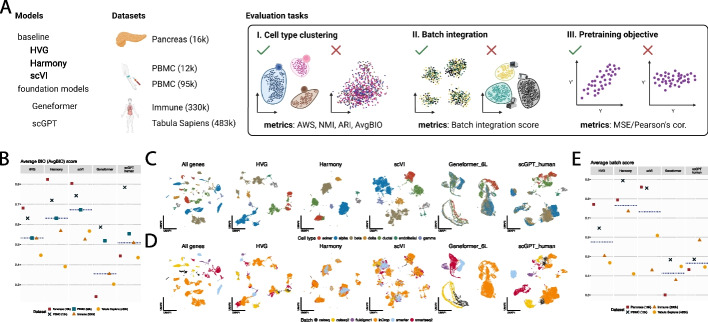
- In cell-type clustering, both Geneformer and scGPT performed worse than HVG, Harmony, and scVI on average BIO score; HVG outperformed Geneformer and scGPT across all metrics. scGPT performed better on the PBMC (12k) dataset compared to scVI, Harmony, and HVG, but was worse than both scVI and Harmony on AvgBIO score on other datasets.
- For batch integration, Geneformer underperformed relative to scGPT, Harmony, scVI, and HVG across most datasets and consistently ranked last across all metrics. The best batch integration scores for all datasets were achieved by selecting HVG; scVI and Harmony outperformed scGPT on Pancreas and PBMC, while scGPT outperformed them on Tabula Sapiens and Immune, both of which were used in scGPT pretraining.
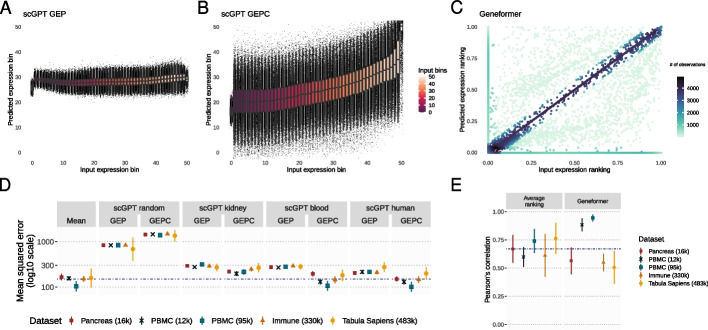
- On the pretraining reconstruction task, scGPT without embeddings underperformed a naive mean baseline and only marginally improved with cell embeddings. Geneformer’s gene ranking showed modest correlations with true rankings, with median and best correlations of 0.56 and 0.95, respectively, across datasets.
- Pretraining improved scGPT over a random baseline on PBMC (12k), and the median score across datasets for the three scGPT models was greater than the random baseline; however, scGPT human slightly underperformed scGPT blood even for tissues beyond blood and bone marrow.
Methods
- The authors performed zero-shot evaluation of Geneformer and scGPT against HVG (2000 genes), scVI, and Harmony on five human tissue datasets: pancreas, two PBMC datasets, a cross-tissue immune cell atlas, and a multi-organ human cell atlas. scVI and Harmony were trained on each target dataset, while Geneformer and scGPT were used zero-shot.
- scGPT variants tested were pretrained on 814,000 kidney cells, 10.3 million blood and bone marrow cells, and 33 million non-cancerous human cells. Geneformer was pretrained on 27.4M human single-cell transcriptomes.
- Cell embedding quality was assessed with AvgBIO (mean of ASW, NMI, ARI), ASW, batch integration score, PCR score, and Average Batch Score. Pretraining reconstruction was assessed with MSE for scGPT and Pearson correlation between true and predicted rankings for Geneformer, using all genes unmasked as input.
Limitations
- The paper states that its approach was focused: it concentrated on specific models and a limited array of datasets that do not exhaustively represent all single-cell applications, and its datasets only include transcriptomic data.
- The paper states that some evaluation datasets were used in pretraining, confounding the ability to say whether performance trends are general or due to prior exposure; this specifically affects interpretation of scGPT improvements on Immune and Tabula Sapiens. It also notes that smaller scGPT models were trained on tissue-specific data, confounding whether differences are due to size or dataset composition.
- Evident from the text: scVI and Harmony were trained on target data while Geneformer and scGPT were zero-shot, so the comparison is not training-matched; the authors reason this reflects practical settings but it remains a difference in evaluation setup.
Model-written summary. Check it against the paper before relying on it.
Integrity signals
Registry
Cites
Statistics
Figures
Verification
Claims the paper makes
19 Valid · 0 Not valid · 2 Not checked · 74 Own results and interpretations
A result the paper reports from its own data — it cites no other source for it, so there is none to check. The quote shows it is in the paper.
In the paper
“Our analysis indicates that pretraining provides a clear improvement in cell-type clustering on the PBMC (12k) dataset, and that the median score, calculated across datasets, for the three scGPT models is greater than that of the random baseline (Additional file 2: Fig. S5, Additional file 1: Table S1).”
§ Zero-shot evaluation reveals limitations of single-cell foundation models > Results and discussion
boostedstates an association- Asserted: passes — The authors put it forward as true.
- Checkable: passes — It can be checked against evidence.
- Load-bearing: passes — The paper’s conclusions depend on it.
- Based: passes — The paper gives a reason why it holds.
A result the paper reports from its own data — it cites no other source for it, so there is none to check. The quote shows it is in the paper.
In the paper
“We also observe that scGPT human and blood improve over random models for at least some datasets where scGPT kidney fails to, including the Immune and Tabula Sapiens datasets, suggesting that performance may improve with larger pretraining datasets.”
§ Zero-shot evaluation reveals limitations of single-cell foundation models > Results and discussion
hedgedstates an association- Asserted: passes — The authors put it forward as true.
- Checkable: passes — It can be checked against evidence.
- Load-bearing: passes — The paper’s conclusions depend on it.
- Based: passes — The paper gives a reason why it holds.
A result the paper reports from its own data — it cites no other source for it, so there is none to check. The quote shows it is in the paper.
In the paper
“Notably, HVG outperforms Geneformer and scGPT across all metrics (Additional file 2: Fig. S4, Additional file 1: Tables S1 and S2).”
§ Zero-shot evaluation reveals limitations of single-cell foundation models > Results and discussion
plain- Asserted: passes — The authors put it forward as true.
- Checkable: passes — It can be checked against evidence.
- Load-bearing: passes — The paper’s conclusions depend on it.
- Based: passes — The paper gives a reason why it holds.
A result the paper reports from its own data — it cites no other source for it, so there is none to check. The quote shows it is in the paper.
In the paper
“scGPT is comparable to scVI on the Tabula Sapiens, Pancreas, and PBMC (12k) datasets and outperforms Harmony on the Tabula Sapiens datasets with respect to ASW score (Additional file 2: Fig. S3, Additional file 1: Table S1).”
§ Zero-shot evaluation reveals limitations of single-cell foundation models > Results and discussion
plainstates an association- Asserted: passes — The authors put it forward as true.
- Checkable: passes — It can be checked against evidence.
- Load-bearing: unclear — It is unclear whether the paper’s conclusions depend on it.
- Based: passes — The paper gives a reason why it holds.
A result the paper reports from its own data — it cites no other source for it, so there is none to check. The quote shows it is in the paper.
In the paper
“Our analysis indicates that pretraining provides a clear improvement in cell-type clustering on the PBMC (12k) dataset, and that the median score, calculated across datasets, for the three scGPT models is greater than that of the random baseline (Additional file 2: Fig. S5, Additional file 1: Table S1).”
§ Zero-shot evaluation reveals limitations of single-cell foundation models > Results and discussion
boostedstates a cause- Asserted: passes — The authors put it forward as true.
- Checkable: passes — It can be checked against evidence.
- Load-bearing: passes — The paper’s conclusions depend on it.
- Based: passes — The paper gives a reason why it holds.
52 more claims
Create a free account to see all 95 claims and to verify the 2 references still open.
- It may state two separate claims as one. 20
- Probably not a substantial claim. 27
Claims other papers make about this one
Each is checked against this paper’s own text: does it say what the citing paper says it does?
The cited source doesn’t support the claim as written.
In the citing paper
“Foundation models for single-cell and multi-omic biology, such as scGPT [20], Nicheformer [21], and EpiAgent [22, 23], produce high-quality continuous representations of biological entities that support cross-tissue transfer, perturbation inference, and regulatory feature learning.”
From The next paradigm in bioinformatics: a review of multi-agent systems and foundational models for end-to-end scientific discovery (2026) · cites this paper as [22]
Checked by a reasoning model — may be wrong.
Experimental — accuracy not yet measuredThe source backs part of the claim, not all of it — or backs it for a different population, condition or comparison.
In the citing paper
“Empirical benchmarking studies have documented substantial performance degradation for biological foundation models under cross-platform transfer, preprocessing variability, and rare-population evaluation [20–24].”
From The next paradigm in bioinformatics: a review of multi-agent systems and foundational models for end-to-end scientific discovery (2026) · cites this paper as [22]
Experimental — accuracy not yet measuredThe source backs part of the claim, not all of it — or backs it for a different population, condition or comparison.
In the citing paper
“Recent studies have provided initial benchmarks comparing foundation models, other deep learning architectures, and simple baselines for perturbation effect prediction and reported that complex models do not consistently outperform the simpler alternatives (22–26).”
From A systematic comparison of single-cell perturbation response prediction models (2026) · cites this paper as [24]
Experimental — accuracy not yet measuredThe source backs part of the claim, not all of it — or backs it for a different population, condition or comparison.
In the citing paper
“We first examine recent foundational models that produce transferable representations across omic modalities, such as scGPT, Nicheformer, and EpiAgent, and discuss their architectural choices, training regimes, and interpretability constraints.”
From The next paradigm in bioinformatics: a review of multi-agent systems and foundational models for end-to-end scientific discovery (2026) · cites this paper as [22]
Experimental — accuracy not yet measuredThe source backs part of the claim, not all of it — or backs it for a different population, condition or comparison.
In the citing paper
“Empirical benchmarking studies have shown that performance improvements observed in standard evaluation settings can decrease substantially when models are tested across different laboratories, sequencing platforms, or preprocessing pipelines [20–23].”
From The next paradigm in bioinformatics: a review of multi-agent systems and foundational models for end-to-end scientific discovery (2026) · cites this paper as [22]
Experimental — accuracy not yet measured
3 more claims about this paper
Create a free account to see every claim other papers make about this one.
Self-check
Percentages, sums and reported differences re-computed from the paper’s own numbers.
Each contradiction between two passages listed here was confirmed by an independent check.
Rated minor: it would not touch a result — a value no result rests on, a p-value that stays on the same side of the significance level, or a conflict that is clerical, resolved elsewhere in the paper, or outside its own findings.
In the paper
§ Zero-shot evaluation reveals limitations of single-cell foundation models > Results and discussion
“Harmony ranking last for batch integration but second for principal component regression (PCR) score”
§ Zero-shot evaluation reveals limitations of single-cell foundation models > Results and discussion
“Geneformer consistently ranks at the bottom across all metrics”
Citations
Cites
Highly accurate protein structure prediction with AlphaFold
Jumper, J., Evans, R., Pritzel, A., Green, T., Figurnov, M., Ronneberger, O., Tunyasuvunakool, K., Bates, R., Žídek, A., Potapenko, A., et al. (2021) · Nature · doi:10.1038/s41586-021-03819-2 · Cited by 43,764
Language Models are Few-Shot Learners
Brown, T. B., Mann, B., Ryder, N., Subbiah, M., Kaplan, J., Dhariwal, P., Neelakantan, A., Shyam, P., Sastry, G., Askell, A., et al. (2020) · arXiv · doi:10.48550/arxiv.2005.14165 · Cited by 23,372
Kaugeranna, R., Kaugeranna, E., & Aion, (. S. 4. 6. (2023) · DROPS (Schloss Dagstuhl – Leibniz Center for Informatics) · doi:10.4230/lipics.giscience.2023.43 · Cited by 13,690
Fast, sensitive and accurate integration of single-cell data with Harmony
Korsunsky, I., Millard, N., Fan, J., Slowikowski, K., Zhang, F., Wei, K., Baglaenko, Y., Brenner, M., Loh, P.-R., & Raychaudhuri, S. (2019) · Nature Methods · doi:10.1038/s41592-019-0619-0 · Cited by 10,488 · cited 2×
“Both scGPT and Geneformer produce cell embeddings intended to project potentially noisy gene expression measurements to a more biologically relevant latent space [18– 21], and then these cell embeddings are fine-tuned for cell type classification.”
Massively parallel digital transcriptional profiling of single cells
Zheng, G. X. Y., Terry, J. M., Belgrader, P., Ryvkin, P., Bent, Z. W., Wilson, R., Ziraldo, S. B., Wheeler, T. D., McDermott, G. P., Zhu, J., et al. (2017) · Nature Communications · doi:10.1038/ncomms14049 · Cited by 7,353 · cited 1×
“These datasets include samples from the pancreas [25], two sets of peripheral blood mononuclear cells (PBMCs) [30, 31], a cross-tissue immune cell atlas [32], and a multi-organ human cell atlas [33].”
GLUE: A Multi-Task Benchmark and Analysis Platform for Natural Language Understanding
Wang, A., Singh, A., Michael, J., Hill, F., Levy, O., & Bowman, S. (2018) · Proceedings of the 2018 EMNLP Workshop BlackboxNLP: Analyzing and Interpreting Neural Networks for NLP · doi:10.18653/v1/w18-5446 · Cited by 4,222 · cited 1×
“To tackle this, we propose the creation of benchmark tasks and datasets reserved exclusively for model evaluation that should never be used to pretrain any future model, as has been done for large language models (LLMs) [26–29].”
On the Opportunities and Risks of Foundation Models
Bommasani, R., Hudson, D. A., Adeli, E., Altman, R., Arora, S., von Arx, S., Bernstein, M. S., Bohg, J., Bosselut, A., Brunskill, E., et al. (2021) · arXiv · doi:10.48550/arxiv.2108.07258 · Cited by 2,676
Deep generative modeling for single-cell transcriptomics
Lopez, R., Regier, J., Cole, M. B., Jordan, M. I., & Yosef, N. (2018) · Nature Methods · doi:10.1038/s41592-018-0229-2 · Cited by 2,530 · cited 1×
“In addition, we compared all methods to scVI, a scalable generative model [20], and Harmony, a method for adjusting shared embedding space [21], which we trained on each individual dataset.”
Zero-shot text-to-image generation
Ramesh, A., Pavlov, M., Goh, G., Gray, S., Voss, C., Radford, A., Chen, M., & Sutskever, I. (2021) · arXiv · doi:10.48550/arxiv.2102.12092 · Cited by 2,417
scGPT: Towards Building a Foundation Model for Single-Cell Multi-omics Using Generative AI
Cui, H., Wang, C., Maan, H., Pang, K., Luo, F., & Wang, B. (2023) · doi:10.1101/2023.04.30.538439 · Cited by 1,694 · cited 6×
“To assess this, we employ metrics based on Average Silhouette Width (ASW) [25] and Average Bio (AvgBIO) scores [7].”
Influential
Cited by
Large-scale foundation model on single-cell transcriptomics
Hao, M., Gong, J., Zeng, X., Liu, C., Guo, Y., Cheng, X., Wang, T., Ma, J., Zhang, X., & Song, L. (2024) · Nature Methods · doi:10.1038/s41592-024-02305-7 · Cited by 988
Ahlmann-Eltze, C., Huber, W., & Anders, S. (2025) · Nature Methods · doi:10.1038/s41592-025-02772-6 · Cited by 238
“Our results are in line with previously published benchmarks that assessed the performance of foundation models for other tasks and found negligible benefits compared to simpler approaches 17–19 .”
Nicheformer: a foundation model for single-cell and spatial omics
Tejada-Lapuerta, A., Schaar, A. C., Gutgesell, R., Palla, G., Halle, L., Minaeva, M., Vornholz, L., Dony, L., Drummer, F., Richter, T., et al. (2025) · Nature Methods · doi:10.1038/s41592-025-02814-z · Cited by 100
Single-cell foundation models: bringing artificial intelligence into cell biology
Baek, S., Song, K., & Lee, I. (2025) · Experimental & Molecular Medicine · doi:10.1038/s12276-025-01547-5 · Cited by 46
“Importantly, fi ne-tuning scFMs on task-speci fi c datasets generally leads to substantial gains in performance and enables more complex applications that may not be feasible in zero-shot settings 2,41 .”
PertEval-scFM: Benchmarking Single-Cell Foundation Models for Perturbation Effect Prediction
Wenteler, A., Occhetta, M., Branson, N., Curean, V., Huebner, M., Dee, W., Connell, W., Chung, S. P., Hawkins-Hooker, A., Ektefaie, Y., et al. (2024) · doi:10.1101/2024.10.02.616248 · Cited by 37
Multimodal learning enables chat-based exploration of single-cell data
Schaefer, M., Peneder, P., Malzl, D., Lombardo, S. D., Peycheva, M., Burton, J., Hakobyan, A., Sharma, V., Krausgruber, T., Sin, C., et al. (2025) · Nature Biotechnology · doi:10.1038/s41587-025-02857-9 · Cited by 83
scELMo: Embeddings from Language Models are Good Learners for Single-cell Data Analysis
Liu, T., Chen, T., Zheng, W., Luo, X., Chen, Y., & Zhao, H. (2023) · doi:10.1101/2023.12.07.569910 · Cited by 30
“…from the National Center for Biotechnology Information (NCBI) [16] as prompts and get the embeddings of such prompts from LLMs to describe the gene (GenePT-w), or transfer the cell to sentence by gene ranking and use the ranking results as prompt to extract the cell embeddings from LLMs (GenePT-s).”
Embeddings from language models are good learners for single-cell data analysis
Liu, T., Chen, T., Zheng, W., Luo, X., Chen, Y. T., & Zhao, H. (2026) · Patterns · doi:10.1016/j.patter.2025.101431 · Cited by 44
“Recent benchmarking studies 16,17 have highlighted limitations in the scalability, robustness, and generalizability of current single-cell FMs.”
Wong, D. R., Hill, A. S., & Moccia, R. (2025) · Bioinformatics · doi:10.1093/bioinformatics/btaf317 · Cited by 27
A Systematic Comparison of Single-Cell Perturbation Response Prediction Models
Li, L., You, Y., Fu, Y., Liao, W., Fan, X., Lu, S., Cao, Y., Li, B., Ren, W., Kong, J., et al. (2024) · bioRxiv (Cold Spring Harbor Laboratory) · doi:10.1101/2024.12.23.630036 · Cited by 25
Limitations of cell embedding metrics assessed using drifting islands
Wang, H., Leskovec, J., & Regev, A. (2025) · Nature Biotechnology · doi:10.1038/s41587-025-02702-z · Cited by 36
“Given their broad use, it is crucial to scrutinize the quality of embeddings to evaluate the performance of the underlying integration methods 11–13 and zero-shot capabilities of the resulting foundation models 14,15 .”
Biology-driven insights into the power of single-cell foundation models
Wu, J., Ye, Q., Wang, Y., Hu, R., Zhu, Y., Yin, M., Wang, T., Wang, J., Hsieh, C., & Hou, T. (2025) · Genome biology · doi:10.1186/s13059-025-03781-6 · Cited by 50
“Consistent with the prior studies [12, 15], scFMs do not surpass simpler baseline models (HVG and scVI) under the scIB metrics (Fig.”
Multimodal integration strategies for clinical application in oncology
Zhang, B., Wan, Z., Luo, Y., Zhao, X., Samayoa, J. A., Zhao, W., & Wu, S. (2025) · Frontiers in Pharmacology · doi:10.3389/fphar.2025.1609079 · Cited by 36
Bai, D., Mo, S., Zhang, R., Luo, Y., Gao, J., Yang, J. P., Wu, Q., Rahmani, H., Amariuta, T., Grotjahn, D., et al. (2026) · Nature Communications · doi:10.1038/s41467-026-69102-y · Cited by 15
“…scLong with baselines from 53 , including: (1) Raw , which directly uses the raw expression values without performing batch integration; (2) HVG 53 , which selects the top 2000 highly variable genes (HVGs) and retains only their expression valuesforeachcell;and(3)atask-speci fi cmethodscVI 54…”
InfluentialFoundation models in drug discovery: Phenomenal growth today, transformative potential tomorrow?
Delile, J., Mukherjee, S., Mueller, J., Khalil, I. G., Евгеньевич, Ж. Л., & Meier, C. (2025) · Drug Discovery Today · doi:10.1016/j.drudis.2025.104518 · Cited by 28
A comprehensive survey of genome language models in bioinformatics
Shu, L., Tang, J., Guan, X., & Zhang, D. (2026) · Briefings in Bioinformatics · doi:10.1093/bib/bbaf724 · Cited by 25
“As such, recent models are increasingly complemented evaluation with zero-shot and few-shot settings, forming a more comprehensive framework for assessing model utility in real-world genomics applications [87].”
Stack: In-Context Learning of Single-Cell BiologyPreprint
Dong, M., Adduri, A., Gautam, D., Wu, L., Kernick, C., Coons, M. M., Chih, Y.-C., Carpenter, C., Shah, R. M., Ricci-Tam, C., et al. (2026) · bioRxiv (Cold Spring Harbor Laboratory) · doi:10.64898/2026.01.09.698608 · Cited by 50
“They often fail to surpass classical approaches when employed in a zero-shot manner (Kedzierska et al., 2025; Liu et al., 2023).”
Multimodal foundation transformer models for multiscale genomics
Khan, S. A., Martinez‐de‐Morentin, X., Alsabbagh, A. R., Maillo, A., Lagani, V., Gómez-Cabrero, D., Lehmann, R., & Tegner, J. N. (2025) · Nature Methods · doi:10.1038/s41592-025-02918-6 · Cited by 31
Can AI build a virtual cell? Scientists race to model life’s smallest unit
Callaway, E. (2025) · Nature · doi:10.1038/d41586-025-02011-0 · Cited by 10
Artificial Intelligence Revolution in Transcriptomics: From Single Cells to Spatial Atlases
Li, S., Xiao, T., Lan, Y., Wu, C., Li, Z., Liu, R., Fang, Q., & Zhang, C. (2025) · Advanced Science · doi:10.1002/advs.202518949 · Cited by 15
Interpretation, extrapolation and perturbation of single cells
Dimitrov, D., Schrod, S., Rohbeck, M., & Stegle, O. (2026) · Nature Reviews Genetics · doi:10.1038/s41576-025-00920-4 · Cited by 39
Wang, T., Pan, Y., Ju, F., Zheng, S., Liu, C., Min, Y., Jiang, Q., Liu, X., Xia, H., Liu, G., et al. (2025) · Nature Cell Biology · doi:10.1038/s41556-025-01755-1 · Cited by 12
Generalist biological artificial intelligence in modeling the language of life
Rao, V. M., Zhang, S., Plosky, B. S., Hsu, P. D., Wang, B., Zou, J., Žitnik, M., Topol, E. J., & Rajpurkar, P. (2026) · Nature Biotechnology · doi:10.1038/s41587-026-03064-w · Cited by 21
“Meanwhile, single-cell foundation models were found to perform at the same level or worse in certain real-world settings compared to simpler baselines, where they underperformed on cell-type classification when tested under noise perturbation 170 and in a zero-shot setting 171 .”
Hendriks, H. R. (2025) · Biochimica et Biophysica Acta (BBA) - Reviews on Cancer · doi:10.1016/j.bbcan.2025.189467 · Cited by 11
Toward informed batch correction for single-cell transcriptome integration
Li, S., Luecken, M. D., Marioni, J. C., Teichmann, S. A., & He, P. (2026) · Nature Computational Science · doi:10.1038/s43588-025-00943-1 · Cited by 18
“Kedzierska et al. 89 applied scGPT and Geneformer, as well as baseline methods including Harmony and scVI to five scRNA-seq datasets and followed the Luecken et al. 3 strategy for assessing data integration performance.”
Chen, H., Venkatesh, M. S., Ortega, J. G., Mahesh, S. V., Nandi, T. N., Madduri, R., Pelka, K., & Theodoris, C. V. (2026) · Nature Computational Science · doi:10.1038/s43588-026-00972-4 · Cited by 32
“Nevertheless, previous reports 15 have questioned whether single-cell foundation models are able to predict masked genes to a greater degree than baseline approaches such as predicting the gene most likely to occur in a given rank.”
Tackling the complexity of cancer with generative models
Conard, A. M., Hughes, M., Hall, J., Tenenholtz, N., Zimmermann, E., Crawford, L. A., Amini, A. P., & Severson, K. (2026) · Cell · doi:10.1016/j.cell.2026.03.027 · Cited by 5
Self-citationHe, F., Fei, R., Krull, J. E., Yu, Y., Zhang, X., Wang, X., Cheng, H., Gao, M., Su, L., Chen, Y., et al. (2025) · Nature Machine Intelligence · doi:10.1038/s42256-025-01170-z · Cited by 5
“However, this approach risks distorting pretrained features 12 , especially in out-of-context applications where the data distribution diverges substantially from the pretraining corpus. scPEFT addresses this by reparameterizing the model parameters with low-dimensional proxies and restricting task…”
Overcoming barriers to the wide adoption of single-cell large language models in biomedical research
Xie, F., Zhao, B., Xu, S., Wang, Z., Moon, J. J., & Garmire, L. X. (2025) · Nature Biotechnology · doi:10.1038/s41587-025-02846-y · Cited by 8
Single-cell and spatial profiling in cancer biology and clinical oncology
Frangieh, C. J., Fan, J. L., Melms, J. C., Shah, P., Azizi, E., & Izar, B. (2026) · Nature Cancer · doi:10.1038/s43018-026-01142-1 · Cited by 11
Decoding cell fate: integrated experimental and computational analysis at the single-cell level
Zhou, Y., Hou, S., Miao, X., Zhang, G., Li, Z., Zhang, D., Lin, Y., & Lin, Y. (2025) · Bioinformatics · doi:10.1093/bioinformatics/btaf603 · Cited by 4
“However, empirical evidence suggests that task-specific models can often perform on par with or even exceed the performance of transformer-based approaches (Kedzierska et al. 2025).”
Hierarchical cross-entropy loss improves atlas-scale single-cell annotation modelsPreprint
di Montesano, S. C., D’Ascenzo, D., Raghavan, S., Amini, A. P., Winter, P. S., & Crawford, L. A. (2025) · bioRxiv (Cold Spring Harbor Laboratory) · doi:10.1101/2025.04.23.650210 · Cited by 3
“Note that, while recent efforts have explored large-scale foundation models to learn transferable embeddings for single-cell data, such approaches have not yet demonstrated clear advantages over simpler, task-specific approaches for cell type annotation [11, 22].”
Self-citationBahrami, M., Tejada-Lapuerta, A., Becker, S., G., F. S. H., & Theis, F. J. (2025) · bioRxiv (Cold Spring Harbor Laboratory) · doi:10.1101/2025.10.14.682419 · Cited by 17
“…modeling) have shown to be effective pretraining tasks in language understanding 2,12,13 and generative language modeling 1,14,15 , adopting a similar gene-level masking approach to model cellular states still struggles to outperform simple or domain-specific models on most downstream tasks 16–19 .”
Evaluating Single-Cell Perturbation Response Models Is Far from StraightforwardPreprint
Heidari, M., Karimpour, M., Srivatsa, S., & Montazeri, H. (2026) · bioRxiv (Cold Spring Harbor Laboratory) · doi:10.64898/2026.02.14.705879 · Cited by 7
“…Geneformer 13 have reported that such complex models often fail to outperform simpler linear baseline models in perturbation prediction tasks 11,14–17 . into a reference group and an evaluation group, and the reference-evaluation comparison serves as a proxy for the upper bound of achievable…”
Illuminating cell states by a comprehensive and interpretable single cell foundation model
Wang, J., Tan, C., Gao, Z., Shao, S., Liu, S., & Li, S. Z. (2026) · Nature Communications · doi:10.1038/s41467-026-70071-5 · Cited by 9
“Despite these advancements, emerging evidence indicates notable generalizability limitations of these foundation models 17,18 .”
From foundation models to autonomous agents in biology
Huang, S., Lang, M., Chen, Z., Yang, C., Huang, X., Mohtashaminia, Z., & Peng, Y. (2026) · Genomics Communications · doi:10.48130/gcomm-0026-0005 · Cited by 5
HEIMDALL: Disentangling tokenizer design for robust transfer in single-cell foundation modelsPreprint
Haber, E., Alam, S., Ho, N., Liu, R., Trop, E., Liang, S., Yang, M., Krieger, S., & Ma, J. (2025) · bioRxiv (Cold Spring Harbor Laboratory) · doi:10.1101/2025.11.09.687403 · Cited by 6
“Prior benchmarks compare fully pretrained scFMs, measuring performance after finetuning or in zero-shot settings [14, 15, 17, 18].”
Branda, F., Ahmed, M. M., Ciccozzi, M., Guzzi, P. H., & Scarpa, F. (2026) · Briefings in Bioinformatics · doi:10.1093/bib/bbag245 · Cited by 2
“Foundation models for single-cell and multi-omic biology , such as scGPT [20], Nicheformer [21], and EpiAgent [22, 23], produce high-quality continuous representations of biological entities that support cross-tissue transfer, perturbation inference, and regulatory feature learning.”
A systematic comparison of single-cell perturbation response prediction models
Li, L., You, Y., Fu, Y., Liao, W., Fan, X., Lu, S., Cao, Y., Li, B., Ren, W., Kong, J., et al. (2026) · Science Advances · doi:10.1126/sciadv.aed3414 · Cited by 1
scPlantAnnotate: an accurate and robust transformer-based model for plant cell type annotation
Lu, C., Immadi, M. S., Chan, Y. O., Dhakal, S., Xu, D., Libault, M., & Joshi, T. (2026) · Journal of Advanced Research · doi:10.1016/j.jare.2026.01.035 · Cited by 2
Improving atlas-scale single-cell annotation models with hierarchical cross-entropy loss
di Montesano, S. C., D’Ascenzo, D., Raghavan, S., Amini, A. P., Winter, P. S., & Crawford, L. A. (2026) · Nature Computational Science · doi:10.1038/s43588-025-00945-z · Cited by 13
“Note that, while recent efforts have explored large-scale foundation models to learn transferable embeddings for single-cell data, such approaches have not yet demonstrated clear advantages over simpler, task-specific approaches for cell-type annotation 11,22 .”
Self-citationBeyond static biomarkers: systems biology and AI for decoding cancer dynamics
Dutta, S., & Goli, A. (2026) · Frontiers in Systems Biology · doi:10.3389/fsysb.2026.1855016 · Cited by 2
“…have shown that these models can underperform simpler baselines such as highly-variable-gene selection combined with scVI or Harmony on standard clustering tasks, and that their temporal generalization properties remain untested (Kedzierska et al., 2025; Cui et al., 2024; Theodoris et al., 2023).”
Hao, N., Yang, X., Yan, B., Li, D., Huang, J., Wu, X., Ruiz, E. S., de Luzuriaga, A. R., Zhao, C., & Wan, G. (2026) · Briefings in Bioinformatics · doi:10.1093/bib/bbag387 · Cited by 1
“…show that scFMs such as scGPT and Geneformer can be matched or surpassed by simple baselines (e.g. linear models) in clustering and perturbation prediction [ 96, 97], suggesting that current pretraining objectives capture co-expression statistics rather than mechanistic gene–gene relationships.”
Single-Cell and Spatial Omics Technologies in Rice Abiotic Stress Biology: A Methodological Review
Chen, J., Chen, Z., Yin, C., Zhou, L., & Da, Z. (2026) · International Journal of Molecular Sciences · doi:10.3390/ijms27167114 · Cited by 1
“…single-cell foundation models frequently fail to beat simple base-lines: zero-shot scGPT and Geneformer performed inconsistently against embeddings from highly variable genes, scVI, or Harmony [143], and a logistic-regression baseline matched or outperformed scBERT even in few-shot settings [144].”
Benchmarking biomedical foundation models
Sáez-Rodríguez, J., Schäfer, P. S. L., Kalavros, N., & Stolovitzky, G. A. (2026) · Nature Methods · doi:10.1038/s41592-026-03182-y · Cited by 7
An operational perturbation proteomics-based virtual cell model
Sun, R., Qian, L., Li, Y., Liu, T., Cheng, H., Zhang, X., Zhou, X., Zhan, Y., zhang, G., Luo, Z., et al. (2026) · Nature · doi:10.1038/s41586-026-11001-9 · Cited by 10
ArchMap is a web-based platform for reference-based analysis of single-cell datasets
Lotfollahi, M., Bright, C. A., Skorobogat, R., Dehkordi, M. M., George, X., Richter, S., Shitov, V. A., Melcher, H., Nussbaumer, N., Fomm, A., et al. (2026) · Nature Genetics · doi:10.1038/s41588-026-02756-y · Cited by 5
Heterogeneous epigenetic variation converges on splicing dysregulation in opioid addictionPreprint
Qureshi, F. A., Apere, C., Okeke, C., Kassim, B. S., Iskhakova, M., Sallari, R. C., Chakraborty, M., Morgan, L., Barnard, Z., Luna, X., et al. (2025) · medRxiv · doi:10.64898/2025.12.20.25342745 · Cited by 1
Hou, S., Yang, P., Ma, W., Xiang, J., Wang, J. X., Wan, H., Ma, Y., & Zhou, X. (2026) · bioRxiv (Cold Spring Harbor Laboratory) · doi:10.64898/2026.01.06.698060 · Cited by 7
How different AI models understand cells differentlyPreprint
Zhao, Y., Sun, D., Hao, M., Xiong, Y., Li, C., Gong, T., Wei, L., & Zhang, X. (2026) · bioRxiv (Cold Spring Harbor Laboratory) · doi:10.64898/2026.01.29.702682 · Cited by 3
“…recent benchmarks and zero-shot evaluations have shown that no single scFM consistently outperforms others across gene-level and cell-level tasks, with performance strongly depending on task definitions, evaluation protocols, and dataset characteristics (Wu et al., 2025; Kedzierska et al., 2025).”
Evaluating the learnability of single-cell large language models on multiple tasks
Yan, Y., Wang, X., & Song, D. (2026) · BMC Genomics · doi:10.1186/s12864-026-12975-6 · Cited by 1
Evaluating the learnability of single-cell large language models on multiple tasks
Yan, Y., Wang, X., & Song, D. (2026) · doi:10.21203/rs.3.rs-8919408/v1 · Cited by 1
Bazac, A. (2025) · Qeios · doi:10.32388/n8ju5j · Cited by 1
Shorer, O., Amit, R., & Yizhak, K. (2026) · Cell Genomics · doi:10.1016/j.xgen.2026.101328 · Cited by 1
“Importantly, corresponding to previous studies analyzing different single-cell models in various tasks, 67,68 all five models trained within our platform showed relatively comparable overall performance despite varying levels of complexity.”
Gene-Family Encoding Boosts Domain-Adapted Single-Cell Language ModelsPreprint
Ma, H., Xu, C., Ho, S. W. T., Zhao, J. J., Chu, Y., Tan, A. L. K., Sundar, R., & Tan, P. B. O. (2025) · bioRxiv (Cold Spring Harbor Laboratory) · doi:10.1101/2025.09.16.676672
Correlated latent space learning for structural differentiation modeling in single cell RNA data
Fu, Z., & Chen, C. (2025) · Computers in Biology and Medicine · doi:10.1016/j.compbiomed.2025.111115
Empirical Evaluation of Single-Cell Foundation Models for Predicting Cancer OutcomesPreprint
Roman, A., Johri, S., Conci, R., Allen, E. M. V., & Elmarakeby, H. (2025) · bioRxiv (Cold Spring Harbor Laboratory) · doi:10.1101/2025.10.31.685892 · Cited by 6
“While existing evaluations have focused on measuring foundation models' performance in predicting cell-level outcomes 11 – 16 , whether these models can meaningfully extend from cell-level patterns to patient-level clinical or biological states that are crucial for translational impact (e.g.…”
Adaptive resampling for improved machine learning in imbalanced single-cell datasetsPreprint
Navidi, Z., Thoutam, A., Hughes, M., Raghavan, S., Winter, P. S., Crawford, L. A., & Amini, A. P. (2025) · bioRxiv (Cold Spring Harbor Laboratory) · doi:10.1101/2025.11.04.686583 · Cited by 3
“To this end, we used scVI [40], a well-established scRNA-seq representation learning method that has been shown to outperform more complex deep learning approaches in many fundamental tasks [42, 43].”
Self-citationChen, J., Schmidt, F., & Henao, R. (2026) · PLoS Computational Biology · doi:10.1371/journal.pcbi.1013701 · Cited by 1
“Consistent with prior studies [35,39,40,43], ranking-based foundation models, including GF and GF CAB , remain less competitive than dedicated integration methods such as HVG-based representations and scVI.”
InfluentialKarim, W., Alvi, R., Zaman, S. B., Abian, A. I., Raiaan, M. A. K., Mukta, S. H., Rashid, M. R. U., Islam, R., Sebastian, Y., & Azam, S. (2026) · Archives of Computational Methods in Engineering · doi:10.1007/s11831-026-10743-z · Cited by 7
“Neverthe-less, in zero-shot reconstruction settings, scGPT does not consistently exceed trivial baseline predictors [109].”
Chen, H., Lu, Y., Zhao, Y., Dai, Z., Wang, F. L., Li, Q., Rao, Y., & Li, Y. (2025) · bioRxiv (Cold Spring Harbor Laboratory) · doi:10.1101/2025.11.27.691023 · Cited by 2
Batch Effects Remain a Fundamental Barrier to Universal Embeddings in Single-Cell Foundation ModelsPreprint
Wang, L., Zhang, C., & Zhang, S. (2025) · bioRxiv (Cold Spring Harbor Laboratory) · doi:10.64898/2025.12.19.695371 · Cited by 3
“…properties of single-cell data, limiting the practical utility of current scFMs. Recent benchmarks reveal that the current scFMs [28-33] often underperform traditional computational methods or even simple baselines in zero-shot batch correction [28, 32, 33] and perturbation prediction [29, 31].”
Understanding the LLM-based gene embeddingsPreprint
Cai, Y., Gan, D., Zhang, H., & Li, J. (2025) · bioRxiv (Cold Spring Harbor Laboratory) · doi:10.64898/2025.12.19.695582 · Cited by 1
“…research groups [13], and its performance after fine-43 tuning often depends sensitively on how well the biological conditions represented in the pre-training data align with those of the target application—an issue that has contributed to the mixed performance reported in recent evaluations [14].”
scDiagnostics: systematic assessment of cell type annotation in single-cell transcriptomics data
Christidis, A.-A., Ghazi, A. R., Chawla, S., Turaga, N., Gentleman, R., & Geistlinger, L. (2026) · Briefings in Bioinformatics · doi:10.1093/bib/bbag496 · Cited by 1
scDiagnostics: systematic assessment of cell type annotation in single-cell transcriptomics dataPreprint
Christidis, A.-A., Ghazi, A. R., Chawla, S., Turaga, N., Gentleman, R., & Geistlinger, L. (2026) · bioRxiv (Cold Spring Harbor Laboratory) · doi:10.64898/2026.01.29.701618 · Cited by 1
“…or standard statistical approaches for specific tasks [38], especially in zero-shot settings where the model encounters unseen biological states [39]. scDiagnostics relies on interpretable, statistical foundations offering a transparent and lightweight approach also for complementing cell type…”
Benchmarking single-cell foundation models for real-world RNA-seq data integrationPreprint
Han, S., Sztanka-Toth, T. R., Senel, E., Elnaggar, A., Patel, J., Mansi, T., Smirnov, D. A., Greshock, J., & Javidi, A. (2026) · bioRxiv (Cold Spring Harbor Laboratory) · doi:10.64898/2026.04.17.719314 · Cited by 3
Dhaka, B., Gao, J., & Ideker, T. (2026) · bioRxiv (Cold Spring Harbor Laboratory) · doi:10.64898/2026.04.23.720505 · Cited by 2
“However, several studies have reported that such enormous models do not yet consistently outperform simpler methods 17,18 .”
Single-cell foundation models reveal context-sensitive cancer programmes under subtype shiftPreprint
Wallace, J., Youssef, G., & Han, N. (2026) · bioRxiv (Cold Spring Harbor Laboratory) · doi:10.64898/2026.04.28.721114 · Cited by 1
“Foundation models should not be treated as universal drop-in replacements for strong baselines, especially not in zero-shot settings [6].”
Isnain, S., Anas, M., Ali, A., & ERCİŞLİ, S. (2026) · Physiological and Molecular Plant Pathology · doi:10.1016/j.pmpp.2026.103260
Anderson, A., Chang, R. S., Howard, M., Chen, Z. Z., Nhu, D., Ge, Z., & Kwan, P. (2026) · CNS Drugs · doi:10.1007/s40263-026-01295-8 · Cited by 1
Ye, Z., Yang, N., Yang, X., Mao, X., & Tang, C. (2026) · bioRxiv (Cold Spring Harbor Laboratory) · doi:10.64898/2026.05.17.725083
“Recent zero-shot studies also suggest that pretrained single-cell models do not always transfer reliably across settings [18].”
Current Progress and Future Outlook for Synthetic Gene Circuits in Cardiovascular Therapy
Khalilitousi, M., Dhingra, A., Rohani, L., & Weiss, R. (2026) · Biomolecules · doi:10.3390/biom16050754 · Cited by 1
“…benchmarking studies have raised serious doubts regarding transformer-based models’ capability to outperform simpler baselines on key cellular tasks; overall, the key takeaway from these studies is the necessity to perform rigorous application-specific validation, instead of blind adoption [51].”
Zou, X., Wang, X., Xiong, B., Wang, M., Yang, D., Lin, Z., & Wang, Z. (2026) · Frontiers in Immunology · doi:10.3389/fimmu.2026.1848643 · Cited by 3
Charting the computational landscape of single-cell genetic perturbation
Zhang, Y., Huang, J., Li, Y., Liu, T., Ren, L., Huang, J. H., Lin, H., Feng, J., & Zhang, Y. (2026) · Journal of Advanced Research · doi:10.1016/j.jare.2026.06.012 · Cited by 1
Learning Perturbation Effects Through Contrastive Alignment of Multimodal Biological EmbeddingsPreprint
Long, W., Liu, T., Szałata, A., Theis, F. J., Xue, L., & Zhao, H. (2026) · bioRxiv (Cold Spring Harbor Laboratory) · doi:10.64898/2026.06.23.734145 · Cited by 1
“…foundation models such as (27–30) have also claimed to support perturbation response prediction, but benchmarking studies such as (10, 31, 32) suggest that their generalization remains limited. scGen (33) aims to predict single-cell perturbation responses by learning a latent…”
Do Geometric Outliers Identify Important Genes in Single-Cell Foundation Models?Preprint
Whalley, J. P. (2026) · bioRxiv (Cold Spring Harbor Laboratory) · doi:10.64898/2026.06.22.733850
Li, J., & Röst, H. L. (2026) · bioRxiv (Cold Spring Harbor Laboratory) · doi:10.64898/2026.06.23.734131
AI foundation models in plant biology
Yu, H. (2026) · New Phytologist · doi:10.1111/nph.71395 · Cited by 4
Causal intervention validation of gene regulatory signals in scGPT
Kendiukhov, I. (2026) · Journal of Biomedical Informatics · doi:10.1016/j.jbi.2026.105080 · Cited by 2
Task-adapted biological foundation models uncover perturbation-centric representationsPreprint
Pareja-Lorente, E., & Aloy, P. (2026) · bioRxiv (Cold Spring Harbor Laboratory) · doi:10.64898/2026.06.30.735584
“However, the pre-trained versions of these models are not able to consistently outperform simpler, domain-specific approaches in predictive settings 34–37 , suggesting that their utility may depend on task-specific fine-tuning and objective design.”
Coding agents author interpretable single-cell embedding models from the literaturePreprint
Brunn, N., Krissmer, S. M., Frosch, M., Frick, M., Prinz, M., & Binder, H. (2026) · bioRxiv (Cold Spring Harbor Laboratory) · doi:10.64898/2026.07.07.737048
Guo, Z., Yin, H., & Xu, J. (2026) · Lecture notes in computer science · doi:10.1007/978-981-92-3498-1_23
CellTarNet: Robust Single-Cell Perturbation Prediction using Transformer Generative Model
Shankar, S. S. (2026) · ACM International Conference on Bioinformatics, Computational Biology, and Health Informatics (ACM-BCB) · doi:10.1145/3807503.3819992
“This suggests that general pre-training may not be sufficient for this precise inductive task [9].”
Advances in single-cell and spatial multi-omics for plant development and stress responses
Xu, P., Wang, B., Hu, Y., Qiong, L., & Zhang, T. (2026) · Acta Botanica Yunnanica · doi:10.1016/j.pld.2026.07.015 · Cited by 1
Ahmed, A. K. K., & almutairi, K. (2026) · SSRN Electronic Journal · doi:10.2139/ssrn.7216082
Putting the I in AML: Artificial Intelligence and Machine Learning in Acute Myeloid Leukemia
Marchi, F. D., Ciotti, G., Atanasio, A., Pascarella, G., Sperotto, A. A., & Gottardi, M. (2026) · Cells · doi:10.3390/cells15171539
“Single-cell foundation models, by contrast, are still not ready for this: without task-specific tuning they still fall short of the supervised tools already in use [131,132], and they belong in the laboratory until benchmarks show otherwise.”
Multimodal artificial intelligence for predictive and programmable virtual cells
Ramadurai, K. W., & Banerjee, A. (2026) · Trends Open · doi:10.1016/j.treopn.2026.07.007 · Cited by 2
scMaize: A Single-Cell Foundation Model and Integrated Atlas for MaizePreprint
Qian, C., Ying, Z., Wu, T., Zhao, A., Shang, M., Wang, X., & Yan, J. (2026) · bioRxiv (Cold Spring Harbor Laboratory) · doi:10.64898/2026.08.01.742180 · Cited by 2
A confound-diagnostic toolkit for in silico perturbation with single-cell foundation modelsPreprint
Qiu, R., & Zhao, M. M. (2026) · bioRxiv (Cold Spring Harbor Laboratory) · doi:10.64898/2026.08.04.732812
scE2TM improves single-cell embedding interpretability and reveals cellular perturbation signatures
Chen, H., Lu, Y., Zhao, Y., Dai, Z., Wang, F. L., Li, Q., Rao, Y., & Li, Y. (2026) · Nature Communications · doi:10.1038/s41467-026-76825-5
“For (iv), scGPT shows inferior performance in the zero-shot scenario, with ARI dropping by 25.0% and NMI by 19.8% compared to scE 2 TM, underscoring the importance of adapting to speci fi c tasks 29 .”
InfluentialAshimgaliyev, M., Daribayev, B., Zhumadillayeva, А., Mussabek, M., Lebedev, D. V., Matkarimov, B. T., & Kassymbek, N. (2026) · BioMedInformatics · doi:10.3390/biomedinformatics6040061
Chen, T., Unjitwattana, T., Guo, X., Thakur, P., Zhou, S., Zheng, J., Yang, Y., Du, Y., Zou, W., & Garmire, L. X. (2026) · Nature Biomedical Engineering · doi:10.1038/s41551-026-01754-z
Integration of artificial intelligence and multi-omics for precision medicine
Marei, H. E. S., Cenciarelli, C., & Vagni, D. (2026) · Functional & Integrative Genomics · doi:10.1007/s10142-026-02024-6
Liu, W., Wu, W., Chen, S., Chen, K., & Li, X. (2026) · Cells · doi:10.3390/cells15171589
Interpretable multi-omics representation learning via covariate-augmented generalized factor model
Liu, W., Xiang, D., Zhou, X., & Jiang, J. (2026) · Pattern Recognition · doi:10.1016/j.patcog.2026.114718
Dataset structure outweighs method choice in single-cell cell-type annotationPreprint
Wardhana, O. (2026) · bioRxiv (Cold Spring Harbor Laboratory) · doi:10.64898/2026.08.28.747622 · Cited by 1
Li, W., Aziz, A. U. R., Xu, B., Xu, J., Yu, X., Wang, D., & Ha, C. (2026) · Frontiers in Cell and Developmental Biology · doi:10.3389/fcell.2026.1900624 · Cited by 1
“…et al., 2022; Kudo et al., 2025; Yang et al., 2024; Zheng et al., 2025; Theodoris et al., 2023; Gangwal and Lavecchia, 2025; Boiarsky et al., 2024; Kedzierska et al., 2025; Wang T. et al., 2025; Chevalley et al., 2025; He et al., 2025; Wang F-a et al., 2025; Li et al., 2025; Wu et al., 2025;…”
InfluentialA transcription factor regulatory atlas for activity inference and perturbation prediction
Sugimoto, H., Tsuyuzaki, K., Zou, Z., Oki, S., Ohta, T., & Kawakami, E. (2026) · Nucleic Acids Research · doi:10.1093/nar/gkag897
Rasti-Meymandi, A., Nahali, S., Paramithiotis, E., Cheung, A. M., & Dolatabadi, E. (2026) · bioRxiv (Cold Spring Harbor Laboratory) · doi:10.64898/2026.09.10.750801
“Zero-shot transfer remains weak, perturbation prediction does not beat linear baselines, and task-specific models frequently match or exceed far larger ones (Kedzierska et al. 2025; Ahlmann-Eltze et al. 2025).”
Immune memory engineering in mRNA therapeutics
Wen, J., Tao, W., & Zhou, X. (2026) · Journal of Controlled Release · doi:10.1016/j.jconrel.2026.115370
Metadata
- Authors
- Kedzierska, K. Z., Crawford, L., Amini, A. P., & Lu, A. X.
- Affiliations
- University of Oxford (GB)
- Microsoft Research New England (United States) (US)
- Microsoft (United States) (US)
- Corresponding author
- Lu, Alex X.
- Venue
- Genome Biology
- Published
- 2025-04-18
- Volume
- 26
- Issue
- 1
- Pages
- 101-101
- ISSN
- 1465-6906 (ISSN-L)
- 1474-760X
- PMC
- PMC12007350
- OpenAlex
- W4409566559
- Semantic Scholar
- 593404e4df8cd9e256ac122ca42dd7992558015b
- Cited by
- 109
- References
- 44
- Citations by year
- 2026: 78 · 2025: 30
- FWCI
- 32.24
- Type
- journal article
- Language
- en
- Open access
- gold
- doi.org
- Licence
- cc-by
- creativecommons.org/licenses/by/4.0 (tdm)
- creativecommons.org/licenses/by/4.0 (vor)
- Locations
- Genome biology (publishedVersion, cc-by)
- PubMed Central (publishedVersion, cc-by)
- PubMed (publishedVersion)
- DOAJ (DOAJ: Directory of Open Access Journals) (submittedVersion, cc-by-sa)
- Funders
- Microsoft
- Wellcome Trust (203141/Z/16/Z)
- NIHR Oxford Biomedical Research Centre
- Topics
- Life Sciences › Biochemistry, Genetics and Molecular Biology › Molecular Biology › Single-cell and spatial transcriptomics
- Life Sciences › Biochemistry, Genetics and Molecular Biology › Molecular Biology › Gene expression and cancer classification
- Life Sciences › Biochemistry, Genetics and Molecular Biology › Molecular Biology › Gene Regulatory Network Analysis
- Keywords
- zero-shot evaluation, single-cell foundation models, scGPT, Geneformer, single-cell RNA sequencing, model reliability, single-cell transcriptomics
- MeSH terms
- Humans, Software, Single-Cell Analysis
About these checks
Registry, retraction, Cites and statistics results are computed, not judged, with one exception: a printed reference that no index lists is read once by a model before it counts as a citation error. Claims are extracted by a model and kept only when their quote appears verbatim in the text; each cited source is then checked, with a model’s help, for whether it says what the claim relies on. Those verdicts can be wrong — read the claim’s quote and the cited source before relying on one.
The claim verdicts this report counts are experimental: their accuracy is not yet measured.
A language model drew the claims from the paper on 2026-10-10, under version 3 of the claim definition (model deepseek-v4.1-flash, prompt extract-v3).
A second model labelled each claim on 2026-10-10 (model jev-1.13-20260917, definition revision gold-guideline-v0.2).
Statistics and arithmetic are recomputed, not judged.
Confidence bands are shown only for fields calibrated on our annotated test set. None is calibrated yet, so no band is shown.
What counts as a claim ›How we measure confidence ›How we check this ›
Are you an author, or do you see a problem with this page? Request a review
Data sources
Bibliographic data: Semantic Scholar, OpenAlex, Crossref.
Contains information from the Semantic Scholar Academic Graph Datasets, made available under the ODC Attribution License (ODC-BY 1.0).
Semantic Scholar’s data is described in: Kinney, R., et al. (2023). The Semantic Scholar Open Data Platform. arXiv:2301.10140.
