

Effect of m-health-based core stability exercise combined with self-compassion training for patients with non-specific chronic low back pain: study protocol for a randomized controlled trial
Open accessThe DOI matches its Crossref record; 34 of the 34 references it cites were found in a registry or an index; 20 of the 30 sources its claims cite were checked for support.
Abstract
Background: Non-specific chronic low back pain (NCLBP) has a high incidence, which has a significant impact on a patient’s body and mind and is a common condition affecting people’s quality of life. Core stability exercise (CSE) is a modestly effective treatment for NCLBP; however, CSE has only been shown to be a useful treatment option in the short term. Many clinical practice guidelines recommend the use of a biopsychosocial framework to guide the management of NCLBP. Self-compassion training (SCT) is a promising psychotherapy treatment option for NCLBP; however, there is still a lack of research on CSE combined with SCT. In this study, we will seek to determine whether CSE combined with SCT is an effective treatment option for patients with NCLBP compared to CSE alone. Methods: In this study, we will randomize 166 adults with NCLBP to a combined SCT and CSE arm or a CSE alone arm (83 participants per group). Both interventions will consist of four weekly 1.5-h group sessions of CSE supplemented by home practice. The combined group protocol also includes 2 h of SCT before CSE. Interviewers masked to the treatment assignments will assess the outcomes at 4 and 16 weeks post-randomization. The primary outcomes are back pain disability (based on the Roland-Morris Disability Questionnaire) and pain intensity (NRS; average pain, worst pain, average pain) at 16 weeks. Discussion: If SCT is found to enhance the effectiveness of CSE for patients with chronic back pain, the results of the study may promote the development of mind-body therapies for chronic low back pain. Trial registration: Chinese Clinical Trial Registry ChiCTR2100042810. Registered on 21 January 2021. © 2022, The Author(s).
Overview
CoChat Summary
## TL;DR
This is a protocol for a randomized controlled trial testing whether adding self-compassion training (SCT) to core stability exercise (CSE) improves outcomes for adults with non-specific chronic low back pain (NCLBP). The trial will randomize 166 participants to SCT+CSE or CSE alone and assess pain disability, pain intensity, and several secondary psychological and biomechanical outcomes.
## Key findings
- Not stated in the paper.
- The planned sample size is 166 adults with NCLBP, randomized 83 per group.
- The primary outcomes are back pain disability on the Roland-Morris Disability Questionnaire (RMDQ; 0–24) and pain intensity on the Numeric Rating Scale (NRS; 0–10), measured at 16 weeks.
- The protocol specifies secondary outcomes including GAD-7 (0–21), PHQ-9 (0–27), SF-36, patient satisfaction, brain function by fMRI, and lumbar core muscle function by ultrasound.
## Methods
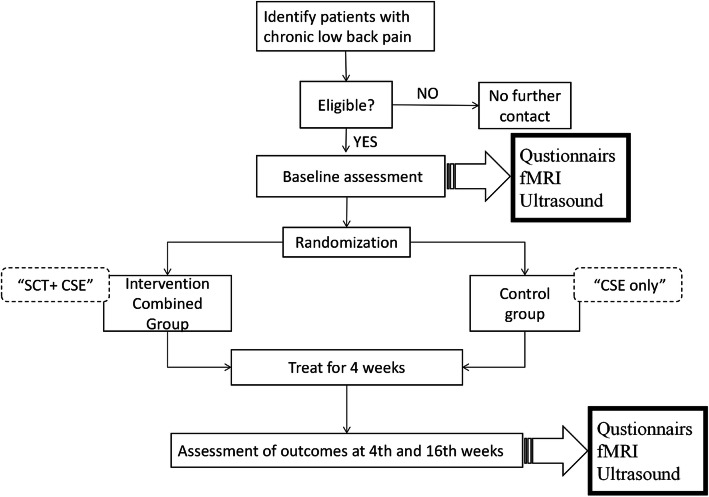
- Randomized, controlled, observer- and patient-blinded, two-arm parallel trial with 1:1 block randomization.
- Participants: adults aged 18 to 60 years with back pain lasting at least 12 weeks, recruited mainly in Guangzhou from the outpatient Department of Rehabilitation of the First Affiliated Hospital of Sun Yat-sen University.
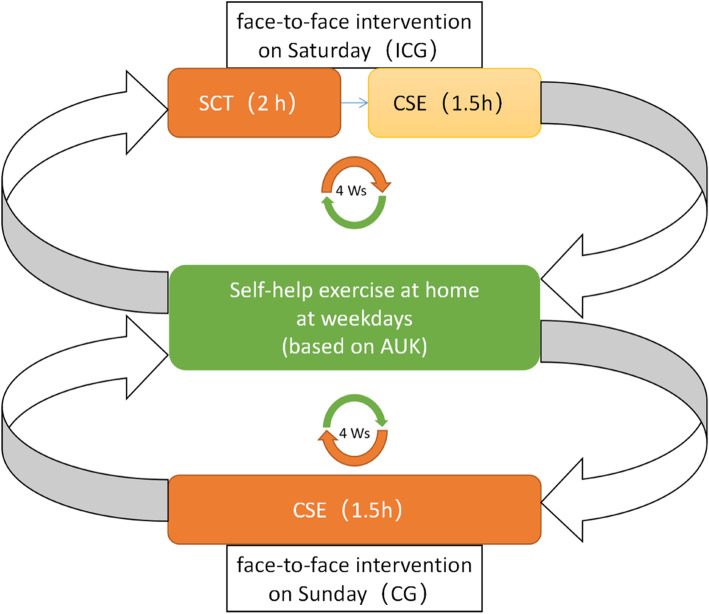
- Intervention: both groups receive 4 weekly 1.5-hour group sessions of CSE plus home practice; the intervention group also receives 2 hours of SCT before CSE. Outcomes are assessed at baseline, 4 weeks, and 16 weeks; analysis will use an intent-to-treat approach with two-way repeated-measures ANOVA.
## Limitations
- The paper does not report results; it is a study protocol, so effectiveness is not yet known.
- The authors note that COVID-19 could suspend face-to-face treatment at any time and suggest remote app-based treatment as a future option.
- Evident from the text: the study is being conducted at a single site, which may limit generalizability.
Model-written summary. Check it against the paper before relying on it.
Integrity signals
Registry
Cites
Statistics
Figures
Verification
Claims the paper makes
15 Valid · 1 Not valid · 10 Not checked · 32 Own results and interpretations
Every source the paper cites for this claim was checked and supports it.
In the paper
“Self-compassion training (SCT) is a promising psychotherapy treatment option for NCLBP; however, there is still a lack of research on CSE combined with SCT.”
- Also stated in: § Background and rationale {6a} · hedged
“An exploratory pilot study suggested that brief self-compassion training (SCT) could help people with NCLBP by reducing clinical pain intensity and disability and could increase trait self-compassion and interoceptive awareness [18].”
§ Effect of m-health-based core stability exercise combined with self-compassion training for patients with non-specific chronic low back pain: study protocol for a randomized controlled trial > Abstract > Background
What the sources say
- Supportedcites [18] Berry MP Lutz J Schuman-Olivier Z Germer C Pollak S Edwards RR Gardiner P Desbordes G Napadow V Brief self-compassion training alters neural responses to evoked pain for chronic low back pain: a pilot study Pain Med 2020 21 10 2172 2185 10.1093/pm/pnaa178 32783054 PMC7593799 source
The Abstract says self-compassion could be an important target in psychotherapeutic treatment of chronic low back pain. The Patients section describes participants in Quebec Task Force categories I–II, unlikely to have stenosis, mechanical instability, or significant nerve-root involvement, consistent with nonspecific chronic low back pain. The paper presents this as preliminary and calls for controlled studies, which is consistent with “promising.” (LLM, conf=0.89)
hedgedstates a possible cause- Asserted: passes — The authors put it forward as true.
- Checkable: passes — It can be checked against evidence.
- Load-bearing: passes — The paper’s conclusions depend on it.
- Based: passes — The paper gives a reason why it holds.
- Also stated in: § Background and rationale {6a} · hedged
Every source the paper cites for this claim was checked and supports it.
In the paper
“In addition to the core muscles, low back pain may be related to psychological factors, such as perceptions of back pain, depression, fear of activity, and pain self-efficacy [13].”
§ Effect of m-health-based core stability exercise combined with self-compassion training for patients with non-specific chronic low back pain: study protocol for a randomized controlled trial > Introduction > Background and rationale {6a}
What the sources say
- Supportedcites [13] O’Keeffe M O’Sullivan P Purtill H Bargary N O’Sullivan K Cognitive functional therapy compared with a group-based exercise and education intervention for chronic low back pain: a multicentre randomised controlled trial (RCT) Br J Sports Med 2019 54 13 782 789 10.1136/bjsports-2019-100780 31630089 PMC7361017 source
The Introduction explicitly describes low back pain as a biopsychosocial disorder influenced by psychological factors, listing back pain beliefs, depression, fear of activity, and pain self-efficacy. The claim closely paraphrases that passage. (LLM, conf=0.95)
hedgedstates an association- Asserted: passes — The authors put it forward as true.
- Checkable: passes — It can be checked against evidence.
- Load-bearing: passes — The paper’s conclusions depend on it.
- Based: passes — The paper gives a reason why it holds.
- Supported
Every source the paper cites for this claim was checked and supports it.
In the paper
“We found a mean difference of 5.5 for RMDQ with a standard deviation of 4.7 in the intervention group and a mean difference of 3.1 with a standard deviation of 4.8 in the control group at 16-week follow-up.”
§ Effect of m-health-based core stability exercise combined with self-compassion training for patients with non-specific chronic low back pain: study protocol for a randomized controlled trial > Methods: participants, interventions, and outcomes > Sample size {14}
What the sources say
- Supportedcites [34] Zheng F, Zheng Y, Liu S, Yang J, Xiao W, Xiao W, et al. The effect of M-health-based core stability exercise combined with self-compassion training for patients with nonspecific chronic low back pain: a randomized controlled pilot study. Pain Ther. 2022; 10.1007/s40122-022-00358-0. PMC9098748 35133634 source
The Results section, under “Sample Size Calculation,” states the same RMDQ mean differences, standard deviations, groups, and 16-week follow-up as the claim. (LLM, conf=0.95)
plain- Asserted: passes — The authors put it forward as true.
- Checkable: passes — It can be checked against evidence.
- Load-bearing: passes — The paper’s conclusions depend on it.
- Based: passes — The paper gives a reason why it holds.
- Supported
The cited sources support only part of this claim — read each source’s verdict below.
In the paper
“Studies have reported that there is significant atrophy, fat infiltration, and/or decrease in activation of the TrA and LM muscles in individuals with NCLBP [8, 9].”
§ Effect of m-health-based core stability exercise combined with self-compassion training for patients with non-specific chronic low back pain: study protocol for a randomized controlled trial > Introduction > Background and rationale {6a}
What the sources say
- Partly supportedcites [8] Russo M Deckers K Eldabe S Kiesel K Gilligan C Vieceli J Crosby P Muscle control and non-specific chronic low back pain Neuromodulation 2018 21 1 1 9 10.1111/ner.12738 29230905 PMC5814909 sourceExperimental — accuracy not yet measured
In the Introduction’s “Clinical Instability and CLBP” section (page unavailable), the paper reports lumbar multifidus atrophy and fat infiltration in people with chronic low back pain. Its “Imaging Assessment of Motor Control Dysfunction” section (page unavailable) also describes diminished multifidus thickness change during activation. The copy does not establish comparable atrophy, fat infiltration, or decreased activation of the transversus abdominis (TrA), so the claim about both muscles is only partially supported. (LLM, conf=0.86)
- Partly supportedcites [9] Kim KH Cho SH Goo BO Baek IH Differences in transversus abdominis muscle function between chronic low back pain patients and healthy subjects at maximum expiration: measurement with real-time ultrasonography J Phys Ther Sci 2013 25 7 861 863 10.1589/jpts.25.861 24259871 PMC3820411 sourceExperimental — accuracy not yet measured
The Results and Discussion report significantly thinner TrA muscle in patients with chronic low back pain, which the authors interpret as atrophy. The Introduction reports reduced multifidus cross-sectional area in patients with back pain, but the paper does not establish that those patients had nonspecific chronic low back pain. It does not report fat infiltration, and it finds no significant difference in voluntary TrA activation. (LLM, conf=0.85)
plainstates an association- Asserted: passes — The authors put it forward as true.
- Checkable: passes — It can be checked against evidence.
- Load-bearing: passes — The paper’s conclusions depend on it.
- Based: passes — The paper gives a reason why it holds.
- Partly supported
In the paper
“Core stability exercise (CSE) is a modestly effective treatment for NCLBP; however, CSE has only been shown to be a useful treatment option in the short term.”
- Also stated in: § Background and rationale {6a} · boosted
“Core stability exercises (CSEs) can increase the activation of LM and TrA and have been proven useful for treating NCLBP [10].”
§ Effect of m-health-based core stability exercise combined with self-compassion training for patients with non-specific chronic low back pain: study protocol for a randomized controlled trial > Abstract > Background
What the sources say
- Not checked — no full text of the sourcecites [10] Saragiotto BT Maher CG Yamato TP Costa LO Menezes CL Ostelo RW Macedo LG Motor control exercise for chronic non-specific low-back pain Cochrane Database Syst Rev 2016 1 D12004 PMC8761501 26742533 source
boostedstates a cause- Asserted: passes — The authors put it forward as true.
- Checkable: passes — It can be checked against evidence.
- Load-bearing: passes — The paper’s conclusions depend on it.
- Based: passes — The paper gives a reason why it holds.
- Also stated in: § Background and rationale {6a} · boosted
6 more claims
Create a free account to see all 58 claims and to verify the 1 reference still open.
- Probably not a substantial claim. 44
- It may state two separate claims as one. 15
Self-check
Percentages, sums and reported differences re-computed from the paper’s own numbers.
Each contradiction between two passages listed here was confirmed by an independent check.
Rated minor: it would not touch a result — a value no result rests on, a p-value that stays on the same side of the significance level, or a conflict that is clerical, resolved elsewhere in the paper, or outside its own findings.
In the paper
§ Effect of m-health-based core stability exercise combined with self-compassion training for patients with non-specific chronic low back pain: study protocol for a randomized controlled trial > Introduction > Trial design {8}
“The control group will receive CSE only while the intervention combined group will receive a combination of CSE and SCT.”
§ Effect of m-health-based core stability exercise combined with self-compassion training for patients with non-specific chronic low back pain: study protocol for a randomized controlled trial > Methods: participants, interventions, and outcomes > Assignment of interventions: allocation
“Sequence generation will be achieved using the IBM Statistical Package for Social Sciences (SPSS) version 23 software and stratified with a 1:1 allocation random block size of 10. The randomization list reports a progressive randomization number for randomized participants (from 1 to 20), and the treatment (SCE or combined SCE + CST) will be assigned to the subject in either group.”
Rated minor: it would not touch a result — a value no result rests on, a p-value that stays on the same side of the significance level, or a conflict that is clerical, resolved elsewhere in the paper, or outside its own findings.
In the paper
§ Effect of m-health-based core stability exercise combined with self-compassion training for patients with non-specific chronic low back pain: study protocol for a randomized controlled trial > Abstract > Methods
“The primary outcomes are back pain disability (based on the Roland-Morris Disability Questionnaire) and pain intensity (NRS; average pain, worst pain, average pain) at 16 weeks.”
§ Effect of m-health-based core stability exercise combined with self-compassion training for patients with non-specific chronic low back pain: study protocol for a randomized controlled trial > Methods: participants, interventions, and outcomes > Outcomes {12}
“We selected three NRS types: average NRS (average pain intensity over the last week), current NRS (current pain intensity), and most severe NRS (most severe pain intensity over the last week) [16].”
Citations
Cites
Murray, C. J. L., Aravkin, A. Y., Zheng, P., Abbafati, C., Abbas, K. M., Abbasi-Kangevari, M., Abd-Allah, F., Abdelalim, A., Abdollahi, M., Abdollahpour, I., et al. (2020) · The Lancet · doi:10.1016/s0140-6736(20)30752-2 · Cited by 9,854
SPIRIT 2013 explanation and elaboration: guidance for protocols of clinical trials
Chan, A.-W., Tetzlaff, J. M., Gotzsche, P. C., Altman, D. G., Mann, H., Berlin, J. A., Dickersin, K., Hrobjartsson, A., Schulz, K. F., Parulekar, W. R., et al. (2013) · BMJ · doi:10.1136/bmj.e7586 · Cited by 6,251 · cited 1×
“The trial protocol will be conducted and reported according to the Standard Protocol Items: Recommendations for Interventional Trials (SPIRIT 2013) [20].”
MethodWhat low back pain is and why we need to pay attention
Hartvigsen, J., Hancock, M. J., Kongsted, A., Louw, Q., Ferreira, M. L., Genevay, S., Hoy, D., Karppinen, J., Pransky, G., Sieper, J., et al. (2018) · The Lancet · doi:10.1016/s0140-6736(18)30480-x · Cited by 4,652 · cited 1×
“Low back pain is a very common condition that occurs in people in different regions (developed and developing countries) and at different ages (from children to the elderly) [1].”
BackgroundQaseem, A., Wilt, T. J., McLean, R. M., Forciea, M. A., & for the Clinical Guidelines Committee of the American College of Physicians* (2017) · Annals of Internal Medicine · doi:10.7326/m16-2367 · Cited by 3,234 · cited 1×
“Non-specific chronic low back pain (NCLBP), defined as pain lasting for 12 weeks or longer [4], can cause not only physical suffering, but also psychological and social problems [5].”
BackgroundMaher, C., Underwood, M., & Buchbinder, R. (2017) · The Lancet · doi:10.1016/s0140-6736(16)30970-9 · Cited by 2,535
Prevention and treatment of low back pain: evidence, challenges, and promising directions
Foster, N. E., Anema, J. R., Cherkin, D., Chou, R., Cohen, S. P., Gross, D. P., Ferreira, P. H., Fritz, J. M., Koes, B. W., Peul, W., et al. (2018) · The Lancet · doi:10.1016/s0140-6736(18)30489-6 · Cited by 2,398 · cited 1×
“Although there is a vast range of physical and psychological therapies to treat NCLBP, the social burden associated with NCLBP has been increasing [6].”
BackgroundWang, W., Bian, Q., Zhao, Y., Li, X., Wang, W., Du, J., Zhang, G., Zhou, Q., & Zhao, M. (2014) · General Hospital Psychiatry · doi:10.1016/j.genhosppsych.2014.05.021 · Cited by 1,480 · cited 1×
“Depressive symptoms will be assessed with the Patient Health Questionnaire-9 (PHQ-9; range, 0–27; higher scores indicate greater severity) [26].”
MethodHow does mindfulness-based cognitive therapy work?
Kuyken, W., Watkins, E., Holden, E., White, K., Taylor, R. S., Byford, S., Evans, A., Radford, S., Teasdale, J. D., & Dalgleish, T. (2010) · Behaviour Research and Therapy · doi:10.1016/j.brat.2010.08.003 · Cited by 809 · cited 1×
“Self-compassion has been proposed as a key mediator of mindfulness-based interventions [17].”
BackgroundCherkin, D. C., Sherman, K. J., Balderson, B. H., Cook, A. J., Anderson, M. L., Hawkes, R. J., Hansen, K. E., & Turner, J. A. (2016) · JAMA · doi:10.1001/jama.2016.2323 · Cited by 729
Toussaint, A., Hüsing, P., Gumz, A., Wingenfeld, K., Härter, M., Schramm, E., & Löwe, B. (2020) · Journal of Affective Disorders · doi:10.1016/j.jad.2020.01.032 · Cited by 641 · cited 1×
“Anxiety and depression symptoms Anxiety will be measured with the 7-item Generalized Anxiety Disorder Scale (GAD-7; range, 0–21; higher scores indicate greater severity) [25].”
MethodHerr, K. A., Spratt, K., Mobily, P. R., & Richardson, G. (2004) · The Clinical Journal of Pain · doi:10.1097/00002508-200407000-00002 · Cited by 502 · cited 1×
“Pain intensity Pain intensity will be assessed with the Numeric Rating Scale (NRS), which measures the mean pain intensity during the last week (scale 0–10, higher scores indicate greater pain intensity) [24].”
MethodMotor control exercise for chronic non-specific low-back pain
Saragiotto, B. T., Maher, C. G., Yamato, T. P., Costa, L. O., Menezes Costa, L. C., Ostelo, R. W., & Macedo, L. G. (2016) · Cochrane Database of Systematic Reviews · doi:10.1002/14651858.cd012004 · Cited by 433 · cited 1×
“Core stability exercises (CSEs) can increase the activation of LM and TrA and have been proven useful for treating NCLBP [10].”
MethodSelf-compassion, affect, and health-promoting behaviors.
Sirois, F. M., Kitner, R., & Hirsch, J. K. (2015) · Health Psychology · doi:10.1037/hea0000158 · Cited by 357 · cited 1×
“Importantly, SCT can increase the practice of health-promoting behaviors [19].”
BackgroundThe SF-36 summary scales were valid, reliable, and equivalent in a Chinese population
Lam, C. L. K., Tse, E. Y. Y., Gandek, B., & Fong, D. Y. T. (2005) · Journal of Clinical Epidemiology · doi:10.1016/j.jclinepi.2004.12.008 · Cited by 276 · cited 1×
“Quality of life Quality of life will be assessed with the 36-item Short-Form Health Survey (SF-36), which evaluates the health-related quality of life and is analyzed into 2 main domains, the physical component and the mental component [27].”
MethodA Mind-Body Program for Older Adults With Chronic Low Back Pain: A Randomized Clinical Trial
Morone, N. E., Greco, C. M., Moore, C. G., Rollman, B. L., Lane, B., Morrow, L. A., Glynn, N. W., & Weiner, D. K. (2016) · JAMA Internal Medicine · doi:10.1001/jamainternmed.2015.8033 · Cited by 258 · cited 1×
“We selected three NRS types: average NRS (average pain intensity over the last week), current NRS (current pain intensity), and most severe NRS (most severe pain intensity over the last week) [16].”
MethodMuscle Control and Non-specific Chronic Low Back Pain
Russo, M., Deckers, K., Eldabe, S., Kiesel, K., Gilligan, C., Vieceli, J., & Crosby, P. (2018) · Neuromodulation: Technology at the Neural Interface · doi:10.1111/ner.12738 · Cited by 222 · cited 1×
“Studies have reported that there is significant atrophy, fat infiltration, and/or decrease in activation of the TrA and LM muscles in individuals with NCLBP [8, 9].”
BackgroundO'Keeffe, M., O'Sullivan, P., Purtill, H., Bargary, N., & O'Sullivan, K. (2020) · British Journal of Sports Medicine · doi:10.1136/bjsports-2019-100780 · Cited by 217
Core Stability Exercise Versus General Exercise for Chronic Low Back Pain
Coulombe, B. J., Games, K. E., Neil, E. R., & Eberman, L. E. (2017) · Journal of Athletic Training · doi:10.4085/1062-6050-51.11.16 · Cited by 163 · cited 1×
“However, patients with NCLBP exhibit poor adherence to exercise training without supervision, leading to poor efficiency [11, 12].”
BackgroundNonnarcotic Methods of Pain Management
Finnerup, N. B. (2019) · New England Journal of Medicine · doi:10.1056/nejmra1807061 · Cited by 153 · cited 1×
“Non-specific chronic low back pain (NCLBP), defined as pain lasting for 12 weeks or longer [4], can cause not only physical suffering, but also psychological and social problems [5].”
BackgroundMeng, R., Yu, Y., Chai, S., Luo, X., Gong, B., Liu, B., Hu, Y., Luo, Y., & Yu, C. (2019) · Psychology Research and Behavior Management · doi:10.2147/prbm.s216411 · Cited by 72 · cited 1×
“The scale consists of 26 items measured on a 5-point scale with 1 = almost never and 5 = almost always; a higher score indicates a higher level of self-compassion [33].”
BackgroundMueller, J., & Niederer, D. (2020) · Scientific Reports · doi:10.1038/s41598-020-73954-9 · Cited by 72 · cited 1×
“The participants will be asked to complete at least three home-based training sessions per week with a training time of 20 to 30 min [22] and to complete the daily training diary after training.”
BackgroundZhang, S., Xu, Y., Han, X., Wu, W., Tang, Y., & Wang, C. (2018) · Scientific Reports · doi:10.1038/s41598-018-24550-5 · Cited by 52 · cited 1×
“Once a clear image of the LM is obtained, it will be frozen on the screen and saved [29].”
BackgroundHuang, J., Lin, K., Fan, L., Qiao, S., & Wang, Y. (2021) · Mindfulness · doi:10.1007/s12671-021-01614-8 · Cited by 52 · cited 1×
“This intervention is adapted from our previous study [21] with some minor modifications based on the characteristics of NCLBP.”
MethodBerry, M. P., Lutz, J., Schuman-Olivier, Z., Germer, C., Pollak, S., Edwards, R. R., Gardiner, P., Desbordes, G., & Napadow, V. (2020) · Pain Medicine · doi:10.1093/pm/pnaa178 · Cited by 45 · cited 1×
“An exploratory pilot study suggested that brief self-compassion training (SCT) could help people with NCLBP by reducing clinical pain intensity and disability and could increase trait selfcompassion and interoceptive awareness [18].”
BackgroundShen, B., Wu, B., Abdullah, T. B., Zhan, G., Lian, Q., Vania Apkarian, A., & Huang, L. (2018) · Molecular Pain · doi:10.1177/1744806918755283 · Cited by 44 · cited 1×
“” Higher scores indicate a higher level of pain catastrophizing [30].”
BackgroundSánchez Romero, E. A., Alonso Pérez, J. L., Muñoz Fernández, A. C., Battaglino, A., Castaldo, M., Cleland, J. A., & Villafañe, J. H. (2021) · Diagnostics · doi:10.3390/diagnostics11040632 · Cited by 37
Yi, H., Ji, X., Wei, X., Chen, Z., Wang, X., Zhu, X., Zhang, W., Chen, J., Zhang, D., & Li, M. (2012) · PLoS ONE · doi:10.1371/journal.pone.0030807 · Cited by 36 · cited 1×
“Back pain disability Back pain disability will be assessed using the Roland-Morris Disability Questionnaire (RMDQ; scale 0–24; higher scores indicate greater functional limitation) [23].”
MethodKim, K. H., Cho, S.-H., Goo, B.-O., & Baek, I.-H. (2013) · Journal of Physical Therapy Science · doi:10.1589/jpts.25.861 · Cited by 32 · cited 2×
“Studies have reported that there is significant atrophy, fat infiltration, and/or decrease in activation of the TrA and LM muscles in individuals with NCLBP [8, 9].”
BackgroundShamsi, M., Mirzaei, M., & HamediRad, M. (2020) · BMC Sports Science, Medicine and Rehabilitation · doi:10.1186/s13102-020-00173-0 · Cited by 30 · cited 1×
“However, patients with NCLBP exhibit poor adherence to exercise training without supervision, leading to poor efficiency [11, 12].”
BackgroundZheng, F., Zheng, Y., Liu, S., Yang, J., Xiao, W., Xiao, W., Chen, L., Yang, W., Zhang, S., Yu, Q., et al. (2022) · Pain and Therapy · doi:10.1007/s40122-022-00358-0 · Cited by 27
Self-citationYang, Y., Yang, M., Bai, J., Zhao, J., Chen, K., Zhou, X., Wei, X., & Li, M. (2019) · Spine · doi:10.1097/brs.0000000000003099 · Cited by 25 · cited 1×
“A higher total score after adding up the score of each item indicates stronger confidence in mastering self-efficiency [32].”
BackgroundLin, S., Zhu, B., Zheng, Y., Huang, G., Zeng, Q., & Wang, C. (2021) · BMC Musculoskeletal Disorders · doi:10.1186/s12891-021-04006-0 · Cited by 20 · cited 1×
“Lumbar core muscle function assessment TrA and LM muscle thickness will be directly measured by ultrasound, and the thickness change rate between the contractile and resting states will be calculated to predict the postural stability from the perspective of muscle morphology [28].”
MethodSelf-citationArdito, R. B., Pirro, P. S., Re, T. S., Bonapace, I., Menardo, V., Bruno, E., & Gianotti, L. (2017) · The Journal of Alternative and Complementary Medicine · doi:10.1089/acm.2016.0423 · Cited by 17
Baranoff, J., Hanrahan, S. J., Kapur, D., & Connor, J. P. (2014) · Journal of Behavioral Medicine · doi:10.1007/s10865-013-9502-0 · Cited by 13 · cited 1×
“Higher scores indicate higher levels of pain acceptance [31].”
Background
Cited by
Zhang, S., Gu, M.-L., Zhang, T., Xu, H., Mao, S., & Zhou, W.-S. (2023) · Journal of Orthopaedic Surgery and Research · doi:10.1186/s13018-023-03988-y · Cited by 58
“Introduction Chronic low back pain (CLBP) is the most common health problem among the elderly [93] and one of the leading causes of dysfunction and disability [78], and pain for more than three months is considered chronic low back pain [54].”
BackgroundYu, D., Yu, Y., Peng, Q., et al. (2023) · Pakistan Journal of Medical Sciences · doi:10.12669/pjms.39.4.6918 · Cited by 10
Zheng, F., Liu, S., Yin, Q., Zheng, Y., Yang, J., Huang, H., Chen, L., Wang, Y., Chen, X., & Wang, C. (2024) · Journal of Psychosomatic Research · doi:10.1016/j.jpsychores.2024.111678 · Cited by 6
Self-citationZheng, F., Li, Z., Huang, H., Xinna, Z., Chen, R., Jiahui, P., Liming, Y., Xi, C., & Chuhuai, W. (2023) · Trials · doi:10.1186/s13063-023-07805-z · Cited by 6
“In such cases, modifications to the technology setup or the exercise routine may be required.”
BackgroundSelf-citationKałużna, A., Kałużny, K., Pyskir, M., Staniewska, A., Hagner–Derengowska, M., & Budzyński, J. (2023) · Medical Research Journal · doi:10.5603/mrj.a2023.0035 · Cited by 1
Metadata
- Authors
- Fuming, Z., Weihui, X., Jiajia, Y., Shufeng, L., Yiyi, Z., Wenjian, L., Yan, L., Zhicheng, L., Siyun, Z., Yingmin, Z., Yuyin, W., & Chuhuai, W.
- Affiliations
- Sun Yat-sen University (CN)
- Corresponding author
- Yuyin, Wang
- Chuhuai, Wang
- Venue
- Trials
- Published
- 2022-04-07
- Volume
- 23
- Issue
- 1
- Pages
- 265-265
- ISSN
- 1745-6215 (ISSN-L)
- PMC
- PMC8989123
- OpenAlex
- W4223418945
- Semantic Scholar
- c5afaf2e9a7197033955387a0f8aee5eaf09e5e9
- Cited by
- 9
- References
- 34
- Citations by year
- 2026: 1 · 2024: 4 · 2023: 4
- FWCI
- 1.20
- Type
- journal article
- Language
- en
- Open access
- gold
- doi.org
- Licence
- cc-by
- creativecommons.org/licenses/by/4.0 (tdm)
- creativecommons.org/licenses/by/4.0 (vor)
- Locations
- Trials (publishedVersion, cc-by)
- PubMed Central (publishedVersion, cc-by)
- PubMed (publishedVersion)
- DOAJ (DOAJ: Directory of Open Access Journals) (submittedVersion, cc-by-sa)
- Funders
- young scientists fund (82002398)
- National Natural Science Foundation of China (82172532)
- Topics
- Health Sciences › Health Professions › Physical Therapy, Sports Therapy and Rehabilitation › Musculoskeletal pain and rehabilitation
- Social Sciences › Psychology › Clinical Psychology › Mindfulness and Compassion Interventions
- Health Sciences › Medicine › Anesthesiology and Pain Medicine › Pain Management and Treatment
- Keywords
- chronic non-specific low back pain, core stability training, self-compassion training, mobile health, biopsychosocial model, pain-related disability, pain intensity, mind-body interventions, group intervention
- MeSH terms
- Self-Compassion, Core Stability, Adult, Back Pain, Exercise Therapy, Humans, Quality of Life, Randomized Controlled Trials as Topic, Treatment Outcome, Low Back Pain, Telemedicine, Chronic Pain
About these checks
Registry, retraction, Cites and statistics results are computed, not judged, with one exception: a printed reference that no index lists is read once by a model before it counts as a citation error. Claims are extracted by a model and kept only when their quote appears verbatim in the text; each cited source is then checked, with a model’s help, for whether it says what the claim relies on. Those verdicts can be wrong — read the claim’s quote and the cited source before relying on one.
The claim verdicts this report counts are experimental: their accuracy is not yet measured.
A language model drew the claims from the paper on 2026-10-11, under version 3 of the claim definition (model deepseek-v4.1-flash, prompt extract-v3).
A second model labelled each claim on 2026-10-11 (model jev-1.13-20260917, definition revision gold-guideline-v0.2).
Cited sources are checked with a language model’s help (gpt-6-sol).
Statistics and arithmetic are recomputed, not judged.
Confidence bands are shown only for fields calibrated on our annotated test set. None is calibrated yet, so no band is shown.
What counts as a claim ›How we measure confidence ›How we check this ›
Are you an author, or do you see a problem with this page? Request a review
Data sources
Bibliographic data: Semantic Scholar, OpenAlex, Crossref.
Contains information from the Semantic Scholar Academic Graph Datasets, made available under the ODC Attribution License (ODC-BY 1.0).
Semantic Scholar’s data is described in: Kinney, R., et al. (2023). The Semantic Scholar Open Data Platform. arXiv:2301.10140.
