

Microbial synthesis of poly-γ-glutamic acid: current progress, challenges, and future perspectives
Open accessThe DOI matches its Crossref record; 107 of the 109 references it cites were found in a registry or an index.
Abstract
Poly-γ-glutamic acid (γ-PGA) is a naturally occurring biopolymer made from repeating units of l-glutamic acid, d-glutamic acid, or both. Since some bacteria are capable of vigorous γ-PGA biosynthesis from renewable biomass, γ-PGA is considered a promising bio-based chemical and is already widely used in the food, medical, and wastewater industries due to its biodegradable, non-toxic, and non-immunogenic properties. In this review, we consider the properties, biosynthetic pathway, production strategies, and applications of γ-PGA. Microbial biosynthesis of γ-PGA and the molecular mechanisms regulating production are covered in particular detail. Genetic engineering and optimization of the growth medium, process control, and downstream processing have proved to be effective strategies for lowering the cost of production, as well as manipulating the molecular mass and conformational/enantiomeric properties that facilitate screening of competitive γ-PGA producers. Finally, future prospects of microbial γ-PGA production are discussed in light of recent progress, challenges, and trends in this field.
Overview
The claims and statistics of this paper haven’t been checked yet.
Free: it reads the open-access text and checks the first 5 claims that cite a source we can check. Create a free account to check every claim.
Integrity signals
Registry
Cites
Statistics
Figures
Verification
Claims the paper makes
The claims and statistics of this paper haven’t been checked yet.
Free: it reads the open-access text and checks the first 5 claims that cite a source we can check. Create a free account to check every claim.
Claims other papers make about this one
Each is checked against this paper’s own text: does it say what the citing paper says it does?
The cited source says what the claim attributes to it.
In the citing paper
“Gamma-polyglutamic acid (γ-PGA) is a non-toxic and biodegradable biopolymer produced by several species of Bacillus, including B. licheniformis and B. subtilis [12,13].”
From Soy Molasses as Culture Medium for Bacillus Species Aiming at Plant Growth Promotion (2024) · cites this paper as [12]
Self-check
Percentages, sums and reported differences re-computed from the paper’s own numbers.
The self-check needs the paper’s full text.
Citations
Cites
The production of poly-(γ-glutamic acid) from microorganisms and its various applications
Shih, I.-L., & Van, Y.-T. (2001) · Bioresource Technology · doi:10.1016/s0960-8524(01)00074-8 · Cited by 579 · cited 8×
“Animal feed additives Increasing egg-shells strength; decreasing body fat, etc [1]”
BackgroundMethodInfluentialPoly (glutamic acid) – An emerging biopolymer of commercial interest
Bajaj, I., & Singhal, R. (2011) · Bioresource Technology · doi:10.1016/j.biortech.2011.02.047 · Cited by 372 · cited 1×
“Surprisingly, only a small number of mini reviews on the biosynthesis and applications of γ-PGA have been published to date [1, 6–9].”
BackgroundPoly-γ-glutamic acid: production, properties and applications
Ogunleye, A., Bhat, A., Irorere, V. U., Hill, D., Williams, C., & Radecka, I. (2015) · Microbiology · doi:10.1099/mic.0.081448-0 · Cited by 354
Poly‐gamma‐glutamate in bacteria
Candela, T., & Fouet, A. (2006) · Molecular Microbiology · doi:10.1111/j.1365-2958.2006.05179.x · Cited by 341 · cited 3×
“For example, γ-PGA containing only l or d enantiomers is soluble in ethanol, whereas γ-PGA containing equimolar amounts of l and d precipitates in ethanol [6].”
BackgroundBuescher, J. M., & Margaritis, A. (2007) · Critical Reviews in Biotechnology · doi:10.1080/07388550601166458 · Cited by 276 · cited 8×
“A lot of research has been carried out on the molecular biology (genes, enzymes, pathways) of γ-PGA and its biosynthesis in different organisms, some of which have been applied to improving its production [7, 8, 73].”
BackgroundInfluentialStanley, N. R., & Lazazzera, B. A. (2005) · Molecular Microbiology · doi:10.1111/j.1365-2958.2005.04746.x · Cited by 264
Natural and edible biopolymer poly‐γ‐glutamic acid: synthesis, production, and applications
Sung, M., Park, C., Kim, C., Poo, H., Soda, K., & Ashiuchi, M. (2005) · The Chemical Record · doi:10.1002/tcr.20061 · Cited by 239 · cited 2×
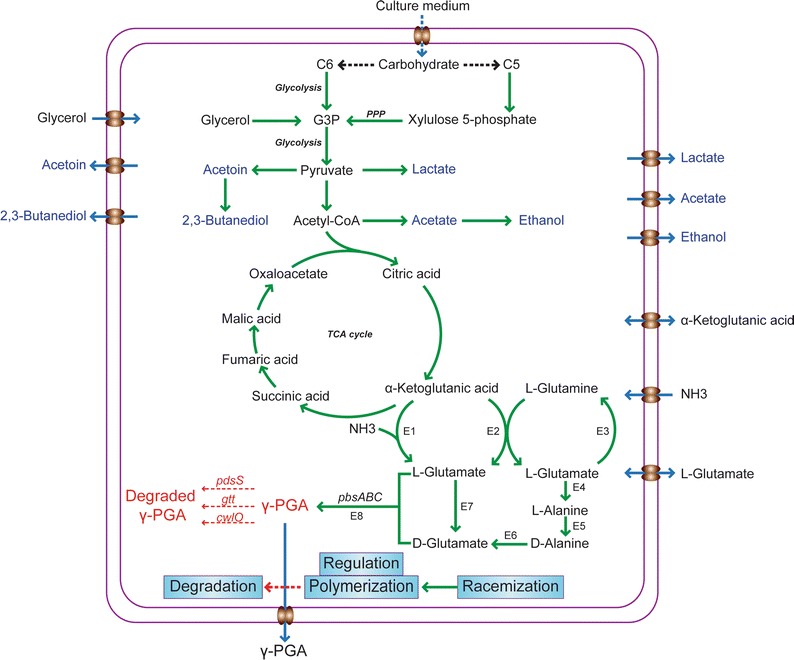
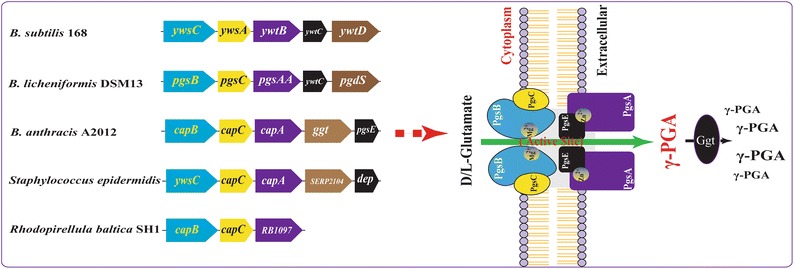
“Recently, pgsBCA was identified as the sole machinery responsible for polymerizing γ-PGA at the active site of the synthase complex (PgsBCA) in an ATP-dependent reaction [25].”
BackgroundKey role of poly-γ-dl-glutamic acid in immune evasion and virulence of Staphylococcus epidermidis
Kocianova, S., Vuong, C., Yao, Y., Voyich, J. M., Fischer, E. R., DeLeo, F. R., & Otto, M. (2005) · Journal of Clinical Investigation · doi:10.1172/jci200523523 · Cited by 230
Paclitaxel poliglumex (XYOTAX™, CT-2103): A macromolecular taxane
Singer, J. W. (2005) · Journal of Controlled Release · doi:10.1016/j.jconrel.2005.09.033 · Cited by 213
Microbial Degradation of Poly(amino acid)s
Obst, M., & Steinbüchel, A. (2004) · Biomacromolecules · doi:10.1021/bm049949u · Cited by 191 · cited 1×
“γ‐PGA degradation There are two enzymes capable of degrading γ-PGA in Bacilli: endo-γ-glutamyl peptidase and exo-γ-glutamyl peptidase [33].”
Background
Research works printed but not linked: 1
- 13. Perez-Camero G, Congregado F, Bou JJ, Munoz-Guerra S. Biosynthesis and ultrasonic degradation of bacterial poly(gamma-glutamic acid). Biotechnol Bioeng. 1999;63:110-5. · doi:10.1002/(sici)1097-0290(19990405)63:1<110::aid-bit11>3.0.co;2-t
Cited by
Items 101–200 of 276
Wojtowicz, K., Steliga, T., Kapusta, P., Brzeszcz, J., & Skalski, T. (2022) · Materials · doi:10.3390/ma15020400 · Cited by 18
“In addition, γ-PGA can improve biofilm formation and aid the absorption of essential nutrients from the environment [118].”
BackgroundYang, J.-J., Li, F., Hung, K., Hsu, S., & Wang, J. (2018) · European Spine Journal · doi:10.1007/s00586-018-5727-5 · Cited by 18
Guo, J., Shi, W., Li, J., & Zhai, Z. (2021) · PLoS ONE · doi:10.1371/journal.pone.0245365 · Cited by 23
“It is an environmentally friendly material due to its biodegradability, water-solubility, and naturality polymer [2].”
BackgroundEnshaei, H., Molina, B. G., Puiggalí‐Jou, A., Saperas, N., & Alemán, C. (2022) · European Polymer Journal · doi:10.1016/j.eurpolymj.2022.111199 · Cited by 17
Guo, L., Lu, L., Wang, H., Zhang, X., Wang, G., Zhao, T., Zheng, G., & Qiao, C. (2023) · Microbial Cell Factories · doi:10.1186/s12934-023-02042-0 · Cited by 17
Tang, R., Sun‐Waterhouse, D., Xiong, J., Cui, C., & Wang, W. (2019) · Food Chemistry · doi:10.1016/j.foodchem.2019.125920 · Cited by 17
Song, C. W., Rathnasingh, C., & Song, H. (2021) · Biochemical Engineering Journal · doi:10.1016/j.bej.2021.108141 · Cited by 17
Tamang, J. P., Kharnaior, P., Pariyar, P., Thapa, N., Lar, N., Win, K. S., Mar, A., & Nyo, N. (2021) · PLoS ONE · doi:10.1371/journal.pone.0260777 · Cited by 18
“Gene related to signal transduction system that regulates poly-γ-glutamic acid (PGA) synthesis [85, 86].”
BackgroundZhang, L., Zhu, X., Wu, S., Chen, Y., Tan, S., Liu, Y., Jiang, W., & Huang, J. (2018) · International Journal of Nanomedicine · doi:10.2147/ijn.s181121 · Cited by 17
Supramolecular Self‐Assembly in Living Cells
Dergham, M., Lin, S., & Geng, J. (2022) · Angewandte Chemie · doi:10.1002/ange.202114267 · Cited by 20
Quadir, S. S., Saharan͙, V., Choudhary, D. K., Harish, Jain, C. P., & Joshi, G. (2022) · AAPS PharmSciTech · doi:10.1208/s12249-022-02301-0 · Cited by 20
Microbial Poly-γ-Glutamic Acid (γ-PGA) as an Effective Tooth Enamel Protectant
Parati, M., Clarke, L., Anderson, P., Hill, R. G., Khalil, I., Tchuenbou-Magaia, F. L., Stanley, M. S., Gee, D. M., Mendrek, B., Kowalczuk, M. M., et al. (2022) · Polymers · doi:10.3390/polym14142937 · Cited by 16
Chen, S., Fu, J., Yu, B., & Wang, L. (2023) · Journal of Agricultural and Food Chemistry · doi:10.1021/acs.jafc.3c01505 · Cited by 16
Xu, G., Wang, J., Shen, J., Zhu, Y., Liu, W., Chen, Y., Zha, J., Zhang, X., Zhang, X., Shi, J., et al. (2023) · Metabolic Engineering · doi:10.1016/j.ymben.2023.12.008 · Cited by 16
Salmasi, Z., Mokhtarzadeh, A., Hashemi, M., Ebrahimian, M., Farzad, S. A., Parhiz, H., & Ramezani, M. (2018) · Colloids and Surfaces B Biointerfaces · doi:10.1016/j.colsurfb.2018.09.028 · Cited by 18
Wang, D., Kim, H., Lee, S., Kim, D., & Joe, M.-H. (2020) · Applied Microbiology and Biotechnology · doi:10.1007/s00253-020-10755-0 · Cited by 16
Li, X., Yang, H., Zhou, M., Zhan, Y., Liu, J., Yan, D., Cai, D., & Chen, S. (2021) · Biochemical Engineering Journal · doi:10.1016/j.bej.2021.108156 · Cited by 16
Self-citationFactors increasing poly-γ-glutamic acid content of cheongguk-jang fermented by Bacillus subtilis 168
Ratha, P., & Jhon, D.-Y. (2018) · Food Science and Biotechnology · doi:10.1007/s10068-018-0424-z · Cited by 16
Biopolymer production in microbiology by application of metabolic engineering
Liu, H., Wei, L., Ba, L., Yuan, Q., & liu, Y. (2021) · Polymer Bulletin · doi:10.1007/s00289-021-03820-9 · Cited by 20
Biodegradable acids for pyrite depression and green flotation separation – an overview
Neisiani, A. A., & Chelgani, S. C. (2023) · Critical Reviews in Biotechnology · doi:10.1080/07388551.2023.2238885 · Cited by 15
Hong, L., Li, W., Fanglan, G., Li, J., Shiheng, T., Yang, H., Yao, R., XinYue, G., & Can, Y. (2024) · Frontiers in Microbiology · doi:10.3389/fmicb.2024.1387223 · Cited by 16
“Poly-γ -glutamic acid ( γ -PGA) is a non-toxic, water-soluble, biodegradable, and environmentally friendly biopolymer (Luo et al., 2016) that has been widely utilized in various fields including food, cosmetics, and medical care (Stephen Inbaraj et al., 2006; Hu et al., 2023).”
BackgroundInvolvement of Peptide Epimerization in Poly-γ-glutamic Acid Biosynthesis
Ogasawara, Y., Shigematsu, M., Shota, S. A. T. O., Kato, H., & Dairi, T. (2019) · Organic Letters · doi:10.1021/acs.orglett.9b01121 · Cited by 15
Wang, D., Fu, X., Zhou, D., Gao, J., & Bai, W. (2022) · Microbial Cell Factories · doi:10.1186/s12934-022-01994-z · Cited by 18
Zhang, W., Shen, H., Li, Y., Yang, K., Lei, P., Gu, Y., Sun, L., Xu, H. L., & Wang, R. (2023) · Foods · doi:10.3390/foods12091748 · Cited by 14
Zhang, L., Gao, J., Wang, L., Sun, Y., Dong, X., JiuBo, P., Wei, Z., Zhang, L., & Shi, Y. (2022) · Applied Soil Ecology · doi:10.1016/j.apsoil.2023.105015 · Cited by 15
Effect of γ-PGA and γ-PGA SAP on soil microenvironment and the yield of winter wheat
Guo, J., Zhang, J., Zhang, K., Li, S., & Zhang, Y. (2023) · PLoS ONE · doi:10.1371/journal.pone.0288299 · Cited by 14
“The microorganisms then transform the glutamic acid into nitrate nitrogen and ammonium nitrogen [25].”
Self-citationZhu, J., Wang, X., Zhao, J., Ji, F., Zeng, J., Wei, Y., Xu, L., Dong, G., Ma, X., & Wang, C. (2024) · BMC Microbiology · doi:10.1186/s12866-024-03262-z · Cited by 17
“The γ-PGA productivity of B. subtilis subsp. chungkookjang could be increased by the PgsE enzyme in the presence of Zn [2 + [17]] But the function of YwtC remains unknown.”
BackgroundWei, X., Yang, L., Chen, Z., Xia, W., Chen, Y., Cao, M., & He, N. (2024) · Biotechnology for Biofuels and Bioproducts · doi:10.1186/s13068-024-02501-9 · Cited by 14
“Moreover, Mw of γ-PGA was the decisive factor for controlling or delaying the drug delivery release, which can be suitable carriers for gene therapy [52].”
BackgroundTamang, J. P., Kharnaior, P., & Pariyar, P. (2024) · Food Research International · doi:10.1016/j.foodres.2024.114655 · Cited by 19
García-García, C., & Baik, I. (2021) · Nutrition Research and Practice · doi:10.4162/nrp.2021.15.3.309 · Cited by 14
“Its cost-effective production is through fermentation by Bacillus subtilis strains in foods like Korean chungkookjang or Japanese natto [20,21].”
BackgroundRestaino, O. F., Hejazi, S., Zannini, D., Giosafatto, C. V. L., Pierro, P. D., Cassese, E., D’ambrosio, S., Santagata, G., Schiraldi, C., & Porta, R. (2022) · Polymers · doi:10.3390/polym14061190 · Cited by 13
“In fact, if the chains are composed of both D- and L-enantiomers, γ-PGA precipitates in ethanol, while if it contains only one type of enantiomer, it is soluble [3].”
BackgroundNair, P. G., & Dharne, M. S. (2023) · Journal of Cleaner Production · doi:10.1016/j.jclepro.2023.138709 · Cited by 13
Qiao, M., Zhang, T., & Miao, M. (2024) · Foods · doi:10.3390/foods13040510 · Cited by 15
Wu, C., Gou, Y., Jing, S., Li, W., Ge, F., Li, J., & Ren, Y. (2025) · PLoS ONE · doi:10.1371/journal.pone.0310556 · Cited by 13
Soren, J. P., Paul, T., Banerjee, A., Mondal, K. C., & MOHAPATRA, P. K. D. (2019) · Waste and Biomass Valorization · doi:10.1007/s12649-019-00761-3 · Cited by 13
Flores, C., Medina‐Valdez, A., Peña, C., Serrano‐Carreón, L., & Galindo, E. (2020) · Journal of Chemical Technology & Biotechnology · doi:10.1002/jctb.6420 · Cited by 13
Morris, R. J., Stevenson, D., Sukhodub, T., Stanley‐Wall, N. R., & MacPhee, C. E. (2022) · npj Biofilms and Microbiomes · doi:10.1038/s41522-022-00361-5 · Cited by 14
Cyanophycin and its biosynthesis: not hot but very cool
Sharon, I., Hilvert, D., & Schmeing, T. M. (2023) · Natural Product Reports · doi:10.1039/d2np00092j · Cited by 12
Engineering Bacillus licheniformis as industrial chassis for efficient bioproduction from starch
Zhu, J., Liu, M., Kang, J., Wang, S., Zha, Z., Zhan, Y., Wang, Z., Li, J., Cai, D., & Chen, S. (2024) · Bioresource Technology · doi:10.1016/j.biortech.2024.131061 · Cited by 12
Electrofermentation increases concentration of poly γ‐glutamic acid in Bacillus subtilis biofilms
Adilkhanova, A., Ormantayeva, A., Kaziullayeva, A., Olaifa, K. W., Eghtesadi, N., Abbas, A. H., Calvio, C., Pham, T. T., Ajunwa, O. M., & Marsili, E. (2024) · Microbial Biotechnology · doi:10.1111/1751-7915.14426 · Cited by 11
“Commercial γ - PGA is produced through the microbial fermentation of biomass by Bacillus species (Luo et al., 2016; Nair et al., 2021).”
BackgroundPasotti, L., Massaiu, I., Magni, P., & Calvio, C. (2024) · Fermentation · doi:10.3390/fermentation10060319 · Cited by 13
Pal, P., Singh, A. K., Sarangi, P. K., Sahoo, U. K., Singh, H. B., Subudhi, S., & Singh, T. A. (2024) · Polymers for Advanced Technologies · doi:10.1002/pat.6565 · Cited by 14
Zhao, M., Hu, Y., Yao, H., Huang, J., Li, S., & Xu, H. L. (2022) · Carbohydrate Polymers · doi:10.1016/j.carbpol.2022.119431 · Cited by 16
Self-citationShim, G., Kim, D., Kim, J. Y., Suh, M. S., Kim, Y. K., & Oh, Y. (2017) · Nanotoxicology · doi:10.1080/17435390.2017.1353155 · Cited by 11
“Notably, PGA itself is known to be nontoxic, biodegradable, and non-immunogenic (Luo et al., 2016).”
BackgroundPoly (γ-Glutamic Acid) Promotes Enhanced Dechlorination of p-Chlorophenol by Fe-Pd Nanoparticles
Zhang, S., Zhang, C., Liu, M., Huang, R., Su, R., Qi, W. D., & He, Z. (2018) · Nanoscale Research Letters · doi:10.1186/s11671-018-2634-y · Cited by 12
Qiu, Y., Zhu, Y., Zhang, Y., Sha, Y., Xu, Z., Li, S., Feng, X., & Xu, H. L. (2019) · Journal of Agricultural and Food Chemistry · doi:10.1021/acs.jafc.9b00332 · Cited by 11
Self-citationDeciphering metabolic responses of biosurfactant lichenysin on biosynthesis of poly-γ-glutamic acid
Qiu, Y., Wang, Q., Zhu, C., Yang, Q., Zhou, S., Xiang, Z., & Chen, S. (2019) · Applied Microbiology and Biotechnology · doi:10.1007/s00253-019-09750-x · Cited by 11
Akter, B., Khan, A. I., Karmaker, S., Ghosh, P., Saha, S. P., Polash, S. A., Islam, Z., Sarker, S. R., Hossain, M. S., Yasui, H., et al. (2020) · Polymer Bulletin · doi:10.1007/s00289-020-03165-9 · Cited by 11
Dinh, T., Zia, Q., Zubair, S., Stapleton, P. D., Singh, R., Owais, M., & Somavarapu, S. (2017) · Nanomedicine Nanotechnology Biology and Medicine · doi:10.1016/j.nano.2017.02.003 · Cited by 12
Polyglutamate: Unleashing the Versatility of a Biopolymer for Cosmetic Industry Applications
Serra, M., Gudiña, E. J., Botelho, C., Teixeira, J. A., & Barros, A. (2024) · Cosmetics · doi:10.3390/cosmetics11030076 · Cited by 15
“Polyglutamate, or poly-γ-glutamic acid (PGA), is found in various natural sources, including specific micro-organisms and fermented foods [3]: Polyglutamate, or poly-γ -glutamic acid (PGA), is found in various natural sources, including specific micro-organisms and fermented foods [3]: 1.”
BackgroundYan, D., Huang, L., Mei, Z., Bao, H., Xie, Y., Yang, C., & Gao, X. (2023) · Journal of the Science of Food and Agriculture · doi:10.1002/jsfa.13011 · Cited by 10
Applications of Bacteria and Their Derived Biomaterials for Repair and Tissue Regeneration
Aavani, F., Biazar, E., Heshmatipour, Z., Arabameri, N., Kamalvand, M., & Nazbar, A. (2021) · Regenerative Medicine · doi:10.2217/rme-2020-0116 · Cited by 11
Kwiecień, I., Niewolik, D., Ekere, A. I., Gupta, A., & Radecka, I. (2020) · Applied Sciences · doi:10.3390/app10082787 · Cited by 9
“This naturally occurring polyamide is water-soluble, biodegradable, nontoxic to humans and the environment, and safe for human consumption [11].”
BackgroundAbid, A. A., Zhang, G., Dan, H., Wang, H., Batool, I., Di, H., & Zhang, Q. (2022) · Frontiers in Plant Science · doi:10.3389/fpls.2022.913787 · Cited by 10
Castillo, T., Flores, C., Salgado‐Lugo, H., Peña, C., & Galindo, E. (2023) · Electronic Journal of Biotechnology · doi:10.1016/j.ejbt.2023.09.001 · Cited by 14
Cryoprotective effect and mechanism of γ-polyglutamic acid with different molecular weight on surimi
Liu, C., Zhang, C., Wang, H., Tang, C., Wang, C., Peng, L., Gu, Y., Li, S., Qiu, Y., Zhong, X., et al. (2025) · Applied Food Research · doi:10.1016/j.afres.2025.100810 · Cited by 12
Self-citationWei, X., Pan, Z., Chen, Z., & He, N. (2025) · Microbial Cell Factories · doi:10.1186/s12934-025-02846-2 · Cited by 12
Hoffmann, K., Halmschlag, B., Briel, S., Sieben, M., Putri, S. P., Fukusaki, E., Blank, L. M., & Büchs, J. (2022) · Biotechnology Progress · doi:10.1002/btpr.3293 · Cited by 10
“This group usually produces γ-PGA in high concentrations but has the significant disadvantage of high production costs due to glutamate as substrate.(2,7) The second group comprises glutamate-independent γ-PGA producers.”
BackgroundZhu, R., Ma, X., & Liu, J. (2018) · International Microbiology · doi:10.1007/s10123-018-0011-4 · Cited by 9
Self-citationSu, C.-Y., Tseng, C., Wu, S.-H., Shih, B.-W., Chen, Y.-Z., & Fang, H.-W. (2019) · Polymers · doi:10.3390/polym11061050 · Cited by 9
“γ-PGA has been used in the cosmetic and sanitary industries for its properties that increase the production of natural moisturizing agents such as urocanic acid, pyrrolidone carboxylic acid, and lactic acid [9,17].”
BackgroundChen, C., Yan, W., Chen, Y., Liu, S., Nong, C., Sun, L., Wang, R., Xu, H. L., Lei, P., & Gu, Y. (2024) · Environmental Pollution · doi:10.1016/j.envpol.2024.125318 · Cited by 9
Tang, D., Ji, H., & Zhang, L. (2025) · Bioresource Technology · doi:10.1016/j.biortech.2025.132249 · Cited by 8
Völker, F., Hoffmann, K., Halmschlag, B., Maaß, S., Büchs, J., & Blank, L. M. (2025) · Engineering in Life Sciences · doi:10.1002/elsc.70009 · Cited by 9
Li, Y., Chen, J., Chen, X., Meng, W., Wang, D., Zhang, S., Zhong, H., Yao, C., & Zhang, Q. (2025) · Chemical Engineering Journal · doi:10.1016/j.cej.2025.164637 · Cited by 9
Bai, Y., Tan, R., Yan, Y., Chen, T., Feng, Y., Sun, Q., Li, J., Wang, Y., Liu, F., Wang, J., et al. (2024) · Biotechnology for Biofuels and Bioproducts · doi:10.1186/s13068-024-02515-3 · Cited by 8
Hu, P., Zhang, Z., Shen, F., Yu, X., Li, M., Ni, H., & Li, L. (2017) · RSC Advances · doi:10.1039/c7ra01546a · Cited by 8
Nguyen, L. T., Tran, H. L., Phong, M. T., Duong, V. B., Nguyen, L.-T. T., & Nguyên, H. T. (2021) · Materials Research · doi:10.1590/1980-5373-mr-2020-0321 · Cited by 8
Research and Production of Microbial Polymers for Food Industry
Selvi, S. S., Eminagic, E., Kandur, M. Y., Özcan, E., Kasavi, C., & Öner, E. T. (2019) · Wiley eBooks · doi:10.1002/9781119434436.ch10 · Cited by 7
Soy Molasses as Culture Medium for Bacillus Species Aiming at Plant Growth Promotion
Correa da Silva, A. P. F., Dorigan, B. S. R., da Silva-Neto, J. M., Rosa-Magri, M. M., Rossi, F., Francisco, K. R., Ceccato-Antonini, S. R., & Fontanetti, A. (2024) · Fermentation · doi:10.3390/fermentation10080403 · Cited by 7
Völker, F., Maaß, S., An, P. N. T., Gibhardt, J., Commichau, F. M., & Blank, L. M. (2025) · Metabolic Engineering · doi:10.1016/j.ymben.2025.06.003 · Cited by 8
Toprak, P., Dubey, A. A., Mukherjee, A., Pring, A., Rodriguez-Navarro, C. M., & Dhami, N. K. (2025) · Applied Microbiology and Biotechnology · doi:10.1007/s00253-025-13644-6 · Cited by 9
“…for structured biofilm formation, constructing tower-like biofilms reaching heights of up to 100 µm on agar surfaces, and synthesising poly-γ-glutamate (γ-PGA) as a major EPS component, with production levels varying between 10 and 100 µg/mL in biofilm cultures (Luo et al. 2016; Ren et al. 2004).”
Xie, X., Zhang, B., Zhang, B., Zhu, H., Qi, L., Xu, C., Cheng, L., Zhi-lu, A., & Shi, Q. (2023) · Food Science and Technology International · doi:10.1177/10820132231158278 · Cited by 7
“Poly-γ -glutamic acid ( γ -PGA) is an anionic polymer and is an edible substance with many health bene fi ts for humans (Luo et al., 2016; Lee et al., 2010; Choi et al., 2015), naturally occurring in fermented soybeans (pKa ∼ 2.23).”
InfluentialAl-wahili, M., Al‐Manhel, A. J. A., Al-Ali, R. M., & Altemimi, A. B. (2023) · Journal of Microbiology Biotechnology and Food Sciences · doi:10.55251/jmbfs.10075 · Cited by 11
“This term pertains to the conversion of one chiral isomer, or enantiomer, of a molecule into its mirror image. γ-PGA undergoes racemization when its L-glutamic acid units are transformed into their D-form, leading to the formation of both L- and D-enantiomers. γ-PGA can undergo racemization via different pathways, suc…”
BackgroundMethodInfluentialChitosan/poly-γ-glutamic acid crosslinked hydrogels: Characterization and application as bio-glues
Hejazi, S., Carpentieri, A., Marotta, A., Restaino, O. F., AntonellaGiarra, Solimeno, I., Zannini, D., Mariniello, L., Giosafatto, C. V. L., & Porta, R. (2024) · International Journal of Biological Macromolecules · doi:10.1016/j.ijbiomac.2024.133653 · Cited by 7
Federico, M. L., Diniz, A. L., Souza, G. M., Snowdon, R. J., & Erazzú, L. E. (2022) · Plant Breeding · doi:10.1111/pbr.13013 · Cited by 7
Whole-genome analysis of Bacillus subtilis G8 isolated from natto
DIKSON, D., Victor, H., JONG, D., Sanjaya, A., Samantha, A., Jo, J., & Pinontoan, R. (2022) · Biodiversitas Journal of Biological Diversity · doi:10.13057/biodiv/d230313 · Cited by 8
“These regulatory proteins are encoded by the degQ, swrA, degS, degU, comP, and comA genes (Luo et al. 2016).”
BackgroundMi, N., Hao, W., Zhou, Z., Li, L., Wang, F., & Gai, J. (2022) · Toxics · doi:10.3390/toxics10080408 · Cited by 8
Production of polyglutamic acid-like mucilage protein by Peribacillus simplex strain 8h
Sato, S., Ichiyanagi, N., Sugiyama, K., Aburai, N., & Fujii, K. (2022) · Folia Microbiologica · doi:10.1007/s12223-022-01000-4 · Cited by 8
“Because of the water-soluble, viscous, anionic, biodegradable, nontoxic, and edible properties of PGA, it is currently receiving strong attention for application in a wide variety of industries (Luo et al. 2016).”
BackgroundMethodInfluentialFernandes, A. R. A. C., Sganzerla, W. G., Granado, N., & Campos, V. (2023) · Biocatalysis and Agricultural Biotechnology · doi:10.1016/j.bcab.2023.102698 · Cited by 7
Radchenkova, N., Erginer, M., Vassilev, S., Yıldız, S. Y., Boyadzhieva, I., Öner, E. T., & Kambourova, M. S. (2020) · Microorganisms · doi:10.3390/microorganisms8121935 · Cited by 7
Pulido‐Durán, N., Flores, C., Serrano‐Carreón, L., Manero, Ο., & Galindo, E. (2022) · Journal of Chemical Technology & Biotechnology · doi:10.1002/jctb.7034 · Cited by 9
Production of Poly-γ-Glutamic Acid (γ-PGA) by Clinical Isolates of Staphylococcus Epidermidis
Filho, R. G. D. S., Campos, A. C. A., Souza, I. D. S., Saramago, C. S. M., & Silva, A. A. D. L. E. (2020) · The Open Microbiology Journal · doi:10.2174/1874285802014010030 · Cited by 7
Galanty, A., Kłos, P., Prochownik, E., Paśko, P., Skalski, T., Podsiadły, R., & Zagrodzki, P. (2025) · Applied Sciences · doi:10.3390/app15052813 · Cited by 6
Fenouil, R., Pradel, N., Belahbib, H., Roumagnac, M., Joseph, M., Hania, W. B., Denis, Y., Garel, M., Tamburini, C., Ollivier, B., et al. (2023) · Microorganisms · doi:10.3390/microorganisms11030773 · Cited by 7
Liu, W., Wang, H., Wang, A., Tseng, C.-H., Liu, H., & Chung, R. (2017) · Metals · doi:10.3390/met7100418 · Cited by 6
“Another polymer chosen for this study is poly-γ-glutamic acid (PGA), which is a natural, non-toxic, highly biocompatible and edible polymer; it is often used in the food and medicine industries [17,18].”
BackgroundCoherent Aspects of Multifaceted Eco-friendly Biopolymer - Polyglutamic Acid from the Microbes
Chatterjee, P. M., Tiwari, D. P., Raval, R., & Dubey, A. K. (2019) · Journal of Pure and Applied Microbiology · doi:10.22207/jpam.13.2.10 · Cited by 8
Kouchesfahani, M. E., Bahrami, A., & Babaeipour, V. (2022) · Preparative Biochemistry & Biotechnology · doi:10.1080/10826068.2021.2021232 · Cited by 6
Peptide Epimerase Responsible for d -Amino Acid Introduction in Poly-γ-glutamic Acid Biosynthesis
Kato, H., Sakuta, M., Tsunoda, T., Nakashima, Y., Morita, H., Ogasawara, Y., & Dairi, T. (2023) · Biomacromolecules · doi:10.1021/acs.biomac.3c01000 · Cited by 5
Ma, H., Xiao, N., Liu, Y., Liu, J., Li, J., Deng, X., Wei, J., Li, P., & Xia, T. (2025) · Plant and Soil · doi:10.1007/s11104-025-07643-9 · Cited by 5
“…feed, agriculture, environmental protection and other fields due to its good ductility, flexibility, biocompatibility, adhesion, stability, moisture retention, water absorption, oxygen resistance, film formation and biodegradability (Sung et al. 2005; Luo et al. 2016; Ogunleye et al. 2015).”
Self-citationZhang, T., Guo, R., Liu, F., Zhang, L., Li, L., Zhang, R., Shao, C., Zhou, J., Ding, F., & Yu, L. (2025) · Microbiology Research · doi:10.3390/microbiolres16010023 · Cited by 5
Soriano-Peña, E. Y., Luna‐Bulbarela, A., Cristiano‐Fajardo, S. A., Galindo, E., & Serrano‐Carreón, L. (2025) · Probiotics and Antimicrobial Proteins · doi:10.1007/s12602-025-10482-w · Cited by 5
“Under a condition of glucose starvation, the process of assimilating alternative nutrients (e.g., PGA, succinate, fumarate, peptidoglycan residues, acetate, acetoin, 2,3-butanediol) previously released into the culture medium is triggered [7, 12, 13, 29, 57, 71, 79, 98].”
Odeniyi, O. A., & OMOLEYE, T. (2021) · Polymers in Medicine · doi:10.17219/pim/143975 · Cited by 5
Kouchesfahani, M. E., Bahrami, A., & Babaeipour, V. (2022) · Polymer Bulletin · doi:10.1007/s00289-021-04026-9 · Cited by 5
Zając, E., Fabiańska, M. J., Jędrszczyk, E., & Skalski, T. (2022) · International Journal of Environmental Research and Public Health · doi:10.3390/ijerph192215066 · Cited by 5
Parati, M., Philip, C., Mendrek, B., Townrow, D. E., Khalil, I., Tchuenbou-Magaia, F. L., Stanley, M. S., Kowalczuk, M. M., Adamus, G., & Radecka, I. (2023) · Frontiers in Chemistry · doi:10.3389/fchem.2023.1158147 · Cited by 5
“subtilis natto (Luo et al., 2016; Parati et al., 2022) although reported for Bacillus megaterium (Shimizu et al.”
BackgroundBakhshandeh, B., Mohammadipanah, F., Mirtaleb, M. S., Gazani, M. M., Nateghi, S. S., & Abbasi, P. (2023) · Biocatalysis and Agricultural Biotechnology · doi:10.1016/j.bcab.2023.102928 · Cited by 7
Production of poly-γ-glutamic acid from lignocellulosic biomass: Exploring the state of the art
Okuofu, S. I., O’Flaherty, V., & McAuliffe, O. E. (2024) · Biochemical Engineering Journal · doi:10.1016/j.bej.2024.109250 · Cited by 5
Poly (γ-) Glutamic Acid : A Promising Biopolymer
Kumarr, M. M. M., Xavier, J. R., Gopalan, N., Ramana, K. V., & Sharma, R. K. (2018) · Defence Life Science Journal · doi:10.14429/dlsj.3.12192 · Cited by 5
Wang, L., Liu, N., Yu, C., Chen, J., Hong, K., Zang, Y., Wang, M., & Nie, G. (2020) · Biotechnology Letters · doi:10.1007/s10529-020-02941-x · Cited by 5
Liu, L., Shi, W., & Wang, Y. (2022) · Soil Science Society of America Journal · doi:10.1002/saj2.20398 · Cited by 5
Metadata
- Authors
- Luo, Z., Guo, Y., Liu, J., Qiu, H., Zhao, M., Zou, W., & Li, S.
- Affiliations
- Guangxi University (CN)
- Guangxi Academy of Sciences (CN)
- Sichuan University of Science and Engineering (CN)
- Corresponding author
- Zou, Wei
- Li, Shubo
- Venue
- Biotechnology for Biofuels
- Published
- 2016-06-29
- Volume
- 9
- Issue
- 1
- Pages
- 134-134
- ISSN
- 1754-6834 (ISSN-L)
- PMC
- PMC4928254
- OpenAlex
- W2468943383
- Cited by
- 274
- References
- 107
- Citations by year
- 2026: 16 · 2025: 27 · 2024: 35 · 2023: 33 · 2022: 48 · 2021: 21 · 2020: 23 · 2019: 32 · 2018: 23 · 2017: 14 · 2016: 2
- FWCI
- 2.14
- Type
- journal article
- Language
- en
- Open access
- gold
- doi.org
- Licence
- cc-by
- Locations
- Biotechnology for Biofuels (publishedVersion, cc-by)
- PubMed Central (publishedVersion, cc-by)
- PubMed (publishedVersion)
- Funders
- Fund of Guangxi Academy of Sciences (15YJ22SW05)
- Bagui Scholars Distinguished Professor” Special Project
- the Talents introduction program of Sichuan University of Science and Engineering (No. 2013RC12)
- Topics
- Life Sciences › Immunology and Microbiology › Applied Microbiology and Biotechnology › Biopolymer Synthesis and Applications
- Physical Sciences › Materials Science › Biomaterials › biodegradable polymer synthesis and properties
- Life Sciences › Biochemistry, Genetics and Molecular Biology › Molecular Biology › Microbial Metabolic Engineering and Bioproduction
- Keywords
- poly-γ-glutamic acid, microbial production, biopolymer production, genetic engineering, fermentation medium optimization, downstream processing, biodegradable polymers, bio-based chemicals, production cost reduction
About these checks
Registry, retraction, Cites and statistics results are computed, not judged, with one exception: a printed reference that no index lists is read once by a model before it counts as a citation error. Claims are extracted by a model and kept only when their quote appears verbatim in the text; each cited source is then checked, with a model’s help, for whether it says what the claim relies on. Those verdicts can be wrong — read the claim’s quote and the cited source before relying on one.
Statistics and arithmetic are recomputed, not judged.
Confidence bands are shown only for fields calibrated on our annotated test set. None is calibrated yet, so no band is shown.
What counts as a claim ›How we measure confidence ›How we check this ›
Are you an author, or do you see a problem with this page? Request a review
Data sources
Bibliographic data: Semantic Scholar, OpenAlex, Crossref.
Contains information from the Semantic Scholar Academic Graph Datasets, made available under the ODC Attribution License (ODC-BY 1.0).
Semantic Scholar’s data is described in: Kinney, R., et al. (2023). The Semantic Scholar Open Data Platform. arXiv:2301.10140.
