

Microbial synthesis of poly-γ-glutamic acid: current progress, challenges, and future perspectives
Open accessThe DOI matches its Crossref record; 107 of the 109 references it cites were found in a registry or an index.
Abstract
Poly-γ-glutamic acid (γ-PGA) is a naturally occurring biopolymer made from repeating units of l-glutamic acid, d-glutamic acid, or both. Since some bacteria are capable of vigorous γ-PGA biosynthesis from renewable biomass, γ-PGA is considered a promising bio-based chemical and is already widely used in the food, medical, and wastewater industries due to its biodegradable, non-toxic, and non-immunogenic properties. In this review, we consider the properties, biosynthetic pathway, production strategies, and applications of γ-PGA. Microbial biosynthesis of γ-PGA and the molecular mechanisms regulating production are covered in particular detail. Genetic engineering and optimization of the growth medium, process control, and downstream processing have proved to be effective strategies for lowering the cost of production, as well as manipulating the molecular mass and conformational/enantiomeric properties that facilitate screening of competitive γ-PGA producers. Finally, future prospects of microbial γ-PGA production are discussed in light of recent progress, challenges, and trends in this field.
Overview
The claims and statistics of this paper haven’t been checked yet.
Free: it reads the open-access text and checks the first 5 claims that cite a source we can check. Create a free account to check every claim.
Integrity signals
Registry
Cites
Statistics
Figures
Verification
Claims the paper makes
The claims and statistics of this paper haven’t been checked yet.
Free: it reads the open-access text and checks the first 5 claims that cite a source we can check. Create a free account to check every claim.
Claims other papers make about this one
Each is checked against this paper’s own text: does it say what the citing paper says it does?
The cited source says what the claim attributes to it.
In the citing paper
“Gamma-polyglutamic acid (γ-PGA) is a non-toxic and biodegradable biopolymer produced by several species of Bacillus, including B. licheniformis and B. subtilis [12,13].”
From Soy Molasses as Culture Medium for Bacillus Species Aiming at Plant Growth Promotion (2024) · cites this paper as [12]
Self-check
Percentages, sums and reported differences re-computed from the paper’s own numbers.
The self-check needs the paper’s full text.
Citations
Cites
The production of poly-(γ-glutamic acid) from microorganisms and its various applications
Shih, I.-L., & Van, Y.-T. (2001) · Bioresource Technology · doi:10.1016/s0960-8524(01)00074-8 · Cited by 579 · cited 8×
“Animal feed additives Increasing egg-shells strength; decreasing body fat, etc [1]”
BackgroundMethodInfluentialPoly (glutamic acid) – An emerging biopolymer of commercial interest
Bajaj, I., & Singhal, R. (2011) · Bioresource Technology · doi:10.1016/j.biortech.2011.02.047 · Cited by 372 · cited 1×
“Surprisingly, only a small number of mini reviews on the biosynthesis and applications of γ-PGA have been published to date [1, 6–9].”
BackgroundPoly-γ-glutamic acid: production, properties and applications
Ogunleye, A., Bhat, A., Irorere, V. U., Hill, D., Williams, C., & Radecka, I. (2015) · Microbiology · doi:10.1099/mic.0.081448-0 · Cited by 354
Poly‐gamma‐glutamate in bacteria
Candela, T., & Fouet, A. (2006) · Molecular Microbiology · doi:10.1111/j.1365-2958.2006.05179.x · Cited by 341 · cited 3×
“For example, γ-PGA containing only l or d enantiomers is soluble in ethanol, whereas γ-PGA containing equimolar amounts of l and d precipitates in ethanol [6].”
BackgroundBuescher, J. M., & Margaritis, A. (2007) · Critical Reviews in Biotechnology · doi:10.1080/07388550601166458 · Cited by 276 · cited 8×
“A lot of research has been carried out on the molecular biology (genes, enzymes, pathways) of γ-PGA and its biosynthesis in different organisms, some of which have been applied to improving its production [7, 8, 73].”
BackgroundInfluentialStanley, N. R., & Lazazzera, B. A. (2005) · Molecular Microbiology · doi:10.1111/j.1365-2958.2005.04746.x · Cited by 264
Natural and edible biopolymer poly‐γ‐glutamic acid: synthesis, production, and applications
Sung, M., Park, C., Kim, C., Poo, H., Soda, K., & Ashiuchi, M. (2005) · The Chemical Record · doi:10.1002/tcr.20061 · Cited by 239 · cited 2×
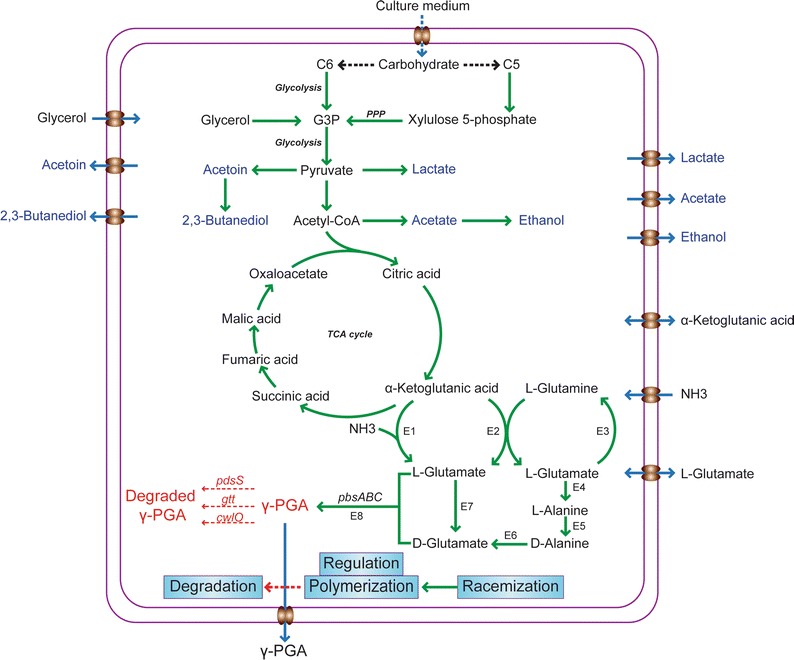
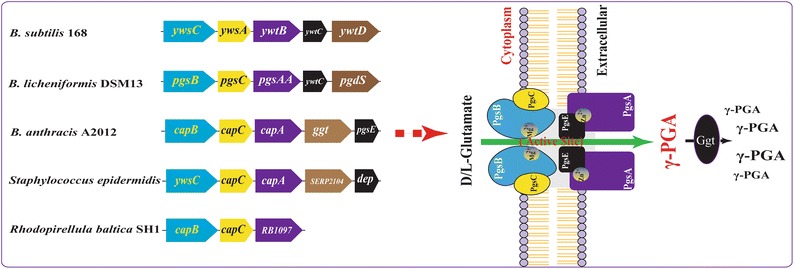
“Recently, pgsBCA was identified as the sole machinery responsible for polymerizing γ-PGA at the active site of the synthase complex (PgsBCA) in an ATP-dependent reaction [25].”
BackgroundKey role of poly-γ-dl-glutamic acid in immune evasion and virulence of Staphylococcus epidermidis
Kocianova, S., Vuong, C., Yao, Y., Voyich, J. M., Fischer, E. R., DeLeo, F. R., & Otto, M. (2005) · Journal of Clinical Investigation · doi:10.1172/jci200523523 · Cited by 230
Paclitaxel poliglumex (XYOTAX™, CT-2103): A macromolecular taxane
Singer, J. W. (2005) · Journal of Controlled Release · doi:10.1016/j.jconrel.2005.09.033 · Cited by 213
Microbial Degradation of Poly(amino acid)s
Obst, M., & Steinbüchel, A. (2004) · Biomacromolecules · doi:10.1021/bm049949u · Cited by 191 · cited 1×
“γ‐PGA degradation There are two enzymes capable of degrading γ-PGA in Bacilli: endo-γ-glutamyl peptidase and exo-γ-glutamyl peptidase [33].”
Background
Research works printed but not linked: 1
- 13. Perez-Camero G, Congregado F, Bou JJ, Munoz-Guerra S. Biosynthesis and ultrasonic degradation of bacterial poly(gamma-glutamic acid). Biotechnol Bioeng. 1999;63:110-5. · doi:10.1002/(sici)1097-0290(19990405)63:1<110::aid-bit11>3.0.co;2-t
Cited by
Items 201–276 of 276
Liu, T., Nobeshima, H., Ojima, Y., & Azuma, M. (2018) · JOURNAL OF CHEMICAL ENGINEERING OF JAPAN · doi:10.1252/jcej.17we218 · Cited by 5
“In many cases, γ-PGA is produced by microbes of Bacillus sp., and until now, the conditions to produce γ-PGA have been investigated in detail (Luo et al., 2016).”
BackgroundPreparation of γ-polyglutamic acid from enzymatic hydrolysate of poplar sawdust
Zhang, C., Ren, H., & Zhong, C. (2021) · Arabian Journal of Chemistry · doi:10.1016/j.arabjc.2021.103095 · Cited by 5
Study on the reuse process of hydrolysate from γ-polyglutamic acid fermentation residues
Zhang, C., Zhong, C., & Wu, D. (2021) · Arabian Journal of Chemistry · doi:10.1016/j.arabjc.2021.103145 · Cited by 5
Wang, X., Liu, X., Ji, H., & Xia, T. (2023) · Frontiers in Environmental Science · doi:10.3389/fenvs.2022.1097865 · Cited by 4
“Because of its many carboxy groups, it is used to adsorb heavy metals (Inbaraj et al., 2009; Luo et al., 2016).”
BackgroundFeng, C., Zhu, L., & Zhou, C. (2024) · Agronomy · doi:10.3390/agronomy14071577 · Cited by 4
“Poly-γ -glutamic acid ( γ -PGA), a bioactive biopolymer synthesized by specific bacteria [29], has garnered significant attention for its diverse roles in plant–microbe interactions.”
BackgroundTiwari, D. P., Chatterjee, P. M., Rotti, H., Chand, B., Raval, R., & Dubey, A. K. (2018) · FEMS Microbiology Letters · doi:10.1093/femsle/fny248 · Cited by 4
Song, Y., Zhang, Y., He, M., Liu, H., Hu, C., Yang, L., & Yu, P. (2020) · Preparative Biochemistry & Biotechnology · doi:10.1080/10826068.2020.1780610 · Cited by 4
The Bio-Tribological Effect of Poly-Gamma-Glutamic Acid in the Lysozyme-Ionic Contact Lens System
Su, C., Yeh, L., Lai, C., Dubuisson, M., Tsao, Y.-F., Tseng, C., & Fang, H.-W. (2020) · Polymers · doi:10.3390/polym12010156 · Cited by 4
“Poly-gamma-glutamic acid (γ-PGA) is a naturally occurring polymer and it has been applied in the medicine, cosmetics, and sanitary industry [9,10].”
BackgroundEditorial: chemicals and bioproducts from biomass
du Preez, J. C. (2016) · Biotechnology for Biofuels · doi:10.1186/s13068-016-0637-4 · Cited by 4
“[1] on the microbial synthesis of poly-γ-glutamic acid, a bio-based chemical that is already widely used in several industries and the production of which by microbial fermentation is deemed cost-effective.”
BackgroundHe, F., Gao, B., Xin, C., Zhai, J., Zhang, X., Yang, C., & Jiewei, T. (2023) · Preparative Biochemistry & Biotechnology · doi:10.1080/10826068.2023.2261058 · Cited by 3
“[47] Another important factor affecting the bio-synthesis of c -PGA is pH, because the reaction of glutamic acid is sensitive to pH. [15] The pH control strategy could further improve the utilization rate of glutamic acid, thereby improving c -PGA production.”
BackgroundYoussef, R. M., Samir, R., Gomaa, O. M., Elhifnawi, H. N., & Ramadan, M. A. (2025) · AMB Express · doi:10.1186/s13568-025-01897-3 · Cited by 4
“The current investigation indicated that the ideal pH for maximal PGA yield was 7 (± 0.2). pH has a substantial impact on PGA productivity, and it was shown that pH drop from 7.4 to 6.5 generated a 4-times increase in PGA output with B. Iichenifor-mis (Luo et al. 2016).”
InfluentialElectrogenetic depolymerization of poly-gamma glutamic acid in Bacillus subtilis biofilms
Oguntomi, S. O., Ajunwa, O. M., Calvio, C., Conte, P., Galluzzi, M., Low, S. S., Morra, S., Pan, R., Wang, D., & Marsili, E. (2025) · Journal of Power Sources · doi:10.1016/j.jpowsour.2025.237754 · Cited by 6
Microbially derived (γ-PGA) poly-γ-glutamic acid: applications and commercial uses across industries
Rajput, R., Saha, S., Gill, H. S., Rajeev, M., & Pandit, S. (2025) · Preparative Biochemistry & Biotechnology · doi:10.1080/10826068.2025.2604635 · Cited by 5
“[9] The increasing interest in γ-PGA, especially since its commercialization, reflects not only the increasing importance of γ-PGA across a variety of industries, but also the growing awareness of and see the trend taking place in industry with sustainable materials, green chemistry, and bio-based…”
Dorost, P., García‐Alvarez, M., & de Ilarduya, A. M. (2023) · Pharmaceutics · doi:10.3390/pharmaceutics15051377 · Cited by 5
“In this work, we have chosen this last method, using a microbial edible biopolymer poly(γ-glutamic acid) as the starting polymer [27,28].”
MethodKouchesfahani, M. E., Bahrami, A., & Babaeipour, V. (2024) · Biotechnology and Applied Biochemistry · doi:10.1002/bab.2559 · Cited by 4
Improving soil fertility and moisture with organic amendments in arid regions
Nikmehr, S., Etesami, H., & Rizwan, M. (2024) · Elsevier eBooks · doi:10.1016/b978-0-443-23956-4.00021-1 · Cited by 5
Polyglutamic acid as raw material for drug carriers
Guo, H., Fan, L., Ding, L., Hou, H. L., Yang, W., & Fan, S. J. (2022) · Digest Journal of Nanomaterials and Biostructures · doi:10.15251/djnb.2022.174.1399 · Cited by 3
Poly-γ-Glutamic Acid and Its Application in Bioremediation: A Critical Review
Bontà, V., & Calvio, C. (2023) · Springer eBooks · doi:10.1007/978-3-031-24086-7_11 · Cited by 4
Nair, P. G., Joseph, E., Yadav, R., Rajput, V., Nisal, A. A., & Dharne, M. S. (2023) · Biomass Conversion and Biorefinery · doi:10.1007/s13399-023-04522-0 · Cited by 3
Gao, L., Gao, J., Ren, X., Gao, Y., Huang, G. H., Wang, X., Guo, X., Cheng, C. H., & Wang, W. (2023) · Russian Journal of Plant Physiology · doi:10.1134/s1021443723601647 · Cited by 3
“The molecular backbone of γ -PGA contains numerous hydrophilic carboxyl groups, which have good water solubility, water absorption and biodegrad-ability, and thus, it has great application prospects in food, medicine, cosmetics, agriculture, and other fields [5, 6].”
BackgroundBiopolymers from Microbial Flora
Velamakanni, R. P., Sree, B. S., Vuppugalla, P., Velamakanni, R. S., & Merugu, R. (2022) · Springer series on polymer and composite materials · doi:10.1007/978-3-030-98392-5_8 · Cited by 4
Correlation analysis between soluble sugars of soybean and mucus drawing length of fermented natto
Yan, D., Yongshan, L. I. N., Jing, Q. I. U., Liangjing, L. I. N., Yang, C., & Gao, X. (2022) · Food Science and Technology · doi:10.1590/fst.91522 · Cited by 3
Kwiecień, I., Radecka, I., Kowalczuk, M. M., Jelonek, K., Orchel, A., & Adamus, G. (2017) · Journal of the American Society for Mass Spectrometry · doi:10.1007/s13361-017-1731-y · Cited by 3
Parati, M., Philip, C., Allinson, S. L., Mendrek, B., Khalil, I., Tchuenbou-Magaia, F. L., Kowalczuk, M. M., Adamus, G., & Radecka, I. (2024) · Polymers · doi:10.3390/polym16142091 · Cited by 2
“The use of complex waste media as a substrate for γ -PGA biosynthesis has been further described in [12,31,32].”
BackgroundRajput, R., Pandit, S., Panda, B. P., Sheoran, S., Ray, S., Sharma, K., Bhattacharya, D., Nag, M., & Lahirih, D. (2025) · Polymer Bulletin · doi:10.1007/s00289-025-05872-7 · Cited by 3
“There are three main ways for recovering γ-Poly glutamic acid (PGA) from the cultural broth: its complex formation, lowering water solubility, and filtering [66].”
InfluentialCheng, M., Zhang, S., Gao, J., Liu, W., Zhou, G., Sui, T., Cheng, D., Wang, C., Wang, X., Li, X., et al. (2025) · Scientific Reports · doi:10.1038/s41598-025-99084-8 · Cited by 2
Son, S.-J., Kang, H.-M., Park, Y.-H., Hwangbo, M.-H., & Lee, S. (2024) · Food Science and Preservation · doi:10.11002/fsp.2024.31.1.138 · Cited by 2
Zhang, X., Wu, W., Mou, H., Liu, J., Lei, L., Li, X., Cai, D., Zhan, Y., Ma, X., & Chen, S. (2024) · Microorganisms · doi:10.3390/microorganisms12122398 · Cited by 4
“For example, γ -PGA with an Mw greater than 1.0 × 10 6 Da possesses high viscosity and can be developed as a thickener or biofloc-culant [5,6], whereas γ -PGA with an Mw lower than 4.0 × 10 5 Da is preferred for drug delivery applications [7,8].”
InfluentialSelf-citationProduction and applications of polyglutamic acid
Pandey, K., Pandey, A. K., Sirohi, R., Pandey, S., Srivastava, A., & Pandey, A. (2021) · Elsevier eBooks · doi:10.1016/b978-0-12-821888-4.00021-6 · Cited by 2
Kwiecień, I., Ekere, A. I., & Śmiga‐Matuszowicz, M. (2021) · AppliedChem · doi:10.3390/appliedchem1020013 · Cited by 1
“Currently, fermentative production of γ-PGA from waste biomass is carried out on an industrial scale [10].”
BackgroundEnhancing cell cryopreservation with acidic polyamino acids integrated liquid marbles
Liu, M., Liang, L., Yu, C., Guo, B., Zhang, H., Yao, F., Zhang, H., & Li, J. (2024) · Colloids and Surfaces B Biointerfaces · doi:10.1016/j.colsurfb.2024.114055 · Cited by 1
Ai, Y., Zhan, Y., Cai, D., & Chen, S. (2024) · Polymers · doi:10.3390/polym17010010 · Cited by 1
“Poly ( γ -glutamic acid) ( γ -PGA) is a biopolymer consisting of L-and/or D-glutamic acid monomers polymerized through γ -glutamyl bonds [1].”
Zhang, Y., He, P., Hu, S., Zhang, R., Asfandyar, & Chen, S. (2025) · Current Microbiology · doi:10.1007/s00284-025-04096-2 · Cited by 2
“Poly-γ-glutamic acid (γ-PGA) is one of the representative metabolites of B. licheniformis , which has remarkable properties of water solubility, biodegradability, nontoxicity, and high metal-binding capacity [31].”
Samal, S., Sambal, P. B., Rangarajan, V., & De, R. (2025) · Journal of Chemical Technology & Biotechnology · doi:10.1002/jctb.7892 · Cited by 1
Yadav, R., Awathare, P., Shitut, P., Mahajan, V., Nair, P. G., & Dharne, M. S. (2025) · Biocatalysis and Agricultural Biotechnology · doi:10.1016/j.bcab.2025.103747 · Cited by 2
Cai, W., Jing, S., Yang, L., Wu, Y., Li, W., Ren, Y., Li, J., & Ge, F. (2025) · Bioprocess and Biosystems Engineering · doi:10.1007/s00449-025-03234-1 · Cited by 1
“L fermenter [31].”
Nanoengineered polyglutamic acid fertilizers via self-assembly for efficient tomato growth
Dong, J., Li, H., Yuan, B., Zhang, D., Wang, H., Wang, T., Li, S., & Liu, R. (2026) · Frontiers in Plant Science · doi:10.3389/fpls.2025.1702462 · Cited by 1
Self-citationCałusińska, M., Herold, M., Klimek, D., Bertucci, M., Lemaigre, S., Cambier, S., Zorzan, S., Leclercq, C. C., Dolfing, J., Westerholm, M., et al. (2026) · The ISME Journal · doi:10.1093/ismejo/wrag055 · Cited by 3
“The physiological function of PGA in different organisms is not fully understood, and depends on whether the polymer is anchored to the peptidoglycan (i.e. a virulence factor) or released [64].”
Okuofu, S. I., Osei, E. K., Leech, J., Kenny, J. G., O’Flaherty, V., & McAuliffe, O. E. (2026) · Journal of Genetic Engineering and Biotechnology · doi:10.1016/j.jgeb.2026.100682 · Cited by 1
Zhang, L., Liu, Z., Guo, Q., Tang, J., Li, X., & Wang, Q. (2026) · World Journal of Microbiology and Biotechnology · doi:10.1007/s11274-026-04877-2 · Cited by 2
“Relevant synthetic genes are categorized into capsule genes ( cap ) and polyglutamate synthase genes ( pgs , ywsC , and ywt ) according to whether the final γ-PGA is released extracellularly or retained in the capsule (Luo et al. 2016 ).”
Arau, L. F., Flores, C., Ascanio, G., Serrano‐Carreón, L., & Galindo, E. (2026) · Biochemical Engineering Journal · doi:10.1016/j.bej.2026.110258 · Cited by 1
Qamar, Z., Rahim, Z. B. H. A., Hill, R., Chew, H. P., & Anderson, P. (2026) · Calcified Tissue International · doi:10.1007/s00223-026-01545-3 · Cited by 1
Shi, J., Li, X. X., Song, S.-J., & Feng, L. (2026) · Molecules · doi:10.3390/molecules31111779 · Cited by 1
“The molecular conformation of γ -PGA, including α -helix, β -sheet, and random coil structures, is sensitive to ambient pH, ionic strength, and solution concentration, further regulating its adsorption and chelation performance [19,20].”
Han, R., Song, Q., Zhang, Z., Bao, T., Liu, C., Li, S., Zhang, Q., Lei, P., Wang, R., Qiu, Y., et al. (2026) · Critical Reviews in Biotechnology · doi:10.1080/07388551.2026.2666082 · Cited by 1
“…anchoring and translocation, shows relatively low sequence conservation among synthase components and has been implicated in polymer extension [97,98]. ogasawara et al. further proposed that PgsA may contribute to chain elongation and catalyze L-to D-glutamate isomerization during γ-PGA…”
Self-citationLi, C., Feng, Y., Sáez‐Sandino, T., Xiong, C., Eldridge, D. J., Gross, N., Bagousse‐Pinguet, Y. L., Ochoa, V., Gozalo, B., Guirado, E., et al. (2026) · Nature Communications · doi:10.1038/s41467-026-73215-9 · Cited by 2
“By contrast, genes associated with inorganic P uptake (e.g., pstA ) 47 and N assimilation, including glutamate synthesis (e.g., glt gene cluster) 48 , increased in relative abundances (Fig.”
Liu, L., Shi, W., & Pang, L. (2022) · Irrigation and Drainage · doi:10.1002/ird.2760 · Cited by 1
“γ-PGA is nontoxic, environmentally friendly, edible, biodegradable and water soluble (Kim et al., 2019; Luo et al., 2016).”
Hafidi, Y., Hatka, H. E., Schmitz, D., Biel, M., & Ittobane, N. (2024) · Polymers and Polymer Composites · doi:10.1177/09673911241234838 · Cited by 1
“14 Meanwhile, PGA, a high molecular weight polymer, can be produced through microbial 15 and chemical processes.”
Soil microbial genomic responses to aridity-driven elemental imbalance across global biomesPreprint
Feng, Y., Li, C., Sáez‐Sandino, T., Xiong, C., Eldridge, D. J., Gross, N., Bagousse‐Pinguet, Y. L., Ochoa, V., Gozalo, B., Guirado, E., et al. (2025) · Research Square · doi:10.21203/rs.3.rs-6656511/v1 · Cited by 1
Cai, D., Chen, Y., Wang, S., Mo, F., Ma, X., & Chen, S. (2018) · bioRxiv (Cold Spring Harbor Laboratory) · doi:10.1101/294728
Perinelli, D. R., Cespi, M., & Bonacucina, G. (2019) · Elsevier eBooks · doi:10.1016/b978-0-12-815663-6.00019-7 · Cited by 1
Investigation of the Role of the capBCA Locus in Francisella novicida
Risteen, R. G. (2019) · doi:10.13021/mars/6780
Metabolic Engineering Strategies to Enhance Microbial Production of Biopolymers
Shera, S. S., & Banik, R. M. (2021) · Wiley eBooks · doi:10.1002/9781119771951.ch8
Zheng, Z., He, P., Hu, S., Yu, Y., Wang, X., & Chen, S. (2022) · Research Square · doi:10.21203/rs.3.rs-1234457/v1
Samarah, L. Z., Tran, T. H., Stacey, G. S., & Vértes, Á. (2021) · Angewandte Chemie · doi:10.1002/ange.202015251
(2019) · Elsevier eBooks · doi:10.1016/b978-0-12-812212-9.16001-4
Oral Delivery of Polymeric Nanoparticles for Solid Tumors
Dash, P., Ghosh, S., & Nayak, B. (2022) · Environmental chemistry for a sustainable world · doi:10.1007/978-3-031-14848-4_11
Wu, C., Gou, Y., Jing, S., Li, W., Ge, F., Li, J., & Ren, Y. (2024) · Research Square · doi:10.21203/rs.3.rs-4005655/v1
Zhang, B., Zhu, H., Xie, X., Shi, Q., Liang, D., & Chen, K. (2024) · International Journal of Food Engineering · doi:10.1515/ijfe-2023-0275
Wang, X., Gao, J., Wu, J., Li, X., Li, J., Li, H., & Wang, S. (2024) · Enzyme and Microbial Technology · doi:10.1016/j.enzmictec.2024.110543
Zhang, B., Zhu, H., Xie, X., Liang, D., Jin, F., Shi, Q., Liang, C., Chen, K., & Ji, H. (2024) · International Food Research Journal · doi:10.47836/ifrj.31.6.08 · Cited by 1
Types of microbial biopolymers
Bajpai, P. (2025) · Elsevier eBooks · doi:10.1016/b978-0-443-33524-2.00004-1
Bajpai, P. (2025) · Elsevier eBooks · doi:10.1016/b978-0-443-33524-2.00006-5
Zhu, J., Wang, X., Zhao, J., Ji, F., Zeng, J., Wei, Y., Xu, L., Dong, G., Ma, X., & Wang, C. (2024) · Figshare · doi:10.6084/m9.figshare.26706954
Li, Y., Wang, J., Liu, N., Ke, L., Zhao, X., & 祁高富 (2020) · Figshare · doi:10.6084/m9.figshare.13161399
Wang, D., Fu, X., Zhou, D., Gao, J., & Bai, W. (2023) · Figshare · doi:10.6084/m9.figshare.22605661
Wei, X., Yang, L., Chen, Z., Xia, W., Chen, Y., Cao, M., & He, N. (2024) · Figshare · doi:10.6084/m9.figshare.25762972
Guo, L., Lu, L., Wang, H., Zhang, X., Wang, G., Zhao, T., Zheng, G., & Changsheng, Q. (2024) · Figshare · doi:10.6084/m9.figshare.26571391
Zhu, J., Wang, X., Zhao, J., Ji, F., Zeng, J., Wei, Y., Xu, L., Dong, G., Ma, X., & Wang, C. (2024) · Figshare · doi:10.6084/m9.figshare.26706960
Zhu, J., Wang, X., Zhao, J., Ji, F., Zeng, J., Wei, Y., Xu, L., Dong, G., Ma, X., & Wang, C. (2024) · Figshare · doi:10.6084/m9.figshare.26706957
Yingchutrakul, Y., CHUKEATIROTE, E., & Waratrujiwong, T. (2026) · Acta Alimentaria · doi:10.1556/066.2026.00034
Wang, X., Lyu, Q., Zhang, S., Ji, G., Tian, X., Huan, C., Lishan, X., Liu, T. T., & Yan, Z. (2026) · Chemical Engineering Journal · doi:10.1016/j.cej.2026.179097
Microbial-Derived Polymers: Revolutionizing Inflammatory Bowel Disease Treatment
Dewangan, R., & Verma, N. (2026) · BENTHAM SCIENCE PUBLISHERS eBooks · doi:10.2174/9798898817268126010009
Tailor-made poly-γ-glutamic acid for property diversity and biological function
Wei, X., Chen, Z., & He, N. (2026) · World Journal of Microbiology and Biotechnology · doi:10.1007/s11274-026-05187-3
“Early comprehensive reviews primarily concentrated on the biosynthesis pathways and fermentation optimization of γ-PGA, with a predominant emphasis on enhancing yield rather than regulating structural properties (Luo et al. 2016 ).”
Biochemical approaches for synthesis of performance-advantaged polymers from lignocellulosic biomass
Qian, L., Jana, S., Javaid, T., Wang, Y., Karoki, P. K., Pu, Y., Webb, E., Ragauskas, A. J., Yang, X., Urbanowicz, B. R., et al. (2026) · Green Chemistry · doi:10.1039/d6gc01235c · Cited by 1
de Souza, J. G. D. L., de Souza, A. C., de Castro, A. T., Daloso, D. M., Schwan, R. F., & Dias, D. R. (2026) · International Microbiology · doi:10.1007/s10123-026-00905-1
Safari, M., Imanparast, S., & Hadizadeh, M. (2026) · Iranian Polymer Journal · doi:10.1007/s13726-026-01755-4
Metadata
- Authors
- Luo, Z., Guo, Y., Liu, J., Qiu, H., Zhao, M., Zou, W., & Li, S.
- Affiliations
- Guangxi University (CN)
- Guangxi Academy of Sciences (CN)
- Sichuan University of Science and Engineering (CN)
- Corresponding author
- Zou, Wei
- Li, Shubo
- Venue
- Biotechnology for Biofuels
- Published
- 2016-06-29
- Volume
- 9
- Issue
- 1
- Pages
- 134-134
- ISSN
- 1754-6834 (ISSN-L)
- PMC
- PMC4928254
- OpenAlex
- W2468943383
- Cited by
- 274
- References
- 107
- Citations by year
- 2026: 16 · 2025: 27 · 2024: 35 · 2023: 33 · 2022: 48 · 2021: 21 · 2020: 23 · 2019: 32 · 2018: 23 · 2017: 14 · 2016: 2
- FWCI
- 2.14
- Type
- journal article
- Language
- en
- Open access
- gold
- doi.org
- Licence
- cc-by
- Locations
- Biotechnology for Biofuels (publishedVersion, cc-by)
- PubMed Central (publishedVersion, cc-by)
- PubMed (publishedVersion)
- Funders
- Fund of Guangxi Academy of Sciences (15YJ22SW05)
- Bagui Scholars Distinguished Professor” Special Project
- the Talents introduction program of Sichuan University of Science and Engineering (No. 2013RC12)
- Topics
- Life Sciences › Immunology and Microbiology › Applied Microbiology and Biotechnology › Biopolymer Synthesis and Applications
- Physical Sciences › Materials Science › Biomaterials › biodegradable polymer synthesis and properties
- Life Sciences › Biochemistry, Genetics and Molecular Biology › Molecular Biology › Microbial Metabolic Engineering and Bioproduction
- Keywords
- poly-γ-glutamic acid, microbial production, biopolymer production, genetic engineering, fermentation medium optimization, downstream processing, biodegradable polymers, bio-based chemicals, production cost reduction
About these checks
Registry, retraction, Cites and statistics results are computed, not judged, with one exception: a printed reference that no index lists is read once by a model before it counts as a citation error. Claims are extracted by a model and kept only when their quote appears verbatim in the text; each cited source is then checked, with a model’s help, for whether it says what the claim relies on. Those verdicts can be wrong — read the claim’s quote and the cited source before relying on one.
Statistics and arithmetic are recomputed, not judged.
Confidence bands are shown only for fields calibrated on our annotated test set. None is calibrated yet, so no band is shown.
What counts as a claim ›How we measure confidence ›How we check this ›
Are you an author, or do you see a problem with this page? Request a review
Data sources
Bibliographic data: Semantic Scholar, OpenAlex, Crossref.
Contains information from the Semantic Scholar Academic Graph Datasets, made available under the ODC Attribution License (ODC-BY 1.0).
Semantic Scholar’s data is described in: Kinney, R., et al. (2023). The Semantic Scholar Open Data Platform. arXiv:2301.10140.
