

Genetic diversity of Anopheles stephensi in Ethiopia provides insight into patterns of spread
Open accessThe DOI matches its Crossref record; 39 of the 39 references it cites were found in a registry or an index.
Abstract
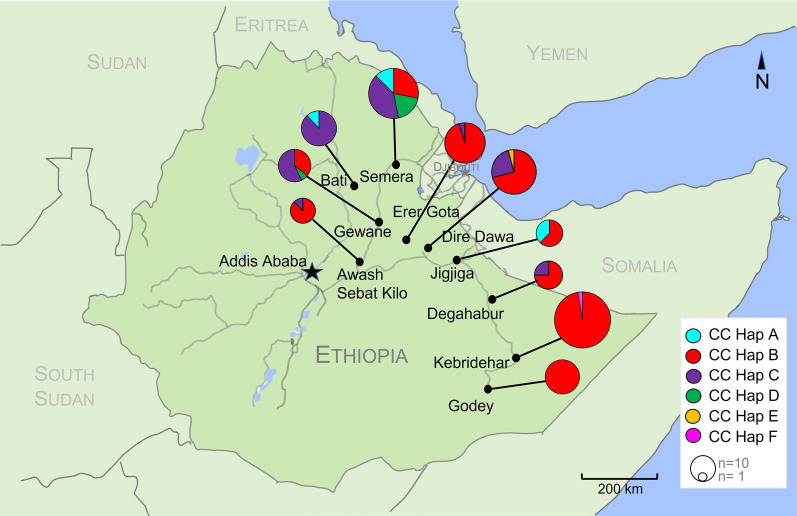
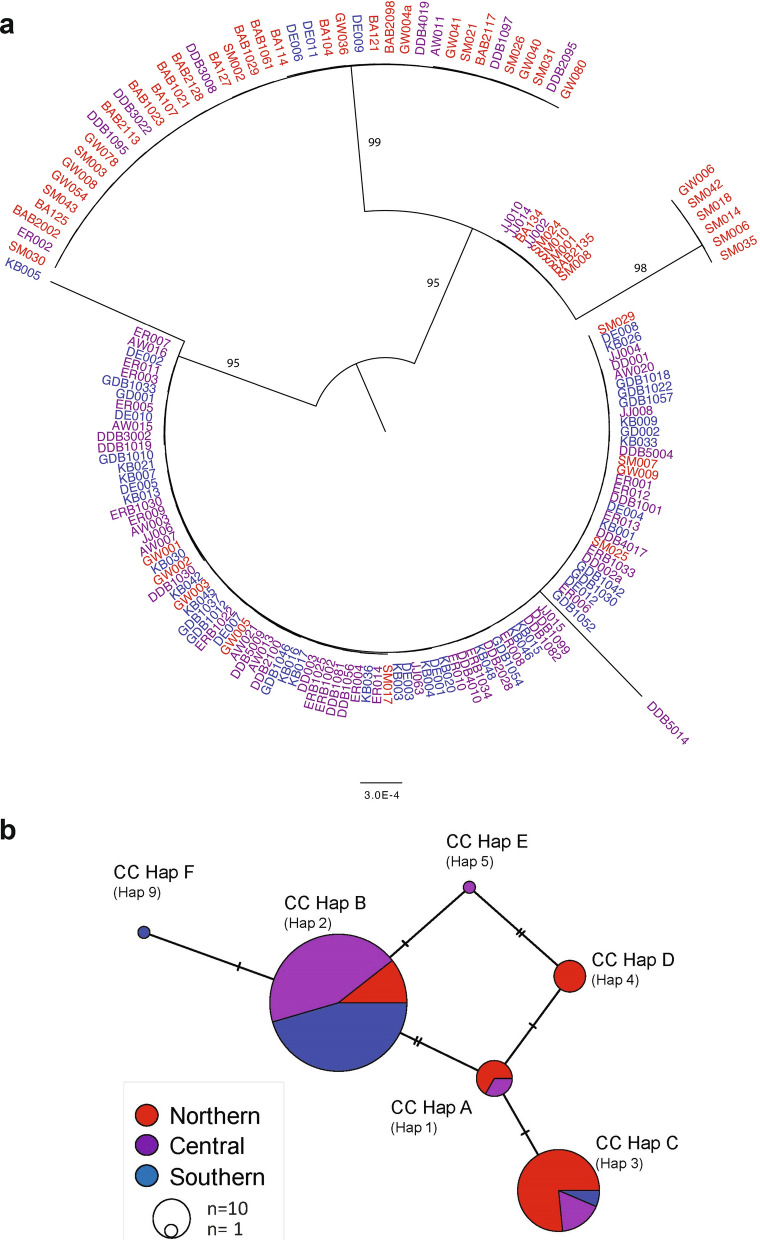
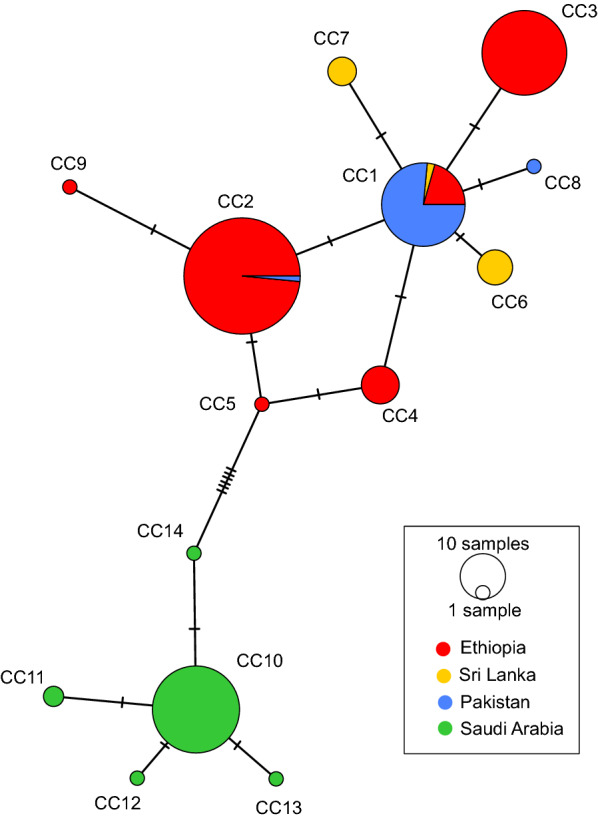
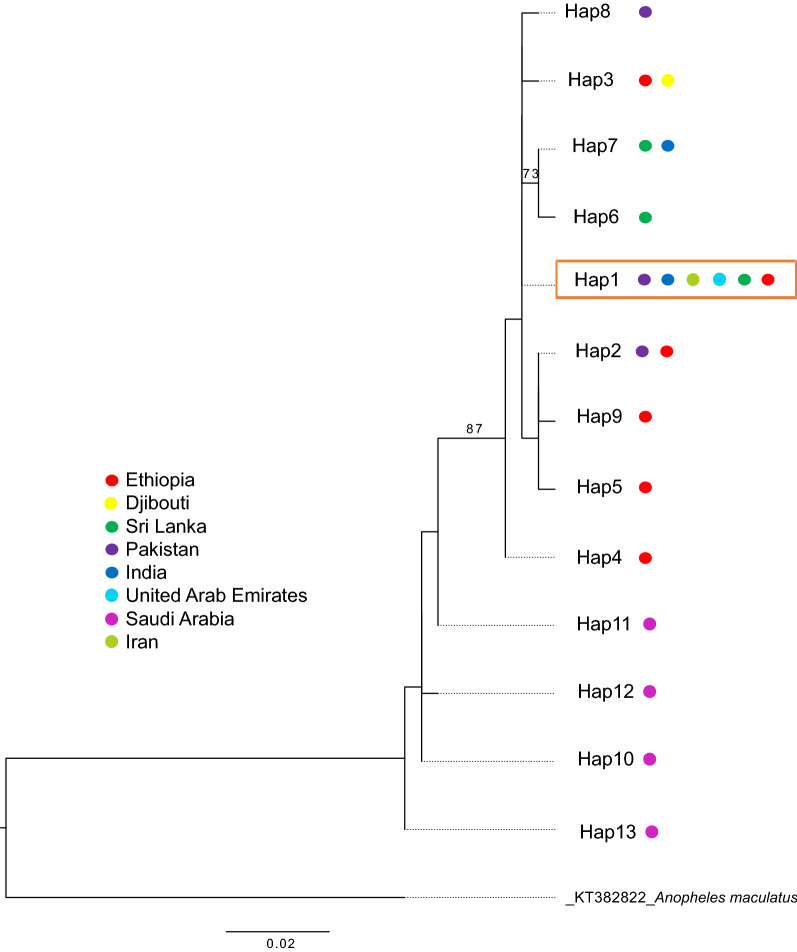
Background: The recent detection of the South Asian malaria vector Anopheles stephensi in the Horn of Africa (HOA) raises concerns about the impact of this mosquito on malaria transmission in the region. Analysis of An. stephensi genetic diversity and population structure can provide insight into the history of the mosquito in the HOA to improve predictions of future spread. We investigated the genetic diversity of An. stephensi in eastern Ethiopia, where detection suggests a range expansion into this region, in order to understand the history of this invasive population. Methods: We sequenced the cytochrome oxidase subunit I ( COI ) and cytochrome B gene ( CytB ) in 187 An. stephensi collected from 10 sites in Ethiopia in 2018. Population genetic, phylogenetic, and minimum spanning network analyses were conducted for Ethiopian sequences. Molecular identification of blood meal sources was also performed using universal vertebrate CytB sequencing. Results: Six An. stephensi COI-CytB haplotypes were observed, with the highest number of haplotypes in the northeastern sites (Semera, Bati, and Gewana towns) relative to the southeastern sites (Kebridehar, Godey, and Degehabur) in eastern Ethiopia. We observed population differentiation, with the highest differentiation between the northeastern sites compared to central sites (Erer Gota, Dire Dawa, and Awash Sebat Kilo) and the southeastern sites. Phylogenetic and network analysis revealed that the HOA An. stephensi are more genetically similar to An. stephensi from southern Asia than from the Arabian Peninsula. Finally, molecular blood meal analysis revealed evidence of feeding on cows, goats, dogs, and humans, as well as evidence of multiple (mixed) blood meals. Conclusion: We show that An. stephensi is genetically diverse in Ethiopia and with evidence of geographical structure. Variation in the level of diversity supports the hypothesis for a more recent introduction of An. stephensi into southeastern Ethiopia relative to the northeastern region. We also find evidence that supports the hypothesis that HOA An. stephensi populations originate from South Asia rather than the Arabian Peninsula. The evidence of both zoophagic and anthropophagic feeding support the need for additional investigation into the potential for livestock movement to play a role in vector spread in this region. Graphical Abstract:
Overview
The claims and statistics of this paper haven’t been checked yet.
Free: it reads the open-access text and checks the first 5 claims that cite a source we can check. Create a free account to check every claim.
Integrity signals
Registry
Cites
Statistics
Figures
Verification
Claims the paper makes
The claims and statistics of this paper haven’t been checked yet.
Free: it reads the open-access text and checks the first 5 claims that cite a source we can check. Create a free account to check every claim.
Claims other papers make about this one
Each is checked against this paper’s own text: does it say what the citing paper says it does?
The cited source doesn’t support the claim as written.
In the citing paper
“This haplotype has been observed in Yemen and in the northeastern Horn of Africa [7, 17, 18] in other studies and designated Hap3 by Carter et al. [17].”
From Sequencing confirms Anopheles stephensi distribution across southern Yemen (2024) · cites this paper as Carter et al. [17]
Checked by a reasoning model — may be wrong.
Experimental — accuracy not yet measuredThe source backs part of the claim, not all of it — or backs it for a different population, condition or comparison.
In the citing paper
“This haplotype has been observed in Yemen and in the northeastern Horn of Africa [7, 17, 18] in other studies and designated Hap3 by Carter et al. [17].”
From Sequencing confirms Anopheles stephensi distribution across southern Yemen (2024) · cites this paper as [17]
Experimental — accuracy not yet measured
Self-check
Percentages, sums and reported differences re-computed from the paper’s own numbers.
The self-check needs the paper’s full text.
Citations
Cites
Basic local alignment search tool
Altschul, S. F., Gish, W., Miller, W., Myers, E. W., & Lipman, D. J. (1990) · Journal of Molecular Biology · doi:10.1006/jmbi.1990.9999 · Cited by 98,669 · cited 2×
“To confirm amplification of the correct locus, sequences were submitted as queries to the National Center for Biotechnology Information’s (NCBI) Basic Local Alignment Search Tool (BLAST) [31] against the nucleotide collection in the NCBI GenBank under default parameters [max high-scoring segment pairs (HSP) 250, expec…”
MethodMAFFT Multiple Sequence Alignment Software Version 7: Improvements in Performance and Usability
Katoh, K., & Standley, D. M. (2013) · Molecular Biology and Evolution · doi:10.1093/molbev/mst010 · Cited by 46,209 · cited 1×
“Alignments were created with MAFFT version 7 [34] and uneven ends were trimmed using Mesquite 3.”
MethodRAxML version 8: a tool for phylogenetic analysis and post-analysis of large phylogenies
Stamatakis, A. (2014) · Bioinformatics · doi:10.1093/bioinformatics/btu033 · Cited by 32,291 · cited 1×
“Phylogenetic relationships were inferred using RAxML (Randomized Axelerated Maximum Likelihood) [36], which is based on a maximum likelihood (ML) approach.”
MethodEXCOFFIER, L., & LISCHER, H. E. L. (2010) · Molecular Ecology Resources · doi:10.1111/j.1755-0998.2010.02847.x · Cited by 16,326
Median-joining networks for inferring intraspecific phylogenies
Bandelt, H. J., Forster, P., & Rohl, A. (1999) · Molecular Biology and Evolution · doi:10.1093/oxfordjournals.molbev.a026036 · Cited by 11,742 · cited 1×
“stephensi haplotypes observed, we generated minimum spanning networks [38] based on the concatenated COI-CytB sequences using PopART [39].”
MethodPrimer3—new capabilities and interfaces
Untergasser, A., Cutcutache, I., Koressaar, T., Ye, J., Faircloth, B. C., Remm, M., & Rozen, S. G. (2012) · Nucleic Acids Research · doi:10.1093/nar/gks596 · Cited by 9,461 · cited 1×
“For CytB, two primers were designed with Primer3 software [29, 30]: CytbF 5′AGG ATC TTC TAC AGG ACG AG3′ and CytbR 5′CAT GTA GGA CGA GGA GTC TA3′ and used for polymerase chain reaction (PCR) amplification.”
Methodpopart: full‐feature software for haplotype network construction
Leigh, J. W., & Bryant, D. (2015) · Methods in Ecology and Evolution · doi:10.1111/2041-210x.12410 · Cited by 6,707 · cited 2×
“To evaluate the frequency and relationship between Ethiopian An. stephensi haplotypes observed, we generated minimum spanning networks [38] based on the concatenated COI-CytB sequences using PopART [39].”
MethodDnaSP, DNA polymorphism analyses by the coalescent and other methods
Rozas, J., Sánchez-DelBarrio, J. C., Messeguer, X., & Rozas, R. (2003) · Bioinformatics · doi:10.1093/bioinformatics/btg359 · Cited by 6,131 · cited 1×
“stephensi collection overall and within each site, we calculated the number of polymorphic (segregating) sites (s), number of haplotypes (h), haplotype diversity (H), nucleotide diversity (Pi), and average number of nucleotide differences (k) using the DnaSP version 5 program [32].”
MethodEnhancements and modifications of primer design program Primer3
Koressaar, T., & Remm, M. (2007) · Bioinformatics · doi:10.1093/bioinformatics/btm091 · Cited by 2,603 · cited 1×
“For CytB, two primers were designed with Primer3 software [29, 30]: CytbF 5′AGG ATC TTC TAC AGG ACG AG3′ and CytbR 5′CAT GTA GGA CGA GGA GTC TA3′ and used for polymerase chain reaction (PCR) amplification.”
MethodAsymptomatic malaria infections: detectability, transmissibility and public health relevance
Bousema, T., Okell, L., Felger, I., & Drakeley, C. (2014) · Nature Reviews Microbiology · doi:10.1038/nrmicro3364 · Cited by 696
Sinka, M. E., Bangs, M. J., Manguin, S., Chareonviriyaphap, T., Patil, A. P., Temperley, W. H., Gething, P. W., Elyazar, I. R., Kabaria, C. W., Harbach, R. E., et al. (2011) · Parasites & Vectors · doi:10.1186/1756-3305-4-89 · Cited by 550 · cited 7×
“Initial analysis of the mitochondrial COI (cytochrome c oxidase subunit I, also known as cox1) generated from An. stephensi in Kebridehar in eastern Ethiopia and An. stephensi sequence data from collections in South Asia, the Middle East, and the Arabian Peninsula taken from GenBank [11] identified a single haplotype…”
BackgroundInfluentialKey to the females of Afrotropical Anopheles mosquitoes (Diptera: Culicidae)
Coetzee, M. (2020) · Malaria Journal · doi:10.1186/s12936-020-3144-9 · Cited by 474
Sinka, M. E., Pironon, S., Massey, N. C., Longbottom, J., Hemingway, J., Moyes, C. L., & Willis, K. J. (2020) · Proceedings of the National Academy of Sciences · doi:10.1073/pnas.2003976117 · Cited by 385
KENT, R. J., & NORRIS, D. E. (2005) · The American Journal of Tropical Medicine and Hygiene · doi:10.4269/ajtmh.2005.73.336 · Cited by 365 · cited 1×
“This primer set can be used to distinguish a broad range of vertebrate species including human, cow, and goat [40] (Kent and Norris 2005).”
BackgroundKarron, J. D. (1987) · Evolutionary Ecology · doi:10.1007/bf02067268 · Cited by 362
World Trade Report 2020: Government Policies to Promote Innovation in the Digital Age
World Trade Organization (2020) · World Trade Report · doi:10.30875/60123dd4-en · Cited by 326
Windborne long-distance migration of malaria mosquitoes in the Sahel
Huestis, D. L., Dao, A., Diallo, M., Sanogo, Z. L., Samake, D., Yaro, A. S., Ousman, Y., Linton, Y.-M., Krishna, A., Veru, L., et al. (2019) · Nature · doi:10.1038/s41586-019-1622-4 · Cited by 249 · cited 1×
“With the growing evidence that vectors can be transported long distances [5], and given the correlation between new vector introductions and increased disease burden in some instances [6–8], investigating the movement of vector populations in malaria-endemic regions is critical to understanding the introduction of new…”
BackgroundPlant population genetics, breeding, and genetic resources
Olivieri, I. (1991) · Trends in Ecology & Evolution · doi:10.1016/0169-5347(91)90078-c · Cited by 247
Faulde, M. K., Rueda, L. M., & Khaireh, B. A. (2014) · Acta Tropica · doi:10.1016/j.actatropica.2014.06.016 · Cited by 245 · cited 13×
“In 2012, an urban malaria vector mosquito, Anopheles stephensi, which is common in South Asia, was detected in the HOA for the first time in Djibouti [9, 10], and then in 2016 in eastern Ethiopia [11].”
BackgroundInfluentialCarter, T. E., Yared, S., Gebresilassie, A., Bonnell, V., Damodaran, L., Lopez, K., Ibrahim, M., Mohammed, S., & Janies, D. (2018) · Acta Tropica · doi:10.1016/j.actatropica.2018.09.001 · Cited by 192
Self-citationGeographical distribution of Anopheles stephensi in eastern Ethiopia
Balkew, M., Mumba, P., Dengela, D., Yohannes, G., Getachew, D., Yared, S., Chibsa, S., Murphy, M., George, K., Lopez, K., et al. (2020) · Parasites & Vectors · doi:10.1186/s13071-020-3904-y · Cited by 160 · cited 3×
“stephensi in Ethiopia, this vector has been detected in 10 additional sites in eastern Ethiopia as far north as Semera and as far south as Godey [13].”
BackgroundSelf-citationAnopheles stephensi Mosquitoes as Vectors of Plasmodiumvivax and falciparum, Horn of Africa, 2019
Tadesse, F. G., Ashine, T., Teka, H., Esayas, E., Messenger, L. A., Chali, W., Meerstein-Kessel, L., Walker, T., Wolde Behaksra, S., Lanke, K., et al. (2021) · Emerging Infectious Diseases · doi:10.3201/eid2702.200019 · Cited by 149
Self-citationMalaria ecology along the Thailand-Myanmar border.
Parker, D. M., Carrara, V. I., Pukrittayakamee, S., McGready, R., & Nosten, F. H. (2015) · Malaria Journal · doi:10.1186/s12936-015-0921-y · Cited by 142 · cited 2×
“Previous studies have shown that the movement of Plasmodium strains from one region to another can have serious population health consequences, such as the emergence of antimalarial resistance [2] or malaria epidemics in naïve or low-transmission areas [3].”
BackgroundSeyfarth, M., Khaireh, B. A., Abdi, A. A., Bouh, S. M., & Faulde, M. K. (2019) · Parasitology Research · doi:10.1007/s00436-019-06213-0 · Cited by 126 · cited 3×
“In 2012, an urban malaria vector mosquito, Anopheles stephensi, which is common in South Asia, was detected in the HOA for the first time in Djibouti [9, 10], and then in 2016 in eastern Ethiopia [11].”
BackgroundInsecticide resistance in Anopheles stephensi in Somali Region, eastern Ethiopia
Yared, S., Gebressielasie, A., Damodaran, L., Bonnell, V., Lopez, K., Janies, D., & Carter, T. E. (2020) · Malaria Journal · doi:10.1186/s12936-020-03252-2 · Cited by 111
Self-citationAnthropogenic Factors Driving Recent Range Expansion of the Malaria Vector Anopheles stephensi
Surendran, S. N., Sivabalakrishnan, K., Sivasingham, A., Jayadas, T. T. P., Karvannan, K., Santhirasegaram, S., Gajapathy, K., Senthilnanthanan, M., Karunaratne, S. P., & Ramasamy, R. (2019) · Frontiers in Public Health · doi:10.3389/fpubh.2019.00053 · Cited by 97
Resting and feeding preferences of Anopheles stephensi in an urban setting, perennial for malaria
Thomas, S., Ravishankaran, S., Justin, N. A. J. A., Asokan, A., Mathai, M. T., Valecha, N., Montgomery, J., Thomas, M. B., & Eapen, A. (2017) · Malaria Journal · doi:10.1186/s12936-017-1764-5 · Cited by 88 · cited 11×
“In 2012, an urban malaria vector mosquito, Anopheles stephensi, which is common in South Asia, was detected in the HOA for the first time in Djibouti [9, 10], and then in 2016 in eastern Ethiopia [11].”
BackgroundInfluentialRowe, G., & Beebee, T. J. C. (2003) · Evolution · doi:10.1554/0014-3820(2003)057[0177:potvoa]2.0.co;2 · Cited by 86
Molecular Epidemiology of Plasmodium falciparum Malaria Outbreak, Tumbes, Peru, 2010–2012
Baldeviano, G. C., Okoth, S. A., Arróspide, N., Seminario, R. V. G., Sánchez, J. F., Macedo, S., Conde, S., Tapia, L. L., Salas, C. J., Gamboa, D., et al. (2015) · Emerging infectious diseases · doi:10.3201/eid2105.141427 · Cited by 80 · cited 2×
“Previous studies have shown that the movement of Plasmodium strains from one region to another can have serious population health consequences, such as the emergence of antimalarial resistance [2] or malaria epidemics in naïve or low-transmission areas [3].”
BackgroundRowe, G., & Beebee, T. J. C. (2003) · Evolution · doi:10.1111/j.0014-3820.2003.tb00228.x · Cited by 59
Review of the interplay between population dynamics and malaria transmission in Ethiopia
Deressa, W. A., Ali, A. A. M., & Berhane, Y. (2009) · Ethiopian Journal of Health Development · doi:10.4314/ejhd.v20i3.46823 · Cited by 56 · cited 1×
“Resource depletion in recent years has led to movement of livestock over longer distances in search of grazing areas and water [22, 23].”
BackgroundVajda, É. A., & Webb, C. E. (2017) · Tropical Medicine and Infectious Disease · doi:10.3390/tropicalmed2010004 · Cited by 54 · cited 1×
“Resource depletion in recent years has led to movement of livestock over longer distances in search of grazing areas and water [22, 23].”
BackgroundAedes aegypti on Madeira Island (Portugal): genetic variation of a recently introduced dengue vector
Seixas, G., Salgueiro, P., Silva, A. C., Campos, M., Dreyer, C. S., Reyes-Lugo, M., Novo, M. T., Ribolla, P. E. M., Pinto, J., & Sousa, C. A. (2013) · Memórias do Instituto Oswaldo Cruz · doi:10.1590/0074-0276130386 · Cited by 50
Sequence-based identification of Anopheles species in eastern Ethiopia
Carter, T. E., Yared, S., Hansel, S., López, K., & Janies, D. A. (2019) · Malaria Journal · doi:10.1186/s12936-019-2768-0 · Cited by 29 · cited 1×
“While ITS2 was helpful for species identification [28], no genetic variation was observed at this locus in these Ethiopian samples [3] and thus ITS2 phylogenetic analysis was not undertaken.”
BackgroundSelf-citationHaydarov, R., Anand, S., Frouws, B., Toure, B., Okiror, S. O., & Bhui, B. R. (2016) · Global Health Communication · doi:10.1080/23762004.2016.1205890 · Cited by 28 · cited 1×
“Movement may be driven by several factors including limited natural resources, conflicts, recurrent severe droughts, and extreme weather [20, 21].”
BackgroundCarter, T. E., Gebresilassie, A., Hansel, S., Damodaran, L., Montgomery, C., Bonnell, V. A., López, K., Janies, D. A., & Yared, S. (2022) · American Journal of Tropical Medicine and Hygiene · doi:10.4269/ajtmh.20-1357 · Cited by 26
Self-citationOrsborne, J., Mohammed, A. R., Jeffries, C. L., Kristan, M., Afrane, Y. A., Walker, T., & Yakob, L. (2020) · Scientific Reports · doi:10.1038/s41598-020-57732-1 · Cited by 26
Assessing drought displacement risk for Kenyan, Ethiopian and Somali pastoralists
(2016) · Human Rights Documents online · doi:10.1163/2210-7975_hrd-9806-2014039 · Cited by 15
Carter, T. E., Gebresilassie, A., Hansel, S., Damodaran, L., Montgomery, C., Bonnell, V. A., López, K., Janies, D. A., & Yared, S. (2020) · bioRxiv (Cold Spring Harbor Laboratory) · doi:10.1101/2020.05.13.093898 · Cited by 3
Self-citation
Research works printed but not linked: 2
- Sharma SK Hamzakoya KK Geographical Spread of Anopheles stephensi vector of urban malaria, and Aedes aegypti, vector of dengue 2001 The South-East Asia and Western Pacific Region World Health Organization
- Gillies MT, Coetzee, M. A supplement to the Anophelinae of Africa South of the Sahara, vol. 55: Publications of the South African Institute for Medical Research; 1987.
Cited by
Anopheles stephensi in Africa requires a more integrated response
Mnzava, A., Monroe, A. C., & Okumu, F. (2022) · Malaria Journal · doi:10.1186/s12936-022-04197-4 · Cited by 95
“stephensi populations in this region were closely linked to samples from Pakistan, and therefore most likely originated from south Asia as opposed to the Arabian Peninsula [2, 31].”
BackgroundInvasive Anopheles stephensi in Africa: insights from Asia
Taylor, R., Messenger, L. A., Abeku, T. A., Clarke, S. E., Yadav, R. S., & Lines, J. (2024) · Trends in Parasitology · doi:10.1016/j.pt.2024.06.008 · Cited by 79
Al-Eryani, S. M., Irish, S. R., Carter, T. E., Lenhart, A., Aljasari, A., Montoya, L. F., Awash, A. A., Mohammed, E., Ali, S., Esmail, M. A., et al. (2023) · Malaria Journal · doi:10.1186/s12936-023-04545-y · Cited by 57
“stephensi [33] have been reported in South Asia but are absent in most of the long-established An.”
BackgroundSelf-citationMorphological identification and genetic characterization of Anopheles stephensi in Somaliland
Ali, S., Samake, J. N., Spear, J., & Carter, T. E. (2022) · Parasites & Vectors · doi:10.1186/s13071-022-05339-y · Cited by 52
“This follows the trend observed in Ethiopia, where the highest diversity was observed in the northern sites and those most proximal to the eastern border [29].”
BackgroundSelf-citationYared, S., Gebresilassie, A., Aklilu, E., Abdulahi, E., Kirstein, O. D., González‐Olvera, G., Che‐Mendoza, A., Bibiano-Marín, W., Waymire, E., Lines, J., et al. (2023) · The Lancet Planetary Health · doi:10.1016/s2542-5196(23)00250-4 · Cited by 29
“29 Jigjiga is of relevance because of its large population size, rapid urbanisation, and connection to other malaria-endemic regions and the port of Berbera in Somaliland.”
Self-citation
Metadata
- Authors
- Carter, T. E., Yared, S., Getachew, D., Spear, J., Choi, S. H., Samake, J. N., Mumba, P., Dengela, D., Yohannes, G., Chibsa, S., Murphy, M., Dissanayake, G., Flately, C., Lopez, K., Janies, D., Zohdy, S., Irish, S. R., & Balkew, M.
- Affiliations
- Baylor University (US)
- Jigjiga University (ET)
- Dire Dawa University (ET)
- United States Agency for International Development (US)
- Abt Global (United States) (US)
- U.S. President's Malaria Initiative (US)
- University of North Carolina at Charlotte (US)
- Centers for Disease Control and Prevention (US)
- Corresponding author
- Carter, Tamar E.
- ORCID
- Venue
- Parasites & Vectors
- Published
- 2021-12
- Volume
- 14
- Issue
- 1
- Pages
- 602-602
- ISSN
- 1756-3305 (ISSN-L)
- PMC
- PMC8665610
- OpenAlex
- W4200212609
- Cited by
- 48
- References
- 36
- Citations by year
- 2026: 9 · 2025: 10 · 2024: 11 · 2023: 11 · 2022: 7
- FWCI
- 6.27
- Type
- journal article
- Language
- en
- Open access
- gold
- doi.org
- Licence
- cc-by
- creativecommons.org/licenses/by/4.0 (tdm)
- creativecommons.org/licenses/by/4.0 (vor, 10 d)
- Locations
- Parasites & Vectors (publishedVersion, cc-by)
- PubMed Central (publishedVersion, cc-by)
- PubMed (publishedVersion)
- DOAJ (DOAJ: Directory of Open Access Journals) (submittedVersion, cc-by-sa)
- Funders
- National Institute of Allergy and Infectious Diseases (1R15AI151766)
- Baylor University
- US President's Malaria Initiative
- Topics
- Health Sciences › Medicine › Public Health, Environmental and Occupational Health › Malaria Research and Control
- Life Sciences › Biochemistry, Genetics and Molecular Biology › Genetics › Genetic diversity and population structure
- Life Sciences › Agricultural and Biological Sciences › Ecology, Evolution, Behavior and Systematics › Diptera species taxonomy and behavior
- Keywords
- Anopheles stephensi, genetic diversity, population structure, invasive mosquito species, range expansion, Horn of Africa, Eastern Ethiopia, phylogeography, blood meal sources, zoophagy, cannibalism, livestock movement, malaria vectors
- MeSH terms
- Mosquito Vectors, Animals, Anopheles, Electron Transport Complex IV, Ethiopia, Genetics, Population, Haplotypes, Malaria, Phylogeny, Genetic Variation, Cytochromes b
About these checks
Registry, retraction, Cites and statistics results are computed, not judged, with one exception: a printed reference that no index lists is read once by a model before it counts as a citation error. Claims are extracted by a model and kept only when their quote appears verbatim in the text; each cited source is then checked, with a model’s help, for whether it says what the claim relies on. Those verdicts can be wrong — read the claim’s quote and the cited source before relying on one.
Statistics and arithmetic are recomputed, not judged.
Confidence bands are shown only for fields calibrated on our annotated test set. None is calibrated yet, so no band is shown.
What counts as a claim ›How we measure confidence ›How we check this ›
Are you an author, or do you see a problem with this page? Request a review
Data sources
Bibliographic data: Semantic Scholar, OpenAlex, Crossref.
Contains information from the Semantic Scholar Academic Graph Datasets, made available under the ODC Attribution License (ODC-BY 1.0).
Semantic Scholar’s data is described in: Kinney, R., et al. (2023). The Semantic Scholar Open Data Platform. arXiv:2301.10140.
