

Advances in the delivery of RNA therapeutics: from concept to clinical reality
Open accessThe DOI matches its Crossref record; 157 of the 157 references it cites were found in a registry or an index.
Abstract
The rapid expansion of the available genomic data continues to greatly impact biomedical science and medicine. Fulfilling the clinical potential of genetic discoveries requires the development of therapeutics that can specifically modulate the expression of disease-relevant genes. RNA-based drugs, including short interfering RNAs and antisense oligonucleotides, are particularly promising examples of this newer class of biologics. For over two decades, researchers have been trying to overcome major challenges for utilizing such RNAs in a therapeutic context, including intracellular delivery, stability, and immune response activation. This research is finally beginning to bear fruit as the first RNA drugs gain FDA approval and more advance to the final phases of clinical trials. Furthermore, the recent advent of CRISPR, an RNA-guided gene-editing technology, as well as new strides in the delivery of messenger RNA transcribed in vitro, have triggered a major expansion of the RNA-therapeutics field. In this review, we discuss the challenges for clinical translation of RNA-based therapeutics, with an emphasis on recent advances in delivery technologies, and present an overview of the applications of RNA-based drugs for modulation of gene/protein expression and genome editing that are currently being investigated both in the laboratory as well as in the clinic.
Overview
The claims and statistics of this paper haven’t been checked yet.
Free: it reads the open-access text and checks the first 5 claims that cite a source we can check. Create a free account to check every claim.
Integrity signals
Registry
Cites
Statistics
Figures
Verification
Claims the paper makes
The claims and statistics of this paper haven’t been checked yet.
Free: it reads the open-access text and checks the first 5 claims that cite a source we can check. Create a free account to check every claim.
Claims other papers make about this one
Each is checked against this paper’s own text: does it say what the citing paper says it does?
The cited source doesn’t support the claim as written.
In the citing paper
“These strategies have yielded modest improvements in RNA stability10, 13–16, and thus alternative approaches to RNA stabilization, such as circularization, are desirable.”
From Engineering circular RNA for potent and stable translation in eukaryotic cells (2018) · cites this paper as [10]
Checked by a reasoning model — may be wrong.
Experimental — accuracy not yet measuredThe source backs part of the claim, not all of it — or backs it for a different population, condition or comparison.
In the citing paper
“For this reason, circularization may allow for the stabilization of mRNAs that generally suffer from short half lives10, 11 and may therefore improve the overall efficacy of exogenous mRNA in a variety of applications12.”
From Engineering circular RNA for potent and stable translation in eukaryotic cells (2018) · cites this paper as [10]
Experimental — accuracy not yet measuredThe source backs part of the claim, not all of it — or backs it for a different population, condition or comparison.
In the citing paper
“Cell internalization and endosome escape are necessary for the delivery of nucleic acid medications into the cytoplasm (small interfering RNA and mRNA) or nucleus (ASOs, DNA, CRISPR) in order for them to work.310”
From Smart nanoparticles for cancer therapy (2023) · cites this paper as [310]
Experimental — accuracy not yet measuredThe source backs part of the claim, not all of it — or backs it for a different population, condition or comparison.
In the citing paper
“Messenger RNA (mRNA) has emerged as a promising therapeutic molecule with numerous clinical applications in treating central nervous system disorders, tumors, COVID-19, and other diseases.”
From Exosome for mRNA delivery: Strategies and therapeutic applications (2024) · cites this paper as [2]
Experimental — accuracy not yet measuredThe source backs part of the claim, not all of it — or backs it for a different population, condition or comparison.
In the citing paper
“RNA vaccines, for example, have exhibited encouraging results in both infection therapy and cancer immunotherapy.[6, 7, 11–15]”
From RNA delivery biomaterials for the treatment of genetic and rare diseases (2019) · cites this paper as [6]
Experimental — accuracy not yet measured
5 more claims about this paper
Create a free account to see every claim other papers make about this one.
Self-check
Percentages, sums and reported differences re-computed from the paper’s own numbers.
The self-check needs the paper’s full text.
Citations
Cites
A Programmable Dual-RNA–Guided DNA Endonuclease in Adaptive Bacterial Immunity
Jinek, M., Chylinski, K., Fonfara, I., Hauer, M., Doudna, J. A., & Charpentier, E. (2012) · Science · doi:10.1126/science.1225829 · Cited by 17,116 · cited 1×
“The discovery of RNAguided DNA endonucleases such as Cas9 associated with CRISPR (clustered regularly interspaced short palindromic repeats), elements composing the prokaryotic adaptive immune system [121], equipped scientists with an easy-to-use and efficient platform to alter genomic information [122].”
BackgroundPotent and specific genetic interference by double-stranded RNA in Caenorhabditis elegans
Fire, A., Xu, S., Montgomery, M. K., Kostas, S. A., Driver, S. E., & Mello, C. C. (1998) · Nature · doi:10.1038/35888 · Cited by 15,429 · cited 1×
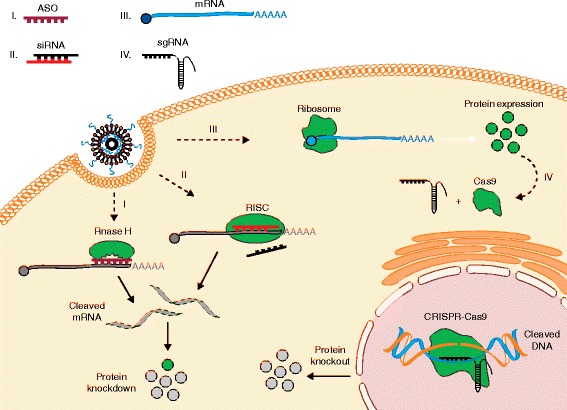
“The use of RNAs to selectively downregulate proteins experienced a paradigm shift following the discovery of siRNA by Fire and colleagues [56].”
BackgroundMultiplex Genome Engineering Using CRISPR/Cas Systems
Cong, L., Ran, F. A., Cox, D., Lin, S., Barretto, R., Habib, N., Hsu, P. D., Wu, X., Jiang, W., Marraffini, L. A., et al. (2013) · Science · doi:10.1126/science.1231143 · Cited by 15,339 · cited 1×
“A combination of DSBs can also be used to edit multiple loci by employing different sgRNAs [125, 126].”
BackgroundThe new frontier of genome engineering with CRISPR-Cas9
Doudna, J. A., & Charpentier, E. (2014) · Science · doi:10.1126/science.1258096 · Cited by 7,062 · cited 1×
“So-called CRISPR–Cas systems rely on Watson–Crick base-pairing between a single guide RNA (sgRNA) and a corresponding DNA target site followed by a distinct protospacer-adjacent motif (PAM), a 3–5-nucleotide DNA sequence required for binding of Cas9 and cleavage of the target sequence, in order to introduce a double-s…”
BackgroundBoussif, O., Lezoualc'h, F., Zanta, M. A., Mergny, M. D., Scherman, D., Demeneix, B., & Behr, J. P. (1995) · Proceedings of the National Academy of Sciences · doi:10.1073/pnas.92.16.7297 · Cited by 6,247 · cited 1×
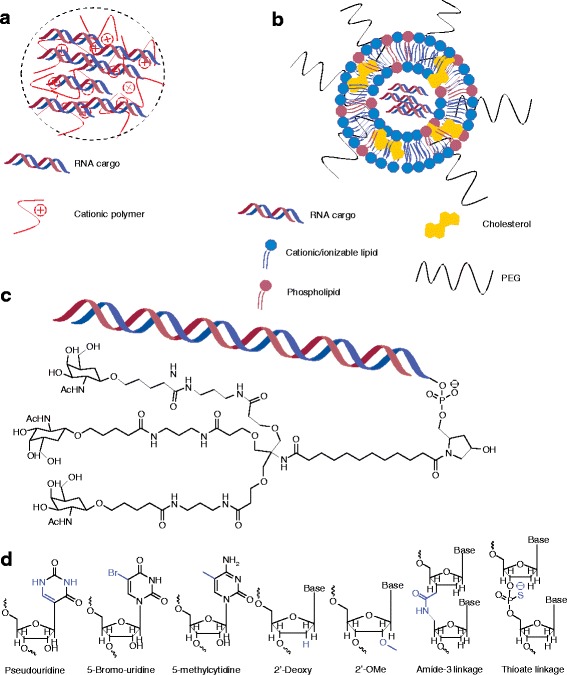
“Synthetic polymers such as poly-Llysine [17], polyamidoamine [18], and polyethyleneimine [19], as well as naturally occurring polymers such as chitosan [20], have all been applied to RNA delivery, with varying levels of success.”
BackgroundCpf1 Is a Single RNA-Guided Endonuclease of a Class 2 CRISPR-Cas System
Zetsche, B., Gootenberg, J. S., Abudayyeh, O. O., Slaymaker, I. M., Makarova, K. S., Essletzbichler, P., Volz, S. E., Joung, J., van der Oost, J., Regev, A., et al. (2015) · Cell · doi:10.1016/j.cell.2015.09.038 · Cited by 4,761 · cited 1×
“(AsCpf1), with the capability to edit the genome of mammalian cells have been discovered recently [143, 144].”
BackgroundComing of age: ten years of next-generation sequencing technologies
Goodwin, S., McPherson, J. D., & McCombie, W. R. (2016) · Nature Reviews Genetics · doi:10.1038/nrg.2016.49 · Cited by 4,352 · cited 1×
“Thanks to advances in next-generation sequencing technology, scientists have been able to identify the genetic roots of many common diseases [1].”
BackgroundDirect Gene Transfer into Mouse Muscle in Vivo
Wolff, J. A., Malone, R. W., Williams, P., Chong, W., Acsadi, G., Jani, A., & Felgner, P. L. (1990) · Science · doi:10.1126/science.1690918 · Cited by 4,173 · cited 1×
“Although it has been known since 1990 that nucleic acids can be used to modulate protein production in vivo [9], therapeutic RNA delivery has been limited by a number of factors.”
BackgroundHopkins, A. L., & Groom, C. R. (2002) · Nature Reviews Drug Discovery · doi:10.1038/nrd892 · Cited by 3,305 · cited 1×
“However, the proteins that might possess such binding pockets have been estimated to account for only 2–5% of the protein-coding human genome [8].”
BackgroundNon-viral vectors for gene-based therapy
Yin, H., Kanasty, R. L., Eltoukhy, A. A., Vegas, A. J., Dorkin, J. R., & Anderson, D. G. (2014) · Nature Reviews Genetics · doi:10.1038/nrg3763 · Cited by 3,123 · cited 1×
“As with their use in protein modulation, nanoparticles for gene editing have demonstrated high loading capacity for nucleic acid cargos, ability to modify payload bio-distribution and pharmacokinetics through active targeting and formulation, as well as simplicity of manufacturing with a high level of control over the…”
BackgroundSelf-citation
Research works printed but not linked: 3
- Behr J The proton sponge: a trick to enter cells the viruses did not exploit Int J Chem 1997 2 34 6
- Manoharan M GalNAc-siRNA with enhanced stabilization chemistry: ESC-GalNAc-siRNA 2014
- Wolinetz CD Emerging biotechnologies and the role of the NIH RAC 2016
Cited by
Items 501–600 of 681
Rao, D., Kwak, G., Wang, H., Eberhart, C. G., Hanes, J. S., & Suk, J. S. (2023) · ACS Biomaterials Science & Engineering · doi:10.1021/acsbiomaterials.3c00799 · Cited by 5
Re-structuring lentiviral vectors to express genomic RNA via cap-dependent translation
Counsell, J. R., Brabandere, G. D., Karda, R., Moore, M., Greco, A., Bray, A., Diaz, J. F. A., Perocheau, D. P. B., Mock, U., & Waddington, S. N. (2020) · Molecular Therapy — Methods & Clinical Development · doi:10.1016/j.omtm.2020.12.005 · Cited by 5
“Cas9 nuclease mRNA has been used for in vitro and in vivo applications, although novel mRNA delivery strategies are continually being explored to enhance gene transfer efficiency.(32) LV delivery of mRNA holds significant advantages here, as it has been shown over the past 20 years that LV vectors can be pseudotyped w…”
BackgroundDelivery of Genetic Information: Viral Vector and Nonviral Vector Gene Therapies
Gemayel, M. C., Byrne, L. C., Ciulla, T. A., & Sahel, J. (2021) · International Ophthalmology Clinics · doi:10.1097/iio.0000000000000360 · Cited by 5
Advances in mRNA vaccines for viral diseases
Huang, Y., Zhu, X., Guo, X., Zhou, Y., Liu, D., Mao, J., Xiong, Y., Deng, Y., & Gao, X. (2023) · Journal of Medical Virology · doi:10.1002/jmv.28924 · Cited by 5
“The fact that mRNAs are destroyed after expression further supports the exceptional safety of mRNA vaccines.(15,16) mRNA vaccines are simpler to standardize and produce in mass quantities due to their short turnaround time and uncomplicated manufacturing process.”
BackgroundEngineering multiple levels of specificity in an RNA viral vector
Chong, L. S., Kang, J., Ince, M., Kim, M. S., Gao, X. J., & Elowitz, M. B. (2026) · Nature Communications · doi:10.1038/s41467-026-71033-7 · Cited by 5
“In fact, while DNA vectors currently remain more prevalent in therapeutic applications, RNA viruses have received growing attention 48 , particularly in cancer therapy 49 – 51 andinvaccinedevelopment 52,53 .”
The global role of biotechnology for non communicable disorders
Zacchigna, S., & Giacca, M. (2018) · Journal of Biotechnology · doi:10.1016/j.jbiotec.2018.07.043 · Cited by 5
Deep learning models for predicting RNA degradation via dual crowdsourcingPreprint
Wayment-Steele, H. K., Kladwang, W., Watkins, A. M., Kim, D. S., Tunguz, B., Reade, W., Demkin, M., Romano, J., Wellington-Oguri, R., Nicol, J. J., et al. (2021) · arXiv (Cornell University) · doi:10.48550/arxiv.2110.07531 · Cited by 6
Delivery strategies of messenger RNA therapeutics for brain disorders
Youn, K., Oh, S., Gil, H.-W., Choi, Y., Keum, G., & Bang, E. (2025) · Bulletin of the Korean Chemical Society · doi:10.1002/bkcs.70083 · Cited by 4
Wang, C., Yang, S., Wang, T., Wang, T., Wang, M., Su, Z., Zhu, J., Zhang, C.-H., He, F., & Wang, H.-H. (2026) · Chemical Communications · doi:10.1039/d6cc01064d · Cited by 4
Chen, Y., Lin, X., Liu, X., Liu, Y., Bui‐Le, L., Blakney, A. K., Yeow, J., Zhu, Y., Stevens, M. M., Shattock, R. J., et al. (2024) · Biomacromolecules · doi:10.1021/acs.biomac.4c00117 · Cited by 4
Tsamoulis, D., Rallidis, L. S., & Kosmas, C. E. (2024) · Expert Opinion on Drug Discovery · doi:10.1080/17460441.2024.2360415 · Cited by 4
Synthesis of New Polyfluoro Oligonucleotides via Staudinger Reaction
Klabenkova, K., Zakhryamina, A., Burakova, E. A., Bizyaev, S. N., Фокина, А. А., & Stetsenko, D. A. (2024) · International Journal of Molecular Sciences · doi:10.3390/ijms26010300 · Cited by 5
Shrivastava, N. K., Verma, P., Singh, G., Singh, J., Kumar, A., Yadav, S., Sonkar, A. B., Ansari, M. N., Saeedan, A. S., Akhter, Y., et al. (2025) · Molecular Pharmaceutics · doi:10.1021/acs.molpharmaceut.5c00104 · Cited by 4
Non coding RNA biomarkers in pemphigus disease
Li, Z., Huang, J., Zhang, S. Y., Zhang, W., & Si, X. (2025) · Clinica Chimica Acta · doi:10.1016/j.cca.2025.120381 · Cited by 4
Izadi, E., Mohammadi, S. S., Ganjalıkhani-Hakemi, M., Eshghi, S., Saremi, L., Saltanatpour, Z., & Hamidieh, A. A. (2025) · European Journal of Pharmacology · doi:10.1016/j.ejphar.2025.177786 · Cited by 4
Gene therapy in hereditary retinal dystrophy
Chien, J.-Y., & Huang, S. (2022) · Tzu Chi Medical Journal · doi:10.4103/tcmj.tcmj_78_22 · Cited by 5
“The RNA-based AO is packaged with polyethylene glycol, lipids, polymers, and viral vectors [37].”
Delivery of Rna Drugs: Beyond the Liver, More than Vaccine
Elnaggar, M. G., He, Y., & Yeo, Y. (2023) · European Journal of Pharmaceutics and Biopharmaceutics · doi:10.1016/j.ejpb.2024.114203 · Cited by 5
Tackling Residual Atherosclerotic Risk in Statin-Treated Adults: Focus on Emerging Drugs
Takata, K., & Nicholls, S. J. (2018) · American Journal of Cardiovascular Drugs · doi:10.1007/s40256-018-0312-1 · Cited by 4
Jiang, M., Österlund, P., Poranen, M. M., & Julkunen, I. (2019) · Methods · doi:10.1016/j.ymeth.2019.10.013 · Cited by 4
Modulating the immune response with liposomal delivery
Nardo, D., Henson, D. M., Springer, J. E., & Venditto, V. J. (2020) · Elsevier eBooks · doi:10.1016/b978-0-12-816705-2.00006-0 · Cited by 6
Biological Aspects and Clinical Applications of Nanoparticles on Treatment and Prophylaxis of HIV
Saeedi, M., Mehranfar, F., Omidi, S. O., Ehsani, F. Z., & Pajand, O. (2020) · Iranian Journal of Medical Microbiology · doi:10.30699/ijmm.14.6.512 · Cited by 5
“The advances in chemistry and drug delivery for remedial siRNAs have helped to prevail various obstacles to their clinical progress (96).”
BackgroundPang, X., Zhang, Q., Li, S., Zhao, J., Cai, M., Wang, H., Xu, H., Yang, G., & Shan, Y. (2022) · Nanoscale · doi:10.1039/d2nr00988a · Cited by 4
Characterizing and Functional Assignment of Noncoding RNAs
Tiwari, P., Gupta, S., Kumar, A., Sharma, M., Sundararajan, V. S., Kothari, S. L., Mathur, S. K., Medicherla, K. M., Suravajhala, P., & Malik, B. (2018) · Elsevier eBooks · doi:10.1016/b978-0-12-809633-8.20077-0 · Cited by 4
Structure and Phase Behavior of Polyampholytes and Polyzwitterions
Pickett, P. D., Ma, Y., Posey, N. D., Lueckheide, M. J., & Prabhu, V. M. (2022) · Wiley eBooks · doi:10.1002/9783527815562.mme0056 · Cited by 5
Luong, D., Martel, N., Rae, J., Lo, H. P., Lim, Y., Wu, Y., McMahon, K., Sun, H., Fletcher, N. L., Thurecht, K. J., et al. (2025) · ACS Nano · doi:10.1021/acsnano.5c11452 · Cited by 3
Label-Free Optical Biosensing of Lipid Nanoparticle-mRNA Therapeutics
Thangavelu, L. P., Gupta, G., Rana, M., Goyal, K., Mishra, R., Singh, S. K., Edis, Z., & Nagaraj, K. (2025) · Sensing and Imaging · doi:10.1007/s11220-025-00688-1 · Cited by 3
“Research - ers explored LNPs primarily for siRNA delivery in oncology and gene silencing applications before the COVID-19 pandemic [2].”
Ye, P., Su, T., Wang, K., Yu, D., Chao, M., Fan, L., Wu, G., Wang, G., Gao, F., & Hua, L. (2026) · Chemical Engineering Journal · doi:10.1016/j.cej.2026.174160 · Cited by 3
Research advances in capillary gel electrophoresis for detecting biomacromolecules
Liu, W.-J., Zhang, Y., Li, Q.-Y., Li, R.-T., Zhao, L., Gatera, T., Ma, Q., Yang, J.-L., & Shi, X.-F. (2026) · Journal of Chromatography A · doi:10.1016/j.chroma.2026.466850 · Cited by 3
Top-Down Characterization of Complete siRNA Complexes by Direct Infusion Nanospray-MS n
Mutchek, S. G., Papov, V. V., Pennino, S., & Fabris, D. (2026) · Analytical Chemistry · doi:10.1021/acs.analchem.6c00890 · Cited by 3
Liu, Y., Guo, X., Hu, Q., Gan, C., Nie, S., Xiang, J., Liu, Y., Zou, J., Wu, X., Li, C., et al. (2026) · Materials Today Bio · doi:10.1016/j.mtbio.2026.103568 · Cited by 3
PROGRESS OF OLIGONUCLEOTIDE THERAPEUTICS TARGET TO RNA
Pan, Y., Zhou, X., & Yang, Z. (2022) · Wiley eBooks · doi:10.1002/9781119692799.ch11 · Cited by 6
Jriyasetapong, K., Lawtrakulngam, N., Vivatbutsiri, P., Namano, S., Wattanasirmkit, K., Angkhanawiriyarak, S., & Suwanwela, J. (2025) · Scientific Reports · doi:10.1038/s41598-025-02931-x · Cited by 3
“…enhancing mRNA stability, protecting against nuclease-mediated degradation, and promoting cellular uptake, ultimately improving treatment efficacy 19–21 The significantly higher bone volume observed in the BMP-2 mRNA-LNP groups suggests potential benefits for enhancing local bone density at…”
Navigating the Landscape of Materials‐Based RNA Delivery Systems in Bone Healing
Cui, Y., Li, N., Wu, J., Wang, X., Zhou, P., Bai, J., & Liu, Y. (2025) · Advanced Functional Materials · doi:10.1002/adfm.202509383 · Cited by 5
Noncoding RNAs in Cardiovascular Disease
Lesizza, P., Paldino, A., Merlo, M., Giacca, M., & Sinagra, G. (2019) · Elsevier eBooks · doi:10.1016/b978-0-12-814470-1.00003-4 · Cited by 3
Ren, Y., Liu, X., Ge, H., Guo, Y., Zhang, Q., Xie, M., Wang, P., Zhu, X., & Zhang, C. (2021) · Chemical Research in Chinese Universities · doi:10.1007/s40242-021-1168-5 · Cited by 3
Liu, Y., Wang, Q., Liu, B., Sun, W., Zhang, Y., Li, Y., Wang, Z., Wang, Y., Chang, S., Lei, J., et al. (2021) · Chemical Engineering Journal · doi:10.1016/j.cej.2021.133076 · Cited by 3
Mining LTR-retrotransposon genes for mRNA delivery
Herrera‐Barrera, M., & Sahay, G. (2022) · Trends in Pharmacological Sciences · doi:10.1016/j.tips.2022.01.001 · Cited by 3
Souza, L. M. P., Lima, M. C., Bezerra, L. F. S., & Pimentel, A. S. (2022) · Chemical Physics · doi:10.1016/j.chemphys.2022.111704 · Cited by 3
Panahi, H. K. S., Dehhaghi, M., Guillemin, G. J., Peng, W., Aghbashlo, M., & Tabatabaei, M. (2023) · Cancer and Metastasis Reviews · doi:10.1007/s10555-023-10142-x · Cited by 3
“The other advantages include triggered release, improved cellular uptake, and sustained and localized delivery to the tumor cells [117, 136].”
RNA therapeutics for regenerative medicine
Thi, Y. V. N., Ngo, A. D., Chu, D., Lin, S.-C., & Wu, C. (2024) · Progress in molecular biology and translational science · doi:10.1016/bs.pmbts.2023.12.002 · Cited by 4
Malviya, R., & Gupta, N. (2022) · Current Drug Delivery · doi:10.2174/1567201819666220422154504 · Cited by 3
Cancer LncRNA Census 2 (CLC2): an enhanced resource reveals clinical features of cancer lncRNAsPreprint
Vancura, A., Lanzós, A., Bosch, N., Torres, M., Gutierrez, A. H., Haefliger, S., & Johnson, R. (2020) · bioRxiv (Cold Spring Harbor Laboratory) · doi:10.1101/2020.04.28.066225 · Cited by 3
Nelson, B. C., & Borgos, S. E. (2022) · Nanomedicine · doi:10.2217/nnm-2022-0024 · Cited by 4
RNA therapeutics: Molecular mechanisms, and potential clinical translations
Nguyen, T. T., Thi, Y.-V. N., & Chu, D. (2024) · Progress in molecular biology and translational science · doi:10.1016/bs.pmbts.2023.12.012 · Cited by 2
Jangde, K. K., & Mishra, D. K. (2024) · Journal of Reproductive Healthcare and Medicine · doi:10.25259/jrhm_13_2024 · Cited by 2
Under Water Superelastic Porous Nanofibrous Sponge for Efficient RNA Separation and Purification
Wang, Y., Cheng, P., Chen, T., Li, M., Guo, Q., Cheng, Q., Wang, D., & Liu, K. (2024) · ACS Applied Materials & Interfaces · doi:10.1021/acsami.4c10047 · Cited by 2
Drug delivery agent that acts as a drug for synergistic activity
Li, K., Chembazhi, U. V., Krueger, S. B., Dewald, Z., Chen, J., Bai, Y., Kim, D., Lanzendorf, A. N., Kocheril, P. A., Chen, J., et al. (2025) · iScience · doi:10.1016/j.isci.2025.112890 · Cited by 2
“Ligand 4 , 6 , and 8 were studied by titrating ligand into d(CTG) 16 , r(CUG) 16 , or random duplex DNA to measure the dissociation constants ( K d ) for these ligands.”
InfluentialRational design of therapeutic RNA molecules
Fang, F., & Wei, B. (2025) · Trends in Chemistry · doi:10.1016/j.trechm.2025.09.016 · Cited by 2
Jahan, A., Vadi, A., Rehman, U., Orayj, K. M., Mohammad, A. A. S., Gupta, G., Goh, K. W., & Kesharwani, P. (2025) · Journal of Drug Delivery Science and Technology · doi:10.1016/j.jddst.2025.107834 · Cited by 3
RNA splicing in bone diseases: mechanisms, pathogenesis and therapeutics
Zheng, L., Sun, H., Li, N., Wang, L., Li, T., & Zhai, Q. (2026) · Acta Biochimica Polonica · doi:10.3389/abp.2025.15819 · Cited by 2
Zhu, C., Yao, C., Qin, H., Zhang, W., Zheng, X., Zheng, S., Ye, X., Xiong, Y., Jiang, L., Li, S., et al. (2026) · Journal of Chromatography A · doi:10.1016/j.chroma.2026.466753 · Cited by 2
Zhang, Q., Yan, K., Lv, Y., Tao, T., Wu, S., Yang, Z., Ma, L., Huang, C., Liu, Q., Han, Y., et al. (2026) · Regenerative Biomaterials · doi:10.1093/rb/rbag041 · Cited by 2
Protein Vesicles as Emerging Platforms for Drug Delivery, Vaccines, and Immunotherapy
Tasnim, N., & Jang, Y. (2026) · Annual Review of Chemical and Biomolecular Engineering · doi:10.1146/annurev-chembioeng-100724-084456 · Cited by 2
Beyond chemotherapy: The rise of nucleic acid nanoformulations in personalized lung cancer therapy
Hermain, S., Harshitha, K. S., & Naveen, N. R. (2026) · Cancer Pathogenesis and Therapy · doi:10.1016/j.cpt.2026.04.002 · Cited by 2
Woller, S. A., Ruschel, J., Morquette, B., Cardia, J. P., Yan, D., Holton, K., Shmushkovich, T., Niederst, E. D., Bulock, K. G., Wolfson, A. D., et al. (2022) · iScience · doi:10.1016/j.isci.2022.104379 · Cited by 3
Efficacy Increase of Lipid Nanoparticles In Vivo by Inclusion of Bis(Monoacylglycerol)Phosphate
Sagi, A., Mukthavaram, R., Recatto, R., Hong, H., Davis, M., Díaz-Trelles, R., El-Mecharrafie, N., Acharya, G., Gomez, A., Leu, A. I., et al. (2022) · Nanomedicine · doi:10.2217/nnm-2022-0002 · Cited by 2
Biosafety and regulatory issues of RNA therapeutics
Thị, H. V., Thi, L.-A. N., Tang, T. L., & Chu, D. (2024) · Progress in molecular biology and translational science · doi:10.1016/bs.pmbts.2023.12.008 · Cited by 3
Weide, A., Brokmann, F., Appel, B., Rosenbaum, C., Krause, J., Janke, U., Delcea, M., Weitschies, W., & Müller, S. (2024) · Advanced Therapeutics · doi:10.1002/adtp.202300446 · Cited by 2
Therapeutic applications of siRNA gene delivery systems
Madkour, L. H. (2019) · Elsevier eBooks · doi:10.1016/b978-0-12-819777-6.00005-6 · Cited by 2
Mani, H., Chen, Y.-C., Chen, Y.-K., Liu, W., Lo, S., Lin, S.-H., & Liou, J.-W. (2021) · Polymers · doi:10.3390/polym13060858 · Cited by 2
“As a result, most RNA delivery carriers are positively charged, and the cationic charges of polymers are used to electrostatically condense the negatively charged RNA into the carriers [2,7,11].”
BackgroundWilliams, R. M., Kapadia, C. H., Jaimes, E. A., & Heller, D. A. (2021) · Elsevier eBooks · doi:10.1016/b978-0-12-823318-4.00026-3 · Cited by 2
Genetic Manipulations of SchistosomiasisPreprint
Nelwan, M. (2020) · SSRN Electronic Journal · doi:10.2139/ssrn.3691820 · Cited by 2
Multi-hallmark long noncoding RNA maps reveal non-small cell lung cancer vulnerabilitiesPreprint
Esposito, R., Polidori, T., Meise, D. F., Pulido-Quetglas, C., Chouvardas, P., Forster, S., Schaerer, P., Kobel, A., Schlatter, J., Roemmele, M., et al. (2021) · bioRxiv (Cold Spring Harbor Laboratory) · doi:10.1101/2021.10.19.464956 · Cited by 2
Cancer Therapy with CRISPR/Cas9: Prospects and Challenges
Chaudhary, M. F., Saleem, U., Khan, S., Khan, R., Asim, M., Azam, F., Sharif, M., Zainab, Z., Dilawar, A. A., & Jehanzaib, M. (2021) · International Journal of Environment Agriculture and Biotechnology · doi:10.22161/ijeab.63.16 · Cited by 2
RNA-based Therapeutics: Master Regulator for Bioengineering Systems in Medicine World
Singla, R., Arora, M., & Bansal, P. (2023) · Current Biotechnology · doi:10.2174/2211550112666230417100541 · Cited by 1
Messenger RNA Lipid-Based Nanoparticles: Optimization of Formulations in the Lab
Delehedde, C., Ciganek, I., Laroui, N., Rameix, N., Perche, F., & Pichon, C. (2024) · Methods in molecular biology · doi:10.1007/978-1-0716-3770-8_12 · Cited by 1
Harnessing mRNA vaccines for viral diseases: bottleneck and breakthrough
Mishra, V. K., Ranjan, A., & Mishra, Y. (2025) · Exploration of Immunology · doi:10.37349/ei.2025.1003212 · Cited by 1
Ma, Z., Kamizawa, H., Ota, R., Li, B. J., Aulia, F., Nii, T., Mori, T., Katayama, Y., & Kishimura, A. (2025) · Polymer Journal · doi:10.1038/s41428-025-01124-7 · Cited by 1
Nucleic acid drug delivery in ophthalmology: Emerging trends and future perspectives
Yang, H., Zuo, J., Lv, S., Wei, X., Pan, M., Zhu, Z., Wang, Y., Jie, Y., Lu, Z., & Zhang, X. (2026) · Journal of Controlled Release · doi:10.1016/j.jconrel.2026.114729 · Cited by 1
Wang, F., Tong, Y., Lu, L., Song, Y., Li, X., Wang, Y., Zhang, Q., Wu, J., & Zhang, L. (2026) · Acta Biomaterialia · doi:10.1016/j.actbio.2026.02.043 · Cited by 2
Vertical Droplet-Squeezing Platform for Highly Efficient Biomolecular Delivery
Lee, J.-H., & Chung, A. J. (2026) · BioChip Journal · doi:10.1007/s13206-026-00262-1 · Cited by 1
Niazi, S. K. (2026) · Discover Medicine · doi:10.1007/s44337-026-00578-9 · Cited by 1
Shariati, A., Homaei, A., Khezrpour, A., Azizi, N., Khani, P., Shariati, F. S., Rafiee, M., Afkhami, H., Yousefi, M. H., Saeidi, F., et al. (2026) · Current Research in Biotechnology · doi:10.1016/j.crbiot.2026.100382 · Cited by 1
TriRNASP: A knowledge-based potential with three-body effects for accurate RNA structure evaluation
Yuan, T., Lou, E., Zhou, Z., Tan, Y.-L., & Tan, Z.-J. (2026) · Biophysical Journal · doi:10.1016/j.bpj.2026.04.003 · Cited by 1
The impact of m6A modified cargo conveyed by exosomes on the tumor microenvironment
Yi, W., Shi, Q., Wu, J., Zhou, B., & Li, Y. (2026) · Discover Oncology · doi:10.1007/s12672-026-05060-7 · Cited by 1
“…o m e t r i a l c a n c e r , O S o s t e o s a r c o m a , C R C c o l o r e c t a l c a n c e r , N S C L C n o n - s m a ll c e ll l u n g c a n c e r , O C o v a r i a n c a n c e r , B C a b l a dd e r c a n c e r , E M T e p i t h e l i a l m e s e n c h y m a l t r a n s i t i o n [59, 60].”
The Use of Deep Learning in RNA Therapeutic Development
Subramanian, D. A., Yao, S. L., Chan, A., Witten, J. J., Reker, D., Anderson, D. G., Langer, R., & Traverso, G. (2026) · ACS Nano · doi:10.1021/acsnano.6c02090 · Cited by 1
Self-citationDesign, Synthesis, and Proof-of-Concept Bioassay of an Encapsulated mRNA for Human Growth Hormone
Santiago, C. R., Quintanar‐Stephano, A., & Barrera-Saldaña, H. A. (2026) · Current Issues in Molecular Biology · doi:10.3390/cimb48070647 · Cited by 1
“However, the application of therapeutic mRNA to complex endocrine disorders remains virtually uncharted [10].”
Wang, X., Tian, Z., Benitez, A. P., Bian, X., Vaidya, A., Guerrero, E. D., Sun, Y., Zhang, C., Duan, Y., Wei, J., et al. (2026) · Nature Chemical Engineering · doi:10.1038/s44286-026-00425-9 · Cited by 2
Lukumci, Ö. E., Cansaran‐Duman, D., & Mutlu, P. (2026) · International Journal of Nanomedicine · doi:10.2147/ijn.s622821 · Cited by 1
“109 Strategies for Improving miRNA Stability miRNAs are small, single-stranded, negatively charged RNA molecules that are highly susceptible to rapid degradation by serum RNases.”
Genetic engineering approaches to the development of modern therapeutics
Григорьевна, Б. Е., Копейкин, П. М., & Tagaev, A. A. (2020) · Medical academic journal · doi:10.17816/maj34092 · Cited by 1
Therapies for epidermolysis bullosa: delivery is key
Bremer, J., & van den Akker, P. C. (2019) · British Journal of Dermatology · doi:10.1111/bjd.17324 · Cited by 1
Current challenging issues of biological macromolecules in biomedicine
Anda-Flores, Y. D., Carvajal‐Millán, E., Campa-Mada, A. C., Martinez-Robinson, K. G., Lizardi‐Mendoza, J., Rascón‐Chu, A., Martínez‐López, A. L., & Tánori, J. (2021) · Elsevier eBooks · doi:10.1016/b978-0-323-85759-8.00025-7 · Cited by 2
Cancer mRNA Vaccines as a Promising Approach for Treating Luminal A Breast Cancer
Giuliani, A. (2022) · International journal of high school research · doi:10.36838/v4i3.5 · Cited by 1
Safe and efficient RNA and DNA introduction into cells using digital electroporation system
Bae, S. J., & Im, D. J. (2022) · Bioelectrochemistry · doi:10.1016/j.bioelechem.2022.108268 · Cited by 1
Nanotechnology-Driven Delivery Systems in Inoculation Therapies
Pereira, G. C. (2022) · Methods in molecular biology · doi:10.1007/978-1-0716-2716-7_3 · Cited by 1
Habibi, M., Faghani, E., Rezaiei, M., Mahmoudjanloo, M., & Razzaghi, M. H. (2022) · Journal of Agricultural Science and Technology · doi:10.52547/jast.24.6.1413 · Cited by 1
“High Ca plays an important role in adaptation to drought by improving seedling vigor and leaf water potential protection (Kaczmarek et al., 2017).”
BackgroundThe development and technologies of RNA therapeutics
Vuong, H. L., Lan, C. T., & Le, H. T. T. (2024) · Progress in molecular biology and translational science · doi:10.1016/bs.pmbts.2023.12.017 · Cited by 1
Pulmonary Delivery of Nucleic Acids
Conte, G., d’Angelo, I., Müller, J. T., Winkeljann, B., Carneiro, S. P., Merkel, O. M., & Ungaro, F. (2023) · AAPS introductions in the pharmaceutical sciences · doi:10.1007/978-3-031-47567-2_5 · Cited by 2
Vacinas de RNA mensageiro: da Revolução tecnológica à eficácia no controle da pandemia de COVID-19
Silva, E. C., & Pontes, D. S. (2024) · doi:10.58203/licuri.22941 · Cited by 1
Pan, Y., Wang, Q., & Ma, Y. (2024) · Interdisciplinary cancer research · doi:10.1007/16833_2024_285 · Cited by 2
Sharma, M., Dande, P. R., Saraf, A., Gawad, J., Maheshwari, R., & Ashique, S. (2025) · BENTHAM SCIENCE PUBLISHERS eBooks · doi:10.2174/9789815305906125010015 · Cited by 1
Gill, K., Minall, L., & Nassif, A. R. (2021) · Elsevier eBooks · doi:10.1016/b978-0-12-814357-5.00007-6 · Cited by 2
Combined computational and solution scattering methods to study the dynamical properties of Ras
Guterres (2018) · Digital Repository Service (Northeastern University) · doi:10.17760/d20287341 · Cited by 1
SPATS1: New Molecular Target in Colorectal Cancer
MOUAWAD, N. (2021) · Electronic Theses and Dissertations Repository (University of Pisa) · Cited by 1
pH-responsive polypeptide-based self-assemblies as drug and gene delivery carriers
Aydınlıoğlu, E. (2020) · theses.fr (ABES) · doi:10.70675/356c90daz0756z46bazba85za6995f3e083a · Cited by 1
Marilena, F. (2018) · Archivio Istituzionale della Ricerca (Universita Degli Studi Di Milano) · doi:10.13130/falcone-marilena_phd2018-03-16
Uchida, S. (2018) · Drug Delivery System · doi:10.2745/dds.33.335
Immune mechanisms that determine the quality of antibody responses to vaccines
Lindgren, G. (2019) · Figshare
A Robust Delivery System for RNA Therapeutics
Bozal, S. B. (2019) · OpenCommons at University of Connecticut (University of Connecticut)
Metadata
- Authors
- Kaczmarek, J. C., Kowalski, P. S., & Anderson, D. G.
- Affiliations
- Koch Institute for Integrative Cancer Research At MIT (US)
- Harvard University (US)
- Corresponding author
- Anderson, Daniel G.
- Venue
- Genome Medicine
- Published
- 2017-06-27
- Volume
- 9
- Issue
- 1
- Pages
- 60-60
- ISSN
- 1756-994X (ISSN-L)
- PMC
- PMC5485616
- OpenAlex
- W2630192492
- Cited by
- 656
- References
- 157
- Citations by year
- 2026: 43 · 2025: 48 · 2024: 65 · 2023: 60 · 2022: 77 · 2021: 90 · 2020: 73 · 2019: 87 · 2018: 104 · 2017: 8
- FWCI
- 6.96
- Type
- journal article
- Language
- en
- Open access
- gold
- doi.org
- Licence
- cc-by
- creativecommons.org/licenses/by/4.0/ (tdm)
- creativecommons.org/licenses/by/4.0/ (vor)
- Locations
- Genome Medicine (publishedVersion, cc-by)
- Europe PMC (PubMed Central) (publishedVersion, cc-by)
- PubMed Central (publishedVersion, cc-by)
- PubMed (publishedVersion)
- DOAJ (DOAJ: Directory of Open Access Journals) (submittedVersion, cc-by-sa)
- DSpace@MIT (Massachusetts Institute of Technology) (submittedVersion, cc-by-nc)
- BioMed Central eBooks
- Funders
- National Cancer Institute (P30-CA14051)
- JDRF (3-PDF-2017-383-A-N)
- Topics
- Life Sciences › Biochemistry, Genetics and Molecular Biology › Molecular Biology › RNA Interference and Gene Delivery
- Life Sciences › Biochemistry, Genetics and Molecular Biology › Molecular Biology › RNA Research and Splicing
- Life Sciences › Biochemistry, Genetics and Molecular Biology › Molecular Biology › RNA and protein synthesis mechanisms
- Keywords
- RNA therapeutics, RNA delivery, siRNA, antisense oligonucleotides, mRNA therapeutics, CRISPR, genome editing, RNA stability, immune response, clinical translation, gene expression modulation
- MeSH terms
- Gene Editing, Humans, Genetic Therapy, Oligonucleotides, Antisense, RNA, Small Interfering
About these checks
Registry, retraction, Cites and statistics results are computed, not judged, with one exception: a printed reference that no index lists is read once by a model before it counts as a citation error. Claims are extracted by a model and kept only when their quote appears verbatim in the text; each cited source is then checked, with a model’s help, for whether it says what the claim relies on. Those verdicts can be wrong — read the claim’s quote and the cited source before relying on one.
Statistics and arithmetic are recomputed, not judged.
Confidence bands are shown only for fields calibrated on our annotated test set. None is calibrated yet, so no band is shown.
What counts as a claim ›How we measure confidence ›How we check this ›
Are you an author, or do you see a problem with this page? Request a review
Data sources
Bibliographic data: Semantic Scholar, OpenAlex, Crossref.
Contains information from the Semantic Scholar Academic Graph Datasets, made available under the ODC Attribution License (ODC-BY 1.0).
Semantic Scholar’s data is described in: Kinney, R., et al. (2023). The Semantic Scholar Open Data Platform. arXiv:2301.10140.
