

Advances in the delivery of RNA therapeutics: from concept to clinical reality
Open accessThe DOI matches its Crossref record; 157 of the 157 references it cites were found in a registry or an index.
Abstract
The rapid expansion of the available genomic data continues to greatly impact biomedical science and medicine. Fulfilling the clinical potential of genetic discoveries requires the development of therapeutics that can specifically modulate the expression of disease-relevant genes. RNA-based drugs, including short interfering RNAs and antisense oligonucleotides, are particularly promising examples of this newer class of biologics. For over two decades, researchers have been trying to overcome major challenges for utilizing such RNAs in a therapeutic context, including intracellular delivery, stability, and immune response activation. This research is finally beginning to bear fruit as the first RNA drugs gain FDA approval and more advance to the final phases of clinical trials. Furthermore, the recent advent of CRISPR, an RNA-guided gene-editing technology, as well as new strides in the delivery of messenger RNA transcribed in vitro, have triggered a major expansion of the RNA-therapeutics field. In this review, we discuss the challenges for clinical translation of RNA-based therapeutics, with an emphasis on recent advances in delivery technologies, and present an overview of the applications of RNA-based drugs for modulation of gene/protein expression and genome editing that are currently being investigated both in the laboratory as well as in the clinic.
Overview
The claims and statistics of this paper haven’t been checked yet.
Free: it reads the open-access text and checks the first 5 claims that cite a source we can check. Create a free account to check every claim.
Integrity signals
Registry
Cites
Statistics
Figures
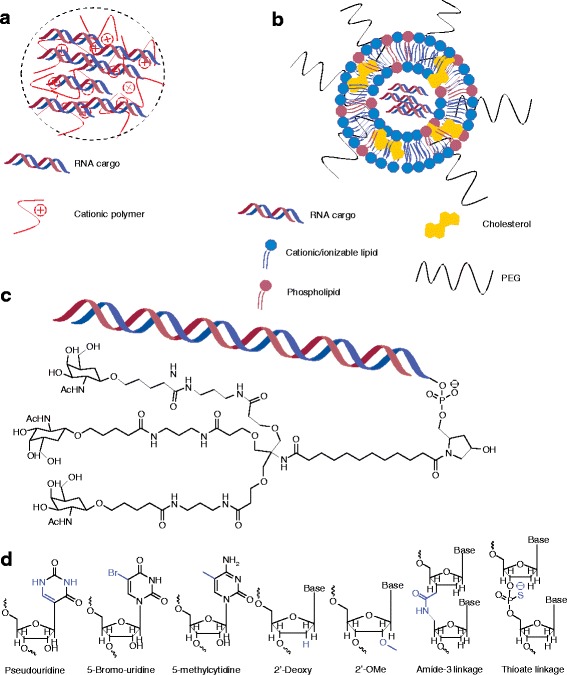
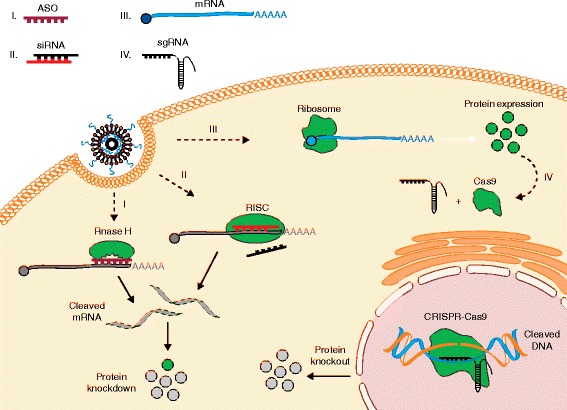
Verification
Claims the paper makes
The claims and statistics of this paper haven’t been checked yet.
Free: it reads the open-access text and checks the first 5 claims that cite a source we can check. Create a free account to check every claim.
Claims other papers make about this one
Each is checked against this paper’s own text: does it say what the citing paper says it does?
The cited source doesn’t support the claim as written.
In the citing paper
“These strategies have yielded modest improvements in RNA stability10, 13–16, and thus alternative approaches to RNA stabilization, such as circularization, are desirable.”
From Engineering circular RNA for potent and stable translation in eukaryotic cells (2018) · cites this paper as [10]
Checked by a reasoning model — may be wrong.
Experimental — accuracy not yet measuredThe source backs part of the claim, not all of it — or backs it for a different population, condition or comparison.
In the citing paper
“For this reason, circularization may allow for the stabilization of mRNAs that generally suffer from short half lives10, 11 and may therefore improve the overall efficacy of exogenous mRNA in a variety of applications12.”
From Engineering circular RNA for potent and stable translation in eukaryotic cells (2018) · cites this paper as [10]
Experimental — accuracy not yet measuredThe source backs part of the claim, not all of it — or backs it for a different population, condition or comparison.
In the citing paper
“Cell internalization and endosome escape are necessary for the delivery of nucleic acid medications into the cytoplasm (small interfering RNA and mRNA) or nucleus (ASOs, DNA, CRISPR) in order for them to work.310”
From Smart nanoparticles for cancer therapy (2023) · cites this paper as [310]
Experimental — accuracy not yet measuredThe source backs part of the claim, not all of it — or backs it for a different population, condition or comparison.
In the citing paper
“Messenger RNA (mRNA) has emerged as a promising therapeutic molecule with numerous clinical applications in treating central nervous system disorders, tumors, COVID-19, and other diseases.”
From Exosome for mRNA delivery: Strategies and therapeutic applications (2024) · cites this paper as [2]
Experimental — accuracy not yet measuredThe source backs part of the claim, not all of it — or backs it for a different population, condition or comparison.
In the citing paper
“RNA vaccines, for example, have exhibited encouraging results in both infection therapy and cancer immunotherapy.[6, 7, 11–15]”
From RNA delivery biomaterials for the treatment of genetic and rare diseases (2019) · cites this paper as [6]
Experimental — accuracy not yet measured
5 more claims about this paper
Create a free account to see every claim other papers make about this one.
Self-check
Percentages, sums and reported differences re-computed from the paper’s own numbers.
The self-check needs the paper’s full text.
Citations
Cites
A Programmable Dual-RNA–Guided DNA Endonuclease in Adaptive Bacterial Immunity
Jinek, M., Chylinski, K., Fonfara, I., Hauer, M., Doudna, J. A., & Charpentier, E. (2012) · Science · doi:10.1126/science.1225829 · Cited by 17,116 · cited 1×
“The discovery of RNAguided DNA endonucleases such as Cas9 associated with CRISPR (clustered regularly interspaced short palindromic repeats), elements composing the prokaryotic adaptive immune system [121], equipped scientists with an easy-to-use and efficient platform to alter genomic information [122].”
BackgroundPotent and specific genetic interference by double-stranded RNA in Caenorhabditis elegans
Fire, A., Xu, S., Montgomery, M. K., Kostas, S. A., Driver, S. E., & Mello, C. C. (1998) · Nature · doi:10.1038/35888 · Cited by 15,429 · cited 1×
“The use of RNAs to selectively downregulate proteins experienced a paradigm shift following the discovery of siRNA by Fire and colleagues [56].”
BackgroundMultiplex Genome Engineering Using CRISPR/Cas Systems
Cong, L., Ran, F. A., Cox, D., Lin, S., Barretto, R., Habib, N., Hsu, P. D., Wu, X., Jiang, W., Marraffini, L. A., et al. (2013) · Science · doi:10.1126/science.1231143 · Cited by 15,339 · cited 1×
“A combination of DSBs can also be used to edit multiple loci by employing different sgRNAs [125, 126].”
BackgroundThe new frontier of genome engineering with CRISPR-Cas9
Doudna, J. A., & Charpentier, E. (2014) · Science · doi:10.1126/science.1258096 · Cited by 7,062 · cited 1×
“So-called CRISPR–Cas systems rely on Watson–Crick base-pairing between a single guide RNA (sgRNA) and a corresponding DNA target site followed by a distinct protospacer-adjacent motif (PAM), a 3–5-nucleotide DNA sequence required for binding of Cas9 and cleavage of the target sequence, in order to introduce a double-s…”
BackgroundBoussif, O., Lezoualc'h, F., Zanta, M. A., Mergny, M. D., Scherman, D., Demeneix, B., & Behr, J. P. (1995) · Proceedings of the National Academy of Sciences · doi:10.1073/pnas.92.16.7297 · Cited by 6,247 · cited 1×
“Synthetic polymers such as poly-Llysine [17], polyamidoamine [18], and polyethyleneimine [19], as well as naturally occurring polymers such as chitosan [20], have all been applied to RNA delivery, with varying levels of success.”
BackgroundCpf1 Is a Single RNA-Guided Endonuclease of a Class 2 CRISPR-Cas System
Zetsche, B., Gootenberg, J. S., Abudayyeh, O. O., Slaymaker, I. M., Makarova, K. S., Essletzbichler, P., Volz, S. E., Joung, J., van der Oost, J., Regev, A., et al. (2015) · Cell · doi:10.1016/j.cell.2015.09.038 · Cited by 4,761 · cited 1×
“(AsCpf1), with the capability to edit the genome of mammalian cells have been discovered recently [143, 144].”
BackgroundComing of age: ten years of next-generation sequencing technologies
Goodwin, S., McPherson, J. D., & McCombie, W. R. (2016) · Nature Reviews Genetics · doi:10.1038/nrg.2016.49 · Cited by 4,352 · cited 1×
“Thanks to advances in next-generation sequencing technology, scientists have been able to identify the genetic roots of many common diseases [1].”
BackgroundDirect Gene Transfer into Mouse Muscle in Vivo
Wolff, J. A., Malone, R. W., Williams, P., Chong, W., Acsadi, G., Jani, A., & Felgner, P. L. (1990) · Science · doi:10.1126/science.1690918 · Cited by 4,173 · cited 1×
“Although it has been known since 1990 that nucleic acids can be used to modulate protein production in vivo [9], therapeutic RNA delivery has been limited by a number of factors.”
BackgroundHopkins, A. L., & Groom, C. R. (2002) · Nature Reviews Drug Discovery · doi:10.1038/nrd892 · Cited by 3,305 · cited 1×
“However, the proteins that might possess such binding pockets have been estimated to account for only 2–5% of the protein-coding human genome [8].”
BackgroundNon-viral vectors for gene-based therapy
Yin, H., Kanasty, R. L., Eltoukhy, A. A., Vegas, A. J., Dorkin, J. R., & Anderson, D. G. (2014) · Nature Reviews Genetics · doi:10.1038/nrg3763 · Cited by 3,123 · cited 1×
“As with their use in protein modulation, nanoparticles for gene editing have demonstrated high loading capacity for nucleic acid cargos, ability to modify payload bio-distribution and pharmacokinetics through active targeting and formulation, as well as simplicity of manufacturing with a high level of control over the…”
BackgroundSelf-citation
Research works printed but not linked: 3
- Behr J The proton sponge: a trick to enter cells the viruses did not exploit Int J Chem 1997 2 34 6
- Manoharan M GalNAc-siRNA with enhanced stabilization chemistry: ESC-GalNAc-siRNA 2014
- Wolinetz CD Emerging biotechnologies and the role of the NIH RAC 2016
Cited by
Items 101–200 of 681
Systemic delivery of mRNA and DNA to the lung using polymer-lipid nanoparticles
Kaczmarek, J. C., Patel, A. K., Rhym, L. H., Palmiero, U. C., Bhat, B., Heartlein, M. W., DeRosa, F., & Anderson, D. G. (2021) · Biomaterials · doi:10.1016/j.biomaterials.2021.120966 · Cited by 114
Self-citationRecent Developments in mRNA-Based Protein Supplementation Therapy to Target Lung Diseases
Sahu, I., Haque, A. K. M. A., Weidensee, B., Weinmann, P., & Kormann, M. S. D. (2019) · Molecular Therapy · doi:10.1016/j.ymthe.2019.02.019 · Cited by 104
“Modified from Kaczmarek et al.(321) www.”
Li, Y., Ye, Z., Yang, H., & Xu, Q. (2022) · Acta Pharmaceutica Sinica B · doi:10.1016/j.apsb.2022.04.013 · Cited by 108
Molecular mechanisms of long noncoding RNAs‐mediated cancer metastasis
Li, Y., Egranov, S. D., Yang, L., & Lin, C. (2019) · Genes Chromosomes and Cancer · doi:10.1002/gcc.22691 · Cited by 103
“Some groups also work on optimizing nucleic acid delivery efficiency to increase cellular entry and escape degradation.(84,85) Preclinical studies using xenografted human cell lines(28,86) and patient-derived xenograft models(87) have dem-”
BackgroundGrijalvo, S., Puras, G., Zárate, J., Sainz-Ramos, M., Qtaish, N. A. L., López, T., Mashal, M., Attia, N., Díaz Díaz, D., Pons, R., et al. (2019) · Pharmaceutics · doi:10.3390/pharmaceutics11020050 · Cited by 95
“This great effort has contributed to launching several antisense-based therapeutics into the market like Fomivirsen, Mipomersen, Eteplirsen and Nusinersen as well as having many others in late clinical trials [3,85].”
BackgroundBenner, N. L., McClellan, R. L., Turlington, C. R., Haabeth, O. A. W., Waymouth, R. M., & Wender, P. A. (2019) · Journal of the American Chemical Society · doi:10.1021/jacs.9b03154 · Cited by 97
MicroRNAs as therapeutic targets for the treatment of diabetes mellitus and its complications
Regazzi, R. (2017) · Expert Opinion on Therapeutic Targets · doi:10.1080/14728222.2018.1420168 · Cited by 104
Oral delivery of non-viral nucleic acid-based therapeutics - do we have the guts for this?
O’Driscoll, C. M., Bernkop‐Schnürch, A., Friedl, J. D., Préat, V., & Jannin, V. (2019) · European Journal of Pharmaceutical Sciences · doi:10.1016/j.ejps.2019.03.027 · Cited by 100
“which may be easier to manufacture and scale-up (Kaczmarek et al., 2017).”
BackgroundRNA Targeting and Gene Editing Strategies for Transthyretin Amyloidosis
Ioannou, A., Fontana, M., & Gillmore, J. D. (2023) · BioDrugs · doi:10.1007/s40259-023-00577-7 · Cited by 101
“Unlike siRNAs, ASOs are able to enter cells without the use of a transfection reagent [44, 47].”
BackgroundMoyo, N., Vogel, A. B., Buus, S., Erbar, S., Wee, E. G., Sahin, U., & Hanke, T. (2019) · Molecular Therapy - Methods & Clinical Development · doi:10.1016/j.omtm.2018.10.010 · Cited by 94
“Great promise of the mRNA vaccine platform comes from the ample possibilities to manipulate mRNA backbone, 50 cap, UTRs, codon usage, nucleoside-base modifications, self-amplification, delivery systems, co-delivery of immunomodulatory molecules, safety, and manufacturing ease, which collectively provide enormous flexi…”
BackgroundAntisense Oligonucleotides Targeting Angiogenic Factors as Potential Cancer Therapeutics
Le, B. T., Raguraman, P., Kosbar, T. R., Fletcher, S., Wilton, S. D., & Veedu, R. N. (2018) · Molecular Therapy — Nucleic Acids · doi:10.1016/j.omtn.2018.11.007 · Cited by 97
RNA interference as a novel treatment strategy for chronic hepatitis B infection
Hui, R. W., Mak, L., Seto, W., & Yuen, M. (2022) · Clinical and Molecular Hepatology · doi:10.3350/cmh.2022.0012 · Cited by 98
Viegas, J. S. R., Praça, F. S. G., Caron, A. L., Suzuki, I., Silvestrini, A. V. P., Medina, W. S. G., Ciampo, J. O. D., Kravicz, M., & Bentley, M. V. L. B. (2020) · Drug Delivery and Translational Research · doi:10.1007/s13346-020-00723-6 · Cited by 100
“In fact, recent studies about antisense therapy using small interfering RNA (siRNA) have shown promising preclinical results for a variety of diseases [20, 22].”
BackgroundDeep Insights in Circular RNAs: from biogenesis to therapeutics
Mumtaz, P. T., Taban, Q., Dar, M. A., Mir, S., Haq, Z. U., Zargar, S. M., Shah, R. A., & Ahmad, S. M. (2020) · Biological Procedures Online · doi:10.1186/s12575-020-00122-8 · Cited by 100
Enhancing the In Vitro and In Vivo Stabilities of Polymeric Nucleic Acid Delivery Nanosystems
Wang, Y., Ye, M., Xie, R., & Gong, S. (2018) · Bioconjugate Chemistry · doi:10.1021/acs.bioconjchem.8b00749 · Cited by 92
RNA Therapy: Current Status and Future Potential
Kim, Y. (2020) · Chonnam Medical Journal · doi:10.4068/cmj.2020.56.2.87 · Cited by 98
RNA Therapeutics in Cardiovascular Precision Medicine
Laina, A., Gatsiou, A., Georgiopoulos, G., Stamatelopoulos, K., & Stellos, K. (2018) · Frontiers in Physiology · doi:10.3389/fphys.2018.00953 · Cited by 88
“Poor delivery of siRNAs due to rapid degradation by circulating nucleases or rapid renal excretion has been addressed by introducing chemical modifications including PS modifications, hydrophobic ligands and encapsulation in nano carriers, in order to increase both protection and half-life enabling systemic delivery (…”
Extracellular matrix-mediated regulation of cancer stem cells and chemoresistance
Brown, Y., Hua, S., & Tanwar, P. S. (2019) · The International Journal of Biochemistry & Cell Biology · doi:10.1016/j.biocel.2019.02.002 · Cited by 100
Davies, N. M., Hovdal, D., Edmunds, N. J., Nordberg, P., Dahlén, A., Dabkowska, A. P., Arteta, M. Y., Rădulescu, A., Kjellman, T., Höijer, A., et al. (2021) · Molecular Therapy — Nucleic Acids · doi:10.1016/j.omtn.2021.03.008 · Cited by 96
“Molecular Ther This is an open access article under the CC BY-NCThe endogenousmachinery of the transfected cell is utilized for in vivo translation of the message to the corresponding protein that undergoes post-transcriptional modifications and folding prior to secretion.(1,2)”
BackgroundMethodHuang, Q., Zeng, J., & Yan, J. (2021) · Journal of Genetics and Genomics · doi:10.1016/j.jgg.2021.02.006 · Cited by 87
“In addition, mRNA is finally subjected to degradation through normal physiological processes in host cells, thus lowering the toxicity risk caused by drug metabolite (Kowalski et al., 2019).”
BackgroundRipoll, M., Bernard, M., Vaure, C., Bazin, E., Commandeur, S., Perkov, V., Lemdani, K., Nicolaï, M., Bonifassi, P., Kichler, A., et al. (2022) · Biomaterials · doi:10.1016/j.biomaterials.2022.121570 · Cited by 96
Engineering Gene Therapy: Advances and Barriers
Shahryari, A., Burtscher, I., Nazari, Z., & Lickert, H. (2021) · Advanced Therapeutics · doi:10.1002/adtp.202100040 · Cited by 81
Recent Advances in Nano-Drug Delivery Systems for the Treatment of Diabetic Wound Healing
Liu, M., Wei, X., Zheng, Z., Li, Y., Li, M., Lin, J., & Yang, L. (2023) · International Journal of Nanomedicine · doi:10.2147/ijn.s395438 · Cited by 101
“77 Shaabani et al 78 formulated siRNA into a layer-by-layer platform with a tunable outer surface to increase angiogenesis factors in diabetic wound area.”
Allen, D. G., Rosenberg, M., & Hendel, A. (2021) · Frontiers in Genome Editing · doi:10.3389/fgeed.2020.617910 · Cited by 96
Targetable long non-coding RNAs in cancer treatments
Chen, L., Dzakah, E. E., & Shan, G. (2018) · Cancer Letters · doi:10.1016/j.canlet.2018.01.042 · Cited by 86
“therapeutics are also fast moving [137,138].”
Non-Coding RNAs in Cancer Diagnosis and Therapy: Focus on Lung Cancer
Le, P., Romano, G., Nana-Sinkam, P. S., & Acunzo, M. (2021) · Cancers · doi:10.3390/cancers13061372 · Cited by 90
Capasso Palmiero, U., Kaczmarek, J. C., Fenton, O. S., & Anderson, D. G. (2018) · Advanced Healthcare Materials · doi:10.1002/adhm.201800249 · Cited by 82
Self-citationTesting thousands of nanoparticles in vivo using DNA barcodes
Lokugamage, M. P., Sago, C. D., & Dahlman, J. E. (2018) · Current Opinion in Biomedical Engineering · doi:10.1016/j.cobme.2018.08.001 · Cited by 83
Small-molecule-based regulation of RNA-delivered circuits in mammalian cells
Wagner, T. E., Becraft, J. R., Bodner, K., Teague, B. P., Zhang, X., Woo, A. R. E., Porter, E. B., Alburquerque, B., Dobosh, B. S., Andries, O., et al. (2018) · Nature Chemical Biology · doi:10.1038/s41589-018-0146-9 · Cited by 85
Tissue engineering: current status and future perspectives
Chandra, P. K., Söker, S., & Atala, A. (2020) · Elsevier eBooks · doi:10.1016/b978-0-12-818422-6.00004-6 · Cited by 110
Emerging Technologies for Low‐Cost, Rapid Vaccine Manufacture
Kis, Z., Shattock, R., Shah, N., & Kontoravdi, C. (2019) · Biotechnology Journal · doi:10.1002/biot.201970055 · Cited by 82
Drug delivery challenges and formulation aspects of proteolysis targeting chimera (PROTACs)
Saraswat, A. L., Vartak, R., Hegazy, R. R., Patel, A., & Patel, K. R. (2022) · Drug Discovery Today · doi:10.1016/j.drudis.2022.103387 · Cited by 93
RNA delivery biomaterials for the treatment of genetic and rare diseases
Zhao, W., Hou, X., Vick, O. G., & Dong, Y. (2019) · Biomaterials · doi:10.1016/j.biomaterials.2019.119291 · Cited by 82
Shen, C., Hsu, M., Chang, C.-W., Lin, M., Hwu, J. R., Tu, Y., & Hu, Y. (2018) · Nucleic Acids Research · doi:10.1093/nar/gky1165 · Cited by 86
Nanoscale systems for local drug delivery
Ji, T., & Kohane, D. S. (2019) · Nano Today · doi:10.1016/j.nantod.2019.100765 · Cited by 89
Smart biomaterials and their potential applications in tissue engineering
Khan, H. M., Liao, X., Sheikh, B. A., Wang, Y., Su, Z., Guo, C. F., Li, Z., Zhou, C., Cen, Y., & Kong, Q. (2022) · Journal of Materials Chemistry B · doi:10.1039/d2tb01106a · Cited by 90
Stimuli‐Responsive Nanotechnology for RNA Delivery
Zhou, H., Chen, D. S., Hu, C. J., Hong, X., Shi, J., & Xiao, Y. (2023) · Advanced Science · doi:10.1002/advs.202303597 · Cited by 96
Molecular Therapies for Inherited Retinal Diseases—Current Standing, Opportunities and Challenges
Vázquez-Domínguez, I., Garanto, A., & Collin, R. W. J. (2019) · Genes · doi:10.3390/genes10090654 · Cited by 80
Current advances in non‐viral gene delivery systems: Liposomes versus extracellular vesicles
Belhadj, Z., Qie, Y., Carney, R. P., Li, Y., & Nie, G. (2023) · BMEMat · doi:10.1002/bmm2.12018 · Cited by 79
Spray dried lipid nanoparticle formulations enable intratracheal delivery of mRNA
Friis, K. P., Gracin, S., Oag, S., Leijon, A., Sand, E., Lindberg, B., Lázaro‐Ibáñez, E., Lindqvist, J., Whitehead, K. A., & Bak, A. (2023) · Journal of Controlled Release · doi:10.1016/j.jconrel.2023.09.031 · Cited by 84
Grijalvo, S., Alagia, A., Jorge, A. F., & Eritja, R. (2018) · Genes · doi:10.3390/genes9020074 · Cited by 80
Yasar, H., Biehl, A., De Rossi, C., Koch, M., Murgia, X., Loretz, B., & Lehr, C.-M. (2018) · Journal of Nanobiotechnology · doi:10.1186/s12951-018-0401-y · Cited by 78
The lncRNA Connection Between Cellular Metabolism and Epigenetics in Trained Immunity
Fok, E. T., Davignon, L., Fanucchi, S., & Mhlanga, M. M. (2019) · Frontiers in Immunology · doi:10.3389/fimmu.2018.03184 · Cited by 88
“These strategies are already being implemented in numerous clinical trials for the knockdown of disease causing mRNAs, highlighting the potential use of this technology for targeting lncRNAs (79).”
BackgroundOligonucleotides to the (Gene) Rescue: FDA Approvals 2017–2019
Rüger, J., Ioannou, S., Castanotto, D., & Stein, C. A. (2019) · Trends in Pharmacological Sciences · doi:10.1016/j.tips.2019.10.009 · Cited by 80
Nanovaccines: An effective therapeutic approach for cancer therapy
Gurunathan, S., Pratheep, T., Wang, L., Cao, Q., & Kim, J. (2023) · Biomedicine & Pharmacotherapy · doi:10.1016/j.biopha.2023.115992 · Cited by 89
Maximizing the Translational Yield of mRNA Therapeutics by Minimizing 5′-UTRs
Trepotec, Z., Aneja, M. K., Geiger, J., Hasenpusch, G., Plank, C., & Rudolph, C. (2019) · Tissue Engineering Part A · doi:10.1089/ten.tea.2017.0485 · Cited by 77
“5,6 Regenerative treatments for heart failure, diabetic wound healing, and vascular diseases 7 have progressed to a first clinical trial, 8 promising developments for bone healing are on the way, 9,10 and mRNA-encoded transcription factors are highly efficient for generating induced pluripotent stem…”
Recent Advances and Prospects in RNA Drug Development
Tani, H. (2024) · International Journal of Molecular Sciences · doi:10.3390/ijms252212284 · Cited by 86
Delivery of therapeutic miRNA using polymer-based formulation
Ban, E., Kwon, T.-H., & Kim, A. (2019) · Drug Delivery and Translational Research · doi:10.1007/s13346-019-00645-y · Cited by 79
Targeted lipid nanoparticles for RNA therapeutics and immunomodulation in leukocytes
Veiga, N., Diesendruck, Y., & Peer, D. (2020) · Advanced Drug Delivery Reviews · doi:10.1016/j.addr.2020.04.002 · Cited by 74
Antisense oligonucleotides and other genetic therapies made simple
Rossor, A. M., Reilly, M. M., & Sleigh, J. N. (2018) · Practical Neurology · doi:10.1136/practneurol-2017-001764 · Cited by 77
RNA Therapeutics - Research and Clinical Advancements
Feng, R., Patil, S., Zhao, X., Miao, Z., & Qian, A. (2021) · Frontiers in Molecular Biosciences · doi:10.3389/fmolb.2021.710738 · Cited by 81
Lipid Nanoparticles for Organ-Specific mRNA Therapeutic Delivery
Żak, M. M., & Zangi, L. (2021) · Pharmaceutics · doi:10.3390/pharmaceutics13101675 · Cited by 80
mRNA Therapeutic Modalities Design, Formulation and Manufacturing under Pharma 4.0 Principles
Ouranidis, A., Vavilis, T., Mandala, E., Davidopoulou, C., Stamoula, Ε., Markopoulou, C. K., Karagianni, A., & Kachrimanis, K. (2021) · Biomedicines · doi:10.3390/biomedicines10010050 · Cited by 83
Zhao, Y., Gao, H., He, J., Jiang, C., Lu, J., Zhang, W., Yang, H., & Liu, J. (2018) · Journal of Controlled Release · doi:10.1016/j.jconrel.2018.05.041 · Cited by 75
Jin, Y., Zhang, B., Li, J., Guo, Z., Zhang, C., Chen, X., Ma, L., Wang, Z., Yang, H., Li, Y., et al. (2025) · Science Advances · doi:10.1126/sciadv.adr9266 · Cited by 79
“By aiming at pivotal genes implicated in tumor occurrence and progression, siRNA holds great promise as a compelling therapeutic tool to combat cancer ( 4 , 5 ).”
Alternative Splicing of FOXP3—Virtue and Vice
Mailer, R. K. (2018) · Frontiers in Immunology · doi:10.3389/fimmu.2018.00530 · Cited by 76
Wang, Y., Ma, B., Abdeen, A. A., Chen, G., Xie, R., Saha, K., & Gong, S. (2018) · ACS Applied Materials & Interfaces · doi:10.1021/acsami.8b09642 · Cited by 76
Recent advances in polymeric materials for the delivery of RNA therapeutics
Ulkoski, D., Bak, A., Wilson, J. T., & Krishnamurthy, V. R. (2019) · Expert Opinion on Drug Delivery · doi:10.1080/17425247.2019.1663822 · Cited by 73
Fraire, J. C., Houthaeve, G., Liu, J., Raes, L., Vermeulen, L., Stremersch, S., Brans, T., Barriga, G. G.-D., Keulenaer, S. D., Nieuwerburgh, F. V., et al. (2020) · Journal of Controlled Release · doi:10.1016/j.jconrel.2019.12.050 · Cited by 79
Cao, Y., He, Z., Chen, Q., He, X., Su, L., Yu, W., Zhang, M., Yang, H., Huang, X., & Li, J. (2022) · Nano Letters · doi:10.1021/acs.nanolett.2c01784 · Cited by 74
Nanomaterials for mRNA ‐based therapeutics: Challenges and opportunities
Li, D., Liu, Q., Yang, M., Xu, H., Zhu, M., Zhang, Y., Xu, J., Tian, C., Yao, J., Wang, L., et al. (2023) · Bioengineering & Translational Medicine · doi:10.1002/btm2.10492 · Cited by 82
Gene editing therapeutics based on mRNA delivery
Popovitz, J., Sharma, R. K., Hoshyar, R., Kim, B. S., Murthy, N., & Lee, K. (2023) · Advanced Drug Delivery Reviews · doi:10.1016/j.addr.2023.115026 · Cited by 82
Controlling Mast Cell Activation and Homeostasis: Work Influenced by Bill Paul That Continues Today
Caslin, H. L., Kiwanuka, K. N., Haque, T. T., Taruselli, M. T., MacKnight, H. P., Paranjape, A. R., & Ryan, J. J. (2018) · Frontiers in Immunology · doi:10.3389/fimmu.2018.00868 · Cited by 84
“Several approaches are under study, including nanoparticles and lipidbased carriers (255).”
BackgroundPathomthongtaweechai, N., & Chutipongtanate, S. (2020) · Biomedicine & Pharmacotherapy · doi:10.1016/j.biopha.2020.110655 · Cited by 77
The potential of long noncoding RNA therapies
Mercer, T. R., Munro, T. P., & Mattick, J. S. (2022) · Trends in Pharmacological Sciences · doi:10.1016/j.tips.2022.01.008 · Cited by 76
RNA Therapeutics for the Cardiovascular System
Dzau, V. J., & Hodgkinson, C. P. (2024) · Circulation · doi:10.1161/circulationaha.123.067373 · Cited by 80
“37,38 40 The innate immune system is constantly sensing for foreign RNA molecules.”
BackgroundCurrent status and trends in small nucleic acid drug development: Leading the future
Miao, Y., Fu, C. S., Yu, Z., Yu, L., Tang, Y., & Wei, M. (2024) · Acta Pharmaceutica Sinica B · doi:10.1016/j.apsb.2024.05.008 · Cited by 74
In vitro evolution of enhanced RNA replicons for immunotherapy
Li, Y., Teague, B., Zhang, Y., Su, Z., Porter, E., Dobosh, B., Wagner, T., Irvine, D. J., & Weiss, R. (2019) · Scientific Reports · doi:10.1038/s41598-019-43422-0 · Cited by 71
Advances in RNA-based cancer therapeutics: pre-clinical and clinical implications
Yan, Y., Liu, S., Wen, J., He, Y., Duan, C., Nabavi, N., Ashrafizadeh, M., Sethi, G., Liu, L., & Ma, R. (2025) · Molecular Cancer · doi:10.1186/s12943-025-02463-y · Cited by 80
Makkar, S. K. (2025) · Frontiers in Genetics · doi:10.3389/fgene.2025.1675209 · Cited by 80
“However, even chemically modi fi ed RNAs are not entirely inert, especially with repeated administrations, where immune memory can exacerbate responses (Kaczmarek et al., 2017).”
Recent advances in mRNA vaccine delivery
Tan, L., & Sun, X. (2018) · Nano Research · doi:10.1007/s12274-018-2091-z · Cited by 78
“To date, about 10 mRNA vaccines against HIV-1, rabies virus, Zika virus, and influenza virus have entered clinical trials [107, 110].”
BackgroundN1-methylpseudouridine found within COVID-19 mRNA vaccines produces faithful protein products
Kim, K. Q., Burgute, B. D., Tzeng, S., Jing, C., Jungers, C. F., Zhang, J., Yan, L. L., Vierstra, R. D., Djuranović, S., Evans, B. S., et al. (2022) · Cell Reports · doi:10.1016/j.celrep.2022.111300 · Cited by 73
“Over the past decade, advances in lipid nanotechnology and materials sciences have provided efficient and safe delivery systems for synthetic mRNAs (Damase et al., 2021; Guan and Rosenecker, 2017; Kaczmarek et al., 2017).”
Serum Nuclease Susceptibility of mRNA Cargo in Condensed Polyplexes
Yen, A., Cheng, Y., Sylvestre, M., Gustafson, H. H., Puri, S., & Pun, S. H. (2018) · Molecular Pharmaceutics · doi:10.1021/acs.molpharmaceut.8b00134 · Cited by 74
Shmushkovich, T., Monopoli, K. R., Homsy, D., Leyfer, D., Betancur-Boissel, M., Khvorova, A., & Wolfson, A. D. (2018) · Nucleic Acids Research · doi:10.1093/nar/gky745 · Cited by 71
“Early attempts to harness RNAi for therapeutic development focused on lipid- or nanoparticle-formulated, minimally modified siRNAs (reviewed in (1,2)).”
BackgroundBreaking the mold with RNA—a “RNAissance” of life science
Jones, C. H., Androsavich, J. R., So, N., Jenkins, M. P., MacCormack, D., Prigodich, A. E., Welch, V., True, J. M., & Dolsten, M. (2024) · npj Genomic Medicine · doi:10.1038/s41525-023-00387-4 · Cited by 74
“In addition, internal ribosome entry sites (IRES) used to promote protein translation might provide additional control for tuning therapeutic activity in a cell-dependent manner 52 .”
Kim, B. S., Chuanoi, S., Suma, T., Anraku, Y., Hayashi, K., Naito, M., Kim, H. J., Kwon, I. C., Miyata, K., Kishimura, A., et al. (2019) · Journal of the American Chemical Society · doi:10.1021/jacs.8b13641 · Cited by 67
Evolution of Hybridization Probes to DNA Machines and Robots
Kolpashchikov, D. M. (2019) · Accounts of Chemical Research · doi:10.1021/acs.accounts.9b00098 · Cited by 69
Challenges and Opportunities for Therapeutic Targeting of Calmodulin Kinase II in Heart
Nassal, D. M., Gratz, D. H., & Hund, T. J. (2020) · Frontiers in Pharmacology · doi:10.3389/fphar.2020.00035 · Cited by 71
Gene editing and its applications in biomedicine
Li, G., Li, X., Zhuang, S., Wang, L., Zhu, Y., Chen, Y., Sun, W. C., Wu, Z., Zhou, Z. L., Chen, J., et al. (2022) · Science China Life Sciences · doi:10.1007/s11427-021-2057-0 · Cited by 77
“Moreover, some commonly used nanoparticles, such as lipid nanoparticles (LNPs), can be engineered with good manufacturing practices (GMPs) to ensure large-scale production and high quality (Kaczmarek et al., 2017).”
BackgroundForster III, J., Nandi, D., & Kulkarni, A. (2022) · Biomaterials Science · doi:10.1039/d2bm00883a · Cited by 61
Tran, A. M., Chalbatani, G. M., Berland, L., Santos, M. C. D. L., Raj, P. S., Jalali, S. A., Gharagouzloo, E., Ivan, C., Dragomir, M. P., & Călin, G. A. (2020) · Frontiers in Cell and Developmental Biology · doi:10.3389/fcell.2020.00050 · Cited by 69
“In contrast, p21 retards the cell cycle progression by restraining various interactions of cyclin A and cyclin E (Karimian et al., 2016).”
BackgroundIlluminating RNA trafficking and functional delivery by extracellular vesicles
de Voogt, W. S., Tanenbaum, M. E., & Vader, P. (2021) · Advanced Drug Delivery Reviews · doi:10.1016/j.addr.2021.04.017 · Cited by 67
TNFα siRNA delivery by nanoparticles and photochemical internalization for psoriasis topical therapy
Suzuki, I., de Araújo, M. M., Bagnato, V. S., & Bentley, M. V. L. B. (2021) · Journal of Controlled Release · doi:10.1016/j.jconrel.2021.08.039 · Cited by 65
The Long Noncoding RNA Pnky Is a Trans-acting Regulator of Cortical Development In Vivo
Andersen, R., Hong, S. J., Lim, J. J., Cui, M., Harpur, B. A., Hwang, E. E., Delgado, R. N., Ramos, A. D., Liu, S. J., Blencowe, B. J., et al. (2019) · Developmental Cell · doi:10.1016/j.devcel.2019.04.032 · Cited by 68
“Finally, in addition to potential off-target effects and issues related to partial KD, the use of shRNAs and ASOs for in vivo developmental studies can be technically challenging (Kaczmarek et al., 2017).”
BackgroundYu, Z., Witman, N., Wang, W., Li, D., Yan, B., Deng, M., Wang, X., Wang, H., Zhou, G., Liu, W. X., et al. (2019) · Journal of Controlled Release · doi:10.1016/j.jconrel.2019.08.014 · Cited by 65
Wiese, C. B., Zhong, J., Xu, Z., Zhang, Y., Solano, M. A. R., Zhu, W., Linton, M. F., Sheng, Q., Kon, V., & Vickers, K. C. (2019) · Atherosclerosis · doi:10.1016/j.atherosclerosis.2019.01.023 · Cited by 65
“Despite the advances in RNA-based therapeutics, limitations still exist in stability and delivery of RNA based therapeutics to specific tissues/cells [39].”
BackgroundTherapeutic mRNA delivery to leukocytes
Granot-Matok, Y., Kon, E., Dammes, N., Mechtinger, G., & Peer, D. (2019) · Journal of Controlled Release · doi:10.1016/j.jconrel.2019.05.032 · Cited by 61
Non-viral strategies for delivering genome editing enzymes
Li, J., Røise, J. J., He, M., Das, R., & Murthy, N. (2020) · Advanced Drug Delivery Reviews · doi:10.1016/j.addr.2020.09.004 · Cited by 68
Inhibition of SARS-CoV-2 Replication by a Small Interfering RNA Targeting the Leader Sequence
Tolksdorf, B., Nie, C., Niemeyer, D., Röhrs, V., Berg, J., Lauster, D. C., Adler, J. M., Haag, R., Trimpert, J., Kaufer, B. B., et al. (2021) · Viruses · doi:10.3390/v13102030 · Cited by 67
Drug metabolism and pharmacokinetic strategies for oligonucleotide- and mRNA-based drug development
Andersson, S., Antonsson, M., Elebring, M., Jansson‐Löfmark, R., & Weidolf, L. O. G. (2018) · Drug Discovery Today · doi:10.1016/j.drudis.2018.05.030 · Cited by 67
Aksoy, Y. A., Yang, B., Chen, W., Hung, T., Kuchel, R. P., Zammit, N. W., Grey, S. T., Goldys, E. M., & Deng, W. (2020) · ACS Applied Materials & Interfaces · doi:10.1021/acsami.0c16380 · Cited by 62
Self-Assembled Cationic β-Cyclodextrin Nanostructures for siRNA Delivery
Singh, R. P., Hidalgo, T., Cazade, P., Darcy, R., Cronin, M. F., Dorin, I., O’Driscoll, C. M., & Thompson, D. (2019) · Molecular Pharmaceutics · doi:10.1021/acs.molpharmaceut.8b01307 · Cited by 64
Cerium oxide nanoparticle delivery of microRNA-146a for local treatment of acute lung injury
Niemiec, S. M., Hilton, S. A., Wallbank, A. M., Azeltine, M., Louiselle, A. E., Elajaili, H. B., Allawzi, A. M., Xu, J., Mattson, C., Dewberry, L. C. K., et al. (2021) · Nanomedicine Nanotechnology Biology and Medicine · doi:10.1016/j.nano.2021.102388 · Cited by 65
Nucleic Acid-Loaded Lipid Nanoparticle Interactions with Model Endosomal Membranes
Spadea, A., Jackman, M. J., Cui, L., Pereira, S. G. T., Lawrence, M. J., Campbell, R. A., & Ashford, M. B. (2022) · ACS Applied Materials & Interfaces · doi:10.1021/acsami.2c06065 · Cited by 69
Pharmaceutical nanotechnology: which products are been designed against COVID-19?
Cavalcanti, I. D. L., & Nogueira, M. C. D. B. L. (2020) · Journal of Nanoparticle Research · doi:10.1007/s11051-020-05010-6 · Cited by 66
“mRNA, miRNA, RNAi, CRISPR, and small molecule medications (Kaczmarek et al. 2017; Nanotechnology Products Database 2020; Entos Pharma 2020).”
BackgroundOvercoming Pharmaceutical Bottlenecks for Nucleic Acid Drug Development
Lu, M., Xing, H., Zheng, A., Huang, Y., & Liang, X. (2023) · Accounts of Chemical Research · doi:10.1021/acs.accounts.2c00464 · Cited by 61
Piasecka, J., Patil, K. M., Kumar, S. R., Shu, Z., Yong, H. Y., Zimmermann, L., Ong, A. A. L., Toh, D. K., Krishna, M. S., Yang, L., et al. (2019) · Bioconjugate Chemistry · doi:10.1021/acs.bioconjchem.9b00039 · Cited by 61
Wu, H., Peng, Z., Xu, Y., Sheng, Z., Liu, Y., Liao, Y., Wang, Y., Wen, Y., Yi, J., Xie, C., et al. (2022) · Stem Cell Research & Therapy · doi:10.1186/s13287-021-02695-x · Cited by 65
“However, the current delivery systems are difficult to achieve clinical translation due to the biodegradability of the materials and unexpected adverse inflammatory/immunological reactions [60, 61].”
BackgroundHARIBOSS: a curated database of RNA-small molecules structures to aid rational drug design
Panei, F. P., Torchet, R., Ménager, H., Gkeka, P., & Bonomi, M. (2022) · Bioinformatics · doi:10.1093/bioinformatics/btac483 · Cited by 69
Feng, S., Xie, X., Liu, J., Li, A., Wang, Q., Guo, D., Li, S., Li, Y., Wang, Z., Guo, T., et al. (2023) · Journal of Nanobiotechnology · doi:10.1186/s12951-023-02139-z · Cited by 66
“Choosing the best delivery sys-tem has become the most important step, with strict requirements to boost not just loading efficiency, but also correct delivery to the specified location [55].”
Background
Metadata
- Authors
- Kaczmarek, J. C., Kowalski, P. S., & Anderson, D. G.
- Affiliations
- Koch Institute for Integrative Cancer Research At MIT (US)
- Harvard University (US)
- Corresponding author
- Anderson, Daniel G.
- Venue
- Genome Medicine
- Published
- 2017-06-27
- Volume
- 9
- Issue
- 1
- Pages
- 60-60
- ISSN
- 1756-994X (ISSN-L)
- PMC
- PMC5485616
- OpenAlex
- W2630192492
- Cited by
- 656
- References
- 157
- Citations by year
- 2026: 43 · 2025: 48 · 2024: 65 · 2023: 60 · 2022: 77 · 2021: 90 · 2020: 73 · 2019: 87 · 2018: 104 · 2017: 8
- FWCI
- 6.96
- Type
- journal article
- Language
- en
- Open access
- gold
- doi.org
- Licence
- cc-by
- creativecommons.org/licenses/by/4.0/ (tdm)
- creativecommons.org/licenses/by/4.0/ (vor)
- Locations
- Genome Medicine (publishedVersion, cc-by)
- Europe PMC (PubMed Central) (publishedVersion, cc-by)
- PubMed Central (publishedVersion, cc-by)
- PubMed (publishedVersion)
- DOAJ (DOAJ: Directory of Open Access Journals) (submittedVersion, cc-by-sa)
- DSpace@MIT (Massachusetts Institute of Technology) (submittedVersion, cc-by-nc)
- BioMed Central eBooks
- Funders
- National Cancer Institute (P30-CA14051)
- JDRF (3-PDF-2017-383-A-N)
- Topics
- Life Sciences › Biochemistry, Genetics and Molecular Biology › Molecular Biology › RNA Interference and Gene Delivery
- Life Sciences › Biochemistry, Genetics and Molecular Biology › Molecular Biology › RNA Research and Splicing
- Life Sciences › Biochemistry, Genetics and Molecular Biology › Molecular Biology › RNA and protein synthesis mechanisms
- Keywords
- RNA therapeutics, RNA delivery, siRNA, antisense oligonucleotides, mRNA therapeutics, CRISPR, genome editing, RNA stability, immune response, clinical translation, gene expression modulation
- MeSH terms
- Gene Editing, Humans, Genetic Therapy, Oligonucleotides, Antisense, RNA, Small Interfering
About these checks
Registry, retraction, Cites and statistics results are computed, not judged, with one exception: a printed reference that no index lists is read once by a model before it counts as a citation error. Claims are extracted by a model and kept only when their quote appears verbatim in the text; each cited source is then checked, with a model’s help, for whether it says what the claim relies on. Those verdicts can be wrong — read the claim’s quote and the cited source before relying on one.
Statistics and arithmetic are recomputed, not judged.
Confidence bands are shown only for fields calibrated on our annotated test set. None is calibrated yet, so no band is shown.
What counts as a claim ›How we measure confidence ›How we check this ›
Are you an author, or do you see a problem with this page? Request a review
Data sources
Bibliographic data: Semantic Scholar, OpenAlex, Crossref.
Contains information from the Semantic Scholar Academic Graph Datasets, made available under the ODC Attribution License (ODC-BY 1.0).
Semantic Scholar’s data is described in: Kinney, R., et al. (2023). The Semantic Scholar Open Data Platform. arXiv:2301.10140.
