

Advances in the delivery of RNA therapeutics: from concept to clinical reality
Open accessThe DOI matches its Crossref record; 157 of the 157 references it cites were found in a registry or an index.
Abstract
The rapid expansion of the available genomic data continues to greatly impact biomedical science and medicine. Fulfilling the clinical potential of genetic discoveries requires the development of therapeutics that can specifically modulate the expression of disease-relevant genes. RNA-based drugs, including short interfering RNAs and antisense oligonucleotides, are particularly promising examples of this newer class of biologics. For over two decades, researchers have been trying to overcome major challenges for utilizing such RNAs in a therapeutic context, including intracellular delivery, stability, and immune response activation. This research is finally beginning to bear fruit as the first RNA drugs gain FDA approval and more advance to the final phases of clinical trials. Furthermore, the recent advent of CRISPR, an RNA-guided gene-editing technology, as well as new strides in the delivery of messenger RNA transcribed in vitro, have triggered a major expansion of the RNA-therapeutics field. In this review, we discuss the challenges for clinical translation of RNA-based therapeutics, with an emphasis on recent advances in delivery technologies, and present an overview of the applications of RNA-based drugs for modulation of gene/protein expression and genome editing that are currently being investigated both in the laboratory as well as in the clinic.
Overview
The claims and statistics of this paper haven’t been checked yet.
Free: it reads the open-access text and checks the first 5 claims that cite a source we can check. Create a free account to check every claim.
Integrity signals
Registry
Cites
Statistics
Figures
Verification
Claims the paper makes
The claims and statistics of this paper haven’t been checked yet.
Free: it reads the open-access text and checks the first 5 claims that cite a source we can check. Create a free account to check every claim.
Claims other papers make about this one
Each is checked against this paper’s own text: does it say what the citing paper says it does?
The cited source doesn’t support the claim as written.
In the citing paper
“These strategies have yielded modest improvements in RNA stability10, 13–16, and thus alternative approaches to RNA stabilization, such as circularization, are desirable.”
From Engineering circular RNA for potent and stable translation in eukaryotic cells (2018) · cites this paper as [10]
Checked by a reasoning model — may be wrong.
Experimental — accuracy not yet measuredThe source backs part of the claim, not all of it — or backs it for a different population, condition or comparison.
In the citing paper
“For this reason, circularization may allow for the stabilization of mRNAs that generally suffer from short half lives10, 11 and may therefore improve the overall efficacy of exogenous mRNA in a variety of applications12.”
From Engineering circular RNA for potent and stable translation in eukaryotic cells (2018) · cites this paper as [10]
Experimental — accuracy not yet measuredThe source backs part of the claim, not all of it — or backs it for a different population, condition or comparison.
In the citing paper
“Cell internalization and endosome escape are necessary for the delivery of nucleic acid medications into the cytoplasm (small interfering RNA and mRNA) or nucleus (ASOs, DNA, CRISPR) in order for them to work.310”
From Smart nanoparticles for cancer therapy (2023) · cites this paper as [310]
Experimental — accuracy not yet measuredThe source backs part of the claim, not all of it — or backs it for a different population, condition or comparison.
In the citing paper
“Messenger RNA (mRNA) has emerged as a promising therapeutic molecule with numerous clinical applications in treating central nervous system disorders, tumors, COVID-19, and other diseases.”
From Exosome for mRNA delivery: Strategies and therapeutic applications (2024) · cites this paper as [2]
Experimental — accuracy not yet measuredThe source backs part of the claim, not all of it — or backs it for a different population, condition or comparison.
In the citing paper
“RNA vaccines, for example, have exhibited encouraging results in both infection therapy and cancer immunotherapy.[6, 7, 11–15]”
From RNA delivery biomaterials for the treatment of genetic and rare diseases (2019) · cites this paper as [6]
Experimental — accuracy not yet measured
5 more claims about this paper
Create a free account to see every claim other papers make about this one.
Self-check
Percentages, sums and reported differences re-computed from the paper’s own numbers.
The self-check needs the paper’s full text.
Citations
Cites
A Programmable Dual-RNA–Guided DNA Endonuclease in Adaptive Bacterial Immunity
Jinek, M., Chylinski, K., Fonfara, I., Hauer, M., Doudna, J. A., & Charpentier, E. (2012) · Science · doi:10.1126/science.1225829 · Cited by 17,116 · cited 1×
“The discovery of RNAguided DNA endonucleases such as Cas9 associated with CRISPR (clustered regularly interspaced short palindromic repeats), elements composing the prokaryotic adaptive immune system [121], equipped scientists with an easy-to-use and efficient platform to alter genomic information [122].”
BackgroundPotent and specific genetic interference by double-stranded RNA in Caenorhabditis elegans
Fire, A., Xu, S., Montgomery, M. K., Kostas, S. A., Driver, S. E., & Mello, C. C. (1998) · Nature · doi:10.1038/35888 · Cited by 15,429 · cited 1×
“The use of RNAs to selectively downregulate proteins experienced a paradigm shift following the discovery of siRNA by Fire and colleagues [56].”
BackgroundMultiplex Genome Engineering Using CRISPR/Cas Systems
Cong, L., Ran, F. A., Cox, D., Lin, S., Barretto, R., Habib, N., Hsu, P. D., Wu, X., Jiang, W., Marraffini, L. A., et al. (2013) · Science · doi:10.1126/science.1231143 · Cited by 15,339 · cited 1×
“A combination of DSBs can also be used to edit multiple loci by employing different sgRNAs [125, 126].”
BackgroundThe new frontier of genome engineering with CRISPR-Cas9
Doudna, J. A., & Charpentier, E. (2014) · Science · doi:10.1126/science.1258096 · Cited by 7,062 · cited 1×
“So-called CRISPR–Cas systems rely on Watson–Crick base-pairing between a single guide RNA (sgRNA) and a corresponding DNA target site followed by a distinct protospacer-adjacent motif (PAM), a 3–5-nucleotide DNA sequence required for binding of Cas9 and cleavage of the target sequence, in order to introduce a double-s…”
BackgroundBoussif, O., Lezoualc'h, F., Zanta, M. A., Mergny, M. D., Scherman, D., Demeneix, B., & Behr, J. P. (1995) · Proceedings of the National Academy of Sciences · doi:10.1073/pnas.92.16.7297 · Cited by 6,247 · cited 1×
“Synthetic polymers such as poly-Llysine [17], polyamidoamine [18], and polyethyleneimine [19], as well as naturally occurring polymers such as chitosan [20], have all been applied to RNA delivery, with varying levels of success.”
BackgroundCpf1 Is a Single RNA-Guided Endonuclease of a Class 2 CRISPR-Cas System
Zetsche, B., Gootenberg, J. S., Abudayyeh, O. O., Slaymaker, I. M., Makarova, K. S., Essletzbichler, P., Volz, S. E., Joung, J., van der Oost, J., Regev, A., et al. (2015) · Cell · doi:10.1016/j.cell.2015.09.038 · Cited by 4,761 · cited 1×
“(AsCpf1), with the capability to edit the genome of mammalian cells have been discovered recently [143, 144].”
BackgroundComing of age: ten years of next-generation sequencing technologies
Goodwin, S., McPherson, J. D., & McCombie, W. R. (2016) · Nature Reviews Genetics · doi:10.1038/nrg.2016.49 · Cited by 4,352 · cited 1×
“Thanks to advances in next-generation sequencing technology, scientists have been able to identify the genetic roots of many common diseases [1].”
BackgroundDirect Gene Transfer into Mouse Muscle in Vivo
Wolff, J. A., Malone, R. W., Williams, P., Chong, W., Acsadi, G., Jani, A., & Felgner, P. L. (1990) · Science · doi:10.1126/science.1690918 · Cited by 4,173 · cited 1×
“Although it has been known since 1990 that nucleic acids can be used to modulate protein production in vivo [9], therapeutic RNA delivery has been limited by a number of factors.”
BackgroundHopkins, A. L., & Groom, C. R. (2002) · Nature Reviews Drug Discovery · doi:10.1038/nrd892 · Cited by 3,305 · cited 1×
“However, the proteins that might possess such binding pockets have been estimated to account for only 2–5% of the protein-coding human genome [8].”
BackgroundNon-viral vectors for gene-based therapy
Yin, H., Kanasty, R. L., Eltoukhy, A. A., Vegas, A. J., Dorkin, J. R., & Anderson, D. G. (2014) · Nature Reviews Genetics · doi:10.1038/nrg3763 · Cited by 3,123 · cited 1×
“As with their use in protein modulation, nanoparticles for gene editing have demonstrated high loading capacity for nucleic acid cargos, ability to modify payload bio-distribution and pharmacokinetics through active targeting and formulation, as well as simplicity of manufacturing with a high level of control over the…”
BackgroundSelf-citation
Research works printed but not linked: 3
- Behr J The proton sponge: a trick to enter cells the viruses did not exploit Int J Chem 1997 2 34 6
- Manoharan M GalNAc-siRNA with enhanced stabilization chemistry: ESC-GalNAc-siRNA 2014
- Wolinetz CD Emerging biotechnologies and the role of the NIH RAC 2016
Cited by
The evolution of commercial drug delivery technologies
Vargason, A. M., Anselmo, A. C., & Mitragotri, S. (2021) · Nature Biomedical Engineering · doi:10.1038/s41551-021-00698-w · Cited by 1,361
Delivering the Messenger: Advances in Technologies for Therapeutic mRNA Delivery
Kowalski, P. S., Rudra, A., Miao, L., & Anderson, D. G. (2019) · Molecular Therapy · doi:10.1016/j.ymthe.2019.02.012 · Cited by 1,127
Self-citationSmart nanoparticles for cancer therapy
Sun, L., Liu, H., Ye, Y., Lei, Y., Islam, R., Tan, S., Tong, R., Miao, Y.-B., & Cai, L. (2023) · Signal Transduction and Targeted Therapy · doi:10.1038/s41392-023-01642-x · Cited by 1,073
“310 Therefore, chemists have creatively modi fi ed nucleic acid bases, sugar rings, 3 ‘ and 5 ’ ends.”
BackgroundAdvances in Biomaterials for Drug Delivery
Fenton, O. S., Olafson, K. N., Pillai, P. S., Mitchell, M. J., & Langer, R. (2018) · Advanced Materials · doi:10.1002/adma.201705328 · Cited by 855
Engineering circular RNA for potent and stable translation in eukaryotic cells
Wesselhoeft, R. A., Kowalski, P. S., & Anderson, D. G. (2018) · Nature Communications · doi:10.1038/s41467-018-05096-6 · Cited by 853
Self-citationALS Genetics, Mechanisms, and Therapeutics: Where Are We Now?
Mejzini, R., Flynn, L. L., Pitout, I. L., Fletcher, S., Wilton, S. D., & Akkari, P. A. (2019) · Frontiers in Neuroscience · doi:10.3389/fnins.2019.01310 · Cited by 755
Kulkarni, J. A., Darjuan, M. M., Mercer, J. E., Chen, S., van der Meel, R., Thewalt, J. L., Tam, Y. Y. C., & Cullis, P. R. (2018) · ACS Nano · doi:10.1021/acsnano.8b01516 · Cited by 663
“Examples of such lipids are heptatriaconta-6,9,28,31-tetraen-19-yl 4-(dimethylamino)butanoate (DLin-MC3-DMA or MC3) and 2,2-dilinoleyl-4-(2-dimethylaminoethyl)-[1,3]-dioxolane (DLin-KC2-DMA or KC2).”
Strategies, design, and chemistry in siRNA delivery systems
Dong, Y., Siegwart, D. J., & Anderson, D. G. (2019) · Advanced Drug Delivery Reviews · doi:10.1016/j.addr.2019.05.004 · Cited by 572
Self-citationLipid Nanoparticles for Drug Delivery
Xu, L., Wang, X., Liu, Y., Yang, G., Falconer, R. J., & Zhao, C.-X. (2022) · Advanced NanoBiomed Research · doi:10.1002/anbr.202100109 · Cited by 545
Antisense Oligonucleotides: An Emerging Area in Drug Discovery and Development
Dhuri, K., Bechtold, C., Quijano, E., Pham, H., Gupta, A., Vikram, A., & Bahal, R. (2020) · Journal of Clinical Medicine · doi:10.3390/jcm9062004 · Cited by 545
“RNA-based drug design and expedites its development, which is imperative for targeting a myriad of rare and genetic diseases [11].”
BackgroundAddressing the Cold Reality of mRNA Vaccine Stability
Crommelin, D. J. A., Anchordoquy, T. J., Volkin, D. B., Jiskoot, W., & Mastrobattista, E. (2021) · Journal of Pharmaceutical Sciences · doi:10.1016/j.xphs.2020.12.006 · Cited by 517
Kim, J., Eygeris, Y., Gupta, M., & Sahay, G. (2021) · Advanced Drug Delivery Reviews · doi:10.1016/j.addr.2020.12.014 · Cited by 514
mRNA as a Transformative Technology for Vaccine Development to Control Infectious Diseases
Maruggi, G., Zhang, C., Li, J., Ulmer, J. B., & Yu, D. (2019) · Molecular Therapy · doi:10.1016/j.ymthe.2019.01.020 · Cited by 507
RNA Circularization Diminishes Immunogenicity and Can Extend Translation Duration In Vivo
Wesselhoeft, R. A., Kowalski, P. S., Parker-Hale, F. C., Huang, Y., Bisaria, N., & Anderson, D. G. (2019) · Molecular Cell · doi:10.1016/j.molcel.2019.02.015 · Cited by 482
“CircRNA is compatible with lipid nanoparticles Lipid nanoparticles have shown significant potential for use as delivery vehicles for therapeutic RNAs, including the delivery of mRNA to tissues (Oberli et al. 2017; Yanez Arteta et al. 2018; Kaczmarek et al. 2017).”
BackgroundSelf-citationA Comparison of Plasmid DNA and mRNA as Vaccine Technologies
Liu, M. A. (2019) · Vaccines · doi:10.3390/vaccines7020037 · Cited by 427
“Cells generally take up mRNA by endocytosis, thus efforts are also being made to design delivery systems that increase the endosomal release of the mRNA into the cytoplasm [35].”
BackgroundEdmondson, S. D., Yang, B., & Fallan, C. (2019) · Bioorganic & Medicinal Chemistry Letters · doi:10.1016/j.bmcl.2019.04.030 · Cited by 422
mRNA vaccine: a potential therapeutic strategy
Wang, Y., Zhang, Z., Luo, J., Han, X., Wei, Y., & Wei, X. (2021) · Molecular Cancer · doi:10.1186/s12943-021-01311-z · Cited by 422
RNA Drugs and RNA Targets for Small Molecules: Principles, Progress, and Challenges
Yu, A.-M., Choi, Y. H., & Tu, M.-J. (2020) · Pharmacological Reviews · doi:10.1124/pr.120.019554 · Cited by 395
“3) or carried by viral vectors, pDNAs, or intact cells (Tibbitt et al., 2016; Dowdy, 2017; Kaczmarek et al., 2017; Kowalski et al., 2019).”
BackgroundBrief update on endocytosis of nanomedicines
Patel, S., Kim, J., Herrera, M., Mukherjee, A., Kabanov, A. V., & Sahay, G. (2019) · Advanced Drug Delivery Reviews · doi:10.1016/j.addr.2019.08.004 · Cited by 400
RNA-Based Therapeutics: From Antisense Oligonucleotides to miRNAs
Bajan, S., & Hutvagner, G. (2020) · Cells · doi:10.3390/cells9010137 · Cited by 393
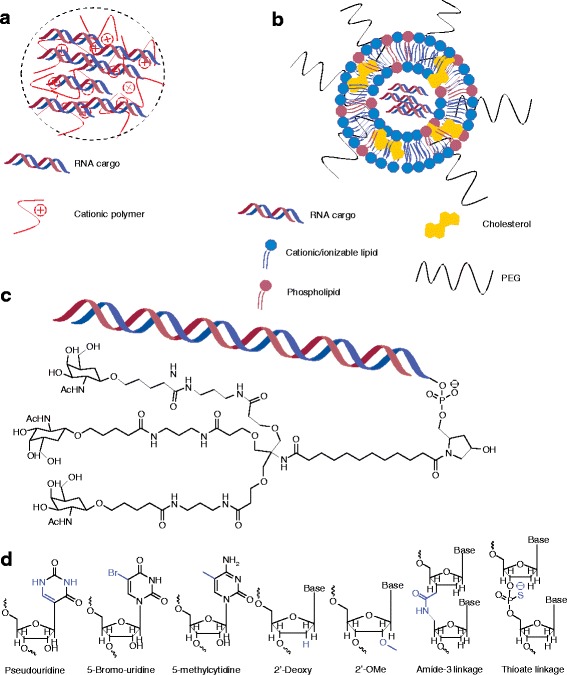
“Additionally, modifications to the chemical structure of the RNA help to overcome these hurdles (Figure 2) [40].”
BackgroundPolymeric Delivery of Therapeutic Nucleic Acids
Kumar, R., Santa Chalarca, C. F., Bockman, M. R., Bruggen, C. V., Grimme, C. J., Dalal, R. J., Hanson, M. G., Hexum, J. K., & Reineke, T. M. (2021) · Chemical Reviews · doi:10.1021/acs.chemrev.0c00997 · Cited by 365
Nucleic acid delivery for therapeutic applications
Gupta, A., Andresen, J. L., Manan, R. S., & Langer, R. (2021) · Advanced Drug Delivery Reviews · doi:10.1016/j.addr.2021.113834 · Cited by 331
Manufacturing Considerations for the Development of Lipid Nanoparticles Using Microfluidics
Roces, C. B., Lou, G., Jain, N., Abraham, S., Thomas, A., Halbert, G. W., & Perrie, Y. (2020) · Pharmaceutics · doi:10.3390/pharmaceutics12111095 · Cited by 321
“In addition, their size and negative charge impede crossing the cell membrane [3].”
BackgroundEvers, M. J. W., Kulkarni, J. A., van der Meel, R., Cullis, P. R., Vader, P., & Schiffelers, R. M. (2018) · Small Methods · doi:10.1002/smtd.201700375 · Cited by 332
Electrospun Fibrous Architectures for Drug Delivery, Tissue Engineering and Cancer Therapy
Ding, Y., Li, W., Zhang, F., Liu, Z., Zanjanizadeh Ezazi, N., Liu, D., & Santos, H. A. (2019) · Advanced Functional Materials · doi:10.1002/adfm.201802852 · Cited by 312
Synthetic materials at the forefront of gene delivery
Lostalé-Seijo, I., & Montenegro, J. (2018) · Nature Reviews Chemistry · doi:10.1038/s41570-018-0039-1 · Cited by 310
Cell specific delivery of modified mRNA expressing therapeutic proteins to leukocytes
Veiga, N., Goldsmith, M., Granot, Y., Rosenblum, D., Dammes, N., Kedmi, R., Ramishetti, S., & Peer, D. (2018) · Nature Communications · doi:10.1038/s41467-018-06936-1 · Cited by 308
The Importance of Apparent pKa in the Development of Nanoparticles Encapsulating siRNA and mRNA
Patel, P., Ibrahim, N. M., & Cheng, K. (2021) · Trends in Pharmacological Sciences · doi:10.1016/j.tips.2021.03.002 · Cited by 280
The delivery challenge: fulfilling the promise of therapeutic genome editing
van Haasteren, J., Li, J., Scheideler, O. J., Murthy, N., & Schaffer, D. V. (2020) · Nature Biotechnology · doi:10.1038/s41587-020-0565-5 · Cited by 285
Engineering siRNA therapeutics: challenges and strategies
Ali Zaidi, S. S., Fatima, F., Ali Zaidi, S. A., Zhou, D., Deng, W., & Liu, S. (2023) · Journal of Nanobiotechnology · doi:10.1186/s12951-023-02147-z · Cited by 242
“One approach is to introduce polymers, like PEG, to decrease the recognition of siRNAs by serum proteins and RES receptors [31].”
BackgroundCircular RNAs: A Novel Class of Functional RNA Molecules with a Therapeutic Perspective
Santer, L., Bär, C., & Thum, T. (2019) · Molecular Therapy · doi:10.1016/j.ymthe.2019.07.001 · Cited by 275
“For example, delivery of naked RNA does not necessarily require nuclear localization (compared to DNA-based virus systems), however, linear RNA is very prone to nucleolytic degradation.(120) Wesselhoeft et al.”
BackgroundRecent advances in mRNA-LNP therapeutics: immunological and pharmacological aspects
Kiaie, S. H., Majidi Zolbanin, N., Ahmadi, A., Bagherifar, R., Valizadeh, H., Kashanchi, F., & Jafari, R. (2022) · Journal of Nanobiotechnology · doi:10.1186/s12951-022-01478-7 · Cited by 255
“This proof of concept study has indicated the broad potential application of cancer and disease treatment and encompassed more than a dozen RNA therapies being tested in clinical trials [3, 4].”
BackgroundAdvances in Lipid Nanoparticles for mRNA-Based Cancer Immunotherapy
Guevara, M. L., Persano, F., & Persano, S. (2020) · Frontiers in Chemistry · doi:10.3389/fchem.2020.589959 · Cited by 255
“Despite the enormous potential of mRNA-based therapies, only recently has their therapeutic application become possible, as a consequence of the considerable progresses of nanomedicine in the design of non-viral vectors for gene delivery (Guan and Rosenecker, 2017; Kaczmarek et al., 2017).”
BackgroundLipid nanoparticles for delivery of messenger RNA to the back of the eye
Patel, S., Ryals, R. C., Weller, K. K., Pennesi, M. E., & Sahay, G. (2019) · Journal of Controlled Release · doi:10.1016/j.jconrel.2019.04.015 · Cited by 260
Genome Editing with mRNA Encoding ZFN, TALEN, and Cas9
Zhang, H.-X., Zhang, Y., & Yin, H. (2019) · Molecular Therapy · doi:10.1016/j.ymthe.2019.01.014 · Cited by 248
“Similar to lipids, cationic polymers can spontaneously form polyplexes with mRNA through electrostatic interaction.(136) Polyethylenimine (PEI) is one of the most studied cationic polymers with high transfection efficiency.”
BackgroundBoosting intracellular delivery of lipid nanoparticle-encapsulated mRNA
Patel, S., Ashwanikumar, N., Robinson, E., DuRoss, A., Sun, C., Murphy-Benenato, K. E., Mihai, C., Almarsson, Ö., & Sahay, G. (2017) · Nano Letters · doi:10.1021/acs.nanolett.7b02664 · Cited by 251
Treatment of influenza and SARS-CoV-2 infections via mRNA-encoded Cas13a in rodents
Blanchard, E. L., Vanover, D., Bawage, S. S., Tiwari, P. M., Rotolo, L., Beyersdorf, J., Peck, H. E., Bruno, N. C., Hincapie, R., Michel, F., et al. (2021) · Nature Biotechnology · doi:10.1038/s41587-021-00822-w · Cited by 234
Enhancement of EPR Effect for Passive Tumor Targeting: Current Status and Future Perspectives
Vagena, I.-A., Malapani, C., Gatou, M.-A., Lagopati, N., & Pavlatou, E. A. (2025) · Applied Sciences · doi:10.3390/app15063189 · Cited by 220
Paving the Road for RNA Therapeutics
Dammes, N., & Peer, D. (2020) · Trends in Pharmacological Sciences · doi:10.1016/j.tips.2020.08.004 · Cited by 218
“Delivery of RNA Therapeutics The major challenge in RNA therapeutics is delivery and difficulties in intracellular uptake of RNA molecules due to the large molecular weight and negatively charged phosphate backbone that hinders internalization [51].”
Kaczmarek, J. C., Kauffman, K. J., Fenton, O. S., Sadtler, K., Patel, A. K., Heartlein, M. W., DeRosa, F., & Anderson, D. G. (2018) · Nano Letters · doi:10.1021/acs.nanolett.8b02917 · Cited by 218
Self-citationEpigenetics in cancer therapy and nanomedicine
Roberti, A., Valdes, A. F., Torrecillas, R., Fraga, M. F., & Fernandez, A. F. (2019) · Clinical Epigenetics · doi:10.1186/s13148-019-0675-4 · Cited by 205
Emerging Technologies for Low‐Cost, Rapid Vaccine Manufacture
Kis, Z., Shattock, R., Shah, N., & Kontoravdi, C. (2019) · Biotechnology Journal · doi:10.1002/biot.201800376 · Cited by 207
“Currently there are no regulatory approved RNA vaccines, however, RNA antisense oligonucleotides and aptamer therapeutics are already clinically approved for the modulation of protein expression [99,100].”
BackgroundTargeting the RNA m6A modification for cancer immunotherapy
Li, X., Ma, S., Deng, Y., Yi, P., & Yu, J. (2022) · Molecular Cancer · doi:10.1186/s12943-022-01558-0 · Cited by 208
Theoretical basis for stabilizing messenger RNA through secondary structure design
Wayment-Steele, H. K., Kim, D. S., Choe, C. A., Nicol, J. J., Wellington-Oguri, R., Watkins, A. M., Sperberg, R. A. P., Huang, P.-S., Participants, E., & Das, R. (2020) · doi:10.1101/2020.08.22.262931 · Cited by 199
Gu, W., Meng, F., Haag, R., & Zhong, Z. (2021) · Journal of Controlled Release · doi:10.1016/j.jconrel.2020.10.003 · Cited by 195
Strategies for nonviral nanoparticle‐based delivery of CRISPR/Cas9 therapeutics
Chen, F., Alphonse, M., & Liu, Q. (2020) · WIREs Nanomedicine and Nanobiotechnology · doi:10.1002/wnan.1609 · Cited by 197
Theoretical basis for stabilizing messenger RNA through secondary structure design
Wayment-Steele, H. K., Kim, D. S., Choe, C. A., Nicol, J. J., Wellington-Oguri, R., Watkins, A. M., Parra Sperberg, R. A., Huang, P.-S., Participants, E., & Das, R. (2021) · Nucleic Acids Research · doi:10.1093/nar/gkab764 · Cited by 197
“Journal of Computational Biology 10(3-4).”
Advances in Receptor‐Mediated, Tumor‐Targeted Drug Delivery
Large, D. E., Soucy, J. R., Hebert, J., & Auguste, D. T. (2019) · Advanced Therapeutics · doi:10.1002/adtp.201800091 · Cited by 190
Diabetes Mellitus and Cardiovascular Disease: Emerging Therapeutic Approaches
Schmidt, A. M. (2019) · Arteriosclerosis, Thrombosis, and Vascular Biology · doi:10.1161/atvbaha.119.310961 · Cited by 183
“Therapies targeting RNA and DNA are emerging as opportunities for novel strategies against a variety of disorders.(68,69) Antisense oligonucleotides, small interfering RNAs, miRNAs, and aptamers are a few examples of such strategies.”
Lipid-based nanoparticle formulations for small molecules and RNA drugs
Ickenstein, L. M., & Garidel, P. (2019) · Expert Opinion on Drug Delivery · doi:10.1080/17425247.2019.1669558 · Cited by 193
Smart Biomaterials: Recent Advances and Future Directions
Kowalski, P. S., Bhattacharya, C., Afewerki, S., & Langer, R. (2018) · ACS Biomaterials Science & Engineering · doi:10.1021/acsbiomaterials.8b00889 · Cited by 181
Self-citationRasul, M. F., Hussen, B. M., Salihi, A., Ismael, B. S., Jalal, P. J., Zanichelli, A., Jamali, E., Baniahmad, A., Ghafouri-Fard, S., Basiri, A., et al. (2022) · Molecular Cancer · doi:10.1186/s12943-021-01487-4 · Cited by 171
“Furthermore, non-viral vectors have a greater capacity than viral vectors without integrating in the carried genome [185].”
BackgroundRecent Advancement in mRNA Vaccine Development and Applications
Al Fayez, N., Nassar, M. S., Alshehri, A. A., Alnefaie, M. K., Almughem, F. A., Alshehri, B. Y., Alawad, A. O., & Tawfik, E. A. (2023) · Pharmaceutics · doi:10.3390/pharmaceutics15071972 · Cited by 167
“However, the efficient delivery of mRNA molecules into target cells poses a significant challenge, as they are susceptible to degradation, have limited stability, and face barriers in reaching the desired sites of action [15,16].”
BackgroundCarlsson, L., Clarke, J. C., Yen, C., Gregoire, F., Albery, T., Billger, M., Egnell, A.-C., Gan, L.-M., Jennbacken, K., Johansson, E., et al. (2018) · Molecular Therapy - Methods & Clinical Development · doi:10.1016/j.omtm.2018.04.003 · Cited by 178
“Hence, most clinical studies withmRNA have been hampered by their need for these carriers.(56) Recent papers have started to investigate mRNA transfection in small animals using a biocompatible carrier, but using a non-optimized transcript.”
BackgroundIlluminating endosomal escape of polymorphic lipid nanoparticles that boost mRNA delivery
Herrera, M., Kim, J., Eygeris, Y., Jozic, A., & Sahay, G. (2021) · Biomaterials Science · doi:10.1039/d0bm01947j · Cited by 167
Cardiomyocyte—Endothelial Cell Interactions in Cardiac Remodeling and Regeneration
Talman, V., & Kivelä, R. (2018) · Frontiers in Cardiovascular Medicine · doi:10.3389/fcvm.2018.00101 · Cited by 171
Journey of siRNA: Clinical Developments and Targeted Delivery
Nikam, R. R., & Gore, K. R. (2018) · Nucleic Acid Therapeutics · doi:10.1089/nat.2017.0715 · Cited by 176
“Phase IIa studies have been initiated recently in patients with hypertrophic scars [59,60].”
Liu, S., Wang, X., Yu, X., Cheng, Q., Johnson, L. T., Chatterjee, S., Zhang, D., Lee, S. M., Sun, Y., Lin, T.-C., et al. (2021) · Journal of the American Chemical Society · doi:10.1021/jacs.1c09822 · Cited by 177
RNA Nanotechnology-Mediated Cancer Immunotherapy
Lin, Y.-X., Wang, Y., Blake, S., Yu, M., Mei, L., Wang, H., & Shi, J. (2020) · Theranostics · doi:10.7150/thno.35568 · Cited by 169
“, kidneys and liver), and the innate immune system for RNA clearance [3, 9].”
BackgroundLim, S., Khoo, R., Peh, K. M., Teo, J., Chang, S. C., Ng, S., Beilhartz, G. L., Melnyk, R. A., Johannes, C. W., Brown, C. J., et al. (2020) · Proceedings of the National Academy of Sciences · doi:10.1073/pnas.1920251117 · Cited by 170
“Although significant challenges lie ahead, delivery of mRNAs encoding for a bioPROTAC seems particularly attractive as human clinical proof of concept has been achieved with several RNA candidates presently in late stage clinical trials (47).”
BackgroundEverette, K. A., Newby, G. A., Levine, R. M., Mayberry, K., Jang, Y., Mayuranathan, T., Nimmagadda, N., Dempsey, E., Li, Y., Bhoopalan, S. V., et al. (2023) · Nature Biomedical Engineering · doi:10.1038/s41551-023-01026-0 · Cited by 159
Chen, J., Xu, Y., Zhou, M., Xu, S., Varley, A. J., Golubovic, A., Lu, R. X. Z., Wang, K. C., Yeganeh, M., Vosoughi, D., et al. (2023) · Proceedings of the National Academy of Sciences · doi:10.1073/pnas.2309472120 · Cited by 160
“Three major hurdles must be addressed: rapid degradation and lack of localization of naked RNA; impeded passive uptake due to the RNA’s large, polyanionic nature (4); and the necessity for safe, well - tolerated, and body - clearable delivery vehicles (5, 6).”
Mukherjee, A., Bisht, B., Dutta, S., & Paul, M. K. (2022) · Acta Pharmacologica Sinica · doi:10.1038/s41401-022-00902-w · Cited by 176
“Global attempts have been devoted to create vectors for therapeutic siRNA delivery in vivo [35].”
BackgroundMicroRNAs Enable mRNA Therapeutics to Selectively Program Cancer Cells to Self-Destruct
Jain, R., Frederick, J. P., Huang, E. Y., Burke, K. E., Mauger, D. M., Andrianova, E. A., Farlow, S. J., Siddiqui, S., Pimentel, J., Cheung-Ong, K., et al. (2018) · Nucleic Acid Therapeutics · doi:10.1089/nat.2018.0734 · Cited by 164
“Current therapeutic mRNA delivery relies predominately on LNPs [1,3].”
Chemical modifications of nucleic acid drugs and their delivery systems for gene‐based therapy
Chen, C., Yang, Z., & Tang, X. (2018) · Medicinal Research Reviews · doi:10.1002/med.21479 · Cited by 158
Targeted tissue delivery of RNA therapeutics using antibody–oligonucleotide conjugates (AOCs)
Malecová, B., Burke, R. S., Cochran, M., Hood, M. D., Johns, R. E., Kovach, P., Doppalapudi, V. R., Erdogan, G., Arias, J. D., Darimont, B. D., et al. (2023) · Nucleic Acids Research · doi:10.1093/nar/gkad415 · Cited by 177
Anastasiadou, E., Seto, A. G., Beatty, X., Hermreck, M., Gilles, M.-E., Stroopinsky, D., Pinter-Brown, L. C., Pestano, L., Marchese, C., Avigan, D., et al. (2021) · Clinical Cancer Research · doi:10.1158/1078-0432.ccr-20-3139 · Cited by 157
“Furthermore, miRNA-based therapies may be unstable in plasma and tissues due to the presence of nucleases and endosomal sequestration (18, 38, 39).”
BackgroundRNA-Binding Proteins in Cancer: Functional and Therapeutic Perspectives
Kang, D., Lee, Y., & Lee, J.-S. (2020) · Cancers · doi:10.3390/cancers12092699 · Cited by 158
Vinarov, Z., Abrahamsson, B., Artursson, P., Batchelor, H. K., Berben, P., Bernkop‐Schnürch, A., Butler, J., Ceulemans, J., Davies, N. M., Dupont, D., et al. (2021) · Advanced Drug Delivery Reviews · doi:10.1016/j.addr.2021.02.001 · Cited by 168
Erasmus, J. H., Khandhar, A. P., Guderian, J., Granger, B., Archer, J., Archer, M., Gage, E., Fuerte-Stone, J., Larson, E., Lin, S., et al. (2018) · Molecular Therapy · doi:10.1016/j.ymthe.2018.07.010 · Cited by 161
“org Since the first demonstration of in vivo gene expression from an injected RNA molecule almost two decades ago,(1) the field of RNA-based therapeutics is now taking significant strides, with many cancer and infectious disease targets entering clinical trials.(2) Critical to this success has been advances in the kno…”
BackgroundChen, Q., Zhang, F., Dong, L., Wu, H., Xu, J., Li, H., Wang, J., Zhou, Z., Liu, C., Wang, Y., et al. (2021) · Cell Research · doi:10.1038/s41422-020-0389-3 · Cited by 159
Munson, M. J., O’Driscoll, G., da Silva, A. M., Lázaro‐Ibáñez, E., Gallud, A., Wilson, J. T., Collén, A., Esbjörner, E. K., & Sabirsh, A. (2021) · Communications Biology · doi:10.1038/s42003-021-01728-8 · Cited by 171
Targeting RNA : A Transformative Therapeutic Strategy
Yin, W., & Rogge, M. C. (2019) · Clinical and Translational Science · doi:10.1111/cts.12624 · Cited by 159
Serrano-Sevilla, I., Artiga, Á., Mitchell, S. G., De Matteis, L., & de la Fuente, J. M. (2019) · Molecules · doi:10.3390/molecules24142570 · Cited by 148
“Far below in number, also some polymer-based siRNA delivery systems have reached clinical trials, such as siG12D-LODER [29], although none have been approved yet [30].”
BackgroundRosero, W. A. A., Barbezan, A. B., de Souza, C. D., & Rostelato, M. E. C. M. (2024) · Pharmaceutics · doi:10.3390/pharmaceutics16020255 · Cited by 169
“The “direct synthesis” method involves the reduction of tetrachloroauric acid (HAuCl4) in the presence of sulfur-terminated polymers, resulting in Au NPs in a single step (Figure 12).”
MethodEngineering functional inorganic–organic hybrid systems: advances in siRNA therapeutics
Shen, J., Zhang, W., Qi, R., Mao, Z., & Shen, H. (2018) · Chemical Society Reviews · doi:10.1039/c7cs00479f · Cited by 152
Lipid Delivery Systems for Nucleic-Acid-Based-Drugs: From Production to Clinical Applications
Barba, A. A., Bochicchio, S., Dalmoro, A., & Lamberti, G. (2019) · Pharmaceutics · doi:10.3390/pharmaceutics11080360 · Cited by 160
Kooijmans, S. A. A., de Jong, O. G., & Schiffelers, R. M. (2021) · Advanced Drug Delivery Reviews · doi:10.1016/j.addr.2021.03.017 · Cited by 139
Exosome for mRNA delivery: Strategies and therapeutic applications
Iqbal, Z., Rehman, K., Mahmood, A., Shabbir, M., Liang, Y., Duan, L., & Zeng, H. (2024) · Journal of Nanobiotechnology · doi:10.1186/s12951-024-02634-x · Cited by 144
“Nucleic acid-based treatments, particularly messenger RNA (mRNA), have played a pivotal role in recent advances in RNA-based vaccination, protein replacement therapy, gene editing, and cancer immunotherapy [2].”
BackgroundCharacterization of therapeutic oligonucleotides by liquid chromatography
Goyon, A., Yehl, P., & Zhang, K. (2020) · Journal of Pharmaceutical and Biomedical Analysis · doi:10.1016/j.jpba.2020.113105 · Cited by 150
Kowalski, P. S., Capasso Palmiero, U., Huang, Y., Rudra, A., Langer, R., & Anderson, D. G. (2018) · Advanced Materials · doi:10.1002/adma.201801151 · Cited by 138
Self-citationRecent Advances in Preclinical Research Using PAMAM Dendrimers for Cancer Gene Therapy
Tarach, P., & Janaszewska, A. (2021) · International Journal of Molecular Sciences · doi:10.3390/ijms22062912 · Cited by 149
Nanomedicine-Based Approaches for mRNA Delivery
Uchida, S., Perche, F., Pichon, C., & Cabral, H. (2020) · Molecular Pharmaceutics · doi:10.1021/acs.molpharmaceut.0c00618 · Cited by 139
Nanomaterials for Therapeutic RNA Delivery
Han, X., Mitchell, M. J., & Nie, G. (2020) · Matter · doi:10.1016/j.matt.2020.09.020 · Cited by 135
“However, many laboratories and pharmaceutical companies have shifted to use ionizable lipids that are positively charged only at acidic pH, due to the enhanced transfection efficacy and reduced toxicity compared with permanently charged lipids.(23) In particular, the FDA-approved patisiran is delivered by LNP composed…”
BackgroundEfforts to Improve the Seasonal Influenza Vaccine
Harding, A. T., & Heaton, N. S. (2018) · Vaccines · doi:10.3390/vaccines6020019 · Cited by 148
“Lastly, delivery of these vaccines can be tailored to specific cell types by utilizing an assortment of delivery vectors [80].”
BackgroundStructure and Composition Define Immunorecognition of Nucleic Acid Nanoparticles
Hong, E., Halman, J. R., Shah, A. B., Khisamutdinov, E. F., Dobrovolskaia, M. A., & Afonin, K. A. (2018) · Nano Letters · doi:10.1021/acs.nanolett.8b01283 · Cited by 136
Nanoplatforms for mRNA Therapeutics
Meng, C., Chen, Z., Li, G., Welte, T., & Shen, H. (2021) · Advanced Therapeutics · doi:10.1002/adtp.202000099 · Cited by 130
Customizable Lipid Nanoparticle Materials for the Delivery of siRNAs and mRNAs
Fenton, O. S., Kauffman, K. J., McClellan, R. L., Kaczmarek, J. C., Zeng, M. D., Andresen, J. L., Rhym, L. H., Heartlein, M. W., DeRosa, F., & Anderson, D. G. (2018) · Angewandte Chemie International Edition · doi:10.1002/anie.201809056 · Cited by 126
Self-citationYi, Y., Kim, H. J., Zheng, M., Mi, P., Naito, M., Kim, B. S., Min, H. S., Hayashi, K., Perche, F., Toh, K., et al. (2019) · Journal of Controlled Release · doi:10.1016/j.jconrel.2019.01.006 · Cited by 127
Gordon, M. A., Babbs, B. L., Cochrane, D. R., Bitler, B. G., & Richer, J. K. (2018) · Molecular Carcinogenesis · doi:10.1002/mc.22919 · Cited by 129
CRISPR/Cas9 for Cancer Therapy: Hopes and Challenges
Martínez-Lage, M., Puig-Serra, P., Menéndez, P. R., Torres-Ruiz, R., & Rodríguez, S. (2018) · Biomedicines · doi:10.3390/biomedicines6040105 · Cited by 140
“Another advantage of nanoparticle-based delivery of CRISPR elements is its high loading capacity, without the risk of genomic integration and effects from persistent expression of CRISPR/Cas9 [91].”
BackgroundmRNA therapeutics deliver a hopeful message
Zhong, Z., Mc Cafferty, S., Combes, F., Huysmans, H., De Temmerman, J., Gitsels, A., Vanrompay, D., Portela Catani, J., & Sanders, N. N. (2018) · Nano Today · doi:10.1016/j.nantod.2018.10.005 · Cited by 120
Khan, O. F., Kowalski, P. S., Doloff, J. C., Tsosie, J. K., Bakthavatchalu, V., Winn, C. B., Haupt, J., Jamiel, M., Langer, R., & Anderson, D. G. (2018) · Science Advances · doi:10.1126/sciadv.aar8409 · Cited by 119
Self-citationApplications of CRISPR-Cas Enzymes in Cancer Therapeutics and Detection
Huang, C., Lee, K.-C., & Doudna, J. A. (2018) · Trends in cancer · doi:10.1016/j.trecan.2018.05.006 · Cited by 127
“In contrast to AAVs, nanoparticle-based delivery of CRISPR–Cas components has high loading capacity for nucleic acid cargos without the risk of genomic integration and effects from persistent expression of CRISPR-Cas9 [78].”
BackgroundCurrent RNA-based Therapeutics in Clinical Trials
Zhou, L., Qin, Z., Zhu, Y., He, Z., & Xu, T. (2019) · Current Gene Therapy · doi:10.2174/1566523219666190719100526 · Cited by 124
RNA Interference as a Prospective Tool for the Control of Human Viral Infections
Levanova, A., & Poranen, M. M. (2018) · Frontiers in Microbiology · doi:10.3389/fmicb.2018.02151 · Cited by 108
“For a detailed review on the approaches to siRNA delivery please refer to (Musacchio and Torchilin, 2013; Kaczmarek et al., 2017).”
BackgroundDelivery of mRNA Therapeutics for the Treatment of Hepatic Diseases
Trepotec, Z., Lichtenegger, E., Plank, C., Aneja, M. K., & Rudolph, C. (2019) · Molecular Therapy · doi:10.1016/j.ymthe.2018.12.012 · Cited by 115
“Besides production issues, correct post-translational modification(s) of therapeutic proteins (as would be the case when the protein is produced by the target cells) cannot be ensured after in vitro protein production in heterologous systems.(2,3)”
BackgroundWright, T. A., Page, R. C., & Konkolewicz, D. (2018) · Polymer Chemistry · doi:10.1039/c8py01399c · Cited by 117
Qin, D., Wang, N., You, X.-G., Zhang, A.-D., Chen, X., & Liu, Y. (2021) · Biomaterials Science · doi:10.1039/d1bm01294k · Cited by 119
Current Challenges in Delivery and Cytosolic Translocation of Therapeutic RNAs
Johannes, L., & Lucchino, M. (2018) · Nucleic Acid Therapeutics · doi:10.1089/nat.2017.0716 · Cited by 108
“Incorporation into nanoparticles or nanocapsules is another popular strategy to protect oligonucleotides from degradation, to assist their delivery onto target cells, and to promote their cellular uptake and subsequent endosomal escape, the latter probably being the biggest challenge for the development of oligonucleo…”
Metadata
- Authors
- Kaczmarek, J. C., Kowalski, P. S., & Anderson, D. G.
- Affiliations
- Koch Institute for Integrative Cancer Research At MIT (US)
- Harvard University (US)
- Corresponding author
- Anderson, Daniel G.
- Venue
- Genome Medicine
- Published
- 2017-06-27
- Volume
- 9
- Issue
- 1
- Pages
- 60-60
- ISSN
- 1756-994X (ISSN-L)
- PMC
- PMC5485616
- OpenAlex
- W2630192492
- Cited by
- 656
- References
- 157
- Citations by year
- 2026: 43 · 2025: 48 · 2024: 65 · 2023: 60 · 2022: 77 · 2021: 90 · 2020: 73 · 2019: 87 · 2018: 104 · 2017: 8
- FWCI
- 6.96
- Type
- journal article
- Language
- en
- Open access
- gold
- doi.org
- Licence
- cc-by
- creativecommons.org/licenses/by/4.0/ (tdm)
- creativecommons.org/licenses/by/4.0/ (vor)
- Locations
- Genome Medicine (publishedVersion, cc-by)
- Europe PMC (PubMed Central) (publishedVersion, cc-by)
- PubMed Central (publishedVersion, cc-by)
- PubMed (publishedVersion)
- DOAJ (DOAJ: Directory of Open Access Journals) (submittedVersion, cc-by-sa)
- DSpace@MIT (Massachusetts Institute of Technology) (submittedVersion, cc-by-nc)
- BioMed Central eBooks
- Funders
- National Cancer Institute (P30-CA14051)
- JDRF (3-PDF-2017-383-A-N)
- Topics
- Life Sciences › Biochemistry, Genetics and Molecular Biology › Molecular Biology › RNA Interference and Gene Delivery
- Life Sciences › Biochemistry, Genetics and Molecular Biology › Molecular Biology › RNA Research and Splicing
- Life Sciences › Biochemistry, Genetics and Molecular Biology › Molecular Biology › RNA and protein synthesis mechanisms
- Keywords
- RNA therapeutics, RNA delivery, siRNA, antisense oligonucleotides, mRNA therapeutics, CRISPR, genome editing, RNA stability, immune response, clinical translation, gene expression modulation
- MeSH terms
- Gene Editing, Humans, Genetic Therapy, Oligonucleotides, Antisense, RNA, Small Interfering
About these checks
Registry, retraction, Cites and statistics results are computed, not judged, with one exception: a printed reference that no index lists is read once by a model before it counts as a citation error. Claims are extracted by a model and kept only when their quote appears verbatim in the text; each cited source is then checked, with a model’s help, for whether it says what the claim relies on. Those verdicts can be wrong — read the claim’s quote and the cited source before relying on one.
Statistics and arithmetic are recomputed, not judged.
Confidence bands are shown only for fields calibrated on our annotated test set. None is calibrated yet, so no band is shown.
What counts as a claim ›How we measure confidence ›How we check this ›
Are you an author, or do you see a problem with this page? Request a review
Data sources
Bibliographic data: Semantic Scholar, OpenAlex, Crossref.
Contains information from the Semantic Scholar Academic Graph Datasets, made available under the ODC Attribution License (ODC-BY 1.0).
Semantic Scholar’s data is described in: Kinney, R., et al. (2023). The Semantic Scholar Open Data Platform. arXiv:2301.10140.
