

NAFLD as a continuum: from obesity to metabolic syndrome and diabetes
Open accessThe DOI matches its Crossref record; 176 of the 176 references it cites were found in a registry or an index.
Abstract
Background: The prevalence of non-alcoholic fatty liver disease (NAFLD) has been increasing rapidly. It is nowadays recognized as the most frequent liver disease, affecting a quarter of global population and regularly coexisting with metabolic disorders such as type 2 diabetes, hypertension, obesity, and cardiovascular disease. In a more simplistic view, NAFLD could be defined as an increase in liver fat content, in the absence of secondary cause of steatosis. In fact, the clinical onset of the disease is a much more complex process, closely related to insulin resistance, limited expandability and dysfunctionality of adipose tissue. A fatty liver is a main driver for a new recognized liver-pancreatic α-cell axis and increased glucagon, contributing to diabetes pathophysiology. Main text: This review will focus on the clinical and pathophysiological connections between NAFLD, insulin resistance and type 2 diabetes. We reviewed non-invasive methods and several scoring systems for estimative of steatosis and fibrosis, proposing a multistep process for NAFLD evaluation. We will also discuss treatment options with a more comprehensive view, focusing on the current available therapies for obesity and/or type 2 diabetes that impact each stage of NAFLD. Conclusion: The proper understanding of NAFLD spectrum—as a continuum from obesity to metabolic syndrome and diabetes—may contribute to the early identification and for establishment of targeted treatment.
Overview
The claims and statistics of this paper haven’t been checked yet.
Free: it reads the open-access text and checks the first 5 claims that cite a source we can check. Create a free account to check every claim.
Integrity signals
Registry
Cites
Statistics
Figures
Verification
Claims the paper makes
The claims and statistics of this paper haven’t been checked yet.
Free: it reads the open-access text and checks the first 5 claims that cite a source we can check. Create a free account to check every claim.
Self-check
Percentages, sums and reported differences re-computed from the paper’s own numbers.
The self-check needs the paper’s full text.
Citations
Cites
International Diabetes Federation 2017
Carracher, A. M., Marathe, P. H., & Close, K. L. (2018) · Journal of Diabetes · doi:10.1111/1753-0407.12644 · Cited by 13,418
Grundy, S. M., Cleeman, J. I., Daniels, S. R., Donato, K. A., Eckel, R. H., Franklin, B. A., Gordon, D. J., Krauss, R. M., Savage, P. J., Smith, S. C., et al. (2005) · Circulation · doi:10.1161/circulationaha.105.169404 · Cited by 11,961
Design and validation of a histological scoring system for nonalcoholic fatty liver disease†
Kleiner, D. E., Brunt, E. M., Van Natta, M., Behling, C., Contos, M. J., Cummings, O. W., Ferrell, L. D., Liu, Y., Torbenson, M. S., Unalp‐Arida, A., et al. (2005) · Hepatology · doi:10.1002/hep.20701 · Cited by 10,791 · cited 2×
“Despite the limitations of liver biopsy, we highlight it is the gold-standard method for NASH and fibrosis evaluation, and may be considered in selected cases, such as suspicion of other liver disease [56, 57].”
MethodYounossi, Z. M., Koenig, A. B., Abdelatif, D., Fazel, Y., Henry, L., & Wymer, M. (2016) · Hepatology · doi:10.1002/hep.28431 · Cited by 10,781 · cited 4×
“Epidemiology Although epidemiological data involving more than 8 million people estimated a global prevalence of NAFLD around 25% [2], it certainly varies greatly depending on how it is diagnosed and on the region of the world considered.”
BackgroundInfluentialThe metabolic syndrome—a new worldwide definition
Alberti, K. G. M., Zimmet, P., & Shaw, J. (2005) · The Lancet · doi:10.1016/s0140-6736(05)67402-8 · Cited by 9,352
The metabolic phenotype in obesity: Fat mass, body fat distribution, and adipose tissue function
Goossens, G. H. (2017) · Obesity Facts · doi:10.1159/000471488 · Cited by 8,481
Chalasani, N., Younossi, Z., Lavine, J. E., Charlton, M., Cusi, K., Rinella, M., Harrison, S. A., Brunt, E. M., & Sanyal, A. J. (2018) · Hepatology · doi:10.1002/hep.29367 · Cited by 7,239 · cited 12×
“Patients with obesity and/or MetS, with or without T2D, might be targeted promptly for ruling out NAFL/ NASH and fibrosis [3, 5, 6].”
BackgroundInfluentialEckel, R. H., Alberti, K., Grundy, S. M., & Zimmet, P. Z. (2010) · The Lancet · doi:10.1016/s0140-6736(09)61794-3 · Cited by 6,295
Eckel, R. H., Grundy, S. M., & Zimmet, P. Z. (2005) · The Lancet · doi:10.1016/s0140-6736(05)66378-7 · Cited by 5,550
Global burden of NAFLD and NASH: trends, predictions, risk factors and prevention
Younossi, Z., Anstee, Q. M., Marietti, M., Hardy, T., Henry, L., Eslam, M., George, J., & Bugianesi, E. (2018) · Nature Reviews Gastroenterology & Hepatology · doi:10.1038/nrgastro.2017.109 · Cited by 5,249 · cited 2×
“Genetic predisposition Genome-wide association (GWA) studies found several genetic variants associated with NAFLD, which implies in variability on individual susceptibility to the disease [39].”
Background
Research works printed but not linked: 1
- Stein DT Szczepaniak L Garg A Malloy C McGarry JD Intramuscular lipid is increased in subjects with congenital generalized lipodystrophy (Abstract) Diabetes 1997 46 Suppl. 1 242A
Cited by
Duell, P. B., Welty, F. K., Miller, M., Chait, A., Hammond, G., Ahmad, Z., Cohen, D. E., Horton, J. D., Pressman, G. S., Toth, P. P., et al. (2022) · Arteriosclerosis, Thrombosis, and Vascular Biology · doi:10.1161/atv.0000000000000153 · Cited by 727
Lim, G. E. H., Tang, A., Ng, C. H., Chin, Y. H., Lim, W. H., Tan, D. J. H., Yong, J. N., Xiao, J., Lee, C. W.-M., Chan, M., et al. (2023) · Clinical Gastroenterology and Hepatology · doi:10.1016/j.cgh.2021.11.038 · Cited by 246
Liver biopsy for assessment of chronic liver diseases: a synopsis
Chowdhury, A. B., & Mehta, K. J. (2022) · Clinical and Experimental Medicine · doi:10.1007/s10238-022-00799-z · Cited by 225
NAFLD, Insulin Resistance, and Diabetes Mellitus Type 2
Marušić, M., Paić, M., Knobloch, M., & Liberati Pršo, A.-M. (2021) · Canadian Journal of Gastroenterology and Hepatology · doi:10.1155/2021/6613827 · Cited by 230
Vancells Lujan, P., Viñas Esmel, E., & Sacanella Meseguer, E. (2021) · Nutrients · doi:10.3390/nu13051442 · Cited by 209
“As mentioned before, its incidence is growing worldwide in parallel with overweight, obesity, T2DM, and MetS [5,13,16].”
BackgroundInfluentialRomero-Gómez, M., Lawitz, E., Shankar, R. R., Chaudhri, E., Liu, J., Lam, R. L. H., Kaufman, K. D., Engel, S. S., Bruzone, S. O., Coronel, M. J., et al. (2023) · Journal of Hepatology · doi:10.1016/j.jhep.2023.05.013 · Cited by 220
Ziolkowska, S., Binienda, A., Jabłkowski, M., Szemraj, J., & Czarny, P. (2021) · International Journal of Molecular Sciences · doi:10.3390/ijms222011128 · Cited by 207
Yanai, H., Adachi, H., Hakoshima, M., Iida, S., & Katsuyama, H. (2023) · International Journal of Molecular Sciences · doi:10.3390/ijms242015473 · Cited by 194
“The pandemic of obesity and its cardiometabolic consequences contribute to an increased prevalence of MASLD [4].”
BackgroundNegi, C. K., Babica, P., Bajard, L., Bienertova-Vasku, J., & Tarantino, G. (2022) · Metabolism · doi:10.1016/j.metabol.2021.154925 · Cited by 190
Ezpeleta, M., Gabel, K., Cienfuegos, S., Kalam, F., Lin, S., Pavlou, V., Song, Z., Haus, J. M., Koppe, S., Alexandria, S. J., et al. (2023) · Cell Metabolism · doi:10.1016/j.cmet.2022.12.001 · Cited by 181
Association of metabolic syndrome and chronic kidney disease
Scurt, F. G., Ganz, M. J., Herzog, C., Bose, K., Mertens, P. R., & Chatzikyrkou, C. (2024) · Obesity Reviews · doi:10.1111/obr.13649 · Cited by 155
“118,119 MAFLD is characterized by increased hepatic fat content in the absence of significant alcohol consumption or other secondary cause of steatosis.”
BackgroundZimmermann, T., Thomas, L., Baader-Pagler, T., Haebel, P., Simon, E., Reindl, W., Bajrami, B., Rist, W., Uphues, I., Drucker, D. J., et al. (2022) · Molecular Metabolism · doi:10.1016/j.molmet.2022.101633 · Cited by 149
Dysfunction of autophagy in high-fat diet-induced non-alcoholic fatty liver disease
Ren, Q., Sun, Q., & Fu, J. (2023) · Autophagy · doi:10.1080/15548627.2023.2254191 · Cited by 163
“Non-alcoholic fatty liver disease (NAFLD), an umbrella term used to define different conditions where triacylglycerols (TAGs) accumulation is present in more than 5% of hepatocytes in the absence of excessive alcohol consumption [1,2].”
BackgroundEndothelial Cell Dysfunction and Nonalcoholic Fatty Liver Disease (NAFLD): A Concise Review
Nasiri-Ansari, N., Androutsakos, T., Flessa, C.-M., Kyrou, I., Siasos, G., Randeva, H. S., Kassi, E., & Papavassiliou, A. G. (2022) · Cells · doi:10.3390/cells11162511 · Cited by 131
“Recent data indicate that both vascular endothelium dysfunction and LSEC dysfunction play particularly significant roles not only in the pathogenesis and progression of NAFLD but also in the interplay between CVDs and NAFLD [42,45].”
BackgroundBattista, F., Ermolao, A., van Baak, M. A., Beaulieu, K., Blundell, J. E., Busetto, L., Carraça, E. V., Encantado, J., Dicker, D., Farpour‐Lambert, N., et al. (2021) · Obesity Reviews · doi:10.1111/obr.13269 · Cited by 132
“festation of the metabolic syndrome and metabolically related with adipose tissue insulin resistance and diabetes pathophysiology.(109)”
In Vitro Models for Non-Alcoholic Fatty Liver Disease: Emerging Platforms and Their Applications
Ramos, M. J., Bandiera, L., Menolascina, F., & Fallowfield, J. A. (2022) · iScience · doi:10.1016/j.isci.2021.103549 · Cited by 127
“This induces insulin resistance (IR), inhibiting glucose uptake (Brunt et al., 2015; Godoy-Matos et al., 2020).”
BackgroundObesity-induced inflammation: connecting the periphery to the brain
Le Thuc, O., & García-Cáceres, C. (2024) · Nature Metabolism · doi:10.1038/s42255-024-01079-8 · Cited by 125
“Therefore, using electrical VN stimulation and cholinergic drugs to activate the cholinergic signalling of the efferent arm of the inflammatory reflex, which leads to metabolic and anti-inflammatory responses, represents a therapeutic strategy for limiting or alleviating the long-term consequences of inflammation asso…”
InfluentialAlugoju, P., Swamy, V., Anthikapalli, N. V. A., & Tencomnao, T. (2022) · Critical Reviews in Food Science and Nutrition · doi:10.1080/10408398.2022.2084600 · Cited by 131
Increased cell senescence in human metabolic disorders
Spinelli, R., Baboota, R. K., Gogg, S., Bèguinot, F., Blüher, M., Nerstedt, A., & Smith, U. (2023) · Journal of Clinical Investigation · doi:10.1172/jci169922 · Cited by 125
Rethinking succinate: an unexpected hormone-like metabolite in energy homeostasis
Fernández‐Veledo, S., Ceperuelo‐Mallafré, V., & Vendrell, J. J. (2021) · Trends in Endocrinology and Metabolism · doi:10.1016/j.tem.2021.06.003 · Cited by 116
Targeting the incretin system in obesity and type 2 diabetes mellitus
Ansari, S., Khoo, B. C. E., & Tan, T. (2024) · Nature Reviews Endocrinology · doi:10.1038/s41574-024-00979-9 · Cited by 127
“In addition to its catabolic effects on amino acids and carbohydrates, glucagon is also a powerful stimulator of hepatic lipolysis, and enhances the clearance of cholesterol from the circulation 53 .”
Copper homeostasis and cuproptosis in health and disease
Yang, Y., Wu, J., Wang, L., Ji, G., & Dang, Y. (2024) · MedComm · doi:10.1002/mco2.724 · Cited by 131
“151 NAFLD has the potential to progress to NASH, which can ultimately lead to cirrhosis and HCC.”
BackgroundMokgalaboni, K., Ntamo, Y., Ziqubu, K., Nyambuya, T. M., Nkambule, B. B., Mazibuko-Mbeje, S. E., Gabuza, K., Chellan, N., Tiano, L., & Dludla, P. V. (2021) · Food & Function · doi:10.1039/d1fo02696h · Cited by 115
BMP4 and Gremlin 1 regulate hepatic cell senescence during clinical progression of NAFLD/NASH
Baboota, R. K., Rawshani, A., Bonnet, L., Li, X., Yang, H., Mardinoglu, A., Tchkonia, T., Kirkland, J. L., Hoffmann, A., Dietrich, A., et al. (2022) · Nature Metabolism · doi:10.1038/s42255-022-00620-x · Cited by 99
Ghosal, S., Datta, D., & Sinha, B. (2021) · Scientific Reports · doi:10.1038/s41598-021-01663-y · Cited by 93
Perspectives on Precision Medicine Approaches to NAFLD Diagnosis and Management
Lonardo, A., Arab, J. P., & Arrese, M. A. (2021) · Advances in Therapy · doi:10.1007/s12325-021-01690-1 · Cited by 100
“For clinical purposes, it is important to categorize each patient as being affected by metabolic derangements [50], cardiovascular disease [51], and/or non-hepatic cancer [52].”
BackgroundRao, G., Peng, X., Li, X., An, K., He, H., Fu, X., Li, S., & An, Z. (2023) · Frontiers in Medicine · doi:10.3389/fmed.2023.1294267 · Cited by 113
Gnoni, A., Stanca, B. D. C., Giannotti, L., Gnoni, G. V., Siculella, L., & Damiano, F. (2022) · International Journal of Molecular Sciences · doi:10.3390/ijms23031044 · Cited by 91
“Since in human NAFLD coexists with other metabolic disorders, in particular, type 2 diabetes [32], we also investigated the influence of glucose as a further and distinct parameter for evaluating the effect of FFA and Que on lipid accumulation.”
BackgroundNoureddin, M., Ntanios, F., Malhotra, D., Hoover, K., Emir, B., McLeod, E., & Alkhouri, N. (2022) · Hepatology Communications · doi:10.1002/hep4.1935 · Cited by 84
Kouvari, M., Valenzuela‐Vallejo, L., Guatibonza-García, V., Pοlyzos, S. A., Deng, Y., Kokkorakis, M., Agraz, M., Mylonakis, S. C., Katsarou, A., Verrastro, O., et al. (2023) · Metabolism · doi:10.1016/j.metabol.2023.155666 · Cited by 100
Berardo, C., Pasqua, L. G. D., Cagna, M., Richelmi, P., Vairetti, M., & Ferrigno, A. (2020) · International Journal of Molecular Sciences · doi:10.3390/ijms21249646 · Cited by 98
“In obese people, NAFLD recurrence ranges from 60 to 95% [12]; in a cohort study in which subjects were observed over a period of approximately 4 years, visceral adipose tissue, and not subcutaneous adipose tissue, was associated with higher risk of NAFLD with an adjusted hazard ratio of 2.”
BackgroundThe Metabolic Syndrome, a Human Disease
Alemany, M. (2024) · International Journal of Molecular Sciences · doi:10.3390/ijms25042251 · Cited by 101
Volpe, S., Lisco, G., Fanelli, M., Racaniello, D., Colaianni, V., Triggiani, D., Donghia, R., Crudele, L., Rinaldi, R., Sabbà, C., et al. (2022) · Nutrients · doi:10.3390/nu14214673 · Cited by 84
“Its prevalence rises to more than 70% among individuals with metabolic disorders such as metabolic syndrome, type 2 diabetes (T2D), and obesity [2,3].”
BackgroundFrancisco, V., Sanz, M. J., Real, J. T., Marques, P., Capuozzo, M., Ait Eldjoudi, D., & Gualillo, O. (2022) · Biology · doi:10.3390/biology11081237 · Cited by 79
“Stepping up the strict correlation between obesity and NAFLD, there is a dose-response between weight loss and histological disease improvement; a 7% weight loss reverts NASH in 65–90% of patients, and a ≥10% weight loss causes fibrosis relapse in 45% of patients [3].”
BackgroundMethodInfluentialKord Varkaneh, H., Salehi sahlabadi, A., Găman, M.-A., Rajabnia, M., Sedanur Macit-Çelebi, M., Santos, H. O., & Hekmatdoost, A. (2022) · Frontiers in Nutrition · doi:10.3389/fnut.2022.948655 · Cited by 75
Tinkov, A. A., Aschner, M., Santamaría, A., Bogdanov, A. R., Tizabi, Y., Virgolini, M. B., Zhou, J., & Skalny, A. V. (2023) · Environmental Research · doi:10.1016/j.envres.2023.117134 · Cited by 88
Pezzino, S., Sofia, M., Faletra, G., Mazzone, C., Litrico, G., Greca, G. L., & Latteri, S. (2022) · Biology · doi:10.3390/biology11111622 · Cited by 88
“Obesity is closely related to NAFLD [16,48,49].”
Peiseler, M., & Tacke, F. (2021) · Cancers · doi:10.3390/cancers13040730 · Cited by 71
Hepatic insulin receptor: new views on the mechanisms of liver disease
Lee, W., Najjar, S. M., Kahn, C. R., & Hinds, T. D. (2023) · Metabolism · doi:10.1016/j.metabol.2023.155607 · Cited by 79
Race and Ethnicity in Non-Alcoholic Fatty Liver Disease (NAFLD): A Narrative Review
Riazi, K., Swain, M. G., Congly, S. E., Kaplan, G. G., & Shaheen, A.-A. (2022) · Nutrients · doi:10.3390/nu14214556 · Cited by 67
“NAFLD is not widely recognized as a public health issue, even though it is directly associated with metabolic syndrome (MetS), a cluster of conditions associated with insulin resistance, including abdominal obesity, hypertension, hyperlipidemia (high triglyceride and low HDL levels), and diabetes (impaired glucose tol…”
BackgroundCooreman, M. P., Butler, J., Giugliano, R. P., Zannad, F. M., Dzen, L., Huot-Marchand, P., Baudin, M., Beard, D. R., Junien, J., Broqua, P., et al. (2024) · Nature Communications · doi:10.1038/s41467-024-47919-9 · Cited by 83
Li, N., Hao, L., Li, S., Deng, J., Yu, F., Zhang, J., Nie, A., & Hu, X. (2024) · Journal of Inflammation Research · doi:10.2147/jir.s490418 · Cited by 82
Therapeutic Effect of Curcumin on Metabolic Diseases: Evidence from Clinical Studies
Zeng, Y., Luo, Y., Wang, L., Zhang, K., Peng, J., & Fan, G. (2023) · International Journal of Molecular Sciences · doi:10.3390/ijms24043323 · Cited by 80
“The pathological mechanism of NAFLD involves oxidative stress and a sustained chronic inflammatory response [87].”
BackgroundShea, S., Lionis, C. D., Kite, C., Lagojda, L., Uthman, O. A., Dallaway, A., Atkinson, L., Chaggar, S. S., Randeva, H. S., & Kyrou, I. (2024) · Frontiers in Endocrinology · doi:10.3389/fendo.2024.1357664 · Cited by 75
The therapeutic perspective of NAD+ precursors in age-related diseases
Iqbal, T., & Nakagawa, T. (2024) · Biochemical and Biophysical Research Communications · doi:10.1016/j.bbrc.2024.149590 · Cited by 78
Giangregorio, F., Mosconi, E., Debellis, M. G., Provini, S., Esposito, C., Garolfi, M., Oraka, S., KALOUDI, O., Mustafazade, G., Marín‐Baselga, R., et al. (2024) · Journal of Clinical Medicine · doi:10.3390/jcm13195880 · Cited by 81
“…also vascular (occlusive atherothrombotic disease of large-and medium-sized arteries) [6], pneumolog-ical [7], renal [8], metabolic (dislypidemia) [9], hyperuricemia [10], T2DM [11]), Sexual (male infertility [12,13] and Polycystic ovary syndrome [14]), cutaneous [15], neoplastic pathologies [16].”
BackgroundBays, H. E., Bindlish, S., & Clayton, T. L. (2023) · Obesity Pillars · doi:10.1016/j.obpill.2023.100056 · Cited by 74
“Conversely, the prevalence of obesity in patients with nonalcoholic fatty liver disease is about 50% [65,66] and the prevalence of diabetes mellitus among those with nonalcoholic fatty liver disease and nonalcoholic steatohepatitis being approximately 22 and 44% respectively [67].”
BackgroundAMPK Activity: A Primary Target for Diabetes Prevention with Therapeutic Phytochemicals
Chung, M., Choi, H., & Hwang, J. (2021) · Nutrients · doi:10.3390/nu13114050 · Cited by 69
“The incidence of metabolic syndrome disorders which include diabetes, high blood pressure, and fatty liver, increases significantly with age in the world [1].”
BackgroundNon-alcoholic fatty liver disease development: A multifactorial pathogenic phenomena
Bashir, A., Duseja, A. K., De, A., Mehta, M., & Tiwari, P. (2022) · Liver Research · doi:10.1016/j.livres.2022.05.002 · Cited by 69
Pathophysiology of Neurogenic Obesity After Spinal Cord Injury
Gater, D. R., Farkas, G. J., & Tiozzo, E. (2021) · Topics in Spinal Cord Injury Rehabilitation · doi:10.46292/sci20-00067 · Cited by 68
The Emerging Therapeutic Potential of Kisspeptin and Neurokinin B
Patel, B., Koysombat, K., Mills, E., Tsoutsouki, J., Comninos, A. N., Abbara, A., & Dhillo, W. S. (2023) · Endocrine Reviews · doi:10.1210/endrev/bnad023 · Cited by 72
Liver endothelial cells in NAFLD and transition to NASH and HCC
Velliou, R.-I., Legaki, A., Nikolakopoulou, P., Vlachogiannis, N. I., & Chatzigeorgiou, A. (2023) · Cellular and Molecular Life Sciences · doi:10.1007/s00018-023-04966-7 · Cited by 75
An explainable machine learning model for prediction of high-risk nonalcoholic steatohepatitis
Njei, B. M., Osta, E., Njei, N., Al‐Ajlouni, Y. A., & Lim, J. K. (2024) · Scientific Reports · doi:10.1038/s41598-024-59183-4 · Cited by 65
“We observed that the high-risk MASLD group had higher rates of obesity, type 2 diabetes, and metabolic syndrome, which includes hypertriglyceridemia, low HDL-C, and abdominal obesity 20 , when compared to the non-high-risk group.”
BackgroundGeorge, E. S., Sood, S., Daly, R. M., & Tan, S. (2022) · BMC Geriatrics · doi:10.1186/s12877-021-02721-w · Cited by 65
“Obesity, T2DM and the MetS co-exist with NAFLD and are all driven by inflammation and oxidation, which contribute to impaired vascular function, and subsequently poorer cognitive function [39].”
BackgroundRobeva, R. N., Mladenović, D. R., Vesković, M. N., Hrnčić, D., Bjekić-Macut, J., Stanojlović, O. P., Livadas, S., Yıldız, B. O., & Μacut, D. (2021) · Maturitas · doi:10.1016/j.maturitas.2021.06.012 · Cited by 60
Non-alcoholic fatty liver disease prevalence in Latin America: A systematic review and meta-analysis
Rojas, Y. A. O., Vidal-Cuéllar, C. L., Barrón, K. M. A., Arab, J. P., & Miranda, A. L. (2022) · Annals of Hepatology · doi:10.1016/j.aohep.2022.100706 · Cited by 63
The growing range of complications of diabetes mellitus
Hamblin, P. S., Russell, A. W., Talic, S., & Zoungas, S. (2025) · Trends in Endocrinology and Metabolism · doi:10.1016/j.tem.2024.12.006 · Cited by 58
Alzahrani, N. S., Alshammari, G. M., El-Ansary, A. K., Yagoub, A. E. A., Amina, M., Saleh, A. Y., & Yahya, M. A. (2022) · Nutrients · doi:10.3390/nu14091791 · Cited by 60
“In addition, obese and metabolically unhealthy individuals have a state of low-grade inflammation that stimulates hepatic de novo lipogenesis, oxidative stress, and inflammation which results in the induction of non-alcoholic fatty liver disease (NAFLD), a condition that is characterized by high liver fat content [6,7…”
BackgroundAssociation between the cardiometabolic index and NAFLD and fibrosis
Yan, L., Hu, X., Wu, S., Cui, C., & Zhao, S. (2024) · Scientific Reports · doi:10.1038/s41598-024-64034-3 · Cited by 57
“Multiple studies have highlighted the efficacy of the TG/HDL-C ratio in predicting NAFLD 44–46 , a fact further corroborated by Fan et al.’s cross-sectional analysis, which emphasized the significant correlation of the TG/HDL-C ratio with NAFLD risk in healthy subjects 47 .”
BackgroundAl-Muzafar, H. M., Alshehri, F. S., & Amin, K. A. (2021) · Brazilian Journal of Medical and Biological Research · doi:10.1590/1414-431x2020e10782 · Cited by 53
“Elevated ROS as represented by MDA levels contributes to insulin resistance and T2DM progression (20,26).”
BackgroundInfluentialTesfai, K., Pace, J., El-Newihi, N., Martinez, M. E., Tincopa, M. A., & Loomba, R. S. (2024) · Clinical Gastroenterology and Hepatology · doi:10.1016/j.cgh.2024.06.038 · Cited by 52
Inflammation and Fibrogenesis in MAFLD: Role of the Hepatic Immune System
Torre, P., Motta, B. M., Sciorio, R., Masarone, M., & Persico, M. (2021) · Frontiers in Medicine · doi:10.3389/fmed.2021.781567 · Cited by 53
Mertens, J., Block, C. E. M. D., Spinhoven, M. J., Driessen, A. L. C., Francque, S., & Kwanten, W. J. (2021) · Frontiers in Pharmacology · doi:10.3389/fphar.2021.768576 · Cited by 54
“NAFLD usually, but not exclusively, develops in the context of metabolic disturbances such as overweight and diabetes (Godoy-Matos et al., 2020; Targher et al., 2021).”
BackgroundNon-alcoholic Steatohepatitis Pathogenesis, Diagnosis, and Treatment
Zhu, B., Chan, S., Li, J., Li, K. S., Wu, H., Cui, K., & Chen, H. (2021) · Frontiers in Cardiovascular Medicine · doi:10.3389/fcvm.2021.742382 · Cited by 54
Nonalcoholic Fatty Liver Disease: Review of Management for Primary Care Providers
Basu, R., Noureddin, M., & Clark, J. M. (2022) · Mayo Clinic Proceedings · doi:10.1016/j.mayocp.2022.04.005 · Cited by 50
Arellano-García, L., Trepiana, J., Martínez, J. A., Portillo, M. P., & Milton‐Laskibar, I. (2023) · Antioxidants · doi:10.3390/antiox12030717 · Cited by 47
Nucci, S. D., Bonfiglio, C., Donvito, R., Chito, M. D., Cerabino, N., Rinaldi, R., Sila, A., Shahini, E., Giannuzzi, V., Pesole, P. L., et al. (2023) · Nutrients · doi:10.3390/nu15204468 · Cited by 48
The New Therapeutic Approaches in the Treatment of Non-Alcoholic Fatty Liver Disease
Filipović, B. F., Lukić, S., Mijac, D. D., Marjanovic-Haljilji, M., Vojnović, M., Bogdanović, J. M., Glišić, T., Filipović, N., Kiswani, J. A., Djoković, A., et al. (2021) · International Journal of Molecular Sciences · doi:10.3390/ijms222413219 · Cited by 46
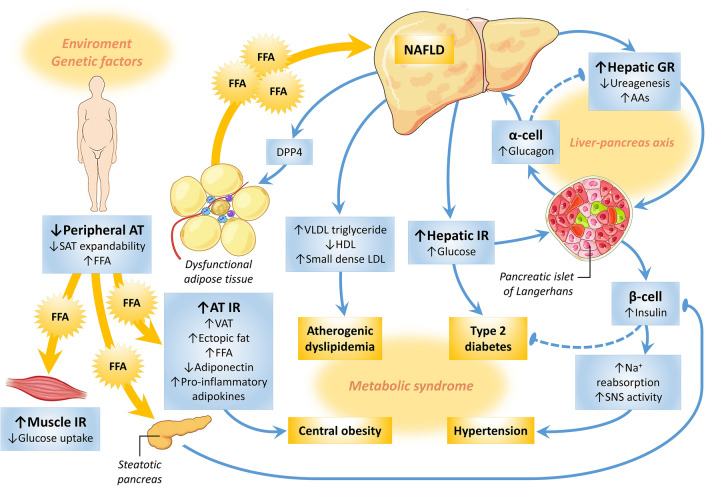
“Increased AAs stimulate glucagon production to compensate for hepatic GR, and a vicious cycle is installed (the liver-pancreas axis), which leads to hyperglucagonemia and increased hepatic glucose release [15].”
BackgroundRinaldi, R., Nucci, S. D., Castellana, F., Chito, M. D., Giannuzzi, V., Shahini, E., Zupo, R., Lampignano, L., Piazzolla, G., Triggiani, V., et al. (2023) · Nutrients · doi:10.3390/nu15040825 · Cited by 50
“Individuals suffering from metabolic disorders such as type 2 diabetes, obesity, or metabolic syndrome are more likely to suffer from NAFLD at a frequency of more than 70% [3,4].”
BackgroundMetabolic Impact of Frailty Changes Diabetes Trajectory
Sinclair, A. J., & Abdelhafiz, A. H. (2023) · Metabolites · doi:10.3390/metabo13020295 · Cited by 47
“Furthermore, obesity is associated with non-alcoholic fatty liver disease (NAFLD), which is a spectrum of liver diseases associated with the adverse metabolic conditions of insulin resistance, dysglycaemia and hypertension and is associated with increased cardiovascular risk [89].”
BackgroundAlmomani, A., Kumar, P. N., Onwuzo, S., Boustany, A., Krishtopaytis, E., Hitawala, A. A., Alshaikh, D., Albakri, A. A., Hussein, L., Hussein, E., et al. (2022) · Journal of Gastroenterology and Hepatology · doi:10.1111/jgh.16049 · Cited by 47
Godoy‐Matos, A. F., Valério, C. M., Júnior, W. S. D. S., Neto, J. M. D. A., Sposito, A. C., & Suassuna, J. H. R. (2025) · Diabetology & Metabolic Syndrome · doi:10.1186/s13098-025-01796-4 · Cited by 50
“1 [2, 8–10, 12, 13, 17–20].”
InfluentialSelf-citationWang, M., Chang, M., Shen, P.-P., Wei, W., Li, H., & Shen, G. (2023) · Lipids in Health and Disease · doi:10.1186/s12944-023-01954-5 · Cited by 46
“Being overweight and obese are major drivers of metabolic diseases and NAFLD [31].”
BackgroundAutophagy in Hepatic Steatosis: A Structured Review
Ramos, V. D. M., Kowaltowski, A. J., & Kakimoto, P. A. (2021) · Frontiers in Cell and Developmental Biology · doi:10.3389/fcell.2021.657389 · Cited by 47
Gut dysbiosis and metabolic diseases
Bandopadhyay, P., & Ganguly, D. (2022) · Progress in molecular biology and translational science · doi:10.1016/bs.pmbts.2022.06.031 · Cited by 46
Szabó, Z., Koczka, V., Marosvölgyi, T., Szabó, É., Frank, E., Polyák, É., Fekete, K., Erdelyi, A., Verzár, Z., & Figler, M. (2021) · Nutrients · doi:10.3390/nu13082593 · Cited by 47
“The incidence of NAFLD is now at an endemic level, and it is currently the most common form of chronic liver disease worldwide, affecting about 25% of the general population [102,103].”
BackgroundSpigoni, V., Cinquegrani, G., Iannozzi, N. T., Frigeri, G., Maggiolo, G., Maggi, M., Parello, V., & Dei, A. (2022) · Frontiers in Endocrinology · doi:10.3389/fendo.2022.972890 · Cited by 45
The Beneficial Effects of Soybean Proteins and Peptides on Chronic Diseases
Hu, S., Liu, C., & Liu, X. (2023) · Nutrients · doi:10.3390/nu15081811 · Cited by 47
“On the other direction, obesity can cause MetS to develop into diabetes, while nonalcoholic fatty liver disease (NAFLD), the most common metabolic liver disease, is a continuum between them [14].”
BackgroundBiciusca, T., Stan, S. I., Bălteanu, M. A., Cioboată, R., Ghenea, A. E., Dănoiu, S., Bumbea, A. M., & Biciuşcă, V. (2023) · Diagnostics · doi:10.3390/diagnostics13213316 · Cited by 45
Noakes, T. D. (2022) · Nutrients · doi:10.3390/nu14040862 · Cited by 42
Periyasamy, T., Uddandrao, V. V. S., Chandrasekaran, P., Saravanan, G., Naidu, P. B., Sengottuvelu, S., & Vadivukkarasi, S. (2023) · Clinics and Research in Hepatology and Gastroenterology · doi:10.1016/j.clinre.2023.102231 · Cited by 40
Gut Microbiota Targeted Approach in the Management of Chronic Liver Diseases
Liu, J., Yang, D., Wang, X., Asare, P. T., Zhang, Q., Na, L., & Shao, L. (2022) · Frontiers in Cellular and Infection Microbiology · doi:10.3389/fcimb.2022.774335 · Cited by 45
New Perspectives on Genetic Prediction for Pediatric Metabolic Associated Fatty Liver Disease
Lin, Y., Wu, C.-C., & Ni, Y. (2020) · Frontiers in Pediatrics · doi:10.3389/fped.2020.603654 · Cited by 43
“Due to a continuum from obesity to metabolic syndrome, patients withMAFLDmay benefit from early identification of the disease risk and individually targeted treatment (13).”
BackgroundBilson, J., Sethi, J. K., & Byrne, C. D. (2021) · Proceedings of The Nutrition Society · doi:10.1017/s0029665121003815 · Cited by 44
TM7SF3 controls TEAD1 splicing to prevent MASH-induced liver fibrosis
Isaac, R., Bandyopadhyay, G. K., Rohm, T. V., Kang, S., Wang, J., Pokhrel, N. P., Sakane, S., Zapata, R. C., Libster, A. M., Vinik, Y., et al. (2024) · Cell Metabolism · doi:10.1016/j.cmet.2024.04.003 · Cited by 40
Rinaldi, R., Nucci, S. D., Donghia, R., Donvito, R., Cerabino, N., Chito, M. D., Penza, A., Mongelli, F. P., Shahini, E., Zappimbulso, M., et al. (2024) · Nutrients · doi:10.3390/nu16101408 · Cited by 38
Rennie, C., Fernandez, R. S., Donnelly, S., & McGrath, K. C. Y. (2021) · Frontiers in Endocrinology · doi:10.3389/fendo.2021.728396 · Cited by 45
HNF4α isoforms: the fraternal twin master regulators of liver function
Radi, S. H., Vemuri, K., Martinez-Lomeli, J., & Sladek, F. M. (2023) · Frontiers in Endocrinology · doi:10.3389/fendo.2023.1226173 · Cited by 42
Exploring the Link between Oxidative Stress, Selenium Levels, and Obesity in Youth
Bizerea, T. O., Pitulice, L., Bizerea-Spiridon, O., & Moga, T. V. (2024) · International Journal of Molecular Sciences · doi:10.3390/ijms25137276 · Cited by 39
Latif, S., & Ahsan, T. (2024) · Euroasian Journal of Hepato-Gastroenterology · doi:10.5005/jp-journals-10018-1437 · Cited by 37
Nonalcoholic Fatty Liver Disease: Focus on New Biomarkers and Lifestyle Interventions
Notarnicola, M., Osella, A. R., Caruso, M. G., Pesole, P. L., Lippolis, A., Tutino, V., Bonfiglio, C., Nunzio, V. D., Scavo, M. P., Mirizzi, A., et al. (2021) · International Journal of Molecular Sciences · doi:10.3390/ijms22083899 · Cited by 39
“tissue, lead to hyperthriglyceridemia with a consequent lipids dysfunction [62,63].”
BackgroundTowards precision medicine in bariatric surgery prescription
Pereira, S. S., Guimarães, M., & Monteiro, M. P. (2023) · Reviews in Endocrine and Metabolic Disorders · doi:10.1007/s11154-023-09801-9 · Cited by 40
Hepatocyte CYR61 polarizes profibrotic macrophages to orchestrate NASH fibrosis
Mooring, M., Yeung, G. A., Luukkonen, P., Liu, S., Akbar, M. W., Zhang, G. J., Balogun, O., Yu, X., Mo, R., Nejak-Bowen, K., et al. (2023) · Science Translational Medicine · doi:10.1126/scitranslmed.ade3157 · Cited by 33
Longhitano, L., Distefano, A., Musso, N., Bonacci, P. G., Orlando, L., Giallongo, S., Tibullo, D., Denaro, S., Lazzarino, G., Ferrigno, J., et al. (2024) · Journal of Translational Medicine · doi:10.1186/s12967-024-04880-x · Cited by 40
“NAFLD is closely associated with obesity, insulin resistance, and other metabolic abnormalities [2, 3] and is characterized by an imbalance between lipid uptake, synthesis, oxidation, and export, leading to fat accumulation in the liver and subsequent mitochondrial dysfunction and stress [4].”
BackgroundUnderstanding the Role of Adipokines in Cardiometabolic Dysfunction: A Review of Current Knowledge
Datta, S., Koka, S., & Boini, K. M. (2025) · Biomolecules · doi:10.3390/biom15050612 · Cited by 40
“…adiponectin levels, and UCP-1 (c) PCSK9 inhibitors—attenuate PCSK9 from binding with LDLR, promote a high absorption of oxidized LDLs from the bloodstream, and reduce plasma LDL levels [305,308,314,316,318] Obesity and T2D (a) Lifestyle modifications—reduce adiposity, promote mitochondrial…”
Shatoor, A. S., Humayed, S. A., & Almohiy, H. (2021) · Journal of Physiology and Biochemistry · doi:10.1007/s13105-021-00850-9 · Cited by 33
“Increased body mass index (BMI) and liver weight, sustained fasting hyperglycemia, hyperinsulinemia, hyperlipidemia, impaired peripheral glucose disposal, and stimulated DNL and hepatic fat accumulation are major complications associated with chronic HFD feeding and are major consequences associated with NAFLD [33, 61…”
BackgroundKarjoo, S., Auriemma, A., Fraker, T. R., & Bays, H. E. (2022) · Obesity Pillars · doi:10.1016/j.obpill.2022.100027 · Cited by 37
Salvoza, N. C., Giraudi, P. J., Gazzin, S., Bonazza, D., Palmisano, S., de Manzini, N., Zanconati, F., Raseni, A., Sirianni, F., Tiribelli, C., et al. (2023) · Journal of Translational Medicine · doi:10.1186/s12967-023-04770-8 · Cited by 30
“Fat accumulation in the organs, especially the visceral tissue, leads to their dysfunction, promoting ectopic fat accumulation in the liver, inflammation, endoplasmic reticulum (ER) stress, oxidative stress, and impairment of glucose metabolism, among others [4].”
Backgrounddos Santos, D. C., Filho, J. G. D. O., de Sousa, T. L., Ribeiro, C. B., & Egea, M. B. (2021) · Critical Reviews in Food Science and Nutrition · doi:10.1080/10408398.2021.1916430 · Cited by 54
Choroszy, M., Sobieszczańska, B., Litwinowicz, K., Łaczmański, Ł., Chmielarz, M., Walczuk, U., Roleder, T., Radziejewska, J., & Wawrzyńska, M. (2022) · Nutrients · doi:10.3390/nu14030424 · Cited by 34
“, LPS, leaking from the gut into the circulation [29].”
Background
Metadata
- Authors
- Godoy-Matos, A. F., Silva Júnior, W. S., & Valerio, C. M.
- Venue
- Diabetology & Metabolic Syndrome
- Published
- 2020-07-14
- Volume
- 12
- Issue
- 1
- Pages
- 60-60
- ISSN
- 1758-5996 (ISSN-L)
- PMC
- PMC7359287
- OpenAlex
- W3043179056
- Semantic Scholar
- a44e7a8165ddce09396d4fa212182af3fa0f97b0
- Cited by
- 643
- References
- 175
- Citations by year
- 2026: 56 · 2025: 111 · 2024: 148 · 2023: 142 · 2022: 109 · 2021: 72 · 2020: 4
- FWCI
- 11.95
- Type
- journal article
- Language
- en
- Open access
- gold
- doi.org
- Licence
- cc-by
- creativecommons.org/licenses/by/4.0 (tdm)
- creativecommons.org/licenses/by/4.0 (vor)
- Locations
- Diabetology & Metabolic Syndrome (publishedVersion, cc-by)
- PubMed Central (publishedVersion, cc-by)
- PubMed (publishedVersion)
- DOAJ (DOAJ: Directory of Open Access Journals) (submittedVersion, cc-by-sa)
- Topics
- Health Sciences › Medicine › Hepatology › Liver Disease Diagnosis and Treatment
- Health Sciences › Medicine › Endocrinology, Diabetes and Metabolism › Diabetes, Cardiovascular Risks, and Lipoproteins
- Health Sciences › Medicine › Endocrinology, Diabetes and Metabolism › Diet, Metabolism, and Disease
- Keywords
- non-alcoholic fatty liver disease, obesity, metabolic syndrome, type 2 diabetes, insulin resistance, hepatic steatosis, liver fibrosis, adipose tissue dysfunction, glucagon, NAFLD treatment, disease continuum
About these checks
Registry, retraction, Cites and statistics results are computed, not judged, with one exception: a printed reference that no index lists is read once by a model before it counts as a citation error. Claims are extracted by a model and kept only when their quote appears verbatim in the text; each cited source is then checked, with a model’s help, for whether it says what the claim relies on. Those verdicts can be wrong — read the claim’s quote and the cited source before relying on one.
Statistics and arithmetic are recomputed, not judged.
Confidence bands are shown only for fields calibrated on our annotated test set. None is calibrated yet, so no band is shown.
What counts as a claim ›How we measure confidence ›How we check this ›
Are you an author, or do you see a problem with this page? Request a review
Data sources
Bibliographic data: Semantic Scholar, OpenAlex, Crossref.
Contains information from the Semantic Scholar Academic Graph Datasets, made available under the ODC Attribution License (ODC-BY 1.0).
Semantic Scholar’s data is described in: Kinney, R., et al. (2023). The Semantic Scholar Open Data Platform. arXiv:2301.10140.
