

NAFLD as a continuum: from obesity to metabolic syndrome and diabetes
Open accessThe DOI matches its Crossref record; 176 of the 176 references it cites were found in a registry or an index.
Abstract
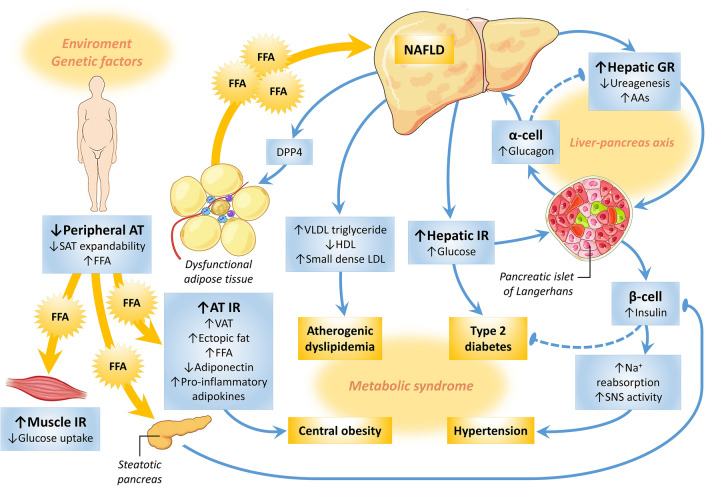
Background: The prevalence of non-alcoholic fatty liver disease (NAFLD) has been increasing rapidly. It is nowadays recognized as the most frequent liver disease, affecting a quarter of global population and regularly coexisting with metabolic disorders such as type 2 diabetes, hypertension, obesity, and cardiovascular disease. In a more simplistic view, NAFLD could be defined as an increase in liver fat content, in the absence of secondary cause of steatosis. In fact, the clinical onset of the disease is a much more complex process, closely related to insulin resistance, limited expandability and dysfunctionality of adipose tissue. A fatty liver is a main driver for a new recognized liver-pancreatic α-cell axis and increased glucagon, contributing to diabetes pathophysiology. Main text: This review will focus on the clinical and pathophysiological connections between NAFLD, insulin resistance and type 2 diabetes. We reviewed non-invasive methods and several scoring systems for estimative of steatosis and fibrosis, proposing a multistep process for NAFLD evaluation. We will also discuss treatment options with a more comprehensive view, focusing on the current available therapies for obesity and/or type 2 diabetes that impact each stage of NAFLD. Conclusion: The proper understanding of NAFLD spectrum—as a continuum from obesity to metabolic syndrome and diabetes—may contribute to the early identification and for establishment of targeted treatment.
Overview
The claims and statistics of this paper haven’t been checked yet.
Free: it reads the open-access text and checks the first 5 claims that cite a source we can check. Create a free account to check every claim.
Integrity signals
Registry
Cites
Statistics
Figures
Verification
Claims the paper makes
The claims and statistics of this paper haven’t been checked yet.
Free: it reads the open-access text and checks the first 5 claims that cite a source we can check. Create a free account to check every claim.
Self-check
Percentages, sums and reported differences re-computed from the paper’s own numbers.
The self-check needs the paper’s full text.
Citations
Cites
International Diabetes Federation 2017
Carracher, A. M., Marathe, P. H., & Close, K. L. (2018) · Journal of Diabetes · doi:10.1111/1753-0407.12644 · Cited by 13,418
Grundy, S. M., Cleeman, J. I., Daniels, S. R., Donato, K. A., Eckel, R. H., Franklin, B. A., Gordon, D. J., Krauss, R. M., Savage, P. J., Smith, S. C., et al. (2005) · Circulation · doi:10.1161/circulationaha.105.169404 · Cited by 11,961 · cited 1×
“It has 2 mains definitions (Table 2) and is highly prevalent worldwide [16, 17].”
BackgroundDesign and validation of a histological scoring system for nonalcoholic fatty liver disease†
Kleiner, D. E., Brunt, E. M., Van Natta, M., Behling, C., Contos, M. J., Cummings, O. W., Ferrell, L. D., Liu, Y., Torbenson, M. S., Unalp‐Arida, A., et al. (2005) · Hepatology · doi:10.1002/hep.20701 · Cited by 10,791 · cited 2×
“Despite the limitations of liver biopsy, we highlight it is the gold-standard method for NASH and fibrosis evaluation, and may be considered in selected cases, such as suspicion of other liver disease [56, 57].”
MethodYounossi, Z. M., Koenig, A. B., Abdelatif, D., Fazel, Y., Henry, L., & Wymer, M. (2016) · Hepatology · doi:10.1002/hep.28431 · Cited by 10,781 · cited 4×
“Epidemiology Although epidemiological data involving more than 8 million people estimated a global prevalence of NAFLD around 25% [2], it certainly varies greatly depending on how it is diagnosed and on the region of the world considered.”
BackgroundInfluentialThe metabolic syndrome—a new worldwide definition
Alberti, K. G. M., Zimmet, P., & Shaw, J. (2005) · The Lancet · doi:10.1016/s0140-6736(05)67402-8 · Cited by 9,352
The metabolic phenotype in obesity: Fat mass, body fat distribution, and adipose tissue function
Goossens, G. H. (2017) · Obesity Facts · doi:10.1159/000471488 · Cited by 8,481
Chalasani, N., Younossi, Z., Lavine, J. E., Charlton, M., Cusi, K., Rinella, M., Harrison, S. A., Brunt, E. M., & Sanyal, A. J. (2018) · Hepatology · doi:10.1002/hep.29367 · Cited by 7,239 · cited 12×
“Patients with obesity and/or MetS, with or without T2D, might be targeted promptly for ruling out NAFL/ NASH and fibrosis [3, 5, 6].”
BackgroundInfluentialEckel, R. H., Alberti, K., Grundy, S. M., & Zimmet, P. Z. (2010) · The Lancet · doi:10.1016/s0140-6736(09)61794-3 · Cited by 6,295
Eckel, R. H., Grundy, S. M., & Zimmet, P. Z. (2005) · The Lancet · doi:10.1016/s0140-6736(05)66378-7 · Cited by 5,550
Global burden of NAFLD and NASH: trends, predictions, risk factors and prevention
Younossi, Z., Anstee, Q. M., Marietti, M., Hardy, T., Henry, L., Eslam, M., George, J., & Bugianesi, E. (2018) · Nature Reviews Gastroenterology & Hepatology · doi:10.1038/nrgastro.2017.109 · Cited by 5,249 · cited 2×
“Genetic predisposition Genome-wide association (GWA) studies found several genetic variants associated with NAFLD, which implies in variability on individual susceptibility to the disease [39].”
BackgroundSterling, R. K., Lissen, E., Clumeck, N., Sola, R., Correa, M. C., Montaner, J., S. Sulkowski, M., Torriani, F. J., Dieterich, D. T., Thomas, D. L., et al. (2006) · Hepatology · doi:10.1002/hep.21178 · Cited by 5,021 · cited 1×
“Among the scoring systems, FIB-4 index and NFS have been mostly studied and validated for estimative of fibrosis [66, 67].”
MethodEASL–EASD–EASO Clinical Practice Guidelines for the management of non-alcoholic fatty liver disease
(2016) · Journal of Hepatology · doi:10.1016/j.jhep.2015.11.004 · Cited by 4,836
Eslam, M., Newsome, P. N., Sarin, S. K., Anstee, Q. M., Targher, G., Romero-Gomez, M., Zelber-Sagi, S., Wai-Sun Wong, V., Dufour, J.-F., Schattenberg, J. M., et al. (2020) · Journal of Hepatology · doi:10.1016/j.jhep.2020.03.039 · Cited by 4,472 · cited 6×
“Abbreviations AAs: Amino acids; AASLD: American Association for the Study of Liver Diseases; AGB: Adjustable gastric banding; ALT: Alanine aminotransferase; AMPK: Adenosine monophosphate‑activated protein kinase; APRI: Aspartate aminotransferase to platelet ratio index; AST: Aspartate aminotransferase; AT: Adipose tis…”
BackgroundInfluentialWai, C.-T., Greenson, J. K., Fontana, R. J., Kalbfleisch, J. D., Marrero, J. A., Conjeevaram, H. S., & Lok, A. S.-F. (2003) · Hepatology · doi:10.1053/jhep.2003.50346 · Cited by 4,406
2013 AHA/ACC/TOS Guideline for the Management of Overweight and Obesity in Adults
Jensen, M. D., Ryan, D. H., Apovian, C. M., Ard, J. D., Comuzzie, A. G., Donato, K. A., Hu, F. B., Hubbard, V. S., Jakicic, J. M., Kushner, R. F., et al. (2014) · Journal of the American College of Cardiology · doi:10.1016/j.jacc.2013.11.004 · Cited by 4,058
The Global Epidemic of the Metabolic Syndrome
Saklayen, M. G. (2018) · Current Hypertension Reports · doi:10.1007/s11906-018-0812-z · Cited by 3,990 · cited 1×
“According to the National Health and Nutrition Examination Survey (NHANES), more than a third of American adults presented MetS, with an increment of more than 35% from 1988–1994 to 2007–2012 [18, 19].”
BackgroundEuropean Guidelines for Obesity Management in Adults
Yumuk, V., Tsigos, C., Fried, M., Schindler, K., Busetto, L., Micic, D., & Toplak, H. (2015) · Obesity Facts · doi:10.1159/000442721 · Cited by 3,432
Pioglitazone, Vitamin E, or Placebo for Nonalcoholic Steatohepatitis
Sanyal, A. J., Chalasani, N., Kowdley, K. V., McCullough, A., Diehl, A. M., Bass, N. M., Neuschwander-Tetri, B. A., Lavine, J. E., Tonascia, J., Unalp, A., et al. (2010) · New England Journal of Medicine · doi:10.1056/nejmoa0907929 · Cited by 3,327 · cited 2×
“Vit-E has showed histological improvements in patients without diabetes [5, 126], but specific trials are warranted in T2D.”
BackgroundMethodAngulo, P., Hui, J. M., Marchesini, G., Bugianesi, E., George, J., Farrell, G. C., Enders, F., Saksena, S., Burt, A. D., Bida, J. P., et al. (2007) · Hepatology · doi:10.1002/hep.21496 · Cited by 3,203 · cited 1×
“Among the scoring systems, FIB-4 index and NFS have been mostly studied and validated for estimative of fibrosis [66, 67].”
MethodThe multiple-hit pathogenesis of non-alcoholic fatty liver disease (NAFLD)
Buzzetti, E., Pinzani, M., & Tsochatzis, E. A. (2016) · Metabolism · doi:10.1016/j.metabol.2015.12.012 · Cited by 3,119
Bedogni, G., Bellentani, S., Miglioli, L., Masutti, F., Passalacqua, M., Castiglione, A., & Tiribelli, C. (2006) · BMC Gastroenterology · doi:10.1186/1471-230x-6-33 · Cited by 3,042 · cited 2×
“estimating steatosis degree, WC and MetS are parameters used in Fatty Liver index and NAFLD Liver Fat score, respectively, reinforcing the continuous nature of the disease [69, 70].”
BackgroundMethodJensen, M. D., Ryan, D. H., Apovian, C. M., Ard, J. D., Comuzzie, A. G., Donato, K. A., Hu, F. B., Hubbard, V. S., Jakicic, J. M., Kushner, R. F., et al. (2014) · Circulation · doi:10.1161/01.cir.0000437739.71477.ee · Cited by 2,735
A Randomized, Controlled Trial of 3.0 mg of Liraglutide in Weight Management
Pi-Sunyer, X., Astrup, A., Fujioka, K., Greenway, F., Halpern, A., Krempf, M., Lau, D. C. W., le Roux, C. W., Violante Ortiz, R., Jensen, C. B., et al. (2015) · New England Journal of Medicine · doi:10.1056/nejmoa1411892 · Cited by 2,724 · cited 1×
“7% of weight loss [105] and 63% median rate of achieving at least 5% weight loss [106].”
BackgroundMeta-Analysis: High-Dosage Vitamin E Supplementation May Increase All-Cause Mortality
Miller, E. R., Pastor-Barriuso, R., Dalal, D., Riemersma, R. A., Appel, L. J., & Guallar, E. (2005) · Annals of Internal Medicine · doi:10.7326/0003-4819-142-1-200501040-00110 · Cited by 2,577 · cited 1×
“Some meta-analyses raised concern about long term safety of high doses of Vit-E (> 800 IU/day) analyzing allcause mortality, prostate cancer and hemorrhagic stroke [129, 130].”
BackgroundVilar-Gomez, E., Martinez-Perez, Y., Calzadilla-Bertot, L., Torres-Gonzalez, A., Gra-Oramas, B., Gonzalez-Fabian, L., Friedman, S. L., Diago, M., & Romero-Gomez, M. (2015) · Gastroenterology · doi:10.1053/j.gastro.2015.04.005 · Cited by 2,492
Younossi, Z. M., Golabi, P., de Avila, L., Paik, J. M., Srishord, M., Fukui, N., Qiu, Y., Burns, L., Afendy, A., & Nader, F. (2019) · Journal of Hepatology · doi:10.1016/j.jhep.2019.06.021 · Cited by 2,235 · cited 1×
“NAFLD is highly prevalent in T2D patients, according to two meta-analyses [24, 25].”
BackgroundArmstrong, M. J., Gaunt, P., Aithal, G. P., Barton, D., Hull, D., Parker, R., Hazlehurst, J. M., Guo, K., Abouda, G., Aldersley, M. A., et al. (2016) · The Lancet · doi:10.1016/s0140-6736(15)00803-x · Cited by 2,203
Ross, R., Neeland, I. J., Yamashita, S., Shai, I., Seidell, J., Magni, P., Santos, R. D., Arsenault, B., Cuevas, A., Hu, F. B., et al. (2020) · Nature Reviews Endocrinology · doi:10.1038/s41574-019-0310-7 · Cited by 1,966 · cited 15×
“Surgery should also be considered for patients with T2D and BMI 30–34.9 kg/m2 if hyperglycemia is inadequately controlled despite optimal treatment with either oral or injectable medications [166].”
BackgroundInfluentialA placebo-controlled trial of pioglitazone in subjects with nonalcoholic steatohepatitis
Belfort, R., Harrison, S. A., Brown, K., Darland, C., Finch, J., Hardies, J., Balas, B., Gastaldelli, A., Tio, F., Pulcini, J., et al. (2006) · New England Journal of Medicine · doi:10.1056/nejmoa060326 · Cited by 1,827 · cited 1×
“Two trials that conducted liver biopsy in patients with prediabetes or T2D and NASH suggested that pioglitazone (45 mg/day) improved liver histology of steatosis, ballooning necrosis and inflammation, compared with placebo [137, 138].”
BackgroundHepatic steatosis index: A simple screening tool reflecting nonalcoholic fatty liver disease
Lee, J.-H., Kim, D., Kim, H. J., Lee, C.-H., Yang, J. I., Kim, W., Kim, Y. J., Yoon, J.-H., Cho, S.-H., Sung, M.-W., et al. (2010) · Digestive and Liver Disease · doi:10.1016/j.dld.2009.08.002 · Cited by 1,621
Hernaez, R., Lazo, M., Bonekamp, S., Kamel, I., Brancati, F. L., Guallar, E., & Clark, J. M. (2011) · Hepatology · doi:10.1002/hep.24452 · Cited by 1,585 · cited 1×
“Computed tomography Steatosis may be detected on non-contrast CT, but due its lower sensitivity and exposure to radiation, it is less useful than US as a screening test [59].”
BackgroundNoninvasive assessment of liver disease in patients with nonalcoholic fatty liver disease
Castera, L., Friedrich-Rust, M., & Loomba, R. (2019) · Gastroenterology · doi:10.1053/j.gastro.2018.12.036 · Cited by 1,494
Non-alcoholic fatty liver disease and risk of incident cardiovascular disease: A meta-analysis
Targher, G., Byrne, C. D., Lonardo, A., Zoppini, G., & Barbui, C. (2016) · Journal of Hepatology · doi:10.1016/j.jhep.2016.05.013 · Cited by 1,424 · cited 1×
“NAFLD may progress to cirrhosis and hepatocellular carcinoma, but its cardiometabolic counterparts are the main cause of morbimortality in those patients [4, 7].”
BackgroundNonalcoholic Steatohepatitis: A Review
Sheka, A. C., Adeyi, O., Thompson, J., Hameed, B., Crawford, P. A., & Ikramuddin, S. (2020) · JAMA · doi:10.1001/jama.2020.2298 · Cited by 1,379 · cited 2×
“Classically, some patients can be considered high-risk for NASH, including those with MetS, elevated aminotransferases (particularly with an elevated ALT/AST ratio), older age (> 60 years) and Hispanic ethnicity [55].”
Background(2011) · Hepatogastroenterology · doi:10.5754/hge11155 · Cited by 1,257
Grundy, S. M. (2011) · Atlas of Atherosclerosis and Metabolic Syndrome · doi:10.1007/978-1-4419-5839-6_1 · Cited by 1,223
Obesity and nonalcoholic fatty liver disease: From pathophysiology to therapeutics
Polyzos, S. A., Kountouras, J., & Mantzoros, C. S. (2019) · Metabolism · doi:10.1016/j.metabol.2018.11.014 · Cited by 1,211 · cited 1×
“Treating obesity in patients with NAFLD Excess body weight is an important cornerstone of NAFLD’s pathophysiology, and it is also a critical determinant of adverse clinical outcomes [76].”
BackgroundEctopic Fat in Insulin Resistance, Dyslipidemia, and Cardiometabolic Disease
Shulman, G. I. (2014) · New England Journal of Medicine · doi:10.1056/nejmra1011035 · Cited by 1,126
Lavine, J. E. (2011) · JAMA · doi:10.1001/jama.2011.520 · Cited by 1,101 · cited 2×
“In the TONIC trial, the use of metformin failed to reduce ALT levels and improve liver histology compared with placebo in 173 children or adolescents with biopsy-proven NAFLD and without diabetes [125].”
BackgroundCusi, K., Orsak, B., Bril, F., Lomonaco, R., Hecht, J., Ortiz-Lopez, C., Tio, F., Hardies, J., Darland, C., Musi, N., et al. (2016) · Annals of Internal Medicine · doi:10.7326/m15-1774 · Cited by 1,024
Rubino, F., Nathan, D. M., Eckel, R. H., Schauer, P. R., Alberti, K. G. M. M., Zimmet, P. Z., Del Prato, S., Ji, L., Sadikot, S. M., Herman, W. H., et al. (2016) · Diabetes Care · doi:10.2337/dc16-0236 · Cited by 1,008
Liver fibrosis in overweight patients
Ratziu, V., Giral, P., Charlotte, F., Bruckert, E., Thibault, V., Theodorou, I., Khalil, L., Turpin, G., Opolon, P., & Poynard, T. (2000) · Gastroenterology · doi:10.1016/s0016-5085(00)70364-7 · Cited by 973
Moore, J. X., Chaudhary, N., & Akinyemiju, T. (2017) · Preventing Chronic Disease · doi:10.5888/pcd14.160287 · Cited by 935
Bedossa, P., Poitou, C., Veyrie, N., Bouillot, J.-L., Basdevant, A., Paradis, V., Tordjman, J., & Clement, K. (2012) · Hepatology · doi:10.1002/hep.25889 · Cited by 903 · cited 3×
“Y gastric bypass; SAF: Steatosis Activity Fibrosis; SAT: Subcutaneous adipose tissue; SG: Sleeve gastrectomy; SGLT2: Sodium‑glucose cotransporter‑2; SNS: Sympathetic nervous system; SUR: Sulfonylurea receptor; T2D: Type 2 diabetes; TE: Transient elastography; TNF‑α1: Tumor necrosis factor alpha 1; TZD: Thiazo‑ lidined…”
MethodXiao, G., Zhu, S., Xiao, X., Yan, L., Yang, J., & Wu, G. (2017) · Hepatology · doi:10.1002/hep.29302 · Cited by 895
Khera, R., Murad, M. H., Chandar, A. K., Dulai, P. S., Wang, Z., Prokop, L. J., Loomba, R., Camilleri, M., & Singh, S. (2016) · JAMA · doi:10.1001/jama.2016.7602 · Cited by 865 · cited 3×
“It is associated with an estimated 44% median rate of achieving at least 5% weight loss [106].”
BackgroundDiets with high or low protein content and glycemic index for weight-loss maintenance
Larsen, T. M., Dalskov, S.-M., van Baak, M., Jebb, S. A., Papadaki, A., Pfeiffer, A. F. H., Martinez, J. A., Handjieva-Darlenska, T., Kunešová, M., Pihlsgård, M., et al. (2010) · New England Journal of Medicine · doi:10.1056/nejmoa1007137 · Cited by 843
Prediction of Non-Alcoholic Fatty Liver Disease and Liver Fat Using Metabolic and Genetic Factors
Kotronen, A., Peltonen, M., Hakkarainen, A., Sevastianova, K., Bergholm, R., Johansson, L. M., Lundbom, N., Rissanen, A., Ridderstråle, M., Groop, L., et al. (2009) · Gastroenterology · doi:10.1053/j.gastro.2009.06.005 · Cited by 804 · cited 2×
“estimating steatosis degree, WC and MetS are parameters used in Fatty Liver index and NAFLD Liver Fat score, respectively, reinforcing the continuous nature of the disease [69, 70].”
BackgroundMethodRyan, M. C., Itsiopoulos, C., Thodis, T., Ward, G., Trost, N., Hofferberth, S., O’Dea, K., Desmond, P. V., Johnson, N. A., & Wilson, A. M. (2013) · Journal of Hepatology · doi:10.1016/j.jhep.2013.02.012 · Cited by 778
Clinical epidemiology and disease burden of nonalcoholic fatty liver disease
Perumpail, B. J., Khan, M. A., Yoo, E. R., Cholankeril, G., Kim, D., & Ahmed, A. (2017) · World Journal of Gastroenterology · doi:10.3748/wjg.v23.i47.8263 · Cited by 735 · cited 1×
“In populations with obesity, NAFLD prevalence varies from 60 to 95% [11, 12].”
BackgroundAithal, G. P., Thomas, J. A., Kaye, P. V., Lawson, A., Ryder, S. D., Spendlove, I., Austin, A. S., Freeman, J. G., Morgan, L., & Webber, J. (2008) · Gastroenterology · doi:10.1053/j.gastro.2008.06.047 · Cited by 721
Park, C. C., Nguyen, P., Hernandez, C., Bettencourt, R., Ramirez, K., Fortney, L., Hooker, J., Sy, E., Savides, M. T., Alquiraish, M. H., et al. (2017) · Gastroenterology · doi:10.1053/j.gastro.2016.10.026 · Cited by 708
Sumida, Y. (2014) · World Journal of Gastroenterology · doi:10.3748/wjg.v20.i2.475 · Cited by 689 · cited 1×
“Moreover, the routine screening for NAFLD with liver biopsy is unfeasible for a great number of high-risk patients, and this invasive procedure has several drawbacks, such as sampling error, high cost, interand intra-observer variability and risk of complications [58].”
Backgroundvan Vliet‐Ostaptchouk, J. V., Nuotio, M.-L., Slagter, S. N., Doiron, D., Fischer, K., Foco, L., Gaye, A., Gögele, M., Heier, M., Hiekkalinna, T., et al. (2014) · BMC Endocrine Disorders · doi:10.1186/1472-6823-14-9 · Cited by 685 · cited 1×
“In ten large European cohorts (163,517 individuals), the age-standardized percentage of obese subjects with MetS ranged from 24 to 65% in women and from 43% to 78% in men [20].”
BackgroundKuchay, M. S., Krishan, S., Mishra, S. K., Farooqui, K. J., Singh, M. K., Wasir, J. S., Bansal, B., Kaur, P., Jevalikar, G., Gill, H. K., et al. (2018) · Diabetes Care · doi:10.2337/dc18-0165 · Cited by 662 · cited 2×
“Empagliflozin reduced liver fat content (assessed by MRI) and improved ALT levels, but not GGT and AST levels [152].”
BackgroundMethodMusso, G., Cassader, M., Rosina, F., & Gambino, R. (2012) · Diabetologia · doi:10.1007/s00125-011-2446-4 · Cited by 661
van Vliet‐Ostaptchouk, J. V., Nuotio, M.-L., Slagter, S. N., Doiron, D., Fischer, K., Foco, L., Gaye, A., Gögele, M., Heier, M., Hiekkalinna, T., et al. (2014) · NORA - Norwegian Open Research Archives · Cited by 620
EPIC-InterAct Consortium, Lotta, L. A., Cambridge FPLD1 Consortium, Gulati, P., Day, F. R., Payne, F., Ongen, H., van de Bunt, M., Gaulton, K. J., Eicher, J. D., et al. (2017) · Nature Genetics · doi:10.1038/ng.3714 · Cited by 585 · cited 3×
“Impairment of peripheral fat storage capacity is etiological and genetically associated with IR and metabolic diseases [36] and support the AT expandability hypothesis.”
BackgroundCauses, Characteristics, and Consequences of Metabolically Unhealthy Normal Weight in Humans
Stefan, N., Schick, F., & Häring, H.-U. (2017) · Cell Metabolism · doi:10.1016/j.cmet.2017.07.008 · Cited by 575 · cited 1×
“Nonetheless, some evidence corroborate that VAT may be a bystander and peripheral SAT may be of utmost importance for metabolic health [35, 36].”
BackgroundOmega-3 supplementation and non-alcoholic fatty liver disease: A systematic review and meta-analysis
Parker, H. M., Johnson, N. A., Burdon, C. A., Cohn, J. S., O’Connor, H. T., & George, J. (2012) · Journal of Hepatology · doi:10.1016/j.jhep.2011.08.018 · Cited by 569
Leoni, S., Tovoli, F., Napoli, L., Serio, I., Ferri, S., & Bolondi, L. (2018) · World Journal of Gastroenterology · doi:10.3748/wjg.v24.i30.3361 · Cited by 539 · cited 4×
“Treatment of the NAFLD spectrum is better accomplished with lifestyle measures, what may be associated with some drugs [3, 5, 6].”
BackgroundInfluentialGupta, N. A., Mells, J., Dunham, R. M., Grakoui, A., Handy, J., Saxena, N. K., & Anania, F. A. (2010) · Hepatology · doi:10.1002/hep.23569 · Cited by 532
Harnois, D. (2009) · Yearbook of Gastroenterology · doi:10.1016/s0739-5930(09)79298-0 · Cited by 505
Nonalcoholic Fatty Liver Disease and Insulin Resistance: New Insights and Potential New Treatments
Kitade, H., Chen, G., Ni, Y., & Ota, T. (2017) · Nutrients · doi:10.3390/nu9040387 · Cited by 492
Loomba, R., Wolfson, T., Ang, B., Hooker, J., Behling, C., Peterson, M., Valasek, M., Lin, G., Brenner, D., Gamst, A., et al. (2014) · Hepatology · doi:10.1002/hep.27362 · Cited by 489
Harrison, S. A., Fecht, W., Brunt, E. M., & Neuschwander‐Tetri, B. A. (2009) · Hepatology · doi:10.1002/hep.22575 · Cited by 470 · cited 1×
“All studies showed improvement in liver fat content, as well as levels of ALT and AST, and three studies evidenced improvement in histopathology [113, 114, 117], but these changes were not superior to other treatments such as lifestyle, sibutramine or even placebo [113–117].”
ResultGlucagon-like peptide 1 decreases lipotoxicity in non-alcoholic steatohepatitis
Armstrong, M. J., Hull, D., Guo, K., Barton, D., Hazlehurst, J. M., Gathercole, L. L., Nasiri, M., Yu, J., Gough, S. C., Newsome, P. N., et al. (2016) · Journal of Hepatology · doi:10.1016/j.jhep.2015.08.038 · Cited by 456 · cited 2×
“Additionally, GLP-1RAs can improve hepatic and adipose tissue IR and lipid metabolism, and decrease de novo lipogenesis, AT lipolysis, hepatic glucose production and oxidative stress [102, 103].”
BackgroundThiazolidinediones and Advanced Liver Fibrosis in Nonalcoholic Steatohepatitis: A Meta-analysis
Musso, G., Cassader, M., Paschetta, E., & Gambino, R. (2017) · JAMA Internal Medicine · doi:10.1001/jamainternmed.2016.9607 · Cited by 449 · cited 1×
“The effects were mainly accounted for the use of pioglitazone [128].”
BackgroundGavrila, A., Chan, J. L., Yiannakouris, N., Kontogianni, M., Miller, L. C., Orlova, C., & Mantzoros, C. S. (2003) · The Journal of Clinical Endocrinology & Metabolism · doi:10.1210/jc.2003-030214 · Cited by 441 · cited 1×
“TZDs promote adipocyte differentiation of preadipocyte and mesenchymal stem cell lines, improving triglyceride storage capacity of the SAT [31] and increasing adiponectin levels [32], an adipokine with insulin sensitizer properties [33].”
BackgroundAdipose tissue plasticity: how fat depots respond differently to pathophysiological cues
Pellegrinelli, V., Carobbio, S., & Vidal-Puig, A. (2016) · Diabetologia · doi:10.1007/s00125-016-3933-4 · Cited by 432 · cited 1×
“SAT is the most appropriate local for fat storage due to its expandability and plasticity [34], while VAT is more associated with metabolic disorders.”
BackgroundEriksson, J. W., Lundkvist, P., Jansson, P.-A., Johansson, L., Kvarnström, M., Moris, L., Miliotis, T., Forsberg, G.-B., Risérus, U., Lind, L., et al. (2018) · Diabetologia · doi:10.1007/s00125-018-4675-2 · Cited by 396 · cited 8×
“There were significant improvements in ALT, GGT and liver stiffness assessed by elastography in the dapagliflozin group [154].”
BackgroundMethodInfluentialChen, H.-P., Shieh, J.-J., Chang, C.-C., Chen, T.-T., Lin, J.-T., Wu, M.-S., Lin, J.-H., & Wu, C.-Y. (2013) · Gut · doi:10.1136/gutjnl-2011-301708 · Cited by 392 · cited 2×
“In a nationwide case– control study in Taiwanese population, metformin use was associated with a decrease in the risk of hepatocellular cancer in a dose-dependent manner [134].”
BackgroundShimizu, M., Suzuki, K., Kato, K., Jojima, T., Iijima, T., Murohisa, T., Iijima, M., Takekawa, H., Usui, I., Hiraishi, H., et al. (2019) · Diabetes, Obesity and Metabolism · doi:10.1111/dom.13520 · Cited by 390
Sanyal, A. J., Harrison, S. A., Ratziu, V., Abdelmalek, M. F., Diehl, A. M., Caldwell, S., Shiffman, M. L., Aguilar Schall, R., Jia, C., McColgan, B., et al. (2019) · Hepatology · doi:10.1002/hep.30664 · Cited by 390
Effects of vitamin E on stroke subtypes: meta-analysis of randomised controlled trials
Schurks, M., Glynn, R. J., Rist, P. M., Tzourio, C., & Kurth, T. (2010) · BMJ · doi:10.1136/bmj.c5702 · Cited by 380 · cited 1×
“Some meta-analyses raised concern about long term safety of high doses of Vit-E (> 800 IU/day) analyzing allcause mortality, prostate cancer and hemorrhagic stroke [129, 130].”
BackgroundMediterranean diet and nonalcoholic fatty liver disease
Anania, C., Perla, F. M., Olivero, F., Pacifico, L., & Chiesa, C. (2018) · World Journal of Gastroenterology · doi:10.3748/wjg.v24.i19.2083 · Cited by 353
Metformin in patients with non-alcoholic fatty liver disease: A randomized, controlled trial
Haukeland, J. W., Konopski, Z., Eggesbø, H. B., von Volkmann, H. L., Raschpichler, G., Bjøro, K., Haaland, T., Løberg, E. M., & Birkeland, K. (2009) · Scandinavian Journal of Gastroenterology · doi:10.1080/00365520902845268 · Cited by 323 · cited 2×
“3%), treatment with metformin (2500 mg/day or 3000 mg/day, if body weight was > 90 kg) or placebo for 6 months did not resulted in significant differences for changes in liver steatosis (assessed either histologically or by CT), NAS or liver transaminases [124].”
BackgroundSberna, A. L., Bouillet, B., Rouland, A., Brindisi, M. C., Nguyen, A., Mouillot, T., Duvillard, L., Denimal, D., Loffroy, R., Vergès, B., et al. (2018) · Diabetic Medicine · doi:10.1111/dme.13565 · Cited by 322
Zelber–Sagi, S., Kessler, A., Brazowsky, E., Webb, M., Lurie, Y., Santo, M., Leshno, M., Blendis, L., Halpern, Z., & Oren, R. (2006) · Clinical Gastroenterology and Hepatology · doi:10.1016/j.cgh.2006.02.004 · Cited by 317
Arendt, B. M., Comelli, E. M., Ma, D. W. L., Lou, W., Teterina, A., Kim, T., Fung, S. K., Wong, D. K. H., McGilvray, I., Fischer, S. E., et al. (2015) · Hepatology · doi:10.1002/hep.27695 · Cited by 313
It's Not How Fat You Are, It's What You Do with It That Counts
Virtue, S., & Vidal-Puig, A. (2008) · PLoS Biology · doi:10.1371/journal.pbio.0060237 · Cited by 312 · cited 4×
“More than 10 years ago, Virtue and Puig [27] putted forward the “AT expandability hypothesis”, by which the capacity for stock lipids by expanding AT is limited in an individualized fashion.”
BackgroundInfluentialBril, F., Biernacki, D. M., Kalavalapalli, S., Lomonaco, R., Subbarayan, S. K., Lai, J., Tio, F., Suman, A., Orsak, B. K., Hecht, J., et al. (2019) · Diabetes Care · doi:10.2337/dc19-0167 · Cited by 312 · cited 2×
“04), ballooning and inflammation improved in combination group only [139].”
BackgroundSanyal, A. J., Abdelmalek, M. F., Suzuki, A., Cummings, O. W., & Chojkier, M. (2014) · Gastroenterology · doi:10.1053/j.gastro.2014.04.046 · Cited by 309
Hepatocyte-secreted DPP4 in obesity promotes adipose inflammation and insulin resistance
Ghorpade, D. S., Ozcan, L., Zheng, Z., Nicoloro, S. M., Shen, Y., Chen, E., Blüher, M., Czech, M. P., & Tabas, I. (2018) · Nature · doi:10.1038/nature26138 · Cited by 292 · cited 2×
“Curiously, silencing expression of DPP4 on hepatocytes suppressed inflammation of VAT and IR, but this effect did not occur with sitagliptin, an orally administered DPP4 inhibitor [144].”
BackgroundBril, F., Barb, D., Portillo‐Sanchez, P., Biernacki, D., Lomonaco, R., Suman, A., Weber, M. H., Budd, J. T., Lupi, M. E., & Cusi, K. (2017) · Hepatology · doi:10.1002/hep.28985 · Cited by 288 · cited 4×
“Conclusions NAFLD is metabolically related with AT insulin resistance, limited expandability, and dysfunctionality [37, 38].”
BackgroundInfluentialEslam, M., & George, J. (2020) · Journal of Hepatology · doi:10.1016/j.jhep.2020.07.045 · Cited by 279
Markova, M., Pivovarova, O., Hornemann, S., Sucher, S., Frahnow, T., Wegner, K., Machann, J., Petzke, K. J., Hierholzer, J., Lichtinghagen, R., et al. (2017) · Gastroenterology · doi:10.1053/j.gastro.2016.10.007 · Cited by 273
Zelber‐Sagi, S., Salomone, F., & Mlynarsky, L. (2017) · Liver International · doi:10.1111/liv.13435 · Cited by 273
Diagnostic accuracy of noninvasive fibrosis models to detect change in fibrosis stage
Siddiqui, M. S., Yamada, G., Vuppalanchi, R., Van Natta, M., Loomba, R., Guy, C., Brandman, D., Tonascia, J., Chalasani, N., Neuschwander-Tetri, B., et al. (2019) · Clinical Gastroenterology and Hepatology · doi:10.1016/j.cgh.2018.12.031 · Cited by 272 · cited 1×
“Moreover, these indexes are the most consistent for identifying fibrosis progression or regression before and after an intervention [75].”
BackgroundDai, W., Ye, L., Liu, A., Wen, S. W., Deng, J., Wu, X., & Lai, Z. (2017) · Medicine · doi:10.1097/md.0000000000008179 · Cited by 268
Fakhry, T. K., Mhaskar, R., Schwitalla, T., Muradova, E., Gonzalvo, J. P., & Murr, M. M. (2019) · Surgery for Obesity and Related Diseases · doi:10.1016/j.soard.2018.12.002 · Cited by 259 · cited 2×
“A recent meta-analysis of 21 studies, enrolling 2374 patients, assessed the resolution of NAFLD after bariatric surgery [122].”
BackgroundArmstrong, M. J., Houlihan, D. D., Rowe, I. A., Clausen, W. H. O., Elbrønd, B., Gough, S. C. L., Tomlinson, J. W., & Newsome, P. N. (2013) · Alimentary Pharmacology & Therapeutics · doi:10.1111/apt.12149 · Cited by 250 · cited 1×
“placebo, liraglutide significantly improved liver enzyme concentrations in a dose-dependent manner [147].”
BackgroundNonalcoholic fatty liver disease in adults: current concepts in etiology, outcomes, and management
Marjot, T., Moolla, A., Cobbold, J. F., Hodson, L., & Tomlinson, J. W. (2020) · Endocrine Reviews · doi:10.1210/endrev/bnz009 · Cited by 228 · cited 1×
“NAFLD may progress to cirrhosis and hepatocellular carcinoma, but its cardiometabolic counterparts are the main cause of morbimortality in those patients [4, 7].”
BackgroundCaiazzo, R., Lassailly, G., Leteurtre, E., Baud, G., Verkindt, H., Raverdy, V., Buob, D., Pigeyre, M., Mathurin, P., & Pattou, F. (2014) · Annals of Surgery · doi:10.1097/sla.0000000000000945 · Cited by 226 · cited 1×
“21%) and had a better effect on NAFLD, despite the greater baseline BMI and the more severe NAFLD when compared to AGB group at 1 and 5 years [118].”
BackgroundArgo, C. K., Patrie, J. T., Lackner, C., Henry, T. D., de Lange, E. E., Weltman, A. L., Shah, N. L., Al-Osaimi, A. M., Pramoonjago, P., Jayakumar, S., et al. (2015) · Journal of Hepatology · doi:10.1016/j.jhep.2014.08.036 · Cited by 224
Kontogianni, M. D., Tileli, N., Margariti, A., Georgoulis, M., Deutsch, M., Tiniakos, D., Fragopoulou, E., Zafiropoulou, R., Manios, Y., & Papatheodoridis, G. (2014) · Clinical Nutrition · doi:10.1016/j.clnu.2013.08.014 · Cited by 221
Dean, E. D., Li, M., Prasad, N., Wisniewski, S. N., Von Deylen, A., Spaeth, J., Maddison, L., Botros, A., Sedgeman, L. R., Bozadjieva, N., et al. (2017) · Cell Metabolism · doi:10.1016/j.cmet.2017.05.011 · Cited by 211 · cited 2×
“Liver-α-cell axis has been demonstrated in rodents [44, 45] and humans [42].”
BackgroundVitamin E and All-Cause Mortality: A Meta-Analysis
L. Abner, E., A. Schmitt, F., S. Mendiondo, M., L. Marcum, J., & J. Kryscio, R. (2011) · Current Aging Sciencee · doi:10.2174/1874609811104020158 · Cited by 209 · cited 11×
“On the other hand, another large meta-analysis with 57 trials reported no effect on overall mortality with doses up to 5500 IU/day of Vit-E [131].”
BackgroundInfluentialLiver-Specific Disruption of the Murine Glucagon Receptor Produces α-Cell Hyperplasia
Longuet, C., Robledo, A. M., Dean, E. D., Dai, C., Ali, S., McGuinness, I., de Chavez, V., Vuguin, P. M., Charron, M. J., Powers, A. C., et al. (2013) · Diabetes · doi:10.2337/db11-1605 · Cited by 206 · cited 2×
“Liver-α-cell axis has been demonstrated in rodents [44, 45] and humans [42].”
BackgroundKnop, F. K., Aaboe, K., Vilsbøll, T., Vølund, A., Holst, J. J., Krarup, T., & Madsbad, S. (2012) · Diabetes, Obesity and Metabolism · doi:10.1111/j.1463-1326.2011.01549.x · Cited by 195 · cited 1×
“Indeed, normal glucose tolerant obese patients have already fasting hyperglucagonemia [46], which is related to liver steatosis [47].”
BackgroundA pilot study of orlistat treatment in obese, non‐alcoholic steatohepatitis patients
Harrison, S. A., Fincke, C., Helinski, D., Torgerson, S., & Hayashi, P. (2004) · Alimentary Pharmacology & Therapeutics · doi:10.1111/j.1365-2036.2004.02153.x · Cited by 191
White Paper AGA: POWER — Practice Guide on Obesity and Weight Management, Education, and Resources
Acosta, A., Streett, S., Kroh, M. D., Cheskin, L. J., Saunders, K. H., Kurian, M., Schofield, M., Barlow, S. E., & Aronne, L. (2017) · Clinical Gastroenterology and Hepatology · doi:10.1016/j.cgh.2016.10.023 · Cited by 191
Glucagon and Amino Acids Are Linked in a Mutual Feedback Cycle: The Liver–α-Cell Axis
Holst, J. J., Wewer Albrechtsen, N. J., Pedersen, J., & Knop, F. K. (2017) · Diabetes · doi:10.2337/db16-0994 · Cited by 187 · cited 1×
“[43] proposed a new axis between the liver and the pancreatic α-cells.”
BackgroundPharmacotherapy of type 2 diabetes: An update
Upadhyay, J., Polyzos, S. A., Perakakis, N., Thakkar, B., Paschou, S. A., Katsiki, N., Underwood, P., Park, K.-H., Seufert, J., Kang, E. S., et al. (2018) · Metabolism · doi:10.1016/j.metabol.2017.08.010 · Cited by 187 · cited 1×
“Notwithstanding, all GLP-1RAs slow gastric emptying, decrease appetite and increase postprandial satiety and fullness, beyond their insulin-stimulating and glucagon-inhibiting effects [104].”
BackgroundNewsome, P., Francque, S., Harrison, S., Ratziu, V., Van Gaal, L., Calanna, S., Hansen, M., Linder, M., & Sanyal, A. (2019) · Alimentary Pharmacology & Therapeutics · doi:10.1111/apt.15316 · Cited by 186 · cited 1×
“0 mg/ week) significantly reduced ALT and hsCRP in comparison to placebo [149].”
BackgroundDipeptidyl peptidase-4: A key player in chronic liver disease
Itou, M. (2013) · World Journal of Gastroenterology · doi:10.3748/wjg.v19.i15.2298 · Cited by 177
Body Fat Distribution and Risk of Incident and Regressed Nonalcoholic Fatty Liver Disease
Kim, D., Chung, G. E., Kwak, M.-S., Seo, H. B., Kang, J. H., Kim, W., Kim, Y. J., Yoon, J.-H., Lee, H.-S., & Kim, C. Y. (2016) · Clinical Gastroenterology and Hepatology · doi:10.1016/j.cgh.2015.07.024 · Cited by 174
Patel, N. S., Doycheva, I., Peterson, M. R., Hooker, J., Kisselva, T., Schnabl, B., Seki, E., Sirlin, C. B., & Loomba, R. (2015) · Clinical Gastroenterology and Hepatology · doi:10.1016/j.cgh.2014.08.039 · Cited by 173
Guzman, C. B., Zhang, X. M., Liu, R., Regev, A., Shankar, S., Garhyan, P., Pillai, S. G., Kazda, C., Chalasani, N., & Hardy, T. A. (2017) · Diabetes, Obesity and Metabolism · doi:10.1111/dom.12958 · Cited by 172 · cited 1×
“[52] showed a significant increase in liver fat content following the use of a new glucagon receptor antagonist in patients with T2D in comparison to sitagliptin and placebo (3,7% and 4,4% increment, respectively) [52].”
ResultSattar, N., Fitchett, D., Hantel, S., George, J. T., & Zinman, B. (2018) · Diabetologia · doi:10.1007/s00125-018-4702-3 · Cited by 168 · cited 3×
“Abbreviations AAs: Amino acids; AASLD: American Association for the Study of Liver Diseases; AGB: Adjustable gastric banding; ALT: Alanine aminotransferase; AMPK: Adenosine monophosphate‑activated protein kinase; APRI: Aspartate aminotransferase to platelet ratio index; AST: Aspartate aminotransferase; AT: Adipose tis…”
BackgroundResultKelley, D. E., Kuller, L. H., McKolanis, T. M., Harper, P., Mancino, J., & Kalhan, S. (2004) · Diabetes Care · doi:10.2337/diacare.27.1.33 · Cited by 167
Siddiqui, M. S., Harrison, S. A., Abdelmalek, M. F., Anstee, Q. M., Bedossa, P., Castera, L., Dimick‐Santos, L., Friedman, S. L., Greene, K., Kleiner, D. E., et al. (2018) · Hepatology · doi:10.1002/hep.29607 · Cited by 167 · cited 2×
“Despite that, biopsy-controlled study involving patients with NASH showed that the sensibility drops in initial steatosis, and a relevant number of patients can be missed when the US is used to detect 5–20% of fat liver disease [60].”
BackgroundShi, K., Tang, J., Zhu, X., Ying, L., Li, D., Gao, J., Fang, Y., Li, G., Song, Y., Deng, Z., et al. (2014) · Journal of Gastroenterology and Hepatology · doi:10.1111/jgh.12519 · Cited by 164 · cited 6×
“Once steatosis is confirmed, TE quantification of steatosis could be provided with the CAP parameter.”
BackgroundInfluentialFeng, W., Gao, C., Bi, Y., Wu, M., Li, P., Shen, S., Chen, W., Yin, T., & Zhu, D. (2017) · Journal of Diabetes · doi:10.1111/1753-0407.12555 · Cited by 164
Effect of Weight Loss, Diet, Exercise, and Bariatric Surgery on Nonalcoholic Fatty Liver Disease
Hannah, W. N., & Harrison, S. A. (2016) · Clinics in Liver Disease · doi:10.1016/j.cld.2015.10.008 · Cited by 163 · cited 2×
“5% weight loss is needed to improve inflammation and hepatic histology [77] and to stabilize fibrosis [78–80].”
BackgroundPetta, S., Wong, V. W. ‐., Cammà, C., Hiriart, J. ‐., Wong, G. L. ‐., Vergniol, J., Chan, A. W. ‐., Di Marco, V., Merrouche, W., Chan, H. L. ‐., et al. (2017) · Alimentary Pharmacology & Therapeutics · doi:10.1111/apt.14219 · Cited by 160 · cited 2×
“In a cohort of 761 NAFLD patients, for instance, at a cutoff < 8 kPa, TE had a 94–100% negative predictive value [63].”
BackgroundNonalcoholic Fatty Liver Disease and Obesity Treatment
Brunner, K. T., Henneberg, C. J., Wilechansky, R. M., & Long, M. T. (2019) · Current Obesity Reports · doi:10.1007/s13679-019-00345-1 · Cited by 159 · cited 5×
“In general, a low-calorie diet should have 50–60% of caloric intake from carbohydrates and 20–25% from lipids [81, 82].”
BackgroundInfluentialThe Liver–α-Cell Axis and Type 2 Diabetes
Wewer Albrechtsen, N. J., Pedersen, J., Galsgaard, K. D., Winther-Sørensen, M., Suppli, M. P., Janah, L., Gromada, J., Vilstrup, H., Knop, F. K., & Holst, J. J. (2019) · Endocrine Reviews · doi:10.1210/er.2018-00251 · Cited by 149 · cited 2×
“Therefore, these may contribute to prevent T2D development or worsening [53].”
BackgroundTakeuchi, Y., Yahagi, N., Izumida, Y., Nishi, M., Kubota, M., Teraoka, Y., Yamamoto, T., Matsuzaka, T., Nakagawa, Y., Sekiya, M., et al. (2010) · Journal of Biological Chemistry · doi:10.1074/jbc.m109.096107 · Cited by 148
Kalinowski, P., Paluszkiewicz, R., Wróblewski, T., Remiszewski, P., Grodzicki, M., Bartoszewicz, Z., & Krawczyk, M. (2016) · Surgery for Obesity and Related Diseases · doi:10.1016/j.soard.2016.08.025 · Cited by 142 · cited 2×
“Those that underwent SG (n = 36) had significant improvements in AST, ALT and GGT at 12 months, which may indicate a greater benefit on liver fat and/or inflammation for SG, though follow-up histology was not performed [120, 121].”
BackgroundMantovani, A., Byrne, C. D., Scorletti, E., Mantzoros, C. S., & Targher, G. (2020) · Diabetes & Metabolism · doi:10.1016/j.diabet.2019.12.007 · Cited by 138 · cited 7×
“A significant reduction of serum aminotransferase levels was observed in most patients treated with TZDs, when compared to placebo or reference therapy [123].”
BackgroundInfluentialNAFLD risk alleles in PNPLA3, TM6SF2, GCKR and LYPLAL1 show divergent metabolic effects
Sliz, E., Sebert, S., Würtz, P., Kangas, A. J., Soininen, P., Lehtimäki, T., Kähönen, M., Viikari, J., Männikkö, M., Ala-Korpela, M., et al. (2018) · Human Molecular Genetics · doi:10.1093/hmg/ddy124 · Cited by 135 · cited 2×
“For example, the strongest genetic risk for fatty liver to date, PNPLA3 variant rs738409-G, is associated with a neutral effect on lipids, and the TM6SF2 rs58542926-T, with a benign lipid profile [40].”
BackgroundMisciagna, G., del Pilar Díaz, M., Caramia, D. V., Bonfiglio, C., Franco, I., Noviello, M. R., Chiloiro, M., Abbrescia, D. I., Mirizzi, A., Tanzi, M., et al. (2017) · The Journal of nutrition, health and aging · doi:10.1007/s12603-016-0809-8 · Cited by 134
Yan, J.-H., Guan, B.-J., Gao, H.-Y., & Peng, X.-E. (2018) · Medicine · doi:10.1097/md.0000000000012271 · Cited by 130
Effect of Vildagliptin on Hepatic Steatosis
Macauley, M., Hollingsworth, K. G., Smith, F. E., Thelwall, P. E., Al-Mrabeh, A., Schweizer, A., Foley, J. E., & Taylor, R. (2015) · The Journal of Clinical Endocrinology & Metabolism · doi:10.1210/jc.2014-3794 · Cited by 128
Wang, Y., Parlevliet, E. T., Geerling, J. J., van der Tuin, S. J. L., Zhang, H., Bieghs, V, Jawad, A. H. M., Shiri‐Sverdlov, R., Bot, I., de Jager, S. C. A., et al. (2014) · British Journal of Pharmacology · doi:10.1111/bph.12490 · Cited by 126
Wewer Albrechtsen, N. J., Færch, K., Jensen, T. M., Witte, D. R., Pedersen, J., Mahendran, Y., Jonsson, A. E., Galsgaard, K. D., Winther-Sørensen, M., Torekov, S. S., et al. (2018) · Diabetologia · doi:10.1007/s00125-017-4535-5 · Cited by 119 · cited 1×
“[50] proposed a glucagon-alanine index [glucagon-alanine index = fasting plasma glucagon (pmol/L) × fasting plasma alanine (pmol/L)] as a marker of hepatic glucagon sensitivity in liver.”
BackgroundBeyond BMI: the need for new guidelines governing the use of bariatric and metabolic surgery
Cummings, D. E., & Cohen, R. V. (2014) · The Lancet Diabetes & Endocrinology · doi:10.1016/s2213-8587(13)70198-0 · Cited by 116 · cited 1×
“In the ensuing years, the concept of “metabolic surgery” or “diabetes surgery” has become widely recognized, and most major worldwide bariatric surgery societies have changed their names to include the word “metabolic” [166, 167].”
BackgroundSIRT1 Mediates the Effect of GLP-1 Receptor Agonist Exenatide on Ameliorating Hepatic Steatosis
Xu, F., Li, Z., Zheng, X., Liu, H., Liang, H., Xu, H., Chen, Z., Zeng, K., & Weng, J. (2014) · Diabetes · doi:10.2337/db14-0263 · Cited by 114
Akuta, N., Kawamura, Y., Watanabe, C., Nishimura, A., Okubo, M., Mori, Y., Fujiyama, S., Sezaki, H., Hosaka, T., Kobayashi, M., et al. (2019) · Hepatology Research · doi:10.1111/hepr.13304 · Cited by 107 · cited 2×
“Scores of steatosis, lobular inflammation, ballooning, and fibrosis stage decreased by 78%, 33%, 22% and 33% at 24 weeks compared to the pretreatment, respectively [157].”
BackgroundResultASMBS updated position statement on bariatric surgery in class I obesity (BMI 30–35 kg/m2)
Aminian, A., Chang, J., Brethauer, S. A., & Kim, J. J. (2018) · Surgery for Obesity and Related Diseases · doi:10.1016/j.soard.2018.05.025 · Cited by 106 · cited 1×
“While some authors argue that NAFLD should be considered a comorbidity that lowers the BMI threshold for metabolic surgery to 35 kg/m2 [168], the American Society for Metabolic and Bariatric Surgery recommends that surgical treatment should be offered as an option for suitable patients with BMI 30–35 kg/m2 and obesity…”
BackgroundThe role of glucagon on type 2 diabetes at a glance
Godoy-Matos, A. F. (2014) · Diabetology & Metabolic Syndrome · doi:10.1186/1758-5996-6-91 · Cited by 99 · cited 2×
“Besides the well-known insulin relationship with liver glucose production and utilization, glucagon is an important player in liver glucose production and diabetes pathophysiology (briefly reviewed in [41]).”
BackgroundSelf-citationKhoo, J., Hsiang, J., Taneja, R., Law, N., & Ang, T. (2017) · Diabetes Obesity and Metabolism · doi:10.1111/dom.13007 · Cited by 99
Wewer Albrechtsen, N. J., Junker, A. E., Christensen, M., Hædersdal, S., Wibrand, F., Lund, A. M., Galsgaard, K. D., Holst, J. J., Knop, F. K., & Vilsbøll, T. (2018) · American Journal of Physiology-Gastrointestinal and Liver Physiology · doi:10.1152/ajpgi.00216.2017 · Cited by 98
Raj, H., Durgia, H., Palui, R., Kamalanathan, S., Selvarajan, S., Kar, S. S., & Sahoo, J. (2019) · World Journal of Diabetes · doi:10.4239/wjd.v10.i2.114 · Cited by 97 · cited 3×
“SGLT2 inhibitors were associated with significant reduction in liver fat content, and among the three studies that evaluated indices of hepatic fibrosis, a significant improvement was evidenced in two of them [151].”
BackgroundGastaldelli, A., Gaggini, M., Daniele, G., Ciociaro, D., Cersosimo, E., Tripathy, D., Triplitt, C., Fox, P., Musi, N., DeFronzo, R., et al. (2016) · Hepatology · doi:10.1002/hep.28827 · Cited by 96
Glucagon Resistance at the Level of Amino Acid Turnover in Obese Subjects With Hepatic Steatosis
Suppli, M. P., Bagger, J. I., Lund, A., Demant, M., van Hall, G., Strandberg, C., Kønig, M. J., Rigbolt, K., Langhoff, J. L., Wewer Albrechtsen, N. J., et al. (2020) · Diabetes · doi:10.2337/db19-0715 · Cited by 95 · cited 1×
“Indeed, normal glucose tolerant obese patients have already fasting hyperglucagonemia [46], which is related to liver steatosis [47].”
BackgroundLong-term combination therapy of ezetimibe and acarbose for non-alcoholic fatty liver disease
Nozaki, Y., Fujita, K., Yoneda, M., Wada, K., Shinohara, Y., Takahashi, H., Kirikoshi, H., Inamori, M., Kubota, K., Saito, S., et al. (2009) · Journal of Hepatology · doi:10.1016/j.jhep.2009.05.017 · Cited by 89 · cited 1×
“Histological benefits were evidenced in two experimental studies combining acarbose and ezetimibe in animal models of IR [161, 162].”
BackgroundJunker, A. E., Gluud, L., Holst, J. J., Knop, F. K., & Vilsbøll, T. (2016) · Journal of Internal Medicine · doi:10.1111/joim.12462 · Cited by 88 · cited 1×
“NAFLD patients have fasting hyperglucagonemia when compared to people without NAFLD regardless of diabetes presence [48].”
BackgroundKalinowski, P., Paluszkiewicz, R., Ziarkiewicz-Wróblewska, B., Wróblewski, T., Remiszewski, P., Grodzicki, M., & Krawczyk, M. (2017) · Annals of Surgery · doi:10.1097/sla.0000000000002397 · Cited by 85 · cited 2×
“Those that underwent SG (n = 36) had significant improvements in AST, ALT and GGT at 12 months, which may indicate a greater benefit on liver fat and/or inflammation for SG, though follow-up histology was not performed [120, 121].”
BackgroundJinjuvadia, R., Antaki, F., Lohia, P., & Liangpunsakul, S. (2017) · Journal of Clinical Gastroenterology · doi:10.1097/mcg.0000000000000666 · Cited by 81 · cited 2×
“6% in those with moderate/severe steatosis, almost doubled in the presence of MetS and reached impressive 30% in those with five MetS criteria [21].”
BackgroundMethodRavikumar, B., Gerrard, J., Dalla Man, C., Firbank, M. J., Lane, A., English, P. T., Cobelli, C., & Taylor, R. (2008) · Diabetes · doi:10.2337/db07-1828 · Cited by 75
Diabetes drugs for nonalcoholic fatty liver disease: a systematic review
Blazina, I., & Selph, S. (2019) · Systematic Reviews · doi:10.1186/s13643-019-1200-8 · Cited by 74 · cited 2×
“Metformin According to a systematic review evaluating antidiabetic agents for NAFLD [133], there are five RCTs with metformin in this context, none of them exclusive in patients with T2D.”
BackgroundAller, R., Izaola, O., de la Fuente, B., & de Luis, D. A. (2015) · PubMed · doi:10.3305/nh.2015.32.6.10074 · Cited by 72
Sleeve Gastrectomy Outcomes in Patients with BMI Between 30 and 35–3 Years of Follow-Up
Berry, M. A., Urrutia, L., Lamoza, P., Molina, A., Luna, E., Parra, F., Domínguez, M. J., & Alonso, R. (2018) · Obesity Surgery · doi:10.1007/s11695-017-2897-x · Cited by 67
Time to Include Nonalcoholic Steatohepatitis in the Management of Patients With Type 2 Diabetes
Cusi, K. (2020) · Diabetes Care · doi:10.2337/dci19-0064 · Cited by 67 · cited 1×
“Notwithstanding, physicians may not be conscious enough how this association may be deleterious [23].”
BackgroundGLP‐1 analogue prevents NAFLD in ApoE KO mice with diet and Acrp30 knockdown by inhibiting c‐JNK
Zhang, L., Yang, M., Ren, H., Hu, H., Boden, G., Li, L., & Yang, G. (2013) · Liver International · doi:10.1111/liv.12120 · Cited by 65
Tang, W., Xu, Q., Hong, T., Tong, G., Feng, W., Shen, S., Bi, Y., & Zhu, D. (2016) · Diabetes/Metabolism Research and Reviews · doi:10.1002/dmrr.2713 · Cited by 63 · cited 3×
“Despite no plausible explanation for benefits of these secretagogues in NAFLD treatment beyond improvement in diabetes control, sulfonylureas were active comparators in few studies evaluating other antidiabetic drugs in this context and, in general, seems to be inefficient or less efficient than these other drugs on l…”
BackgroundDipeptidyl Peptidase 4: A New Link between Diabetes Mellitus and Atherosclerosis?
Silva Júnior, W. S. D., Godoy-Matos, A. F. D., & Kraemer-Aguiar, L. G. (2015) · BioMed Research International · doi:10.1155/2015/816164 · Cited by 61 · cited 2×
“Dipeptidyl peptidase 4 (DPP4) inhibitors (gliptins) DPP4, also known as adenosine deaminase binding protein or cluster of differentiation 26 (CD26), is a serine exopeptidase able to inactivate various oligopeptides through the removal of N-terminal dipeptides [140].”
BackgroundSelf-citationRoberts, L. D., Ashmore, T., McNally, B. D., Murfitt, S. A., Fernandez, B. O., Feelisch, M., Lindsay, R., Siervo, M., Williams, E. A., Murray, A. J., et al. (2017) · Diabetes · doi:10.2337/db16-0843 · Cited by 57
Hussain, I., Patni, N., Ueda, M., Sorkina, E., Valério, C. M., Cochran, E. K., Brown, R. J., Peeden, J., Tikhonovich, Y. V., Tiulpakov, A. N., et al. (2017) · The Journal of Clinical Endocrinology & Metabolism · doi:10.1210/jc.2017-02078 · Cited by 55 · cited 1×
“These genetic diseases are characterized by different degrees of incapacity to expand subcutaneous adipose tissue (SAT) and increased ectopic fat in muscle [28], liver [29] and pancreas [30].”
BackgroundSelf-citationLiu, Y. (2014) · World Journal of Gastroenterology · doi:10.3748/wjg.v20.i27.9090 · Cited by 49
Pallayová, M., & Taheri, S. (2014) · Clinical Obesity · doi:10.1111/cob.12068 · Cited by 47 · cited 1×
“In populations with obesity, NAFLD prevalence varies from 60 to 95% [11, 12].”
BackgroundEJE PRIZE 2018: A gut feeling about glucagon
Knop, F. K. (2018) · European Journal of Endocrinology · doi:10.1530/eje-18-0197 · Cited by 47
Assy, N., Hussein, O., & Abassi, Z. (2007) · Gut · doi:10.1136/gut.2006.106021 · Cited by 46 · cited 1×
“All studies showed improvement in liver fat content, as well as levels of ALT and AST, and three studies evidenced improvement in histopathology [113, 114, 117], but these changes were not superior to other treatments such as lifestyle, sibutramine or even placebo [113–117].”
ResultNon-invasive diagnosis: non-alcoholic fatty liver disease and alcoholic liver disease
Altamirano, J., Qi, Q., Choudhry, S., Abdallah, M., Singal, A. K., Humar, A., Bataller, R. A., Borhani, A. A., & Duarte‐Rojo, A. (2020) · Translational Gastroenterology and Hepatology · doi:10.21037/tgh.2019.11.14 · Cited by 46 · cited 2×
“Importantly, some clinical variables as race, BMI, and T2D are known to affect this image-based method and further adjustments are needed to improve its accuracy [74].”
BackgroundArslanow, A., Teutsch, M., Walle, H., Grünhage, F., Lammert, F., & Stokes, C. S. (2016) · Clinical and Translational Gastroenterology · doi:10.1038/ctg.2016.28 · Cited by 43
Li, B., Wang, Y., Ye, Z., Yang, H., Cui, X., Wang, Z., & Liu, L. (2018) · Journal of Pharmacy & Pharmaceutical Sciences · doi:10.18433/jpps29831 · Cited by 43 · cited 2×
“A systematic review and meta-analysis of RCTs evaluated the effects of canagliflozin (100 or 300 mg/day) on liver enzymes in patients with T2D [156].”
BackgroundNateglinide is useful for nonalcoholic steatohepatitis (NASH) patients with type 2 diabetes.
Morita, Y., Ueno, T., Sasaki, N., Tateishi, Y., Nagata, E., Kage, M., & Sata, M. (2005) · PubMed · Cited by 42
Recommendations for Management and Treatment of Nonalcoholic Steatohepatitis
Ratziu, V., Ghabril, M., Romero-Gomez, M., & Svegliati-Baroni, G. (2019) · Transplantation · doi:10.1097/tp.0000000000002483 · Cited by 38
Deng, X.-L., Ma, R., Zhu, H.-X., & Zhu, J. (2017) · European Journal of Gastroenterology & Hepatology · doi:10.1097/meg.0000000000000780 · Cited by 37 · cited 1×
“On the other hand, an RCT conducted in Chinese patients with T2D and NAFLD evidenced no significant changes in the average AST and ALT during the 52-week follow-up in both the sitagliptin (50 or 100 mg/day) and diet plus exercise groups [146].”
BackgroundJúnior, F. D. C. M., Júnior, W. S. D. S., Filho, N. S., Ferreira, P. A. M., Araújo, G. F., Mandarino, N. R., Barbosa, J. B., Lages, J. S., Lima, J. D. R. O., & Monteiro, C. C. (2009) · Arquivos Brasileiros de Cardiologia · doi:10.1590/s0066-782x2009000600007 · Cited by 29
Ruiz-Tovar, J., Alsina, M. E., Alpera, M. R., & OBELCHE Group (2017) · Acta Chirurgica Belgica · doi:10.1080/00015458.2017.1334858 · Cited by 28 · cited 1×
“A prospective observational study (n = 52) evaluating laparoscopic SG evidenced that 90% of subjects with baseline NAFLD (assessed by US) achieved its resolution on follow-up, and it was correlated with improvement in HDL cholesterol levels [119].”
BackgroundThe Effects of Metabolic Surgery on Fatty Liver Disease and Nonalcoholic Steatohepatitis
Clanton, J., & Subichin, M. P. (2016) · Surgical Clinics of North America · doi:10.1016/j.suc.2016.03.008 · Cited by 27 · cited 1×
“While some authors argue that NAFLD should be considered a comorbidity that lowers the BMI threshold for metabolic surgery to 35 kg/m2 [168], the American Society for Metabolic and Bariatric Surgery recommends that surgical treatment should be offered as an option for suitable patients with BMI 30–35 kg/m2 and obesity…”
BackgroundRotman, Y., & Neuschwander‐Tetri, B. A. (2017) · Hepatology · doi:10.1002/hep.29094 · Cited by 27
Maffioli, P., Fogari, E., D’Angelo, A., Perrone, T., & Derosa, G. (2013) · European Journal of Gastroenterology & Hepatology · doi:10.1097/meg.0b013e3283608317 · Cited by 20 · cited 1×
“Despite no plausible explanation for benefits of these secretagogues in NAFLD treatment beyond improvement in diabetes control, sulfonylureas were active comparators in few studies evaluating other antidiabetic drugs in this context and, in general, seems to be inefficient or less efficient than these other drugs on l…”
BackgroundGodoy‐Matos, A. F., Valério, C. M., Moreira, R. O., Momesso, D., & Bittencourt, L. K. (2018) · Diabetology & Metabolic Syndrome · doi:10.1186/s13098-018-0375-9 · Cited by 17 · cited 1×
“These genetic diseases are characterized by different degrees of incapacity to expand subcutaneous adipose tissue (SAT) and increased ectopic fat in muscle [28], liver [29] and pancreas [30].”
BackgroundSelf-citationRudovich, N. N., Weickert, M. O., Machann, J., & Pfeiffer, A. F. H. (2010) · Journal of Hepatology · doi:10.1016/j.jhep.2010.02.004 · Cited by 16 · cited 1×
“In a subgroup analysis of a small clinical trial, involving subjects with an elevated hepatic fat content assessed by MRI-S, liver fat content was reduced in 26% under acarbose treatment (300 mg/day) for 12 weeks [163].”
BackgroundDokmak, A., Almeqdadi, M., Trivedi, H. D., & Krishnan, S. (2019) · World Journal of Hepatology · doi:10.4254/wjh.v11.i7.562 · Cited by 15 · cited 1×
“These agents have shown to reduce body weight, decrease levels of serum transaminases and improve steatosis and liver histology [150].”
BackgroundInhibitory effect of a new α-glucosidase inhibitor on fatty liver in Zucker fatty rats
Inui, Y., Kawata, S., Matsuzawa, Y., Tokunaga, K., Fujioka, S., Tamura, S., Kobatake, T., Kenoxa, Y., Odaka, H., Matsuo, T., et al. (1990) · Journal of Hepatology · doi:10.1016/0168-8278(90)90074-2 · Cited by 14
Júnior, W. S. D. S., de Souza, M. D. G. C., Neto, J. F. N., Bouskela, E., & Kraemer‐Aguiar, L. G. (2019) · Journal of Diabetes Research · doi:10.1155/2019/5238013 · Cited by 12 · cited 1×
“There is a direct association between DPP4 activity and IR in humans [143], and evidence that obesity in mice stimulates hepatocytes to synthesize and secret DPP4, which acts with plasma factor Xa to promote inflammation of AT macrophages and IR [144] (Fig.”
BackgroundGodoy‐Matos, A. F., Bahia, L., Domingues, R. C., Tambascia, M. A., Geloneze, B., Kraemer‐Aguiar, L. G., & Bouskela, E. (2009) · Diabetic Medicine · doi:10.1111/j.1464-5491.2009.02868.x · Cited by 10 · cited 1×
“TZDs promote adipocyte differentiation of preadipocyte and mesenchymal stem cell lines, improving triglyceride storage capacity of the SAT [31] and increasing adiponectin levels [32], an adipokine with insulin sensitizer properties [33].”
BackgroundSelf-citationKnop, F. K. (2018) · Endocrine Abstracts · doi:10.1530/endoabs.56.eje1 · Cited by 10 · cited 2×
“The other side of the liver-pancreas axis is suggested by the appearance of hepatic steatosis post-pancreatectomy (absence of α-cell) in dogs (reviewed in [42]) and humans [42, 51].”
BackgroundJúnior, W. S. D. S., de Souza, M. D. G. C., & Kraemer‐Aguiar, L. G. (2018) · HepatoBiliary Surgery and Nutrition · doi:10.21037/hbsn.2018.10.05 · Cited by 8
Gentile, S., Turco, S., Guarino, G., Oliviero, B., Rustici, A., & Torella, R. (1999) · PubMed · Cited by 6
Research works printed but not linked: 1
- Stein DT, Szczepaniak L, Garg A, Malloy C, McGarry JD. Intramuscular lipid is increased in subjects with congenital generalized lipodystrophy (Abstract). Diabetes. 1997;46(Suppl. 1):242A.
Cited by
Duell, P. B., Welty, F. K., Miller, M., Chait, A., Hammond, G., Ahmad, Z., Cohen, D. E., Horton, J. D., Pressman, G. S., Toth, P. P., et al. (2022) · Arteriosclerosis, Thrombosis, and Vascular Biology · doi:10.1161/atv.0000000000000153 · Cited by 727
Lim, G. E. H., Tang, A., Ng, C. H., Chin, Y. H., Lim, W. H., Tan, D. J. H., Yong, J. N., Xiao, J., Lee, C. W.-M., Chan, M., et al. (2023) · Clinical Gastroenterology and Hepatology · doi:10.1016/j.cgh.2021.11.038 · Cited by 246
Liver biopsy for assessment of chronic liver diseases: a synopsis
Chowdhury, A. B., & Mehta, K. J. (2022) · Clinical and Experimental Medicine · doi:10.1007/s10238-022-00799-z · Cited by 225
NAFLD, Insulin Resistance, and Diabetes Mellitus Type 2
Marušić, M., Paić, M., Knobloch, M., & Liberati Pršo, A.-M. (2021) · Canadian Journal of Gastroenterology and Hepatology · doi:10.1155/2021/6613827 · Cited by 230
Vancells Lujan, P., Viñas Esmel, E., & Sacanella Meseguer, E. (2021) · Nutrients · doi:10.3390/nu13051442 · Cited by 209
“As mentioned before, its incidence is growing worldwide in parallel with overweight, obesity, T2DM, and MetS [5,13,16].”
BackgroundInfluential
Metadata
- Authors
- Godoy-Matos, A. F., Silva Júnior, W. S., & Valerio, C. M.
- Venue
- Diabetology & Metabolic Syndrome
- Published
- 2020-07-14
- Volume
- 12
- Issue
- 1
- Pages
- 60-60
- ISSN
- 1758-5996 (ISSN-L)
- PMC
- PMC7359287
- OpenAlex
- W3043179056
- Cited by
- 643
- References
- 175
- Citations by year
- 2026: 56 · 2025: 111 · 2024: 148 · 2023: 142 · 2022: 109 · 2021: 72 · 2020: 4
- FWCI
- 11.95
- Type
- journal article
- Language
- en
- Open access
- gold
- doi.org
- Licence
- cc-by
- creativecommons.org/licenses/by/4.0 (tdm)
- creativecommons.org/licenses/by/4.0 (vor)
- Locations
- Diabetology & Metabolic Syndrome (publishedVersion, cc-by)
- PubMed Central (publishedVersion, cc-by)
- PubMed (publishedVersion)
- DOAJ (DOAJ: Directory of Open Access Journals) (submittedVersion, cc-by-sa)
- Topics
- Health Sciences › Medicine › Hepatology › Liver Disease Diagnosis and Treatment
- Health Sciences › Medicine › Endocrinology, Diabetes and Metabolism › Diabetes, Cardiovascular Risks, and Lipoproteins
- Health Sciences › Medicine › Endocrinology, Diabetes and Metabolism › Diet, Metabolism, and Disease
- Keywords
- non-alcoholic fatty liver disease, obesity, metabolic syndrome, type 2 diabetes, insulin resistance, hepatic steatosis, liver fibrosis, adipose tissue dysfunction, glucagon, NAFLD treatment, disease continuum
About these checks
Registry, retraction, Cites and statistics results are computed, not judged, with one exception: a printed reference that no index lists is read once by a model before it counts as a citation error. Claims are extracted by a model and kept only when their quote appears verbatim in the text; each cited source is then checked, with a model’s help, for whether it says what the claim relies on. Those verdicts can be wrong — read the claim’s quote and the cited source before relying on one.
Statistics and arithmetic are recomputed, not judged.
Confidence bands are shown only for fields calibrated on our annotated test set. None is calibrated yet, so no band is shown.
What counts as a claim ›How we measure confidence ›How we check this ›
Are you an author, or do you see a problem with this page? Request a review
Data sources
Bibliographic data: Semantic Scholar, OpenAlex, Crossref.
Contains information from the Semantic Scholar Academic Graph Datasets, made available under the ODC Attribution License (ODC-BY 1.0).
Semantic Scholar’s data is described in: Kinney, R., et al. (2023). The Semantic Scholar Open Data Platform. arXiv:2301.10140.
