

Restricting retrotransposons: a review
Open accessThe DOI matches its Crossref record; 531 of the 531 references it cites were found in a registry or an index.
Abstract
Retrotransposons have generated about 40 % of the human genome. This review examines the strategies the cell has evolved to coexist with these genomic "parasites", focussing on the non-long terminal repeat retrotransposons of humans and mice. Some of the restriction factors for retrotransposition, including the APOBECs, MOV10, RNASEL, SAMHD1, TREX1, and ZAP, also limit replication of retroviruses, including HIV, and are part of the intrinsic immune system of the cell. Many of these proteins act in the cytoplasm to degrade retroelement RNA or inhibit its translation. Some factors act in the nucleus and involve DNA repair enzymes or epigenetic processes of DNA methylation and histone modification. RISC and piRNA pathway proteins protect the germline. Retrotransposon control is relaxed in some cell types, such as neurons in the brain, stem cells, and in certain types of disease and cancer, with implications for human health and disease. This review also considers potential pitfalls in interpreting retrotransposon-related data, as well as issues to consider for future research.
Overview
The claims and statistics of this paper haven’t been checked yet.
Free: it reads the open-access text and checks the first 5 claims that cite a source we can check. Create a free account to check every claim.
Integrity signals
Registry
Cites
Statistics
Figures
Verification
Claims the paper makes
The claims and statistics of this paper haven’t been checked yet.
Free: it reads the open-access text and checks the first 5 claims that cite a source we can check. Create a free account to check every claim.
Claims other papers make about this one
Each is checked against this paper’s own text: does it say what the citing paper says it does?
In the citing paper
“Retrotransposons are the majority class of TEs present in the human genome, and are themselves divided into two types: LTR retrotransposons, which comprise long terminal repeats (LTRs) on both ends, and non-LTRs that do not contain these repeats and are subdivided into long-interspersed nuclear elements (LINEs) and short-interspersed nuclear elements (SINEs) (Goodier, 2016).”
From Cytoplasmic DNA: sources, sensing, and role in aging and disease (2021) · cites this paper as Goodier, 2016
Self-check
Percentages, sums and reported differences re-computed from the paper’s own numbers.
The self-check needs the paper’s full text.
Citations
Cites
Items 201–400 of 531
The non-autonomous retrotransposon SVA is trans -mobilized by the human LINE-1 protein machinery
Raiz, J., Damert, A., Chira, S., Held, U., Klawitter, S., Hamdorf, M., Löwer, J., Strätling, W. H., Löwer, R., & Schumann, G. G. (2012) · Nucleic Acids Research · doi:10.1093/nar/gkr863 · Cited by 235
Sela, N., Mersch, B., Gal-Mark, N., Lev-Maor, G., Hotz-Wagenblatt, A., & Ast, G. (2007) · Genome Biology · doi:10.1186/gb-2007-8-6-r127 · Cited by 234
Endogenous retroviruses: Murine endogenous retroviruses
Stocking, C., & Kozak, C. A. (2008) · Cellular and Molecular Life Sciences · doi:10.1007/s00018-008-8497-0 · Cited by 233
Holmes, S. E., Dombroski, B. A., Krebs, C. M., Boehm, C. D., & Kazazian, H. H. (1994) · Nature Genetics · doi:10.1038/ng0694-143 · Cited by 231
Coufal, N. G., Garcia-Perez, J. L., Peng, G. E., Marchetto, M. C. N., Muotri, A. R., Mu, Y., Carson, C. T., Macia, A., Moran, J. V., & Gage, F. H. (2011) · Proceedings of the National Academy of Sciences · doi:10.1073/pnas.1100273108 · Cited by 229
Evolutionally dynamic L1 regulation in embryonic stem cells
Castro-Diaz, N., Ecco, G., Coluccio, A., Kapopoulou, A., Yazdanpanah, B., Friedli, M., Duc, J., Jang, S. M., Turelli, P., & Trono, D. (2014) · Genes & Development · doi:10.1101/gad.241661.114 · Cited by 225 · cited 10×
“A recent study by Jacobs et al. [315] provided two examples of dynamic coevolution between KRAB-ZFPs and their retrotransposon targets.”
BackgroundInfluentialPrimate-Specific ORF0 Contributes to Retrotransposon-Mediated Diversity
Denli, A. M., Narvaiza, I., Kerman, B. E., Pena, M., Benner, C., Marchetto, M. C. N., Diedrich, J. K., Aslanian, A., Ma, J., Moresco, J. J., et al. (2015) · Cell · doi:10.1016/j.cell.2015.09.025 · Cited by 224
DGCR8 HITS-CLIP reveals novel functions for the Microprocessor
Macias, S., Plass, M., Stajuda, A., Michlewski, G., Eyras, E., & Cáceres, J. F. (2012) · Nature Structural & Molecular Biology · doi:10.1038/nsmb.2344 · Cited by 221
LINE-1 retrotransposition in human embryonic stem cells
Garcia-Perez, J. L., Marchetto, M. C. N., Muotri, A. R., Coufal, N. G., Gage, F. H., O'Shea, K. S., & Moran, J. V. (2007) · Human Molecular Genetics · doi:10.1093/hmg/ddm105 · Cited by 220
Human LINE-1 retrotransposon induces DNA damage and apoptosis in cancer cells
Belgnaoui, S. M., Gosden, R. G., Semmes, O. J., & Haoudi, A. (2006) · Cancer Cell International · doi:10.1186/1475-2867-6-13 · Cited by 219 · cited 1×
“DNA damage caused by overexpression of ORF2p may induce genotoxic stress and cellular apoptosis [69, 369, 461, 462].”
BackgroundHayakawa, S., Shiratori, S., Yamato, H., Kameyama, T., Kitatsuji, C., Kashigi, F., Goto, S., Kameoka, S., Fujikura, D., Yamada, T., et al. (2011) · Nature Immunology · doi:10.1038/ni.1963 · Cited by 219
piRNA pathway targets active LINE1 elements to establish the repressive H3K9me3 mark in germ cells
Pezic, D., Manakov, S. A., Sachidanandam, R., & Aravin, A. A. (2014) · Genes & Development · doi:10.1101/gad.240895.114 · Cited by 219
A role for retrotransposon LINE-1 in fetal oocyte attrition in mice
Malki, S., van der Heijden, G. W., O’Donnell, K. A., Martin, S. L., & Bortvin, A. (2014) · Developmental Cell · doi:10.1016/j.devcel.2014.04.027 · Cited by 215
Resurrection of endogenous retroviruses in antibody-deficient mice
Young, G. R., Eksmond, U., Salcedo, R., Alexopoulou, L., Stoye, J. P., & Kassiotis, G. (2012) · Nature · doi:10.1038/nature11599 · Cited by 215 · cited 1×
“However, some intracisternal A-particle (IAP) and Etn/MusD family LTR elements remain insertionally active in mice [8], and formation of infective virions by recombination or phenotypic mixing of intact proteins from different ERV proviruses has been reported [9–12].”
BackgroundInterplay of TRIM28 and DNA methylation in controlling human endogenous retroelements
Turelli, P., Castro-Diaz, N., Marzetta, F., Kapopoulou, A., Raclot, C., Duc, J., Tieng, V., Quenneville, S., & Trono, D. (2014) · Genome Research · doi:10.1101/gr.172833.114 · Cited by 214
Zheng, K., Xiol, J., Reuter, M., Eckardt, S., Leu, N. A., McLaughlin, K. J., Stark, A., Sachidanandam, R., Pillai, R. S., & Wang, P. J. (2010) · Proceedings of the National Academy of Sciences · doi:10.1073/pnas.1003953107 · Cited by 214
All APOBEC3 family proteins differentially inhibit LINE-1 retrotransposition
Kinomoto, M., Kanno, T., Shimura, M., Ishizaka, Y., Kojima, A., Kurata, T., Sata, T., & Tokunaga, K. (2007) · Nucleic Acids Research · doi:10.1093/nar/gkm181 · Cited by 211
Gregersen, L. H., Schueler, M., Munschauer, M., Mastrobuoni, G., Chen, W., Kempa, S., Dieterich, C., & Landthaler, M. (2014) · Molecular Cell · doi:10.1016/j.molcel.2014.03.017 · Cited by 210
LINE-1 RNA splicing and influences on mammalian gene expression
Belancio, V. P. (2006) · Nucleic Acids Research · doi:10.1093/nar/gkl027 · Cited by 209
How retrotransposons shape genome regulation
Mita, P., & Boeke, J. D. (2016) · Current Opinion in Genetics & Development · doi:10.1016/j.gde.2016.01.001 · Cited by 209
Identification of critical CpG sites for repression of L1 transcription by DNA methylation
Hata, K., & Sakaki, Y. (1997) · Gene · doi:10.1016/s0378-1119(96)00856-6 · Cited by 208
Kerns, J. A., Emerman, M., & Malik, H. S. (2008) · PLoS Genetics · doi:10.1371/journal.pgen.0040021 · Cited by 201
Human Retroviral Host Restriction Factors APOBEC3G and APOBEC3F Localize to mRNA Processing Bodies
Wichroski, M. J., Robb, G. B., & Rana, T. M. (2006) · PLoS Pathogens · doi:10.1371/journal.ppat.0020041 · Cited by 200
A YY1-binding site is required for accurate human LINE-1 transcription initiation
Athanikar, J. N. (2004) · Nucleic Acids Research · doi:10.1093/nar/gkh698 · Cited by 200 · cited 1×
“YY1 YY1 transcription factor Hs,Mm GLI-Kruppel zinc finger transcription family member [101, 105, 113]”
BackgroundFrost, R. J. A., Hamra, F. K., Richardson, J. A., Qi, X., Bassel-Duby, R., & Olson, E. N. (2010) · Proceedings of the National Academy of Sciences · doi:10.1073/pnas.1007158107 · Cited by 199
Di Giacomo, M., Comazzetto, S., Saini, H., De Fazio, S., Carrieri, C., Morgan, M., Vasiliauskaite, L., Benes, V., Enright, A. J., & O’Carroll, D. (2013) · Molecular Cell · doi:10.1016/j.molcel.2013.04.026 · Cited by 199
Inhibition of endogenous reverse transcriptase antagonizes human tumor growth
Sciamanna, I., Landriscina, M., Pittoggi, C., Quirino, M., Mearelli, C., Beraldi, R., Mattei, E., Serafino, A., Cassano, A., Sinibaldi-Vallebona, P., et al. (2005) · Oncogene · doi:10.1038/sj.onc.1208562 · Cited by 198
p53 genes function to restrain mobile elements
Wylie, A., Jones, A. E., D'Brot, A., Lu, W.-J., Kurtz, P., Moran, J. V., Rakheja, D., Chen, K. S., Hammer, R. E., Comerford, S. A., et al. (2016) · Genes & Development · doi:10.1101/gad.266098.115 · Cited by 198
Shen, L., Wu, L. C., Sanlioglu, S., Chen, R., Mendoza, A. R., Dangel, A. W., Carroll, M. C., Zipf, W. B., & Yu, C. Y. (1994) · Journal of Biological Chemistry · doi:10.1016/s0021-9258(17)37217-4 · Cited by 196
Endogenous Retroviruses and the Development of Cancer
Kassiotis, G. (2014) · The Journal of Immunology · doi:10.4049/jimmunol.1302972 · Cited by 195
Modulation of LINE-1 and Alu/SVA Retrotransposition by Aicardi-Goutières Syndrome-Related SAMHD1
Zhao, K., Du, J., Han, X., Goodier, J. L., Li, P., Zhou, X., Wei, W., Evans, S. L., Li, L., Zhang, W., et al. (2013) · Cell Reports · doi:10.1016/j.celrep.2013.08.019 · Cited by 194
Self-citationSVA retrotransposons: Evolution and genetic instability
Hancks, D. C., & Kazazian, H. H. (2010) · Seminars in Cancer Biology · doi:10.1016/j.semcancer.2010.04.001 · Cited by 194
Revisiting the evolution of mouse LINE-1 in the genomic era
Sookdeo, A., Hepp, C. M., McClure, M. A., & Boissinot, S. (2013) · Mobile DNA · doi:10.1186/1759-8753-4-3 · Cited by 194
L1 retrotransposition can occur early in human embryonic development
van den Hurk, J. A. J. M., Meij, I. C., del Carmen Seleme, M., Kano, H., Nikopoulos, K., Hoefsloot, L. H., Sistermans, E. A., de Wijs, I. J., Mukhopadhyay, A., Plomp, A. S., et al. (2007) · Human Molecular Genetics · doi:10.1093/hmg/ddm108 · Cited by 193
De novo DNA methylation of endogenous retroviruses is shaped by KRAB-ZFPs/KAP1 and ESET
Rowe, H. M., Friedli, M., Offner, S., Verp, S., Mesnard, D., Marquis, J., Aktas, T., & Trono, D. (2013) · Development · doi:10.1242/dev.087585 · Cited by 191
Retrotransposition of marked SVA elements by human L1s in cultured cells
Hancks, D. C., Goodier, J. L., Mandal, P. K., Cheung, L. E., & Kazazian, H. H. (2011) · Human Molecular Genetics · doi:10.1093/hmg/ddr245 · Cited by 191
Self-citationThe biological properties and evolutionary dynamics of mammalian LINE-1 retrotransposons
Furano, A. V. (2000) · Progress in Nucleic Acid Research and Molecular Biology · doi:10.1016/s0079-6603(00)64007-2 · Cited by 190
Yu, F. (2001) · Nucleic Acids Research · doi:10.1093/nar/29.21.4493 · Cited by 190
All y’all need to know ‘bout retroelements in cancer
Belancio, V. P., Roy-Engel, A. M., & Deininger, P. L. (2010) · Seminars in Cancer Biology · doi:10.1016/j.semcancer.2010.06.001 · Cited by 188
Maksakova, I. A., Thompson, P. J., Goyal, P., Jones, S. J., Singh, P. B., Karimi, M. M., & Lorincz, M. C. (2013) · Epigenetics & Chromatin · doi:10.1186/1756-8935-6-15 · Cited by 188
Zamudio, N., Barau, J., Teissandier, A., Walter, M., Borsos, M., Servant, N., & Bourc'his, D. (2015) · Genes & Development · doi:10.1101/gad.257840.114 · Cited by 185
Silencio/CG9754 connects the Piwi-piRNA complex to the cellular heterochromatin machinery
Sienski, G., Batki, J., Senti, K.-A., Dönertas, D., Tirian, L., Meixner, K., & Brennecke, J. (2015) · Genes & Development · doi:10.1101/gad.271908.115 · Cited by 185 · cited 1×
“The piRNA pathway is also important in mouse germ cells for deposition of H3K9me3 marks on young active L1s [329], as well as on TEs in flies [360, 361].”
BackgroundIntrinsic Self-DNA Triggers Inflammatory Disease Dependent on STING
Ahn, J., Ruiz, P., & Barber, G. N. (2014) · The Journal of Immunology · doi:10.4049/jimmunol.1401337 · Cited by 184
Transposable elements in the mammalian germline: a comfortable niche or a deadly trap?
Zamudio, N., & Bourc'his, D. (2010) · Heredity · doi:10.1038/hdy.2010.53 · Cited by 183
Tdrkh is essential for spermatogenesis and participates in primary piRNA biogenesis in the germline
Saxe, J. P., Chen, M., Zhao, H., & Lin, H. (2013) · The EMBO Journal · doi:10.1038/emboj.2013.121 · Cited by 183
Kozak, S. L., Marin, M., Rose, K. M., Bystrom, C., & Kabat, D. (2006) · Journal of Biological Chemistry · doi:10.1074/jbc.m601901200 · Cited by 181
Endonuclease-independent LINE-1 retrotransposition at mammalian telomeres
Morrish, T. A., Garcia-Perez, J. L., Stamato, T. D., Taccioli, G. E., Sekiguchi, J., & Moran, J. V. (2007) · Nature · doi:10.1038/nature05560 · Cited by 178
L1 Retrotransposons and Somatic Mosaicism in the Brain
Richardson, S. R., Morell, S., & Faulkner, G. J. (2014) · Annual Review of Genetics · doi:10.1146/annurev-genet-120213-092412 · Cited by 178
Selective inhibition of Alu retrotransposition by APOBEC3G
Hulme, A. E., Bogerd, H. P., Cullen, B. R., & Moran, J. V. (2006) · Gene · doi:10.1016/j.gene.2006.08.032 · Cited by 177
Epigenetic silencing of engineered L1 retrotransposition events in human embryonic carcinoma cells
Garcia-Perez, J. L., Morell, M., Scheys, J. O., Kulpa, D. A., Morell, S., Carter, C. C., Hammer, G. D., Collins, K. L., O’Shea, K. S., Menendez, P., et al. (2010) · Nature · doi:10.1038/nature09209 · Cited by 175
Hunter, R. G., Murakami, G., Dewell, S., Seligsohn, M., Baker, M. E. R., Datson, N. A., McEwen, B. S., & Pfaff, D. W. (2012) · Proceedings of the National Academy of Sciences · doi:10.1073/pnas.1215810109 · Cited by 175
The Role of Transposable Elements in Health and Diseases of the Central Nervous System
Reilly, M. T., Faulkner, G. J., Dubnau, J., Ponomarev, I., & Gage, F. H. (2013) · The Journal of Neuroscience · doi:10.1523/jneurosci.3369-13.2013 · Cited by 175
Mapping the LINE1 ORF1 protein interactome reveals associated inhibitors of human retrotransposition
Goodier, J. L., Cheung, L. E., & Kazazian, H. H. (2013) · Nucleic Acids Research · doi:10.1093/nar/gkt512 · Cited by 169
Self-citationAsymmetric methylation in the hypermethylated CpG promoter region of the human L1 retrotransposon
Woodcock, D. M., Lawler, C. B., Linsenmeyer, M. E., Doherty, J. P., & Warren, W. D. (1997) · Journal of Biological Chemistry · doi:10.1074/jbc.272.12.7810 · Cited by 168 · cited 1×
“While most CpG islands in gene promoters are undermethylated if the genes are expressed, an island in the L1 5' UTR is typically heavily methylated in somatic cells and L1 expression is suppressed [320–323].”
BackgroundAn important role for RUNX3 in human L1 transcription and retrotransposition
Yang, N. (2003) · Nucleic Acids Research · doi:10.1093/nar/gkg663 · Cited by 168
The Take and Give Between Retrotransposable Elements and their Hosts
Beauregard, A., Curcio, M. J., & Belfort, M. (2008) · Annual Review of Genetics · doi:10.1146/annurev.genet.42.110807.091549 · Cited by 168
Autophagy supports genomic stability by degrading retrotransposon RNA
Guo, H., Chitiprolu, M., GAGNON, D. R., Meng, L., Perez‐Iratxeta, C., Lagace, D. C., & Gibbings, D. (2014) · Nature Communications · doi:10.1038/ncomms6276 · Cited by 165
Small RNA guides for de novo DNA methylation in mammalian germ cells: Figure 1.
Aravin, A. A., & Bourc’his, D. (2008) · Genes & Development · doi:10.1101/gad.1669408 · Cited by 165
The RNA helicase MOV10L1 binds piRNA precursors to initiate piRNA processing
Vourekas, A., Zheng, K., Fu, Q., Maragkakis, M., Alexiou, P., Ma, J., Pillai, R. S., Mourelatos, Z., & Wang, P. J. (2015) · Genes & Development · doi:10.1101/gad.254631.114 · Cited by 164
Estimating the retrotransposition rate of human Alu elements
Cordaux, R., Hedges, D. J., Herke, S. W., & Batzer, M. A. (2006) · Gene · doi:10.1016/j.gene.2006.01.019 · Cited by 164
Natural Genetic Variation Caused by Transposable Elements in Humans
Bennett, E. A., Coleman, L. E., Tsui, C., Pittard, W. S., & Devine, S. E. (2004) · Genetics · doi:10.1534/genetics.104.031757 · Cited by 164
Identification of autonomous IAP LTR retrotransposons mobile in mammalian cells
Dewannieux, M., Dupressoír, A., Harper, F., Pierron, G., & Heidmann, T. (2004) · Nature Genetics · doi:10.1038/ng1353 · Cited by 163
Resolving rates of mutation in the brain using single-neuron genomics
Evrony, G. D., Lee, E., Park, P. J., & Walsh, C. A. (2016) · eLife · doi:10.7554/elife.12966 · Cited by 163 · cited 1×
“[421] reanalyzed the Faulkner group data, criticized aspects of its bioinformatic and validation approaches, and concluded a revised estimate of 0.”
MethodYabuta, Y., Ohta, H., Abe, T., Kurimoto, K., Chuma, S., & Saitou, M. (2011) · Journal of Cell Biology · doi:10.1083/jcb.201009043 · Cited by 162
Members of the SRY family regulate the human LINE retrotransposons
Tchenio, T. (2000) · Nucleic Acids Research · doi:10.1093/nar/28.2.411 · Cited by 162
Recently Mobilized Transposons in the Human and Chimpanzee Genomes
Mills, R. E., Bennett, E. A., Iskow, R. C., Luttig, C. T., Tsui, C., Pittard, W. S., & Devine, S. E. (2006) · The American Journal of Human Genetics · doi:10.1086/501028 · Cited by 161
Silencing of endogenous retroviruses: when and why do histone marks predominate?
Leung, D., & Lorincz, M. C. (2011) · Trends in Biochemical Sciences · doi:10.1016/j.tibs.2011.11.006 · Cited by 160
Ma, L., Buchold, G. M., Greenbaum, M. P., Roy, A., Burns, K. H., Zhu, H., Han, D. Y., Harris, R. A., Coarfa, C., Gunaratne, P. H., et al. (2009) · PLoS Genetics · doi:10.1371/journal.pgen.1000635 · Cited by 160
L1 (LINE-1) retrotransposon diversity differs dramatically between mammals and fish
Furano, A. (2004) · Trends in Genetics · doi:10.1016/j.tig.2003.11.006 · Cited by 160
Retrotransposon-Induced Heterochromatin Spreading in the Mouse Revealed by Insertional Polymorphisms
Rebollo, R., Karimi, M. M., Bilenky, M., Gagnier, L., Miceli-Royer, K., Zhang, Y., Goyal, P., Keane, T. M., Jones, S., Hirst, M., et al. (2011) · PLoS Genetics · doi:10.1371/journal.pgen.1002301 · Cited by 159
Lsh is required for meiotic chromosome synapsis and retrotransposon silencing in female germ cells
Fuente, R. D. L., Baumann, C., Fan, T., Schmidtmann, A., Dobrinski, I., & Muegge, K. (2006) · Nature Cell Biology · doi:10.1038/ncb1513 · Cited by 159
Transposable elements in the mammalian embryo: pioneers surviving through stealth and service
Gerdes, P., Richardson, S. R., Mager, D. L., & Faulkner, G. J. (2016) · Genome Biology · doi:10.1186/s13059-016-0965-5 · Cited by 156
Transposable element detection from whole genome sequence data
Ewing, A. D. (2015) · Mobile DNA · doi:10.1186/s13100-015-0055-3 · Cited by 155
Evolution of Alu Elements toward Enhancers
Su, M., Han, D., Boyd-Kirkup, J., Yu, X., & Han, J.-D. J. (2014) · Cell Reports · doi:10.1016/j.celrep.2014.03.011 · Cited by 154
A Role for Fkbp6 and the Chaperone Machinery in piRNA Amplification and Transposon Silencing
Xiol, J., Cora, E., Koglgruber, R., Chuma, S., Subramanian, S. L., Hosokawa, M., Reuter, M., Yang, Z., Berninger, P., Palencia, A., et al. (2012) · Molecular Cell · doi:10.1016/j.molcel.2012.07.019 · Cited by 150
Response of transposable elements to environmental stressors
Miousse, I. R., Chalbot, M.-C. G., Lumen, A., Ferguson, A., Kavouras, I. G., & Koturbash, I. (2015) · Mutation Research/Reviews in Mutation Research · doi:10.1016/j.mrrev.2015.05.003 · Cited by 148
LINE-1 expression and retrotransposition in Barrett’s esophagus and esophageal carcinoma
Doucet-O'Hare, T. T., Rodić, N., Sharma, R., Darbari, I., Abril, G., Choi, J. A., Young Ahn, J., Cheng, Y., Anders, R. A., Burns, K. H., et al. (2015) · Proceedings of the National Academy of Sciences · doi:10.1073/pnas.1502474112 · Cited by 147
P Body-Associated Protein Mov10 Inhibits HIV-1 Replication at Multiple Stages
Burdick, R., Smith, J. L., Chaipan, C., Friew, Y., Chen, J., Venkatachari, N. J., Delviks-Frankenberry, K. A., Hu, W.-S., & Pathak, V. K. (2010) · Journal of Virology · doi:10.1128/jvi.00585-10 · Cited by 147
Two waves of de novo methylation during mouse germ cell development
Molaro, A., Falciatori, I., Hodges, E., Aravin, A. A., Marran, K., Rafii, S., McCombie, W. R., Smith, A. D., & Hannon, G. J. (2014) · Genes & Development · doi:10.1101/gad.244350.114 · Cited by 147
MORC1 represses transposable elements in the mouse male germline
Pastor, W. A., Stroud, H., Nee, K., Liu, W., Pezic, D., Manakov, S., Lee, S. A., Moissiard, G., Zamudio, N., Bourc’his, D., et al. (2014) · Nature Communications · doi:10.1038/ncomms6795 · Cited by 147
Retrotransposon insertions in the clonal evolution of pancreatic ductal adenocarcinoma
Rodić, N., Steranka, J. P., Makohon-Moore, A., Moyer, A., Shen, P., Sharma, R., Kohutek, Z. A., Huang, C. R., Ahn, D., Mita, P., et al. (2015) · Nature Medicine · doi:10.1038/nm.3919 · Cited by 146
Becker, K. G., Swergold, G., Ozato, K., & Thayer, R. E. (1993) · Human Molecular Genetics · doi:10.1093/hmg/2.10.1697 · Cited by 146
Reprogramming somatic cells into iPS cells activates LINE-1 retroelement mobility
Wissing, S., Muñoz-Lopez, M., Macia, A., Yang, Z., Montano, M., Collins, W., Garcia-Perez, J. L., Moran, J. V., & Greene, W. C. (2012) · Human Molecular Genetics · doi:10.1093/hmg/ddr455 · Cited by 146
Suzuki, J., Yamaguchi, K., Kajikawa, M., Ichiyanagi, K., Adachi, N., Koyama, H., Takeda, S., & Okada, N. (2009) · PLoS Genetics · doi:10.1371/journal.pgen.1000461 · Cited by 143
Lsh, an epigenetic guardian of repetitive elements
Huang, J. (2004) · Nucleic Acids Research · doi:10.1093/nar/gkh821 · Cited by 142
Long interspersed nuclear element-1 hypomethylation in cancer: biology and clinical applications
Kitkumthorn, N., & Mutirangura, A. (2011) · Clinical Epigenetics · doi:10.1007/s13148-011-0032-8 · Cited by 142 · cited 1×
“Hypomethylation of L1 DNA has been observed in many cancers and is associated with increased L1 expression [459, 460].”
BackgroundThe ORF1 Protein Encoded by LINE‐1: Structure and Function During L1 Retrotransposition
Martin, S. L. (2006) · BioMed Research International · doi:10.1155/jbb/2006/45621 · Cited by 142
Unfixed Endogenous Retroviral Insertions in the Human Population
Marchi, E., Kanapin, A., Magiorkinis, G., & Belshaw, R. (2014) · Journal of Virology · doi:10.1128/jvi.00919-14 · Cited by 141
Zhu, C., Gao, W., Zhao, K., Qin, X., Zhang, Y., Peng, X., Zhang, L., Dong, Y., Zhang, W., Li, P., et al. (2013) · Nature Communications · doi:10.1038/ncomms3722 · Cited by 141
The Zinc-Finger Antiviral Protein ZAP Inhibits LINE and Alu Retrotransposition
Moldovan, J. B., & Moran, J. V. (2015) · PLOS Genetics · doi:10.1371/journal.pgen.1005121 · Cited by 140
Widespread establishment and regulatory impact of Alu exons in human genes
Shen, S., Lin, L., Cai, J. J., Jiang, P., Kenkel, E. J., Stroik, M. R., Sato, S., Davidson, B. L., & Xing, Y. (2011) · Proceedings of the National Academy of Sciences · doi:10.1073/pnas.1012834108 · Cited by 139
Perron, H., Hamdani, N., Faucard, R., Lajnef, M., Jamain, S., Daban-Huard, C., Sarrazin, S., LeGuen, E., Houenou, J., Delavest, M., et al. (2012) · Translational Psychiatry · doi:10.1038/tp.2012.125 · Cited by 139
LSH Cooperates with DNA Methyltransferases To Repress Transcription
Myant, K., & Stancheva, I. (2008) · Molecular and Cellular Biology · doi:10.1128/mcb.01073-07 · Cited by 137
Restriction of diverse retroviruses by SAMHD1
Gramberg, T., Kahle, T., Bloch, N., Wittmann, S., Müllers, E., Daddacha, W., Hofmann, H., Kim, B., Lindemann, D., & Landau, N. R. (2013) · Retrovirology · doi:10.1186/1742-4690-10-26 · Cited by 137
Zheng, K., & Wang, P. J. (2012) · PLoS Genetics · doi:10.1371/journal.pgen.1003038 · Cited by 134
Stress and the dynamic genome: Steroids, epigenetics, and the transposome
Hunter, R. G., Gagnidze, K., McEwen, B. S., & Pfaff, D. W. (2015) · Proceedings of the National Academy of Sciences · doi:10.1073/pnas.1411260111 · Cited by 134
Epigenetic Control of Retrotransposon Expression in Human Embryonic Stem Cells
Macia, A., Muñoz-Lopez, M., Cortes, J. L., Hastings, R. K., Morell, S., Lucena-Aguilar, G., Marchal, J. A., Badge, R. M., & Garcia-Perez, J. L. (2011) · Molecular and Cellular Biology · doi:10.1128/mcb.00561-10 · Cited by 133
HIV accessory proteins versus host restriction factors
Strebel, K. (2013) · Current Opinion in Virology · doi:10.1016/j.coviro.2013.08.004 · Cited by 132
Is abundant A-to-I RNA editing primate-specific?
Eisenberg, E., Nemzer, S., Kinar, Y., Sorek, R., Rechavi, G., & Levanon, E. Y. (2005) · Trends in Genetics · doi:10.1016/j.tig.2004.12.005 · Cited by 132
The Broad-Spectrum Antiviral Protein ZAP Restricts Human Retrotransposition
Goodier, J. L., Pereira, G. C., Cheung, L. E., Rose, R. J., & Kazazian, H. H. (2015) · PLOS Genetics · doi:10.1371/journal.pgen.1005252 · Cited by 131
Self-citationLim, S. L., Qu, Z. P., Kortschak, R. D., Lawrence, D. M., Geoghegan, J., Hempfling, A.-L., Bergmann, M., Goodnow, C. C., Ormandy, C. J., Wong, L., et al. (2015) · PLOS Genetics · doi:10.1371/journal.pgen.1005620 · Cited by 131
APOBEC3A deaminates transiently exposed single-strand DNA during LINE-1 retrotransposition
Richardson, S. R., Narvaiza, I., Planegger, R. A., Weitzman, M. D., & Moran, J. V. (2014) · eLife · doi:10.7554/elife.02008 · Cited by 131
Ancelin, K., Syx, L., Borensztein, M., Ranisavljevic, N., Vassilev, I., Briseño-Roa, L., Liu, T., Metzger, E., Servant, N., Barillot, E., et al. (2016) · eLife · doi:10.7554/elife.08851 · Cited by 131
Widespread somatic L1 retrotransposition occurs early during gastrointestinal cancer evolution
Ewing, A. D., Gacita, A., Wood, L. D., Ma, F., Xing, D., Kim, M.-S., Manda, S. S., Abril, G., Pereira, G., Makohon-Moore, A., et al. (2015) · Genome Research · doi:10.1101/gr.196238.115 · Cited by 128
Kapitonov, V. V., Tempel, S., & Jurka, J. (2009) · Gene · doi:10.1016/j.gene.2009.07.019 · Cited by 127
Apolipoprotein(a) Gene Enhancer Resides within a LINE Element
Yang, Z., Boffelli, D., Boonmark, N., Schwartz, K., & Lawn, R. (1998) · Journal of Biological Chemistry · doi:10.1074/jbc.273.2.891 · Cited by 127
Chromatin structure and transposable elements in organismal aging
Wood, J. G., & Helfand, S. L. (2013) · Frontiers in Genetics · doi:10.3389/fgene.2013.00274 · Cited by 127
Klawitter, S., Fuchs, N. V., Upton, K. R., Muñoz-Lopez, M., Shukla, R., Wang, J., Garcia-Cañadas, M., Lopez-Ruiz, C., Gerhardt, D. J., Sebe, A., et al. (2016) · Nature Communications · doi:10.1038/ncomms10286 · Cited by 127
SAMHD1 Restricts Herpes Simplex Virus 1 in Macrophages by Limiting DNA Replication
Kim, E. T., White, T. E., Brandariz-Núñez, A., Diaz-Griffero, F., & Weitzman, M. D. (2013) · Journal of Virology · doi:10.1128/jvi.02291-13 · Cited by 126
Small polydispersed circular DNA (spcDNA) in human cells: association with genomic instability
Cohen, S., Regev, A., & Lavi, S. (1997) · Oncogene · doi:10.1038/sj.onc.1200917 · Cited by 125
Human endogenous retroviruses and multiple sclerosis: Innocent bystanders or disease determinants?
Antony, J. M., DesLauriers, A. M., Bhat, R. K., Ellestad, K. K., & Power, C. (2011) · Biochimica et Biophysica Acta (BBA) - Molecular Basis of Disease · doi:10.1016/j.bbadis.2010.07.016 · Cited by 125
Adaptive Evolution in LINE-1 Retrotransposons
Boissinot, S., & Furano, A. V. (2001) · Molecular Biology and Evolution · doi:10.1093/oxfordjournals.molbev.a003765 · Cited by 122
SAMHD1 Inhibits LINE-1 Retrotransposition by Promoting Stress Granule Formation
Hu, S., Li, J., Xu, F., Mei, S., Le Duff, Y., Yin, L., Pang, X., Cen, S., Jin, Q., Liang, C., et al. (2015) · PLOS Genetics · doi:10.1371/journal.pgen.1005367 · Cited by 121 · cited 3×
“[171] reported an NTPase mutant that failed to inhibit retrotransposition).”
BackgroundAPOBEC3 genes: retroviral restriction factors to cancer drivers
Henderson, S. R., & Fenton, T. R. (2015) · Trends in Molecular Medicine · doi:10.1016/j.molmed.2015.02.007 · Cited by 121
AID/APOBEC deaminases and cancer
Rebhandl, S., Huemer, M., Greil, R., & Geisberger, R. (2015) · Oncoscience · doi:10.18632/oncoscience.155 · Cited by 121
Enrichment for Histone H3 Lysine 9 Methylation at Alu Repeats in Human Cells
Kondo, Y., & Issa, J.-P. J. (2003) · Journal of Biological Chemistry · doi:10.1074/jbc.m304072200 · Cited by 120
Alu elements: an intrinsic source of human genome instability
Ade, C., Roy-Engel, A. M., & Deininger, P. L. (2013) · Current Opinion in Virology · doi:10.1016/j.coviro.2013.09.002 · Cited by 119
piRNAs, transposon silencing, and germline genome integrity
Castaneda, J. M., Genzor, P., & Bortvin, A. L. (2011) · Mutation research. Fundamental and molecular mechanisms of mutagenesis · doi:10.1016/j.mrfmmm.2011.05.002 · Cited by 118
ERCC1/XPF limits L1 retrotransposition
Gasior, S. L., Roy‐Engel, A. M., & Deininger, P. L. (2008) · DNA repair · doi:10.1016/j.dnarep.2008.02.006 · Cited by 118
The Role of Cytidine Deaminases on Innate Immune Responses against Human Viral Infections
Vieira, V. C., & Soares, M. A. (2013) · BioMed Research International · doi:10.1155/2013/683095 · Cited by 118
KAPtain in charge of multiple missions: Emerging roles of KAP1
Cheng, C.-T., Kuo, C.-Y., & Ann, D. K. (2014) · World Journal of Biological Chemistry · doi:10.4331/wjbc.v5.i3.308 · Cited by 117
An autoimmune disease prevented by anti-retroviral drugs
Beck-Engeser, G. B., Eilat, D., & Wabl, M. (2011) · Retrovirology · doi:10.1186/1742-4690-8-91 · Cited by 117 · cited 1×
“Significantly, a combination of nucleoside RT inhibitors expected to inhibit both retroviruses and L1 retrotransposons attenuated the autoimmune myocarditis [499].”
BackgroundRetrotransposition of gene transcripts leads to structural variation in mammalian genomes
Ewing, A. D., Ballinger, T. J., Earl, D., Broad Institute Genome Sequencing and Analysis Program and Platform, Harris, C. C., Ding, L., Wilson, R. K., & Haussler, D. (2013) · Genome Biology · doi:10.1186/gb-2013-14-3-r22 · Cited by 117
5′-Transducing SVA retrotransposon groups spread efficiently throughout the human genome
Damert, A., Raiz, J., Horn, A. V., Löwer, J., Wang, H., Xing, J., Batzer, M. A., Löwer, R., & Schumann, G. G. (2009) · Genome Research · doi:10.1101/gr.093435.109 · Cited by 117
Moloney Leukemia Virus 10 (MOV10) Protein Inhibits Retrovirus Replication
Wang, X., Han, Y., Dang, Y., Fu, W., Zhou, T., Ptak, R. G., & Zheng, Y.-H. (2010) · Journal of Biological Chemistry · doi:10.1074/jbc.m110.109314 · Cited by 116
Active retrotransposition by a synthetic L1 element in mice
An, W., Han, J. S., Wheelan, S. J., Davis, E. S., Coombes, C. E., Ye, P., Triplett, C., & Boeke, J. D. (2006) · Proceedings of the National Academy of Sciences · doi:10.1073/pnas.0605300103 · Cited by 116
Molecular functions of human endogenous retroviruses in health and disease
Suntsova, M., Garazha, A., Ivanova, A., Kaminsky, D., Zhavoronkov, A. A., & Buzdin, A. A. (2015) · Cellular and Molecular Life Sciences · doi:10.1007/s00018-015-1947-6 · Cited by 116
Collins, P. L., Kyle, K. E., Egawa, T., Shinkai, Y., & Oltz, E. M. (2015) · Proceedings of the National Academy of Sciences · doi:10.1073/pnas.1422187112 · Cited by 116
Dnmt1 Expression in Pre- and Postimplantation Embryogenesis and the Maintenance of IAP Silencing
Gaudet, F., Rideout, W. M., Meissner, A., Dausman, J., Leonhardt, H., & Jaenisch, R. (2004) · Molecular and Cellular Biology · doi:10.1128/mcb.24.4.1640-1648.2004 · Cited by 115
Flockerzi, A., Ruggieri, A., Frank, O., Sauter, M., Maldener, E., Kopper, B., Wullich, B., Seifarth, W., Müller-Lantzsch, N., Leib-Mösch, C., et al. (2008) · BMC Genomics · doi:10.1186/1471-2164-9-354 · Cited by 115
The Microprocessor controls the activity of mammalian retrotransposons
Heras, S. R., Macias, S., Plass, M., Fernandez, N., Cano, D., Eyras, E., Garcia-Perez, J. L., & Cáceres, J. F. (2013) · Nature Structural & Molecular Biology · doi:10.1038/nsmb.2658 · Cited by 114
Närvä, E., Rahkonen, N., Emani, M., Lund, R., Pursiheimo, J., Nästi, J., Autio, R., Rasool, O., Denessiouk, K. A., Lähdesmäki, H. J., et al. (2012) · Stem Cells · doi:10.1002/stem.1013 · Cited by 112
Crichton, J. H., Dunican, D. S., MacLennan, M., Meehan, R. R., & Adams, I. R. (2014) · Cellular and Molecular Life Sciences · doi:10.1007/s00018-013-1468-0 · Cited by 112
Transcriptional Profiling of Human Endogenous Retrovirus Group HERV-K(HML-2) Loci in Melanoma
Schmitt, K., Reichrath, J., Roesch, A., Meese, E., & Mayer, J. (2013) · Genome Biology and Evolution · doi:10.1093/gbe/evt010 · Cited by 112
Minakami, R., Kurose, K., Etoh, K., Furuhata, Y., Hattori, M., & Sakaki, Y. (1992) · Nucleic Acids Research · doi:10.1093/nar/20.12.3139 · Cited by 112
MARF1 Regulates Essential Oogenic Processes in Mice
Su, Y.-Q., Sugiura, K., Sun, F., Pendola, J. K., Cox, G. A., Handel, M. A., Schimenti, J. C., & Eppig, J. J. (2012) · Science · doi:10.1126/science.1214680 · Cited by 111
Exon-trapping mediated by the human retrotransposon SVA
Hancks, D. C., Ewing, A. D., Chen, J. E., Tokunaga, K., & Kazazian, H. H. (2009) · Genome Research · doi:10.1101/gr.093153.109 · Cited by 111
Wolf, G., Greenberg, D., & Macfarlan, T. S. (2015) · Mobile DNA · doi:10.1186/s13100-015-0050-8 · Cited by 110
The MOV10 Helicase Inhibits LINE-1 Mobility
Li, X., Zhang, J., Jia, R., Cheng, V., Xu, X., Qiao, W., Guo, F., Liang, C., & Cen, S. (2013) · Journal of Biological Chemistry · doi:10.1074/jbc.m113.465856 · Cited by 110
Perturbation of the P-Body Component Mov10 Inhibits HIV-1 Infectivity
Furtak, V., Mulky, A., Rawlings, S. A., Kozhaya, L., Lee, K., KewalRamani, V. N., & Unutmaz, D. (2010) · PLoS ONE · doi:10.1371/journal.pone.0009081 · Cited by 110
Laperrière, D., Wang, T. T., White, J. H., & Mader, S. (2007) · BMC Genomics · doi:10.1186/1471-2164-8-23 · Cited by 110
The impact of multiple splice sites in human L1 elements
Belancio, V. P., Roy‐Engel, A. M., & Deininger, P. L. (2008) · Gene · doi:10.1016/j.gene.2007.12.022 · Cited by 109
Multiple LINEs of retrotransposon silencing mechanisms in the mammalian germline
Yang, F., & Wang, P. J. (2016) · Seminars in Cell and Developmental Biology · doi:10.1016/j.semcdb.2016.03.001 · Cited by 109
Differential methylation of human LINE-1 retrotransposons in malignant cells
Alves, G., Tatro, A. V., & Fanning, T. G. (1996) · Gene · doi:10.1016/0378-1119(96)00205-3 · Cited by 108
A potential role for the nucleolus in L1 retrotransposition
Goodier, J. L. (2004) · Human Molecular Genetics · doi:10.1093/hmg/ddh118 · Cited by 106
Self-citationVarshney, D., Vavrova-Anderson, J., Oler, A. J., Cowling, V. H., Cairns, B. R., & White, R. J. (2015) · Nature Communications · doi:10.1038/ncomms7569 · Cited by 105 · cited 2×
“Inhibition of SUV39H In human cells reduces H3K9 histone trimethylation and stimulates recruitment of polymerase III together with increased expression of some subfamilies of Alu [291].”
BackgroundChen, L., Dahlstrom, J. E., Lee, S.-H., & Rangasamy, D. (2012) · Epigenetics · doi:10.4161/epi.20706 · Cited by 104
Seleme, M. D. C., Vetter, M. R., Cordaux, R., Bastone, L., Batzer, M. A., & Kazazian, H. H. (2006) · Proceedings of the National Academy of Sciences · doi:10.1073/pnas.0601324103 · Cited by 104
Pandey, R. R., Tokuzawa, Y., Yang, Z., Hayashi, E., Ichisaka, T., Kajita, S., Asano, Y., Kunieda, T., Sachidanandam, R., Chuma, S., et al. (2013) · Proceedings of the National Academy of Sciences · doi:10.1073/pnas.1316316110 · Cited by 103
Wissing, S., Montano, M., Garcia-Perez, J. L., Moran, J. V., & Greene, W. C. (2011) · Journal of Biological Chemistry · doi:10.1074/jbc.m111.251058 · Cited by 103
Corder, E. H., & Mellick, G. D. (2006) · BioMed Research International · doi:10.1155/jbb/2006/27601 · Cited by 103
Li, Z., Dai, H., Martos, S. N., Xu, B., Gao, Y., Teng, L., Zhu, G., Schones, D. E., & Wang, Z. (2015) · Genome biology · doi:10.1186/s13059-015-0685-2 · Cited by 102
p53 responsive elements in human retrotransposons
Harris, C. R., DeWan, A., Zupnick, A., Normart, R., Gabriel, A., Prives, C., Levine, A. J., & Hoh, J. (2009) · Oncogene · doi:10.1038/onc.2009.246 · Cited by 102
Zhang, Y., Maksakova, I. A., Gagnier, L., van de Lagemaat, L. N., & Mager, D. L. (2008) · PLoS Genetics · doi:10.1371/journal.pgen.1000007 · Cited by 102
Synchronous expression of LINE-1 RNA and protein in mouse embryonal carcinoma cells.
Martin, S. L., & Branciforte, D. (1993) · Molecular and Cellular Biology · doi:10.1128/mcb.13.9.5383 · Cited by 102
Loss of transcriptional control over endogenous retroelements during reprogramming to pluripotency
Friedli, M., Turelli, P., Kapopoulou, A., Rauwel, B., Castro-Díaz, N., Rowe, H. M., Ecco, G., Unzu, C., Planet, E., Lombardo, A., et al. (2014) · Genome Research · doi:10.1101/gr.172809.114 · Cited by 102
L1 retrotransposons, cancer stem cells and oncogenesis
Carreira, P. E., Richardson, S. R., & Faulkner, G. J. (2014) · The FEBS Journal · doi:10.1111/febs.12601 · Cited by 101
Arjan-Odedra, S., Swanson, C. M., Sherer, N. M., Wolinsky, S. M., & Malim, M. H. (2012) · Retrovirology · doi:10.1186/1742-4690-9-53 · Cited by 101
Epigenetic control of mammalian LINE-1 retrotransposon by retinoblastoma proteins
Montoya-Durango, D. E., Liu, Y., Teneng, I., Kalbfleisch, T., Lacy, M. E., Steffen, M. C., & Ramos, K. S. (2009) · Mutation Research - Fundamental and Molecular Mechanisms of Mutagenesis · doi:10.1016/j.mrfmmm.2009.02.011 · Cited by 100
Nucleic acid chaperone properties of ORF1p from the non-LTR retrotransposon, LINE-1
Martin, S. L. (2010) · RNA Biology · doi:10.4161/rna.7.6.13766 · Cited by 100
Undermethylation of specific LINE-1 sequences in human cells producing a LINE-1 -encoded protein
Thayer, R. E., Singer, M., & Fanning, T. G. (1993) · Gene · doi:10.1016/0378-1119(93)90651-i · Cited by 100
Román, Á., González-Rico, F. J., Moltó, E., Hernando, H., Neto, A., Vicente‐García, C., Ballestar, E., Gómez-Skármeta, J. L., Vavrova-Anderson, J., White, R. J., et al. (2011) · Genome Research · doi:10.1101/gr.111203.110 · Cited by 100
LINE-1 Retrotransposition in the Nervous System
Thomas, C. A., Paquola, A. C. M., & Muotri, A. R. (2012) · Annual Review of Cell and Developmental Biology · doi:10.1146/annurev-cellbio-101011-155822 · Cited by 99
Characterization of L1 retrotransposition with high-throughput dual-luciferase assays
Xie, Y., Rosser, J. M., Thompson, T. L., Boeke, J. D., & An, W. (2011) · Nucleic Acids Research · doi:10.1093/nar/gkq1076 · Cited by 98 · cited 1×
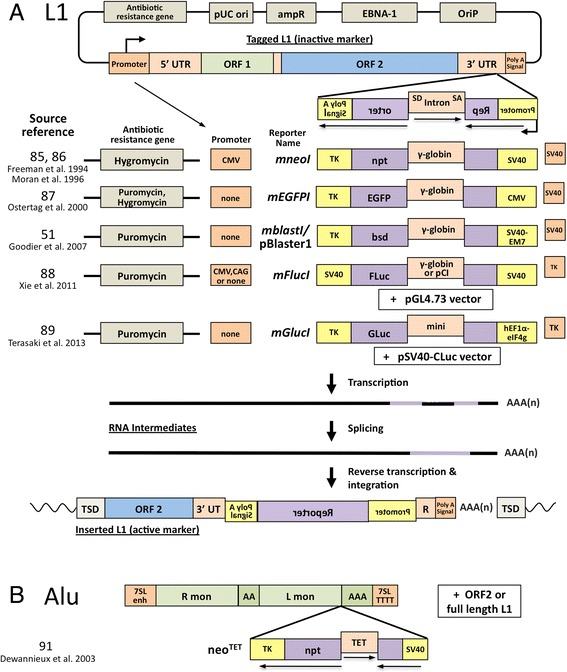
“The original neomycin phosphotransferase gene reporter [84–86] was later joined by enhanced green fluorescent protein, blasticidin S-resistance, firefly luciferase, and secreting gaussia luciferase gene constructs [51, 87–89] (Fig.”
BackgroundSoifer, H. S. (2005) · Nucleic Acids Research · doi:10.1093/nar/gki223 · Cited by 98
L1-mediated Retrotransposition of Murine B1 and B2 SINEs Recapitulated in Cultured Cells
Dewannieux, M., & Heidmann, T. (2005) · Journal of Molecular Biology · doi:10.1016/j.jmb.2005.03.068 · Cited by 97
Intrinsic immunity against retrotransposons by APOBEC cytidine deaminases
Koito, A., & Ikeda, T. (2013) · Frontiers in Microbiology · doi:10.3389/fmicb.2013.00028 · Cited by 97
Crossing the LINE Toward Genomic Instability: LINE-1 Retrotransposition in Cancer
Kemp, J. R., & Longworth, M. S. (2015) · Frontiers in Chemistry · doi:10.3389/fchem.2015.00068 · Cited by 97
Lee, H., Komano, J. A., Saitoh, Y., Yamaoka, S., Kozaki, T., Misawa, T., Takahama, M., Satoh, T., Takeuchi, O., Yamamoto, N., et al. (2013) · Proceedings of the National Academy of Sciences · doi:10.1073/pnas.1310604110 · Cited by 95
A novel human nonviral retroposon derived from an endogenous retrovirus
Ono, M., Kawakami, M., & Takezawa, T. (1987) · Nucleic Acids Research · doi:10.1093/nar/15.21.8725 · Cited by 94
Harris, C. R., Normart, R., Yang, Q., Stevenson, E., Haffty, B. G., Ganesan, S., Cordon-Cardo, C., Levine, A. J., & Tang, L. H. (2010) · Genes & Cancer · doi:10.1177/1947601909360812 · Cited by 94
Öllinger, R., Childs, A. J., Burgess, H. M., Speed, R. M., Lundegaard, P. R., Reynolds, N., Gray, N. K., Cooke, H. J., & Adams, I. R. (2008) · PLoS Genetics · doi:10.1371/journal.pgen.1000199 · Cited by 92
Hazen, J. L., Faust, G. G., Rodriguez, A. R., Ferguson, W. C., Shumilina, S., Clark, R. A., Boland, M. J., Martin, G., Chubukov, P., Tsunemoto, R. K., et al. (2016) · Neuron · doi:10.1016/j.neuron.2016.02.004 · Cited by 92
Mitra, R., Li, X., Kapusta, A., Mayhew, D., Mitra, R. D., Feschotte, C., & Craig, N. L. (2013) · Proceedings of the National Academy of Sciences · doi:10.1073/pnas.1217548110 · Cited by 90
An indicator gene to demonstrate intracellular transposition of defective retroviruses.
Heidmann, T., Heidmann, O., & Nicolas, J. F. (1988) · Proceedings of the National Academy of Sciences · doi:10.1073/pnas.85.7.2219 · Cited by 90
Yang, Z., Chen, K., Pandey, R. R., Homolka, D., Reuter, M., Rodiño‐Janeiro, B. K., Sachidanandam, R., Fauvarque, M., McCarthy, A. A., & Pillai, R. S. (2015) · Molecular Cell · doi:10.1016/j.molcel.2015.11.009 · Cited by 90
Tan, L., Sarkis, P. T. N., Wang, T., Tian, C., & Yu, X. (2008) · The FASEB Journal · doi:10.1096/fj.07-088781 · Cited by 89
Takebayashi, S.-I., Tamura, T., Matsuoka, C., & Okano, M. (2007) · Molecular and Cellular Biology · doi:10.1128/mcb.00899-07 · Cited by 89
Retroviral Transcriptional Regulation and Embryonic Stem Cells: War and Peace
Schlesinger, S., & Goff, S. P. (2015) · Molecular and Cellular Biology · doi:10.1128/mcb.01293-14 · Cited by 88
Xu, M., You, Y., Hunsicker, P. R., Hori, T., Small, C., Griswold, M. D., & Hecht, N. B. (2008) · Biology of Reproduction · doi:10.1095/biolreprod.108.068072 · Cited by 87
Hutnick, L. K., Huang, X., Loo, T.-C., Ma, Z., & Fan, G. (2010) · Journal of Biological Chemistry · doi:10.1074/jbc.m110.125674 · Cited by 87
High frequency germline acquisition of ecotropic MuLV proviruses in SWR/J-RF/J hybrid mice
Jenkins, N. A., & Copeland, N. G. (1985) · Cell · doi:10.1016/0092-8674(85)90254-5 · Cited by 87
High-throughput sequence-based epigenomic analysis of Alu repeats in human cerebellum
Xie, H., Wang, M., Bonaldo, M. D. F., Smith, C., Rajaram, V., Goldman, S., Tomita, T., & Soares, M. B. (2009) · Nucleic Acids Research · doi:10.1093/nar/gkp393 · Cited by 87
Dhellin, O., Maestre, J., & Heidmann, T. (1997) · The EMBO Journal · doi:10.1093/emboj/16.21.6590 · Cited by 86
Abnormal CpG island methylation occurs during in vitro differentiation of human embryonic stem cells
Shen, Y., Chow, J., Wang, Z., & Fan, G. (2006) · Human Molecular Genetics · doi:10.1093/hmg/ddl188 · Cited by 85
APOBEC3 proteins: major players in intracellular defence against LINE-1-mediated retrotransposition
Schumann, G. G. (2007) · Biochemical Society Transactions · doi:10.1042/bst0350637 · Cited by 84
miR-128 represses L1 retrotransposition by binding directly to L1 RNA
Hamdorf, M., Idica, A., Zisoulis, D. G., Gamelin, L., Martin, C., Sanders, K. J., & Pedersen, I. M. (2015) · Nature Structural & Molecular Biology · doi:10.1038/nsmb.3090 · Cited by 84
Horn, A. V., Klawitter, S., Held, U., Berger, A., Jaguva Vasudevan, A. A., Bock, A., Hofmann, H., Hanschmann, K.-M. O., Trösemeier, J.-H., Flory, E., et al. (2014) · Nucleic Acids Research · doi:10.1093/nar/gkt898 · Cited by 83
Integration, regulation, and long-term stability of R2 retrotransposons
Eickbush, T. H., & Eickbush, D. G. (2015) · Microbiology Spectrum · doi:10.1128/microbiolspec.mdna3-0011-2014 · Cited by 81
Goodier, J. L., Mandal, P. K., Zhang, L., & Kazazian, H. H. (2010) · Human Molecular Genetics · doi:10.1093/hmg/ddq048 · Cited by 81
Self-citationHu, Q., Tanasa, B., Trabucchi, M., Li, W., Zhang, J., Ohgi, K. A., Rose, D. W., Glass, C. K., & Rosenfeld, M. G. (2012) · Nature Structural & Molecular Biology · doi:10.1038/nsmb.2400 · Cited by 80
Roberts, J. T., Cardin, S. E., & Borchert, G. M. (2014) · Mobile Genetic Elements · doi:10.4161/mge.29255 · Cited by 79
Jones, R. S., & Potter, S. S. (1985) · Proceedings of the National Academy of Sciences · doi:10.1073/pnas.82.7.1989 · Cited by 78
Hatanaka, Y., Inoue, K., Oikawa, M., Kamimura, S., Ogonuki, N., Kodama, E. N., Ohkawa, Y., Tsukada, Y.-I., & Ogura, A. (2015) · Proceedings of the National Academy of Sciences · doi:10.1073/pnas.1512775112 · Cited by 77
The nuage mediates retrotransposon silencing in mouse primordial ovarian follicles
Lim, A. K., Lorthongpanich, C., Chew, T. G., Tan, C. W. G., Shue, Y. T., Balu, S., Gounko, N. V., Kuramochi‐Miyagawa, S., Matzuk, M. M., Chuma, S., et al. (2013) · Development · doi:10.1242/dev.099184 · Cited by 77
(1994) · Molecular Biology and Evolution · doi:10.1093/oxfordjournals.molbev.a040158 · Cited by 77
Checkley, M. A., Nagashima, K., Lockett, S. J., Nyswaner, K. M., & Garfinkel, D. J. (2010) · Molecular and Cellular Biology · doi:10.1128/mcb.00251-09 · Cited by 76
Type I Interferon Controls Propagation of Long Interspersed Element-1
Yu, Q., Carbone, C. J., Katlinskaya, Y. V., Zheng, H., Zheng, K., Luo, M., Wang, P. J., Greenberg, R. A., & Fuchs, S. Y. (2015) · Journal of Biological Chemistry · doi:10.1074/jbc.m114.612374 · Cited by 76
Epigenetic histone modifications of human transposable elements: genome defense versus exaptation
Huda, A., Mariño‐Ramírez, L., & Jordan, I. K. (2010) · Mobile DNA · doi:10.1186/1759-8753-1-2 · Cited by 76
Endogenous retroviral pathogenesis in lupus
Perl, A., Fernandez, D., Telarico, T., & Phillips, P. E. (2010) · Current Opinion in Rheumatology · doi:10.1097/bor.0b013e32833c6297 · Cited by 75 · cited 1×
“Altered HERV expression occurs in SLE, Sjogren’s syndrome, multiple sclerosis, schizophrenia, psoriasis, Creutzfeldt-Jakob disease, amyotrophic lateral sclerosis, and various cancer conditions, although the specific HERV loci that contribute to the transcriptional misregulation observed have been only partially docume…”
Background
Cited by
Ten things you should know about transposable elements
Bourque, G., Burns, K. H., Gehring, M., Gorbunova, V., Seluanov, A., Hammell, M., Imbeault, M., Izsvák, Z., Levin, H. L., Macfarlan, T. S., et al. (2018) · Genome Biology · doi:10.1186/s13059-018-1577-z · Cited by 1,430
Roles of transposable elements in the regulation of mammalian transcription
Fueyo, R., Judd, J., Feschotte, C., & Wysocka, J. (2022) · Nature Reviews Molecular Cell Biology · doi:10.1038/s41580-022-00457-y · Cited by 451
The role of retrotransposable elements in ageing and age-associated diseases
Gorbunova, V., Seluanov, A., Mita, P., McKerrow, W., Fenyö, D., Boeke, J. D., Linker, S. B., Gage, F. H., Kreiling, J. A., Petrashen, A. P., et al. (2021) · Nature · doi:10.1038/s41586-021-03542-y · Cited by 446
Measuring and interpreting transposable element expression
Lanciano, S., & Cristofari, G. (2020) · Nature Reviews Genetics · doi:10.1038/s41576-020-0251-y · Cited by 401
ALS Genetics: Gains, Losses, and Implications for Future Therapies
Kim, G., Gautier, O., Tassoni-Tsuchida, E., Ma, X. R., & Gitler, A. D. (2020) · Neuron · doi:10.1016/j.neuron.2020.08.022 · Cited by 370
“Thus, the expression of retrotransposons is tightly repressed in most somatic tissues to prevent DNA damage and ensure genomic integrity (Goodier, 2016).”
Background
Metadata
- Authors
- Goodier, J. L.
- Affiliations
- Johns Hopkins University (US)
- Corresponding author
- Goodier, John L.
- ORCID
- Goodier, John L.
- Venue
- Mobile DNA
- Published
- 2016-08-11
- Volume
- 7
- Issue
- 1
- Pages
- 16-16
- ISSN
- 1759-8753 (ISSN-L)
- PMC
- PMC4982230
- OpenAlex
- W2516620605
- Cited by
- 436
- References
- 531
- Citations by year
- 2026: 23 · 2025: 27 · 2024: 40 · 2023: 36 · 2022: 56 · 2021: 59 · 2020: 59 · 2019: 47 · 2018: 51 · 2017: 32 · 2016: 6
- FWCI
- 4.41
- Type
- journal article
- Language
- en
- Open access
- gold
- doi.org
- Licence
- cc-by
- creativecommons.org/licenses/by/4.0/ (tdm)
- creativecommons.org/licenses/by/4.0/ (vor)
- Locations
- Mobile DNA (publishedVersion, cc-by)
- PubMed Central (publishedVersion, cc-by)
- PubMed (publishedVersion)
- Funders
- ALS Therapy Alliance
- National Institute of Neurological Disorders and Stroke (1R03NS087290-01)
- Topics
- Life Sciences › Biochemistry, Genetics and Molecular Biology › Genetics › Chromosomal and Genetic Variations
- Life Sciences › Biochemistry, Genetics and Molecular Biology › Molecular Biology › Epigenetics and DNA Methylation
- Life Sciences › Immunology and Microbiology › Virology › HIV Research and Treatment
- Keywords
- retrotransposons, host restriction factors, non-LTR retrotransposons, APOBEC, MOV10, RNase L, SAMHD1, TREX1, ZAP, intrinsic immunity, retrovirus restriction, HIV, RNA degradation, DNA methylation, histone modifications, DNA repair, piRNA pathway, germline, neurons, stem cells, cancer, epigenetics
About these checks
Registry, retraction, Cites and statistics results are computed, not judged, with one exception: a printed reference that no index lists is read once by a model before it counts as a citation error. Claims are extracted by a model and kept only when their quote appears verbatim in the text; each cited source is then checked, with a model’s help, for whether it says what the claim relies on. Those verdicts can be wrong — read the claim’s quote and the cited source before relying on one.
Statistics and arithmetic are recomputed, not judged.
Confidence bands are shown only for fields calibrated on our annotated test set. None is calibrated yet, so no band is shown.
What counts as a claim ›How we measure confidence ›How we check this ›
Are you an author, or do you see a problem with this page? Request a review
Data sources
Bibliographic data: Semantic Scholar, OpenAlex, Crossref.
Contains information from the Semantic Scholar Academic Graph Datasets, made available under the ODC Attribution License (ODC-BY 1.0).
Semantic Scholar’s data is described in: Kinney, R., et al. (2023). The Semantic Scholar Open Data Platform. arXiv:2301.10140.
