

The DOI matches its Crossref record; 61 of the 61 references it cites were found in a registry or an index.
Safety, tolerability and immunogenicity of an active anti-Aβ40 vaccine (ABvac40) in patients with Alzheimer’s disease: a randomised, double-blind, placebo-controlled, phase I trial
Open accessAbstract
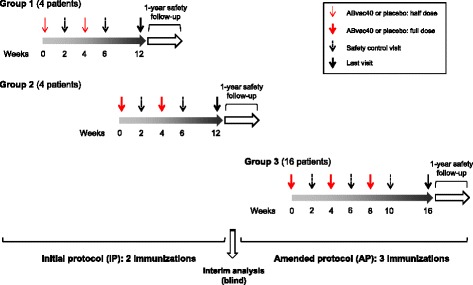
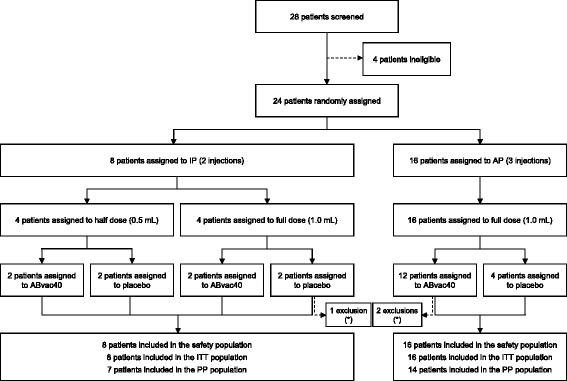
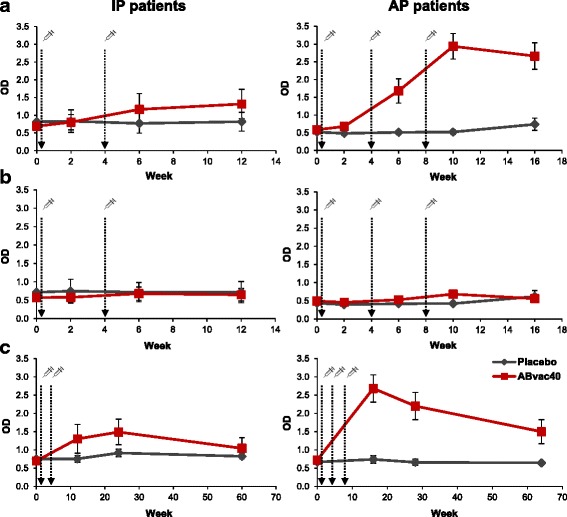
Immunotherapy targeting the amyloid-β (Aβ) peptide is a promising strategy for the treatment of Alzheimer’s disease (AD); however, none of the active or passive vaccines tested have been demonstrated to be effective to date. We have developed the first active vaccine against the C-terminal end of Aβ40, ABvac40, and assessed its safety and tolerability in a phase I clinical trial. A randomised, double-blind, placebo-controlled, parallel-group, phase I study of ABvac40 was conducted with patients aged 50–85 years with mild to moderate AD. Participants were entered into three separate groups according to time of study entry and were randomly allocated to receive ABvac40 or placebo (overall ratio 2:1). The first group received two half-doses of ABvac40 or placebo, whereas the second and third groups received two and three full doses, respectively. All treatments were administered subcutaneously at 4-week intervals. Patients, carers and investigators were blind to treatment allocation throughout the study. The primary objective was to assess the safety and tolerability of ABvac40 by registering all adverse events (AEs). All patients who received at least one dose of treatment were included in the safety analysis. The secondary objective was to evaluate the immunogenicity of ABvac40 by titration of specific anti-Aβ40 antibodies in plasma. Twenty-four patients were randomly allocated: 16 patients to the ABvac40 group and 8 patients to the placebo group. All randomised patients completed the study, therefore the intention-to-treat and safety populations were identical. Overall, 71 AEs affecting 18 patients were recorded: 11 (69%) in the ABvac40 group and 7 (88%) in the placebo group (p = 0.6214). Neither incident vasogenic oedema nor sulcal effusion (amyloid-related imaging abnormalities corresponding to vasogenic oedema and sulcal effusions) nor microhaemorrhages (amyloid-related imaging abnormalities corresponding to microhaemorrhages and hemosiderin deposits) were detected throughout the study period in the ABvac40-treated patients. Eleven of 12 (~92%) individuals receiving three injections of ABvac40 developed specific anti-Aβ40 antibodies. ABvac40 showed a favourable safety and tolerability profile while eliciting a consistent and specific immune response. An ongoing phase II clinical trial is needed to confirm these results and to explore the clinical efficacy of ABvac40. ClinicalTrials.gov, NCT03113812 . Retrospectively registered on 14 April 2017.
Overview
The claims and statistics of this paper haven’t been checked yet.
Run the check — free, no account needed. It reads the open-access text and checks the sources it cites.
Integrity signals
Registry
Cites
Statistics
Figures
Verification
Claims the paper makes
The claims and statistics of this paper haven’t been checked yet.
Run the check — free, no account needed. It reads the open-access text and checks the sources it cites.
Claims other papers make about this one
Each is checked against this paper’s own text: does it say what the citing paper says it does?
The source backs part of the claim, not all of it — or backs it for a different population, condition or comparison.
In the citing paper
“The most common aspects of AD involve the accumulation of beta-amyloid plaques, tau proteins, and neuroinflammation; these are the main targets for candidate anti-Alzheimer vaccines [48,49,50].”
From Multi-Target Mechanisms of Phytochemicals in Alzheimer’s Disease: Effects on Oxidative Stress, Neuroinflammation and Protein Aggregation (2022) · cites this paper as [50]
Experimental — accuracy not yet measuredIn the citing paper
“Another vaccine called ABvac40 targets the C-terminus of Aβ peptides and is also currently being evaluated in Phase 2 clinical studies.326”
From Amyloid β-based therapy for Alzheimer’s disease: Challenges, successes and future (2023) · cites this paper as [326]
In the citing paper
“GV1001 peptide (tertomotide) was previously studied as a vaccine against various cancers, whereas now it is evaluated in a phase 2 study for AD.60”
From Current and Future Treatments in Alzheimer Disease: An Update (2020) · cites this paper as [60]
In the citing paper
“Six active immunotherapy agents are currently studied in phase 1, 2, and 3 clinical trials:”
From Current and Future Treatments in Alzheimer Disease: An Update (2020) · cites this paper as [60]
Self-check
Percentages, sums and reported differences re-computed from the paper’s own numbers.
The self-check needs the paper’s full text.
Citations
Cites
The Amyloid Hypothesis of Alzheimer’s Disease: Progress and Problems on the Road to Therapeutics
Hardy, J., & Selkoe, D. J. (2002) · Science · doi:10.1126/science.1072994 · Cited by 13,864
Amyloid oligomers exacerbate tau pathology in a mouse model of tauopathy
Selenica, M.-L. B., Brownlow, M., Jimenez, J. P., Lee, D. C., Pena, G., Dickey, C. A., Gordon, M. N., & Morgan, D. (2013) · Neurodegenerative Diseases · doi:10.1159/000337230 · Cited by 10,359
Alzheimer's disease: the amyloid cascade hypothesis
Hardy, J. A., & Higgins, G. A. (1992) · Science · doi:10.1126/science.1566067 · Cited by 7,484
Immunization with amyloid-β attenuates Alzheimer-disease-like pathology in the PDAPP mouse
Schenk, D., Barbour, R., Dunn, W., Gordon, G., Grajeda, H., Guido, T., Hu, K., Huang, J., Johnson-Wood, K., Khan, K., et al. (1999) · Nature · doi:10.1038/22124 · Cited by 3,160
The antibody aducanumab reduces Aβ plaques in Alzheimer’s disease
Sevigny, J., Chiao, P., Bussière, T., Weinreb, P. H., Williams, L., Maier, M., Dunstan, R., Salloway, S., Chen, T., Ling, Y., et al. (2016) · Nature · doi:10.1038/nature19323 · Cited by 3,059
(2015) · HAL · Cited by 2,238
Two Phase 3 Trials of Bapineuzumab in Mild-to-Moderate Alzheimer's Disease
Salloway, S., Sperling, R., Fox, N. C., Blennow, K., Klunk, W., Raskind, M., Sabbagh, M., Honig, L. S., Porsteinsson, A. P., Ferris, S., et al. (2014) · New England Journal of Medicine · doi:10.1056/nejmoa1304839 · Cited by 1,960
Phase 3 Trials of Solanezumab for Mild-to-Moderate Alzheimer's Disease
Doody, R. S., Thomas, R. G., Farlow, M., Iwatsubo, T., Vellas, B., Joffe, S., Kieburtz, K., Raman, R., Sun, X., Aisen, P. S., et al. (2014) · New England Journal of Medicine · doi:10.1056/nejmoa1312889 · Cited by 1,668
Suzuki, N., Cheung, T. T., Cai, X.-D., Odaka, A., Otvos, L., Eckman, C., Golde, T. E., & Younkin, S. G. (1994) · Science · doi:10.1126/science.8191290 · Cited by 1,471
Holmes, C., Boche, D., Wilkinson, D., Yadegarfar, G., Hopkins, V., Bayer, A., Jones, R. W., Bullock, R., Love, S., Neal, J. W., et al. (2008) · The Lancet · doi:10.1016/s0140-6736(08)61075-2 · Cited by 1,416 · cited 1×
“Although the AN1792 clinical trial failed, long-term follow-up of responder patients showed a reduction in brain amyloid burden [27, 28] and attenuated functional decline [29–31], which supports the potential benefits of Aβ immunotherapy, provided that an Aβ-specific T-cell response can be avoided.”
BackgroundNeuropathology of human Alzheimer disease after immunization with amyloid-β peptide: a case report
Nicoll, J. A. R., Wilkinson, D., Holmes, C., Steart, P., Markham, H., & Weller, R. O. (2003) · Nature Medicine · doi:10.1038/nm840 · Cited by 1,397
Subacute meningoencephalitis in a subset of patients with AD after Aβ42 immunization
Orgogozo, J.-M., Gilman, S., Dartigues, J.-F., Laurent, B., Puel, M., Kirby, L. C., Jouanny, P., Dubois, B., Eisner, L., Flitman, S., et al. (2003) · Neurology · doi:10.1212/01.wnl.0000073623.84147.a8 · Cited by 1,356
Clinical effects of Aβ immunization (AN1792) in patients with AD in an interrupted trial
Gilman, S., Koller, M., Black, R. S., Jenkins, L., Griffith, S. G., Fox, N. C., Eisner, L., Kirby, L., Rovira, M. B., Forette, F., et al. (2005) · Neurology · doi:10.1212/01.wnl.0000159740.16984.3c · Cited by 1,329
Sperling, R. A., Jack, C. R., Black, S. E., Frosch, M. P., Greenberg, S. M., Hyman, B. T., Scheltens, P., Carrillo, M. C., Thies, W., Bednar, M. M., et al. (2011) · Alzheimer's & Dementia · doi:10.1016/j.jalz.2011.05.2351 · Cited by 857
Antibodies against β-Amyloid Slow Cognitive Decline in Alzheimer's Disease
Höck, C., Konietzko, U., Streffer, J. R., Tracy, J., Signorell, A., Müller-Tillmanns, B., Lemke, U., Henke, K., Moritz, E., Garcia, E., et al. (2003) · Neuron · doi:10.1016/s0896-6273(03)00294-0 · Cited by 786
Alzheimer disease and cerebrovascular pathology: an update
Jellinger, K. A. (2002) · Journal of Neural Transmission · doi:10.1007/s007020200068 · Cited by 680
Wang, J., Dickson, D. W., Trojanowski, J. Q., & Lee, V. M.-Y. (1999) · Experimental Neurology · doi:10.1006/exnr.1999.7085 · Cited by 567
Chimon, S., Shaibat, M. A., Jones, C. R., Calero, D. C., Aizezi, B., & Ishii, Y. (2007) · Nature Structural & Molecular Biology · doi:10.1038/nsmb1345 · Cited by 543
Kuperstein, I., Broersen, K., Benilova, I., Rozenski, J., Jonckheere, W., Debulpaep, M., Vandersteen, A., Segers‐Nolten, I., Van Der Werf, K., Subramaniam, V., et al. (2010) · The EMBO Journal · doi:10.1038/emboj.2010.211 · Cited by 532
Näslund, J., Schierhorn, A., Hellman, U., Lannfelt, L., Roses, A. D., Tjernberg, L. O., Silberring, J., Gandy, S. E., Winblad, B., & Greengard, P. (1994) · Proceedings of the National Academy of Sciences · doi:10.1073/pnas.91.18.8378 · Cited by 468
Mechanism of amyloid removal in patients with Alzheimer disease treated with gantenerumab
Ostrowitzki, S. (2012) · Archives of Neurology · doi:10.1001/archneurol.2011.1538 · Cited by 431
Prion-like behaviour and tau-dependent cytotoxicity of pyroglutamylated amyloid-β
Nussbaum, J. M., Schilling, S., Cynis, H., Silva, A., Swanson, E., Wangsanut, T., Tayler, K., Wiltgen, B., Hatami, A., Rönicke, R., et al. (2012) · Nature · doi:10.1038/nature11060 · Cited by 427
Wilcock, D. M., Rojiani, A. M., Rosenthal, A., Subbarao, S., Freeman, M. J., Gordon, M. N., & Morgan, D. (2004) · Journal of Neuroinflammation · doi:10.1186/1742-2094-1-24 · Cited by 392
Rapid Communication: Characterization of β‐Amyloid Peptide from Human Cerebrospinal Fluid
Vigo‐Pelfrey, C., Lee, D., Keim, P., Lieberburg, I., & Schenk, D. B. (1993) · Journal of Neurochemistry · doi:10.1111/j.1471-4159.1993.tb09841.x · Cited by 385
Increased T cell reactivity to amyloid β protein in older humans and patients with Alzheimer disease
Monsonego, A., Zota, V., Karni, A., Krieger, J. I., Bar-Or, A., Bitan, G., Budson, A. E., Sperling, R., Selkoe, D. J., & Weiner, H. L. (2003) · Journal of Clinical Investigation · doi:10.1172/jci200318104 · Cited by 367
Nitration of Tyrosine 10 Critically Enhances Amyloid β Aggregation and Plaque Formation
Kummer, M. P., Hermes, M., Delekarte, A., Hammerschmidt, T., Kumar, S., Terwel, D., Walter, J., Pape, H.-C., König, S., Roeber, S., et al. (2011) · Neuron · doi:10.1016/j.neuron.2011.07.001 · Cited by 336
Immunology and immunotherapy of Alzheimer's disease
Weiner, H. L., & Frenkel, D. (2006) · Nature Reviews Immunology · doi:10.1038/nri1843 · Cited by 335
Vaccine adjuvants: Current challenges and future approaches
Wilson‐Welder, J. H., Torres, M. P., Kipper, M. J., Mallapragada, S. K., Wannemuehler, M. J., & Narasimhan, B. (2008) · Journal of Pharmaceutical Sciences · doi:10.1002/jps.21523 · Cited by 316
Immunotherapeutic Approaches for Alzheimer’s Disease
Wisniewski, T., & Goñi, F. (2015) · Neuron · doi:10.1016/j.neuron.2014.12.064 · Cited by 284 · cited 1×
“In recent years, several active immunotherapies targeting Aβ have progressed from preclinical studies in AD mouse models to clinical trials in humans [4]; however, none of the approaches tested have shown clinical efficacy so far [5].”
BackgroundAdjuvant-dependent modulation of Th1 and Th2 responses to immunization with beta-amyloid
Cribbs, D. H. (2003) · International Immunology · doi:10.1093/intimm/dxg049 · Cited by 283
Vellas, B. J., Black, R. S., Thal, L. J., Fox, N. C., Daniels, M., McLennan, G., Tompkins, C., Leibman, C. W., Pomfret, M., & Grundman, M. (2009) · Current Alzheimer Research · doi:10.2174/156720509787602852 · Cited by 261
On the Seeding and Oligomerization of pGlu-Amyloid Peptides (in vitro)
Schilling, S., Lauber, T., Schaupp, M., Manhart, S., Scheel, E., Böhm, G., & Demuth, H.-U. (2006) · Biochemistry · doi:10.1021/bi0612667 · Cited by 254
Mechanism of Cerebral β-Amyloid Angiopathy: Murine and Cellular Models
Herzig, M. C., Nostrand, W. E. V., & Jucker, M. (2006) · Brain Pathology · doi:10.1111/j.1750-3639.2006.tb00560.x · Cited by 172
Amyloid‐ß‐directed immunotherapy for Alzheimer's disease
Lannfelt, L., Relkin, N. R., & Siemers, E. (2014) · Journal of Internal Medicine · doi:10.1111/joim.12168 · Cited by 161
Long-term treatment with active Aβ immunotherapy with CAD106 in mild Alzheimer’s disease
Farlow, M. R., Andreasen, N., Riviere, M., Voštiar, I., Vitaliti, A., Sóvágó, J., Caputo, A., Winblad, B. G., & Graf, A. (2015) · Alzheimer s Research & Therapy · doi:10.1186/s13195-015-0108-3 · Cited by 149
Amyloid β Protein: Aβ40 Inhibits Aβ42 Oligomerization
Murray, M. M., Bernstein, S. L., Nyugen, V., Condron, M. M., Teplow, D. B., & Bowers, M. T. (2009) · Journal of the American Chemical Society · doi:10.1021/ja8092604 · Cited by 128
MR Imaging Features of Amyloid-Related Imaging Abnormalities
Barakos, J. A., Sperling, R. A., Salloway, S., Jack, C. R., Gass, A., Fiebach, J. B., Tampieri, D. I., Melançon, D., Miaux, Y., Rippon, G. A., et al. (2013) · American Journal of Neuroradiology · doi:10.3174/ajnr.a3500 · Cited by 121
Pasquier, F., Sadowsky, C., Holstein, A. R., Prince, G. L., Peng, Y., Jackson, N. M., Fox, N. C., Ketter, N., Liu, E., Ryan, J. M., et al. (2016) · Journal of Alzheimer s Disease · doi:10.3233/jad-150376 · Cited by 108
Active immunotherapy options for Alzheimer’s disease
Winblad, B. G., Graf, A., Riviere, M., Andreasen, N., & Ryan, J. M. (2014) · Alzheimer s Research & Therapy · doi:10.1186/alzrt237 · Cited by 102
Wilcock, D. M., Gharkholonarehe, N., Nostrand, W. E. V., Davis, J., Vitek, M. P., & Colton, C. A. (2009) · Journal of Neuroscience · doi:10.1523/jneurosci.1339-09.2009 · Cited by 98
Shin, R., Ogino, K., Kondo, A., Saido, T. C., Trojanowski, J. Q., Kitamoto, T., & Tateishi, J. (1997) · Journal of Neuroscience · doi:10.1523/jneurosci.17-21-08187.1997 · Cited by 96
Landen, J. W., Zhao, Q., Cohen, S., BORRIE, M. J., Woodward, M., Billing, C. B., Bales, K. R., Alvey, C. W., McCush, F., Yang, J., et al. (2013) · Clinical Neuropharmacology · doi:10.1097/wnf.0b013e31827db49b · Cited by 88
Schlenzig, D., Rönicke, R., Cynis, H., Ludwig, H., Scheel, E., Reymann, K. G., Saido, T. C., Hause, G., Schilling, S., & Demuth, H. (2012) · Journal of Neurochemistry · doi:10.1111/j.1471-4159.2012.07707.x · Cited by 83
Cells with a familial Alzheimerʼs disease mutation produce authentic β-peptide
Dovey, H. F., Suomensaari-Chrysler, S., Lieberburg, I., Sinha, S., & Keim, P. S. (1993) · NeuroReport · doi:10.1097/00001756-199308000-00011 · Cited by 71
Bales, K. R., O’Neill, S. M., Pozdnyakov, N., Pan, F., Caouette, D., Pi, Y., Wood, K. M., Volfson, D., Cirrito, J. R., Han, B.-H., et al. (2016) · Brain · doi:10.1093/brain/awv313 · Cited by 68
Agadjanyan, M. G., Petrovsky, N., & Ghochikyan, A. (2015) · Alzheimer s & Dementia · doi:10.1016/j.jalz.2015.06.1884 · Cited by 65
Hull, M., Sadowsky, C., Arai, H., Leterme, G. L. P., Holstein, A., Booth, K., Peng, Y., Yoshiyama, T., Suzuki, H., Ketter, N., et al. (2017) · Current Alzheimer Research · doi:10.2174/1567205014666170117101537 · Cited by 65
D’Arrigo, C., Tabaton, M., & Perico, A. (2009) · Biopolymers · doi:10.1002/bip.21271 · Cited by 63
An MRI Rating Scale for Amyloid-Related Imaging Abnormalities with Edema or Effusion
Barkhof, F., Daams, M., Scheltens, P., Brashear, H. R., Arrighi, H. M., Bechten, A., Morris, K., McGovern, M., & Wattjes, M. P. (2013) · American Journal of Neuroradiology · doi:10.3174/ajnr.a3475 · Cited by 60
Burstein, A. H., Zhao, Q., Ross, J., Styren, S. D., Landen, J. W., Ma, W. W., McCush, F., Alvey, C. W., Kupiec, J. W., & Bednar, M. M. (2013) · Clinical Neuropharmacology · doi:10.1097/wnf.0b013e318279bcfa · Cited by 53
Izco, M., Martinez, P. M., Corrales, A., Fandos, N., García-Cerro, S., Insua, D., Montañés, M., Pérez‐Grijalba, V., Rueda, N., Vidal, V., et al. (2014) · Neuroscience · doi:10.1016/j.neuroscience.2014.01.003 · Cited by 46
Neurofibrillary Tangles of Aβx-40 in Alzheimer’s Disease Brains
Lacosta, A.-M., Insua, D., Badi, H., Pesini, P., & Sarasa, M. (2017) · Journal of Alzheimer s Disease · doi:10.3233/jad-170163 · Cited by 35
Freeman, G. B., Lin, J. C.-Y., Pons, J., & Raha, N. (2012) · Journal of Alzheimer s Disease · doi:10.3233/jad-2011-110869 · Cited by 33
Das, P., Chapoval, S. P., HOWARD, V. G., David, C. S., & Golde, T. E. (2003) · Neurobiology of Aging · doi:10.1016/s0197-4580(03)00036-8 · Cited by 33
Freeman, G. B., Brown, T. P., Wallace, K., & Bales, K. R. (2012) · Current Alzheimer Research · doi:10.2174/156720512803569064 · Cited by 20
Montañés, M., Casabona, D., Sarasa, L., Pesini, P., & Sarasa, M. (2013) · Journal of Alzheimer s Disease · doi:10.3233/jad-120850 · Cited by 7
Pesini, P., Lacosta, A. M., & Sarasa, M. (2009) · Alzheimer s & Dementia · doi:10.1016/j.jalz.2009.04.434 · Cited by 3
[O5–01–01]: PET BIOMARKERS IN THE EXPEDITION 3 TRIAL OF PATIENTS WITH MILD AD
Mintun, M. A., Devous, M. D., Lu, M., Pontecorvo, M. J., Joshi, A. D., Southekal, S. S., Siderowf, A., Lowrey, M. J., Devine, M., Benedum, T. E., et al. (2017) · Alzheimer s & Dementia · doi:10.1016/j.jalz.2017.07.506 · Cited by 3
P2‐119: Relation of C‐reactive protein to cognitive impairment
Noble, J. M., Manly, J. J., Schupf, N., Tang, M. X., Mayeux, R. P., & Luchsinger, J. A. (2009) · Alzheimer s & Dementia · doi:10.1016/j.jalz.2009.04.430 · Cited by 2
[P4–384]: ANTI‐AβX‐40 ANTIBODIES EXERT NEUROPROTECTIVE EFFECT AGAINST Aβ‐OLIGOMER TOXICITY
Montañés, M., Marcos, I., Canudas, J., Lacosta, A. M., Pesini, P., & Sarasa, M. (2017) · Alzheimer s & Dementia · doi:10.1016/j.jalz.2017.06.2255 · Cited by 1
Abramsson, A., Banote, R. K., Gobom, J., & Zetterberg, H. (2017) · Alzheimer s & Dementia · doi:10.1016/j.jalz.2017.06.2253 · Cited by 1
Cited by
Sorted by citations
Alzheimer Disease: An Update on Pathobiology and Treatment Strategies
Long, J. M., & Holtzman, D. M. (2019) · Cell · doi:10.1016/j.cell.2019.09.001 · Cited by 3,204
Current and Future Treatments in Alzheimer Disease: An Update
Yiannopoulou, K. G., & Papageorgiou, S. G. (2020) · Journal of Central Nervous System Disease · doi:10.1177/1179573520907397 · Cited by 966
Amyloid β-based therapy for Alzheimer’s disease: Challenges, successes and future
Zhang, Y., Chen, H., Li, R., Sterling, K., & Song, W. (2023) · Signal Transduction and Targeted Therapy · doi:10.1038/s41392-023-01484-7 · Cited by 988
“Another vaccine called ABvac40 targets the C-terminus of Aβ peptides and is also currently being evaluated in Phase 2 clinical studies.(326) UB-311 consists of the Aβ1-14 peptides in combination with a Th-cell epitope, which was designed to specifically stimulate Th2 cells regulatory immune responses over Th1-mediated…”
BackgroundNguyen, P. H., Ramamoorthy, A., Sahoo, B. R., Zheng, J., Faller, P., Straub, J. E., Domínguez, L., Shea, J., Dokholyan, N. V., Simone, A. D., et al. (2021) · Chemical Reviews · doi:10.1021/acs.chemrev.0c01122 · Cited by 680
Peptide-Based Vaccines: Current Progress and Future Challenges
Malonis, R. J., Lai, J. R., & Vergnolle, O. (2020) · Chemical Reviews · doi:10.1021/acs.chemrev.9b00472 · Cited by 602
Metadata
- Authors
- Lacosta, A.-M., Pascual-Lucas, M., Pesini, P., Casabona, D., Pérez-Grijalba, V., Marcos-Campos, I., Sarasa, L., Canudas, J., Badi, H., Monleón, I., San-José, I., Munuera, J., Rodríguez-Gómez, O., Abdelnour, C., Lafuente, A., Buendía, M., Boada, M., Tárraga, L., Ruiz, A., & Sarasa, M.
- Affiliations
- Hospital Universitari Germans Trias i Pujol (ES)
- Fundació ACE (ES)
- Corresponding author
- Pesini, Pedro
- Venue
- Alzheimer's Research & Therapy
- Published
- 2018-01-29
- Volume
- 10
- Issue
- 1
- Pages
- 12-12
- ISSN
- 1758-9193 (ISSN-L)
- PMC
- PMC5789644
- OpenAlex
- W2789484532
- Cited by
- 111
- References
- 61
- Citations by year
- 2026: 9 · 2025: 20 · 2024: 14 · 2023: 19 · 2022: 16 · 2021: 14 · 2020: 9 · 2019: 6 · 2018: 3
- FWCI
- 5.50
- Type
- journal article
- Language
- en
- Open access
- gold
- doi.org
- Licence
- cc-by
- Locations
- Alzheimer s Research & Therapy (publishedVersion, cc-by)
- PubMed Central (publishedVersion, cc-by)
- PubMed (publishedVersion)
- DOAJ (DOAJ: Directory of Open Access Journals) (submittedVersion)
- Funders
- Araclon Biotech
- Topics
- Life Sciences › Neuroscience › Cellular and Molecular Neuroscience › Alzheimer's disease research and treatments
- Health Sciences › Medicine › Psychiatry and Mental health › Dementia and Cognitive Impairment Research
- Life Sciences › Neuroscience › Neurology › Neuroinflammation and Neurodegeneration Mechanisms
- Keywords
- Alzheimer's disease, Aβ40, active immunotherapy, vaccine safety and tolerability, immunogenicity, anti-amyloid antibodies, amyloid-related imaging abnormalities, vasogenic edema, microhemorrhages, mild to moderate Alzheimer's disease, dose escalation, subcutaneous immunization
- MeSH terms
- Immunogenicity, Vaccine, Protein Domains, Aged, Aged, 80 and over, Alzheimer Disease, Double-Blind Method, Female, Follow-Up Studies, Humans, Male, Middle Aged, Peptide Fragments, Severity of Illness Index, Amyloid beta-Peptides, Treatment Outcome, Alzheimer Vaccines
About these checks
Registry, retraction, Cites and statistics results are computed, not judged, with one exception: a printed reference that no index lists is read once by a model before it counts as a citation error. Claims are extracted by a model and kept only when their quote appears verbatim in the text; each cited source is then checked, with a model’s help, for whether it says what the claim relies on. Those verdicts can be wrong — read the claim’s quote and the cited source before relying on one.
Statistics and arithmetic are recomputed, not judged.
Confidence bands are shown only for fields calibrated on our annotated test set. None is calibrated yet, so no band is shown.
What counts as a claim ›How we measure confidence ›How we check this ›
Are you an author, or do you see a problem with this page? Request a review
