

Cerebrospinal fluid soluble TREM2 levels in frontotemporal dementia differ by genetic and pathological subgroup
Open accessThe DOI matches its Crossref record; 48 of the 48 references it cites were found in a registry or an index.
Abstract
BACKGROUND: Reliable biomarkers of frontotemporal dementia (FTD) are currently lacking. FTD may be associated with chronic immune dysfunction, microglial activation and raised inflammatory markers, particularly in progranulin (GRN) mutation carriers. Levels of soluble triggering receptor expressed on myeloid cells 2 (sTREM2) are elevated in Alzheimer's disease (AD), but they have not been fully explored in FTD. METHODS: We investigated whether cerebrospinal fluid (CSF) sTREM2 levels differ between FTD and controls, across different clinical and genetic subtypes of FTD, or between individuals with FTD due to AD versus non-AD pathology (based on CSF neurodegenerative biomarkers). We also assessed relationships between CSF sTREM2 and other CSF biomarkers (total tau [T-tau], tau phosphorylated at position threonine-181 [P-tau] and β-amyloid 1-42 [Aβ42]) and age and disease duration. Biomarker levels were measured using immunoassays in 17 healthy controls and 64 patients with FTD (behavioural variant FTD, n = 20; primary progressive aphasia, n = 44). Ten of 64 had familial FTD, with mutations in GRN (n = 3), MAPT (n = 4), or C9orf72 (n = 3). Fifteen of 64 had neurodegenerative biomarkers consistent with AD pathology (11 of whom had logopenic variant PPA). Levels were compared using multivariable linear regressions. RESULTS: CSF sTREM2 levels did not differ between FTD and controls or between clinical subgroups. However, GRN mutation carriers had higher levels than controls (mean ([SD] = 9.7 [2.9] vs. 6.8 [1.6] ng/ml; P = 0.028) and MAPT (3.9 [1.5] ng/ml; P = 0.003] or C9orf72 [4.6 [1.8] ng/ml; P = 0.006) mutation carriers. Individuals with AD-like CSF had higher sTREM2 levels than those with non-AD-like CSF (9.0 [3.6] vs. 6.9 [3.0] ng/ml; P = 0.029). CSF sTREM2 levels were associated with T-tau levels in control and FTD groups and also with P-tau in those with FTD and AD-like CSF. CSF sTREM2 levels were influenced by both age and disease duration in FTD. CONCLUSIONS: Although CSF sTREM2 levels are not raised in FTD overall or in a particular clinical subtype of FTD, levels are raised in familial FTD associated with GRN mutations and in FTD syndromes due to AD pathology. Because CSF sTREM2 levels correlate with a marker of neuronal injury (T-tau), sTREM2 should be explored as a biomarker of disease intensity in future longitudinal studies of FTD.
Overview
The claims and statistics of this paper haven’t been checked yet.
Free: it reads the open-access text and checks the first 5 claims that cite a source we can check. Create a free account to check every claim.
Integrity signals
Registry
Cites
Statistics
Figures
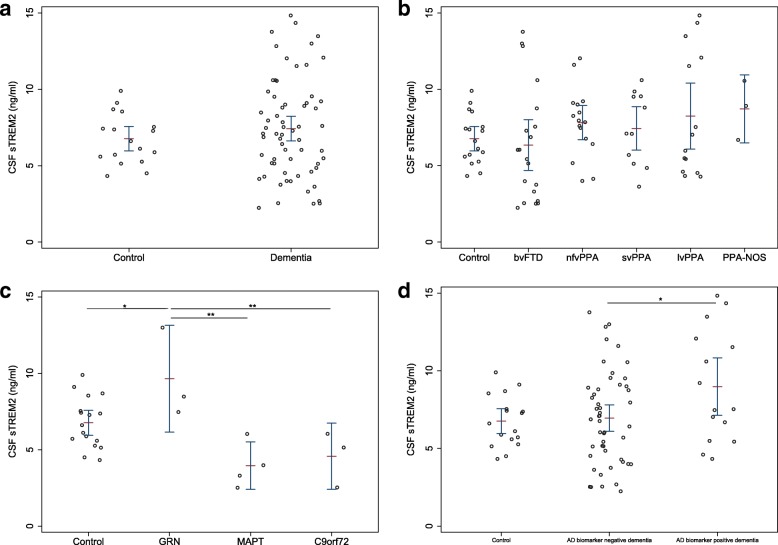
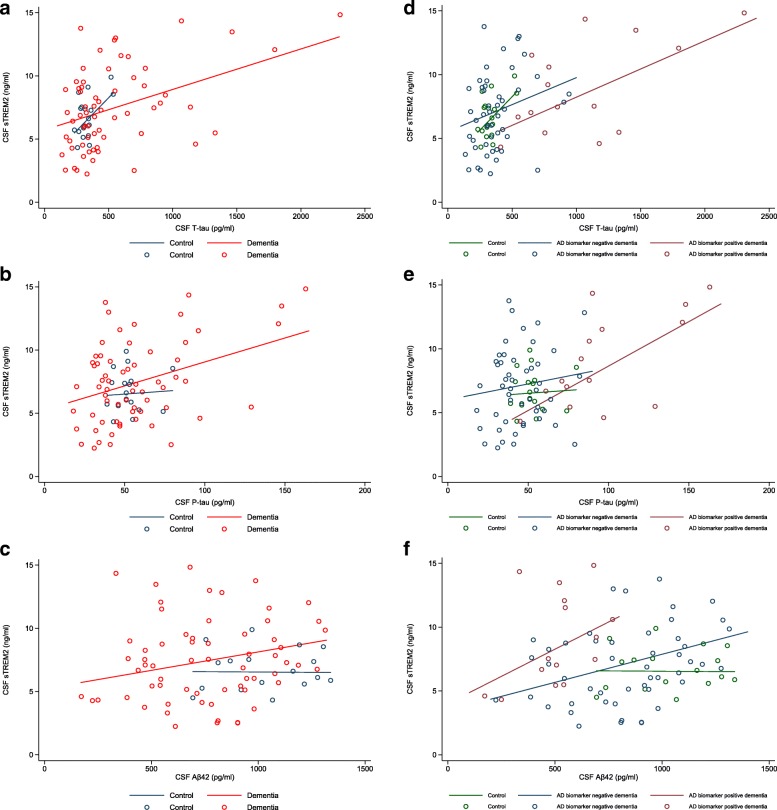
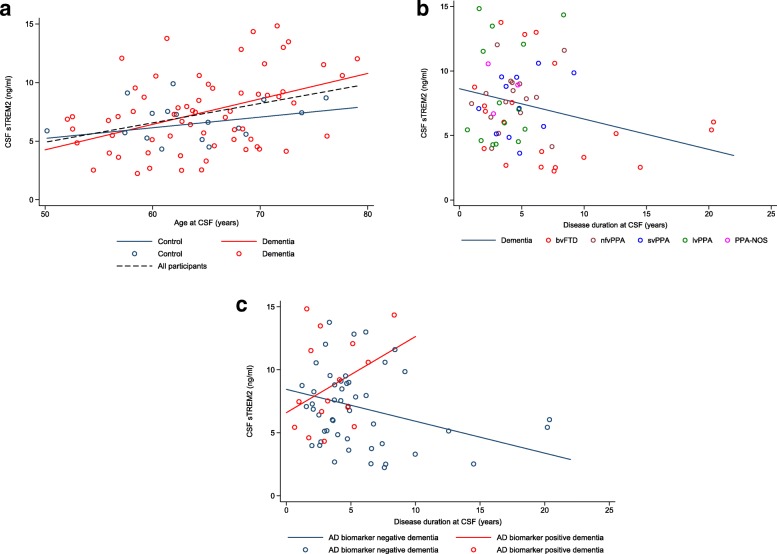
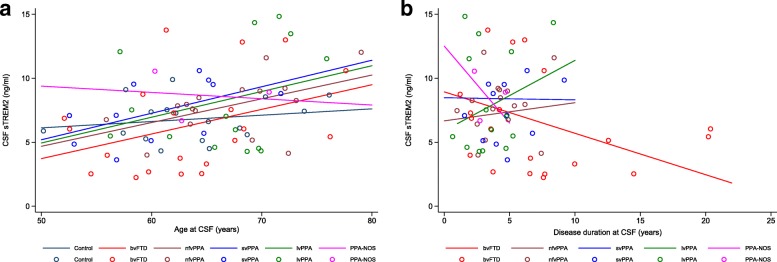
Verification
Claims the paper makes
The claims and statistics of this paper haven’t been checked yet.
Free: it reads the open-access text and checks the first 5 claims that cite a source we can check. Create a free account to check every claim.
Claims other papers make about this one
Each is checked against this paper’s own text: does it say what the citing paper says it does?
In the citing paper
“first cross-sectional results showed CSF sTREM2 levels increased during neuro-inflammation in familial bvFTD associated with GRN mutations (N = 3) (Woollacott et al., 2018)”
From The pursuit for markers of disease progression in behavioral variant frontotemporal dementia: a scoping review to optimize outcome measures for clinical trials (2024) · cites this paper as Woollacott et al., 2018
Self-check
Percentages, sums and reported differences re-computed from the paper’s own numbers.
The self-check needs the paper’s full text.
Citations
Cites
Sensitivity of revised diagnostic criteria for the behavioural variant of frontotemporal dementia
Rascovsky, K., Hodges, J. R., Knopman, D., Mendez, M. F., Kramer, J. H., Neuhaus, J., van Swieten, J. C., Seelaar, H., Dopper, E. G. P., Onyike, C. U., et al. (2011) · Brain · doi:10.1093/brain/awr179 · Cited by 5,221
Self-citationClassification of primary progressive aphasia and its variants
Gorno-Tempini, M. L., Hillis, A. E., Weintraub, S., Kertesz, A., Mendez, M., Cappa, S. F., Ogar, J. M., Rohrer, J. D., Black, S., Boeve, B. F., et al. (2011) · Neurology · doi:10.1212/wnl.0b013e31821103e6 · Cited by 5,141
Self-citationAppelhof, B., Bakker, C., Van Duinen-van den Ijssel, J. C. L., Zwijsen, S. A., Smalbrugge, M., Verhey, F. R. J., de Vugt, M. E., Zuidema, S. U., & Koopmans, R. T. C. M. (2017) · Dementia and Geriatric Cognitive Disorders · doi:10.1159/000477087 · Cited by 2,760
Qualitative Assessment of Verbal Fluency Performance in Frontotemporal Dementia
van den Berg, E., Jiskoot, L. C., Grosveld, M. J. H., van Swieten, J. C., & Papma, J. M. (2017) · Dementia and Geriatric Cognitive Disorders · doi:10.1159/000477538 · Cited by 2,046
TREM2 Lipid Sensing Sustains the Microglial Response in an Alzheimer’s Disease Model
Wang, Y., Cella, M., Mallinson, K., Ulrich, J. D., Young, K. L., Robinette, M. L., Gilfillan, S., Krishnan, G. M., Sudhakar, S., Zinselmeyer, B. H., et al. (2015) · Cell · doi:10.1016/j.cell.2015.01.049 · Cited by 1,736
The microglial sensome revealed by direct RNA sequencing
Hickman, S. E., Kingery, N. D., Ohsumi, T. K., Borowsky, M. L., Wang, L.-C., Means, T. K., & El Khoury, J. (2013) · Nature Neuroscience · doi:10.1038/nn.3554 · Cited by 1,511
Takahashi, K., Rochford, C. D. P., & Neumann, H. (2005) · The Journal of Experimental Medicine · doi:10.1084/jem.20041611 · Cited by 1,124
TREM2 mutations implicated in neurodegeneration impair cell surface transport and phagocytosis
Kleinberger, G., Yamanishi, Y., Suárez-Calvet, M., Czirr, E., Lohmann, E., Cuyvers, E., Struyfs, H., Pettkus, N., Wenninger-Weinzierl, A., Mazaheri, F., et al. (2014) · Science Translational Medicine · doi:10.1126/scitranslmed.3009093 · Cited by 798
Self-citationLui, H., Zhang, J., Makinson, S. R., Cahill, M. K., Kelley, K. W., Huang, H.-Y., Shang, Y., Oldham, M. C., Martens, L. H., Gao, F., et al. (2016) · Cell · doi:10.1016/j.cell.2016.04.001 · Cited by 729
Suárez‐Calvet, M., Kleinberger, G., Araque Caballero, M. Á., Brendel, M., Rominger, A., Alcolea, D., Fortea, J., Lleó, A., Blesa, R., Gispert, J. D., et al. (2016) · EMBO Molecular Medicine · doi:10.15252/emmm.201506123 · Cited by 522
Self-citation
Cited by
Neurofilament light chain as a biomarker in neurological disorders
Gaetani, L., Blennow, K., Calabresi, P., Di Filippo, M., Parnetti, L., & Zetterberg, H. (2019) · Journal of Neurology, Neurosurgery & Psychiatry · doi:10.1136/jnnp-2018-320106 · Cited by 1,334
Self-citationThe Physiology, Pathology, and Potential Therapeutic Applications of the TREM2 Signaling Pathway
Deczkowska, A., Weiner, A., & Amit, I. (2020) · Cell · doi:10.1016/j.cell.2020.05.003 · Cited by 648
An update on genetic frontotemporal dementia
Greaves, C. V., & Rohrer, J. D. (2019) · Journal of Neurology · doi:10.1007/s00415-019-09363-4 · Cited by 500
Self-citationThe complexity of tau in Alzheimer’s disease
Naseri, N. N., Wang, H., Guo, J., Sharma, M., & Luo, W. (2019) · Neuroscience Letters · doi:10.1016/j.neulet.2019.04.022 · Cited by 373
Immune Signaling in Neurodegeneration
Hammond, T. R., Marsh, S. E., & Stevens, B. (2019) · Immunity · doi:10.1016/j.immuni.2019.03.016 · Cited by 336
Neuroinflammation in frontotemporal dementia
Bright, F., Werry, E. L., Dobson-Stone, C., Piguet, O., Ittner, L. M., Halliday, G. M., Hodges, J. R., Kiernan, M. C., Loy, C. T., Kassiou, M., et al. (2019) · Nature Reviews Neurology · doi:10.1038/s41582-019-0231-z · Cited by 280
Frontotemporal Dementia, Where Do We Stand? A Narrative Review
Antonioni, A., Raho, E. M., Lopriore, P., Pace, A. P., Latino, R. R., Assogna, M., Mancuso, M., Gragnaniello, D., Granieri, E., Pugliatti, M., et al. (2023) · International Journal of Molecular Sciences · doi:10.3390/ijms241411732 · Cited by 145
“In particular, its CSF levels are elevated in GRN patients, whereas no significant differences have been documented between patients with FTD variants and healthy controls [224].”
BackgroundZhang, S.-S., Zhu, L., Peng, Y., Zhang, L., Chao, F.-L., Jiang, L., Xiao, Q., Liang, X., Tang, J., Yang, H., et al. (2022) · Journal of Neuroinflammation · doi:10.1186/s12974-022-02401-5 · Cited by 138
“Clinical studies have found significant increases in sTREM2 levels in the cerebrospinal fluid (CSF) of AD patients [38, 39].”
BackgroundSoluble TREM2: Innocent bystander or active player in neurological diseases?
Filipello, F., Goldsbury, C., You, S. F., Locca, A., Karch, C. M., & Piccio, L. (2022) · Neurobiology of Disease · doi:10.1016/j.nbd.2022.105630 · Cited by 134
Neuroinflammation and protein aggregation co-localize across the frontotemporal dementia spectrum
Bevan-Jones, W. R., Cope, T. E., Jones, P. S., Kaalund, S. S., Passamonti, L., Allinson, K., Green, O., Hong, Y. T., Fryer, T. D., Arnold, R., et al. (2020) · Brain · doi:10.1093/brain/awaa033 · Cited by 124
Fluid biomarkers in frontotemporal dementia: past, present and future
Swift, I. J., Sogorb-Esteve, A., Heller, C., Synofzik, M., Otto, M., Graff, C., Galimberti, D., Todd, E., Heslegrave, A. J., van der Ende, E. L., et al. (2021) · Journal of Neurology, Neurosurgery & Psychiatry · doi:10.1136/jnnp-2020-323520 · Cited by 122
Self-citationFrontotemporal Dementia: A Clinical Review
Sivasathiaseelan, H., Marshall, C. R., Agustus, J. L., Benhamou, E., Bond, R. L., van Leeuwen, J. E. P., Hardy, C. J. D., Rohrer, J. D., & Warren, J. D. (2019) · Seminars in Neurology · doi:10.1055/s-0039-1683379 · Cited by 112
Self-citationLatest advances in cerebrospinal fluid and blood biomarkers of Alzheimer’s disease
Milà-Alomà, M., Suárez-Calvet, M., & Molinuevo, J. L. (2019) · Therapeutic Advances in Neurological Disorders · doi:10.1177/1756286419888819 · Cited by 78
Welcome, M. O. (2019) · NeuroMolecular Medicine · doi:10.1007/s12017-019-08547-5 · Cited by 83
(ADNI), A. D. N. I., Kleineidam, L., Chouraki, V., Próchnicki, T., van der Lee, S. J., Madrid-Márquez, L., Wagner-Thelen, H., Karaca, I., Weinhold, L., Wolfsgruber, S., et al. (2020) · Acta Neuropathologica · doi:10.1007/s00401-020-02138-6 · Cited by 62
Clarke, M. T. M., Brinkmalm, A., Foiani, M. S., Woollacott, I. O. C., Heller, C., Heslegrave, A., Keshavan, A., Fox, N. C., Schott, J. M., Warren, J. D., et al. (2019) · Alzheimer's Research & Therapy · doi:10.1186/s13195-019-0564-2 · Cited by 58
“It is unclear what this correlation represents, although a similar association with Aβ42 in an FTD group has been shown with other proteins [26].”
ResultSelf-citationKnapskog, A.-B., Henjum, K., Idland, A.-V., Eldholm, R. S., Persson, K., Saltvedt, I., Watne, L. O., Engedal, K., & Nilsson, L. N. G. (2020) · Scientific Reports · doi:10.1038/s41598-020-72878-8 · Cited by 49
Review: Fluid biomarkers for frontotemporal dementias
Zetterberg, H., van Swieten, J. C., Boxer, A. L., & Rohrer, J. D. (2019) · Neuropathology and Applied Neurobiology · doi:10.1111/nan.12530 · Cited by 48
Self-citationWoollacott, I. O. C., Nicholas, J. M., Heller, C., Foiani, M. S., Moore, K. M., Russell, L. L., Paterson, R. W., Keshavan, A., Schott, J. M., Warren, J. D., et al. (2020) · Dementia and Geriatric Cognitive Disorders · doi:10.1159/000506282 · Cited by 47
“21 with previous studies of YKL-40 in AD [47,61,68] and FTD [43,45,49], and a strong association between sTREM2 and age in FTD [37].”
BackgroundMethodResultInfluentialSelf-citationTDP-43 Proteinopathy Specific Biomarker Development
Cordts, I., Wachinger, A., Scialò, C., Lingor, P., Polymenidou, M., Buratti, E., & Feneberg, E. (2023) · Cells · doi:10.3390/cells12040597 · Cited by 55
Glial cells and adaptive immunity in frontotemporal dementia with tau pathology
Hartnell, I. J., Blum, D., Nicoll, J. A. R., Dorothee, G., & Boche, D. (2021) · Brain · doi:10.1093/brain/awaa457 · Cited by 42
van der Ende, E. L., Heller, C., Sogorb‐Esteve, A., Swift, I. J., McFall, D. J., Peakman, G., Bouzigues, A., Poos, J. M., Jiskoot, L. C., Panman, J. L., et al. (2022) · Journal of Neuroinflammation · doi:10.1186/s12974-022-02573-0 · Cited by 41
Self-citationAbbink, M. R., Kotah, J. M., Hoeijmakers, L., Mak, A., Yvon‐Durocher, G., van der Gaag, B., Lucassen, P. J., & Kőrösi, A. (2020) · Journal of Neuroinflammation · doi:10.1186/s12974-020-01762-z · Cited by 40
Chu, M., Wen, L., Jiang, D., Liu, L., Nan, H., Yue, A., Wang, Y., Wang, Y., Qu, M., Wang, N., et al. (2023) · Journal of Neuroinflammation · doi:10.1186/s12974-023-02746-5 · Cited by 33
“In other studies, levels of inflammatory factors such as serum chemokine ligand 4 (CCL4) were positively correlated with age[23], and CSF soluble triggering receptor expressed on myeloid cells 2 (sTREM2) levels were positively correlated with age and negatively correlated with disease duration[39].”
BackgroundAnalysis of brain atrophy and local gene expression in genetic frontotemporal dementia
Altmann, A., Cash, D. M., Bocchetta, M., Heller, C., Reynolds, R. H., Moore, K. M., Convery, R. S., Thomas, D. L., Swieten, J. C. V., Moreno, F., et al. (2020) · Brain Communications · doi:10.1093/braincomms/fcaa122 · Cited by 36
Self-citationCSF sTREM2 in neurological diseases: a two-sample Mendelian randomization study
Dong, M.-H., Zhou, L.-Q., Tang, Y., Chen, M., Xiao, J., Shang, K., Deng, G., Qin, C., & Tian, D.-S. (2022) · Journal of Neuroinflammation · doi:10.1186/s12974-022-02443-9 · Cited by 31
“Numerous studies reported increased CSF sTREM2 levels in Alzheimer’s disease, which is a progressive, clinically heterogeneous, and particularly complex neurodegenerative disease characterized by cognitive decline [5, 9, 10, 36, 46, 47].”
BackgroundWilson, K. M., Katona, E., Glaria, I., Carcolé, M., Swift, I. J., Sogorb‐Esteve, A., Heller, C., Bouzigues, A., Heslegrave, A., Keshavan, A., et al. (2022) · Journal of Neurology Neurosurgery & Psychiatry · doi:10.1136/jnnp-2021-328710 · Cited by 32
Self-citationPaciolla, C., Manganelli, M., Chiano, M. D., Montenegro, F., Gallone, A., Sallustio, F., & Guida, G. (2025) · Cells · doi:10.3390/cells14221823 · Cited by 42
Neuroinflammatory Pathways in the ALS-FTD Continuum: A Focus on Genetic Variants
Marchi, F. D., Tondo, G., Corrado, L., Menegon, F., Aprile, D., Anselmi, M., D’Alfonso, S., Comi, C., & Mazzini, L. (2023) · Genes · doi:10.3390/genes14081658 · Cited by 34
“In a study evaluating CSF soluble TREM2 levels in patients with genetic FTD including different mutations, only patients carrying GRN mutation showed higher levels than controls, and TREM2 values correlated with total tau as a marker of neuronal injury [128].”
BackgroundBiomarkers in frontotemporal dementia: Current landscape and future directions
Gifford, A., Praschan, N. C., Newhouse, A. L., & Chemali, Z. N. (2023) · Biomarkers in Neuropsychiatry · doi:10.1016/j.bionps.2023.100065 · Cited by 33
APP‐derived peptides reflect neurodegeneration in frontotemporal dementia
Illán‐Gala, I., Pegueroles, J., Montal, V., Alcolea, D., Vilaplana, E., Bejanin, A., Borrego‐Écija, S., Sampedro, F., Subirana, A., Sánchez‐Saudinós, M., et al. (2019) · Annals of Clinical and Translational Neurology · doi:10.1002/acn3.50948 · Cited by 20
Pogoda-Wesołowska, A., Dziedzic, A., Maciak, K., Stępień, A., Dziaduch, M., & Saluk, J. (2023) · Frontiers in Molecular Neuroscience · doi:10.3389/fnmol.2023.1210091 · Cited by 21
CSF sTREM2 is elevated in a subset in GRN-related frontotemporal dementia
van der Ende, E. L., Morenas‐Rodríguez, E., McMillan, C. T., Grossman, M., Irwin, D. J., Sánchez‐Valle, R., Graff, C., Vandenberghe, R. R., Pijnenburg, Y. A. L., Laforce, R. J., et al. (2021) · Neurobiology of Aging · doi:10.1016/j.neurobiolaging.2021.02.024 · Cited by 19
Microglia Biomarkers in Alzheimer’s Disease
Zhang, P., Hu, H., Tan, L., & Yu, J. (2021) · Molecular Neurobiology · doi:10.1007/s12035-021-02348-3 · Cited by 19
The Alzheimer's Disease Neuroimaging Initiative Neuropathology Core: An update
Perrin, R. J., Franklin, E. E., Bernhardt, H., Burns, A., Schwetye, K. E., Cairns, N. J., Baxter, M., Weiner, M. W., Morris, J. C., & Initiative, A. D. N. (2024) · Alzheimer s & Dementia · doi:10.1002/alz.14253 · Cited by 22
Reyes‐Leiva, D., Dols‐Icardo, O., Sirisi, S., Cortés‐Vicente, E., Turón‐Sans, J., de Luna, N., Blesa, R., Belbin, O., Montal, V., Alcolea, D. A., et al. (2022) · Frontiers in Neurology · doi:10.3389/fneur.2021.750543 · Cited by 19
“In addition, the soluble part of the microglial transmembrane receptor (sTREM2) is measurable in the blood and CSF, but the information regarding its role within the ALS-FTD continuum is scarce (194).”
BackgroundProdromal and Early bvFTD: Evaluating Clinical Features and Current Biomarkers
Katisko, K., Cajanus, A., Korhonen, T., Remes, A. M., Haapasalo, A., & Solje, E. (2019) · Frontiers in Neuroscience · doi:10.3389/fnins.2019.00658 · Cited by 22
“So far, only GRN mutations have been associated with elevated CSF soluble TREM2 (sTREM2) levels in FTLD (Woollacott et al., 2018).”
BackgroundRecent advances in pre-clinical diagnosis of Alzheimer’s disease
Zhou, J., Benoit, M., & Sharoar, M. G. (2021) · Metabolic Brain Disease · doi:10.1007/s11011-021-00733-4 · Cited by 16
“Increased soluble TREM2 in the CSF is already found in patients with early MCI, as well as AD, compared with healthy controls (Hu et al. 2014; Bekris et al. 2018; Woollacott et al. 2018; Zhong and Chen 2019).”
BackgroundFrontotemporal dementia: A unique window on the functional role of the temporal lobes
Borghesani, V., Deleon, J., & Gorno‐Tempini, M. L. (2022) · Handbook of clinical neurology · doi:10.1016/b978-0-12-823493-8.00011-0 · Cited by 17
CSF glial markers are elevated in a subset of patients with genetic frontotemporal dementia
Woollacott, I., Swift, I. J., Sogorb‐Esteve, A., Heller, C., Knowles, K., Bouzigues, A., Russell, L. L., Peakman, G., Greaves, C. V., Convery, R. S., et al. (2022) · Annals of Clinical and Translational Neurology · doi:10.1002/acn3.51672 · Cited by 13
Self-citationZhou, W., Zhou, Y., & Li, J. (2023) · Journal of Clinical Medicine · doi:10.3390/jcm12103589 · Cited by 13
“(MSD) used the non-ELISA method to measure sTREM2 levels.”
BackgroundMethodInfluentialFluid Biomarkers of Frontotemporal Lobar Degeneration
van der Ende, E. L., & Swieten, J. C. V. (2021) · Advances in experimental medicine and biology · doi:10.1007/978-3-030-51140-1_9 · Cited by 12
Tiraboschi, J. M., Rojas, J., Zetterberg, H., Blennow, K., Niubó, J., Gostner, J. M., Navarro-Alcaraz, A., Piatti, C. S., Fuchs, D., Gisslén, M., et al. (2020) · The Journal of Infectious Diseases · doi:10.1093/infdis/jiaa645 · Cited by 10
Self-citationParaskevopoulos, E., Chalas, N., Karagiorgis, A., Karagianni, M. A., Styliadis, C., Papadelis, G., & Bamidis, P. D. (2020) · Cerebral Cortex · doi:10.1093/cercor/bhaa213 · Cited by 12
Avalos, B., Kulbe, J. R., Ford, M. K., Laird, A. E., Walter, K., Mante, M., Florio, J. B., Boustani, A., Chaillon, A., Schlachetzki, J. C. M., et al. (2024) · Viruses · doi:10.3390/v16101509 · Cited by 11
“It is plausible that genetic mutations and exposure to viral infection may initiate inflammatory cascades upstream of AD pathogenesis, much like the potential mechanisms controlling TREM2 dysfunction [82,83].”
BackgroundFieldhouse, J. L. P., van Paassen, D. N., van Engelen, M.-P. E., De Boer, S. C. M., Hartog, W. L., Braak, S., Schoonmade, L. J., Schouws, S. N. T. M., Krudop, W. A., Oudega, M. L., et al. (2024) · Frontiers in Aging Neuroscience · doi:10.3389/fnagi.2024.1382593 · Cited by 8
Que, X., Zhang, T., Liu, X. Y., Yin, Y., Xia, X., Gong, P., Song, W., Qin, Q., Xu, Q., & Tang, Y. (2025) · Progress in Neurobiology · doi:10.1016/j.pneurobio.2025.102732 · Cited by 8
“Elevated levels of sTREM2 have been identified in the cerebrospinal fluid (CSF) of patients with various demyelinating diseases, including MS and NMOSD (Heslegrave et al., 2016; Piccio et al., 2008; Qin et al., 2024; Su ´ arez-Calvet et al., 2019; Woollacott et al., 2018).”
Olğun, Y., Poyraz, C. A., Bozluolçay, M., Konukoğlu, D., & Poyraz, B. Ç. (2024) · Current Alzheimer Research · doi:10.2174/0115672050313419240520051751 · Cited by 10
Immunological Fluid Biomarkers in Frontotemporal Dementia: A Systematic Review
Erichsen, P. A., Henriksen, E. E., Nielsen, J. E., Ejlerskov, P., Simonsen, A. H., & Toft, A. D. (2025) · Biomolecules · doi:10.3390/biom15040473 · Cited by 9
“…[38] IgM and IgG gangliosides [121] IL-6 [117], IL-8 [43] IL-11 [117], IL-15 [101] SST [45] TNF α [64] TGF-β [64] IL-1 β [64] S100B [119] Monocytes [122] CHIT1 [37] GFAP [28] IL-15 [101] IgM and IgG gangliosides [121] S100B [119] TREM2 [37,65] YKL-40 [37] Blood Cathepsin S [98] PGRN…”
Zhao, W., Zhang, X., Li, F., & Cheng, Y. (2024) · Molecular Neurobiology · doi:10.1007/s12035-024-04542-5 · Cited by 3
“Additionally, evidence indicates that levels of soluble triggering receptor expressed on myeloid cells 2 (sTREM2), the secreted ectodomain of triggering receptor expressed on myeloid cells 2 (TREM2), are elevated in the CSF of patients with neurodegenerative diseases [15–17].”
Analysis of brain atrophy and local gene expression in genetic frontotemporal dementiaPreprint
Altmann, A., Cash, D. M., Bocchetta, M., Heller, C., Reynolds, R. H., Moore, K. M., Convery, R. S., Thomas, D. L., Swieten, J. C. V., Moreno, F., et al. (2019) · bioRxiv (Cold Spring Harbor Laboratory) · doi:10.1101/2019.12.11.872143 · Cited by 5
Self-citationEffect of aging on biomarkers and clinical profile in Parkinson’s disease
Lazzaro, G. D., Paoletti, F. P., Bellomo, G., Schirinzi, T., Grillo, P., Giuffrè, G. M., Petracca, M., Picca, A., Mercuri, N. B., Parnetti, L., et al. (2025) · Journal of Neurology · doi:10.1007/s00415-025-13384-7 · Cited by 5
Sogorb‐Esteve, A., Colas, R. A., Dalli, J., & Rohrer, J. D. (2021) · Journal of Alzheimer s Disease · doi:10.3233/jad-210559 · Cited by 4
Self-citationEmerging Microglial Therapies and Targets in Clinical Trial
Yan, L., & Crotti, A. (2024) · Advances in neurobiology · doi:10.1007/978-3-031-55529-9_35 · Cited by 3
Fluid biomarkers in familial frontotemporal dementia: progress and prospects
Guo, M., Qin, L., Cai, H., Wang, R., Luo, C., Yang, F., Feng, S., Gao, H., & Chen, Q. (2025) · Frontiers in Neurology · doi:10.3389/fneur.2025.1663609 · Cited by 4
Protein–Protein Interactions in Neurodegenerative Diseases
Poluri, K. M., Gulati, K., Tripathi, D. K., & Nagar, N. (2023) · Springer eBooks · doi:10.1007/978-981-99-2423-3_3 · Cited by 5
Fluid and Imaging Markers of Frontotemporal Lobar Degeneration
Prinse, F., Houwer, J. F. H. D., Dopper, E. G. P., & Seelaar, H. (2025) · Springer eBooks · doi:10.1007/978-3-031-80849-4_9 · Cited by 1
Beliveau, V., Ozenne, B., Strother, S. C., Greve, D. N., Svarer, C., Knudsen, G. M., & Ganz, M. (2019) · Journal of Cerebral Blood Flow & Metabolism · doi:10.1177/0271678x19850989
Fluid and Imaging Markers of Glial Reactivity
Suárez‐Calvet, M. (2025) · Springer eBooks · doi:10.1007/978-3-031-80849-4_6 · Cited by 1
Chu, M., Wen, L., Jiang, D., Liu, L., Nan, H., Yue, A., Wang, Y., Wang, Y., Qu, M., Wang, N., et al. (2023) · Figshare · doi:10.6084/m9.figshare.22621133
van der Ende, E. L., Heller, C., Sogorb‐Esteve, A., Swift, I. J., McFall, D. J., Peakman, G., Bouzigues, A., Poos, J. M., Jiskoot, L. C., Panman, J. L., et al. (2022) · Figshare · doi:10.6084/m9.figshare.20968112
Self-citationWang, H., Wen, R., Parker, E., & Yang, L. (2026) · Cell Communication and Signaling · doi:10.1186/s12964-026-03083-9 · Cited by 5
“In FTD, CSF sTREM2 is not consistently elevated in unstratified cohorts and is thus unsuitable as a universal diagnostic marker [215].”
Metadata
- Authors
- Woollacott, I. O. C., Nicholas, J. M., Heslegrave, A., Heller, C., Foiani, M. S., Dick, K. M., Russell, L. L., Paterson, R. W., Keshavan, A., Fox, N. C., Warren, J. D., Schott, J. M., Zetterberg, H., & Rohrer, J. D.
- Affiliations
- UCL Queen Square Institute of Neurology (GB)
- London School of Hygiene & Tropical Medicine (GB)
- UK Dementia Research Institute (GB)
- Sahlgrenska University Hospital (SE)
- Corresponding author
- Rohrer, Jonathan D.
- ORCID
- Venue
- Alzheimer's Research & Therapy
- Published
- 2018-08-16
- Volume
- 10
- Issue
- 1
- Pages
- 79-79
- ISSN
- 1758-9193 (ISSN-L)
- PMC
- PMC6094471
- OpenAlex
- W2885700079
- Cited by
- 62
- References
- 48
- Citations by year
- 2026: 1 · 2025: 7 · 2024: 6 · 2023: 9 · 2022: 9 · 2021: 5 · 2020: 10 · 2019: 13 · 2018: 2
- FWCI
- 5.90
- Type
- journal article
- Language
- en
- Open access
- gold
- doi.org
- Licence
- cc-by
- creativecommons.org/licenses/by/4.0/ (tdm)
- Locations
- Alzheimer s Research & Therapy (publishedVersion, cc-by)
- Europe PMC (PubMed Central) (publishedVersion, other-oa)
- PubMed Central (publishedVersion, cc-by)
- PubMed (publishedVersion)
- LSHTM Research Online (London School of Hygiene and Tropical Medicine) (acceptedVersion)
- DOAJ (DOAJ: Directory of Open Access Journals) (submittedVersion)
- UCL Discovery (University College London) (submittedVersion)
- Funders
- Medical Research Council
- Topics
- Health Sciences › Medicine › Psychiatry and Mental health › Dementia and Cognitive Impairment Research
- Life Sciences › Neuroscience › Cellular and Molecular Neuroscience › Alzheimer's disease research and treatments
- Life Sciences › Neuroscience › Neurology › Neuroinflammation and Neurodegeneration Mechanisms
- Keywords
- soluble TREM2, frontotemporal dementia, cerebrospinal fluid biomarkers, progranulin mutations, MAPT mutations, C9orf72 mutation, Alzheimer's disease pathology, primary progressive aphasia, behavioral variant frontotemporal dementia, tau phosphorylation, amyloid-beta 42, microglial activation, neuroinflammation, familial frontotemporal dementia
- MeSH terms
- C9orf72 Protein, Age Factors, Aged, Female, Gene Expression Regulation, Humans, Male, Membrane Glycoproteins, Middle Aged, Peptide Fragments, Phosphorylation, Receptors, Immunologic, Cohort Studies, Amyloid beta-Peptides, tau Proteins, Statistics, Nonparametric, Aphasia, Primary Progressive, Frontotemporal Dementia
About these checks
Registry, retraction, Cites and statistics results are computed, not judged, with one exception: a printed reference that no index lists is read once by a model before it counts as a citation error. Claims are extracted by a model and kept only when their quote appears verbatim in the text; each cited source is then checked, with a model’s help, for whether it says what the claim relies on. Those verdicts can be wrong — read the claim’s quote and the cited source before relying on one.
Statistics and arithmetic are recomputed, not judged.
Confidence bands are shown only for fields calibrated on our annotated test set. None is calibrated yet, so no band is shown.
What counts as a claim ›How we measure confidence ›How we check this ›
Are you an author, or do you see a problem with this page? Request a review
Data sources
Bibliographic data: Semantic Scholar, OpenAlex, Crossref.
Contains information from the Semantic Scholar Academic Graph Datasets, made available under the ODC Attribution License (ODC-BY 1.0).
Semantic Scholar’s data is described in: Kinney, R., et al. (2023). The Semantic Scholar Open Data Platform. arXiv:2301.10140.
