

Artificial intelligence-based computational framework for drug-target prioritization and inference of novel repositionable drugs for Alzheimer’s disease
Open accessPublished version of a preprint
The DOI matches its Crossref record; 61 of the 62 references it cites were found in a registry or an index.
Abstract
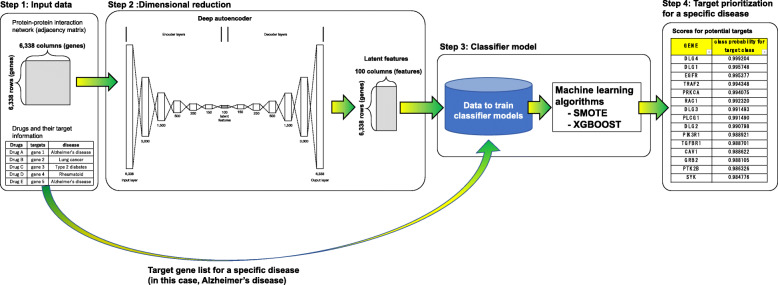
Background: Identifying novel therapeutic targets is crucial for the successful development of drugs. However, the cost to experimentally identify therapeutic targets is huge and only approximately 400 genes are targets for FDA-approved drugs. As a result, it is inevitable to develop powerful computational tools that can identify potential novel therapeutic targets. Fortunately, the human protein-protein interaction network (PIN) could be a useful resource to achieve this objective. Methods: In this study, we developed a deep learning-based computational framework that extracts low-dimensional representations of high-dimensional PIN data. Our computational framework uses latent features and state-of-the-art machine learning techniques to infer potential drug target genes. Results: We applied our computational framework to prioritize novel putative target genes for Alzheimer’s disease and successfully identified key genes that may serve as novel therapeutic targets (e.g., DLG4, EGFR, RAC1, SYK, PTK2B, SOCS1). Furthermore, based on these putative targets, we could infer repositionable candidate-compounds for the disease (e.g., tamoxifen, bosutinib, and dasatinib). Conclusions: Our deep learning-based computational framework could be a powerful tool to efficiently prioritize new therapeutic targets and enhance the drug repositioning strategy.
Overview
The claims and statistics of this paper haven’t been checked yet.
Free: it reads the open-access text and checks the first 5 claims that cite a source we can check. Create a free account to check every claim.
Integrity signals
Registry
Cites
Statistics
Figures
Verification
Claims the paper makes
The claims and statistics of this paper haven’t been checked yet.
Free: it reads the open-access text and checks the first 5 claims that cite a source we can check. Create a free account to check every claim.
Claims other papers make about this one
Each is checked against this paper’s own text: does it say what the citing paper says it does?
The source backs part of the claim, not all of it — or backs it for a different population, condition or comparison.
In the citing paper
“AI-based approaches typically require a large volume of information for training purposes [41].”
From The role of AI in drug discovery: challenges, opportunities, and strategies (2023) · cites this paper as [41]
Experimental — accuracy not yet measuredThe cited source says what the claim attributes to it.
In the citing paper
“Additionally, the advancement of artificial intelligence (AI)-based computational tools is facilitating drug repurposing, presenting a promising strategy AD drug development.431–433”
From Recent advances in Alzheimer's disease: Mechanisms, clinical trials and new drug development strategies. (2024) · cites this paper as [433]
Self-check
Percentages, sums and reported differences re-computed from the paper’s own numbers.
The self-check needs the paper’s full text.
Citations
Cites
Adam: A Method for Stochastic Optimization
Kingma, D. P., & Ba, J. (2014) · arXiv · doi:10.48550/arxiv.1412.6980 · Cited by 98,946 · cited 1×
“We optimized the deep autoencoder network by using “adam” [27] optimizer with a learning rate = 1.”
MethodScikit-learn: Machine Learning in Python
Pedregosa, F., Varoquaux, G., Gramfort, A., Michel, V., Thirion, B., Grisel, O., Blondel, M., Müller, A., Nothman, J., Louppe, G., et al. (2012) · arXiv · doi:10.48550/arxiv.1201.0490 · Cited by 71,016 · cited 1×
“To build the Xgboost algorithm-based binary classifiers, we used the XGBClassifier and scikit-learn [43] python modules.”
MethodXGBoost: A Scalable Tree Boosting System
Chen, T., & Guestrin, C. (2016) · Proceedings of the 22nd ACM SIGKDD International Conference on Knowledge Discovery and Data Mining · doi:10.1145/2939672.2939785 · Cited by 54,569 · cited 2×
“The binary classifier models are based on, Xgboost algorithm, the 155 most efficient implementation of gradient boosting algorithm [22].”
MethodCollective dynamics of ‘small-world’ networks
Watts, D. J., & Strogatz, S. H. (1998) · Nature · doi:10.1038/30918 · Cited by 43,060 · cited 2×
“…statistical topological features in the PIN for each gene, we calculated the following representative network metrics: indegree, outdegree, betweenness, closeness, PageRank [31], cluster coefficient [32], nearest neighbor degree (NND) [33], bow-tie structures [34], and indispensable nodes [35, 36].”
BackgroundMethodSMOTE synthetic minority over-sampling technique
Chawla, N. V., Bowyer, K. W., Hall, L. O., & Kegelmeyer, W. P. (2002) · Journal of Artificial Intelligence Research · doi:10.1613/jair.953 · Cited by 32,865 · cited 4×
“In order to make class-balanced training datasets for building binary classifiers, we used a state of the art sampling method, SMOTE (Synthetic Minority Oversampling TEchnique) [21] that synthetically creates new cases in minority class (in this study, “positive” case) (see Materials and Method in details).”
MethodInfluentialReducing the dimensionality of data with neural networks
Hinton, G. E., & Salakhutdinov, R. R. (2006) · Science · doi:10.1126/science.1127647 · Cited by 20,928
The anatomy of a large-scale hypertextual Web search engine
Brin, S., & Page, L. (1998) · Computer Networks and ISDN Systems · doi:10.1016/s0169-7552(98)00110-x · Cited by 16,004 · cited 2×
“355 Page rank [47]; Page rank for a given node is a metric to roughly estimate the importance 356 of the node in the network.”
BackgroundMethodTensorFlow: A system for large-scale machine learning
Abadi, M., Barham, P., Chen, J., Chen, Z., Davis, A., Dean, J., Devin, M., Ghemawat, S., Irving, G., Isard, M., et al. (2016) · arXiv (Cornell University) · doi:10.48550/arxiv.1605.08695 · Cited by 11,822
DrugBank 5.0: a major update to the DrugBank database for 2018
Wishart, D. S., Feunang, Y. D., Guo, A. C., Lo, E. J., Marcu, A., Grant, J. R., Sajed, T., Johnson, D., Li, C., Sayeeda, Z., et al. (2018) · Nucleic Acids Research · doi:10.1093/nar/gkx1037 · Cited by 8,404 · cited 1×
“324 We obtained information of drugs and that of their target genes from DrugBank 325 database [42] (http://www.”
BackgroundNetwork medicine: a network-based approach to human disease
Barabási, A.-L., Gulbahce, N., & Loscalzo, J. (2011) · Nature Reviews Genetics · doi:10.1038/nrg2918 · Cited by 5,034 · cited 1×
“47 Data of genome wide PINs are typical non-linear high-dimensional big-data in biomedical 48 domain and are composed of thousands of proteins and more than ten-thousands of 49 interactions among them [8,9].”
BackgroundAssortative Mixing in Networks
Newman, M. E. J. (2002) · Physical Review Letters · doi:10.1103/physrevlett.89.208701 · Cited by 4,988 · cited 2×
“363 Nearest neighbour degree (NND) [49]; The value of NND for a given node i is the average 364 degree among nearest neighbour nodes of the node i.”
BackgroundMethodControllability of complex networks
Liu, Y.-Y., Slotine, J.-J., & Barabási, A.-L. (2011) · Nature · doi:10.1038/nature10011 · Cited by 3,215 · cited 3×
“…statistical topological features in the PIN for each gene, we calculated the following representative network metrics: indegree, outdegree, betweenness, closeness, PageRank [31], cluster coefficient [32], nearest neighbor degree (NND) [33], bow-tie structures [34], and indispensable nodes [35, 36].”
BackgroundMethodStructural Deep Network Embedding
Wang, D., Cui, P., & Zhu, W. (2016) · Proceedings of the 22nd ACM SIGKDD International Conference on Knowledge Discovery and Data Mining · doi:10.1145/2939672.2939753 · Cited by 2,845 · cited 2×
“Wang et al. applied a deep autoencoder-based network embedding method to large-scale social networks (e.g., arxiv-GrQc, blogcata-log, Flicker, and Youtube) and successfully mapped these networks onto low-dimensional representations [21].”
BackgroundMethodAn $n^{5/2} $ Algorithm for Maximum Matchings in Bipartite Graphs
Hopcroft, J. E., & Karp, R. M. (1973) · SIAM Journal on Computing · doi:10.1137/0202019 · Cited by 2,802
Ten Years of Pathway Analysis: Current Approaches and Outstanding Challenges
Khatri, P., Sirota, M., & Butte, A. J. (2012) · PLoS Computational Biology · doi:10.1371/journal.pcbi.1002375 · Cited by 1,566 · cited 1×
“WebGestalt uses over-representation analysis (ORA) to statistically evaluate overlaps between the gene set of interest and a pathway [46].”
MethodImbalanced-learn: A Python Toolbox to Tackle the Curse of Imbalanced Datasets in Machine Learning
Lemaître, G., Nogueira, F., & Aridas, C. K. (2016) · arXiv (Cornell University) · doi:10.48550/arxiv.1609.06570 · Cited by 1,514 · cited 1×
“We used the Python module, imbalancelearn[41], to perform oversampling based on the SMOTE algorithm.”
MethodImproving deep neural networks for LVCSR using rectified linear units and dropout
Dahl, G. E., Sainath, T. N., & Hinton, G. E. (2013) · 2013 IEEE International Conference on Acoustics, Speech and Signal Processing · doi:10.1109/icassp.2013.6639346 · Cited by 1,310 · cited 1×
“Layers are fully connected and layers 333 except for output layer used rectified linear unit (ReLU) [43] as activation function.”
MethodCui, P., Wang, X., Pei, J., & Zhu, W. (2019) · IEEE Transactions on Knowledge and Data Engineering · doi:10.1109/tkde.2018.2849727 · Cited by 1,274
Asymmetric Transitivity Preserving Graph Embedding
Ou, M., Cui, P., Pei, J., Zhang, Z., & Zhu, W. (2016) · Proceedings of the 22nd ACM SIGKDD International Conference on Knowledge Discovery and Data Mining · doi:10.1145/2939672.2939751 · Cited by 1,248
Wang, J., Vasaikar, S., Shi, Z., Greer, M., & Zhang, B. (2017) · Nucleic Acids Research · doi:10.1093/nar/gkx356 · Cited by 1,157 · cited 1×
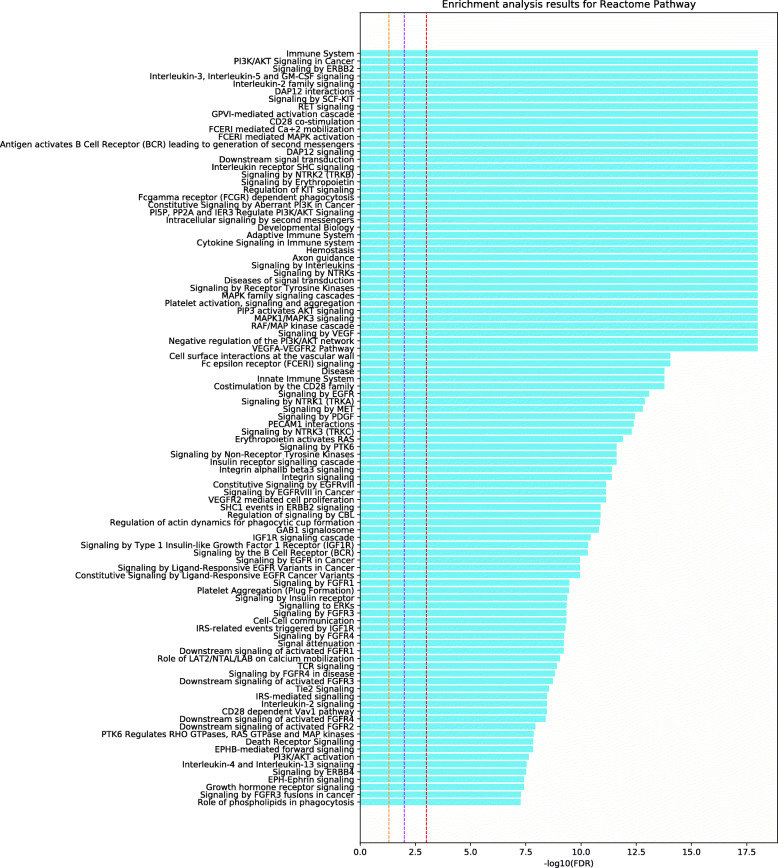
“To identify the pathways that are significantly associated with the putative targets inferred by our computational framework, we used WebGestalt web tool [45].”
MethodDeep Neural Networks for Learning Graph Representations
Cao, S., Lu, W., & Xu, Q. (2016) · Proceedings of the AAAI Conference on Artificial Intelligence · doi:10.1609/aaai.v30i1.10179 · Cited by 1,014 · cited 1×
“To address this issue, several researchers have employed network embedding methods based on deep learning techniques [21, 22].”
BackgroundZhang, P., Kishimoto, Y., Grammatikakis, I., Gottimukkala, K., Cutler, R. G., Zhang, S., Abdelmohsen, K., Bohr, V. A., Misra Sen, J., Gorospe, M., et al. (2019) · Nature Neuroscience · doi:10.1038/s41593-019-0372-9 · Cited by 977 · cited 1×
“reported that senolytic therapy (a combination of dasanitib and quercetin) could reduce the production of proinflammatory cytokine and alleviate deficits of cognitive functions in Alzheimer’s disease mouse models, via the selective removal of senescent oligodendrocyte progenitor cells [63, 64].”
BackgroundInnate immunity in Alzheimer's disease
Heneka, M. T., Golenbock, D. T., & Latz, E. (2015) · Nature Immunology · doi:10.1038/ni.3102 · Cited by 902 · cited 2×
“In fact, continuous amyloid-β formation and deposition chronically activate the immune system, causing disruption of the microglial clearance systems [47].”
BackgroundCommunity Preserving Network Embedding
Wang, X., Cui, P., Wang, J., Pei, J., Zhu, W., & Yang, S. (2017) · Proceedings of the AAAI Conference on Artificial Intelligence · doi:10.1609/aaai.v31i1.10488 · Cited by 883 · cited 1×
“low-dimensional representations [16,17].”
Trends in the exploitation of novel drug targets
Rask-Andersen, M., Almén, M. S., & Schiöth, H. B. (2011) · Nature Reviews Drug Discovery · doi:10.1038/nrd3478 · Cited by 853 · cited 1×
“However, the cost to experimentally predict drug targets is huge and only approximately 400 genes are used as targets of FDA-approved drugs [11].”
BackgroundPrediction of Drug-Target Interactions and Drug Repositioning via Network-Based Inference
Cheng, F., Liu, C., Jiang, J., Lu, W., Li, W., Liu, G., Zhou, W., Huang, J., & Tang, Y. (2012) · PLoS Computational Biology · doi:10.1371/journal.pcbi.1002503 · Cited by 818 · cited 1×
“[36] applied three similarities (drug-based, 256 target-based, and network-based similarities) based inference methods to predict interactions 257 between drugs and targets, and finally confirmed that five old drugs could be repositioned.”
MethodDiscovery of drug mode of action and drug repositioning from transcriptional responses
Iorio, F., Bosotti, R., Scacheri, E., Belcastro, V., Mithbaokar, P., Ferriero, R., Murino, L., Tagliaferri, R., Brunetti-Pierri, N., Isacchi, A., et al. (2010) · Proceedings of the National Academy of Sciences · doi:10.1073/pnas.1000138107 · Cited by 816 · cited 2×
“Iorioet et al [35] reported that Fasudil (a Rho-kinase inhibitor) might be applicable to several neurodegenerative disorders, by verifying similarity between CDK2 inhibitors and Topoisomerase inhibitors.”
BackgroundHow artificial intelligence is changing drug discovery
Fleming, N. (2018) · Nature · doi:10.1038/d41586-018-05267-x · Cited by 546
Big Data Application in Biomedical Research and Health Care: A Literature Review
Luo, J., Wu, M., Gopukumar, D., & Zhao, Y. (2016) · Biomedical Informatics Insights · doi:10.4137/bii.s31559 · Cited by 522
16th international conference on information FUSION
(2013) · IEEE Aerospace and Electronic Systems Magazine · doi:10.1109/maes.2013.6477863 · Cited by 393
Recent Advances in Drug Repositioning for the Discovery of New Anticancer Drugs
Shim, J. S., & Liu, J. O. (2014) · International Journal of Biological Sciences · doi:10.7150/ijbs.9224 · Cited by 382 · cited 1×
“With the former approach, a number of drugs for non-cancerous 249 diseases are discovered for cancer therapeutics [34].”
BackgroundA Directed Protein Interaction Network for Investigating Intracellular Signal Transduction
Vinayagam, A., Stelzl, U., Foulle, R., Plassmann, S., Zenkner, M., Timm, J., Assmus, H. E., Andrade-Navarro, M. A., & Wanker, E. E. (2011) · Science Signaling · doi:10.1126/scisignal.2001699 · Cited by 352 · cited 2×
“The PIN data was obtained elsewhere [23].”
MethodA survey of dimensionality reduction techniques
Sorzano, C. Ó. S., Vargas, J., & Pascual-Montano, A. (2014) · arXiv (Cornell University) · doi:10.48550/arxiv.1403.2877 · Cited by 305 · cited 1×
“With the recent advancement in AI technologies, several dimensionality reduction techniques have become available for non-linear complex data [4, 6, 7].”
BackgroundRepresentation Learning on Graphs: Methods and Applications
Hamilton, W. L., Ying, R., & Leskovec, J. (2017) · arXiv (Cornell University) · doi:10.48550/arxiv.1709.05584 · Cited by 290 · cited 1×
“dimensional reduction techniques to extract low-dimensional representations of a large network 62 from high-dimensional adjacency matrix of the network [14,15].”
SOCS1 and SOCS3 in the control of CNS immunity
Baker, B. J., Akhtar, L. N., & Benveniste, E. N. (2009) · Trends in Immunology · doi:10.1016/j.it.2009.07.001 · Cited by 276 · cited 1×
“234 In addition, although SOCS1 is the 86th ranked putative targets, SOCS1 modulates 235 cytokine responses through suppression of JAL/STAT signaling to control CNS (central nerve 236 system) inflammation [33].”
BackgroundVinayagam, A., Gibson, T. E., Lee, H.-J., Yilmazel, B., Roesel, C., Hu, Y., Kwon, Y., Sharma, A., Liu, Y.-Y., Perrimon, N., et al. (2016) · Proceedings of the National Academy of Sciences · doi:10.1073/pnas.1603992113 · Cited by 257 · cited 4×
“, removal of an indispensable node increase the ND in the 383 network [51].”
BackgroundMethodInfluentialEpigenetic editing of the Dlg4/PSD95 gene improves cognition in aged and Alzheimer’s disease mice
Bustos, F. J., Ampuero, E., Jury, N., Aguilar, R., Falahi, F., Toledo, J., Ahumada, J., Lata, J., Cubillos, P., Henríquez, B., et al. (2017) · Brain · doi:10.1093/brain/awx272 · Cited by 202 · cited 1×
“model mice with Alzheimer’s disease [24].”
Epidermal growth factor receptor is a preferred target for treating Amyloid-β–induced memory loss
Wang, L., Chiang, H.-C., Wu, W., Liang, B., Xie, Z., Yao, X., Ma, W., Du, S., & Zhong, Y. (2012) · Proceedings of the National Academy of Sciences · doi:10.1073/pnas.1208011109 · Cited by 190 · cited 1×
“demonstrated that upregulation of EGFR cause memory impairment in 201 amyloid-β-expressing fruit fly model [25].”
BackgroundGenomic variants, genes, and pathways of Alzheimer's disease: An overview
Naj, A. C., Schellenberg, G. D., & for the Alzheimer's Disease Genetics Consortium (ADGC) (2017) · American Journal of Medical Genetics Part B: Neuropsychiatric Genetics · doi:10.1002/ajmg.b.32499 · Cited by 179 · cited 1×
“We obtained 29 genes listed in [58] and compared them with our 187 genes.”
ResultBarrenschee, M., Zorenkov, D., Böttner, M., Lange, C., Cossais, F., Scharf, A. B., Deuschl, G., Schneider, S. A., Ellrichmann, M., Fritscher-Ravens, A., et al. (2017) · Acta Neuropathologica Communications · doi:10.1186/s40478-016-0408-2 · Cited by 115
Structure of Protein Interaction Networks and Their Implications on Drug Design
Hase, T., Tanaka, H., Suzuki, Y., Nakagawa, S., & Kitano, H. (2009) · PLoS Computational Biology · doi:10.1371/journal.pcbi.1000550 · Cited by 108 · cited 2×
“…data could be a useful resource for computational investigations of potential novel drug-targets; that is because proteins derive their functions together with their interacting partners and a network of protein interaction captures downstream relationships between targets and proteins [8–10 , 15].”
BackgroundSelf-citationTsai, A. P., Lin, P. B.-C., Dong, C., Moutinho, M., Casali, B. T., Liu, Y., Lamb, B. T., Landreth, G. E., Oblak, A. L., & Nho, K. (2021) · Neurobiology of Disease · doi:10.1016/j.nbd.2021.105303 · Cited by 104
Lonskaya, I., Hebron, M. L., Selby, S. T., Turner, R. S., & Moussa, C. (2015) · Neuroscience · doi:10.1016/j.neuroscience.2015.07.070 · Cited by 93 · cited 1×
“reported that Bosutinib combined with nilotinib systematically modulates with immune system in the CNS by inhibiting the non-receptor tyrosine kinase, Abl, to remove amyloid and decrease neuroinflammation [62].”
BackgroundProbabilistic preference learning with the Mallows rank modelPreprint
Vitelli, V., Sørensen, Ø., Crispino, M., Frigessi, A., & Arjas, E. (2014) · arXiv (Cornell University) · doi:10.48550/arxiv.1405.7945 · Cited by 92
Alzheimer's Disease Risk Factor Pyk2 Mediates Amyloid-β-Induced Synaptic Dysfunction and Loss
Salazar, S. V., Cox, T. O., Lee, S., Brody, A. H., Chyung, A. S., Haas, L. T., & Strittmatter, S. M. (2019) · The Journal of Neuroscience · doi:10.1523/jneurosci.1873-18.2018 · Cited by 77 · cited 2×
“230 The 10th ranked putative target, PTK2B, is a key gene to mediate synaptic dysfunction 231 induced by amyloid-β in Alzheimer’s disease [32].”
BackgroundParis, D., Ait-Ghezala, G., Bachmeier, C., Laco, G., Beaulieu-Abdelahad, D., Lin, Y., Jin, C., Crawford, F., & Mullan, M. (2014) · Journal of Biological Chemistry · doi:10.1074/jbc.m114.608091 · Cited by 73 · cited 2×
“Spleen tyrosine kinase (SYK), the fourth ranked potential target, could modulate the accumulation of amyloid-β and hyperphosphorylation of Tau protein, which is associated with Alzheimer’s disease [53].”
BackgroundWise, P. M. (2005) · Neuroscience · doi:10.1016/j.neuroscience.2005.08.046 · Cited by 66 · cited 1×
“As mentioned inWise PM [60], estrogen therapy could protect neuronal cells from cell death by modulating the expression of key genes that inhibit the apoptotic cell death pathway.”
BackgroundRac1 inhibition negatively regulates transcriptional activity of the amyloid precursor protein gene
Wang, P., Niidome, T., Akaike, A., Kihara, T., & Sugimoto, H. (2009) · Journal of Neuroscience Research · doi:10.1002/jnr.22039 · Cited by 52 · cited 1×
“regulation of APP gene in hippocampal primary neurons [26].”
Background1–42 β-Amyloid peptide requires PDK1/nPKC/Rac 1 pathway to induce neuronal death
Manterola, L., Hernando-Rodríguez, M., Ruiz, A., Apraiz, A., Arrizabalaga, O., Vellón, L., Alberdi, E., Cavaliere, F., Lacerda, H. M., Jimenez, S., et al. (2013) · Translational Psychiatry · doi:10.1038/tp.2012.147 · Cited by 51 · cited 1×
“RAC1 inhibitors can also 210 prevent cell death caused by amyloid-β42 in primary neurons of hippocampus and those of 211 entorhinal cortex [27].”
BackgroundKikuchi, M., Sekiya, M., Hara, N., Miyashita, A., Kuwano, R., Ikeuchi, T., Iijima, K., & Nakaya, A. (2020) · Human Molecular Genetics · doi:10.1093/hmg/ddz320 · Cited by 48 · cited 1×
“RAC1 is a hub gene in the network and thus causes age-related alterations in behaviour and 214 neuronal degenerations [28].”
BackgroundSelf-citationAlzheimer’s disease pathological lesions activate the spleen tyrosine kinase
Schweig, J. E., Yao, H., Beaulieu-Abdelahad, D., Ait-Ghezala, G., Mouzon, B., Crawford, F., Mullan, M., & Paris, D. (2017) · Acta Neuropathologica Communications · doi:10.1186/s40478-017-0472-2 · Cited by 40 · cited 1×
“demonstrated that, in mices with overexpression of amyloid-β, SYK activation occurred in 223 microglia and increased neurite degeneration due to amyloid-β plaques associated with 224 aging [30].”
BackgroundLong-term use of tamoxifen reduces the risk of dementia: A nationwide population-based cohort study
Sun, L.-M., Chen, H.-J., Liang, J.-A., & Kao, C.-H. (2016) · QJM · doi:10.1093/qjmed/hcv072 · Cited by 39
Spleen tyrosine kinase (SYK) blocks autophagic Tau degradation in vitro and in vivo
Schweig, J. E., Yao, H., Coppola, K., Jin, C., Crawford, F., Mullan, M., & Paris, D. (2019) · Journal of Biological Chemistry · doi:10.1074/jbc.ra119.008033 · Cited by 36 · cited 1×
“Schweig et al. demonstrated that SYK inhibition induces Tau reduction in an autophagic manner [55].”
BackgroundBow-tie decomposition in directed graphs
Yang, R., Zhuhadar, L., & Nasraoui, O. (2011) · Cited by 26
Big Data: Challenge and Opportunity for Translational and Industrial Research in Healthcare
Rossi, R. L., & Grifantini, R. (2018) · Frontiers in Digital Humanities · doi:10.3389/fdigh.2018.00013 · Cited by 18
PCA and LDA as dimension reduction for individuality of handwriting in writer verification
Ramlee, R., Muda, A. K., & Ahmad, S. S. S. (2013) · International Conference on Intelligent Systems Design and Applications (ISDA) · doi:10.1109/isda.2013.6920716 · Cited by 6 · cited 1×
“Their 13 dimensionality should be reduced to avoid undesired properties of high-dimensional space, 14 especially the curse of dimensionality [5].”
BackgroundProtein-Protein Interaction Networks: Structures, Evolution, and Application to Drug Design
Hase, T., & Niimura, Y. (2012) · IntechOpen eBooks · doi:10.5772/36665 · Cited by 4 · cited 1×
“With the recent Genome-wide PIN data are typical non-linear high-dimensional big-data in the biomedical domain that are composed of thousands of proteins as well as more than ten-thousand interactions among them [8, 9].”
MethodSelf-citationIdentification of drug-target modules in the human protein–protein interaction network
Hase, T., Kikuchi, K., Ghosh, S., Kitano, H., & Tanaka, H. (2014) · Artificial Life and Robotics · doi:10.1007/s10015-014-0178-5 · Cited by 4
Self-citationHase, T., Ghosh, S., Palaniappan, S. K., & Kitano, H. (2017) · Harvard University Press eBooks · doi:10.4159/9780674545533-014 · Cited by 4
Self-citationTargeting senescence within the Alzheimer’s plaque
Curtis, A. M. (2019) · Science Translational Medicine · doi:10.1126/scitranslmed.aax4869 · Cited by 3 · cited 1×
“…al. reported that senolytic therapy (a combination of dasanitib and quercetin) could reduce the production of proinflammatory cytokine and alleviate deficits of cognitive functions in Alzheimer’s disease mouse models, via the selective removal of senescent oligodendrocyte progenitor cells [63, 64].”
Background(2006) · Medical Entomology and Zoology
Research works printed but not linked: 1
- Van Der Maaten L Postma E Van den Herik J Dimensionality reduction: a comparative J Mach Learn Res 2009 10 66-71 13
Cited by
Zhang, J., Zhang, Y., Wang, J., Xia, Y., Zhang, J., & Chen, L. (2024) · Signal Transduction and Targeted Therapy · doi:10.1038/s41392-024-01911-3 · Cited by 1,138
The role of AI in drug discovery: challenges, opportunities, and strategies
Blanco-González, A., Cabezón, A., Seco-González, A., Conde-Torres, D., Antelo-Riveiro, P., Piñeiro, Á., & Garcia-Fandino, R. (2023) · Pharmaceuticals · doi:10.3390/ph16060891 · Cited by 690
“AI-based approaches typically require a large volume of information for training purposes [41].”
BackgroundHossain, M. S., & Hussain, M. H. (2025) · Pharmacology Research & Perspectives · doi:10.1002/prp2.70131 · Cited by 121
Applied Artificial Intelligence in Materials Science and Material Design
Chávez‐Ángel, E., Eriksen, M., Castro‐Álvarez, A., García, J. H., Botifoll, M., Ávalos‐Ovando, Ó., Arbiol, J., & Mugarza, A. (2025) · Advanced Intelligent Systems · doi:10.1002/aisy.202400986 · Cited by 100
Toumaj, S., Heidari, A., Shahhosseini, R., & Navimipour, N. J. (2024) · Artificial Intelligence Review · doi:10.1007/s10462-024-11041-5 · Cited by 89
Metadata
- Authors
- Tsuji, S., Hase, T., Yachie-Kinoshita, A., Nishino, T., Ghosh, S., Kikuchi, M., Shimokawa, K., Aburatani, H., Kitano, H., & Tanaka, H.
- Affiliations
- Research Center for Advanced Science and Technology, The University of Tokyo (JP)
- Tokyo Medical and Dental University (JP)
- Systems Biology Institute (JP)
- The University of Osaka (JP)
- Center for Mathematical Modeling and Data Science, The University of Osaka (JP)
- Corresponding author
- Tsuji, Shingo
- Hase, Takeshi
- ORCID
- Venue
- Alzheimer's Research & Therapy
- Published
- 2021-05-03
- Volume
- 13
- Issue
- 1
- Pages
- 92-92
- ISSN
- 1758-9193 (ISSN-L)
- PMC
- PMC8091739
- OpenAlex
- W3158891634
- Cited by
- 75
- References
- 62
- Citations by year
- 2026: 12 · 2025: 16 · 2024: 20 · 2023: 15 · 2022: 10 · 2021: 2
- FWCI
- 6.19
- Type
- journal article
- Language
- en
- Open access
- gold
- doi.org
- Licence
- cc-by
- creativecommons.org/licenses/by/4.0 (tdm)
- creativecommons.org/licenses/by/4.0 (vor)
- Locations
- Alzheimer s Research & Therapy (publishedVersion, cc-by)
- bioRxiv (Cold Spring Harbor Laboratory) (acceptedVersion, cc-by-nc-nd)
- PubMed Central (publishedVersion, cc-by)
- PubMed (publishedVersion)
- DOAJ (DOAJ: Directory of Open Access Journals) (submittedVersion, cc-by-sa)
- Funders
- Japan Society for the Promotion of Science (17H06107, 20K15778)
- Topics
- Life Sciences › Pharmacology, Toxicology and Pharmaceutics › Drug Discovery › Computational Drug Discovery Methods
- Life Sciences › Biochemistry, Genetics and Molecular Biology › Molecular Biology › Bioinformatics and Genomic Networks
- Life Sciences › Neuroscience › Cellular and Molecular Neuroscience › Alzheimer's disease research and treatments
- Keywords
- drug target prioritization, drug repurposing, Alzheimer's disease, protein-protein interaction network, deep learning, drug target identification, latent representations, drug candidates, PSD-95, EGFR, Rac1, Syk, Pyk2, SOCS1, tamoxifen, bosutinib, dasatinib
- MeSH terms
- Machine Learning, Alzheimer Disease, Artificial Intelligence, Pharmaceutical Preparations, Humans, Drug Repositioning
About these checks
Registry, retraction, Cites and statistics results are computed, not judged, with one exception: a printed reference that no index lists is read once by a model before it counts as a citation error. Claims are extracted by a model and kept only when their quote appears verbatim in the text; each cited source is then checked, with a model’s help, for whether it says what the claim relies on. Those verdicts can be wrong — read the claim’s quote and the cited source before relying on one.
Statistics and arithmetic are recomputed, not judged.
Confidence bands are shown only for fields calibrated on our annotated test set. None is calibrated yet, so no band is shown.
What counts as a claim ›How we measure confidence ›How we check this ›
Are you an author, or do you see a problem with this page? Request a review
Data sources
Bibliographic data: Semantic Scholar, OpenAlex, Crossref.
Contains information from the Semantic Scholar Academic Graph Datasets, made available under the ODC Attribution License (ODC-BY 1.0).
Semantic Scholar’s data is described in: Kinney, R., et al. (2023). The Semantic Scholar Open Data Platform. arXiv:2301.10140.
