

An update on molecular cat allergens: Fel d 1 and what else? Chapter 1: Fel d 1, the major cat allergen
Open accessThe DOI matches its Crossref record; 92 of the 92 references it cites were found in a registry or an index.
Abstract
BACKGROUND: Cats are the major source of indoor inhalant allergens after house dust mites. The global incidence of cat allergies is rising sharply, posing a major public health problem. Ten cat allergens have been identified. The major allergen responsible for symptoms is Fel d 1, a secretoglobin and not a lipocalin, making the cat a special case among mammals. MAIN BODY: Given its clinical predominance, it is essential to have a good knowledge of this allergenic fraction, including its basic structure, to understand the new exciting diagnostic and therapeutic applications currently in development. The recent arrival of the component-resolved diagnosis, which uses molecular allergens, represents a unique opportunity to improve our understanding of the disease. Recombinant Fel d 1 is now available for in vitro diagnosis by the anti-Fel d 1 specific IgE assay. The first part of the review will seek to describe the recent advances related to Fel d 1 in terms of positive diagnosis and assessment of disease severity. In daily practice, anti-Fel d 1 IgE tend to replace those directed against the overall extract but is this attitude justified? We will look at the most recent arguments to try to answer this question. In parallel, a second revolution is taking place thanks to molecular engineering, which has allowed the development of various forms of recombinant Fel d 1 and which seeks to modify the immunomodulatory properties of the molecule and thus the clinical history of the disease via various modalities of anti-Fel d 1-specific immunotherapy. We will endeavor to give a clear and practical overview of all these trends.
Overview
The claims and statistics of this paper haven’t been checked yet.
Free: it reads the open-access text and checks the first 5 claims that cite a source we can check. Create a free account to check every claim.
Integrity signals
Registry
Cites
Statistics
Figures
Verification
Claims the paper makes
The claims and statistics of this paper haven’t been checked yet.
Free: it reads the open-access text and checks the first 5 claims that cite a source we can check. Create a free account to check every claim.
Claims other papers make about this one
Each is checked against this paper’s own text: does it say what the citing paper says it does?
The source backs part of the claim, not all of it — or backs it for a different population, condition or comparison.
In the citing paper
“The primary allergenic protein associated with cat allergies is Felis domesticus 1 (Fel d 1), which accounts for >95% of allergic sensitization in humans (22,23).”
From Indoor Allergen Interventions in Homes and Schools for Managing Asthma (2025) · cites this paper as [22]
Experimental — accuracy not yet measuredThe cited source says what the claim attributes to it.
In the citing paper
“Although, its role in cats remains unknown, Fel d 1 is the primary trigger for IgE-mediated allergic response in sensitive individuals (22,23).”
From Indoor Allergen Interventions in Homes and Schools for Managing Asthma (2025) · cites this paper as [22]
Self-check
Percentages, sums and reported differences re-computed from the paper’s own numbers.
The self-check needs the paper’s full text.
Citations
Cites
Pushko, P., Pumpens, P., & Grens, E. (2013) · Intervirology · doi:10.1159/000346773 · Cited by 5,950
Sublingual immunotherapy: World Allergy Organization position paper 2013 update
Canonica, G. W., Cox, L., Pawankar, R., Baena-Cagnani, C. E., Blaiss, M., Bonini, S., Bousquet, J., Calderón, M., Compalati, E., Durham, S. R., et al. (2014) · World Allergy Organization Journal · doi:10.1186/1939-4551-7-6 · Cited by 591 · cited 1×
“Subcutaneous immunotherapy is a lengthy process requiring many administrations over a period of 3–5 years [85] and in addition entails various side effects [88].”
BackgroundDoes early exposure to cat or dog protect against later allergy development?
HESSELMAR, Åberg, Åberg, ERIKSSON, & BJÖRKSTÉN (1999) · Clinical & Experimental Allergy · doi:10.1046/j.1365-2222.1999.00534.x · Cited by 540
Till, S. J., Francis, J. N., Nouri-Aria, K., & Durham, S. R. (2004) · Journal of Allergy and Clinical Immunology · doi:10.1016/j.jaci.2004.03.024 · Cited by 434 · cited 1×
“allergens by different delivery routes (mainly subcutaneous, sublingual or oral), results in long-term allergenic desensitization [66, 67].”
BackgroundLødrup Carlsen, K. C., Roll, S., Carlsen, K.-H., Mowinckel, P., Wijga, A. H., Brunekreef, B., Torrent, M., Roberts, G., Arshad, S. H., Kull, I., et al. (2012) · PLoS ONE · doi:10.1371/journal.pone.0043214 · Cited by 400 · cited 1×
“In another study, Carlsen’s team showed that the acquisition of a pet in early life did not appear to either increase or reduce the risk of asthma or allergic rhinitis symptoms in children aged 6–10 years [45].”
BackgroundTreatment of cat allergy with T-cell reactive peptides.
Norman, P. S., Ohman, J. L., Long, A. A., Creticos, P. S., Gefter, M. A., Shaked, Z., Wood, R. A., Eggleston, P. A., Hafner, K. B., Rao, P., et al. (1996) · American Journal of Respiratory and Critical Care Medicine · doi:10.1164/ajrccm.154.6.8970345 · Cited by 365 · cited 3×
“Unlike Fel d 1, these two peptides caused histamine release from basophils in < 1% of cat allergic patients and are unable to crosslink allergen-specific IgE molecules on basophils in vitro [72].”
BackgroundMethodInfluentialOldfield, W., Larché, M., & Kay, A. (2002) · The Lancet · doi:10.1016/s0140-6736(02)09332-7 · Cited by 347 · cited 1×
“were generated, in particular one using 12 shorter synthetic peptides, which reduced late-phase cutaneous reaction in a randomized double-blind controlled trial and late asthmatic reaction in another trial after 3–4 months of treatment [55, 74].”
MethodLuczynska, C. M., Li, Y., Chapman, M. D., & Platts-Mills, T. A. E. (1990) · American Review of Respiratory Disease · doi:10.1164/ajrccm/141.2.361 · Cited by 340
Heinzerling, L. M., Burbach, G. J., Edenharter, G., Bachert, C., Bindslev‐Jensen, C., Bonini, S., Bousquet, J., Bousquet‐Rouanet, L., Bousquet, P. J., Bresciani, M., et al. (2009) · Allergy · doi:10.1111/j.1398-9995.2009.02093.x · Cited by 332 · cited 1×
“A significant proportion of atopic subjects (about 20–40%) are sensitized to cat allergens [2, 3].”
BackgroundIntralymphatic immunotherapy for cat allergy induces tolerance after only 3 injections
Senti, G., Crameri, R., Kuster, D., Johansen, P., Martinez-Gomez, J. M., Graf, N., Steiner, M., Hothorn, L. A., Grönlund, H., Tivig, C., et al. (2012) · Journal of Allergy and Clinical Immunology · doi:10.1016/j.jaci.2012.02.026 · Cited by 271 · cited 4×
“Subcutaneous immunotherapy is a lengthy process requiring many administrations over a period of 3–5 years [85] and in addition entails various side effects [88].”
BackgroundMethodInfluentialHeinzerling, L., Frew, A. J., Bindslev‐Jensen, C., Bonini, S., Bousquet, J., Bresciani, M., Carlsen, K. ‐., van Cauwenberge, P., Darsow, U., Fokkens, W. J., et al. (2005) · Allergy · doi:10.1111/j.1398-9995.2005.00895.x · Cited by 233
Munir, A. K. M., Einarsson, R., Schou, C., & Dreborg, S. K. G. (1993) · Journal of Allergy and Clinical Immunology · doi:10.1016/0091-6749(93)90221-z · Cited by 227
Morgenstern, J. P., Griffith, I. J., Brauer, A. W., Rogers, B. L., Bond, J. F., Chapman, M. D., & Kuo, M. C. (1991) · Proceedings of the National Academy of Sciences · doi:10.1073/pnas.88.21.9690 · Cited by 213 · cited 4×
“This polypeptide has a marked structural identity with the rabbit lipophilin/secretoglobin (Ory c 3) and sequence homology with another member of the uteroglobin family, a protein of the human bronchial epithelial cells called Clara cell 10-kDa protein [11, 13].”
BackgroundInfluentialCampbell, J. D., Buckland, K. F., McMillan, S. J., Kearley, J., Oldfield, W. L. G., Stern, L. J., Grönlund, H., van Hage, M., Reynolds, C. J., Boyton, R. J., et al. (2009) · Journal of Experimental Medicine · doi:10.1084/jem.20082901 · Cited by 208 · cited 1×
“From a mechanistic point of view, evidence has been provided that treatment with selected epitopes from Fel d 1 resulted in suppression of both human and murine responses unrestricted to these epitopes (namely associated with suppression of responses to other epitopes within the same molecule, called linked epitope su…”
BackgroundPatel, D., Couroux, P., Hickey, P., Salapatek, A. M., Laidler, P., Larché, M., & Hafner, R. P. (2013) · Journal of Allergy and Clinical Immunology · doi:10.1016/j.jaci.2012.07.028 · Cited by 198 · cited 1×
“The effects lasted for 2 years after the initiation of treatment [77, 78].”
BackgroundAllergy to furry animals: New insights, diagnostic approaches, and challenges
Konradsen, J. R., Fujisawa, T., van Hage, M., Hedlin, G., Hilger, C., Kleine-Tebbe, J., Matsui, E. C., Roberts, G., Rönmark, E., & Platts-Mills, T. A. E. (2015) · Journal of Allergy and Clinical Immunology · doi:10.1016/j.jaci.2014.08.026 · Cited by 197 · cited 1×
“Its predominance, shown by inhibition studies, is such that it is classically recognized as the major cat allergen, the only one whose clinical impact is essential [8].”
BackgroundA chimeric human-cat fusion protein blocks cat-induced allergy
Zhu, D., Kepley, C. L., Zhang, K., Terada, T., Yamada, T., & Saxon, A. (2005) · Nature Medicine · doi:10.1038/nm1219 · Cited by 188 · cited 2×
“This Fcγ-Fel d 1 protein induced as expected an allergen-specific inhibition of the degranulation of both types of cell [82].”
BackgroundExposure to multiple indoor allergens in US homes and its relationship to asthma
Salo, P. M., Arbes, S. J., Crockett, P. W., Thorne, P. S., Cohn, R. D., & Zeldin, D. C. (2008) · Journal of Allergy and Clinical Immunology · doi:10.1016/j.jaci.2007.12.1164 · Cited by 182
Oldfield, W. L. G., Kay, A. B., & Larché, M. (2001) · The Journal of Immunology · doi:10.4049/jimmunol.167.3.1734 · Cited by 170 · cited 1×
“were generated, in particular one using 12 shorter synthetic peptides, which reduced late-phase cutaneous reaction in a randomized double-blind controlled trial and late asthmatic reaction in another trial after 3–4 months of treatment [55, 74].”
MethodAsarnoj, A., Hamsten, C., Wadén, K., Lupinek, C., Andersson, N., Kull, I., Curin, M., Anto, J., Bousquet, J., Valenta, R., et al. (2016) · Journal of Allergy and Clinical Immunology · doi:10.1016/j.jaci.2015.09.052 · Cited by 162
Arbes, S. J., Cohn, R. D., Yin, M., Muilenberg, M. L., Friedman, W., & Zeldin, D. C. (2004) · Journal of Allergy and Clinical Immunology · doi:10.1016/j.jaci.2004.04.036 · Cited by 155 · cited 1×
“Fel d 1 was found in the dust of sofas, carpets and beds in homes with cats, but also in homes without a cat [30].”
BackgroundLau, S., Illi, S., Platts‐Mills, T. A. E., Riposo, D., Nickel, R., Grüber, C., Niggemann, B., Wahn, U., & The Multicentre Allergy Study Group (2005) · Allergy · doi:10.1111/j.1398-9995.2005.00781.x · Cited by 152
Allergens of mammalian origin. III. Properties of a major feline allergen.
Ohman, J. L., Lowell, F. C., & Bloch, K. J. (1974) · PubMed · Cited by 144
Schmitz, N., Dietmeier, K., Bauer, M., Maudrich, M., Utzinger, S., Muntwiler, S., Saudan, P., & Bachmann, M. F. (2009) · Journal of Experimental Medicine · doi:10.1084/jem.20090199 · Cited by 136 · cited 1×
“allergens by different delivery routes (mainly subcutaneous, sublingual or oral), results in long-term allergenic desensitization [66, 67].”
BackgroundMellerup, M. T., Hahn, G. W., Poulsen, L. K., & Malling, H. (2000) · Clinical & Experimental Allergy · doi:10.1046/j.1365-2222.2000.00910.x · Cited by 134 · cited 1×
“However, the use of cat dander extract is constrained by different problems such as standardization, compliance and severe side effects [69].”
BackgroundReefer, A. J., Carneiro, R. M. D. M., Custis, N. J., Platts‐Mills, T. A. E., Sung, S. J., Hammer, J., & Woodfolk, J. A. (2004) · The Journal of Immunology · doi:10.4049/jimmunol.172.5.2763 · Cited by 129
Avner, D. B., Perzanowski, M. S., Platts-Mills, T. A. E., & Woodfolk, J. A. (1997) · Journal of Allergy and Clinical Immunology · doi:10.1016/s0091-6749(97)70242-2 · Cited by 126 · cited 1×
“Washing cats reduces the amount of Fel d 1 on the skin and fur but the effect does not last long as the amount of Fel d 1 returns to its original level in just 2 days [27, 28].”
BackgroundThe crystal structure of the major cat allergen Fel d 1, a member of the secretoglobin family
Kaiser, L., Grönlund, H., Sandalova, T., Ljunggren, H.-G., van Hage-Hamsten, M., Achour, A., & Schneider, G. (2003) · Journal of Biological Chemistry · doi:10.1074/jbc.m304740200 · Cited by 122 · cited 2×
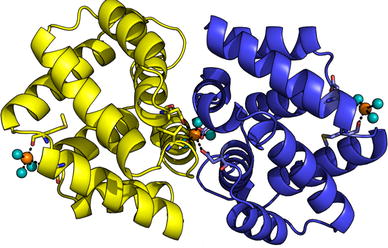
“The three-dimensional structure of Fel d 1 was determined, it is more complex than that of other allergens, with an internal cavity which could accommodate an endogenous ligand and two calcium external binding sites [9, 15, 16] (Fig.”
BackgroundFel d I allergen distribution in cat fur and skin
Charpin, C., Mata, P., Charpin, D., Lavaut, M. N., Allasia, C., & Vervloet, D. (1991) · Journal of Allergy and Clinical Immunology · doi:10.1016/0091-6749(91)90303-6 · Cited by 112 · cited 1×
“Epidemiology Fel d 1 is a thermostable protein found in the saliva, anal glands, sebaceous glands, skin and fur of cats [11, 21, 22].”
BackgroundUbiquitous presence of cat allergen in cat-free buildings: probable dispersal from human clothing.
Enberg, R. N., Shamie, S. M., MCCULLOUGH, J., & Ownby, D. R. (1993) · PubMed · Cited by 112
Couroux, P., Patel, D., Armstrong, K., Larché, M., & Hafner, R. P. (2015) · Clinical & Experimental Allergy · doi:10.1111/cea.12488 · Cited by 111 · cited 1×
“The effects lasted for 2 years after the initiation of treatment [77, 78].”
BackgroundKonradsen, J. R., Nordlund, B., Onell, A., Borres, M. P., Grönlund, H., & Hedlin, G. (2014) · Pediatric Allergy and Immunology · doi:10.1111/pai.12198 · Cited by 109
A hypoallergenic cat vaccine based on Fel d 1–derived peptides fused to hepatitis B PreS
Niespodziana, K., Focke-Tejkl, M., Linhart, B., Civaj, V., Blatt, K., Valent, P., van Hage, M., Grönlund, H., & Valenta, R. (2011) · Journal of Allergy and Clinical Immunology · doi:10.1016/j.jaci.2011.02.004 · Cited by 105
Ohman, J. L., Lowell, F. C., & Bloch, K. J. (1974) · The Journal of Immunology · doi:10.4049/jimmunol.113.6.1668 · Cited by 100
The Major Cat Allergen, Fel d 1, in Diagnosis and Therapy
Grönlund, H., Saarne, T., Gafvelin, G., & van Hage, M. (2010) · International Archives of Allergy and Immunology · doi:10.1159/000250435 · Cited by 96 · cited 3×
“Designed to modify the nature of the immune response against allergens and thus the history of the disease, it is currently the only treatment whose aim is not only symptomatic but also etiological [50].”
BackgroundLøwenstein, H., Lind, P., & Weeke, B. (1985) · Allergy · doi:10.1111/j.1398-9995.1985.tb02682.x · Cited by 93
Nordlund, B., Konradsen, J. R., Kull, I., Borres, M. P., Önell, A., Hedlin, G., & Grönlund, H. (2012) · Allergy · doi:10.1111/j.1398-9995.2012.02797.x · Cited by 90 · cited 1×
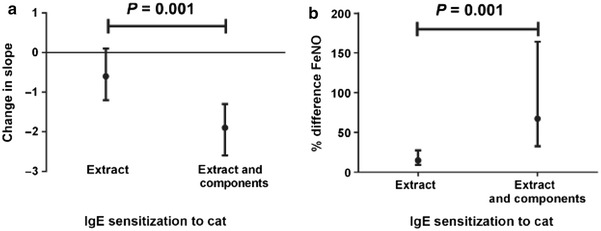
“In addition, it has been shown that multi-sensitization towards more than three components including animalderived lipocalin, kallikrein and Fel d 1 was associated with cases of severe asthma and among which occurred increased bronchial inflammation and a trend towards more courses of oral corticosteroid treatment [64…”
Backgroundde Groot, H., Goei, K. G. H., van Swieten, P., & Aalberse, R. C. (1991) · Journal of Allergy and Clinical Immunology · doi:10.1016/0091-6749(91)92150-y · Cited by 89 · cited 1×
“Crossed immunoelectrophoresis tests showed that most IgE antibodies to cat allergens in the serum of allergic patients are directed against Fel d 1, and account for 60–90% of overall allergenic activity [4, 5, 11, 50, 52].”
BackgroundExpression and genomic structure of the genes encoding FdI, the major allergen from the domestic cat
Griffith, I. J., Craig, S. J., Pollock, J., Yu, X.-B., Morgenstern, J. P., & Rogers, B. L. (1992) · Gene · doi:10.1016/0378-1119(92)90405-e · Cited by 80
A population‐based study of animal component sensitization, asthma, and rhinitis in schoolchildren
Bjerg, A., Winberg, A., Berthold, M., Mattsson, L., Borres, M. P., & Rönmark, E. (2015) · Pediatric Allergy and Immunology · doi:10.1111/pai.12422 · Cited by 80 · cited 1×
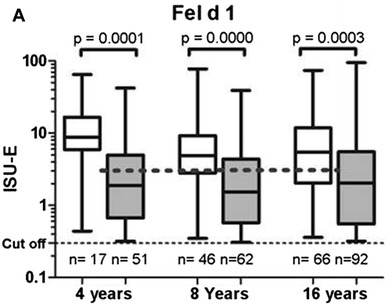
“Asthma was associated with higher levels of component sensitization (Fel d 1 ≥ 15 ISU), and sensitization to more than one component from the same animal conferred the greatest risk [65].”
BackgroundÁlvarez‐Cuesta, E., Berges‐Gimeno, P., Mancebo, E. G., Fernández‐Caldas, E., Cuesta‐Herranz, J., & Casanovas, M. (2007) · Allergy · doi:10.1111/j.1398-9995.2007.01365.x · Cited by 79 · cited 2×
“In addition, skin test reactivity to a standardized cat extract was better than in the placebo group [68].”
BackgroundMethodGrönlund, H., Adédoyin, J., Reininger, R., Varga, E. ‐., Zach, M., Fredriksson, M., Kronqvist, M., Szepfalusi, Z., Spitzauer, S., Grönneberg, R., et al. (2008) · Clinical & Experimental Allergy · doi:10.1111/j.1365-2222.2008.03003.x · Cited by 78 · cited 2×
“Assessment of the disease severity The correlation between the level of Fel d 1-specific IgE and the severity of symptoms was assessed in a case–control study by ImmunoCap in 140 cat-allergic children and adults from Sweden and Austria suffering from asthma and/or rhinoconjunctivitis [48].”
BackgroundMethodWhere does cat allergen 1 come from?
Bartholomé, K., Kissler, W., Baer, H., Kopietz-Schulte, E., & Wahn, U. (1985) · Journal of Allergy and Clinical Immunology · doi:10.1016/0091-6749(85)90734-1 · Cited by 73 · cited 1×
“Epidemiology Fel d 1 is a thermostable protein found in the saliva, anal glands, sebaceous glands, skin and fur of cats [11, 21, 22].”
BackgroundIgE antibody to cat allergens in an allergic population
Ohman, J. L., Kendall, S., & Lowell, F. C. (1977) · Journal of Allergy and Clinical Immunology · doi:10.1016/0091-6749(77)90112-9 · Cited by 72 · cited 1×
“Anti-Fel d 1 specific IgE is found in the serum of more than 80–95% of patients allergic to cats [4, 5, 50, 51].”
BackgroundAllergenically active components of cat allergen extracts.
Anderson, M. C., & Baer, H. (1981) · The Journal of Immunology · doi:10.4049/jimmunol.127.3.972 · Cited by 70 · cited 3×
“Historically, 10 allergens recognized by specific IgE have been identified in studies of extracts from fur, saliva, serum and urine [4, 5].”
BackgroundStructural Characterization of the Tetrameric form of the Major Cat Allergen Fel d 1
Kaiser, L., Velickovic, T. C., Badia-Martinez, D., Adedoyin, J., Thunberg, S., Hallén, D., Berndt, K., Grönlund, H., Gafvelin, G., van Hage, M., et al. (2007) · Journal of Molecular Biology · doi:10.1016/j.jmb.2007.04.074 · Cited by 70
Emara, M., Royer, P.-J., Abbas, Z., Sewell, H. F., Mohamed, G. G., Singh, S., Peel, S., Fox, J., Shakib, F., Martinez-Pomares, L., et al. (2011) · Journal of Biological Chemistry · doi:10.1074/jbc.m111.220657 · Cited by 69
Collin, S. M., Granell, R., Westgarth, C., Murray, J., Paul, E., Sterne, J. A. C., & John Henderson, A. (2015) · Clinical & Experimental Allergy · doi:10.1111/cea.12380 · Cited by 68 · cited 1×
“Recent studies confirm these data, reporting that cat ownership during pregnancy and childhood in a large birth cohort (Avon Longitudinal Study of Parents and Children or ALSPAC) was consistently associated with a reduced risk of aeroallergen sensitization, wheezing and atopic asthma at the age of 7, but tended to be…”
ResultVariability of cat-allergen shedding
Wentz-Murtha, P., Swanson, M. C., & Reed, C. E. (1990) · Journal of Allergy and Clinical Immunology · doi:10.1016/0091-6749(90)90228-v · Cited by 57 · cited 1×
“Not all cats shed Fel d 1 in the air at the same rate [26].”
BackgroundPerzanowski, M. S., Ronmark, E., James, H. R., Hedman, L., Schuyler, A. J., Bjerg, A., Lundback, B., & Platts-Mills, T. A. E. (2016) · Journal of Allergy and Clinical Immunology · doi:10.1016/j.jaci.2016.05.017 · Cited by 57 · cited 1×
“94) with cat dander titers, which were strongly associated with the prevalence, severity, and persistence of asthma in a 19-year-old population (ImmunoCAP 250) [62].”
BackgroundVailes, L. D., Li, Y., Bao, Y., DeGroot, H., Aalberse, R. C., & Chapman, M. D. (1994) · Journal of Allergy and Clinical Immunology · doi:10.1016/0091-6749(94)90229-1 · Cited by 56 · cited 1×
“The epitopes of Fel d 1 are partially conformational because the amount of IgE reactivity directed against each of the two chains of Fel d 1 separately is far less than that of total IgE reactivity against the natural heterodimer [17, 18].”
BackgroundA Pilot Study of Intralymphatic Immunotherapy for House Dust Mite, Cat, and Dog Allergies
Lee, S. P., Choi, S. J., Joe, E., Lee, S. M., Lee, M. W., Shim, J. W., Kim, Y. J., Kyung, S. Y., Park, J.-W., Jeong, S. H., et al. (2017) · Allergy, Asthma & Immunology Research · doi:10.4168/aair.2017.9.3.272 · Cited by 56 · cited 1×
“However, the authors reported for the first time that, in hypersensitized patients, ILIT can cause severe systemic and/or local hypersensitivity reactions (when performed with aqueous allergen extracts) [89].”
BackgroundRational design of hypoallergens applied to the major cat allergen Fel d 1
Saarne, T., Kaiser, L., Grönlund, H., Rasool, O., Gafvelin, G., & Van Hage‐Hamsten, M. (2005) · Clinical & Experimental Allergy · doi:10.1111/j.1365-2222.2005.02234.x · Cited by 51
Small airways response to naturalistic cat allergen exposure in subjects with asthma
Zeidler, M. R., Goldin, J. G., Kleerup, E. A. C., Kim, H. J., Truong, D. A., Gjertson, D., Kennedy, N. J., Newman, K. B., Tashkin, D. P., Silverman, J. M., et al. (2006) · Journal of Allergy and Clinical Immunology · doi:10.1016/j.jaci.2006.06.042 · Cited by 51 · cited 1×
“However, a more recent article suggests that exposure under natural conditions to cat allergens (and not just to Fel d 1) induces a more peripheral airway obstruction [37].”
BackgroundCarbohydrate‐based particles reduce allergic inflammation in a mouse model for cat allergy
Neimert‐Andersson, T., Thunberg, S., Swedin, L., Wiedermann, U., Jacobsson‐Ekman, G., Dahlén, S. ‐., Scheynius, A., Grönlund, H., Hage, M. V., & Gafvelin, G. (2008) · Allergy · doi:10.1111/j.1398-9995.2008.01644.x · Cited by 50 · cited 1×
“CBP-Fel d 1 was tested on a mouse model with cat allergy and the results obtained showed a reduction of airway inflammation and decreased levels of Fel d 1-specific IgE [81].”
MethodSex difference in Fel d 1 allergen production
Jalil-Colome, J., de Andrade, A. D., Birnbaum, J., Casanovab, D., Mège, J.-L., Lanteaume, A., Charpin, D., & Vervloet, D. (1996) · Journal of Allergy and Clinical Immunology · doi:10.1016/s0091-6749(96)70238-5 · Cited by 48 · cited 1×
“For example, it has been shown that males produce more Fel d 1 than females [24].”
BackgroundIdentification and isolation of a Fel d 1–like molecule as a major rabbit allergen
Hilger, C., Kler, S., Arumugam, K., Revets, D., Muller, C. P., Charpentier, C., Lehners, C., Morisset, M., & Hentges, F. (2013) · Journal of Allergy and Clinical Immunology · doi:10.1016/j.jaci.2013.04.034 · Cited by 47 · cited 1×
“This polypeptide has a marked structural identity with the rabbit lipophilin/secretoglobin (Ory c 3) and sequence homology with another member of the uteroglobin family, a protein of the human bronchial epithelial cells called Clara cell 10-kDa protein [11, 13].”
BackgroundBond, J. F., Brauer, A. W., Segal, D. B., Nault, A. K., Rogers, B. L., & Mei-Chang, K. (1993) · Molecular Immunology · doi:10.1016/0161-5890(93)90461-j · Cited by 45 · cited 1×
“The epitopes of Fel d 1 are partially conformational because the amount of IgE reactivity directed against each of the two chains of Fel d 1 separately is far less than that of total IgE reactivity against the natural heterodimer [17, 18].”
BackgroundKarn, R. C. (1994) · Biochemical Genetics · doi:10.1007/bf00555830 · Cited by 45 · cited 1×
“It has been suggested that its role is to protect the skin, by homology with the uteroglobin whose function is to protect mucosa [19].”
BackgroundJohnson, C. C., & Ownby, D. R. (2016) · Expert Review of Clinical Immunology · doi:10.1586/1744666x.2016.1139452 · Cited by 45 · cited 1×
“An interesting explanation of these contradictory results could be found in the impact of pet allergen exposure during the neonatal period or early childhood on IgE trajectory development, which can be modified by concomitant changes in microbial exposure (because of cesarean birth, for example) [47].”
BackgroundExposure to Cats: Update on Risks for Sensitization and Allergic Diseases
Dharmage, S. C., Lodge, C. L., Matheson, M. C., Campbell, B., & Lowe, A. J. (2012) · Current Allergy and Asthma Reports · doi:10.1007/s11882-012-0288-x · Cited by 41 · cited 1×
“Another large prospective study showed that living with a cat during childhood, especially during the first year of a child’s life, could be protective against allergic diseases [42].”
BackgroundAnalysis of feline and canine allergen components in patients sensitized to pets
Ukleja-Sokołowska, N., Gawrońska-Ukleja, E., Żbikowska-Gotz, M., Socha, E., Lis, K., Sokołowski, Ł., Kuźmiński, A., & Bartuzi, Z. (2016) · Allergy, Asthma & Clinical Immunology · doi:10.1186/s13223-016-0167-4 · Cited by 40
Allergic sensitisation in early childhood: Patterns and related factors in PARIS birth cohort
Gabet, S., Just, J., Couderc, R., Séta, N., & Momas, I. (2016) · International Journal of Hygiene and Environmental Health · doi:10.1016/j.ijheh.2016.09.001 · Cited by 39 · cited 2×
“01), particularly against Fe l d 1 [46].”
BackgroundResultCarbohydrate‐based particles: a new adjuvant for allergen‐specific immunotherapy
Grönlund, H., Vrtala, S., Wiedermann, U., Dekan, G., Kraft, D., Valenta, R., & van Hage, M. (2002) · Immunology · doi:10.1046/j.1365-2567.2002.01535.x · Cited by 38
Curin, M., Weber, M., Thalhamer, T., Swoboda, I., Focke‐Tejkl, M., Blatt, K., Valent, P., Marth, K., Garmatiuk, T., Grönlund, H., et al. (2014) · Clinical & Experimental Allergy · doi:10.1111/cea.12294 · Cited by 37 · cited 1×
“More recently, seven recombinant mosaic proteins were generated by reassembly of non-IgE-reactive peptides of Fel d 1 which contained the sequence elements for induction of allergen-specific blocking IgG antibodies and T cell epitopes [71].”
BackgroundRole of the Major Allergen (Fel d I) in Patients Sensitized to Cat Allergens
Kleine-Tebbe, J., Kleine-Tebbe, A., Jeep, S., Schou, C., Løwenstein, H., & Kunkel, G. (1993) · International Archives of Allergy and Immunology · doi:10.1159/000236421 · Cited by 36 · cited 1×
“Allergenicity Fel d 1 is the major allergen of domestic cats [7, 48, 49].”
BackgroundCollin, S. M., Granell, R., Westgarth, C., Murray, J., Paul, E. S., Sterne, J. A. C., & Henderson, A. J. (2015) · PLoS ONE · doi:10.1371/journal.pone.0127756 · Cited by 36 · cited 1×
“Recent studies confirm these data, reporting that cat ownership during pregnancy and childhood in a large birth cohort (Avon Longitudinal Study of Parents and Children or ALSPAC) was consistently associated with a reduced risk of aeroallergen sensitization, wheezing and atopic asthma at the age of 7, but tended to be…”
ResultPeptide therapy for allergic diseases: Basic mechanisms and new clinical approaches
Larché, M. (2005) · Pharmacology & Therapeutics · doi:10.1016/j.pharmthera.2005.05.004 · Cited by 34 · cited 1×
“However, the treatment was accompanied by side effects within minutes or hours after administration [73].”
BackgroundErwin, E. A., Woodfolk, J. A., Custis, N., & Platts-Mills, T. A. E. (2003) · Immunology and Allergy Clinics of North America · doi:10.1016/s0889-8561(03)00004-3 · Cited by 34 · cited 1×
“Fel d 1 is easily airborne and remains in the indoor environment but the relationship between antigenic load and onset of symptoms is not as clear as with miteborne antigens [38].”
BackgroundLieutier-Colas, F., Purohit, A., Meyer, P., Fabries, J., Kopferschmitt, M., Dessanges, J., Pauli, G., & de Blay, F. (2003) · American Journal of Respiratory and Critical Care Medicine · doi:10.1164/rccm.2204037 · Cited by 33
Freiberger, S. N., Zehnder, M., Gafvelin, G., Grönlund, H., Kündig, T. M., & Johansen, P. (2016) · Allergy · doi:10.1111/all.12946 · Cited by 32 · cited 2×
“Freiberger SN, Zehnder M, Gafvelin G, Grönlund H, Kündig TM, Johansen P. IgG4 but no IgG1 antibody production after intralymphatic immunotherapy with recombinant MAT-Feld1 in human.”
BackgroundDuration of airborne Fel d 1 reduction after cat washing
Nageotte, C., Park, M., Havstad, S., Zoratti, E., & Ownby, D. (2006) · Journal of Allergy and Clinical Immunology · doi:10.1016/j.jaci.2006.04.049 · Cited by 30 · cited 1×
“Similarly, the amount of Fel d 1 in ambient air is restored within 24 h [29].”
BackgroundFel d 1 production in the cat skin varies according to anatomical sites
Carayol, N., Birnbaum, J., Magnan, A., Ramadour, M., Lanteaume, A., Vervloet, D., Tessier, Y., & Pageat, P. (2000) · Allergy · doi:10.1034/j.1398-9995.2000.00588.x · Cited by 30 · cited 1×
“Washing cats reduces the amount of Fel d 1 on the skin and fur but the effect does not last long as the amount of Fel d 1 returns to its original level in just 2 days [27, 28].”
BackgroundAllergen-specific intralymphatic immunotherapy in human and animal studies
Kim, S. T., Park, S. H., Lee, S. M., & Lee, S. P. (2017) · Asia Pacific Allergy · doi:10.5415/apallergy.2017.7.3.131 · Cited by 30 · cited 4×
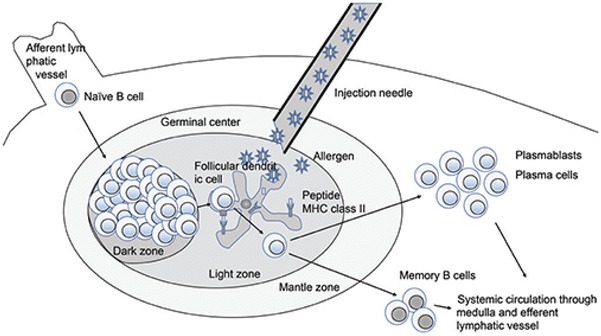
“The form of AIT used in these latter works was intralymphatic immunotherapy (ILIT) [87] (Fig.”
BackgroundInfluentialHulse, K. E., Reefer, A. J., Engelhard, V. H., Satinover, S. M., Patrie, J. T., Chapman, M. D., & Woodfolk, J. A. (2007) · Journal of Allergy and Clinical Immunology · doi:10.1016/j.jaci.2007.10.016 · Cited by 28
Cat peptide antigen desensitisation for treating cat allergic rhinoconjunctivitis
Worm, M., Patel, D., & Creticos, P. S. (2013) · Expert Opinion on Investigational Drugs · doi:10.1517/13543784.2013.827661 · Cited by 28 · cited 3×
“Owing to their small size (13–17 amino acids), the peptides constituting CAT-PAD cannot achieve cross-linking of IgE present on the surface of mast cells and basophils [76].”
BackgroundInfluentialMolecular diagnosis and precision medicine in allergy management
Riccio, A., Ferrari, L. D., Chiappori, A., Ledda, S., Passalacqua, G., Melioli, G., & Canonica, G. W. (2016) · Clinical Chemistry and Laboratory Medicine (CCLM) · doi:10.1515/cclm-2016-0007 · Cited by 26 · cited 1×
“The development of the component-resolved diagnosis (CRD), which uses molecular allergens produced by genetic engineering, offers new possibilities to improve the diagnosis and understanding of cat allergies [6].”
BackgroundParadoxical effect of domestic animals on asthma and allergic sensitization.
Platts-Mills, T. (2002) · Journal of the American Medical Association (JAMA) · doi:10.1001/jama.288.8.1012 · Cited by 25
Molecular Characterization of Major Cat Allergen Fel d 1
Seppälä, U., Hägglund, P., Würtzen, P. A., Ipsen, H., Thorsted, P. B., Lenhard, T., Roepstorff, P., & Spangfort, M. D. (2004) · Journal of Biological Chemistry · doi:10.1074/jbc.m410668200 · Cited by 25 · cited 3×
“Fel d 1 in its natural form is thought to be a mix of full and truncated forms of chain 2 [14].”
BackgroundMethodInfluentialMonoclonal antibodies against Fel d I and other clinically relevant cat allergens
Duffort, O., Carreira, J., & Lombardero, M. (1988) · Immunology Letters · doi:10.1016/0165-2478(88)90104-6 · Cited by 24 · cited 2×
“Molecular characteristics Fel d 1 is a glycoprotein of about 35–38 kDa [9, 10].”
BackgroundPatelis, A., Gunnbjornsdottir, M., Alving, K., Borres, M. P., Högman, M., Janson, C., & Malinovschi, A. (2016) · Clinical & Experimental Allergy · doi:10.1111/cea.12607 · Cited by 23 · cited 4×
“However, as cat allergen components were not measured by unitary ImmunoCAP IgE, these results reflect probably more the lack of sensitivity of ISAC technology than of cat allergen components [60].”
BackgroundInfluentialFel d I allergen: skin and or saliva?
Mata, P., Charpin, D., Charpin, C., Lucciani, P., & VERVLOET, D. (1992) · PubMed · Cited by 22
Usefulness of component resolved analysis of cat allergy in routine clinical practice
Eder, K., Becker, S., San Nicoló, M., Berghaus, A., & Gröger, M. (2016) · Allergy, Asthma & Clinical Immunology · doi:10.1186/s13223-016-0163-8 · Cited by 21 · cited 2×
“In the first, native cat extract serology testing was 100% successful in detecting patients who were allergic to cats but rFel d 1 testing only 91% [59].”
BackgroundThe Calcium Goes Meow: Effects of Ions and Glycosylation on Fel d 1, the Major Cat Allergen
Ligabue‐Braun, R., Sachett, L. G., Fachin, L. P., & Verli, H. (2015) · PLoS ONE · doi:10.1371/journal.pone.0132311 · Cited by 20 · cited 1×
“The three-dimensional structure of Fel d 1 was determined, it is more complex than that of other allergens, with an internal cavity which could accommodate an endogenous ligand and two calcium external binding sites [9, 15, 16] (Fig.”
BackgroundSmoldovskaya, O., Feyzkhanova, G., Arefieva, A., Voloshin, S., Ivashkina, O. A., Reznikov, Y., & Rubina, A. Y. (2016) · Allergy Asthma and Clinical Immunology · doi:10.1186/s13223-016-0117-1 · Cited by 18 · cited 2×
“[57] compared in 139 patient serum samples the results of sensitization of the whole allergen extracts in relation to the recombinant protein in biochip-based immunoassay (EIMB RAS).”
MethodResultMite and pet allergen exposure in Brazilian private cars
Justino, C. M., Segundo, G. R. S., Pereira, F. L., Silva, D. A. O., Sopelete, M. C., Sung, S. J., & Taketomi, E. A. (2005) · Annals of Allergy Asthma & Immunology · doi:10.1016/s1081-1206(10)61324-5 · Cited by 17
Crack, L. R., Chan, H., McPherson, T., & Ogg, G. S. (2011) · Clinical & Experimental Allergy · doi:10.1111/j.1365-2222.2011.03819.x · Cited by 16
Luzar, J., Molek, P., Šilar, M., Korošec, P., Košnik, M., Štrukelj, B., & Lunder, M. (2016) · Molecular Immunology · doi:10.1016/j.molimm.2016.02.004 · Cited by 13 · cited 1×
“[83], developed a new hypoallergenic vaccine against cat”
BackgroundOrigine des allergènes du chat
VERVLOET, D., Charpin, D., & Birnbaum, J. (1995) · Revue Française d Allergologie et d Immunologie Clinique · doi:10.1016/s0335-7457(05)80370-3 · Cited by 12
Les allergies aux principaux mammifères domestiques et leur traitement
Frederic de, B. L. A. Y., & Krieger, P. (1997) · Revue Française d Allergologie et d Immunologie Clinique · doi:10.1016/s0335-7457(97)80208-0 · Cited by 8 · cited 1×
“In addition, castrated male cats produce less Fel d 1 than non-castrated males [25].”
BackgroundAllergie aux phanères animaux chez l'enfant
Rancé, F. (2006) · Archives de Pédiatrie · doi:10.1016/j.arcped.2006.03.031 · Cited by 7
A population-based study of animal component sensitization, asthma and rhinitis in school children
Bjerg, A., Winberg, A., Berthold, M., Borres, M. P., & Rönmark, E. (2015) · doi:10.1183/13993003.congress-2015.pa1137 · Cited by 6
Cited by
Atopic Dermatitis: Identification and Management of Complicating Factors
Tamagawa-Mineoka, R., & Katoh, N. (2020) · International Journal of Molecular Sciences · doi:10.3390/ijms21082671 · Cited by 112
“The major allergen responsible for symptoms is Fel d 1, a secretoglobin [33].”
BackgroundSatyaraj, E., Wedner, H. J., & Bousquet, J. (2019) · Allergy · doi:10.1111/all.14013 · Cited by 78
“Allergic rhinitis and its impact on asthma (ARIA) 2008 update (in collaboration with the World Health Organization, GA(2)LEN and AllerGen).”
BackgroundComponent-resolved diagnostics in pet allergy: Current perspectives and future directions
Schoos, A.-M. M., Nwaru, B. I., & Borres, M. P. (2021) · Journal of Allergy and Clinical Immunology · doi:10.1016/j.jaci.2020.12.640 · Cited by 70
van Hage, M., Käck, U., Asarnoj, A., & Konradsen, J. R. (2023) · Molecular Immunology · doi:10.1016/j.molimm.2023.03.003 · Cited by 40
Bedroom Allergen Exposure Beyond House Dust Mites
Salo, P. M., Cohn, R. D., & Zeldin, D. C. (2018) · Current Allergy and Asthma Reports · doi:10.1007/s11882-018-0805-7 · Cited by 40
Metadata
- Authors
- Bonnet, B., Messaoudi, K., Jacomet, F., Michaud, E., Fauquert, J. L., Caillaud, D., & Evrard, B.
- Affiliations
- Université Clermont Auvergne (FR)
- Centre Hospitalier Universitaire d'Angers (FR)
- Centre Hospitalier Universitaire de Poitiers (FR)
- Centre Hospitalier Universitaire de Clermont-Ferrand (FR)
- Corresponding author
- Evrard, B.
- Venue
- Allergy, Asthma & Clinical Immunology
- Published
- 2018-04-10
- Volume
- 14
- Issue
- 1
- Pages
- 14-14
- ISSN
- 1710-1484 (ISSN-L)
- 1710-1492
- PMC
- PMC5891966
- OpenAlex
- W2804582076
- Cited by
- 96
- References
- 92
- Citations by year
- 2026: 8 · 2025: 17 · 2024: 12 · 2023: 15 · 2022: 12 · 2021: 11 · 2020: 11 · 2019: 8 · 2018: 2
- FWCI
- 1.19
- Type
- journal article
- Language
- en
- Open access
- gold
- doi.org
- Licence
- cc-by
- creativecommons.org/licenses/by/4.0/ (tdm)
- Locations
- Allergy Asthma and Clinical Immunology (publishedVersion, cc-by)
- Europe PMC (PubMed Central) (publishedVersion, other-oa)
- PubMed Central (publishedVersion, cc-by)
- PubMed (publishedVersion)
- HAL (submittedVersion, cc-by)
- DOAJ (DOAJ: Directory of Open Access Journals) (submittedVersion, cc-by-sa)
- Topics
- Health Sciences › Medicine › Immunology and Allergy › Allergic Rhinitis and Sensitization
- Health Sciences › Medicine › Immunology and Allergy › Food Allergy and Anaphylaxis Research
- Health Sciences › Medicine › Pulmonary and Respiratory Medicine › Asthma and respiratory diseases
- Keywords
- Fel d 1, cat allergen, feline allergens, secretoglobin, component-resolved diagnosis, cat allergy, allergen immunotherapy, disease severity assessment, molecular allergens
About these checks
Registry, retraction, Cites and statistics results are computed, not judged, with one exception: a printed reference that no index lists is read once by a model before it counts as a citation error. Claims are extracted by a model and kept only when their quote appears verbatim in the text; each cited source is then checked, with a model’s help, for whether it says what the claim relies on. Those verdicts can be wrong — read the claim’s quote and the cited source before relying on one.
Statistics and arithmetic are recomputed, not judged.
Confidence bands are shown only for fields calibrated on our annotated test set. None is calibrated yet, so no band is shown.
What counts as a claim ›How we measure confidence ›How we check this ›
Are you an author, or do you see a problem with this page? Request a review
Data sources
Bibliographic data: Semantic Scholar, OpenAlex, Crossref.
Contains information from the Semantic Scholar Academic Graph Datasets, made available under the ODC Attribution License (ODC-BY 1.0).
Semantic Scholar’s data is described in: Kinney, R., et al. (2023). The Semantic Scholar Open Data Platform. arXiv:2301.10140.
