

Myostatin as a mediator of sarcopenia versus homeostatic regulator of muscle mass: insights using a new mass spectrometry-based assay
Open accessThe DOI matches its Crossref record; 43 of the 43 references it cites were found in a registry or an index.
Abstract
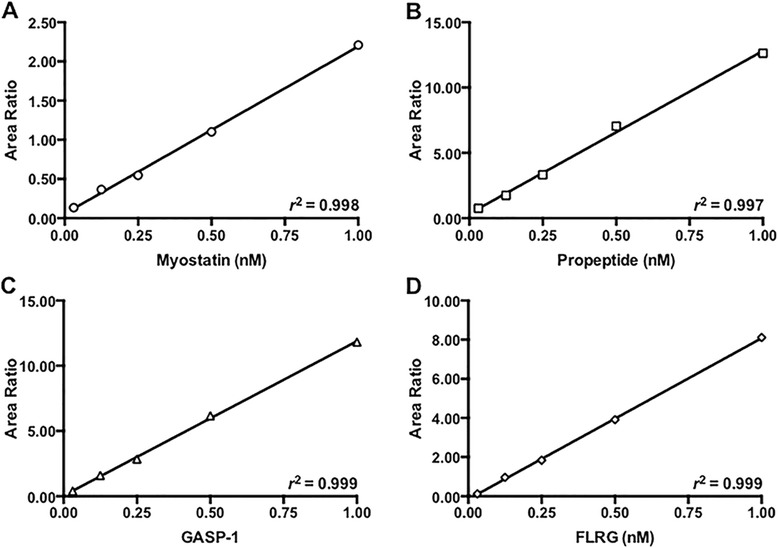
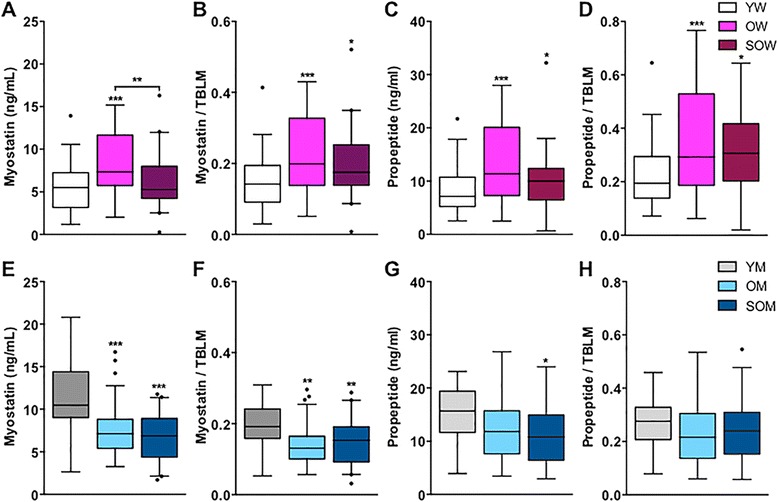
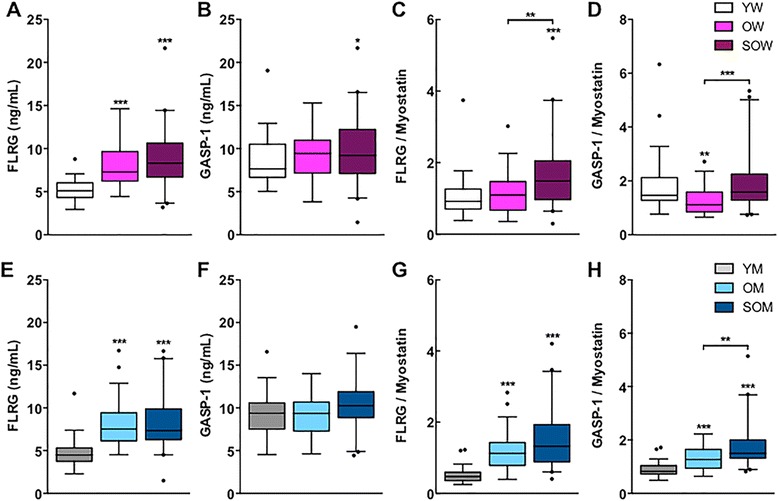
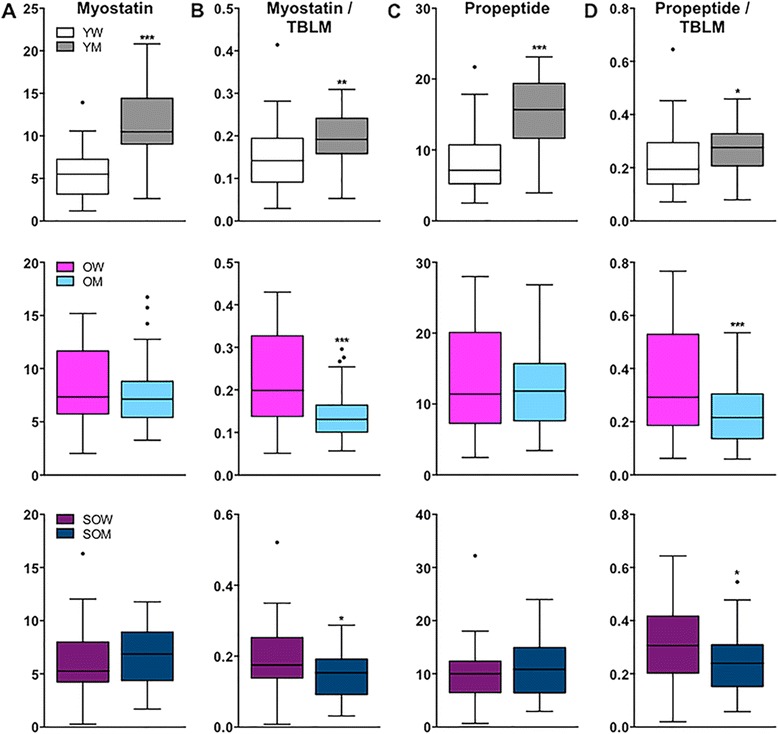
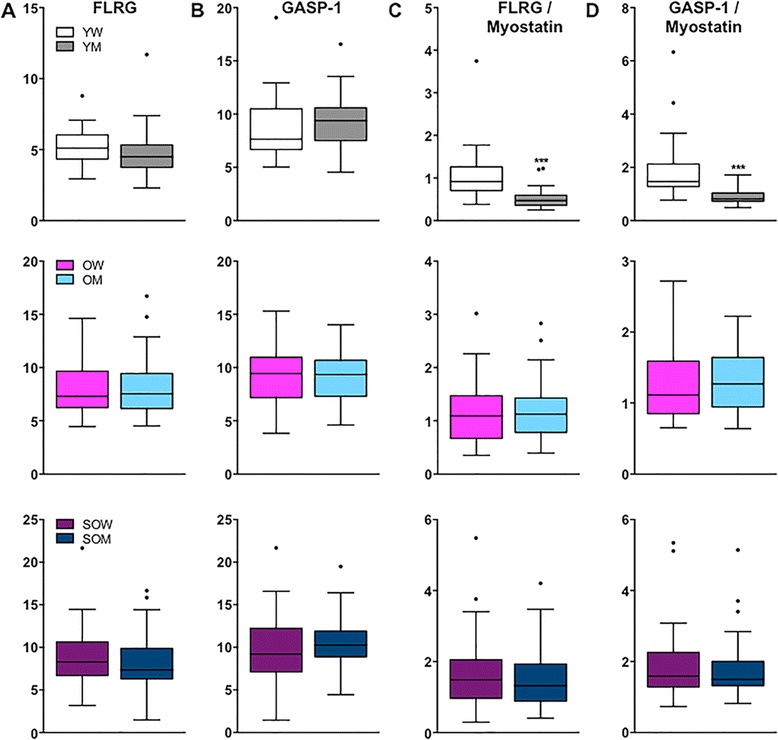
BACKGROUND: Myostatin is a protein synthesized and secreted by skeletal muscle that negatively regulates muscle mass. The extent to which circulating myostatin levels change in the context of aging is controversial, largely due to methodological barriers. METHODS: We developed a specific and sensitive liquid chromatography with tandem mass spectrometry (LC-MS/MS) assay to measure concentrations of myostatin and two of its key inhibitors, follistatin-related gene (FLRG) protein and growth and serum protein-1 (GASP-1) in 80 younger (<40 years), 80 older (>65 years), and 80 sarcopenic older women and men. RESULTS: Older women had 34 % higher circulating concentrations of myostatin than younger women. Per unit of lean mass, both older and sarcopenic older women had >23 % higher myostatin levels than younger women. By contrast, younger men had higher myostatin concentrations than older men with and without sarcopenia. Younger men had approximately twofold higher concentrations of myostatin than younger women; however, older women and sarcopenic older women had significantly higher relative myostatin levels than the corresponding groups of men. In both sexes, sarcopenic older subjects had the highest concentrations of FLRG. Circulating concentrations of myostatin exhibited positive, but not robust, correlations with relative muscle mass in both sexes. CONCLUSIONS: Our data suggest that myostatin may contribute to the higher prevalence of sarcopenia in women but acts as a homeostatic regulator of muscle mass in men. Moreover, this new LC-MS/MS-based approach offers a means to determine the extent to which myostatin serves as a biomarker of muscle health in diverse conditions of muscle loss and deterioration.
Overview
The claims and statistics of this paper haven’t been checked yet.
Free: it reads the open-access text and checks the first 5 claims that cite a source we can check. Create a free account to check every claim.
Integrity signals
Registry
Cites
Statistics
Figures
Verification
Claims the paper makes
The claims and statistics of this paper haven’t been checked yet.
Free: it reads the open-access text and checks the first 5 claims that cite a source we can check. Create a free account to check every claim.
Claims other papers make about this one
Each is checked against this paper’s own text: does it say what the citing paper says it does?
The cited source doesn’t support the claim as written.
In the citing paper
“Individuals with sarcopenia have elevated levels of myostatin443, a negative regulator of skeletal muscle growth development444.”
From Sarcopenic obesity in older adults: aetiology, epidemiology and treatment strategies (2018) · cites this paper as [443]
Checked by a reasoning model — may be wrong.
Experimental — accuracy not yet measuredThe check wasn’t confident either way, so it gives no verdict — never disputed.
In the citing paper
“In this context of reduced proteosynthesis, myostatin production would be reduced. 33”
From A Phase 1 study for safety and pharmacokinetics of BIO101 (20‐hydroxyecdysone) in healthy young and older adults (2023) · cites this paper as [33]
Experimental — accuracy not yet measured
Self-check
Percentages, sums and reported differences re-computed from the paper’s own numbers.
The self-check needs the paper’s full text.
Citations
Cites
Compendium of physical activities: an update of activity codes and MET intensities
AINSWORTH, B. E., HASKELL, W. L., WHITT, M. C., IRWIN, M. L., SWARTZ, A. M., STRATH, S. J., O???BRIEN, W. L., BASSETT, D. R., SCHMITZ, K. H., EMPLAINCOURT, P. O., et al. (2000) · Medicine & Science in Sports & Exercise · doi:10.1097/00005768-200009001-00009 · Cited by 8,497
Regulation of skeletal muscle mass in mice by a new TGF-p superfamily member
McPherron, A. C., Lawler, A. M., & Lee, S.-J. (1997) · Nature · doi:10.1038/387083a0 · Cited by 4,013
Fielding, R. A., Vellas, B., Evans, W. J., Bhasin, S., Morley, J. E., Newman, A. B., Abellan van Kan, G., Andrieu, S., Bauer, J., Breuille, D., et al. (2011) · Journal of the American Medical Directors Association · doi:10.1016/j.jamda.2011.01.003 · Cited by 3,256 · cited 1×
“23 kg/m(2) for women and men, respectively [25].”
Double muscling in cattle due to mutations in the myostatin gene
McPherron, A. C., & Lee, S.-J. (1997) · Proceedings of the National Academy of Sciences · doi:10.1073/pnas.94.23.12457 · Cited by 2,039 · cited 1×
“Despite strong evidence that genetic and pharmacological modulations of myostatin abundance and/or activity impact muscle mass in multiple species [9–13], data on circulating myostatin concentrations in humans are sparse and conflicting.”
PHYSICAL ACTIVITY AS AN INDEX OF HEART ATTACK RISK IN COLLEGE ALUMNI1
PAFFENBARGER, R. S., WING, A. L., & HYDE, R. T. (1978) · American Journal of Epidemiology · doi:10.1093/oxfordjournals.aje.a112608 · Cited by 1,980
Functional improvement of dystrophic muscle by myostatin blockade
Bogdanovich, S., Krag, T. O. B., Barton, E. R., Morris, L. D., Whittemore, L.-A., Ahima, R. S., & Khurana, T. S. (2002) · Nature · doi:10.1038/nature01154 · Cited by 831 · cited 1×
“Such interventions have been shown to increase skeletal muscle mass and improve parameters of strength and physical function in preclinical models of aging and disease [12, 37, 38].”
Myostatin reduces Akt/TORC1/p70S6K signaling, inhibiting myoblast differentiation and myotube size
Trendelenburg, A. U., Meyer, A., Rohner, D., Boyle, J., Hatakeyama, S., & Glass, D. J. (2009) · American Journal of Physiology-Cell Physiology · doi:10.1152/ajpcell.00105.2009 · Cited by 792
Smad2 and 3 transcription factors control muscle mass in adulthood
Sartori, R., Milan, G., Patron, M., Mammucari, C., Blaauw, B., Abraham, R., & Sandri, M. (2009) · American Journal of Physiology-Cell Physiology · doi:10.1152/ajpcell.00104.2009 · Cited by 517 · cited 1×
“Through ActRIIB and its downstream effectors, particularly Smad2/3, myostatin simultaneously activates protein degradation and inhibits protein synthesis in adult skeletal muscle [7, 8].”
Inhibition of myostatin in adult mice increases skeletal muscle mass and strength
Whittemore, L.-A., Song, K., Li, X., Aghajanian, J., Davies, M., Girgenrath, S., Hill, J. J., Jalenak, M., Kelley, P., Knight, A., et al. (2003) · Biochemical and Biophysical Research Communications · doi:10.1016/s0006-291x(02)02953-4 · Cited by 503
Activation of latent myostatin by the BMP-1/tolloid family of metalloproteinases
Wolfman, N. M., McPherron, A. C., Pappano, W. N., Davies, M. V., Song, K., Tomkinson, K. N., Wright, J. F., Zhao, L., Sebald, S. M., Greenspan, D. S., et al. (2003) · Proceedings of the National Academy of Sciences · doi:10.1073/pnas.2534946100 · Cited by 454
Research works printed but not linked: 1
- White TA, Lebrasseur NK. Myostatin and sarcopenia: opportunities and challenges—a mini-review. Gerontology. 2014. doi:10.1159/000356740. 24457615 · DOI · Paper page
Cited by
Items 101–136 of 136
Myostatin’s flex on the reproductive hormone axis
Steenwinkel, T. E., & Pangas, S. A. (2025) · Science · doi:10.1126/science.adu7735 · Cited by 4
State-of-the-art insights into myokines as biomarkers of sarcopenia: a literature review
Moussaoui, O. R., Deligiannis, I., Petrov, P.-P. S., Velikova, T. V., & Assyov, Y. S. (2025) · International Journal of Physiology Pathophysiology and Pharmacology · doi:10.62347/rneq8696 · Cited by 4
Silva, M. Z. C., Vogt, B. P., Reis, N. S. D. C., Chiuso‐Minicucci, F., Dorna, M. D. S., Minicucci, M. F., & Caramori, J. C. T. (2022) · European Journal of Clinical Nutrition · doi:10.1038/s41430-022-01227-x · Cited by 4
Sarcopenic obesity in children
Zavyalova, A. N., Troshkina, M. E., Shcherbak, L. A., & Новикова, В. П. (2023) · Экспериментальная и клиническая гастроэнтерология · doi:10.31146/1682-8658-ecg-209-1-134-141 · Cited by 7
Laboratory markers of osteosarcopenic obesity
Гриценко, О. В., Gruzdeva, O. V., Chumakova, G. A., & Барбараш, О. Л. (2023) · Russian Journal of Cardiology · doi:10.15829/1560-4071-2023-5563 · Cited by 5
van den Borne, J. J., Kudla, U., & Geurts, J. M. W. (2016) · Current Opinion in Food Science · doi:10.1016/j.cofs.2016.08.006 · Cited by 4
Stalmach, A., Boehm, I., Fernandes, M., Rutter, A., Skipworth, R. J. E., & Husi, H. (2022) · Molecules · doi:10.3390/molecules27175514 · Cited by 5
Alonso-Puyo, J., Izagirre-Fernandez, O., Crende, O., Seco‐Calvo, J., Fernández‐Atutxa, A., Fernández‐Lázaro, D., García-Gallastegui, P., & Sanz, B. (2024) · Proteomes · doi:10.3390/proteomes12040034 · Cited by 3
Menopause and Body Composition: A Complex Field
Juppi, H., Karppinen, J. E., & Laakkonen, E. K. (2025) · Seminars in Reproductive Medicine · doi:10.1055/s-0045-1809531 · Cited by 9
Aryana, I. G. P. S., Astika, I. N., Kuswardhani, R. A. T., Putrawan, I. B. P., Purnami, N. K. R., Semaradana, W. G. P., Lestari, A. A. W., & Wande, I. N. (2019) · The Indonesian Biomedical Journal · doi:10.18585/inabj.v11i3.822 · Cited by 4
Sarangi, S., A, A. S. K., & Vinodhini, V. M. (2024) · Indian Journal of Physiology and Pharmacology · doi:10.25259/ijpp_510_2023 · Cited by 6
Cornet, S., Quinonez, K., Warling, X., Jouret, F., Lanot, A., Bruyère, O., Cavalier, E., & Delanaye, P. (2025) · Journal of Renal Nutrition · doi:10.1053/j.jrn.2025.01.005 · Cited by 3
The sarcopenia–pain connection: why mechanisms matter for patient care?
Iolascon, G., & Moretti, A. (2026) · Frontiers in Pain Research · doi:10.3389/fpain.2026.1759943 · Cited by 3
Appendicular lean mass in women with rheumatoid arthritis: Focus on immunological markers
Dobrovolskaya, O. V., Demin, N. V., Feklistov, А. Y., Diatroptov, M. E., Samarkina, E. Y., & Toroptsova, N. V. (2024) · Rheumatology Science and Practice · doi:10.47360/1995-4484-2024-529-534 · Cited by 2
Marulanda-Díaz, N., Estrada, A., Milán, A. F., Narváez-Sánchez, R., Calderón, J. C., & Giraldo, N. A. G. (2025) · Nutrition · doi:10.1016/j.nut.2025.112767 · Cited by 2
Nie, Y., Gu, C., Wu, R., Gao, F., Zhang, L., & Zhang, Y. (2025) · Frontiers in Aging Neuroscience · doi:10.3389/fnagi.2025.1473135 · Cited by 2
Myostatin Serum Related with Sarcopenia Among Elderly Population
Kartika, R. W. (2022) · Berkala Ilmiah Kedokteran Duta Wacana · doi:10.21460/bikdw.v7i2.530 · Cited by 2
Sarcopenia as a complication of type 1 diabetes mellitus
Makarova, O. B., Lyapunova, A. I., Suplotova, L. A., & Alieva, O. O. (2025) · Perm Medical Journal · doi:10.17816/pmj4235-16 · Cited by 2
Gajewska, J., Chełchowska, M., Szamotulska, K., Strucińska, M., Klemarczyk, W., & Ambroszkiewicz, J. (2025) · International Journal of Molecular Sciences · doi:10.3390/ijms262210822 · Cited by 3
Clinical, laboratory and instrumental aspects of sarcopenia diagnostics
Станиславовна, Ж. А., Belaya, Z. E., Omelchenko, K. A., & Airapetov, G. A. (2026) · Osteoporosis and Bone Diseases · doi:10.14341/osteo13206 · Cited by 4
Lei, C., Jiang, H., Yang, X., Ding, S., Yu, Y., Zhang, Z., Wang, L., Gao, C., Lü, A., Qin, L., et al. (2026) · International Journal of Molecular Sciences · doi:10.3390/ijms27093836 · Cited by 1
Cellular and molecular pathways linking obesity to skeletal muscle dysfunction
PINHEIRO, D., & Cornachione, A. S. (2026) · Molecular Biology Reports · doi:10.1007/s11033-026-12146-6 · Cited by 2
Yamaguchi, Y., Zhu, M., Moaddel, R., Elango, P., Ferrucci, L., & Semba, R. D. (2023) · The Journals of Gerontology Series A · doi:10.1093/gerona/glad135 · Cited by 1
Detopoulou, P., Magni, O., Pylarinou, I., Levidi, D., Dedes, V., Tzoutzou, M., Argyri, K., Fappa, E., Gioxari, A., & Panoutsopoulos, G. (2024) · Diseases · doi:10.3390/diseases13010003 · Cited by 1
Britt, C. C. N., Alvarez, L. X., & Lamb, K. E. (2021) · Frontiers in Veterinary Science · doi:10.3389/fvets.2021.680576 · Cited by 1
Jakubina, P., Méloux, A., Duloquin, G., Aho, S., Vergely, C., & Béjot, Y. (2023) · Journal of the Neurological Sciences · doi:10.1016/j.jns.2023.120611 · Cited by 1
MYOSTATIN AS A POTENTIAL DIAGNOSTIC BIOMARKER IN ELDERLY PATIENTS WITH SARCOPENIA
Saad, M. A., Ahmed, S., Abdelmajeed, M., Elwafa, R. A., & Emara, R. H. (2024) · NILES Journal forGeriatric and Gerontology/NILES Journal for Geriatric and Gerontology · doi:10.21608/niles.2024.275569.1081 · Cited by 1
Getting to the heart of sarcopenia and cardiovascular disease
Nezafati, P., Saxena, P., Raman, J., Hebbard, L., & McFarlane, C. (2025) · Aging · doi:10.18632/aging.206296
Integrated Fat-Muscle Patterns Drive Sex-Specific Diabetes Risk: UK Biobank Evidence
Ma, Y., Zhou, N., Yu, B., Liang, Z., Xiao, M., Jing, G., Zhang, X. D., Liu, X., Sun, C., & Wu, H. (2026) · Diabetes · doi:10.2337/db26-0096
Parenté, A. (2019) · theses.fr (ABES) · doi:10.70675/3d9a23f5z3546z46f1z957cz5d167994539d
Yu, Y., He, Y., Wang, Y., Wu, C., Zhou, R., Chen, F., & Ma, W. (2026) · The FASEB Journal · doi:10.1096/fj.202601360r · Cited by 1
Hormonal dimorphism in sarcopenia disease
Menard, R., & Madelaine, R. (2026) · Aging · doi:10.18632/aging.206392 · Cited by 2
Sarcopenic obesity in adolescents: prevalence, diagnostic criteria and predisposing factors
Lebedeva, L. S., Евдокимова, Н. В., & Новикова, В. П. (2026) · Perm Medical Journal · doi:10.17816/pmj43368-77
Pushkareva, A., Belaya, Z. E., Шамхалова, М. Ш., Shulpekova, N. V., Zhdanova, A. A., Trubitsyna, N. P., Sukhareva, O. Y., Mironenkov, D. E., Ibragimova, L. I., Mel'nikova, O. G., et al. (2026) · Diabetes Mellitus · doi:10.14341/dm13462
Qiao, C., Yang, C., Guo, S., Yang, S., & Wang, Y. (2026) · International Journal of Molecular Sciences · doi:10.3390/ijms27219657
Metadata
- Authors
- Bergen, H. R., Farr, J. N., Vanderboom, P. M., Atkinson, E. J., White, T. A., Singh, R. J., Khosla, S., & LeBrasseur, N. K.
- Affiliations
- Mayo Clinic (US)
- Corresponding author
- LeBrasseur, Nathan K.
- ORCID
- Venue
- Skeletal Muscle
- Published
- 2015-07-15
- Volume
- 5
- Issue
- 1
- Pages
- 21-21
- ISSN
- 2044-5040 (ISSN-L)
- PMC
- PMC4502935
- OpenAlex
- W2119826306
- Cited by
- 137
- References
- 43
- Citations by year
- 2026: 10 · 2025: 12 · 2024: 16 · 2023: 21 · 2022: 17 · 2021: 11 · 2020: 8 · 2019: 16 · 2018: 14 · 2017: 4 · 2016: 7 · 2015: 1
- FWCI
- 3.77
- Type
- journal article
- Language
- en
- Open access
- gold
- doi.org
- Licence
- cc-by
- creativecommons.org/licenses/by/4.0 (tdm)
- Locations
- Skeletal Muscle (publishedVersion, cc-by)
- PubMed Central (publishedVersion, cc-by)
- PubMed (publishedVersion)
- Funders
- National Institutes of Health (UL1TR000135, AG004875, AR027065, TR000135)
- Center for Clinical and Translational Science, Mayo Clinic (UL1‐TR000135, TR000135)
- National Institute on Aging (P01AG004875)
- National Institute of Arthritis and Musculoskeletal and Skin Diseases (AR-027065, R01AR027065)
- NIH Clinical Center
- National Center for Advancing Translational Sciences (AR027065, TR000135)
- Topics
- Life Sciences › Biochemistry, Genetics and Molecular Biology › Molecular Biology › Muscle Physiology and Disorders
- Health Sciences › Medicine › Physiology (medical) › Nutrition and Health in Aging
- Health Sciences › Nursing › Nutrition and Dietetics › Muscle metabolism and nutrition
- Keywords
- myostatin, sarcopenia, aging, sex differences, older adults
About these checks
Registry, retraction, Cites and statistics results are computed, not judged, with one exception: a printed reference that no index lists is read once by a model before it counts as a citation error. Claims are extracted by a model and kept only when their quote appears verbatim in the text; each cited source is then checked, with a model’s help, for whether it says what the claim relies on. Those verdicts can be wrong — read the claim’s quote and the cited source before relying on one.
Statistics and arithmetic are recomputed, not judged.
Confidence bands are shown only for fields calibrated on our annotated test set. None is calibrated yet, so no band is shown.
What counts as a claim ›How we measure confidence ›How we check this ›
Are you an author, or do you see a problem with this page? Request a review
Data sources
Bibliographic data: Semantic Scholar, OpenAlex, Crossref.
Contains information from the Semantic Scholar Academic Graph Datasets, made available under the ODC Attribution License (ODC-BY 1.0).
Semantic Scholar’s data is described in: Kinney, R., et al. (2023). The Semantic Scholar Open Data Platform. arXiv:2301.10140.
