

The DOI matches its Crossref record; 156 of the 156 references it cites were found in a registry or an index.
Exosomes: biogenesis, biologic function and clinical potential
Open accessAbstract
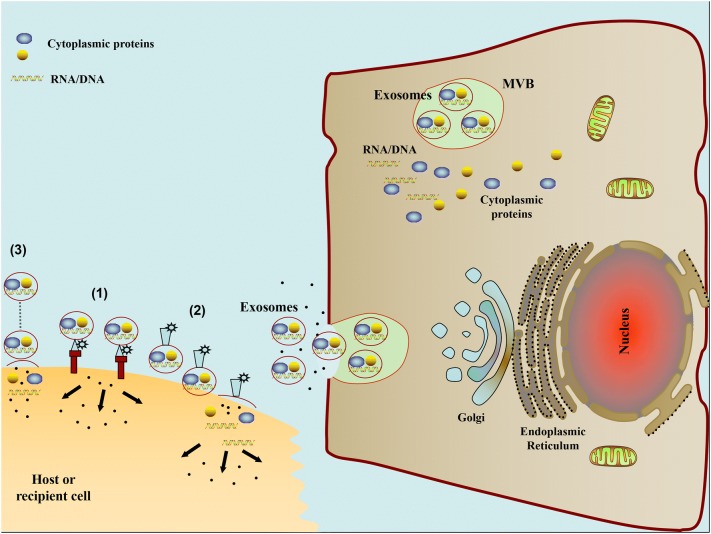
Exosomes are nano-sized biovesicles released into surrounding body fluids upon fusion of multivesicular bodies and the plasma membrane. They were shown to carry cell-specific cargos of proteins, lipids, and genetic materials, and can be selectively taken up by neighboring or distant cells far from their release, reprogramming the recipient cells upon their bioactive compounds. Therefore, the regulated formation of exosomes, specific makeup of their cargo, cell-targeting specificity are of immense biological interest considering extremely high potential of exosomes as non-invasive diagnostic biomarkers, as well as therapeutic nanocarriers. In present review, we outline and discuss recent progress in the elucidation of the regulatory mechanisms of exosome biogenesis, the molecular composition of exosomes, and technologies used in exosome research. Furthermore, we focus on the potential use of exosomes as valuable diagnostic and prognostic biomarkers for their cell-lineage and state-specific contents, and possibilities as therapeutic vehicles for drug and gene delivery. Exosome research is now in its infancy, in-depth understanding of subcellular components and mechanisms involved in exosome formation and specific cell-targeting will bring light on their physiological activities.
Overview
The claims and statistics of this paper haven’t been checked yet.
Run the check — free, no account needed. It reads the open-access text and checks the sources it cites.
Integrity signals
Registry
Cites
Statistics
Figures
Verification
Claims the paper makes
The claims and statistics of this paper haven’t been checked yet.
Run the check — free, no account needed. It reads the open-access text and checks the sources it cites.
Claims other papers make about this one
Each is checked against this paper’s own text: does it say what the citing paper says it does?
The source backs part of the claim, not all of it — or backs it for a different population, condition or comparison.
In the citing paper
“Exosomes originate from the endosomal pathway and are released by fusion of multivesicular bodies (MVBs) and plasma membranes, with sizes ranging from 30 to 150 nm [120, 121].”
From Extracellular vesicles as nanotheranostic platforms for targeted neurological disorder interventions (2024) · cites this paper as [120]
Experimental — accuracy not yet measuredThe source backs part of the claim, not all of it — or backs it for a different population, condition or comparison.
In the citing paper
“Zhang et al. reported that exosomes were crucial not only for cell-to-cell communications, but also for metabolic and cellular processes, and the regulation of biological processes [67].”
From Exosome-functionalized magnesium-organic framework-based scaffolds with osteogenic, angiogenic and anti-inflammatory properties for accelerated bone regeneration. (2022) · cites this paper as [67]
Experimental — accuracy not yet measured
Self-check
Percentages, sums and reported differences re-computed from the paper’s own numbers.
The self-check needs the paper’s full text.
Citations
Cites
2 retracted
Zhao, Y., Haney, M. J., Gupta, R., Bohnsack, J. P., He, Z., Kabanov, A. V., & Batrakova, E. V. (2014) · PLoS ONE · doi:10.1371/journal.pone.0106867 · Cited by 144
RetractedHaney, M. J., Zhao, Y., Harrison, E. B., Mahajan, V., Ahmed, S., He, Z., Suresh, P., Hingtgen, S., Klyachko, N. L., Mosley, R. L., et al. (2013) · PLoS ONE · doi:10.1371/journal.pone.0061852 · Cited by 144
RetractedRepertoires of Autophagy in the Pathogenesis of Ocular Diseases
Li, Y., Jiang, Q. L., Cao, G.-F., Yao, J., & Yan, B. (2015) · Cellular Physiology and Biochemistry · doi:10.1159/000373980 · Cited by 16,351
Valadi, H., Ekström, K., Bossios, A., Sjöstrand, M., Lee, J. J., & Lötvall, J. O. (2007) · Nature Cell Biology · doi:10.1038/ncb1596 · Cited by 12,834
Isolation and Characterization of Exosomes from Cell Culture Supernatants and Biological Fluids
Théry, C., Amigorena, S., Raposo, G., & Clayton, A. (2006) · Current Protocols in Cell Biology · doi:10.1002/0471143030.cb0322s30 · Cited by 5,766
Delivery of siRNA to the mouse brain by systemic injection of targeted exosomes
Alvarez-Erviti, L., Seow, Y., Yin, H., Betts, C., Lakhal, S., & Wood, M. J. A. (2011) · Nature Biotechnology · doi:10.1038/nbt.1807 · Cited by 4,930
The future of immune checkpoint therapy
Sharma, P., & Allison, J. P. (2015) · Science · doi:10.1126/science.aaa8172 · Cited by 4,878
Evidence for the Formation of Symmetric and Asymmetric DLPC-DAPC Lipid Bilayer Domains
Ritter, M., Schmidt, S., Jakab, M., Paulmichl, M., & Henderson, R. M. (2013) · Cellular Physiology and Biochemistry · doi:10.1159/000350122 · Cited by 3,923
Ceramide Triggers Budding of Exosome Vesicles into Multivesicular Endosomes
Trajković, K., Hsu, C., Chiantia, S., Rajendran, L., Wenzel, D., Wieland, F., Schwille, P., Brügger, B., & Simons, M. (2008) · Science · doi:10.1126/science.1153124 · Cited by 3,760
B lymphocytes secrete antigen-presenting vesicles.
Raposo, G., Nijman, H. W., Stoorvogel, W., Liejendekker, R., Harding, C. V., Melief, C. J., & Geuze, H. J. (1996) · The Journal of experimental medicine · doi:10.1084/jem.183.3.1161 · Cited by 3,546
Cited by
Sorted by citations
Items 401–500 of 1,001
Extracellular Vesicles: Messengers of p53 in Tumor–Stroma Communication and Cancer Metastasis
Pavlakis, E., Neumann, M. M., & Stiewe, T. (2020) · International Journal of Molecular Sciences · doi:10.3390/ijms21249648 · Cited by 45
Fath, M. K., Azami, J., Jaafari, N., Oryani, M. A., Jafari, N., poor, A. K., Azargoonjahromi, A., Nabi‐Afjadi, M., Payandeh, Z., Zalpoor, H., et al. (2022) · Cellular & Molecular Biology Letters · doi:10.1186/s11658-022-00377-x · Cited by 45
Exosomal noncoding RNAs in prostate cancer
Movahedpour, A., Khatami, S. H., Karami, N., Vakili, O., Naeli, P., Jamali, Z., Shabaninejad, Z., Tazik, K., Behrouj, H., & Ghasemi, H. (2022) · Clinica Chimica Acta · doi:10.1016/j.cca.2022.10.018 · Cited by 45
Revisiting macrophages in ovarian cancer microenvironment: development, function and interaction
El‐Arabey, A. A., Alkhalil, S. S., Al‐Shouli, S. T., Awadalla, M., Alhamdi, H. W. S., Almanaa, T. N., Mohamed, S. S. E. M., & Abdalla, M. (2023) · Medical Oncology · doi:10.1007/s12032-023-01987-x · Cited by 45
MiRNAs and Muscle Regeneration: Therapeutic Targets in Duchenne Muscular Dystrophy
Aránega, A. E., Lozano-Velasco, E., Rodríguez-Outeiriño, L., de Acuña, F. R., Franco, D., & Hernández‐Torres, F. (2021) · International Journal of Molecular Sciences · doi:10.3390/ijms22084236 · Cited by 44
López, Y. O. N., Iliuk, A. B., Petrilli, A. M., Glass, C. E., Casu, A., & Pratley, R. E. (2022) · International Journal of Molecular Sciences · doi:10.3390/ijms23105779 · Cited by 44
Engineered exosomes for cancer theranostics: Next-generation tumor targeting
Chavda, V. P., Sugandhi, V. V., Pardeshi, C. V., Patil, R., Joshi, M., Patel, B. M., Khadela, A. D., Bezbaruah, R., Bhattacharjee, B., Balar, P. C., et al. (2023) · Journal of Drug Delivery Science and Technology · doi:10.1016/j.jddst.2023.104579 · Cited by 44
Choudhery, M. S., Arif, T., Mahmood, R., & Harris, D. T. (2024) · Biomolecules · doi:10.3390/biom14070792 · Cited by 44
New insights into methods to measure biological age: a literature review
Mathur, A., Taurin, S., & Alshammary, S. (2024) · Frontiers in Aging · doi:10.3389/fragi.2024.1395649 · Cited by 46
MDA-9/Syntenin/SDCBP: new insights into a unique multifunctional scaffold protein
Pradhan, A. K., Maji, S., Das, S. K., Emdad, L., Sarkar, D., & Fisher, P. B. (2020) · Cancer and Metastasis Reviews · doi:10.1007/s10555-020-09886-7 · Cited by 44
Hu, Z., Li, C., Chang, X., Li, Y., Liu, C., Gao, X., Zhai, Y., Chen, Y., & Li, C. (2020) · World Journal of Stem Cells · doi:10.4252/wjsc.v12.i8.803 · Cited by 44
Li, S., Xu, J., Qian, J., & Gao, X. (2020) · Biomaterials Science · doi:10.1039/d0bm01385d · Cited by 44
Maiullari, F., Chirivì, M., Costantini, M., Ferretti, A. M., Recchia, S., Maiullari, S., Milan, M., Presutti, D., Pace, V., Raspa, M., et al. (2021) · Biofabrication · doi:10.1088/1758-5090/abdacf · Cited by 44
Damanti, C. C., Gaffo, E., Lovisa, F., Garbin, A., Battista, P. D., Gallingani, I., Tosato, A., Pillon, M., Carraro, E., Mascarin, M., et al. (2021) · Cells · doi:10.3390/cells10010101 · Cited by 44
Wang, L., Zhao, H., Xu, H., Liu, X., Chen, X., Peng, Q., & Xiao, M. (2021) · Journal of Cellular Physiology · doi:10.1002/jcp.30186 · Cited by 44
Expedition into Exosome Biology: A Perspective of Progress from Discovery to Therapeutic Development
Jan, A. T., Rahman, S., Badierah, R., Lee, E. J., Mattar, E. H., Redwan, E. M. M. M., & Choi, I. (2021) · Cancers · doi:10.3390/cancers13051157 · Cited by 44
Cheng, P., Cheng, L., Han, H., Li, J., Ma, C., Huang, H., Zhou, J., Feng, J., Huang, Y., Lv, Y.-P., et al. (2022) · Advanced Healthcare Materials · doi:10.1002/adhm.202200971 · Cited by 44
Dong, G., Wagner, V., Minguez-Menendez, A., Fernandez‐Prada, C., & Olivier, M. (2021) · Molecular Immunology · doi:10.1016/j.molimm.2021.04.003 · Cited by 43
Kim, S., Han, J., Park, J. S., Kim, J. H., Lee, E. S., Cha, B. S., & Park, K. S. (2022) · Talanta · doi:10.1016/j.talanta.2022.123306 · Cited by 43
Thome, A. D., Thonhoff, J. R., Zhao, W., Faridar, A., Wang, J., Beers, D. R., & Appel, S. H. (2022) · Frontiers in Immunology · doi:10.3389/fimmu.2022.875825 · Cited by 43
Ortega, M. A., Fraile‐Μartinez, O., Montero, C. G., Paradela, A., Sánchez-Gil, M. A., Rodriguez-Martín, S., León-Luis, J. A. D., Pereda-Cerquella, C., Buján, J., Guijarro, L. G., et al. (2022) · Frontiers in Cell and Developmental Biology · doi:10.3389/fcell.2022.1060850 · Cited by 43
Park, Y.-S., Kim, H., Hwang, J.-H., Eom, J., Kim, D.-H., Park, J., Tae, H., Lee, S., Yoo, J. G., Kim, J., et al. (2023) · Nutrients · doi:10.3390/nu15092107 · Cited by 43
Mavroudis, I. A., Balmuș, I.-M., Ciobica, A. S., Nicoară, M., Luca, A.-C., & Palade, D. O. (2023) · Life · doi:10.3390/life13091924 · Cited by 43
Bioinspired cellular membrane-derived vesicles for mRNA delivery
Xu, X., Xu, L., Wang, J., Wen, C., Xia, J., Zhang, Y., & Liang, Y. (2024) · Theranostics · doi:10.7150/thno.93755 · Cited by 43
Self-citationExosomes: Emerging Diagnostic and Therapeutic Targets in Cutaneous Diseases
Khan, A. Q., Akhtar, S., Prabhu, K. S., Zarif, L., Khan, R., Alam, M. A., Buddenkotte, J., Ahmad, A., Steinhoff, M. S., & Shahab Uddin, M. S. (2020) · International Journal of Molecular Sciences · doi:10.3390/ijms21239264 · Cited by 43
Burge, K. Y., Vieira, F., Eckert, J. V., & Chaaban, H. (2021) · Nutrients · doi:10.3390/nu13020550 · Cited by 43
Extracellular Vesicles and Their Current Role in Cancer Immunotherapy
Giacobino, C., Canta, M., Fornaguera, C., Borrós, S., & Cauda, V. (2021) · Cancers · doi:10.3390/cancers13092280 · Cited by 43
Hildebrandt, A., Kirchner, B., Meidert, A. S., Brandes, F., Lindemann, A., Doose, G., Doege, A., Weidenhagen, R., Reithmair, M., Schelling, G., et al. (2021) · Frontiers in Cell and Developmental Biology · doi:10.3389/fcell.2021.729061 · Cited by 43
Zhang, Z., Xu, Y., Cao, C. Q., Wang, B., Guo, J., Qin, Z., Lu, Y., Zhang, J., Zhang, L., Wang, W., et al. (2022) · Journal of Cellular and Molecular Medicine · doi:10.1111/jcmm.17162 · Cited by 43
Chimeric nanocomposites for the rapid and simple isolation of urinary extracellular vesicles
Dao, T. N. T., Kim, M. G., Koo, B., Liu, H., Jang, Y. O., Lee, H. J., Kim, Y., Park, Y., Kim, H. S., Kim, C., et al. (2022) · Journal of Extracellular Vesicles · doi:10.1002/jev2.12195 · Cited by 43
Self-citationCow Milk Extracellular Vesicle Effects on an In Vitro Model of Intestinal Inflammation
Mecocci, S., Ottaviani, A., Razzuoli, E., Fiorani, P., Pietrucci, D., Ciucis, C. G. D., Giudici, S. D., Franzoni, G., Chillemi, G., & Cappelli, K. (2022) · Biomedicines · doi:10.3390/biomedicines10030570 · Cited by 43
The Role of Tumor Stem Cell Exosomes in Cancer Invasion and Metastasis
Liu, K., Gao, X., Kang, B., Liu, Y., Wang, D., & Wang, Y. (2022) · Frontiers in Oncology · doi:10.3389/fonc.2022.836548 · Cited by 43
Self-citationTumor-derived small extracellular vesicles: potential roles and mechanism in glioma
Guo, X., Sui, R., & Piao, H. (2022) · Journal of Nanobiotechnology · doi:10.1186/s12951-022-01584-6 · Cited by 43
Hu, K., Li, N., Li, J., Chen, Z., Wang, J., & Sheng, L. (2021) · Hepatology Research · doi:10.1111/hepr.13692 · Cited by 42
Cortes-Serra, N., Gualdrón‐López, M., Pinazo, M., Torrecilhas, A. C., & Fernández-Becerra, C. (2022) · Journal of Immunology Research · doi:10.1155/2022/5230603 · Cited by 42
Jahromi, F. N. A., Dowran, R., & Jafari, R. (2023) · Cell Communication and Signaling · doi:10.1186/s12964-023-01102-7 · Cited by 42
The emerging role of exosomes in communication between the periphery and the central nervous system
Han, W., Zhang, H., Feng, L., Dang, R., Wang, J., Cui, C., & Jiang, P. (2023) · MedComm · doi:10.1002/mco2.410 · Cited by 42
Xu, Y., Wan, W., Zeng, H., Xiang, Z., Li, M., Yao, Y., Li, Y., Bortolanza, M., & Wu, J. (2023) · Journal of Translational Internal Medicine · doi:10.2478/jtim-2023-0124 · Cited by 42
Martins, B. D., Pires, M. E., Ambrósio, A. F., Girão, H., & Fernandes, R. (2024) · Journal of Biomedical Science · doi:10.1186/s12929-024-01036-3 · Cited by 42
The Future of Pharmacogenomics: Integrating Epigenetics, Nutrigenomics, and Beyond
Shaman, J. A. (2024) · Journal of Personalized Medicine · doi:10.3390/jpm14121121 · Cited by 42
Role of the ESCRT Pathway in Laccase Trafficking and Virulence of Cryptococcus neoformans
Park, Y., Chen, S. H., Camacho, E., Casadevall, A., & Williamson, P. R. (2020) · Infection and Immunity · doi:10.1128/iai.00954-19 · Cited by 42
Kulkarni, R. S., & Kale, V. P. (2020) · Frontiers in Cell and Developmental Biology · doi:10.3389/fcell.2020.00611 · Cited by 42
Exosomes-based cell-free cancer therapy: a novel strategy for targeted therapy
Dutta, A. (2020) · Immunological Medicine · doi:10.1080/25785826.2020.1818482 · Cited by 42
Li, M., Lou, D., Chen, J., Shi, K., Wang, Y., Zhu, Q., Liu, F., & Zhang, Y. (2020) · Analytical and Bioanalytical Chemistry · doi:10.1007/s00216-020-03004-w · Cited by 42
Self-citationAskenase, P. W. (2021) · International Journal of Molecular Sciences · doi:10.3390/ijms22031429 · Cited by 41
Exosome-Derived Mediators as Potential Biomarkers for Cardiovascular Diseases: A Network Approach
Moreira‐Costa, L., Barros, A. S., Lourenço, A. P., Leite-Moreira, A. F., Nogueira‐Ferreira, R., Thongboonkerd, V., & Vitorino, R. M. P. (2021) · Proteomes · doi:10.3390/proteomes9010008 · Cited by 42
Alarming Cargo: The Role of Exosomes in Trauma-Induced Inflammation
Walsh, S. A., Hoyt, B. W., Rowe, C. J., Dey, D., & Davis, T. A. (2021) · Biomolecules · doi:10.3390/biom11040522 · Cited by 42
Gurunathan, S., Kang, M.-H., Jeyaraj, M., & Kim, J. (2021) · International Journal of Nanomedicine · doi:10.2147/ijn.s305269 · Cited by 42
Dimasi, C. G., Darby, J. R. T., & Morrison, J. L. (2023) · The Journal of Physiology · doi:10.1113/jp284137 · Cited by 42
Exosomes: a tool for bone tissue engineering
Huber, J., Griffin, M. F., Longaker, M. T., & Quarto, N. (2022) · Tissue Engineering Part B Reviews · doi:10.1089/ten.teb.2020.0246 · Cited by 41
Extracellular Vesicles in Amyotrophic Lateral Sclerosis
McCluskey, G., Morrison, K. E., Donaghy, C. G., René, F., Duddy, W. J., & Duguez, S. (2022) · Life · doi:10.3390/life13010121 · Cited by 41
The role of microfluidics and 3D-bioprinting in the future of exosome therapy
Amondarain, M., Gallego, I., Puras, G., del Burgo, L. S., Luzzani, C., & Pedraz, J. L. (2023) · Trends in biotechnology · doi:10.1016/j.tibtech.2023.05.006 · Cited by 41
Kubiritova, Z., Radvánszky, J., & Gardlík, R. (2019) · International Journal of Molecular Sciences · doi:10.3390/ijms20153662 · Cited by 41
Use of exosomes as vectors to carry advanced therapies
Sancho‐Albero, M., Medel-Martínez, A., & Martín‐Duque, P. (2020) · RSC Advances · doi:10.1039/d0ra02414g · Cited by 41
The Role of Exosomes in the Crosstalk between Adipocytes and Liver Cancer Cells
Ríos-Colón, L., Arthur, E., Niture, S. K., Qi, Q., Moore, J. T., & Kumar, D. (2020) · Cells · doi:10.3390/cells9091988 · Cited by 41
Zhou, R., Wang, L., Zhao, G., Chen, D., Song, X., Momtazi‐Borojeni, A. A., & Yuan, H. (2020) · IUBMB Life · doi:10.1002/iub.2396 · Cited by 41
Exosomes: a new perspective in EGFR-mutated lung cancer
Jouida, A., McCarthy, C., Fabre, A., & Keane, M. P. (2021) · Cancer and Metastasis Reviews · doi:10.1007/s10555-021-09962-6 · Cited by 41
Ferreira, R. F., Blees, T., Shakeri, F., Buneß, A., Sylvester, M., Savoini, G., Agazzi, A., Mrljak, V., & Sauerwein, H. (2021) · Journal of Proteomics · doi:10.1016/j.jprot.2021.104338 · Cited by 41
Exosomes: Emerging Therapy Delivery Tools and Biomarkers for Kidney Diseases
Jin, C., Wu, P., Li, L., Xu, W., & Qian, H. (2021) · Stem Cells International · doi:10.1155/2021/7844455 · Cited by 41
Vaswani, K., Peiris, H. N., Koh, Y. Q., Hill, R. J., Harb, T., Arachchige, B. J., Logan, J., Reed, S., Davies, P. S. W., & Mitchell, M. D. (2021) · Expert Review of Proteomics · doi:10.1080/14789450.2021.1980389 · Cited by 41
Ahmadi, M., Mahmoodi, M., Shoaran, M., Nazari‐Khanamiri, F., & Rezaie, J. (2022) · International Journal of Molecular Sciences · doi:10.3390/ijms232213974 · Cited by 41
MAcedo-Pereira, A. H., Martins, C., Lima, J. P., & Sarmento, B. F. C. C. (2023) · Journal of Controlled Release · doi:10.1016/j.jconrel.2023.04.038 · Cited by 40
The science of exosomes: Understanding their formation, capture, and role in cellular communication
Hushmandi, K., Saadat, S. H., Raei, M., Aref, A. R., Reiter, R. J., Nabavi, N., Taheriazam, A., & Hashemi, M. (2024) · Pathology - Research and Practice · doi:10.1016/j.prp.2024.155388 · Cited by 40
Exosome-based drug delivery systems for enhanced neurological therapeutics
Vahab, S. A., V, V. K., & Kumar, V. S. (2025) · Drug Delivery and Translational Research · doi:10.1007/s13346-024-01710-x · Cited by 34
Li, Z., Yan, J., Li, X., Chen, H., Chen, L., Zhang, Y., Gao, T., Zhang, Y., Shu, Y. L., Pan, S.-Y., et al. (2025) · Frontiers in Bioengineering and Biotechnology · doi:10.3389/fbioe.2025.1487627 · Cited by 40
Self-citationNazari‐Shafti, T. Z., Neuber, S., Duran, A. G., Xu, Z.-Y., Beltsios, E. T., Seifert, M., Falk, V., & Stamm, C. (2020) · Stem Cells Translational Medicine · doi:10.1002/sctm.19-0432 · Cited by 40
Geng, T., Pan, P., Leung, E. Y., Chen, Q., Chamley, L., & Wu, Z. (2021) · Pharmaceutical Research · doi:10.1007/s11095-021-02988-z · Cited by 40
Serum exosomes accelerate diabetic wound healing by promoting angiogenesis and ECM formation
Chen, L., Qin, L., Chen, C., Hu, Q., Wang, J., & Shen, J. (2021) · Cell Biology International · doi:10.1002/cbin.11627 · Cited by 40
microRNAs and long non‐coding RNAs as biomarkers for polycystic ovary syndrome
Tamaddon, M., Azimzadeh, M., & Tavangar, S. M. (2022) · Journal of Cellular and Molecular Medicine · doi:10.1111/jcmm.17139 · Cited by 40
Bian, Z., Wang, X., Zhu, R., & Chen, S. (2022) · Cytotherapy · doi:10.1016/j.jcyt.2022.08.002 · Cited by 40
Rezaee, M., Mohammadi, F., Keshavarzmotamed, A., Yahyazadeh, S., Vakili, O., Milasi, Y. E., Veisi, V., Dehmordi, R. M., Asadi, S., Ghorbanhosseini, S. S., et al. (2023) · Frontiers in Pharmacology · doi:10.3389/fphar.2023.1152672 · Cited by 39
Guda, P. R., Sharma, A., Anthony, A. J., Masry, M. S. E., Couse, A. D., Ghatak, P. D., Das, A., Timsina, L., Trinidad, J. C., Roy, S., et al. (2023) · Nano Today · doi:10.1016/j.nantod.2023.101954 · Cited by 39
Role of Exosomes in Epithelial–Mesenchymal Transition
Bhattacharya, B., Nag, S., Mukherjee, S., Kulkarni, M., Chandane, P., Mandal, D., Mukerjee, N., Mirgh, D., Anand, K., Adhikari, M. D., et al. (2023) · ACS Applied Bio Materials · doi:10.1021/acsabm.3c00941 · Cited by 39
Kralj‐Iglič, V., Pòcsfalvi, G., Mesarec, L., Šuštar, V., Hägerstrand, H., & Iglič, A. (2020) · PLoS ONE · doi:10.1371/journal.pone.0244796 · Cited by 39
Fujimoto, S., Fujita, Y., Kadota, T., Araya, J., & Kuwano, K. (2021) · Frontiers in Molecular Biosciences · doi:10.3389/fmolb.2020.619697 · Cited by 40
Qualitative and Quantitative Comparison of Plasma Exosomes from Neonates and Adults
Peñas-Martínez, J., Barrachina, M. N., Cuenca‐Zamora, E. J., Luengo‐Gil, G., Bravo, S. B., Caparrós-Pérez, E., Teruel‐Montoya, R., Blanco‐Carnero, J. E., Vicente, V., García, Á. G., et al. (2021) · International Journal of Molecular Sciences · doi:10.3390/ijms22041926 · Cited by 39
Hong, Y., & Kim, I. (2022) · BMB Reports · doi:10.5483/bmbrep.2022.55.1.075 · Cited by 39
Manne, A., Woods, E., Tsung, A., & Mittra, A. (2021) · Frontiers in Oncology · doi:10.3389/fonc.2021.768009 · Cited by 39
Exosomes derived from lung cancer cells: Isolation, characterization, and stability studies
Ruzycka-Ayoush, M., Nowicka, A. M., Kowalczyk, A., Głuchowska, A., Targońska, A., Mosieniak, G., Sobczak, K., Donten, M., & Grudziński, I. P. (2022) · European Journal of Pharmaceutical Sciences · doi:10.1016/j.ejps.2022.106369 · Cited by 39
Drug Delivery Application of Functional Nanomaterials Synthesized Using Natural Sources
Veerapandian, M., Ramasundaram, S., Jerome, P., Chellasamy, G., Govindaraju, S., Yun, K., & Oh, T. H. (2023) · Journal of Functional Biomaterials · doi:10.3390/jfb14080426 · Cited by 38
Yadav, D. K., Vijayalakshmi, R., Sahu, K. K., Sure, P., Chahal, K., Yadav, R. K., Sucheta, Dubey, A., Jha, M., & Pradhan, M. (2024) · European Journal of Pharmaceutics and Biopharmaceutics · doi:10.1016/j.ejpb.2024.114298 · Cited by 38
Exosomes: Cell-Free Therapy for Cardiovascular Diseases
He, N., Zhang, Y., Zhang, S., Wang, D., & Ye, H. (2020) · Journal of Cardiovascular Translational Research · doi:10.1007/s12265-020-09966-7 · Cited by 38
Self-citationWang, X., Wilkinson, R., Kildey, K., Ungerer, J. P. J., Hill, M. M. C., Shah, A. K., Mohamed, A., Dutt, M., Molendijk, J., Healy, H. G., et al. (2021) · Journal of Extracellular Vesicles · doi:10.1002/jev2.12064 · Cited by 38
Immunomodulatory extracellular vesicles: an alternative to cell therapy for COVID-19
Gupta, A., Kashte, S., Kadam, S. S., Gupta, M., Rodriguez, H. C., Potty, A. G. R., El‐Amin, S. F., & Maffulli, N. (2021) · Expert Opinion on Biological Therapy · doi:10.1080/14712598.2021.1921141 · Cited by 38
Exosomes and Melatonin: Where Their Destinies Intersect
Novais, A. A., Chuffa, L. G. D. A., Zuccari, D. A. P. D. C., & Reiter, R. J. (2021) · Frontiers in Immunology · doi:10.3389/fimmu.2021.692022 · Cited by 38
Exosomal microRNAs as diagnostic and therapeutic biomarkers in non-malignant liver diseases
Hwang, S., & Yang, Y. M. (2021) · Archives of Pharmacal Research · doi:10.1007/s12272-021-01338-2 · Cited by 38
The Roles of Exosomes as Future Therapeutic Agents and Diagnostic Tools for Glioma
Wu, X., Wang, X., Wang, J., Hao, Y., Liu, F., Wang, X., Yang, L., & Lu, Z. (2021) · Frontiers in Oncology · doi:10.3389/fonc.2021.733529 · Cited by 38
Extracellular Vesicles: a Promising cell-free Therapy for Cartilage Repair
Amsar, R. M., Wijaya, C. H., Ana, I. D., Hidajah, A. C., Notobroto, H. B., Wungu, T. D. K., & Barlian, A. (2021) · Future Science OA · doi:10.2144/fsoa-2021-0096 · Cited by 38
Microfluidic systems for the analysis of blood‐derived molecular biomarkers
Chavez-Pineda, O. G., Rodriguez‐Moncayo, R., Cedillo‐Alcantar, D. F., Guevara‐Pantoja, P. E., Amador‐Hernandez, J. U., & Garcia-Cordero, J. L. (2022) · Electrophoresis · doi:10.1002/elps.202200067 · Cited by 38
Kang, S. G., Choi, Y. Y., Mo, S. J., Kim, T. H., Ha, J. H., Hong, D. K., Lee, H., Park, S. D., Shim, J.-J., Lee, J.-L., et al. (2023) · Nano Convergence · doi:10.1186/s40580-022-00350-6 · Cited by 37
The Role of Sphingomyelin and Ceramide in Motor Neuron Diseases
McCluskey, G., Donaghy, C. G., Morrison, K. E., McConville, J., Duddy, W. J., & Duguez, S. (2022) · Journal of Personalized Medicine · doi:10.3390/jpm12091418 · Cited by 37
Li, H., Zhao, Z., He, C., Li, J., Li, X., & Lu, M. (2023) · Stem Cell Research & Therapy · doi:10.1186/s13287-023-03288-6 · Cited by 37
Development of a Microfluidic Device for Exosome Isolation in Point-of-Care Settings
Ramnauth, N., Neubarth, E., Makler, A., Sher, M., Soini, S. A., Merk, V. M., & Asghar, W. (2023) · Sensors · doi:10.3390/s23198292 · Cited by 37
Exosomes: Membrane-associated proteins, challenges and perspectives
Palomar-Alonso, N., Lee, M., & Kim, M. (2023) · Biochemistry and Biophysics Reports · doi:10.1016/j.bbrep.2023.101599 · Cited by 37
Petralla, S., Chirico, F. D., Miti, A., Tartagni, O., Massenzio, F., Poeta, E., Virgili, M., Zuccheri, G., & Monti, B. (2021) · Biomolecules · doi:10.3390/biom11020306 · Cited by 37
Raghav, A., Tripathi, P., Mishra, B. K., Jeong, G., Banday, S., Gautam, K. A., Mateen, Q. N., Singh, P. S., Singh, M. K., Singla, A., et al. (2021) · Frontiers in Microbiology · doi:10.3389/fmicb.2021.712588 · Cited by 37
Therapeutic implications of exosomes in the treatment of radiation injury
Dai, S., Wen, Y., Luo, P., Ma, L., Liu, Y., Ai, J., & Shi, C. (2021) · Burns & Trauma · doi:10.1093/burnst/tkab043 · Cited by 37
Self-citationZheng, J., Duan, H., You, S., Liang, B., Chen, Y., & Huang, H. (2022) · Frontiers in Immunology · doi:10.3389/fimmu.2022.952954 · Cited by 37
Liang, Z., Liu, L., Gao, R., Che, C., & Yang, G. H. (2022) · Cellular & Molecular Biology Letters · doi:10.1186/s11658-022-00393-x · Cited by 37
Apoptotic MSCs and MSC-Derived Apoptotic Bodies as New Therapeutic Tools
Kholodenko, I. V., Kholodenko, R. V., Majouga, A. G., & Yarygin, K. N. (2022) · Current Issues in Molecular Biology · doi:10.3390/cimb44110351 · Cited by 37
Metadata
- Authors
- Zhang, Y., Liu, Y., Liu, H., & Tang, W. H.
- Affiliations
- Guangzhou Women and Children Medical Center (CN)
- Corresponding author
- Liu, Haiying
- Tang, Wai Ho
- Venue
- Cell & Bioscience
- Published
- 2019-02-15
- Volume
- 9
- Issue
- 1
- Pages
- 19-19
- ISSN
- 2045-3701 (ISSN-L)
- PMC
- PMC6377728
- OpenAlex
- W2931418311
- Cited by
- 2,119
- References
- 156
- Citations by year
- 2026: 203 · 2025: 327 · 2024: 386 · 2023: 361 · 2022: 334 · 2021: 297 · 2020: 184 · 2019: 24
- FWCI
- 18.57
- Type
- journal article
- Language
- en
- Open access
- gold
- doi.org
- Licence
- Locations
- Cell & Bioscience (publishedVersion, cc-by)
- Europe PMC (PubMed Central) (publishedVersion, other-oa)
- PubMed Central (publishedVersion, cc-by)
- PubMed (publishedVersion)
- DOAJ (DOAJ: Directory of Open Access Journals) (submittedVersion, cc-by-sa)
- Topics
- Life Sciences › Biochemistry, Genetics and Molecular Biology › Molecular Biology › Extracellular vesicles in disease
- Life Sciences › Biochemistry, Genetics and Molecular Biology › Cell Biology › Cellular transport and secretion
- Physical Sciences › Materials Science › Biomaterials › Nanoparticle-Based Drug Delivery
- Keywords
- exosomes, exosome biogenesis, multivesicular bodies, exosome cargo, exosome uptake, cell targeting, diagnostic biomarkers, prognostic factors, drug delivery, gene delivery, extracellular vesicles
About these checks
Registry, retraction, Cites and statistics results are computed, not judged, with one exception: a printed reference that no index lists is read once by a model before it counts as a citation error. Claims are extracted by a model and kept only when their quote appears verbatim in the text; each cited source is then checked, with a model’s help, for whether it says what the claim relies on. Those verdicts can be wrong — read the claim’s quote and the cited source before relying on one.
Statistics and arithmetic are recomputed, not judged.
Confidence bands are shown only for fields calibrated on our annotated test set. None is calibrated yet, so no band is shown.
What counts as a claim ›How we measure confidence ›How we check this ›
Are you an author, or do you see a problem with this page? Request a review
