

Evaluation of the Cochrane tool for assessing risk of bias in randomized clinical trials: overview of published comments and analysis of user practice in Cochrane and non-Cochrane reviews
Open accessThe DOI matches its Crossref record; 28 of the 28 references it cites were found in a registry or an index.
Abstract
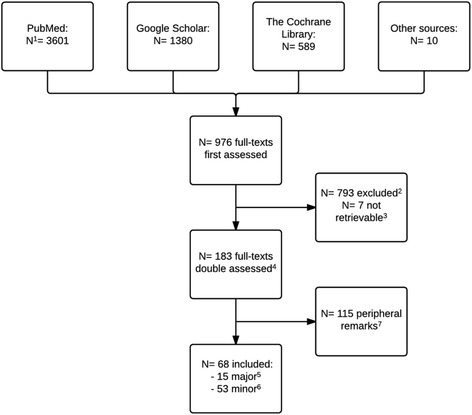
BACKGROUND: The Cochrane risk of bias tool for randomized clinical trials was introduced in 2008 and has frequently been commented on and used in systematic reviews. We wanted to evaluate the tool by reviewing published comments on its strengths and challenges and by describing and analysing how the tool is applied to both Cochrane and non-Cochrane systematic reviews. METHODS: A review of published comments (searches in PubMed, The Cochrane Methodology Register and Google Scholar) and an observational study (100 Cochrane and 100 non-Cochrane reviews from 2014). RESULTS: Our review included 68 comments, 15 of which were categorised as major. The main strengths of the tool were considered to be its aim (to assess trial conduct and not reporting), its developmental basis (wide consultation, empirical and theoretical evidence) and its transparent procedures. The challenges of the tool were mainly considered to be its choice of core bias domains (e.g. not involving funding/conflicts of interest) and issues to do with implementation (i.e. modest inter-rater agreement) and terminology. Our observational study found that the tool was used in all Cochrane reviews (100/100) and was the preferred tool in non-Cochrane reviews (31/100). Both types of reviews frequently implemented the tool in non-recommended ways. Most Cochrane reviews planned to use risk of bias assessments as basis for sensitivity analyses (70 %), but only a minority conducted such analyses (19 %) because, in many cases, few trials were assessed as having "low" risk of bias for all standard domains (6 %). The judgement of at least one risk of bias domain as "unclear" was found in 89 % of included randomized clinical trials (1103/1242). CONCLUSIONS: The Cochrane tool has become the standard approach to assess risk of bias in randomized clinical trials but is frequently implemented in a non-recommended way. Based on published comments and how it is applied in practice in systematic reviews, the tool may be further improved by a revised structure and more focused guidance.
Overview
The claims and statistics of this paper haven’t been checked yet.
Free: it reads the open-access text and checks the first 5 claims that cite a source we can check. Create a free account to check every claim.
Integrity signals
Registry
Cites
Statistics
Figures
Verification
Claims the paper makes
The claims and statistics of this paper haven’t been checked yet.
Free: it reads the open-access text and checks the first 5 claims that cite a source we can check. Create a free account to check every claim.
Claims other papers make about this one
Each is checked against this paper’s own text: does it say what the citing paper says it does?
The cited source says what the claim attributes to it.
In the citing paper
“Few trials are assessed as at low risk of bias, and judgments of unclear risk of bias are common. 6 7”
From RoB 2: a revised tool for assessing risk of bias in randomised trials (2019) · cites this paper as [6]
The cited source says what the claim attributes to it.
In the citing paper
“A review of comments and user practice found that both Cochrane and nonCochrane systematic reviews often implemented the RoB tool in non-standard ways. 6”
From RoB 2: a revised tool for assessing risk of bias in randomised trials (2019) · cites this paper as [6]
Self-check
Percentages, sums and reported differences re-computed from the paper’s own numbers.
The self-check needs the paper’s full text.
Citations
Cites
The Cochrane Collaboration's tool for assessing risk of bias in randomised trials
Higgins, J. P. T., Altman, D. G., Gotzsche, P. C., Juni, P., Moher, D., Oxman, A. D., Savovic, J., Schulz, K. F., Weeks, L., Sterne, J. A. C., et al. (2011) · BMJ · doi:10.1136/bmj.d5928 · Cited by 33,817
Self-citationDermyshi, E., Wang, Y., Yan, C., Hong, W., Qiu, G., Gong, X., & Zhang, T. (2017) · Neonatology · doi:10.1159/000454668 · Cited by 24,451
Assessing the quality of reports of randomized clinical trials: Is blinding necessary?
Jadad, A. R., Moore, R. A., Carroll, D., Jenkinson, C., Reynolds, D. J. M., Gavaghan, D. J., & McQuay, H. J. (1996) · Controlled Clinical Trials · doi:10.1016/0197-2456(95)00134-4 · Cited by 17,582 · cited 1×
“Other tools and scales used to assess risk of bias included the Jadad Quality Assessment Scale (19/80, 24 %) [13] and the Physiotherapy Evidence Database (short PEDro) scale (5/80, 6 %) [14] (Table 4).”
MethodZhang, Q., Wang, C., Zheng, M., Li, Y., Li, J., Zhang, L., Shang, X., & Yan, C. (2015) · Cerebrovascular Diseases · doi:10.1159/000369778 · Cited by 11,533
Dong, Y., Hao, L., Shi, Z., Wang, G., Zhang, Z., & Han, C. (2013) · Urologia Internationalis · doi:10.1159/000351405 · Cited by 4,540
Industry sponsorship and research outcome
Lundh, A., Lexchin, J., Mintzes, B., Schroll, J. B., & Bero, L. (2017) · Cochrane Database of Systematic Reviews · doi:10.1002/14651858.mr000033.pub3 · Cited by 1,697
Bassler, D. (2010) · JAMA · doi:10.1001/jama.2010.310 · Cited by 611
Industry sponsorship and research outcome
Lundh, A., Sismondo, S., Lexchin, J., Busuioc, O. A., & Bero, L. (2012) · Cochrane Database of Systematic Reviews · doi:10.1002/14651858.mr000033.pub2 · Cited by 605
Influence of trial sample size on treatment effect estimates: meta-epidemiological study
Dechartres, A., Trinquart, L., Boutron, I., & Ravaud, P. (2013) · BMJ · doi:10.1136/bmj.f2304 · Cited by 544 · cited 1×
“Several design features of randomized clinical trials have been reported in meta-epidemiological studies to be associated with exaggerated treatment effects, such as sample size [25], development country status [26], single centre status [27] and stopping a trial early [28].”
BackgroundSelf-citationRisk of bias versus quality assessment of randomised controlled trials: cross sectional study
Hartling, L., Ospina, M., Liang, Y., Dryden, D. M., Hooton, N., Krebs Seida, J., & Klassen, T. P. (2009) · BMJ · doi:10.1136/bmj.b4012 · Cited by 348 · cited 3×
“Over this period, the tool has been used in numerous systematic reviews, the scientific debate on risk of bias has proceeded (for example, reflecting on the role of source of funding [3–6] or other “meta-biases” [7]) and research publications have analysed user experience [8] and inter-agreement rates [9–11].”
BackgroundMethodResult
Cited by
Items 201–300 of 437
Li, S.-S., You, R., Li, M., Guo, X., Zhao, L., Wang, Y., & Chen, X. (2019) · International Journal of Ophthalmology · doi:10.18240/ijo.2019.12.15 · Cited by 10
Li, S., Wang, H., & Zhang, D. (2022) · Seminars in Ophthalmology · doi:10.1080/08820538.2021.2022165 · Cited by 11
Uhre, V., Uhre, C. F., Lønfeldt, N. N., Pretzmann, L., Vangkilde, S., Plessen, K. J., Gluud, C. N., Jakobsen, J. C., & Pagsberg, A. K. (2020) · Journal of the American Academy of Child & Adolescent Psychiatry · doi:10.1016/j.jaac.2020.04.013 · Cited by 11
Montalva-Valenzuela, F., Andrades-Ramírez, O., Ferrari, G., Adsuar, J. C., Gorla, J. I., Farías‐Valenzuela, C., Mendoza-Muñoz, M., Nanjarí-Miranda, R., & Castillo-Paredes, A. (2025) · Discover Social Science and Health · doi:10.1007/s44155-025-00241-1 · Cited by 13
“Each domain was classified as “low”; “some concerns”; “high risk of bias” [55] as appropriate for each randomized clinical trial.”
Conflicts of Interest in Nutrition: Categorical Thinking and the Stigma of Commercial Collaboration
Mela, D. J. (2024) · Current Developments in Nutrition · doi:10.1016/j.cdnut.2024.104413 · Cited by 9
“Third, there is an adverse effect at the level of research aggregation for systematic reviews and expert evidence assessments, where links to industry may be deemed source of bias, independent of other, objectively de fi ned domains [33,56].”
BackgroundZhao, J., Yang, W., Liang, G., Luo, M., Pan, J., Liu, J. L., & Zeng, L. (2022) · Journal of Ethnopharmacology · doi:10.1016/j.jep.2022.115247 · Cited by 9
Systematic review versus structured critical analysis
Solow, R. A. (2019) · CRANIO® · doi:10.1080/08869634.2019.1614288 · Cited by 9
Barčot, O., Borić, M., Došenović, S., & Puljak, L. (2021) · BMC Medical Research Methodology · doi:10.1186/s12874-021-01339-1 · Cited by 10
“A 2008 Cochrane RoB tool [2] had six domains, and one of them assessed “blinding of participants, personnel and outcome assessors” [3].”
MethodDavis, M. E., & McGrane, N. (2021) · Physiotherapy Practice and Research · doi:10.3233/ppr-210512 · Cited by 12
Systematic Reviews and Meta‐Analysis
Crombie, I. (2021) · Wiley eBooks · doi:10.1002/9781394322183.ch5 · Cited by 9
Fitzgerald, G. E., O’Dwyer, T., Mockler, D., O'Shea, F. D., & Wilson, F. (2020) · Rheumatology International · doi:10.1007/s00296-020-04623-3 · Cited by 9
Li, M., Lan, J., Dong, F., & Duan, P. (2020) · European Journal of Clinical Pharmacology · doi:10.1007/s00228-020-03037-1 · Cited by 10
Rose, C. J., Bidonde, J., Ringsten, M., Glanville, J., Potrebny, T., Cooper, C., Muller, A. E., Bergsund, H. B., Meneses‐Echavez, J. F., & Berg, R. C. (2025) · Cochrane Evidence Synthesis and Methods · doi:10.1002/cesm.70048 · Cited by 8
“There is evidence that humans overuse the “ uncertain ” / “ some concerns ” categories [12, 13], so we specified secondary outcomes to assess agreement between dichotomized assessments of RoB: low or unclear RoB versus high RoB, and low versus unclear or high RoB.”
Alashram, A. R. (2024) · Applied Neuropsychology Adult · doi:10.1080/23279095.2024.2350607 · Cited by 9
“The Cochrane Collaboration tool consists of six main points (sequence generation, allocation concealment, blinding, incomplete outcome data, selective outcome reporting, and other biases) (Higgins et al., 2011; Jørgensen et al., 2016).”
Appiah, B., Asamoah‐Akuoko, L., Ahmed, M. K., Tancred, T., Dei‐Adomakoh, Y., Singh, G. K., Reilly, C., Olayemi, E., Delaney, M., France, C. R., et al. (2025) · Vox Sanguinis · doi:10.1111/vox.13799 · Cited by 8
“The assessment of risk of bias was conducted independently by two review authors (M.K.A., B.A.) using respectively ROBINS-I [ 18] for non-RCTs and Cochrane Collaborators Tool for RCTs [19].”
Pinto, M. M., Montalva-Valenzuela, F., Farías‐Valenzuela, C., Hernández, P. A. F., Ferrari, G., & Castillo-Paredes, A. (2025) · Psychiatry International · doi:10.3390/psychiatryint6020046 · Cited by 11
Stern, C., Li, J., Stone, J., Khalil, H., Sears, K., Jia, R. M., Bhatarasakoon, P., Aromataris, E., & Fernandez, R. S. (2025) · Research Synthesis Methods · doi:10.1017/rsm.2025.10040 · Cited by 11
Wu, B., & Yao, J. (2026) · Medicine · doi:10.1097/md.0000000000046892 · Cited by 8
“[18] The studies were assessed and classified as low, high, or unclear.”
How-To Create an Orthopaedic Systematic Review: A Step-by-Step Guide Part I: Study Design
Ng, M. K., Magruder, M. L., Heckmann, N. D., Delanois, R. E., Piuzzi, N. S., Krebs, V. E., & Mont, M. A. (2024) · The Journal of Arthroplasty · doi:10.1016/j.arth.2024.03.059 · Cited by 8
Han, Y., Wang, Y., & Guan, M. (2024) · World Journal of Gastrointestinal Surgery · doi:10.4240/wjgs.v16.i11.3546 · Cited by 9
Li, S.-S., Li, M., You, R., Wang, H., Zhao, L., Wang, Y., & Chen, X. (2021) · International Ophthalmology · doi:10.1007/s10792-020-01656-2 · Cited by 8
Leske, S., Smith, A. B., Lambert, S., & Girgis, A. (2018) · Systematic Reviews · doi:10.1186/s13643-018-0795-5 · Cited by 8
“We chose the Cochrane Risk of Bias tool, as it assesses trial conduct and not reporting; it was developed based on wide consultation, empirical and theoretical evidence and it places an emphasis on transparency [25].”
MethodTonin, F. S., Lopes, L. A. A., Rotta, I., Bonetti, A. D. F., Pontarolo, R., Correr, C. J., & Fernández-Llimós, F. (2019) · International Journal of Clinical Pharmacy · doi:10.1007/s11096-019-00818-2 · Cited by 9
Condello, F., Maurina, M., Chiarito, M., Sturla, M., Terzi, R., Fazzari, F., Sanz‐Sánchez, J., CANNATA, F., Condorelli, G., & Stefanini, G. G. (2022) · Minerva Cardiology and Angiology · doi:10.23736/s2724-5683.21.05893-2 · Cited by 9
Bagher, S. M., & Sabbagh, H. J. (2023) · Journal of Clinical Pediatric Dentistry · doi:10.22514/jocpd.2023.029 · Cited by 15
Punnoose, A., Weiss, O., Khanduja, V., & Rushton, A. (2019) · BMJ Open · doi:10.1136/bmjopen-2019-031119 · Cited by 8
Efficacy of laser therapy on primary burning mouth syndrome: a systematic review
Khemiss, M., Dammak, N., Lajili, O., Yacoub, S., & Khélifa, M. B. (2024) · Journal of Oral & Facial Pain and Headache · doi:10.22514/jofph.2024.003 · Cited by 9
Vitali, F., Zuin, M., Charles, P., Jiménez‐Díaz, J., Sheldon, S. H., Tagliari, A. P., Migliore, F., Malagù, M., Montoy, M., Sobrino, F. H., et al. (2024) · EP Europace · doi:10.1093/europace/euae274 · Cited by 7
Ma, Z., Wu, F., & Zheng, W. (2025) · Psychiatric Quarterly · doi:10.1007/s11126-025-10121-1 · Cited by 8
“We employed the Cochrane Risk of Bias Tool to systematically evaluate methodological quality across included randomized controlled trials [ 17].”
Sun, W., Li, L., Zhang, Z., Duan, X., Wei, J., & Soh, K. L. (2025) · Frontiers in Medicine · doi:10.3389/fmed.2025.1619729 · Cited by 9
Place of placebo therapy in the treatment of burning mouth syndrome: A systematic review
Khemiss, M., Chaabouni, D., Khaled, R. B., & Khélifa, M. B. (2022) · Dental and Medical Problems · doi:10.17219/dmp/152646 · Cited by 7
Wang, J., Wang, N., & Gong, F. (2021) · Experimental and Therapeutic Medicine · doi:10.3892/etm.2021.9631 · Cited by 7
“The Cochrane risk of bias assessment tool for RCTs was used to evaluate the risk of bias (36).”
MethodGuelimi, R., Choudhary, C., Ollivier, C., Beytout, Q., Samaran, Q., Mubuangankusu, A., Chaimani, A., Sbidian, É., Afach, S., & Cleach, L. L. (2025) · Journal of Clinical Epidemiology · doi:10.1016/j.jclinepi.2025.112097 · Cited by 8
Liao, D., He, Z., Yan, S., Ji, Q., Li, Y., Tu, Y., Zhou, Z., & Ai, S. (2025) · Frontiers in Neurology · doi:10.3389/fneur.2025.1513826 · Cited by 6
Liao, Y., Chen, W.-S., Restya, W. P. D., Liao, Y.-C., Lin, Y., & Lin, R. (2025) · Journal of Psychosomatic Research · doi:10.1016/j.jpsychores.2025.112366 · Cited by 6
Liu, X.-Y., Chuan-hua, J., Zhao, D., Chen, Y., & Zhang, H. (2020) · Medicine · doi:10.1097/md.0000000000022270 · Cited by 6
“The methodological quality of all eligible RCTs will be assessed based on the guideline of Cochrane Risk of Bias Tool,([24]) and that of all CCSs will be appraised using The Newcastle-Ottawa Scale([25]) by 2 independent authors.”
MethodVitamin D on COVID-19 Patients During the Pandemic, 2022. A Systematic Review and Meta-Analysis
Asla, M. M., Nawar, A. A., Elsayed, E., Farahat, R. A., Abdulgadir, A., Alsharabasy, M. A., Elshahawy, S. M., & Amer, S. A. (2023) · Current Research in Nutrition and Food Science Journal · doi:10.12944/crnfsj.11.1.3 · Cited by 6
Wong, M. Y. C. (2023) · Youth · doi:10.3390/youth3040083 · Cited by 6
“Studies with more than 70% “yes” in response to the tools’ questions indicated as a low risk of bias research study [33].”
BackgroundAlashram, A. R. (2024) · Neurological Sciences · doi:10.1007/s10072-024-07360-8 · Cited by 6
“The CCT consists of six major items (sequence generation, allocation concealment, blinding, incomplete outcome data, selective outcome reporting, and other biases) [42, 43].”
Pangandaman, H. K., Mukattil, N. P., Lambayong, J. H. C., Abdulhan, M., Hayudini, R., Salve, M. M., Matumadi, I. U., Macalaba, S. P., Kadil, R., & Mangontawar, A. M. (2024) · Payām-i naw. · doi:10.61186/jgbfnm.21.1.4 · Cited by 9
A scoping review identifies comments suggesting modifications to PRISMA-P 2015
Nejstgaard, C. H., Sondrup, N., Chan, A., Dwan, K. M., Moher, D., Page, M. J., Shamseer, L., Stewart, L. A., & Hróbjartsson, A. (2025) · Journal of Clinical Epidemiology · doi:10.1016/j.jclinepi.2025.111760 · Cited by 11
Self-citationMuthuka, J. K., Mbari, D., Wambura, F. M., Oluoch, K., Nzioki, J. M., Nyamai, E. M., & Nabaweesi, R. (2025) · JMIRx Med · doi:10.2196/57626 · Cited by 6
“To assess the quality of randomized controlled trials (RCTs), the Cochrane Risk of Bias tool and Risk of Bias 2 tool [31] were used, evaluating domains such as randomization, deviations from intended interventions, missing outcome data, outcome measurement, and selection of reported results.”
Koster, A., Stevens, M. J., van Keeken, H. G., Westerveld, S., & Seeber, G. H. (2023) · European Review of Aging and Physical Activity · doi:10.1186/s11556-023-00317-4 · Cited by 8
“0 tool is not always used according to regulations, as using this tool is challenging [72]; such challenges may allow for low interrater reliability to emerge [73].”
MethodTaha, A. M., Elsaeidy, A. S., Nada, S. A., Sharma, S., Ghonaim, M. M., Ahsan, A., Mourid, M. R., & Abouelmagd, K. (2024) · Clinical Drug Investigation · doi:10.1007/s40261-024-01401-y · Cited by 5
“The updated Cochrane risk of bias tool for randomized trials (ROB-II) was used to assess the risk of bias in the RCT studies [9].”
Alashram, A. R. (2025) · Brain Injury · doi:10.1080/02699052.2025.2476494 · Cited by 5
“The Cochrane Collaboration tool consists of six main items ‘sequence generation, allocation concealment, blinding, incomplete outcome data, selective outcome reporting, and other biases’ (28,29).”
Montalva-Valenzuela, F., Guzmán-Muñoz, E., Ferrari, G., Adsuar, J. C., Ruiz, N. E., & Castillo-Paredes, A. (2025) · Psychiatry International · doi:10.3390/psychiatryint6040122 · Cited by 7
“We also used the Cochrane Risk of Bias (RoB-2) tool [38] for randomized clinical trials to assess the risk of bias of included articles.”
Roy, F. G., & Johnson, F. (2025) · IAES International Journal of Artificial Intelligence · doi:10.11591/ijai.v14.i6.pp4454-4460 · Cited by 5
“The Cochrane risk of bias tool was applied for randomized controlled trials, focusing on allocation concealment, blinding, and attrition [5].”
Ge, J., Wang, Q., Wang, S., Xiong, X., & Zhai, Y. (2025) · Frontiers in Public Health · doi:10.3389/fpubh.2025.1662778 · Cited by 6
Rodríguez, G. P. C., Langer, M. R. E., Yaya-Beas, M., Liñán-Durán, C., Lagravère, M. O., & Gianoni‐Capenakas, S. (2022) · International Orthodontics · doi:10.1016/j.ortho.2022.100658 · Cited by 5
Chen, D., Zhong, X., Lin, L., Xie, J., Lian, Y., & Xu, L. (2022) · PubMed · Cited by 5
Asquini, G., Pisacane, G., Maselli, F., Galeoto, G., Mourad, F., Bizzarri, P., Balli, E., Bagnoli, C., Manzari, A., Pernici, M., et al. (2024) · BMJ Open · doi:10.1136/bmjopen-2023-083133 · Cited by 5
“…bias in the included articles will be assessed using two distinct tools: (1) the revised Cochrane risk- of-bias tool for randomised trials (RoB V.2), 39 considered the gold standard for RCTs 40 and (2) the Cochrane risk of bias in non-randomised studies of interventions for non-randomised trials.”
Cardiovascular Health Disparities in Adults of Color Aged 18 to 50: A Systematic Review
Howard, Q., Adeyinka, S., Martin, S., & Griggs, S. A. (2024) · The Journal of Cardiovascular Nursing · doi:10.1097/jcn.0000000000001165 · Cited by 5
Cost analysis of Omega-3 supplementation in critically ill patients with sepsis
Kyeremanteng, K., Shen, J. M., Thavorn, K., Fernando, S. M., Herritt, B., Chaudhuri, D., & Tanuseputro, P. (2018) · Clinical Nutrition ESPEN · doi:10.1016/j.clnesp.2018.04.003 · Cited by 7
Wei, J., Luo, Y., & Fu, D. (2018) · OncoTargets and Therapy · doi:10.2147/ott.s186816 · Cited by 5
Association between aspirin use and risk of dementia: a systematic review and meta-analysis
Tao, T., Feng, G., & Fang, Y. (2023) · European Geriatric Medicine · doi:10.1007/s41999-023-00877-9 · Cited by 5
“The risk of bias in the randomized controlled trials and the cohort studies was evaluated using Cochrane’s risk of bias assessment tool [55], and the ROBINS-I tool, respectively.”
Micronutrient status of patients with diabetic foot: A systematic review.
Batarbekova, S., Zhunussova, D., Derbissalina, G., Bekbergenova, Z., Maksimova, N. V., Umbetzhanova, A., Kelimberdiyeva, E., Kasymova, R. N., Kuanyshbayeva, G., & Imangaliyeva, A. (2025) · Europe PMC (PubMed Central) · doi:10.6133/apjcn.202508_34(4).0001 · Cited by 6
Rajput, J., Narahari, S., Arif, T., Iftikhar, R., Arpan, T., Tariq, A., Duleh, H. M. A., & Cherukuri, S. (2025) · Cureus · doi:10.7759/cureus.92793 · Cited by 4
Alhwaiti, M. (2025) · Applied Neuropsychology Child · doi:10.1080/21622965.2025.2598575 · Cited by 4
Gao, Q., Sun, Y., Qu, Y., Li, F., & Li, P. (2025) · Medicine · doi:10.1097/md.0000000000046409 · Cited by 4
Lyu, T., Sun, B., Yang, D., Zhao, X., Wang, R., Shu, X., Li, D., & Chen, H. (2024) · The Clinical Respiratory Journal · doi:10.1111/crj.13823 · Cited by 4
“Two researchers (RS-W and XR-Z) independently and blindly evaluated the risk of bias of the included RCTs using the Cochrane risk of bias tool for randomized trials and the quality of the included observational studies using the Newcastle-Ottawa Scale (NOS) [24, 25].”
MethodAsquini, G., Pisacane, G., Maselli, F., Mourad, F., Bizzarri, P., Balli, E., Bagnoli, C., Manzari, A., Pernici, M., Giusti, A., et al. (2025) · Journal of Oral Rehabilitation · doi:10.1111/joor.14021 · Cited by 4
“The risk of bias in the included studies was evaluated using the revised Cochrane risk- of-bias tool for randomised trials (RoB2) [42], which is regarded as the optimal method for assessing RCTs [43].”
Alsarkhi, L. N., Eda, S., Abdul, R. H. M., Hussaini, H., Fadeyi, O. A., Chaudhari, S. S., Rauf, M. A., & Allahwala, D. (2025) · Cureus · doi:10.7759/cureus.90205 · Cited by 5
“The methodological quality and risk of bias of included studies were assessed using the Cochrane Risk of Bias Tool [10].”
Guo, W., Soh, K. G., Soh, K. G., & Saidi, H. I. (2025) · International Journal of Medical Informatics · doi:10.1016/j.ijmedinf.2025.106210 · Cited by 4
Gopalani, S. V., Sedani, A. E., Janitz, A. E., Clifton, S. C., Stoner, J. A., Peck, J. D., Comiford, A. L., Salvatore, A. L., & Campbell, J. E. (2020) · BMJ Open · doi:10.1136/bmjopen-2019-035658 · Cited by 4
Immediate-release methylphenidate for attention deficit hyperactivity disorder (ADHD) in adults
Cândido, R. C. F., Golder, S., de Pádua, C. A. M., Perini, É., & Junqueira, D. R. (2018) · Cochrane Database of Systematic Reviews · doi:10.1002/14651858.cd013011 · Cited by 4
Li, M., Fang, Y., Lian, Y., Lu, X., Qiu, M., & He, Y. (2022) · The Journal of Maternal-Fetal & Neonatal Medicine · doi:10.1080/14767058.2022.2122794 · Cited by 4
Miller, A. C., Faza, C., Bigalli, A. A. C., Khan, A. M., Sewell, K. B., King, A., Vahedian‐Azimi, A., & Zehtabchi, S. (2020) · Archives of Academic Emergency Medicine · doi:10.22037/aaem.v8i1.578 · Cited by 6
“0: "Revised tool for Risk of Bias in randomized trials" (28).”
Li, L., Mathrani, A., & Sušnjak, T. (2025) · arXiv (Cornell University) · doi:10.48550/arxiv.2512.01452 · Cited by 4
“Prior works [49, 50, 51] repeatedly shown that reviews differ in how strictly they apply RoB criteria, and RoB judgments are inherently subjective, with only moderate agreement even among trained reviewers.”
Zhang, Y.-J., Lu, X.-M., Li, P.-W., Guo, C.-A., & Wan, D.-J. (2021) · Turkish Neurosurgery · doi:10.5137/1019-5149.jtn.34664-21.3 · Cited by 3
Cyanoacrylate Tissue Adhesives Compared With Sutures on Facial and Neck Wounds: A Meta‐analysis
Charoenlux, P., Utoomprurkporn, N., & Seresirikachorn, K. (2023) · OTO Open · doi:10.1002/oto2.73 · Cited by 5
“Each domain was determined as low risk, high risk, or unclear, based on the Cochrane risk of bias assessment criteria.(24,25)”
Methodvan Bruggen, F. H., Zuidema, S. U., & Luijendijk, H. J. (2024) · BMC Medical Research Methodology · doi:10.1186/s12874-024-02260-z · Cited by 3
“This approach may be a valuable addition to standard assessments with a risk of bias tool, which often yield discrepant results [74, 75].”
BackgroundMastrokostas, P. G., Mastrokostas, L. E., Emara, A. K., Salman, M., Wellington, I. J., Ford, B. T., Houten, J. K., Saleh, A., Monsef, J. B., Razi, A. E., et al. (2025) · Journal of Spine Surgery · doi:10.21037/jss-25-49 · Cited by 3
“For this purpose, we advocate for the use of the Cochrane RoB tool for appraising randomized studies, and the MINORS criteria and/or the NOS for assessing non-randomized studies (11-14).”
Srinivasan, A., Yi, K. M., Sharma, D., & Mantoo, S. K. (2025) · Techniques in Coloproctology · doi:10.1007/s10151-025-03259-4 · Cited by 5
“The Cochrane Bias Tool was used to evaluate RCTs [19].”
Shin, H. W., Choi, Y. J., You, H. S., Lee, J. H., & Jang, Y. (2026) · Medicine · doi:10.1097/md.0000000000046373 · Cited by 3
“Two authors (You HS and Jang YK) independently assessed the risk of bias using the Cochrane Risk of Bias Tool for RCTs [20] and Newcastle–Ottawa Scale for NRCTs. [21]”
Wells, M., Bujkiewicz, S., & Hubbard, S. (2022) · BMC Public Health · doi:10.1186/s12889-022-13377-5 · Cited by 5
Libwea, J. N., Ngwa, C. H., Ngomba, A. V., Wirsiy, F. S., Mpofu, L., Ndongo, C. B., Koulla‐Shiro, S., Graham, S. M., Djieuya, L. P. T., Mandeng, N. J., et al. (2023) · Medicine · doi:10.1097/md.0000000000033697 · Cited by 3
“Quality assessment of included studies will be performed independently by at least 2 coauthors using the Cochrane Risk of Bias tool for randomized controlled trials and the NewcastleOttawa Quality Assessment Scale for nonrandomized studies.[18,19] Disagreement between the coauthors will be resolved by discussion, with…”
MethodHow-To Create an Orthopaedic Systematic Review: A Step-by-step Guide Part II: Study Execution
Ng, M. K., Magruder, M. L., Piuzzi, N. S., Heckmann, N. D., Delanois, R. E., Krebs, V. E., & Mont, M. A. (2024) · The Journal of Arthroplasty · doi:10.1016/j.arth.2024.03.055 · Cited by 3
Alashram, A. R. (2024) · Journal of Bodywork and Movement Therapies · doi:10.1016/j.jbmt.2024.06.001 · Cited by 3
Alharbi, T. Y., Alnadawi, H. A., Almutairi, G. M., Altheyab, F. Y., Aldoweesh, O. H., Alfehaid, O. S., Alhaj, A. A., Alotaibi, A. M., & Zweihary, A. M. A. (2024) · Cureus · doi:10.7759/cureus.70550 · Cited by 3
Assari, A. S., Algharbi, E. M., Abuhabsha, A. M., Alshammry, B. B., Alanazi, Y., Abuhaimed, R. A., Alzahrani, A. M. A., & Alduhaim, A. S. (2024) · Frontiers in Oral Health · doi:10.3389/froh.2024.1360298 · Cited by 3
Blood pressure management in reperfused ischemic stroke
Varela, L. B., Liquitay, C. M. E., Menai, S. D., Rodriguez, J. P., Quarteroni, E., Ivaldi, D., Burgos, M. A., Meza, N., & Garegnani, L. (2025) · Cochrane Database of Systematic Reviews · doi:10.1002/14651858.cd016085 · Cited by 3
Ka, S., Choe, Y. H., Kim, Y.-I., Kim, N., Seo, M., Choi, Y., & Park, J. (2025) · Sleep And Breathing · doi:10.1007/s11325-025-03508-8 · Cited by 5
Bertizzolo, L., Bossuyt, P. M., Atal, I., Ravaud, P., & Dechartres, A. (2020) · Journal of Clinical Epidemiology · doi:10.1016/j.jclinepi.2020.03.008 · Cited by 3
Zhang, N., Liu, K., She, Y., Zhao, W., Zeng, J., & Lin, G. (2020) · Medicine · doi:10.1097/md.0000000000021905 · Cited by 3
How to Do a Review of the Literature?
Nundy, S., Kakar, A., & Bhutta, Z. A. (2021) · Springer eBooks · doi:10.1007/978-981-16-5248-6_18 · Cited by 3
Assessing the Risk of Bias in Randomized Trials
Page, M. J., Altman, D. G., & Egger, M. (2022) · Wiley eBooks · doi:10.1002/9781119099369.ch4 · Cited by 3
Alashram, A. R. (2024) · Applied Neuropsychology Adult · doi:10.1080/23279095.2024.2306133 · Cited by 3
“The Cochrane instrument is a typical tool to assess the risk of bias in the experiment’s studies (Higgins et al., 2011; Jørgensen et al., 2016).”
Werathammo, M., Seresirikachorn, K., & Charoenlux, P. (2024) · Facial Plastic Surgery · doi:10.1055/a-2370-2125 · Cited by 3
“35,36 The risk of bias of other study types, including case report studies, case series studies, retrospective studies, and prospective descriptive studies, was assessed using the tool from the National Heart, Lung, and Blood Institute.”
Jafari, B., Amiri, M. R., Łabęcka, M. K., & Rajabi, R. (2025) · Journal of Bodywork and Movement Therapies · doi:10.1016/j.jbmt.2025.04.004 · Cited by 3
Tonia, T., Buitrago‐García, D., Peter, N. L., Mesa-Vieira, C., Li, T., Furukawa, T. A., Cipriani, A., Leucht, S., Low, N. N., & Salanti, G. (2023) · medRxiv · doi:10.1101/2023.02.01.23285335 · Cited by 4
Nitelikli Bilimsel Araştırma Makalesi Nasıl Yazılır?
Şenel, A., Çalgi, B., Boz, C., Mutlu, E. K., Tarakçı, E., Doğan, E. N. K., Türkmen, E., Çavdar, F. A., Gülüstan, F., Güzeldere, H. K. B., et al. (2024) · doi:10.5152/6900 · Cited by 2
Sharma, A., Chahal, A., Rai, R. H., Wójcik, B. M., & Sharma, N. (2025) · Iraqi Journal of Hematology · doi:10.4103/ijh.ijh_130_24 · Cited by 2
Singh, V., Mishra, A., Sharma, D., Singal, U., Islam, N., Islam, M. J., Hossain, M. A., Rahman, M. S., & Ahmed, S. M. G. (2025) · PLoS ONE · doi:10.1371/journal.pone.0318954 · Cited by 2
“Three categories for the study were established based on these inquiries: low, medium, and high-risk bias [19].”
Dezfouli, R. A., Hashemzadeh, S., & Mohammadzadeh, A. S. (2025) · The Egyptian Journal of Neurology Psychiatry and Neurosurgery · doi:10.1186/s41983-025-00993-2 · Cited by 4
“The risk of bias in the included studies was assessed by two independent reviewers (R.A.D. and S.H.) using the Cochrane Collaboration’s Risk of Bias tool [32].”
Bantle, G., Stadelmaier, J., Πετροπούλου, Μ., Meerpohl, J. J., & Schwingshackl, L. (2025) · Journal of Clinical Epidemiology · doi:10.1016/j.jclinepi.2025.112038 · Cited by 4
Wu, Y., Xu, H., & Gu, Z. (2025) · International Journal of Surgery · doi:10.1097/js9.0000000000004425 · Cited by 3
Alkhidir, M. M. O. H., & Sridharan, K. (2026) · Vaccines · doi:10.3390/vaccines14010072 · Cited by 2
“The risk of bias of included studies was assessed using Cochrane tool for RCTs and Joanna Briggs Institute (JBI) tool for other study designs [15,16].”
Ding, H., Sun, G., Yu, G., Gao, X., Zheng, L., Zheng, K., Gong, H. F., Zhu, X., & Zhang, W. (2026) · Frontiers in Oncology · doi:10.3389/fonc.2026.1724255 · Cited by 2
“The quality of the included literature was assessed via the Cochrane Risk of Bias Tool for randomized controlled trials (18), the Newcastle – Ottawa Scale for case – control studies (19), and the Agency for Healthcare Research and Quality cross-sectional study evaluation criteria for…”
Musazadeh, V., Mahmoudinezhad, M., Hosseini‐Roknabadi, S. M., Falahatzadeh, M., & Shidfar, F. (2026) · Endocrinology Diabetes & Metabolism · doi:10.1002/edm2.70171 · Cited by 2
“We will assess the quality of the included studies using the Cochrane Risk of Bias Assessment Tool, including risk of bias assessment for randomization methods, allocation concealment and blind implementation [14].”
Nejstgaard, C. H., Lundh, A., Abdi, S., Clayton, G., Gelle, M. H. A., Laursen, D. R. T., Olorisade, B. K., Savović, J., & Hróbjartsson, A. (2021) · Research Synthesis Methods · doi:10.1002/jrsm.1527 · Cited by 2
“However, a methodological study of 100 Cochrane Reviews reported that approximately 30% of the reviews incorporated information on funding and authors' conflicts of interest directly into the risk of bias assessment.(70) Currently, there is little practical guidance for how to tackle commercial funding and there is a…”
BackgroundSelf-citation
Metadata
- Authors
- Jørgensen, L., Paludan-Müller, A. S., Laursen, D. R. T., Savović, J., Boutron, I., Sterne, J. A. C., Higgins, J. P. T., & Hróbjartsson, A.
- Affiliations
- Rigshospitalet (DK)
- University Hospitals Bristol NHS Foundation Trust (GB)
- Inserm (FR)
- University of Southern Denmark (DK)
- Corresponding author
- Jørgensen, Lars
- ORCID
- Venue
- Systematic Reviews
- Published
- 2016-05-10
- Volume
- 5
- Issue
- 1
- Pages
- 80-80
- ISSN
- 2046-4053 (ISSN-L)
- PMC
- PMC4862216
- OpenAlex
- W2346262725
- Cited by
- 396
- References
- 28
- Citations by year
- 2026: 27 · 2025: 59 · 2024: 75 · 2023: 48 · 2022: 41 · 2021: 42 · 2020: 35 · 2019: 35 · 2018: 20 · 2017: 12 · 2016: 2
- FWCI
- 21.48
- Type
- journal article
- Language
- en
- Open access
- gold
- doi.org
- Licence
- cc-by
- Locations
- Systematic Reviews (publishedVersion, cc-by)
- PubMed Central (publishedVersion, cc-by)
- PubMed (publishedVersion)
- Bristol Research (University of Bristol) (publishedVersion, cc-by)
- Explore Bristol Research (submittedVersion, cc-by)
- University of Southern Denmark Research Portal (University of Southern Denmark) (submittedVersion, cc-by)
- Funders
- Rigshospitalet
- Topics
- Social Sciences › Decision Sciences › Statistics, Probability and Uncertainty › Meta-analysis and systematic reviews
- Social Sciences › Sociology and Political Science › Delphi Technique in Research
- Health Sciences › Nursing › Issues, ethics and legal aspects › Pharmaceutical industry and healthcare
- Keywords
- Cochrane risk of bias tool, risk of bias assessment, randomized controlled trials, interobserver agreement, sensitivity analysis, tool implementation, online comments
- MeSH terms
- Systematic Reviews as Topic, Humans, Bias, Randomized Controlled Trials as Topic, Risk Assessment
About these checks
Registry, retraction, Cites and statistics results are computed, not judged, with one exception: a printed reference that no index lists is read once by a model before it counts as a citation error. Claims are extracted by a model and kept only when their quote appears verbatim in the text; each cited source is then checked, with a model’s help, for whether it says what the claim relies on. Those verdicts can be wrong — read the claim’s quote and the cited source before relying on one.
Statistics and arithmetic are recomputed, not judged.
Confidence bands are shown only for fields calibrated on our annotated test set. None is calibrated yet, so no band is shown.
What counts as a claim ›How we measure confidence ›How we check this ›
Are you an author, or do you see a problem with this page? Request a review
Data sources
Bibliographic data: Semantic Scholar, OpenAlex, Crossref.
Contains information from the Semantic Scholar Academic Graph Datasets, made available under the ODC Attribution License (ODC-BY 1.0).
Semantic Scholar’s data is described in: Kinney, R., et al. (2023). The Semantic Scholar Open Data Platform. arXiv:2301.10140.
