

Evaluation of the Cochrane tool for assessing risk of bias in randomized clinical trials: overview of published comments and analysis of user practice in Cochrane and non-Cochrane reviews
Open accessThe DOI matches its Crossref record; 28 of the 28 references it cites were found in a registry or an index.
Abstract
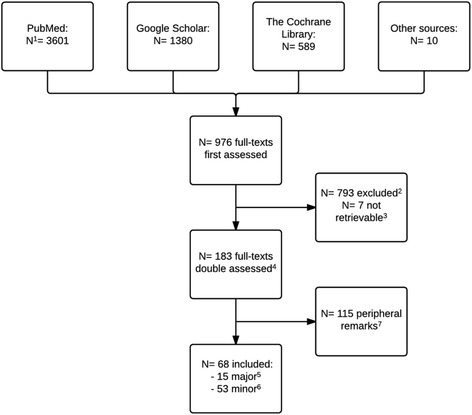
BACKGROUND: The Cochrane risk of bias tool for randomized clinical trials was introduced in 2008 and has frequently been commented on and used in systematic reviews. We wanted to evaluate the tool by reviewing published comments on its strengths and challenges and by describing and analysing how the tool is applied to both Cochrane and non-Cochrane systematic reviews. METHODS: A review of published comments (searches in PubMed, The Cochrane Methodology Register and Google Scholar) and an observational study (100 Cochrane and 100 non-Cochrane reviews from 2014). RESULTS: Our review included 68 comments, 15 of which were categorised as major. The main strengths of the tool were considered to be its aim (to assess trial conduct and not reporting), its developmental basis (wide consultation, empirical and theoretical evidence) and its transparent procedures. The challenges of the tool were mainly considered to be its choice of core bias domains (e.g. not involving funding/conflicts of interest) and issues to do with implementation (i.e. modest inter-rater agreement) and terminology. Our observational study found that the tool was used in all Cochrane reviews (100/100) and was the preferred tool in non-Cochrane reviews (31/100). Both types of reviews frequently implemented the tool in non-recommended ways. Most Cochrane reviews planned to use risk of bias assessments as basis for sensitivity analyses (70 %), but only a minority conducted such analyses (19 %) because, in many cases, few trials were assessed as having "low" risk of bias for all standard domains (6 %). The judgement of at least one risk of bias domain as "unclear" was found in 89 % of included randomized clinical trials (1103/1242). CONCLUSIONS: The Cochrane tool has become the standard approach to assess risk of bias in randomized clinical trials but is frequently implemented in a non-recommended way. Based on published comments and how it is applied in practice in systematic reviews, the tool may be further improved by a revised structure and more focused guidance.
Overview
The claims and statistics of this paper haven’t been checked yet.
Free: it reads the open-access text and checks the first 5 claims that cite a source we can check. Create a free account to check every claim.
Integrity signals
Registry
Cites
Statistics
Figures
Verification
Claims the paper makes
The claims and statistics of this paper haven’t been checked yet.
Free: it reads the open-access text and checks the first 5 claims that cite a source we can check. Create a free account to check every claim.
Claims other papers make about this one
Each is checked against this paper’s own text: does it say what the citing paper says it does?
The cited source says what the claim attributes to it.
In the citing paper
“Few trials are assessed as at low risk of bias, and judgments of unclear risk of bias are common. 6 7”
From RoB 2: a revised tool for assessing risk of bias in randomised trials (2019) · cites this paper as [6]
The cited source says what the claim attributes to it.
In the citing paper
“A review of comments and user practice found that both Cochrane and nonCochrane systematic reviews often implemented the RoB tool in non-standard ways. 6”
From RoB 2: a revised tool for assessing risk of bias in randomised trials (2019) · cites this paper as [6]
Self-check
Percentages, sums and reported differences re-computed from the paper’s own numbers.
The self-check needs the paper’s full text.
Citations
Cites
The Cochrane Collaboration's tool for assessing risk of bias in randomised trials
Higgins, J. P. T., Altman, D. G., Gotzsche, P. C., Juni, P., Moher, D., Oxman, A. D., Savovic, J., Schulz, K. F., Weeks, L., Sterne, J. A. C., et al. (2011) · BMJ · doi:10.1136/bmj.d5928 · Cited by 33,817
Self-citationDermyshi, E., Wang, Y., Yan, C., Hong, W., Qiu, G., Gong, X., & Zhang, T. (2017) · Neonatology · doi:10.1159/000454668 · Cited by 24,451
Assessing the quality of reports of randomized clinical trials: Is blinding necessary?
Jadad, A. R., Moore, R. A., Carroll, D., Jenkinson, C., Reynolds, D. J. M., Gavaghan, D. J., & McQuay, H. J. (1996) · Controlled Clinical Trials · doi:10.1016/0197-2456(95)00134-4 · Cited by 17,582 · cited 1×
“Other tools and scales used to assess risk of bias included the Jadad Quality Assessment Scale (19/80, 24 %) [13] and the Physiotherapy Evidence Database (short PEDro) scale (5/80, 6 %) [14] (Table 4).”
MethodZhang, Q., Wang, C., Zheng, M., Li, Y., Li, J., Zhang, L., Shang, X., & Yan, C. (2015) · Cerebrovascular Diseases · doi:10.1159/000369778 · Cited by 11,533
Dong, Y., Hao, L., Shi, Z., Wang, G., Zhang, Z., & Han, C. (2013) · Urologia Internationalis · doi:10.1159/000351405 · Cited by 4,540
Industry sponsorship and research outcome
Lundh, A., Lexchin, J., Mintzes, B., Schroll, J. B., & Bero, L. (2017) · Cochrane Database of Systematic Reviews · doi:10.1002/14651858.mr000033.pub3 · Cited by 1,697
Bassler, D. (2010) · JAMA · doi:10.1001/jama.2010.310 · Cited by 611
Industry sponsorship and research outcome
Lundh, A., Sismondo, S., Lexchin, J., Busuioc, O. A., & Bero, L. (2012) · Cochrane Database of Systematic Reviews · doi:10.1002/14651858.mr000033.pub2 · Cited by 605
Influence of trial sample size on treatment effect estimates: meta-epidemiological study
Dechartres, A., Trinquart, L., Boutron, I., & Ravaud, P. (2013) · BMJ · doi:10.1136/bmj.f2304 · Cited by 544 · cited 1×
“Several design features of randomized clinical trials have been reported in meta-epidemiological studies to be associated with exaggerated treatment effects, such as sample size [25], development country status [26], single centre status [27] and stopping a trial early [28].”
BackgroundSelf-citationRisk of bias versus quality assessment of randomised controlled trials: cross sectional study
Hartling, L., Ospina, M., Liang, Y., Dryden, D. M., Hooton, N., Krebs Seida, J., & Klassen, T. P. (2009) · BMJ · doi:10.1136/bmj.b4012 · Cited by 348 · cited 3×
“Over this period, the tool has been used in numerous systematic reviews, the scientific debate on risk of bias has proceeded (for example, reflecting on the role of source of funding [3–6] or other “meta-biases” [7]) and research publications have analysed user experience [8] and inter-agreement rates [9–11].”
BackgroundMethodResult
Cited by
Items 101–200 of 437
Hunter, J., Arentz, S., Goldenberg, J. Z., Yang, G., Beardsley, J., Mertz, D., & Leeder, S. (2020) · Integrative Medicine Research · doi:10.1016/j.imr.2020.100457 · Cited by 28
Barčot, O., Ivanda, M., Buljan, I., Pieper, D., & Puljak, L. (2021) · Research Synthesis Methods · doi:10.1002/jrsm.1499 · Cited by 29
A Practical Guide to Perform a Systematic Literature Review and Meta-analysis
Ortíz, A. F. H., Camacho, E. C., Rojas, J. D. C., Cadavid, T., Guevara, S. Z., Cuenca, N. T. R., Perdomo, A. F. V., Herazo, V. D. C., & Malo, R. G. (2021) · Principles and Practice of Clinical Research Journal · doi:10.21801/ppcrj.2021.74.6 · Cited by 34
Jose, J., Teja, K. V., Palanivelu, A., Khandelwal, A., & Siddique, R. (2022) · Journal of Conservative Dentistry · doi:10.4103/jcd.jcd_30_21 · Cited by 33
“[28] From the included studies, seven domains were assessed: random sequence generation, allocation concealment, blinding of participants and personnel, blinding of outcome assessment, attrition bias, reporting bias, and any other bias which could affect the results of the study.”
Wright, N. J., Langer, M., Norman, I., Akhbari, M., Wafford, Q. E., Ade‐Ajayi, N., Davies, J. I., Poenaru, D., Sevdalis, N., & Leather, A. (2018) · BMJ Paediatrics Open · doi:10.1136/bmjpo-2018-000392 · Cited by 26
Haring, R., Ghannad, M., Bertizzolo, L., & Page, M. J. (2020) · Journal of Clinical Epidemiology · doi:10.1016/j.jclinepi.2020.02.004 · Cited by 27
Chen, H., Shu-qing, Y., & Qian, C. (2020) · Frontiers in Oncology · doi:10.3389/fonc.2020.01248 · Cited by 28
“The risk of bias in the included studies was assessed by Cochrane’s risk of bias assessment tool for randomized controlled trials and non-randomized controlled trials, i.e., Risk of Bias in Non-randomized Studies of Interventions (ROBINS-I) (26).”
BackgroundCho, Y., Choi, G. J., Ahn, E. J., & Kang, H. (2021) · PLoS ONE · doi:10.1371/journal.pone.0243865 · Cited by 31
Interventions to increase sleep duration in young people: A systematic review
Gadam, S., Pattinson, C. L., Rossa, K. R., Soleimanloo, S. S., Moore, J., Begum, T., Srinivasan, A. G., & Smith, S. S. (2023) · Sleep Medicine Reviews · doi:10.1016/j.smrv.2023.101807 · Cited by 25
Systematic review in evidence-based risk assessment
Farhat, N., Tsaioun, K., Saunders-Hastings, P., Morgan, R. L., Ramoju, S., Hartung, T., & Krewski, D. (2021) · ALTEX · doi:10.14573/altex.2004111 · Cited by 29
“The Cochrane Collaboration developed the RoB tool, intended for randomized trials, which has become popular in Cochrane and non-Cochrane systematic reviews (Jorgensen et al., 2016).”
MethodA systematic review of sleep deprivation and neurobehavioral function in young adults
Griggs, S. A., Harper, A., & Hickman, R. L. (2021) · Applied Nursing Research · doi:10.1016/j.apnr.2021.151552 · Cited by 32
Genes and Elite Marathon Running Performance: A Systematic Review.
Moir, H. J., Kemp, R. N., Folkerts, D., Spendiff, O., Pavlidis, C., & Opara, E. I. (2019) · Europe PMC (PubMed Central) · Cited by 39
Wang, Y., Gan, X., Li, K., Ma, T., & Zhang, Y. (2020) · PLoS ONE · doi:10.1371/journal.pone.0237151 · Cited by 29
Martin, H., Beard, S., Clissold, N., Andraos, K., & Currey, L. (2017) · Mental health and physical activity · doi:10.1016/j.mhpa.2017.04.003 · Cited by 30
Dewsbury, L. S., Lim, C. K., & Steiner, G. Z. (2020) · Advances in Nutrition · doi:10.1093/advances/nmaa180 · Cited by 27
“Cochrane’s risk of bias tool (38) was used to appraise randomized studies as it is considered the gold standard in the evaluation of study quality within randomized clinical trials (111).”
MethodCho, Y., Kim, C., & Kang, B. (2019) · BMJ Open · doi:10.1136/bmjopen-2018-023725 · Cited by 24
Xia, Y., Wang, Y., Cui, M., & Su, D. (2021) · Annals of Palliative Medicine · doi:10.21037/apm-21-1050 · Cited by 23
“org), 2 researchers independently assessed the methodological quality of the included studies (12).”
BackgroundPsychological intervention and its immune effect in cancer patients: A meta-analysis
Ping, Z., Mo, L., Li, X., & Wang, Q. (2019) · Medicine · doi:10.1097/md.0000000000017228 · Cited by 23
“The CCT([11]) is an effective instrument for the evaluation of the internal validity of randomized controlled trials.”
MethodInfluentialDing, Y., Chen, Z., & Lu, Y. (2021) · Medicine · doi:10.1097/md.0000000000023101 · Cited by 23
Yuan, J., Wen, X., & Jia, M. (2021) · Annals of Palliative Medicine · doi:10.21037/apm-21-2018 · Cited by 22
“0) (18), each trial was evaluated in the following 7 areas related to the risk of bias: (I) random sequence generation, (II) concealment of treatment allocation, (III) blinding of participants and personnel, (IV) blinding of outcome evaluation, (V) incomplete outcome data, (VI) selective reporting, and (VII) other bia…”
BackgroundAltuhafy, M., Sodhi, G. S., & Khan, J. (2024) · Journal of Dental Anesthesia and Pain Medicine · doi:10.17245/jdapm.2024.24.4.245 · Cited by 22
Nejstgaard, C. H., Boutron, I., Chan, A.-W., Chow, R., Hopewell, S., Masalkhi, M., Moher, D., Schulz, K. F., Shlobin, N. A., Østengaard, L., et al. (2023) · Journal of Clinical Epidemiology · doi:10.1016/j.jclinepi.2023.01.003 · Cited by 21
Self-citationBai, T., Deng, X., Bi, J., Ni, L., Li, Z., & Zhuo, X. (2024) · Frontiers in Medicine · doi:10.3389/fmed.2024.1471243 · Cited by 21
Šuster, S., Baldwin, T., Lau, J. H., Yepes, A. J., Martínez, D., Otmakhova, Y., & Verspoor, K. M. (2023) · Journal of Medical Internet Research · doi:10.2196/35568 · Cited by 27
“The GRADE assessment scheme subsumes the standard RoB tool developed by Cochrane [7,23].”
Alashram, A. R., Janada, Q., Ghrear, T., & Annino, G. (2023) · Applied Neuropsychology Adult · doi:10.1080/23279095.2023.2228951 · Cited by 21
“The Cochrane tool is considered the standard tool to evaluate the risk of bias in experimental studies (Cumpston et al., 2019; Jørgensen et al., 2016).”
Ortiz, H. A. D. L. B., Arias, M., & Liebano, R. E. (2024) · Lasers in Medical Science · doi:10.1007/s10103-024-04069-0 · Cited by 22
“The methodological quality of RCTs was preliminary reviewed using the Evidence-Based Physiotherapy Scale (PEDro scale), followed by the subsequent application of the Cochrane Collaboration Risk of Bias (RoB) tool to scrutinize bias within the encompassed studies [23, 24].”
Alashram, A. R. (2024) · Neurological Sciences · doi:10.1007/s10072-024-07628-z · Cited by 25
“The CCT is a tool for evaluating the methodological quality of RCTs [40, 41].”
Balzer, J., van der Linden, M. L., Mercer, T. H., & van Hedel, H. J. A. (2017) · Developmental Medicine & Child Neurology · doi:10.1111/dmcn.13417 · Cited by 25
What to do with a clinical trial with conflicts of interest
Lundh, A., Boutron, I., Stewart, L., & Hróbjartsson, A. (2020) · BMJ Evidence-Based Medicine · doi:10.1136/bmjebm-2019-111230 · Cited by 21
“16 Nevertheless, there is currently little practical guidance for how to tackle conflicts of interest and there is therefore a clear need for a broader consensus on how information on trial funding and authors’ conflicts of interest should be addressed in systematic reviews.”
Self-citationXi, B., Liu, H., Sun, J., Zhang, X., Li, N., & Chen, M. (2020) · Aesthetic Plastic Surgery · doi:10.1007/s00266-020-01743-w · Cited by 22
Milani, A. S., Froughreyhani, M., Taghiloo, H., Nouroloyouni, A., & Jafarabadi, M. A. (2022) · Evidence-Based Dentistry · doi:10.1038/s41432-021-0205-z · Cited by 23
Alam, M. K., Hajeer, M. Y., Shqaidef, A. J., Alswairki, H. J., Alfawzan, A. A., Shrivastava, D., Srivastava, K. C., Cicciù, M., & Minervini, G. (2023) · The Saudi Dental Journal · doi:10.1016/j.sdentj.2023.10.013 · Cited by 20
“2 ) was used to assess the quality of the included studies, and the network meta -analysis assessed the consistency and transitivity assumptions (J ø rgensen et al. 2016).”
Hajimirzaei, P., Eyni, H., Razmgir, M., Abolfazli, S., Pirzadeh, S., Tabatabaei, F. S. A., Vasigh, A., Yazdanian, N., Ramezani, F., Janzadeh, A., et al. (2024) · Naunyn-Schmiedeberg s Archives of Pharmacology · doi:10.1007/s00210-024-03369-0 · Cited by 21
“A third reviewer was invited to resolve disagreements between the two reviewers (Higgins and White 2008; Higgins et al. 2013; Jørgensen et al. 2016).”
Nugroho, J., Wardhana, A. P., & Savitri, C. G. (2020) · International Journal of Vascular Medicine · doi:10.1155/2020/8758905 · Cited by 20
The development of the 2020 Dietary Reference Intakes for Korean population: Lessons and challenges
Kwon, O., Kim, H., Kim, J., Hwang, J., Lee, J., & Yoon, M. O. (2021) · Journal of Nutrition and Health · doi:10.4163/jnh.2021.54.5.425 · Cited by 20
Effect of gardening activities on domains of health: a systematic review and meta-analysis
Wang, F., & Boros, S. (2025) · BMC Public Health · doi:10.1186/s12889-025-22263-9 · Cited by 23
“Each included study underwent independent appraisal and was subsequently double-checked for methodological quality using the Cochrane risk of bias tool [20, 21].”
Wen, X., Liu, Z., Liu, X., Peng, Y., & Liu, H. (2022) · Brain Research Bulletin · doi:10.1016/j.brainresbull.2022.07.016 · Cited by 22
Li, T., Yan, J., Hu, J., Liu, X., & Wang, F. (2022) · Frontiers in Surgery · doi:10.3389/fsurg.2022.952361 · Cited by 19
The psychometric properties of the Italian version of the PEDro Scale
Berardi, A., Tofani, M., Colalelli, F., Valente, D., Sellitto, G., Ruotolo, I., & Galeoto, G. (2022) · Gazzetta Medica Italiana Archivio per le Scienze Mediche · doi:10.23736/s0393-3660.22.04593-4 · Cited by 19
Embolic protection devices for carotid artery stenting: A network meta-analysis
Giannopoulos, S., Sagris, Μ., Giannopoulos, S., Tzoumas, A., Kokkinidis, D. G., Texakalidis, P., Koutsias, G., Volteas, P., Jing, L., & Malgor, R. D. (2022) · Vascular · doi:10.1177/17085381221140616 · Cited by 19
“27”
Hashemi, F., Razmi, M., Tajik, F., Zöller, M., Manshadi, M. D., Mahdavinezhad, F., Tiyuri, A., Ghods, R., & Madjd, Z. (2022) · Stem Cells · doi:10.1093/stmcls/sxac089 · Cited by 19
Ofosu, E. F., Nys, L. D., Connelly, J., Ryde, G. C., & Phillips, A. C. (2023) · Journal of Aging and Physical Activity · doi:10.1123/japa.2022-0098 · Cited by 22
“This review made use of the Cochrane risk of bias tool which is clear and concise with theoretical and empirical supporting evidence (Jørgensen et al., 2016).”
MethodGebrye, T., Fatoye, F., Mbada, C. E., & Hakimi, Z. (2023) · Rheumatology International · doi:10.1007/s00296-023-05354-x · Cited by 24
Lai, S., Hwang, B., Kuo, Y., Liu, C.-S., & Liao, K. (2023) · Frontiers in Endocrinology · doi:10.3389/fendo.2023.1158153 · Cited by 19
Zhang, W., Lu, X., Yang, N., Zhu, X., & Hu, H. (2025) · Frontiers in Medicine · doi:10.3389/fmed.2025.1457407 · Cited by 53
Winser, S. J., Paul, L. F., Magnus, L. K. L., Szeto, Y., Shenug, T. P., Sing, Y. M., & Cheing, G. L. Y. (2019) · The Journal of Alternative and Complementary Medicine · doi:10.1089/acm.2019.0148 · Cited by 18
Lundh, A., Rasmussen, K., Østengaard, L., Boutron, I., Stewart, L. A., & Hróbjartsson, A. (2019) · Journal of Clinical Epidemiology · doi:10.1016/j.jclinepi.2019.12.005 · Cited by 21
Self-citationUnderstanding the nature and scope of clinical research commentaries in PubMed
Rogers, J. R., Mills, H., Liu, L. G., Goldstein, A., & Weng, C. (2019) · Journal of the American Medical Informatics Association · doi:10.1093/jamia/ocz209 · Cited by 19
Cupka, J. S., Hashemighouchani, H., Lipori, J., Ruppert, M. M., Bhaskar, R., Ozrazgat‐Baslanti, T., Rashidi, P., & Bihorac, A. (2020) · F1000Research · doi:10.12688/f1000research.25769.1 · Cited by 22
Catapano, M. S., Pupic, N., Multani, I., Wasserstein, D. N., & Henry, P. D. G. (2020) · Shoulder & Elbow · doi:10.1177/1758573220957631 · Cited by 20
“Quality assessment The quality of included randomized studies was assessed using the Cochrane Collaboration’s Risk of Bias tool in Review Manager Software.(13) No scoring system was adopted; rather, quality assessments were used for descriptive purposes.”
MethodChoi, J. H., Lee, S. H., Cho, I. R., Paik, W. H., Ryu, J. K., & Kim, Y. (2021) · Journal of Hepato-Biliary-Pancreatic Sciences · doi:10.1002/jhbp.946 · Cited by 20
Joksimovic, L., Koucheki, R., Popovic, M. M., Ahmed, Y., Schlenker, M. B., & Ahmed, I. I. K. (2017) · British Journal of Ophthalmology · doi:10.1136/bjophthalmol-2017-310313 · Cited by 19
Jin, X., Antony, B., Wang, X., Persson, M. S. M., McAlindon, T. E., Arden, N., Srivastava, S. R., Srivastava, R. N., van Middelkoop, M., Bierma‐Zeinstra, S., et al. (2020) · BMJ Open · doi:10.1136/bmjopen-2019-035302 · Cited by 19
Zhu, K., Yin, X., Liu, Y., Qin, G., Jia, J., Xie, Z., & Liu, Y. (2025) · BMC Public Health · doi:10.1186/s12889-025-23948-x · Cited by 19
“To guarantee the standardization and scientific rigorous-ness of the study, two reviewers (KZ, JJJ) employed the Cochrane risk of bias tool for randomized and non-randomized studies to assess the risk of bias in the included studies [13].”
Principales sesgos en la investigación clínica
Zurita‐Cruz, J. N., & Villasís-Keever, M. Á. (2021) · Revista Alergia México · doi:10.29262/ram.v68i4.1003 · Cited by 28
Sehmbi, H., Retter, S., Shah, U. J., Nguyen, D. L., Martin, J. E., & Uppal, V. (2022) · British Journal of Anaesthesia · doi:10.1016/j.bja.2022.08.042 · Cited by 18
Page, M. J., Boutron, I., Nejstgaard, C. H., Altman, D. G., & Hróbjartsson, A. (2018) · Journal of Clinical Epidemiology · doi:10.1016/j.jclinepi.2018.01.004 · Cited by 17
“There has long been concern that trial stakeholders’ conflicts of interests may have influenced the design, conduct, analysis or reporting of an individual trial (17), yet this issue is poorly addressed in existing systematic reviews (15).”
BackgroundMethodSelf-citationEFFECTS OF POSTURAL EDUCATION IN ELEMENTARY SCHOOL CHILDREN: A SYSTEMATIC REVIEW
Valenciano, P. J., Cibinello, F. U., Neves, J. C. D. J., & Fujisawa, D. S. (2020) · Revista Paulista de Pediatria · doi:10.1590/1984-0462/2021/39/2020005 · Cited by 17
Bhatia, D., Salbach, N. M., Akinrolie, O., Alsbury‐Nealy, K., dos Santos, R. B., Eftekhar, P., Loewen, H., Nekolaichuk, E., Scheller, C., Schorr, R., et al. (2022) · Journal of Aging and Physical Activity · doi:10.1123/japa.2021-0151 · Cited by 19
Visolyi, G. Á., Domján, B. A., Svébis, M. M., Péterfi, A., Lovasz, B. D., Mészáros, S., Horváth, V. J., & Tabák, Á. G. (2023) · Canadian Journal of Diabetes · doi:10.1016/j.jcjd.2023.03.002 · Cited by 18
“Risk-of-Bias Assessment Risk of bias for each study was assessed separately for each outcome by 2 reviewers using the Cochrane Collaboration recommendations.[24] Discrepancies were resolved by consensus under the supervision of a senior researcher (AGT).”
MethodSchroé, H., der Mispel, C. V., Bourdeaudhuij, I. D., Verloigne, M., Poppe, L., & Crombez, G. (2019) · Trials · doi:10.1186/s13063-019-3456-7 · Cited by 17
Operationalization of Cochrane’s Risk of Bias 2 Tool (RoB 2) in the Context of Psychotherapy TrialsPreprint
Miguel, C., Harrer, M., Karyotaki, E., Sakher, E., Sakata, M., Furukawa, T. A., & Cuijpers, P. J. (2025) · medRxiv · doi:10.1101/2025.06.26.25330349 · Cited by 19
Han, Q., Min, G., Ren, F., Duan, D., & Xu, X. (2020) · Experimental and Therapeutic Medicine · doi:10.3892/etm.2020.9011 · Cited by 18
Pingilili, A., Letsie, N., Nzimande, G., Thango, B. A., & Matshaka, L. (2025) · Businesses · doi:10.3390/businesses5020017 · Cited by 22
Chien, J.-C., Liu, W., Huang, W.-T., Shih, L.-C., Liu, W., Chen, Y., Chou, K., Shiue, Y., & Lin, P. (2022) · The Breast · doi:10.1016/j.breast.2022.03.006 · Cited by 16
Alashram, A. R., Annino, G., & Padua, E. (2022) · Applied Neuropsychology Adult · doi:10.1080/23279095.2022.2130319 · Cited by 16
“The Cochrane instrument has become the standard approach to assessing the risk of bias in RCTs (Higgins et al., 2011; Jørgensen et al., 2016).”
The effect of cataract surgery on sleep quality: a systematic review and Meta-analysis
Zheng, L., Wu, X., & Lin, H. (2017) · International Journal of Ophthalmology · doi:10.18240/ijo.2017.11.16 · Cited by 16
Global systematic review of the effects of suicide prevention interventions in Indigenous peoples
Leske, S., Paul, E., Gibson, M., Little, B., Wenitong, M., & Kõlves, K. (2020) · Journal of Epidemiology & Community Health · doi:10.1136/jech-2019-212368 · Cited by 15
Alashram, A. R., Padua, E., Romagnoli, C., Raju, M., & Annino, G. (2021) · Physikalische Medizin Rehabilitationsmedizin Kurortmedizin · doi:10.1055/a-1691-9641 · Cited by 14
“The Cochrane tool has become the standard to assess the risk of bias in randomized clinical trials [37, 38].”
MethodKa, S., Choe, Y. H., Kim, Y.-I., Kim, N.-H., Seo, M., Choi, Y., & Park, J. (2025) · Applied Sciences · doi:10.3390/app15010467 · Cited by 14
Facial Reconstruction: A Systematic Review of Current Image Acquisition and Processing Techniques
Tarassoli, S. P., Shield, M. E., Allen, R. S., Jessop, Z. M., Dobbs, T. D., & Whitaker, I. S. (2020) · Frontiers in Surgery · doi:10.3389/fsurg.2020.537616 · Cited by 17
Yong, J., Tian, J., Zhao, X., Yang, X., Zhang, M., Zhou, Y., He, Y., & Song, X. (2022) · Therapeutic Advances in Chronic Disease · doi:10.1177/20406223211056713 · Cited by 13
Willis, A., Shiely, F., Treweek, S. P., Taljaard, M., Loudon, K., Howie, A. H., & Zwarenstein, M. (2024) · Journal of Clinical Epidemiology · doi:10.1016/j.jclinepi.2024.111534 · Cited by 12
Tapia, E. C. H., Yosa, J. L., García, M. H. O., Morocho, N. J. C., & Calle, Y. A. S. (2025) · Cureus · doi:10.7759/cureus.89957 · Cited by 17
Chandrasekaran, B., Rao, C. R., Davis, F., & Arumugam, A. (2021) · Work · doi:10.3233/wor-213544 · Cited by 13
“All desk-based employees initially allocated after randomization into one of the groups will be included for between-group comparisons by intention-to-treat analysis [28].”
López-Ruiz, C., Orjuela, J. C., Rojas‐Gualdrón, D. F., Jimenez-Arango, M., Ríos, J. F. D. L., Trespalacios, E. M. V., & Vargas, C. (2022) · Revista Brasileira Ginecologia e Obstetrícia · doi:10.1055/s-0041-1740595 · Cited by 12
Liu, Z., Wen, X., Xie, X., Liu, Y., Tan, C., Kuang, S., & Liu, H. (2024) · Frontiers in Aging Neuroscience · doi:10.3389/fnagi.2024.1304852 · Cited by 14
Effects of Static Meditation Practice on Blood Lipid Levels: A Systematic Review and Meta-Analysis
Antonelli, M., Donelli, D., Gurgoglione, F. L., Lazzeroni, D., Hálasz, G., & Niccoli, G. (2024) · Healthcare · doi:10.3390/healthcare12060655 · Cited by 12
“Each eligible Randomized Controlled Trial (RCT) underwent evaluation utilizing the Cochrane risk of bias tool [36,37].”
MethodAlashram, A. R. (2024) · Neurological Sciences · doi:10.1007/s10072-024-07618-1 · Cited by 12
“The CCT consists of six elements (i.e., sequence generation, allocation concealment, blinding, incomplete outcome data, selective outcome reporting, and other biases) [38, 39].”
Jin, X., Biqi, P., Wu, H., & Xu, D. (2019) · Medicine · doi:10.1097/md.0000000000014049 · Cited by 12
Wang, J., Mao, S., Xia, F., & Li, X. (2025) · Frontiers in Cardiovascular Medicine · doi:10.3389/fcvm.2025.1569638 · Cited by 13
Altuhafy, M., Baig, V., Jabr, L., & Khan, J. (2024) · Journal of Dental Anesthesia and Pain Medicine · doi:10.17245/jdapm.2024.24.3.145 · Cited by 11
Hassan, M. M., Al-Obaidi, H. O., Karrick, M., Merza, N., Nawras, Y., Saab, O. N., Al‐Obaidi, A. D., Merza, F. A., Hashim, H. T., Zubaidi, K. A., et al. (2024) · Gastroenterology Research · doi:10.14740/gr1750 · Cited by 11
“The evaluation of study quality and potential bias was conducted using the Risk of Bias 2 tool (ROB-2) developed by the Cochrane Collaboration [17].”
MethodZhang, L., Dai, F., Brackett, A. L., Ai, Y., & Meng, L. (2018) · Intensive Care Medicine · doi:10.1007/s00134-018-5345-z · Cited by 14
Estradiol pretreatment in GnRH antagonist protocol for IVF/ICSI treatment
Zhu, S., Lv, Z., Song, L., Zhang, Q., Fan, Y., & Li, J. (2022) · Open Medicine · doi:10.1515/med-2022-0594 · Cited by 11
“Cochrane Collaboration tool [10] was used to evaluate the risk of bias for the RCTs included (Figure 2).”
MethodDevelopment of an integrated and comprehensive clinical trial process management system
Shen, L., Zhai, Y., Pan, A., Zhao, Q., Zhou, M., & Liu, J. (2023) · BMC Medical Informatics and Decision Making · doi:10.1186/s12911-023-02158-8 · Cited by 11
“In addition, the SOP for risk assessment is particularly important, including the definition, classification, and rating of risks [13].”
BackgroundAlashram, A. R., Janada, Q., & Ghrear, T. (2023) · PM&R · doi:10.1002/pmrj.13055 · Cited by 11
“34,35 High, low, or unclear risk of bias was indicated for each element.”
BackgroundOrtiz, H. A. D. L. B., Jélvez, F., Parraguez, D., Pérez, F., & Vargas, C. (2023) · Advances in Rehabilitation · doi:10.5114/areh.2023.131577 · Cited by 11
“The Cochrane Collaboration risk of bias (RoB) tool was used to determine bias in the studies that were included [21].”
MethodLópez‐Alcalde, J., Wieland, L. S., Yan, Y., Barth, J., Khami, M. R., Shivalli, S., Lokker, C., Kaur, H., Macharia, P. M., Yun, S., et al. (2024) · Journal of Medical Internet Research · doi:10.2196/53187 · Cited by 11
Physical therapy assistance in labor: A systematic review and meta-analysis
Delgado, A., Lemos, A., Marinho, G. A., Melo, R. D. S., Pinheiro, F., & Amorim, M. M. R. (2025) · Brazilian Journal of Physical Therapy · doi:10.1016/j.bjpt.2024.101169 · Cited by 12
Nagi, R., Ravipati, V., Thakkar, R., Altuhafy, M., Hashmi, S. F., & Khan, J. (2025) · Journal of the California Dental Association · doi:10.1080/19424396.2025.2474834 · Cited by 14
He, Z., Liao, D., Ji, Q., Yan, S., & Ai, S. (2025) · Frontiers in Neuroscience · doi:10.3389/fnins.2025.1579846 · Cited by 11
Fan, L., Wu, Z., Li, M., & Ganghui, J. (2021) · Medicine · doi:10.1097/md.0000000000024259 · Cited by 10
Behroozi, Z., Jafarpour, M., Razmgir, M., Saffarpour, S., Azizi, H., Kheirandish, A., Kosari-rad, T., Ramezni, F., & Janzadeh, A. (2023) · BMC Psychiatry · doi:10.1186/s12888-023-04696-x · Cited by 10
Shah, R. P., Shafiq, A., Hamza, M., Maniya, M. T., Duhan, S., Keisham, B., Patel, B., Alamzaib, S. M., Yashi, K., Uppal, D., et al. (2023) · The American Journal of Cardiology · doi:10.1016/j.amjcard.2023.08.117 · Cited by 11
Liu, Y., Gao, Z., & Hou, X. (2024) · Therapeutic Advances in Gastroenterology · doi:10.1177/17562848241251567 · Cited by 11
“32 The study protocol was registered with INPLASY (registration number INPLASY2023120053).”
Kolaski, K., Clarke, M. J., & Logan, L. R. (2024) · Journal of Clinical Epidemiology · doi:10.1016/j.jclinepi.2024.111460 · Cited by 10
Celia, G., Serio, G., Trotta, E., Tessitore, F., & Cozzolino, M. (2024) · Frontiers in Psychology · doi:10.3389/fpsyg.2024.1388419 · Cited by 10
Produção Científica: um Guia Prático
Sampaio, M. I. C., Sabadini, A. A. Z. P., & Koller, S. H. (2022) · Universidade de São Paulo. Instituto de Psicologia eBooks · doi:10.11606/9786587596280 · Cited by 21
Rosa, E. C., Deliberador, T. M., do Nascimento, T. C. D. L., Kintopp, C. C. D. A., Rocha, J. S., Wambier, L. M., KHAJOTIA, S. S., Florez, F. L. E., & Storrer, C. L. M. (2019) · Brazilian Oral Research · doi:10.1590/1807-3107bor-2019.vol33.0068 · Cited by 13
Metadata
- Authors
- Jørgensen, L., Paludan-Müller, A. S., Laursen, D. R. T., Savović, J., Boutron, I., Sterne, J. A. C., Higgins, J. P. T., & Hróbjartsson, A.
- Affiliations
- Rigshospitalet (DK)
- University Hospitals Bristol NHS Foundation Trust (GB)
- Inserm (FR)
- University of Southern Denmark (DK)
- Corresponding author
- Jørgensen, Lars
- ORCID
- Venue
- Systematic Reviews
- Published
- 2016-05-10
- Volume
- 5
- Issue
- 1
- Pages
- 80-80
- ISSN
- 2046-4053 (ISSN-L)
- PMC
- PMC4862216
- OpenAlex
- W2346262725
- Cited by
- 396
- References
- 28
- Citations by year
- 2026: 27 · 2025: 59 · 2024: 75 · 2023: 48 · 2022: 41 · 2021: 42 · 2020: 35 · 2019: 35 · 2018: 20 · 2017: 12 · 2016: 2
- FWCI
- 21.48
- Type
- journal article
- Language
- en
- Open access
- gold
- doi.org
- Licence
- cc-by
- Locations
- Systematic Reviews (publishedVersion, cc-by)
- PubMed Central (publishedVersion, cc-by)
- PubMed (publishedVersion)
- Bristol Research (University of Bristol) (publishedVersion, cc-by)
- Explore Bristol Research (submittedVersion, cc-by)
- University of Southern Denmark Research Portal (University of Southern Denmark) (submittedVersion, cc-by)
- Funders
- Rigshospitalet
- Topics
- Social Sciences › Decision Sciences › Statistics, Probability and Uncertainty › Meta-analysis and systematic reviews
- Social Sciences › Sociology and Political Science › Delphi Technique in Research
- Health Sciences › Nursing › Issues, ethics and legal aspects › Pharmaceutical industry and healthcare
- Keywords
- Cochrane risk of bias tool, risk of bias assessment, randomized controlled trials, interobserver agreement, sensitivity analysis, tool implementation, online comments
- MeSH terms
- Systematic Reviews as Topic, Humans, Bias, Randomized Controlled Trials as Topic, Risk Assessment
About these checks
Registry, retraction, Cites and statistics results are computed, not judged, with one exception: a printed reference that no index lists is read once by a model before it counts as a citation error. Claims are extracted by a model and kept only when their quote appears verbatim in the text; each cited source is then checked, with a model’s help, for whether it says what the claim relies on. Those verdicts can be wrong — read the claim’s quote and the cited source before relying on one.
Statistics and arithmetic are recomputed, not judged.
Confidence bands are shown only for fields calibrated on our annotated test set. None is calibrated yet, so no band is shown.
What counts as a claim ›How we measure confidence ›How we check this ›
Are you an author, or do you see a problem with this page? Request a review
Data sources
Bibliographic data: Semantic Scholar, OpenAlex, Crossref.
Contains information from the Semantic Scholar Academic Graph Datasets, made available under the ODC Attribution License (ODC-BY 1.0).
Semantic Scholar’s data is described in: Kinney, R., et al. (2023). The Semantic Scholar Open Data Platform. arXiv:2301.10140.
