

Effects of gut microbial therapy on lipid profile in individuals with non-alcoholic fatty liver disease: an umbrella meta-analysis study
Open accessThe DOI matches its Crossref record; 85 of the 86 references it cites were found in a registry or an index.
Abstract
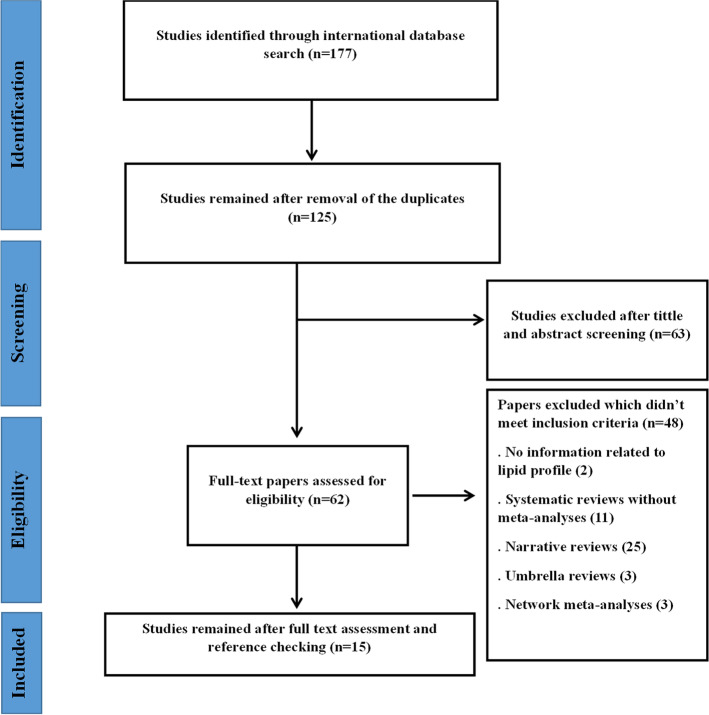
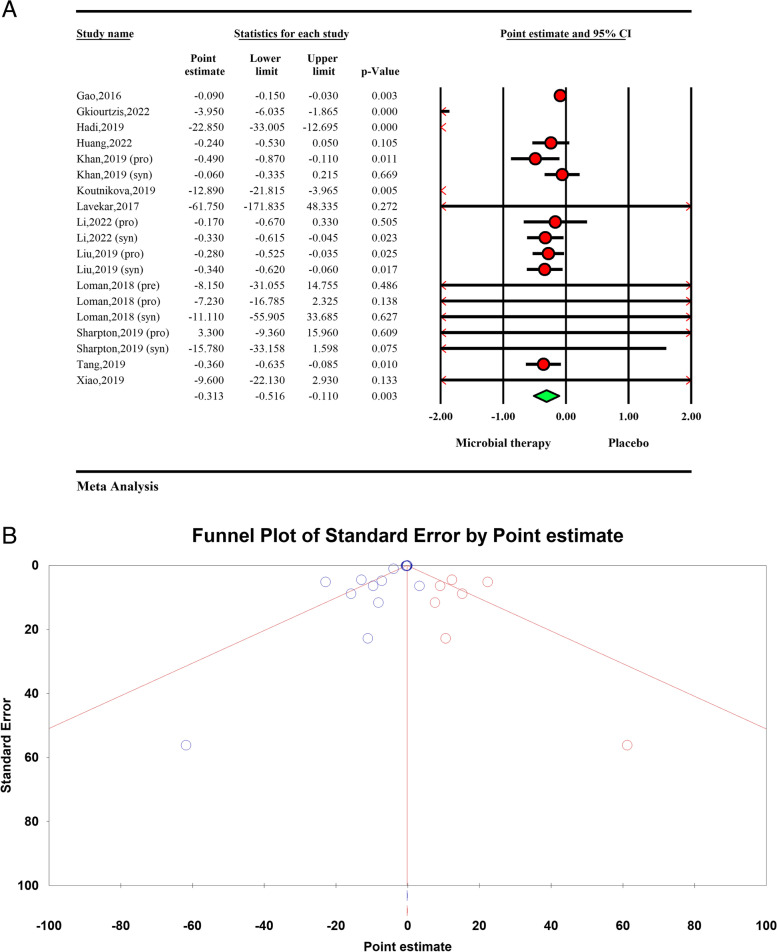
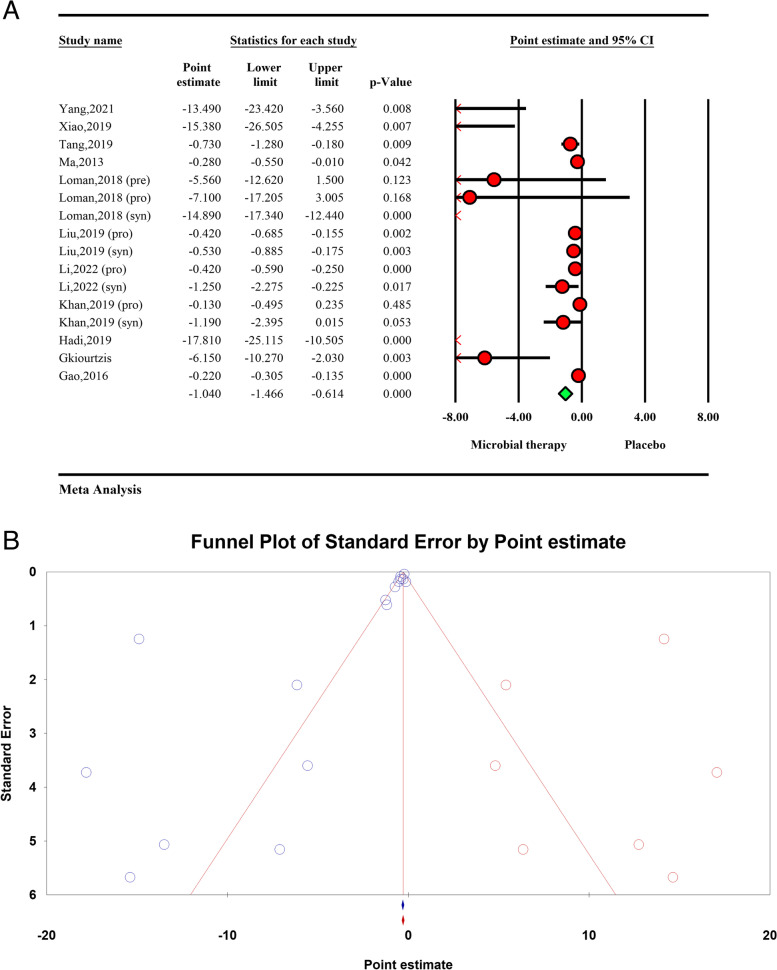
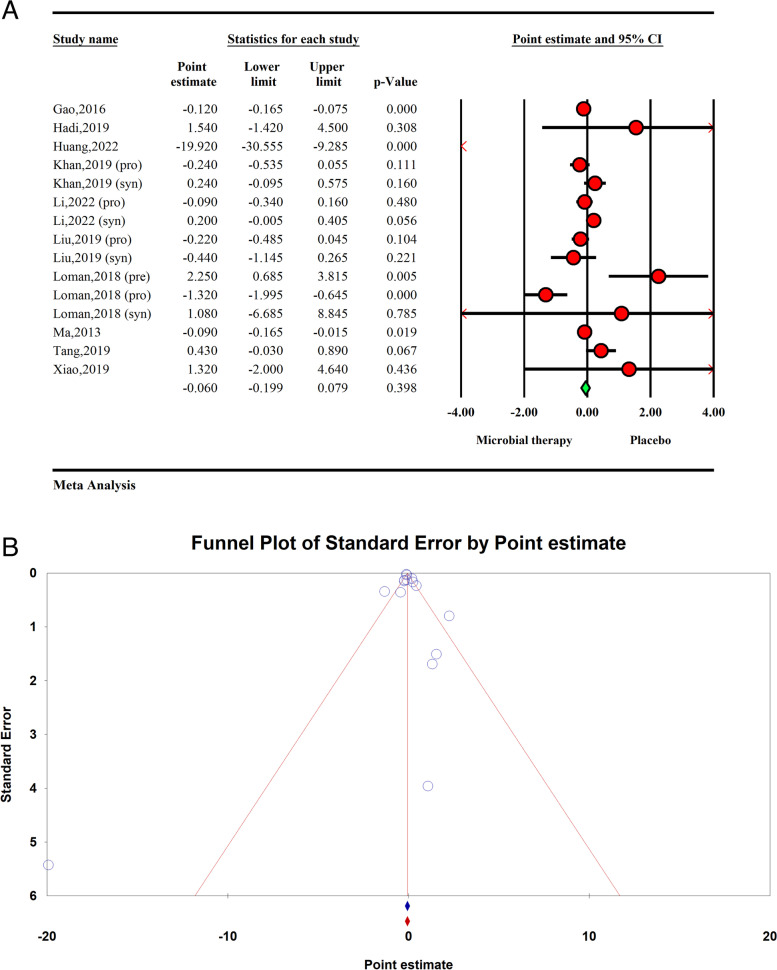
Background: Non-alcoholic fatty liver disease (NAFLD), the most common liver disease, is closely associated with metabolic conditions such as obesity and diabetes mellitus, which significantly impact human health outcomes. The impaired lipid profiles observed in NAFLD individuals can further contribute to cardiovascular events. Despite the high prevalence of NAFLD, there is currently no confirmed intervention approved for its treatment. This study aimed to summarize the results of meta-analysis studies of randomized control trials assessing the impact of gut microbial therapy (probiotics, synbiotics, and prebiotics) on the lipid profile of individuals with NAFLD. Methods: A systematic search was conducted on PubMed, Scopus, Web of Science, and Cochrane Library up to November 1, 2022. Meta-analyses surveying the impact of microbial therapy on lipid profile parameters (triglyceride (TG), high-density lipoprotein (HDL), low-density lipoprotein (LDL), and total cholesterol (TC)) in the NAFLD population were included in our umbrella review. The final effect size (ES) was estimated, and sensitivity and subgroup analyses were performed to explore heterogeneity. Results: Fifteen studies were included in this umbrella review. Microbial therapy significantly reduced TG (ES − 0.31, 95% CI − 0.51, − 0.11, P < 0.01), TC (ES − 1.04, 95% CI − 1.46, − 0.61, P < 0.01), and LDL (ES − 0.77, 95% CI − 1.15, − 0.39, P < 0.01) in individuals with NAFLD. However, the effect on HDL was not statistically significant (ES − 0.06; 95% CI − 0.19, 0.07, P = 0.39). Conclusion: Considering the absence of approved treatments for NAFLD and the promising role of microbial therapies in improving the three lipid profiles components in individuals with NAFLD, the use of these agents as alternative treatment options could be recommended. The findings underscore the potential of gut microbial therapy, including probiotics, synbiotics, and prebiotics, in managing NAFLD and its associated metabolic complications. Trial registration: PROSPERO (CRD42022346998). Graphical Abstract:
Overview
The claims and statistics of this paper haven’t been checked yet.
Free: it reads the open-access text and checks the first 5 claims that cite a source we can check. Create a free account to check every claim.
Integrity signals
Registry
Cites
Statistics
Figures
Verification
Claims the paper makes
The claims and statistics of this paper haven’t been checked yet.
Free: it reads the open-access text and checks the first 5 claims that cite a source we can check. Create a free account to check every claim.
Claims other papers make about this one
Each is checked against this paper’s own text: does it say what the citing paper says it does?
The cited source says what the claim attributes to it.
In the citing paper
“Gut microbial therapy by administration of probiotics, synbiotics and prebiotics may alleviate the medical condition in specific disorders, for example reduction of C-reactive protein50, low-density lipoprotein (LDL)51, alanine aminotransferase and aspartate aminotransferase52 and insulin resistance53 among non-alcoholic fatty liver disease (NAFLD).”
From Association between attention-deficit/hyperactivity disorders and intestinal disorders: A systematic review and Meta-analysis (2025) · cites this paper as [51]
Self-check
Percentages, sums and reported differences re-computed from the paper’s own numbers.
The self-check needs the paper’s full text.
Citations
Cites
Bias in meta-analysis detected by a simple, graphical test
Egger, M., Smith, G. D., Schneider, M., & Minder, C. (1997) · BMJ · doi:10.1136/bmj.315.7109.629 · Cited by 56,722 · cited 1×
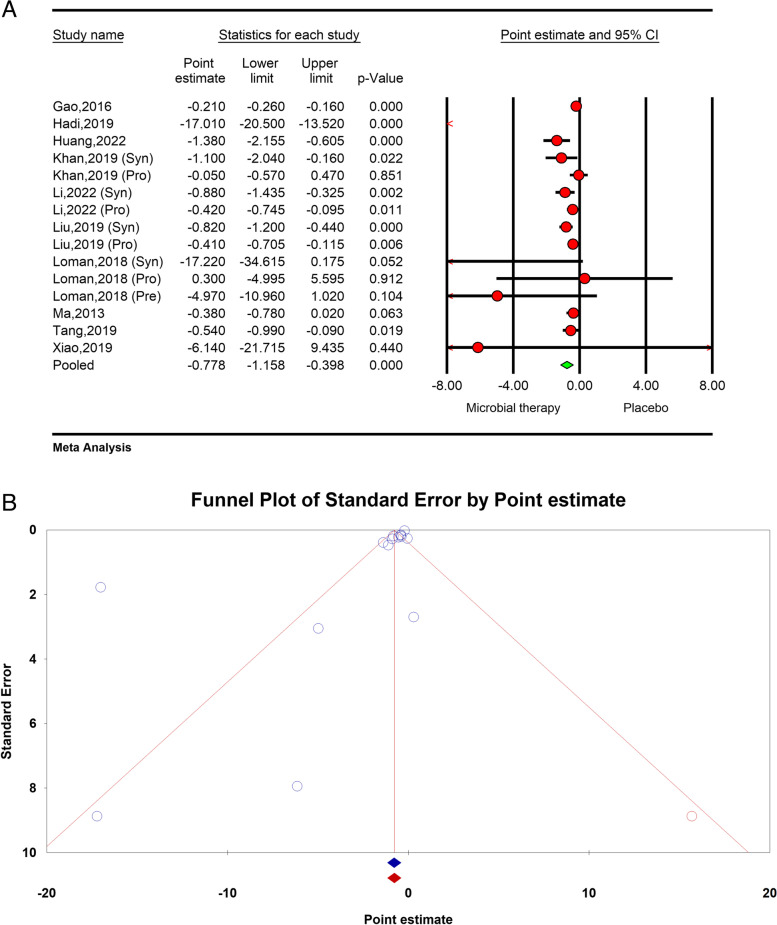
“The publication bias was assessed by visual inspection of the funnel plot and Egger regression test, and P value 0.1 was determined as the level of significance [41, 42].”
MethodInfluentialThe PRISMA 2020 statement: an updated guideline for reporting systematic reviews
Page, M. J., McKenzie, J. E., Bossuyt, P. M., Boutron, I., Hoffmann, T. C., Mulrow, C. D., Shamseer, L., Tetzlaff, J. M., Akl, E. A., Brennan, S. E., et al. (2021) · Systematic Reviews · doi:10.1186/s13643-021-01626-4 · Cited by 13,874 · cited 1×
“The reporting of the results was based on Preferred Reporting Items for Systematic Reviews and Meta-Analy-ses (PRISMA) guidelines [39].”
MethodShea, B. J., Reeves, B. C., Wells, G., Thuku, M., Hamel, C., Moran, J., Moher, D., Tugwell, P., Welch, V., Kristjansson, E., et al. (2017) · BMJ · doi:10.1136/bmj.j4008 · Cited by 10,636
Sterne, J. A. C., Sutton, A. J., Ioannidis, J. P. A., Terrin, N., Jones, D. R., Lau, J., Carpenter, J., Rucker, G., Harbord, R. M., Schmid, C. H., et al. (2011) · BMJ · doi:10.1136/bmj.d4002 · Cited by 7,709 · cited 1×
“The publication bias was assessed by visual inspection of the funnel plot and Egger regression test, and P value 0.1 was determined as the level of significance [41, 42].”
MethodInfluentialGlobal burden of NAFLD and NASH: trends, predictions, risk factors and prevention
Younossi, Z., Anstee, Q. M., Marietti, M., Hardy, T., Henry, L., Eslam, M., George, J., & Bugianesi, E. (2018) · Nature Reviews Gastroenterology & Hepatology · doi:10.1038/nrgastro.2017.109 · Cited by 5,249 · cited 1×
“In addition to the relationship between NAFLD and other health conditions, this disease caused a significant burden globally [24–26].”
BackgroundThe Human Intestinal Microbiome in Health and Disease
Lynch, S. V., & Pedersen, O. (2016) · New England Journal of Medicine · doi:10.1056/nejmra1600266 · Cited by 3,637 · cited 1×
“microbiota and are helpful for individuals’ health [30].”
BackgroundBile salt biotransformations by human intestinal bacteria
Ridlon, J. M., Kang, D.-J., & Hylemon, P. B. (2006) · Journal of Lipid Research · doi:10.1194/jlr.r500013-jlr200 · Cited by 2,829 · cited 1×
“A significant part of bile salt in the intestinal lumen is reabsorbed through the enterohepatic cycle, but 400 to 800 mg of bile salt will remain in the intestinal lumen, which can be deconjugated by gut microbiota [69, 70].”
BackgroundObesity and nonalcoholic fatty liver disease: biochemical, metabolic, and clinical implications
Fabbrini, E., Sullivan, S., & Klein, S. (2010) · Hepatology · doi:10.1002/hep.23280 · Cited by 2,100
Prebiotics: Definition, Types, Sources, Mechanisms, and Clinical Applications
Davani-Davari, D., Negahdaripour, M., Karimzadeh, I., Seifan, M., Mohkam, M., Masoumi, S., Berenjian, A., & Ghasemi, Y. (2019) · Foods · doi:10.3390/foods8030092 · Cited by 1,716
Niemann-Pick C1 Like 1 Protein Is Critical for Intestinal Cholesterol Absorption
Altmann, S. W., Davis, H. R., Zhu, L.-J., Yao, X., Hoos, L. M., Tetzloff, G., Iyer, S. P. N., Maguire, M., Golovko, A., Zeng, M., et al. (2004) · Science · doi:10.1126/science.1093131 · Cited by 1,577 · cited 1×
“Cholesterol particles of the medium are absorbed via Niemann–Pick C1 like 1 (NPC1L1) that are transporters located on intestinal cells membrane [80, 81].”
BackgroundThe gut-liver axis and the intersection with the microbiome
Tripathi, A., Debelius, J., Brenner, D. A., Karin, M., Loomba, R., Schnabl, B., & Knight, R. (2018) · Nature Reviews Gastroenterology & Hepatology · doi:10.1038/s41575-018-0011-z · Cited by 1,480 · cited 1×
“Recent investigations suggest intestinal dysbiosis can affect gut permeability, the innate immune system, the fermentation of indigestible carbohydrates, and the intestinal production of short-chain fatty acids, which can lead to NAFLD [15, 16].”
BackgroundProbiotics, Prebiotics, and Synbiotics
de Vrese, M., & Schrezenmeir, J. (2008) · Advances in Biochemical Engineering/Biotechnology · doi:10.1007/10_2008_097 · Cited by 1,028
Pouwels, S., Sakran, N., Graham, Y., Leal, A., Pintar, T., Yang, W., Kassir, R., Singhal, R., Mahawar, K., & Ramnarain, D. (2022) · BMC Endocrine Disorders · doi:10.1186/s12902-022-00980-1 · Cited by 897 · cited 1×
“The current known pharmacological treatments for NAFLD are few, and the primary focus for NAFLD management is on lifestyle modification, including weight loss, physical activity, and diet regimen [14, 27].”
BackgroundThe complex link between NAFLD and type 2 diabetes mellitus - mechanisms and treatments
Targher, G., Corey, K. E., Byrne, C. D., & Roden, M. (2021) · Nature Reviews Gastroenterology & Hepatology · doi:10.1038/s41575-021-00448-y · Cited by 850
From the gut to the peripheral tissues: the multiple effects of butyrate
Guilloteau, P., Martin, L., Eeckhaut, V., Ducatelle, R., Zabielski, R., & Van Immerseel, F. (2010) · Nutrition Research Reviews · doi:10.1017/s0954422410000247 · Cited by 806 · cited 1×
“Short-chain fatty acids are the products of pro-biotics from the fermentation of non-digestible carbohydrates [84].”
BackgroundNon alcoholic fatty liver disease and metabolic syndrome.
Paschos, P., & Paletas, K. (2009) · PubMed Central · Cited by 718
2019 Global NAFLD Prevalence: A Systematic Review and Meta-analysis
Le, M. H., Yeo, Y. H., Li, X., Li, J., Zou, B., Wu, Y., Ye, Q., Huang, D. Q., Zhao, C., Zhang, J., et al. (2022) · Clinical Gastroenterology and Hepatology · doi:10.1016/j.cgh.2021.12.002 · Cited by 711
Davis, H. R., Zhu, L.-J., Hoos, L. M., Tetzloff, G., Maguire, M., Liu, J., Yao, X., Iyer, S. P. N., Lam, M.-H., Lund, E. G., et al. (2004) · Journal of Biological Chemistry · doi:10.1074/jbc.m405817200 · Cited by 615 · cited 1×
“Cholesterol particles of the medium are absorbed via Niemann–Pick C1 like 1 (NPC1L1) that are transporters located on intestinal cells membrane [80, 81].”
BackgroundMetabolism of Cholesterol and Bile Acids by the Gut Microbiota
Gérard, P. (2013) · Pathogens · doi:10.3390/pathogens3010014 · Cited by 580 · cited 4×
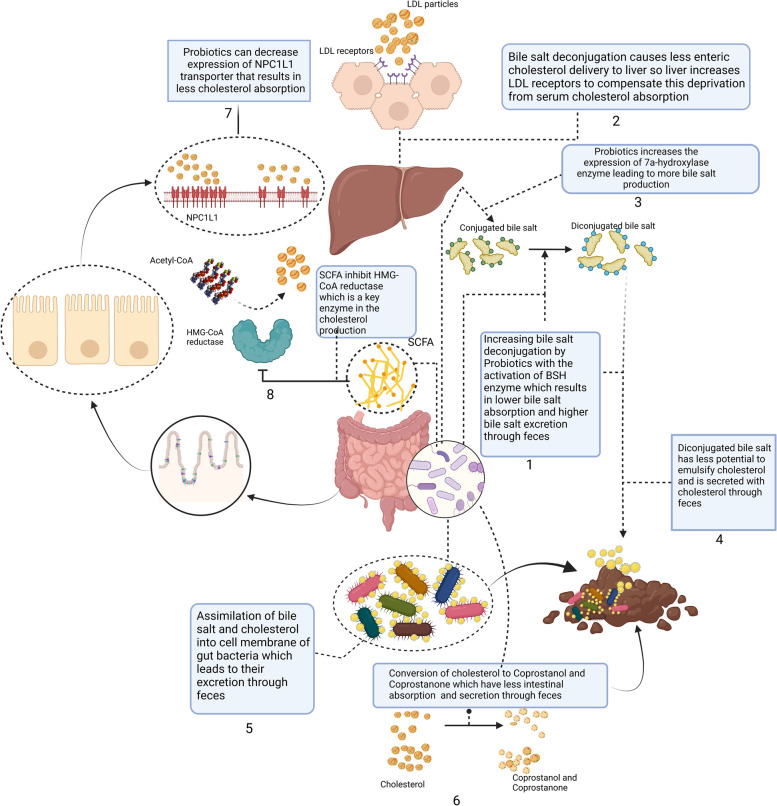
“Copros-tanol and coprostanone have less intestinal absorption and are eliminated via feces [70] (Fig.”
BackgroundMethodInfluentialGlobal Epidemiology of Chronic Liver Disease
Cheemerla, S., & Balakrishnan, M. (2021) · Clinical Liver Disease · doi:10.1002/cld.1061 · Cited by 571
Cholesterol-Lowering Probiotics as Potential Biotherapeutics for Metabolic Diseases
Kumar, M., Nagpal, R., Kumar, R., Hemalatha, R., Verma, V., Kumar, A., Chakraborty, C., Singh, B., Marotta, F., Jain, S., et al. (2012) · Experimental Diabetes Research · doi:10.1155/2012/902917 · Cited by 440 · cited 3×
“Deconjugated bile is more efficient for gut microbiota replication as conjugated bile salt has anti-bacterial properties [71].”
BackgroundInfluentialLiver X receptor in cholesterol metabolism
Zhao, C., & Dahlman-Wright, K. (2010) · Journal of Endocrinology · doi:10.1677/joe-09-0271 · Cited by 418 · cited 1×
“As discussed, this bile salt can be converted into deconjugated form [74].”
BackgroundNon-alcoholic fatty liver disease: The diagnosis and management
El-Kader, S. M. A. (2015) · World Journal of Hepatology · doi:10.4254/wjh.v7.i6.846 · Cited by 381
Effects of probiotics on nonalcoholic fatty liver disease: A meta-analysis
Ma, Y.-Y. (2013) · World Journal of Gastroenterology · doi:10.3748/wjg.v19.i40.6911 · Cited by 352
Removal of Cholesterol by Lactobacilli via Incorporation and Conversion to Coprostanol
Lye, H.-S., Rusul, G., & Liong, M.-T. (2010) · Journal of Dairy Science · doi:10.3168/jds.2009-2574 · Cited by 338
Koutnikova, H., Genser, B., Monteiro-Sepulveda, M., Faurie, J.-M., Rizkalla, S., Schrezenmeir, J., & Clément, K. (2019) · BMJ Open · doi:10.1136/bmjopen-2017-017995 · Cited by 299 · cited 1×
“Previous investigations showed the promising effects of microbial therapies on NAFLD; however, the results were controversial, and up to now, no medications have been approved for the treatment of NAFLD patients [14, 33–37].”
BackgroundShuster, J. J. (2011) · Research Synthesis Methods · doi:10.1002/jrsm.38 · Cited by 297 · cited 1×
“We conducted this umbrella review (a systematic review on different meta-analyses) based on the Cochrane Handbook for Systematic Reviews of Interventions [38].”
MethodLye, H.-S., Rahmat-Ali, G. R., & Liong, M.-T. (2010) · International Dairy Journal · doi:10.1016/j.idairyj.2009.10.003 · Cited by 255
Lye, H.-S., Kuan, C.-Y., Ewe, J.-A., Fung, W.-Y., & Liong, M.-T. (2009) · International Journal of Molecular Sciences · doi:10.3390/ijms10093755 · Cited by 245 · cited 1×
“The cholesterol content of the medium can be assimilated into the cell membrane of probiotics and be secreted via feces [77].”
BackgroundNon-alcoholic fatty liver disease: the hepatic consequence of obesity and the metabolic syndrome
Moore, J. B. (2010) · Proceedings of the Nutrition Society · doi:10.1017/s0029665110000030 · Cited by 217 · cited 1×
“This disease includes various conditions, from simple steatosis to hepatic cirrhosis [5–8].”
BackgroundThe perspective on cholesterol‐lowering mechanisms of probiotics
Ishimwe, N., Daliri, E. B., Lee, B. H., Fang, F., & Du, G. (2015) · Molecular Nutrition & Food Research · doi:10.1002/mnfr.201400548 · Cited by 215 · cited 1×
“Probiotics are considered to have positive BSH effects; hence their administration can lower serum TC levels [73] (Fig.”
BackgroundGenetic predisposition in nonalcoholic fatty liver disease
Sookoian, S., & Pirola, C. J. (2017) · Clinical and Molecular Hepatology · doi:10.3350/cmh.2016.0109 · Cited by 213
Sharpton, S. R., Maraj, B., Harding-Theobald, E., Vittinghoff, E., & Terrault, N. A. (2019) · The American Journal of Clinical Nutrition · doi:10.1093/ajcn/nqz042 · Cited by 188
Dietary cholesterol: from physiology to cardiovascular risk
Lecerf, J.-M., & de Lorgeril, M. (2011) · British Journal of Nutrition · doi:10.1017/s0007114511000237 · Cited by 182
Kocsis, T., Molnár, B., Németh, D., Hegyi, P., Szakács, Z., Bálint, A., Garami, A., Soós, A., Márta, K., & Solymár, M. (2020) · Scientific Reports · doi:10.1038/s41598-020-68440-1 · Cited by 180
Wu, Y., Zhang, Q., Ren, Y., & Ruan, Z. (2017) · PLOS ONE · doi:10.1371/journal.pone.0178868 · Cited by 175
Nonalcoholic fatty liver disease: Definitions, risk factors, and workup
Puri, P., & Sanyal, A. J. (2012) · Clinical Liver Disease · doi:10.1002/cld.81 · Cited by 174 · cited 1×
“Non-alcoholic fatty liver disease (NAFLD) is identified by excessive fat accumulation in the liver, which consequently promotes necroinflammation and fibrosis, ultimately leading to liver failure [1–4].”
BackgroundNon-alcoholic steatohepatitis: a microbiota-driven disease
Moschen, A. R., Kaser, S., & Tilg, H. (2013) · Trends in Endocrinology & Metabolism · doi:10.1016/j.tem.2013.05.009 · Cited by 170 · cited 1×
“Recent investigations suggest intestinal dysbiosis can affect gut permeability, the innate immune system, the fermentation of indigestible carbohydrates, and the intestinal production of short-chain fatty acids, which can lead to NAFLD [15, 16].”
BackgroundNonalcoholic Fatty Liver Disease, the Gut Microbiome, and Diet
Mokhtari, Z., Gibson, D. L., & Hekmatdoost, A. (2017) · Advances in Nutrition · doi:10.3945/an.116.013151 · Cited by 166 · cited 1×
“Although the pathogenesis of NAFLD is not fully understood, nutritional, environmental, and genetic factors modifying lipid and glucose metabolism are involved in the development of this condition [11–13].”
BackgroundAllen, A. M., Van Houten, H. K., Sangaralingham, L. R., Talwalkar, J. A., & McCoy, R. G. (2018) · Hepatology · doi:10.1002/hep.30094 · Cited by 158
Propionate inhibits incorporation of colonic [1,2-13C]acetate into plasma lipids in humans
Wolever, T. M. S., Spadafora, P. J., Cunnane, S. C., & Pencharz, P. B. (1995) · American Journal of Clinical Nutrition · doi:10.1093/ajcn/61.6.1241 · Cited by 157 · cited 1×
“Some sorts of SCFA, like propionate, have the potential to inhibit the enzyme 3-hydroxy-3-methylglutaryl coenzyme A (HMG-CoA) reductase, which plays an essential role in the hepatic cholesterol synthesis process [85] (Fig.”
BackgroundDeconjugation of bile salts by Lactobacillus acidophilus isolates
Ahn, Y. T., Kim, G. B., Lim, K. S., Baek, Y. J., & Kim, H. U. (2003) · International Dairy Journal · doi:10.1016/s0958-6946(02)00174-7 · Cited by 152 · cited 1×
“Deconjugated bile salt has less potential to act as an emulsifier for cholesterol absorption; hence absorption of lipid particles decreases [75, 76] (Fig.”
BackgroundLoman, B. R., Hernández-Saavedra, D., An, R., & Rector, R. S. (2018) · Nutrition Reviews · doi:10.1093/nutrit/nuy031 · Cited by 147
Effect of Probiotics on Blood Lipid Concentrations: A Meta-Analysis of Randomized Controlled Trials
Cho, Y. A., & Kim, J. (2015) · Medicine · doi:10.1097/md.0000000000001714 · Cited by 143
Meroni, M., Longo, M., & Dongiovanni, P. (2019) · Nutrients · doi:10.3390/nu11112642 · Cited by 140 · cited 1×
“Although there is no specific treatment for NAFLD, it is hoped microbial therapies, including probiotics, prebiotics, and synbiotics, will provide a new therapeutic method for the treatment by manipulating intestinal microbiota [28, 29].”
BackgroundFibrosis in Nonalcoholic Fatty Liver Disease: Mechanisms and Clinical Implications
Angulo, P., Machado, M., & Diehl, A. (2015) · Seminars in Liver Disease · doi:10.1055/s-0035-1550065 · Cited by 136
Huang, Y., & Zheng, Y. (2010) · British Journal of Nutrition · doi:10.1017/s0007114509991991 · Cited by 131
The Gut Microbiota and Lipid Metabolism: Implications for Human Health and Coronary Heart Disease
Bentham Science Publisher, B. S. P. (2006) · Current Medicinal Chemistry · doi:10.2174/092986706778521814 · Cited by 130
Cholesterol-lowering probiotics: in vitro selection and in vivo testing of bifidobacteria
Bordoni, A., Amaretti, A., Leonardi, A., Boschetti, E., Danesi, F., Matteuzzi, D., Roncaglia, L., Raimondi, S., & Rossi, M. (2013) · Applied Microbiology and Biotechnology · doi:10.1007/s00253-013-5088-2 · Cited by 114
Behrouz, V., Aryaeian, N., Zahedi, M. J., & Jazayeri, S. (2020) · Journal of Food Science · doi:10.1111/1750-3841.15367 · Cited by 110
Liu, L., Li, P., Liu, Y., & Zhang, Y. (2019) · Digestive Diseases and Sciences · doi:10.1007/s10620-019-05699-z · Cited by 104
Gao, X., Zhu, Y., Wen, Y., Liu, G., & Wan, C. (2016) · Hepatology Research · doi:10.1111/hepr.12671 · Cited by 97
Hadi, A., Mohammadi, H., Miraghajani, M., & Ghaedi, E. (2019) · Critical Reviews in Food Science and Nutrition · doi:10.1080/10408398.2018.1458021 · Cited by 94
Huang, Y., Wu, F., Wang, X., Sui, Y., Yang, L., & Wang, J. (2013) · Journal of Dairy Science · doi:10.3168/jds.2012-6371 · Cited by 88
Effects of probiotics on nonalcoholic fatty liver disease: a systematic review and meta-analysis
Tang, Y., Huang, J., Zhang, W. Y., Qin, S., Yang, Y. X., Ren, H., Yang, Q.-B., & Hu, H. (2019) · Therapeutic Advances in Gastroenterology · doi:10.1177/1756284819878046 · Cited by 85
Systematic Review with Meta-Analysis: The Effects of Probiotics in Nonalcoholic Fatty Liver Disease
Xiao, M.-W., Lin, S.-X., Shen, Z.-H., Luo, W.-W., & Wang, X.-Y. (2019) · Gastroenterology Research and Practice · doi:10.1155/2019/1484598 · Cited by 84
Jiang, G., Sun, C., Wang, X., Mei, J., Li, C., Zhan, H., Liao, Y., Zhu, Y., & Mao, J. (2022) · Bioengineered · doi:10.1080/21655979.2022.2037374 · Cited by 84 · cited 1×
“A network pharmacological study by Jiang et al. revealed that Silybum marianum has hepatoprotective effects on patients with NAFLD [58].”
BackgroundMa, C., Yan, K., Wang, Z., Zhang, Q., Gao, L., Xu, T., Sai, J., Cheng, F., & Du, Y. (2021) · Bioengineered · doi:10.1080/21655979.2021.1933302 · Cited by 73
Role of Probiotics in the Treatment of Nonalcoholic Fatty Liver Disease: A Meta-analysis
Lavekar, A. S., Raje, D. V., & Lavekar, A. A. (2017) · Euroasian Journal of Hepato-Gastroenterology · doi:10.5005/jp-journals-10018-1233 · Cited by 67
Khalesi, S., Johnson, D. W., Campbell, K., Williams, S. L., Fenning, A. S., Saluja, S., & Irwin, C. G. (2017) · European Journal of Nutrition · doi:10.1007/s00394-017-1568-y · Cited by 65
Probiotics determine hypolipidemic and antioxidant effects in hyperlipidemic hamsters
Stancu, C. S., Sanda, G. M., Deleanu, M., & Sima, A. V. (2013) · Molecular Nutrition & Food Research · doi:10.1002/mnfr.201300224 · Cited by 61
Non-alcoholic fatty liver disease
Collier, J. D. (2006) · Medicine · doi:10.1016/j.mpmed.2006.11.010 · Cited by 61
Koopman, N., Molinaro, A., Nieuwdorp, M., & Holleboom, A. G. (2019) · Alimentary Pharmacology & Therapeutics · doi:10.1111/apt.15416 · Cited by 60
Mao, J., Zhan, H., Meng, F., Wang, G., Huang, D., Liao, Z., & Chen, M. (2022) · Phytotherapy Research · doi:10.1002/ptr.7383 · Cited by 55 · cited 1×
“Mao et al. reported that the consumption of Costunolide can prevent hepatic damage by regulating gut microbiota [57].”
BackgroundStachowska, E., Portincasa, P., Jamioł-Milc, D., Maciejewska-Markiewicz, D., & Skonieczna-Żydecka, K. (2020) · Nutrients · doi:10.3390/nu12113460 · Cited by 54
Mo, R., Zhang, X., & Yang, Y. (2019) · Medicina Clínica · doi:10.1016/j.medcli.2018.09.007 · Cited by 52
Khan, M. Y., Mihali, A. B., Rawala, M. S., Aslam, A., & Siddiqui, W. J. (2019) · European Journal of Gastroenterology & Hepatology · doi:10.1097/meg.0000000000001371 · Cited by 52
Relationship between non-alcoholic fatty liver disease and coronary heart disease
Arslan, U., & Yenerçağ, M. (2020) · World Journal of Clinical Cases · doi:10.12998/wjcc.v8.i20.4688 · Cited by 52
The association between NAFLD and risk of chronic kidney disease: a cross-sectional study
Cao, Y., Deng, Y., Wang, J., Zhao, H., Zhang, J., & Xie, W. (2021) · Therapeutic Advances in Chronic Disease · doi:10.1177/20406223211048649 · Cited by 52 · cited 1×
“NAFLD is related to other diseases like diabetes mellitus, obesity, metabolic syndrome, hypertension, renal disorders, and cardiovascular diseases [17–23].”
BackgroundHu, Y., Zhou, F., Yuan, Y., & Xu, Y. (2017) · Medicina Clínica (English Edition) · doi:10.1016/j.medcle.2017.03.003 · Cited by 46
Hu, Y.-M., Zhou, F., Yuan, Y., & Xu, Y.-C. (2017) · Medicina Clínica · doi:10.1016/j.medcli.2016.11.036 · Cited by 45
Zhou, Y., Zheng, T., Chen, H., Li, Y., Huang, H., Chen, W., Du, Y., He, J., Li, Y., Cao, J., et al. (2018) · Cellular Physiology and Biochemistry · doi:10.1159/000495830 · Cited by 44 · cited 1×
“Although there is no specific treatment for NAFLD, it is hoped microbial therapies, including probiotics, prebiotics, and synbiotics, will provide a new therapeutic method for the treatment by manipulating intestinal microbiota [28, 29].”
BackgroundEffect of Probiotics Therapy on Nonalcoholic Fatty Liver Disease
Huang, Y., Wang, X., Zhang, L., Zheng, K., Xiong, J., Li, J., Cong, C., Gong, Z., & Mao, J. (2022) · Computational and Mathematical Methods in Medicine · doi:10.1155/2022/7888076 · Cited by 44
Clinical Review of Nonalcoholic Steatohepatitis in Liver Surgery and Transplantation
Tevar, A. D., Clarke, C., Wang, J., Rudich, S. M., Woodle, E. S., Lentsch, A. B., & EDWARDS, M. L. (2010) · Journal of the American College of Surgeons · doi:10.1016/j.jamcollsurg.2010.01.020 · Cited by 43 · cited 1×
“This disease includes various conditions, from simple steatosis to hepatic cirrhosis [5–8].”
BackgroundEffects of probiotics on nonalcoholic fatty liver disease: a systematic review and meta-analysis
Yang, R., Shang, J., Zhou, Y., Liu, W., Tian, Y., & Shang, H. (2021) · Expert Review of Gastroenterology & Hepatology · doi:10.1080/17474124.2022.2016391 · Cited by 43
Jiang, J., Wu, C., Zhang, C., Zhao, J., Yu, L., Zhang, H., Narbad, A., Chen, W., & Zhai, Q. (2020) · Journal of Functional Foods · doi:10.1016/j.jff.2020.104177 · Cited by 42 · cited 1×
“This finding was consistent with the results of other studies [62, 63].”
ResultHassanipour, S., Amini‐Salehi, E., Joukar, F., Khosousi, M., Pourtaghi, F., Ansar, M. M., Mahdavi‐Roshan, M., Heidarzad, F., Rashidi-Mojdehi, G., Abdzadeh, E., et al. (2023) · Iranian Journal of Public Health · doi:10.18502/ijph.v52i8.13399 · Cited by 38
Self-citationWang, C., Li, S., Peng, X., Yu, L., Tian, F., Zhao, J., Chen, W., Xue, Y., & Zhai, Q. (2021) · Journal of Functional Foods · doi:10.1016/j.jff.2021.104711 · Cited by 32 · cited 1×
“While in a meta-analysis study by Wang et al., probiotics significantly reduced TG in obese individuals; another meta-analysis by Mo et al., showed that the effect of probiotics on TG in hypercholesterolaemic adults was insignificant [60, 61].”
MethodGkiourtzis, Ν., Kalopitas, G., Vadarlis, A., Bakaloudi, D. R., Dionysopoulos, G., Karanika, E., Tsekitsidi, E., & Chourdakis, M. (2022) · Journal of Pediatric Gastroenterology and Nutrition · doi:10.1097/mpg.0000000000003537 · Cited by 27
Li, S., Liu, J., Wang, Z., Duan, F., Jia, Z., Chen, X., & Li, S. (2022) · Frontiers in Public Health · doi:10.3389/fpubh.2022.862266 · Cited by 26
Pan, B., Liu, X., Shi, J., Chen, Y., Xu, Z., Shi, D., Ruan, G., Wang, F., Huang, Y., & Xu, C. (2021) · Frontiers in Nutrition · doi:10.3389/fnut.2021.775216 · Cited by 23 · cited 1×
“Pan et al. showed the effect of probiotics on Serum HDL levels was not statistically significant [66].”
BackgroundAmini‐Salehi, E., Hassanipour, S., Joukar, F., Daryagasht, A. A., Khosousi, M., Aleali, M. S., Ansar, M. M., Heidarzad, F., Abdzadeh, E., Vakilpour, A., et al. (2023) · Hepatitis Monthly · doi:10.5812/hepatmon-131523 · Cited by 23 · cited 1×
“NAFLD is related to other diseases like diabetes mellitus, obesity, metabolic syndrome, hypertension, renal disorders, and cardiovascular diseases [17–23].”
BackgroundSelf-citationEconomic burden of non-alcoholic steatohepatitis with significant fibrosis in Thailand
Phisalprapa, P., Prasitwarachot, R., Kositamongkol, C., Hengswat, P., Srivanichakorn, W., Washirasaksiri, C., Treeprasertsuk, S., Charatcharoenwitthaya, P., & Chaiyakunapruk, N. (2021) · BMC Gastroenterology · doi:10.1186/s12876-021-01720-w · Cited by 21 · cited 1×
“In addition to the relationship between NAFLD and other health conditions, this disease caused a significant burden globally [24–26].”
BackgroundXu, S., Jiang, X., Jia, X., Jiang, X., Che, L., Lin, Y., Zhuo, Y., Feng, B., Fang, Z., Li, J., et al. (2022) · Animals · doi:10.3390/ani12172202 · Cited by 17 · cited 1×
“This compound is found to be able to regulate gut microbiota [59].”
BackgroundLiver Disease: Nonalcoholic Fatty Liver Disease.
Cooper, J., Baumgartner, K., Smith, A. D., & Louis, J. S. (2021) · PubMed · Cited by 4
Research works printed but not linked: 4
- Paschos P Paletas K Non alcoholic fatty liver disease and metabolic syndrome Hippokratia 2009 13 1 9 19 19240815 PMC2633261
- Meroni M, Longo M, Dongiovanni P. The role of probiotics in nonalcoholic fatty liver disease: a new insight into therapeutic strategies. Nutrients. 2019;11(11). 10.3390/nu11112642. PMC6893730 31689910 · DOI · Paper page
- Koutnikova H Genser B Monteiro-Sepulveda M Impact of bacterial probiotics on obesity, diabetes and non-alcoholic fatty liver disease related variables: a systematic review and meta-analysis of randomised controlled trials BMJ Open. 2019 9 3 e017995 10.1136/bmjopen-2017-017995 30928918 PMC6475231 · DOI · Paper page
- Xiao MW Lin SX Shen ZH Luo WW Wang XY Systematic review with meta-analysis: the effects of probiotics in nonalcoholic fatty liver disease Gastroenterol Res Pract 2019 2019 1484598 10.1155/2019/1484598 31885541 PMC6927028 · DOI · Paper page
Cited by
Amini-Salehi, E., Letafatkar, N., Norouzi, N., Joukar, F., Habibi, A., Javid, M., Sattari, N., Khorasani, M., Farahmand, A., Tavakoli, S., et al. (2024) · Archives of Medical Research · doi:10.1016/j.arcmed.2024.103043 · Cited by 171
Self-citationSaeed, H., Díaz, L. A., Gil‐Gómez, A., Burton, J. P., Bajaj, J. S., Romero‐Gómez, M., Arrese, M. A., Arab, J. P., & Khan, M. Q. (2024) · Clinical and Molecular Hepatology · doi:10.3350/cmh.2024.0811 · Cited by 93
“Another meta-analysis revealed improved lipid profiles (reduced triglycerides, total cholesterol and LDL), in agreement with a previous one that included 22 RCTs (total 1301 patients) 76,77 .”
Vakilpour, A., Amini‐Salehi, E., Moghadam, A. S., Keivanlou, M., Letafatkar, N., Habibi, A., Hashemi, M., Eslami, N., Zare, R., Norouzi, N., et al. (2024) · Nutrition and Diabetes · doi:10.1038/s41387-024-00281-7 · Cited by 35
Self-citationMicrobiota Transplant and Gynecological Disorders: The Bridge between Present and Future Treatments
Martinelli, S., Nannini, G., Cianchi, F., Staderini, F., Coratti, F., & Amedei, A. (2023) · Microorganisms · doi:10.3390/microorganisms11102407 · Cited by 35
“It has been demonstrated that many chronic conditions, such as obesity, diabetes, and non-alcoholic fatty liver disease (NAFLD), are all linked to GM dysbiosis [9].”
BackgroundHashemi, S. M. H., Kheirandish, M., Rafati, S., Ghazalgoo, A., Amini‐Salehi, E., Keivanlou, M., Abbaszadeh, S., Saberian, P., & Rahimi, A. (2024) · Lipids in Health and Disease · doi:10.1186/s12944-024-02378-5 · Cited by 29
Self-citation
Metadata
- Authors
- Naghipour, A., Amini-Salehi, E., Orang Gorabzarmakhi, M., Shahdkar, M., Fouladi, B., Alipourfard, I., & Sanat, Z. M.
- Affiliations
- Kerman University of Medical Sciences (IR)
- Guilan University of Medical Sciences (IR)
- Zabol University of Medical Sciences (IR)
- Institute of Physical Chemistry (PL)
- Digestive Disease Research Institute (IR)
- Corresponding author
- Sanat, Zahra Momayez
- Venue
- Systematic Reviews
- Published
- 2023-08-21
- Volume
- 12
- Issue
- 1
- Pages
- 144-144
- ISSN
- 2046-4053 (ISSN-L)
- PMC
- PMC10441764
- OpenAlex
- W4386033594
- Cited by
- 37
- References
- 86
- Citations by year
- 2026: 3 · 2025: 18 · 2024: 13 · 2023: 3
- FWCI
- 1.45
- Type
- journal article
- Language
- en
- Open access
- gold
- doi.org
- Licence
- cc-by
- creativecommons.org/licenses/by/4.0 (tdm)
- creativecommons.org/licenses/by/4.0 (vor)
- Locations
- Systematic Reviews (publishedVersion, cc-by)
- PubMed Central (publishedVersion, cc-by)
- PubMed (publishedVersion)
- DOAJ (DOAJ: Directory of Open Access Journals) (submittedVersion, cc-by-sa)
- Topics
- Health Sciences › Medicine › Hepatology › Liver Disease Diagnosis and Treatment
- Life Sciences › Agricultural and Biological Sciences › Food Science › Probiotics and Fermented Foods
- Life Sciences › Biochemistry, Genetics and Molecular Biology › Molecular Biology › Gut microbiota and health
- Keywords
- non-alcoholic fatty liver disease, probiotics, synbiotics, prebiotics, lipid profile, triglycerides, total cholesterol, LDL cholesterol, HDL cholesterol, dyslipidemia, obesity, diabetes mellitus, cardiovascular risk, metabolic complications, complementary and alternative medicine, gut microbiota modulation, dysbiosis
- MeSH terms
- Gastrointestinal Microbiome, Humans, Lipoproteins, HDL, Meta-Analysis as Topic, Randomized Controlled Trials as Topic, Probiotics, Prebiotics, Non-alcoholic Fatty Liver Disease
About these checks
Registry, retraction, Cites and statistics results are computed, not judged, with one exception: a printed reference that no index lists is read once by a model before it counts as a citation error. Claims are extracted by a model and kept only when their quote appears verbatim in the text; each cited source is then checked, with a model’s help, for whether it says what the claim relies on. Those verdicts can be wrong — read the claim’s quote and the cited source before relying on one.
Statistics and arithmetic are recomputed, not judged.
Confidence bands are shown only for fields calibrated on our annotated test set. None is calibrated yet, so no band is shown.
What counts as a claim ›How we measure confidence ›How we check this ›
Are you an author, or do you see a problem with this page? Request a review
Data sources
Bibliographic data: Semantic Scholar, OpenAlex, Crossref.
Contains information from the Semantic Scholar Academic Graph Datasets, made available under the ODC Attribution License (ODC-BY 1.0).
Semantic Scholar’s data is described in: Kinney, R., et al. (2023). The Semantic Scholar Open Data Platform. arXiv:2301.10140.
