

The DOI matches its Crossref record; 207 of the 207 references it cites were found in a registry or an index.
Extracellular matrix stiffness: mechanisms in tumor progression and therapeutic potential in cancer
Open accessAbstract
Tumor microenvironment (TME) is a complex ecosystem composed of both cellular and non-cellular components that surround tumor tissue. The extracellular matrix (ECM) is a key component of the TME, performing multiple essential functions by providing mechanical support, shaping the TME, regulating metabolism and signaling, and modulating immune responses, all of which profoundly influence cell behavior. The quantity and cross-linking status of stromal components are primary determinants of tissue stiffness. During tumor development, ECM stiffness not only serves as a barrier to hinder drug delivery but also promotes cancer progression by inducing mechanical stimulation that activates cell membrane receptors and mechanical sensors. Thus, a comprehensive understanding of how ECM stiffness regulates tumor progression is crucial for identifying potential therapeutic targets for cancer. This review examines the effects of ECM stiffness on tumor progression, encompassing proliferation, migration, metastasis, drug resistance, angiogenesis, epithelial-mesenchymal transition (EMT), immune evasion, stemness, metabolic reprogramming, and genomic stability. Finally, we explore therapeutic strategies that target ECM stiffness and their implications for tumor progression.
Overview
The claims and statistics of this paper haven’t been checked yet.
Run the check — free, no account needed. It reads the open-access text and checks the sources it cites.
Integrity signals
Registry
Cites
Statistics
Figures
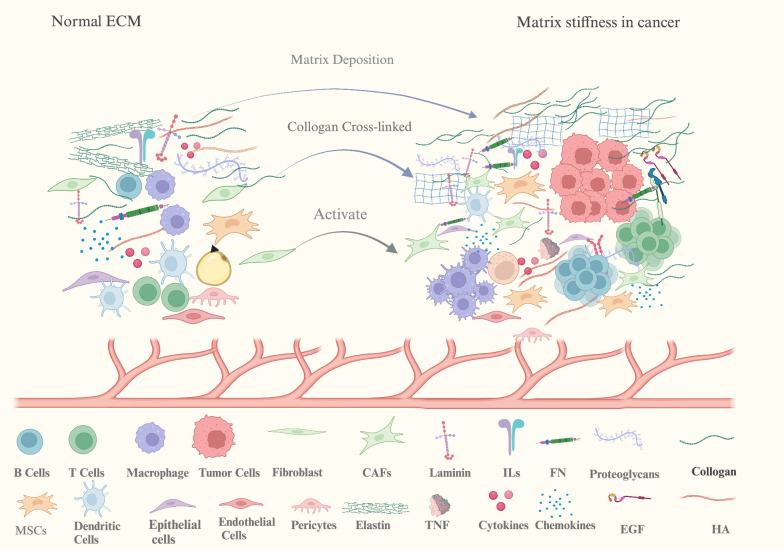
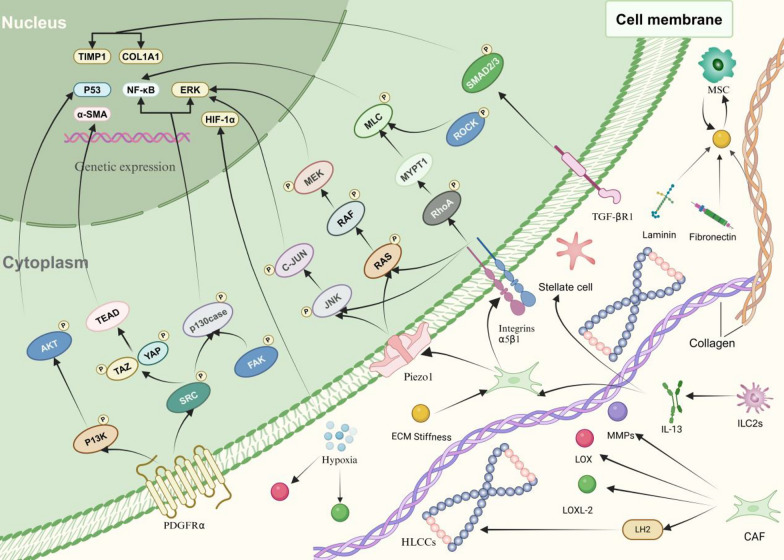
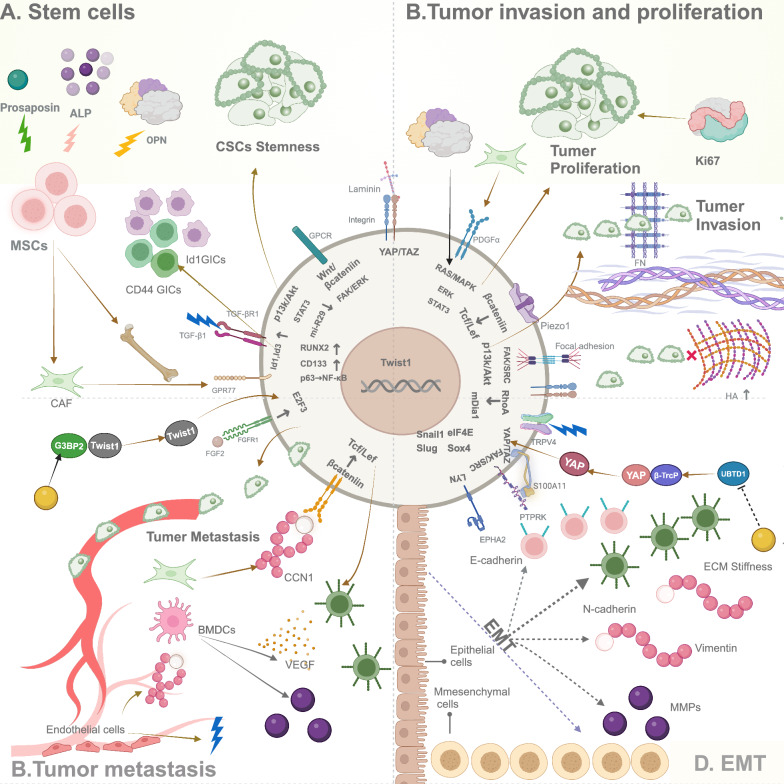
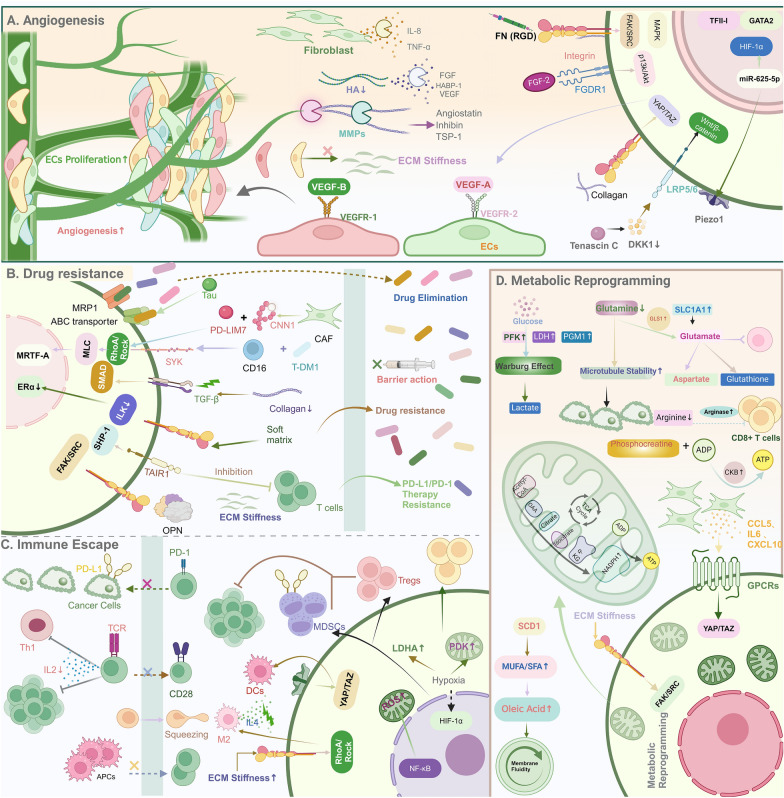
Verification
Claims the paper makes
The claims and statistics of this paper haven’t been checked yet.
Run the check — free, no account needed. It reads the open-access text and checks the sources it cites.
Claims other papers make about this one
Each is checked against this paper’s own text: does it say what the citing paper says it does?
The cited source says what the claim attributes to it.
In the citing paper
“However, beyond acting as a physical barrier, ECM stiffness also triggers mechanotransduction pathways that profoundly influence tumor cell behavior [91,92]. Mechanical cues generated by a stiffened matrix are sensed through integrin-based focal adhesions and transmitted via cytoskeletal tension to activate intracellular signaling cascades, including Yes-associated protein/Transcriptional coactiv”
From Modeling Tumor Microenvironment Complexity In Vitro: Spheroids as Physiologically Relevant Tumor Models and Strategies for Their Analysis (2025) · cites this paper as [92]
Self-check
Percentages, sums and reported differences re-computed from the paper’s own numbers.
The self-check needs the paper’s full text.
Citations
Cites
Molecular Mechanisms of Stress-Responsive Changes in Collagen and Elastin Networks in Skin
Aziz, J., Shezali, H., Radzi, Z., Yahya, N. A., Abu Kassim, N. H., Czernuszka, J., & Rahman, M. T. (2016) · Skin Pharmacology and Physiology · doi:10.1159/000447017 · Cited by 7,323
Remodelling the extracellular matrix in development and disease
Bonnans, C., Chou, J., & Werb, Z. (2014) · Nature Reviews Molecular Cell Biology · doi:10.1038/nrm3904 · Cited by 4,367 · cited 3×
“Indirect MMP inhibitors include blockade of signal transduction pathways (such as MAPK or ERK pathways [141]), and gene therapy (such as inhibition of miRNA expression [51]) to achieve the inhibition of MMP [142].”
Matrix Crosslinking Forces Tumor Progression by Enhancing Integrin Signaling
Levental, K. R., Yu, H., Kass, L., Lakins, J. N., Egeblad, M., Erler, J. T., Fong, S. F. T., Csiszar, K., Giaccia, A., Weninger, W., et al. (2009) · Cell · doi:10.1016/j.cell.2009.10.027 · Cited by 4,101 · cited 1×
“For example, breast cancer cells under high tension can enhance integrin-dependent mechanical signaling through the expression of FAK or p130cas, which are two integrin-adhesion focal proteins, and promote the progression of breast tumors [39].”
The evolving tumor microenvironment: From cancer initiation to metastatic outgrowth
de Visser, K. E., & Joyce, J. A. (2023) · Cancer Cell · doi:10.1016/j.ccell.2023.02.016 · Cited by 4,059
Tensional homeostasis and the malignant phenotype
Paszek, M. J., Zahir, N., Johnson, K. R., Lakins, J. N., Rozenberg, G. I., Gefen, A., Reinhart-King, C. A., Margulies, S. S., Dembo, M., Boettiger, D., et al. (2005) · Cancer Cell · doi:10.1016/j.ccr.2005.08.010 · Cited by 3,941 · cited 1×
“For example, breast cancer tissue (5–10 kPa) is stiffer than normal breast tissue (800 Pa) [9].”
A framework for advancing our understanding of cancer-associated fibroblasts
Sahai, E., Astsaturov, I., Cukierman, E., DeNardo, D. G., Egeblad, M., Evans, R. M., Fearon, D., Greten, F. R., Hingorani, S. R., Hunter, T., et al. (2020) · Nature Reviews Cancer · doi:10.1038/s41568-019-0238-1 · Cited by 3,863 · cited 2×
“CAFs are key components of the TME [128], which can enhance the ECM stiffness by the secretion of collagen and other fibrous macromolecules, as well as the degradation of this network through the release of proteolytic enzymes like MMPs, thereby improving the cellular mobility of the entire ECM…”
Metabolic reprogramming and cancer progression
Faubert, B., Solmonson, A., & DeBerardinis, R. J. (2020) · Science · doi:10.1126/science.aaw5473 · Cited by 2,740 · cited 1×
“In certain scenarios, altered metabolic activity resulting from reprogramming can be utilized for diagnosing, monitoring, and treating cancer [101].”
Özdemir, B. C., Pentcheva-Hoang, T., Carstens, J. L., Zheng, X., Wu, C.-C., Simpson, T. R., Laklai, H., Sugimoto, H., Kahlert, C., Novitskiy, S. V., et al. (2014) · Cancer Cell · doi:10.1016/j.ccr.2014.04.005 · Cited by 2,681 · cited 1×
“A low number of myofibroblasts in the tumor is also associated with reduced survival in PDAC patients [130].”
Concepts of extracellular matrix remodelling in tumour progression and metastasis
Winkler, J., Abisoye-Ogunniyan, A., Metcalf, K. J., & Werb, Z. (2020) · Nature Communications · doi:10.1038/s41467-020-18794-x · Cited by 2,296
The extracellular matrix modulates the hallmarks of cancer
Pickup, M. W., Mouw, J. K., & Weaver, V. M. (2014) · EMBO Reports · doi:10.15252/embr.201439246 · Cited by 2,098 · cited 3×
“The oncogene Ras promotes the ameboid migratory phenotype by stimulating Rho activity, whereas the tumor suppressor p53 reduces tumor cell migration by decreasing RhoA activity [41].”
Influential
Cited by
Sorted by citations
Shah, S., & D’Souza, G. G. M. (2025) · Cells · doi:10.3390/cells14100732 · Cited by 83
“In these settings, increased stiffness not only impedes drug penetration but also fosters an aggressive tumor phenotype and enhances resistance to chemotherapeutic agents [92,98].”
Recent progress in immune evasion mechanisms of triple-negative breast cancer
Yang, Y., & Wang, W. (2025) · Journal of Translational Medicine · doi:10.1186/s12967-025-07370-w · Cited by 56
The extracellular matrix in inflammation and cancer
Zhang, W., Xiang, Y., Lu, C., Wang, F., Ren, H., Wu, H., & Yan, M. (2026) · Molecular Biomedicine · doi:10.1186/s43556-026-00415-6 · Cited by 34
Tumor microenvironment in breast cancer: cellular crosstalk, pathways, and therapeutic insights
Sharma, M., Kumar, U., & Singh, S. (2025) · Molecular Biology Reports · doi:10.1007/s11033-025-11231-6 · Cited by 20
Targeting angiogenesis: Lessons from 25 years of normalizing tumor vasculature
Subudhi, S., Lee, S., & Jain, R. K. (2026) · Cell · doi:10.1016/j.cell.2026.03.016 · Cited by 29
Harnessing Organoid Platforms for Nanoparticle Drug Development
Chen, L., Luo, X., Zhang, J., Zhang, J., Yang, C., & Zhao, Y. (2025) · Drug Design Development and Therapy · doi:10.2147/dddt.s530999 · Cited by 19
“18 The stiffness is mainly dictated by the quantity and cross-linking extent of stromal components, which are crucial factors influencing tissue stiffness.”
Liu, L., Li, Y., Li, H., Shang, T., & Liu, L. (2025) · International Journal of Oncology · doi:10.3892/ijo.2025.5824 · Cited by 19
“Moreover, physical barriers within the TME, such as a dense ECM and poor vascularization, can prevent immune cells from infiltrating the tumor (64).”
He, J., Xue, W., & Li, Y. (2026) · International Journal of Nanomedicine · doi:10.2147/ijn.s560983 · Cited by 16
Targeting tumor microenvironmental barriers to enhance immunogenic cell death in solid tumors
Zhang, J., Han, W., Zhang, M., Yi, Y., & Long, M. (2025) · Frontiers in Immunology · doi:10.3389/fimmu.2025.1672601 · Cited by 16
Strategies for Pancreatic Cancer-Responsive Nanodrug Platforms Targeting Tumor Hypoxic Environments
Joo, K. S., Sym, S. J., Kim, K., & Khang, D. (2025) · International Journal of Nanomedicine · doi:10.2147/ijn.s548825 · Cited by 16
“32,34 Essentially, as the ECM stiffens, it not only squeezes vessels shut, but also limits oxygen penetration into tissues by increasing the diffusion distance and creating a gradient where oxygen is rapidly consumed at the periphery of stromal bundles and cannot reach the tumor core.”
Ren, T., Sun, L., Zheng, Y., Jiang, Y., Guo, Y., & Ma, J. (2025) · International Journal of Surgery · doi:10.1097/js9.0000000000002636 · Cited by 20
Nanotechnology Meets the Tumor Microenvironment: Unlocking New Horizons in Cancer Therapy
Yadav, P., Yadav, A. K., & Bhatia, D. D. (2025) · ACS Biomaterials Science & Engineering · doi:10.1021/acsbiomaterials.5c01120 · Cited by 16
Kim, D. J. (2026) · International Journal of Molecular Sciences · doi:10.3390/ijms27020875 · Cited by 17
“In breast cancer research, hypoxic conditions stimulate LOX , which remodels collagen and creates a pre-metastatic niche in the lung [104].”
Zhang, Y., Nie, R., Feng, Z.-Y., Fan, M., Shen, Z., Zhang, X., Zhang, Q., Zou, C., Zhang, J., Huang, K., et al. (2025) · Bioactive Materials · doi:10.1016/j.bioactmat.2025.05.026 · Cited by 13
“In addition, analyze the influence of extracellular matrix components (such as fibronectin, laminin, and collagen) on the migration and phagocytosis efficiency of phagocytes in different tissue microenvironments [218].”
Designing immunity with cytokines: A logic-based framework for programmable CAR therapies
Upadhyay, S., Upmanyu, K., & Gabr, M. T. (2025) · Cytokine & Growth Factor Reviews · doi:10.1016/j.cytogfr.2025.09.004 · Cited by 13
Yousefi, M., Gharaie, D., Javan, M. R., & Khosrojerdi, A. (2025) · International Immunopharmacology · doi:10.1016/j.intimp.2025.115986 · Cited by 15
Chen, P., Chen, J., Zhan, P., Ye, X., Zhao, L., Zhang, Z., Zuo, J., Shi, H., Li, X., Wu, S., et al. (2025) · Cancers · doi:10.3390/cancers18010151 · Cited by 13
“The CAF-dominated dense ECM limits drug penetration, whereas systemic inhibition of the CAF–ECM axis risks disrupting ECM-dependent tissue homeostasis and structural integrity [160].”
The tumor microenvironment: adding pieces to the puzzle
Aguilar‐Cázares, D., Perez-Medina, M., Benito-Lopez, J. J., Galicia-Velasco, M., Meneses-Flores, M., Camarena, Á., & López-González, J. S. (2026) · Frontiers in Immunology · doi:10.3389/fimmu.2025.1731338 · Cited by 13
“These changes raise tissue stiffness into the 1 – 10 kPa range, comparable to fi brotic organs, creating physical corridors that redirect or fully prevent lymphocyte in fi ltration (136).”
Host-microbiota interactions in genitourinary cancer immunotherapy
Xu, X., Cui, J., Li, W., Xu, Y., Yuan, S., Zeng, X., & Li, B. (2025) · Seminars in Cancer Biology · doi:10.1016/j.semcancer.2025.07.005 · Cited by 11
Nanomedicine-mediated modulation of tumor metabolism for enhanced immunotherapy
Liu, Y., Sun, D., Li, W., Zhang, Z., Li, C., Che, X., & Zhang, S. (2025) · Journal of Controlled Release · doi:10.1016/j.jconrel.2025.114587 · Cited by 10
Fibroblast–immune crosstalk in oral squamous cell carcinoma: from tumor promotion to immune evasion
Liu, X., Wang, D., Cheng, X., Ma, Y., Li, S., Deng, J., & Qiao, C. (2026) · Frontiers in Immunology · doi:10.3389/fimmu.2025.1703277 · Cited by 13
Li, H., Zhao, L., Li, J.-W., Zhang, K.-L., Bai, W., & Chen, Y. (2025) · Cell Biology and Toxicology · doi:10.1007/s10565-025-10035-5 · Cited by 7
“Previous studies have demonstrated that the TME is essential for tumor progression, metastasis, and the efficacy of treatment (Xiao and Yu 2021, Zhang and Zhang 2025).”
Translational drugs targeting cancer stem cells in triple-negative breast cancer
de Oliveira, F. P., Nogueira, M. L., Galvão, A. F. C., Dias, R. B., & Bezerra, D. P. (2025) · Molecular Therapy Oncology · doi:10.1016/j.omton.2025.201008 · Cited by 8
ECM Mechanics Control Jamming-to-Unjamming Transition of Cancer Cells
Mierke, C. T. (2025) · Cells · doi:10.3390/cells14130943 · Cited by 10
A biofabricated 3D cancer-stroma tumor microenvironment model
Romanazzo, S., Tian, P., Jalandhra, G. K., Doshi, R. B., Gooding, J. J., & Kilian, K. A. (2025) · Biofabrication · doi:10.1088/1758-5090/ae0a82 · Cited by 8
“CAFs have also been shown to induce local matrix stiffening [45, 46], which may further influence cancer cell invasion; however, investigating matrix stiffening within embedded microgels presents technical challenges and remains an avenue for future study.”
The tumor ecosystem: Rewiring an open, systemically integrated network for therapeutic gain
Chiodelli, P., Papait, A., Agoni, L., Quaglia, F., Silini, A. R., & Parolini, O. (2026) · Biomedicine & Pharmacotherapy · doi:10.1016/j.biopha.2026.119047 · Cited by 10
Exploring the Tumor Microenvironment in Osteosarcoma: Driver of Resistance and Progression
Schmidt, A. A., Prasad, A., Huisman, A. R., Wakefield, M. R., & Fang, Y. (2025) · Cancers · doi:10.3390/cancers17193106 · Cited by 9
“As has been previously discussed, ECM in OS is stiffer than baseline forms [172], allowing for MRTF-A upregulation and a higher metastatic potential [20,175].”
Mechano-regulation of cancer cell memory in tumor progression and therapy
Qu, Y., Cui, J., Wu, Z., He, P., Wei, F., Guo, T., Huang, Y., Yu, X., Tsoy, M., Liu, K., et al. (2025) · Mechanobiology in Medicine · doi:10.1016/j.mbm.2025.100165 · Cited by 7
“13,57,58 Notably, such stiffness-induced check-point upregulation can persist even when ECM stiffness is partially normalized, 59 indicating a hysteretic form of mechanomemory that locks tumors into an immune-evasive state.”
The importance of mechanical forces in chronic respiratory diseases
Burgess, J. K., Nawroth, J. C., Ibáñez‐Fonseca, A., & Gavara, N. (2026) · European Respiratory Review · doi:10.1183/16000617.0155-2025 · Cited by 9
“Alveolar epithelial cells may also become affected by the increased rigidity, undergoing epithelial – mesenchymal transition (EMT), a phenomenon also observed in cancer that contributes to tissue fibrosis [90, 91].”
Stem Cell-Derived Organoids for Cancer Therapy: Precision Medicine and Drug Selection
Azim, M. M. N., Bhajan, S. K., Park, J. H., Abass, K. S., Rahman, A., Choi, M., Choi, J., Park, S., Kim, H. J., Akter, S., et al. (2026) · International Journal of Molecular Sciences · doi:10.3390/ijms27072954 · Cited by 7
Park, Y., Kang, D. H., & Chung, C. (2025) · Lung Cancer · doi:10.1016/j.lungcan.2025.108726 · Cited by 6
Targeting cytokines: Reshaping the pancreatic tumor microenvironment
Bandi, D. S. R., Chabattula, S. C., Pynam, H., Joseph, J. T., Sarvesh, S., Nagaraju, G. P., & El‐Rayes, B. F. (2025) · Cytokine & Growth Factor Reviews · doi:10.1016/j.cytogfr.2025.11.003 · Cited by 6
Molecular Mechanisms Driving Metastatic Progression Within the Aged Tumor Microenvironment
Kumar, S., Chand, J., Sharma, P., Singh, S., Khanal, P., Chellammal, H. S. J., Suhail, A., & Mittal, S. (2025) · International Journal of Molecular Sciences · doi:10.3390/ijms262311508 · Cited by 6
“In the aged TME, metastatic progression is driven by a complex interplay of molecular pathways stemming from age-related cellular and tissue dysfunction [32–34].”
Cicero, A. L., Monica, F. L., Buglio, G. L., Campora, S., Gangemi, F., Paolo, C., Salamone, M., Pinto, M. L., Scilabra, S. D., & Ghersi, G. (2026) · Cancer Cell International · doi:10.1186/s12935-025-04154-6 · Cited by 7
“This molecular profile mirrors the dynamic nature of in vivo tumor progression, where ECM degradation facilitates angiogenesis, tumor invasion, and metastasis [46].”
The Heterogeneity and Function of Stromal Cells in the Tumor Microenvironment
Wang, X., Li, S., Xue, Y., Liang, X., Ma, X., Zhang, K., & Wang, Y. (2026) · Research · doi:10.34133/research.1183 · Cited by 7
“These matrix changes increase stiffness and IFP, further hindering convection and diffusion of therapeutics into tumor parenchyma [ 141 ].”
Heydari, F., Zendehdel, H., Varkiani, M. M., Fahmi, S., Derakhshani, M., Anvari, S., Farhid, F., Hamblin, M. R., & Naghinezhad, J. (2026) · Biomarker Research · doi:10.1186/s40364-026-00957-5 · Cited by 7
Xie, S.-A., Li, X., Yin, M., Du, F., Zhang, S., & Zhu, S. (2025) · Experimental Hematology and Oncology · doi:10.1186/s40164-025-00704-w · Cited by 5
“Mechanical signals stemming from matrix stiffness can be translated into biological signals via mechanical sensors or transducers to regulate tumor-associated gene expression [7–10].”
Multilayered microfluidic platform for three-dimensional vascularized organ-on-a-chip applications
Zhou, C., Li, Z., Xu, J., Yu, D., Xuan, L., & Wang, X. (2025) · Bio-Design and Manufacturing · doi:10.1631/bdm.2500091 · Cited by 6
“The biomechanical properties of the ECM, particularly stiffness, serve as critical regulators of tumor progression and angiogenic dynamics [49].”
Leonteva, A. A., Kazakova, A., Berezutskaya, E., Ilyina, A., Sergeevichev, D., Vladimirov, S., Bogachek, M. V., Vakhrushev, I. V., Макаревич, П. И., Richter, V. A., et al. (2026) · Cells · doi:10.3390/cells15020145 · Cited by 5
“Fibroblast activation and increased https://doi.org/10.3390/cells15020145 ECM stiffness create a feedback loop within the tumor microenvironment that promotes cancer cell invasion and migration [73].”
InfluentialBhalotia, A., Hutchinson, D. W., Kosmides, T., Nittayacharn, P., Mehta, M., Iyer, A., Cheplyansky, A., Takizawa, K., Nidhiry, A., Dever, A. M., et al. (2026) · ACS Nano · doi:10.1021/acsnano.5c21787 · Cited by 6
Impact of mechanical property alterations on cancer cell motility and metastasis
Belousova, P., Kwon, S., Jung, M., & Kim, K. S. (2026) · Critical Reviews in Oncology/Hematology · doi:10.1016/j.critrevonc.2026.105165 · Cited by 6
Basem, Y., Ata, A., Sherif, A., Abdel-Ghany, S. E., Arneth, B. M., & Sabit, H. (2026) · Pharmaceuticals · doi:10.3390/ph19040541 · Cited by 6
“LOX cross-linking increases ECM stiffness, activates integrin–FAK–SRC and PI3K–AKT signaling, and reduces T-cell motility, establishing a biophysical mechanism for immune exclusion and pharmacokinetic resistance [85].”
Rizkallah, J., Wehbeh, B. E. D., Wassouf, W., Salameh, E., Joumaa, A., Haddad, F. J., Hamade, L., Charbel, N., Bakri, G. M., Awada, A., et al. (2026) · Frontiers in Immunology · doi:10.3389/fimmu.2026.1800292 · Cited by 6
“Furthermore, collagen rearrangement promotes ECM protein accumulation, increasing matrix density and organization (84).”
Wu, Z., Zeng, B., Seah, D. H., Ng, I. Z. R., Ding, R. H., Zhang, T., Kalaichelvan, M., You, R., & Fong, E. L. S. (2025) · Advanced Materials · doi:10.1002/adma.202512252 · Cited by 5
Crintea, A., Constantin, A.-M., Jianu, M. E., Orlea, I. M., Manea, M. M., Cojocariu, R. O., Carpa, R., Borlea, B., Boznea, C.-M., Coșeriu, R. L., et al. (2025) · Pharmaceutics · doi:10.3390/pharmaceutics17121579 · Cited by 5
“The TME also contains many immunosuppressive cells, which makes the effect of immunotherapy more difficult [163,164].”
Sabu, A., Yang, Y., Sarma, R. R., Ramesan, L., Lin, Y.-H., & Chiu, H. (2025) · Biomaterials Advances · doi:10.1016/j.bioadv.2025.214677 · Cited by 4
Mechano-Organ-on-Chip for Cancer Research
Wang, L., Cheung, J. C., Zhao, X., Khoo, B. L., & Wong, S. H. D. (2026) · International Journal of Molecular Sciences · doi:10.3390/ijms27031330 · Cited by 7
“Changes in matrix viscoelasticity also modulate cell mechanosensing and behavior [29,30].”
Muñoz-Villaescusa, C., van der Ven, D. L., Quetzeri-Santiago, M. A., & Rivas, D. F. (2026) · Advanced Drug Delivery Reviews · doi:10.1016/j.addr.2026.115792 · Cited by 4
Hall, M. H., Amobi, O., Khalaf, J., Afees, O. J., & Brantley, E. J. (2026) · International Journal of Molecular Sciences · doi:10.3390/ijms27031510 · Cited by 5
“In general, ECM stiffness is higher in breast cancer tissue than in normal tissue and acts as a barrier to drug delivery [62].”
Hao, J., Zakershahrak, M., Ly, P., Le, A. D., Yu, W., Gates, J. C., & Chen, C. (2026) · Journal of Translational Medicine · doi:10.1186/s12967-026-07786-y · Cited by 5
“However, with FAP degrading collagen and increasing stiffness, FAP serves as a biomarker for a TME and for therapeutic resistance [85].”
Shabib, M., Kumari, M., Gupta, U., Dan, S., Mandal, C., Kaity, S., & Roy, S. (2026) · ACS Applied Bio Materials · doi:10.1021/acsabm.5c02380 · Cited by 4
Tinhofer, I., & Fisch, A.-S. (2026) · Current Opinion in Oncology · doi:10.1097/cco.0000000000001212 · Cited by 4
Choi, S. R., Mellican, S., Roberts, T. J., Kang, S., Elzey, B. D., Kong, H., Davis, C. S., Fishel, M. L., Flick, M. J., Wolberg, A. S., et al. (2026) · Acta Biomaterialia · doi:10.1016/j.actbio.2026.03.023 · Cited by 4
“Moreover, both cancer cells and activated CAFs can further reorganize the stroma by secreting matrix-degrading enzymes like matrix metalloproteinase and upregulating tissue inhibitor of metalloproteinases, driving fibro-genesis and tumor progression [62,65].”
Pigoń-Zając, D., Bryczek, M., Leszczuk, A., & Zając, A. (2026) · Cells · doi:10.3390/cells15110997 · Cited by 4
Cai, H., Shen, D., Hu, X., Yin, H., & Yan, Z. (2025) · Toxins · doi:10.3390/toxins17080388 · Cited by 4
Telomere maintenance meets cancer metabolism: Mechanistic insights and clinical opportunities
Sung, J., & Hwang, K. (2025) · Critical Reviews in Oncology/Hematology · doi:10.1016/j.critrevonc.2025.105017 · Cited by 4
The Significance of the Microenvironment in T/Nk-Cell Neoplasms
Petković, I., Ritucci, M., Stojković, A., Stojnev, S., Popović, A., Conić, I., Radić, M., Džunić, M., & Krstić, M. (2025) · International Journal of Molecular Sciences · doi:10.3390/ijms262211225 · Cited by 3
“…associated with the vasculature, together with acellular matrix compounds and the cytokine milieu, establish a complex, dynamic network that modulates signaling pathways, local metabolism, mechanical support, and immune responses, thereby exerting profound influence on lymphoma cell behavior [17].”
Yin, M., Li, X., Zhang, S., & Xie, S.-A. (2025) · Molecular Biology Reports · doi:10.1007/s11033-025-11283-8 · Cited by 3
Cui, S., Chen, X., Qian, C., Wu, C., Wang, J., Zhang, Y., & Xiang, D. (2025) · Chemical Engineering Journal · doi:10.1016/j.cej.2025.172183 · Cited by 3
Cai, H., Hu, G., Chen, J., Feng, H., & Bi, Y.-H. (2026) · BMC Cancer · doi:10.1186/s12885-025-15472-3 · Cited by 3
“Recent studies have revealed that PLOD enzymes not only contribute to ECM remodeling but also influence cancer progression through mechanisms such as tumor cell migration, invasion, angiogenesis, and regulation of the hypoxic response [15, 16].”
Ritter, A., Hoock, S., Kreis, N.-N., Roth, S., Colin, R. C. T., Friemel, A., Wildner, J. M., Scherr, I., Louwen, F., Solbach, C., et al. (2026) · Experimental Hematology & Oncology · doi:10.1186/s40164-026-00747-7 · Cited by 4
“CAFs, originating from various sources including fibroblasts and MSCs [56, 57], are integral components of the TME and play pivotal roles in its remodeling [58].”
Zhang, H., Zhao, C., Chen, J., Hu, X., Bai, J., He, L., Deng, Z., & Yin, T. (2026) · Experimental Hematology and Oncology · doi:10.1186/s40164-026-00756-6 · Cited by 3
“These ECM alterations can result in fibrosis, leading to stromal stiffness and exerting mechanical stresses on cells, known as stiffness or rigidity [11, 12].”
The Stiff Side of Cancer: How Matrix Mechanics Rewrites Non-Coding RNA Expression Programs
Campos-Parra, A. D., Puente-Rivera, J., López‐Camarillo, C., Núñez-Olvera, S. I., Nava, N. H., Macías, G. A., & Silva-Cázares, M. B. (2026) · Non-Coding RNA · doi:10.3390/ncrna12010007 · Cited by 5
Thermal sonogenetics for adoptive cell transfer therapy
Baez, A. G., Hazel, K., Guertin, Z., Fong, E., Manus, M. M., Kaloyannis, A., & Helfield, B. L. (2026) · Journal of Controlled Release · doi:10.1016/j.jconrel.2026.114752 · Cited by 3
Exploring apoptotic pathways: implications for cancer, inflammation, and neurodegeneration
Hanbashi, A., Safhi, A. Y., Jali, A. M., Alshahi, H. S., Yousif, O. E. A., Sabei, F. Y., & Fatima, I. (2026) · Molecular Biology Reports · doi:10.1007/s11033-026-11577-5 · Cited by 3
Nelluri, K. D. D., Lakshmi, K. C., Kommoju, M., Alaparthi, B., Kakani, A. K., Rohith, P. S., & Nirmala, N. V. (2026) · Molecular Biology Reports · doi:10.1007/s11033-026-11624-1 · Cited by 3
Emerging paradigms in the study of brain metastases
Chafe, S. C., Mobilio, D., Zhai, K., Kieliszek, A., Venugopal, C., & Singh, S. K. (2026) · Science Signaling · doi:10.1126/scisignal.adj9726 · Cited by 3
The Dual Role of Autophagy in Cancer: Mechanisms and Therapeutic Strategies
Gao, X.-Z., Qin, Y., Wan, H., Lu, G. X., & Shen, H. (2026) · MedComm – Oncology · doi:10.1002/mog2.70064 · Cited by 3
Sharma, P., Thuy, N. P., Ansari, I. H., Tripathi, R. M., Kala, M., Elberry, M. H., Sharma, N., & Lee, S. (2026) · Journal of Experimental & Clinical Cancer Research · doi:10.1186/s13046-026-03720-8 · Cited by 3
“A stiff ECM (as found in breast cancer, pancreatic cancer, etc.) increases interstitial fluid pressure and solid stress, impeding the distribution of chemotherapy within the tumor [101, 102].”
Khan, T. B., Choudhary, N., Sharma, S., Kumar, D., Kaushik, U., Gupta, V., Gowri, S., Faiyazuddin, M., & Webster, T. J. (2026) · Advances in Cancer Biology - Metastasis · doi:10.1016/j.adcanc.2026.100188 · Cited by 4
Polymeric Nano Drug Delivery Systems for Overcoming Tumor Microenvironment-Mediated Drug Resistance
Kang, Y., Kim, J., Park, J., LEE, S. J., An, Y., Lim, K. S., & Kim, H. (2026) · Pharmaceutics · doi:10.3390/pharmaceutics18060674 · Cited by 3
“Extracellular matrix (ECM), blood vessels, cytokines, chemokines, and growth factors are all non-cellular components [14].”
Hassan, N., Greve, B., & Götte, M. (2026) · Cellular & Molecular Biology Letters · doi:10.1186/s11658-026-00905-z · Cited by 5
“The increased stiffness of tumour tissues results from multiple factors, including excessive collagen deposition, collagen crosslinking and altered ECM organization [61, 62].”
An, K., Li, Y. F., Cao, C., Wang, M., Jia, X., Jin, G., Cheng, B., Jia, Y., Wang, L., Guo, H., et al. (2026) · Neoplasia · doi:10.1016/j.neo.2026.101328 · Cited by 3
“Due to abnormal vasculature and high oxygen consumption, hypoxia creating a hostile TME that promotes invasion and treatment failure[14 – 16].”
Narayanasamy, A., Karuppusamy, P. A., Gnanarajan, R., Ravichandran, N., Uvarajan, D., Iyer, M., Krishnan, J., Parkash, J., HariKrishnaReddy, D., Muniraj, A., et al. (2026) · Cell Biology International · doi:10.1002/cbin.70180 · Cited by 3
“…integrin‐FAK signaling, modulating YAP/TAZ activity, or normalizing tumor biomechanics have demonstrated potential to restore immune‐cell infiltration, reduce glycolytic dependency, and improve responsiveness to immune checkpoint blockade therapies (H.‐S. Kim and Nam 2025; M. Zhang and Zhang 2025).”
Beta-2 microglobulin in lymphoma
Gupta, G., Afzal, M., Goyal, A., Padmapriya, G., Srivastava, M., Chennakesavulu, K., Mohanty, B., Rekha, A., Mazumder, A., Goyal, K., et al. (2025) · Clinica Chimica Acta · doi:10.1016/j.cca.2025.120418 · Cited by 2
Engineering Highly Cellularized Living Materials via Mechanical Agitation
Bahmani, A., Liu, S., Johnston, E., Wan, W., Lan, X., Ning, T., Nottegar, A., Huo, R., Jiang, S., & Li, J. (2025) · Advanced Functional Materials · doi:10.1002/adfm.202515436 · Cited by 2
Al-Khazaleh, A. K., Alsherbiny, M. A., Chang, D., Münch, G. W., & Bhuyan, D. J. (2025) · Frontiers in Immunology · doi:10.3389/fimmu.2025.1664468 · Cited by 2
Chen, X., Peng, Y., Zhao, Y., Liu, H., Lin, Q., Fu, X., Chen, L., Peng, Z., Huang, J., Luo, Y., et al. (2025) · Bioactive Materials · doi:10.1016/j.bioactmat.2025.09.041 · Cited by 3
“1n and o), may contribute to tumor adhesion, EMT, and drug resistance through ECM remodeling and MAPK/ERK activation [28 – 31].”
Hong, S. C., Zhao, Y., Hu, A., Zhang, Y., Li, Y., Rong, Y., Li, Z., Su, W., & Zhu, L. (2025) · Discover Oncology · doi:10.1007/s12672-025-03868-3 · Cited by 2
He, Y., Shuai, R., Wu, J., & Zhou, L. (2025) · BMC Cancer · doi:10.1186/s12885-025-15402-3 · Cited by 2
“For example, in breast cancer, ECM stiffness promotes YAP/TAZ-dependent mechano-transduction, fostering tumor aggression and immune suppression [4].”
Wu, Z., Kong, H., Wang, J., Jun, G., & Yin, M. (2025) · Advanced Functional Materials · doi:10.1002/adfm.202526641 · Cited by 3
Fan, X., Chen, W., Wang, Y., Liu, F., Zheng, M., Wang, N., Wei, Y., Jiang, Y., Mu, X., Ju, Z., et al. (2025) · Cancer Letters · doi:10.1016/j.canlet.2025.218237 · Cited by 2
Zhang, H., Luo, D., Cai, G., Hu, M., Fan, Z., & Li, M. (2026) · Journal of Controlled Release · doi:10.1016/j.jconrel.2026.114700 · Cited by 2
Cohen, T., Suzuki, K., Matsuda, K., Kurohama, H., Matsuoka, Y., Ueda, M., Satoh, S., Shindo, H., Yamashita, H., Kawakami, A., et al. (2026) · Scientific Reports · doi:10.1038/s41598-026-41927-z · Cited by 2
“In addition, elevated deposition of COL III/VI and TGFBI might also contribute to increasing the matrix stiffness of ATC-TME by lysyl oxidase (LOX), which mediates the cross-linking of collagen and elastin 26,27,34 .”
Cancer invasion plasticity during the metastatic cascade: strategies to survive and thrive
Škarková, A., Rösel, D., & Brábek, J. (2026) · Cancer Letters · doi:10.1016/j.canlet.2026.218358 · Cited by 2
Lin, M., Jiang, Y., Chen, Y., Yang, H., & Xun, Y. (2026) · Clinical Breast Cancer · doi:10.1016/j.clbc.2026.02.017 · Cited by 2
Wang, J., Yuan, S., Zhang, X., Zhang, Y., Zhang, M., Chen, J., Shen, Y., & Tian, Y. (2026) · Materials Today Bio · doi:10.1016/j.mtbio.2026.102990 · Cited by 2
“This behavior is likely attributable to enhanced cellular uptake, dense extracellular matrix, and impaired lymphatic drainage commonly associated with solid tumors [36].”
Zănoagă, O., Braicu, C., Nutu, A. M., Berindan‐Neagoe, I., & Bender, A. (2026) · Journal of Experimental & Clinical Cancer Research · doi:10.1186/s13046-026-03682-x · Cited by 3
“Cellular heterogeneity [24]; physical and chemical barrier to drug penetration [33]; interact with signaling molecules (e.g., TGFβ, IL6,TNFα [34] pro-tumorigenic environment [24]; matrix stiffening promotes a tumor vasculature [35]; regulate immunological surveillance [36], drug resistance [37],…”
The Interplay Between Circadian Clocks and the Tumour Microenvironment in Breast Cancer
Finger, A., Ector, C., & Weaver, V. M. (2026) · Cancers · doi:10.3390/cancers18060925 · Cited by 2
The lethal symbiont: exploring the pathophysiology of cancer
Nolan, E., Li, L., Giampazolias, E., Ombrato, L., & Malanchi, I. (2026) · Physiological Reviews · doi:10.1152/physrev.00019.2025 · Cited by 2
Wang, S., Zheng, D., Wang, Z., Hou, R., Zhang, Z., You, Z., Zhou, J., Huang, Y., Quan, M., Zhou, J., et al. (2026) · Cell Death and Disease · doi:10.1038/s41419-026-08625-0 · Cited by 2
“This aids in breast cancer diagnosis and metabolic subtyping [5, 6].”
Liang, D., Zhou, H., & Ni, X. (2026) · Technology in Cancer Research & Treatment · doi:10.1177/15330338261445508 · Cited by 2
“28 In clinical trials involving patients with pancreatic cancer, investigators used PEG–hyaluronidase (PEGPH20) to reduce TIP, effectively increasing drug penetration, as evidenced by tumor perfusion rising to 1.8-fold.”
InfluentialZou, M., Chen, X., Li, N., Zhou, Z., Feng, W., Xu, R., Zhao, X., & Cui, L. (2026) · Materials Today Bio · doi:10.1016/j.mtbio.2026.103167 · Cited by 2
“The balance between CD8 + T cell exclusion and inflamed immune infiltration distinguishes immune-excluded from immune-desert niches [206]. while mechanically restrictive niches are marked by ECM stiffness and solid stress that limit drug delivery and immune-cell penetration [207,208].”
Kalaga, P., & Ray, S. K. (2026) · Brain Sciences · doi:10.3390/brainsci16050531 · Cited by 2
“Specifically, they transduce stiffness through pathways like integrin/focal adhesion kinase (FAK) and Yes-associated protein and transcriptional coactivator with PDZ (the first letters of the first three proteins) domain or binding motif (YAP/TAZ) [72].”
Understanding tumor heterogeneity: Implications for precision oncology and therapeutic strategies
Lv, Y., He, C., Xie, Q., Long, F., & Fan, C. (2026) · Biochimica et Biophysica Acta (BBA) - Reviews on Cancer · doi:10.1016/j.bbcan.2026.189617 · Cited by 3
Rewiring tumor metabolism: heterogeneity, oncometabolites, and adaptive plasticity
Yang, J., Zhou, C. C., Kumar, S. V., Shay, C., & Teng, Y. (2026) · Experimental Hematology and Oncology · doi:10.1186/s40164-026-00795-z · Cited by 2
“In addition, increased ECM stiffness enhances tumor progression through activation of mechanotransduction pathways and has emerged as a potential therapeutic vulnerability [100].”
Chen, T.-W., Yu, S., Lu, S.-L., Yeh, C.-H., & Li, P. (2026) · Journal of Biomedical Science · doi:10.1186/s12929-026-01270-x · Cited by 2
“These signals increase cell survival and proliferation, counter-acting radiation-induced apoptosis [106, 107].”
Rasekh, M., & Hafizi, S. (2026) · International Journal of Molecular Sciences · doi:10.3390/ijms27135930 · Cited by 2
“Figure 2 summarises key ECM components and mechanotransduction pathways [33].”
Proteomic Biomarker Discovery in Breast Cancer: Advances, Challenges, and Translational Prospects
Hassani, M., Morshedi, I., Matmurotov, K. J., Isanova, S., Abdullayev, M. M., Khorsandi, M., o'g'li, A. R. E., Yang, T., & Lin, X. (2026) · Journal of Biochemical and Molecular Toxicology · doi:10.1002/jbt.71049 · Cited by 2
“However, the translational relevance of these candidates depends on whether they remain reproducible across independent cohorts and whether they can be measured by targeted MS, RPPA, ELISA, immunohistochemistry, or another clinically adaptable assay [74, 75].”
Tumor-on-chip as a personalized platform for rapid drug testing in breast cancer
Helal, C., Pinon, L., Jin, J., Schintu, N., Vazquez, A., Domalain, L., Nurmik, M., Antonelli, G., Ladaigue, S., Simon, M., et al. (2026) · Cell Reports Medicine · doi:10.1016/j.xcrm.2026.103011 · Cited by 2
“The ToC platform was first optimized using the HBCx-14 model by testing a range of collagen properties, including ECM stiffness and cell crowding, given that the TME is typically stiffer 45 and denser in cells than healthy tissues.”
Metadata
- Authors
- Zhang, M., & Zhang, B.
- Affiliations
- China Three Gorges University (CN)
- Corresponding author
- Zhang, Bin
- Venue
- Experimental Hematology & Oncology
- Published
- 2025-04-10
- Volume
- 14
- Issue
- 1
- Pages
- 54-54
- ISSN
- 2162-3619 (ISSN-L)
- PMC
- PMC11984264
- OpenAlex
- W4409339209
- Cited by
- 269
- References
- 205
- Citations by year
- 2026: 199 · 2025: 70
- FWCI
- 32.05
- Type
- journal article
- Language
- en
- Open access
- gold
- doi.org
- Locations
- Experimental Hematology and Oncology (publishedVersion, cc-by)
- PubMed Central (publishedVersion, cc-by)
- PubMed (publishedVersion)
- DOAJ (DOAJ: Directory of Open Access Journals) (submittedVersion, cc-by-sa)
- Topics
- Life Sciences › Biochemistry, Genetics and Molecular Biology › Cell Biology › Cellular Mechanics and Interactions
- Health Sciences › Medicine › Oncology › Cancer Cells and Metastasis
- Life Sciences › Biochemistry, Genetics and Molecular Biology › Molecular Biology › TGF-β signaling in diseases
- Keywords
- extracellular matrix stiffness, tumor microenvironment, tumor progression, mechanotransduction, metastasis, drug resistance, angiogenesis, epithelial-mesenchymal transition, immune evasion, cancer stemness, metabolic reprogramming, genome stability
About these checks
Registry, retraction, Cites and statistics results are computed, not judged, with one exception: a printed reference that no index lists is read once by a model before it counts as a citation error. Claims are extracted by a model and kept only when their quote appears verbatim in the text; each cited source is then checked, with a model’s help, for whether it says what the claim relies on. Those verdicts can be wrong — read the claim’s quote and the cited source before relying on one.
Statistics and arithmetic are recomputed, not judged.
Confidence bands are shown only for fields calibrated on our annotated test set. None is calibrated yet, so no band is shown.
What counts as a claim ›How we measure confidence ›How we check this ›
Are you an author, or do you see a problem with this page? Request a review
