

The DOI matches its Crossref record; 207 of the 207 references it cites were found in a registry or an index.
Extracellular matrix stiffness: mechanisms in tumor progression and therapeutic potential in cancer
Open accessAbstract
Tumor microenvironment (TME) is a complex ecosystem composed of both cellular and non-cellular components that surround tumor tissue. The extracellular matrix (ECM) is a key component of the TME, performing multiple essential functions by providing mechanical support, shaping the TME, regulating metabolism and signaling, and modulating immune responses, all of which profoundly influence cell behavior. The quantity and cross-linking status of stromal components are primary determinants of tissue stiffness. During tumor development, ECM stiffness not only serves as a barrier to hinder drug delivery but also promotes cancer progression by inducing mechanical stimulation that activates cell membrane receptors and mechanical sensors. Thus, a comprehensive understanding of how ECM stiffness regulates tumor progression is crucial for identifying potential therapeutic targets for cancer. This review examines the effects of ECM stiffness on tumor progression, encompassing proliferation, migration, metastasis, drug resistance, angiogenesis, epithelial-mesenchymal transition (EMT), immune evasion, stemness, metabolic reprogramming, and genomic stability. Finally, we explore therapeutic strategies that target ECM stiffness and their implications for tumor progression.
Overview
The claims and statistics of this paper haven’t been checked yet.
Run the check — free, no account needed. It reads the open-access text and checks the sources it cites.
Integrity signals
Registry
Cites
Statistics
Figures
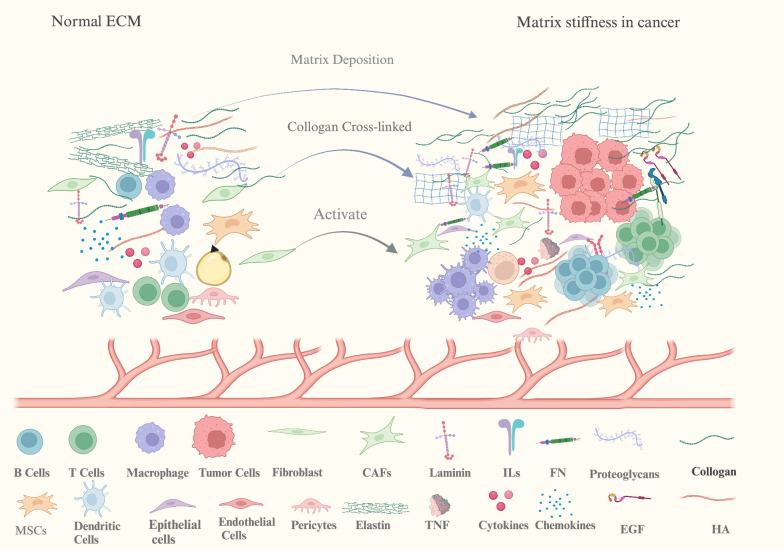
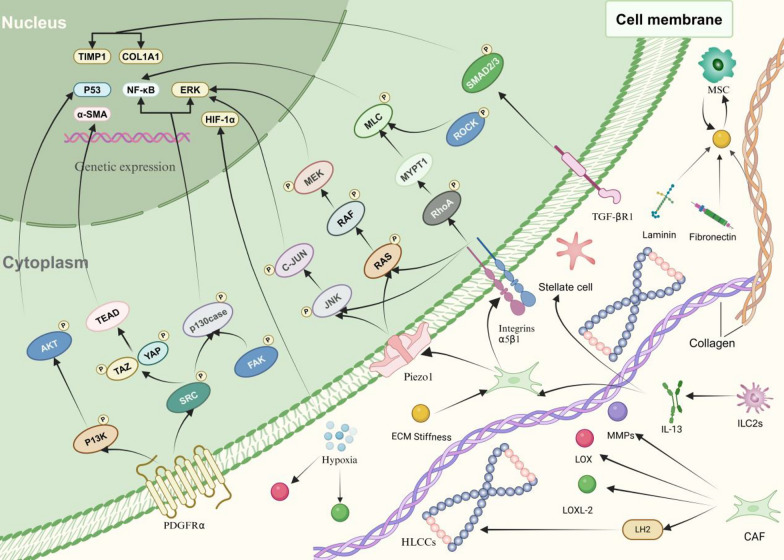
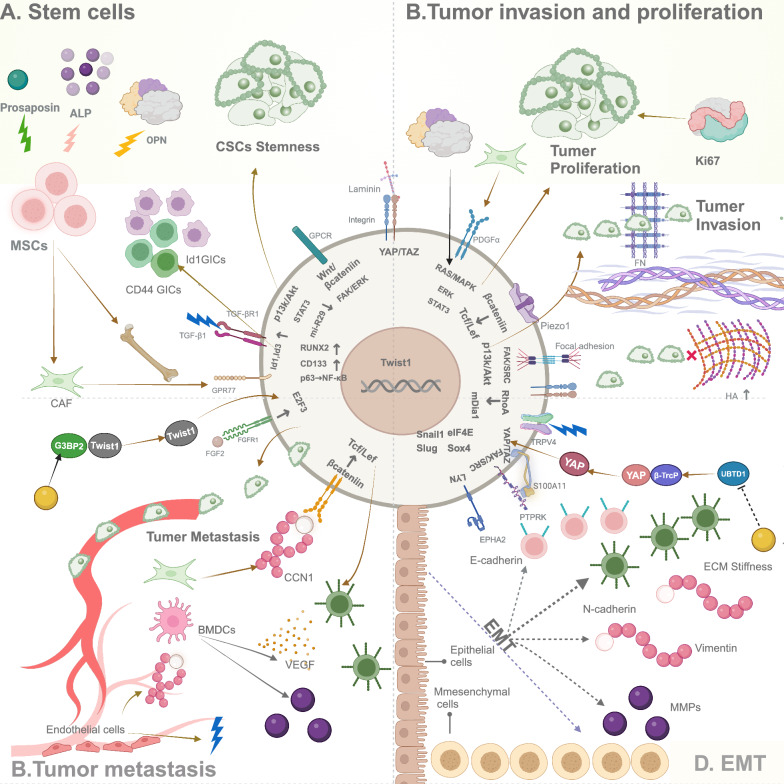
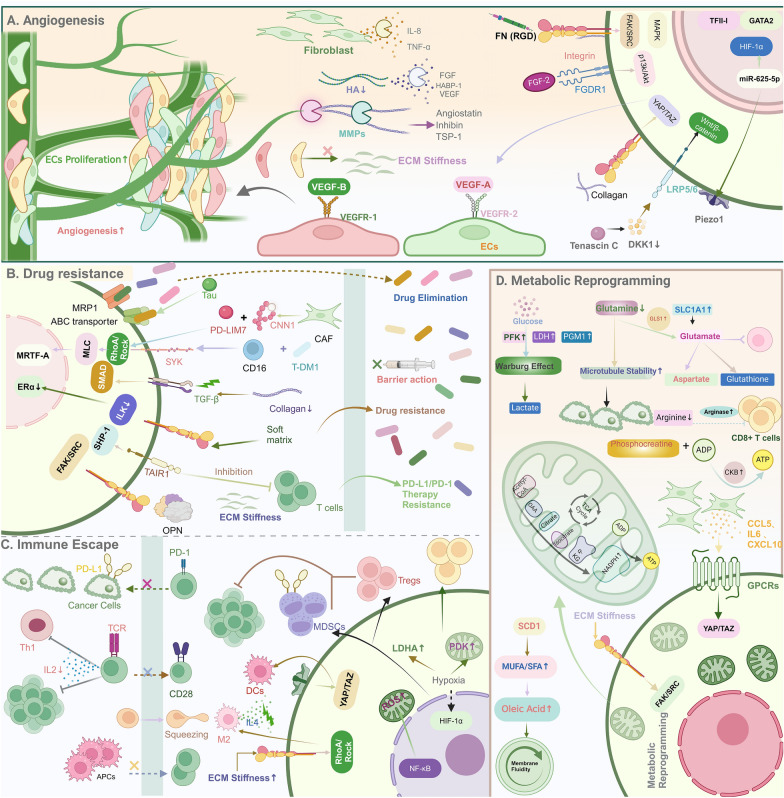
Verification
Claims the paper makes
The claims and statistics of this paper haven’t been checked yet.
Run the check — free, no account needed. It reads the open-access text and checks the sources it cites.
Claims other papers make about this one
Each is checked against this paper’s own text: does it say what the citing paper says it does?
The cited source says what the claim attributes to it.
In the citing paper
“However, beyond acting as a physical barrier, ECM stiffness also triggers mechanotransduction pathways that profoundly influence tumor cell behavior [91,92]. Mechanical cues generated by a stiffened matrix are sensed through integrin-based focal adhesions and transmitted via cytoskeletal tension to activate intracellular signaling cascades, including Yes-associated protein/Transcriptional coactiv”
From Modeling Tumor Microenvironment Complexity In Vitro: Spheroids as Physiologically Relevant Tumor Models and Strategies for Their Analysis (2025) · cites this paper as [92]
Self-check
Percentages, sums and reported differences re-computed from the paper’s own numbers.
The self-check needs the paper’s full text.
Citations
Cites
Molecular Mechanisms of Stress-Responsive Changes in Collagen and Elastin Networks in Skin
Aziz, J., Shezali, H., Radzi, Z., Yahya, N. A., Abu Kassim, N. H., Czernuszka, J., & Rahman, M. T. (2016) · Skin Pharmacology and Physiology · doi:10.1159/000447017 · Cited by 7,323
Remodelling the extracellular matrix in development and disease
Bonnans, C., Chou, J., & Werb, Z. (2014) · Nature Reviews Molecular Cell Biology · doi:10.1038/nrm3904 · Cited by 4,367 · cited 3×
“Indirect MMP inhibitors include blockade of signal transduction pathways (such as MAPK or ERK pathways [141]), and gene therapy (such as inhibition of miRNA expression [51]) to achieve the inhibition of MMP [142].”
Matrix Crosslinking Forces Tumor Progression by Enhancing Integrin Signaling
Levental, K. R., Yu, H., Kass, L., Lakins, J. N., Egeblad, M., Erler, J. T., Fong, S. F. T., Csiszar, K., Giaccia, A., Weninger, W., et al. (2009) · Cell · doi:10.1016/j.cell.2009.10.027 · Cited by 4,101 · cited 1×
“For example, breast cancer cells under high tension can enhance integrin-dependent mechanical signaling through the expression of FAK or p130cas, which are two integrin-adhesion focal proteins, and promote the progression of breast tumors [39].”
The evolving tumor microenvironment: From cancer initiation to metastatic outgrowth
de Visser, K. E., & Joyce, J. A. (2023) · Cancer Cell · doi:10.1016/j.ccell.2023.02.016 · Cited by 4,059
Tensional homeostasis and the malignant phenotype
Paszek, M. J., Zahir, N., Johnson, K. R., Lakins, J. N., Rozenberg, G. I., Gefen, A., Reinhart-King, C. A., Margulies, S. S., Dembo, M., Boettiger, D., et al. (2005) · Cancer Cell · doi:10.1016/j.ccr.2005.08.010 · Cited by 3,941 · cited 1×
“For example, breast cancer tissue (5–10 kPa) is stiffer than normal breast tissue (800 Pa) [9].”
A framework for advancing our understanding of cancer-associated fibroblasts
Sahai, E., Astsaturov, I., Cukierman, E., DeNardo, D. G., Egeblad, M., Evans, R. M., Fearon, D., Greten, F. R., Hingorani, S. R., Hunter, T., et al. (2020) · Nature Reviews Cancer · doi:10.1038/s41568-019-0238-1 · Cited by 3,863 · cited 2×
“CAFs are key components of the TME [128], which can enhance the ECM stiffness by the secretion of collagen and other fibrous macromolecules, as well as the degradation of this network through the release of proteolytic enzymes like MMPs, thereby improving the cellular mobility of the entire ECM…”
Metabolic reprogramming and cancer progression
Faubert, B., Solmonson, A., & DeBerardinis, R. J. (2020) · Science · doi:10.1126/science.aaw5473 · Cited by 2,740 · cited 1×
“In certain scenarios, altered metabolic activity resulting from reprogramming can be utilized for diagnosing, monitoring, and treating cancer [101].”
Özdemir, B. C., Pentcheva-Hoang, T., Carstens, J. L., Zheng, X., Wu, C.-C., Simpson, T. R., Laklai, H., Sugimoto, H., Kahlert, C., Novitskiy, S. V., et al. (2014) · Cancer Cell · doi:10.1016/j.ccr.2014.04.005 · Cited by 2,681 · cited 1×
“A low number of myofibroblasts in the tumor is also associated with reduced survival in PDAC patients [130].”
Concepts of extracellular matrix remodelling in tumour progression and metastasis
Winkler, J., Abisoye-Ogunniyan, A., Metcalf, K. J., & Werb, Z. (2020) · Nature Communications · doi:10.1038/s41467-020-18794-x · Cited by 2,296
The extracellular matrix modulates the hallmarks of cancer
Pickup, M. W., Mouw, J. K., & Weaver, V. M. (2014) · EMBO Reports · doi:10.15252/embr.201439246 · Cited by 2,098 · cited 3×
“The oncogene Ras promotes the ameboid migratory phenotype by stimulating Rho activity, whereas the tumor suppressor p53 reduces tumor cell migration by decreasing RhoA activity [41].”
Influential
Cited by
Sorted by citations
Items 101–200 of 269
Glucocorticoid-Mediated Extracellular Matrix Regulation: Implications for Precision Therapy
Zhu, Y., Zhang, Y., Ju, S., & Jie, L. (2025) · Biomedicines · doi:10.3390/biomedicines13061282 · Cited by 1
“The ECM serves dual roles as a physical constraint and tumor-promoting scaffold in cancer progression [47].”
Decoding EMT through liquid biopsy: A path to early detection and targeted therapy
Boyina, R., Desu, P. K., Kosanam, S., Rapuri, A., Alluri, R., Shankaraswamy, J., Mavulati, S. C., & Vanitha, K. (2025) · Advances in Cancer Biology - Metastasis · doi:10.1016/j.adcanc.2025.100141 · Cited by 1
The role of cytokines in ovarian cancer drug resistance
Wang, L., Zang, Y., Dejenie, R., Bing, J., Dong, S., Zhang, Y., Zhu, Y., & Li, J. (2025) · International Journal of Cancer · doi:10.1002/ijc.70099 · Cited by 5
“123 The engagement of integrin β 1 subsequently activates downstream mechanotransduction pathways, including focal adhesion kinase (FAK), Src, and the Rho/ROCK axis.”
Curry, S. D., Alina, T. B., Saemundsson, S. A., Rodríguez, M. C., Bower, B. M., Cha, J. N., & Goodwin, A. P. (2025) · ACS Applied Nano Materials · doi:10.1021/acsanm.5c04443 · Cited by 1
Mechanical force sensitive pioneer transcription factors and super-enhancers
Pu, Y. D., Lu, C., Peng, Q., & Qiu, J. (2025) · Journal of the mechanical behavior of biomedical materials/Journal of mechanical behavior of biomedical materials · doi:10.1016/j.jmbbm.2025.107247 · Cited by 1
Sayed, S. E., Pan, A., Vanos, V., Michel, R., & Borahay, M. A. (2025) · Genes · doi:10.3390/genes16111268 · Cited by 3
Artificial Intelligence in Collagen‐based Biomaterials
Akhter, Z., & Prabakar, S. (2025) · ChemistrySelect · doi:10.1002/slct.202504704 · Cited by 1
Zhong, M., Zhao, J., & Fan, T. (2025) · Biomaterials Advances · doi:10.1016/j.bioadv.2025.214594 · Cited by 1
Huang, C., Ning, X., Liu, T., Li, X., Ullah, M. W., Yang, K., & Lv, Y. (2025) · Chemical Engineering Journal · doi:10.1016/j.cej.2025.171087 · Cited by 1
Ahmad, R., Eldosougi, S., & Stott, S. L. (2025) · Current Opinion in Biomedical Engineering · doi:10.1016/j.cobme.2025.100636 · Cited by 2
Vernygorodskyi, S. V., Tonchev, A. B., Evtimov, N., & Bratoeva, K. Z. (2025) · Journal of Molecular Pathology · doi:10.3390/jmp6040031 · Cited by 1
“Importantly, the HGF/c-MET axis induces EMT by upregulating EMT transcription factors like Snail, Slug, and Twist while downregulating epithelial markers such as E-cadherin, thus enhancing invasion, metastasis, and therapy resistance [31,33].”
Savoie, J. J., Hebert, K., King, C., McConnell, E. C., Hoang, V. T., Monroe, W. T., Burow, M. E., Collins-Burow, B., Belgodere, J. A., & Martin, E. C. (2025) · Bioengineering · doi:10.3390/bioengineering13010047 · Cited by 1
The unseen architects of metastasis: coagulation factors in pre-metastatic niche development
Huang, H., Lu, X., Liu, Y., Zhang, Y., Zhan, J., Zeng, W., Sun, C., Li, B., Zhang, Y., Wang, Q., et al. (2026) · Cell Communication and Signaling · doi:10.1186/s12964-026-02727-0 · Cited by 2
“EMT is essential for tumor metastasis, with E-cad-herin, N-cadherin, and vimentin as key markers [148].”
Targeting stromal cells to overcome immunotherapy resistance in solid tumors
Cheng, S., Hua, Y., Liao, Q., & Liu, Q. (2026) · Critical Reviews in Oncology/Hematology · doi:10.1016/j.critrevonc.2026.105221 · Cited by 1
Targeted therapies in lung cancer: personalizing treatment across the age spectrum
Xu, Y., Chen, F., Zhang, H., & Wang, X. (2026) · Frontiers in Oncology · doi:10.3389/fonc.2026.1743620 · Cited by 1
“These changes also trigger the differentiation of fi broblasts into myo fi broblasts via TGF-b and PDGF, creating a vicious cycle of fi brosis and ECM deposition that reinforces immune exclusion (78).”
Torigoe, R., Koma, Y., Nomura, N., Yokoo, H., Omori, M., Nakanishi, T., Miyako, S., Nakanishi, T., Kodama, T., Shigeoka, M., et al. (2026) · American Journal Of Pathology · doi:10.1016/j.ajpath.2026.01.012 · Cited by 1
“9 Furthermore, CAFs secrete matrix metal-loproteases and other proteases that degrade the extracellular matrix, facilitating tumor invasion and metastasis.”
MicroRNA–VEGF axis in gastric cancer: a novel therapeutic frontier
Al-Omari, L., Abdulsahib, W. K., Jyothi, S. R., Nayak, P. P., Chauhan, A. S., Singla, S., Sead, F. F., & Polatova, D. (2026) · Discover Oncology · doi:10.1007/s12672-026-04724-8 · Cited by 1
Zhang, Y., Cao, L., Xiao, W., Zhou, L., Zhao, W., He, M. Q., Tong, J., Wu, Q., Umar, M., Qian, J., et al. (2026) · Cell Death and Differentiation · doi:10.1038/s41418-026-01697-7 · Cited by 1
“QT2024276), and written informed consent was obtained from all participants prior to inclusion in the study.”
Xie, Z., Qin, Y., Xue, X. M., Chen, X., Xie, T., Zhu, H., Huang, L., Yang, S., Yang, J., Liu, P., et al. (2026) · Blood Advances · doi:10.1182/bloodadvances.2025018014 · Cited by 1
Perineural invasion: A neuroimmune axis mediating immunotherapy resistance across malignancies
Guo, J., Hu, Z., Wu, L., Liu, L., Li, Z., Xiong, L., & Yu, D. (2026) · International Immunopharmacology · doi:10.1016/j.intimp.2026.116636 · Cited by 1
Mechanobiology of non-small cell lung cancer: bridging tumor mechanics and therapeutic strategies
Joshi, R. D., Patil, D. T., & Yadav, K. S. (2026) · Molecular Biology Reports · doi:10.1007/s11033-026-11852-5 · Cited by 1
Is there a link between fascia and cancer? From potential mechanisms to future treatment options
Otto, S., & Klingler, W. (2026) · Frontiers in Physiology · doi:10.3389/fphys.2026.1741526 · Cited by 1
“Emerging strategies aim to restore or normalize tissue stiffness to improve disease outcomes and regenerative capacity (Mai et al., 2024; Thomas et al., 2022; Zhang and Zhang, 2025; Martinez-Vidal et al., 2021; Han et al., 2024).”
InfluentialRahaman, Jalouli, M., Harrath, A. H., Choi, J., Choi, M., Kim, H. S., Park, S., Shim, B., Rani, A., & Kim, B. (2026) · Cells · doi:10.3390/cells15100850 · Cited by 1
“Cancer-associated fibroblasts and extracellular matrix (ECM) proteins promote tumor progression by augmenting cancer cell survival and restricting anti-tumor drug diffusion [39].”
Cell Mechanics in Cancer: Integrating Mechanotransduction Pathways Within the Tumor Microenvironment
Sevgi, M., Işık, Y., Karaca, C., Caglar, E., Abdioğlu, H. B., Zendel, F., Başbınar, Y., & Üvet, H. (2026) · Journal of Cellular Physiology · doi:10.1002/jcp.70184 · Cited by 1
“Enzymes of the lysyl oxidase (LOX) and LOX‐like (LOXL) families, triggered by transforming growth factor beta (TGF‐β) and hypoxia (hypoxia‐inducible factor 1‐alpha, HIF‐1α), govern collagen cross‐linking to reinforce this stiff mechanical barrier (Zhang and Zhang 2025).”
Wei, L.-Y., Qi, L., Yu, X., Shi, A., & Zhu, Z. (2026) · Frontiers in Cell and Developmental Biology · doi:10.3389/fcell.2026.1836170 · Cited by 1
“It may also influence mechanosensitive transcriptional programs such as YAP/TAZ, with potential consequences for tumor-cell migration, invasion, and therapeutic response (Zhang and Zhang, 2025).”
Wang, L., Zhi, P., Alradwan, I. A., He, C., Abbasi, A. Z., Gao, H., Rauth, A. M., Cescon, D. W., Henderson, J. T., & Wu, X. Y. (2026) · Journal of Nanobiotechnology · doi:10.1186/s12951-026-04526-8 · Cited by 1
“Given that ECM stiffness is a key regulator of EMT, this remodeling provides a mechanistic link to the observed increase in E-cadherin and decrease in N-cadherin and MMP-9 expression [65, 66].”
Xiong, D., Zheng, Q., Chen, W., Li, M., Chen, Y., Zhang, C., & Liu, J. (2026) · Biofabrication · doi:10.1088/1758-5090/ae6f84 · Cited by 1
“The fibrotic tumor microenvironment, characterized by pathological accumulation and cross-linking of ECM, is a hallmark of malignancies and is strongly associated with therapeutic resistance and poor prognosis across diverse cancer types [46, 47].”
The Biomechanics of Glioblastoma: Why Glioblastoma Models and Clinical Reality Diverge
Köpke, K., Zuhorn, I. S., & Kruyt, F. A. E. (2026) · Cells · doi:10.3390/cells15100876 · Cited by 1
Li, W., Xin, Y.-Y., Jin, M.-Z., & Jin, W.-L. (2026) · Materials Today Bio · doi:10.1016/j.mtbio.2026.103317 · Cited by 1
“For example, YAP/TEAD inhibition to downregulate PD-L1 can lead to compensatory upregulation of TIM-3 and LAG-3, driven by residual mechanical stress [190].”
Gene dependency-informed inference of response to targeted cancer therapies
Bhattacharjee, N., Peela, S. C. M., Halder, A., Mathew, B., Samanta, S., Gujral, S., Kumari, S., Panda, S., Ganguly, R., Ahuja, G., et al. (2026) · Nature Communications · doi:10.1038/s41467-026-73977-2 · Cited by 1
“7l) 75 – 77 .”
Rejinold, N. S., Jin, G., & Choy, J. (2026) · ACS Omega · doi:10.1021/acsomega.6c00998 · Cited by 1
“57,133,134 These processes are orchestrated through MAPK signaling (ERK, JNK, p38, ERK5), which controls ECM remodeling and endothelial behavior.”
Jeon, K., Kim, U., Ji, C.-H., Kamaraj, M., Laird, N. Z., Wang, Z., Yu, H., Ermis, M., Sullan, R. M. A., Shen, X., et al. (2026) · Materials Today Bio · doi:10.1016/j.mtbio.2026.103330 · Cited by 1
Wang, D., & Li, Y. (2026) · Seminars in Oncology · doi:10.1016/j.seminoncol.2026.152516 · Cited by 1
Maheshwari, N., Ghode, P., & Maheshwari, R. (2026) · International Journal of Pharmaceutics · doi:10.1016/j.ijpharm.2026.127116 · Cited by 1
Extracellular matrix stiffness in chronic liver disease: From mechanisms to treatments
Xi, Z.-H., Sun, W.-J., Li, M., Dong, Q.-Q., Dong, X., Qiao, Z.-L., Tao, H., Yang, J., & Lu, C. (2026) · Biochemical Pharmacology · doi:10.1016/j.bcp.2026.118194 · Cited by 1
Tumor-associated fibrosis plays a role in cellular immunity across human diseases
Tian, M., Lian, M., Zheng, L., Li, Y., Xue, X., & Zhang, Z. (2026) · Biomedicine & Pharmacotherapy · doi:10.1016/j.biopha.2026.119730 · Cited by 1
Mirzabeigi, Y., Youssef, J., Gonzalez, J. S., Martinez, T., Avellan, R., Wong, A. G., Perez, M., Carvajal, L. L., Abou-Kheir, W. G., & Bahmad, H. F. (2026) · Cancers · doi:10.3390/cancers18142358 · Cited by 1
“Increased ECM stiffness not only serves as a physical barrier to drug delivery but also alters intracellular signaling pathways, promoting chemoresistance [19].”
Feng, Y., Gu, L., Jia, Z., Zhang, C., & Zhu, Z. (2026) · Frontiers in Oncology · doi:10.3389/fonc.2026.1866753 · Cited by 1
“In vitro matrix models, CAF-tumor cell co-culture systems and animal models have shown that ECM stiffness, integrin signaling, FAK/Src activation, RhoA/ROCK signaling and YAP/TAZ activity can promote matrix remodeling and tumor invasion (34, 47 – 49).”
Engineering ECM-Responsive Nanomedicine to Overcome Tumor Stromal Barriers
Swain, K., & Pattnaik, S. (2026) · ACS Applied Bio Materials · doi:10.1021/acsabm.6c01118 · Cited by 1
Extracellular matrix stiffness and mechanotransduction in cancer drug resistance
Song, Y., Huang, C., Han, J., Wang, S., Liu, H., Li, Y., Jiang, Z., Tan, X., Wu, T., & Jiang, F. (2026) · Drug Resistance Updates · doi:10.1016/j.drup.2026.101470 · Cited by 1
Zhu, B., Yang, T., Chang, M., Li, Y., Wu, D., Yan, J., Guo, Q., Wan, J., Guo, Y., & Lu, Y. (2026) · Biomaterials · doi:10.1016/j.biomaterials.2026.124566 · Cited by 1
Shi, J., Abdel-Ghany, S. E., Abdelfattah, M. M., Hu, X., Wadan, A. S., & Sabit, H. (2026) · Signal Transduction and Targeted Therapy · doi:10.1038/s41392-026-02820-3 · Cited by 2
“3,142 While these tissue-scale programmes govern dormancy and metastatic outgrowth, their baseline is set systemically: obesity and chronic low-grade in fl ammation precondition adipose depots and immune tone, accelerating CAA formation and amplifying the very signals reviewed above.”
Aundhia, C. J., Desai, J., Patel, S., Talele, C., & Prajapati, B. G. (2026) · Bioimpacts · doi:10.34172/bi.33650 · Cited by 1
Mahajan, A. S., Patil, R. B., Jagtap, A., Wagh, G., Deotare, A., Hegde, M. V., & Mali, A. V. (2025) · Biomedicine & Pharmacotherapy · doi:10.1016/j.biopha.2025.118437 · Cited by 1
Ji, K., Shi, C., & Zhang, J. (2026) · bioRxiv (Cold Spring Harbor Laboratory) · doi:10.64898/2026.01.26.701794 · Cited by 1
“These stiffness values were selected based on prior mechanobiology studies in multiple tumor models [22,33] , where matrices in the ~1–2 kPa range are commonly used to represent physiologically soft tissues, whereas matrices in the ~5– 10 kPa range are widely employed to model fibrotic or…”
InfluentialHuang, L., Xu, M., Zhao, X., Yu, H., Liu, L.-Z., Cao, W., Gui, L., Wu, Z., Zhang, Y., & Li, F. (2025) · Medical Oncology · doi:10.1007/s12032-025-02781-7
“EMT is the transformation of epithelial cells into mesenchymal cells, which is associated with tumor initiation, invasion, metastasis, and resistance to therapy [18, 31].”
Kong, T., Xu, X., Wu, C., Qiu, Z., Hu, B., Qi, Z., Dong, H., Wu, F., Jin, T., Zheng, Y., et al. (2025) · SSRN Electronic Journal · doi:10.2139/ssrn.5367161
Packirisamy, S., André, O., Fan, Z., Nordenfelt, P., & Swaminathan, V. (2025) · bioRxiv (Cold Spring Harbor Laboratory) · doi:10.1101/2025.09.16.676527
Engineered N-TIMP2 Variant Specifically Targeting MMP-9 Exhibits Potent Anti-Glioblastoma Activity
Feldman, M., Rotenberg, N., & Shifman, J. M. (2025) · Biomolecules · doi:10.3390/biom15101470
Kumari, P., & Kumar, S. (2025) · ChemistrySelect · doi:10.1002/slct.202503162
Improving neuroblastoma therapy with a new p53 family-activating agent
Almeida, J., Resende, D. I. S. P., da Silva, R. D. F., Villasante, A., Murphy, C., Zingales, V., Palmeira, A., Škoda, J., Broso, F., Vadivellu, A., et al. (2025) · European Journal of Pharmacology · doi:10.1016/j.ejphar.2025.178295
Tumor-on-Chip as a Personalised Platform for Rapid Drug-Testing in Breast CancerPreprint
Helal, C., Pinon, L., Jin, J., Schintu, N., Vazquez, A., Nurmik, M., Antonelli, G., Simon, M., Montaudon, É., Sourd, L., et al. (2025) · bioRxiv (Cold Spring Harbor Laboratory) · doi:10.1101/2025.10.26.684605
Vinothkumar, P., Lin, P.-Y., Cheng, L.-T., Yu, C.-H. A., Hsu, P., Chou, Y., & Hwang‐Verslues, W. W. (2025) · bioRxiv (Cold Spring Harbor Laboratory) · doi:10.1101/2025.11.05.686880
“Depending on the cell type and context, the stiff microenvironment can either promote mitochondrial fusion or induce mitochondrial fission (19,20) to facilitate cancer cell proliferation, invasion, migration, metastasis and drug resistance (21).”
Kitaplı, S., Akpunar, M., Alkan, A., & Tanrıverdi, Ö. (2025) · Clinical & Translational Oncology · doi:10.1007/s12094-025-04147-x
Li, Y., Zhang, Y., Chen, G., Liu, X., Xia, Q., Li, Y., Yang, J., Xu, G., Chen, J., Chen, J., et al. (2025) · Chemical Engineering Journal · doi:10.1016/j.cej.2025.171551
Patra, S. K., Pradhan, S. K., Ansari, Z. A., & Biswal, B. K. (2025) · Medical Oncology · doi:10.1007/s12032-025-03178-2
“…the literature that the involvement of COL3A1 , TGM2 , MMP1 , and SLPI genes in extracellular matrix pathways has a role in facilitating tumor progression through ECM degradation and remodelling [32]. and the proteins are IL1B, COL3A1, TGM2, MMP1, CD24, IGFBP3, ZEB2, DSP, SLPI, and PDK4 (Fig.”
Digital Twin Meets the Bench: Natural Compounds Reshape the Ovarian Cancer Microenvironment
Kleczka, A., Dzik, R., & Kabała‐Dzik, A. (2025) · Biomedicines · doi:10.3390/biomedicines13123119 · Cited by 1
“Increased stiffness has been linked to enhanced tumour cell proliferation, invasion, and immune exclusion via mechanotransduction pathways (integrin–FAK, YAP/TAZ) [22,89,90].”
Batra, S., Prabhakar, P., Mohapatra, D., George, N. G., Goel, N., Rishi, B., Misra, A., & Singh, A. (2025) · Onco · doi:10.3390/onco6010002
“…glioblastoma or colorectal cancer can present hypermutated profiles resembling adult tumors [5,39], most pediatric tumors— including fusion-driven cancers—have distinct stromal and ECM characteristics shaped by developmental biology rather than accumulated damage [4,40–42].”
Leebana, M., & Prathyusha., P. (2025) · Oriental Journal Of Chemistry · doi:10.13005/ojc/410621
Role of Tumor Microenvironment in Metastatic Breast Cancer
Kaçaroğlu, D., & Gürbüz, N. (2026) · Springer eBooks · doi:10.1007/978-981-95-3682-5_3
Mathumitha, S., Mahalakshmi, B., Manivannan, J., & Sivasubramanian, J. (2026) · Next Materials · doi:10.1016/j.nxmate.2026.101689
Rawnaque, F. S., & Simon, J. C. (2026) · Ultrasonics · doi:10.1016/j.ultras.2026.107999
COMP – PMEPA1 axis promotes epithelial‐to‐mesenchymal transition in breast cancer cells
Παπαδάκος, Κ. Σ., Gorji‐Bahri, G., Gradjan, L., Zajac, J., Gil, K., Nduku, Y. T., & Blom, A. M. (2026) · Molecular Oncology · doi:10.1002/1878-0261.70221 · Cited by 1
“Changes in ECM composition, stiffness, and organization can directly influence EMT, cell motility, and metastatic dissemination [46].”
Commentary: Novel mtDNA methylation-associated prognostic signatures in colorectal cancer
Jiang, X., Zhang, X., & Wang, M. (2026) · Frontiers in Oncology · doi:10.3389/fonc.2026.1780394
“In CRC, dysregulated ECM remodeling in fl uences metastatic potential and clinical outcomes by altering matrix composition and stiffness, and by engaging cell surface receptors such as integrins to activate downstream signaling networks that drive malignancy and therapeutic resistance (8, 9).”
Deep learning enables feature extraction of 3D collagen architecture in cleared fibrotic tissuesPreprint
Houbart, W., Schelfaut, L., Vavladeli, A., Borges, N., Boelens, M., Gomez, C. M. B., Verstappe, B., Ghiasloo, M., Vladimirov, N., Blondeel, P. N., et al. (2026) · bioRxiv (Cold Spring Harbor Laboratory) · doi:10.64898/2026.02.25.707675
Nanoscale opportunities in extracellular matrix mimicry
Lyon, L. A., Caine, A., Narbay, E., & Cárdenas‐Vásquez, E. D. (2026) · Nanoscale Horizons · doi:10.1039/d5nh00735f
Soulat, A., Mohsenpour, T., & Roshangar, L. (2026) · Biochemistry and Biophysics Reports · doi:10.1016/j.bbrep.2026.102527
“These effects help restore the balance between MMPs and their inhibitors (TIMPs), stabilizing ECM integrity [52,53].”
Aseeri, A. A., AlKhafaje, Z., Hussein, U. A.-R., Adel, Z., Alkadir, O. K. A., Aldulaimi, A., Saeed, S. M., Taher, W. M., Alwan, M., & Smerat, A. (2026) · Journal of Pharmaceutical Innovation · doi:10.1007/s12247-026-10504-2
“Conversely, elevated TGF-β, α-SMA, and collagen modules may favor anti-fibrotic or matrix-softening strategies [ 138].”
Novruzov, M., Mammadova, M., Raval, K. Y., Khan, W. U., & Shiraliyeva, U. (2026) · JMIRx Bio · doi:10.2196/91528
“The following needs to be revised in the Introduction: “...(ECM) [6,7,32,33].... (ICIs) [13,14,15]....exposure [1,2,4,5,9,10,11”
Murthy, M. K. (2026) · Network Modeling Analysis in Health Informatics and Bioinformatics · doi:10.1007/s13721-026-00750-2
“…to MAPs, have been implicated in tissue stiffening and patho - logical remodeling in fibrosis and cancer (Tomuleasa et al. 2024; Odell et al. 2025; Zhang and Zhang 2025), adding to the notion that myopia has some common characteristics with chronic tissue remodeling disorders (Yin and Ge 2025),…”
Ramezani, S. R., & Mojra, A. (2025) · National and International Iranian Conference on Biomedical Engineering (ICBME) · doi:10.1109/icbme68496.2025.11392566
Decoding the metabolic-immune axis for novel therapeutics in bladder cancer
Zhou, M., Xue, X., Li, H., Chen, Z., Nie, Q., & Lai, Y. (2026) · Biochimica et Biophysica Acta (BBA) - Reviews on Cancer · doi:10.1016/j.bbcan.2026.189569
Autophagy in cancer-associated fibroblasts: its role in gastrointestinal cancers
Kuppala, V., Chintapudi, H., Gopalaiah, K., Nagaraju, G. P., & El‐Rayes, B. F. (2026) · Molecular Cancer · doi:10.1186/s12943-026-02626-5
“In cancer, CAF-facilitated ECM stiffness mediated by collagen I crosslinked through LOX [56] and deposition of collagens VI, XI, XXII, and XXIV triggers mechano transduction pathways like YAP/TAZ, which strengthen cytoskeletal contractility through ANLN [57], DIAPH3, and drive a positive feedback…”
Liu, B., Liu, X., Wang, Y., Han, X., & Dang, X. (2026) · Frontiers in Pharmacology · doi:10.3389/fphar.2026.1699709 · Cited by 1
Qi, N., Wen, L., Li, S., & Feng, C. (2026) · Cell Communication and Signaling · doi:10.1186/s12964-026-02813-3
Huo, X., Qi, J., ZHU, Y., Song, H., Han, W., & Wang, S. (2026) · BMC Cancer · doi:10.1186/s12885-026-15897-4
“More broadly, ECM stiffness can reshape immune infiltration and resistance through mechanosensing programs, supporting the possibility that CES1 linked stromal remodeling contributes to sustained WNT signaling and cytokine and JAK-STAT activity [93].”
A Tumor Microenvironment‐Derived CAF‐VEGF Model and Its Application in Biomarker Screening for HCC
Zheng, H., Tang, S., Shi, R., Zhu, Y., Geng, X., Huang, S., Zhang, R., Qu, X., Wan, H., Fang, C., et al. (2026) · Cell Biochemistry and Function · doi:10.1002/cbf.70204
“…and mechanical regulation: they are principal producers of matrix proteins (e.g., collagens, elastin) that determine tissue stiffness and tension [21], and in 3D in vitro models breast cancer‐associated CAFs generate greater contractile forces than normal fibroblasts and markedly enhance…”
Delaney, W. H., Faulkner, S. A., Lam, W. A., Boulis, N. M., Qiu, Y., & Lei, K. (2026) · Materials Today Advances · doi:10.1016/j.mtadv.2026.100770
Surface-induced mechano-regulation of macrophages: emerging strategies for immunotherapy
Yang, J., Liu, R., Liu, X., & Song, Y. (2026) · Med-X · doi:10.1007/s44258-026-00083-9 · Cited by 1
Okafor, S. S., Montgomery, S. K., Park, J., Liu, T., Safrega, M., Yu, J. S., O'Hare, C. P., Schab, A. M., Goestenkors, A. P., Espinoza, C. J. V., et al. (2026) · bioRxiv (Cold Spring Harbor Laboratory) · doi:10.64898/2026.05.07.719019
“In our prior work, this post processing treatment yielded a stiffness of ~40 kPa 49 , which falls within the range known to support tumor cell culture 38,67–69 .”
Saghari, S., Kordi, N., & Omidali, F. (2026) · Medical Hypotheses · doi:10.1016/j.mehy.2026.111993
Liu, Y., Xiong, C., Huang, G., Xu, M., Li, J., Zhou, M., Liang, F., & Chen, R. (2026) · Journal of Translational Medicine · doi:10.1186/s12967-026-08160-8
“In contrast, when CD8 + T cells are sparse even at the tumor border, the dominant limitation often lies upstream: impaired vascular extravasation or a dense, stiff ECM that restricts interstitial migration [119, 120].”
Bioengineering CAR-T cells to function in hostile tumor microenvironments
Mahajna, S., Barhoum, R., Sabbah, A., Igescu, I.-M., & Mahameed, M. (2026) · Trends in biotechnology · doi:10.1016/j.tibtech.2026.04.023
Fluid shear stress enhances pancreatic cancer motility through YAP activation
Deng, J., Lencioni, G., Pastore, A., Frampton, A. E., Deng, D., & Giovannetti, E. (2026) · Clinical Epigenetics · doi:10.1186/s13148-026-02163-4
“Matrix hardness, traditionally considered a hallmark mechanical feature, plays a crucial role in affecting tumor metastasis and patient prognosis [4, 5].”
Ji, K., Shi, C., Zhang, J., & Mattingly, R. R. (2026) · Cells · doi:10.3390/cells15100877 · Cited by 2
“Increased matrix rigidity can arise from enhanced deposition and crosslinking of collagen and other ECM components, often mediated by enzymes such as lysyl oxidase (LOX), and is frequently associated with tumor growth, fibrosis, or chronic tissue remodeling [24–26].”
InfluentialKitano, H., Yuge, R., Shikuma, H., Yukihiro, K., Hatayama, T., Nakano, Y., Tasaka, S., Okazaki, M., Nomura, N., Tasaka, R., et al. (2026) · Cancers · doi:10.3390/cancers18111716
Wang, S. Q., Wang, D., Zhou, Y.-N., Li, W., Sun, G., Cao, L., Feng, C., Chen, Y., Shao, C., Gui, Q., et al. (2026) · Experimental Hematology and Oncology · doi:10.1186/s40164-026-00783-3 · Cited by 1
Negi, S., Kumar, S., Bharti, C., & Kumar, S. (2026) · ChemistrySelect · doi:10.1002/slct.202506355
Tumor infiltrating lymphocytes against solid tumors: current trends & perspectives
Liew, Z. M., Low, Y. S., Oh, K. C., Lee, Q. Y., Tye, G. J., Bayliss, R. W., Mai, C., Teo, M. Y. M., & In, L. L. A. (2026) · PeerJ · doi:10.7717/peerj.20969
“This shift enhances the cancer cell motility and invasiveness ( Zhang & Zhang, 2025 ).”
Unachukwu, U. J., Garcia, E. B., Rai, N., & D'Armiento, J. M. (2026) · JCI Insight · doi:10.1172/jci.insight.195013
“Decorin and lumican regulate collagen fibrillogenesis and growth-factor availability, whereas asporin enhances collagen cross-linking and matrix stiffness, collectively shaping ECM architecture and mechanotransduction (57).”
Wu, M., Han, Z., Wei, W., Niu, Y., Wang, H., Meng, F., & Wu, Q. (2026) · Frontiers in Immunology · doi:10.3389/fimmu.2026.1842892
“In fi brotic tissues, tumors, and chronically injured organs, progressive ECM stiffening generates sustained mechanical cues that in fl uence cell fate, activation states, and transcriptional programs, thereby profoundly altering cellular behavior (190).”
Abedi, K., Sissoko, C. A., Pun, S., Kappagantula, S., Zucca, B., & Barrile, R. (2026) · Biofabrication · doi:10.1088/1758-5090/ae7832
“While the healthy human brain is mechanically soft, typically exhibiting stiffness values of 1 kPa or less along-side local variations [125, 126], the solid tumor mass in patients is often associated with significantly stiffer regions ranging between 7 and 27 kPa [127].”
3D nanoscaffolds: Bridging the gap between tumor microenvironment and therapy
Vakili‐Ghartavol, R., Nekounam, H., Sede, M. J. G., Safari, M., & Nazeri, N. (2026) · Biomedicine & Pharmacotherapy · doi:10.1016/j.biopha.2026.119630
Hayn, A., Matz‐Soja, M., Berg, T., & van Bömmel, F. (2026) · Cellular Oncology · doi:10.1007/s13402-026-01235-0
Hydrogel microtumor arrays of patient melanoma recapitulate phenotypes and drug sensitivity
Liu, Y., Pawlush, M. L., Trynda, J., Lambert, E., Williams, C., Stenzel, M. H., Copland, J. A., & Kilian, K. A. (2026) · Biomaterials Advances · doi:10.1016/j.bioadv.2026.215015
Sanazzaro, T., Cotner, M., Arvinth, N., Brock, A., & Seidlits, S. K. (2026) · bioRxiv (Cold Spring Harbor Laboratory) · doi:10.64898/2026.06.15.732361
In vivo assessment of melanoma based on photoacoustic absorption and viscoelasticity imaging
Tan, Y., Jiang, A., Liang, Y., Zhang, H., Ma, Y., Dong, L., & Wang, P. (2026) · Biomedical Optics Express · doi:10.1364/boe.603217
“…migratory potential [20,21], whereas the increase in elasticity is driven by increased collagen deposition and crosslinking in the extracellular matrix (ECM), as well as dynamic matrix metalloproteinase-mediated remodeling, factors that drive tumor cells toward a more aggressive phenotype [22,23].”
Tumor-driven stabilization of CD8+ T cell exhaustion and implications for cancer immunotherapy
Thouenon, R., Ongaro, M., & Verdeil, G. (2026) · Frontiers in Immunology · doi:10.3389/fimmu.2026.1862431
“Solid tumors develop extensive extra-cellular matrix (ECM) remodeling (Figure 1), leading to elevated stiffness, compressive and tensile forces, and altered mechanical stress pro fi les that can directly impair immune cell function (40).”
Lonardo, A., Jamalinia, M., & Weiskirchen, R. (2026) · Livers · doi:10.3390/livers6050086
Advances in cell-derived extracellular matrix for 3D tumor modelling
Rodrigues, P. S., Henriques‐Pereira, M., Mano, J. F., & Gaspar, V. M. (2026) · Materials Today Bio · doi:10.1016/j.mtbio.2026.103414 · Cited by 1
“These alterations reprogram the biochemical and biophysical properties of the ECM, thereby promoting tumor growth, invasion, and metastasis [2,3].”
Metadata
- Authors
- Zhang, M., & Zhang, B.
- Affiliations
- China Three Gorges University (CN)
- Corresponding author
- Zhang, Bin
- Venue
- Experimental Hematology & Oncology
- Published
- 2025-04-10
- Volume
- 14
- Issue
- 1
- Pages
- 54-54
- ISSN
- 2162-3619 (ISSN-L)
- PMC
- PMC11984264
- OpenAlex
- W4409339209
- Cited by
- 269
- References
- 205
- Citations by year
- 2026: 199 · 2025: 70
- FWCI
- 32.05
- Type
- journal article
- Language
- en
- Open access
- gold
- doi.org
- Locations
- Experimental Hematology and Oncology (publishedVersion, cc-by)
- PubMed Central (publishedVersion, cc-by)
- PubMed (publishedVersion)
- DOAJ (DOAJ: Directory of Open Access Journals) (submittedVersion, cc-by-sa)
- Topics
- Life Sciences › Biochemistry, Genetics and Molecular Biology › Cell Biology › Cellular Mechanics and Interactions
- Health Sciences › Medicine › Oncology › Cancer Cells and Metastasis
- Life Sciences › Biochemistry, Genetics and Molecular Biology › Molecular Biology › TGF-β signaling in diseases
- Keywords
- extracellular matrix stiffness, tumor microenvironment, tumor progression, mechanotransduction, metastasis, drug resistance, angiogenesis, epithelial-mesenchymal transition, immune evasion, cancer stemness, metabolic reprogramming, genome stability
About these checks
Registry, retraction, Cites and statistics results are computed, not judged, with one exception: a printed reference that no index lists is read once by a model before it counts as a citation error. Claims are extracted by a model and kept only when their quote appears verbatim in the text; each cited source is then checked, with a model’s help, for whether it says what the claim relies on. Those verdicts can be wrong — read the claim’s quote and the cited source before relying on one.
Statistics and arithmetic are recomputed, not judged.
Confidence bands are shown only for fields calibrated on our annotated test set. None is calibrated yet, so no band is shown.
What counts as a claim ›How we measure confidence ›How we check this ›
Are you an author, or do you see a problem with this page? Request a review
