

The DOI matches its Crossref record; 207 of the 207 references it cites were found in a registry or an index.
Extracellular matrix stiffness: mechanisms in tumor progression and therapeutic potential in cancer
Open accessAbstract
Tumor microenvironment (TME) is a complex ecosystem composed of both cellular and non-cellular components that surround tumor tissue. The extracellular matrix (ECM) is a key component of the TME, performing multiple essential functions by providing mechanical support, shaping the TME, regulating metabolism and signaling, and modulating immune responses, all of which profoundly influence cell behavior. The quantity and cross-linking status of stromal components are primary determinants of tissue stiffness. During tumor development, ECM stiffness not only serves as a barrier to hinder drug delivery but also promotes cancer progression by inducing mechanical stimulation that activates cell membrane receptors and mechanical sensors. Thus, a comprehensive understanding of how ECM stiffness regulates tumor progression is crucial for identifying potential therapeutic targets for cancer. This review examines the effects of ECM stiffness on tumor progression, encompassing proliferation, migration, metastasis, drug resistance, angiogenesis, epithelial-mesenchymal transition (EMT), immune evasion, stemness, metabolic reprogramming, and genomic stability. Finally, we explore therapeutic strategies that target ECM stiffness and their implications for tumor progression.
Overview
The claims and statistics of this paper haven’t been checked yet.
Run the check — free, no account needed. It reads the open-access text and checks the sources it cites.
Integrity signals
Registry
Cites
Statistics
Figures
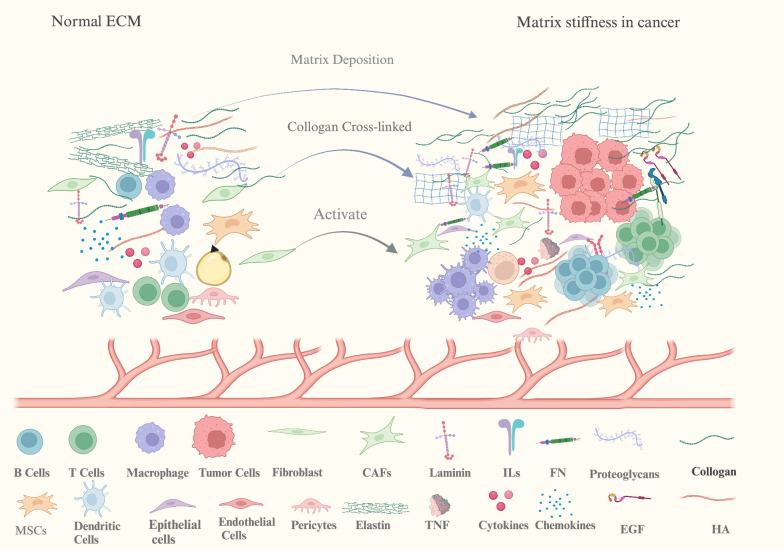
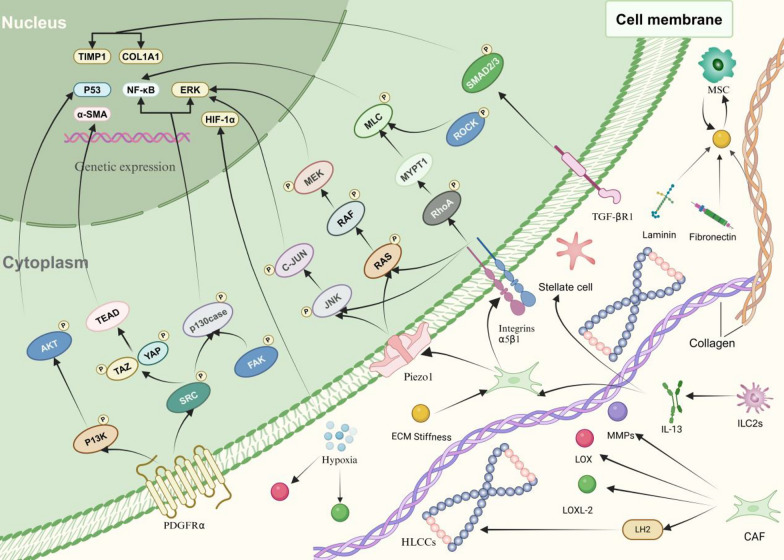
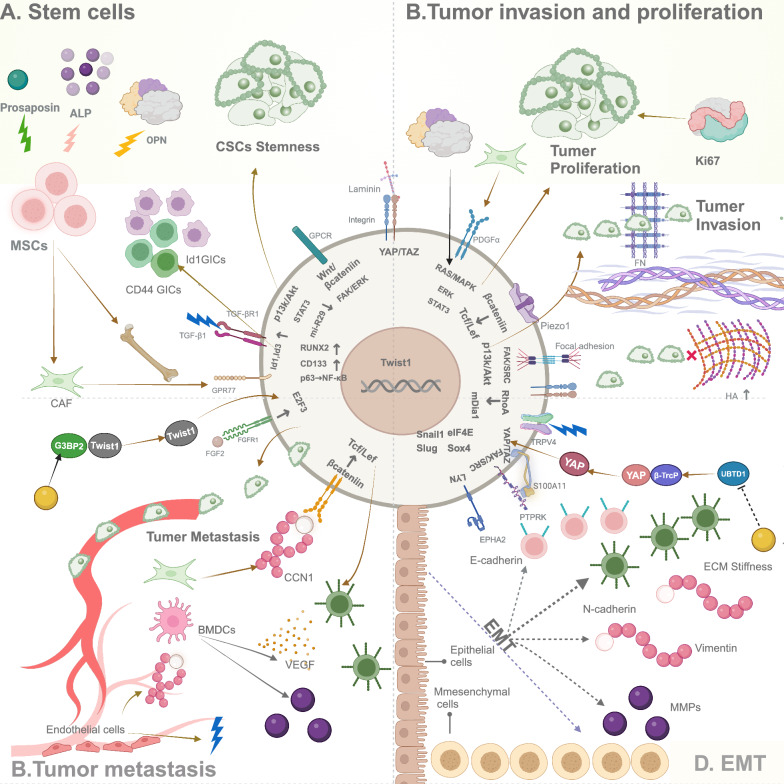
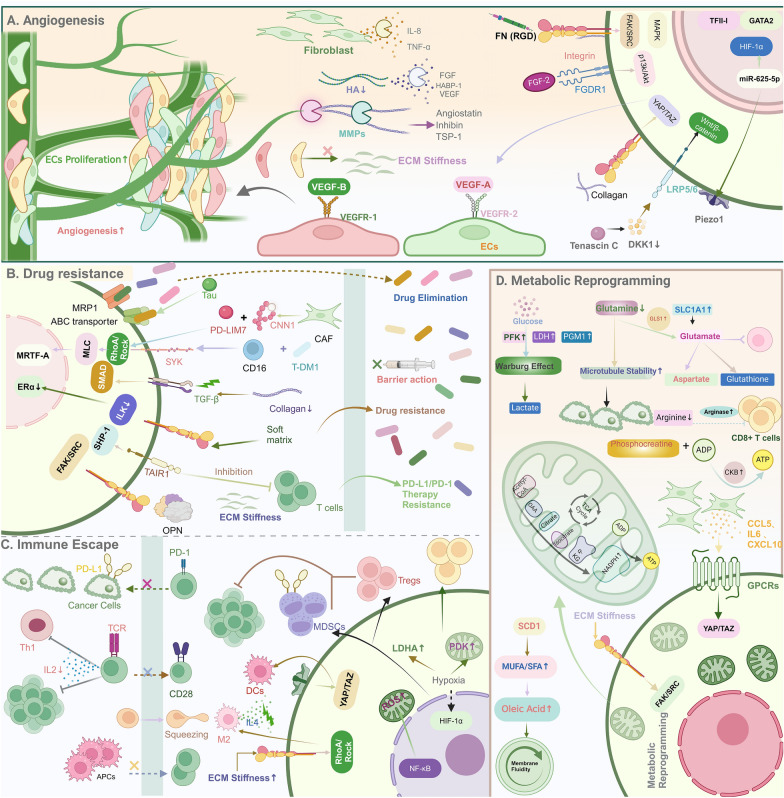
Verification
Claims the paper makes
The claims and statistics of this paper haven’t been checked yet.
Run the check — free, no account needed. It reads the open-access text and checks the sources it cites.
Claims other papers make about this one
Each is checked against this paper’s own text: does it say what the citing paper says it does?
The cited source says what the claim attributes to it.
In the citing paper
“However, beyond acting as a physical barrier, ECM stiffness also triggers mechanotransduction pathways that profoundly influence tumor cell behavior [91,92]. Mechanical cues generated by a stiffened matrix are sensed through integrin-based focal adhesions and transmitted via cytoskeletal tension to activate intracellular signaling cascades, including Yes-associated protein/Transcriptional coactiv”
From Modeling Tumor Microenvironment Complexity In Vitro: Spheroids as Physiologically Relevant Tumor Models and Strategies for Their Analysis (2025) · cites this paper as [92]
Self-check
Percentages, sums and reported differences re-computed from the paper’s own numbers.
The self-check needs the paper’s full text.
Citations
Cites
Molecular Mechanisms of Stress-Responsive Changes in Collagen and Elastin Networks in Skin
Aziz, J., Shezali, H., Radzi, Z., Yahya, N. A., Abu Kassim, N. H., Czernuszka, J., & Rahman, M. T. (2016) · Skin Pharmacology and Physiology · doi:10.1159/000447017 · Cited by 7,323
Remodelling the extracellular matrix in development and disease
Bonnans, C., Chou, J., & Werb, Z. (2014) · Nature Reviews Molecular Cell Biology · doi:10.1038/nrm3904 · Cited by 4,367 · cited 3×
“Indirect MMP inhibitors include blockade of signal transduction pathways (such as MAPK or ERK pathways [141]), and gene therapy (such as inhibition of miRNA expression [51]) to achieve the inhibition of MMP [142].”
Matrix Crosslinking Forces Tumor Progression by Enhancing Integrin Signaling
Levental, K. R., Yu, H., Kass, L., Lakins, J. N., Egeblad, M., Erler, J. T., Fong, S. F. T., Csiszar, K., Giaccia, A., Weninger, W., et al. (2009) · Cell · doi:10.1016/j.cell.2009.10.027 · Cited by 4,101 · cited 1×
“For example, breast cancer cells under high tension can enhance integrin-dependent mechanical signaling through the expression of FAK or p130cas, which are two integrin-adhesion focal proteins, and promote the progression of breast tumors [39].”
The evolving tumor microenvironment: From cancer initiation to metastatic outgrowth
de Visser, K. E., & Joyce, J. A. (2023) · Cancer Cell · doi:10.1016/j.ccell.2023.02.016 · Cited by 4,059
Tensional homeostasis and the malignant phenotype
Paszek, M. J., Zahir, N., Johnson, K. R., Lakins, J. N., Rozenberg, G. I., Gefen, A., Reinhart-King, C. A., Margulies, S. S., Dembo, M., Boettiger, D., et al. (2005) · Cancer Cell · doi:10.1016/j.ccr.2005.08.010 · Cited by 3,941 · cited 1×
“For example, breast cancer tissue (5–10 kPa) is stiffer than normal breast tissue (800 Pa) [9].”
A framework for advancing our understanding of cancer-associated fibroblasts
Sahai, E., Astsaturov, I., Cukierman, E., DeNardo, D. G., Egeblad, M., Evans, R. M., Fearon, D., Greten, F. R., Hingorani, S. R., Hunter, T., et al. (2020) · Nature Reviews Cancer · doi:10.1038/s41568-019-0238-1 · Cited by 3,863 · cited 2×
“CAFs are key components of the TME [128], which can enhance the ECM stiffness by the secretion of collagen and other fibrous macromolecules, as well as the degradation of this network through the release of proteolytic enzymes like MMPs, thereby improving the cellular mobility of the entire ECM…”
Metabolic reprogramming and cancer progression
Faubert, B., Solmonson, A., & DeBerardinis, R. J. (2020) · Science · doi:10.1126/science.aaw5473 · Cited by 2,740 · cited 1×
“In certain scenarios, altered metabolic activity resulting from reprogramming can be utilized for diagnosing, monitoring, and treating cancer [101].”
Özdemir, B. C., Pentcheva-Hoang, T., Carstens, J. L., Zheng, X., Wu, C.-C., Simpson, T. R., Laklai, H., Sugimoto, H., Kahlert, C., Novitskiy, S. V., et al. (2014) · Cancer Cell · doi:10.1016/j.ccr.2014.04.005 · Cited by 2,681 · cited 1×
“A low number of myofibroblasts in the tumor is also associated with reduced survival in PDAC patients [130].”
Concepts of extracellular matrix remodelling in tumour progression and metastasis
Winkler, J., Abisoye-Ogunniyan, A., Metcalf, K. J., & Werb, Z. (2020) · Nature Communications · doi:10.1038/s41467-020-18794-x · Cited by 2,296
The extracellular matrix modulates the hallmarks of cancer
Pickup, M. W., Mouw, J. K., & Weaver, V. M. (2014) · EMBO Reports · doi:10.15252/embr.201439246 · Cited by 2,098 · cited 3×
“The oncogene Ras promotes the ameboid migratory phenotype by stimulating Rho activity, whereas the tumor suppressor p53 reduces tumor cell migration by decreasing RhoA activity [41].”
InfluentialYAP/TAZ at the Roots of Cancer
Zanconato, F., Cordenonsi, M., & Piccolo, S. (2016) · Cancer Cell · doi:10.1016/j.ccell.2016.05.005 · Cited by 1,970 · cited 3×
“YAP is required for CAFs to promote matrix sclerosis, acting as a marker of CAFs at early tumor stages and as an inducer of mechanical activation of CAF function [5].”
InfluentialTumor microenvironment complexity and therapeutic implications at a glance
Baghban, R., Roshangar, L., Jahanban-Esfahlan, R., Seidi, K., Ebrahimi-Kalan, A., Jaymand, M., Kolahian, S., Javaheri, T., & Zare, P. (2020) · Cell Communication and Signaling · doi:10.1186/s12964-020-0530-4 · Cited by 1,784 · cited 3×
“…human HYAL, which can break down HA and be used to enhance drug delivery, has recently entered clinical trials; for example, enzymatic HA partially restores impaired perfusion of hepatic MCCs after anti-VEGF therapy and prolongs survival when combined with anti-VEGF therapy and chemotherapy [45].”
InfluentialRoles of matrix metalloproteinases in cancer progression and their pharmacological targeting
Gialeli, C., Theocharis, A. D., & Karamanos, N. K. (2010) · FEBS Journal · doi:10.1111/j.1742-4658.2010.07919.x · Cited by 1,663 · cited 1×
“To overcome the solubility factor, another hydroxylate-based inhibitor, marimastat, was introduced for oral administration; however, marimastat showed musculoskeletal pain, possibly due to a wide range of inhibition [136].”
Is it time to start transitioning from 2D to 3D cell culture?
Jensen, C., & Teng, Y. (2020) · Frontiers in Molecular Biosciences · doi:10.3389/fmolb.2020.00033 · Cited by 1,640 · cited 1×
“…with the continuous development of the field of biomaterials, new engineered materials with independently adjustable BM-like bioactivity and mechanical properties have been developed [199], including Synthetic hydrogels, Decellu-larized ECM, Microfluidic cell culture, and 3D bioprinting [200].”
Mechanobiology of YAP and TAZ in physiology and disease
Panciera, T., Azzolin, L., Cordenonsi, M., & Piccolo, S. (2017) · Nature Reviews Molecular Cell Biology · doi:10.1038/nrm.2017.87 · Cited by 1,461 · cited 1×
“Elevated ECM stiffness activates cellular responses through mechanical signal transduction pathways, such as Integrin/FAK and YAP/ TAZ signaling pathways [6], driving tumor evolution to a malignant phenotype [7, 8].”
The microRNA miR-34a inhibits prostate cancer stem cells and metastasis by directly repressing CD44
Liu, C., Kelnar, K., Liu, B., Chen, X., Calhoun‐Davis, T., Li, H., Patrawala, L., Yan, H., Jeter, C. R., Honorio, S., et al. (2011) · Nature Medicine · doi:10.1038/nm.2284 · Cited by 1,410 · cited 1×
“Indirect MMP inhibitors include blockade of signal transduction pathways (such as MAPK or ERK pathways [141]), and gene therapy (such as inhibition of miRNA expression [51]) to achieve the inhibition of MMP [142].”
FAK in cancer: mechanistic findings and clinical applications
Sulzmaier, F. J., Jean, C., & Schlaepfer, D. D. (2014) · Nature Reviews Cancer · doi:10.1038/nrc3792 · Cited by 1,381 · cited 1×
“Changes in matrix composition or stiffness, cytokines, growth factors, integrins, and pH trigger FAK activity through the αvβ5/FAK/PI3K/Akt signaling pathway [146] to prevent anoikis and other types of cell death.”
Erdafitinib in Locally Advanced or Metastatic Urothelial Carcinoma
Loriot, Y., Necchi, A., Park, S. H., García-Donás, J., Huddart, R. A., Burgess, E. F., Fleming, M. T., Rezazadeh, A., Mellado, B., Varlamov, S., et al. (2019) · New England Journal of Medicine · doi:10.1056/nejmoa1817323 · Cited by 1,370 · cited 1×
“In addition, specific proteins such as OPN play a key role in EGFR-TKI resistance by activating the integrin αVβ3/ FAK pathway in non-small cell lung cancer [75].”
Targeting integrin pathways: mechanisms and advances in therapy
Pang, X., He, X., Qiu, Z., Zhang, H., Xie, R., Liu, Z., Gu, Y., Zhao, N., Xiang, Q., & Cui, Y. (2023) · Signal Transduction and Targeted Therapy · doi:10.1038/s41392-022-01259-6 · Cited by 1,275 · cited 2×
“Instead, studies have found that blocking the interaction between integrins, particularly those rich in αv subunits, maybe a more effective approach [143].”
Su, S., Chen, J., Yao, H., Liu, J., Yu, S., Lao, L., Wang, M., Luo, M., Xing, Y., Chen, F., et al. (2018) · Cell · doi:10.1016/j.cell.2018.01.009 · Cited by 1,230
Genome-wide association between YAP/TAZ/TEAD and AP-1 at enhancers drives oncogenic growth
Zanconato, F., Forcato, M., Battilana, G., Azzolin, L., Quaranta, E., Bodega, B., Rosato, A., Bicciato, S., Cordenonsi, M., & Piccolo, S. (2015) · Nature Cell Biology · doi:10.1038/ncb3216 · Cited by 1,219
Progress in 3D bioprinting technology for tissue/organ regenerative engineering
Matai, I., Kaur, G., Seyedsalehi, A., McClinton, A., & Laurencin, C. T. (2020) · Biomaterials · doi:10.1016/j.biomaterials.2019.119536 · Cited by 1,156 · cited 1×
“Finally, 3D bioprinting is a promising innovative biomanufacturing strategy for precisely locating biologics [204], including living cells and ECM components [189], in prescribed 3D hierarchical tissues to create artificial multicellular tissues/organs [205].”
Targeting TGF-β signal transduction for fibrosis and cancer therapy
Peng, D., Fu, M., Wang, M., Wei, Y., & Wei, X. (2022) · Molecular Cancer · doi:10.1186/s12943-022-01569-x · Cited by 1,151 · cited 1×
“…carcinoma TAS-001 An antisense oligonucleotide specifically targeting TGF-β2 is employed in the treatment of advanced or metastatic solid tumors [181] Small-molecule receptor kinase inhibitors Galunisertib An oral small-molecule TGF-βRI tyrosine kinase inhibitor that down-regulates SMAD2…”
The molecular mechanisms and therapeutic strategies of EMT in tumor progression and metastasis
Huang, Y., Hong, W., & Wei, X. (2022) · Journal of Hematology & Oncology · doi:10.1186/s13045-022-01347-8 · Cited by 1,097 · cited 1×
“Meanwhile, high matrix stiffness results in TWIST1 nucleus localization and triggers EMT by weakening TWIST1 binding partner G3BP2 interaction [57] and promoting the activation of the EPHA2/LYN complex [58].”
Targeting the tumour stroma to improve cancer therapy
Valkenburg, K. C., de Groot, A. E., & Pienta, K. J. (2018) · Nature Reviews Clinical Oncology · doi:10.1038/s41571-018-0007-1 · Cited by 1,084 · cited 2×
“…are key components of the TME [128], which can enhance the ECM stiffness by the secretion of collagen and other fibrous macromolecules, as well as the degradation of this network through the release of proteolytic enzymes like MMPs, thereby improving the cellular mobility of the entire ECM [129].”
Stupp, R., Hegi, M. E., Gorlia, T., Erridge, S. C., Perry, J., Hong, Y.-K., Aldape, K. D., Lhermitte, B., Pietsch, T., Grujicic, D., et al. (2014) · The Lancet Oncology · doi:10.1016/s1470-2045(14)70379-1 · Cited by 1,052
Jabłońska-Trypuć, A., Matejczyk, M., & Rosochacki, S. (2016) · Journal of Enzyme Inhibition and Medicinal Chemistry · doi:10.3109/14756366.2016.1161620 · Cited by 1,042 · cited 1×
“Consider neovastat compound extracted from shark cartilage, which inhibits not only MMP enzyme activity but also VEGF [140].”
Yuan, Z., Li, Y., Zhang, S., Wang, X., Dou, H., Yu, X., Zhang, Z., Yang, S., & Xiao, M. (2023) · Molecular Cancer · doi:10.1186/s12943-023-01744-8 · Cited by 977 · cited 1×
“The reason is that tumor tissues with higher stiffness not only highly express key molecules essential to EMT induced by stiffness [55] but also induce EMT by activating the FAK/Src signaling pathway and stimulating the expression of receptor tyros-ine-protein phosphatase kappa [56].”
Wei, S. C., Fattet, L., Tsai, J. H., Guo, Y., Pai, V. H., Majeski, H. E., Chen, A. C., Sah, R. L., Taylor, S. S., Engler, A. J., et al. (2015) · Nature Cell Biology · doi:10.1038/ncb3157 · Cited by 975 · cited 1×
“Meanwhile, high matrix stiffness enhances the nuclear localization of TWIST1 by freeing it from its cytoplasmic binding partner G3BP2 [48], and induces EMT to promote tumor invasion and metastasis [49].”
Extracellular matrix and its therapeutic potential for cancer treatment
Huang, J., Zhang, L., Wan, D., Zhou, L., Zheng, S., Lin, S., & Qiao, Y. (2021) · Signal Transduction and Targeted Therapy · doi:10.1038/s41392-021-00544-0 · Cited by 962 · cited 5×
“Similarly, EDB can also be used as a target for antibody-mediated radioisotope delivery, and fusion protein I labeling of L19 and small immune protein can not only slow tumor growth but also prolong the survival of F9 teratoma and head and neck cancer xenograft mice [8].”
InfluentialRole of the extracellular matrix in regulating stem cell fate
Watt, F. M., & Huck, W. T. S. (2013) · Nature Reviews Molecular Cell Biology · doi:10.1038/nrm3620 · Cited by 861 · cited 1×
“…conditions, MSCs can be induced to an osteogenic phenotype and produce significantly high levels of RUNX2, alkaline phosphatase (ALP), and OPN, and the cell morphology is polygonal and spreads over a larger area [92], while the lower stiffness matrix promotes adipocyte differentiation [93].”
Cancer-associated fibroblasts: an emerging target of anti-cancer immunotherapy
Liu, T., Han, C., Wang, S., Fang, P., Ma, Z., Xu, L., & Yin, R. (2019) · Journal of Hematology & Oncology · doi:10.1186/s13045-019-0770-1 · Cited by 860
Is there new hope for therapeutic matrix metalloproteinase inhibition?
Vandenbroucke, R. E., & Libert, C. (2014) · Nature Reviews Drug Discovery · doi:10.1038/nrd4390 · Cited by 856 · cited 2×
“The first MMP inhibitor to enter clinical trials was batimastat, a low molecular weight hydroxamic acid derivative with low water solubility that inhibits a variety of MMPs [135].”
Progress in molecular biology and translational science
Teplow, D. B. (2008) · Elsevier eBooks · Cited by 832
The role of collagen in cancer: from bench to bedside
Xu, S., Xu, H., Wang, W., Li, S., Li, H., Li, T., Zhang, W., Yu, X., & Liu, L. (2019) · Journal of Translational Medicine · doi:10.1186/s12967-019-2058-1 · Cited by 735 · cited 3×
“In addition, different types of collagen exhibit different resistance mechanisms, such as COLI through activation of β1 integrin and multiple signaling pathways, and COLI and ColVI-induced tau upregulation leading to resistance to multiple drugs [40].”
InfluentialSchrader, J., Gordon-Walker, T. T., Aucott, R. L., van Deemter, M., Quaas, A., Walsh, S., Benten, D., Forbes, S. J., Wells, R. G., & Iredale, J. P. (2011) · Hepatology · doi:10.1002/hep.24108 · Cited by 720 · cited 4×
“Notably, it has been shown that reducing ECM stiffness not only induces tumor cells to enter a resting state, but also reduces tumor cell spreading area, stress fibers, and focal adhesion, inhibits cell proliferation without inducing apoptosis, and exhibits stronger stem cell properties [29].”
InfluentialFibrosis and cancer: A strained relationship
Piersma, B., Hayward, M.-K., & Weaver, V. M. (2020) · Biochimica et Biophysica Acta (BBA) - Reviews on Cancer · doi:10.1016/j.bbcan.2020.188356 · Cited by 715 · cited 1×
“…b l e A n t i fi b r o t i c a g e n t a d m i n i s t e r e d fi r s t t o d o w n - r e g u l a t e C A F a c t i v i t y f o ll o w e d b y a d m i n i s t r a t i o n o f d o c e t a x e l m i c e ll e s t o p r o d u c e a s y n - e r g i s t i c a n t i t u m o r e ff e c t [ 172 ] F r a x -”
Extracellular matrix (ECM) stiffness and degradation as cancer drivers
Najafi, M., Farhood, B., & Mortezaee, K. (2018) · Journal of Cellular Biochemistry · doi:10.1002/jcb.27681 · Cited by 711
Provenzano, P. P., Inman, D. R., Eliceiri, K. W., & Keely, P. J. (2009) · Oncogene · doi:10.1038/onc.2009.299 · Cited by 694 · cited 1×
“This signaling network leads to overactivation of the Ras-MAPK pathway, which supports the growth and maintenance of an invasive phenotype of mammary epithelial cells in vitro and in vivo [36].”
Matrix Metalloproteinase Inhibitors in Cancer Therapy: Turning Past Failures Into Future Successes
Winer, A., Adams, S., & Mignatti, P. (2018) · Molecular Cancer Therapeutics · doi:10.1158/1535-7163.mct-17-0646 · Cited by 682 · cited 2×
“MMPs are involved in tumor invasion, angiogenesis, and metastasis, thus rendering them ideal pharmacological targets for cancer therapy [133].”
Loeffler, M. (2006) · Journal of Clinical Investigation · doi:10.1172/jci26532 · Cited by 633
Anido, J., Sáez‐Borderías, A., Gonzàlez-Juncà, A., Rodón, L., Folch, G., Carmona, M. A., Prieto-Sánchez, R. M., Barba, I., Martínez-Sáez, E. A., Prudkin, L., et al. (2010) · Cancer Cell · doi:10.1016/j.ccr.2010.10.023 · Cited by 592 · cited 2×
“3a) [100].”
3D Cell Culture Systems: Tumor Application, Advantages, and Disadvantages
Habanjar, O., Diab‐Assaf, M., Caldefie‐Chezet, F., & Delort, L. (2021) · International Journal of Molecular Sciences · doi:10.3390/ijms222212200 · Cited by 590
Samuel, M. S., Lopez, J. I., McGhee, E. J., Croft, D. R., Strachan, D., Timpson, P., Munro, J., Schröder, E., Zhou, J., Brunton, V. G., et al. (2011) · Cancer Cell · doi:10.1016/j.ccr.2011.05.008 · Cited by 564 · cited 2×
“Experimental models have shown that conditionally activated ROCK2 can increase tissue stiffness by increasing collagen, which further activates nuclear transcriptional activity by stabilizing β-catenin [28], leading to excessive cell proliferation and tissue thickening [28].”
Cancer-associated fibroblasts promote directional cancer cell migration by aligning fibronectin
Erdogan, B., Ao, M., White, L. M., Means, A. L., Brewer, B. M., Yang, L., Washington, M. K., Shi, C., Franco, O. E., Weaver, A. M., et al. (2017) · Journal of Cell Biology · doi:10.1083/jcb.201704053 · Cited by 552 · cited 1×
“They further organize the FN matrix by augmenting nonmuscle myosin II and PDGFRα-mediated contractile and traction forces that are transmitted to FN through α5β1 integrin [44].”
Rice, A. J., Cortes, E., Lachowski, D., Cheung, B. C. H., Karim, S. A., Morton, J. P., & Hernández, A. E. D. R. (2017) · Oncogenesis · doi:10.1038/oncsis.2017.54 · Cited by 526 · cited 1×
“The opposite process, termed mesenchymal-epithelial transition (MET), is commonly seen in developmental stages such as the development of the heart, renal morphogenesis, somatization, and cancer [53].”
The extracellular matrix and the immune system: A mutually dependent relationship
Sutherland, T. E., Dyer, D. P., & Allen, J. E. (2023) · Science · doi:10.1126/science.abp8964 · Cited by 519 · cited 1×
“Inhibition of LOX can weaken the fibrillar collagen network and improve the pathway of T cells into the tumor [79].”
Targeting extracellular matrix stiffness and mechanotransducers to improve cancer therapy
Jiang, Y., Zhang, H., Wang, J., Liu, Y., Luo, T. L., & Hua, H. M. (2022) · Journal of Hematology & Oncology · doi:10.1186/s13045-022-01252-0 · Cited by 506 · cited 4×
“Rho-associated protein kinase (ROCK) is an important mechanosensor between matrix stiffness and tumor cells [18].”
InfluentialZhou, Y., Huang, X., Hecker, L., Kurundkar, D., Kurundkar, A., Liu, H., Jin, T. H., Desai, L. P., Bernard, K. F., & Thannickal, V. J. (2013) · Journal of Clinical Investigation · doi:10.1172/jci66700 · Cited by 466 · cited 1×
“…e n ) , a n t i h y p e r t e n s i v e s ( l o s a r t a n , b o s e n t a n ) , a n d c o r t i c o s t e r o i d s ( d e x a m e t h a s o n e )[ 162 ] M o n o c l o n a l A n t i b o d i e s M a b F 19 ( S i b r o t u z u m a b ) T h e s e b i n d w i t h h i g h a ffi n i t y t o s u r f a c…”
Collagen density regulates the activity of tumor-infiltrating T cells
Kuczek, D. E., Larsen, A. M. H., Thorseth, M., Carretta, M., Kalviša, A., Siersbæk, M. S., Simões, A. M. C., Roslind, A., Engelholm, L. H., Noeßner, E., et al. (2019) · Journal for ImmunoTherapy of Cancer · doi:10.1186/s40425-019-0556-6 · Cited by 466 · cited 1×
“In line with this, the mechanical therapy tranilast, combined with immune checkpoint inhibition, helps restore TME abnormalities, in combination with inhibition of the immune checkpoint, increased T-cell infiltration in the TME and immune memory in breast cancer mice resistant to immunotherapy [83].”
Peng, D. H., Rodriguez, B. L., Diao, L., Chen, L., Wang, J., Byers, L. A., Wei, Y., Chapman, H. A., Yamauchi, M., Behrens, C., et al. (2020) · Nature Communications · doi:10.1038/s41467-020-18298-8 · Cited by 451
FAK signaling in human cancer as a target for therapeutics
Lee, B. Y., Timpson, P., Horvath, L. G., & Daly, R. J. (2014) · Pharmacology & Therapeutics · doi:10.1016/j.pharmthera.2014.10.001 · Cited by 439 · cited 2×
“Compounds that target FAK can be divided into ATP-competitive kinase inhibitors (KI), molecules that block FAK catalytic activity by alternative means (aKI), and compounds that target FAK scaffolds (scaffold inhibitors, SI) [147].”
Liver stiffness: a novel parameter for the diagnosis of liver disease
Mueller, S. (2010) · Hepatic Medicine: Evidence and Research · doi:10.2147/hmer.s7394 · Cited by 434 · cited 1×
“Normal hepatic tissue has a stiffness of less than 6 kPa, while values higher than 8–12 kPa are indicative of conditions such as fibrosis or cirrhosis that may result in the development of liver cancer (HCC) [10].”
Matrix stiffening promotes a tumor vasculature phenotype
Bordeleau, F., Mason, B. N., Lollis, E. M., Mazzola, M. C., Zanotelli, M. R., Somasegar, S., Califano, J. P., Montague, C. R., LaValley, D. J., Huynh, J., et al. (2016) · Proceedings of the National Academy of Sciences · doi:10.1073/pnas.1613855114 · Cited by 419 · cited 1×
“In addition, LMW HA stimulates the expression of MMPs, thereby favoring tumor cell invasion and angiogenesis [69].”
Cheng, Y., Li, H., Deng, Y., Tai, Y., Zeng, K., Zhang, Y., Liu, W., Zhang, Q., & Yang, Y. (2018) · Cell Death and Disease · doi:10.1038/s41419-018-0458-4 · Cited by 414
From Systemic Inflammation to Myocardial Fibrosis
Paulus, W. J., & Zile, M. R. (2021) · Circulation Research · doi:10.1161/circresaha.121.318159 · Cited by 413 · cited 1×
“…to LOX-catalyzed generation, collagen cross-linking can also occur through non-enzymatic pathways, such as the formation and accumulation of AGEs [117], which are formed by the reaction between the reducing carbonyl groups of sugars and the free ε-amino groups of proteins (such as the ε-amino…”
Chen, X., Wanggou, S., Bodalia, A., Zhu, M. S., Dong, W., Fan, J. J., Yin, W. C., Min, H.-K., Hu, M., Draghici, D., et al. (2018) · Neuron · doi:10.1016/j.neuron.2018.09.046 · Cited by 401 · cited 1×
“In addition, TAGLN was identified as a potent mechanosensitive gene that mediates ovarian cancer cell migration and invasion in response to stiffness by regulating the RhoA/ROCK pathway in a feedback loop through binding to Src activation [42].”
Tumor microenvironment: barrier or opportunity towards effective cancer therapy
Tiwari, A., Trivedi, R., & Lin, S. (2022) · Journal of Biomedical Science · doi:10.1186/s12929-022-00866-3 · Cited by 399 · cited 1×
“…e l - l e n t t h e r a p e u t i c e ffi c a c y a n d d u r a b l e t u m o r s u pp r e ss i o n i n x e n o - g r a f t m o u s e m o d e l s [ 164 ] R O 6874281 F A P - t a r g e t i n g a n t i b o d y , w h i c h b i n d s t o F A P w i t h h i g h a ffi n i t y , i s c u rr e n t l y u n…”
Modulating extracellular matrix stiffness: A strategic approach to boost cancer immunotherapy
Mai, Z., Lin, Y., Lin, P., Zhao, X., & Cui, L. (2024) · Cell Death & Disease · doi:10.1038/s41419-024-06697-4 · Cited by 398 · cited 4×
“Important metabolic pathways, such as aerobic glycolysis, glutaminolysis, macromolecular synthesis, and redox homeostasis, are crucial for cancer cell progression [7].”
InfluentialNicolás‐Boluda, A., Vaquero, J., Vimeux, L., Guilbert, T., Ghamry-Barrin, S., Kantari‐Mimoun, C., Ponzo, M., Renault, G., Deptuła, P., Pogoda, K., et al. (2021) · eLife · doi:10.7554/elife.58688 · Cited by 384
TGF-β and the Tissue Microenvironment: Relevance in Fibrosis and Cancer
Caja, L., Dituri, F., Mancarella, S., Caballero‐Díaz, D., Moustakas, A., Giannelli, G., & Fabregat, I. (2018) · International Journal of Molecular Sciences · doi:10.3390/ijms19051294 · Cited by 361 · cited 3×
“For example, during palatal healing, periostin increases ECM stiffness through FN synthesis and the integrin-β1/RhoA pathway, thereby affecting fibroblast differentiation and contraction [17–19].”
Complexities of TGF-β Targeted Cancer Therapy
Connolly, E. C., Freimuth, J., & Akhurst, R. J. (2012) · International Journal of Biological Sciences · doi:10.7150/ijbs.4564 · Cited by 354 · cited 4×
“…mice [179] sTβRII-Fc When coupled with an oncolytic adenovirus, it inhibits TGF-β signaling and reduces tumor growth in vitro and nude mouse models [110] Monoclonal Antibodies 1D11 A pan-neutralizing antibody against mouse TGF-β binding to three TGF-β isoforms, reducing their biological activity…”
InfluentialTouil, Y. S., Igoudjil, W., Corvaisier, M., Dessein, A., Vandomme, J., Monté, D., Stechly, L., Skrypek, N., Langlois, C., Grard, G., et al. (2013) · Clinical Cancer Research · doi:10.1158/1078-0432.ccr-13-1854 · Cited by 346 · cited 1×
“Inhibitors of the Wnt/β-catenin pathway (such as the tankyrase inhibitor XAV939) [155], inhibitors of Rho-GTPases and ROCK (such as fasudil) [156], and modulators of the SREBP/ mevalonate pathway (e.g., statins or bisphosphonates) can all attenuate YAP/TAZ activity [157].”
Zhang, R., Qi, F., Zhao, F., Li, G., Shao, S., Zhang, X., Yuan, L., & Feng, Y. (2019) · Cell Death & Disease · doi:10.1038/s41419-019-1435-2 · Cited by 343 · cited 1×
“…l o a d e d w i t h s i R N A t o s i l e n c e o n c o g e n i c K R A S m u t a t i o n s a n d e ff e c t i v e l y k i ll c a n c e r c e ll s [ 173 ] L o s a r t a n A n g i o t e n s i n II a n t a g o n i s t , w h i c h i m p r o v e s t h e T M E b y p r e - i n j e c - t i o n o f l o s…”
Shen, Y., Wang, X., Lu, J., Salfenmoser, M., Wirsik, N. M., Schleußner, N., Imle, A., Valls, A. F., Radhakrishnan, P., Liang, J., et al. (2020) · Cancer Cell · doi:10.1016/j.ccell.2020.05.005 · Cited by 342
Han, X., Li, Y., Xu, Y., Zhao, X., Zhang, Y., Yang, X., Wang, Y., Zhao, R., Anderson, G. J., Zhao, Y., et al. (2018) · Nature Communications · doi:10.1038/s41467-018-05906-x · Cited by 339
The tumor microenvironment as a metabolic barrier to effector T cells and immunotherapy
Lim, A. R., Rathmell, W. K., & Rathmell, J. C. (2020) · eLife · doi:10.7554/elife.55185 · Cited by 336 · cited 3×
“ECM stiffness and composition act as a physical barrier [78] to hinder the infiltration of immune cells into the TME through a variety of physical and chemical mechanisms, and fine-regulate the migration and localization of immune cells.”
InfluentialLiu, J., Liao, S., Diop-Frimpong, B., Chen, W., Goel, S., Naxerova, K., Ancukiewicz, M., Boucher, Y., Jain, R. K., & Xu, L. (2012) · Proceedings of the National Academy of Sciences · doi:10.1073/pnas.1117610109 · Cited by 332 · cited 1×
“TGF-β inhibitors not only normalize tumor stroma by reducing collagen I content but also improve the ability of other anticancer drugs to penetrate tumors more effectively [131], resulting in a significant reduction in tumor growth and metastasis.”
YAP-mediated mechanotransduction tunes the macrophage inflammatory response
Meli, V. S., Atcha, H., Veerasubramanian, P. K., Nagalla, R. R., Luu, T. U., Chen, E. Y., Guerrero-Juarez, C. F., Yamaga, K., Pandori, W., Hsieh, J. Y., et al. (2020) · Science Advances · doi:10.1126/sciadv.abb8471 · Cited by 329 · cited 1×
“For example, matrix stiffness can not only regulate macrophage polarization by regulating YAP expression and nuclear localization [86] but also regulate mitochondrial ROS production through the Rho pathway, which in turn triggers the NF-κB pathway to regulate macrophage polarization.”
CAR T cell therapy and the tumor microenvironment: Current challenges and opportunities
Fonkoua, L. A. K., Sirpilla, O. L., Sakemura, R. L., Siegler, E. L., & Kenderian, S. S. (2022) · Molecular Therapy — Oncolytics · doi:10.1016/j.omto.2022.03.009 · Cited by 316
Matrix metalloproteinases in tumorigenesis: an evolving paradigm
Hua, H., Li, M., Luo, T. L., Yin, Y., & Jiang, Y. (2011) · Cellular and Molecular Life Sciences · doi:10.1007/s00018-011-0763-x · Cited by 304 · cited 2×
“TIMP is a natural inhibitor of MMPs [137], but due to its low bioavailability, potential side effects, and toxicity, its clinical application is limited and it has not been widely used to inhibit MMPs in clinical practice [139].”
Advanced glycation end-products: Mechanics of aged collagen from molecule to tissue
Gautieri, A., Passini, F. S., Silván, U., Guizar‐Sicairos, M., Carimati, G., Volpi, P., Moretti, M., Schoenhuber, H., Redaelli, A. C. L., Berli, M., et al. (2016) · Matrix Biology · doi:10.1016/j.matbio.2016.09.001 · Cited by 277 · cited 1×
“AGEs indirectly influence collagen formation and diminish NO bioavailability, thereby promoting collagen cross-linking [118].”
YAP/TAZ as master regulators in cancer: modulation, function and therapeutic approaches
Piccolo, S., Panciera, T., Contessotto, P., & Cordenonsi, M. (2022) · Nature Cancer · doi:10.1038/s43018-022-00473-z · Cited by 264 · cited 1×
“Another drug targeting the hydrophobic pocket of TEAD is VT3989 developed by Vivace Therapeutics, which has entered Phase I clinical trials (NCT04665206) for the treatment of NF2 mutated solid tumors and mesothelioma [153].”
Wong, C. C., Tse, A. P., Huang, Y., Zhu, Y., Chiu, D. K., Lai, R. K., Au, S. L., Kai, A. K., Lee, J. M., Wei, L. L., et al. (2014) · Hepatology · doi:10.1002/hep.27320 · Cited by 263
Inhibiting Fibronectin Attenuates Fibrosis and Improves Cardiac Function in a Model of Heart Failure
Valiente-Alandí, Í., Potter, S. J., Salvador, A. M., Schafer, A. E., Schips, T. G., Carrillo-Salinas, F. J., Gibson, A. M., Nieman, M. L., Perkins, C. L., Sargent, M. A., et al. (2018) · Circulation · doi:10.1161/circulationaha.118.034609 · Cited by 262 · cited 1×
“FN, a glycoprotein present in blood and tissues, plays a key role in matrix deposition by interacting with cellular and extracellular components [120].”
Natural-Based Hydrogels for Tissue Engineering Applications
Gómez‐Florit, M., Pardo, A., Domingues, R. M. A., Graça, A. L., Babo, P. S., Reis, R. L., & Gomes, M. E. (2020) · Molecules · doi:10.3390/molecules25245858 · Cited by 261 · cited 1×
“Similarly, some natural ECM-derived hydrogels (such as collagen hydrogels) are expensive, lack reproducibility, and require extensive handling and specific equipment [198].”
Rahbari, N. N., Kedrin, D., Incio, J., Liu, H., Ho, W. W., Nia, H. T., Edrich, C. M., Jung, K., Daubriac, J., Chen, I., et al. (2016) · Science Translational Medicine · doi:10.1126/scitranslmed.aaf5219 · Cited by 258 · cited 1×
“Several preliminary reports have suggested that the addition of HYAL to chemotherapy regimens can significantly improve efficacy; for example, expression of the wild-type HYAL-1 variant triggers apoptosis in bladder cancer cells by inducing a G2-M phase arrest [124].”
Mechanical stiffness controls dendritic cell metabolism and function
Chakraborty, M., Chu, K., Shrestha, A., Revelo, X. S., Zhang, X., Gold, M. J., Khan, S., Lee, M., Huang, C., Akbari, M., et al. (2021) · Cell Reports · doi:10.1016/j.celrep.2020.108609 · Cited by 258 · cited 1×
“Mechanistic studies confirmed that ECM stiffness enhances the activity of DCs by activating TAZ and calcium channels (such as PIEZO1) in the Hippo signaling pathway, thereby triggering an adaptive immune response [89].”
Fattet, L., Jung, H., Matsumoto, M. W., Aubol, B. E., Kumar, A., Adams, J. A., Chen, A. C., Sah, R. L., Engler, A. J., Pasquale, E. B., et al. (2020) · Developmental Cell · doi:10.1016/j.devcel.2020.05.031 · Cited by 248
Sun, M., Chi, G., Li, P., Lv, S., Xu, J., Xu, Z., Xia, Y., Tan, Y. S., Xu, J., Li, L., et al. (2018) · International Journal of Medical Sciences · doi:10.7150/ijms.21620 · Cited by 241 · cited 1×
“…conditions, MSCs can be induced to an osteogenic phenotype and produce significantly high levels of RUNX2, alkaline phosphatase (ALP), and OPN, and the cell morphology is polygonal and spreads over a larger area [92], while the lower stiffness matrix promotes adipocyte differentiation [93].”
Dou, C., Liu, Z., Tu, K., Zhang, H., Chen, C., Yaqoob, U., Wang, Y., Wen, J., van Deursen, J., Sicard, D., et al. (2018) · Gastroenterology · doi:10.1053/j.gastro.2018.02.015 · Cited by 240
Stiff matrix induces exosome secretion to promote tumour growth
Wu, B., Liu, D.-A., Guan, L., Myint, P. K., Chin, L., Dang, H., Xu, Y., Ren, J., Li, T., Yu, Z., et al. (2023) · Nature Cell Biology · doi:10.1038/s41556-023-01092-1 · Cited by 240 · cited 1×
“At present, it has been shown that the effect of ECM stiffness on tumor progression is not only related to intracellular signaling but also involves extracellular vesicles such as exosomes [206].”
Zhou, B., Jiang, X., Zhou, X., Tan, W., Luo, H., Lei, S., & Yang, Y. (2023) · Biomaterials Research · doi:10.1186/s40824-023-00422-6 · Cited by 236 · cited 2×
“DDR exists in two isoforms: DDR1 and DDR2 [128, 186–189].”
Chen, M., Zhang, Y., Zhou, P., Liu, X., Zhao, H., Zhou, X., Gu, Q., Li, B., Zhu, X., & Shi, Q. (2020) · Bioactive Materials · doi:10.1016/j.bioactmat.2020.05.004 · Cited by 229 · cited 1×
“On the contrary, at moderate matrix stiffness, macrophages express more CD206, produce less ROS, secrete more anti-inflammatory factors, and promote the polarization of alternative activated M2 macrophages, thereby inhibiting the inflammatory response [88].”
Targeting the Tumor Microenvironment in Cancer: Why Hyaluronidase Deserves a Second Look
Whatcott, C. J., Han, H., Posner, R. G., Hostetter, G. H., & Hoff, D. D. V. (2011) · Cancer Discovery · doi:10.1158/2159-8290.cd-11-0136 · Cited by 225 · cited 1×
“For example, the drug named HYTAD1-p20 conjugated with HA-PTX can effectively inhibit cell mitosis [126].”
Matrix Stiffness Contributes to Cancer Progression by Regulating Transcription Factors
Ishihara, S., & Haga, H. (2022) · Cancers · doi:10.3390/cancers14041049 · Cited by 220 · cited 3×
“Specifically, high matrix stiffness can activate fibroblasts, leading to the secretion of collagen, FN, GAGs, and other components, thus forming a positive cycle [16].”
InfluentialDNA repair defects in cancer and therapeutic opportunitiesPreprint
Hopkins, J. L., Lan, L., & Zou, L. (2022) · Genes & Development · doi:10.1101/gad.349431.122 · Cited by 212 · cited 1×
“Abnormal genomic stability can lead to the accumulation of mutations and chromosomal aberrations, which are closely related to cancer, aging and genetic diseases [104].”
Dong, Y., Zheng, Q., Wang, Z., Lin, X., You, Y., Wu, S., Wang, Y., Hu, C., Xie, X., Chen, J., et al. (2019) · Journal of Hematology & Oncology · doi:10.1186/s13045-019-0795-5 · Cited by 211 · cited 1×
“The reason is that tumor tissues with higher stiffness not only highly express key molecules essential to EMT induced by stiffness [55] but also induce EMT by activating the FAK/Src signaling pathway and stimulating the expression of receptor tyros-ine-protein phosphatase kappa [56].”
Cancer-associated fibroblasts: Origin, function, imaging, and therapeutic targeting
Rimal, R., Desai, P. B., Daware, R., Hosseinnejad, A., Prakash, J., Lammers, T., & Singh, S. (2022) · Advanced Drug Delivery Reviews · doi:10.1016/j.addr.2022.114504 · Cited by 210 · cited 2×
“F A P a n t i b o d y ,, w a s u s e d i n a P h a s e I c l i n i c a l t r i a l a n d s h o w e d s a f e t y a n d m o d e s t e ffi c a c y , b u t d i d n o t m ee t t h e r e q u i r e m e n t s f o r a p a r t i a l o r c o m p l e t e r e s p o n s e [ 163 ] M A b F A P 5 -”
Tumor matrix stiffness promotes metastatic cancer cell interaction with the endothelium
Reid, S. E., Kay, E. J., Neilson, L. J., Henze, A., Serneels, J., McGhee, E. J., Dhayade, S., Nixon, C., Mackey, J. B. G., Santi, A., et al. (2017) · The EMBO Journal · doi:10.15252/embj.201694912 · Cited by 200 · cited 3×
“In addition, collagen itself also trans-mits signals to cells through receptors such as DDR1 and DDR2, and the activation of DDR2 stabilizes SNAIL1 and promotes the EMT process [48].”
FAK in Cancer: From Mechanisms to Therapeutic Strategies
Chuang, H.-H., Zhen, Y., Tsai, Y.-C., Chuang, C., Hsiao, M., Huang, M., & Yang, C. (2022) · International Journal of Molecular Sciences · doi:10.3390/ijms23031726 · Cited by 193
Lin, C., Tsai, P., Kandaswami, C. C., Lee, P.-P., Huang, C., Hwang, J., & Lee, M. (2011) · Cancer Science · doi:10.1111/j.1349-7006.2011.01861.x · Cited by 189 · cited 1×
“Increasing works have focused on the role of ECM stiffness in the EMT of cancer cells [54].”
Lysyl hydroxylase 2 induces a collagen cross-link switch in tumor stroma
Chen, Y., Terajima, M., Yang, Y., Sun, L., Ahn, Y., Paňková, D., Puperi, D. S., Watanabe, T., Kim, M. P., Blackmon, S. H., et al. (2015) · Journal of Clinical Investigation · doi:10.1172/jci74725 · Cited by 186 · cited 3×
“2) [25].”
Fibroblast-specific inhibition of TGF-β1 signaling attenuates lung and tumor fibrosis
Wei, Y., Kim, T. J., Peng, D. H., Duan, D., Gibbons, D. L., Yamauchi, M., Jackson, J., Saux, C. J. L., Calhoun, C., Peters, J. I., et al. (2017) · Journal of Clinical Investigation · doi:10.1172/jci94624 · Cited by 185 · cited 1×
“This double inhibition is effective in preventing pathologic collagen-related accumulation but does not have the toxic effect of global inhibitors [115].”
Precancerous lesions of the stomach, gastric cancer and hereditary gastric cancer syndromes
Gullo, I., Grillo, F., Mastracci, L., Vanoli, A., Carneiro, F., Saragoni, L., Limarzi, F., Ferro, J., Parente, P., & Fassan, M. (2020) · Pathologica · doi:10.32074/1591-951x-166 · Cited by 185 · cited 1×
“Quantitatively, this property is assessed using the elastic modulus [4].”
Beyond matrix stiffness: targeting force-induced cancer drug resistance
Kalli, M., Poskus, M. D., Stylianopoulos, T., & Zervantonakis, I. K. (2023) · Trends in cancer · doi:10.1016/j.trecan.2023.07.006 · Cited by 185 · cited 6×
“Finally, TGFβ is also essential for inducing CSC phenotype [70], and by inhibiting the TGF-β pathway and down-regulating Id1 and Id3 expression, CD44high and Id1high GIC groups are reduced, thereby reducing the tumorigenic ability of GICs (Fig.”
InfluentialDatta, J., Dai, X., Bianchi, A., Silva, I. D. C., Mehra, S., Garrido, V. T., Lamichhane, P., Singh, S. P., Zhou, Z., Dosch, A. R., et al. (2021) · Gastroenterology · doi:10.1053/j.gastro.2022.07.076 · Cited by 183
Papalazarou, V., Zhang, T., Paul, N. R., Juin, A., Cantini, M., Maddocks, O. D. K., Salmerón‐Sánchez, M., & Machesky, L. M. (2020) · Nature Metabolism · doi:10.1038/s42255-019-0159-z · Cited by 182 · cited 1×
“Notably, YAP and TAZ are transcriptional coactivators not only of TEAD but also of AP-1, CKB [154] and STAT3 [18].”
Dual inhibition of TGF‐β and PD‐L1: a novel approach to cancer treatment
Gulley, J. L., Schlom, J., Barcellos‐Hoff, M. H., Wang, X., Seoane, J., Audhuy, F., Lan, Y., Dussault, I., & Moustakas, A. (2021) · Molecular Oncology · doi:10.1002/1878-0261.13146 · Cited by 182 · cited 1×
“…[177] SHR-1701 Developed by Henrui Pharma [165], Studies demonstrated no dose-limiting toxicity, and the maximum tolerated dose was not reached [178] Tβrii-fc A recombinant Fc fusion protein incorporating the soluble ectodomain of TβRII has been shown to reduce the incidence of mammary tumor…”
Revisiting the hallmarks of cancer: The role of hyaluronan
Caon, I., Bartolini, B., Parnigoni, A., Caravà, E., Moretto, P., Viola, M., Karousou, E. G., Vigetti, D., & Passi, A. G. (2019) · Seminars in Cancer Biology · doi:10.1016/j.semcancer.2019.07.007 · Cited by 181 · cited 2×
“Under normal conditions, angiogenesis is tightly regulated, but in the TME, the formed tumor blood vessels are usually disorganized, leaky, and inefficient, leading to inefficient drug delivery and loss of therapeutic effect [64].”
Basement membrane stiffness determines metastases formation
Reuten, R., Zendehroud, S., Nicolau, M., Fleischhauer, L., Laitala, A., Kiderlen, S., Nikodemus, D., Wullkopf, L., Nielsen, S. R., McNeilly, S., et al. (2021) · Nature Materials · doi:10.1038/s41563-020-00894-0 · Cited by 181 · cited 2×
“…LOX enhanced collagen cross-linking increases the stiffness of ECM, promotes the formation of focal adhesion, activates integrin β1, leads to increased phosphorylation of FAK/SRC and activation of PI3K signaling pathway, and ultimately promotes tumor cell invasion and tumor progression [38].”
Li, M., Zhang, X., Wang, M., Wang, Y., Qian, J., Xing, X., Wang, Z., You, Y., Guo, K., Chen, J., et al. (2022) · Cancer Communications · doi:10.1002/cac2.12364 · Cited by 181
Dummer, R., Ascierto, P. A., Basset‐Séguin, N., Dréno, B., Garbe, C., Gutzmer, R., Hauschild, A., Krattinger, R., Lear, J. T., Malvehy, J., et al. (2020) · Journal of the European Academy of Dermatology and Venereology · doi:10.1111/jdv.16230 · Cited by 169 · cited 1×
“…n e d w i t h d o c e t a x e l i n p a t i e n t s w i t h a d v a n c e d T N B C , h a s s h o w n s o m e a n t i t u m o r a c t i v - i t y [ 161 ] P i r f e n i d o n e T a r g e t i n g T G F - β p a t h w a y a c t i v a t i o n i n C A F s h a s b ee n d e m o n - s t r a t e d t o e nh…”
Cell Culture in Microfluidic Droplets
Sart, S., Ronteix, G., Jain, S., Amselem, G., & Baroud, C. N. (2022) · Chemical Reviews · doi:10.1021/acs.chemrev.1c00666 · Cited by 154 · cited 1×
“It mimics the ECM microenvironment in the body by precisely manipulating trace fluids through microfluidic devices, thus closer to the behavior of cells in the real physiological environment [203, 186–188].”
Lachowski, D., Cortés, E., Rice, A. J., Pinato, D. J., Rombouts, K., & Hernández, A. E. D. R. (2019) · Scientific Reports · doi:10.1038/s41598-019-43759-6 · Cited by 151 · cited 1×
“The binding of E2F3 to the promoter of FGF2, confirmed by ChIP-qPCR, increases FGF2 expression, thereby promoting tumor proliferation and metastasis by activating FGFR1, PI3K/Akt, and MEK/ ERK signaling pathways in HCC cells [47].”
The significant role of amino acid metabolic reprogramming in cancer
Liu, X., Ren, B., Ren, J., Gu, M., You, L., & Zhao, Y.-P. (2024) · Cell Communication and Signaling · doi:10.1186/s12964-024-01760-1 · Cited by 147 · cited 1×
“In macrophages, increased ECM stiffness results in reprogramming of arginine/pro-line metabolism and secretion of arginase, which impairs the antitumor activity of CD8 + T cells [103].”
Small-molecule MMP2/MMP9 inhibitor SB-3CT modulates tumor immune surveillance by regulating PD-L1
Ye, Y., Kuang, X., Xie, Z., Liang, L., Zhang, Z., Zhang, Y., Ma, F., Gao, Q., Chang, R., Lee, H., et al. (2020) · Genome Medicine · doi:10.1186/s13073-020-00780-z · Cited by 145 · cited 1×
“It has been reported to inhibit liver metastasis and improve survival in mouse models [138].”
Fu, Y., Zhang, Y., Lei, Z., Liu, T., Cai, T., Wang, A., Du, W., Zeng, Y., Zhu, J., Liu, Z., et al. (2020) · Journal of Hematology & Oncology · doi:10.1186/s13045-020-01009-7 · Cited by 145 · cited 2×
“Inhibiting FAK signaling may increase the susceptibility of PC9 gene resistance to EGFR-TKI in vitro and in vivo experiments [34].”
Fibronectin-targeted drug delivery in cancer
Kumra, H., & Reinhardt, D. P. (2015) · Advanced Drug Delivery Reviews · doi:10.1016/j.addr.2015.11.014 · Cited by 143 · cited 1×
“Therefore, EDA and EDB domains have been widely utilized for the targeted delivery of therapeutic agents such as cytokines, cytotoxic drugs, chemotherapy drugs, and radioisotopes to tumors expressing FN, thus playing a significant therapeutic role in both primary cancer and metastatic lesions [123].”
Wu, S., Zheng, Q., Xing, X., Dong, Y., Wang, Y., You, Y., Chen, R., Hu, C., Chen, J., Gao, D., et al. (2018) · Journal of Experimental & Clinical Cancer Research · doi:10.1186/s13046-018-0761-z · Cited by 143 · cited 2×
“In HCC cells, higher matrix stiffness significantly upregulates the expression of LOXL2 by activating the integrin β1/α5/JNK/c-JUN signaling pathway [27].”
Targeting the tumor microenvironment in B-cell lymphoma: challenges and opportunities
Liu, Y., Zhou, X., & Wang, X. (2021) · Journal of Hematology & Oncology · doi:10.1186/s13045-021-01134-x · Cited by 142 · cited 2×
“Mechanis-tically, MU consumed uridine diphosphate glucuronic acid, a precursor of ha, and reduced HAS mRNA expression; however, the inhibitory effect depended on the molecular weight of HA, because HMW-HA eliminated both inhibition and nonmetastasis of MU on MIA pCA-2 cells [1].”
The regulation of immune cell trafficking by the extracellular matrix
Hallmann, R., Zhang, X., Russo, J. D., Li, L., Song, J., Hannocks, M., & Sorokin, L. M. (2015) · Current Opinion in Cell Biology · doi:10.1016/j.ceb.2015.06.006 · Cited by 140 · cited 2×
“Other immune cells, such as CD4 and CD8 T-cell blasts and monocyte lines, can also undergo protease and integrin β1 independent migration through type 1 collagen gels [80].”
Inhibition of fibronectin deposition improves experimental liver fibrosis
Altrock, E., Sens, C., Würfel, C., Vasel, M., Kawelke, N., Dooley, S., Sottile, J., & Nakchbandi, I. A. (2014) · Journal of Hepatology · doi:10.1016/j.jhep.2014.06.010 · Cited by 136 · cited 1×
“Furthermore, experimental data from in vitro studies on hepatic stellate cells indicate that pUR4, which inhibits FN assembly, reduces the deposition of FN and collagen in the extracellular matrix, with no influence on TGF-β or TNF-α [122].”
Synthetic hydrogels mimicking basement membrane matrices to promote cell-matrix interactions
Cruz‐Acuña, R., & Garcı́a, A. J. (2016) · Matrix Biology · doi:10.1016/j.matbio.2016.06.002 · Cited by 133 · cited 1×
“Among them, synthetic hydrogels can simulate the ECM of the human body, while avoiding the problems of heterogenicity and batch differences of natural materials [201].”
Characteristics of the cancer stem cell niche and therapeutic strategies
Ju, F., Atyah, M. M., Horstmann, N., Gul, S., Vago, R., Bruns, C. J., Zhao, Y., Dong, Q., & Ren, N. (2022) · Stem Cell Research & Therapy · doi:10.1186/s13287-022-02904-1 · Cited by 132 · cited 2×
“When cancer cells invade, they must be squeezed through narrower pores and undergo more physical damage [97].”
Feasibility of using 3D MR elastography to determine pancreatic stiffness in healthy volunteers
Shi, Y., Glaser, K. J., Venkatesh, S. K., Ben‐Abraham, E. I., & Ehman, R. L. (2015) · Journal of Magnetic Resonance Imaging · doi:10.1002/jmri.24572 · Cited by 128 · cited 1×
“Normal healthy pancreas tissue has a stiffness of 1–3 kPa, whereas pancreatic carcinoma tissue has a stiffness of over 4 kPa [11, 12].”
Nuclear constriction segregates mobile nuclear proteins away from chromatin
Irianto, J., Pfeifer, C. R., Bennett, R. R., Xia, Y., Ivanovska, I. L., Liu, A. J., Greenberg, R. A., & Discher, D. E. (2016) · Molecular Biology of the Cell · doi:10.1091/mbc.e16-06-0428 · Cited by 128 · cited 1×
“This extrusion motion would allow some mobile proteins to be separated from DNA205 [106].”
The Role of Stromal Myofibroblast and Extracellular Matrix in Tumor Angiogenesis
Vong, S., & Kalluri, R. (2011) · Genes & Cancer · doi:10.1177/1947601911423940 · Cited by 127 · cited 2×
“MMPs can degrade the matrix components, promote EC migration, and provide space for creating a new vascular sys-tem [68].”
Rath, N., Morton, J. P., Julian, L., Helbig, L., Kadir, S. R., McGhee, E. J., Anderson, K. I., Kalna, G., Mullin, M., Pinho, A. V., et al. (2016) · EMBO Molecular Medicine · doi:10.15252/emmm.201606743 · Cited by 125
Decellularized Extracellular Matrix for Remodeling Bioengineering Organoid's Microenvironment
Zhu, L., Yuhan, J., Yu, H., Zhang, B., Huang, K., & Zhu, L. (2023) · Small · doi:10.1002/smll.202207752 · Cited by 123 · cited 2×
“Despite all the advances in the field [202], the therapeutic application of decellularized ECM still faces challenges in terms of standardization and scaling, as well as ethical and regulatory constraints.”
Leveling Up Hydrogels: Hybrid Systems in Tissue Engineering
Neves, S. C., Moroni, L., Barrias, C. C., & Granja, P. L. (2019) · Trends in biotechnology · doi:10.1016/j.tibtech.2019.09.004 · Cited by 119 · cited 1×
“…with the continuous development of the field of biomaterials, new engineered materials with independently adjustable BM-like bioactivity and mechanical properties have been developed [199], including Synthetic hydrogels, Decellu-larized ECM, Microfluidic cell culture, and 3D bioprinting [200].”
Aguilera, K. Y., Huang, H., Du, W., Hagopian, M. M., Wang, Z., Hinz, S., Hwang, T. H., Wang, H., Fleming, J. B., Castrillon, D. H., et al. (2017) · Molecular Cancer Therapeutics · doi:10.1158/1535-7163.mct-16-0834 · Cited by 118 · cited 1×
“Aguilera et al. demonstrated that pharmacological inhibition of DDR1 using an ATP-competitive, orally bioavailable small-molecule kinase inhibitor reduced colony formation and migration of pancreatic tumor cells [192].”
Regulation of PD-L1 expression by matrix stiffness in lung cancer cells
Miyazawa, A., Ito, S., Asano, S., Tanaka, I., Sato, M., Kondo, M., & Hasegawa, Y. (2017) · Biochemical and Biophysical Research Communications · doi:10.1016/j.bbrc.2017.12.115 · Cited by 118
Chaudhry, G.-E.-S., Akim, A. M., Zafar, M. N., Safdar, N., Sung, Y. Y., & Muhammad, T. S. T. (2020) · Advanced Pharmaceutical Bulletin · doi:10.34172/apb.2021.050 · Cited by 117
Jeitany, M., Leroy, C., Tosti, P., Lafitte, M., Guet, J. L., Simon, V., Bonenfant, D., Robert, B., Grillet, F., Mollévi, C., et al. (2018) · EMBO Molecular Medicine · doi:10.15252/emmm.201707918 · Cited by 114
Setargew, Y. F. I., Wyllie, K., Grant, R. D., Chitty, J. L., & Cox, T. R. (2021) · Cancers · doi:10.3390/cancers13030491 · Cited by 114
Positive and negative influence of the matrix architecture on antitumor immune surveillance
Peranzoni, E., Rivas-Caicedo, A., Bougherara, H., Salmon, H., & Donnadieu, E. (2013) · Cellular and Molecular Life Sciences · doi:10.1007/s00018-013-1339-8 · Cited by 113 · cited 1×
“Collagen cross-linking is almost exclusively mediated by LOX [24], a copper-dependent, secreted amino oxidase encoded by the PLOD family.”
TRPV 4 regulates matrix stiffness and TGF β1‐induced epithelial‐mesenchymal transition
Sharma, S., Goswami, R., Zhang, D. X., & Rahaman, S. O. (2018) · Journal of Cellular and Molecular Medicine · doi:10.1111/jcmm.13972 · Cited by 108 · cited 1×
“TRPV4, as a mechanosensitive channel [62], is important for YAP/ TAZ nuclear translocation and activation of AKT, which are key steps in EMT induced by matrix stiffness and TGFβ1.”
Identification and Characterization of a Novel Integrin-Linked Kinase Inhibitor
Lee, S.-L., Hsu, E., Chou, C.-C., Chuang, H.-C., Bai, L., Kulp, S. K., & Chen, C. (2011) · Journal of Medicinal Chemistry · doi:10.1021/jm2007744 · Cited by 107
YAP/TAZ: Molecular pathway and disease therapy
Wei, Y., Hui, V. L. Z., Chen, Y., Han, R., Han, X., & Guo, Y. (2023) · MedComm · doi:10.1002/mco2.340 · Cited by 107 · cited 1×
“Moreover, currently, most drugs in YAP/TAZ clinical trials target the combination of YAP/TAZ and TEAD, and all are in Phase I or II in solid tumor clinical trials [152].”
Modification of Extracellular Matrix Enhances Oncolytic Adenovirus Immunotherapy in Glioblastoma
Kiyokawa, J., Kawamura, Y., Ghouse, S. M., Acar, S., Barçın, E., Martínez‐Quintanilla, J., Martuza, R. L., Alemany, R., Rabkin, S. D., Shah, K., et al. (2020) · Clinical Cancer Research · doi:10.1158/1078-0432.ccr-20-2400 · Cited by 106 · cited 2×
“Increased matrix stiffness enhances PD-L1 expression in cancer cells [81], which was associated with nuclear translocation of YAP/TAZ.”
Stiff substrates increase YAP-signaling-mediated matrix metalloproteinase-7 expression
Nukuda, A., Sasaki, C., Ishihara, S., Mizutani, T., Nakamura, K., Ayabe, T., Kawabata, K., & Haga, H. (2015) · Oncogenesis · doi:10.1038/oncsis.2015.24 · Cited by 103
Wang, T., Hamilla, S. M., Cam, M. C., Aranda‐Espinoza, H., & Mili, S. (2017) · Nature Communications · doi:10.1038/s41467-017-00884-y · Cited by 101 · cited 2×
“3) [35].”
LOXL2 Inhibitors and Breast Cancer Progression
Ferreira, S., Saraiva, N., Rijo, P. M., & Fernandes, A. S. (2021) · Antioxidants · doi:10.3390/antiox10020312 · Cited by 101 · cited 3×
“These enzymes are found in a wide range of tissues and organs, such as aorta, heart, lung, and brain [26].”
InfluentialYang, N., Chen, T., Wang, L., Liu, R., Niu, Y., Sun, L., Yao, B., Wang, Y., Yang, W., Liu, Q., et al. (2020) · Theranostics · doi:10.7150/thno.44789 · Cited by 97 · cited 1×
“In addition, UBTD1 plays a role in the proteasome-depend-ent degradation of YAP by facilitating its interaction with the E3 ubiquitin ligase β-TrCP [61].”
Zhou, X., Chen, N., Xu, H., Zhou, X., Wang, J., Fang, X., Zhang, Y., Li, Y., Yang, J., & Wang, X. (2020) · Journal of Hematology & Oncology · doi:10.1186/s13045-020-00906-1 · Cited by 96 · cited 2×
“In addition, utilizing the CRISPR/Cas9 gene editing system to knock down YAP expression can hinder the proliferation of diffuse large B-cell lymphoma cells and trigger cell cycle arrest [65] (Tables 1 and 2).”
Ishihara, S., Inman, D. R., Li, W., Ponik, S. M., & Keely, P. J. (2017) · Cancer Research · doi:10.1158/0008-5472.can-17-0569 · Cited by 95 · cited 1×
“In addition, the increase of ECM stiffness in the TME can also induce MSC to differentiate into CAF and secrete the signaling protein prosaposin to realize the transduction of mechanical signals in MSCs, thereby triggering the proliferation and survival ability of cancer cells [94].”
Cho, B. C., Daste, A., Ravaud, A., Salas, S., Isambert, N., McClay, E. F., Awada, A. H., Borel, C., Ojalvo, L. S., Helwig, C., et al. (2020) · Journal for ImmunoTherapy of Cancer · doi:10.1136/jitc-2020-000664 · Cited by 93
Integrins regulate stemness in solid tumor: an emerging therapeutic target
Xiong, J., Yan, L., Zou, C., Wang, K., Chen, M., Xu, B., Zhou, Z., & Zhang, D. (2021) · Journal of Hematology & Oncology · doi:10.1186/s13045-021-01192-1 · Cited by 92 · cited 2×
“Integrins process biochemical and mechanical signals between cells and their environment in a variety of health and disease states [90].”
Shinto, O., Yashiro, M., Kawajiri, H., Shimizu, K., Shimizu, T., Miwa, A., & Hirakawa, K. (2010) · British Journal of Cancer · doi:10.1038/sj.bjc.6605561 · Cited by 90 · cited 2×
“Its mechanism of action is to activate cannabinoid receptor 2, leading to the production of prostaglandins, which reduce inflammatory cytokines and fibrosis [109].”
Taufalele, P., Wang, W., Simmons, A. J., Southard-Smith, A. N., Chen, B., Greenlee, J. D., King, M. R., Lau, K. S., Hassane, D. C., Bordeleau, F., et al. (2022) · Acta Biomaterialia · doi:10.1016/j.actbio.2022.04.031 · Cited by 90 · cited 1×
“ECM stiffness not only acts as a physical barrier to hinder the infiltration of immune cells into the TME but also promotes the survival and proliferation of tumor cells by activating specific signaling pathways [85].”
Laminins and cancer stem cells: Partners in crime?
Qin, Y., Rodin, S., Simonson, O. E., & Hollande, F. (2016) · Seminars in Cancer Biology · doi:10.1016/j.semcancer.2016.07.004 · Cited by 87 · cited 1×
“For example, specific laminin isoforms such as laminin-111 play a key role in promoting stem cell differentiation and exit from pluripotency, as demonstrated by in vivo and in vitro experiments [98].”
Liu, D., Zhou, J., Wang, Y., Li, M., Jiang, H., Liu, Y., Yin, X., Ge, M., Xiang, X., Ying, J., et al. (2022) · BMC Medicine · doi:10.1186/s12916-022-02605-9 · Cited by 86 · cited 1×
“…fusion protein incorporating the soluble ectodomain of TβRII has been shown to reduce the incidence of mammary tumor metastasis in transgenic mice [179] sTβRII-Fc When coupled with an oncolytic adenovirus, it inhibits TGF-β signaling and reduces tumor growth in vitro and nude mouse models [110]…”
Collagen cross-linking mediated by lysyl hydroxylase 2: an enzymatic battlefield to combat fibrosis
Piersma, B., & Bank, R. A. (2019) · Essays in Biochemistry · doi:10.1042/ebc20180051 · Cited by 85 · cited 1×
“In addition to the excessive accumulation of collagen leading to fibrosis, another significant alteration is the increased cross-linking, which affects the stability of the collagen network and leads to irreversible fibrosis [111].”
Biphasic response of T cell activation to substrate stiffness
Yuan, D. J., Shi, L., & Kam, L. C. (2021) · Biomaterials · doi:10.1016/j.biomaterials.2021.120797 · Cited by 83 · cited 2×
“…high ECM stiffness promotes glycolysis (Warburg effect), thereby stimulating lactate overproduction and exacerbates acidosis and hypoxia microenvironment by activating the integrin-FAK-YAP pathway, while higher ECM stiffness can regulate the metabolic function of T cells through hypoxia [84].”
Substrate Stiffness Modulates the Growth, Phenotype, and Chemoresistance of Ovarian Cancer Cells
Fan, Y., Sun, Q., Li, X., Feng, J., Ao, Z., Li, X., & Wang, J. (2021) · Frontiers in Cell and Developmental Biology · doi:10.3389/fcell.2021.718834 · Cited by 82 · cited 2×
“Finally, although higher matrix stiffness did not alter YAP expression levels, it led to decreased phosphorylated YAP, facilitated its nuclear localization [31], and influenced gene expression [32].”
Kurenova, E., Hunt, D. L., He, D.-H., Magis, A. T., Ostrov, D. A., & Cance, W. G. (2009) · Journal of Medicinal Chemistry · doi:10.1021/jm900159g · Cited by 80 · cited 1×
“Chloropyramine hydrochloride inhibits the proliferation and growth of cancer cells by inhibiting VEGFR-3 and FAK signaling [149].”
Tumor matrix stiffness provides fertile soil for cancer stem cells
Safaei, S., Sajed, R., Shariftabrizi, A., Dorafshan, S., Zanjani, L. S., Manshadi, M. D., Madjd, Z., & Ghods, R. (2023) · Cancer Cell International · doi:10.1186/s12935-023-02992-w · Cited by 79 · cited 3×
“However, this treatment should be considered with caution and is best applied in early-detected cancer cases with significant matrix stiffness and no signs of invasion or metastasis [91].”
Nanocomposite Bioprinting for Tissue Engineering Applications
Loukelis, K., Helal, Z. A., Mikos, A. G., & Chatzinikolaidou, Μ. (2023) · Gels · doi:10.3390/gels9020103 · Cited by 79 · cited 1×
“Finally, 3D bioprinting is a promising innovative biomanufacturing strategy for precisely locating biologics [204], including living cells and ECM components [189], in prescribed 3D hierarchical tissues to create artificial multicellular tissues/organs [205].”
Redman, J. M., Friedman, J., Robbins, Y. L., Sievers, C. M., Yang, X., Lassoued, W., Sinkoe, A. L., Papanicolau‐Sengos, A., Lee, C. R., Marté, J. L., et al. (2022) · Journal of Clinical Investigation · doi:10.1172/jci161400 · Cited by 77
Tanaka, H. (2010) · Oncology Reports · doi:10.3892/or_00001028 · Cited by 76 · cited 1×
“…and second-line treatments, respectively TGF-βRI tyrosine kinase inhibitor SB-431542 A TβRI inhibitor developed by GlaxoSmithKline that blocks TGF-β-induced FN and collagen transcription in vitro [182] LY364947 A pyrazole-based compound that inhibits the serine-threonine kinase activity of TGF-βR1.”
The Interplay of the Extracellular Matrix and Stromal Cells as a Drug Target in Stroma-Rich Cancers
Kozlova, N., Grossman, J. E., Iwanicki, M. P., & Muranen, T. (2020) · Trends in Pharmacological Sciences · doi:10.1016/j.tips.2020.01.001 · Cited by 73 · cited 10×
“Unfortunately, prinomastat failed in Phase III trials owing to its ineffectiveness in patients with advanced disease [21].”
InfluentialDiscoidin domain receptors orchestrate cancer progression: A focus on cancer therapies
Gao, Y., Zhou, J., & Li, J. (2020) · Cancer Science · doi:10.1111/cas.14789 · Cited by 73 · cited 2×
“DDR1 is broadly expressed in epithelial cells, whereas DDR2 is predominantly found in mesenchymal cells [185].”
Matrix compliance permits NF-κB activation to drive therapy resistance in breast cancer
Drain, A. P., Zahir, N., Northey, J. J., Zhang, H., Huang, P., Maller, O., Lakins, J. N., Yu, X., Leight, J. L., Alston‐Mills, B., et al. (2021) · The Journal of Experimental Medicine · doi:10.1084/jem.20191360 · Cited by 72 · cited 1×
“In addition, β1-integrin and FAK are also involved in the stiffness-dependent regulation of HCC cell proliferation [30].”
Lu, Y., Jin, Z., Hou, J., Wu, X., Yu, Z., Yao, L., Pan, T., Chang, X., Yu, B., Li, J., et al. (2022) · Matrix Biology · doi:10.1016/j.matbio.2022.11.005 · Cited by 70
Bao, M., Chen, Y., Liu, J.-T., Bao, H., Wang, W., Qi, Y., & Lv, F. (2021) · Angiogenesis · doi:10.1007/s10456-021-09804-7 · Cited by 69 · cited 2×
“Thus, angiogenesis is promoted [66].”
Chirivì, M., Maiullari, F., Milan, M., Presutti, D., Cordiglieri, C., Crosti, M., Sarnicola, M. L., Soluri, A., Volpi, M., Święszkowski, W., et al. (2021) · International Journal of Molecular Sciences · doi:10.3390/ijms22115862 · Cited by 66 · cited 1×
“…the tumor side, they have developed mechanisms to evade the action of the immune system, ranging from direct secretion of biochemical signals to indirect responses, in which the cellular participants of the TME cooperate to mechanically regulate the ECM to make it unsuitable for immune cells [77].”
Na, J., Tai, C., Wang, Z., Yang, Z., Chen, X., Zhang, J., Zheng, L., & Fan, Y. (2024) · Biomaterials · doi:10.1016/j.biomaterials.2024.122715 · Cited by 66 · cited 2×
“For example, the ability of T cells to mount an antitumor response depends on the balance of a network of reticular fibers that promote migration against regions of unfavorable migration composed of dense and ordered ECM structures [15].”
Hammer, A. M., Sizemore, G. M., Shukla, V. C., Avendano, A., Sizemore, S. T., Chang, J. J., Kladney, R. D., Cuitiño, M. C., Thies, K., Verfurth, Q., et al. (2017) · Neoplasia · doi:10.1016/j.neo.2017.04.004 · Cited by 64 · cited 1×
“…interstitium, activated PDGFRα causes increased HA and collagen deposition in breast fibroblasts, inducing fibrosis of the mammary fat pad, and it is observed that fibrosis of the mammary gland significantly increases the overall stiffness of the breast as measured by atomic force microscopy [22].”
Gao, X., Qiao, X., Xing, X., Huang, J., Qian, J., Wang, Y., Zhang, Y., Zhang, X., Li, M., Cui, J., et al. (2020) · Frontiers in Oncology · doi:10.3389/fonc.2020.01563 · Cited by 64
Tamiello, C. C., Kamps, M. A. F., van den Wijngaard, A., Verstraeten, V. L. R. M., Baaijens, F. F., Broers, J. L. V., & Bouten, C. V. C. (2013) · Nucleus · doi:10.4161/nucl.23388 · Cited by 63 · cited 1×
“Furthermore, matrix stiffness increases the probability of nuclear envelope breakdown [107], which allows nuclear contents such as nucleic acids and nucleases to leak into the cytoplasm, eventually causing DNA damage and genome integrity.”
Feasibility of magnetic resonance elastography for the pancreas at 3T
Itoh, Y., Takehara, Y., 川瀬俊浩, Terashima, K., Ohkawa, Y., Hirose, Y., Koda, A., Hyodo, N., Ushio, T., Hirai, Y., et al. (2015) · Journal of Magnetic Resonance Imaging · doi:10.1002/jmri.24995 · Cited by 59 · cited 1×
“Normal healthy pancreas tissue has a stiffness of 1–3 kPa, whereas pancreatic carcinoma tissue has a stiffness of over 4 kPa [11, 12].”
A Soft Matrix Enhances the Cancer Stem Cell Phenotype of HCC Cells
Tian, B., Luo, Q., Ju, Y., & Song, G. (2019) · International Journal of Molecular Sciences · doi:10.3390/ijms20112831 · Cited by 59 · cited 4×
“The soft matrix induces early G1 phase arrest of the cell cycle and enhances the ability of spheroid formation [33].”
InfluentialLiu, X., Lu, Y., Huang, J., Xing, Y., Dai, H., Zhu, L., Li, S., Feng, J., Zhou, B., Li, J., et al. (2022) · Cancer Cell · doi:10.1016/j.ccell.2022.10.015 · Cited by 59
The role of matrix stiffness in cancer stromal cell fate and targeting therapeutic strategies
Wei, J., Yao, J., Yan, M., Xie, Y., Liu, P., Mao, Y., & Li, X. (2022) · Acta Biomaterialia · doi:10.1016/j.actbio.2022.08.005 · Cited by 57 · cited 3×
“For example, during palatal healing, periostin increases ECM stiffness through FN synthesis and the integrin-β1/RhoA pathway, thereby affecting fibroblast differentiation and contraction [17–19].”
Multifaceted collagen-DDR1 signaling in cancer
Su, H., & Karin, M. (2023) · Trends in Cell Biology · doi:10.1016/j.tcb.2023.08.003 · Cited by 55 · cited 3×
“Inhibitors of the Wnt/β-catenin pathway (such as the tankyrase inhibitor XAV939) [155], inhibitors of Rho-GTPases and ROCK (such as fasudil) [156], and modulators of the SREBP/ mevalonate pathway (e.g., statins or bisphosphonates) can all attenuate YAP/TAZ activity [157].”
Huo, Y., Yang, M., Liu, W., Yang, J., Fu, X., Liu, D., Li, J., Zhang, J., Hua, R., & Sun, Y. (2015) · Journal of Experimental & Clinical Cancer Research · doi:10.1186/s13046-015-0202-1 · Cited by 54 · cited 1×
“Emerging studies have demonstrated that DDR1 is a key regulator of cancer genesis, differentiation, migration, and invasion [191].”
Anlaş, A. A., & Nelson, C. M. (2020) · Cancer Research · doi:10.1158/0008-5472.can-19-4021 · Cited by 48 · cited 1×
“4b) [76].”
Wei, J., Yao, J., Yang, C., Mao, Y., Zhu, D., Xie, Y., Liu, P., Yan, M., Ren, L., Lin, Y., et al. (2022) · Journal of Translational Medicine · doi:10.1186/s12967-022-03778-w · Cited by 48 · cited 3×
“However, in some cases, lower stiffness can also promote the proliferation of cancer cells by inducing the expression of the proliferation-related protein Ki67 [32], which has important implications for tumor treatment strategies (Fig.”
Chuang, Y.-C., Chang, H.-M., Li, C., Cui, Y., Lee, C.-L., & Chen, C. (2020) · ACS Applied Materials & Interfaces · doi:10.1021/acsami.0c16638 · Cited by 46
Tan, B. R., Khattak, A., Felip, E., Kelly, K. L., Rich, P., Wang, D., Helwig, C., Dussault, I., Ojalvo, L. S., & Isambert, N. (2021) · Targeted Oncology · doi:10.1007/s11523-021-00809-2 · Cited by 46 · cited 1×
“Findings suggested encouraging clinical efficacy in advanced solid tumors [176], and did not report any dose-limiting toxicity [177] SHR-1701 Developed by Henrui Pharma [165], Studies demonstrated no dose-limiting toxicity, and the maximum tolerated dose was not reached [178] Tβrii-fc A recombinant…”
Advances of targeting the YAP/TAZ-TEAD complex in the hippo pathway for the treatment of cancers
Luo, M., Xu, Y., Chen, H., Wu, Y., Pang, A., Hu, J., Dong, X., Che, J., & Yang, H. (2022) · European Journal of Medicinal Chemistry · doi:10.1016/j.ejmech.2022.114847 · Cited by 46 · cited 1×
“Their activation positively correlates with malignancy, recurrence, metastasis, reduced overall survival, and drug resistance [150].”
Targeting the extra domain A of fibronectin for cancer therapy with CAR-T cells
Martín-Otal, C., Lasarte-Cía, A., Serrano, D., Casares, N., Conde, E., Navarro, F. C., Sánchez-Moreno, I., Gorraiz, M., Sarrión, P., Calvo, A., et al. (2022) · Journal for ImmunoTherapy of Cancer · doi:10.1136/jitc-2021-004479 · Cited by 45 · cited 2×
“D-penicillamine has been used to treat diseases with collagen accumulation, such as liver fibrosis and progressive systemic sclerosis [116].”
Kang, Y., Bang, Y., Kondo, S., Chung, H. C., Muro, K., Dussault, I., Helwig, C., Osada, M., & Doi, T. (2020) · Clinical Cancer Research · doi:10.1158/1078-0432.ccr-19-3806 · Cited by 44 · cited 1×
“…of solid tumors and myelofibrosis Fusion Proteins Bintrafuspα A pioneering dual-function fusion protein that targets both PD-L1 and TGF-β [174, 175] has undergone evaluation in several Phase 2 trials for biliary tract cancer, non-small cell lung cancer, cervical cancer, and other solid tumors.”
Tomé, S., & Gourdon, G. (2020) · International Journal of Molecular Sciences · doi:10.3390/ijms21020457 · Cited by 43 · cited 1×
“…b o d y b i n d i n g c y t o t o x i c d r u g t h a t h a s s h o w n p r o m i s - i n g r e s u l t s i n e x p e r i m e n t a l m o d e l s [ 160 ] S o n i d e g i b H h s i g n a l i n g p a t h w a y i nh i b i t o r , c o m b i n e d w i t h d o c e t a x e l i n p a t i e n t s w i t h…”
Li, S., Bai, H., Chen, X., Gong, S., Xiao, J., Li, D., Li, L., Jiang, Y., Li, T., Qin, X., et al. (2020) · ACS Biomaterials Science & Engineering · doi:10.1021/acsbiomaterials.0c00816 · Cited by 40 · cited 1×
“…miR-29 significantly down-regulated and activated PI3K/Akt and Stat3 signaling pathways, and the expression of stemness-related transcription factors and sphere formation ability of osteosarcoma cells were enhanced, while the expansion area, proliferation, and migration were inhibited [96].”
Yang, L., Li, J., Zang, G., Song, S., Sun, Z., Li, X., Li, Y., Xie, Z., Zhang, G., Gui, N., et al. (2022) · Bioengineering & Translational Medicine · doi:10.1002/btm2.10375 · Cited by 39 · cited 1×
“In addition to the above mechanisms, matrix stiffness also regulates PPIase non-mitotic alpha interaction 1 -dependent YAP activity through a non-Hippo mechanism and positively regulates the EMT process [60].”
Biophysics Role and Biomimetic Culture Systems of ECM Stiffness in Cancer EMT
Tian, H., Shi, H., Yu, J., Ge, S., & Ruan, J. (2022) · Global Challenges · doi:10.1002/gch2.202100094 · Cited by 36 · cited 3×
“One of the most fundamental biological processes in tumor metastasis is the EMT process [52].”
InfluentialTolcher, A. W., Gordon, M. S., Mahoney, K. M., Seto, A., Zavodovskaya, M., Hsueh, C., Zhai, S., Tarnowski, T. L., Jürgensmeier, J. M., Stinson, S., et al. (2023) · Journal for ImmunoTherapy of Cancer · doi:10.1136/jitc-2022-005267 · Cited by 36 · cited 1×
“…Dalutrafusp A bifunctional monoclonal antibody designed to target both CD73 and TGF-β, two key molecules involved in immunosuppressive pathways [180] Antisense Oligonucleotides AP12009 (Trabedersen) A phosphorothioate antisense oligonucleotide specifically targeting TGF-β2, which inhibits…”
Zhang, X., Al-Danakh, A., Zhu, X., Feng, D., Yang, L., Wu, H., Li, Y., Wang, S., Chen, Q., & Yang, D. (2024) · Bioengineering & Translational Medicine · doi:10.1002/btm2.10698 · Cited by 36 · cited 3×
“Firstly, ECM stiffness leads to higher expression of critical glycolytic enzymes such as phosphofructokinase (PFK) and lactate dehydrogenase (LDH) by activating the YAP/TAZ signaling pathway [102].”
Kim, D., Ko, P., You, E., & Rhee, S. (2014) · International Journal of Cancer · doi:10.1002/ijc.28901 · Cited by 34 · cited 1×
“Owing to the structural similarity of the KD, several putative tyrosine kinase inhibitors [157], such as dasatinib, salatinib, bosutinib, imatinib, and nilotinib [193], effectively block the kinase activity of either DDR1 or DDR2 [194].”
DDR1-targeted therapies: current limitations and future potential
Wu, D., Ding, Z., Lu, T., Chen, Y., Zhang, F., & Lü, S. (2024) · Drug Discovery Today · doi:10.1016/j.drudis.2024.103975 · Cited by 34 · cited 1×
“The molecular structure of DDR comprises three main parts: the extracellular binding domain, the transmembrane TM domain, and the intra-cellular kinase domain (KD) [184].”
Extracellular matrix regulation of cell spheroid invasion in a 3D bioprinted solid tumor-on-a-chip
Dogan, E., Galifi, C. A., Çeçen, B., Shukla, R., Wood, T. L., & Miri, A. K. (2024) · Acta Biomaterialia · doi:10.1016/j.actbio.2024.07.040 · Cited by 33 · cited 2×
“While high ECM stiffness promotes stem cell properties and increases cell proliferation in most cases [95], soft environments induce cell quiescence and enhance the expression of stem cell markers in HCC, including CD44, CD133, c-kit, CXCR4, OCT4, and NANOG [29].”
Zhang, L., Wang, Y., Xia, T., Yu, Q., Zhang, Q., Yang, Y., Cun, X., Lu, L., Gao, H., Zhang, Z., et al. (2016) · Drug Delivery · doi:10.3109/10717544.2015.1132798 · Cited by 32 · cited 2×
“…y p r e - i n j e c - t i o n o f l o s a r t a n - e n c a p s u l a t e d l i p o s o m e s , a n d e nh a n c e s t h e a cc u - m u l a t i o n a n d p e n e t r a t i o n o f s u b s e q u e n t d e l i v e r y n a n o c a p s u l e s i n t h e t u m o r [ 113 ] barrier effect on tumor cells.”
Nanomedicine Strategies for Targeting Tumor Stroma
Su, M., Nethi, S. K., Dhanyamraju, P. K., & Prabha, S. (2023) · Cancers · doi:10.3390/cancers15164145 · Cited by 32
Kuermanbayi, S., Yang, Y., Zhao, Y., Li, Y., Wang, L., Yang, J., Zhou, Y., Xu, F., & Li, F. (2022) · Chemical Science · doi:10.1039/d2sc02708a · Cited by 28 · cited 1×
“In addition, matrix stiffness can actively expel chemotherapy drugs from cancer cells by enhancing the functional activity of multidrug resistance protein 1 (MRP1) on the cell membrane, thus making cancer cells resistant to chemotherapy [72].”
Micalet, A., Pape, J., Bakkalci, D., Javanmardi, Y., Hall, C. M., Cheema, U., & Moeendarbary, E. (2022) · Advanced Healthcare Materials · doi:10.1002/adhm.202201749 · Cited by 28 · cited 1×
“Although in most cases, clinical trials of these compounds have not shown the expected results [134], current inhibitors targeting MMPs can be divided into two main categories: direct inhibitors and indirect inhibitors.”
Cancer cell migration in collagen-hyaluronan composite extracellular matrices
Veettil, S. R. U., Hwang, D., Correia, J., Bartlett, M. D., & Schneider, I. C. (2021) · Acta Biomaterialia · doi:10.1016/j.actbio.2021.06.009 · Cited by 27
Mei, Y., Qin, X., Yang, Z., Song, S., Liu, X., Wu, C., Qian, J., Huang, X., Zhang, Y., & He, W. (2023) · Bioactive Materials · doi:10.1016/j.bioactmat.2023.10.003 · Cited by 27 · cited 1×
“Treatment of KRAS-TP53 co-mutations in gastrointestinal cancers by inhibition of mutant KRAS and mutant p53 signaling [127].”
Fibroblast-mediated uncaging of cancer cells and dynamic evolution of the physical microenvironment
Liu, C., & Mak, M. (2022) · Scientific Reports · doi:10.1038/s41598-021-03134-w · Cited by 25 · cited 1×
“The major group of enzymes responsible for the degradation of collagen and other proteins in the ECM is MMP [132].”
Advances in microfluidic 3D cell culture for preclinical drug development
(2022) · Progress in Molecular Biology and Translational Science · doi:10.1016/bs.pmbts.2021.07.022 · Cited by 23 · cited 2×
“DDR exists in two isoforms: DDR1 and DDR2 [128, 186–189].”
The Rigidity Connection: Matrix Stiffness and Its Impact on Cancer Progression
Yui, A., & Oudin, M. J. (2024) · Cancer Research · doi:10.1158/0008-5472.can-24-0394 · Cited by 23 · cited 3×
“It has been shown that D-penicillamine is able to complex-ate Lys-derived aldehydes, making them unable to form cross-links [105].”
InfluentialMechanoimmunology in the solid tumor microenvironment
Golo, M., Newman, P. L. H., Kempe, D., & Biro, M. (2024) · Biochemical Society Transactions · doi:10.1042/bst20231427 · Cited by 23 · cited 1×
“Thus, when ECM remodeling and stiffness are targeted using LOX, T-cell migration is enhanced, and the effectiveness of anti-PD-1 blockade is improved [82].”
Mo, C., Zhang, Z., Li, Y., Huang, M., Zou, J., Luo, J., Tu, Z., Xu, Y., Ren, X., Ding, K., et al. (2020) · ACS Medicinal Chemistry Letters · doi:10.1021/acsmedchemlett.9b00495 · Cited by 21 · cited 1×
“5b) [195].”
Linking Matrix Rigidity with EMT and Cancer Invasion
Ros, M., Sala, M., & Saltel, F. (2020) · Developmental Cell · doi:10.1016/j.devcel.2020.06.032 · Cited by 19 · cited 1×
“Meanwhile, high matrix stiffness results in TWIST1 nucleus localization and triggers EMT by weakening TWIST1 binding partner G3BP2 interaction [57] and promoting the activation of the EPHA2/LYN complex [58].”
Enukashvily, N. I., Ponomartsev, N. V., Ketkar, A., Suezov, R. V., Chubar, A. V., Prjibelski, A. D., Shafranskaya, D. D., Elmshäuser, S., Keber, C. U., Stefanova, V. N., et al. (2023) · Cell Death and Disease · doi:10.1038/s41419-023-05553-1 · Cited by 18
Rozova, V. S., Anwer, A. G., Guller, A., Es, H. A., Khabir, Z., Sokolova, A. I., Gavrilov, M. U., Goldys, E. M., Warkiani, M. E., Thiery, J. P., et al. (2021) · PLoS Computational Biology · doi:10.1371/journal.pcbi.1009193 · Cited by 16 · cited 1×
“Studies have found that on a high hardness matrix (64 kPa) mimicking bone tissue, cells form multicellular clusters and relocate E-cadherin to the cell surface [63].”
Recent progress on the effect of extracellular matrix on occurrence and progression of breast cancer
Yu, T., Zhang, G., Chai, X., Ren, L., Yin, D., & Zhang, C. (2023) · Life Sciences · doi:10.1016/j.lfs.2023.122084 · Cited by 16
Research progress of DDR1 inhibitors in the treatment of multiple human diseases
Liu, M., Zhang, J., Li, X., & Wang, Y. (2024) · European Journal of Medicinal Chemistry · doi:10.1016/j.ejmech.2024.116291 · Cited by 15 · cited 1×
“Discoidin domain receptor (DDR) belongs to the family of receptor tyrosine kinases as a non-integrin collagen receptor [183].”
Fibronectin-targeted FUD and PEGylated FUD peptides for fibrotic diseases
Lee, H. J., Tomasini-Johansson, B. R., Gupta, N., & Kwon, G. S. (2023) · Journal of Controlled Release · doi:10.1016/j.jconrel.2023.06.008 · Cited by 14 · cited 2×
“It can reduce excessive ECM accumulation [121].”
Cited by
Sorted by citations
Shah, S., & D’Souza, G. G. M. (2025) · Cells · doi:10.3390/cells14100732 · Cited by 83
“In these settings, increased stiffness not only impedes drug penetration but also fosters an aggressive tumor phenotype and enhances resistance to chemotherapeutic agents [92,98].”
Recent progress in immune evasion mechanisms of triple-negative breast cancer
Yang, Y., & Wang, W. (2025) · Journal of Translational Medicine · doi:10.1186/s12967-025-07370-w · Cited by 56
The extracellular matrix in inflammation and cancer
Zhang, W., Xiang, Y., Lu, C., Wang, F., Ren, H., Wu, H., & Yan, M. (2026) · Molecular Biomedicine · doi:10.1186/s43556-026-00415-6 · Cited by 34
Tumor microenvironment in breast cancer: cellular crosstalk, pathways, and therapeutic insights
Sharma, M., Kumar, U., & Singh, S. (2025) · Molecular Biology Reports · doi:10.1007/s11033-025-11231-6 · Cited by 20
Targeting angiogenesis: Lessons from 25 years of normalizing tumor vasculature
Subudhi, S., Lee, S., & Jain, R. K. (2026) · Cell · doi:10.1016/j.cell.2026.03.016 · Cited by 26
Metadata
- Authors
- Zhang, M., & Zhang, B.
- Affiliations
- China Three Gorges University (CN)
- Corresponding author
- Zhang, Bin
- Venue
- Experimental Hematology & Oncology
- Published
- 2025-04-10
- Volume
- 14
- Issue
- 1
- Pages
- 54-54
- ISSN
- 2162-3619 (ISSN-L)
- PMC
- PMC11984264
- OpenAlex
- W4409339209
- Cited by
- 269
- References
- 205
- Citations by year
- 2026: 199 · 2025: 70
- FWCI
- 32.05
- Type
- journal article
- Language
- en
- Open access
- gold
- doi.org
- Locations
- Experimental Hematology and Oncology (publishedVersion, cc-by)
- PubMed Central (publishedVersion, cc-by)
- PubMed (publishedVersion)
- DOAJ (DOAJ: Directory of Open Access Journals) (submittedVersion, cc-by-sa)
- Topics
- Life Sciences › Biochemistry, Genetics and Molecular Biology › Cell Biology › Cellular Mechanics and Interactions
- Health Sciences › Medicine › Oncology › Cancer Cells and Metastasis
- Life Sciences › Biochemistry, Genetics and Molecular Biology › Molecular Biology › TGF-β signaling in diseases
- Keywords
- extracellular matrix stiffness, tumor microenvironment, tumor progression, mechanotransduction, metastasis, drug resistance, angiogenesis, epithelial-mesenchymal transition, immune evasion, cancer stemness, metabolic reprogramming, genome stability
About these checks
Registry, retraction, Cites and statistics results are computed, not judged, with one exception: a printed reference that no index lists is read once by a model before it counts as a citation error. Claims are extracted by a model and kept only when their quote appears verbatim in the text; each cited source is then checked, with a model’s help, for whether it says what the claim relies on. Those verdicts can be wrong — read the claim’s quote and the cited source before relying on one.
Statistics and arithmetic are recomputed, not judged.
Confidence bands are shown only for fields calibrated on our annotated test set. None is calibrated yet, so no band is shown.
What counts as a claim ›How we measure confidence ›How we check this ›
Are you an author, or do you see a problem with this page? Request a review
