

The DOI matches its Crossref record; 207 of the 207 references it cites were found in a registry or an index.
Extracellular matrix stiffness: mechanisms in tumor progression and therapeutic potential in cancer
Open accessAbstract
Tumor microenvironment (TME) is a complex ecosystem composed of both cellular and non-cellular components that surround tumor tissue. The extracellular matrix (ECM) is a key component of the TME, performing multiple essential functions by providing mechanical support, shaping the TME, regulating metabolism and signaling, and modulating immune responses, all of which profoundly influence cell behavior. The quantity and cross-linking status of stromal components are primary determinants of tissue stiffness. During tumor development, ECM stiffness not only serves as a barrier to hinder drug delivery but also promotes cancer progression by inducing mechanical stimulation that activates cell membrane receptors and mechanical sensors. Thus, a comprehensive understanding of how ECM stiffness regulates tumor progression is crucial for identifying potential therapeutic targets for cancer. This review examines the effects of ECM stiffness on tumor progression, encompassing proliferation, migration, metastasis, drug resistance, angiogenesis, epithelial-mesenchymal transition (EMT), immune evasion, stemness, metabolic reprogramming, and genomic stability. Finally, we explore therapeutic strategies that target ECM stiffness and their implications for tumor progression.
Overview
The claims and statistics of this paper haven’t been checked yet.
Run the check — free, no account needed. It reads the open-access text and checks the sources it cites.
Integrity signals
Registry
Cites
Statistics
Figures
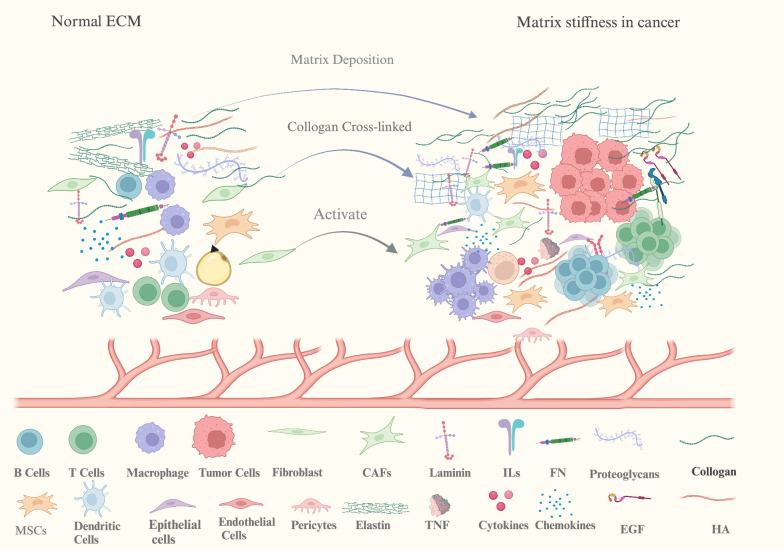
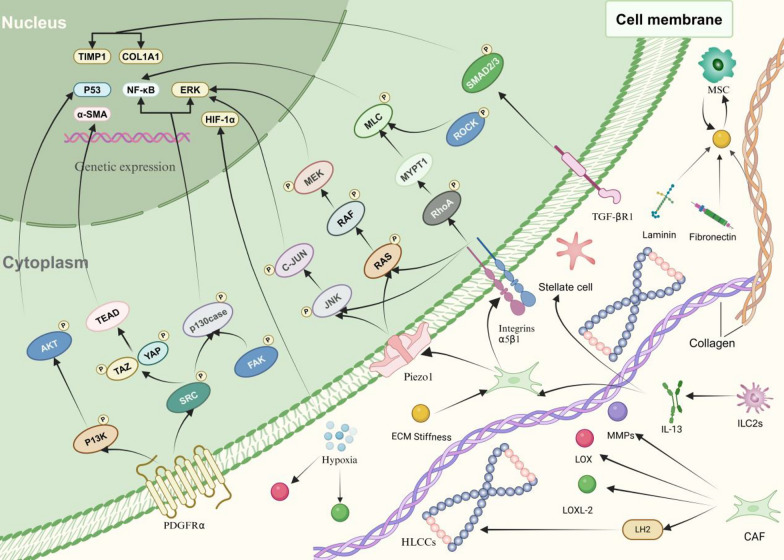
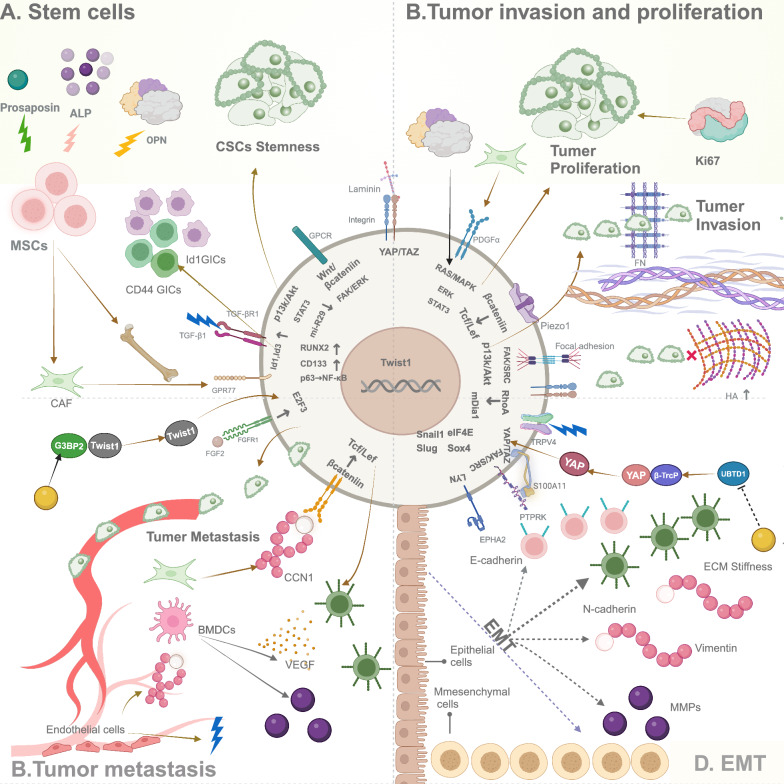
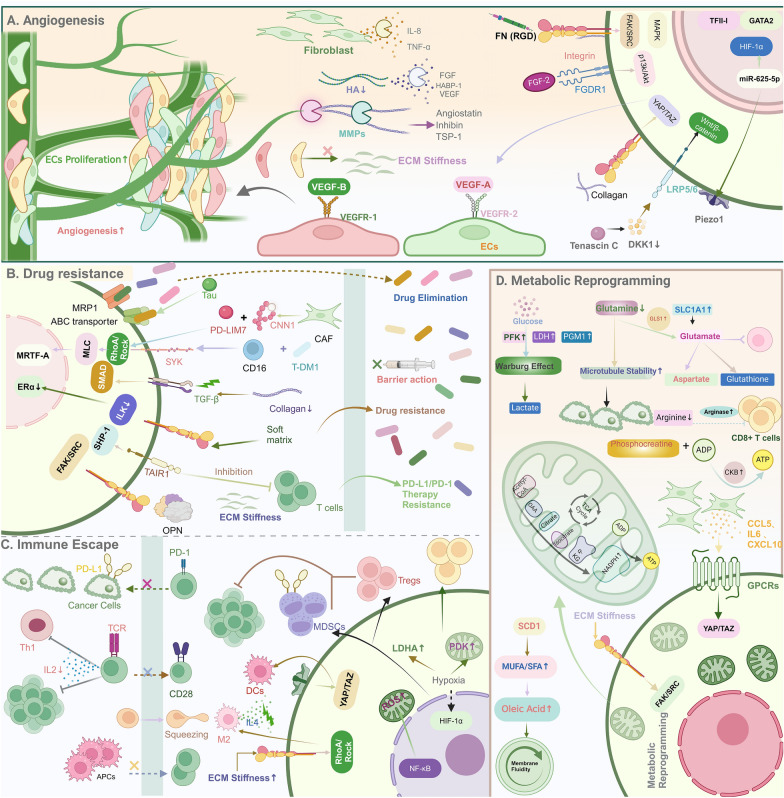
Verification
Claims the paper makes
The claims and statistics of this paper haven’t been checked yet.
Run the check — free, no account needed. It reads the open-access text and checks the sources it cites.
Claims other papers make about this one
Each is checked against this paper’s own text: does it say what the citing paper says it does?
The cited source says what the claim attributes to it.
In the citing paper
“However, beyond acting as a physical barrier, ECM stiffness also triggers mechanotransduction pathways that profoundly influence tumor cell behavior [91,92]. Mechanical cues generated by a stiffened matrix are sensed through integrin-based focal adhesions and transmitted via cytoskeletal tension to activate intracellular signaling cascades, including Yes-associated protein/Transcriptional coactiv”
From Modeling Tumor Microenvironment Complexity In Vitro: Spheroids as Physiologically Relevant Tumor Models and Strategies for Their Analysis (2025) · cites this paper as [92]
Self-check
Percentages, sums and reported differences re-computed from the paper’s own numbers.
The self-check needs the paper’s full text.
Citations
Cites
Molecular Mechanisms of Stress-Responsive Changes in Collagen and Elastin Networks in Skin
Aziz, J., Shezali, H., Radzi, Z., Yahya, N. A., Abu Kassim, N. H., Czernuszka, J., & Rahman, M. T. (2016) · Skin Pharmacology and Physiology · doi:10.1159/000447017 · Cited by 7,323
Remodelling the extracellular matrix in development and disease
Bonnans, C., Chou, J., & Werb, Z. (2014) · Nature Reviews Molecular Cell Biology · doi:10.1038/nrm3904 · Cited by 4,367 · cited 3×
“Indirect MMP inhibitors include blockade of signal transduction pathways (such as MAPK or ERK pathways [141]), and gene therapy (such as inhibition of miRNA expression [51]) to achieve the inhibition of MMP [142].”
Matrix Crosslinking Forces Tumor Progression by Enhancing Integrin Signaling
Levental, K. R., Yu, H., Kass, L., Lakins, J. N., Egeblad, M., Erler, J. T., Fong, S. F. T., Csiszar, K., Giaccia, A., Weninger, W., et al. (2009) · Cell · doi:10.1016/j.cell.2009.10.027 · Cited by 4,101 · cited 1×
“For example, breast cancer cells under high tension can enhance integrin-dependent mechanical signaling through the expression of FAK or p130cas, which are two integrin-adhesion focal proteins, and promote the progression of breast tumors [39].”
The evolving tumor microenvironment: From cancer initiation to metastatic outgrowth
de Visser, K. E., & Joyce, J. A. (2023) · Cancer Cell · doi:10.1016/j.ccell.2023.02.016 · Cited by 4,059
Tensional homeostasis and the malignant phenotype
Paszek, M. J., Zahir, N., Johnson, K. R., Lakins, J. N., Rozenberg, G. I., Gefen, A., Reinhart-King, C. A., Margulies, S. S., Dembo, M., Boettiger, D., et al. (2005) · Cancer Cell · doi:10.1016/j.ccr.2005.08.010 · Cited by 3,941 · cited 1×
“For example, breast cancer tissue (5–10 kPa) is stiffer than normal breast tissue (800 Pa) [9].”
A framework for advancing our understanding of cancer-associated fibroblasts
Sahai, E., Astsaturov, I., Cukierman, E., DeNardo, D. G., Egeblad, M., Evans, R. M., Fearon, D., Greten, F. R., Hingorani, S. R., Hunter, T., et al. (2020) · Nature Reviews Cancer · doi:10.1038/s41568-019-0238-1 · Cited by 3,863 · cited 2×
“CAFs are key components of the TME [128], which can enhance the ECM stiffness by the secretion of collagen and other fibrous macromolecules, as well as the degradation of this network through the release of proteolytic enzymes like MMPs, thereby improving the cellular mobility of the entire ECM…”
Metabolic reprogramming and cancer progression
Faubert, B., Solmonson, A., & DeBerardinis, R. J. (2020) · Science · doi:10.1126/science.aaw5473 · Cited by 2,740 · cited 1×
“In certain scenarios, altered metabolic activity resulting from reprogramming can be utilized for diagnosing, monitoring, and treating cancer [101].”
Özdemir, B. C., Pentcheva-Hoang, T., Carstens, J. L., Zheng, X., Wu, C.-C., Simpson, T. R., Laklai, H., Sugimoto, H., Kahlert, C., Novitskiy, S. V., et al. (2014) · Cancer Cell · doi:10.1016/j.ccr.2014.04.005 · Cited by 2,681 · cited 1×
“A low number of myofibroblasts in the tumor is also associated with reduced survival in PDAC patients [130].”
Concepts of extracellular matrix remodelling in tumour progression and metastasis
Winkler, J., Abisoye-Ogunniyan, A., Metcalf, K. J., & Werb, Z. (2020) · Nature Communications · doi:10.1038/s41467-020-18794-x · Cited by 2,296
The extracellular matrix modulates the hallmarks of cancer
Pickup, M. W., Mouw, J. K., & Weaver, V. M. (2014) · EMBO Reports · doi:10.15252/embr.201439246 · Cited by 2,098 · cited 3×
“The oncogene Ras promotes the ameboid migratory phenotype by stimulating Rho activity, whereas the tumor suppressor p53 reduces tumor cell migration by decreasing RhoA activity [41].”
Influential
Cited by
Sorted by citations
Items 201–269 of 269
Cancer Heterogeneity and Cancer Cell Plasticity: Molecular Mechanisms and Precision Therapy
Hu, H., Hao, Z. R., Li, L., Liu, H. B., Yang, C., & Wang, Z. (2026) · MedComm · doi:10.1002/mco2.70812
“Concomitantly, integrins enriched in pseudopodia (e.g., α v β 3 and α 2 β 1) initiate the FAK/Src signaling cascade and its downstream effectors, including MAPK/ERK and PI3K/AKT pathways, thereby facilitating tumor cell migration and enhancing cell survival [ 159 ].”
Mangani, S., Spanopoulos, K., Piperigkou, Z., & Karamanos, N. K. (2026) · FEBS Letters · doi:10.1002/1873-3468.70402
Substrate stiffness regulates HIF-1α signalling via β1-integrin/myosin-2/NF-κB axis
Urkiza, A. B., Cortés, E., Jin, C., & Lachowski, D. (2026) · Journal of Translational Medicine · doi:10.1186/s12967-026-08553-9
“Cancer-associated fibroblast (CAF)-rich tumour stroma and the tumour invasive fronts also correlate ECM and HIF-1α activity [46], where HIF-regulated collagen Bastida Urkiza et al. Journal of Translational Medicine (2026) 24:1241 deposition and LOX/LOXL upregulation is observed [47].”
Colorectal cancer liver metastases: mechanism and therapy
Liu, S., Ban, L.-X., Zhang, W., Sun, Y., Wang, K., Man, Y., & Zhang, Y. (2026) · Frontiers in Immunology · doi:10.3389/fimmu.2026.1861130
Rewiring cancer cell fate toward vasculogenic mimicry: from classical to unconventional processes
Méndez-Pérez, E. A., García‐Quiroz, J., Avila, E., Garcı́a-Becerra, R., & Dı́az, L. (2026) · Cancer and Metastasis Reviews · doi:10.1007/s10555-026-10356-9
“Besides TGF-β, IL-33, TNF-α, and PDGF have been shown to induce CAF proliferation, further promoting the synthesis and deposition of ECM components, while Twist1 and Zinc finger E-box binding homeobox 1 (ZEB1) upregulate LOX and LOX-Like 2 expression, favoring matrix stiffness [62].”
A modern review of uveal melanoma: molecular insights, clinical management, and emerging therapies
Dhabhai, B., Beura, A., Bhatankar, J., Imam, A., Sharma, N. K., Rana, A., Sharma, A., Maurya, P. K., Schmidt‐Wolf, I. G. H., Kumar, A., et al. (2026) · Melanoma Research · doi:10.1097/cmr.0000000000001124
Kader, A., Mangarova, D. B., Gödde, H., Ranner-Hafferl, M.-L. H. H., Brangsch, J., Heyl, J. L., Möckel, J., Reuter, F. C., Marchand, J., Mein, J., et al. (2026) · Investigative Radiology · doi:10.1097/rli.0000000000001302
How hypoxia and mechanics drive lung cancer progression
Kasturi, M., & Novak, C. M. (2026) · Acta Biomaterialia · doi:10.1016/j.actbio.2026.07.027
Tumor Plasticity and Microenvironmental Crosstalk as Drivers of Metastasis and Therapy Resistance
Dagar, G., Dagar, M., Gupta, A., Surendranath, A., Das, S. K., Rehmani, M. U., Tanwar, M., Mirza, S., Macha, M. A., Akil, A. S. A.-S., et al. (2026) · MedComm · doi:10.1002/mco2.70836
“…cell division cycles, this plasticity enables rapid, reversible adaptation through nongenetic mechanisms, allowing a small subset of cancer cells, typically comprising 0.1%–10% of the tumor population, to survive lethal drug concentrations and serve as a reservoir for tumor repopulation [ 88 ].”
InfluentialBeyond the traditional dish: Advanced 3D ex vivo culture platforms for tumor modelling
Strepi, K., Koppenol, R. F., Jonkers, J., & Houthuijzen, J. M. (2026) · Seminars in Cancer Biology · doi:10.1016/j.semcancer.2026.07.002 · Cited by 1
Matricellular Proteins in Bladder Cancer: Context-Dependent Roles in Tumor Promotion and Suppression
Akhmetkaliyev, A., García, J. H. G. F., Sonnenberg-Riethmacher, E., & Riethmacher, D. (2026) · International Journal of Molecular Sciences · doi:10.3390/ijms27156807
“Simultaneously, collagen crosslinking increases matrix stiffness, which in turn results in activation of integrins, focal adhesion, and YAP/TAZ signaling, further contributing to tumor progression [36,37].”
Bakir, M. A., Alkhatib, A. R., Helal, B., Masri, M. K. A., Dabaliz, A., & Mohammad, K. S. (2026) · Frontiers in Cell and Developmental Biology · doi:10.3389/fcell.2026.1894171
“…leading to an overestimation of effective drug exposure and a failure to capture penetration-limited resistance (Saraswathibhatla et al., 2023; Kalli et al., 2023; Jiang et al., 2024a; Feng X. et al., 2024; Micalet et al., 2023; Zhang and Zhang, 2025; Jiang et al., 2022; Hughes et al., 2021).”
Mazumder, S., Bhattacharya, D., Maity, S., Dutta, T., & Chatterjee, S. (2026) · Progress in molecular biology and translational science · doi:10.1016/bs.pmbts.2026.07.009
Beyond Structure: The Dynamic Role of the Extracellular Matrix Components in Immune Evasion
Maqbool, M., Surendranath, A., Baba, S. K., Jawwad, T., Elfaki, I., Mir, R., Kumar, R., Shahab Uddin, M. S., Haris, M., Macha, M. A., et al. (2026) · 癌症:英文版 · doi:10.34133/cancomm.0045
dECM bioinks for 3D bioprinted tumor models: Advances, challenges, and drug screening
Chen, Q., Zhou, R., Xu, Q., Li, Z., & Tao, J. (2026) · iScience · doi:10.1016/j.isci.2026.117085 · Cited by 1
“77 Studies have shown that neoplastic tissues generally possess a higher degree of rigidity relative to normal or adjacent non-cancerous tissues.”
Latif, R., & Nawaz, T. (2026) · Critical Reviews in Oncology/Hematology · doi:10.1016/j.critrevonc.2026.105529
García-García, J., Pérez, R. S., Nacht, A. S., Presman, D. M., Pecci, A., & Vicent, G. P. (2026) · NAR Cancer · doi:10.1093/narcan/zcag016
Drug resistance in breast cancer brain metastasis: mechanisms and therapeutic strategies
Sarker, P., & Rao, S. S. (2026) · Biochimica et Biophysica Acta (BBA) - Reviews on Cancer · doi:10.1016/j.bbcan.2026.189684
Paasch, D., Haake, K., Kan, C., Ulpiano, C., Nikolouli, E., Jang, M.-S., Klassen, M.-C., Epstein, M., Sugimura, R., & Lachmann, N. (2026) · Signal Transduction and Targeted Therapy · doi:10.1038/s41392-026-02907-x · Cited by 1
“220,221 TAM-derived osteopontin (SPP1) and CAF-secreted CXCL12 further promote fi brosis and recruit Tregs and MDSCs through the CXCR4 receptor.”
Caspase-8 as a candidate mediator associated with everolimus resistance in neuroendocrine tumors
Grassi, C., Bondi, M., Albanese, G., Zerbi, A., Uccella, S., Peverelli, E., Mantovani, G., Lavezzi, E., Marulli, G., Lania, A. G., et al. (2026) · Journal of Molecular Endocrinology · doi:10.1530/jme-25-0206
Chen, Y.-C., Bollu, V. S., Kheirabadi, S., LaPenna, K. B., Berg, A. S., He, P., Schell, T. D., Sheikhi, A., Tabdanov, E. D., & Robertson, G. P. (2026) · Proceedings of the National Academy of Sciences · doi:10.1073/pnas.2602594123 · Cited by 3
Biological basis for the efficient synthesis of cell-cultured fish meat
Zheng, H., Zhou, X., Zhai, R., Wei, Y., Yan, X., Guo, H., Mou, H., Wang, Y., Li, N., Li, Z., et al. (2026) · Marine Life Science & Technology · doi:10.1007/s42995-026-00408-y
“SFM must be fortified with essential nutrients, antioxidants, and metabolic intermediates to mimic the physiological environment and counteract the oxidative stress inherent in cell culture systems.”
InfluentialZou, J., Cai, Y., Sun, M., Zhang, L., Zhao, C., Wu, X., Liu, Y., Chen, J., Liang, Y., Zhao, X., et al. (2026) · Biomedicines · doi:10.3390/biomedicines14091900
“Among these components, cancer-associated fibroblasts have been increasingly recognized as heterogeneous stromal cells that can participate in extracellular matrix remodeling [12,13], wound-response programs [12,14], immune-cell recruitment [15,16] and immune modulation [17].”
Emerging insights into the pathophysiology of pituitary tumour microenvironment
Fuentes-Fayos, A. C., Gil-Duque, I., la Rosa-Herencia, A. S. D., Sarmento‐Cabral, A., Flores‐Martínez, Á., Cano, D. A., Martínez‐Fuentes, A. J., & Luque, R. M. (2026) · Endocrine Related Cancer · doi:10.1530/erc-26-0262
Isaac, J. A., & Ozhe, S. I. (2026) · Genome Instability & Disease · doi:10.1007/s42764-026-00189-9
“This loss of spatial segregation links mechanical instability of the lamina to increased genomic damage and innate immune activation (Zhang & Zhang 2025).”
Cheng, D., Yang, G., Kong, R., Liu, Q., Li, L., Luan, Y., & Shu, Q. (2026) · International Journal of Molecular Sciences · doi:10.3390/ijms27177690
Advances in understanding the tumor microenvironment of neuroendocrine prostate cancer
Yao, N., Yang, Q., Chang, P., Wang, Y., Li, H., Wu, R., Zheng, J., & Fu, W. (2026) · Frontiers in Oncology · doi:10.3389/fonc.2026.1928713
“CAF-derived matrix and stiffness-dependent signaling are supported in prostate-cancer and general tumor models (Levels C/ D), while MMP perturbation provides NEPC-model evidence (Level B) (18, 41, 49, 81, 105, 109).”
Cancer therapy based on extracellular matrix
Gaikwad, S., Patil, A., Jha, A., & Sharma, A. (2026) · Elsevier eBooks · doi:10.1016/b978-0-443-44185-1.00013-6
Nano-Metal Hydrogen Therapy Targeting Immune Cells Drives Synergistic Anti-Tumor Effects
Ding, Y., Ma, M., Wang, J., Zhang, Z., Wu, J., Zhou, L., Cao, X., & Liu, L. (2026) · Molecules · doi:10.3390/molecules31173058
“…consists of the dense extracellular matrix (ECM), the physical barrier caused by high interstitial fluid pressure, and the biochemical barrier characterized by hypoxia and acidification, all of which severely inhibit the infiltration and activity of cytotoxic T cells and NK cells [57,58].”
Decker, L., Olisov, D., Schleußner, N., Wiethoff, H., Schmidt, T., Nienhueser, H., Pausch, T. M., Korbel, J. O., & Diz-Muñoz, A. (2026) · bioRxiv (Cold Spring Harbor Laboratory) · doi:10.64898/2026.08.29.747727
Bedir, M. E., Uğuz, A. C., & Ünal, M. (2026) · Cancer and Metastasis Reviews · doi:10.1007/s10555-026-10375-6
“However, the liver is susceptible to fibrotic remodeling, and in pathological states, or during the formation of a pre-metastatic niche driven by tumor-derived exosomes, hepatic stiffness can increase to 8 to 12 kPa [3, 6, 53].”
InfluentialHyperbaric Oxygen Therapy in Cancer: Friend, Foe, or Context-Dependent Modulator?
Demircan, T., Ergözen, S., Yıldırım, B., Ünsal, H. İ., & Bılır, A. (2026) · Biology · doi:10.3390/biology15171512
“Hypoxic tumors frequently exhibit increased collagen deposition, matrix stiffening, lysyl oxidase activity, elevated interstitial pressure, and impaired perfusion, thereby creating physical and biochemical barriers to immune-cell trafficking and therapeutic penetration [17].”
Zhou, J., Zhang, Y., Yu, J., Fu, Y., Zhang, J., & Gu, Z. (2026) · Journal of Materials Chemistry B · doi:10.1039/d6tb01472k
YILDIRIM, S., Gómez-Salgado, J. C., Khoury-Moreno, L. E., & Özden, Ö. (2026) · Current Issues in Molecular Biology · doi:10.3390/cimb48090914
“This mechanical change is detected by mechanosensors, such as integrins and Piezo1, on the cell membrane, activating signaling pathways including FAK/Src, Rho/ROCK, and YAP/TAZ [86].”
Myeloid-derived suppressor cells in cancer: biology, regulatory networks and theranostic prospects
Deng, R., Bai, X., Yang, J., Ye, W., Liu, Q., Xing, Y., Yao, Y., He, X., Lü, A., & Liu, Y. (2026) · Signal Transduction and Targeted Therapy · doi:10.1038/s41392-026-02998-6
“255 MDSCs can secrete enzymes that hydrolyze these proteins, the most critical of which are matrix metalloproteinase-2 (MMP-2) and MMP-9.”
Wang, S., Liu, X., Liu, Y., Li, X., Lu, F., Chen, X., Huang, H., & Li, H. (2026) · Academic Radiology · doi:10.1016/j.acra.2026.08.093
From pumps to networks: ABC transporters in leukemia resistance and microenvironmental adaptation
Jyotirmayee, Kumar, V., & Verma, M. (2026) · Medical Oncology · doi:10.1007/s12032-026-03400-9
“…model of ABC transporter-mediated drug resistance, in which transporters function not as isolated drug efflux pumps but as components of interconnected regulatory systems integrating stress-responsive transcriptional programs, stromal kinase signaling, and metabolic adaptation [19, 25].”
Biomarker-Driven Strategies for Stromal Reprogramming in Pancreatic Ductal Adenocarcinoma
Luca, M. D., Balestra, F., Panzetta, G., Giannelli, G., & Scavo, M. P. (2026) · Cells · doi:10.3390/cells15181637
Bülbül, M. V., & Demircan, T. (2026) · Organoids · doi:10.3390/organoids5030030
Yin, X., Jiao, A., Niu, W., & Li, L. (2026) · International Immunopharmacology · doi:10.1016/j.intimp.2026.117375
Ouardi, M. E., Vieco-Martí, I., Granados-Aparici, S., Noguera, I., Navarro, S., & Noguera, R. (2026) · Translational Oncology · doi:10.1016/j.tranon.2026.103030
“Softer hydrogels produced larger xenografts, whereas stiffer matrices constrained tumor expansion, in line with previous reports showing that ECM stiffness modulates tumor growth and cellular organization [58,59].”
Zhou, D., Wang, D., Zhang, S., Li, M., Liu, H., Li, M., & Chen, Y. (2026) · Journal of Drug Delivery Science and Technology · doi:10.1016/j.jddst.2026.108939
LOXL4: a key regulatory factor at the intersection of fibrosis and tumor progression
Tian, Y., & Li, Q. (2026) · Human Cell · doi:10.1007/s13577-026-01452-7
“ECM stiffness is a critical factor influencing immune cell infiltration and tumor progression [63, 67, 68].”
Zhao, B., Lu, T., & Li, Y. (2026) · Research Square · doi:10.21203/rs.3.rs-9765859/v1
Gu, Y., Qu, P., Li, X., Shi, J., Zhou, M., Bai, Z., Li, G., Cheng, P., Li, X., Chen, F., et al. (2026) · Critical Reviews in Oncology/Hematology · doi:10.1016/j.critrevonc.2026.105612
Zhang, X., Liu, X., Huang, K., Jin, B., Ma, N., Liu, H., Jiang, H., & Wang, X. (2026) · Bioactive Materials · doi:10.1016/j.bioactmat.2026.09.021
Zhu, Y., Qiao, Z., Chen, Z., Wu, Y., Xiao, L., Lin, F., Lin, X., & Wang, X. (2026) · Cancer Biology & Therapy · doi:10.1080/15384047.2026.2725344
“39,42,43 44-46 Given the established role of TPM2 in actin filament organization and cytoskeletal regulation, 24 our finding that TPM2 depletion simultaneously reduced ECM/EMT-related programs and Notch activity is consistent with a model in which TPM2-associated cytoskeletal remodeling converges…”
Emon, B., Kashefi, A., & Saif, M. T. A. (2026) · bioRxiv (Cold Spring Harbor Laboratory) · doi:10.64898/2026.09.19.752881
“The These dynamics are relevant to stromal-normalization strategies targeting ROCK or actomyosin activity [79,80].”
Lee, J., Lee, S. H., Ahn, M., Lee, D., Yoon, S., Oh, S., Cho, D.-W., Kim, Y., & Kim, B. S. (2026) · Biomaterials · doi:10.1016/j.biomaterials.2026.124650
Exploring the key genes of colorectal “adenoma-cancer” based on graph transformer
Yuan, Y., Liu, Y., Fan, J., & Ren, Z. (2026) · PLoS ONE · doi:10.1371/journal.pone.0359785
“Excessive ECM deposition and cross linking can form physical barriers that limit drug penetration and promote epithelial mesenchymal transition (EMT) in tumor cells, whereas dysregulated collagen metabolism further exacerbates fibrosis and immunosuppression within the tumor microenvironment [21–23].”
Preclinical screening of liposome–tumor interactions using breast cancer patient biopsies
GIACOMO, S., & Kastellorizios, M. (2026) · International Journal of Pharmaceutics · doi:10.1016/j.ijpharm.2026.127514
Fibromodulin: from matrisome architecture to master regulator of cellular fate
Sharma, P., & Sarangi, P. P. (2026) · Matrix Biology · doi:10.1016/j.matbio.2026.102056
Gan, L., Liu, Z., Cao, L., Meng, X., Liu, X., Wang, X., & He, Y. (2026) · Experimental Hematology and Oncology · doi:10.1186/s40164-026-00837-6
“Through extracellular matrix (ECM) remodeling [13, 14] and extensive crosstalk with tumor and immune cells [15], CAFs shape the immune landscape and contribute to the establishment of distinct immune phenotypes.”
Lu, Z., Sheng, R., Backman, L. J., Liu, C., Zheng, D., Zhang, W., & Chen, J. (2026) · BMEMat · doi:10.1002/bmm2.70139
Prasad, P., Amer, A., Shamsi, A., metgud, R., & Dinislam, K. (2026) · Journal of Taibah University Medical Sciences · doi:10.1016/j.jtumed.2026.09.008
Jeon, J., Baek, H. S., Park, K., Park, M., Heo, N. H., Cheon, S., Kim, G., & Kim, S. (2026) · International Journal of Molecular Sciences · doi:10.3390/ijms27209134
“Additionally, tissue stiffness alters mechanotransduction pathways in tumor and immune cells, thereby influencing cellular proliferation, migration, and immune function [223,231,232].”
InfluentialNiches in cancer: from primary tumors to metastatic disease
Chao, Z., Wang, X., Wang, Z., Wu, K., & Li, L. (2026) · Journal of Hematology & Oncology · doi:10.1186/s13045-026-01858-8
“Extracellular-matrix remodeling is a major source of these physical changes [121].”
Tissue coordination in ageing and disease
Cleal, K. (2026) · Ageing Research Reviews · doi:10.1016/j.arr.2026.103422
Zaman, M., NAZARE, T., Sarkar, A., & Mirzapourshafiyi, F. (2026) · Biomaterials · doi:10.1016/j.biomaterials.2026.124696
Wang, T., & Xiao, Q. (2026) · Frontiers in Cell and Developmental Biology · doi:10.3389/fcell.2026.1936991
“This is consistent with recently published studies demonstrating a role for ECM stiffness in immune exclusion (Yu et al., 2024; Zhang and Zhang, 2025).”
Heterogeneity and drug resistance in breast cancer
Chakrabarty, S., Dash, B., -, D. P., & Swain, S. S. (2026) · Elsevier eBooks · doi:10.1016/b978-0-443-49074-3.00004-2
Nested Mechanical Architecture in Archival Neuroblastic Tumors Revealed by Atomic Force Microscopy
Fantini, N., Gaggero, G., Cafferata, B., Orlando, F., Palo, F., Avanzini, S., Sorrentino, S., Conte, M., Raiteri, R., & Vellone, V. G. (2026) · Life · doi:10.3390/life16111779
Zhang, W., Chen, H., Fan, J., He, Y., & Liu, J. (2026) · Frontiers in Immunology · doi:10.3389/fimmu.2026.1991810
Galiyeva, L., Grušanović, J., Netušil, J., Melichar, V., Klímová, Z., Kolář, M., Plzák, J., Šáchová, J., Kalfeřt, D., & Vomastek, T. (2026) · Biochemical Pharmacology · doi:10.1016/j.bcp.2026.118568
Zhu, J., Zhong, Y., Yan, S., & Zeng, X. (2026) · Bioactive Materials · doi:10.1016/j.bioactmat.2026.09.025
Saeed, A. F., Ashraf, M. N., & Iqbal, M. Z. (2026) · Frontiers in Immunology · doi:10.3389/fimmu.2026.1920004
Zhang, T., Tan, C., Sun, H., Gu, W., Wang, W., Xu, M., & Sheng, W. (2026) · Experimental Hematology and Oncology · doi:10.1186/s40164-026-00850-9
“HER2 activates matrix metalloproteinases (MMPs), destroying the extracellular matrix barrier [21, 22].”
Lee, S.-Y., Yoon, S. H., Yoon, W., Kim, C.-Y., & Cho, J. (2026) · Molecular and Cellular Biochemistry · doi:10.1007/s11010-026-05786-6
Li, M., Jin, L., Xue, G., Chen, J., Benariba, M. A., Wang, V. Y., Teng, G., & Xu, M. D. (2026) · Advanced ultrasound in diagnosis and therapy · doi:10.26599/audt.2026.260041
Metadata
- Authors
- Zhang, M., & Zhang, B.
- Affiliations
- China Three Gorges University (CN)
- Corresponding author
- Zhang, Bin
- Venue
- Experimental Hematology & Oncology
- Published
- 2025-04-10
- Volume
- 14
- Issue
- 1
- Pages
- 54-54
- ISSN
- 2162-3619 (ISSN-L)
- PMC
- PMC11984264
- OpenAlex
- W4409339209
- Cited by
- 269
- References
- 205
- Citations by year
- 2026: 199 · 2025: 70
- FWCI
- 32.05
- Type
- journal article
- Language
- en
- Open access
- gold
- doi.org
- Locations
- Experimental Hematology and Oncology (publishedVersion, cc-by)
- PubMed Central (publishedVersion, cc-by)
- PubMed (publishedVersion)
- DOAJ (DOAJ: Directory of Open Access Journals) (submittedVersion, cc-by-sa)
- Topics
- Life Sciences › Biochemistry, Genetics and Molecular Biology › Cell Biology › Cellular Mechanics and Interactions
- Health Sciences › Medicine › Oncology › Cancer Cells and Metastasis
- Life Sciences › Biochemistry, Genetics and Molecular Biology › Molecular Biology › TGF-β signaling in diseases
- Keywords
- extracellular matrix stiffness, tumor microenvironment, tumor progression, mechanotransduction, metastasis, drug resistance, angiogenesis, epithelial-mesenchymal transition, immune evasion, cancer stemness, metabolic reprogramming, genome stability
About these checks
Registry, retraction, Cites and statistics results are computed, not judged, with one exception: a printed reference that no index lists is read once by a model before it counts as a citation error. Claims are extracted by a model and kept only when their quote appears verbatim in the text; each cited source is then checked, with a model’s help, for whether it says what the claim relies on. Those verdicts can be wrong — read the claim’s quote and the cited source before relying on one.
Statistics and arithmetic are recomputed, not judged.
Confidence bands are shown only for fields calibrated on our annotated test set. None is calibrated yet, so no band is shown.
What counts as a claim ›How we measure confidence ›How we check this ›
Are you an author, or do you see a problem with this page? Request a review
