

Structure and function of the healthy pre-adolescent pediatric gut microbiome
Open accessThe DOI matches its Crossref record; 69 of the 70 references it cites were found in a registry or an index.
Abstract
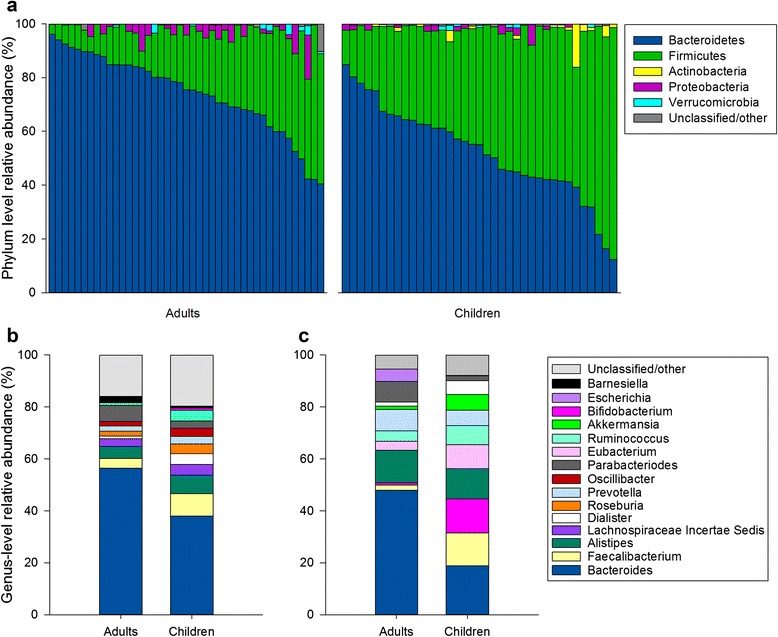
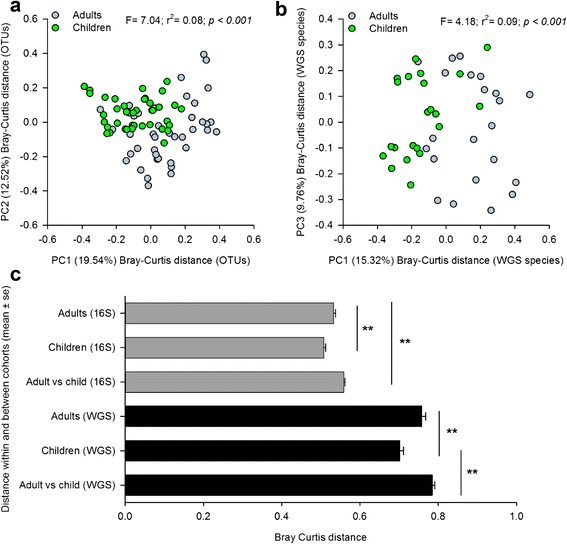
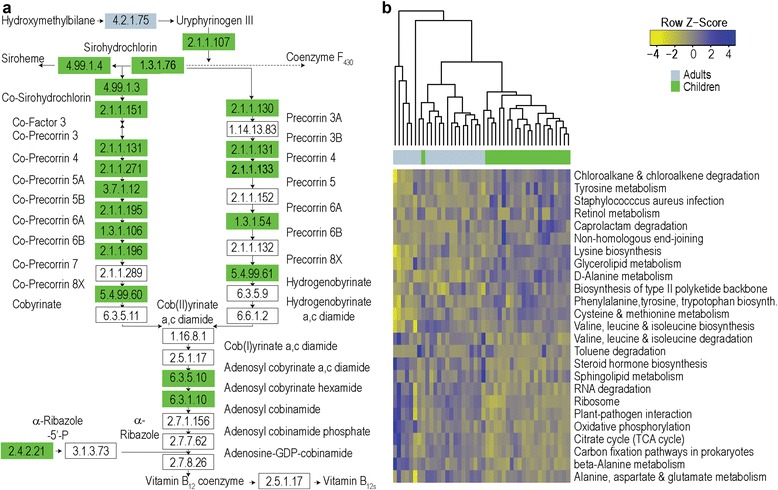
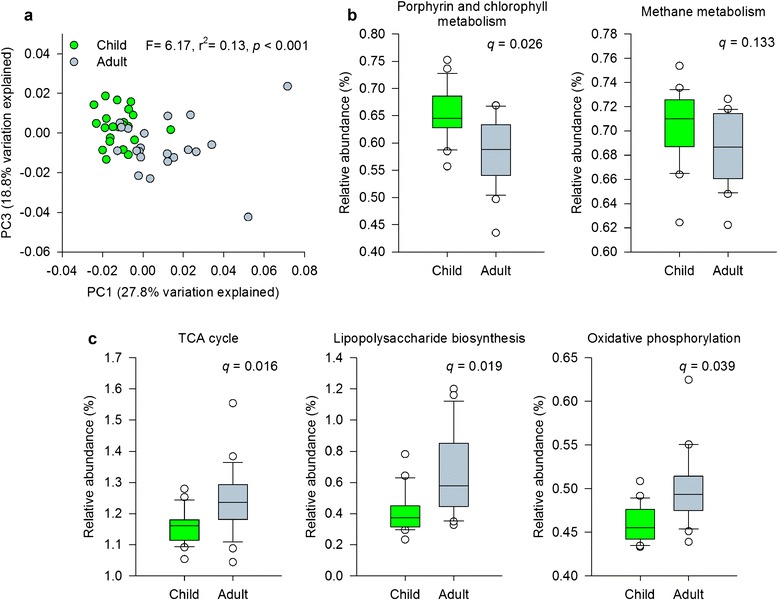
BACKGROUND: The gut microbiome influences myriad host functions, including nutrient acquisition, immune modulation, brain development, and behavior. Although human gut microbiota are recognized to change as we age, information regarding the structure and function of the gut microbiome during childhood is limited. Using 16S rRNA gene and shotgun metagenomic sequencing, we characterized the structure, function, and variation of the healthy pediatric gut microbiome in a cohort of school-aged, pre-adolescent children (ages 7-12 years). We compared the healthy pediatric gut microbiome with that of healthy adults previously recruited from the same region (Houston, TX, USA). RESULTS: Although healthy children and adults harbored similar numbers of taxa and functional genes, their composition and functional potential differed significantly. Children were enriched in Bifidobacterium spp., Faecalibacterium spp., and members of the Lachnospiraceae, while adults harbored greater abundances of Bacteroides spp. From a functional perspective, significant differences were detected with respect to the relative abundances of genes involved in vitamin synthesis, amino acid degradation, oxidative phosphorylation, and triggering mucosal inflammation. Children's gut communities were enriched in functions which may support ongoing development, while adult communities were enriched in functions associated with inflammation, obesity, and increased risk of adiposity. CONCLUSIONS: Previous studies suggest that the human gut microbiome is relatively stable and adult-like after the first 1 to 3 years of life. Our results suggest that the healthy pediatric gut microbiome harbors compositional and functional qualities that differ from those of healthy adults and that the gut microbiome may undergo a more prolonged development than previously suspected.
Overview
The claims and statistics of this paper haven’t been checked yet.
Free: it reads the open-access text and checks the first 5 claims that cite a source we can check. Create a free account to check every claim.
Integrity signals
Registry
Cites
Statistics
Figures
Verification
Claims the paper makes
The claims and statistics of this paper haven’t been checked yet.
Free: it reads the open-access text and checks the first 5 claims that cite a source we can check. Create a free account to check every claim.
Claims other papers make about this one
Each is checked against this paper’s own text: does it say what the citing paper says it does?
The source backs part of the claim, not all of it — or backs it for a different population, condition or comparison.
In the citing paper
“The microbial biodiversity of six to twelve year olds, for example, has been shown to be greater than those of healthy adults [84,85].”
From Effect of Diet on the Gut Microbiota: Rethinking Intervention Duration (2019) · cites this paper as [85]
Experimental — accuracy not yet measuredThe cited source says what the claim attributes to it.
In the citing paper
“The improved understanding of factors that shape the gut microbiome allow us to better identify confounding effects in human studies, including physiological development through childhood and adolescence to adulthood30, 128, 11, and at the same time, appreciate the adaptation of this resilient microbial ecosystem to short- and long-term perturbations in host environment.”
From The gut Microbiome in adult and pediatric functional gastrointestinal disorders (2019) · cites this paper as [11]
The cited source says what the claim attributes to it.
In the citing paper
“A more stable and complex, adult-like microbiota starts to emerge as early as one to three years of age, although this development may continue as late as pre-adolescence (85, 86).”
From Signalling cognition: The gut microbiota and hypothalamic-pituitary-adrenal axis (2023) · cites this paper as [86]
The cited source says what the claim attributes to it.
In the citing paper
“The composition and function of the microbiota in healthy children (measured at 7-12 years of age) remains significantly different from the healthy adult microbiota (Hollister et al., 2015).”
From The Microbiota-Gut-Brain Axis (2019) · cites this paper as Hollister et al., 2015
The cited source says what the claim attributes to it.
In the citing paper
“In particular, the gut microbiota of children is functionally enriched in pathways supporting ongoing development (e.g., genes involved in vitamin synthesis and de novo folate synthesis, anti-inflammatory pathways; Hollister et al., 2015).”
From The Microbiota-Gut-Brain Axis (2019) · cites this paper as Hollister et al., 2015
1 more claim about this paper
Create a free account to see every claim other papers make about this one.
Self-check
Percentages, sums and reported differences re-computed from the paper’s own numbers.
The self-check needs the paper’s full text.
Citations
Cites
Fast gapped-read alignment with Bowtie 2
Langmead, B., & Salzberg, S. L. (2012) · Nature Methods · doi:10.1038/nmeth.1923 · Cited by 56,400 · cited 1×
“Bowtie2 [53] was used to map sequence reads to a reference copy of the human genome”
MethodQIIME allows analysis of high-throughput community sequencing data
Caporaso, J. G., Kuczynski, J., Stombaugh, J., Bittinger, K., Bushman, F. D., Costello, E. K., Fierer, N., Peña, A. G., Goodrich, J. K., Gordon, J. I., et al. (2010) · Nature Methods · doi:10.1038/nmeth.f.303 · Cited by 34,887 · cited 1×
“0) [49].”
vegan: Community Ecology Package
Oksanen, J., Simpson, G. L., Blanchet, F. G., Kindt, R., Legendre, P., Minchin, P. R., O'Hara, R. B., Solymos, P., Stevens, M. H. H., Szoecs, E., et al. (2001) · CRAN: Contributed Packages · doi:10.32614/cran.package.vegan · Cited by 22,615
Search and clustering orders of magnitude faster than BLAST
Edgar, R. C. (2010) · Bioinformatics · doi:10.1093/bioinformatics/btq461 · Cited by 20,826
Naïve Bayesian Classifier for Rapid Assignment of rRNA Sequences into the New Bacterial Taxonomy
Wang, Q., Garrity, G. M., Tiedje, J. M., & Cole, J. R. (2007) · Applied and Environmental Microbiology · doi:10.1128/aem.00062-07 · Cited by 19,885 · cited 1×
“Classifier [52] with RDP training set 9 and confidence scores ≥50 %.”
Classification and Regression by randomForest
Liaw, A. I., & Wiener, M. C. (2007) · Cited by 18,594
An obesity-associated gut microbiome with increased capacity for energy harvest
Turnbaugh, P. J., Ley, R. E., Mahowald, M. A., Magrini, V., Mardis, E. R., & Gordon, J. I. (2006) · Nature · doi:10.1038/nature05414 · Cited by 12,444 · cited 3×
“ciated with leanness and other desirable health traits [26, 28], some of its members, including strains of Bacteroides fragilis, Bacteroides vulgatus, and Bacteroides”
BackgroundStructure, function and diversity of the healthy human microbiome
The Human Microbiome Project Consortium (2012) · Nature · doi:10.1038/nature11234 · Cited by 11,726
Cd-hit: a fast program for clustering and comparing large sets of protein or nucleotide sequences
Li, W., & Godzik, A. (2006) · Bioinformatics · doi:10.1093/bioinformatics/btl158 · Cited by 11,410 · cited 2×
“OTUs were clustered using CD-Hit [50], and reads were screened for chimeras using ChimeraSlayer [51].”
MethodVelvet: Algorithms for de novo short read assembly using de Bruijn graphs
Zerbino, D. R., & Birney, E. (2008) · Genome Research · doi:10.1101/gr.074492.107 · Cited by 9,491 · cited 1×
“The velvet assembler [56] (veveth, hash size 45) was used to construct contigs.”
Method
Cited by
Items 301–400 of 431
Chen, Y., Tilves, C., Bohn, B., Doyon, M., Bouchard, L., Perron, P., Guérin, R., Massé, É., Hivert, M., & Mueller, N. T. (2025) · Pediatric Obesity · doi:10.1111/ijpo.70007 · Cited by 4
Hofford, R. S., Sens, J. P., Shipman, A. L., Kimble, V. M., Coric, C., Meckel, K. R., & Kiraly, D. D. (2025) · Brain Behavior and Immunity · doi:10.1016/j.bbi.2025.07.005 · Cited by 4
Ashton, P., Mageiros, L., Meiring, J., Chirambo, A. C., Khanam, F., Dongol, S., Banda, H., Karkey, A., Preciado‐Llanes, L., Thomaides-Brears, H. B., et al. (2025) · Microbiome · doi:10.1186/s40168-025-02125-7 · Cited by 4
“This discrepancy may introduce bias, as age and sex influence the composition and function of the microbiome, and the microbiota may not reach a mature state until adolescence [29, 67].”
Paula, M. B. D., Campbell, C. S. G., Alves, A. F. C., Filho, E. S. R., Ferreira, M. I. M., Marçal, F. A., Souza, A. F. S., & Cardoso, G. R. (2021) · Brazilian Journal of Health Review · doi:10.34119/bjhrv4n6-210 · Cited by 6
Gut–liver axis and the impact of probiotics on neonatal jaundice symptoms: a review
Milani, P. G., Nazari, A., Soleimani, A. A., & Soleimani, R. A. (2023) · Gastrointestinal Nursing · doi:10.12968/gasn.2023.21.sup6.s10 · Cited by 4
Carvalho, R. D. D. O., Carmo, F. L. R. D., da Silva, S. H., Cordeiro, B. F., Vaz, A. B. M., Gimenez, E. G. T., Goulart, L., Goés‐Neto, A., Loir, Y. L., Jan, G., et al. (2018) · InTech eBooks · doi:10.5772/intechopen.72031 · Cited by 5
Human microbiome diversity: implications in health, disease, and applications
Mboto, C. I., Edet, U. O., Mbim, E. N., Zenoh, D. A., Umego, C., Odidi, F. S., Tarh, J. E., & Upula, S. A. (2018) · World News of Natural Sciences · doi:10.5281/zenodo.19123852 · Cited by 6
Microbiota intestinal y obesidad en la infancia
Guillot, C. C. (2020) · Revista cubana de pediatría · Cited by 8
Kumavath, R. N. (2018) · InTech eBooks · doi:10.5772/intechopen.68370 · Cited by 4
Gut Microbiome Dysbiosis as a Potential Risk Factor for Idiopathic Toe-Walking in Children: A Review
Kononova, S., Kashparov, M., Xue, W., Бобкова, Н. В., Leonov, S. V., & Zagorodny, N. (2023) · International Journal of Molecular Sciences · doi:10.3390/ijms241713204 · Cited by 3
Per- and polyfluoroalkyl substances and the gut microbiota in infants: A scoping review
Olsen, I. A., Eggesbø, M. Å., Trivedi, U., & Timmermann, C. A. G. (2025) · Environmental Research · doi:10.1016/j.envres.2025.122937 · Cited by 5
Zou, B., Huo, Q., Zhou, X., Lv, Y., Li, G., Fu, G., Shen, H., & Shu, S. (2025) · Current Research in Microbial Sciences · doi:10.1016/j.crmicr.2025.100512 · Cited by 6
“…that the period surrounding puberty is a pivotal phase for achieving a relative equilibrium between diversity and stability in the microbiota, representing a critical juncture in the maturation of community ecology and the maintenance of homeostasis (Hollister et al., 2015; Agans et al., 2011).”
Rey-Mariño, A., Ruiz‐Ruiz, S., Jiménez‐Hernández, N., Pons, X., Artacho, A., Codoñer‐Franch, P., & Francino, M. P. (2026) · Frontiers in Microbiology · doi:10.3389/fmicb.2026.1768977 · Cited by 4
The Intestinal Microbiome and Childhood Obesity
McCann, J. R., Rawls, J. F., Seed, P. C., & Armstrong, S. (2017) · Current Pediatrics Reports · doi:10.1007/s40124-017-0140-9 · Cited by 4
Gut Microbiota of Young Children Living in Four Brazilian Cities
Chew, C. W. Y., de Barros, K. V., Weffort, V. R. S., Maranhão, H. D. S., Laranjeira, M., Knol, J., Roeselers, G., & de Morais, M. B. (2020) · Frontiers in Pediatrics · doi:10.3389/fped.2020.573815 · Cited by 4
Evolution of a Pathogenic Microbiome
Wong, P. Y., Yip, C., Lemberg, D. A., Day, A. S., & Leach, S. T. (2023) · Journal of Clinical Medicine · doi:10.3390/jcm12227184 · Cited by 4
Fiber and the gut microbiome and its impact on inflammation
Duman, H., & Karav, S. (2024) · Elsevier eBooks · doi:10.1016/b978-0-443-18979-1.00004-6 · Cited by 5
The Promise of Personalized Medicine
Stoll, M. L. (2018) · Springer eBooks · doi:10.1007/978-3-319-79026-8_35 · Cited by 3
Tvorogova, T. M., & Korniyenko, Y. A. (2020) · Effective Pharmacotherapy · doi:10.33978/2307-3586-2020-16-10-6-11 · Cited by 3
“у детей характеризуется противовоспалительным составом, у взрослых – провоспалительным, предрасполагающим к ожирению и старению [8, 9].”
Massara, P., Spiegel-Feld, C., Hamilton, J. K., Maguire, J. L., Birken, C. S., Bandsma, R., & Comelli, E. M. (2022) · BMJ Open · doi:10.1136/bmjopen-2021-057989 · Cited by 3
Sisk-Hackworth, L., Akhavan, S. R., Krutkin, D. D., Kelley, S. T., & Thackray, V. G. (2024) · bioRxiv (Cold Spring Harbor Laboratory) · doi:10.1101/2024.07.01.601610 · Cited by 3
Colorectal Diseases and Gut Microbiome
Kim, N. (2024) · Springer eBooks · doi:10.1007/978-981-97-0130-8_6 · Cited by 4
Omnigene-Guttm ensures fecal microbiome stability in the pediatric population
Hoogendijk, R., van den Broek, T. J. M., Lee, H.-J., Mueller, S., Kline, C., Bianco, J. I., Top, J., de Zoete, M. R., Kester, L. A., Calkoen, F., et al. (2024) · AMB Express · doi:10.1186/s13568-024-01798-x · Cited by 2
Jagadeesan, G., Das, T. K., Mendoza, J. M., Alrousan, G., Blasco-Conesa, M. P., Thangaraj, P., & Ganesh, B. P. (2025) · International Journal of Molecular Sciences · doi:10.3390/ijms26073140 · Cited by 3
“The UniFrac distance is a metric that evaluates the branch length shared by microbiota under different treatment conditions when mapped onto a common phylogenetic tree [67,68].”
Post-Surgical Gut Microbiota Alterations in Pediatric Patients with Intestinal Disorders
Vaou, N., Zavras, N. J., Saldari, C., Voidarou, C. C., Vrioni, G., Tsakris, A., & Vaos, G. C. (2026) · Journal of Clinical Medicine · doi:10.3390/jcm15020789 · Cited by 4
“Furthermore, the pediatric GM is functionally primed to support host growth and development rather than the intense inflammatory regulation and tissue repair required after surgical trauma [36].”
Ren, X., Ma, J., Zhao, Y., Yang, M., Li, Y., Song, W., & Wang, N. (2026) · Ageing Research Reviews · doi:10.1016/j.arr.2026.103269 · Cited by 2
Sex differences in the gut microbiome and related metabolites: role in cardiometabolic disease
Wang, Y., Cheng, E., & Peters, B. A. (2026) · Gut Microbes · doi:10.1080/19490976.2026.2721752 · Cited by 2
Reveles, K. R., Young, E. H., Zeidan, A. R., & Dong, Q. (2021) · Elsevier eBooks · doi:10.1016/b978-0-12-815962-0.00017-2 · Cited by 2
Ulaş, M., Hussey, S., Broderick, A., Fitzpatrick, E., Dunne, C. M., Cooper, S., Dominik, A., & Bourke, B. (2024) · Pathogens · doi:10.3390/pathogens13121102 · Cited by 2
Cui, M., Cheng, Q., Wang, H., Mei, P., Wang, Q., & Lu, L. (2025) · Current Psychology · doi:10.1007/s12144-025-07428-4 · Cited by 2
“The results also found that the contents of Proteobacteria and Verrucomicrobia were increased after the intervention, both of which play an important role in human phylogeny, organism ecology, gut health and immune system regulation (Hollister et al., 2015).”
The Microbiome in Neurogastroenterology
Preidis, G. A., Chumpitazi, B. P., & Shulman, R. J. (2016) · Springer eBooks · doi:10.1007/978-3-319-43268-7_5 · Cited by 2
Self-citationRespiratory Colonization and Short-Term Temporal Changes in the Urinary Metabolome of Children
Ambroggio, L., Florin, T. A., Williamson, K. M., Pfefferman, C., Wagner, B. D., Yeomans, L., Kim, J. H., Sucharew, H. J., Macaluso, M., Ruddy, R. M., et al. (2021) · Metabolites · doi:10.3390/metabo11080500 · Cited by 2
Biochemical Features of Beneficial Microbes: Foundations for Therapeutic Microbiology
Engevik, M. A., & Versalovic, J. A. (2018) · ASM Press eBooks · doi:10.1128/9781555819705.ch1 · Cited by 3
Self-citationCallaghan, B. L. (2020) · Journal of Child Psychology and Psychiatry · doi:10.1111/jcpp.13192 · Cited by 2
Childhood growth trajectory patterns are associated with the pubertal gut microbiotaPreprint
López-Domínguez, L., Bourdon, C., Hamilton, J. K., Taïbi, A., Bassani, D. G., Vaz, J. D. S., Buffarini, R., Tovo‐Rodrigues, L., Santos, I. S., Matijasevich, A., et al. (2023) · medRxiv · doi:10.1101/2023.06.20.23291663 · Cited by 3
Diet‐Based Microbiome Modulation: You are What You Eat
Li, J., Qu, Z., Liu, F., Hao, J., Pan, Y., Guo, S., & Ho, C. L. (2022) · Wiley eBooks · doi:10.1002/9783527825462.ch1 · Cited by 1
Common Infectious Diseases and Clinical Microbiology of Adolescence
Gusain, S., Bhattacharjee, S., Mishra, A., Nandy, A., & Singh, A. (2024) · BENTHAM SCIENCE PUBLISHERS eBooks · doi:10.2174/9789815274431124010016 · Cited by 3
The gut microbiome and osteoarthritis
Krupka, W. M., Motyl, G., & Dmowska-Chalaba, J. (2025) · Reumatologia/Rheumatology · doi:10.5114/reum/197061 · Cited by 3
Tiwari, A. K., Gupta, M. K., Mishra, S. K., Meena, R., Patolsky, F., & Narayan, R. J. (2026) · Sensors · doi:10.3390/s26020616 · Cited by 1
Unveiling the gut: microbiota and derived metabolites’ role in the rising tide of precocious puberty
Zhang, A., Wang, X., Wang, Z., Zhang, L., Zhu, X., Zhu, Y., Liu, Y., Zhu, C., Xu, D., Wang, H., et al. (2026) · Frontiers in Microbiology · doi:10.3389/fmicb.2026.1766234 · Cited by 3
“The GM undergoes a developmental succession, characterized by dynamic shifts in its diversity and structural composition throughout host growth and development, particularly during childhood (Calcaterra et al., 2022; Stewart et al., 2018; Yatsunenko et al., 2012; Hollister et al., 2015).”
Cardiopulmonary Benefits of Exercise in Adolescents
Yang, T., Hu, M., Hu, Y., Li, G., Gao, J., & Xiao, J. (2026) · Advances in experimental medicine and biology · doi:10.1007/978-981-95-7000-3_14 · Cited by 1
Associations of the gut microbiome and cardiometabolic risk in adolescence: the HOME study
Arzu, J. L., Fleury, E. S., Cecil, K. M., Chen, A., Lanphear, B. P., Yolton, K. A., Buckley, J. P., Braun, J. M., & Laue, H. E. (2026) · BMC Medical Genomics · doi:10.1186/s12920-026-02359-w · Cited by 1
“We further explored racial and ethnic differences in these associations given prior evidence in children and adults suggesting that the gut microbiome composition varies across racial and ethnic groups [32–34].”
The human gut microbiome across the life course
Ponsero, A. J., Bahcivanci, B., Hayhoe, A., Acharjee, A., & Özkurt, E. (2026) · FEBS Letters · doi:10.1002/1873-3468.70361 · Cited by 2
Microbial shifts in early life: the pediatric gut microbiome and its role in health and disease
Waghmode, S., Viswanathan, R., Koligudde, V., Umare, P., & Lavania, M. (2026) · Gut Microbes · doi:10.1080/19490976.2026.2681763 · Cited by 1
“4,76 77-79 A comparative analysis of intestinal microbiota between children aged 1–4 years and healthy adults showed that adults possess considerably higher microbial diversity in terms of both abundance and richness.”
Signatures in the gut microbiome of German elite athletes: insights from a matched-subgroup analysis
Lenz, C., Seel, W., Dombrowski, T., Hacker, S., Simon, M., Zentgraf, K., Dawczynski, C., & Krüger, K. (2026) · mSystems · doi:10.1128/msystems.00489-26 · Cited by 2
“However, the influence of age shaping the microbiome must be considered (29).”
Ni, Z., Xie, J., Zhang, Z., Zhang, K., Ding, J., Chang, M., Su, Y., Zhang, Y., Yao, M., Wang, C., et al. (2026) · iMeta · doi:10.1002/imt2.70148 · Cited by 2
Gut Microbiota and its Role in Human Health
Rajilić-Stojanović, M. D. (2018) · Psihologijske teme · doi:10.31820/pt.27.1.2 · Cited by 1
The Future Directions of Childhood Obesity and Clinical Management
O’Gorman, C. S., Scully, P., O’Sullivan, D. M., Cauchi, J., Daneman, D., & Hamilton, J. K. (2019) · Elsevier eBooks · doi:10.1016/b978-0-12-812840-4.00034-7 · Cited by 2
Microbiota Changes Throughout Life - An Overview
Bačić, A., & Rajilić-Stojanović, M. D. (2021) · Elsevier eBooks · doi:10.1016/b978-0-12-819265-8.00107-8 · Cited by 1
The Microbiome in Neurogastroenterology
Preidis, G. A., Chumpitazi, B. P., & Shulman, R. J. (2022) · Springer eBooks · doi:10.1007/978-3-031-15229-0_6 · Cited by 1
Self-citationGut Microbiota Throughout the Lifespan
Ishiguro, E. E., Haskey, N., & Campbell, K. (2023) · Elsevier eBooks · doi:10.1016/b978-0-323-91387-4.00006-5 · Cited by 1
Microbial Technology for Neurological Disorders
Dasgupta, A. (2023) · Springer eBooks · doi:10.1007/978-981-99-2816-3_10 · Cited by 1
Markus, V. (2024) · Biochemical and Biophysical Research Communications · doi:10.1016/j.bbrc.2024.150243 · Cited by 1
Роль дисбиоза желудочно-кишечного тракта и носоглотки у детей в развитии рецидивирующих отитов
Согоян, И. И., & Петрова, Л. Г. (2025) · Оториноларингология Восточная Европа · doi:10.34883/pi.2025.15.1.026 · Cited by 1
Soczyńska, J., Topola, E., Gawełczyk, W., Viscardi, S., Butyńska, K., & Woźniak, S. (2025) · Biomedicines · doi:10.3390/biomedicines13081953 · Cited by 1
“A study by Hollister et al. demonstrated that in childhood (between ages 7 and 12), the gut microbiota is enriched with Bifidobacterium , Faecalibacterium , and members of the Lachnospiraceae family [21].”
Microbiota and diet in infants and young children
Leong, C. S.-F. (2019) · Otago University Research Archive (University of Otago) · Cited by 2
The gut microbiota and childhood weight development
Mbakwa, C. A. (2016) · Research Publications (Maastricht University) · doi:10.26481/dis.20161006cm
Cystic fibrosis defects in intestinal bile acid and guanylin signaling
Ikpa, P. T. (2017) · RePub (Erasmus University Rotterdam)
Sobieski, E., Sobieski, J., & Milner, R. (2019) · Elsevier eBooks · doi:10.1016/b978-0-323-66130-0.00003-x
The Characteristics of Microbiome in Newborns and Children and the Effects of Antibiotic Use
Thompson, D. C., Barbu, M. G., Toader, O. D., Pop, L. L., Voichiţoiu, A. D., Suciu, N., Tudorache, I. S., & Predescu, D. V. (2019) · Revista de Chimie · doi:10.37358/rc.19.8.7429
The gut microbiota and its relationship with obese children
Aryee, I. (2020) · Epsilon Archive for Student Projects (Swedish University of Agricultural Sciences)
The developing microbiome and inflammatory bowel diseases
Cho, S., Krishna, M., & Kellermayer, R. (2020) · Elsevier eBooks · doi:10.1016/b978-0-12-820602-7.00005-2
Multi-Omic Predictors of Steatohepatitis and Advanced Fibrosis in ChildrenPreprint
Kordy, K., Li, F., Lee, D. J., Kinchen, J. M., Jew, M., Rocque, M. E. L., Martínez, S., Zabih, S., Saavedra, M., Woodward, C. L., et al. (2019) · SSRN Electronic Journal · doi:10.2139/ssrn.3299431
Gut Feeling: What the Gut Brain Axis May Reveal About Depressive Symptomatology During Adolescence
Flannery, J. (2020) · Scholars' Bank (University of Oregon)
Probiotics Attenuate Cocaine-seeking Behavior in Adult but not Adolescent Male Rats
Mesape, K. M. (2021) · Digital Archive @ GSU · doi:10.57709/22767777
Early Life Events With Microbiota Mediated Effects on Brain Functions
Ignjatović, Đ. (2021) · Elsevier eBooks · doi:10.1016/b978-0-12-819265-8.00058-9
Palmer, J. K. (2022) · Queensland University of Technology · doi:10.5204/thesis.eprints.228686 · Cited by 1
We may be Lost, but We're Making Good Time
Tannock, G. W. (2016) · Wiley eBooks · doi:10.1002/9781118801413.ch10
Phillips, B. (2019) · Faculty Opinions – Post-Publication Peer Review of the Biomedical Literature · doi:10.3410/f.732817128.793567067
Davidovics, Z. H. (2021) · Elsevier eBooks · doi:10.1016/b978-0-323-67293-1.00093-1
Human Gut Microbiome: Its Role in Health and Development
Agbagwa, O. E. (2023) · Sustainable development goals series · doi:10.1007/978-3-031-34963-8_12
TAXAPRO: A Streamlined Pipeline to Analyze Shotgun Metagenomes
Sehli, S., Ouafi, Z. E., Eddington, C., Jbara, S., Kasambula, A. S., Jaddaoui, I. E., Afolayan, A. O., Awe, O. I., Dillman, A., & Ghazal, H. (2024) · Lecture notes in networks and systems · doi:10.1007/978-3-031-52385-4_8
Introduction to gut microbiome and epigenetics
Oshinjo, A. M., Michael, O. S., Adedayo, L. D., Adetunji, C. O., Bamidele, O., Adetunji, J. B., Morakinyo, A., Akinwale, E. O., Ajayi, O. O., Awobajo, F. O., et al. (2024) · Elsevier eBooks · doi:10.1016/b978-0-323-91190-0.00009-6
Microbiome in Teenagers – Acquisition and Development
Chatterjee, P., Aziz, I. A., Singh, A., & Singh, A. (2024) · BENTHAM SCIENCE PUBLISHERS eBooks · doi:10.2174/9789815274431124010003
Role of gut microbes in shaping neonatal immunity and beyond
Basu, S., Aqdas, M., & Amir, M. (2024) · Elsevier eBooks · doi:10.1016/b978-0-323-90144-4.00003-3
Genetic and epigenetic origins of childhood obesity
Bustos‐Aibar, M., Torres‐Martos, Á., Gil, Á., & Aguilera, C. M. (2024) · Elsevier eBooks · doi:10.1016/b978-0-443-21975-7.00003-4
Lim, P. P., Dable-Tupas, G., Pathak, A., Allan, V., Muthalgiri, S. P., Buhay, M. N. M., Kshithij, K. D. S., Raj, J. W. M. A., & Enamno, K. (2024) · Elsevier eBooks · doi:10.1016/b978-0-443-15435-5.00002-5
Rao, M. V., Messina, J. A., & Surana, N. K. (2023) · Wiley eBooks · doi:10.1002/9781683670438.mcm0017
A humán bélmikrobiom szerepe és változásai myeloma multiplexben
Korózs, D., & Szabó, B. G. (2025) · Hematológia–Transzfuziológia · doi:10.1556/2068.2025.00208
Ruan, W. H., Thapa, S., & Versalovic, J. A. (2025) · Elsevier eBooks · doi:10.1016/b978-0-323-82763-8.00005-4
Self-citationStoll, M. L., Appah, M., & Tiwari, H. K. (2025) · Clinical and Experimental Rheumatology · doi:10.55563/clinexprheumatol/rvb37m · Cited by 1
Kovačević, S., Djuković, A., Vratarić, M., Gligorovska, L., Bursać, B. N., Milutinović, D. V., Teofilović, A., Lešović, S., Xavier, J. B., & Djordjevic, A. D. (2025) · Journal of Endocrinological Investigation · doi:10.1007/s40618-025-02672-8
Bedoya, S. V., Falcón, L. I., Gaona, O., García, A. E., & González‐Santoyo, I. (2025) · bioRxiv (Cold Spring Harbor Laboratory) · doi:10.1101/2025.08.03.668344
Xiao, S., Zhao, N., Doyon, M., Bouchard, L., Perron, P., Guérin, R., Allard, C., Massé, É., Moore, B. F., Hivert, M., et al. (2025) · American Journal of Epidemiology · doi:10.1093/aje/kwaf168
Madsen, M. T. B., Christensen, L. H., Nielsen, D. S., Zhang, Y., Roager, H. M., Lauritzen, L., Landberg, R., & Damsgaard, C. T. (2025) · Food & Function · doi:10.1039/d5fo02026c
Microbial DNA in forensic science: a tool for predicting postmortem interval
Adserias‐Garriga, J. (2025) · Elsevier eBooks · doi:10.1016/b978-0-443-30128-5.00005-9
Additional file 1 of Gut microbiota: effect of pubertal status
Yuan, X., Chen, R., Zhang, Y., 林祥泉, & Yang, X. (2020) · Figshare · doi:10.6084/m9.figshare.13185989
Additional file 1 of Development of gut microbiota along with its metabolites of preschool children
Xiong, J., Hu, H., Xu, C., Yin, J., Liu, M., Zhang, L., Duan, Y., & Huang, Y. (2022) · Figshare · doi:10.6084/m9.figshare.17982320
Carrizales-Sánchez, A. K., Tamez‐Rivera, O., Rodríguez-Gutiérrez, N. A., Elizondo‐Montemayor, L., Gradilla-Hernández, M. S., García-Rivas, G., Pacheco, A., & Senés‐Guerrero, C. (2023) · Figshare · doi:10.6084/m9.figshare.22757257
XU, Z., JIANG, W., HUANG, W., Lin, Y., CHAN, F. K. L., & Ng, S. C. (2022) · Figshare · doi:10.6084/m9.figshare.19092418
Aguilar‐López, M. (2021) · Illinois Digital Environment for Access to Learning and Scholarship (University of Illinois at Urbana-Champaign)
Metadata
- Authors
- Hollister, E. B., Riehle, K., Luna, R. A., Weidler, E. M., Rubio-Gonzales, M., Mistretta, T.-A., Raza, S., Doddapaneni, H. V., Metcalf, G. A., Muzny, D. M., Gibbs, R. A., Petrosino, J. F., Shulman, R. J., & Versalovic, J.
- Affiliations
- Baylor College of Medicine (US)
- Corresponding author
- Hollister, Emily B.
- ORCID
- Venue
- Microbiome
- Published
- 2015-08-26
- Volume
- 3
- Issue
- 1
- Pages
- 36-36
- ISSN
- 2049-2618 (ISSN-L)
- PMC
- PMC4550057
- OpenAlex
- W2096500845
- Cited by
- 406
- References
- 70
- Citations by year
- 2026: 27 · 2025: 38 · 2024: 37 · 2023: 40 · 2022: 55 · 2021: 51 · 2020: 37 · 2019: 45 · 2018: 33 · 2017: 21 · 2016: 22
- FWCI
- 10.93
- Type
- journal article
- Language
- en
- Open access
- gold
- doi.org
- Licence
- cc-by
- creativecommons.org/licenses/by/4.0/ (tdm)
- creativecommons.org/licenses/by/4.0/ (vor)
- Locations
- Microbiome (publishedVersion, cc-by)
- PubMed Central (publishedVersion, cc-by)
- PubMed (publishedVersion)
- Funders
- National Institute of Diabetes and Digestive and Kidney Diseases (UH2 DK093990, UH3 DK083990)
- National Center for Complementary and Alternative Medicine (R01 AT004326)
- National Cancer Institute (U01 CA170930)
- National Human Genome Research Institute (U54 HG004973)
- National Institute of Nursing Research (R01 NR05337, R01 NR013497)
- Daffy's Foundation (ᅟ)
- Topics
- Life Sciences › Biochemistry, Genetics and Molecular Biology › Molecular Biology › Gut microbiota and health
- Health Sciences › Nursing › Nutrition and Dietetics › Infant Nutrition and Health
- Health Sciences › Dentistry › Periodontics › Oral microbiology and periodontitis research
- Keywords
- gut microbiota, preadolescents, microbiome development, Bifidobacterium, Faecalibacterium, Bacteroides, Lachnospiraceae, microbial functional genes, vitamin synthesis, amino acid catabolism, oxidative phosphorylation, mucosal inflammation, obesity
- MeSH terms
- Gastrointestinal Microbiome, Adult, Age Factors, Child, Female, Humans, Male, RNA, Ribosomal, 16S, Cluster Analysis, Biodiversity, Metagenome, DNA Barcoding, Taxonomic, Healthy Volunteers
About these checks
Registry, retraction, Cites and statistics results are computed, not judged, with one exception: a printed reference that no index lists is read once by a model before it counts as a citation error. Claims are extracted by a model and kept only when their quote appears verbatim in the text; each cited source is then checked, with a model’s help, for whether it says what the claim relies on. Those verdicts can be wrong — read the claim’s quote and the cited source before relying on one.
Statistics and arithmetic are recomputed, not judged.
Confidence bands are shown only for fields calibrated on our annotated test set. None is calibrated yet, so no band is shown.
What counts as a claim ›How we measure confidence ›How we check this ›
Are you an author, or do you see a problem with this page? Request a review
Data sources
Bibliographic data: Semantic Scholar, OpenAlex, Crossref.
Contains information from the Semantic Scholar Academic Graph Datasets, made available under the ODC Attribution License (ODC-BY 1.0).
Semantic Scholar’s data is described in: Kinney, R., et al. (2023). The Semantic Scholar Open Data Platform. arXiv:2301.10140.
