

Structure and function of the healthy pre-adolescent pediatric gut microbiome
Open accessThe DOI matches its Crossref record; 69 of the 70 references it cites were found in a registry or an index.
Abstract
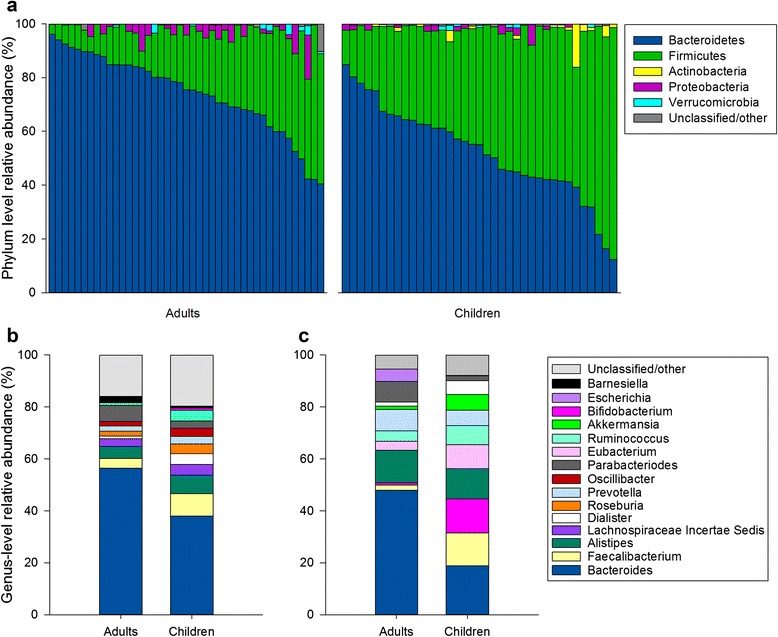
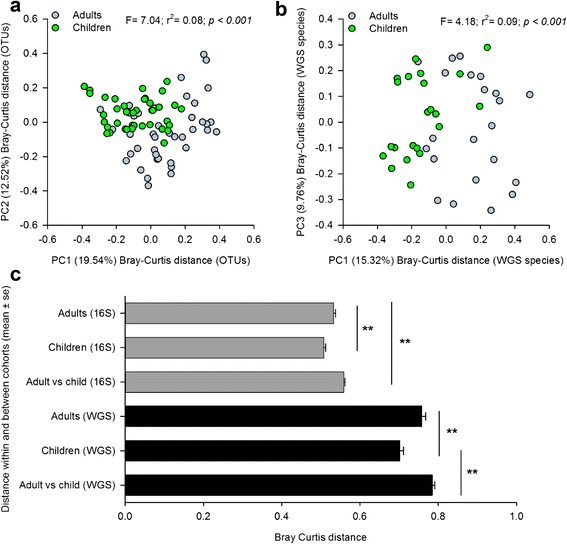
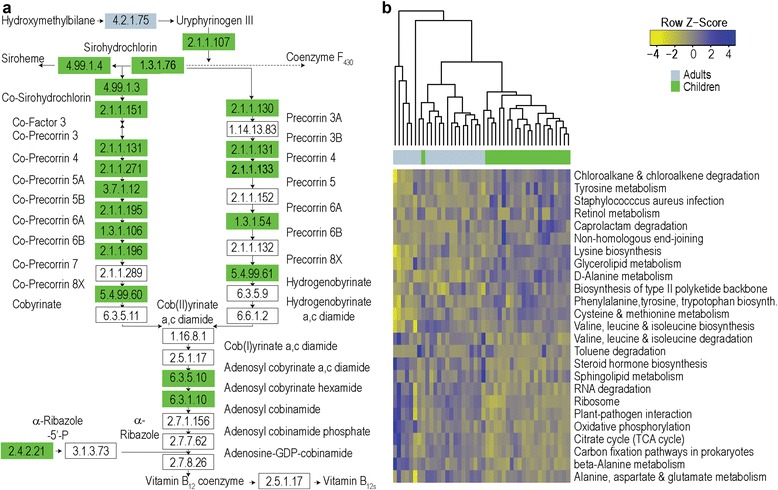
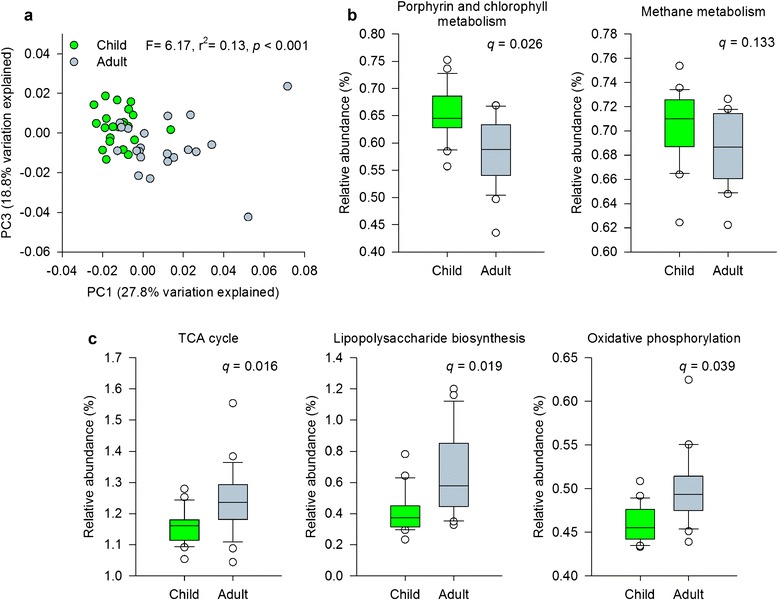
BACKGROUND: The gut microbiome influences myriad host functions, including nutrient acquisition, immune modulation, brain development, and behavior. Although human gut microbiota are recognized to change as we age, information regarding the structure and function of the gut microbiome during childhood is limited. Using 16S rRNA gene and shotgun metagenomic sequencing, we characterized the structure, function, and variation of the healthy pediatric gut microbiome in a cohort of school-aged, pre-adolescent children (ages 7-12 years). We compared the healthy pediatric gut microbiome with that of healthy adults previously recruited from the same region (Houston, TX, USA). RESULTS: Although healthy children and adults harbored similar numbers of taxa and functional genes, their composition and functional potential differed significantly. Children were enriched in Bifidobacterium spp., Faecalibacterium spp., and members of the Lachnospiraceae, while adults harbored greater abundances of Bacteroides spp. From a functional perspective, significant differences were detected with respect to the relative abundances of genes involved in vitamin synthesis, amino acid degradation, oxidative phosphorylation, and triggering mucosal inflammation. Children's gut communities were enriched in functions which may support ongoing development, while adult communities were enriched in functions associated with inflammation, obesity, and increased risk of adiposity. CONCLUSIONS: Previous studies suggest that the human gut microbiome is relatively stable and adult-like after the first 1 to 3 years of life. Our results suggest that the healthy pediatric gut microbiome harbors compositional and functional qualities that differ from those of healthy adults and that the gut microbiome may undergo a more prolonged development than previously suspected.
Overview
The claims and statistics of this paper haven’t been checked yet.
Free: it reads the open-access text and checks the first 5 claims that cite a source we can check. Create a free account to check every claim.
Integrity signals
Registry
Cites
Statistics
Figures
Verification
Claims the paper makes
The claims and statistics of this paper haven’t been checked yet.
Free: it reads the open-access text and checks the first 5 claims that cite a source we can check. Create a free account to check every claim.
Claims other papers make about this one
Each is checked against this paper’s own text: does it say what the citing paper says it does?
The source backs part of the claim, not all of it — or backs it for a different population, condition or comparison.
In the citing paper
“The microbial biodiversity of six to twelve year olds, for example, has been shown to be greater than those of healthy adults [84,85].”
From Effect of Diet on the Gut Microbiota: Rethinking Intervention Duration (2019) · cites this paper as [85]
Experimental — accuracy not yet measuredThe cited source says what the claim attributes to it.
In the citing paper
“The improved understanding of factors that shape the gut microbiome allow us to better identify confounding effects in human studies, including physiological development through childhood and adolescence to adulthood30, 128, 11, and at the same time, appreciate the adaptation of this resilient microbial ecosystem to short- and long-term perturbations in host environment.”
From The gut Microbiome in adult and pediatric functional gastrointestinal disorders (2019) · cites this paper as [11]
The cited source says what the claim attributes to it.
In the citing paper
“A more stable and complex, adult-like microbiota starts to emerge as early as one to three years of age, although this development may continue as late as pre-adolescence (85, 86).”
From Signalling cognition: The gut microbiota and hypothalamic-pituitary-adrenal axis (2023) · cites this paper as [86]
The cited source says what the claim attributes to it.
In the citing paper
“The composition and function of the microbiota in healthy children (measured at 7-12 years of age) remains significantly different from the healthy adult microbiota (Hollister et al., 2015).”
From The Microbiota-Gut-Brain Axis (2019) · cites this paper as Hollister et al., 2015
The cited source says what the claim attributes to it.
In the citing paper
“In particular, the gut microbiota of children is functionally enriched in pathways supporting ongoing development (e.g., genes involved in vitamin synthesis and de novo folate synthesis, anti-inflammatory pathways; Hollister et al., 2015).”
From The Microbiota-Gut-Brain Axis (2019) · cites this paper as Hollister et al., 2015
1 more claim about this paper
Create a free account to see every claim other papers make about this one.
Self-check
Percentages, sums and reported differences re-computed from the paper’s own numbers.
The self-check needs the paper’s full text.
Citations
Cites
Fast gapped-read alignment with Bowtie 2
Langmead, B., & Salzberg, S. L. (2012) · Nature Methods · doi:10.1038/nmeth.1923 · Cited by 56,400 · cited 1×
“Bowtie2 [53] was used to map sequence reads to a reference copy of the human genome”
MethodQIIME allows analysis of high-throughput community sequencing data
Caporaso, J. G., Kuczynski, J., Stombaugh, J., Bittinger, K., Bushman, F. D., Costello, E. K., Fierer, N., Peña, A. G., Goodrich, J. K., Gordon, J. I., et al. (2010) · Nature Methods · doi:10.1038/nmeth.f.303 · Cited by 34,887 · cited 1×
“0) [49].”
vegan: Community Ecology Package
Oksanen, J., Simpson, G. L., Blanchet, F. G., Kindt, R., Legendre, P., Minchin, P. R., O'Hara, R. B., Solymos, P., Stevens, M. H. H., Szoecs, E., et al. (2001) · CRAN: Contributed Packages · doi:10.32614/cran.package.vegan · Cited by 22,615
Search and clustering orders of magnitude faster than BLAST
Edgar, R. C. (2010) · Bioinformatics · doi:10.1093/bioinformatics/btq461 · Cited by 20,826
Naïve Bayesian Classifier for Rapid Assignment of rRNA Sequences into the New Bacterial Taxonomy
Wang, Q., Garrity, G. M., Tiedje, J. M., & Cole, J. R. (2007) · Applied and Environmental Microbiology · doi:10.1128/aem.00062-07 · Cited by 19,885 · cited 1×
“Classifier [52] with RDP training set 9 and confidence scores ≥50 %.”
Classification and Regression by randomForest
Liaw, A. I., & Wiener, M. C. (2007) · Cited by 18,594
An obesity-associated gut microbiome with increased capacity for energy harvest
Turnbaugh, P. J., Ley, R. E., Mahowald, M. A., Magrini, V., Mardis, E. R., & Gordon, J. I. (2006) · Nature · doi:10.1038/nature05414 · Cited by 12,444 · cited 3×
“ciated with leanness and other desirable health traits [26, 28], some of its members, including strains of Bacteroides fragilis, Bacteroides vulgatus, and Bacteroides”
BackgroundStructure, function and diversity of the healthy human microbiome
The Human Microbiome Project Consortium (2012) · Nature · doi:10.1038/nature11234 · Cited by 11,726
Cd-hit: a fast program for clustering and comparing large sets of protein or nucleotide sequences
Li, W., & Godzik, A. (2006) · Bioinformatics · doi:10.1093/bioinformatics/btl158 · Cited by 11,410 · cited 2×
“OTUs were clustered using CD-Hit [50], and reads were screened for chimeras using ChimeraSlayer [51].”
MethodVelvet: Algorithms for de novo short read assembly using de Bruijn graphs
Zerbino, D. R., & Birney, E. (2008) · Genome Research · doi:10.1101/gr.074492.107 · Cited by 9,491 · cited 1×
“The velvet assembler [56] (veveth, hash size 45) was used to construct contigs.”
Method
Cited by
Items 101–200 of 431
Characterizing the Composition of the Pediatric Gut Microbiome: A Systematic Review
Deering, K., Devine, A., O’Sullivan, T. A., Lo, J., Boyce, M. C., & Christophersen, C. T. (2019) · Nutrients · doi:10.3390/nu12010016 · Cited by 72
Gut Microbiota and Body Weight in School‐Aged Children: The KOALA Birth Cohort Study
Mbakwa, C. A., Hermes, G. D. A., Penders, J., Savelkoul, P. H. M., Thijs, C. T., Dagnelie, P. C., Mommers, M., Zoetendal, E. G., Smidt, H., & Arts, I. C. W. (2018) · Obesity · doi:10.1002/oby.22320 · Cited by 63
What’s bugging your teen?—The microbiota and adolescent mental health
McVey Neufeld, K.-A., Luczynski, P., Seira Oriach, C., Dinan, T. G., & Cryan, J. F. (2016) · Neuroscience & Biobehavioral Reviews · doi:10.1016/j.neubiorev.2016.06.005 · Cited by 56
“A more recent study has compared the microbiota of pre-adolescent children to that of adults and found that again, the younger cohort had higher numbers of Bifidobacterium, while adults demonstrated more Bacteroides (Hollister et al., 2015).”
InfluentialGut microbiota associations with metabolic syndrome and relevance of its study in pediatric subjects
Carrizales-Sánchez, A. K., García‐Cayuela, T., Hernández‐Brenes, C., & Senés‐Guerrero, C. (2021) · Gut Microbes · doi:10.1080/19490976.2021.1960135 · Cited by 61
Gut Microbiota and Colorectal Cancer: A Balance Between Risk and Protection
Ionescu, V. A., Diaconu, C. C., Gheorghe, G., Mihai, M.-M., Diaconu, C. C., Bostan, M., & Bleoţu, C. (2025) · International Journal of Molecular Sciences · doi:10.3390/ijms26083733 · Cited by 62
“However, defining the intestinal microbiome appears to require a longer period, ultimately resulting in a composition as unique as a fingerprint [19].”
Ou, Y., Belzer, C., Smidt, H., & de Weerth, C. (2022) · Gut Microbes · doi:10.1080/19490976.2022.2038853 · Cited by 54
Bai, J., Behera, M., & Bruner, D. W. (2017) · Supportive Care in Cancer · doi:10.1007/s00520-017-3982-3 · Cited by 60
The interactions between oral-gut axis microbiota and Helicobacter pylori
Chen, X., Wang, N., Wang, J., Liao, B., Cheng, L., & Ren, B. (2022) · Frontiers in Cellular and Infection Microbiology · doi:10.3389/fcimb.2022.914418 · Cited by 62
Sex, puberty, and the gut microbiome
Sisk-Hackworth, L., Kelley, S. T., & Thackray, V. G. (2023) · Reproduction · doi:10.1530/rep-22-0303 · Cited by 61
“However, the gut microbiomes of children can be readily distinguished from adults (Agans et al. 2011, Yatsunenko et al. 2012, Ringel-Kulka et al. 2013, Dominianni et al. 2015, Hollister et al. 2015).”
BackgroundDietary Habits of 2- to 9-Year-Old American Children Are Associated with Gut Microbiome Composition
Herman, D. R., Rhoades, N., Mercado, J., Argueta, P., Lopez, U., & Flores, G. E. (2020) · Journal of the Academy of Nutrition and Dietetics · doi:10.1016/j.jand.2019.07.024 · Cited by 50
Zeng, S., Hou, D., Liu, J., Ji, P., Weng, S., He, J., & Huang, Z. (2019) · Applied Microbiology and Biotechnology · doi:10.1007/s00253-019-09671-9 · Cited by 52
Gut microbiome and cancer immunotherapy
Sun, J., Yin, T., Zhou, J., Jiang, X., & Lu, X. (2019) · Journal of Cellular Physiology · doi:10.1002/jcp.29359 · Cited by 53
Sharma, A., Richardson, M., Cralle, L. E., Stamper, C. E., Maestre, J. P., Stearns‐Yoder, K. A., Postolache, T. T., Bates, K. L., Kinney, K. A., Brenner, L. A., et al. (2019) · Microbiome · doi:10.1186/s40168-019-0686-6 · Cited by 55
Role of Gut Microbiota in Multiple Sclerosis and Potential Therapeutic Implications
Wang, X., Liang, Z., Wang, S., Ma, D., Zhu, M., & Feng, J. (2021) · Current Neuropharmacology · doi:10.2174/1570159x19666210629145351 · Cited by 54
Gut microbiome is associated with multiple sclerosis activity in children
Horton, M. K., McCauley, K. E., Fadrosh, D. W., Fujimura, K. E., Graves, J., Ness, J., Wheeler, Y., Gorman, M., Benson, L. A., Weinstock‐Guttman, B., et al. (2021) · Annals of Clinical and Translational Neurology · doi:10.1002/acn3.51441 · Cited by 53
Gut–Lung Axis: Microbial Crosstalk in Pediatric Respiratory Tract Infections
Zhu, W., Wu, Y., Liu, H., Jiang, C., & Huo, L. (2021) · Frontiers in Immunology · doi:10.3389/fimmu.2021.741233 · Cited by 53
Shared Environment and Genetics Shape the Gut Microbiome after Infant Adoption
Tavalire, H. F., Christie, D. M., Leve, L. D., Ting, N., Cresko, W. A., & Bohannan, B. J. M. (2021) · mBio · doi:10.1128/mbio.00548-21 · Cited by 58
Is adolescence the missing developmental link in Microbiome–Gut–Brain axis communication?
Flannery, J., Callaghan, B., Sharpton, T., Fisher, P., & Pfeifer, J. (2019) · Developmental Psychobiology · doi:10.1002/dev.21821 · Cited by 44
Interactions Between Gut Microbiota and Acute Childhood Leukemia
Wen, Y., Jin, R., & Chen, H. (2019) · Frontiers in Microbiology · doi:10.3389/fmicb.2019.01300 · Cited by 50
Postbiotic Supplementation for Children and Newborn’s Health
Morniroli, D., Vizzari, G., Consales, A., Mosca, F., & Giannì, M. L. (2021) · Nutrients · doi:10.3390/nu13030781 · Cited by 52
Shin, S., & Cho, K. Y. (2020) · BioMed Research International · doi:10.1155/2020/6587136 · Cited by 52
COVID-19 and Gut Microbiota: A Potential Connection
Rajput, S., Paliwal, D., Naithani, M., Kothari, A., Meena, K., & Rana, S. V. (2021) · Indian Journal of Clinical Biochemistry · doi:10.1007/s12291-020-00948-9 · Cited by 52
Princisval, L., Rebelo, F. M., Williams, B. L., Coimbra, A. C., Crovesy, L., Ferreira, A. L. L., & Kac, G. (2021) · Nutrition Reviews · doi:10.1093/nutrit/nuab008 · Cited by 52
Smith, L. K., & Wissel, E. F. (2019) · Perspectives on Psychological Science · doi:10.1177/1745691618809379 · Cited by 42
Prescott, S. L., Millstein, R. A., Katzman, M. A., & Logan, A. C. (2016) · International Journal of Biodiversity · doi:10.1155/2016/2718275 · Cited by 43
“However, there are distinct compositional and functional characteristics to the preadolescent gut microbiome, and these reflect a supportive role in rapid growth and development [28].”
Sánchez-Quinto, A., Cerqueda‐García, D., Falcón, L. I., Gaona, O., Martínez-Correa, S., Nieto, J., & González‐Santoyo, I. (2020) · Microorganisms · doi:10.3390/microorganisms8101592 · Cited by 49
Watanabe, H., Nagano, N., Tsuji, Y., Noto, N., Ayusawa, M., & Morioka, I. (2023) · European Journal of Clinical Pharmacology · doi:10.1007/s00228-023-03598-x · Cited by 45
“A consensus on post-infancy microbiome changes remains elusive, with some reports suggesting that it matures relatively early [34] and others, that it changes throughout adolescence [35, 36].”
Conversations in the Gut: The Role of Quorum Sensing in Normobiosis
Markus, V., Paul, A. A., Teralı, K., Özer, N., Marks, R. S., Golberg, K., & Kushmaro, A. (2023) · International Journal of Molecular Sciences · doi:10.3390/ijms24043722 · Cited by 46
Behzadi, P., Dodero, V. I., & Golubnitschaja, O. (2024) · Advances in predictive, preventive and personalised medicine · doi:10.1007/978-3-031-46891-9_15 · Cited by 55
Advancing lifelong precision medicine for cardiovascular diseases through gut microbiota modulation
Shi, B., Li, H., & He, X. (2024) · Gut Microbes · doi:10.1080/19490976.2024.2323237 · Cited by 47
“51 These findings emphasize the influence of geographical location and ethnicity on the gut microbiota composition in infants and adolescents.”
BackgroundChen, Y., Meng, P., Cheng, S., Jia, Y., Wen, Y. F., Yang, X., Yao, Y., Pan, C., Li, C., Zhang, H., et al. (2021) · Molecular Brain · doi:10.1186/s13041-021-00843-1 · Cited by 47
Gut dysbiosis and age-related neurological diseases in females
Korf, J. M., Ganesh, B. P., & McCullough, L. D. (2022) · Neurobiology of Disease · doi:10.1016/j.nbd.2022.105695 · Cited by 49
Sex Difference of Gut Microbiota
Kim, N. (2022) · Springer eBooks · doi:10.1007/978-981-19-0120-1_22 · Cited by 49
Haberman, Y., Schirmer, M., Dexheimer, P. J., Karns, R. A., Braun, T., Kim, M., Walters, T. D., Baldassano, R. N., Noe, J. D., Rosh, J. R., et al. (2018) · Mucosal Immunology · doi:10.1038/s41385-018-0114-4 · Cited by 48
Roles of Gut Microbiome in Bone Homeostasis and Its Relationship with Bone-Related Diseases
Zemanová, N., Omelka, R., Mondočková, V., Kováčová, V., & Martiniaková, M. (2022) · Biology · doi:10.3390/biology11101402 · Cited by 46
Microbes and mental health: Can the microbiome help explain clinical heterogeneity in psychiatry?
Hayes, C. L., Peters, B. J., & Foster, J. A. (2020) · Frontiers in Neuroendocrinology · doi:10.1016/j.yfrne.2020.100849 · Cited by 42
Pei, T., Li, W., Zhou, Z., Zhang, Q., Yu, G., Yin, S., Chen, H., & Tang, J. (2025) · Microbiological Research · doi:10.1016/j.micres.2025.128211 · Cited by 44
Zhernakova, A., Yassour, M., Hall, L. J., & Collado, M. C. (2025) · Cell Host & Microbe · doi:10.1016/j.chom.2025.05.014 · Cited by 42
The intestinal microbiome and paediatric liver disease
Leung, D. H., & Yimlamai, D. (2017) · The Lancet. Gastroenterology & hepatology · doi:10.1016/s2468-1253(16)30241-2 · Cited by 45
Can Postbiotics Represent a New Strategy for NEC?
Mosca, F., Giannì, M. L., & Rescigno, M. (2019) · Advances in experimental medicine and biology · doi:10.1007/5584_2018_314 · Cited by 44
Kellermayer, R., & Zilbauer, M. (2020) · Journal of Pediatric Gastroenterology and Nutrition · doi:10.1097/mpg.0000000000002908 · Cited by 40
The Development of Early Life Microbiota in Human Health and Disease
Lv, H., Zhang, L., Han, Y., Wu, L. M., & Wang, B. (2021) · Engineering · doi:10.1016/j.eng.2020.12.014 · Cited by 47
Paediatric Inflammatory Bowel Disease and its Relationship with the Microbiome
Fitzgerald, R. S., Sanderson, I. R., & Claesson, M. J. (2021) · Microbial Ecology · doi:10.1007/s00248-021-01697-9 · Cited by 44
Kosuwon, P., Lao-araya, M., Uthaisangsook, S., Lay, C., Bindels, J., Knol, J., & Chatchatee, P. (2018) · Beneficial Microbes · doi:10.3920/bm2017.0110 · Cited by 38
Healey, G. R., Celiberto, L. S., Lee, S. M., & Jacobson, K. (2020) · Nutrients · doi:10.3390/nu12103204 · Cited by 40
Masetti, R., Zama, D., Leardini, D., Muratore, E., Turroni, S., Prete, A., Brigidi, P., & Pession, A. (2020) · Pediatric Blood & Cancer · doi:10.1002/pbc.28711 · Cited by 38
Kaur, S., Thukral, S. K., Kaur, P., & Samota, M. K. (2021) · Future Foods · doi:10.1016/j.fufo.2021.100043 · Cited by 41
Hallmarks of the human intestinal microbiome on liver maturation and function
Almeida, J. I., Tenreiro, M. F., Martínez‐Santamaría, L., Guerrero‐Aspizua, S., Gisbert, J. P., Alves, P. M., Serra, M., & Baptista, P. M. (2021) · Journal of Hepatology · doi:10.1016/j.jhep.2021.10.015 · Cited by 42
Thangaleela, S., Sivamaruthi, B. S., Kesika, P., Bharathi, M., & Chaiyasut, C. (2022) · Microorganisms · doi:10.3390/microorganisms10081544 · Cited by 39
Carrizales-Sánchez, A. K., Tamez‐Rivera, O., Rodríguez-Gutiérrez, N. A., Elizondo‐Montemayor, L., Hernandez, M. S. G., García‐Rivas, G., Pacheco, A., & Senés‐Guerrero, C. (2023) · BMC Pediatrics · doi:10.1186/s12887-023-03983-6 · Cited by 38
Gut Microbiota and Aging: Traditional Chinese Medicine and Modern Medicine
Li, J., Li, D., Chen, Y., Chen, W., Xu, J., & Gao, L. (2023) · Clinical Interventions in Aging · doi:10.2147/cia.s414714 · Cited by 40
Metaproteomics Study of the Gut Microbiome
Lai, L. A., Tong, Z., Chen, R., & Pan, S. (2018) · Methods in molecular biology · doi:10.1007/978-1-4939-8814-3_8 · Cited by 39
Daniels, S. R., PRATT, C. A., Hollister, E. B., Labarthe, D. R., Cohen, D. A., Walker, J. R., Beech, B. M., Balagopal, P., Beebe, D. W., Gillman, M. W., et al. (2019) · The Journal of Pediatrics · doi:10.1016/j.jpeds.2019.01.042 · Cited by 39
Self-citationIntestinal Dysbiosis in, and Enteral Bacterial Therapies for, Systemic Autoimmune Diseases
Marietta, E. V., Mangalam, A. K., Taneja, V., & Murray, J. A. (2020) · Frontiers in Immunology · doi:10.3389/fimmu.2020.573079 · Cited by 38
The Gut Microbiome as a Component of the Gut–Brain Axis in Cognitive Health
Gao, W., Baumgartel, K. L., & Alexander, S. A. (2020) · Biological Research For Nursing · doi:10.1177/1099800420941923 · Cited by 37
Saettone, V., Biasato, I., Radice, E., Schiavone, A., Bergero, D., & Meineri, G. (2020) · Animals · doi:10.3390/ani10122199 · Cited by 40
The gut microbiota links disease to human genome evolution
Quan, Y., Zhang, K., & Zhang, H. (2023) · Trends in Genetics · doi:10.1016/j.tig.2023.02.006 · Cited by 37
Gut microbiome of pre-adolescent children of two ethnicities residing in three distant cities
Khine, W. W. T., Zhang, Y., Goie, G. J. Y., Wong, M. S., Liong, M., Lee, Y. Y., Cao, H., & Lee, Y. K. (2019) · Scientific Reports · doi:10.1038/s41598-019-44369-y · Cited by 38
Leong, C. S.-F., Haszard, J. J., Heath, A. M., Tannock, G. W., Lawley, B., Cameron, S. L., Szymlek‐Gay, E. A., Gray, A. R., Taylor, B. J., Galland, B. C., et al. (2019) · American Journal of Clinical Nutrition · doi:10.1093/ajcn/nqz270 · Cited by 39
Diet, adiposity, and the gut microbiota from infancy to adolescence: A systematic review
Wyst, K. B. V., Ortega-Santos, C. P., Toffoli, S., Lahti, C. E., & Whisner, C. M. (2021) · Obesity Reviews · doi:10.1111/obr.13175 · Cited by 38
Lu, J., Jin, X., Yang, S., Li, Y., Wang, X., & Wu, M. (2022) · Frontiers in Microbiology · doi:10.3389/fmicb.2022.1034537 · Cited by 34
Morán‐Ramos, S., Kauffer, L. R. M., López-Contreras, B. E., Villamil‐Ramírez, H., Ocampo‐Medina, E., León‐Mimila, P., Del-Rio-Navarro, B. E., Granados‐Portillo, O., Ibarra‐González, I., Vela-Amieva, M. B., et al. (2021) · Molecular Medicine · doi:10.1186/s10020-021-00371-7 · Cited by 32
Fareed, S., Sarode, N., Stewart, F. J., Malik, A., Laghaie, E., Khizer, S., Yan, F., Pratte, Z. A., Lewis, J. D., & Immergluck, L. C. (2018) · PeerJ · doi:10.7717/peerj.4663 · Cited by 39
Wang, L., Yi, Q., Xu, H., Liu, H., Tan, B., Deng, H., Chen, Y., Wang, R., Tang, F., Cheng, X., et al. (2024) · BMC Microbiology · doi:10.1186/s12866-024-03461-8 · Cited by 32
“The intestinal flora can regulate the abundance of specific flora to control the initiation of puberty, and changes in hormone levels can affect the intestinal flora [35].”
BackgroundFrom dysbiosis to longevity: a narrative review into the gut microbiome’s impact on aging
Tseng, C., & Wu, C. (2025) · Journal of Biomedical Science · doi:10.1186/s12929-025-01179-x · Cited by 32
Pediatric Aspects of Nutrition Interventions for Disorders of Gut-Brain Interaction
Nurko, S., Benninga, M. A., Solari, T., & Chumpitazi, B. P. (2022) · The American Journal of Gastroenterology · doi:10.14309/ajg.0000000000001779 · Cited by 36
Yue, M., & Zhang, L. (2024) · Microorganisms · doi:10.3390/microorganisms12020323 · Cited by 44
“The gut microbiota in childhood and adolescence begins to exhibit a certain degree of stability and complexity [1,4,37].”
BackgroundThe microbiota–gut–brain axis: A promising avenue to foster healthy developmental outcomes
Brett, B. E., & de Weerth, C. (2019) · Developmental Psychobiology · doi:10.1002/dev.21824 · Cited by 32
Yang, B. K., Yan, S., Chen, Y., Ross, R. P., Stanton, C., Zhao, J., Zhang, H., & Chen, W. (2020) · Microorganisms · doi:10.3390/microorganisms8081108 · Cited by 36
The pediatric virome in health and disease
Liang, G., Gao, H., & Bushman, F. D. (2022) · Cell Host & Microbe · doi:10.1016/j.chom.2022.04.006 · Cited by 32
Human Milk Microbiome and Microbiome-Related Products: Potential Modulators of Infant Growth
Ma, J., Palmer, D. J., Geddes, D. T., Lai, C. T., & Stinson, L. F. (2022) · Nutrients · doi:10.3390/nu14235148 · Cited by 33
Martyniak, A., Zakrzewska, Z., Schab, M., Zawartka, A., Wędrychowicz, A., Skoczeń, S., & Tomasik, P. (2023) · Microorganisms · doi:10.3390/microorganisms11071775 · Cited by 33
Reasoner, S. A., Bernard, R., Waalkes, A., Penewit, K. M., Lewis, J. D., Sokolow, A. G., Brown, R. F., Edwards, K. M., Salipante, S. J., Hadjifrangiskou, M., et al. (2024) · mBio · doi:10.1128/mbio.01935-23 · Cited by 29
“Among the most consistent differences between healthy controls and patients with CF is reduced abundance of the phylum Bacteroidetes in patients with CF (13, 20, 61, 63, 66).”
BackgroundCharacterization of the Stool Microbiome in Hispanic Preschool Children by Weight Status and Time
Hollister, E. B., Foster, B. A., Dahdouli, M., Ramírez, J. F., & Lai, Z. (2017) · Childhood Obesity · doi:10.1089/chi.2017.0122 · Cited by 31
“1) was used with relative abundance-transformed OTU data under default settings, and baseline error rates were calculated as previously described.(31) Differential abundances of taxa, ranging from the phylum to OTU levels, were assessed between NW and OB children or between collections among the OB children using Wilc…”
Self-citationChen, H., Li, H., & Liu, Z. (2020) · Therapeutic Advances in Gastroenterology · doi:10.1177/1756284820935188 · Cited by 32
Lapidot, Y., Reshef, L., Goldsmith, R., Na’amnih, W., Kassem, E., Ornoy, A., Gophna, U., & Muhsen, K. (2021) · Nutrients · doi:10.3390/nu13082645 · Cited by 30
Basso, M., Johnstone, N., Knytl, P., Nauta, A., Groeneveld, A., & Cohen Kadosh, K. (2022) · Nutrients · doi:10.3390/nu14030614 · Cited by 28
Children and adolescents’ obesity is the 21st century health problem
Bocharova, O. V., & Teplyakova, E. D. (2020) · Kazan medical journal · doi:10.17816/kmj2020-381 · Cited by 35
Rizzardi, K. F., Indiani, C. M. D. S. P., Mattos‐Graner, R. O., de Sousa, E. T., Nobre‐dos‐Santos, M., & Parisotto, T. M. (2021) · Frontiers in Cellular and Infection Microbiology · doi:10.3389/fcimb.2021.593734 · Cited by 31
Adolescence, the Microbiota-Gut-Brain Axis, and the Emergence of Psychiatric Disorders
Neufeld, S. M., Ahn, M., Kunze, W., & Neufeld, K. M. (2023) · Biological Psychiatry · doi:10.1016/j.biopsych.2023.10.006 · Cited by 30
Lapidot, Y., Reshef, L., Maya, M., Cohen, D., Gophna, U., & Muhsen, K. (2022) · npj Biofilms and Microbiomes · doi:10.1038/s41522-022-00271-6 · Cited by 28
The Use of Probiotic Therapy in Metabolic and Neurological Diseases
Lee, S. H. F., Ahmad, S. R., Lim, Y. C., & Zulkipli, I. N. (2022) · Frontiers in Nutrition · doi:10.3389/fnut.2022.887019 · Cited by 28
Associations between dietary habits, socio-demographics and gut microbial composition in adolescents
Kemp, K. M., Orihuela, C. A., Morrow, C. D., Judd, S. E., Evans, R. R., & Mrug, S. (2023) · British Journal Of Nutrition · doi:10.1017/s0007114523002271 · Cited by 29
“However, little is known about how dietary intake during adolescence affects the still developing gut microbiota (31,32) .”
BackgroundCallaghan, B. L. (2020) · Current Opinion in Behavioral Sciences · doi:10.1016/j.cobeha.2020.07.011 · Cited by 27
Development of gut microbiota along with its metabolites of preschool children
Xiong, J., Hu, H., Xu, C., Yin, J., Liu, M., Zhang, L., Duan, Y., & Huang, Y. (2022) · BMC Pediatrics · doi:10.1186/s12887-021-03099-9 · Cited by 30
The impact of mass drug administration of antibiotics on the gut microbiota of target populations
Gough, E. K. (2022) · Infectious Diseases of Poverty · doi:10.1186/s40249-022-00999-5 · Cited by 26
Zhang, W., Jin, Z., Yang, Z., Zhang, J., Ma, X., Guan, J. Z., Sun, B., & Chen, X. (2022) · Frontiers in Microbiology · doi:10.3389/fmicb.2022.818111 · Cited by 30
Urlacher, S. S. (2023) · American Journal of Biological Anthropology · doi:10.1002/ajpa.24719 · Cited by 28
Margolis, E. B., Marón, G. M., Sun, Y., Dallas, R. H., Allison, K., Ferrolino, J. A. A., Ross, H. S., Davis, A., Jia, Q., Turner, P., et al. (2023) · The Journal of Infectious Diseases · doi:10.1093/infdis/jiad190 · Cited by 24
Adithya, K. K., Rajeev, R., Selvin, J., & Kiran, G. S. (2021) · ACS Food Science & Technology · doi:10.1021/acsfoodscitech.0c00075 · Cited by 26
Basic Definitions and Concepts: Organization of the Gut Microbiome
Quigley, E. M. M. (2017) · Gastroenterology Clinics of North America · doi:10.1016/j.gtc.2016.09.002 · Cited by 26
Raw milk and fecal microbiota of commercial Alpine dairy cows varies with herd, fat content and diet
Albonico, F., Barelli, C., Albanese, D., Manica, M., Partel, E., Rosso, F., Ripellino, S., Pindo, M., Donati, C., Zecconi, A., et al. (2020) · PLoS ONE · doi:10.1371/journal.pone.0237262 · Cited by 27
Hiremath, S. S., & Viswanathan, P. (2022) · Anaerobe · doi:10.1016/j.anaerobe.2022.102572 · Cited by 25
Psychobiotic Properties of Lactiplantibacillus plantarum in Neurodegenerative Diseases
Chiano, M. D., Sallustio, F., Fiocco, D., Rocchetti, M. T., Spano, G., Pontrelli, P., Moschetta, A., Gesualdo, L., Gadaleta, R. M., & Gallone, A. (2024) · International Journal of Molecular Sciences · doi:10.3390/ijms25179489 · Cited by 22
“GM shifts are influenced by nutritional choices, lifestyle, drug use, and exposure to different environmental factors [12].”
BackgroundAsthma and Wheeze Severity and the Oropharyngeal Microbiota in Children and Adolescents
Thorsen, J., Stokholm, J., Rasmussen, M. A., Roggenbuck, M., Vissing, N. H., Mortensen, M. S., Brejnrod, A., Fleming, L., Bush, A., Roberts, G. C., et al. (2022) · Annals of the American Thoracic Society · doi:10.1513/annalsats.202110-1152oc · Cited by 25
Perspective: Assessing Tolerance to Nondigestible Carbohydrate Consumption
Holscher, H. D., Chumpitazi, B. P., Dahl, W. J., Fahey, G. C., Jr., Liska, D. J., Slavin, J. L., & Verbeke, K. (2022) · Advances in Nutrition · doi:10.1093/advances/nmac091 · Cited by 25
“There are differences between children, adolescents, and adults with respect to both fecal microbiota composition and metabolite production (111).”
The Role of the Gut Microbiome in Pediatric Obesity and Bariatric Surgery
Akagbosu, C., Nadler, E. P., Levy, S., & Hourigan, S. K. (2022) · International Journal of Molecular Sciences · doi:10.3390/ijms232315421 · Cited by 26
Nobili, V., Mosca, A., Alterio, T., Cardile, S., & Putignani, L. (2018) · Advances in experimental medicine and biology · doi:10.1007/5584_2018_318 · Cited by 24
Reorganization of the brain in spinal cord injury: a meta-analysis of functional MRI studies
Wang, W., Xie, W., Zhang, Q., Liu, L., Liu, J., Zhou, S., Shi, J., Chen, J., & Ning, B. (2019) · Neuroradiology · doi:10.1007/s00234-019-02272-3 · Cited by 21
Nikolaou, E., Kamilari, E., Savkov, D., Sergeev, A., Zakharova, I. N., Vogazianos, P., Tomazou, M., Antoniades, A., & Shammas, C. (2019) · World Journal of Pediatrics · doi:10.1007/s12519-019-00315-6 · Cited by 21
Metadata
- Authors
- Hollister, E. B., Riehle, K., Luna, R. A., Weidler, E. M., Rubio-Gonzales, M., Mistretta, T.-A., Raza, S., Doddapaneni, H. V., Metcalf, G. A., Muzny, D. M., Gibbs, R. A., Petrosino, J. F., Shulman, R. J., & Versalovic, J.
- Affiliations
- Baylor College of Medicine (US)
- Corresponding author
- Hollister, Emily B.
- ORCID
- Venue
- Microbiome
- Published
- 2015-08-26
- Volume
- 3
- Issue
- 1
- Pages
- 36-36
- ISSN
- 2049-2618 (ISSN-L)
- PMC
- PMC4550057
- OpenAlex
- W2096500845
- Cited by
- 406
- References
- 70
- Citations by year
- 2026: 27 · 2025: 38 · 2024: 37 · 2023: 40 · 2022: 55 · 2021: 51 · 2020: 37 · 2019: 45 · 2018: 33 · 2017: 21 · 2016: 22
- FWCI
- 10.93
- Type
- journal article
- Language
- en
- Open access
- gold
- doi.org
- Licence
- cc-by
- creativecommons.org/licenses/by/4.0/ (tdm)
- creativecommons.org/licenses/by/4.0/ (vor)
- Locations
- Microbiome (publishedVersion, cc-by)
- PubMed Central (publishedVersion, cc-by)
- PubMed (publishedVersion)
- Funders
- National Institute of Diabetes and Digestive and Kidney Diseases (UH2 DK093990, UH3 DK083990)
- National Center for Complementary and Alternative Medicine (R01 AT004326)
- National Cancer Institute (U01 CA170930)
- National Human Genome Research Institute (U54 HG004973)
- National Institute of Nursing Research (R01 NR05337, R01 NR013497)
- Daffy's Foundation (ᅟ)
- Topics
- Life Sciences › Biochemistry, Genetics and Molecular Biology › Molecular Biology › Gut microbiota and health
- Health Sciences › Nursing › Nutrition and Dietetics › Infant Nutrition and Health
- Health Sciences › Dentistry › Periodontics › Oral microbiology and periodontitis research
- Keywords
- gut microbiota, preadolescents, microbiome development, Bifidobacterium, Faecalibacterium, Bacteroides, Lachnospiraceae, microbial functional genes, vitamin synthesis, amino acid catabolism, oxidative phosphorylation, mucosal inflammation, obesity
- MeSH terms
- Gastrointestinal Microbiome, Adult, Age Factors, Child, Female, Humans, Male, RNA, Ribosomal, 16S, Cluster Analysis, Biodiversity, Metagenome, DNA Barcoding, Taxonomic, Healthy Volunteers
About these checks
Registry, retraction, Cites and statistics results are computed, not judged, with one exception: a printed reference that no index lists is read once by a model before it counts as a citation error. Claims are extracted by a model and kept only when their quote appears verbatim in the text; each cited source is then checked, with a model’s help, for whether it says what the claim relies on. Those verdicts can be wrong — read the claim’s quote and the cited source before relying on one.
Statistics and arithmetic are recomputed, not judged.
Confidence bands are shown only for fields calibrated on our annotated test set. None is calibrated yet, so no band is shown.
What counts as a claim ›How we measure confidence ›How we check this ›
Are you an author, or do you see a problem with this page? Request a review
Data sources
Bibliographic data: Semantic Scholar, OpenAlex, Crossref.
Contains information from the Semantic Scholar Academic Graph Datasets, made available under the ODC Attribution License (ODC-BY 1.0).
Semantic Scholar’s data is described in: Kinney, R., et al. (2023). The Semantic Scholar Open Data Platform. arXiv:2301.10140.
