

Structure and function of the healthy pre-adolescent pediatric gut microbiome
Open accessThe DOI matches its Crossref record; 69 of the 70 references it cites were found in a registry or an index.
Abstract
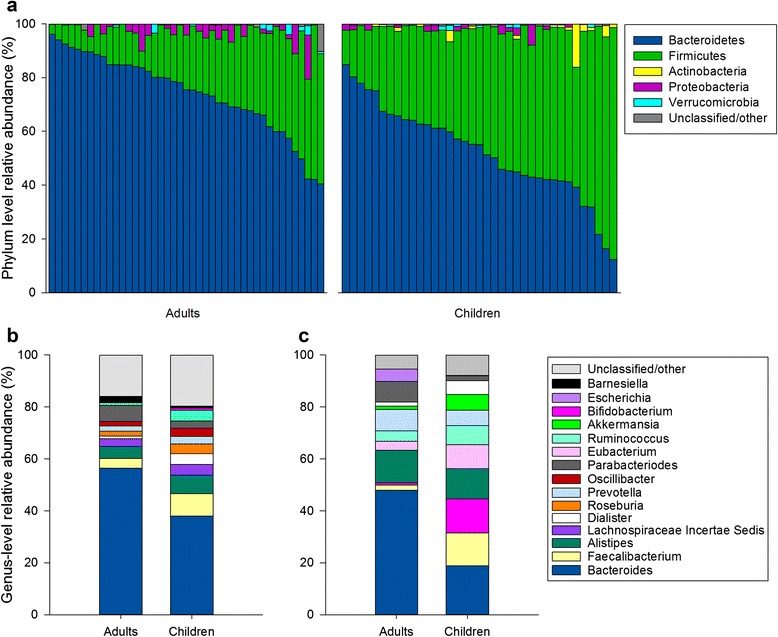
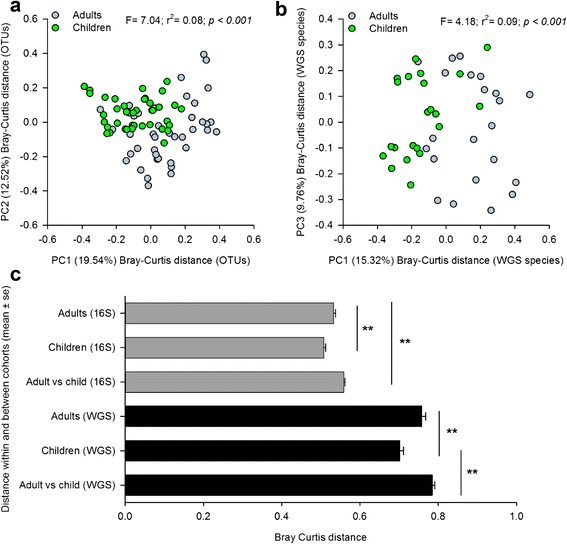
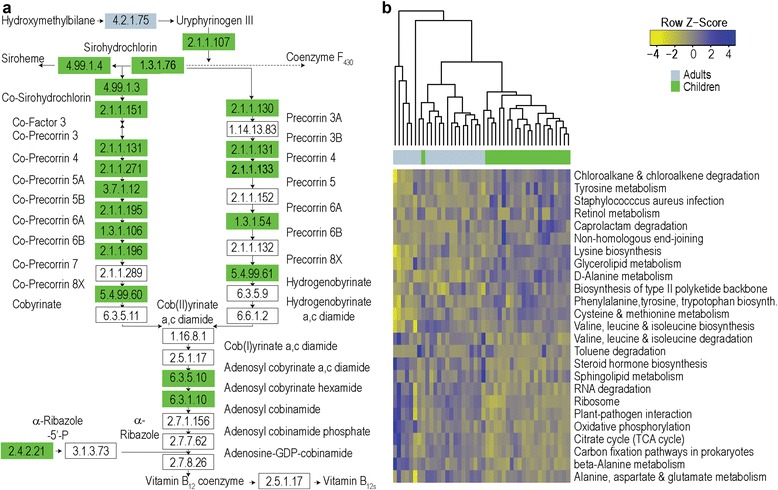
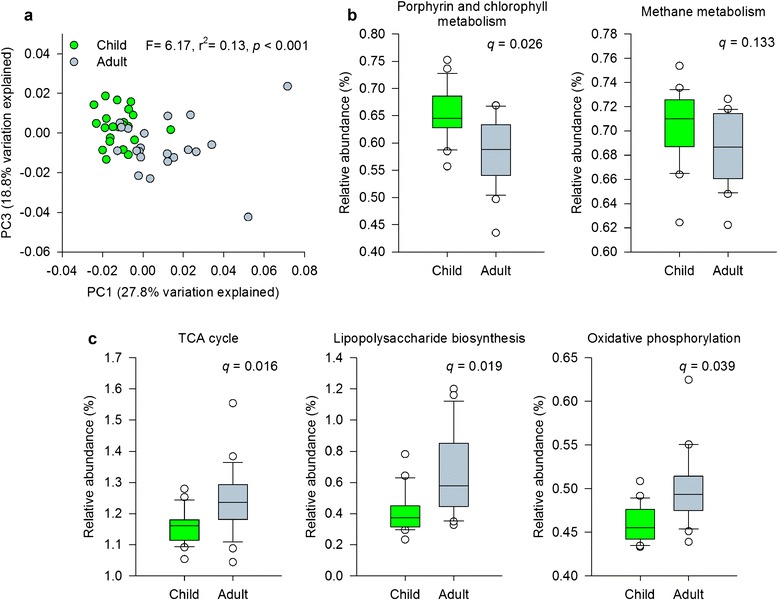
BACKGROUND: The gut microbiome influences myriad host functions, including nutrient acquisition, immune modulation, brain development, and behavior. Although human gut microbiota are recognized to change as we age, information regarding the structure and function of the gut microbiome during childhood is limited. Using 16S rRNA gene and shotgun metagenomic sequencing, we characterized the structure, function, and variation of the healthy pediatric gut microbiome in a cohort of school-aged, pre-adolescent children (ages 7-12 years). We compared the healthy pediatric gut microbiome with that of healthy adults previously recruited from the same region (Houston, TX, USA). RESULTS: Although healthy children and adults harbored similar numbers of taxa and functional genes, their composition and functional potential differed significantly. Children were enriched in Bifidobacterium spp., Faecalibacterium spp., and members of the Lachnospiraceae, while adults harbored greater abundances of Bacteroides spp. From a functional perspective, significant differences were detected with respect to the relative abundances of genes involved in vitamin synthesis, amino acid degradation, oxidative phosphorylation, and triggering mucosal inflammation. Children's gut communities were enriched in functions which may support ongoing development, while adult communities were enriched in functions associated with inflammation, obesity, and increased risk of adiposity. CONCLUSIONS: Previous studies suggest that the human gut microbiome is relatively stable and adult-like after the first 1 to 3 years of life. Our results suggest that the healthy pediatric gut microbiome harbors compositional and functional qualities that differ from those of healthy adults and that the gut microbiome may undergo a more prolonged development than previously suspected.
Overview
The claims and statistics of this paper haven’t been checked yet.
Free: it reads the open-access text and checks the first 5 claims that cite a source we can check. Create a free account to check every claim.
Integrity signals
Registry
Cites
Statistics
Figures
Verification
Claims the paper makes
The claims and statistics of this paper haven’t been checked yet.
Free: it reads the open-access text and checks the first 5 claims that cite a source we can check. Create a free account to check every claim.
Claims other papers make about this one
Each is checked against this paper’s own text: does it say what the citing paper says it does?
The source backs part of the claim, not all of it — or backs it for a different population, condition or comparison.
In the citing paper
“The microbial biodiversity of six to twelve year olds, for example, has been shown to be greater than those of healthy adults [84,85].”
From Effect of Diet on the Gut Microbiota: Rethinking Intervention Duration (2019) · cites this paper as [85]
Experimental — accuracy not yet measuredThe cited source says what the claim attributes to it.
In the citing paper
“The improved understanding of factors that shape the gut microbiome allow us to better identify confounding effects in human studies, including physiological development through childhood and adolescence to adulthood30, 128, 11, and at the same time, appreciate the adaptation of this resilient microbial ecosystem to short- and long-term perturbations in host environment.”
From The gut Microbiome in adult and pediatric functional gastrointestinal disorders (2019) · cites this paper as [11]
The cited source says what the claim attributes to it.
In the citing paper
“A more stable and complex, adult-like microbiota starts to emerge as early as one to three years of age, although this development may continue as late as pre-adolescence (85, 86).”
From Signalling cognition: The gut microbiota and hypothalamic-pituitary-adrenal axis (2023) · cites this paper as [86]
The cited source says what the claim attributes to it.
In the citing paper
“The composition and function of the microbiota in healthy children (measured at 7-12 years of age) remains significantly different from the healthy adult microbiota (Hollister et al., 2015).”
From The Microbiota-Gut-Brain Axis (2019) · cites this paper as Hollister et al., 2015
The cited source says what the claim attributes to it.
In the citing paper
“In particular, the gut microbiota of children is functionally enriched in pathways supporting ongoing development (e.g., genes involved in vitamin synthesis and de novo folate synthesis, anti-inflammatory pathways; Hollister et al., 2015).”
From The Microbiota-Gut-Brain Axis (2019) · cites this paper as Hollister et al., 2015
1 more claim about this paper
Create a free account to see every claim other papers make about this one.
Self-check
Percentages, sums and reported differences re-computed from the paper’s own numbers.
The self-check needs the paper’s full text.
Citations
Cites
Fast gapped-read alignment with Bowtie 2
Langmead, B., & Salzberg, S. L. (2012) · Nature Methods · doi:10.1038/nmeth.1923 · Cited by 56,400 · cited 1×
“Bowtie2 [53] was used to map sequence reads to a reference copy of the human genome”
MethodQIIME allows analysis of high-throughput community sequencing data
Caporaso, J. G., Kuczynski, J., Stombaugh, J., Bittinger, K., Bushman, F. D., Costello, E. K., Fierer, N., Peña, A. G., Goodrich, J. K., Gordon, J. I., et al. (2010) · Nature Methods · doi:10.1038/nmeth.f.303 · Cited by 34,887 · cited 1×
“0) [49].”
vegan: Community Ecology Package
Oksanen, J., Simpson, G. L., Blanchet, F. G., Kindt, R., Legendre, P., Minchin, P. R., O'Hara, R. B., Solymos, P., Stevens, M. H. H., Szoecs, E., et al. (2001) · CRAN: Contributed Packages · doi:10.32614/cran.package.vegan · Cited by 22,615
Search and clustering orders of magnitude faster than BLAST
Edgar, R. C. (2010) · Bioinformatics · doi:10.1093/bioinformatics/btq461 · Cited by 20,826
Naïve Bayesian Classifier for Rapid Assignment of rRNA Sequences into the New Bacterial Taxonomy
Wang, Q., Garrity, G. M., Tiedje, J. M., & Cole, J. R. (2007) · Applied and Environmental Microbiology · doi:10.1128/aem.00062-07 · Cited by 19,885 · cited 1×
“Classifier [52] with RDP training set 9 and confidence scores ≥50 %.”
Classification and Regression by randomForest
Liaw, A. I., & Wiener, M. C. (2007) · Cited by 18,594
An obesity-associated gut microbiome with increased capacity for energy harvest
Turnbaugh, P. J., Ley, R. E., Mahowald, M. A., Magrini, V., Mardis, E. R., & Gordon, J. I. (2006) · Nature · doi:10.1038/nature05414 · Cited by 12,444 · cited 3×
“ciated with leanness and other desirable health traits [26, 28], some of its members, including strains of Bacteroides fragilis, Bacteroides vulgatus, and Bacteroides”
BackgroundStructure, function and diversity of the healthy human microbiome
The Human Microbiome Project Consortium (2012) · Nature · doi:10.1038/nature11234 · Cited by 11,726
Cd-hit: a fast program for clustering and comparing large sets of protein or nucleotide sequences
Li, W., & Godzik, A. (2006) · Bioinformatics · doi:10.1093/bioinformatics/btl158 · Cited by 11,410 · cited 2×
“OTUs were clustered using CD-Hit [50], and reads were screened for chimeras using ChimeraSlayer [51].”
MethodVelvet: Algorithms for de novo short read assembly using de Bruijn graphs
Zerbino, D. R., & Birney, E. (2008) · Genome Research · doi:10.1101/gr.074492.107 · Cited by 9,491 · cited 1×
“The velvet assembler [56] (veveth, hash size 45) was used to construct contigs.”
Method
Cited by
Items 201–300 of 431
The microbiome, guard or threat to infant health
Castellanos, M. W., & Claud, E. C. (2021) · Trends in Molecular Medicine · doi:10.1016/j.molmed.2021.08.002 · Cited by 23
Tipping the Balance: Vitamin D Inadequacy in Children Impacts the Major Gut Bacterial Phyla
Singh, P., Rawat, A., Saadaoui, M., Elhag, D. A., Tomei, S., Elanbari, M., Akobeng, A. K., Mustafa, A., Abdelgadir, I. S., Udassi, S., et al. (2022) · Biomedicines · doi:10.3390/biomedicines10020278 · Cited by 24
Microbial Metabolism in the Mammalian Gut: Molecular Mechanisms and Clinical Implications
Hall, A., & Versalovic, J. A. (2018) · Journal of Pediatric Gastroenterology and Nutrition · doi:10.1097/mpg.0000000000001857 · Cited by 22
Self-citationDescription of the voided urinary microbiota in asymptomatic prepubertal children – A pilot study
Fredsgaard, L., Thorsteinsson, K., Bundgaard‐Nielsen, C., Ammitzbøll, N., Leutscher, P. D. C., Chai, Q., Jensen, A.-M., Sørensen, S., Pedersen, L. M., Hagstrøm, S., et al. (2021) · Journal of Pediatric Urology · doi:10.1016/j.jpurol.2021.03.019 · Cited by 20
The gut microbiome shapes social behaviour across animal species
Griffiths, J. A., Nirmalkar, K., Wu, W., Krajmalnik‐Brown, R., & Mazmanian, S. K. (2025) · Nature Reviews Microbiology · doi:10.1038/s41579-025-01262-y · Cited by 23
Supplementation of Lactobacillus early in life alters attention bias to threat in piglets
Verbeek, E., Dicksved, J., & Keeling, L. J. (2021) · Scientific Reports · doi:10.1038/s41598-021-89560-2 · Cited by 21
Wassenaar, T. M., Juncos, V. A., & Zimmermann, K. (2021) · International Journal of Molecular Sciences · doi:10.3390/ijms22189700 · Cited by 19
Brecht, P., Dring, J. C., Yanez, F., Styczeń, A., Mertowska, P., Mertowski, S., & Grywalska, E. (2023) · Nutrients · doi:10.3390/nu15143264 · Cited by 21
Chumpitazi, B. P., Weidler, E. M., & Shulman, R. J. (2016) · Journal of Pediatric Gastroenterology and Nutrition · doi:10.1097/mpg.0000000000001295 · Cited by 18
Self-citationSkillington, O., Mills, S., Gupta, A., Mayer, E. A., Gill, C. I. R., Rio, D. D., O’Riordan, K. J., Cryan, J. F., Ross, R. P., & Stanton, C. (2021) · Nutrition and Healthy Aging · doi:10.3233/nha-210129 · Cited by 18
“and more complex composition compared to adults, suggesting ongoing microbial development [30].”
BackgroundGentschev, I., Petrov, I. S., Ye, M., Kafuri, L., Toews, R., Cecil, A., Oelschaeger, T. A., & Szalay, A. A. (2022) · Cancers · doi:10.3390/cancers14246033 · Cited by 17
Moore, J., Navarro, S., McCarthy, K. L., Rashid, R. B., Phipps, S., Amoako, A. A., Callaway, L. K., & Eley, V. A. (2023) · Acta Obstetricia Et Gynecologica Scandinavica · doi:10.1111/aogs.14577 · Cited by 19
Davies, M. R., Greenberg, Z., van Vuurden, D. G., Cross, C., Zannettino, A. C. W., Bardy, C., & Wardill, H. R. (2023) · Brain Behavior and Immunity · doi:10.1016/j.bbi.2023.10.013 · Cited by 17
“…to understand the functional consequences of this difference indicates prioritisation of genes pertaining to developmental processes (e.g., vitamin and folate synthesis, metabolism of amino acids) in comparison to aging processes (e.g., inflammation, adiposity) in adults (Hollister et al., 2015).”
BackgroundBodnar, T. S., Ainsworth-Cruickshank, G., Billy, V., Parfrey, L. W., Weinberg, J., & Raineki, C. (2024) · Scientific Reports · doi:10.1038/s41598-024-64313-z · Cited by 18
“Previous work has shown developmental changes in the functional potential of the gut microbiome in juveniles compared to adults 64 .”
Prebiotics and Probiotics Supplementation in Pigs as a Model for Human Gut Health and Disease
Rossi, R., & Mainardi, E. (2025) · Biomolecules · doi:10.3390/biom15050665 · Cited by 20
“In fact, the composition of the microbiota is shaped by various external host and environmental factors and changes with age, with a gradual increase in microbial diversity during early life and relative stability during development and adult life [63].”
Use of the microbiome in the management of children with type 2 diabetes mellitus
Brar, P. C., & Kohn, B. (2019) · Current Opinion in Pediatrics · doi:10.1097/mop.0000000000000781 · Cited by 17
The endocannabinoid system: a bridge between alzheimer’s disease and gut microbiota
Bisogno, T., Lauritano, A., & Piscitelli, F. (2021) · Life · doi:10.3390/life11090934 · Cited by 16
Synbiotics in Alzheimer’s disease: mechanisms, clinical evidence, and therapeutic prospects
Lin, Y., Weng, R., Pan, H., Hou, Y., Sun, Y., & Wen, J. (2025) · Journal of Translational Medicine · doi:10.1186/s12967-025-07064-3 · Cited by 18
“Stool microbes broadly reflect GM diversity despite differences from gut inhabitants [14, 15].”
Adverse childhood experience and depression: the role of gut microbiota
Bai, Y., Shu, C., Hou, Y., & Wang, G. (2024) · Frontiers in Psychiatry · doi:10.3389/fpsyt.2024.1309022 · Cited by 16
Ji, G., Zhao, J., Si, X., & Song, W. (2024) · Advanced Drug Delivery Reviews · doi:10.1016/j.addr.2024.115345 · Cited by 18
Microbiome and chronic inflammatory bowel diseases
Wehkamp, J., & Frick, J.-S. (2016) · Journal of Molecular Medicine · doi:10.1007/s00109-016-1495-z · Cited by 19
Modulation of the immune system by the gut microbiota in the development of type 1 diabetes
Pearson, J. A., Agriantonis, A., Wong, F. S., & Li, W. (2018) · Human Vaccines & Immunotherapeutics · doi:10.1080/21645515.2018.1514354 · Cited by 18
Zaidi, S., Ali, K., & Khan, A. U. (2023) · Archives of Microbiology · doi:10.1007/s00203-023-03589-7 · Cited by 16
Cerdó, T., Nieto-Ruíz, A., García-Santos, J. A., Rodríguez-Pöhnlein, A., García-Ricobaraza, M., Suárez, A., García-Bermúdez, M., & Campoy, C. (2023) · Annual Review of Nutrition · doi:10.1146/annurev-nutr-061021-025355 · Cited by 18
See, V. H. L., Mas, E., Prescott, S. L., Beilin, L. J., Burrows, S., Barden, A. E., Huang, R., & Mori, T. A. (2017) · Prostaglandins Leukotrienes and Essential Fatty Acids · doi:10.1016/j.plefa.2017.08.008 · Cited by 17
Mareș, C. R., Săsăran, M. O., & Mărginean, C. O. (2024) · Frontiers in Cellular and Infection Microbiology · doi:10.3389/fcimb.2024.1431660 · Cited by 15
Владимировна, Г. Е., Belkova, N. L., Немченко, У. М., Станиславовна, К. Е., Валерьевна, П. А., Romanitsa, A. I., Novikova, E. A., & Rychkova, L. V. (2021) · Bulletin of Experimental Biology and Medicine · doi:10.1007/s10517-021-05060-3 · Cited by 15
The Pivotal Role of Microbiota in Modulating the Neuronal–Glial–Epithelial Unit
Luo, S., Zhu, H., Zhang, J., & Wan, D. (2021) · Infection and Drug Resistance · doi:10.2147/idr.s342782 · Cited by 14
The Gut Microbiome of Children during the COVID-19 Pandemic
Bacorn, M., Romero-Soto, H. N., Levy, S., Chen, Q., & Hourigan, S. K. (2022) · Microorganisms · doi:10.3390/microorganisms10122460 · Cited by 15
“A cross-sectional study performed on Japanese subjects showed that the variations between gut microbiota profiles were derived from the relative abundances of major phyla from newborns to adults: Actinobacteria (from ~50% to ~10%), Bacteroidetes (from ~15% to ~10%), Firmicutes (from ~25% to ~75%), and Proteobacteria (…”
BackgroundMultidisciplinary Perinatal Care in IBD
Godny, L., Svolos, V., Williams, A., Czuber‐Dochan, W., Aloi, M., Ibarra, A., O’Hanlon, D., Dragoni, G., Avni‐Biron, I., Campmans-Kuijpers, M. J. E., et al. (2022) · Journal of Crohn s and Colitis · doi:10.1093/ecco-jcc/jjac189 · Cited by 16
The emerging role of the gut microbiome in polycystic ovary syndrome
He, Y., Jin, X., Wang, H., Dai, H., Lu, X., Zhao, J., Zhang, H., Chen, W., & Wang, G. (2021) · F&S Reviews · doi:10.1016/j.xfnr.2021.03.003 · Cited by 16
Spitzer, S. O., Tkacz, A., Savignac, H. M., Cooper, M., Giallourou, N., Mann, E. O., Bannerman, D. M., Swann, J. R., Anthony, D. C., Poole, P. S., et al. (2021) · iScience · doi:10.1016/j.isci.2021.103113 · Cited by 14
Composition and Function of Gut Microbiome: From Basic Omics to Precision Medicine
Ma, Y., Wang, L., Hu, H., Shieh, A. R.-E., Li, E., He, D., He, L., Liu, Z., Paing, T. M., Chen, X., et al. (2026) · Genes · doi:10.3390/genes17010116 · Cited by 13
“Then the similarity of intestinal microflora tends to be similar to that of adults, but there are still some differences due to the environment and diet [45,46].”
Probiotics in Women and Pediatrics Health; A Narrative Review
Nori, W., Akram, N. N., & Al-kaabi, M. M. (2023) · Al- Anbar Medical Journal · doi:10.33091/amj.2023.138442.1021 · Cited by 14
Ji, Y., Sun, H., Wang, Y., Li, Y., Piao, R., Bu, L., & Hui, X. (2024) · GeroScience · doi:10.1007/s11357-024-01419-2 · Cited by 14
“In contrast, the intestinal microbiota of preadolescents demonstrates a significant enrichment of Anaerovorax [43, 44].”
Bile acid and microbiome interactions in the developing child
Tessier, M. E. M., Shneider, B. L., Petrosino, J. F., & Preidis, G. A. (2025) · Journal of Pediatric Gastroenterology and Nutrition · doi:10.1002/jpn3.70014 · Cited by 13
Self-citationGut Microbiota in Women with Eating Disorders: A New Frontier in Pathophysiology and Treatment
Marano, G., Rossi, S., Sfratta, G., Acanfora, M., Anesini, M. B., Traversi, G., Lisci, F. M., Rinaldi, L., Pola, R., Gasbarrini, A., et al. (2025) · Nutrients · doi:10.3390/nu17142316 · Cited by 14
“Similarly, a study by Hollister et al. [55] involving children aged 7 to 12 years also reported no sex differences in microbiota structure, though they did observe some minor effects related to ethnicity.”
Morán‐Ramos, S., Siliceo-Bernardi, M. T., Villalpando‐Carrión, S., Canizales‐Quinteros, S., Frigolet, M. E., & Gutiérrez‐Aguilar, R. (2022) · Boletín Médico del Hospital Infantil de México · doi:10.24875/bmhim.22000008 · Cited by 20
“However, functional features of microbiota in children/adolescents may change at this stage of life, and gut microbiota may develop more gradually than previously proposed 7 .”
Sisk-Hackworth, L., Brown, J., Sau, L., Levine, A. A., Tam, L. Y. I., Ramesh, A., Shah, R. S., Kelley-Thackray, E. T., Wang, S., Nguyen, A., et al. (2023) · Biology of Sex Differences · doi:10.1186/s13293-023-00564-1 · Cited by 14
The microbiota in pediatric rheumatic disease: epiphenomenon or therapeutic target?
Stoll, M. L., & Cron, R. Q. (2016) · Current Opinion in Rheumatology · doi:10.1097/bor.0000000000000312 · Cited by 13
Akagbosu, C., McCauley, K. E., Namasivayam, S., Romero-Soto, H. N., O'Brien, W. N., Bacorn, M., Bohrnsen, E., Schwarz, B. H., Mistry, S., Burns, A. S., et al. (2025) · Gut Microbes · doi:10.1080/19490976.2025.2467833 · Cited by 12
Jasiński, M., Biliński, J., & Basak, G. W. (2022) · Frontiers in Immunology · doi:10.3389/fimmu.2022.853540 · Cited by 13
Aguilar‐López, M., Wetzel, C., MacDonald, A., Ho, T. T. B., & Donovan, S. M. (2022) · American Journal of Clinical Nutrition · doi:10.1093/ajcn/nqac081 · Cited by 13
The composition of the gut microbiota is altered in biliary atresia with cholangitis
Zheng, L., Wu, Y., Gong, Z., Lv, Z., Xu, W., Sheng, Q., Huang, X., & Liu, J. (2022) · Frontiers in Surgery · doi:10.3389/fsurg.2022.990101 · Cited by 12
Microbiota in a long survival discourse with the human host
Ayariga, J. A., Ibrahim, I., Gildea, L., Abugri, J., & Villafañe, R. (2022) · Archives of Microbiology · doi:10.1007/s00203-022-03342-6 · Cited by 12
Gray, A., & DeFilipp, Z. M. (2023) · Transplantation and Cellular Therapy · doi:10.1016/j.jtct.2023.05.007 · Cited by 17
Mohr, A. E., Ahern, M. M., Sears, D. D., Bruening, M. M., & Whisner, C. M. (2023) · Gut Microbes · doi:10.1080/19490976.2023.2250482 · Cited by 14
Pough, K., Bhakta, R., Maples, H. D., Honeycutt, M. D., & Vijayan, V. (2020) · Healthcare · doi:10.3390/healthcare8020091 · Cited by 12
The gut microbiome of youth who have behavioral and mental health problems: A scoping review
Leung, C. Y., & Weiss, S. J. (2023) · Mental Health & Prevention · doi:10.1016/j.mhp.2023.200288 · Cited by 12
Interaction between Vitamin D homeostasis, gut microbiota, and central precocious puberty
Guo, D., Ning, X., Bai, T., Tan, L., Zhou, Y., Guo, Z. G., & Li, X. (2024) · Frontiers in Endocrinology · doi:10.3389/fendo.2024.1449033 · Cited by 11
Querdasi, F. R., Uy, J. P., Labus, J. S., Xu, J. Y., Karnani, N., Tan, A. P., Broekman, B. F. P., Gluckman, P. D., Chong, Y. S., Chen, H. Y., et al. (2025) · Nature Communications · doi:10.1038/s41467-025-64988-6 · Cited by 11
Juvenile idiopathic arthritis and the gut microbiome: Where are we now?
Majumder, S., & Aggarwal, A. (2019) · Best Practice & Research Clinical Rheumatology · doi:10.1016/j.berh.2020.101496 · Cited by 13
Diet-driven mercury contamination is associated with polar bear gut microbiota
Watson, S. E., McKinney, M. A., Pindo, M., Bull, M. J., Atwood, T. C., Hauffe, H. C., & Perkins, S. E. (2021) · Scientific Reports · doi:10.1038/s41598-021-02657-6 · Cited by 13
The Human Microbiome: An Acquired Organ?
Dhanaraju, R., & Rao, D. N. (2022) · Resonance · doi:10.1007/s12045-022-1312-7 · Cited by 11
Intriguing Role of Gut-Brain Axis on Cognition with an Emphasis on Interaction with Papez Circuit
Xavier, J., Anu, M., Fathima, A. S., Ravichandiran, V., & Kumar, N. (2022) · CNS & Neurological Disorders - Drug Targets · doi:10.2174/1871527321666220614124145 · Cited by 11
Insights into Modeling Inflammatory Bowel Disease from Stem Cell Derived Intestinal Organoids
Zhao, Q., Shao, M., Ma, L., & Zhou, R. (2025) · Stem Cell Reviews and Reports · doi:10.1007/s12015-025-10887-8 · Cited by 10
Baek, C., Kim, W. J., Moon, J., Moon, S. Y., Kim, W., Hu, H., & Min, J. (2022) · PLoS ONE · doi:10.1371/journal.pone.0264291 · Cited by 11
Gut microbiome and neurosurgery: Implications for treatment
Willman, J., Willman, M., Reddy, R., Fusco, A. F., Sriram, S., Mehkri, Y., Charles, J. H., Goeckeritz, J., & Lucke-Wold, B. P. (2022) · Clinical and Translational Discovery · doi:10.1002/ctd2.139 · Cited by 10
Andrews, K., & González, A. (2019) · Developmental Psychobiology · doi:10.1002/dev.21823 · Cited by 12
The Gut Gambit: A Review of How Microbial Imbalance Fuels Metabolic Mayhem
Venkata, L. N. S., Mishra, A. K., Mohanta, Y. K., Rustagi, S., Bahuguna, A., Tomar, A., Baek, K.-H., & Mishra, B. (2026) · Nutrients · doi:10.3390/nu18060888 · Cited by 9
“Regardless of children’s gut microbiota being more adaptable to changes induced by environmental factors (such as diet) than adults, irrespective of the opinion that the consolidation of gut microbial diversity occurred at age 3 [125].”
Evaluation of plasma Short chain fatty acid levels as markers for Inflammatory bowel disease
Kiasat, A., Rautiainen, S., Prast‐Nielsen, S., Engstrand, L. G., Schuppe‐Koistinen, I., Gustafsson, U. O., & Granström, A. L. (2023) · Scandinavian Journal of Gastroenterology · doi:10.1080/00365521.2023.2219357 · Cited by 8
“This could be due to the metabolism of succinate in the gut lumen, the enterocytes, and the liver preventing the metabolite to reach systemic but also the production of succinate outside the gut through the mitochondrial pathway [26].”
BackgroundInfluentialСтаниславовна, К. Е., Belkova, N. L., Rychkova, L. V., Darenskaya, M. A., Tugarinova, O. A., Semenova, N. V., Savinova, Y. S., Витальевна, Б. О., Balzhirova, D. B., & Колесникова, Л. И. (2024) · Bulletin of Experimental Biology and Medicine · doi:10.1007/s10517-024-06073-4 · Cited by 9
“A child’s gut microbiome continues to change and develop until adolescence [4-6].”
Wei, X., Yu, L., Zhao, J., Zhai, Q., Chen, W., & Tian, F. (2024) · Food Reviews International · doi:10.1080/87559129.2024.2383854 · Cited by 8
“[29] Yuan et al. determined that Actinomyces , Anaerotruncus , Megamonas , and Oscillospira were more common in males than in females, and Acidaminococcus, Alistipes, Bilophila , and Parabacteroides were more common in females.”
Causal Relationship Between Gut Microbiota and Leukemia: Future Perspectives
Yang, Q., Wang, Z., Liu, M., & Gan, L. (2024) · Oncology and Therapy · doi:10.1007/s40487-024-00300-8 · Cited by 10
Ryan, N., O’Mahony, S. M., Leahy‐Warren, P., Philpott, L. F., & Mulcahy, H. (2025) · PLoS ONE · doi:10.1371/journal.pone.0318237 · Cited by 10
“Although some bacterial genus such as Bacteroides uniformus are reported to have dual beneficial and pathogenic roles depending if their location is in or outside the gut [126].”
Gut Microbiota Throughout the Lifespan
Ishiguro, E. E., Haskey, N., & Campbell, K. (2018) · Elsevier eBooks · doi:10.1016/b978-0-12-810541-2.00003-8 · Cited by 11
The fecal microbiota of Thai school-aged children associated with demographic factors and diet
Gruneck, L., Gentekaki, E., Kespechara, K., Denny, J., Sharpton, T. J., Marriott, L. K., Shannon, J., & Popluechai, S. (2022) · PeerJ · doi:10.7717/peerj.13325 · Cited by 9
Influence of perinatal and childhood exposure to tobacco and mercury in children’s gut microbiota
Pérez‐Castro, S., D’Auria, G., Llambrich, M., Fernández‐Barrés, S., López-Espinosa, M.-J., Llop, S., Regueiro, B. J., Bustamante, M., Francino, M. P., Vrijheid, M., et al. (2024) · Frontiers in Microbiology · doi:10.3389/fmicb.2023.1258988 · Cited by 10
Sheng, N., Mårell, L., Sitaram, R. T., Svensäter, G., Westerlund, A., & Strömberg, N. (2024) · EBioMedicine · doi:10.1016/j.ebiom.2024.105001 · Cited by 8
“48,49 52 Such changes and the present fi nding that low-cariogenicity SpaP A prevalence increased while high-cariogenicity SpaP B prevalence decreased during puberty may help to explain why caries attenuates in late adolescence and adulthood.”
BackgroundKim, J.-W., Lee, J. S., Kim, J. H., Jeong, J.-W., Lee, D. H., & Nam, S. (2018) · OMICS A Journal of Integrative Biology · doi:10.1089/omi.2018.0146 · Cited by 9
Early-life and concurrent predictors of the healthy adolescent microbiome in a cohort study
Laue, H. E., Willis, A. D., Wang, F., MacDougall, M. C., Xu, Y. Y., Karagas, M. R., Madan, J. C., Fleisch, A. F., Lanphear, B. P., Cecil, K. M., et al. (2025) · Genome Medicine · doi:10.1186/s13073-025-01481-1 · Cited by 7
“There is also a growing literature on the differences between the late childhood (9–12 years of age) microbiome relative to adults [14, 52].”
Ingestive Behavior and Precision Nutrition: Part of the Puzzle
Biruete, A., Buobu, P. S., Considine, R. V., Hoxha, E. M., Eicher‐Miller, H. A., Kinzig, K. P., Panjwani, A. A., Running, C. A., Rutigliani, G., Savaiano, D. A., et al. (2025) · Advances in Nutrition · doi:10.1016/j.advnut.2025.100531 · Cited by 7
Morgado, M. C., Sousa, M., Marques, C., Coelho, A. B., Costa, J. A., & Seabra, A. (2023) · Children · doi:10.3390/children10071242 · Cited by 8
Human microbial dysbiosis as driver of gynecological malignancies
Mandal, S., Bandyopadhyay, S., Tyagi, K., & Roy, A. (2022) · Biochimie · doi:10.1016/j.biochi.2022.02.005 · Cited by 8
Li, Y., Jing, D., Huang, Y., Su, J., Li, J., Li, J., Tao, J., Shan, S., Wang, X., Kang, X., et al. (2021) · BMJ Open · doi:10.1136/bmjopen-2020-047768 · Cited by 7
Microbiota of the Gastrointestinal Tract in Infancy
Jensen, E. T., Bertelsen, R. J., & Ringel‐Kulka, T. (2017) · Elsevier eBooks · doi:10.1016/b978-0-12-804024-9.00003-3 · Cited by 7
Probiotics, Microbiome and the Concept of Cross-Feeding
Torres-Miranda, A., Vega, M. A., & Garrido, D. A. (2021) · Elsevier eBooks · doi:10.1016/b978-0-12-819265-8.00055-3 · Cited by 8
Rachmadi, R. A., Ariani, Y., & Alatas, F. S. (2024) · Arquivos de Gastroenterologia · doi:10.1590/s0004-2803.24612023-159 · Cited by 6
Familial Patterns of Oral–Gut Dysbiosis and Systemic Markers in Periodontitis
Paz, H. E. S., Monteiro, M. F., Stolf, C. S., Araújo, C. F., Silbereisen, A., Santamaria, M. P., Bostancı, N., & Casarin, R. C. V. (2025) · Journal Of Clinical Periodontology · doi:10.1111/jcpe.70047 · Cited by 7
Rocchetti, M. T., Chiano, M. D., Elouardi, I., & Fiocco, D. (2025) · Global Pediatrics · doi:10.1016/j.gpeds.2025.100266 · Cited by 7
Cai, Y., Xu, J., & Wang, B. (2025) · Phytotherapy Research · doi:10.1002/ptr.70068 · Cited by 7
GUT MICROBIOTA AND ITS IMPORTANCE FOR HUMAN HEALTH
Дамировна, С. Д., Abdulkhakov, S. R., & AMIROV, N. B. (2021) · The Bulletin of Contemporary Clinical Medicine · doi:10.20969/vskm.2021.14(5).81-94 · Cited by 7
Understanding the Relationship of the Human Bacteriome with COVID-19 Severity and Recovery
Zafar, H., & Saier, M. H. (2023) · Cells · doi:10.3390/cells12091213 · Cited by 6
Jiang, X., Peng, X., Liu, C., Liu, J.-H., Yang, Y., & Zhai, S. (2023) · Livestock Science · doi:10.1016/j.livsci.2023.105345 · Cited by 6
SCFA producing bacteria shape the subtype of ADHD in childrenPreprint
Fan, C., Li, S., Wang, R., Fan, X., Liang, A., & Qi, K. (2019) · Research Square · doi:10.21203/rs.2.16337/v1 · Cited by 6
Fecal Microbiota Transplantation for Inflammatory Bowel Disease: Where We Stand and What Is Next
Ishikawa, D., Zhang, X., Nomura, K., & Nagahara, A. (2025) · Inflammatory Intestinal Diseases · doi:10.1159/000549227 · Cited by 7
“In pediatric patients, the gut microbiota [26] is still in a dynamic developmental phase and the immune system and mucosa are highly plastic, making them more receptive to and capable of sustaining colonization by exogenous microbes.”
Profir, M., Pavelescu, L. A., Mogoș, G. F. R., Stancu, A. C., Creţoiu, S. M., & Marinescu, I. P. (2026) · Life · doi:10.3390/life16030505 · Cited by 5
“Taxonomic similarity does not imply adult-equivalent metabolic capacity; pathways related to vitamin biosynthesis, oxidative phosphorylation, and immune modulation continue to mature through childhood and adolescence [110,111].”
Gut Microsex/Genderome, Immunity and the Stress Response in the Sexes: An Updated Review
Stefanaki, C., Bacopoulou, F., & Chrousos, G. P. (2022) · Sexes · doi:10.3390/sexes3040039 · Cited by 6
Understanding the influence of the microbiome on childhood infections
Heston, S. M., Hurst, J. H., & Kelly, M. S. (2024) · Expert Review of Anti-infective Therapy · doi:10.1080/14787210.2024.2340664 · Cited by 8
“…the second and third years of life, the gut microbiota increases in diversity (number of species), and a gradual loss of Bifidobacterium species is typically observed; together, these shifts over time result in the gut microbiota of older children more closely resembling that of adults [16,17].”
Kusumi, K., Islam, S., Banker, H., Safadi, F. F., & Raina, R. (2024) · Pediatric Nephrology · doi:10.1007/s00467-024-06357-x · Cited by 5
“Hollister et al. [12] characterized the metagenomic profiles of pediatric and adult microbiomes and found that children had greater enrichment of genes involved in vitamin and folate synthesis, as well as amino acid metabolism.”
Nuncio-Mora, L., Nicolini, H., Lanzagorta, N., García-Jaimes, C., Sosa-Hernández, F., González-Covarrubias, V., Cabello-Rangel, H., Sarmiento, E., Glahn, D. C., & Mendoza, A. D. G. (2024) · Microorganisms · doi:10.3390/microorganisms12102071 · Cited by 5
“Nevertheless, it is important to highlight that there are several other factors, including diet, type of birth, the host genome, and the environment with a relevant impact on the disease and on the gut microbiota [53,54].”
Age-Matching in Pediatric Fecal Matter Transplants
MacLellan, A. D., Finlay, B. B., & Appel‐Cresswell, S. (2021) · Frontiers in Pediatrics · doi:10.3389/fped.2021.603423 · Cited by 5
Gut Microbes: The Gut Brain Connection
Lynch, C. M. K., O’Riordan, K. J., Clarke, G. A., & Cryan, J. F. (2023) · Springer eBooks · doi:10.1007/978-3-031-46712-7_4 · Cited by 6
The Gut Microbiota as a Therapeutic Approach for Obesity
Kirby, T. O., Hendrix, E. K., & Ochoa‐Repáraz, J. (2019) · Elsevier eBooks · doi:10.1016/b978-0-12-815249-2.00023-3 · Cited by 6
Development of Microbiota - Is the Process Continuing Through Adolescence?
Paliy, O., & Rajakaruna, S. (2021) · Elsevier eBooks · doi:10.1016/b978-0-12-819265-8.00022-x · Cited by 8
Sex- and Gender-related Issues of Gut Microbiota in Gastrointestinal Tract Diseases
Kim, N. (2021) · Korean Journal of Gastroenterology · doi:10.4166/kjg.2021.409 · Cited by 5
Halverson, T., & Alagiakrishnan, K. (2025) · Journal of Integrative Neuroscience · doi:10.31083/jin36616 · Cited by 4
“One study has reported that the GM continues to develop throughout childhood and adolescence [47].”
Temporal variations of the gut microbiome in human health
Zeng, S., Almeida, A., Mu, D., & Wang, S. (2026) · The Lancet Microbe · doi:10.1016/j.lanmic.2026.101388 · Cited by 5
The Gut microbiota and Alzheimer's disease
Morales, M., Cuervo-Zanatta, D., Hernández-Acosta, J., Chacón, M., Sánchez-Valle, V., & Perez‐Cruz, C. (2023) · Elsevier eBooks · doi:10.1016/b978-0-323-89834-8.00050-7 · Cited by 4
Ma, X., Li, T., Liu, C., Ge, H., Zheng, D., Ma, J., Guo, Y.-M., Zhang, X., Liu, J., Liu, Y., et al. (2024) · BMC Microbiology · doi:10.1186/s12866-024-03667-w · Cited by 4
“The pre-adolescent gut microbiota (7–12 years) was also found to be enriched in functions potentially involved in ongoing development, such as folate and vitamin B12 synthesis [30].”
Metadata
- Authors
- Hollister, E. B., Riehle, K., Luna, R. A., Weidler, E. M., Rubio-Gonzales, M., Mistretta, T.-A., Raza, S., Doddapaneni, H. V., Metcalf, G. A., Muzny, D. M., Gibbs, R. A., Petrosino, J. F., Shulman, R. J., & Versalovic, J.
- Affiliations
- Baylor College of Medicine (US)
- Corresponding author
- Hollister, Emily B.
- ORCID
- Venue
- Microbiome
- Published
- 2015-08-26
- Volume
- 3
- Issue
- 1
- Pages
- 36-36
- ISSN
- 2049-2618 (ISSN-L)
- PMC
- PMC4550057
- OpenAlex
- W2096500845
- Cited by
- 406
- References
- 70
- Citations by year
- 2026: 27 · 2025: 38 · 2024: 37 · 2023: 40 · 2022: 55 · 2021: 51 · 2020: 37 · 2019: 45 · 2018: 33 · 2017: 21 · 2016: 22
- FWCI
- 10.93
- Type
- journal article
- Language
- en
- Open access
- gold
- doi.org
- Licence
- cc-by
- creativecommons.org/licenses/by/4.0/ (tdm)
- creativecommons.org/licenses/by/4.0/ (vor)
- Locations
- Microbiome (publishedVersion, cc-by)
- PubMed Central (publishedVersion, cc-by)
- PubMed (publishedVersion)
- Funders
- National Institute of Diabetes and Digestive and Kidney Diseases (UH2 DK093990, UH3 DK083990)
- National Center for Complementary and Alternative Medicine (R01 AT004326)
- National Cancer Institute (U01 CA170930)
- National Human Genome Research Institute (U54 HG004973)
- National Institute of Nursing Research (R01 NR05337, R01 NR013497)
- Daffy's Foundation (ᅟ)
- Topics
- Life Sciences › Biochemistry, Genetics and Molecular Biology › Molecular Biology › Gut microbiota and health
- Health Sciences › Nursing › Nutrition and Dietetics › Infant Nutrition and Health
- Health Sciences › Dentistry › Periodontics › Oral microbiology and periodontitis research
- Keywords
- gut microbiota, preadolescents, microbiome development, Bifidobacterium, Faecalibacterium, Bacteroides, Lachnospiraceae, microbial functional genes, vitamin synthesis, amino acid catabolism, oxidative phosphorylation, mucosal inflammation, obesity
- MeSH terms
- Gastrointestinal Microbiome, Adult, Age Factors, Child, Female, Humans, Male, RNA, Ribosomal, 16S, Cluster Analysis, Biodiversity, Metagenome, DNA Barcoding, Taxonomic, Healthy Volunteers
About these checks
Registry, retraction, Cites and statistics results are computed, not judged, with one exception: a printed reference that no index lists is read once by a model before it counts as a citation error. Claims are extracted by a model and kept only when their quote appears verbatim in the text; each cited source is then checked, with a model’s help, for whether it says what the claim relies on. Those verdicts can be wrong — read the claim’s quote and the cited source before relying on one.
Statistics and arithmetic are recomputed, not judged.
Confidence bands are shown only for fields calibrated on our annotated test set. None is calibrated yet, so no band is shown.
What counts as a claim ›How we measure confidence ›How we check this ›
Are you an author, or do you see a problem with this page? Request a review
Data sources
Bibliographic data: Semantic Scholar, OpenAlex, Crossref.
Contains information from the Semantic Scholar Academic Graph Datasets, made available under the ODC Attribution License (ODC-BY 1.0).
Semantic Scholar’s data is described in: Kinney, R., et al. (2023). The Semantic Scholar Open Data Platform. arXiv:2301.10140.
