

Structure and function of the healthy pre-adolescent pediatric gut microbiome
Open accessThe DOI matches its Crossref record; 69 of the 70 references it cites were found in a registry or an index.
Abstract
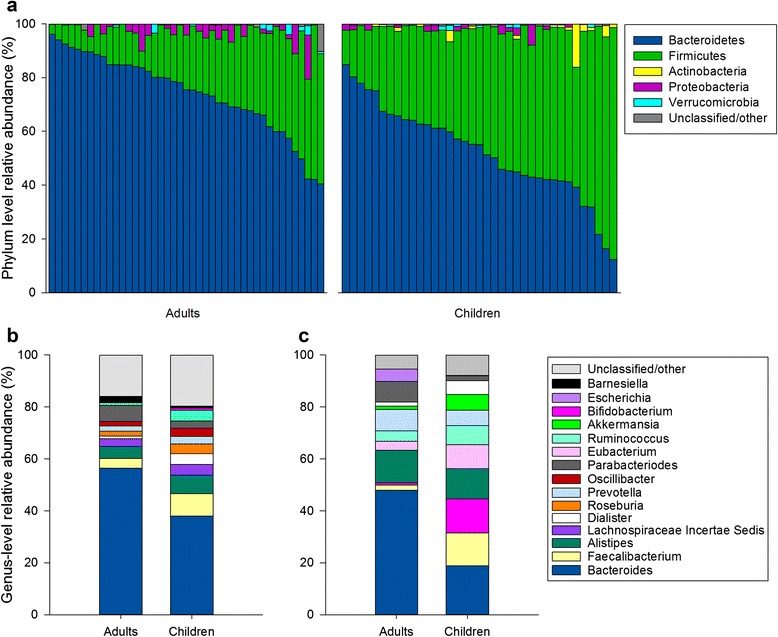
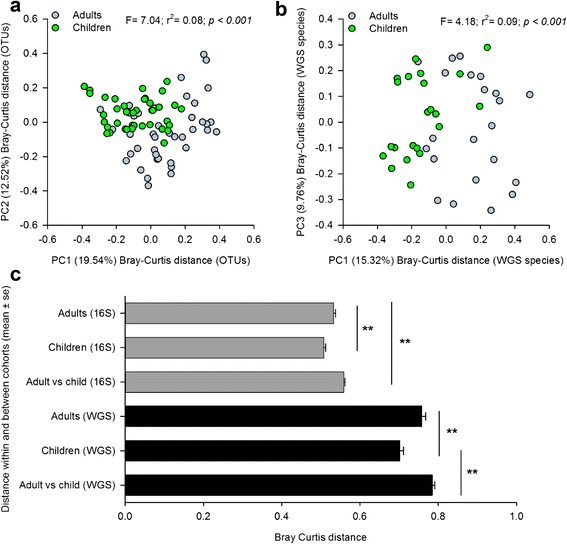
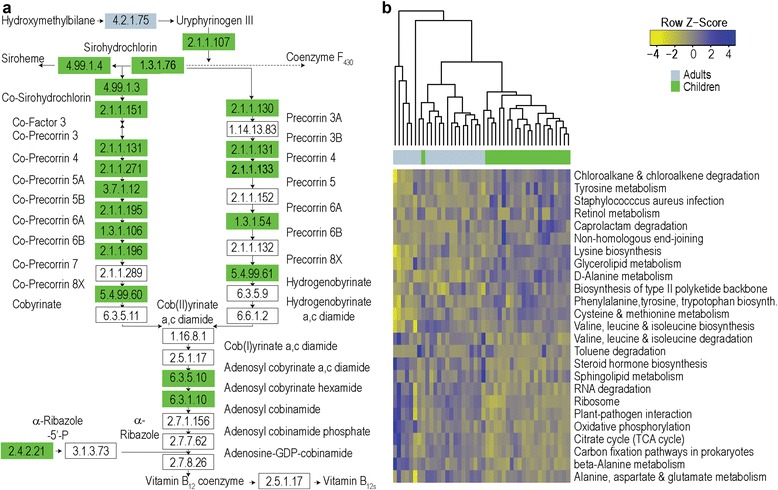
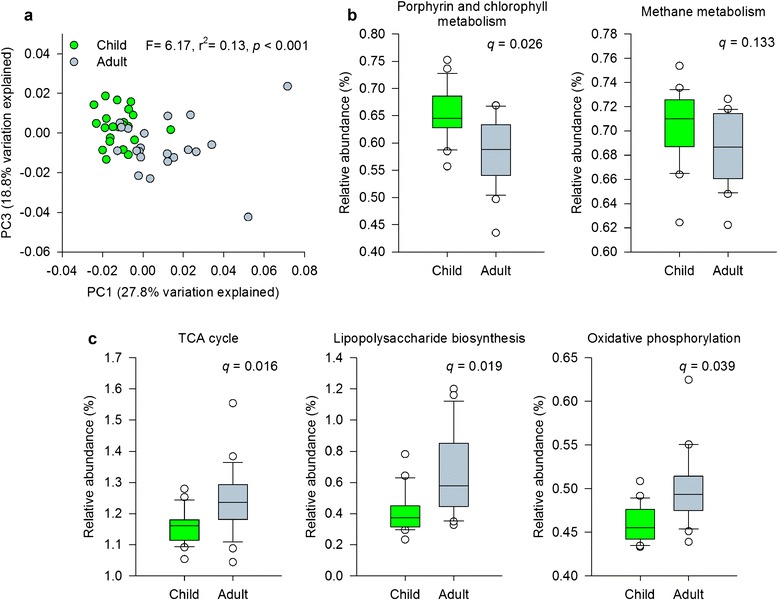
BACKGROUND: The gut microbiome influences myriad host functions, including nutrient acquisition, immune modulation, brain development, and behavior. Although human gut microbiota are recognized to change as we age, information regarding the structure and function of the gut microbiome during childhood is limited. Using 16S rRNA gene and shotgun metagenomic sequencing, we characterized the structure, function, and variation of the healthy pediatric gut microbiome in a cohort of school-aged, pre-adolescent children (ages 7-12 years). We compared the healthy pediatric gut microbiome with that of healthy adults previously recruited from the same region (Houston, TX, USA). RESULTS: Although healthy children and adults harbored similar numbers of taxa and functional genes, their composition and functional potential differed significantly. Children were enriched in Bifidobacterium spp., Faecalibacterium spp., and members of the Lachnospiraceae, while adults harbored greater abundances of Bacteroides spp. From a functional perspective, significant differences were detected with respect to the relative abundances of genes involved in vitamin synthesis, amino acid degradation, oxidative phosphorylation, and triggering mucosal inflammation. Children's gut communities were enriched in functions which may support ongoing development, while adult communities were enriched in functions associated with inflammation, obesity, and increased risk of adiposity. CONCLUSIONS: Previous studies suggest that the human gut microbiome is relatively stable and adult-like after the first 1 to 3 years of life. Our results suggest that the healthy pediatric gut microbiome harbors compositional and functional qualities that differ from those of healthy adults and that the gut microbiome may undergo a more prolonged development than previously suspected.
Overview
The claims and statistics of this paper haven’t been checked yet.
Free: it reads the open-access text and checks the first 5 claims that cite a source we can check. Create a free account to check every claim.
Integrity signals
Registry
Cites
Statistics
Figures
Verification
Claims the paper makes
The claims and statistics of this paper haven’t been checked yet.
Free: it reads the open-access text and checks the first 5 claims that cite a source we can check. Create a free account to check every claim.
Claims other papers make about this one
Each is checked against this paper’s own text: does it say what the citing paper says it does?
The source backs part of the claim, not all of it — or backs it for a different population, condition or comparison.
In the citing paper
“The microbial biodiversity of six to twelve year olds, for example, has been shown to be greater than those of healthy adults [84,85].”
From Effect of Diet on the Gut Microbiota: Rethinking Intervention Duration (2019) · cites this paper as [85]
Experimental — accuracy not yet measuredThe cited source says what the claim attributes to it.
In the citing paper
“The improved understanding of factors that shape the gut microbiome allow us to better identify confounding effects in human studies, including physiological development through childhood and adolescence to adulthood30, 128, 11, and at the same time, appreciate the adaptation of this resilient microbial ecosystem to short- and long-term perturbations in host environment.”
From The gut Microbiome in adult and pediatric functional gastrointestinal disorders (2019) · cites this paper as [11]
The cited source says what the claim attributes to it.
In the citing paper
“A more stable and complex, adult-like microbiota starts to emerge as early as one to three years of age, although this development may continue as late as pre-adolescence (85, 86).”
From Signalling cognition: The gut microbiota and hypothalamic-pituitary-adrenal axis (2023) · cites this paper as [86]
The cited source says what the claim attributes to it.
In the citing paper
“The composition and function of the microbiota in healthy children (measured at 7-12 years of age) remains significantly different from the healthy adult microbiota (Hollister et al., 2015).”
From The Microbiota-Gut-Brain Axis (2019) · cites this paper as Hollister et al., 2015
The cited source says what the claim attributes to it.
In the citing paper
“In particular, the gut microbiota of children is functionally enriched in pathways supporting ongoing development (e.g., genes involved in vitamin synthesis and de novo folate synthesis, anti-inflammatory pathways; Hollister et al., 2015).”
From The Microbiota-Gut-Brain Axis (2019) · cites this paper as Hollister et al., 2015
1 more claim about this paper
Create a free account to see every claim other papers make about this one.
Self-check
Percentages, sums and reported differences re-computed from the paper’s own numbers.
The self-check needs the paper’s full text.
Citations
Cites
Fast gapped-read alignment with Bowtie 2
Langmead, B., & Salzberg, S. L. (2012) · Nature Methods · doi:10.1038/nmeth.1923 · Cited by 56,400 · cited 1×
“Bowtie2 [53] was used to map sequence reads to a reference copy of the human genome”
MethodQIIME allows analysis of high-throughput community sequencing data
Caporaso, J. G., Kuczynski, J., Stombaugh, J., Bittinger, K., Bushman, F. D., Costello, E. K., Fierer, N., Peña, A. G., Goodrich, J. K., Gordon, J. I., et al. (2010) · Nature Methods · doi:10.1038/nmeth.f.303 · Cited by 34,887 · cited 1×
“0) [49].”
vegan: Community Ecology Package
Oksanen, J., Simpson, G. L., Blanchet, F. G., Kindt, R., Legendre, P., Minchin, P. R., O'Hara, R. B., Solymos, P., Stevens, M. H. H., Szoecs, E., et al. (2001) · CRAN: Contributed Packages · doi:10.32614/cran.package.vegan · Cited by 22,615
Search and clustering orders of magnitude faster than BLAST
Edgar, R. C. (2010) · Bioinformatics · doi:10.1093/bioinformatics/btq461 · Cited by 20,826
Naïve Bayesian Classifier for Rapid Assignment of rRNA Sequences into the New Bacterial Taxonomy
Wang, Q., Garrity, G. M., Tiedje, J. M., & Cole, J. R. (2007) · Applied and Environmental Microbiology · doi:10.1128/aem.00062-07 · Cited by 19,885 · cited 1×
“Classifier [52] with RDP training set 9 and confidence scores ≥50 %.”
Classification and Regression by randomForest
Liaw, A. I., & Wiener, M. C. (2007) · Cited by 18,594
An obesity-associated gut microbiome with increased capacity for energy harvest
Turnbaugh, P. J., Ley, R. E., Mahowald, M. A., Magrini, V., Mardis, E. R., & Gordon, J. I. (2006) · Nature · doi:10.1038/nature05414 · Cited by 12,444 · cited 3×
“ciated with leanness and other desirable health traits [26, 28], some of its members, including strains of Bacteroides fragilis, Bacteroides vulgatus, and Bacteroides”
BackgroundStructure, function and diversity of the healthy human microbiome
The Human Microbiome Project Consortium (2012) · Nature · doi:10.1038/nature11234 · Cited by 11,726
Cd-hit: a fast program for clustering and comparing large sets of protein or nucleotide sequences
Li, W., & Godzik, A. (2006) · Bioinformatics · doi:10.1093/bioinformatics/btl158 · Cited by 11,410 · cited 2×
“OTUs were clustered using CD-Hit [50], and reads were screened for chimeras using ChimeraSlayer [51].”
MethodVelvet: Algorithms for de novo short read assembly using de Bruijn graphs
Zerbino, D. R., & Birney, E. (2008) · Genome Research · doi:10.1101/gr.074492.107 · Cited by 9,491 · cited 1×
“The velvet assembler [56] (veveth, hash size 45) was used to construct contigs.”
Method
Cited by
Items 401–431 of 431
Aitokari, R. (2022) · UTUPub (University of Turku)
Профатило, А. О. (2024) · Electronic Sumy State University Institutional Repository (Sumy State University)
Querdasi, F. (2025) · eScholarship (California Digital Library)
(2020) · Arizona State University Library Digital Repository (Arizona State University)
Suolistomikrobiston kehitys ihmisen elinaikana
Rantakokko, A. (2025) · UTUPub (University of Turku)
Li, M., Dai, L., Yang, Y., Chen, S., Ma, J., & Feng, P. (2026) · Frontiers in Microbiology · doi:10.3389/fmicb.2026.1700764
Role of the neonatal intestinal microbiota in the eating behaviour programming in rat
Pocheron, A.-L. (2019) · theses.fr (ABES)
Foundations of the gut microbiome: understanding microbial ecology
Kalia, P., Angelis, M., Rani, A., & Qavi, D. (2026) · Elsevier eBooks · doi:10.1016/b978-0-443-40483-2.00019-4
Pocheron, A.-L. (2019) · theses.fr (ABES) · doi:10.70675/29969b86z2649z4b67zb315za23a1106f4ef
Altérations de l’axe microbiote-intestin-cerveau dans les troubles du spectre de l’autisme
Brouillet, J. Z. (2024) · theses.fr (ABES) · doi:10.70675/aa5a3796z7235z4756z8f00z6094c1fb4081
Modélisation de la dégradation des protéines alimentaires par le microbiote intestinal humain
Paulay, A. (2024) · theses.fr (ABES) · doi:10.70675/41f1d6ecz7fa4z4c7azb50ez413305795258
Sinthika, E., Rustanti, N., & Lestari, E. S. (2026) · Journal of Nutrition College · doi:10.14710/jnc.v15i2.51238
The Human Microbiota: Composition and Functions
Sobti, R. C., Negi, R. K., & Rana, A. (2026) · Springer eBooks · doi:10.1007/978-981-95-9031-5_2
Kumari, J., Das, S., Ranjan, S., & Singh, S. (2026) · 3 Biotech · doi:10.1007/s13205-026-04885-x · Cited by 1
Flores, G. D., Damon, Z. F., Ford, M., Gancz, N. N., Savoca, P. W., Esfand, S. M., Chu, K. A., Querdasi, F. R., McCann, C. F., Westman, J. G., et al. (2026) · Brain Behavior & Immunity - Health · doi:10.1016/j.bbih.2026.101275
“…stabilizes around the third year of life, emerging evidence suggests that the compositional and functional profiles of the adolescent gut microbiome are, in many respects, distinct from those of earlier and later life stages (Agans et al., 2011; Hollister et al., 2015; Radjabzadeh et al., 2020).”
Duggar, M., Leardini, D., Muratore, E., Margolis, E. B., & Masetti, R. (2026) · Pediatric Transplantation · doi:10.1111/petr.70371
Shin, D. W., Oh, S., Hong, Y. J., & Park, K. U. (2026) · Scientific Reports · doi:10.1038/s41598-026-57771-0
“…spp., Bifidobacterium kashiwanohense , Dialister invisus , Escherichia coli , Okadaella gastrococcus , Parabacteroides spp., and Ruminococcus sp.) 32–38 , oral cavity inhabitants ( Neisseria subflava , Porphyromonas sp., and Streptococcus spp.) 39–42 , skin-associated species ( Enhydrobacter…”
The bile acid-gut microbiota-vitamin D axis: new insights into biliary atresia
Huang, C., Li, Z., Shen, W., Luo, M., & 林发全 (2026) · Frontiers in Cellular and Infection Microbiology · doi:10.3389/fcimb.2026.1847110
Beneyto, R., López-Espinosa, M.-J., Francino, M. P., Vallejo-Ortega, J., Jiménez‐Hernández, N., Bustamante, M., Freire, C., González‐Palacios, S., Maître, L., Olivas-Martínez, A., et al. (2026) · medRxiv · doi:10.64898/2026.08.05.26358554
Sasaki, D., Shintani, T., Matsuki, Y., & Kondo, A. (2026) · Research Square · doi:10.21203/rs.3.rs-10698720/v4
Kalafati, I. P., Krongauz, D. L., Bosco, A., Noto, A., Piras, C., Kafyra, M., Dessì, A., Mauri, M., Atzori, L., Weinberger, A., et al. (2026) · Obesity Reviews · doi:10.1111/obr.70220
The Adolescent Microbiome–Gut–Brain Axis: Development, Mechanisms, and Translational Perspectives
Vazquez-Sanroman, D. B., Longaberger, L., Chance, A., Anderson, M. C., Wilson, N. F., & Koehler, G. (2026) · Nutrients · doi:10.3390/nu18172891
“Indeed, several preclinical studies demonstrate that alterations in microbiota composition can impair hippocampal neurogenesis, disrupt neurotrophins expression, and compromise cognitive performance and stress resilience [12,109].”
Thachil, A., Mandal, R., Wishart, D. S., & Blydt‐Hansen, T. D. (2026) · bioRxiv (Cold Spring Harbor Laboratory) · doi:10.64898/2026.09.13.750246
Gomez-Gomez, E., García‐Hernández, J., Heredia, A. B., Calvo‐Lerma, J., & Andrés, A. (2026) · Current Microbiology · doi:10.1007/s00284-026-05173-w
Εντερικό μικροβίωμα και διατροφή στην υγεία και στη νόσο
Αγορίτσα, Ε. (2024) · Institutional Repository Hellanicus
Are Gut Diversity and Composition Associated with Malnutrition in Children with Cerebral Palsy?
Shen, X., Luo, Q., Luo, X., Dan, C., Wang, D., & Zhong, J. (2026) · Jundishapur Journal of Microbiology · doi:10.5812/jjm-169118
Hofford, R. S., Shipman, A. L., Wang, W., Lam, T. T., & Kiraly, D. D. (2026) · Frontiers in Behavioral Neuroscience · doi:10.3389/fnbeh.2026.1916554
Jose, J., Devassy, S. M., Ravi, A., Saidumohamed, B. E., Pramod, A. V., Benny, I. J., Pereira, M. D. L., & Anjos, M. (2026) · Nutritional Neuroscience · doi:10.1080/1028415x.2026.2747374
Metadata
- Authors
- Hollister, E. B., Riehle, K., Luna, R. A., Weidler, E. M., Rubio-Gonzales, M., Mistretta, T.-A., Raza, S., Doddapaneni, H. V., Metcalf, G. A., Muzny, D. M., Gibbs, R. A., Petrosino, J. F., Shulman, R. J., & Versalovic, J.
- Affiliations
- Baylor College of Medicine (US)
- Corresponding author
- Hollister, Emily B.
- ORCID
- Venue
- Microbiome
- Published
- 2015-08-26
- Volume
- 3
- Issue
- 1
- Pages
- 36-36
- ISSN
- 2049-2618 (ISSN-L)
- PMC
- PMC4550057
- OpenAlex
- W2096500845
- Cited by
- 406
- References
- 70
- Citations by year
- 2026: 27 · 2025: 38 · 2024: 37 · 2023: 40 · 2022: 55 · 2021: 51 · 2020: 37 · 2019: 45 · 2018: 33 · 2017: 21 · 2016: 22
- FWCI
- 10.93
- Type
- journal article
- Language
- en
- Open access
- gold
- doi.org
- Licence
- cc-by
- creativecommons.org/licenses/by/4.0/ (tdm)
- creativecommons.org/licenses/by/4.0/ (vor)
- Locations
- Microbiome (publishedVersion, cc-by)
- PubMed Central (publishedVersion, cc-by)
- PubMed (publishedVersion)
- Funders
- National Institute of Diabetes and Digestive and Kidney Diseases (UH2 DK093990, UH3 DK083990)
- National Center for Complementary and Alternative Medicine (R01 AT004326)
- National Cancer Institute (U01 CA170930)
- National Human Genome Research Institute (U54 HG004973)
- National Institute of Nursing Research (R01 NR05337, R01 NR013497)
- Daffy's Foundation (ᅟ)
- Topics
- Life Sciences › Biochemistry, Genetics and Molecular Biology › Molecular Biology › Gut microbiota and health
- Health Sciences › Nursing › Nutrition and Dietetics › Infant Nutrition and Health
- Health Sciences › Dentistry › Periodontics › Oral microbiology and periodontitis research
- Keywords
- gut microbiota, preadolescents, microbiome development, Bifidobacterium, Faecalibacterium, Bacteroides, Lachnospiraceae, microbial functional genes, vitamin synthesis, amino acid catabolism, oxidative phosphorylation, mucosal inflammation, obesity
- MeSH terms
- Gastrointestinal Microbiome, Adult, Age Factors, Child, Female, Humans, Male, RNA, Ribosomal, 16S, Cluster Analysis, Biodiversity, Metagenome, DNA Barcoding, Taxonomic, Healthy Volunteers
About these checks
Registry, retraction, Cites and statistics results are computed, not judged, with one exception: a printed reference that no index lists is read once by a model before it counts as a citation error. Claims are extracted by a model and kept only when their quote appears verbatim in the text; each cited source is then checked, with a model’s help, for whether it says what the claim relies on. Those verdicts can be wrong — read the claim’s quote and the cited source before relying on one.
Statistics and arithmetic are recomputed, not judged.
Confidence bands are shown only for fields calibrated on our annotated test set. None is calibrated yet, so no band is shown.
What counts as a claim ›How we measure confidence ›How we check this ›
Are you an author, or do you see a problem with this page? Request a review
Data sources
Bibliographic data: Semantic Scholar, OpenAlex, Crossref.
Contains information from the Semantic Scholar Academic Graph Datasets, made available under the ODC Attribution License (ODC-BY 1.0).
Semantic Scholar’s data is described in: Kinney, R., et al. (2023). The Semantic Scholar Open Data Platform. arXiv:2301.10140.
