

The DOI matches its Crossref record; 90 of the 90 references it cites were found in a registry or an index.
The contribution of culturomics to the repertoire of isolated human bacterial and archaeal species
Open accessAbstract
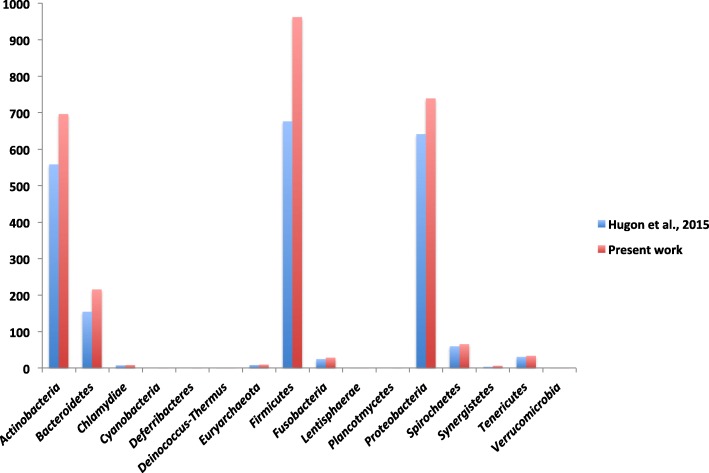
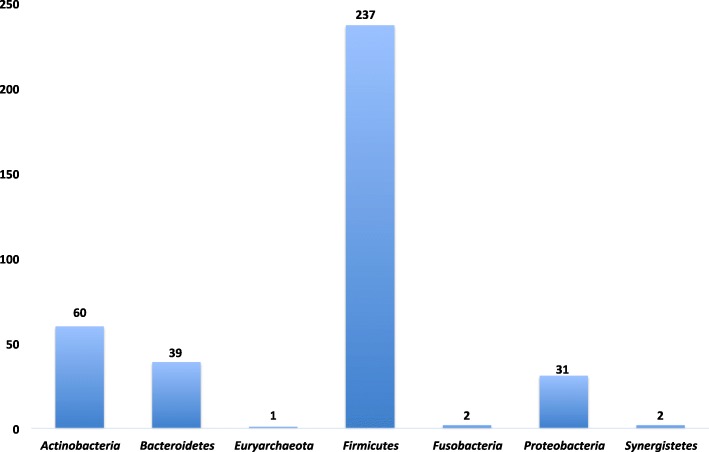
After a decade of research and metagenomic analyses, our knowledge of the human microbiota appears to have reached a plateau despite promising results. In many studies, culture has proven to be essential in describing new prokaryotic species and filling metagenomic gaps. In 2015, only 2172 different prokaryotic species were reported to have been isolated at least once from the human body as pathogens or commensals. In this review, we update the previous repertoire by reporting the different species isolated from the human body to date, increasing it by 28% to reach a total of 2776 species associated with human beings. They have been classified into 11 different phyla, mostly the Firmicutes, Proteobacteria, Bacteroidetes, and Actinobacteria. Finally, culturomics contributed up to 66.2% towards updating this repertoire by reporting 400 species, of which 288 were novel. This demonstrates the need to continue the culturing work, which seems essential in order to decipher the hidden human microbial content.
Overview
The claims and statistics of this paper haven’t been checked yet.
Run the check — free, no account needed. It reads the open-access text and checks the sources it cites.
Integrity signals
Registry
Cites
Statistics
Figures

Verification
Claims the paper makes
The claims and statistics of this paper haven’t been checked yet.
Run the check — free, no account needed. It reads the open-access text and checks the sources it cites.
Claims other papers make about this one
Each is checked against this paper’s own text: does it say what the citing paper says it does?
The source backs part of the claim, not all of it — or backs it for a different population, condition or comparison.
In the citing paper
“These have been classified into 11 different phyla with Proteobacteria, Firmicutes, Actinobacteria and Bacteroidetes comprising over 90% of the microbiome (Bilen et al., 2018;Hu-gon et al., 2015;Li et al., 2014)”
From The Microbiota-Gut-Brain Axis (2019) · cites this paper as Bilen et al., 2018
Experimental — accuracy not yet measuredThe source backs part of the claim, not all of it — or backs it for a different population, condition or comparison.
In the citing paper
“Current combined Human Microbiome Project and MetaHIT data estimate that there are at least 2776 prokaryotic species that have been isolated from human fecal matter.”
From The Microbiota-Gut-Brain Axis (2019) · cites this paper as Bilen et al., 2018
Experimental — accuracy not yet measured
Self-check
Percentages, sums and reported differences re-computed from the paper’s own numbers.
The self-check needs the paper’s full text.
Citations
Cites
3 retracted
Lagier, J.-C., Khelaifia, S., Alou, M. T., Ndongo, S., Dione, N., Hugon, P., Caputo, A., Cadoret, F., Traore, S. I., Seck, E. H., et al. (2016) · Nature Microbiology · doi:10.1038/nmicrobiol.2016.203 · Cited by 951
Self-citationRetractedMillion, M., Alou, M. T., Khelaifia, S., Bachar, D., Lagier, J., Dione, N., Brah, S., Hugon, P., Lombard, V., Armougom, F., et al. (2016) · Scientific Reports · doi:10.1038/srep26051 · Cited by 204
Self-citationRetractedPfleiderer, A., Lagier, J., Armougom, F., Robert, C., Vialettes, B., & Raoult, D. (2013) · European Journal of Clinical Microbiology & Infectious Diseases · doi:10.1007/s10096-013-1900-2 · Cited by 158
Self-citationRetractedAn obesity-associated gut microbiome with increased capacity for energy harvest
Turnbaugh, P. J., Ley, R. E., Mahowald, M. A., Magrini, V., Mardis, E. R., & Gordon, J. I. (2006) · Nature · doi:10.1038/nature05414 · Cited by 12,444
Structure, function and diversity of the healthy human microbiome
The Human Microbiome Project Consortium (2012) · Nature · doi:10.1038/nature11234 · Cited by 11,726
Human gut microbes associated with obesity
Ley, R. E., Turnbaugh, P. J., Klein, S., & Gordon, J. I. (2006) · Nature · doi:10.1038/4441022a · Cited by 8,785
Diversity of the Human Intestinal Microbial Flora
Eckburg, P. B., Bik, E. M., Bernstein, C. N., Purdom, E., Dethlefsen, L., Sargent, M., Gill, S. R., Nelson, K. E., & Relman, D. A. (2005) · Science · doi:10.1126/science.1110591 · Cited by 7,913
Obesity alters gut microbial ecology
Ley, R. E., Bäckhed, F., Turnbaugh, P., Lozupone, C. A., Knight, R. D., & Gordon, J. I. (2005) · Proceedings of the National Academy of Sciences · doi:10.1073/pnas.0504978102 · Cited by 6,176
Turnbaugh, P. J., Ley, R. E., Hamady, M., Fraser-Liggett, C. M., Knight, R., & Gordon, J. I. (2007) · Nature · doi:10.1038/nature06244 · Cited by 6,091
Gut microbiome influences efficacy of PD-1-based immunotherapy against epithelial tumors
Routy, B., Le Chatelier, E., Derosa, L., Duong, C. P. M., Alou, M. T., Daillère, R., Fluckiger, A., Messaoudene, M., Rauber, C., Roberti, M. P., et al. (2018) · Science · doi:10.1126/science.aan3706 · Cited by 5,671
Self-citation
Cited by
Sorted by citations
Cryan, J. F., O'Riordan, K. J., Cowan, C. S. M., Sandhu, K. V., Bastiaanssen, T. F. S., Boehme, M., Codagnone, M. G., Cussotto, S., Fulling, C., Golubeva, A. V., et al. (2019) · Physiological Reviews · doi:10.1152/physrev.00018.2018 · Cited by 5,286
Sex differences in gut microbiota
Kim, Y. S., Unno, T., Kim, B.-Y., & Park, M.-S. (2020) · The World Journal of Men s Health · doi:10.5534/wjmh.190009 · Cited by 610
Gut Bacteria and Neurotransmitters
Dicks, L. M. T. (2022) · Microorganisms · doi:10.3390/microorganisms10091838 · Cited by 482
Montero, C. G., Fraile‐Μartinez, O., Gomez-Lahoz, A. M., Pekarek, L., Castellanos, A. J., Noguerales-Fraguas, F., Coca, S., Guijarro, L. G., García‐Honduvilla, N., Asúnsolo, Á., et al. (2021) · Nutrients · doi:10.3390/nu13020699 · Cited by 487
Next generation probiotics in disease amelioration
Chang, C., Lin, T., Tsai, Y., Wu, T.-R., Lai, W.-F., Lu, C., & Lai, H. (2019) · Journal of Food and Drug Analysis · doi:10.1016/j.jfda.2018.12.011 · Cited by 398
d’Enfert, C., Kaune, A.-K., Alaban, L. R., Chakraborty, S., Cole, N. L., Delavy, M., Kosmala, D., Marsaux, B., Fróis-Martins, R., Morelli, M., et al. (2020) · FEMS Microbiology Reviews · doi:10.1093/femsre/fuaa060 · Cited by 377
Exploring the emerging role of the microbiome in cancer immunotherapy
Fessler, J. L., Matson, V. Z., & Gajewski, T. F. (2019) · Journal for ImmunoTherapy of Cancer · doi:10.1186/s40425-019-0574-4 · Cited by 325
Opportunities and challenges of using metagenomic data to bring uncultured microbes into cultivation
Liu, S., Moon, C. D., Zheng, N., Huws, S., Zhao, S., & Wang, J. (2022) · Microbiome · doi:10.1186/s40168-022-01272-5 · Cited by 278
Microbiota in Tumors: From Understanding to Application
Xie, Y., Xie, F., Zhou, X., Zhang, L., Yang, B., Huang, J., Wang, F., Yan, H., Zhang, L., Zhang, L., et al. (2022) · Advanced Science · doi:10.1002/advs.202200470 · Cited by 224
The microbiome of pest insects: it is not just bacteria
Gurung, K., Wertheim, B., & Salles, J. F. (2019) · Entomologia Experimentalis et Applicata · doi:10.1111/eea.12768 · Cited by 204
You’ve got male: Sex and the microbiota-gut-brain axis across the lifespan
Jaggar, M., Rea, K., Spichak, S., Dinan, T. G., & Cryan, J. F. (2020) · Frontiers in Neuroendocrinology · doi:10.1016/j.yfrne.2019.100815 · Cited by 200
Synthetic ecology of the human gut microbiota
Vrancken, G., Gregory, A., Huys, G. R. B., Faust, K., & Raes, J. (2019) · Nature Reviews Microbiology · doi:10.1038/s41579-019-0264-8 · Cited by 196
Next-generation probiotics: the upcoming biotherapeutics
Al-Fakhrany, O. M., & Elekhnawy, E. (2024) · Molecular Biology Reports · doi:10.1007/s11033-024-09398-5 · Cited by 208
Pursuing Human-Relevant Gut Microbiota-Immune Interactions
Spencer, S. P., Fragiadakis, G. K., & Sonnenburg, J. L. (2019) · Immunity · doi:10.1016/j.immuni.2019.08.002 · Cited by 167
Vitamin D and the Host-Gut Microbiome: A Brief Overview
Akimbekov, N. S., Digel, I., Sherelkhan, D. K., Lutfor, A. B., & Razzaque, M. S. (2020) · ACTA HISTOCHEMICA ET CYTOCHEMICA · doi:10.1267/ahc.20011 · Cited by 153
Repertoire of Human Breast and Milk Microbiota: A Systematic Review
Togo, A. H., Dufour, J.-C., Lagier, J., Dubourg, G., Raoult, D., & Million, M. (2019) · Future Microbiology · doi:10.2217/fmb-2018-0317 · Cited by 148
Self-citationGut Microbiota: A Perspective for Psychiatrists
Rea, K., Dinan, T. G., & Cryan, J. F. (2019) · Neuropsychobiology · doi:10.1159/000504495 · Cited by 146
Pesticide exposure and the microbiota-gut-brain axis
Matsuzaki, R., Gunnigle, E., Geissen, V., Clarke, G. A., Nagpal, J. K., & Cryan, J. F. (2023) · The ISME Journal · doi:10.1038/s41396-023-01450-9 · Cited by 129
Kang, J., Xue, Y., Chen, X., & Han, B. (2022) · Comprehensive Reviews in Food Science and Food Safety · doi:10.1111/1541-4337.13025 · Cited by 109
Gut Microbiota Interaction with the Central Nervous System throughout Life
Ojeda, J., Ávila, A., & Vidal, P. M. (2021) · Journal of Clinical Medicine · doi:10.3390/jcm10061299 · Cited by 112
Exhaustive repertoire of human vaginal microbiota
Diop, K., Dufour, J.-C., Levasseur, A., & Fenollar, F. (2019) · Human Microbiome Journal · doi:10.1016/j.humic.2018.11.002 · Cited by 103
Self-citationThe gut microbiota–brain axis in neurological disorders
You, M., Chen, N., Yang, Y., Cheng, L., He, H., Cai, Y., Liu, Y., Liu, H., & Hong, G. (2024) · MedComm · doi:10.1002/mco2.656 · Cited by 113
Role of prebiotics in enhancing the function of next-generation probiotics in gut microbiota
Fei, Y., Chen, Z., Han, S., Zhang, S., Zhang, T., Lu, Y., Berglund, B., Xiao, H., Li, L., & Yao, M. (2021) · Critical Reviews in Food Science and Nutrition · doi:10.1080/10408398.2021.1958744 · Cited by 105
Next generation probiotics for human health: An emerging perspective
Jan, T., Negi, R., Sharma, B., Kumar, S., Singh, S., Rai, A. K., Shreaz, S., Rustagi, S., Chaudhary, N., Kaur, T., et al. (2024) · Heliyon · doi:10.1016/j.heliyon.2024.e35980 · Cited by 95
Optimization and standardization of the culturomics technique for human microbiome exploration
Diakite, A., Dubourg, G., Dione, N., Afouda, P., Bellali, S., Ngom, I. I., Valles, C., Tall, M. L., Lagier, J., & Raoult, D. (2020) · Scientific Reports · doi:10.1038/s41598-020-66738-8 · Cited by 95
Self-citationWu, L., Xie, X., Li, Y., Liang, T., Zhong, H., Yang, L., Yu, X., Zhang, J., Ding, Y., & Wu, Q. (2022) · npj Biofilms and Microbiomes · doi:10.1038/s41522-022-00366-0 · Cited by 102
Shining Light on Human Gut Bacteriophages
Guerin, E., & Hill, C. (2020) · Frontiers in Cellular and Infection Microbiology · doi:10.3389/fcimb.2020.00481 · Cited by 88
Unfolding the Human Milk Microbiome Landscape in the Omics Era
Ruíz, L., García-Carral, C., & Rodríguez, J. M. (2019) · Frontiers in Microbiology · doi:10.3389/fmicb.2019.01378 · Cited by 94
Behzadi, P., Urbán, E. Z., Matúz, M., Benkő, R., & Gajdács, M. (2020) · Advances in experimental medicine and biology · doi:10.1007/5584_2020_566 · Cited by 97
Culturomics and metagenomics: In understanding of environmental resistome
Nowrotek, M., Jałowiecki, Ł., Harnisz, M., & Płaza, G. A. (2019) · Frontiers of Environmental Science & Engineering · doi:10.1007/s11783-019-1121-8 · Cited by 81
Bellali, S., Lagier, J., Raoult, D., & Khalil, J. Y. B. (2019) · Frontiers in Microbiology · doi:10.3389/fmicb.2019.01606 · Cited by 73
Self-citationRetractedSun, Y., Liu, Y., Li, J., Tan, Y., An, T., Zhuo, M., Pan, Z., Ma, M., Jia, B., Zhang, H., et al. (2023) · Microbiology Spectrum · doi:10.1128/spectrum.00314-23 · Cited by 77
Optimization of Culturomics Strategy in Human Fecal Samples
Chang, Y., Hou, F., Pan, Z., Huang, Z., Han, N., Bin, L., Deng, H., Li, Z., Ding, L., Gao, H., et al. (2019) · Frontiers in Microbiology · doi:10.3389/fmicb.2019.02891 · Cited by 69
A Meta-Analysis Approach to Defining the Culturable Core of Plant Endophytic Bacterial Communities
Riva, V., Mapelli, F., Bagnasco, A., Mengoni, A., & Borin, S. (2022) · Applied and Environmental Microbiology · doi:10.1128/aem.02537-21 · Cited by 70
Dubourg, G., Morand, A., Mekhalif, F., Godefroy, R., Corthier, A., Yacouba, A., Diakite, A., Cornu, F., Cresci, M., Brahimi, S., et al. (2020) · Frontiers in Microbiology · doi:10.3389/fmicb.2020.513305 · Cited by 66
Self-citationRetractedDicks, L. M. T. (2023) · International Journal of Molecular Sciences · doi:10.3390/ijms25010038 · Cited by 74
Kostrzewa, M., Nagy, E., Schröttner, P., & Pranada, A. B. (2019) · Expert Review of Molecular Diagnostics · doi:10.1080/14737159.2019.1643238 · Cited by 64
Extensive culturomics of 8 healthy samples enhances metagenomics efficiency
Diakite, A., Dubourg, G., Dione, N., Afouda, P., Bellali, S., Ngom, I. I., Valles, C., Million, M., Levasseur, A., Cadoret, F., et al. (2019) · PLoS ONE · doi:10.1371/journal.pone.0223543 · Cited by 61
Self-citationXian, W.-D., Salam, N., Li, M., Zhou, E., Yin, Y.-R., Liu, Z., Ming, Y.-Z., Zhang, X., Wu, G., Liu, L., et al. (2020) · npj Biofilms and Microbiomes · doi:10.1038/s41522-020-0131-4 · Cited by 60
Gut Bacteria and Neuropsychiatric Disorders
Dicks, L. M. T., Hurn, D., & Hermanus, D. (2021) · Microorganisms · doi:10.3390/microorganisms9122583 · Cited by 63
Target Dysbiosis of Gut Microbes as a Future Therapeutic Manipulation in Alzheimer’s Disease
Zhu, F., Li, C., Chu, F., Tian, X., & Zhu, J. (2020) · Frontiers in Aging Neuroscience · doi:10.3389/fnagi.2020.544235 · Cited by 59
Hahn, A., Podbielski, A., Meyer, T., Zautner, A. E., Loderstädt, U., Schwarz, N. G., Krüger, A., Cadar, D., & Frickmann, H. (2020) · Acta Tropica · doi:10.1016/j.actatropica.2020.105377 · Cited by 51
Ribosome Biogenesis in Archaea
Londei, P., & Ferreira-Cerca, S. (2021) · Frontiers in Microbiology · doi:10.3389/fmicb.2021.686977 · Cited by 49
Nogueira, T., & Botelho, A. (2021) · Antibiotics · doi:10.3390/antibiotics10070787 · Cited by 51
Exploring the global vaginal microbiome and its impact on human health
Chacra, L. A., & Fenollar, F. (2021) · Microbial Pathogenesis · doi:10.1016/j.micpath.2021.105172 · Cited by 47
A novel 3D in vitro model of the human gut microbiota
Biagini, F., Calvigioni, M., Lapomarda, A., Vecchione, A., Magliaro, C., Maria, C. D., Montemurro, F., Celandroni, F., Mazzantini, D., Mattioli‐Belmonte, M., et al. (2020) · Scientific Reports · doi:10.1038/s41598-020-78591-w · Cited by 44
A review of the resistome within the digestive tract of livestock
Ma, T., McAllister, T. A., & Guan, L. L. (2021) · Journal of Animal Science and Biotechnology/Journal of animal science and biotechnology · doi:10.1186/s40104-021-00643-6 · Cited by 51
Li, C., Luan, Z., Zhao, Y., Chen, J., Yang, Y., Wang, C., Jing, Y., Qi, S., Li, Z., Guo, H., et al. (2022) · npj Biofilms and Microbiomes · doi:10.1038/s41522-022-00282-3 · Cited by 46
Li, Z., Zhang, F., Sun, M., Liu, J., Zhao, L., Liu, S., Li, S., & Wang, B. (2023) · PeerJ · doi:10.7717/peerj.15122 · Cited by 43
“…classified into 11 different phyla, with Proteobacteria , Firmicutes , Actinobacteria , and Bacteroidetes comprising over 90% of the microbiome ( Bilen et al., 2018 ; Hugon et al., 2015 ; Li et al., 2014 ), while Fusobacteria and Verrucomicrobia phyla are present in low abundance ( Eckburg et…”
Isolation and Cultivation of Human Gut Microorganisms: A Review
Wan, X., Yang, Q., Wang, X., Bai, Y., & Liu, Z. (2023) · Microorganisms · doi:10.3390/microorganisms11041080 · Cited by 40
Dysbiosis and extraintestinal cancers
He, R., Qi, P., Shu, L.-Z., Ding, Y., Zeng, P., Wen, G., Xiong, Y., & Deng, H. (2025) · Journal of Experimental & Clinical Cancer Research · doi:10.1186/s13046-025-03313-x · Cited by 43
Liu, Y., Li, X., Yang, Y., Liu, Y., Wang, S., Ji, B., & Wei, Y. (2021) · Frontiers in Molecular Biosciences · doi:10.3389/fmolb.2021.703638 · Cited by 36
The critical role of gut-brain axis microbiome in mental disorders
Basiji, K., Sendani, A. A., Ghavami, S. B., Farmani, M., Kazemifard, N., Sadeghi, A., Lotfali, E., & Aghdaei, H. A. (2023) · Metabolic Brain Disease · doi:10.1007/s11011-023-01248-w · Cited by 37
From Culturomics to Clinical Microbiology and Forward
Dubourg, G., Baron, S. A., Cadoret, F., Couderc, C., Fournier, P., Lagier, J., & Raoult, D. (2018) · Emerging infectious diseases · doi:10.3201/eid2409.170995 · Cited by 36
Self-citationUpdating the repertoire of cultured bacteria from the human being
Diakite, A., Dubourg, G., & Raoult, D. (2020) · Microbial Pathogenesis · doi:10.1016/j.micpath.2020.104698 · Cited by 35
Self-citationHallsworth, J. E., Mancinelli, R. L., Conley, C. A., Dallas, T. D., Rinaldi, T., Dávila, A. F., Benison, K. C., Rapoport, A. I., Cavalazzi, B., Selbmann, L., et al. (2021) · Environmental Microbiology · doi:10.1111/1462-2920.15499 · Cited by 35
A droplet-based microfluidic approach to isolating functional bacteria from gut microbiota
Yin, J., Chen, X., Li, X., Kang, G., Wang, P., Song, Y., Ijaz, U. Z., Yin, H., & Huang, H. (2022) · Frontiers in Cellular and Infection Microbiology · doi:10.3389/fcimb.2022.920986 · Cited by 35
Morella, I., Negro, M., Dossena, M., Brambilla, R., & D’Antona, G. (2023) · Neuropharmacology · doi:10.1016/j.neuropharm.2023.109718 · Cited by 36
Arahal, D. R., Bisgaard, M., Christensen, H. K., Clermont, D., Dijkshoorn, L., Duim, B., Emler, S., Figge, M. J., Göker, M., Moore, E. R. B., et al. (2024) · INTERNATIONAL JOURNAL OF SYSTEMATIC AND EVOLUTIONARY MICROBIOLOGY · doi:10.1099/ijsem.0.006188 · Cited by 31
What the Gut Tells the Brain—Is There a Link between Microbiota and Huntington’s Disease?
Wronka, D., Karlik, A., Misiorek, J. O., & Przybył, Ł. (2023) · International Journal of Molecular Sciences · doi:10.3390/ijms24054477 · Cited by 32
Repertoire of Bacterial Species Cultured from the Human Oral Cavity and Respiratory Tract
Fonkou, M. D. M., Dufour, J.-C., Dubourg, G., & Raoult, D. (2018) · Future Microbiology · doi:10.2217/fmb-2018-0181 · Cited by 30
Self-citationLiu, S., Yu, Z., Zhong, H., Zheng, N., Huws, S., Wang, J., & Zhao, S. (2023) · Microbiome · doi:10.1186/s40168-023-01510-4 · Cited by 29
Dicks, L. M. T. (2024) · International Journal of Molecular Sciences · doi:10.3390/ijms251910634 · Cited by 26
Sequencing-guided re-estimation and promotion of cultivability for environmental bacteria
Zheng, M., Wen, L., He, C., Chen, X., Si, L., Li, H., Liang, Y., Zheng, W., & Guo, F. (2024) · Nature Communications · doi:10.1038/s41467-024-53446-4 · Cited by 30
Quaranta, G., Ianiro, G., Maio, F. D., Guarnaccia, A., Fancello, G., Agrillo, C., Iannarelli, F., Bibbò, S., Amedei, A., Sanguinetti, M., et al. (2022) · BioMed Research International · doi:10.1155/2022/5787373 · Cited by 26
The Microbiota–Gut–Brain Axis: Key Mechanisms Driving Glymphopathy and Cerebral Small Vessel Disease
Nassir, C. M. N. C. M., Ramli, M. D. C., Ghazali, M. M., Jaffer, U., Hamid, H. A., Mehat, M. Z., & Hein, Z. M. (2024) · Life · doi:10.3390/life15010003 · Cited by 31
Maus, I., Klocke, M., Derenkó, J., Stolze, Y., Beckstette, M., Jost, C., Wibberg, D., Blom, J., Henke, C., Willenbücher, K., et al. (2020) · Environmental Microbiome · doi:10.1186/s40793-020-00354-x · Cited by 25
Taxonomic and Functional Dysregulation in Salivary Microbiomes During Oral Carcinogenesis
Chen, J.-W., Wu, J., Chiang, W.-F., Chen, Y., Wu, W.-S., & Wu, L. (2021) · Frontiers in Cellular and Infection Microbiology · doi:10.3389/fcimb.2021.663068 · Cited by 26
Culturomics, a potential approach paving the way toward bacteriotherapy
Matar, G. M., & Bilen, M. (2022) · Current Opinion in Microbiology · doi:10.1016/j.mib.2022.102194 · Cited by 24
Self-citationMun, D., Kim, H., Shin, M., Ryu, S., Song, M., Oh, S., & Kim, Y. (2021) · Journal of Animal Science and Technology · doi:10.5187/jast.2021.e124 · Cited by 23
An Integrated Multi-Disciplinary Perspective for Addressing Challenges of the Human Gut Microbiome
Shah, R., McKenzie, E. J., Rosin, M., Jadhav, S. R., Gondalia, S. V., Rosendale, D., & Beale, D. J. (2020) · Metabolites · doi:10.3390/metabo10030094 · Cited by 25
Untangling the web of intratumor microbiota in lung cancer
Liu, W. L., Xu, J., Pi, Z., Chen, Y., Jiang, G., Wan, Y., & Mao, W. (2023) · Biochimica et Biophysica Acta (BBA) - Reviews on Cancer · doi:10.1016/j.bbcan.2023.189025 · Cited by 27
Dietary Habits and Their Influence on the Microbiome and Mental Health in Adolescents
Sălcudean, A., Cîmpian, D. M., Popovici, R. A., Forna, N. C., Corodan-Comiati, D.-M., Sasu, A.-B., Cozma, M.-M., Bodo, C.-R., Enache, E.-C., Păcurar, M., et al. (2025) · Nutrients · doi:10.3390/nu17091496 · Cited by 27
Strategies and advancements in human microbiome description and the importance of culturomics
Bilen, M. (2020) · Microbial Pathogenesis · doi:10.1016/j.micpath.2020.104460 · Cited by 23
Self-citationThe urobiome, urinary tract infections, and the need for alternative therapeutics
Jones, J. A., Murphy, C. P., Sleator, R. D., & Culligan, E. P. (2021) · Microbial Pathogenesis · doi:10.1016/j.micpath.2021.105295 · Cited by 21
Barone, M., D’Amico, F., Fabbrini, M., Rampelli, S., Brigidi, P., & Turroni, S. (2021) · World Journal of Gastroenterology · doi:10.3748/wjg.v27.i41.7041 · Cited by 23
The functional microbiome of grapevine throughout plant evolutionary history and lifetime
Fournier, P., Pellan, L., Barroso‐Bergadà, D., Bohan, D. A., Candresse, T., Delmotte, F., Dufour, M., Lauvergeat, V., Marrec, C. L., Marais, A., et al. (2022) · Advances in ecological research/Advances in Ecological Research · doi:10.1016/bs.aecr.2022.09.001 · Cited by 27
Culturing the Human Oral Microbiota, Updating Methodologies and Cultivation Techniques
Khelaifia, S., Pilliol, V., Belkacemi, S., Tassery, H., Terrer, E., & Aboudharam, G. (2023) · Microorganisms · doi:10.3390/microorganisms11040836 · Cited by 23
Fusco, V., Fanelli, F., & Chieffi, D. (2023) · Foods · doi:10.3390/foods12203782 · Cited by 23
Hou, F., Chang, Y., Huang, Z., Han, N., Bin, L., Deng, H., Li, Z., Pan, Z., Ding, L., Gao, H., et al. (2019) · BMC Microbiology · doi:10.1186/s12866-019-1681-6 · Cited by 21
Weber, L., Jansen, M., Krüttgen, A., Buhl, E. M., & Horz, H. (2020) · Antibiotics · doi:10.3390/antibiotics9070371 · Cited by 21
Human milk microbiota: what did we learn in the last 20 years?
Selma‐Royo, M., Calvo‐Lerma, J., Bäuerl, C., Esteban-Torres, M., Cabrera‐Rubio, R., & Collado, M. C. (2022) · Microbiome Research Reports · doi:10.20517/mrr.2022.05 · Cited by 23
Wang, W., Liu, W., & Chu, W. (2020) · Microbial Pathogenesis · doi:10.1016/j.micpath.2020.104356 · Cited by 21
Prevotella hominis sp. nov., isolated from human faeces
Liou, J.-S., Huang, C., Ikeyama, N., Lee, A.-Y., Chen, I.-C., Blom, J., Chen, C.-C., Chen, C.-H., Lin, Y., Hsieh, S., et al. (2020) · INTERNATIONAL JOURNAL OF SYSTEMATIC AND EVOLUTIONARY MICROBIOLOGY · doi:10.1099/ijsem.0.004342 · Cited by 23
The impact of novel probiotics isolated from the human gut on the gut microbiota and health
Caesar, R. (2024) · Diabetes Obesity and Metabolism · doi:10.1111/dom.16129 · Cited by 22
Kajale, S. C., Deshpande, N. M., Shouche, Y. S., & Sharma, A. (2020) · Current Microbiology · doi:10.1007/s00284-019-01857-8 · Cited by 20
Gupta, M. K., & Srivastava, R. (2025) · Probiotics and Antimicrobial Proteins · doi:10.1007/s12602-025-10582-7 · Cited by 23
Culturomics Approach to Identify Diabetic Foot Infection Bacteria
Złoch, M., Sibińska, E., Kupczyk, W., Jackowski, M., Pomastowski, P., & Buszewski, B. (2021) · International Journal of Molecular Sciences · doi:10.3390/ijms22179574 · Cited by 19
Next-Generation Probiotics - The Future of Biotherapeutics
(2022) · Microbial Bioactives · doi:10.25163/microbbioacts.514309 · Cited by 21
Culturing the unculturables: strategies, challenges, and opportunities for gut microbiome study
Yadav, A., Ahlawat, S., & Sharma, K. K. (2023) · Journal of Applied Microbiology · doi:10.1093/jambio/lxad280 · Cited by 18
Iablokov, S. N., Klimenko, N. S., Efimova, D. A., Shashkova, T., Novichkov, P. S., Rodionov, D. A., & Tyakht, A. (2021) · Frontiers in Molecular Biosciences · doi:10.3389/fmolb.2020.603740 · Cited by 19
Kaistha, S. D., & Deshpande, N. M. (2021) · Springer eBooks · doi:10.1007/978-981-16-2677-7_8 · Cited by 19
Koch Postulate: Why Should we Grow Bacteria?
Lagier, J., Dubourg, G., Amrane, S., & Raoult, D. (2017) · Archives of Medical Research · doi:10.1016/j.arcmed.2018.02.003 · Cited by 17
Self-citationTraore, S. I., Bilen, M., Beye, M., Diop, A., Fonkou, M. D. M., Tall, M. L., Michelle, C., Yasir, M., Azhar, E. I., Bibi, F., et al. (2019) · MicrobiologyOpen · doi:10.1002/mbo3.758 · Cited by 17
Self-citationThe endocannabinoid system: a bridge between alzheimer’s disease and gut microbiota
Bisogno, T., Lauritano, A., & Piscitelli, F. (2021) · Life · doi:10.3390/life11090934 · Cited by 16
Diop, K., Mbaye, B., Nili, S., Filin, A., Benlaïfaoui, M., Malo, J., Renaud, A. S., Belkaïd, W., Hunter, S., Messaoudene, M., et al. (2025) · Gut Pathogens · doi:10.1186/s13099-025-00694-4 · Cited by 15
Culturomics: A critical approach in studying the roles of human and animal microbiota
Howe, S. M., Liu, Z., Zuo, B., & Zhao, J. (2024) · Animal Nutriomics · doi:10.1017/anr.2024.6 · Cited by 16
Virus and microbiota relationships in humans and other mammals: An evolutionary view
Lima, M. T., Andrade, A. C. D. S. P., Oliveira, G. P., Nicoli, J. R., Martins, F. S., Kroon, E. G., & Abrahão, J. S. (2019) · Human Microbiome Journal · doi:10.1016/j.humic.2018.11.001 · Cited by 16
Multi-Omics Approaches: The Key to Improving Respiratory Health in People With Cystic Fibrosis?
Lee, A. J., Einarsson, G. G., Gilpin, D. F., & Tunney, M. M. (2020) · Frontiers in Pharmacology · doi:10.3389/fphar.2020.569821 · Cited by 14
López‐Moreno, A., Ruiz-Moreno, Á., Pardo-Cacho, J., Cerk, K., Torres-Sánchez, A., Ortíz, P., Úbeda, M., & Aguilera, J. (2022) · Nutrients · doi:10.3390/nu14020241 · Cited by 15
Metadata
- Authors
- Bilen, M., Dufour, J.-C., Lagier, J.-C., Cadoret, F., Daoud, Z., Dubourg, G., & Raoult, D.
- Affiliations
- University of Balamand (LB)
- Inserm (FR)
- Aix-Marseille Université (FR)
- Assistance Publique Hôpitaux de Marseille (FR)
- King Abdulaziz University (SA)
- Corresponding author
- Raoult, Didier
- ORCID
- Venue
- Microbiome
- Published
- 2018-05-24
- Volume
- 6
- Issue
- 1
- Pages
- 94-94
- ISSN
- 2049-2618 (ISSN-L)
- PMC
- PMC5966928
- OpenAlex
- W2807527107
- Cited by
- 231
- References
- 90
- Citations by year
- 2026: 15 · 2025: 19 · 2024: 28 · 2023: 38 · 2022: 27 · 2021: 26 · 2020: 36 · 2019: 31 · 2018: 10
- FWCI
- 2.53
- Type
- journal article
- Language
- en
- Open access
- gold
- doi.org
- Licence
- Locations
- Microbiome (publishedVersion, cc-by)
- Europe PMC (PubMed Central) (publishedVersion, other-oa)
- PubMed Central (publishedVersion, cc-by)
- PubMed (publishedVersion)
- HAL (submittedVersion, other-oa)
- DOAJ (DOAJ: Directory of Open Access Journals) (submittedVersion, cc-by-sa)
- Funders
- IHU Méditerranée Infection
- Topics
- Life Sciences › Biochemistry, Genetics and Molecular Biology › Molecular Biology › Gut microbiota and health
- Physical Sciences › Environmental Science › Ecology › Microbial Community Ecology and Physiology
- Health Sciences › Medicine › Microbiology (medical) › Bacterial Identification and Susceptibility Testing
- Keywords
- culturomics, human microbiota, new species, Firmicutes, Proteobacteria, Bacteroidetes, actinobacteria
- MeSH terms
- Firmicutes, Bacillota, Gastrointestinal Microbiome, Archaea, Bacteria, DNA, Bacterial, Humans, DNA, Archaeal, Proteobacteria, Actinobacteria, Bacteroidetes, Metagenomics
About these checks
Registry, retraction, Cites and statistics results are computed, not judged, with one exception: a printed reference that no index lists is read once by a model before it counts as a citation error. Claims are extracted by a model and kept only when their quote appears verbatim in the text; each cited source is then checked, with a model’s help, for whether it says what the claim relies on. Those verdicts can be wrong — read the claim’s quote and the cited source before relying on one.
Statistics and arithmetic are recomputed, not judged.
Confidence bands are shown only for fields calibrated on our annotated test set. None is calibrated yet, so no band is shown.
What counts as a claim ›How we measure confidence ›How we check this ›
Are you an author, or do you see a problem with this page? Request a review
