

The DOI matches its Crossref record; 90 of the 90 references it cites were found in a registry or an index.
The contribution of culturomics to the repertoire of isolated human bacterial and archaeal species
Open accessAbstract
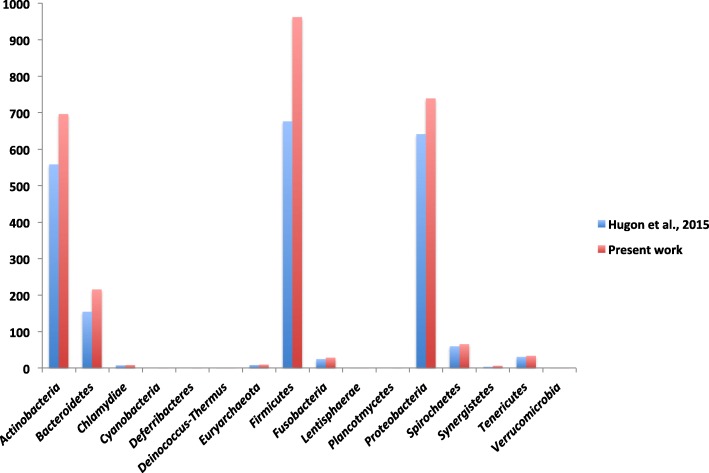
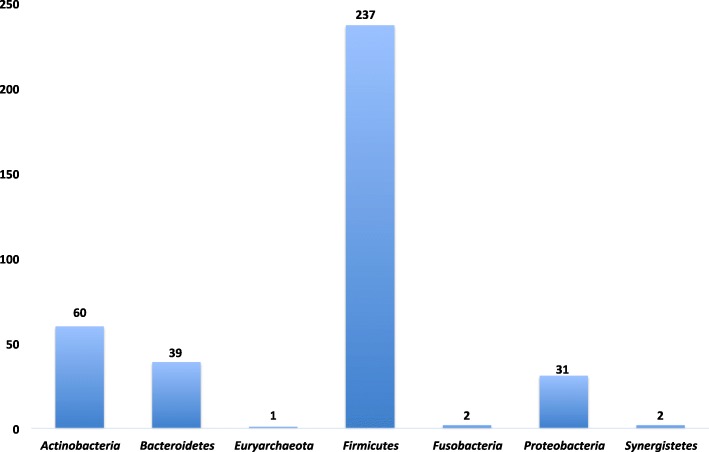
After a decade of research and metagenomic analyses, our knowledge of the human microbiota appears to have reached a plateau despite promising results. In many studies, culture has proven to be essential in describing new prokaryotic species and filling metagenomic gaps. In 2015, only 2172 different prokaryotic species were reported to have been isolated at least once from the human body as pathogens or commensals. In this review, we update the previous repertoire by reporting the different species isolated from the human body to date, increasing it by 28% to reach a total of 2776 species associated with human beings. They have been classified into 11 different phyla, mostly the Firmicutes, Proteobacteria, Bacteroidetes, and Actinobacteria. Finally, culturomics contributed up to 66.2% towards updating this repertoire by reporting 400 species, of which 288 were novel. This demonstrates the need to continue the culturing work, which seems essential in order to decipher the hidden human microbial content.
Overview
The claims and statistics of this paper haven’t been checked yet.
Run the check — free, no account needed. It reads the open-access text and checks the sources it cites.
Integrity signals
Registry
Cites
Statistics
Figures

Verification
Claims the paper makes
The claims and statistics of this paper haven’t been checked yet.
Run the check — free, no account needed. It reads the open-access text and checks the sources it cites.
Claims other papers make about this one
Each is checked against this paper’s own text: does it say what the citing paper says it does?
The source backs part of the claim, not all of it — or backs it for a different population, condition or comparison.
In the citing paper
“These have been classified into 11 different phyla with Proteobacteria, Firmicutes, Actinobacteria and Bacteroidetes comprising over 90% of the microbiome (Bilen et al., 2018;Hu-gon et al., 2015;Li et al., 2014)”
From The Microbiota-Gut-Brain Axis (2019) · cites this paper as Bilen et al., 2018
Experimental — accuracy not yet measuredThe source backs part of the claim, not all of it — or backs it for a different population, condition or comparison.
In the citing paper
“Current combined Human Microbiome Project and MetaHIT data estimate that there are at least 2776 prokaryotic species that have been isolated from human fecal matter.”
From The Microbiota-Gut-Brain Axis (2019) · cites this paper as Bilen et al., 2018
Experimental — accuracy not yet measured
Self-check
Percentages, sums and reported differences re-computed from the paper’s own numbers.
The self-check needs the paper’s full text.
Citations
Cites
3 retracted
Lagier, J.-C., Khelaifia, S., Alou, M. T., Ndongo, S., Dione, N., Hugon, P., Caputo, A., Cadoret, F., Traore, S. I., Seck, E. H., et al. (2016) · Nature Microbiology · doi:10.1038/nmicrobiol.2016.203 · Cited by 951
Self-citationRetractedMillion, M., Alou, M. T., Khelaifia, S., Bachar, D., Lagier, J., Dione, N., Brah, S., Hugon, P., Lombard, V., Armougom, F., et al. (2016) · Scientific Reports · doi:10.1038/srep26051 · Cited by 204
Self-citationRetractedPfleiderer, A., Lagier, J., Armougom, F., Robert, C., Vialettes, B., & Raoult, D. (2013) · European Journal of Clinical Microbiology & Infectious Diseases · doi:10.1007/s10096-013-1900-2 · Cited by 158
Self-citationRetractedAn obesity-associated gut microbiome with increased capacity for energy harvest
Turnbaugh, P. J., Ley, R. E., Mahowald, M. A., Magrini, V., Mardis, E. R., & Gordon, J. I. (2006) · Nature · doi:10.1038/nature05414 · Cited by 12,444
Structure, function and diversity of the healthy human microbiome
The Human Microbiome Project Consortium (2012) · Nature · doi:10.1038/nature11234 · Cited by 11,726
Human gut microbes associated with obesity
Ley, R. E., Turnbaugh, P. J., Klein, S., & Gordon, J. I. (2006) · Nature · doi:10.1038/4441022a · Cited by 8,785
Diversity of the Human Intestinal Microbial Flora
Eckburg, P. B., Bik, E. M., Bernstein, C. N., Purdom, E., Dethlefsen, L., Sargent, M., Gill, S. R., Nelson, K. E., & Relman, D. A. (2005) · Science · doi:10.1126/science.1110591 · Cited by 7,913
Obesity alters gut microbial ecology
Ley, R. E., Bäckhed, F., Turnbaugh, P., Lozupone, C. A., Knight, R. D., & Gordon, J. I. (2005) · Proceedings of the National Academy of Sciences · doi:10.1073/pnas.0504978102 · Cited by 6,176
Turnbaugh, P. J., Ley, R. E., Hamady, M., Fraser-Liggett, C. M., Knight, R., & Gordon, J. I. (2007) · Nature · doi:10.1038/nature06244 · Cited by 6,091
Gut microbiome influences efficacy of PD-1-based immunotherapy against epithelial tumors
Routy, B., Le Chatelier, E., Derosa, L., Duong, C. P. M., Alou, M. T., Daillère, R., Fluckiger, A., Messaoudene, M., Rauber, C., Roberti, M. P., et al. (2018) · Science · doi:10.1126/science.aan3706 · Cited by 5,671
Self-citationKaper, J. B., Nataro, J. P., & Mobley, H. L. T. (2004) · Nature Reviews Microbiology · doi:10.1038/nrmicro818 · Cited by 5,583 · cited 1×
“Escherichia coli is the perfect example; this bacterium is usually considered commensal when found in the human intestine but can become pathogenic if it reaches extra-colonic sites [72].”
BackgroundProkaryotes: The unseen majority
Whitman, W. B., Coleman, D. C., & Wiebe, W. J. (1998) · Proceedings of the National Academy of Sciences · doi:10.1073/pnas.95.12.6578 · Cited by 4,871
Metagenomic Analysis of the Human Distal Gut Microbiome
Gill, S. R., Pop, M., DeBoy, R. T., Eckburg, P. B., Turnbaugh, P. J., Samuel, B. S., Gordon, J. I., Relman, D. A., Fraser-Liggett, C. M., & Nelson, K. E. (2006) · Science · doi:10.1126/science.1124234 · Cited by 4,699
Sokol, H., Pigneur, B., Watterlot, L., Lakhdari, O., Bermúdez-Humarán, L. G., Gratadoux, J.-J., Blugeon, S., Bridonneau, C., Furet, J.-P., Corthier, G., et al. (2008) · Proceedings of the National Academy of Sciences · doi:10.1073/pnas.0804812105 · Cited by 4,413
Anticancer immunotherapy by CTLA-4 blockade relies on the gut microbiota
Vétizou, M., Pitt, J. M., Daillère, R., Lepage, P., Waldschmitt, N., Flament, C., Rusakiewicz, S., Routy, B., Roberti, M. P., Duong, C. P. M., et al. (2015) · Science · doi:10.1126/science.aad1329 · Cited by 3,488
Self-citationA framework for human microbiome research
The Human Microbiome Project Consortium (2012) · Nature · doi:10.1038/nature11209 · Cited by 2,650
An integrated catalog of reference genes in the human gut microbiome
MetaHIT Consortium, Li, J., Jia, H., Cai, X., Zhong, H., Feng, Q., Sunagawa, S., Arumugam, M., Kultima, J. R., Prifti, E., et al. (2014) · Nature Biotechnology · doi:10.1038/nbt.2942 · Cited by 2,164
Akkermansia muciniphila gen. nov., sp. nov., a human intestinal mucin-degrading bacterium
Derrien, M., Vaughan, E. E., Plugge, C. M., & de Vos, W. M. (2004) · International Journal of Systematic and Evolutionary Microbiology · doi:10.1099/ijs.0.02873-0 · Cited by 2,094
Dao, M. C., Everard, A., Aron-Wisnewsky, J., Sokolovska, N., Prifti, E., Verger, E. O., Kayser, B. D., Levenez, F., Chilloux, J., Hoyles, L., et al. (2016) · Gut · doi:10.1136/gutjnl-2014-308778 · Cited by 1,931
Culturing of ‘unculturable’ human microbiota reveals novel taxa and extensive sporulation
Browne, H. P., Forster, S. C., Anonye, B. O., Kumar, N., Neville, B. A., Stares, M. D., Goulding, D., & Lawley, T. D. (2016) · Nature · doi:10.1038/nature17645 · Cited by 1,299
Microbial culturomics: paradigm shift in the human gut microbiome study
Lagier, J., Armougom, F., Million, M., Hugon, P., Pagnier, I., Robert, C., Bittar, F., Fournous, G., Gimenez, G., Maraninchi, M., et al. (2012) · Clinical Microbiology and Infection · doi:10.1111/1469-0691.12023 · Cited by 1,200
Self-citationScaling laws predict global microbial diversity
Locey, K. J., & Lennon, J. T. (2016) · Proceedings of the National Academy of Sciences · doi:10.1073/pnas.1521291113 · Cited by 1,184
Estimating prokaryotic diversity and its limits
Curtis, T., Sloan, W., & Scannell, J. (2002) · Proceedings of the National Academy of Sciences of the United States of America · doi:10.1073/pnas.142680199 · Cited by 1,175
Culturing the human microbiota and culturomics
Lagier, J., Dubourg, G., Million, M., Cadoret, F., Bilen, M., Fenollar, F., Levasseur, A., Rolain, J., Fournier, P., & Raoult, D. (2018) · Nature Reviews Microbiology · doi:10.1038/s41579-018-0041-0 · Cited by 920
Self-citationThe Agent of Bacillary Angiomatosis: An Approach to the Identification of Uncultured Pathogens
Relman, D. A., Loutit, J. S., Schmidt, T. M., Falkow, S., & Tompkins, L. S. (1990) · New England Journal of Medicine · doi:10.1056/nejm199012063232301 · Cited by 901
Daillère, R., Vétizou, M., Waldschmitt, N., Yamazaki, T., Isnard, C., Poirier-Colame, V., Duong, C. P. M., Flament, C., Lepage, P., Roberti, M. P., et al. (2016) · Immunity · doi:10.1016/j.immuni.2016.09.009 · Cited by 897
Self-citationLagier, J., Hugon, P., Khelaifia, S., Fournier, P., Scola, B. L., & Raoult, D. (2015) · Clinical Microbiology Reviews · doi:10.1128/cmr.00014-14 · Cited by 876
Self-citationMcColl, K. E. L. (2010) · New England Journal of Medicine · doi:10.1056/nejmcp1001110 · Cited by 783
Goodman, A. L., Kallstrom, G., Faith, J. J., Reyes, A., Moore, A. M., Dantas, G. A., & Gordon, J. I. (2011) · Proceedings of the National Academy of Sciences · doi:10.1073/pnas.1102938108 · Cited by 781
Plottel, C. S., & Blaser, M. J. (2011) · Cell Host & Microbe · doi:10.1016/j.chom.2011.10.003 · Cited by 743
Gut Microbiota and Its Possible Relationship With Obesity
DiBaise, J. K., Zhang, H., Crowell, M. D., Krajmalnik‐Brown, R., Decker, G. A., & Rittmann, B. E. (2008) · Mayo Clinic Proceedings · doi:10.4065/83.4.460 · Cited by 616
Coadaptation of Helicobacter pylori and humans: ancient history, modern implications
Atherton, J. C., & Blaser, M. J. (2009) · Journal of Clinical Investigation · doi:10.1172/jci38605 · Cited by 549
Human colonic biota studied by ribosomal DNA sequence analysis
Wilson, K. H., & Blitchington, R. B. (1996) · Applied and Environmental Microbiology · doi:10.1128/aem.62.7.2273-2278.1996 · Cited by 516
Cultivation of the Bacillus of Whipple's Disease
Raoult, D., Birg, M., Scola, B. L., Fournier, P., Enea, M., Lépidi, H., Roux, V., Pietté, J. C., Vandenesch, F., Vital-Durand, D., et al. (2000) · New England Journal of Medicine · doi:10.1056/nejm200003023420903 · Cited by 476
Self-citationHayashi, H., Sakamoto, M., & Benno, Y. (2002) · Microbiology and Immunology · doi:10.1111/j.1348-0421.2002.tb02731.x · Cited by 458
The role of the gut microbiota in nonalcoholic fatty liver disease
Abu-Shanab, A., & Quigley, E. M. M. (2010) · Nature Reviews Gastroenterology & Hepatology · doi:10.1038/nrgastro.2010.172 · Cited by 457
Dysbiosis in inflammatory bowel diseases: the oxygen hypothesis
Rigottier‐Gois, L. (2013) · The ISME Journal · doi:10.1038/ismej.2013.80 · Cited by 451
Substantial Alterations of the Cutaneous Bacterial Biota in Psoriatic Lesions
Gao, Z., Tseng, C., Strober, B. E., Pei, Z., & Blaser, M. J. (2008) · PLoS ONE · doi:10.1371/journal.pone.0002719 · Cited by 449
An ecological perspective on bacterial biodiversity
Horner‐Devine, M. C., Carney, K. M., & Bohannan, B. J. M. (2004) · Proceedings of the Royal Society B Biological Sciences · doi:10.1098/rspb.2003.2549 · Cited by 449
Seng, P., Abat, C., Rolain, J., Colson, P., Lagier, J., Gouriet, F., Fournier, P., Drancourt, M., Scola, B. L., & Raoult, D. (2013) · Journal of Clinical Microbiology · doi:10.1128/jcm.00492-13 · Cited by 440
Self-citationRamasamy, D., Mishra, A. K., Lagier, J., Padmanabhan, R., Rossi-Tamisier, M., Sentausa, E., Raoult, D., & Fournier, P. (2014) · INTERNATIONAL JOURNAL OF SYSTEMATIC AND EVOLUTIONARY MICROBIOLOGY · doi:10.1099/ijs.0.057091-0 · Cited by 424
Self-citationA comprehensive repertoire of prokaryotic species identified in human beings
Hugon, P., Dufour, J.-C., Colson, P., Fournier, P., Sallah, K., & Raoult, D. (2015) · The Lancet Infectious Diseases · doi:10.1016/s1473-3099(15)00293-5 · Cited by 424
Self-citationBrenner, D. J., O'Connor, S. P., Winkler, H. H., & Steigerwalt, A. G. (1993) · International Journal of Systematic Bacteriology · doi:10.1099/00207713-43-4-777 · Cited by 402
Probiotics in prevention and treatment of obesity: a critical view
Kobyliak, N. M., Conte, C., Cammarota, G., Haley, A. P., Štyriak, I., Gašpar, Ľ., Fusek, J., Rodrigo, L., & Kružliak, P. (2016) · Nutrition & Metabolism · doi:10.1186/s12986-016-0067-0 · Cited by 373
Adékambi, T. (2006) · INTERNATIONAL JOURNAL OF SYSTEMATIC AND EVOLUTIONARY MICROBIOLOGY · doi:10.1099/ijs.0.63969-0 · Cited by 366
Welch, D. F., Pickett, D. A., Slater, L. N., Steigerwalt, A. G., & Brenner, D. J. (1992) · Journal of Clinical Microbiology · doi:10.1128/jcm.30.2.275-280.1992 · Cited by 352
Human Gut Microbiota: Repertoire and Variations
Lagier, J., Million, M., Hugon, P., Armougom, F., & Raoult, D. (2012) · Frontiers in Cellular and Infection Microbiology · doi:10.3389/fcimb.2012.00136 · Cited by 347
Self-citationLoman, N. J., Constantinidou, C., Christner, M., Rohde, H., Chan, J. Z.-M., Quick, J., Weir, J., Quince, C., Smith, G. P., Betley, J. R., et al. (2013) · JAMA · doi:10.1001/jama.2013.3231 · Cited by 334
Bartonella Species, an Emerging Cause of Blood-Culture-Negative Endocarditis
Okaro, U., Addisu, A., Casańas, B., & ANDERSON, B. E. (2017) · Clinical Microbiology Reviews · doi:10.1128/cmr.00013-17 · Cited by 314
Perkocha, L. A., Geaghan, S. M., Yen, T. S. B., Nishimura, S. L., Chan, S. P., Garcia‐Kennedy, R., Honda, G., Stoloff, A. C., Klein, H. Z., Goldman, R. L., et al. (1990) · New England Journal of Medicine · doi:10.1056/nejm199012063232302 · Cited by 303
A Newly Recognized Fastidious Gram-Negative Pathogen as a Cause of Fever and Bacteremia
Slater, L. N., WELCH, D. F., Hensel, D. M., & Coody, D. W. (1990) · New England Journal of Medicine · doi:10.1056/nejm199012063232303 · Cited by 301
Adékambi, T., Reynaud‐Gaubert, M., Greub, G., Gevaudan, M. J., Scola, B. L., Raoult, D., & Drancourt, M. (2004) · Journal of Clinical Microbiology · doi:10.1128/jcm.42.12.5493-5501.2004 · Cited by 299
Self-citationMcClelland, R. S., Lingappa, J. R., Srinivasan, S., Kinuthia, J., John-Stewart, G. C., Jaoko, W. G., Richardson, B. A., Yuhas, K., Fiedler, T. L., Mandaliya, K. N., et al. (2018) · The Lancet Infectious Diseases · doi:10.1016/s1473-3099(18)30058-6 · Cited by 250
Capturing the diversity of the human gut microbiota through culture-enriched molecular profiling
Lau, J. Y. F., Whelan, F., Herath, I., Lee, C., Collins, S. M., Berčík, P., & Surette, M. G. (2016) · Genome Medicine · doi:10.1186/s13073-016-0327-7 · Cited by 229
Cook, G. M., Berney, M., Gebhard, S., Heinemann, M., Cox, R. A., Danilchanka, O., & Niederweis, M. (2009) · Advances in microbial physiology/Advances in Microbial Physiology · doi:10.1016/s0065-2911(09)05502-7 · Cited by 226
Drancourt, M., Berger, P., & Raoult, D. (2004) · Journal of Clinical Microbiology · doi:10.1128/jcm.42.5.2197-2202.2004 · Cited by 202
Self-citationExtreme Environments as a Resource for Microorganisms and Novel Biocatalysts
Antranikian, G., Vorgias, C. E., & Bertoldo, C. (2005) · Advances in biochemical engineering, biotechnology · doi:10.1007/b135786 · Cited by 202
Intestinal microbial communities associated with acute enteric infections and disease recovery
Singh, P., Teal, T. K., Marsh, T. L., Tiedje, J. M., Mosci, R. E., Jernigan, K. A., Zell, A., Newton, D. W., Salimnia, H., Lephart, P., et al. (2015) · Microbiome · doi:10.1186/s40168-015-0109-2 · Cited by 177
Rettedal, E. A., Gumpert, H., & Sommer, M. O. A. (2014) · Nature Communications · doi:10.1038/ncomms5714 · Cited by 176
Dubourg, G., Lagier, J., Armougom, F., Robert, C., Hamad, I., Brouqui, P., & Raoult, D. (2013) · European Journal of Clinical Microbiology & Infectious Diseases · doi:10.1007/s10096-012-1787-3 · Cited by 161
Self-citationClostridium butyricum Strains and Dysbiosis Linked to Necrotizing Enterocolitis in Preterm Neonates
Cassir, N., Benamar, S., Khalil, J. B., Croce, O., Saint-Faust, M., Jacquot, A., Million, M., Azza, S., Armstrong, N., Henry, M., et al. (2015) · Clinical Infectious Diseases · doi:10.1093/cid/civ468 · Cited by 151
Self-citationAnaerobic Bacteria: Role in Disease
Stokes, E. J. (1975) · Journal of Clinical Pathology · doi:10.1136/jcp.28.5.424-c · Cited by 140
Culturomics: a new approach to study the human microbiome
Greub, G. (2012) · Clinical Microbiology and Infection · doi:10.1111/1469-0691.12032 · Cited by 138
Dubourg, G., Lagier, J., Robert, C., Armougom, F., Hugon, P., Metidji, S., Dione, N., Nieko, N. P. M. D., Pfleiderer, A., Abrahão, J. S., et al. (2014) · International Journal of Antimicrobial Agents · doi:10.1016/j.ijantimicag.2014.04.020 · Cited by 136
Self-citationThe “Most Wanted” Taxa from the Human Microbiome for Whole Genome Sequencing
Fodor, A. A., DeSantis, T. Z., Wylie, K. M., Badger, J. H., Ye, Y., Hepburn, T. A., Hu, P., Sodergren, E. J., Liolios, K., Huot, H., et al. (2012) · PLoS ONE · doi:10.1371/journal.pone.0041294 · Cited by 134
Akkermansia muciniphila: a novel functional microbe with probiotic properties
Gómez-Gallego, C., Pohl, S., Salminen, S., de Vos, W. M., & Kneifel, W. (2016) · Beneficial Microbes · doi:10.3920/bm2016.0009 · Cited by 133
Tropheryma whipplei and Whipple's disease
Fenollar, F., Lagier, J., & Raoult, D. (2014) · Journal of Infection · doi:10.1016/j.jinf.2014.05.008 · Cited by 130
Self-citationSalah, I. B., Cayrou, C., Raoult, D., & Drancourt, M. (2009) · INTERNATIONAL JOURNAL OF SYSTEMATIC AND EVOLUTIONARY MICROBIOLOGY · doi:10.1099/ijs.0.010637-0 · Cited by 112
Self-citationPathogenicity and virulence: another view
Isenberg, H. D. (1988) · Clinical Microbiology Reviews · doi:10.1128/cmr.1.1.40 · Cited by 85
Mycobacterium Leprae –Host-Cell Interactions and Genetic Determinants in Leprosy: an Overview
Pinheiro, R. O., Sales, J. D. S., Sarno, E. N., & Sampaio, E. P. (2011) · Future Microbiology · doi:10.2217/fmb.10.173 · Cited by 83
Aerobic culture of anaerobic bacteria using antioxidants: a preliminary report
Scola, B. L., Khelaifia, S., Lagier, J., & Raoult, D. (2014) · European Journal of Clinical Microbiology & Infectious Diseases · doi:10.1007/s10096-014-2137-4 · Cited by 79
Self-citationFalse positive PCR detection of Tropheryma whipplei in the saliva of healthy people
Rolain, J., Fenollar, F., & Raoult, D. (2007) · BMC Microbiology · doi:10.1186/1471-2180-7-48 · Cited by 74
Self-citationAdékambi, T., Stein, A., Carvajal, J., Raoult, D., & Drancourt, M. (2006) · Journal of Clinical Microbiology · doi:10.1128/jcm.44.4.1268-1273.2006 · Cited by 70
Self-citationMolecular Studies Neglect Apparently Gram-Negative Populations in the Human Gut Microbiota
Hugon, P., Lagier, J., Robert, C., Lépolard, C., Papazian, L., Musso, D., Vialettes, B., & Raoult, D. (2013) · Journal of Clinical Microbiology · doi:10.1128/jcm.00473-13 · Cited by 67
Self-citationAdvancing gut microbiome research using cultivation
Sommer, M. O. A. (2015) · Current Opinion in Microbiology · doi:10.1016/j.mib.2015.08.004 · Cited by 65
Fournier, P., & Drancourt, M. (2015) · New Microbes and New Infections · doi:10.1016/j.nmni.2015.06.001 · Cited by 60
The impact of culturomics on taxonomy in clinical microbiology
Abdallah, R. A., Beye, M., Diop, A., Bakour, S., Raoult, D., & Fournier, P. (2017) · Antonie van Leeuwenhoek · doi:10.1007/s10482-017-0871-1 · Cited by 54
Self-citationSotto, A., Richard, J.-L., Messad, N., Molinari, N., Jourdan, N., Schuldiner, S., Sultan, A., Carrière, C., Canivet, B., Landraud, L., et al. (2012) · Diabetes Care · doi:10.2337/dc11-1352 · Cited by 54
Predominant Gram-Positive Bacteria in Human Feces: Numbers, Variety, and Persistence
Gossling, J., & Slack, J. M. (1974) · Infection and Immunity · doi:10.1128/iai.9.4.719-729.1974 · Cited by 48
Summanen, P. H., McTeague, M., Väisänen, M., Strong, C. A., & Finegold, S. M. (1999) · Anaerobe · doi:10.1006/anae.1999.0184 · Cited by 34
Many More Microbes in Humans: Enlarging the Microbiome Repertoire
Lagier, J., Drancourt, M., Charrel, R. N., Bittar, F., Scola, B. L., Ranque, S., & Raoult, D. (2017) · Clinical Infectious Diseases · doi:10.1093/cid/cix404 · Cited by 32
Self-citationNogueira, C. L., Whipps, C. M., Matsumoto, C. K., Chimara, É., Droz, S., Tortoli, E., de Freitas, D., Cnockaert, M. C., Palomino, J. C., Martin, A., et al. (2015) · INTERNATIONAL JOURNAL OF SYSTEMATIC AND EVOLUTIONARY MICROBIOLOGY · doi:10.1099/ijsem.0.000590 · Cited by 32
New Species Announcement: a new format to prompt the description of new human microbial species
Fournier, P., Raoult, D., & Drancourt, M. (2016) · New Microbes and New Infections · doi:10.1016/j.nmni.2016.04.006 · Cited by 27
Self-citationShahraki, A. H., Trovato, A., Mirsaeidi, M. S., Borroni, E., Heidarieh, P., Hashemzadeh, M., Shahbazi, N., Cirillo, D. M., & Tortoli, E. (2017) · INTERNATIONAL JOURNAL OF SYSTEMATIC AND EVOLUTIONARY MICROBIOLOGY · doi:10.1099/ijsem.0.001862 · Cited by 22
Patel, R. V., & Lebwohl, M. (2011) · Annals of Internal Medicine · doi:10.7326/0003-4819-155-3-201108020-01002 · Cited by 21
Koch Postulate: Why Should we Grow Bacteria?
Lagier, J., Dubourg, G., Amrane, S., & Raoult, D. (2017) · Archives of Medical Research · doi:10.1016/j.arcmed.2018.02.003 · Cited by 17
Self-citationMycobacterium eburneum sp. nov., a non-chromogenic, fast-growing strain isolated from sputum
Nouioui, I., Carro, L., Teramoto, K., Igual, J. M., Jando, M., Montero‐Calasanz, M. D. C., Sutcliffe, I. C., Sangal, V., Goodfellow, M., & Klenk, H. (2017) · INTERNATIONAL JOURNAL OF SYSTEMATIC AND EVOLUTIONARY MICROBIOLOGY · doi:10.1099/ijsem.0.002033 · Cited by 14
Paniz‐Mondolfi, A., Greninger, A. L., Ladutko, L., Brown‐Elliott, B. A., Vasireddy, R., Jakubiec, W., Vasireddy, S., Wallace, R. J., Simmon, K. E., Dunn, B. E., et al. (2017) · INTERNATIONAL JOURNAL OF SYSTEMATIC AND EVOLUTIONARY MICROBIOLOGY · doi:10.1099/ijsem.0.002216 · Cited by 13
Davidson, R. M., DeGroote, M. A., Marola, J. L., Buss, S. N., Jones, V., McNeil, M., Freifeld, A. G., Epperson, L. E., Hasan, N. A., Jackson, M., et al. (2017) · INTERNATIONAL JOURNAL OF SYSTEMATIC AND EVOLUTIONARY MICROBIOLOGY · doi:10.1099/ijsem.0.001998 · Cited by 9
Fournier, P., Raoult, D., & Drancourt, M. (2016) · Human Microbiome Journal · doi:10.1016/j.humic.2016.05.001 · Cited by 7
Self-citation
Cited by
Sorted by citations
Cryan, J. F., O'Riordan, K. J., Cowan, C. S. M., Sandhu, K. V., Bastiaanssen, T. F. S., Boehme, M., Codagnone, M. G., Cussotto, S., Fulling, C., Golubeva, A. V., et al. (2019) · Physiological Reviews · doi:10.1152/physrev.00018.2018 · Cited by 5,286
Sex differences in gut microbiota
Kim, Y. S., Unno, T., Kim, B.-Y., & Park, M.-S. (2020) · The World Journal of Men s Health · doi:10.5534/wjmh.190009 · Cited by 610
Gut Bacteria and Neurotransmitters
Dicks, L. M. T. (2022) · Microorganisms · doi:10.3390/microorganisms10091838 · Cited by 482
Montero, C. G., Fraile‐Μartinez, O., Gomez-Lahoz, A. M., Pekarek, L., Castellanos, A. J., Noguerales-Fraguas, F., Coca, S., Guijarro, L. G., García‐Honduvilla, N., Asúnsolo, Á., et al. (2021) · Nutrients · doi:10.3390/nu13020699 · Cited by 487
Next generation probiotics in disease amelioration
Chang, C., Lin, T., Tsai, Y., Wu, T.-R., Lai, W.-F., Lu, C., & Lai, H. (2019) · Journal of Food and Drug Analysis · doi:10.1016/j.jfda.2018.12.011 · Cited by 398
Metadata
- Authors
- Bilen, M., Dufour, J.-C., Lagier, J.-C., Cadoret, F., Daoud, Z., Dubourg, G., & Raoult, D.
- Affiliations
- University of Balamand (LB)
- Inserm (FR)
- Aix-Marseille Université (FR)
- Assistance Publique Hôpitaux de Marseille (FR)
- King Abdulaziz University (SA)
- Corresponding author
- Raoult, Didier
- ORCID
- Venue
- Microbiome
- Published
- 2018-05-24
- Volume
- 6
- Issue
- 1
- Pages
- 94-94
- ISSN
- 2049-2618 (ISSN-L)
- PMC
- PMC5966928
- OpenAlex
- W2807527107
- Cited by
- 231
- References
- 90
- Citations by year
- 2026: 15 · 2025: 19 · 2024: 28 · 2023: 38 · 2022: 27 · 2021: 26 · 2020: 36 · 2019: 31 · 2018: 10
- FWCI
- 2.53
- Type
- journal article
- Language
- en
- Open access
- gold
- doi.org
- Licence
- Locations
- Microbiome (publishedVersion, cc-by)
- Europe PMC (PubMed Central) (publishedVersion, other-oa)
- PubMed Central (publishedVersion, cc-by)
- PubMed (publishedVersion)
- HAL (submittedVersion, other-oa)
- DOAJ (DOAJ: Directory of Open Access Journals) (submittedVersion, cc-by-sa)
- Funders
- IHU Méditerranée Infection
- Topics
- Life Sciences › Biochemistry, Genetics and Molecular Biology › Molecular Biology › Gut microbiota and health
- Physical Sciences › Environmental Science › Ecology › Microbial Community Ecology and Physiology
- Health Sciences › Medicine › Microbiology (medical) › Bacterial Identification and Susceptibility Testing
- Keywords
- culturomics, human microbiota, new species, Firmicutes, Proteobacteria, Bacteroidetes, actinobacteria
- MeSH terms
- Firmicutes, Bacillota, Gastrointestinal Microbiome, Archaea, Bacteria, DNA, Bacterial, Humans, DNA, Archaeal, Proteobacteria, Actinobacteria, Bacteroidetes, Metagenomics
About these checks
Registry, retraction, Cites and statistics results are computed, not judged, with one exception: a printed reference that no index lists is read once by a model before it counts as a citation error. Claims are extracted by a model and kept only when their quote appears verbatim in the text; each cited source is then checked, with a model’s help, for whether it says what the claim relies on. Those verdicts can be wrong — read the claim’s quote and the cited source before relying on one.
Statistics and arithmetic are recomputed, not judged.
Confidence bands are shown only for fields calibrated on our annotated test set. None is calibrated yet, so no band is shown.
What counts as a claim ›How we measure confidence ›How we check this ›
Are you an author, or do you see a problem with this page? Request a review
